Elementary School Counting Worksheets
All worksheets are created by the team of experienced teachers at Cazoom Math.
Why is counting practice important beyond kindergarten?
Counting remains fundamental through elementary school because students apply these skills to increasingly complex mathematical thinking. While kindergartners count objects and sequences, older elementary students use counting strategies for multiplication, division, and fraction concepts. Comparing numbers and understanding magnitude prepares students for place value, ordering decimals, and algebraic thinking.
Students often lose points on standardized tests not from calculation errors but from misreading number relationships or incorrectly ordering values. Regular counting practice strengthens mental math fluency and builds the confidence students need when encountering multi-step problems. Teachers notice that students who skip counting review in later grades often revert to finger counting or tally marks when working under pressure, slowing their problem-solving significantly.
Which grade levels use these counting worksheets?
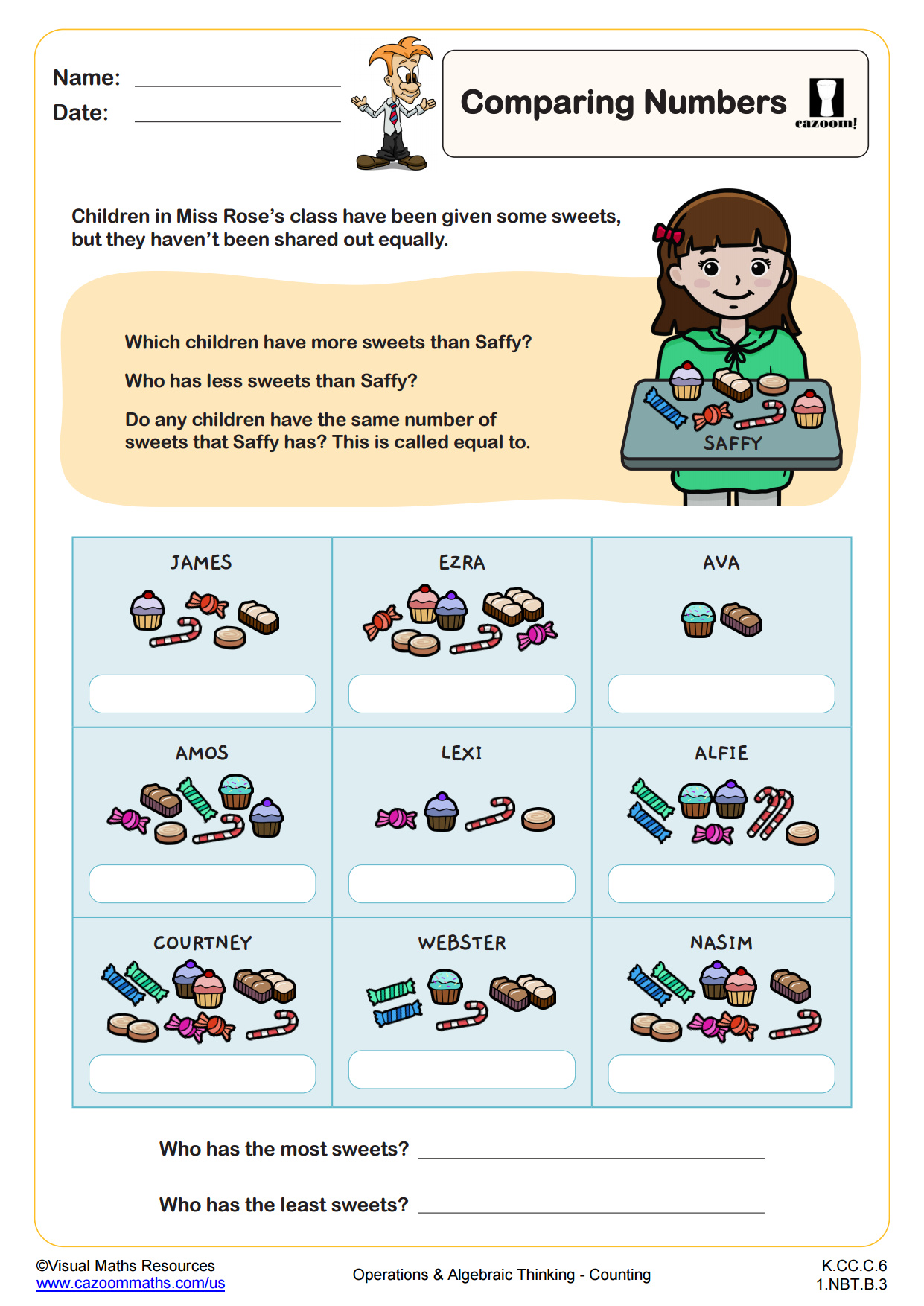
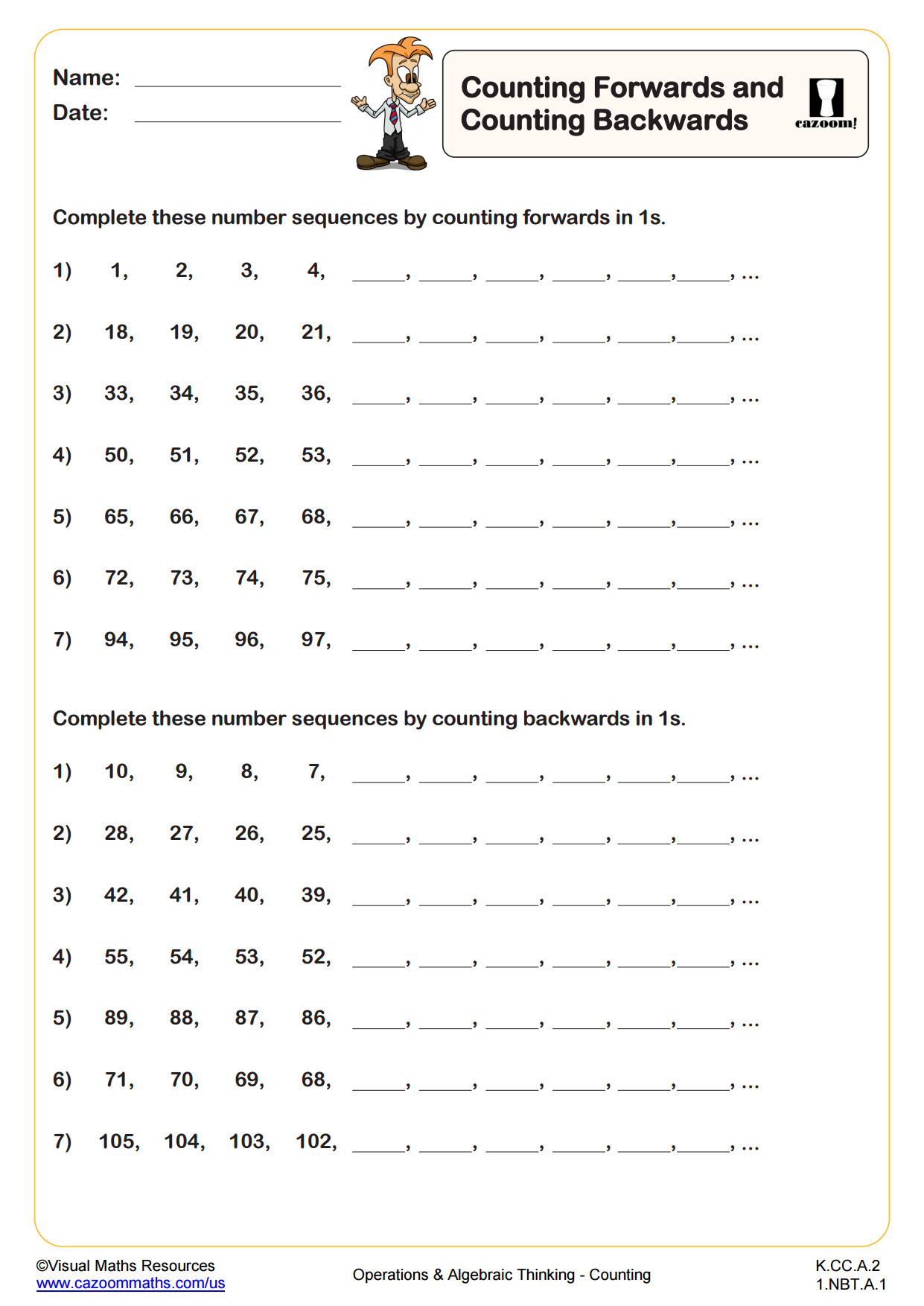
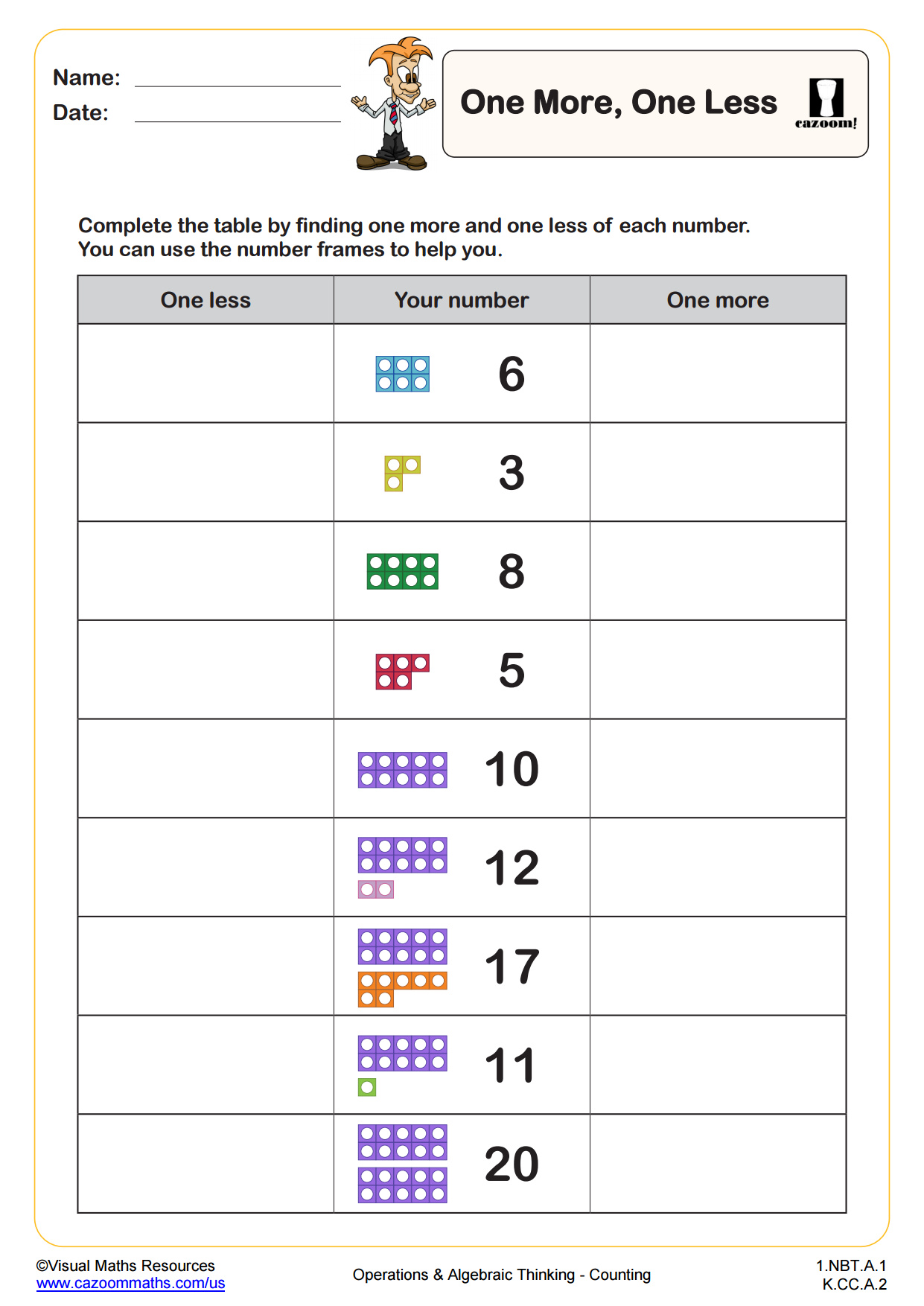
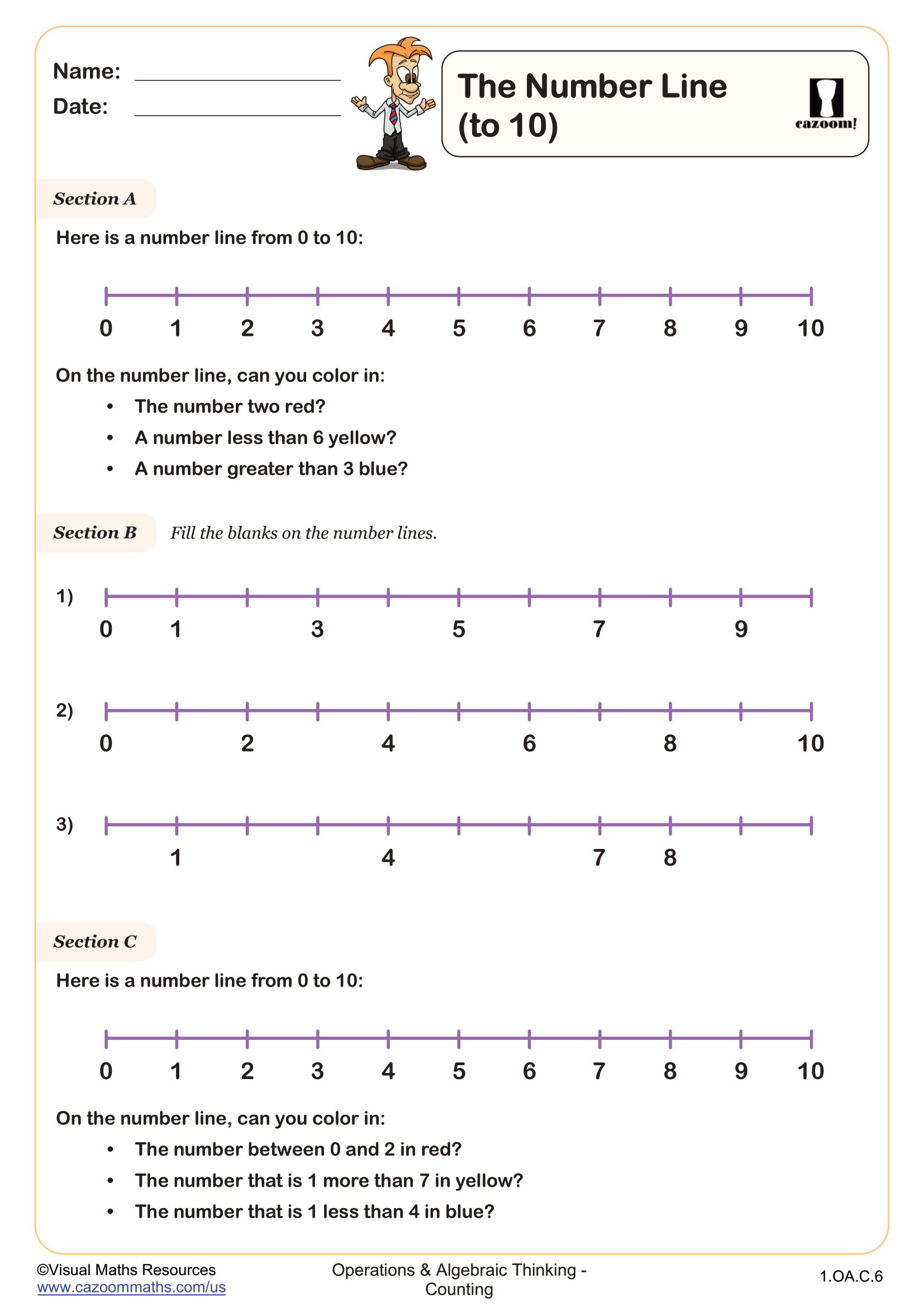
This collection covers kindergarten through fifth grade, all within the elementary school stage. Kindergarten and first grade worksheets focus on foundational skills like counting sequences, one more and one less, and basic subtraction using number lines up to 10. Second and third grade materials extend to counting backwards, comparing larger numbers, and subtraction within 20.
Fourth and fifth grade worksheets reinforce counting concepts that support more advanced topics like skip counting for factors, understanding negative numbers through backward counting, and building number line fluency for fraction and decimal work. The progression ensures students develop automatic recall of number relationships before applying them to operations, fractions, and algebraic reasoning required in middle school.
How do number lines help with subtraction?
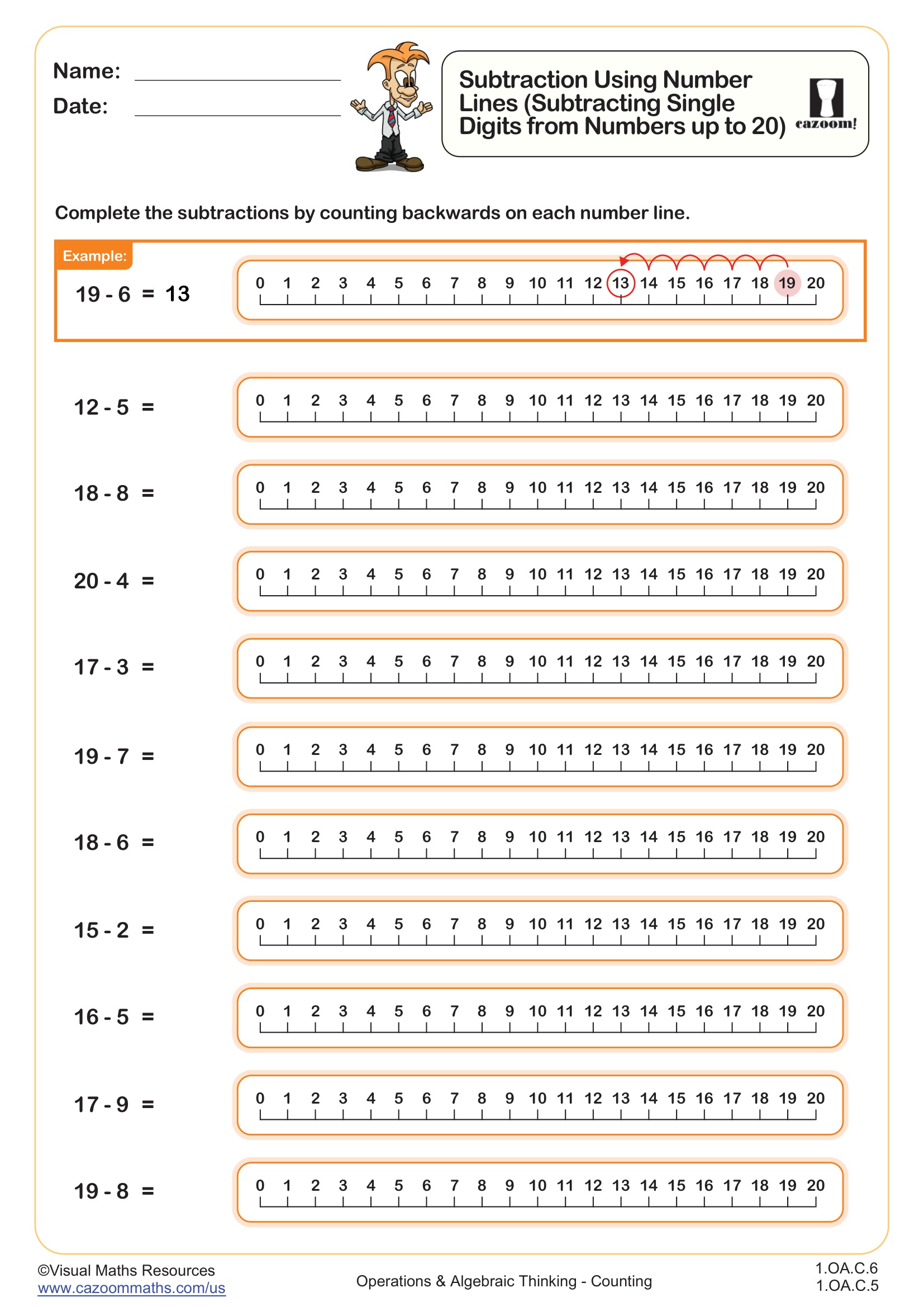
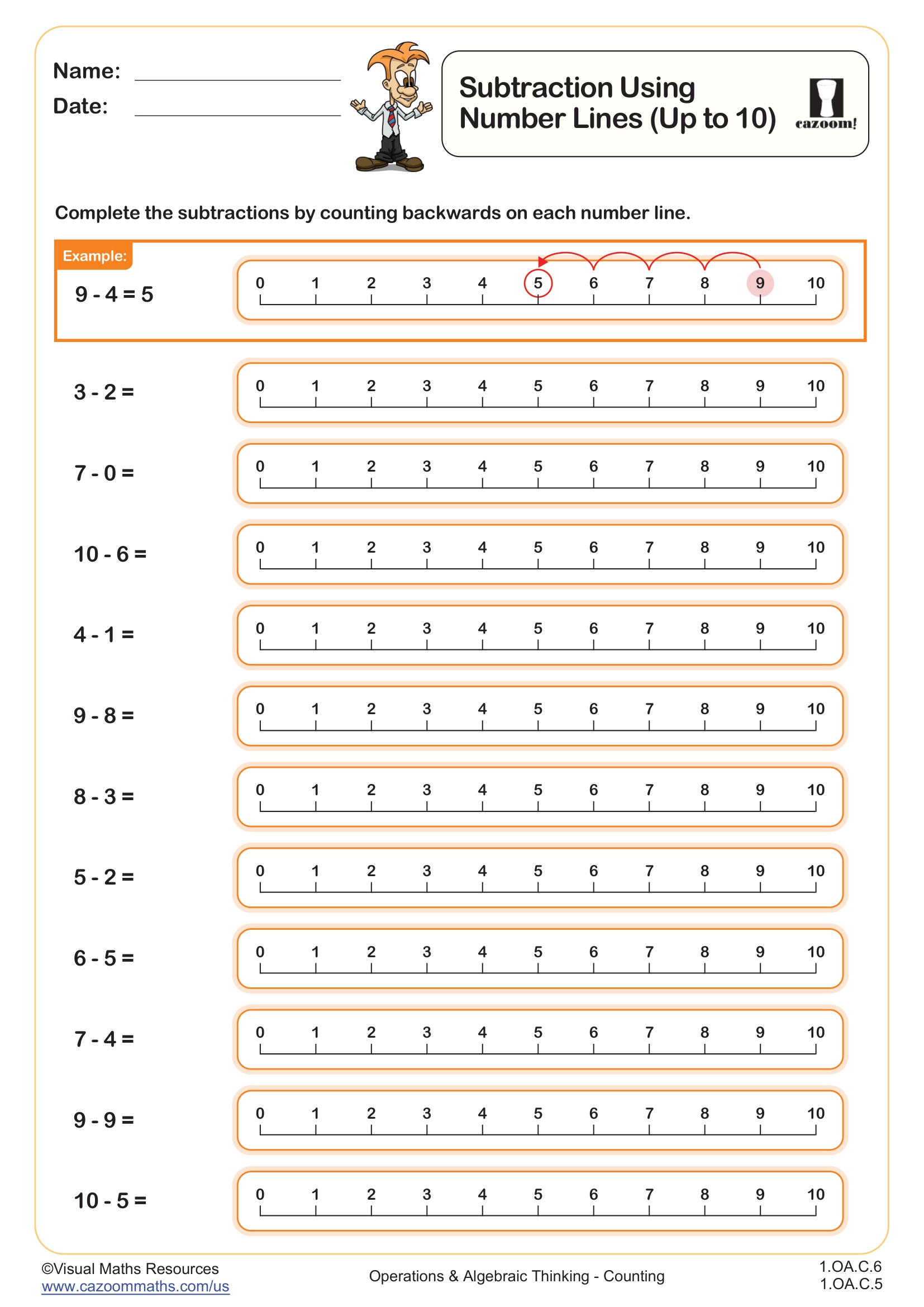
Number lines transform subtraction from an abstract memorization task into a visual movement students can track. When subtracting on a number line, students start at the larger number and count backward by the amount being subtracted, landing on the answer. This method particularly helps students who struggle with fact recall because they can see the relationship between numbers and verify their thinking.
Number line reasoning connects directly to measurement in science and engineering. When students measure changes in temperature, calculate elapsed time, or determine distances on maps, they're using the same backward-counting logic they practiced on number lines. STEM fields frequently represent data on axes and graphs, all extensions of the number line model. Students who develop strong number line fluency in elementary school approach coordinate planes and graphing functions with greater confidence in middle and high school.
How can teachers use these counting worksheets effectively?
These worksheets provide structured practice that moves from concrete counting to abstract number relationships. The answer keys allow students to self-check during independent work or math stations, building metacognitive skills as they catch and correct their own errors. Teachers can use the variety of subtopics to target specific gaps revealed through formative assessment or diagnostic testing.
Many teachers assign these worksheets as warm-ups to activate prior knowledge before introducing new concepts, or as intervention materials for small-group instruction. The number line subtraction sheets work particularly well for paired practice, where one student explains their counting strategy while the partner follows along. During test preparation, these worksheets help students review foundational skills that appear across multiple question types, ensuring they don't lose easy points on material they should have mastered.