Elementary School Decimals Worksheets
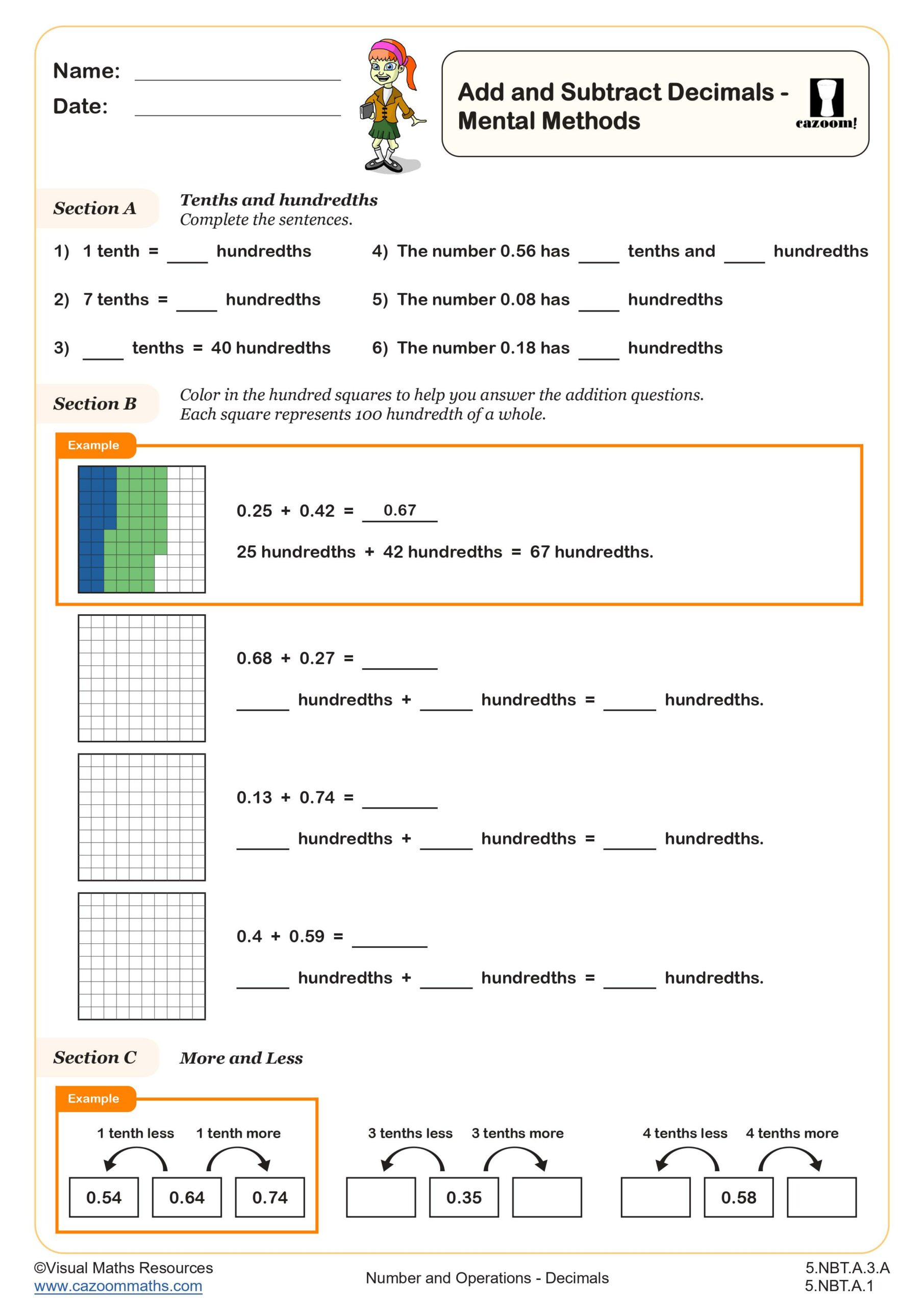
Add and Subtract Decimals - Mental Methods
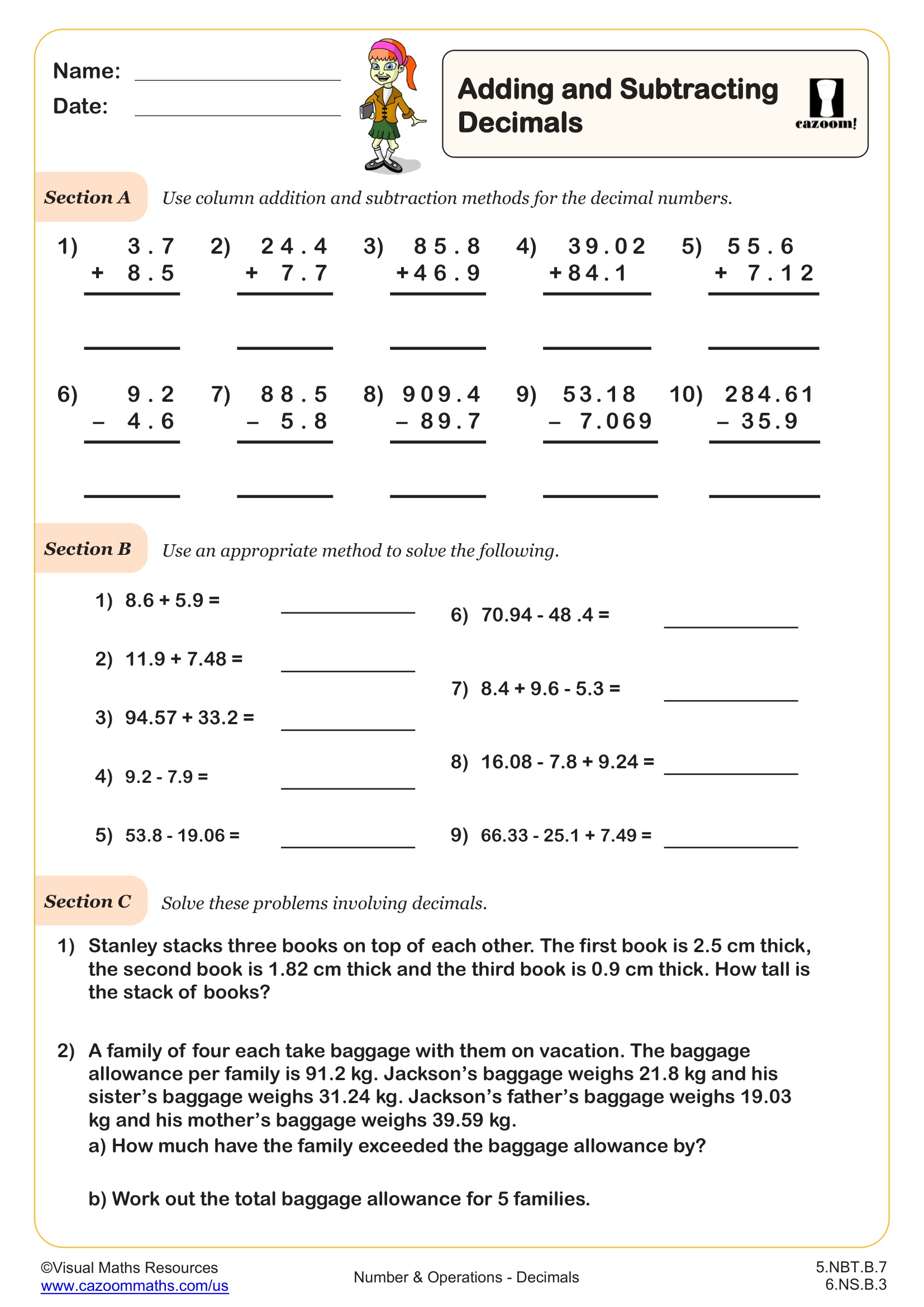
Adding and Subtracting Decimals
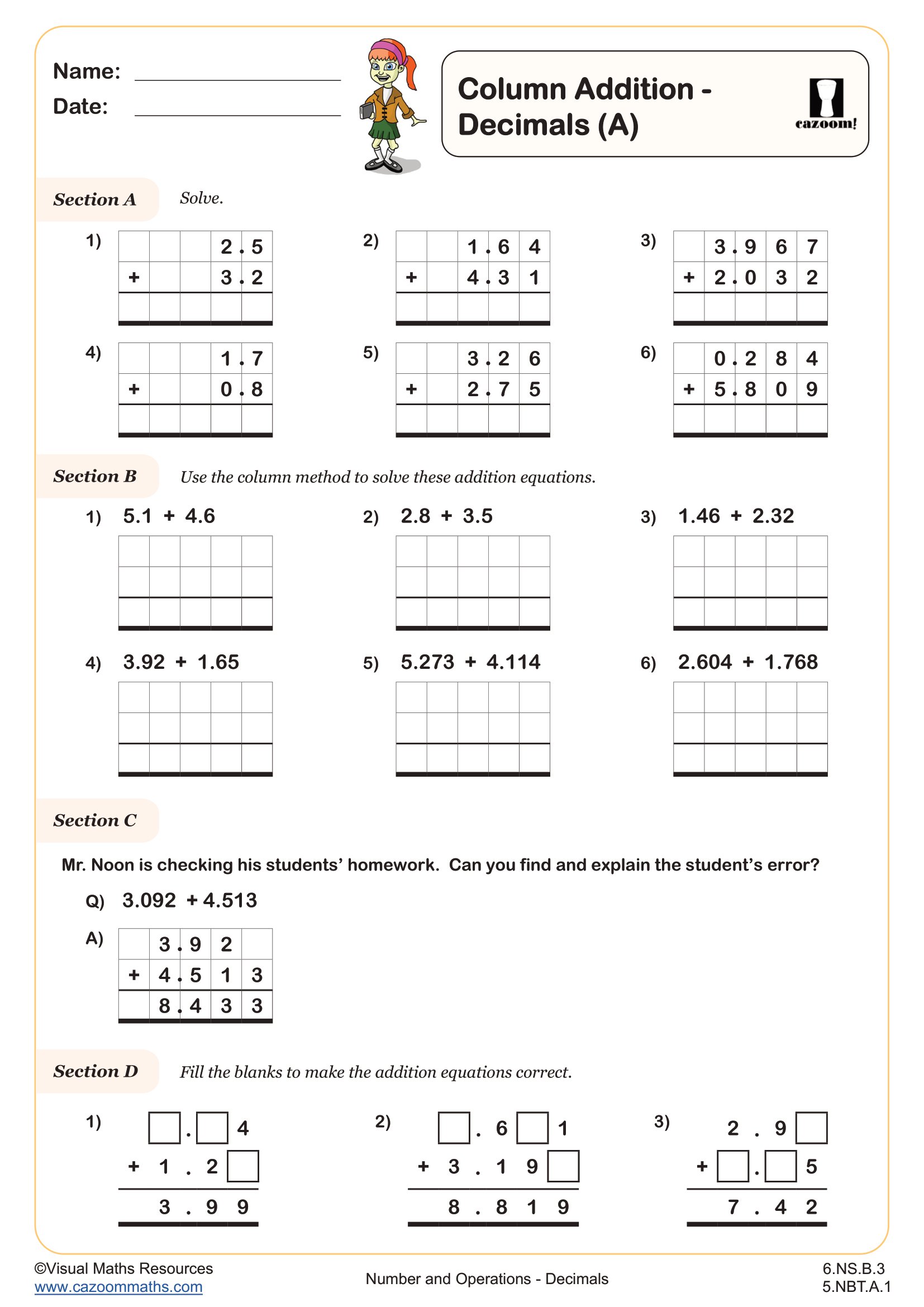
Column Addition - Decimals A
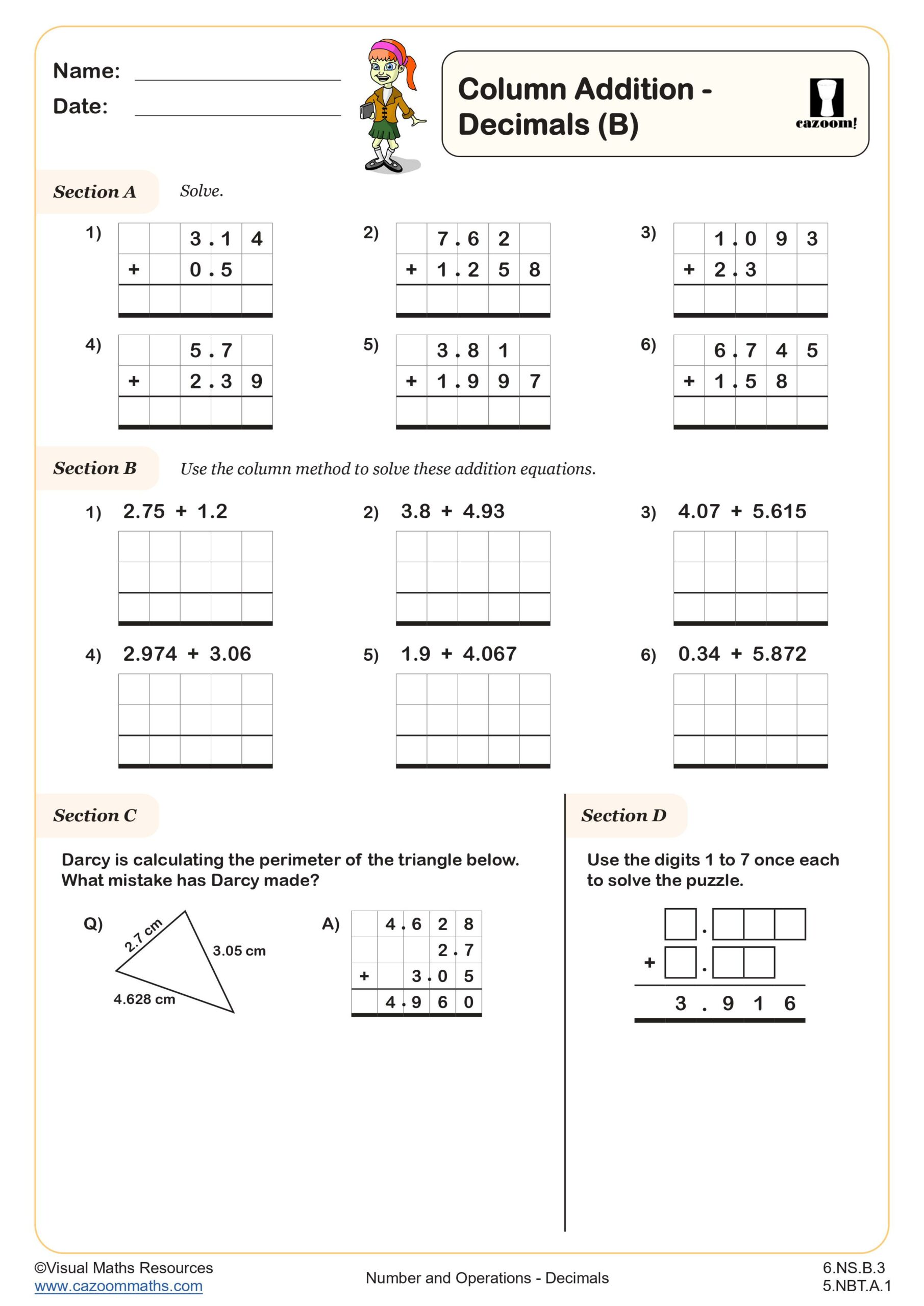
Column Addition - Decimals B
Comparing Decimals
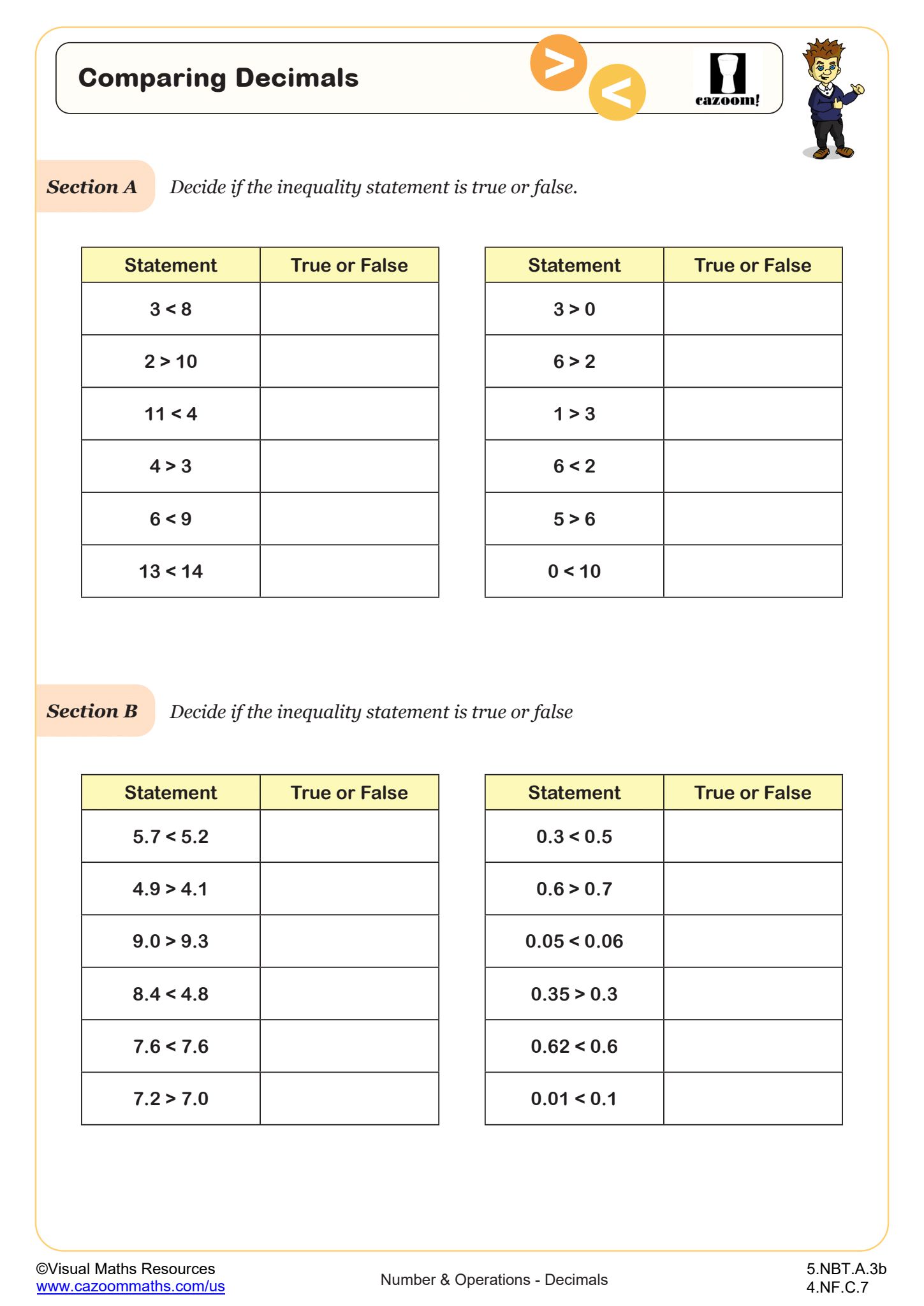
Comparing Decimlas (A)
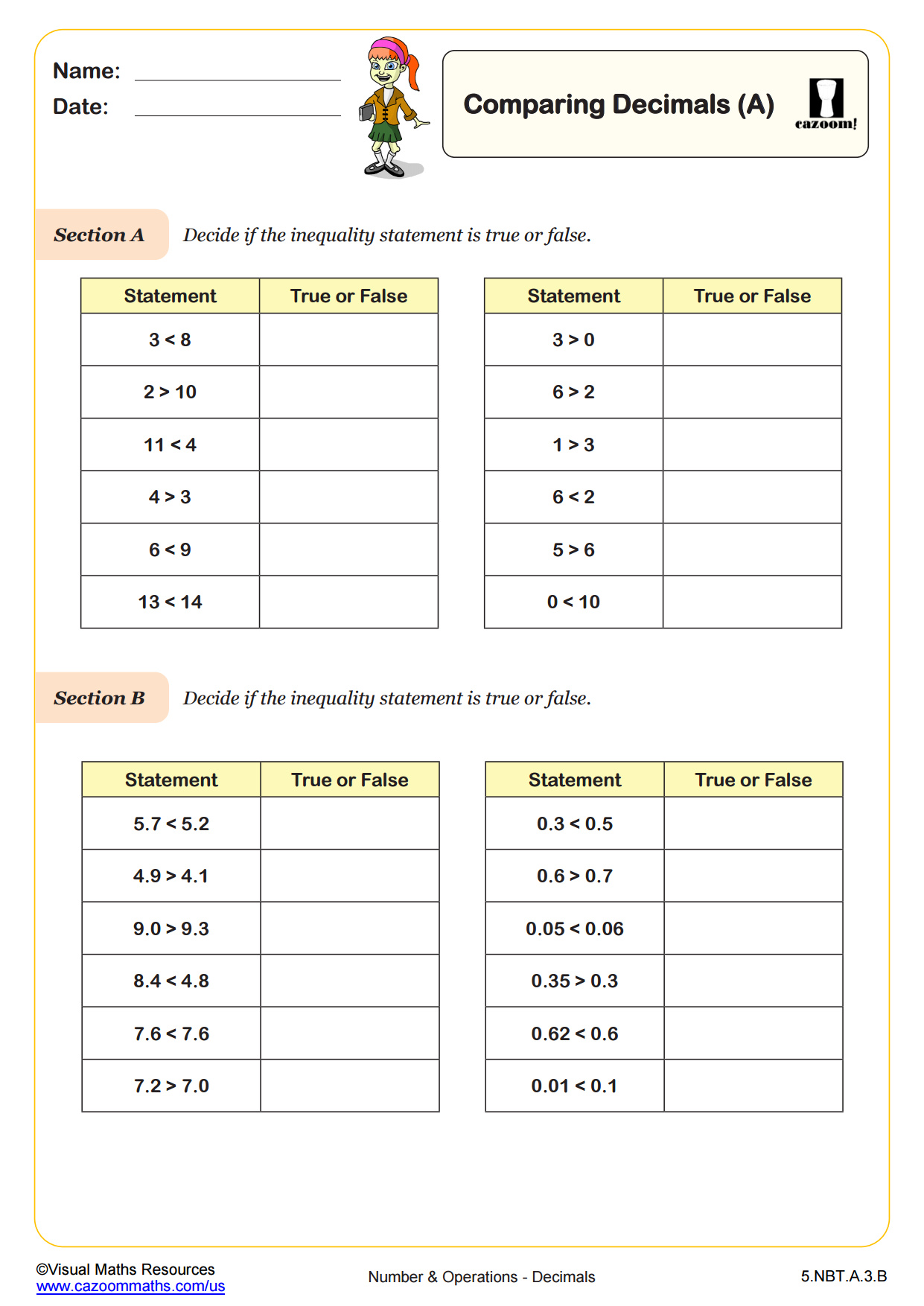
Counting in Tenths (A)
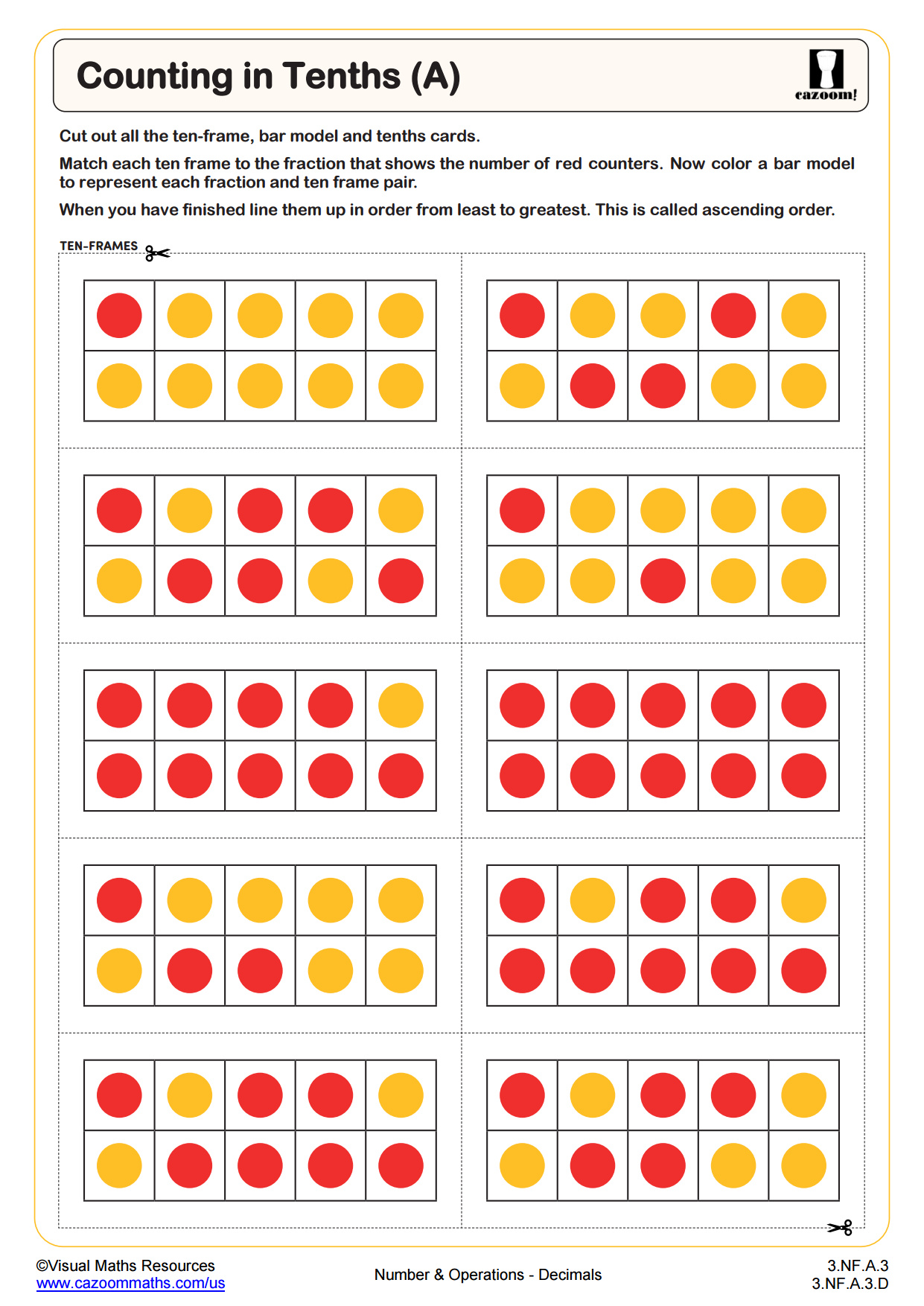
Crack the Code - Decimals
Decimal Operations Mixed Practice
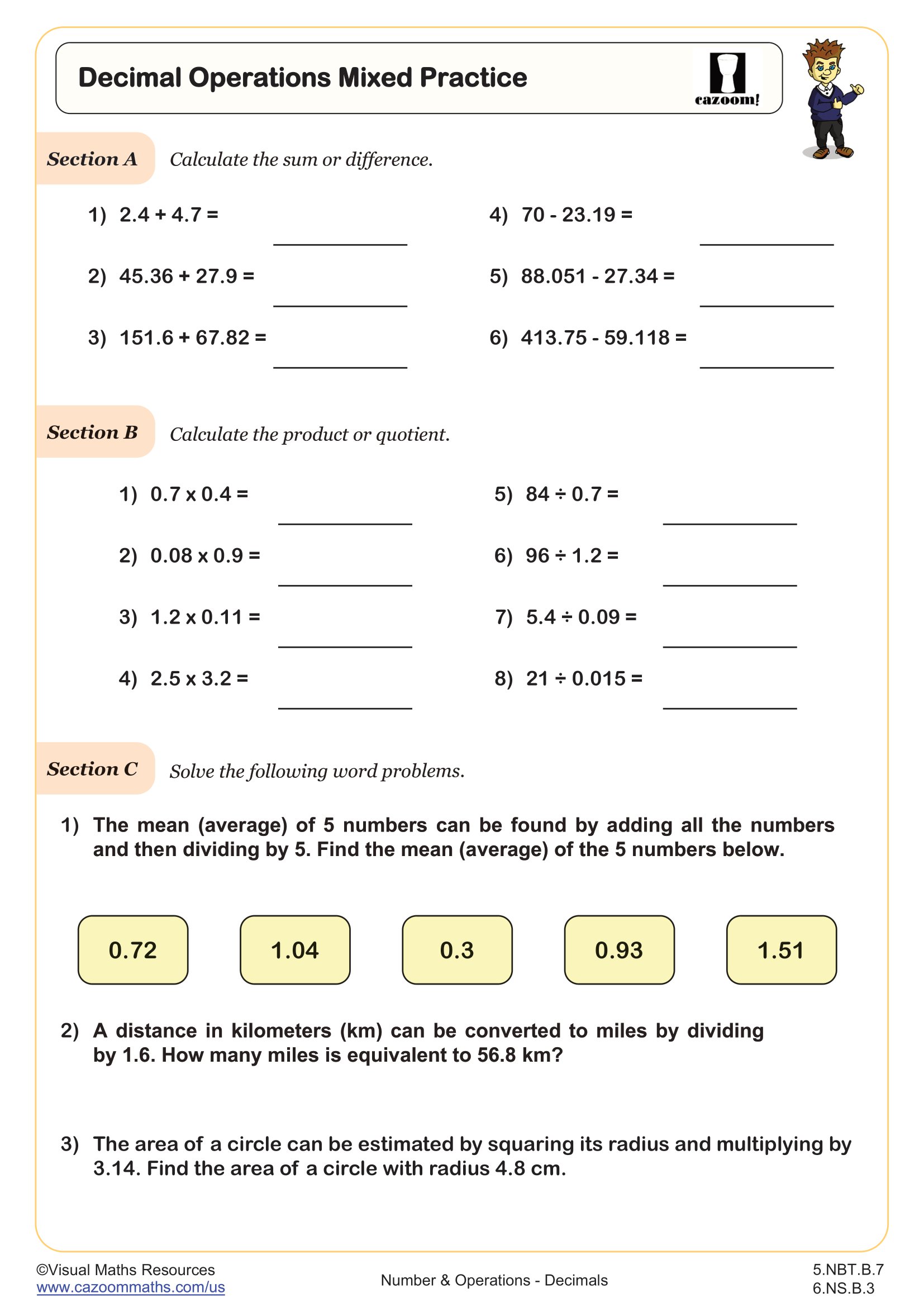
Decimal Operations Ten Minute Challenge
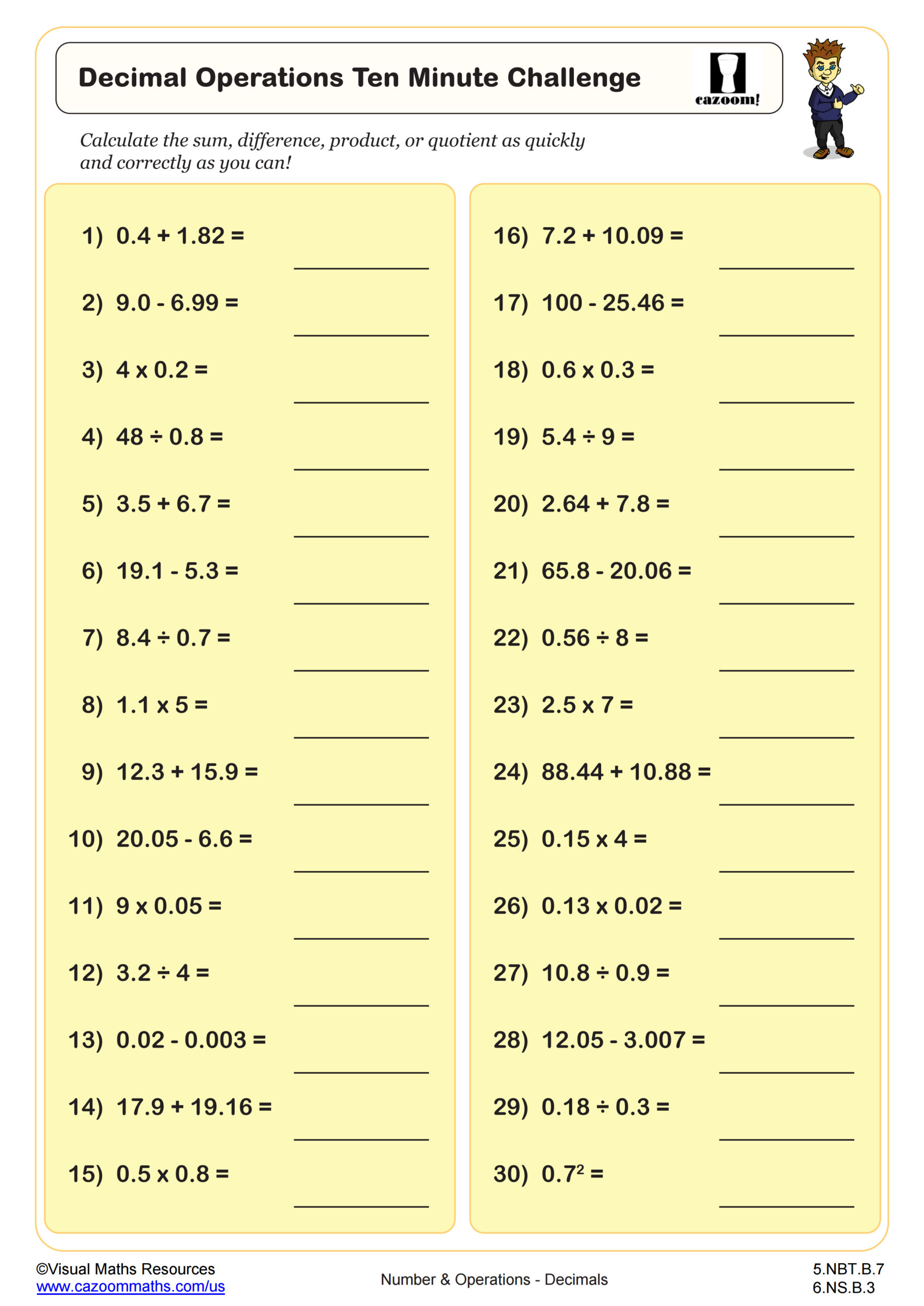
Decimals on Number Lines
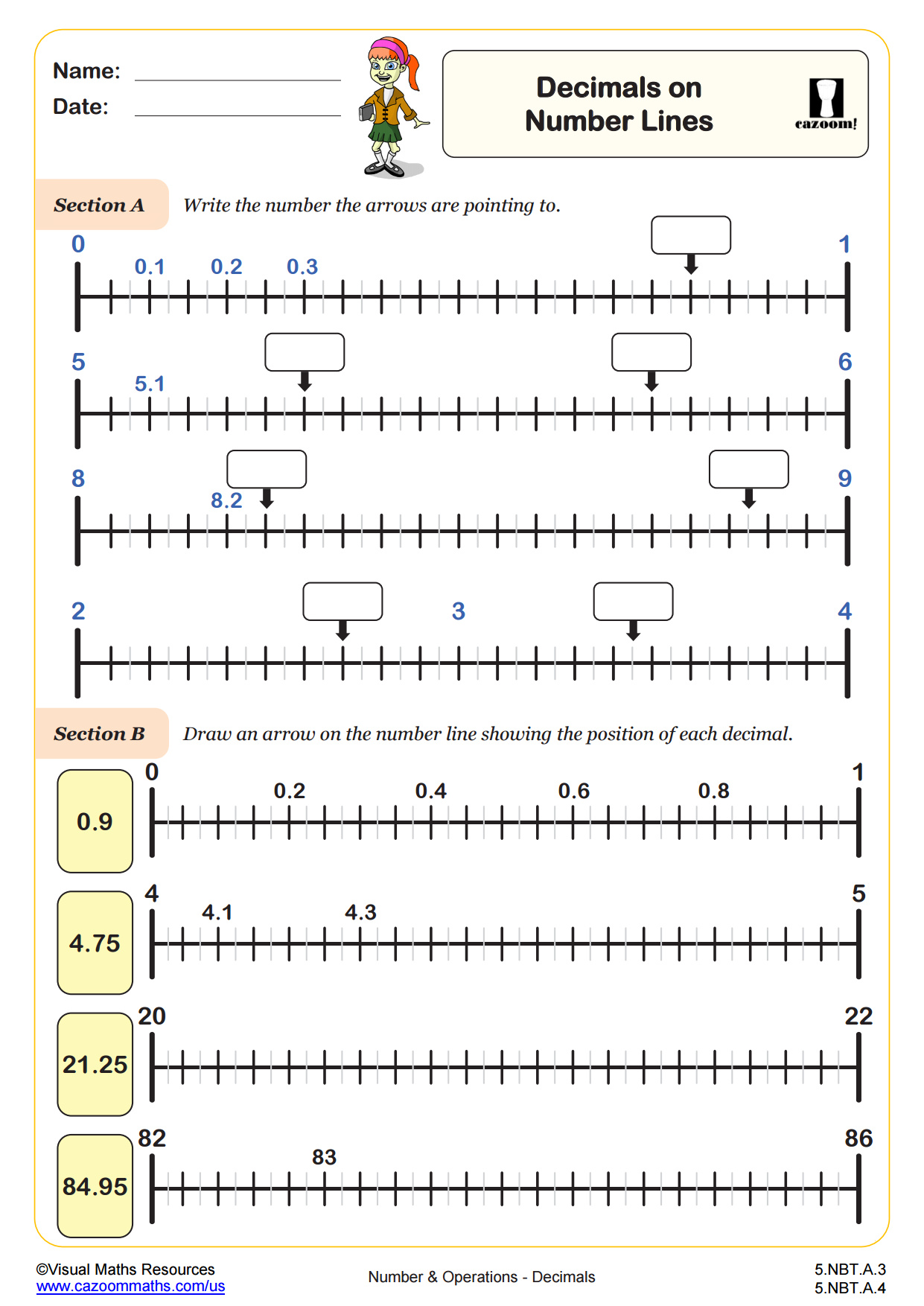
Design Your Own Code Breaker (B)
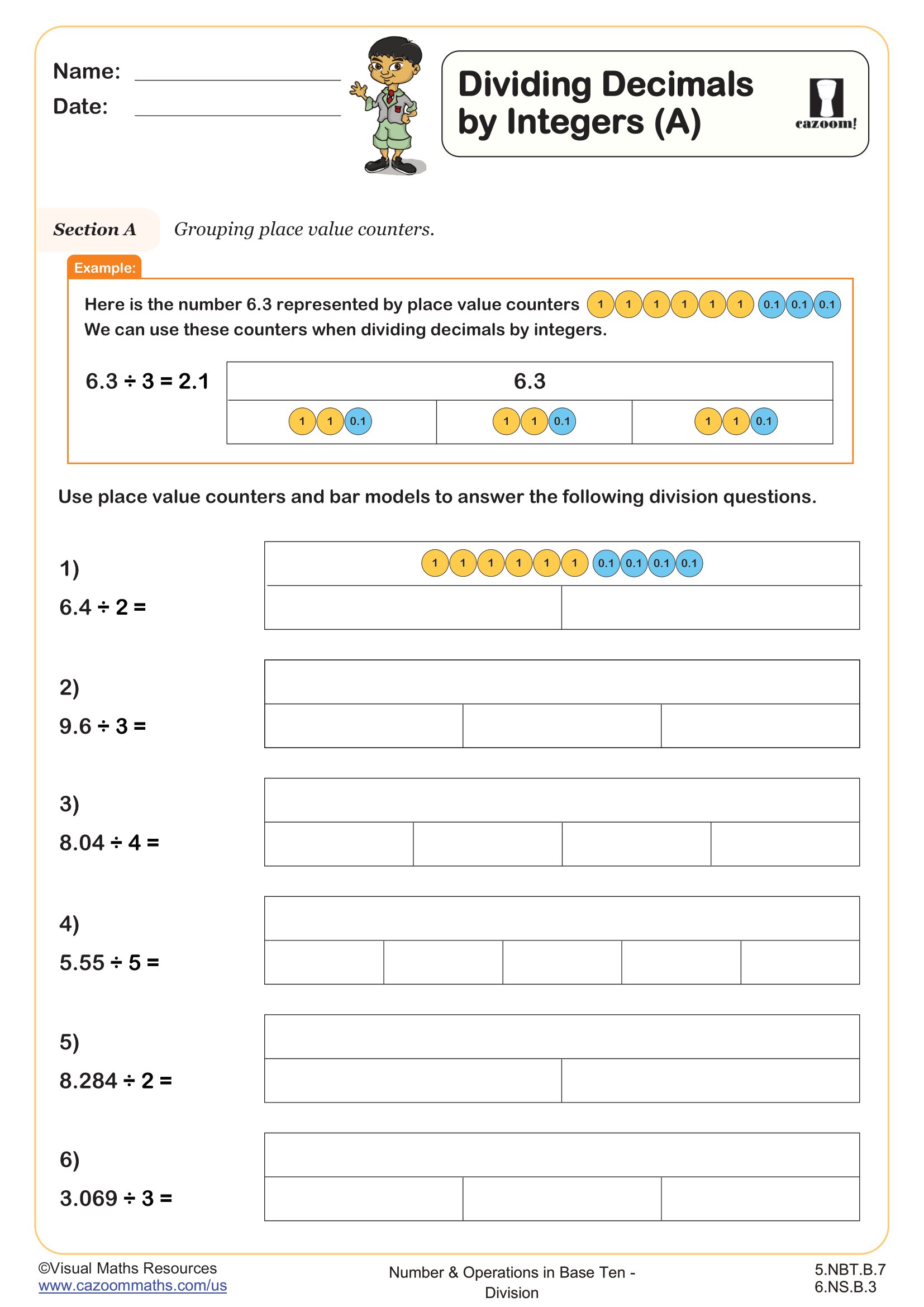
Divide Decimals by Integers (A)
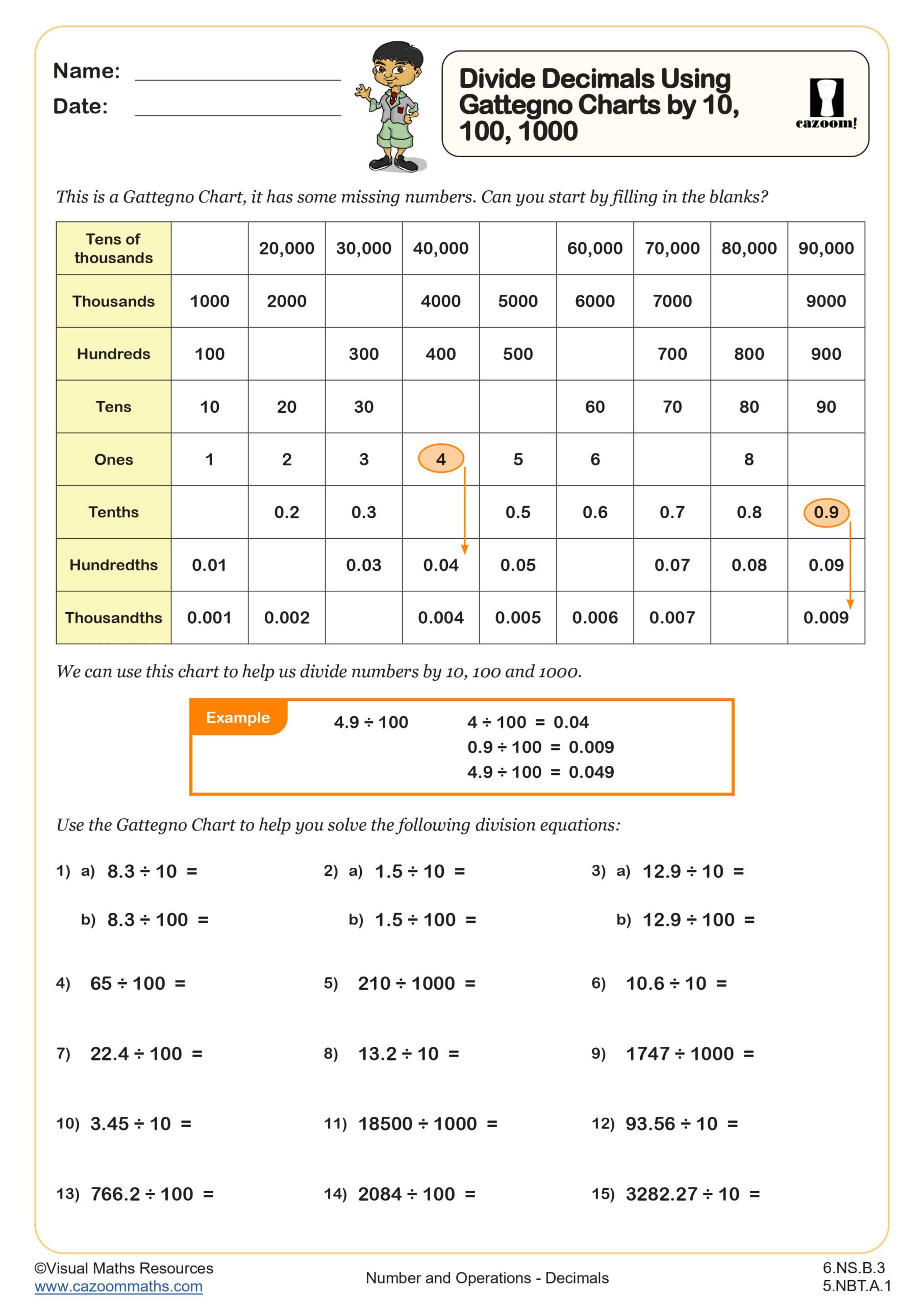
Divide Decimals Using Gattegno Charts by 10, 100, 1000
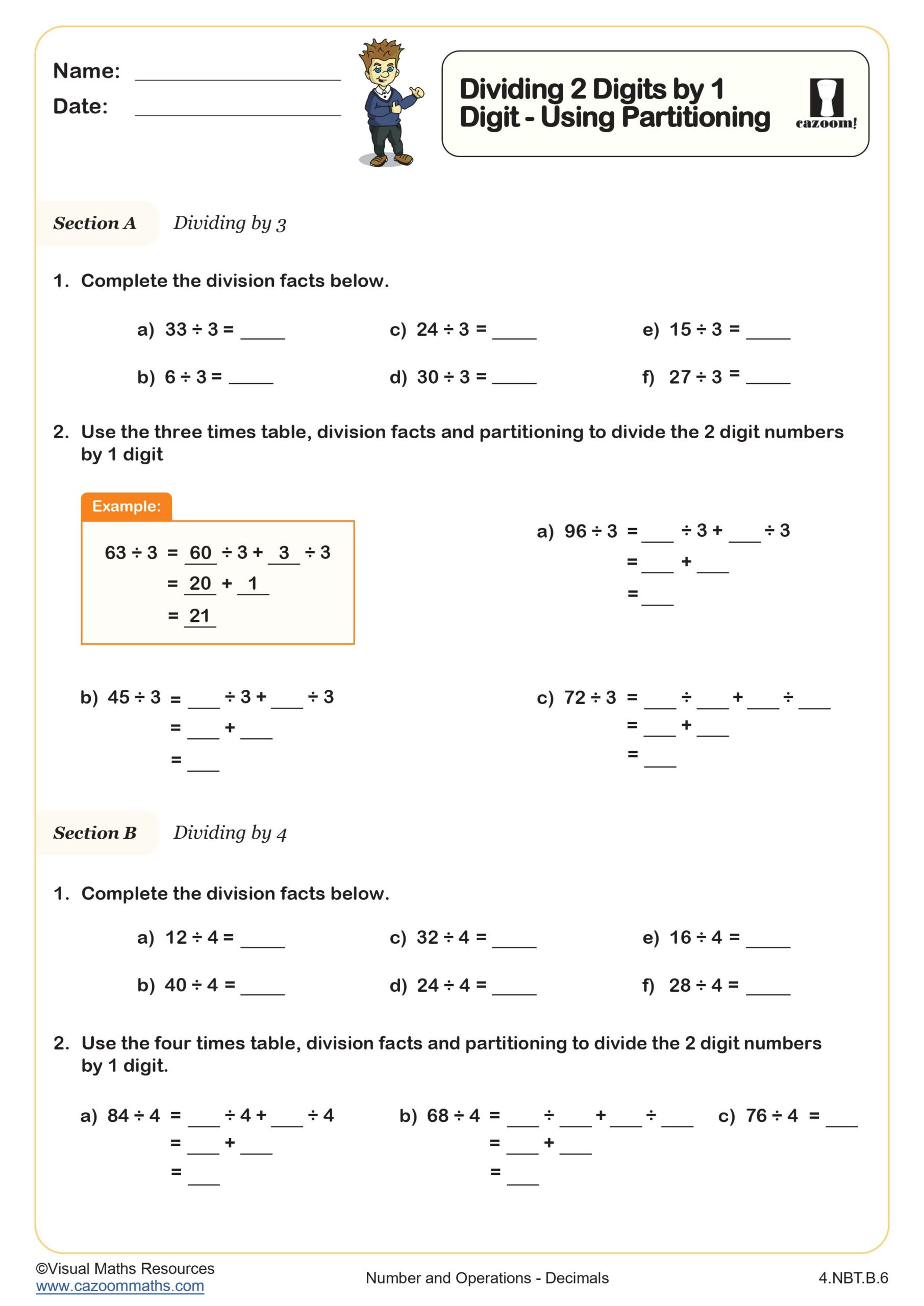
Dividing 2 Digits by 1 Digit - Using Partitioning
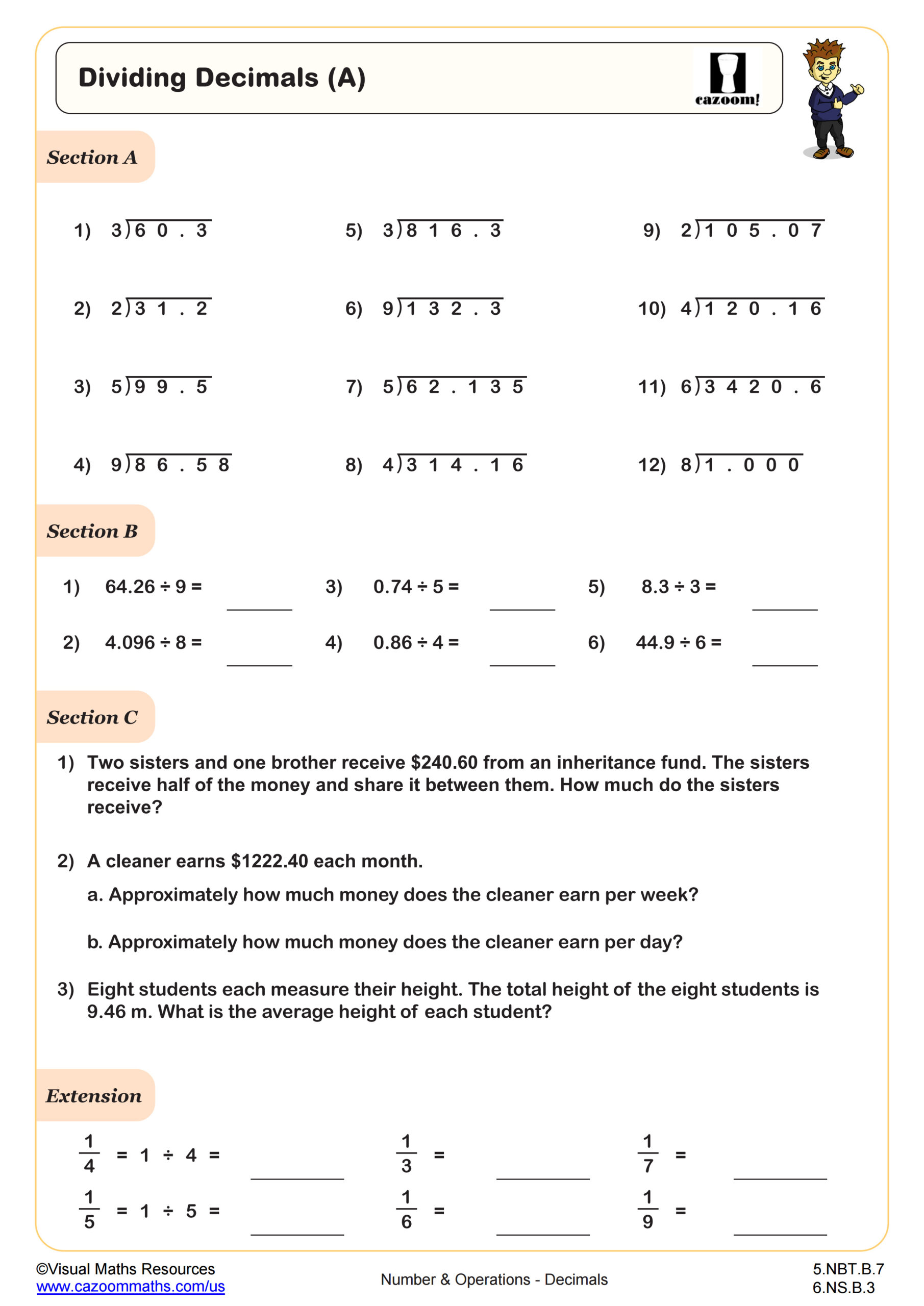
Dividing Decimals (A)
Dividing Decimals (B)
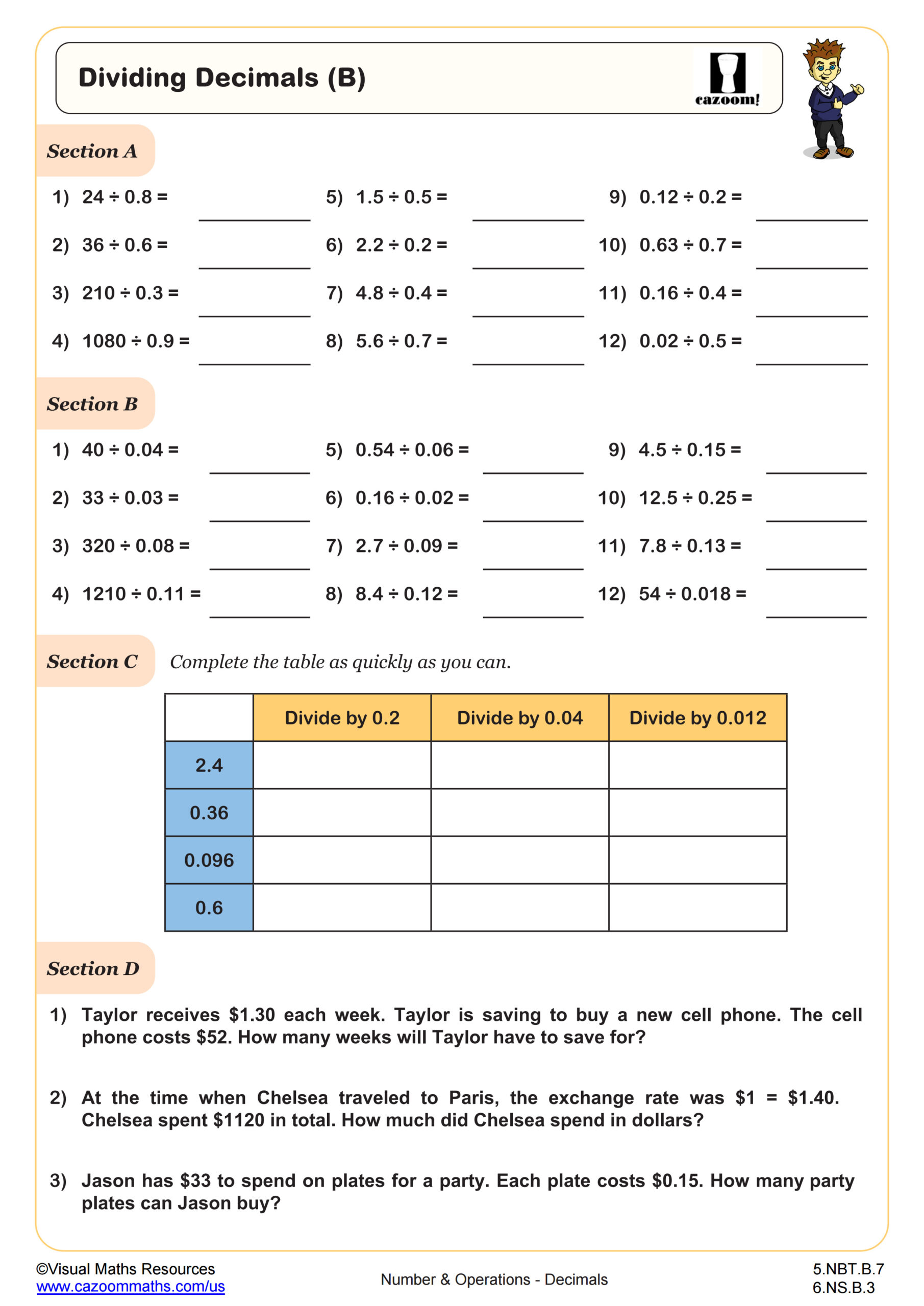
Making One
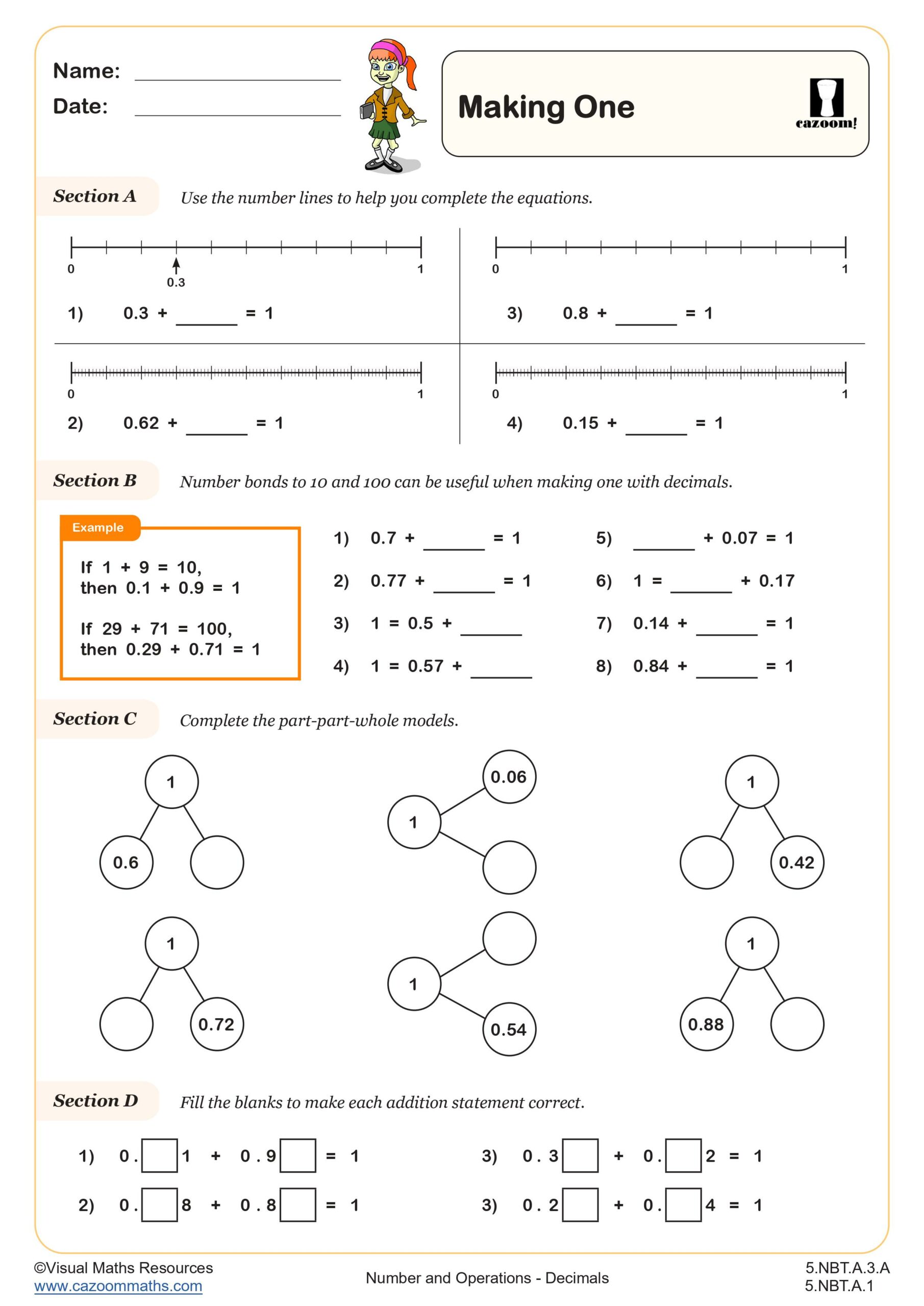
Measurement Conversions: Time - Minutes and Hours (B)
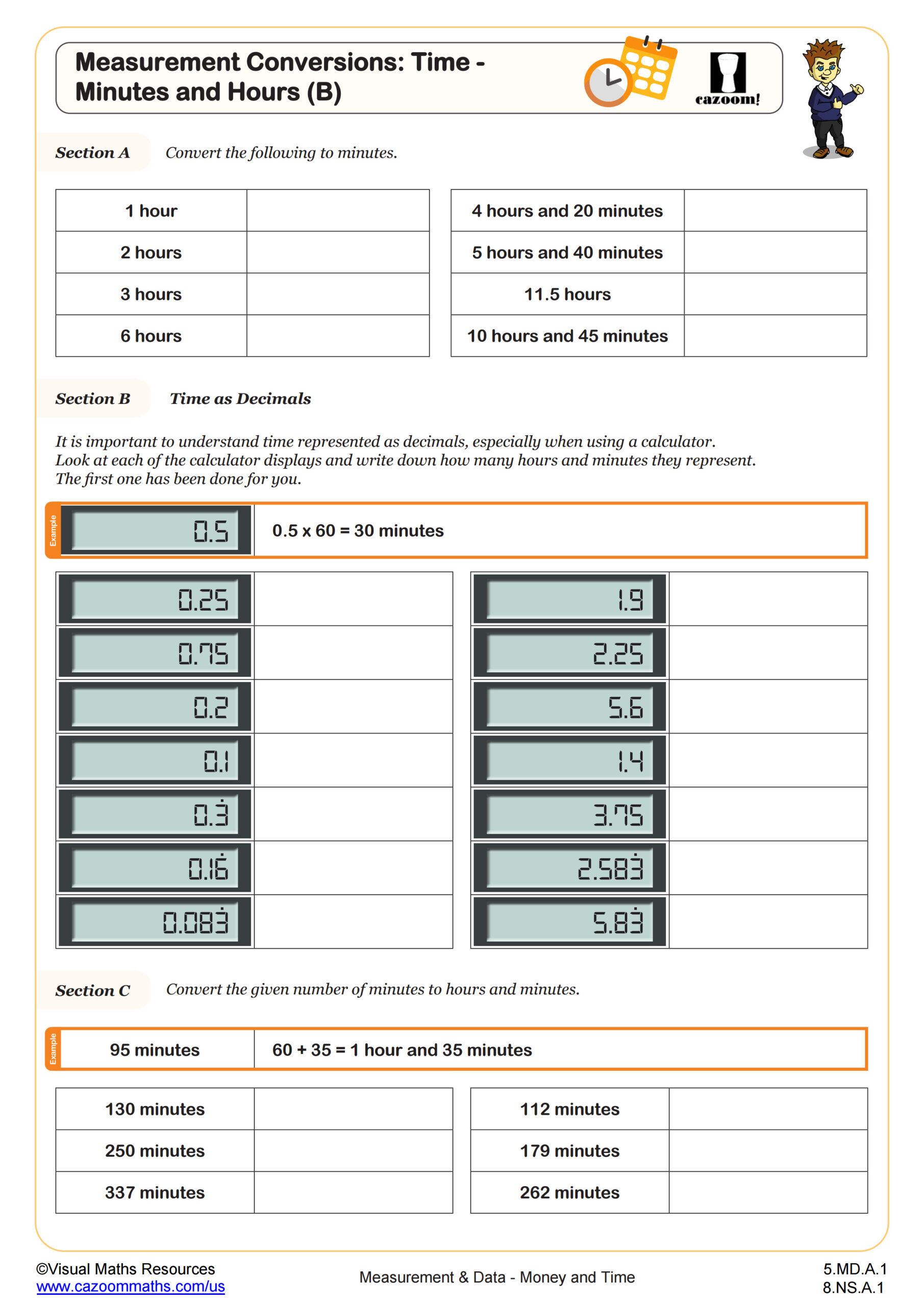
Multiply decimals by integers
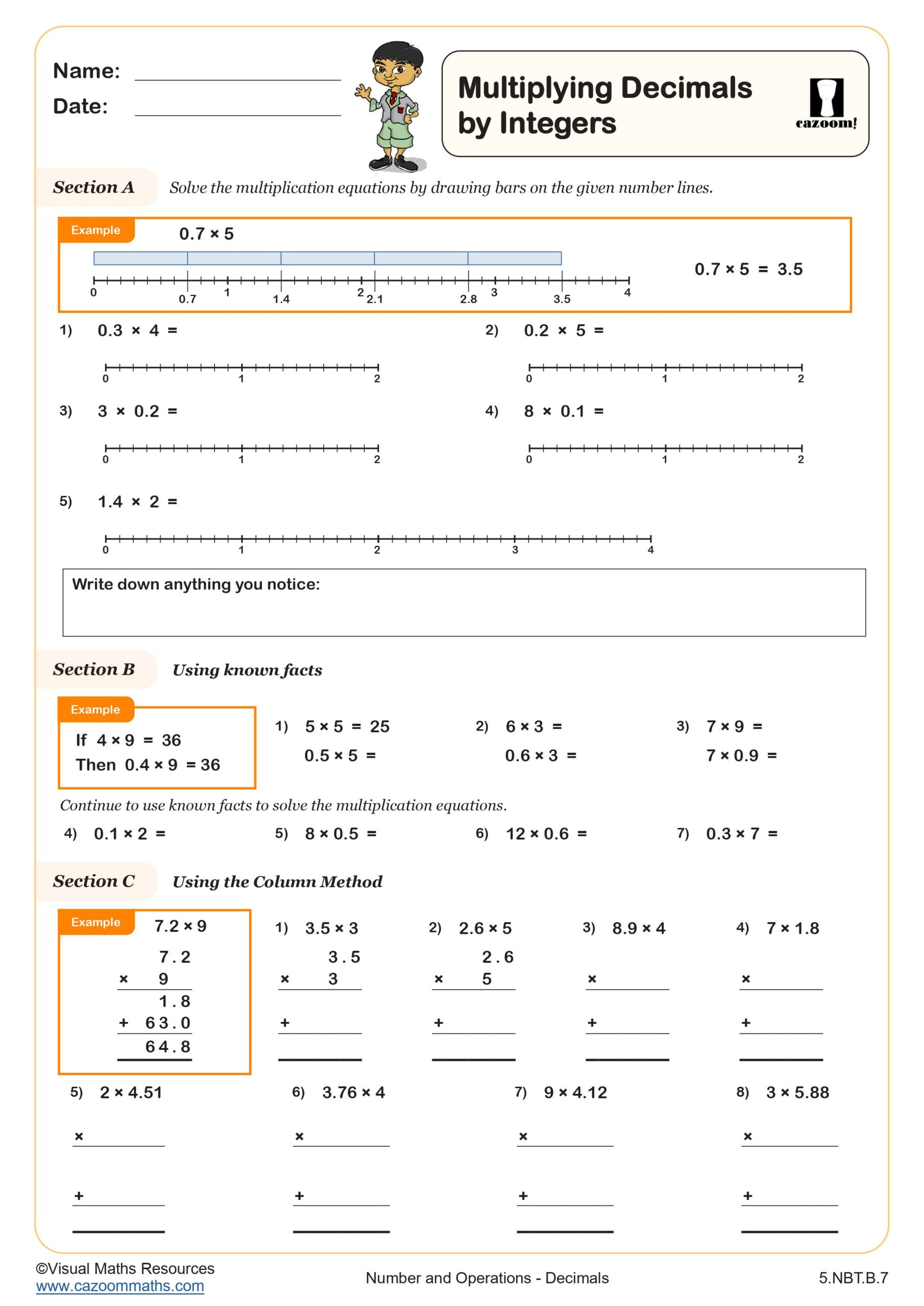
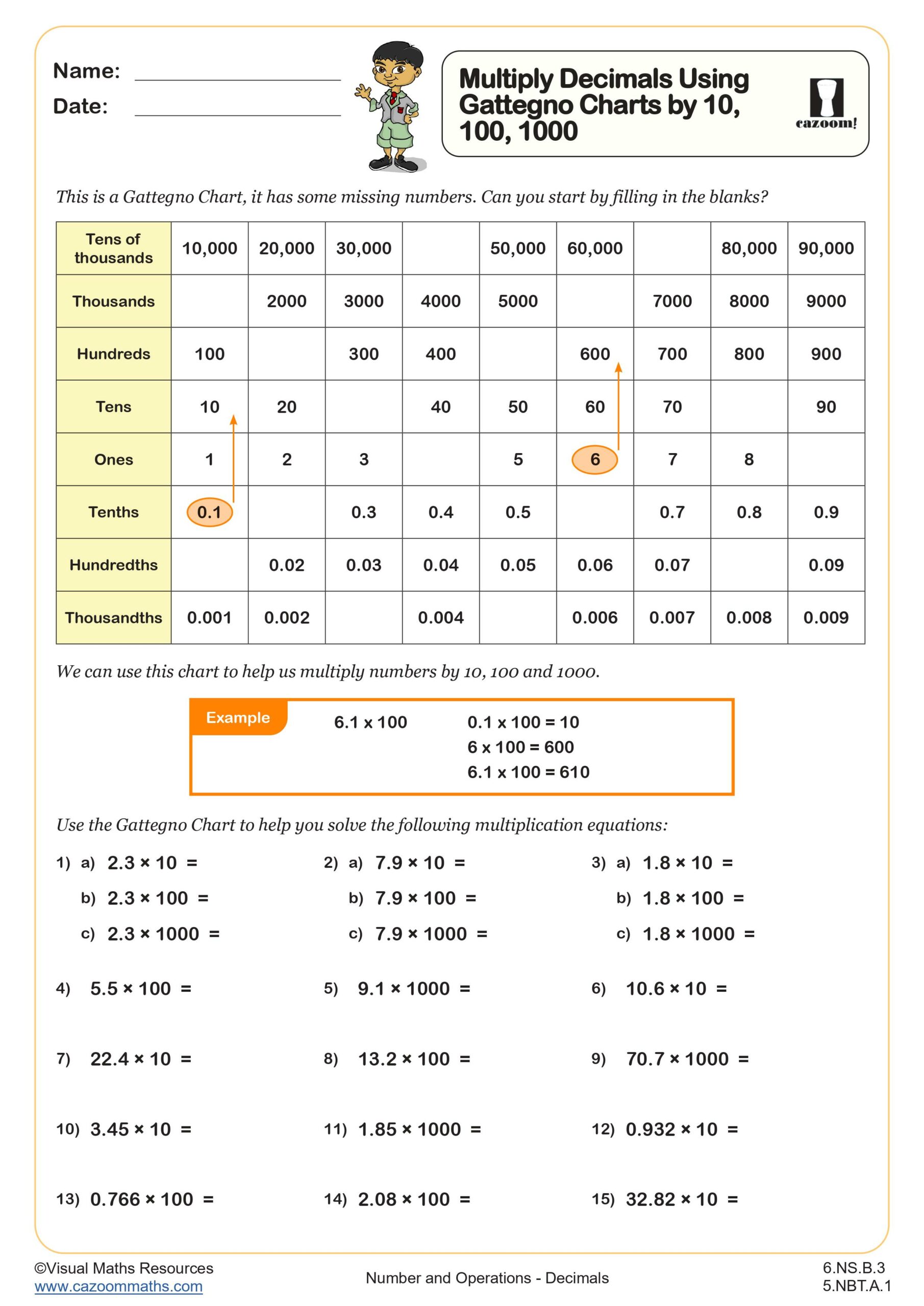
Multiply Decimals Using Gattegno Charts by 10, 100, 1000
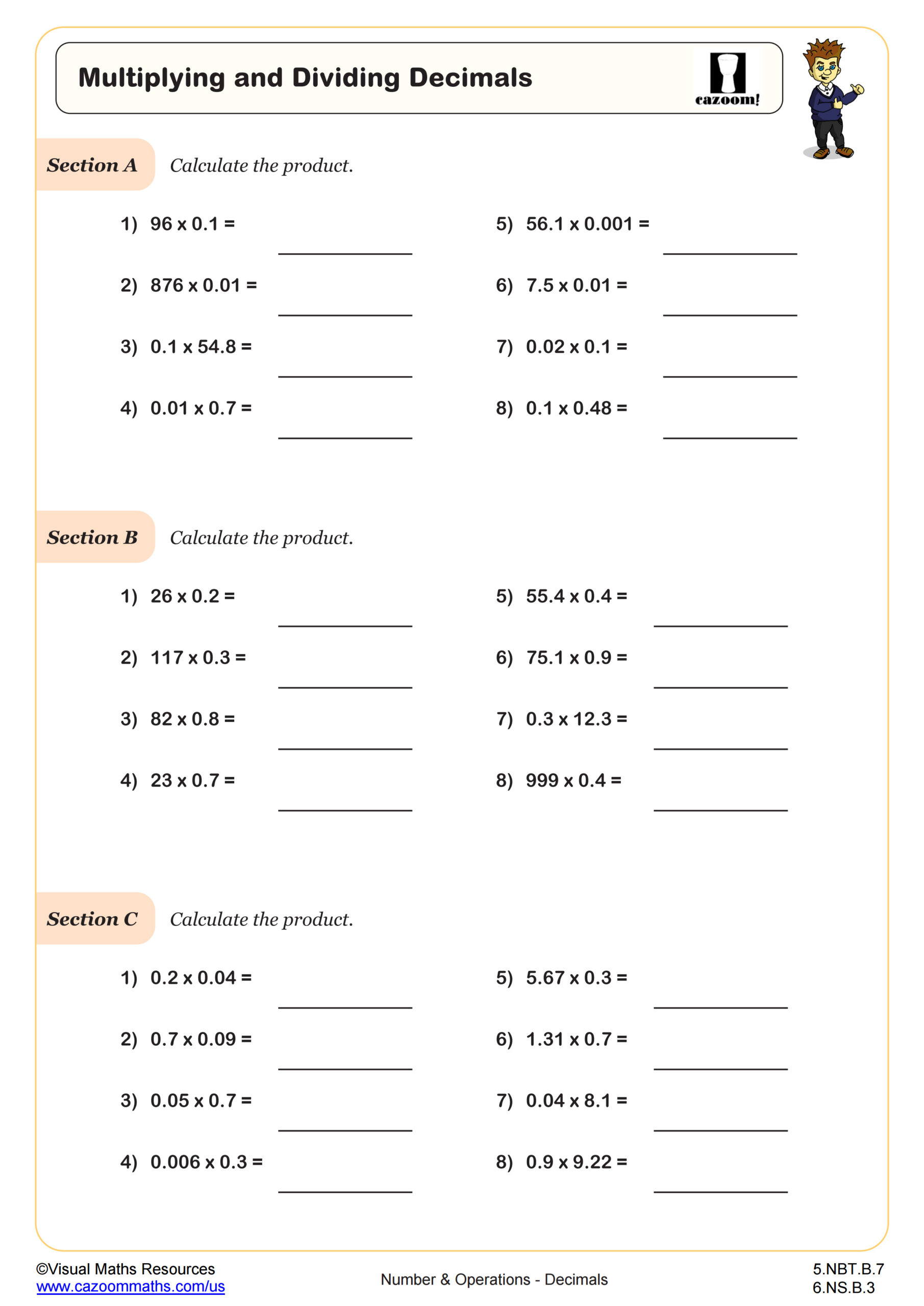
Multiplying and Dividing Decimals
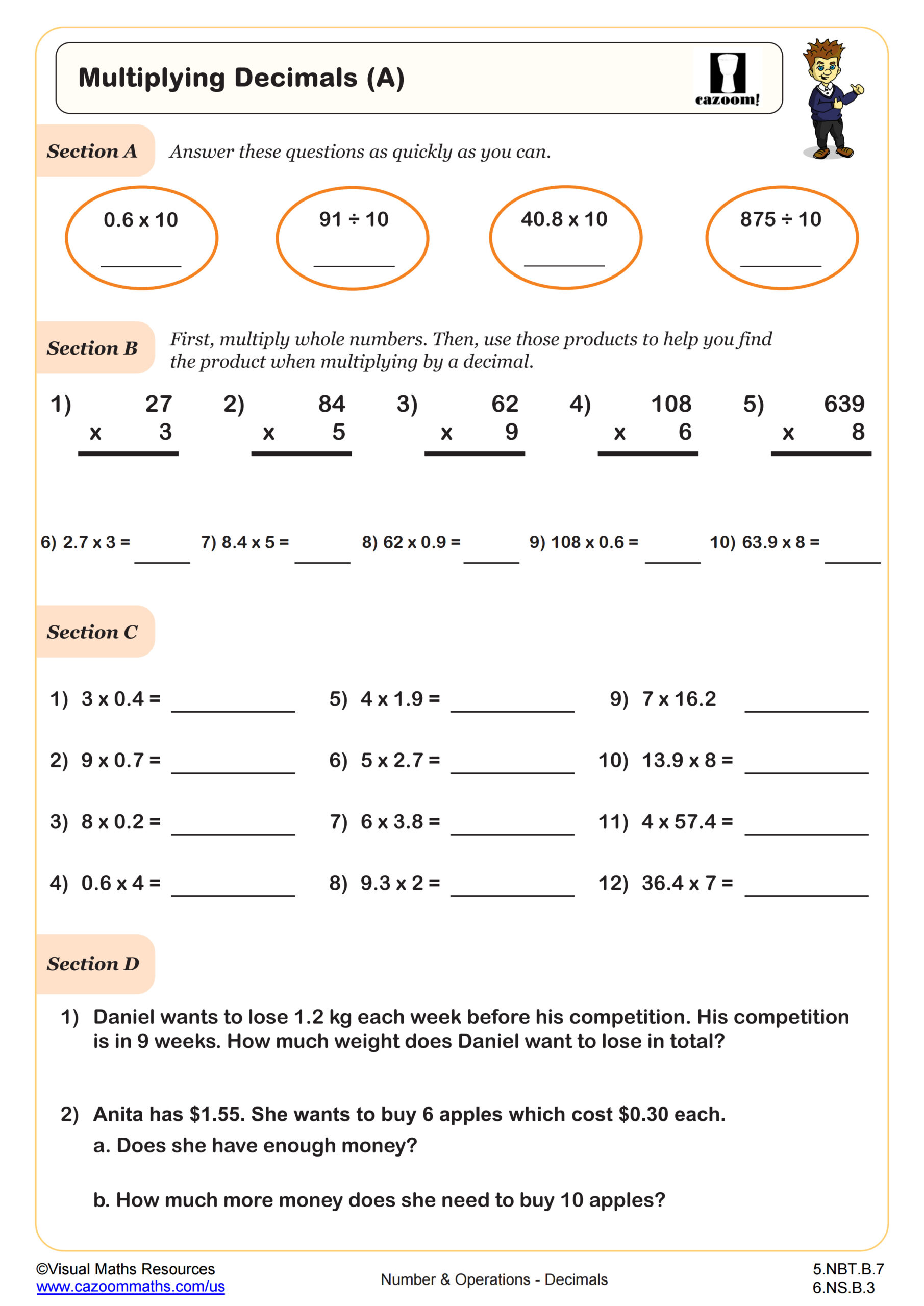
Multiplying Decimals (A)
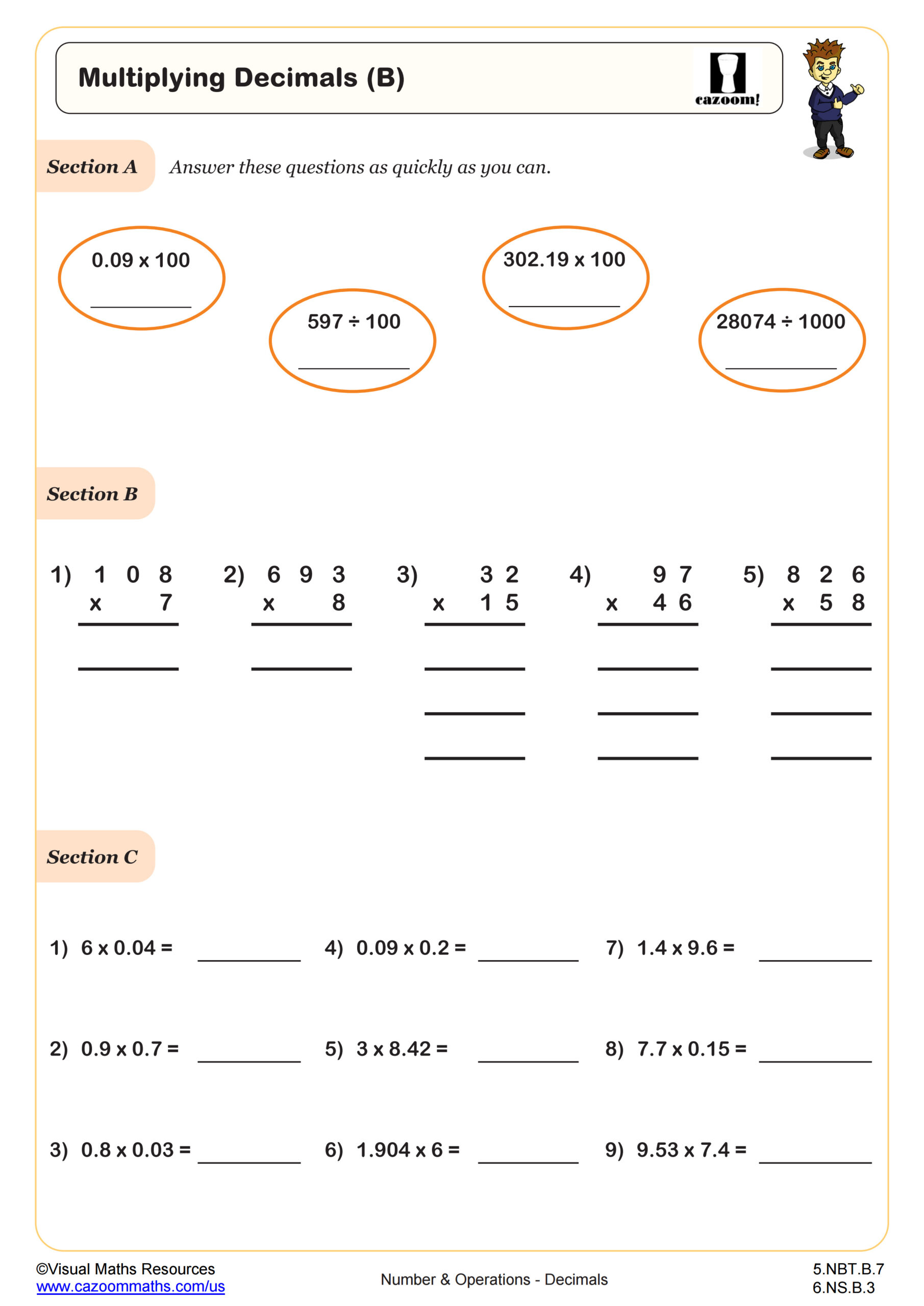
Multiplying Decimals (B)
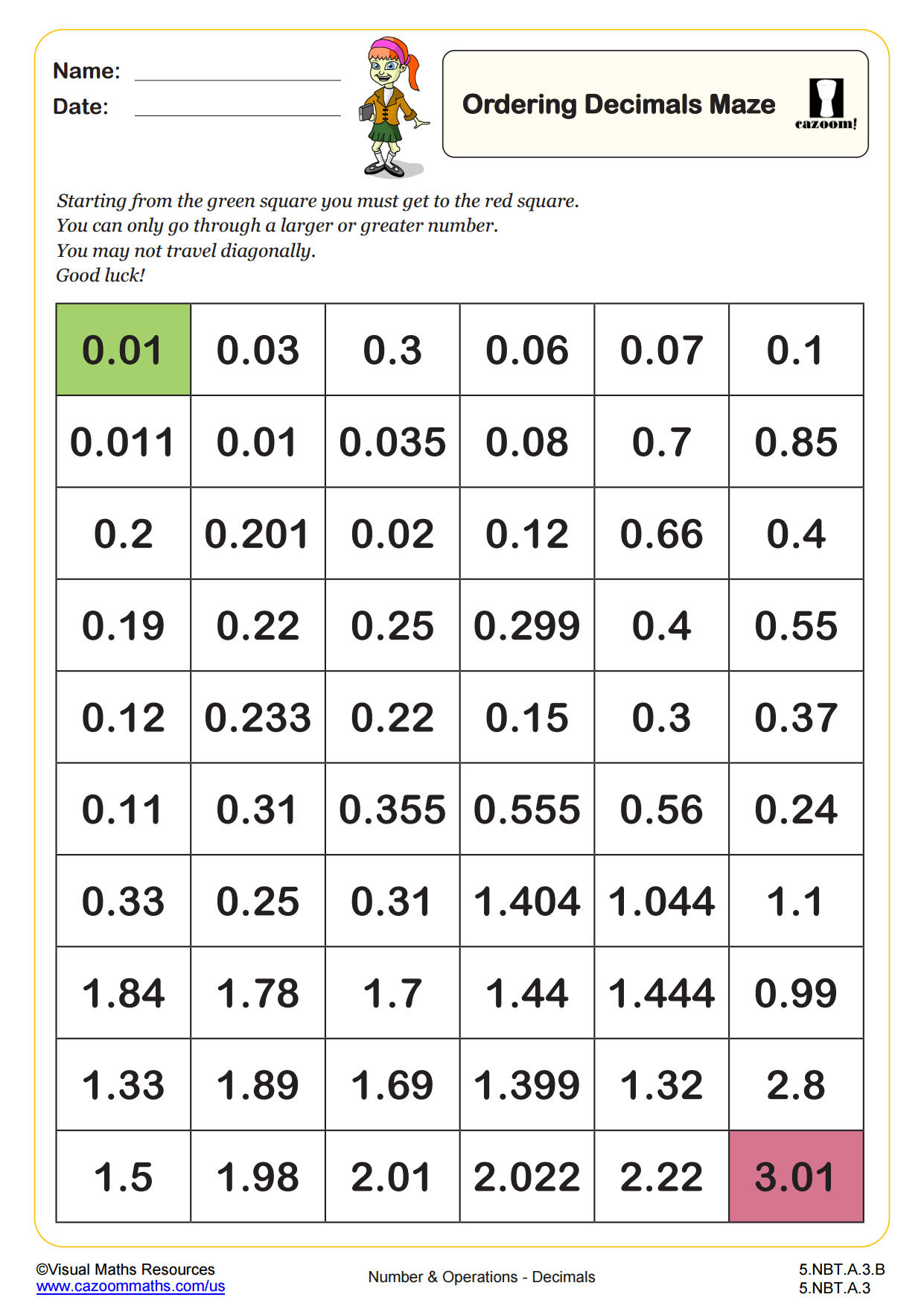
Ordering Decimals Maze
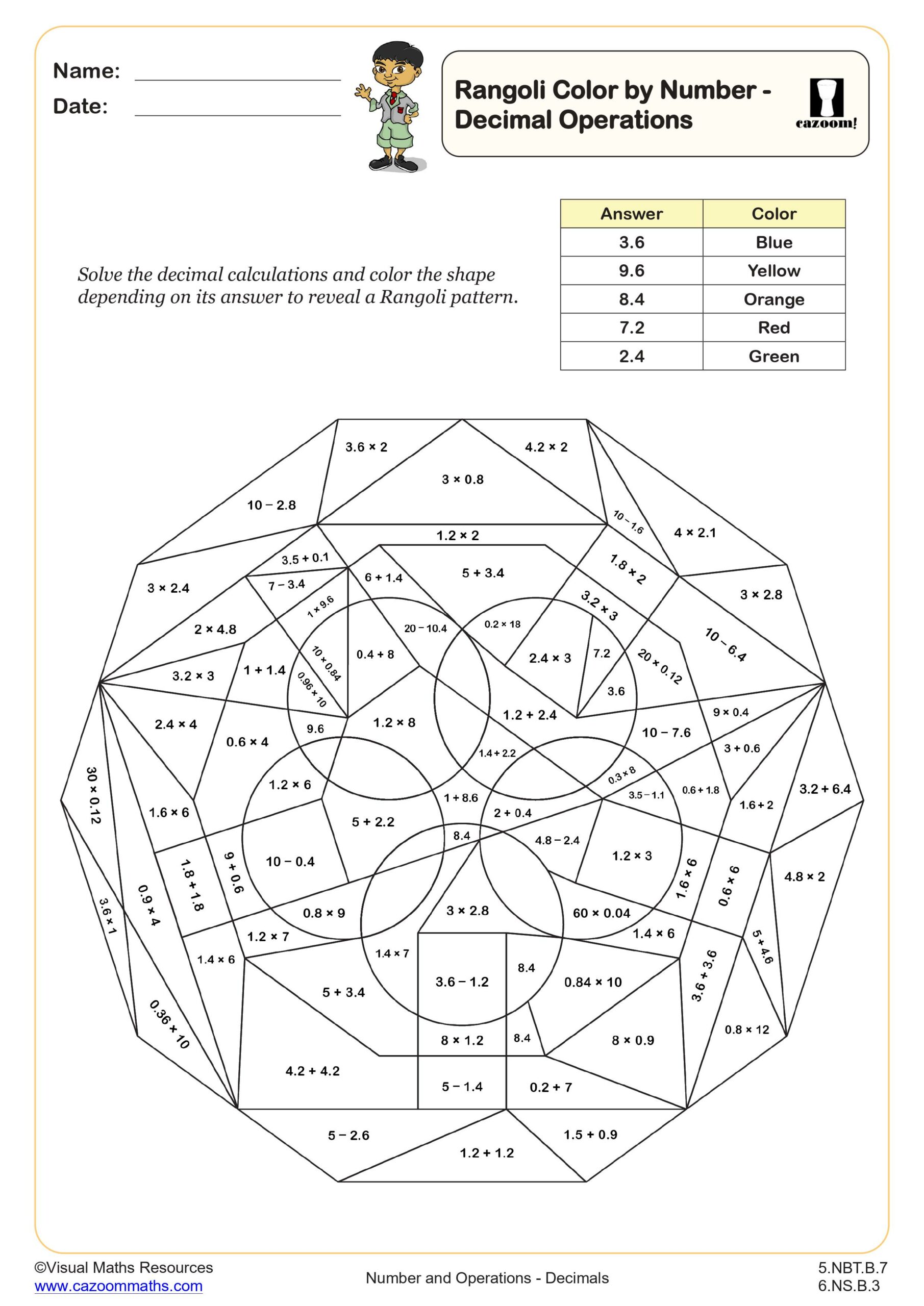
Rangoli Color by Number - Decimal Operations
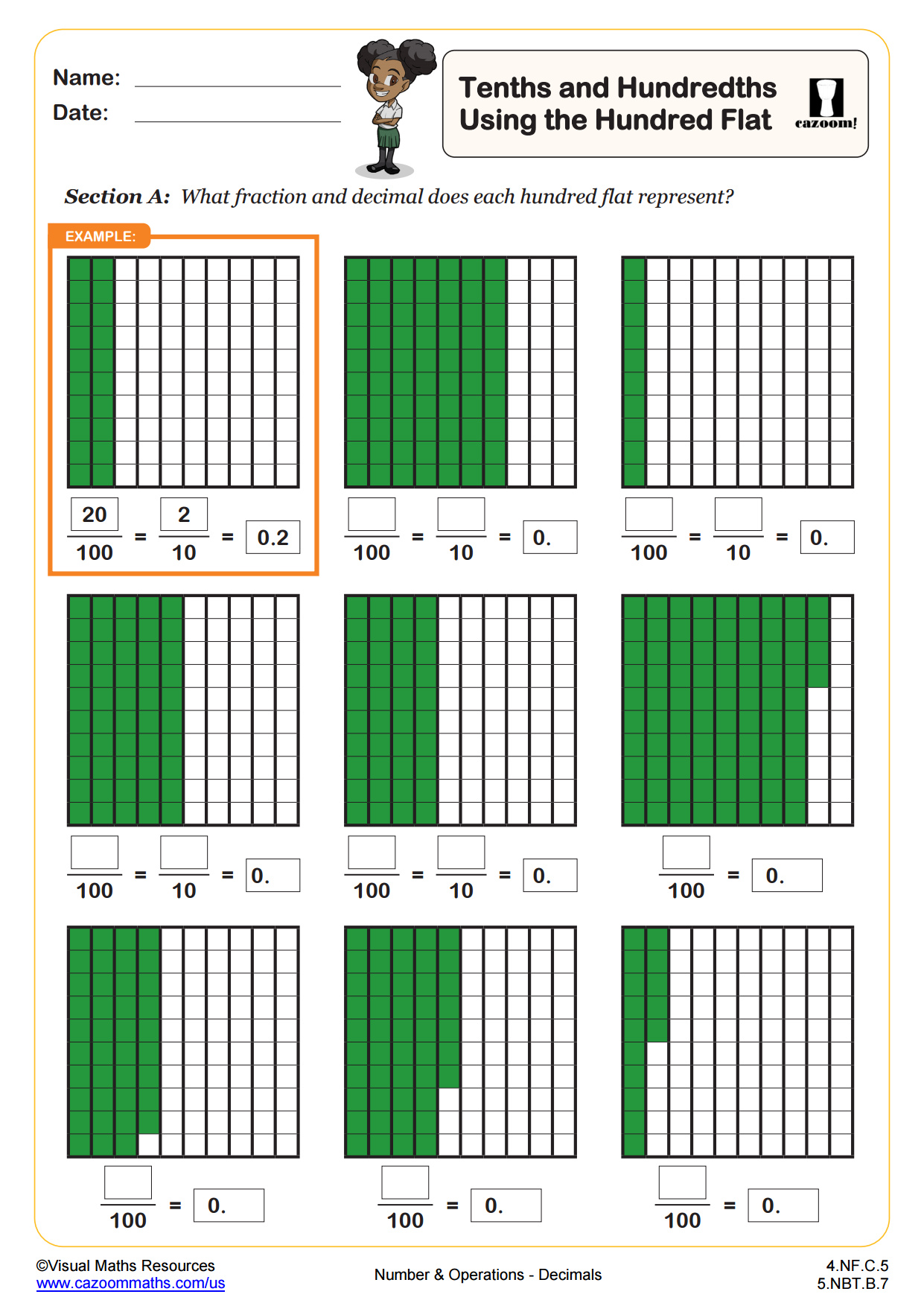
Tenths And Hundredths Using The Hundred Flat
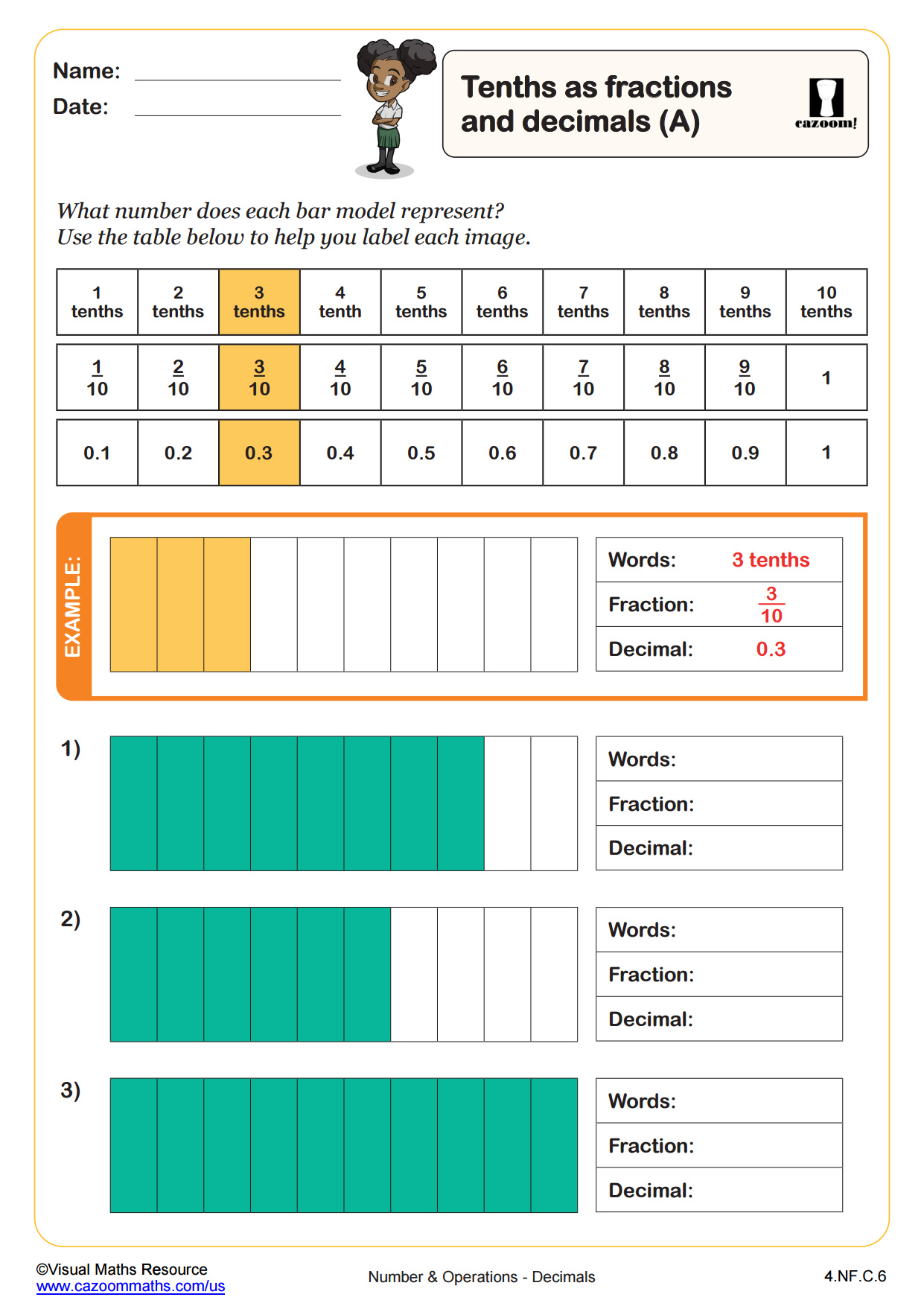
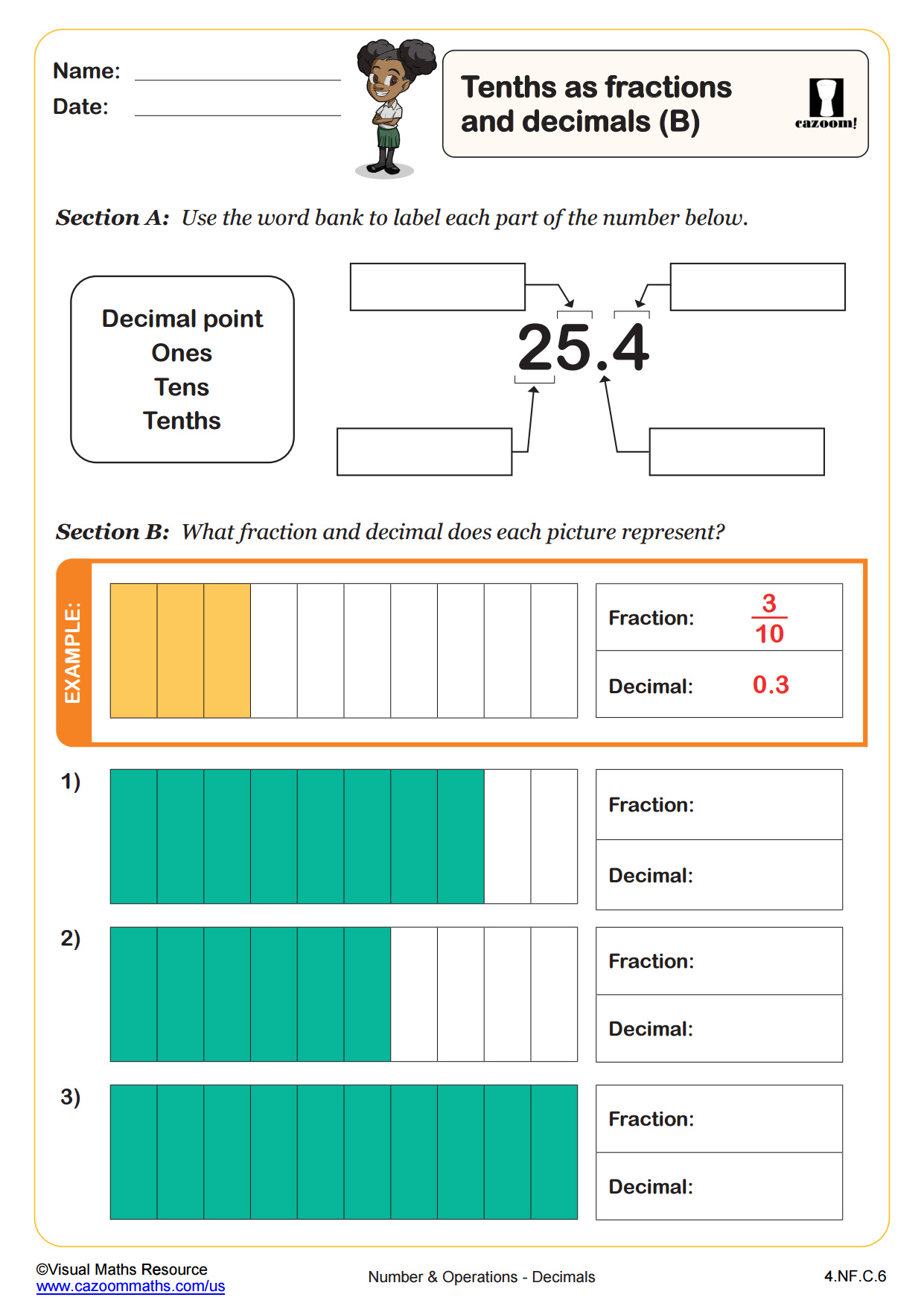
Tenths as Fractions and Decimals (A)
Tenths as Fractions and Decimals (B)
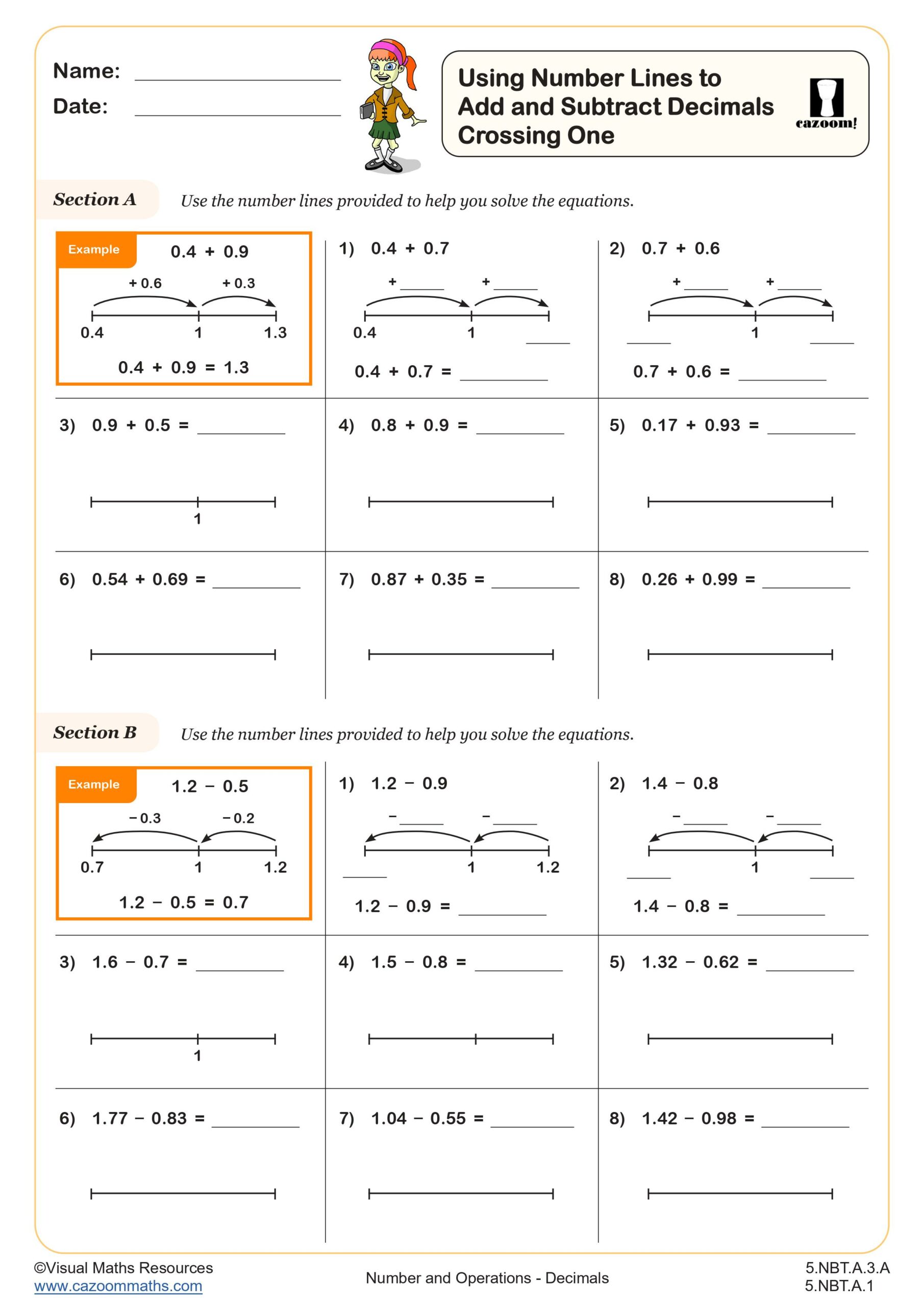
Using Number Lines to Add and Subtract Decimals Crossing One
All worksheets are created by the team of experienced teachers at Cazoom Math.
What skills do elementary students practice with decimals worksheets?
Elementary decimals worksheets focus on foundational concepts aligned with Common Core standards for grades 4-6. Students practice identifying decimal place values, reading decimals aloud, writing decimals in expanded form, and comparing decimal numbers using inequality symbols. The worksheets also cover basic decimal operations including addition and subtraction with like denominators.
Teachers consistently observe that students need extensive visual support when learning decimal concepts. Many worksheets incorporate base-ten blocks, number lines, and place value charts to help students conceptualize that 0.7 represents seven tenths, not seven ones. This visual approach prevents the common misconception where students treat decimals as separate whole numbers.
Which grade levels should use decimal worksheets?
Decimal instruction typically begins in 4th grade with simple tenths and hundredths, progressing through 6th grade with more complex operations. Fourth graders focus on decimal place value and equivalence, while 5th graders add comparison and basic operations. Sixth graders work with decimals to the thousandths place and multi-step problems involving decimal operations.
Grade 3 students sometimes encounter basic decimal concepts when working with money, but formal decimal instruction usually waits until 4th grade when students have solid fraction foundations. Teachers find that rushing decimal concepts before students understand place value with whole numbers often creates lasting confusion about decimal notation and comparison.
How do students learn to compare and order decimal numbers?
Comparing decimals requires students to understand that decimal place value works differently from whole numbers. Students learn to align decimal points and compare digits from left to right, starting with the tenths place. Worksheets typically progress from comparing two decimals to ordering sets of three or more decimal numbers.
A frequent error teachers encounter involves students thinking that more digits means a larger decimal, leading them to conclude that 0.125 is greater than 0.3. Effective worksheets address this misconception by including problems that specifically contrast decimals with different numbers of digits, helping students focus on place value rather than digit count when making comparisons.
How can teachers use decimal worksheets most effectively in math instruction?
Decimal worksheets work best when integrated with manipulatives and real-world contexts rather than used as isolated practice. Teachers often begin lessons with concrete materials like base-ten blocks or decimal squares before moving to worksheet problems. The answer keys allow for immediate feedback and help teachers identify which students need additional support with specific concepts.
Many educators find success using worksheets on decimals as formative assessment tools, assigning different difficulty levels based on student readiness. The variety of problem types helps teachers differentiate instruction, allowing advanced students to work with thousandths while others focus on tenths and hundredths mastery.