Elementary School Describe and Compare Shapes Worksheets
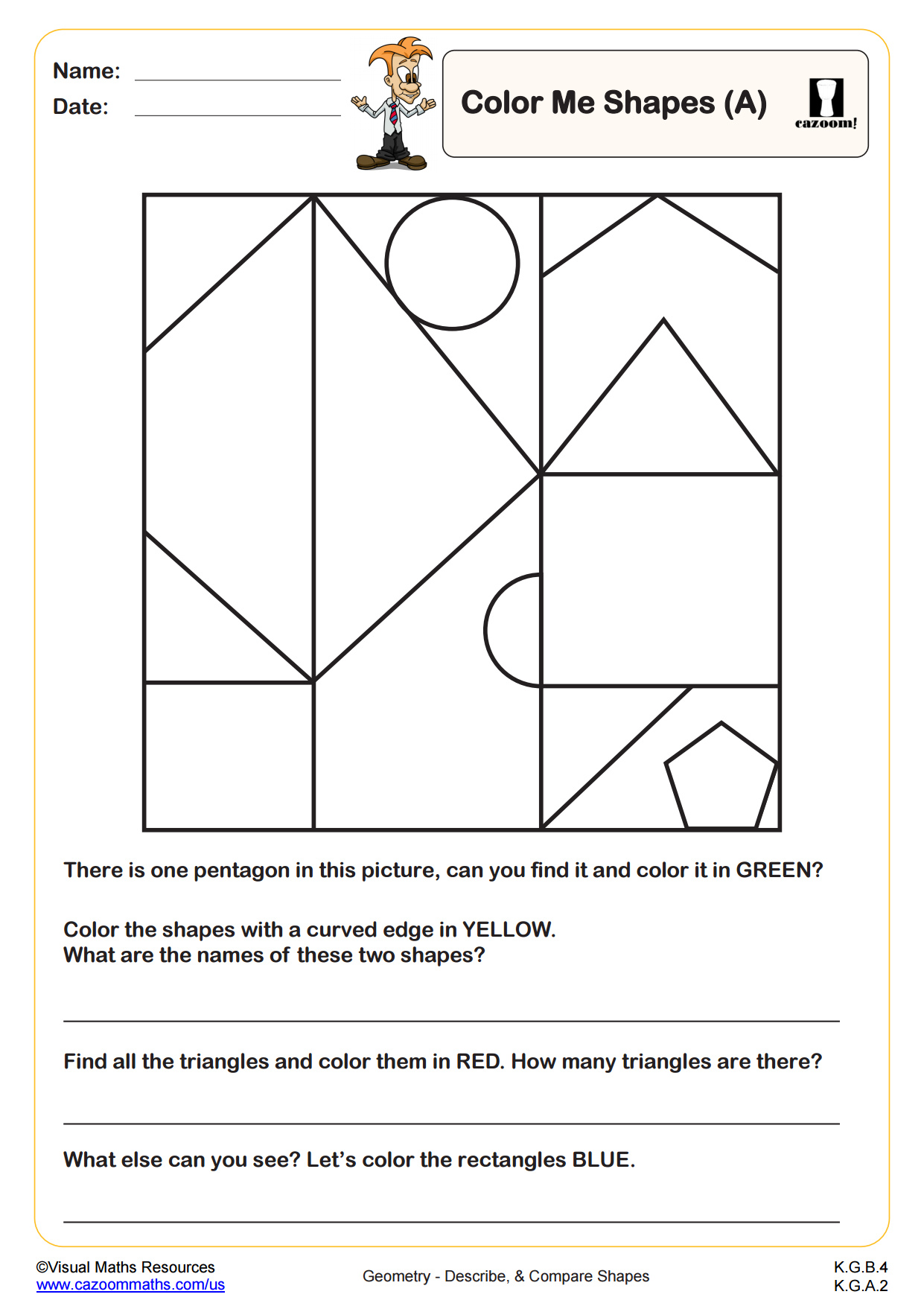
Colour Me Shapes (A)
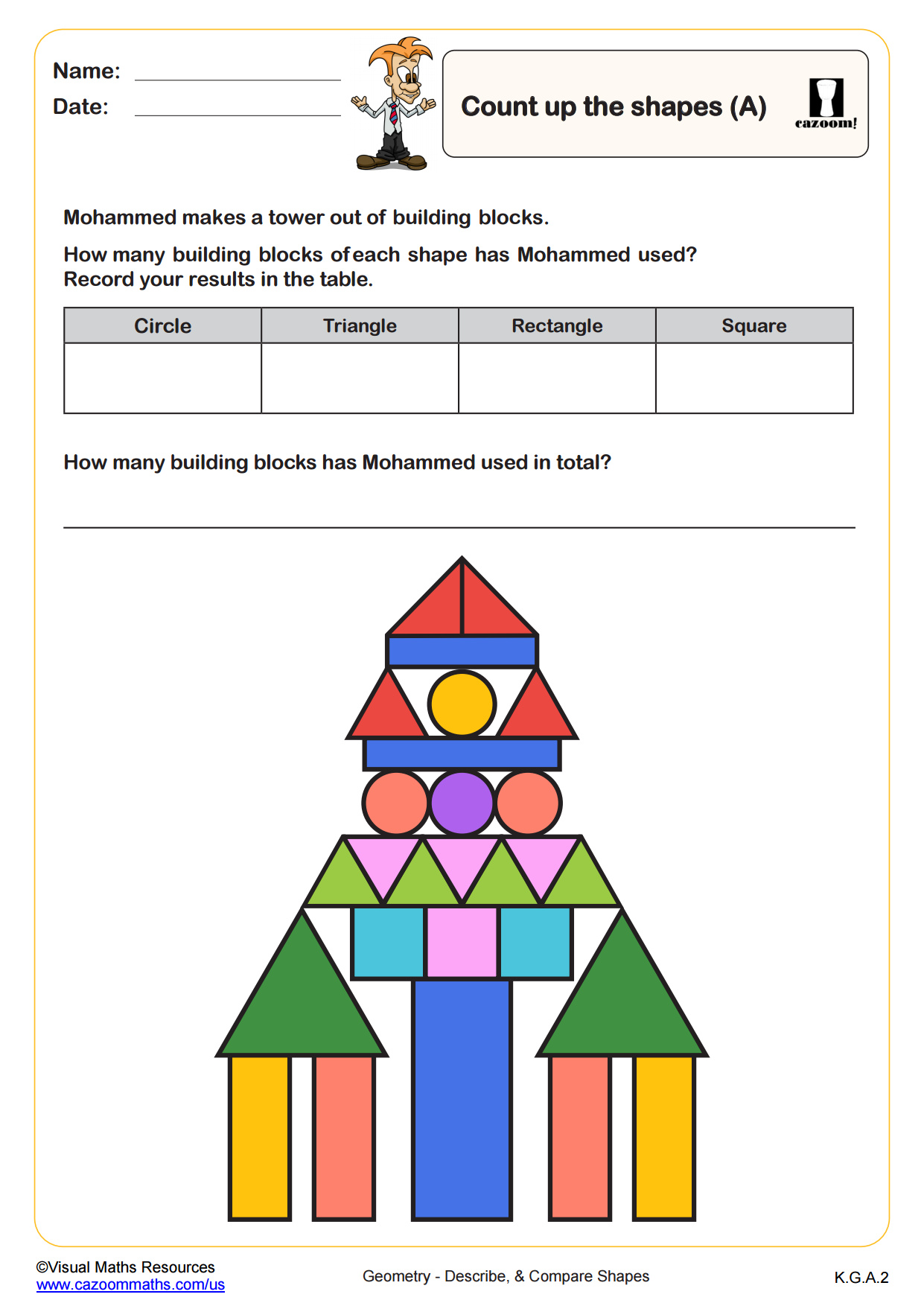
Count up the Shapes (A)
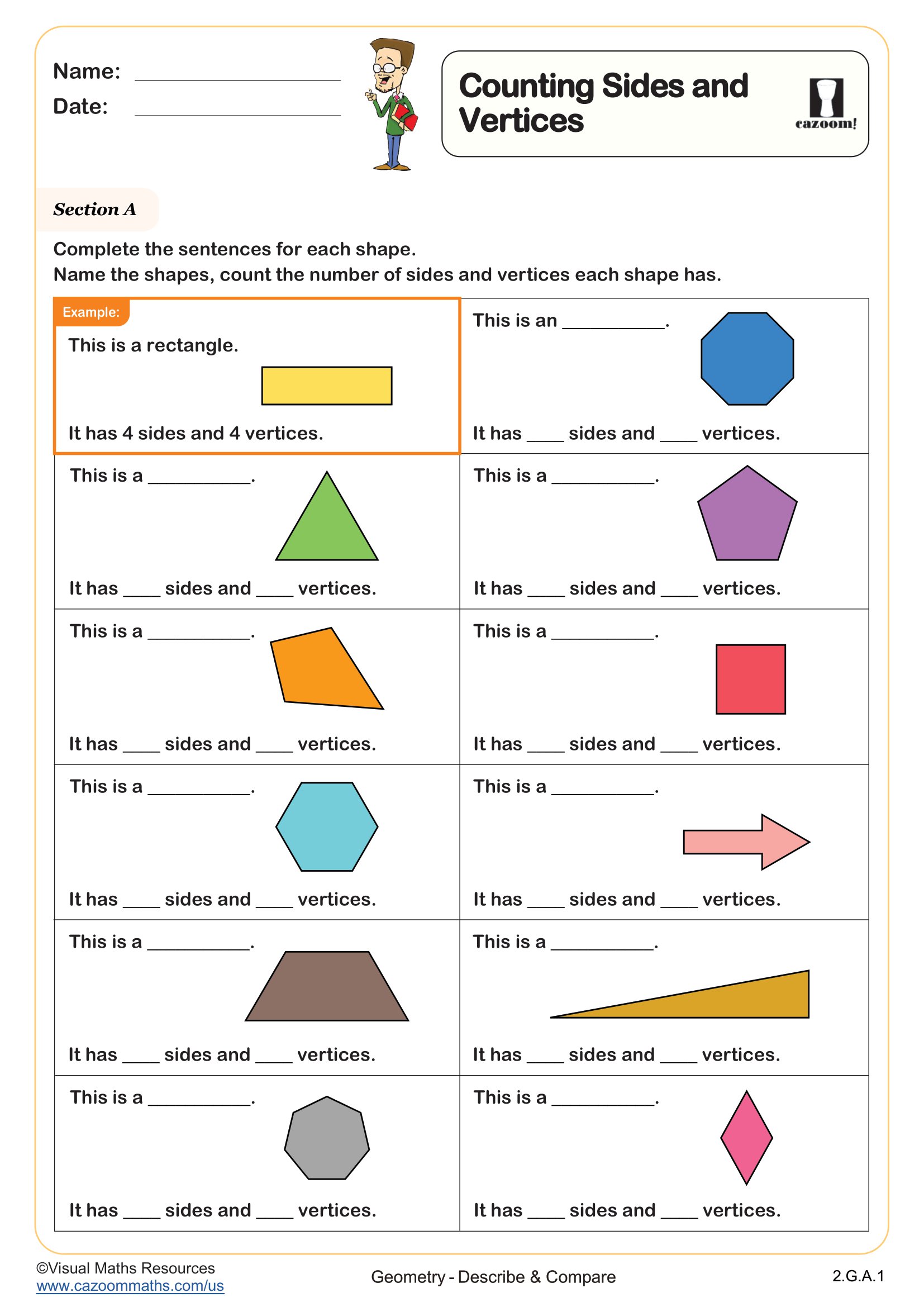
Counting Sides and Vertices
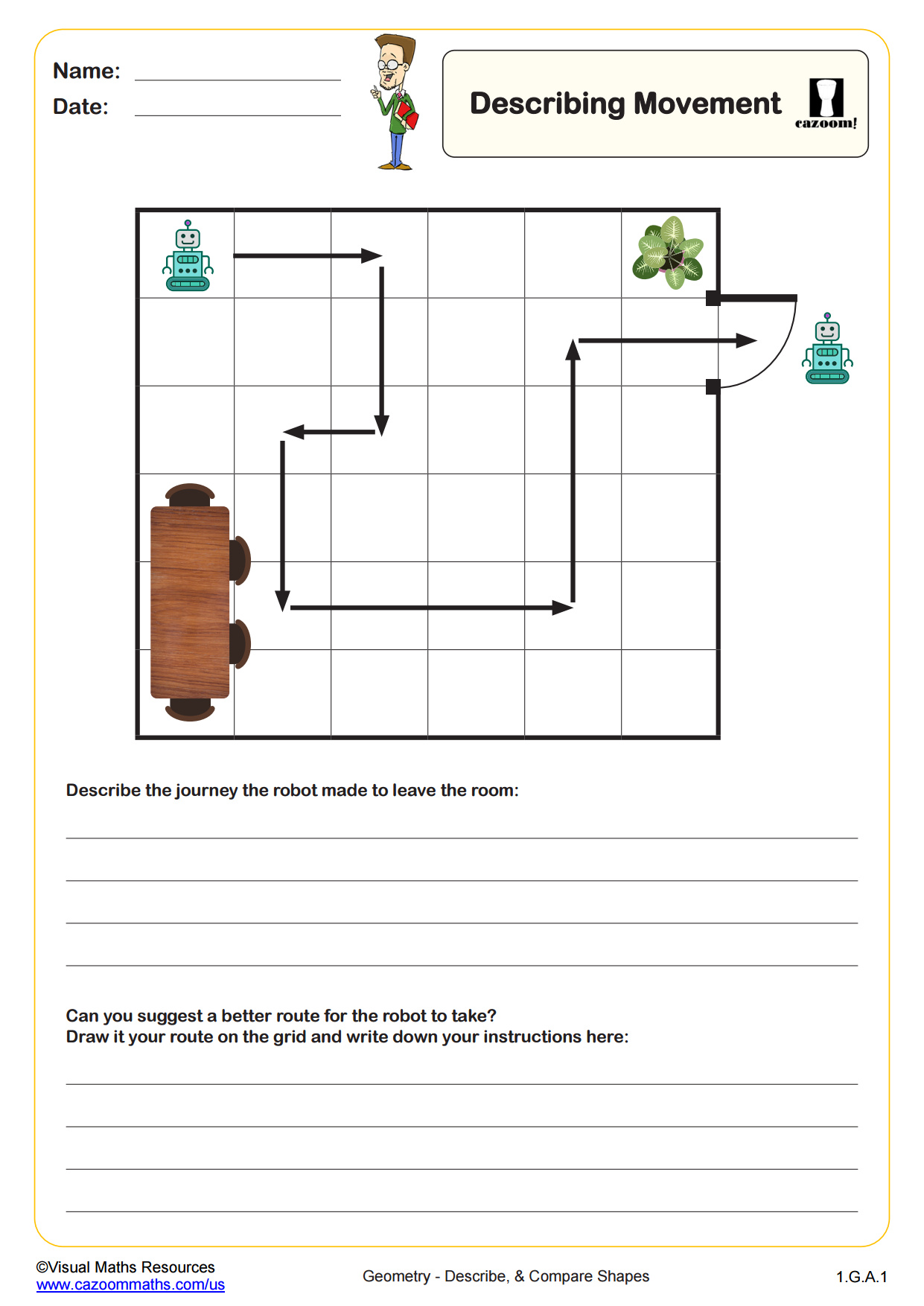
Describing Movement
Describing Positions (A)
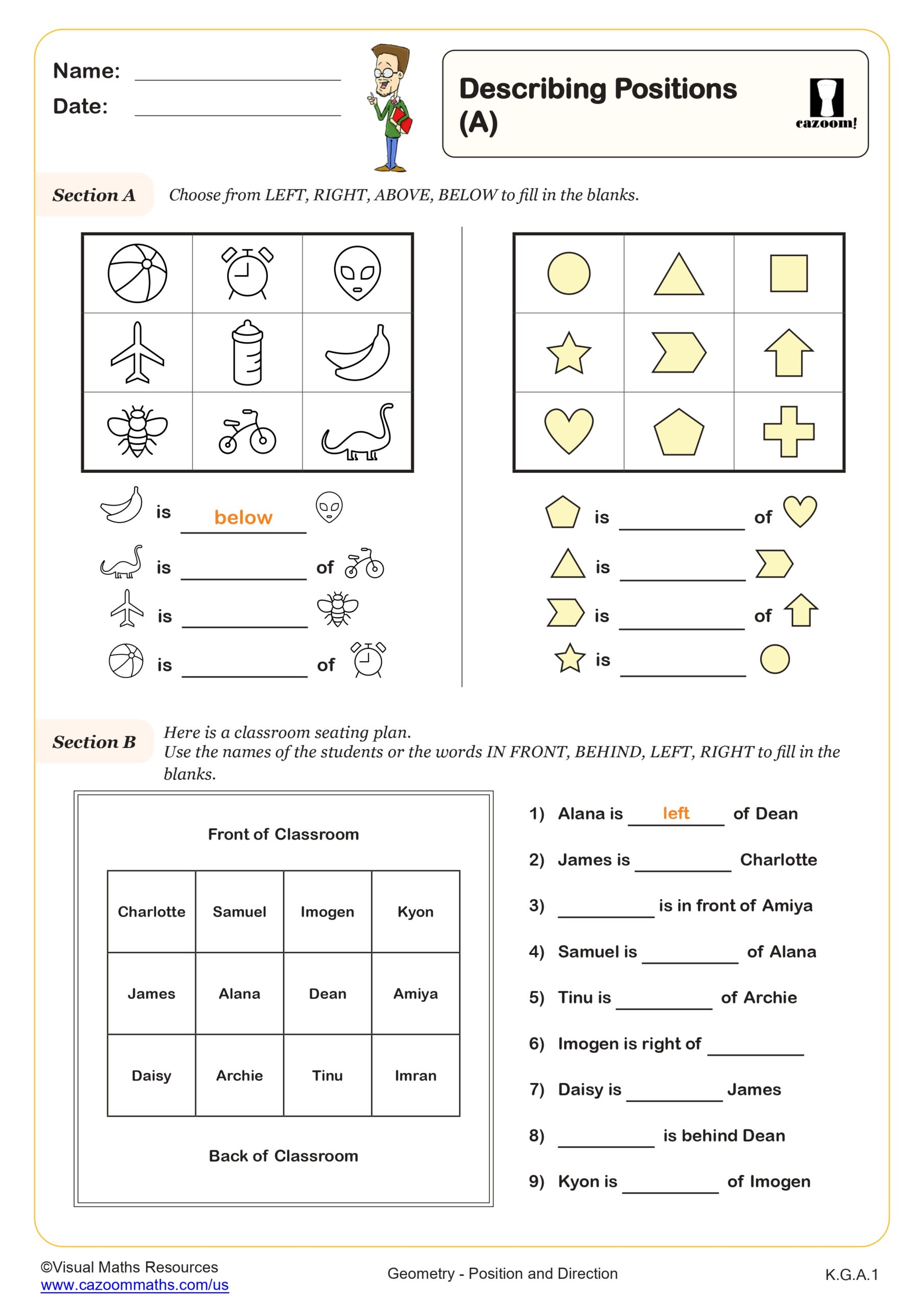
Describing Positions (B)
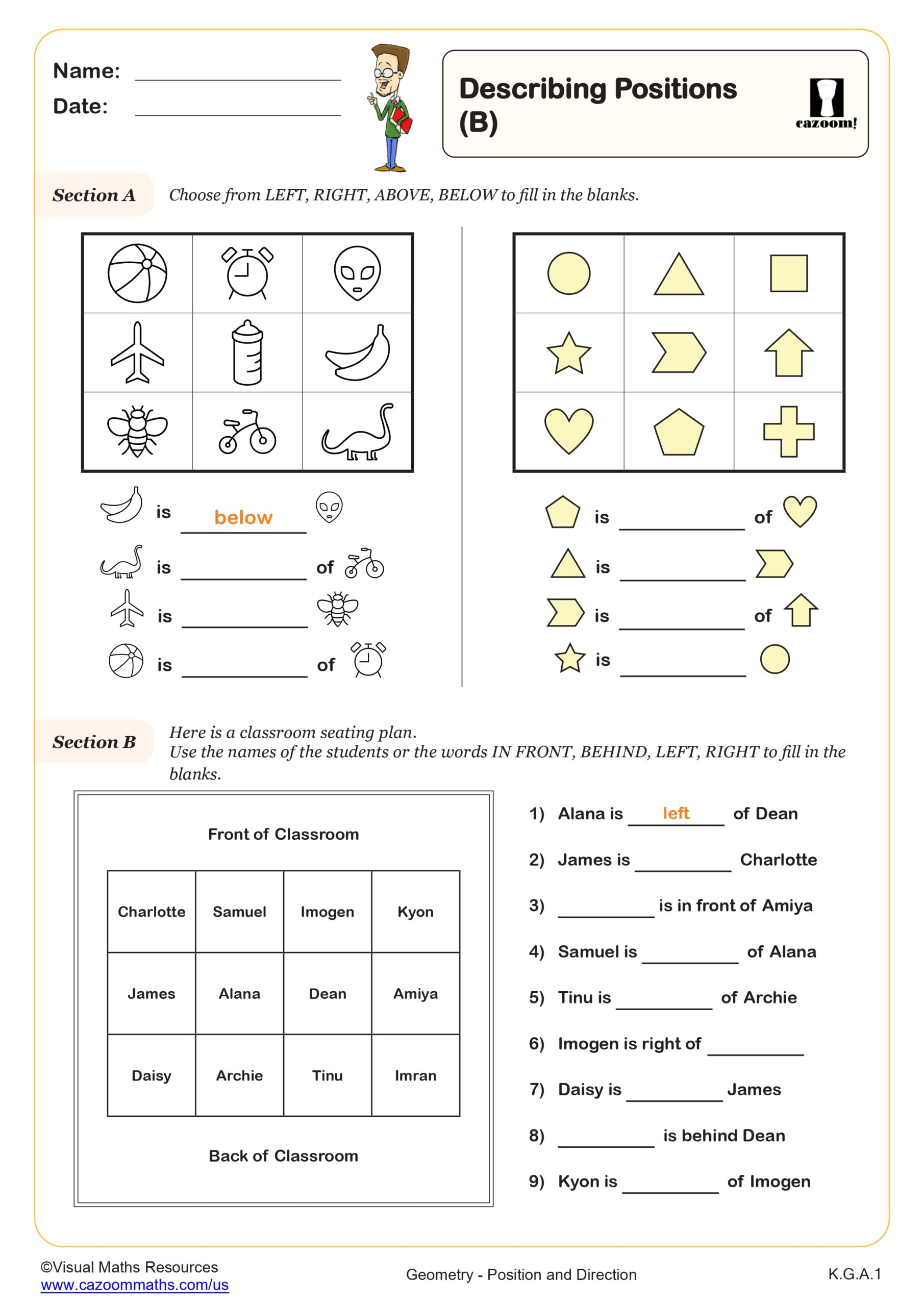
Identifying 2D Shapes as the Faces of 3D Shapes
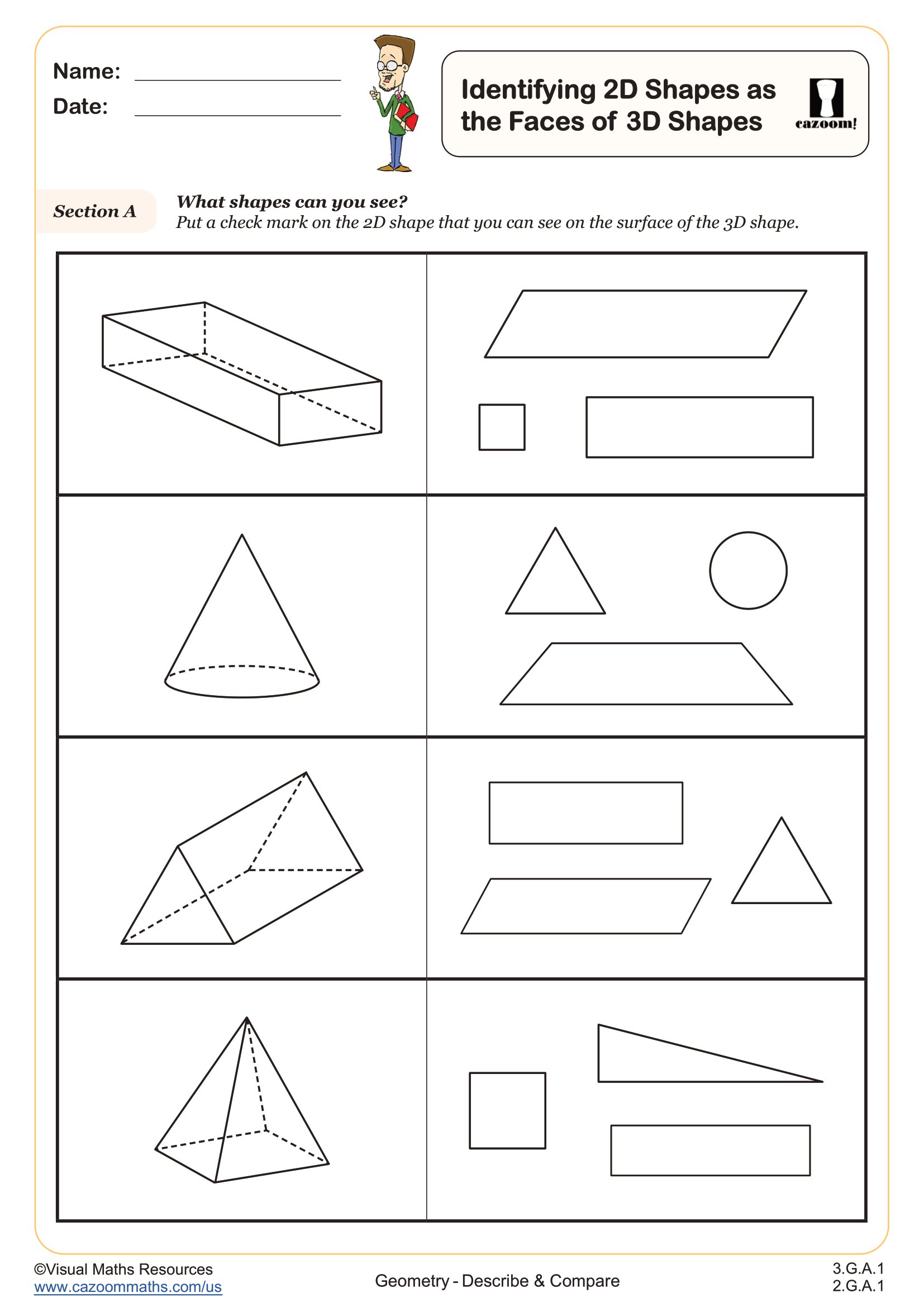
Making Patterns
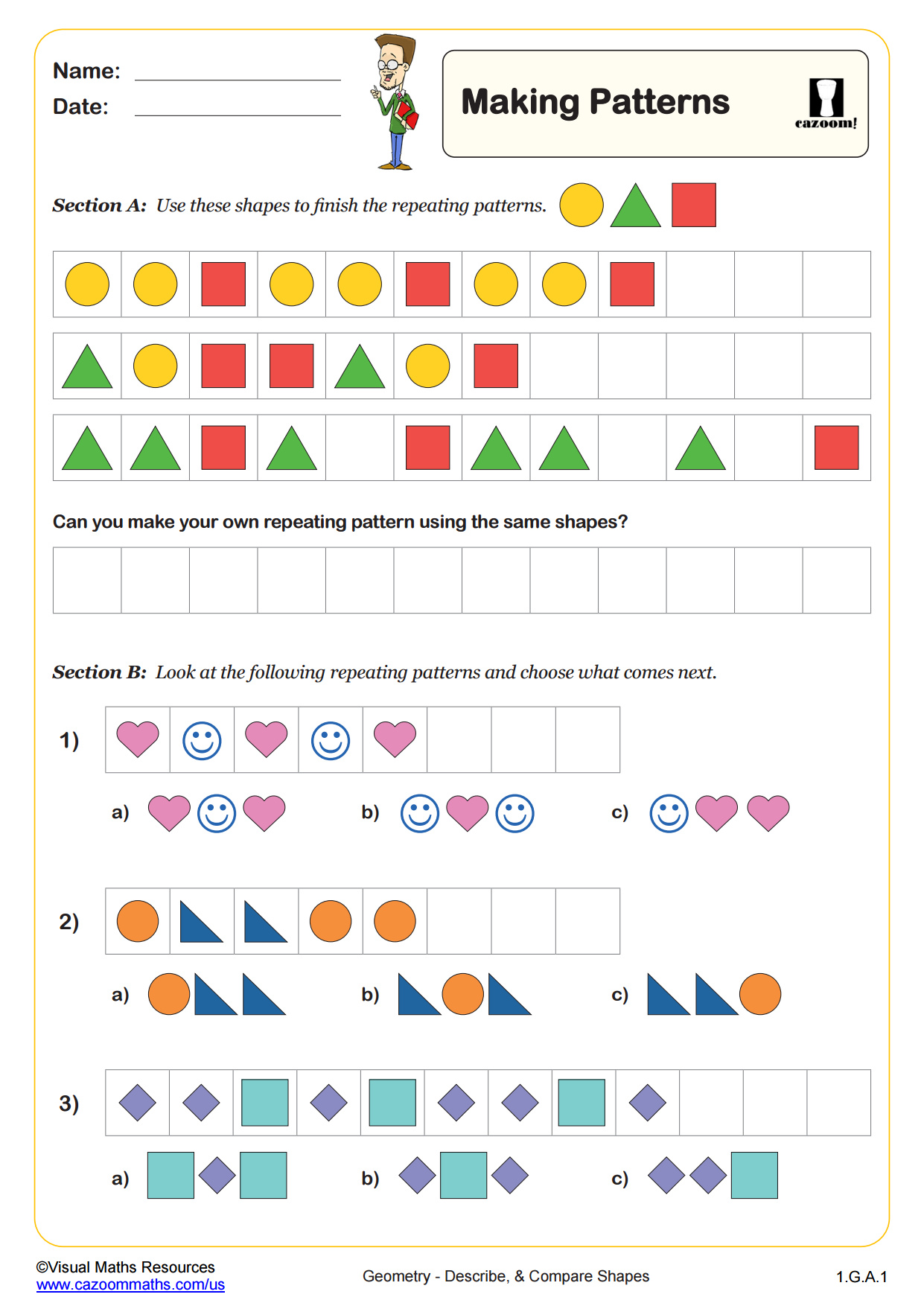
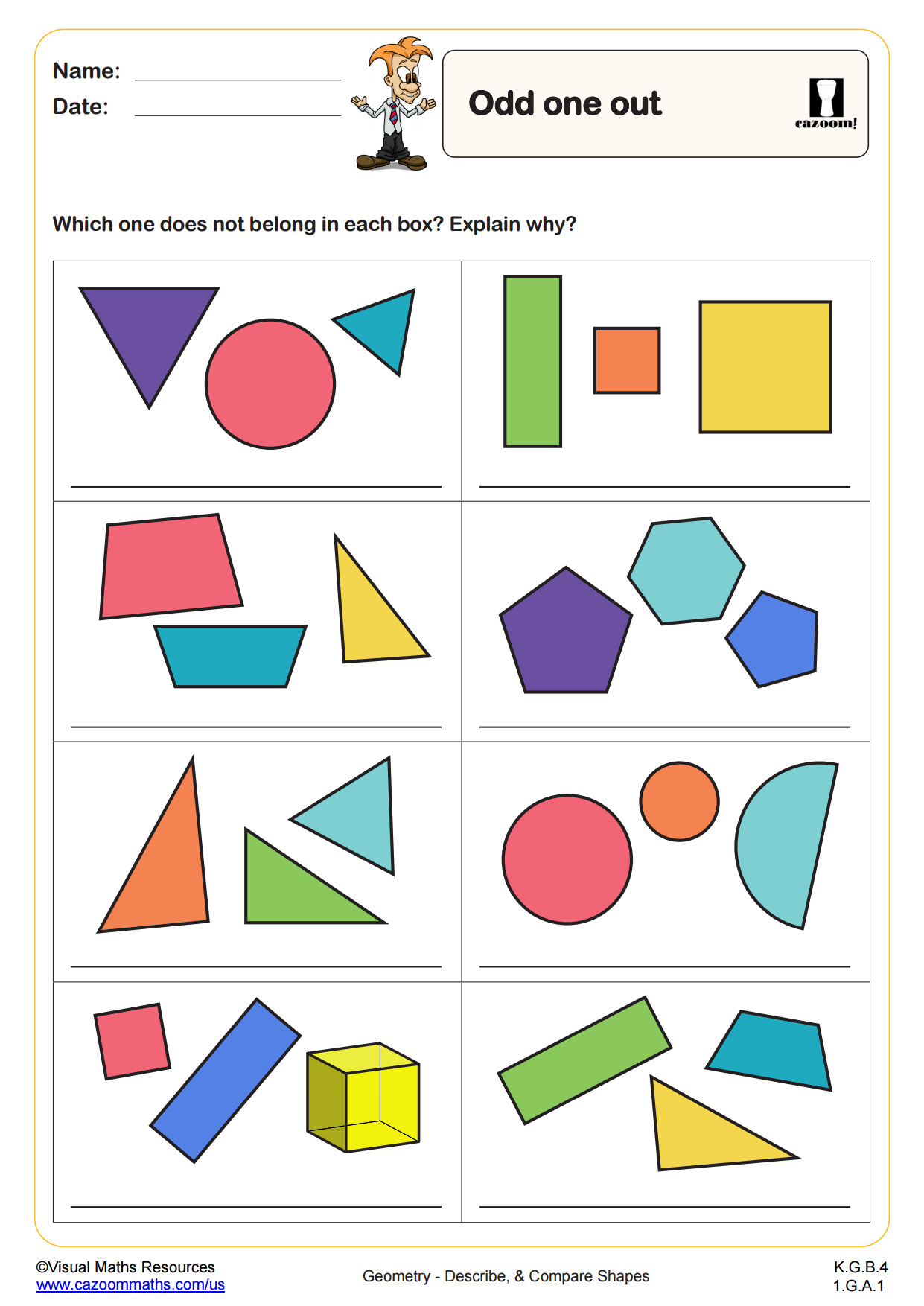
Odd One Out
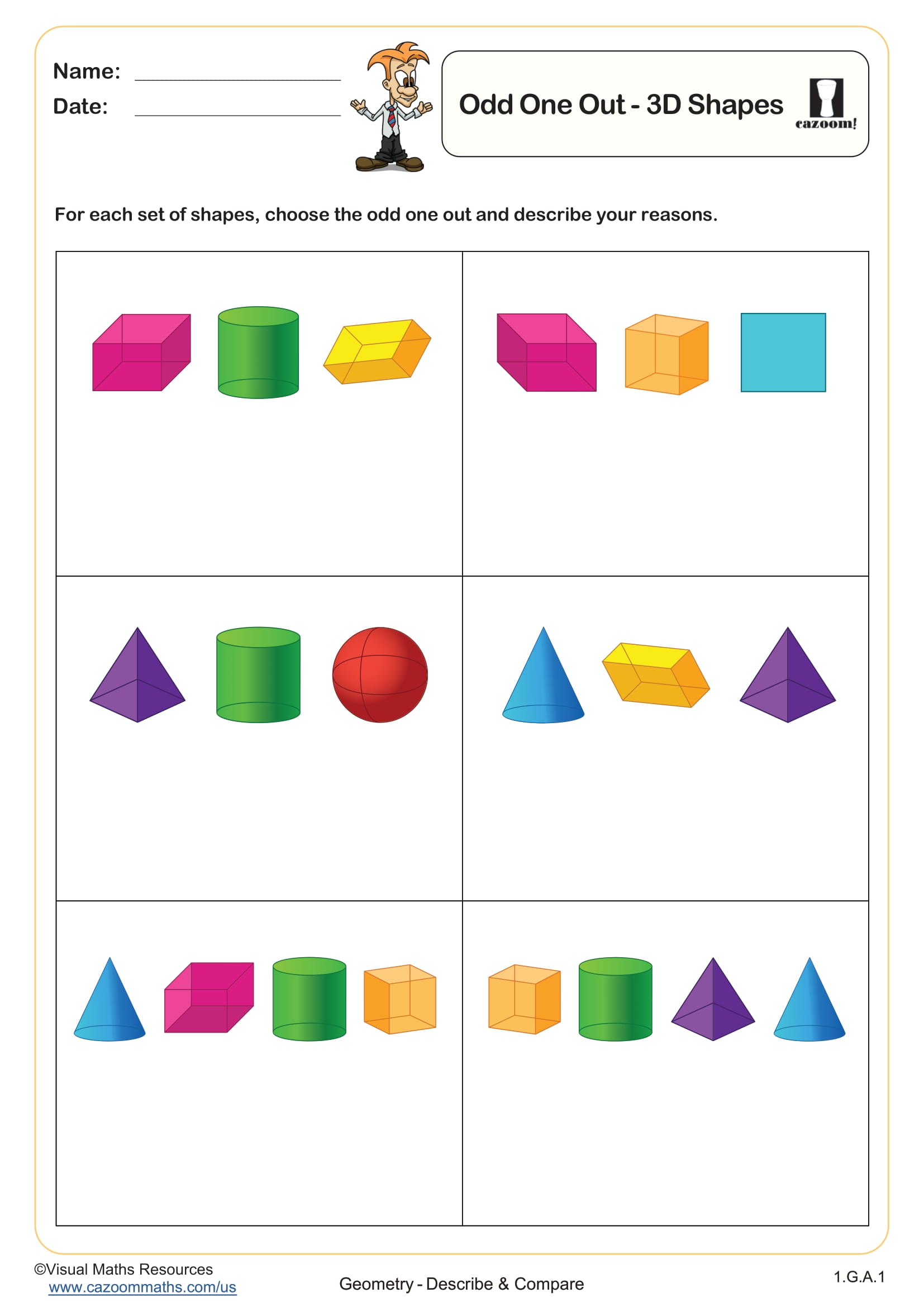
Odd One Out 3D Shapes
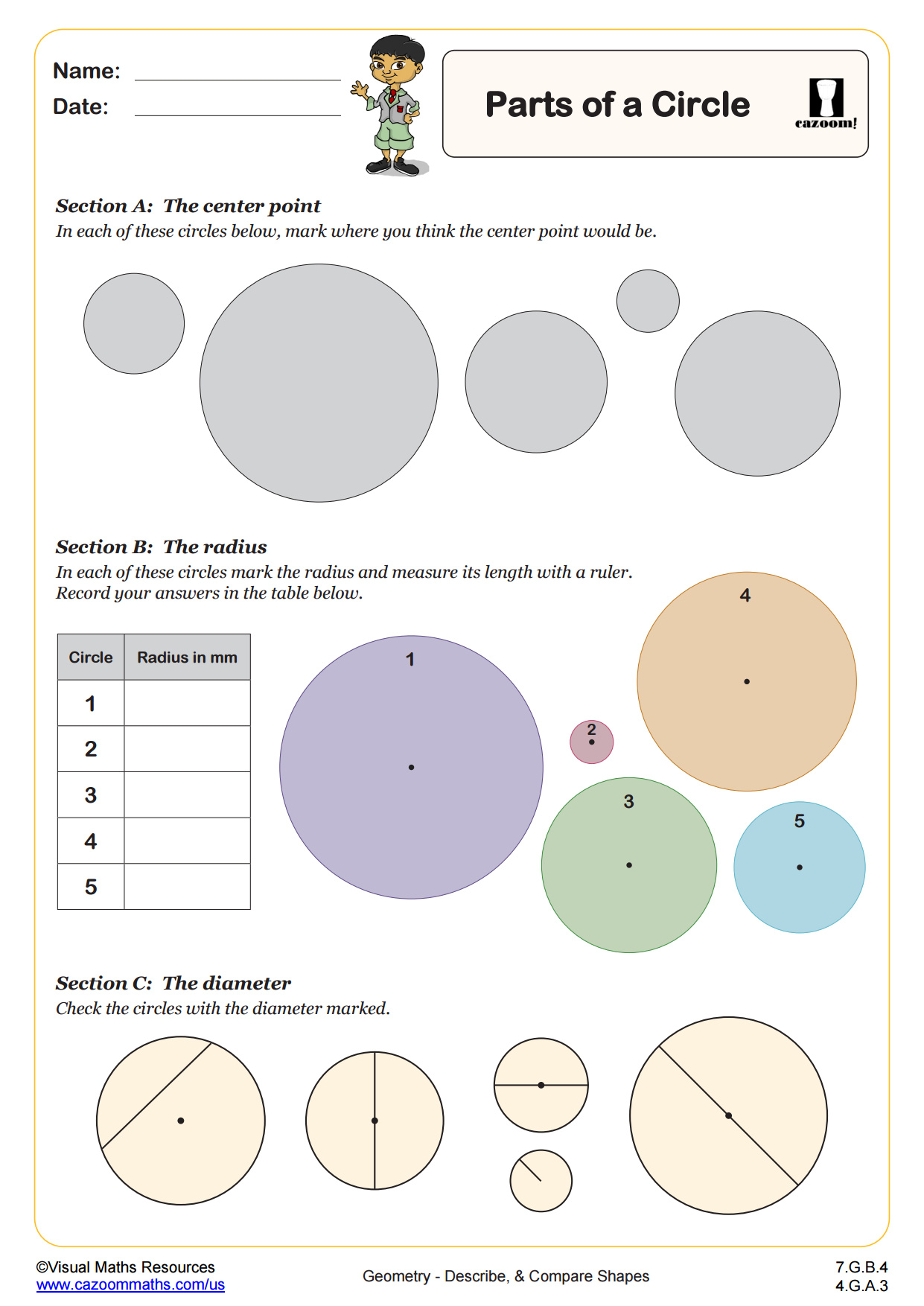
Parts of a Circle
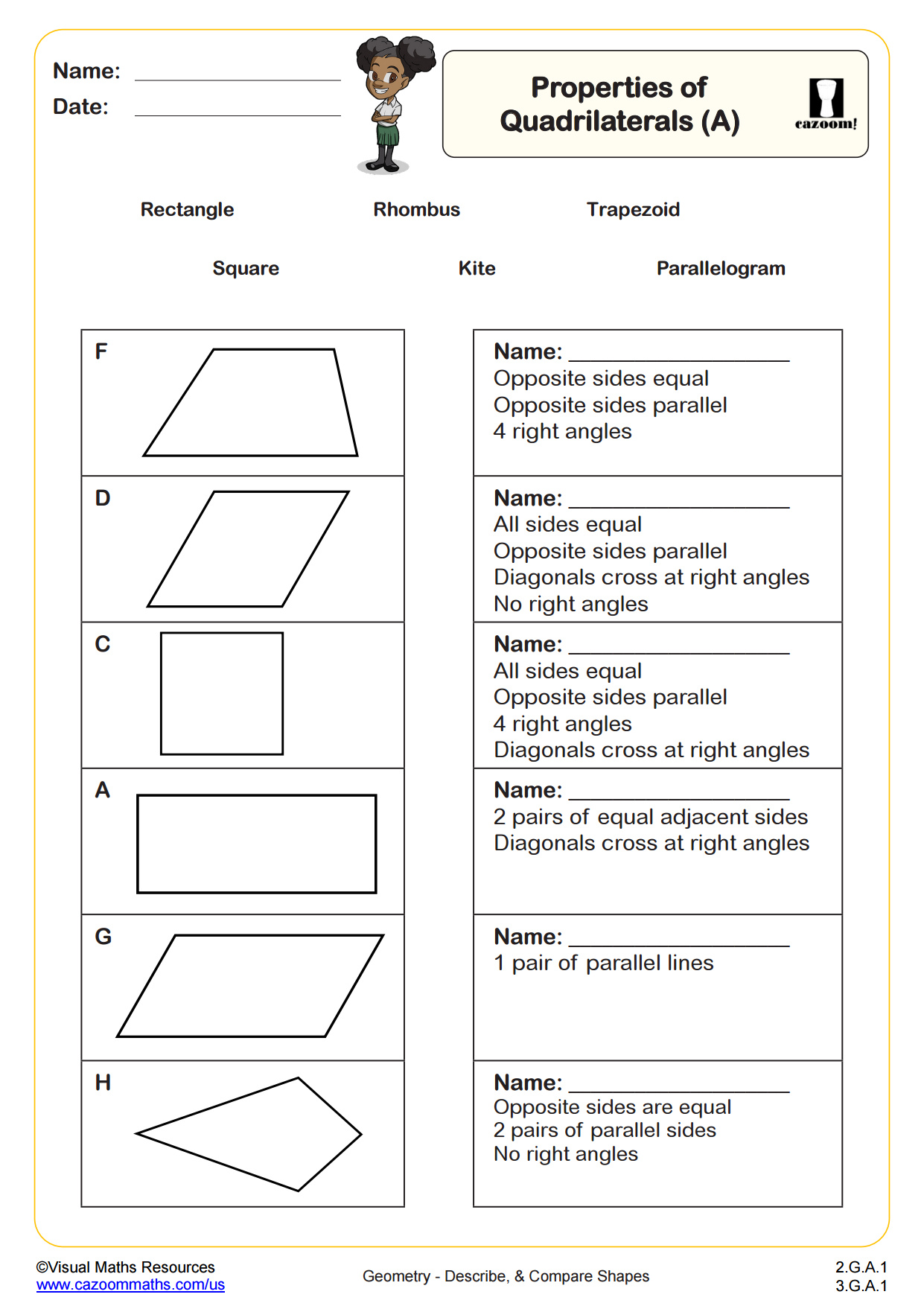
Properties of Quadrilaterals (A)
Properties of Quadrilaterals (B)
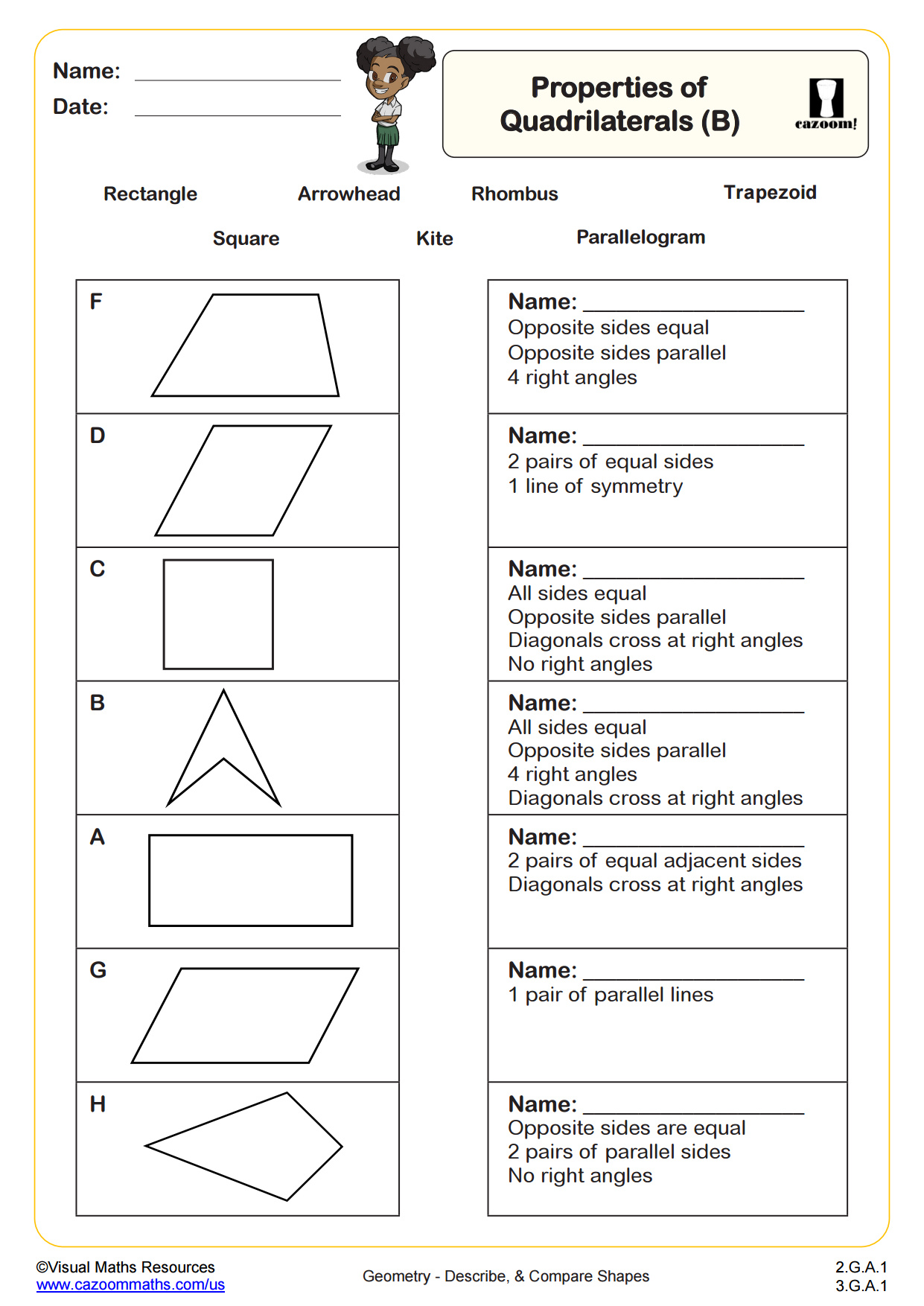
Properties of Quadrilaterals (C)
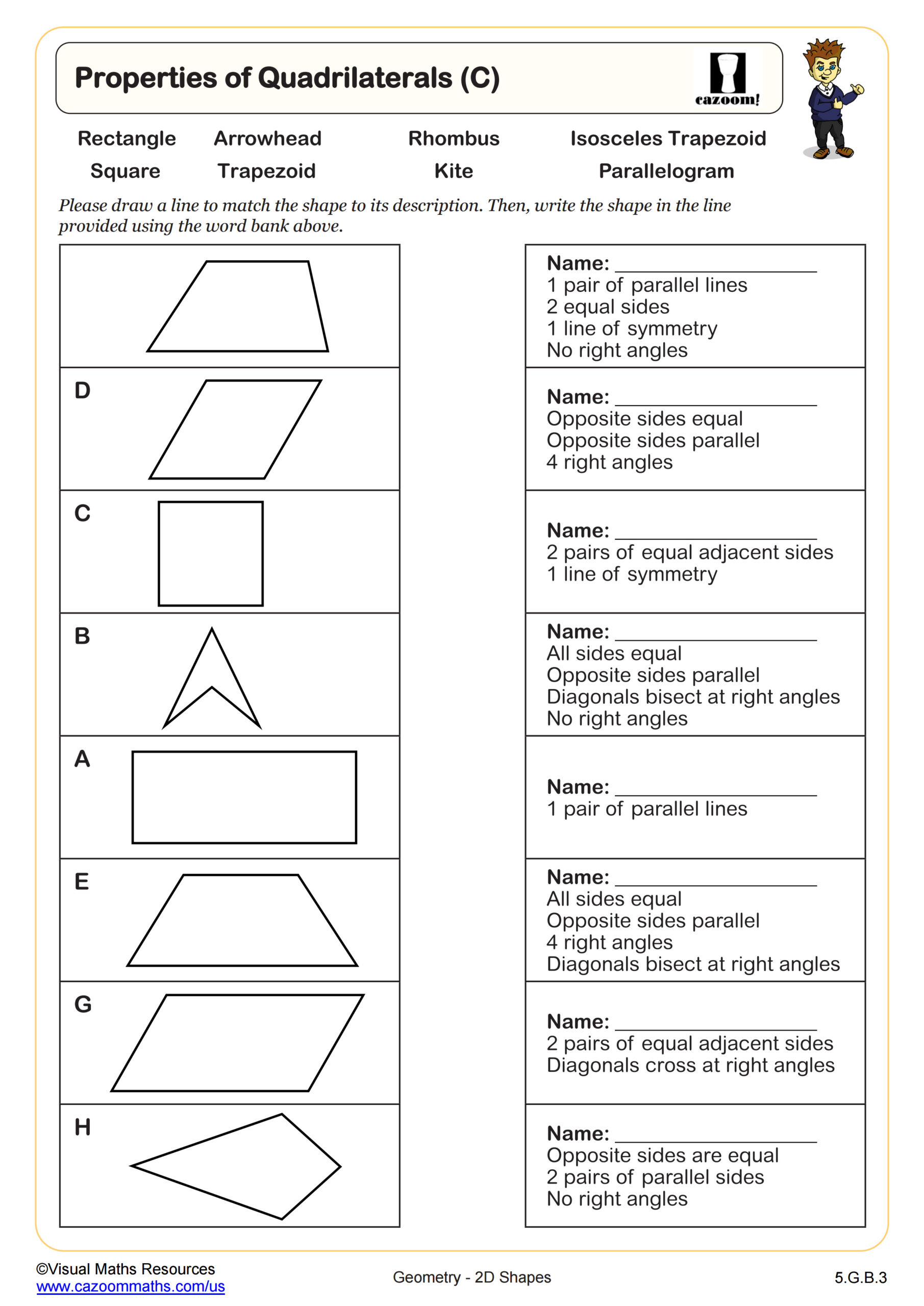
Properties of Quadrilaterals (Same and Different)
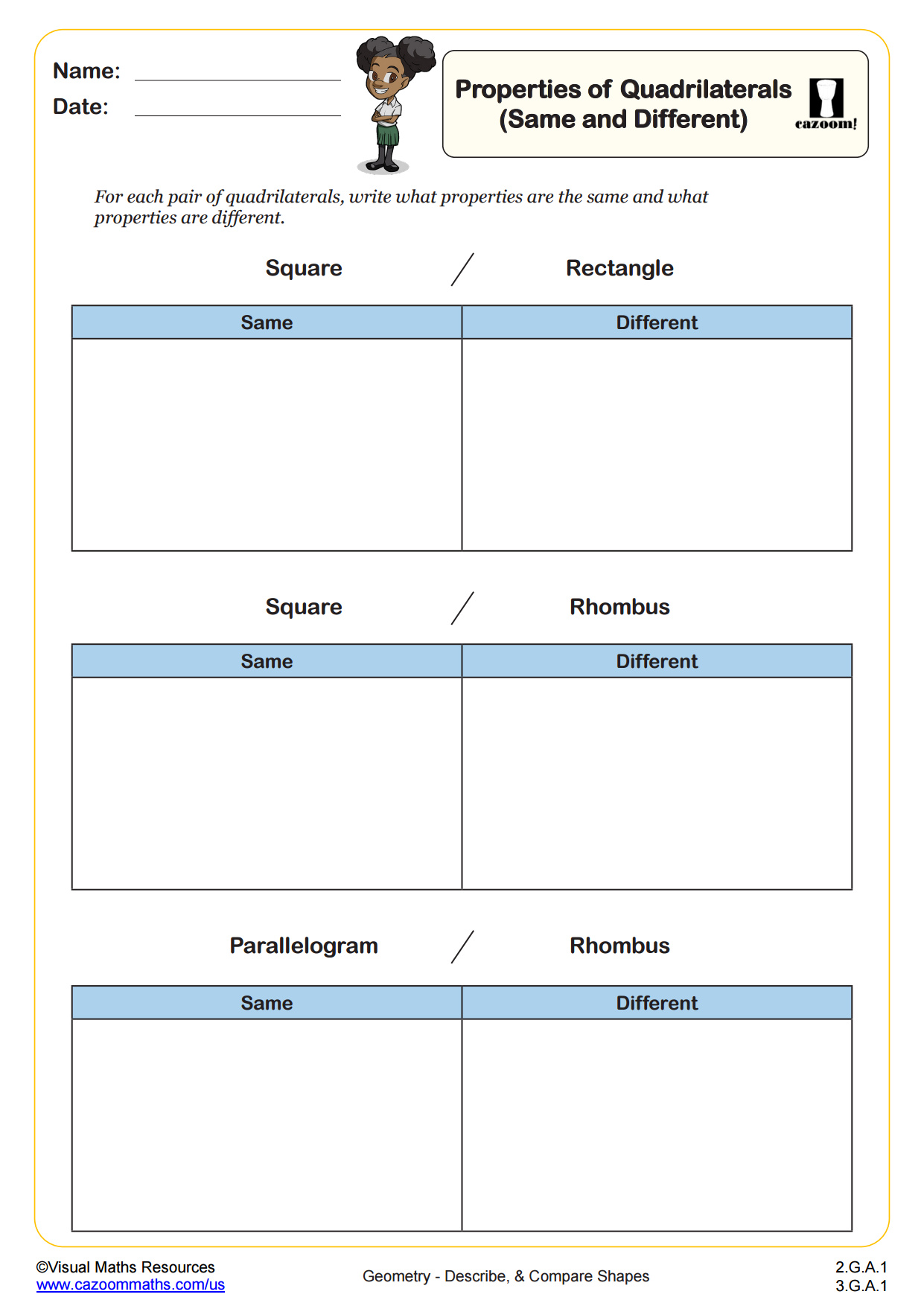
Properties of Quadrilaterals (Same and Different) (with clues)
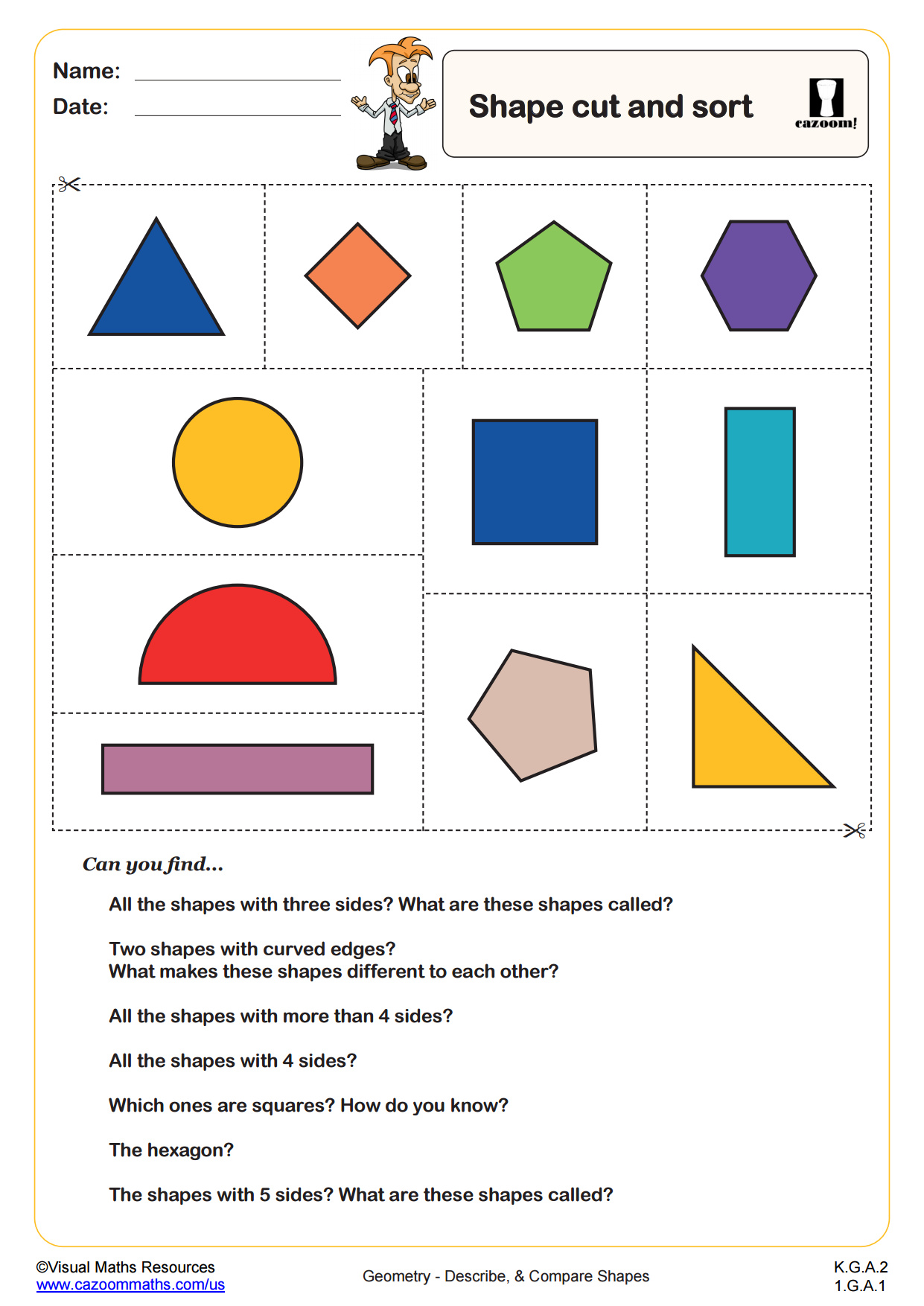
Shape Cut and Sort
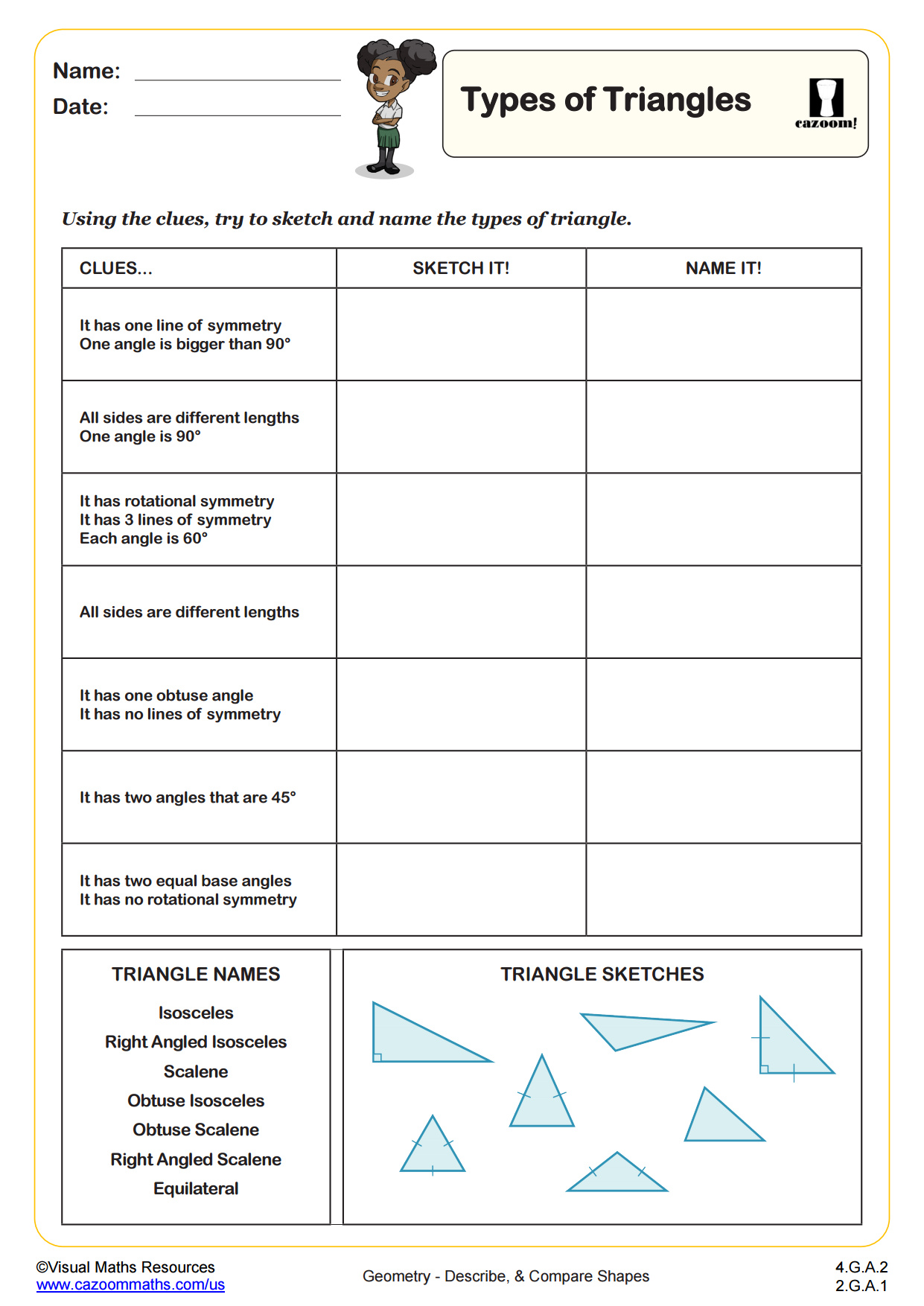
Types of Triangles
All worksheets are created by the team of experienced teachers at Cazoom Math.
What Does Describing and Comparing Shapes Mean in Elementary Math?
Describing shapes involves identifying and naming their attributes such as the number of sides, vertices (corners), angles, and symmetry. Comparing shapes requires students to analyze multiple figures, determining what they have in common and how they differ. This skill aligns with Common Core geometry standards that progress from recognizing and naming shapes in kindergarten to analyzing properties and classifying shapes by the fourth and fifth grades.
A common misconception occurs when students focus only on orientation rather than actual properties. For example, many students claim a square rotated 45 degrees is now a diamond and fundamentally different from a square sitting flat. Teachers find that hands-on manipulation with pattern blocks or cut-out shapes helps students recognize that rotation doesn't change a shape's defining characteristics—four equal sides and four right angles remain constant regardless of position.
Which Grade Levels Use These Describe and Compare Shapes Worksheets?
These worksheets cover kindergarten, 1st grade, 2nd grade, 3rd grade, 4th grade, and 5th grade, spanning the entire elementary school stage. Early elementary students begin with foundational skills like counting sides and vertices, while upper elementary students tackle more complex concepts including describing rotations and analyzing geometric movements.
The progression builds systematically across grade levels. Kindergarten and first grade worksheets focus on basic shape identification and counting attributes. Second and third grade materials introduce comparison strategies and simple transformations. By fourth and fifth grade, students describe precise movements, analyze multiple attributes simultaneously, and use geometric vocabulary with accuracy. This scaffolded approach ensures students develop increasingly sophisticated geometric reasoning that prepares them for middle school geometry concepts like congruence and similarity.
How Do Students Learn to Describe Rotations and Movements?
Describing rotations requires students to visualize how shapes change position when turned around a point, using terms like clockwise, counterclockwise, quarter-turn, and half-turn. Students learn to identify which attributes remain unchanged during rotation (shape, size, angle measures) versus what appears different (orientation, position). This builds spatial reasoning as students mentally manipulate shapes before physically rotating them.
This skill connects directly to real-world navigation and technology applications. Architects and engineers use rotation concepts when designing buildings and mechanical parts that need to fit together at different angles. Computer programmers apply rotation transformations in video game development and animation. Even everyday tasks like reading maps, following GPS directions, or assembling furniture require understanding how objects maintain their properties when turned. Students who master describing rotations develop the spatial reasoning essential for STEM fields and practical problem-solving.
How Can Teachers Use These Worksheets Most Effectively in the Classroom?
The worksheets provide structured practice that moves from guided exercises to independent problem-solving. Many include visual supports like labeled diagrams and partially completed examples that help students understand what each question asks. The variety of subtopics allows teachers to target specific skills students need to strengthen, whether that's counting vertices or analyzing transformations.
Teachers use these worksheets flexibly across different instructional settings. They work well for math centers where students rotate through geometry stations, allowing differentiation by assigning grade-appropriate pages. The answer keys make them practical for homework assignments that parents can check at home. During intervention time, teachers use specific worksheets to address gaps identified through formative assessment. Some teachers assign worksheets as paired work, where students compare their shape descriptions and justify their reasoning to each other, building both mathematical vocabulary and collaborative skills.