Elementary School Estimation Worksheets
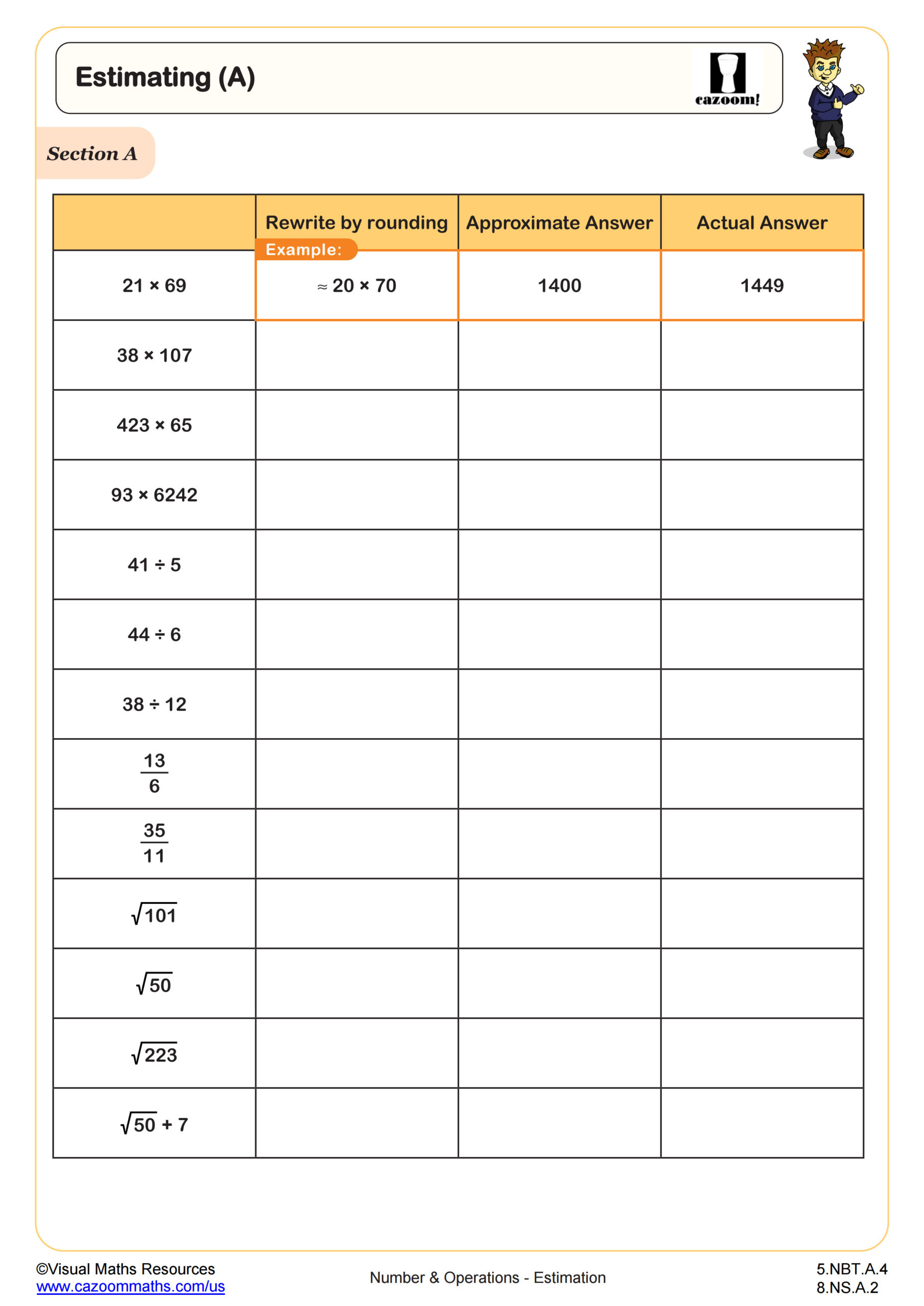
Estimating (A)
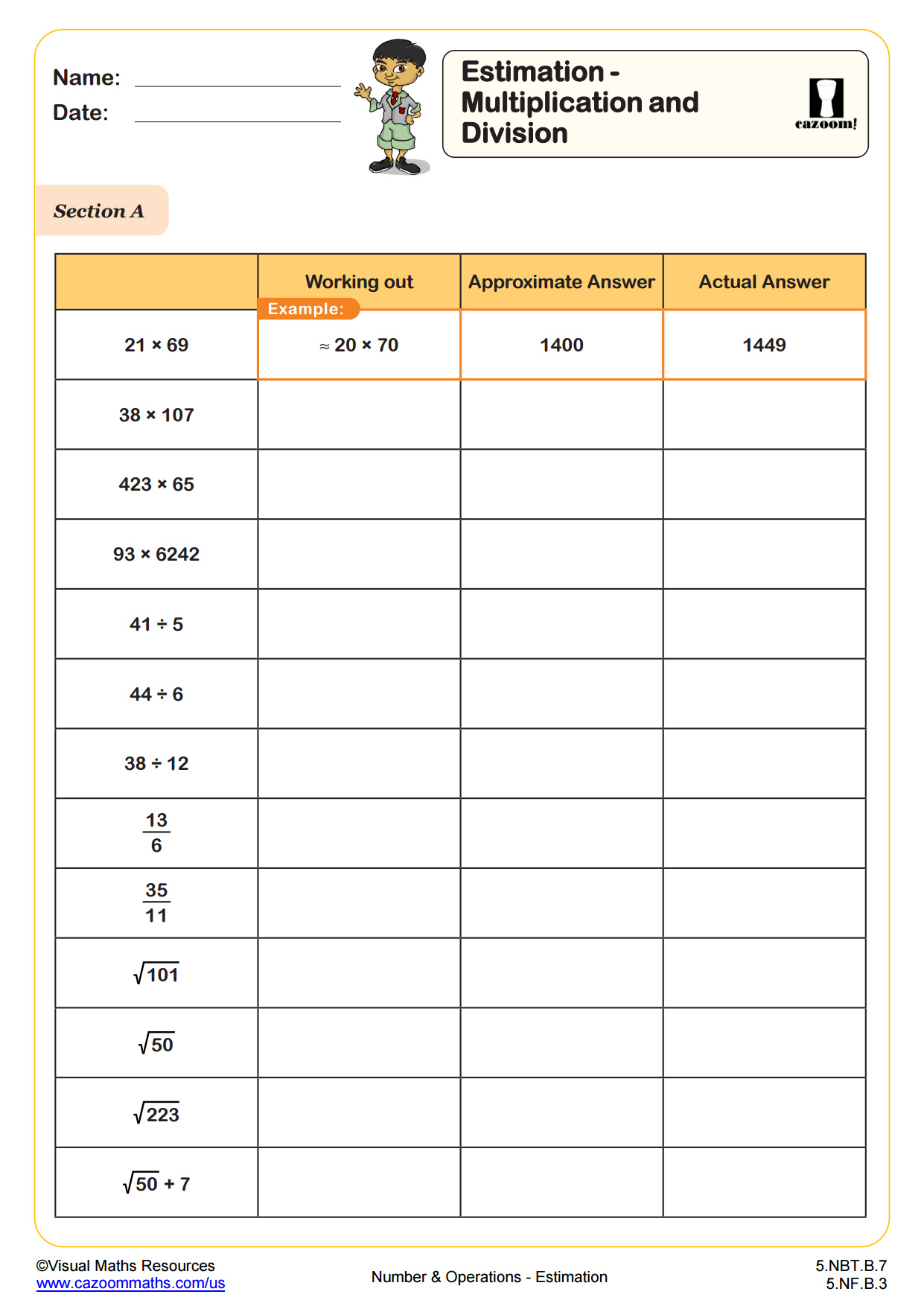
Estimation - Multiplication and Division
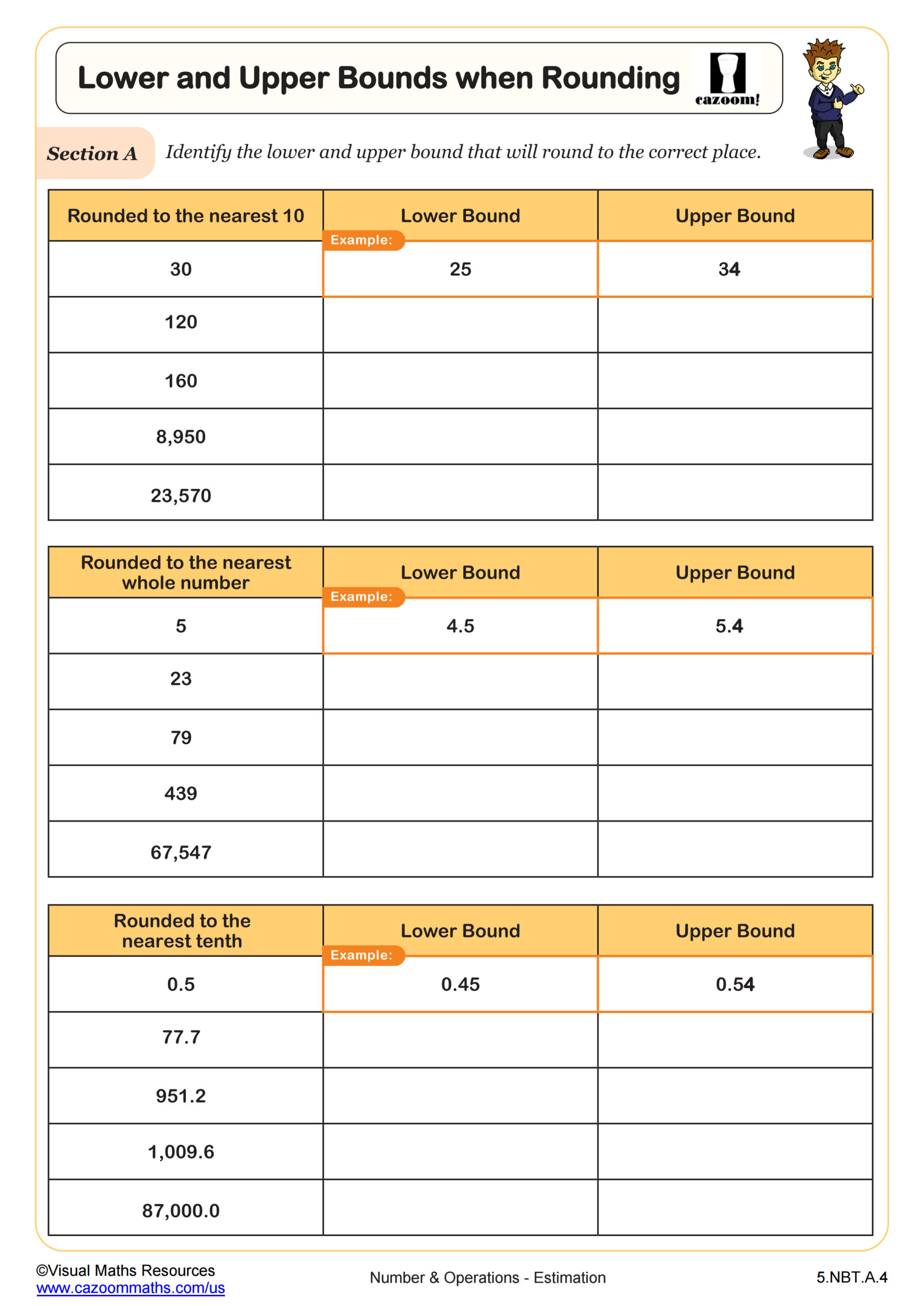
Lower and Upper Bounds when Rounding
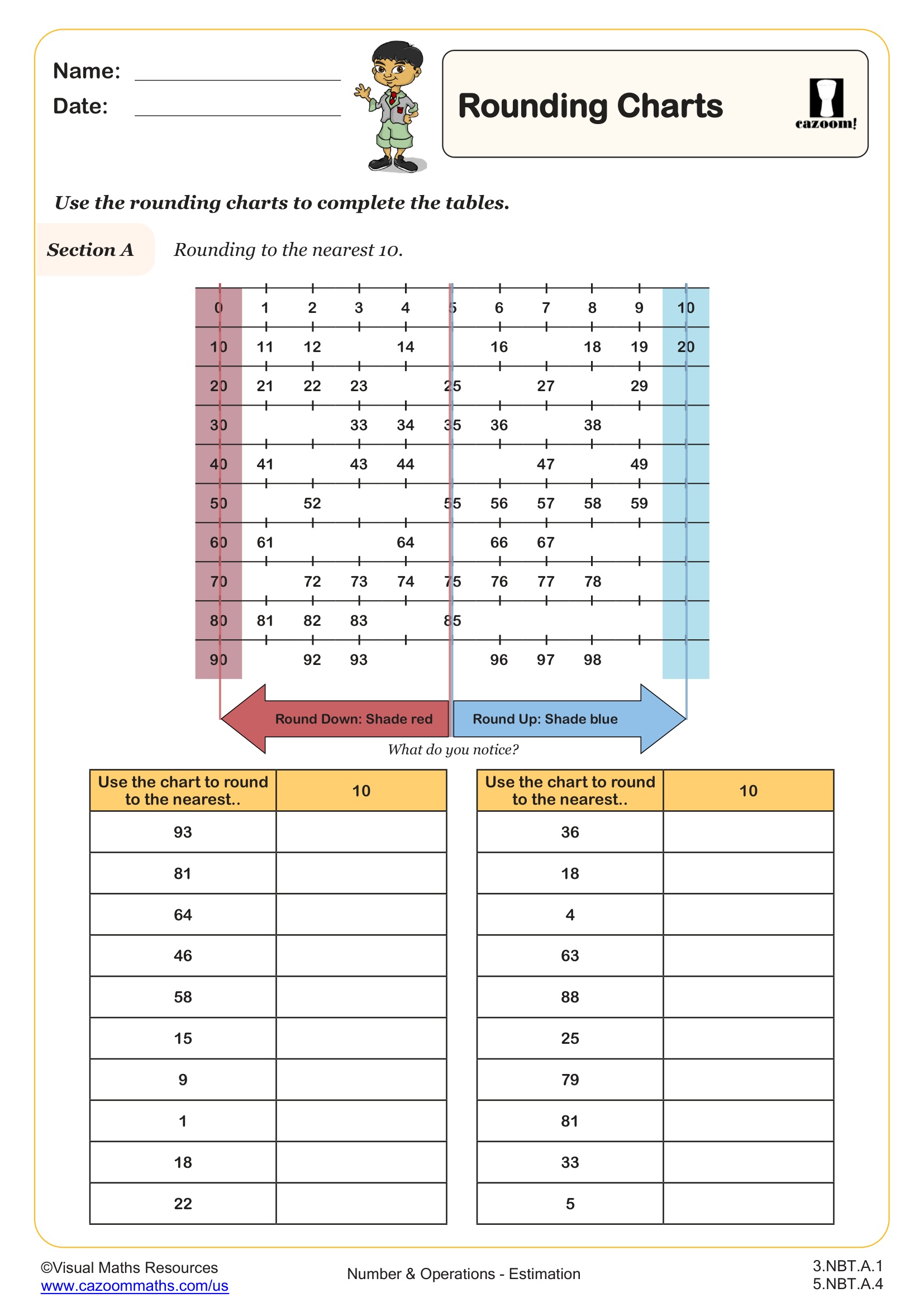
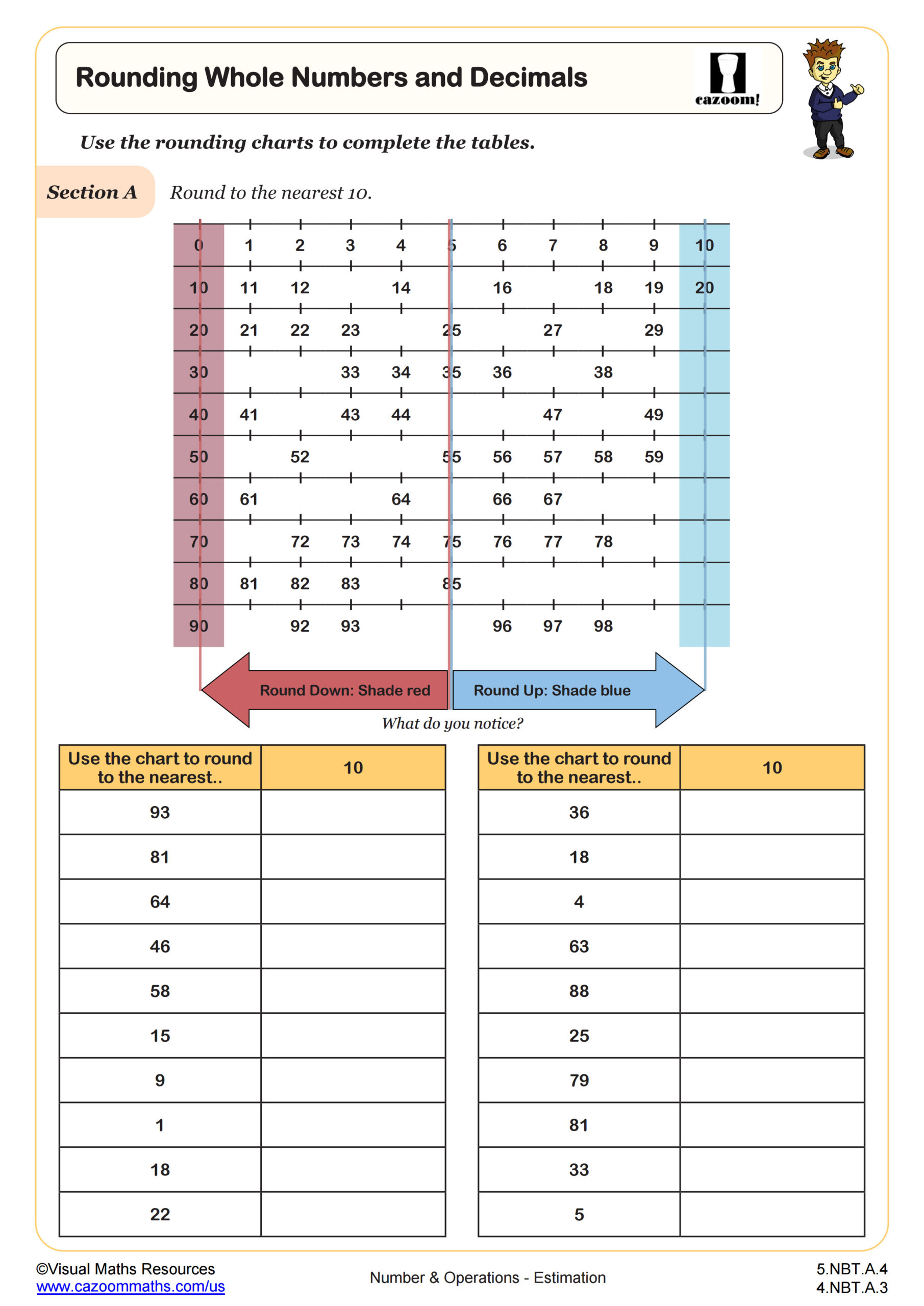
Rounding Charts
Rounding Decimals
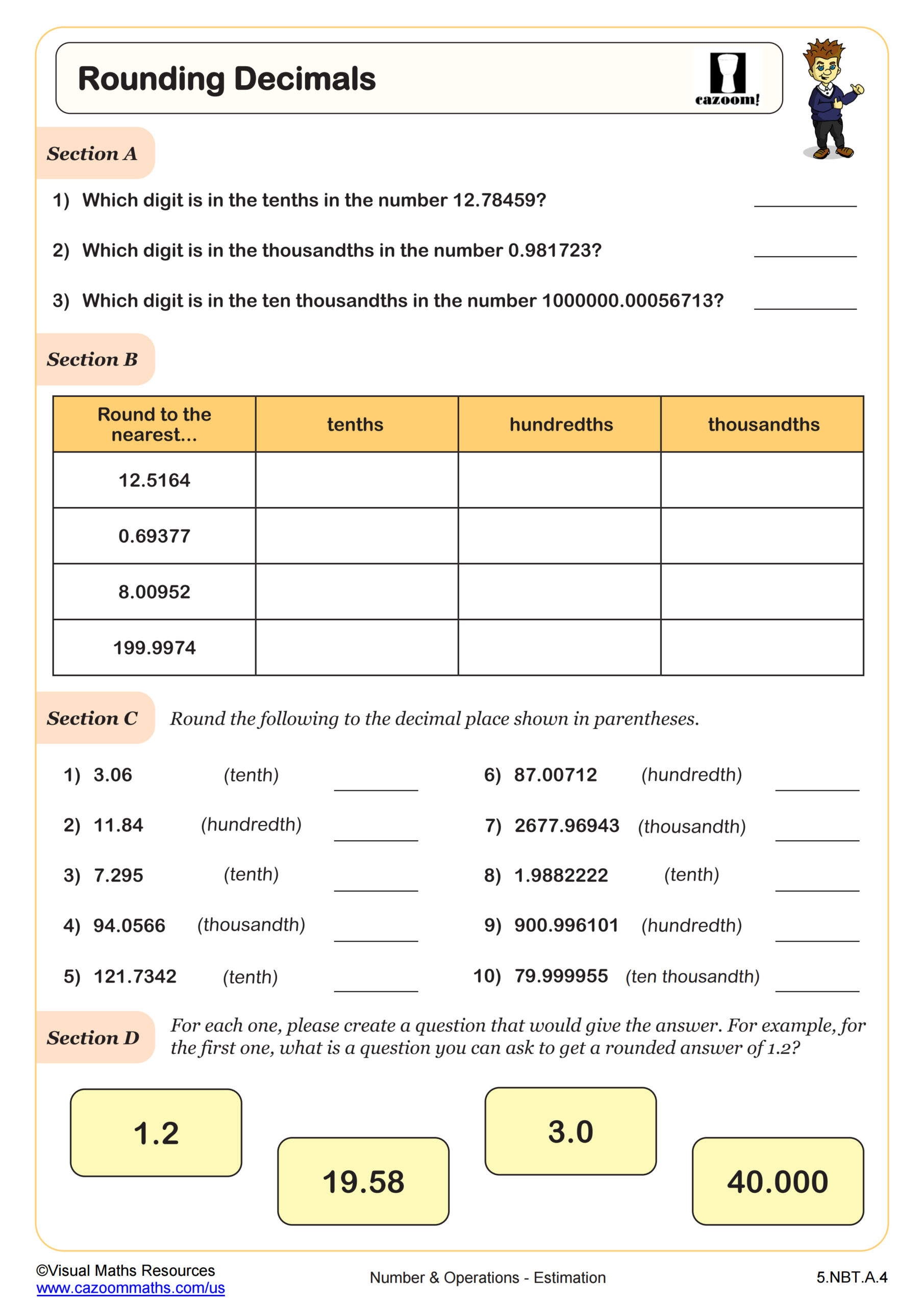
Rounding Decimals to the Nearest Whole
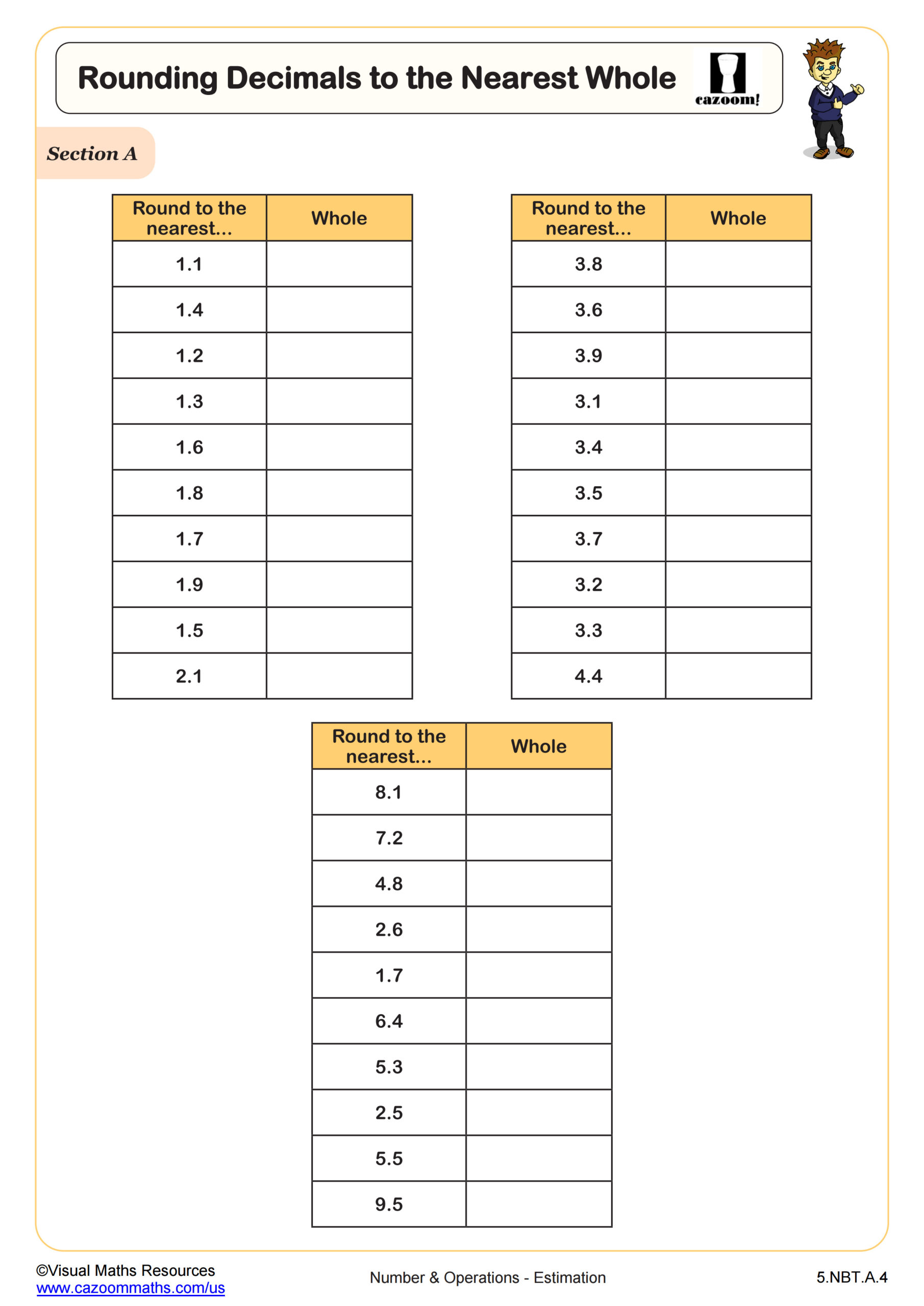
Rounding to the Nearest Hundred
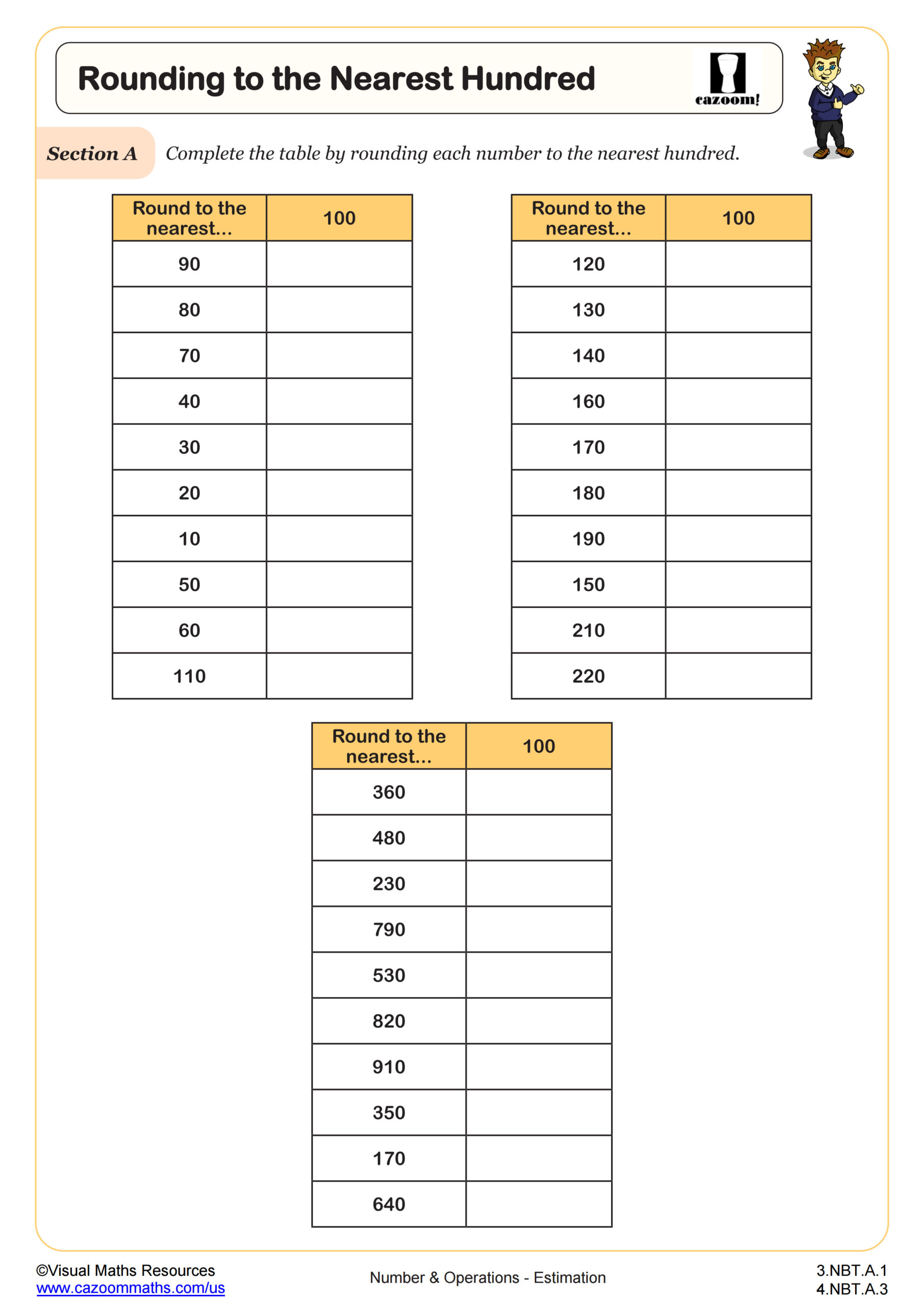
Rounding to the Nearest Thousand
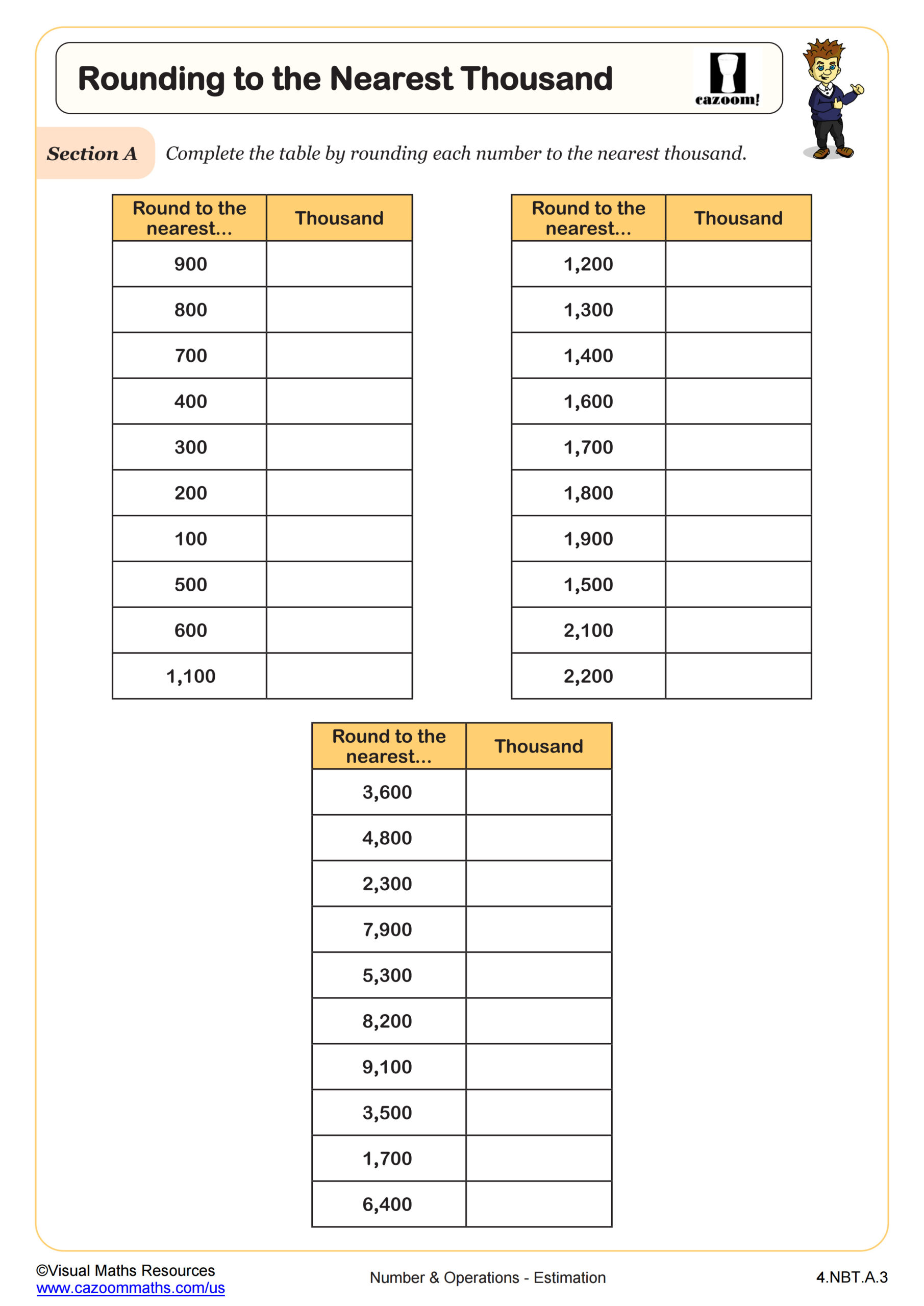
Rounding Whole Numbers and Decimals
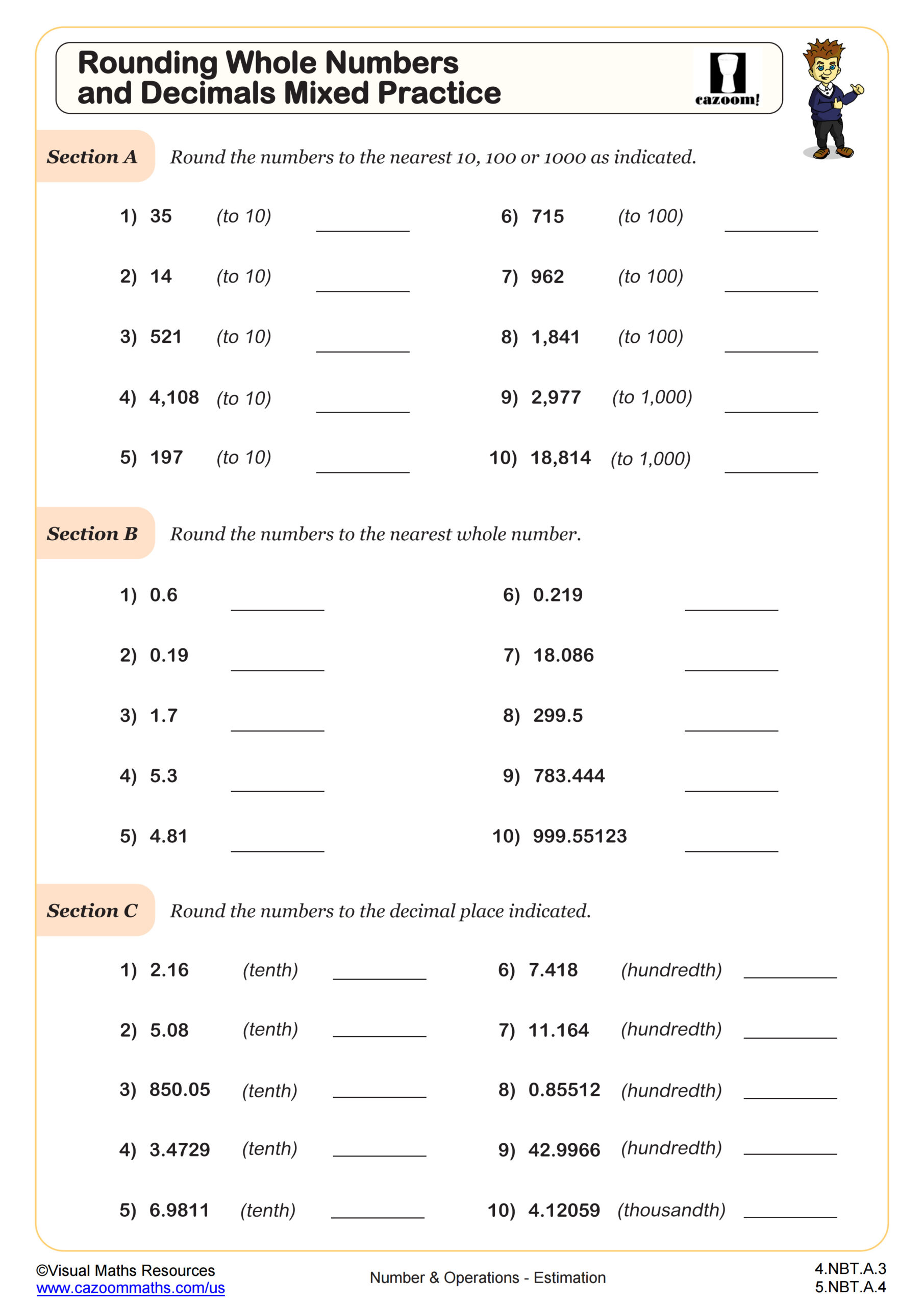
Rounding Whole Numbers and Decimals Mixed Practice
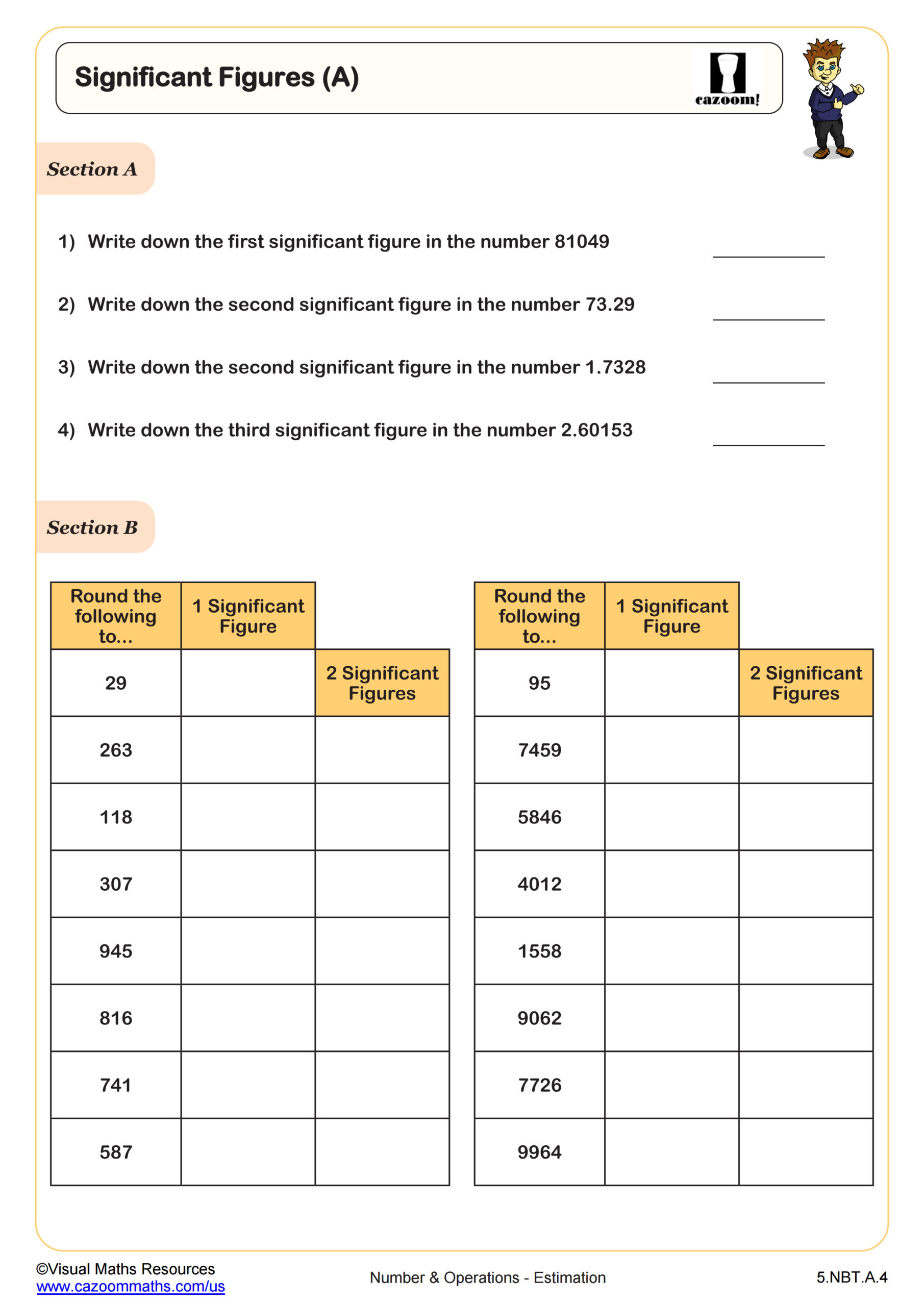
Significant Figures (A)
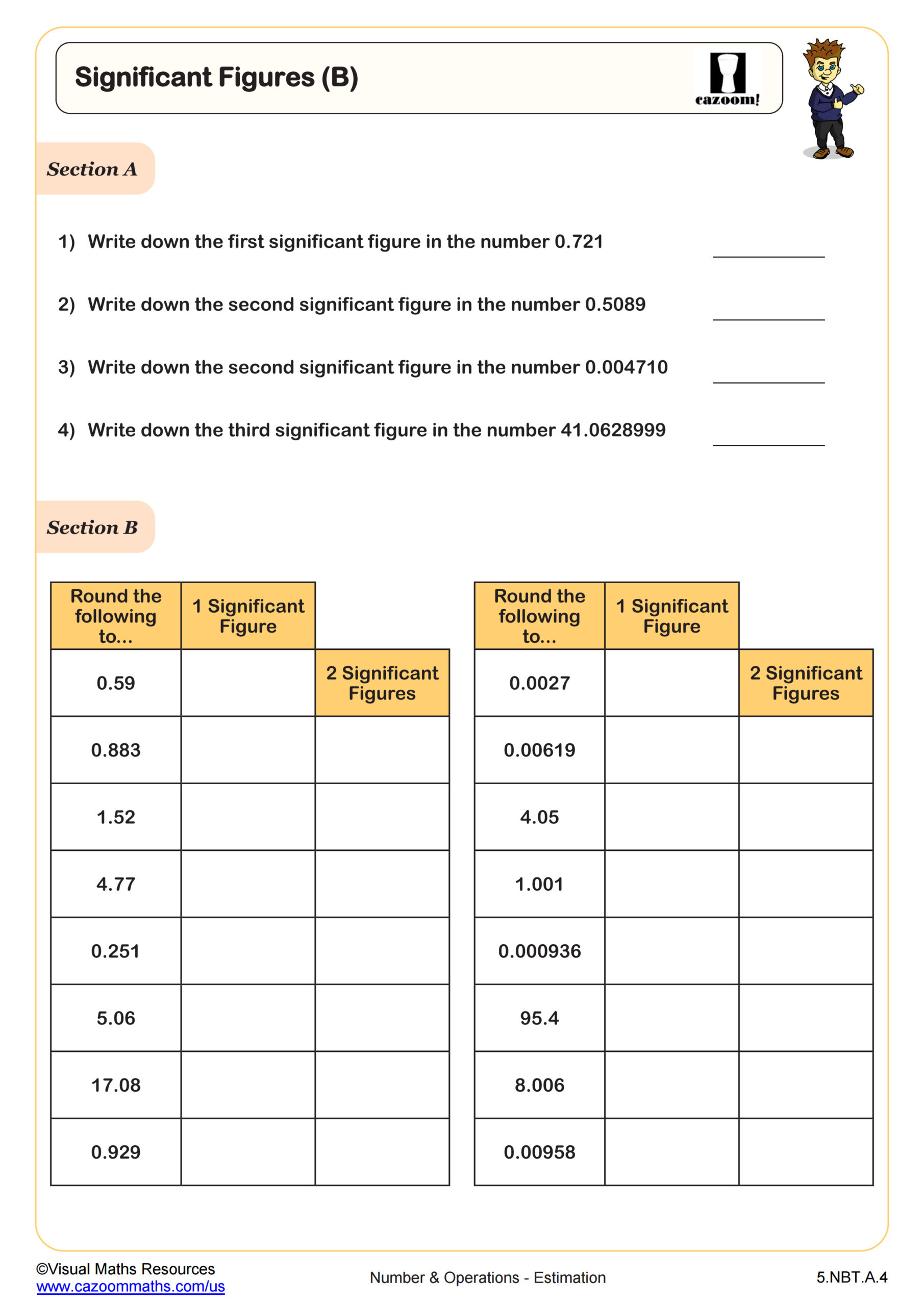
Significant Figures (B)
All worksheets are created by the team of experienced teachers at Cazoom Math.
What should teachers look for in a quality estimating worksheet?
A well-designed estimating worksheet should include clear instructions about the estimation strategy expected, whether students should round to the nearest ten, hundred, or use front-end estimation. The problems should connect to real-world contexts where estimation is actually useful, like calculating grocery costs or travel time.
Teachers notice that students perform better when estimation worksheets provide visual cues or number lines to support their thinking. Many students initially provide exact calculations instead of estimates, so worksheets that explicitly remind students to estimate rather than solve precisely help reinforce the skill. Look for problems that ask students to explain their reasoning, as this reveals their understanding of when different estimation strategies are most appropriate.
How do estimation skills progress across different grade levels?
Early elementary students begin with simple rounding to the nearest ten and estimating quantities using benchmark numbers like 5, 10, and 100. Third and fourth graders advance to front-end estimation and rounding to different place values when adding and subtracting larger numbers. Fifth grade estimation worksheets typically include decimal estimation and more complex multi-step problems.
Middle school students apply estimation to fraction operations, percent calculations, and algebraic expressions. Teachers observe that students who master basic estimation strategies in elementary grades show stronger number sense when tackling more complex math concepts later. The progression moves from concrete visual estimation to abstract mathematical reasoning about the reasonableness of calculated answers.
When should students use front-end estimation versus rounding?
Front-end estimation works best for addition and subtraction problems where students need a quick approximation by focusing on the largest place value. Students add or subtract the leading digits and ignore the rest, making it ideal for mental math. Rounding estimation is more accurate for multiplication and division, where students round each number to a convenient place value before computing.
Teachers find that students often confuse these strategies, using rounding for addition problems where front-end estimation would be more efficient. Providing specific contexts helps - front-end estimation works well for estimating total costs when shopping, while rounding estimation is better for calculating approximate areas or distances. Practice with both methods helps students choose the most appropriate strategy for different problem types.
How can teachers use these worksheets to improve student number sense?
Teachers should encourage students to make estimates before solving exact calculations, then compare their estimates to actual answers to check reasonableness. This practice helps students catch computational errors and builds confidence in their mathematical intuition. Use estimation worksheets as warm-up activities to activate number sense before introducing new computational skills.
Many teachers pair estimation practice with real-world problem solving, asking students to estimate quantities they encounter daily like classroom supplies, lunch costs, or time spent on activities. Regular practice with estimation worksheets helps students develop mental math fluency and prepares them for standardized test questions that require reasonable answer choices. Students who regularly practice estimation show improved performance on word problems across all mathematical topics.