Elementary School Factors and Multiples Worksheets
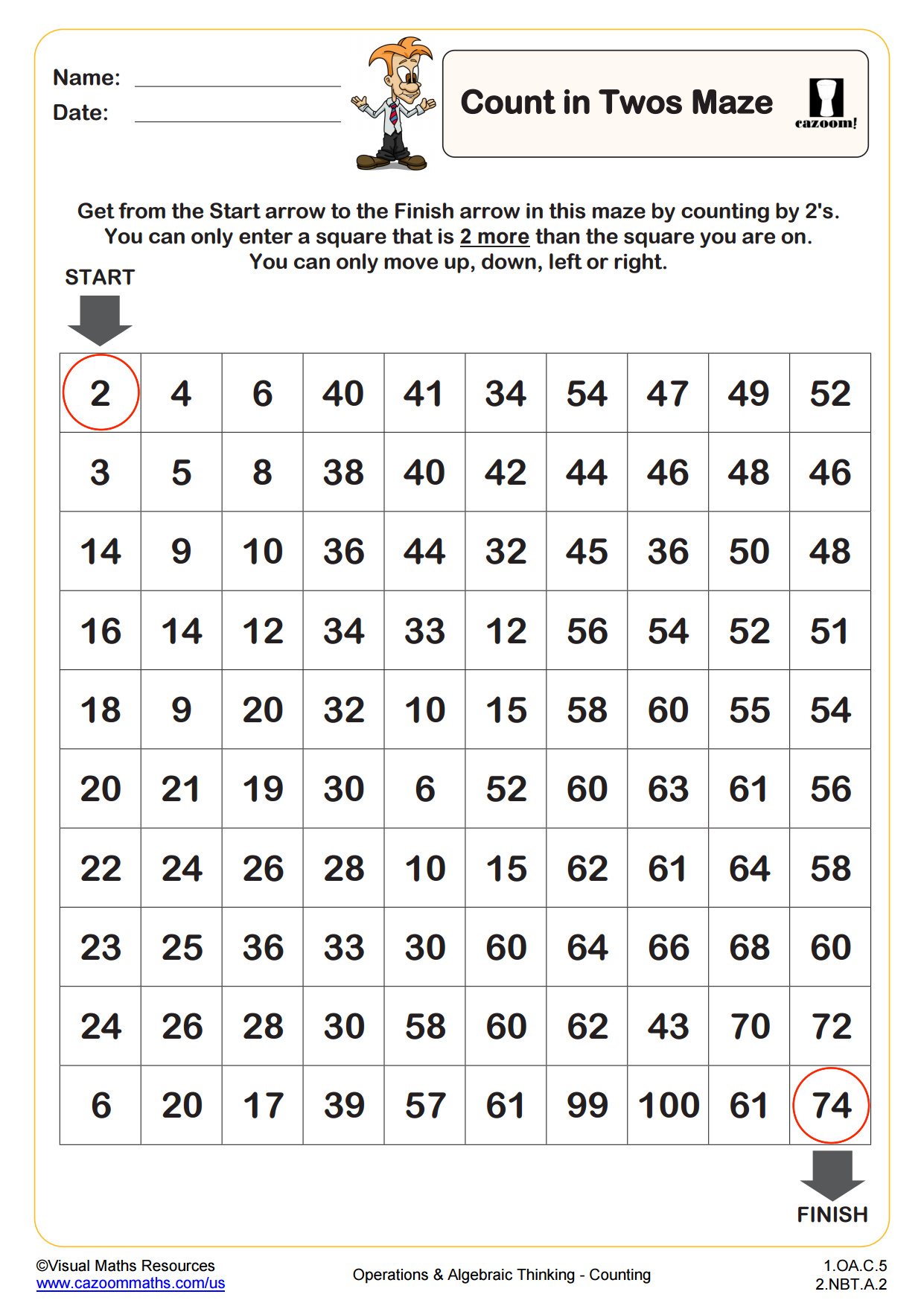
Count in 2s Maze
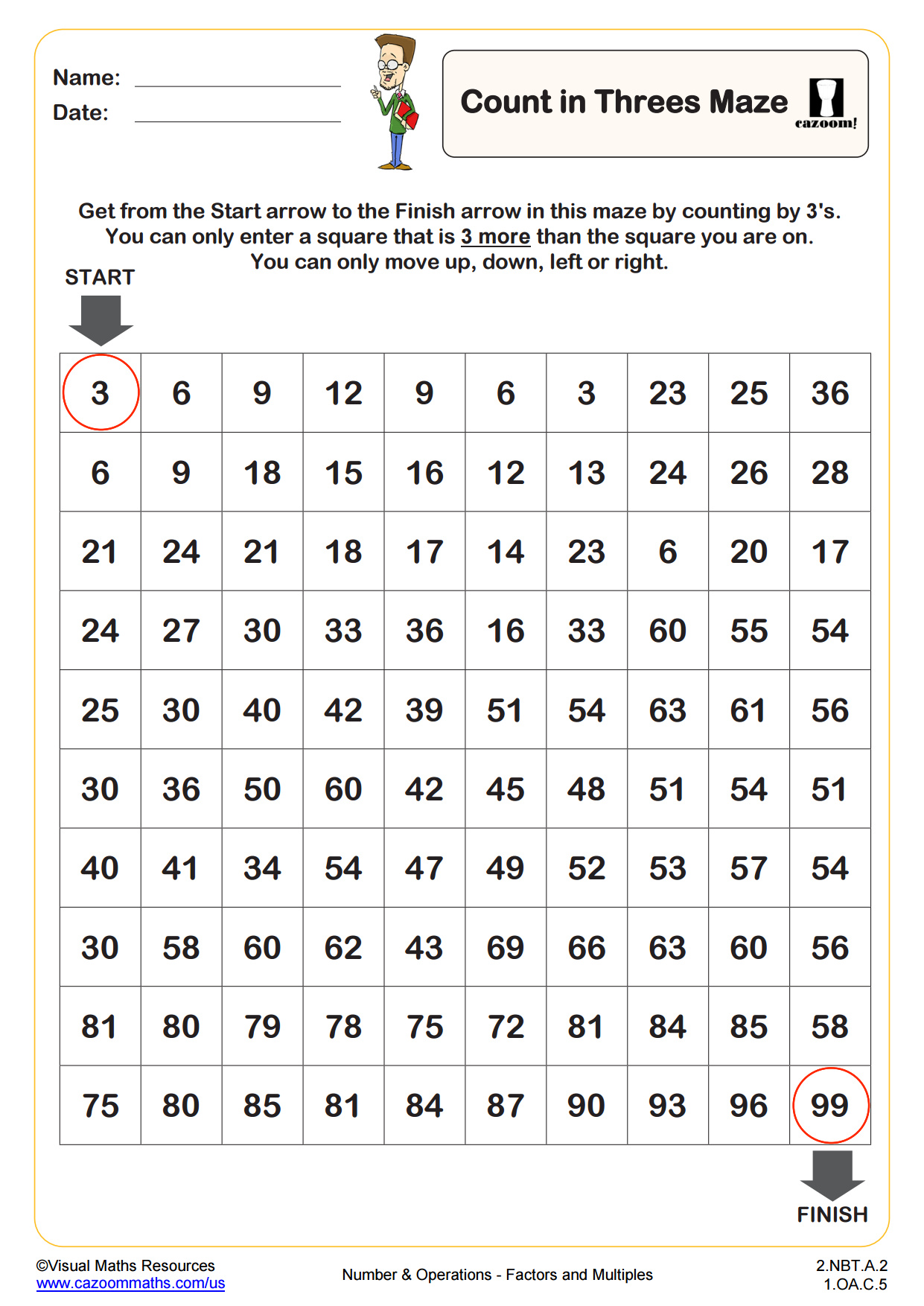
Count in 3s Maze
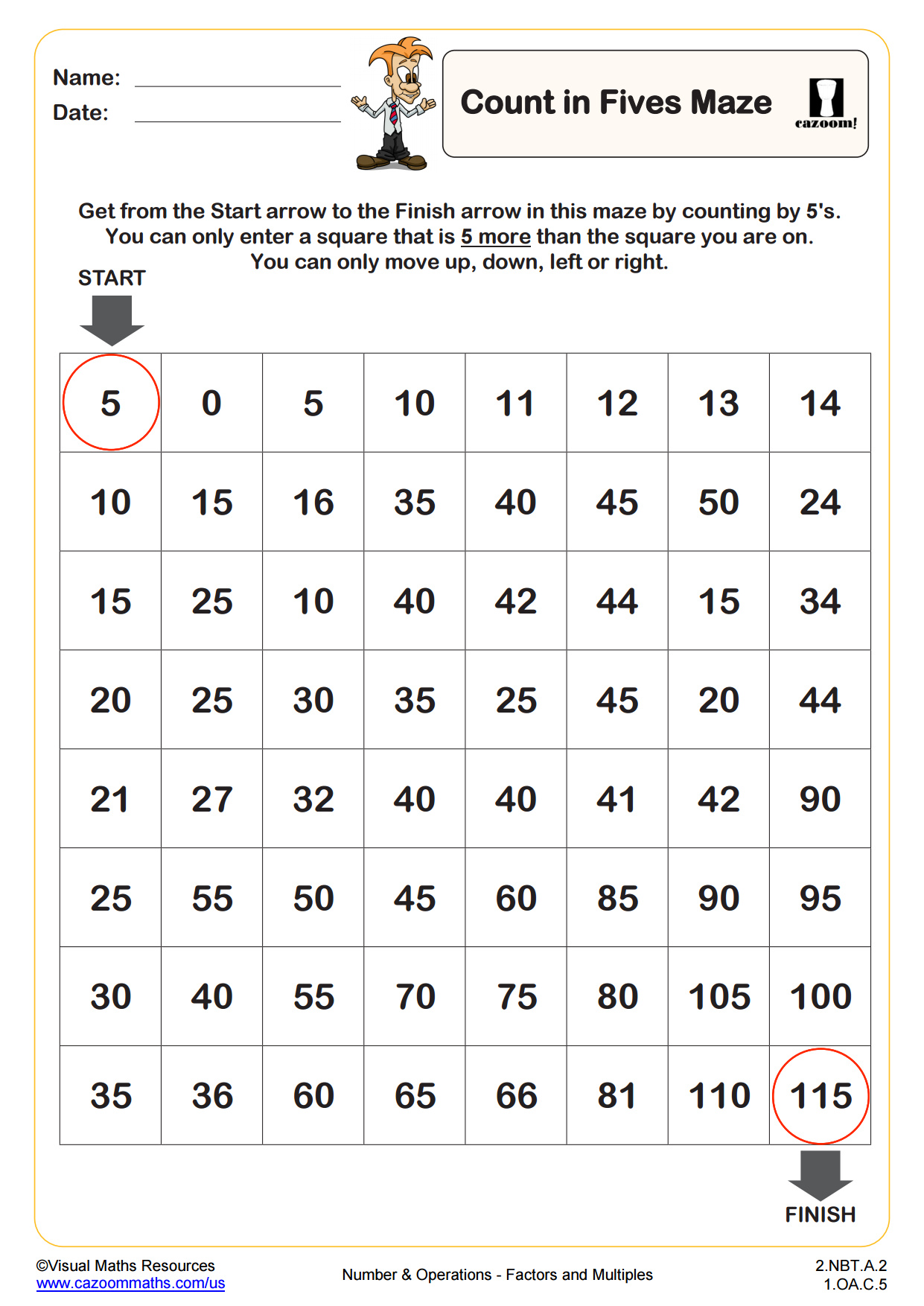
Count in 5s Maze
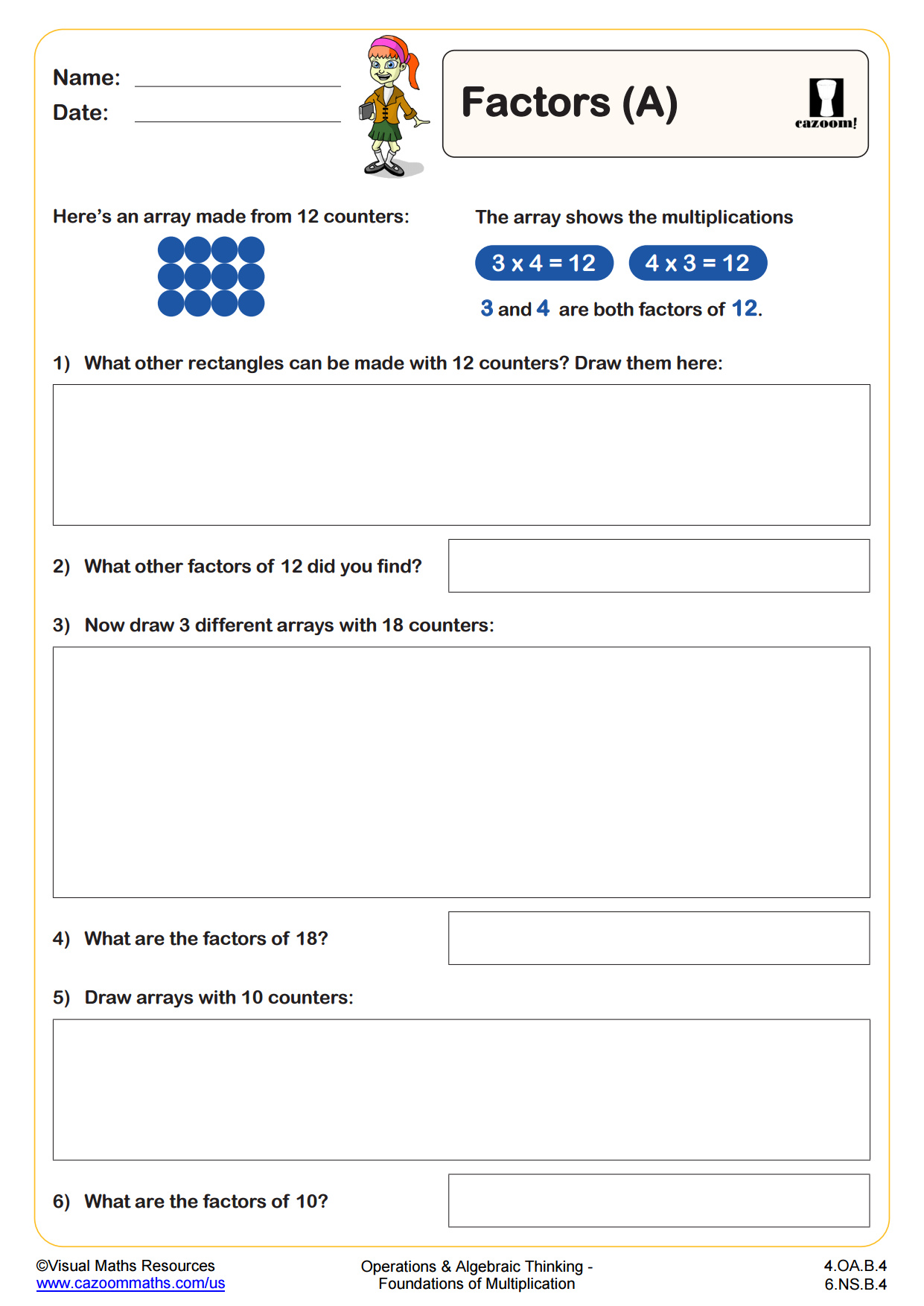
Factors (A)
Factors (B)
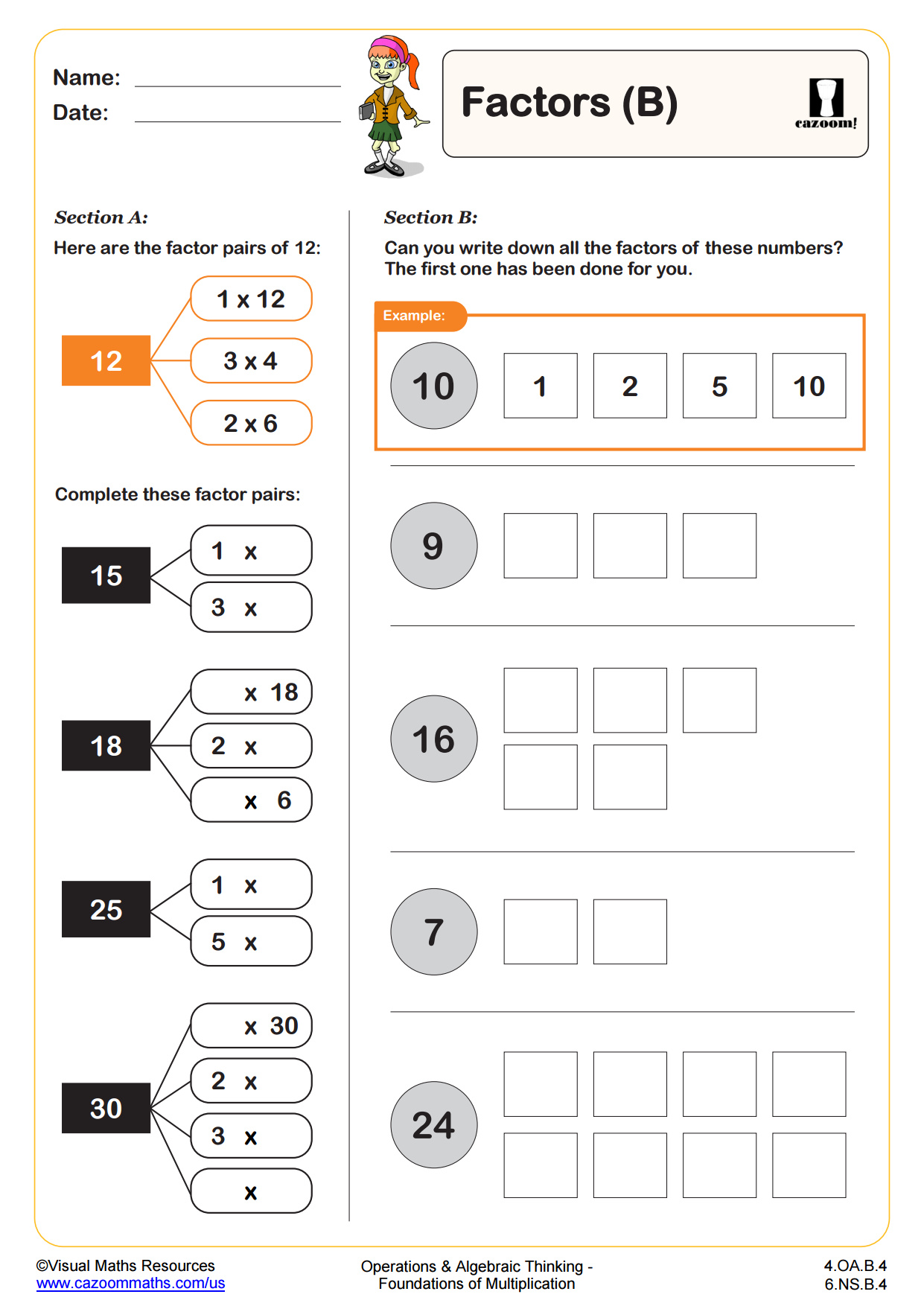
Factors and Multiples
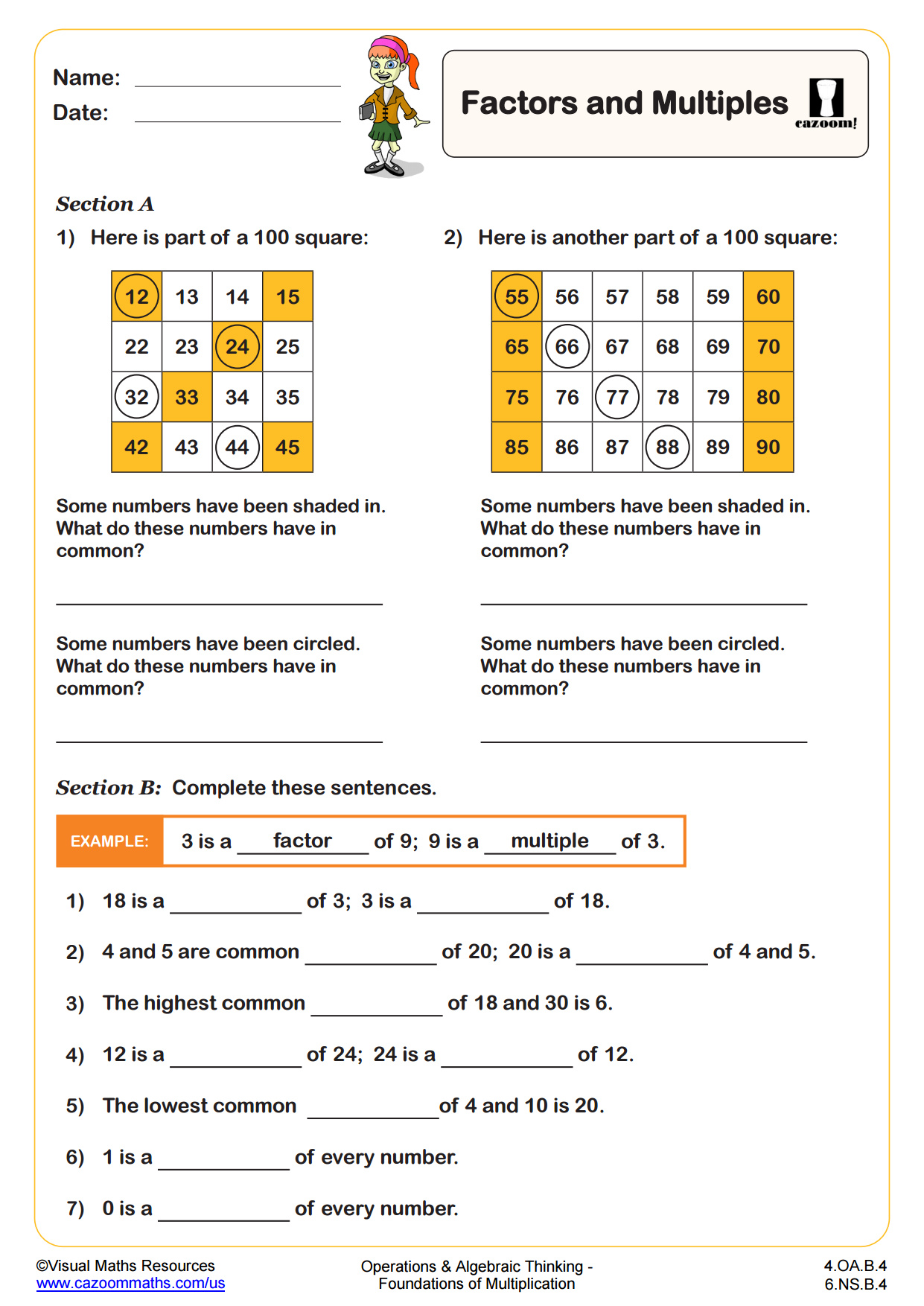
Factors and Prime Numbers
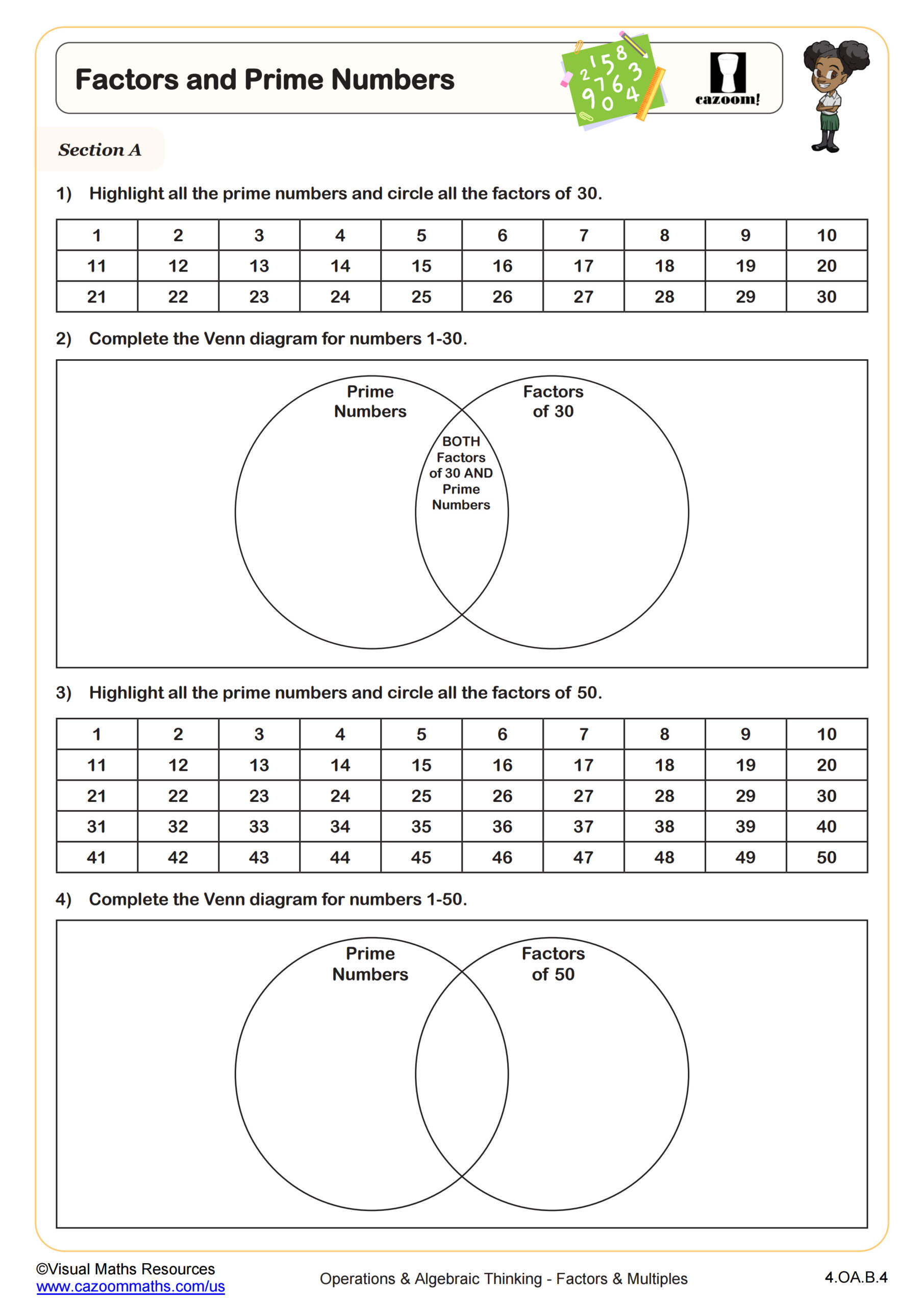
Finding the GCF and LCM using Venn Diagrams
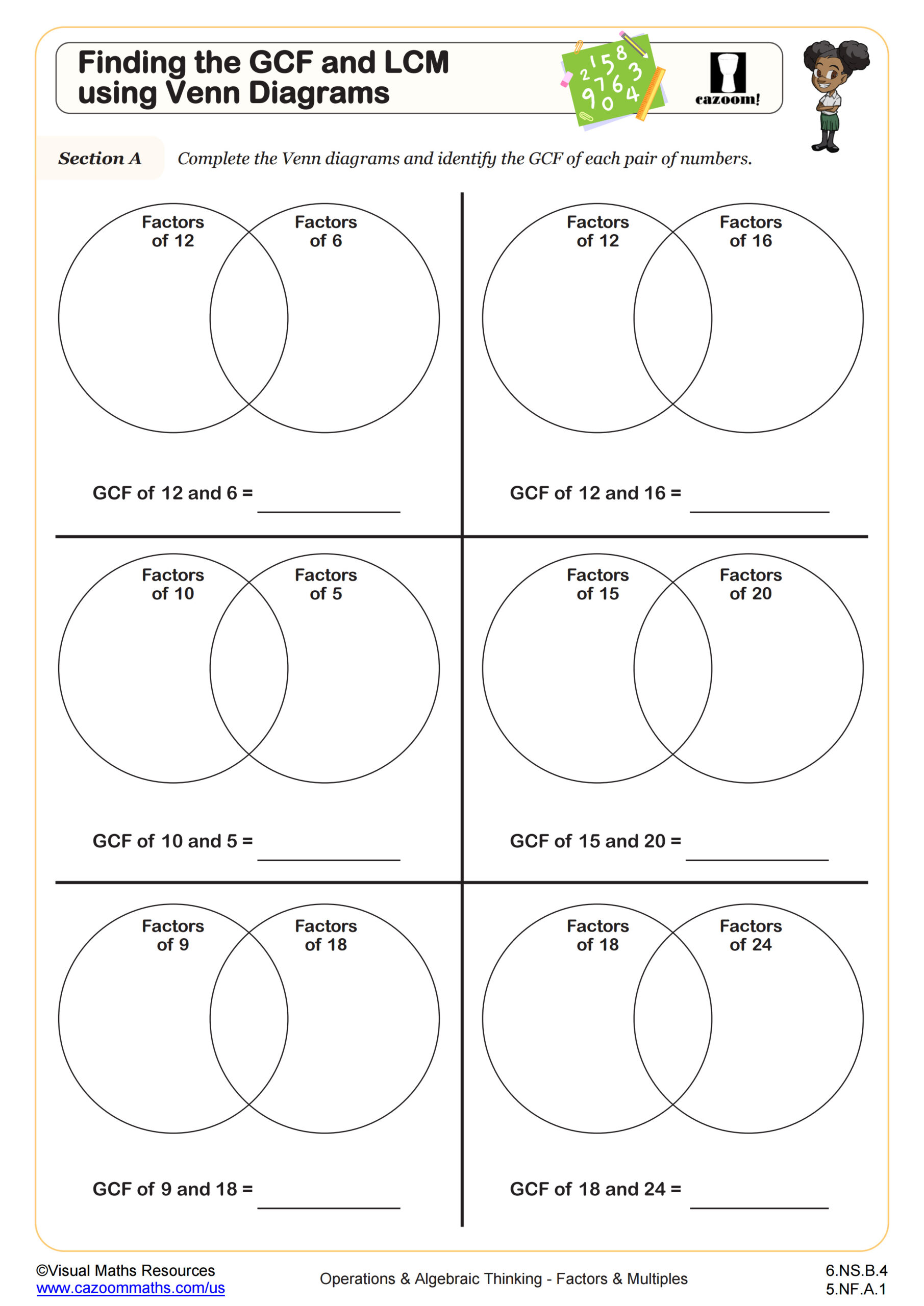
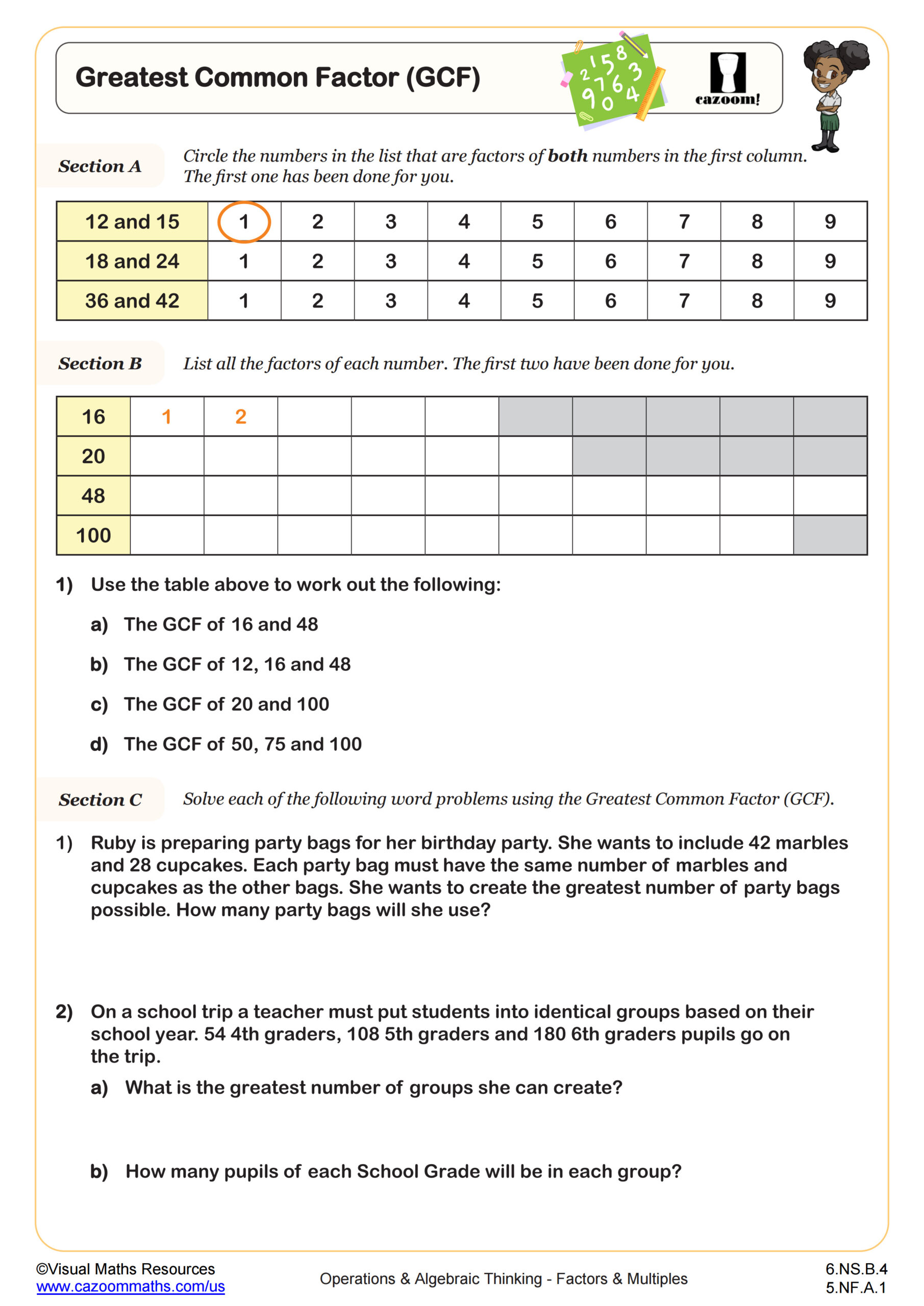
Greatest Common Factor (GCF)
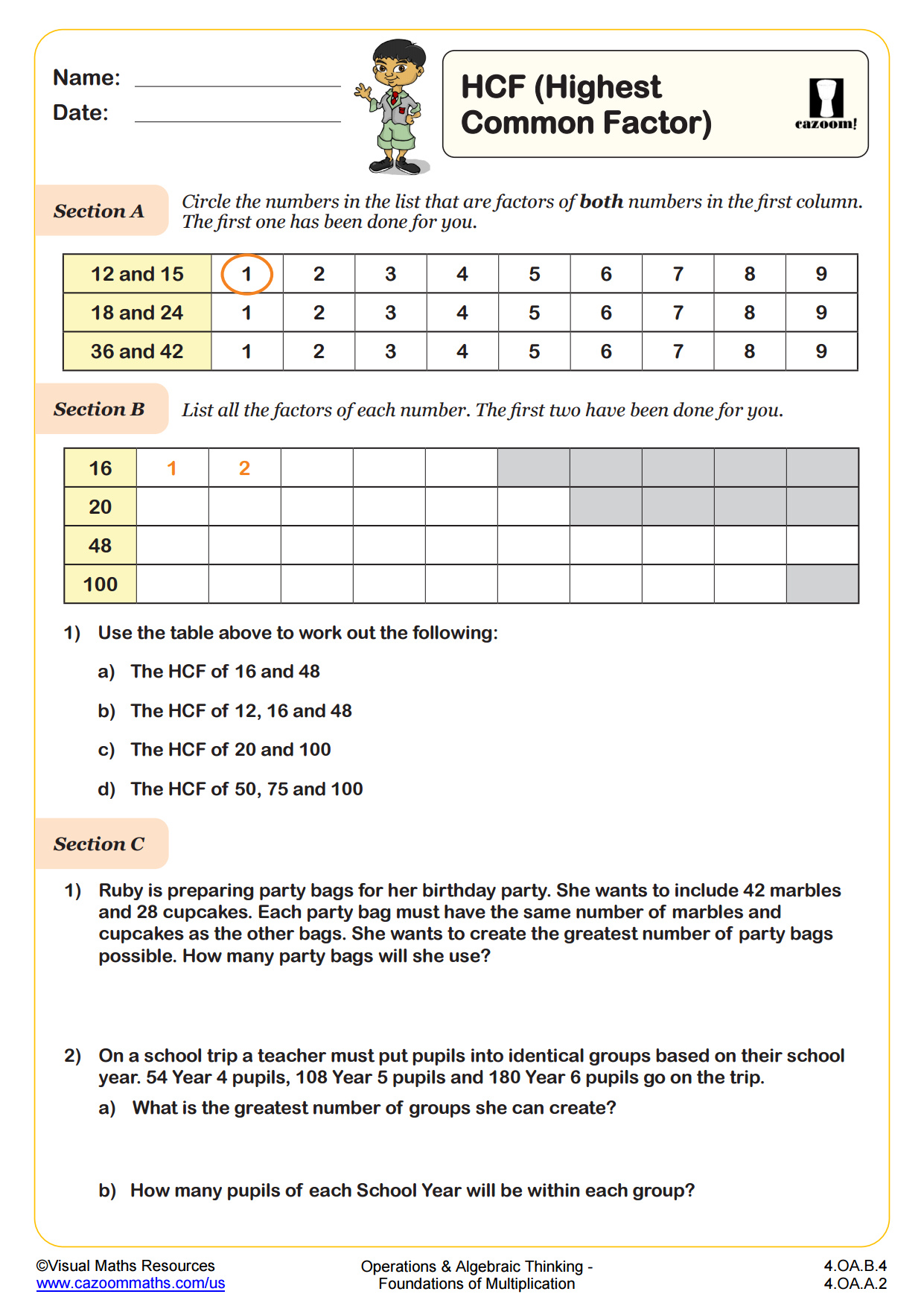
HCF (Highest Common Factor)
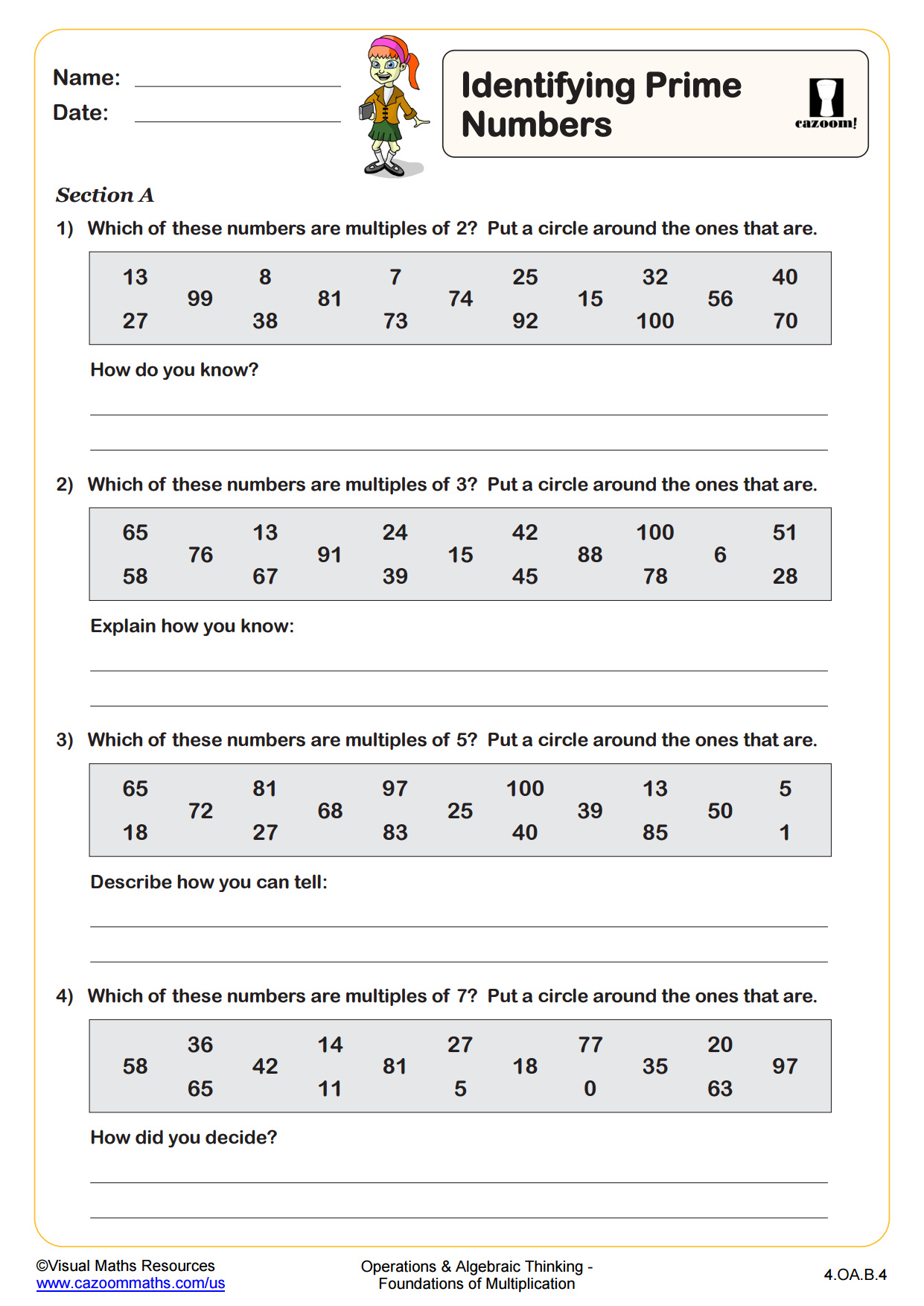
Identifying Prime Numbers
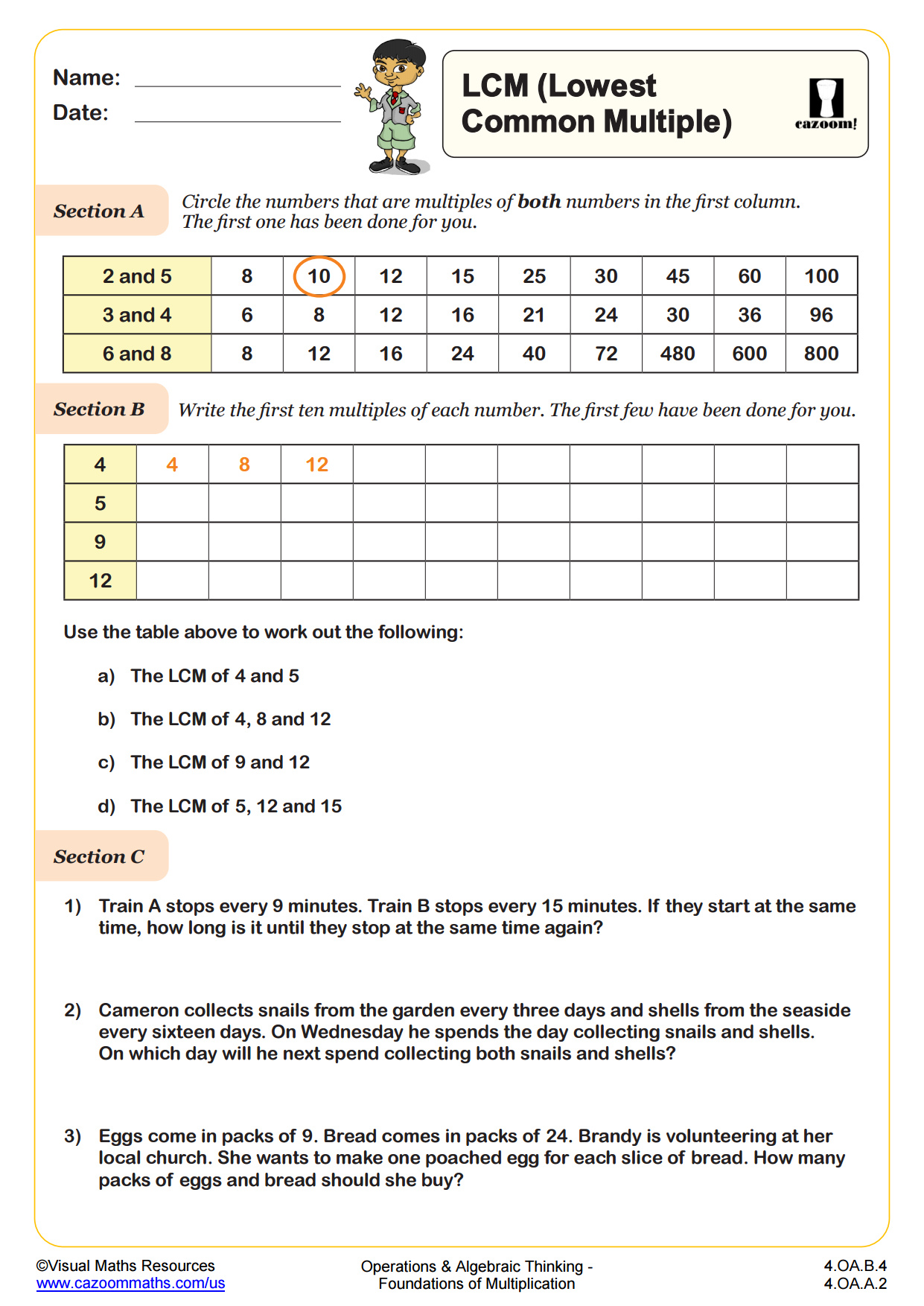
LCM (Lowest Common Multiple)
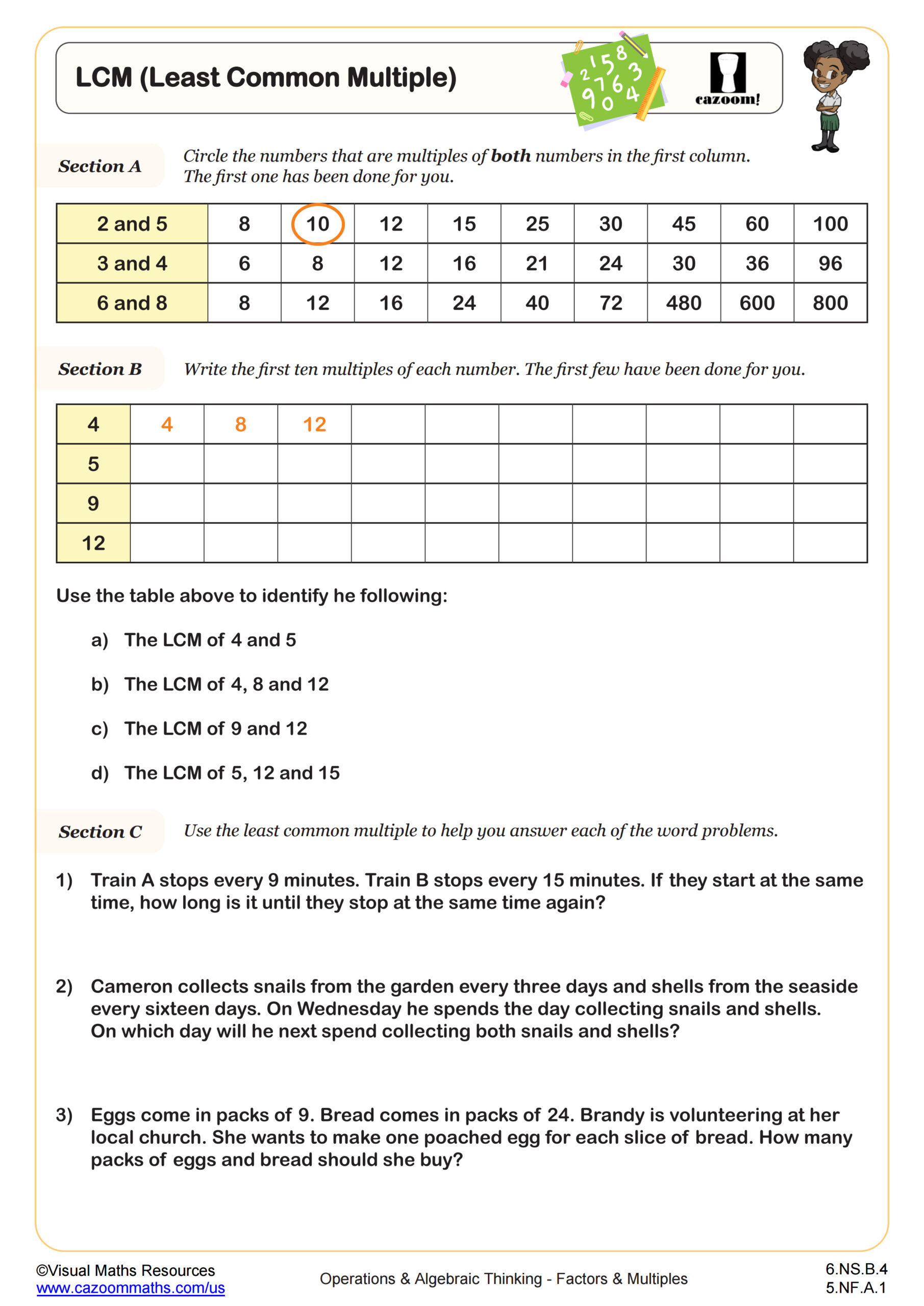
Least Common Multiple (LCM)
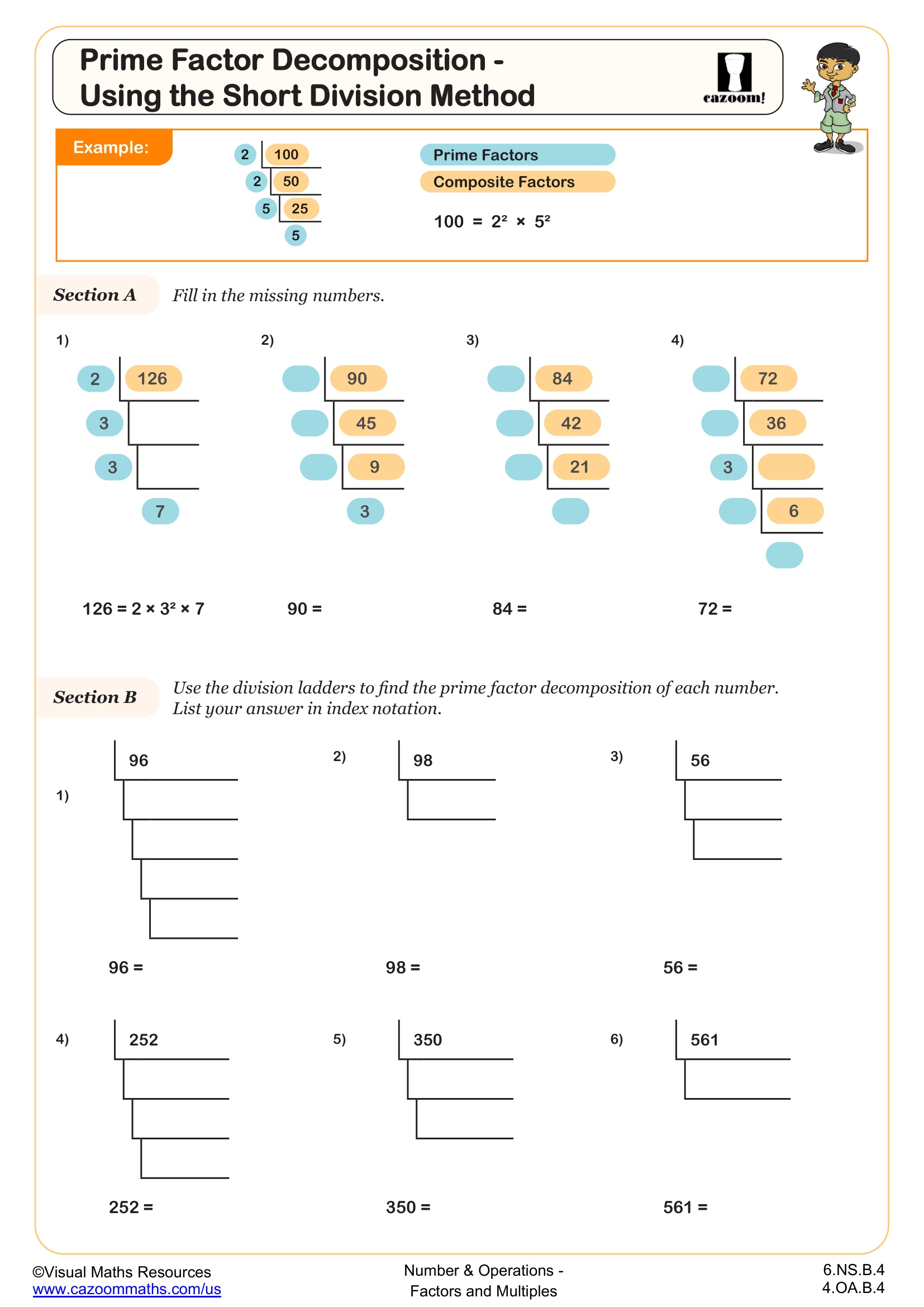
Prime Factor Decomposition - Using the Short Division Method
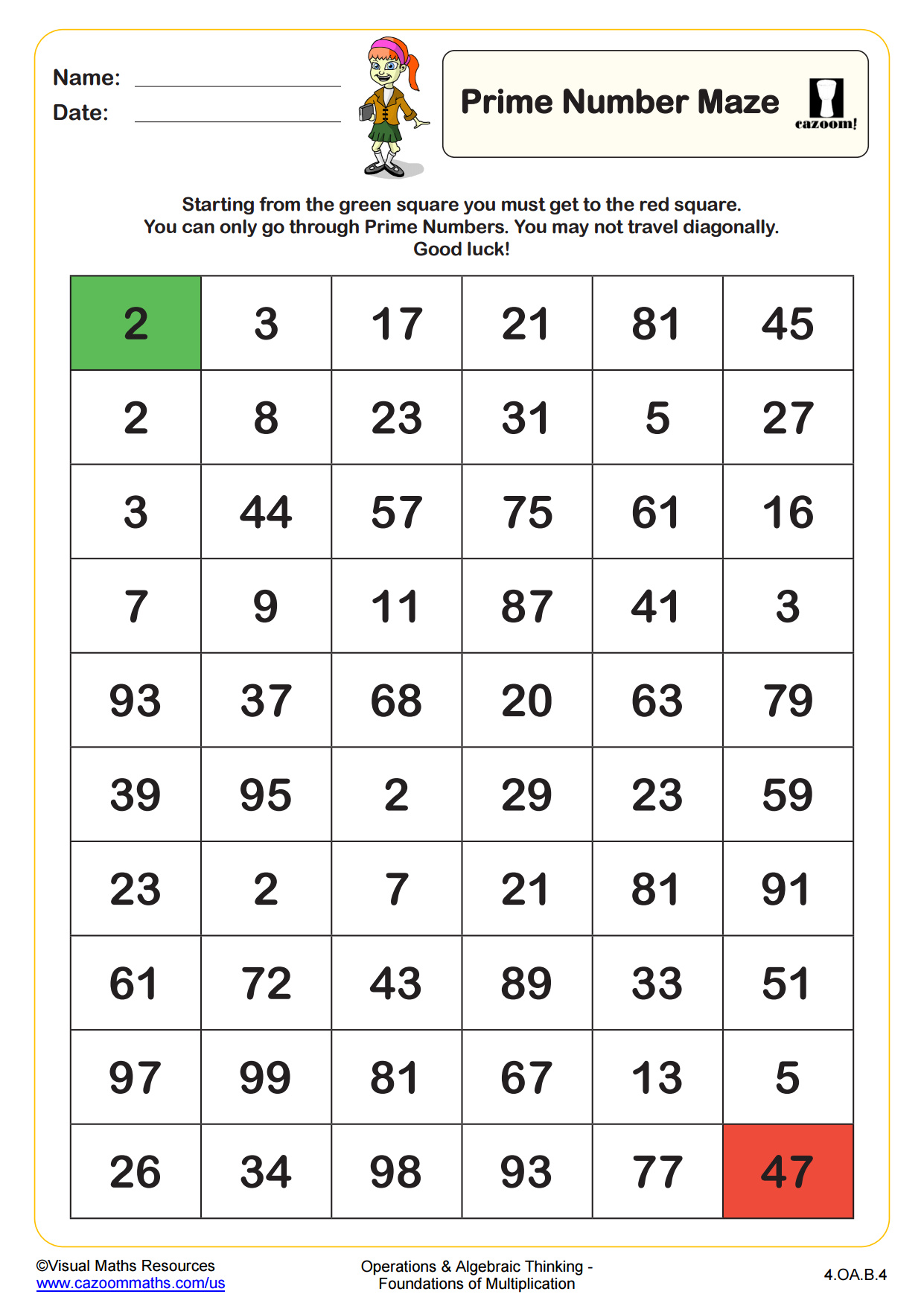
Prime Number Maze
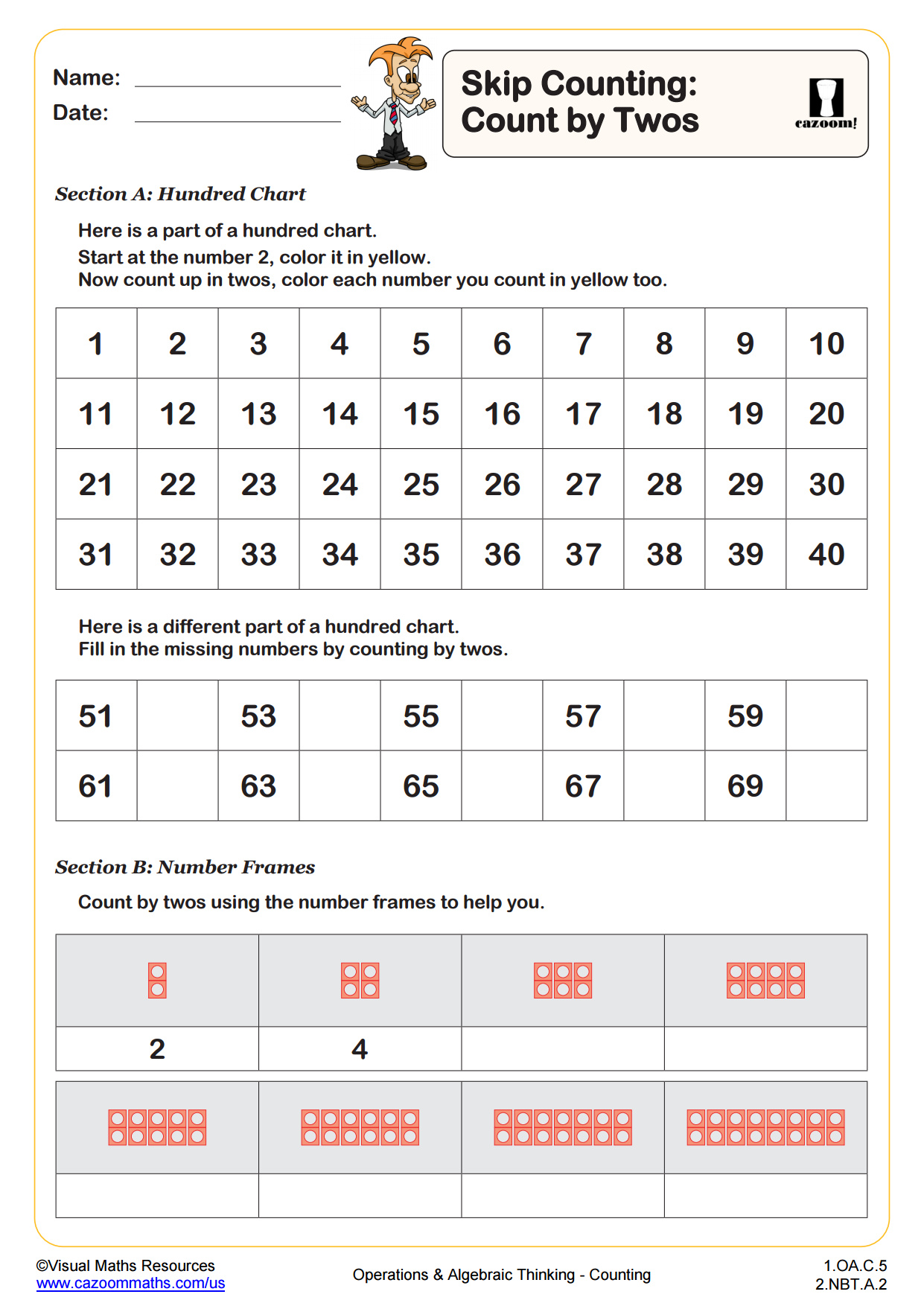
Skip Counting (count by 2s)
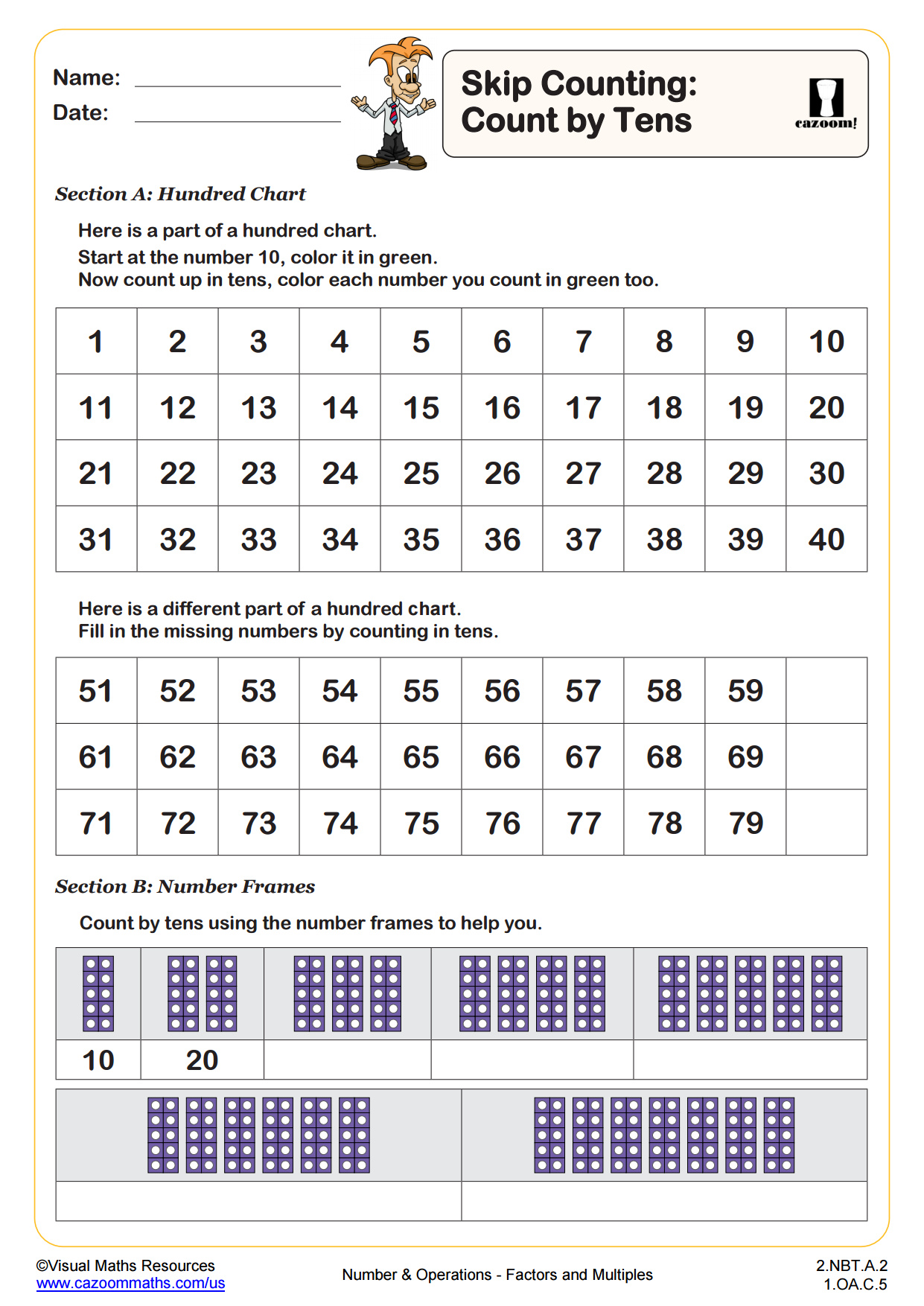
Skip Counting (count in 10s)
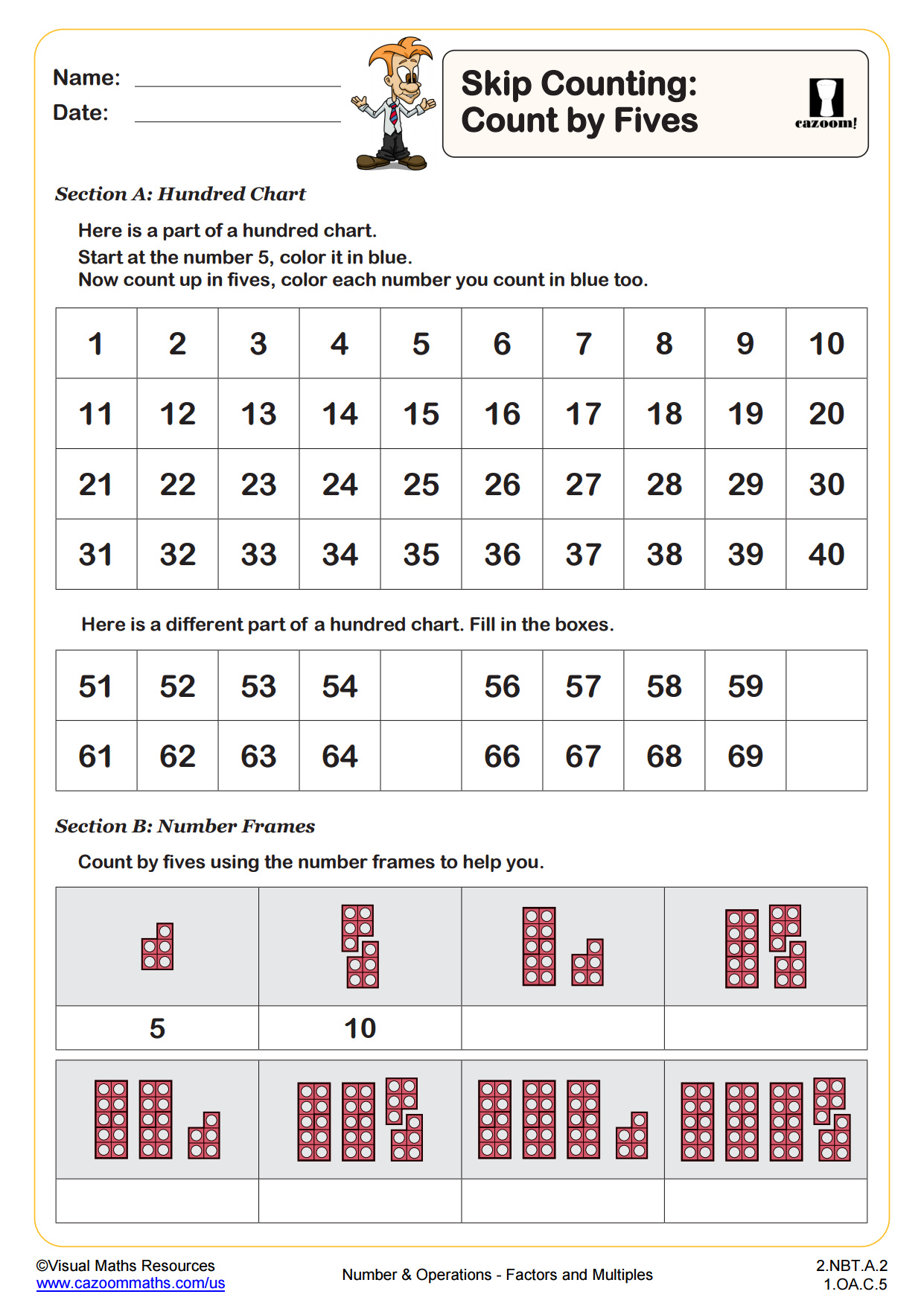
Skip Counting (count in 5s)
All worksheets are created by the team of experienced teachers at Cazoom Math.
What makes an effective multiples worksheet for elementary students?
An effective multiples worksheet provides systematic practice with skip counting patterns while reinforcing multiplication concepts that align with Common Core standards for grades 2-5. The activities should progress from concrete number sequences to abstract pattern recognition and include visual supports like number lines or hundreds charts.
Math teachers observe that students benefit most when worksheets combine fill-in-the-blank sequences with identification exercises. Many students initially count by ones to find multiples instead of using skip counting, which slows their progress and indicates they need more foundational work with multiplication facts before tackling complex multiple patterns.
How do counting by multiples skills develop across different grade levels?
Grade 2 students begin with simple skip counting by 2s, 5s, and 10s using concrete manipulatives and number charts. By grade 4, students work with multiples of single-digit numbers and identify common multiples between two numbers. Advanced elementary students tackle factors and multiples grade 9 concepts as enrichment.
Teachers notice significant growth when students move from rote memorization to understanding multiplicative relationships. Third graders often confuse the terms 'multiple' and 'factor,' requiring explicit instruction about how 24 is a multiple of 6, while 6 is a factor of 24. This conceptual understanding becomes crucial for fraction work and algebraic thinking in later grades.
What are common multiples and how should students practice identifying them?
Common multiples are numbers that appear in the multiplication tables of two or more given numbers, with applications in finding least common denominators for fractions and solving real-world scheduling problems. Students need structured practice identifying shared multiples before learning efficient methods for finding the least common multiple.
Classroom observations show that students often list multiples incorrectly by adding the original number repeatedly instead of multiplying by consecutive integers. For example, when finding multiples of 8, students might write 8, 16, 23 instead of 8, 16, 24. Common multiples worksheets should emphasize systematic listing and verification strategies to prevent these calculation errors.
How can teachers use these worksheets to address different learning needs?
Teachers can differentiate instruction by starting struggling students with concrete manipulatives while providing visual number patterns, then progressing to abstract worksheet activities. Advanced learners benefit from exploring multiples of two-digit numbers and investigating patterns in common multiples of three or more numbers.
Effective implementation involves using the answer keys for immediate feedback during independent work or math centers. Many teachers find success pairing students to check each other's work using the provided solutions, which builds mathematical communication skills while reinforcing correct procedures for identifying and extending multiple patterns.