Elementary School Foundations of Multiplication Worksheets
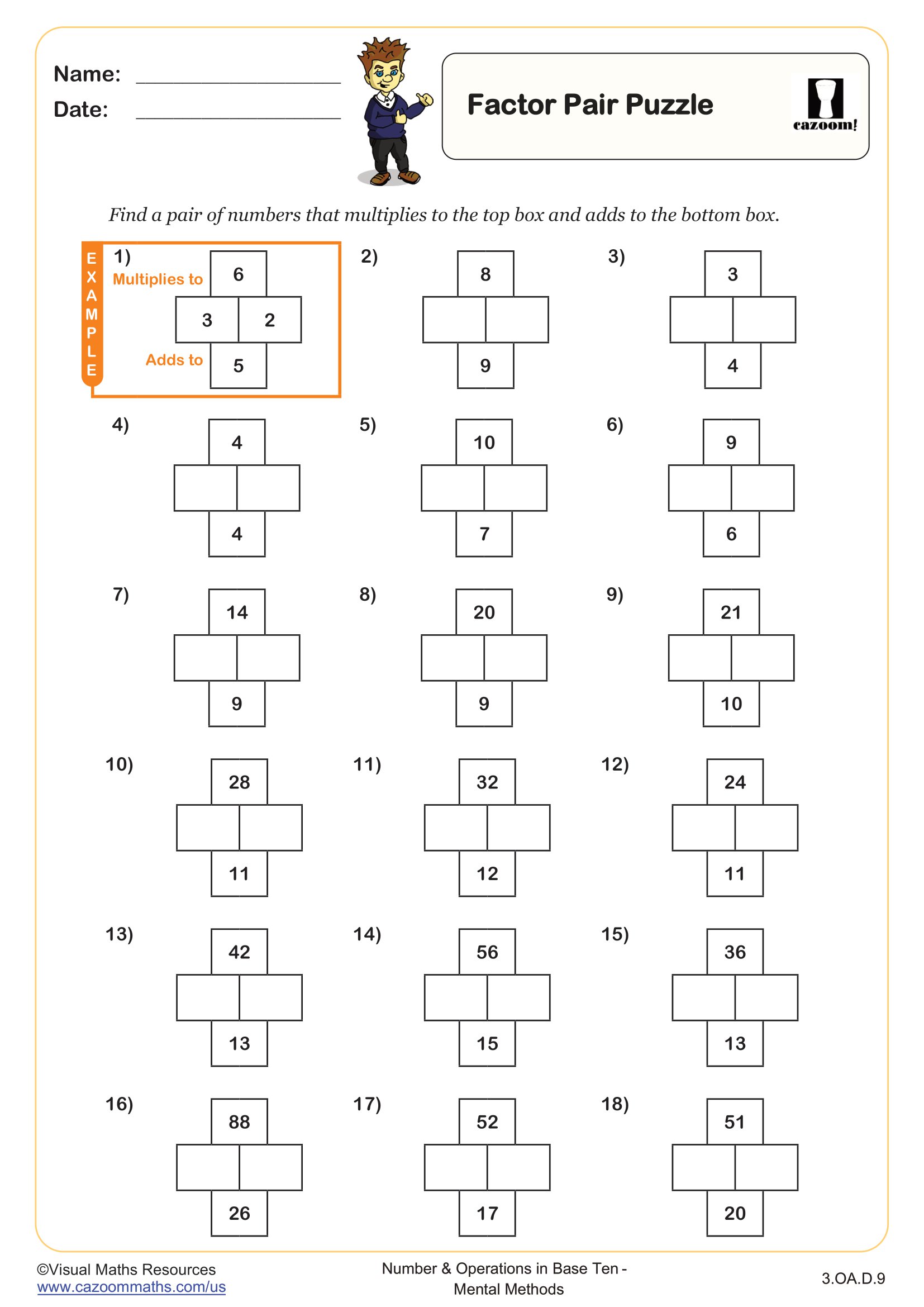
Factor Pair Puzzle
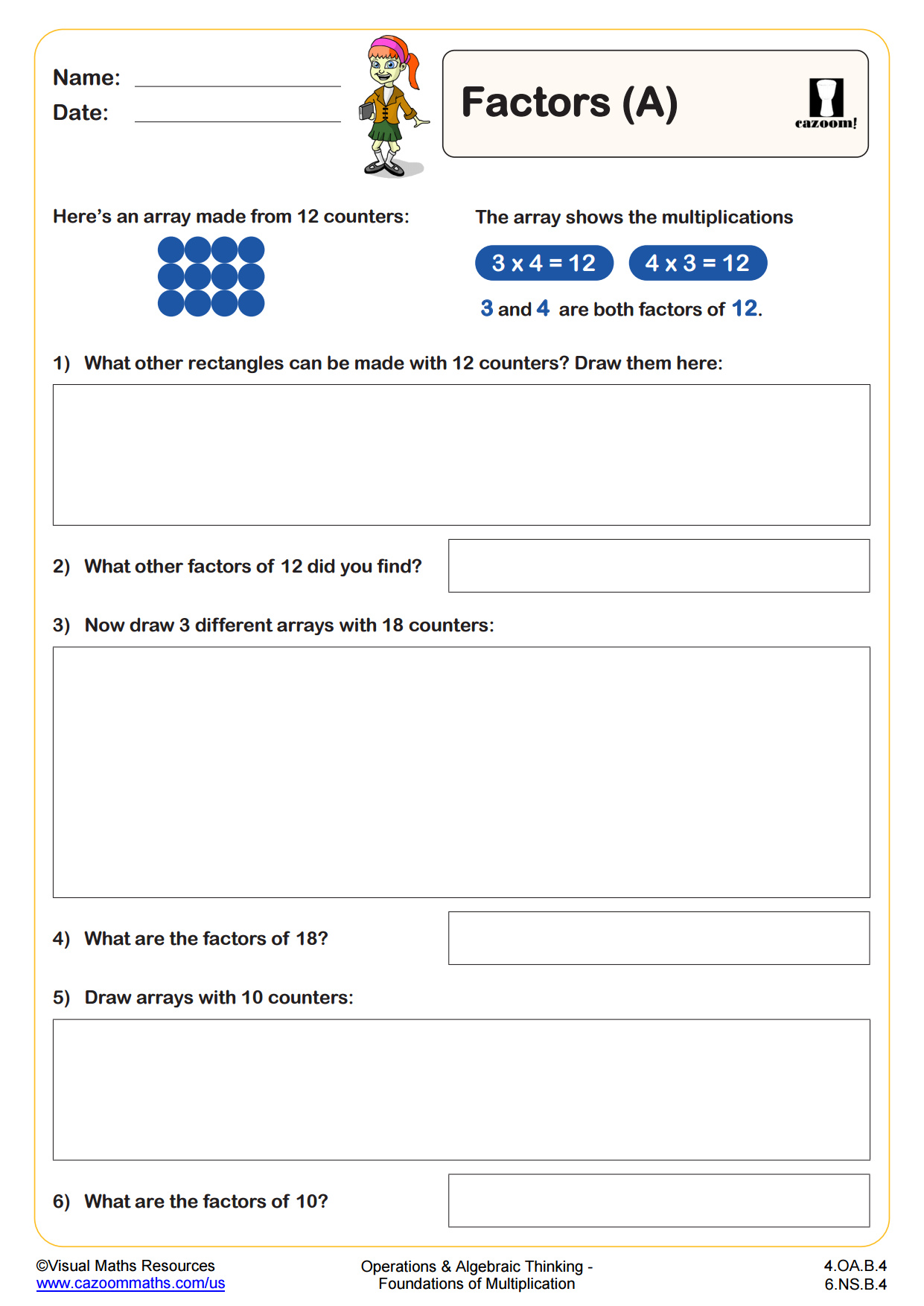
Factors (A)
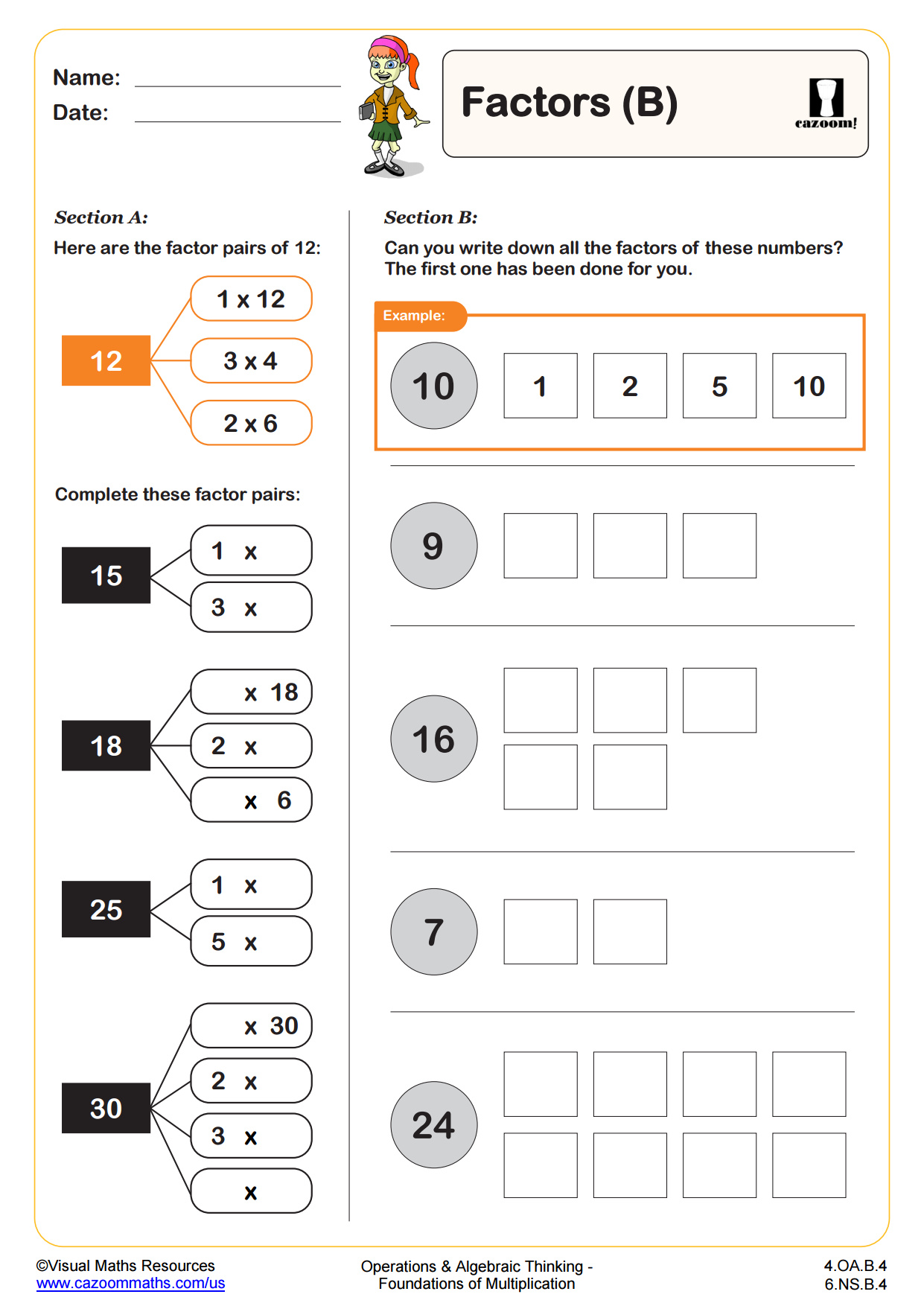
Factors (B)
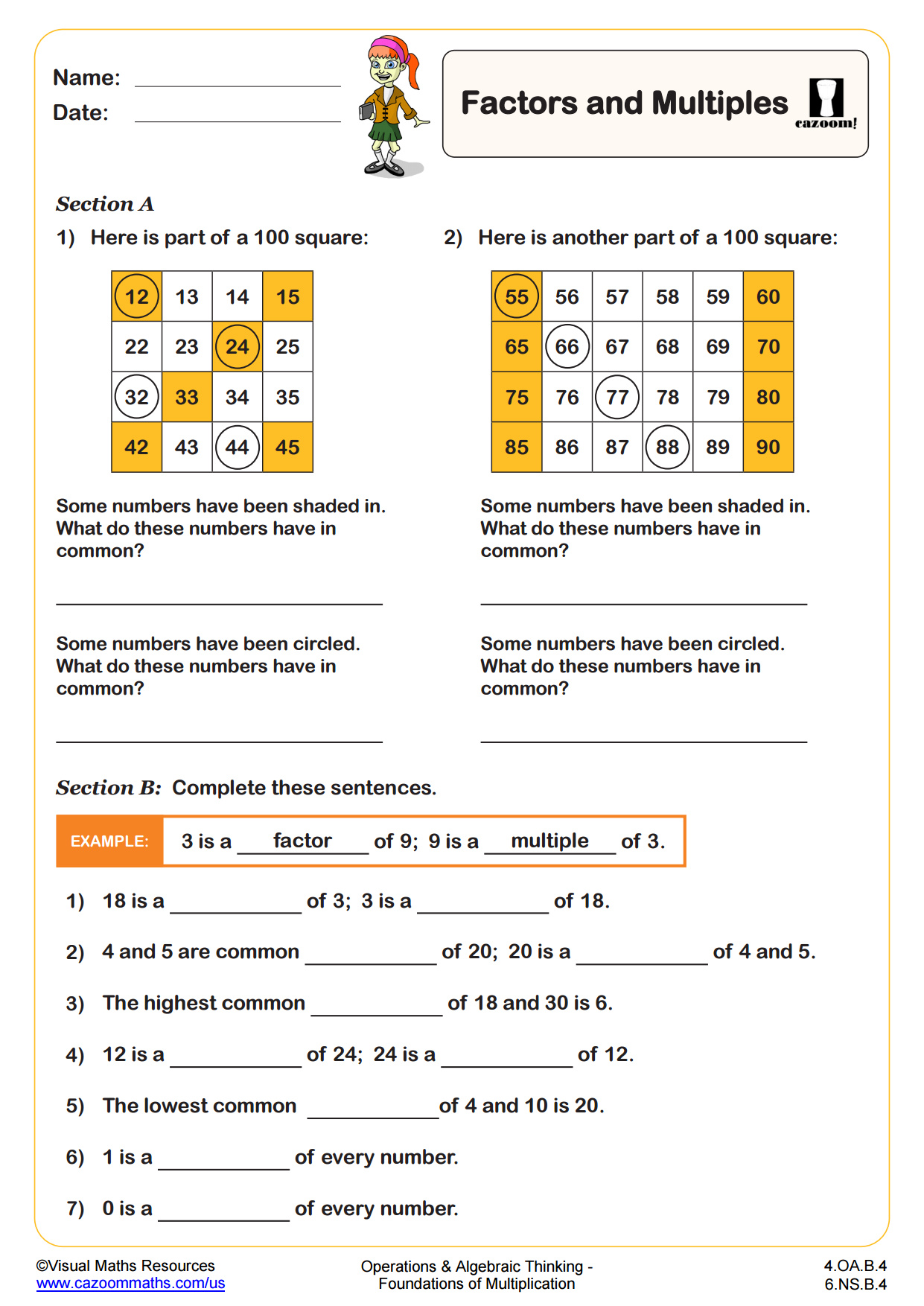
Factors and Multiples
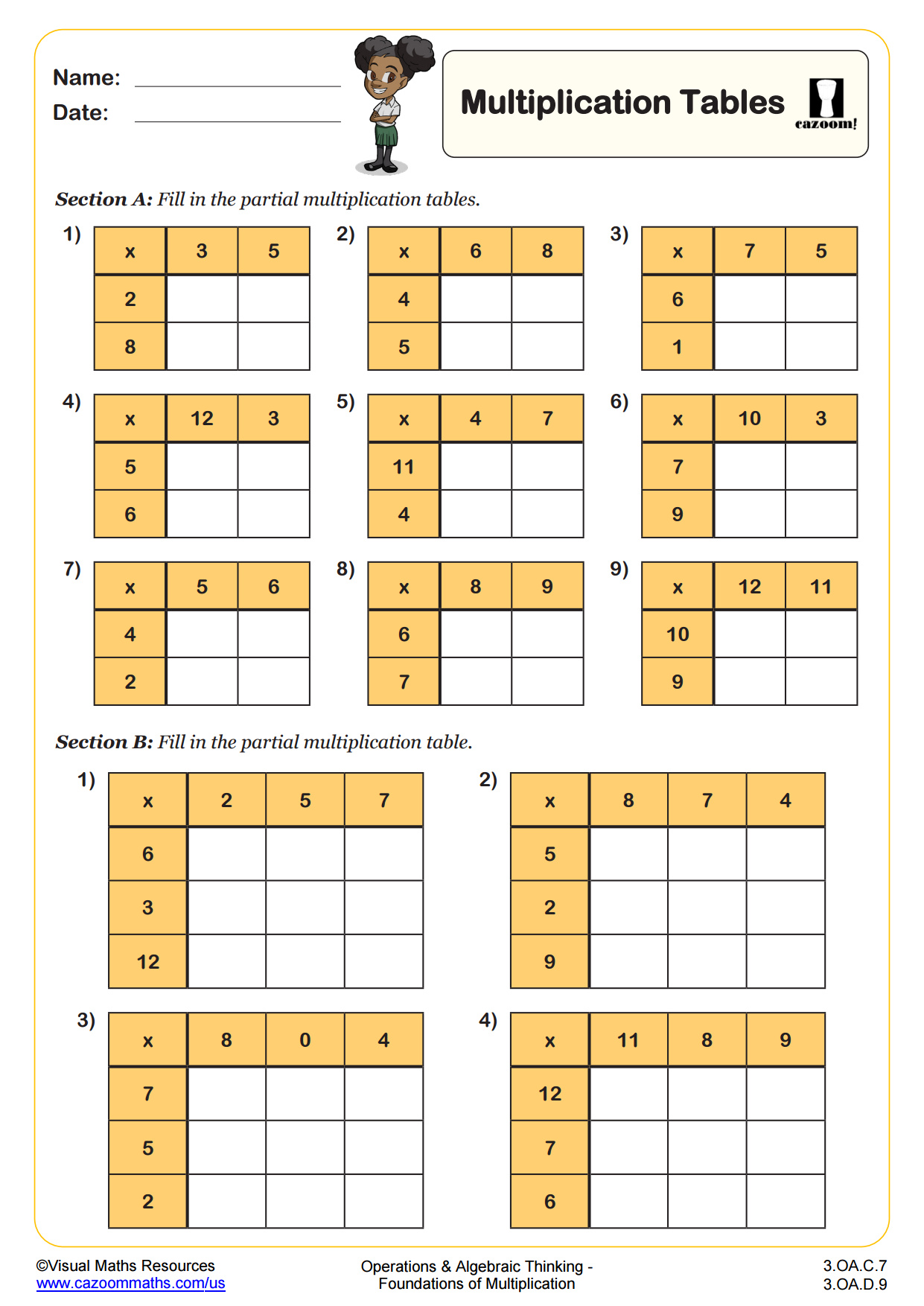
Multiplication Tables
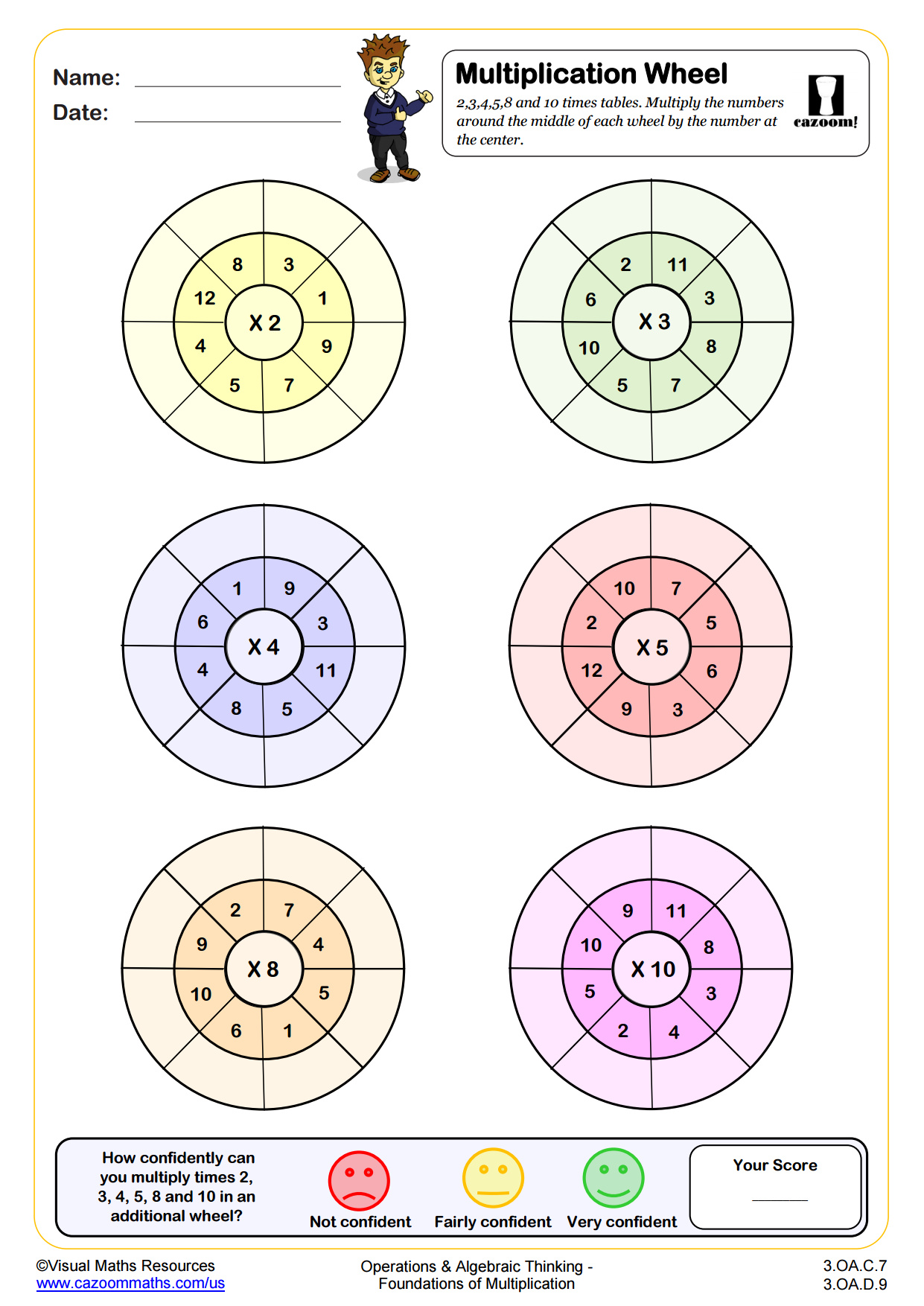
Multiplication Wheels (2,3,4,5,8,&10 Times Tables)
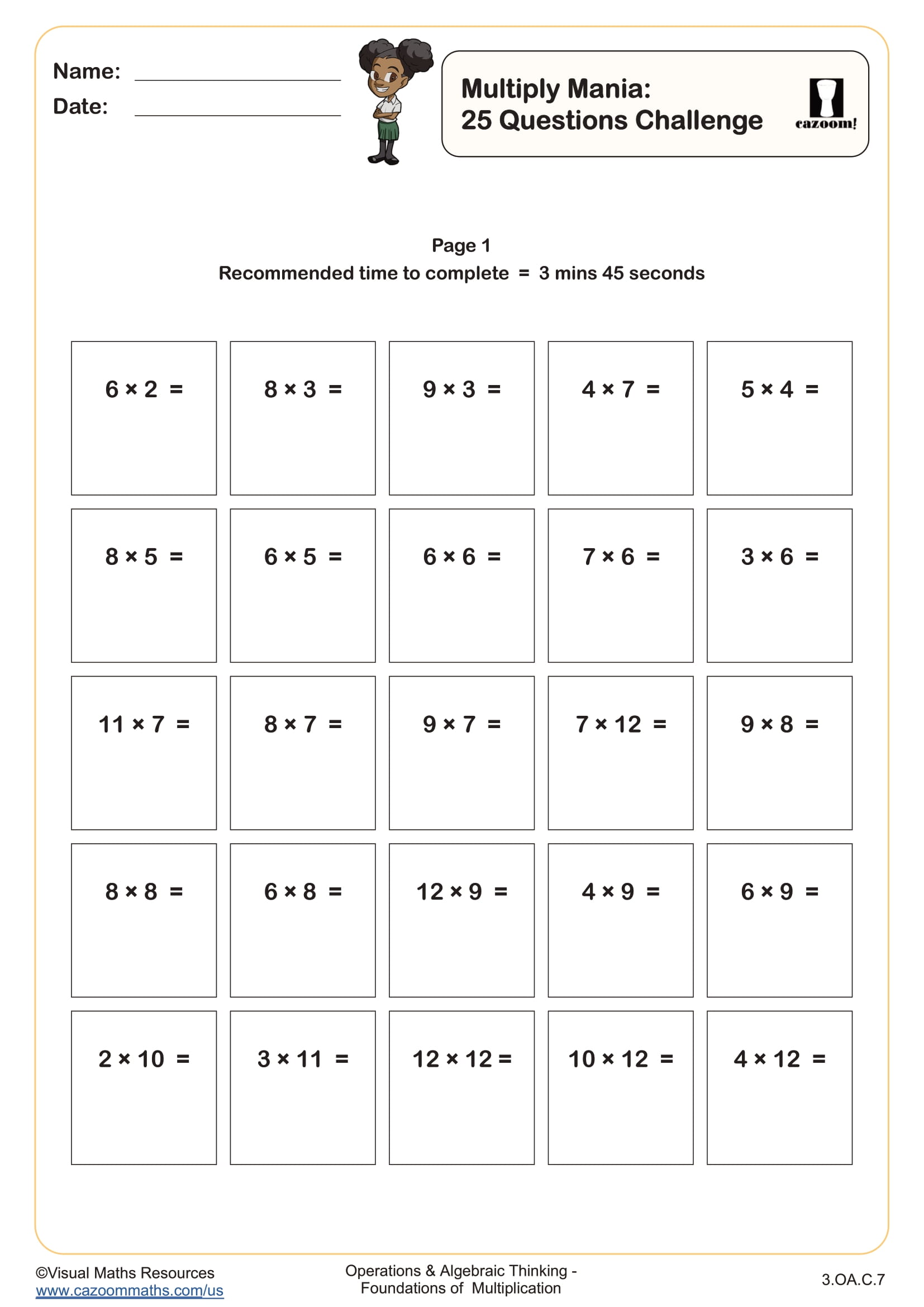
Multiply Mania: 25 Questions Challenge
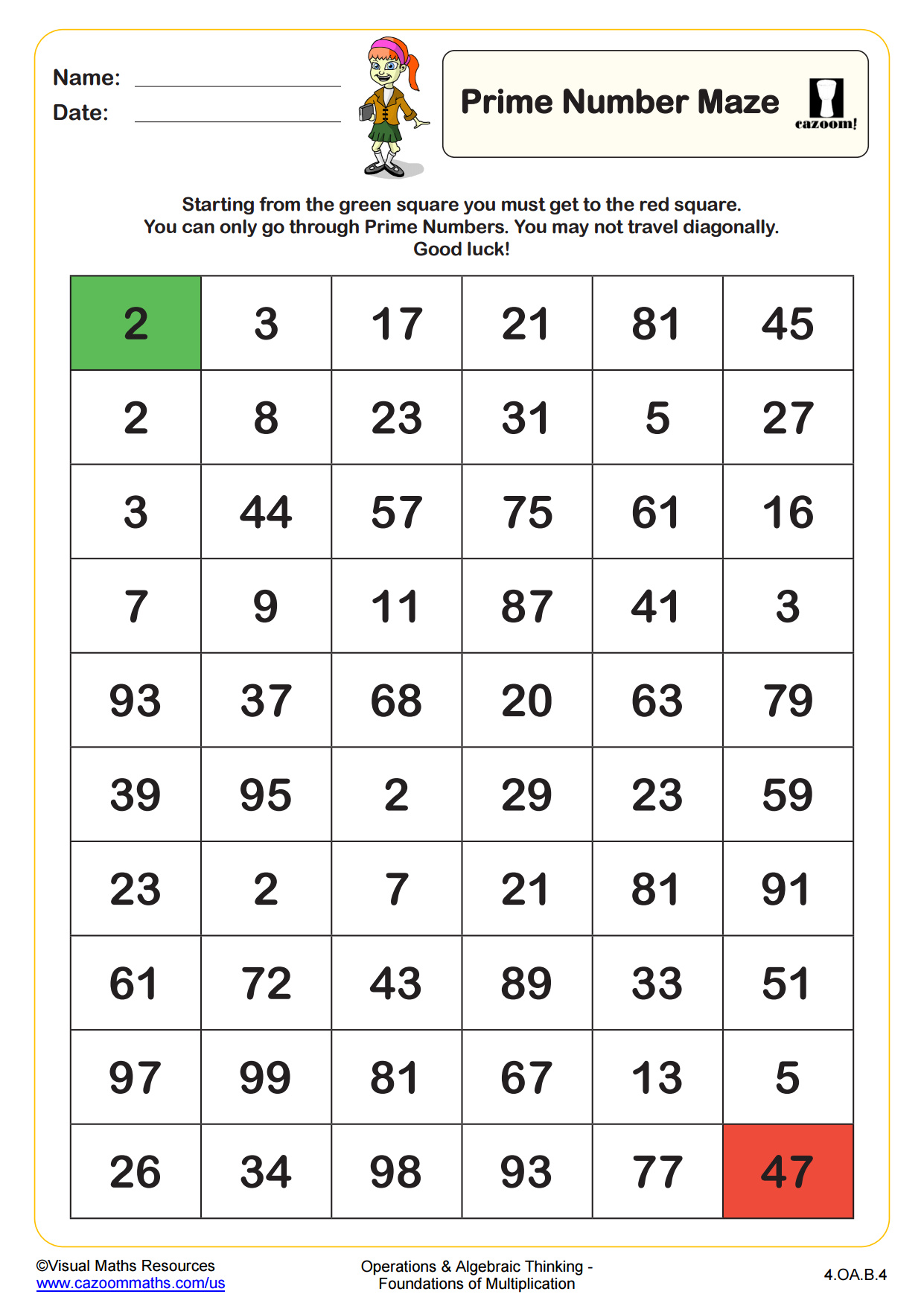
Prime Number Maze
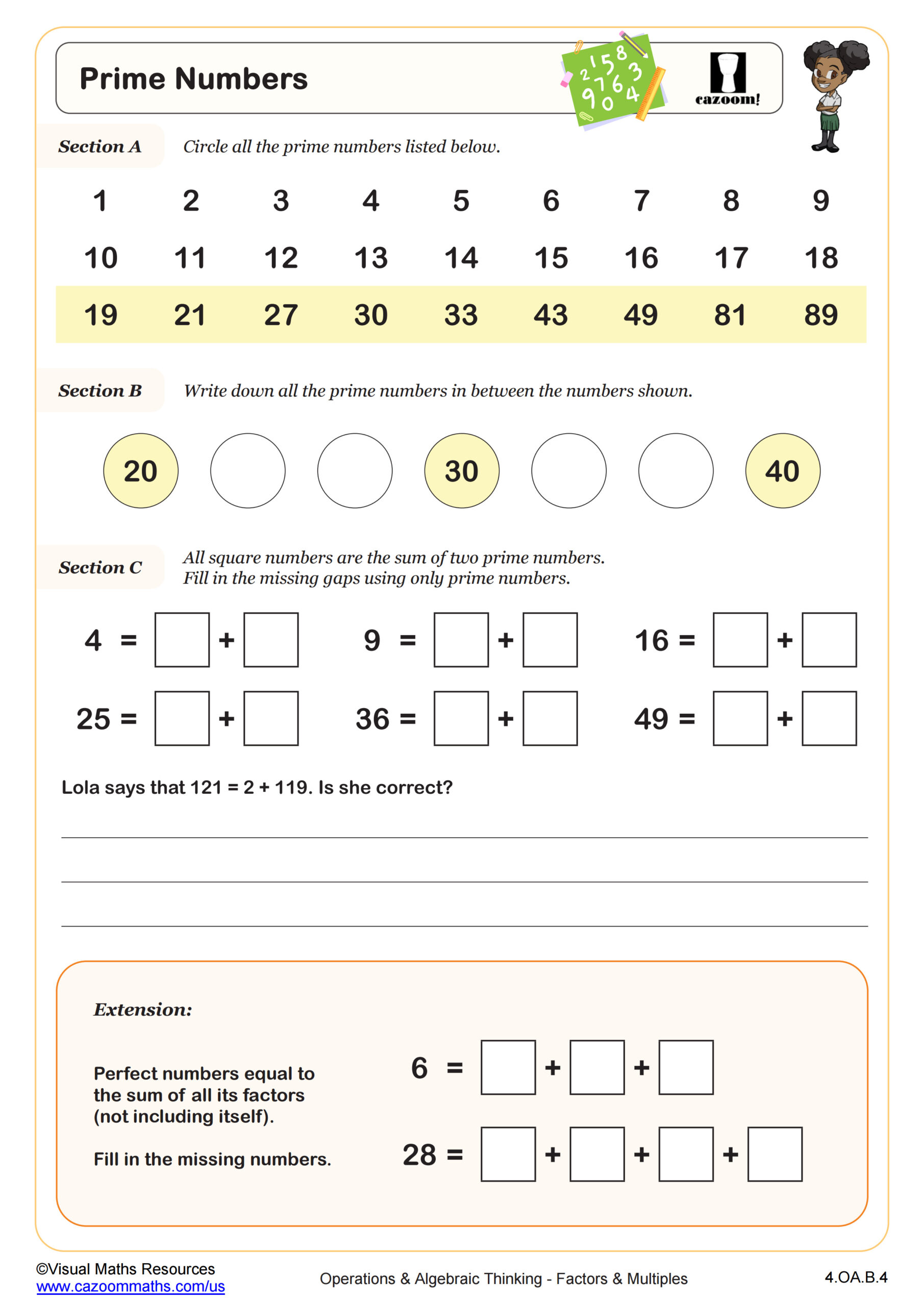
Prime Numbers
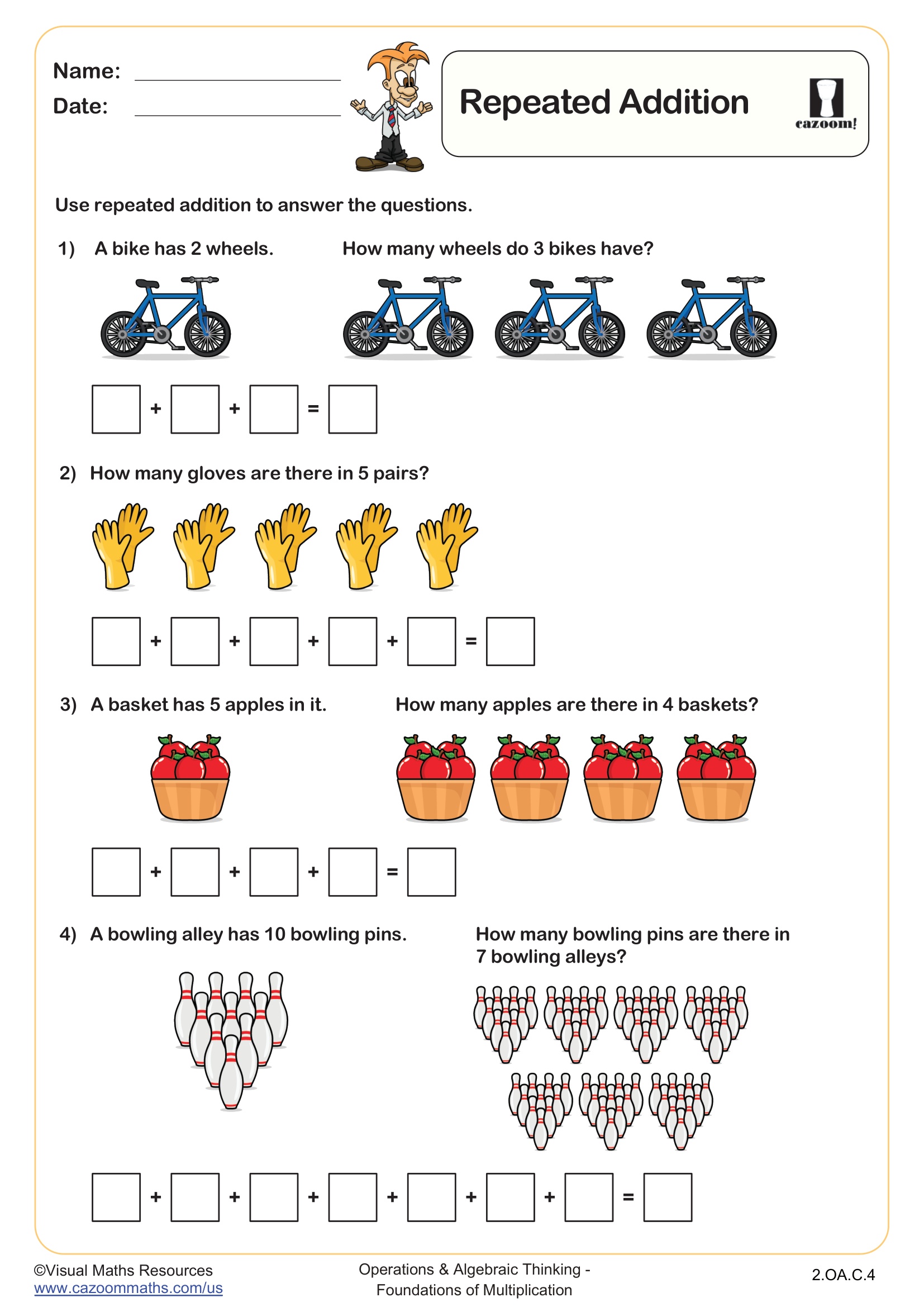
Repeated Addition
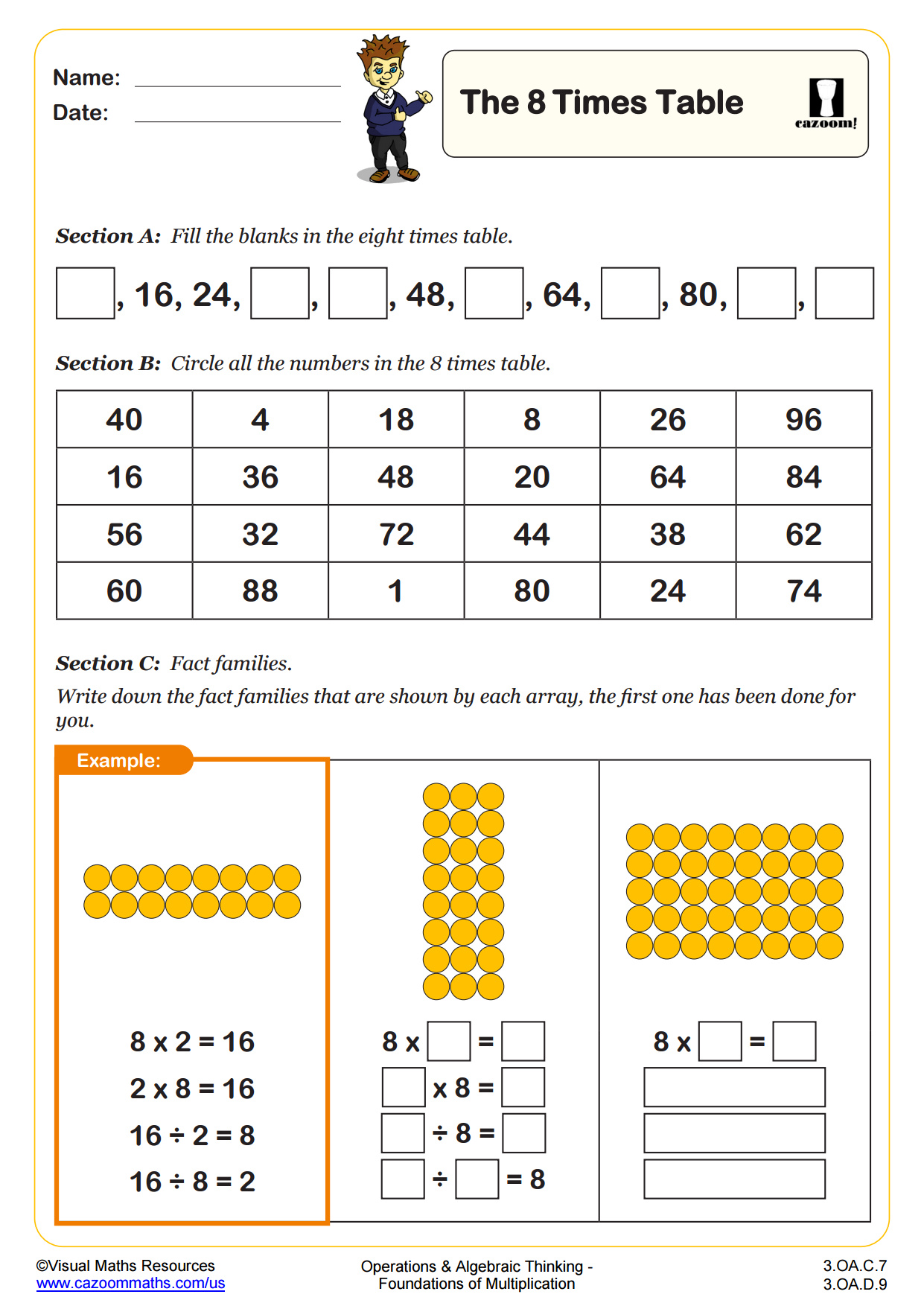
The Eight Times Table
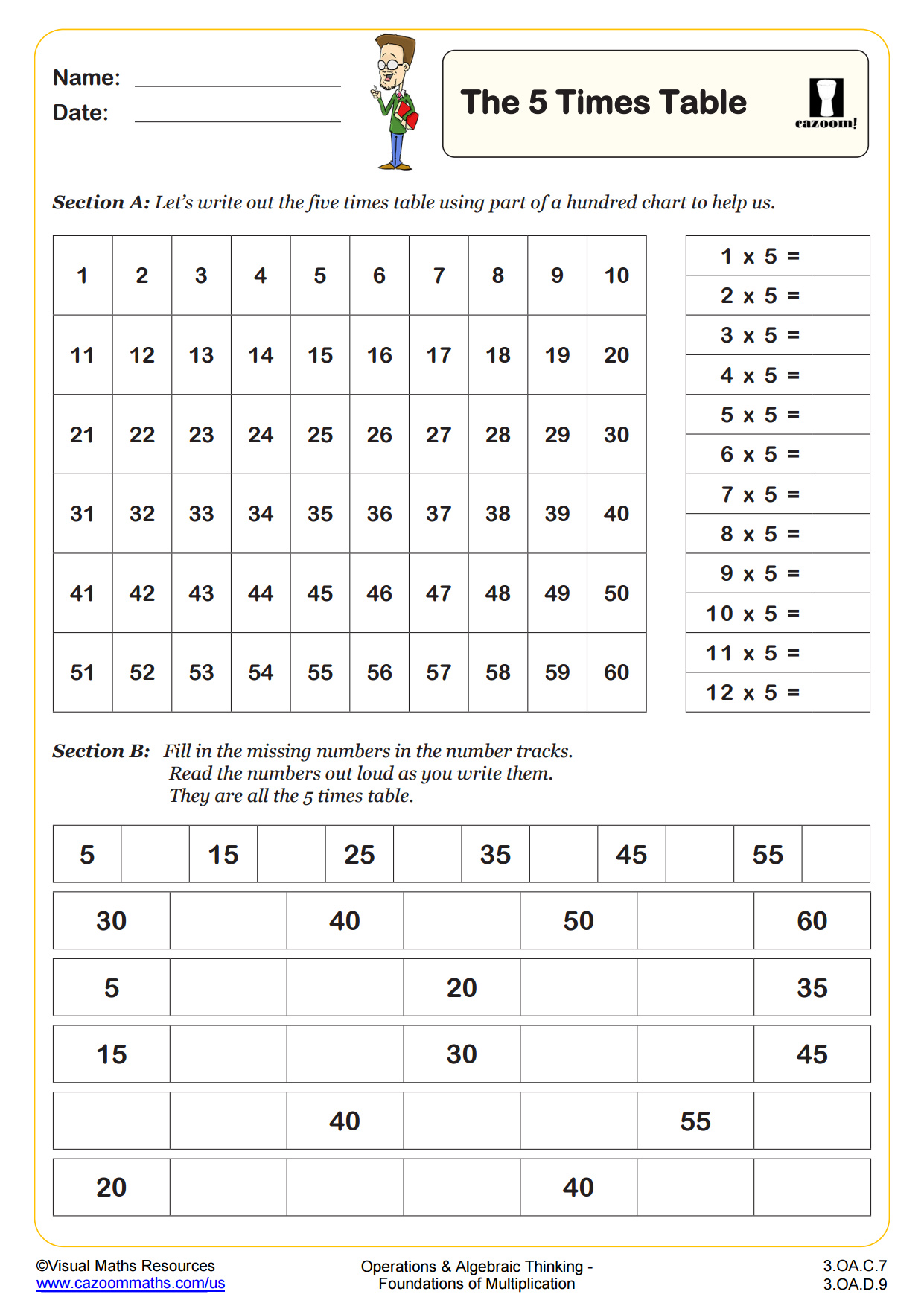
The Five Times Table
The Four Times Table
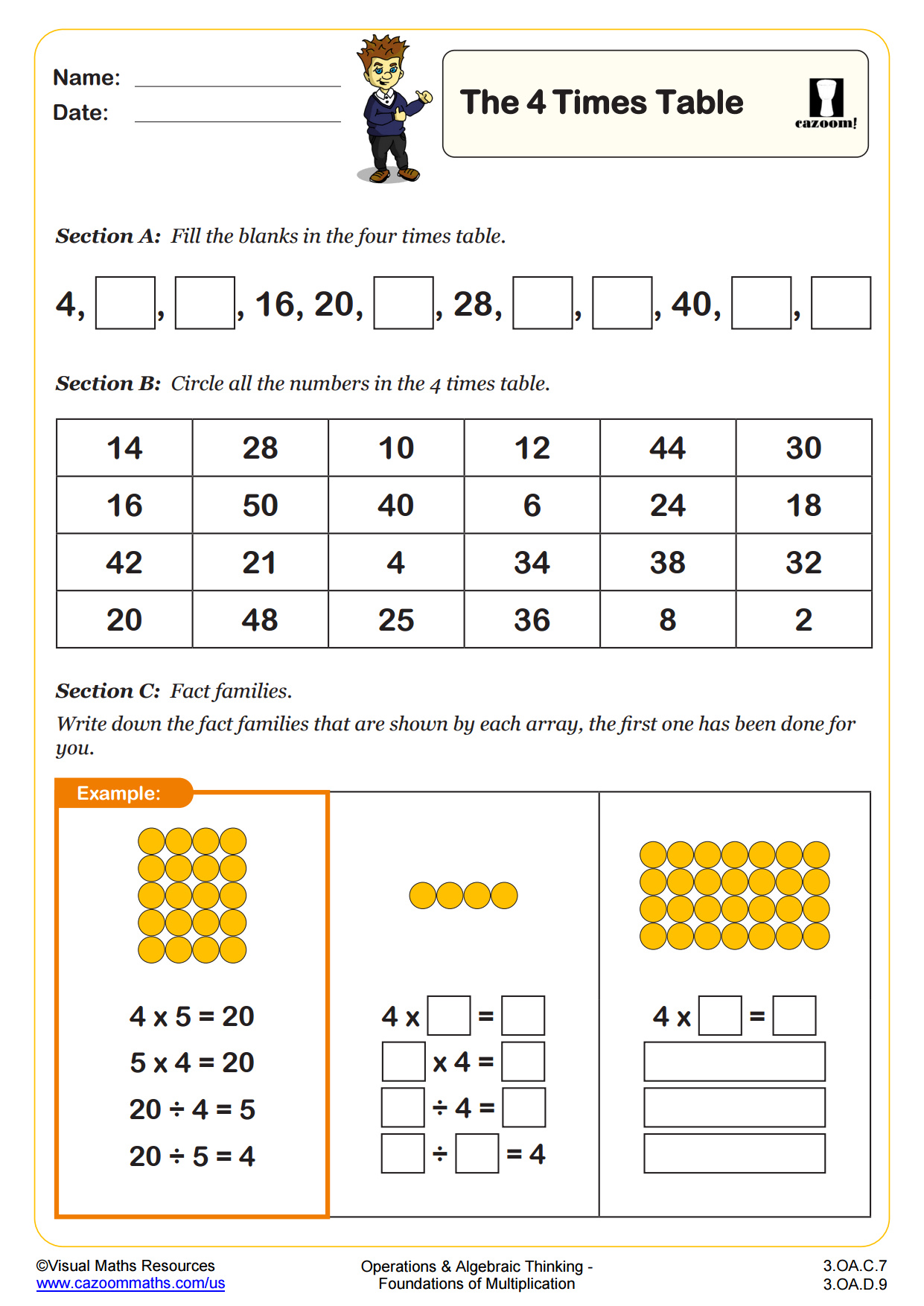
The Ten Times Table
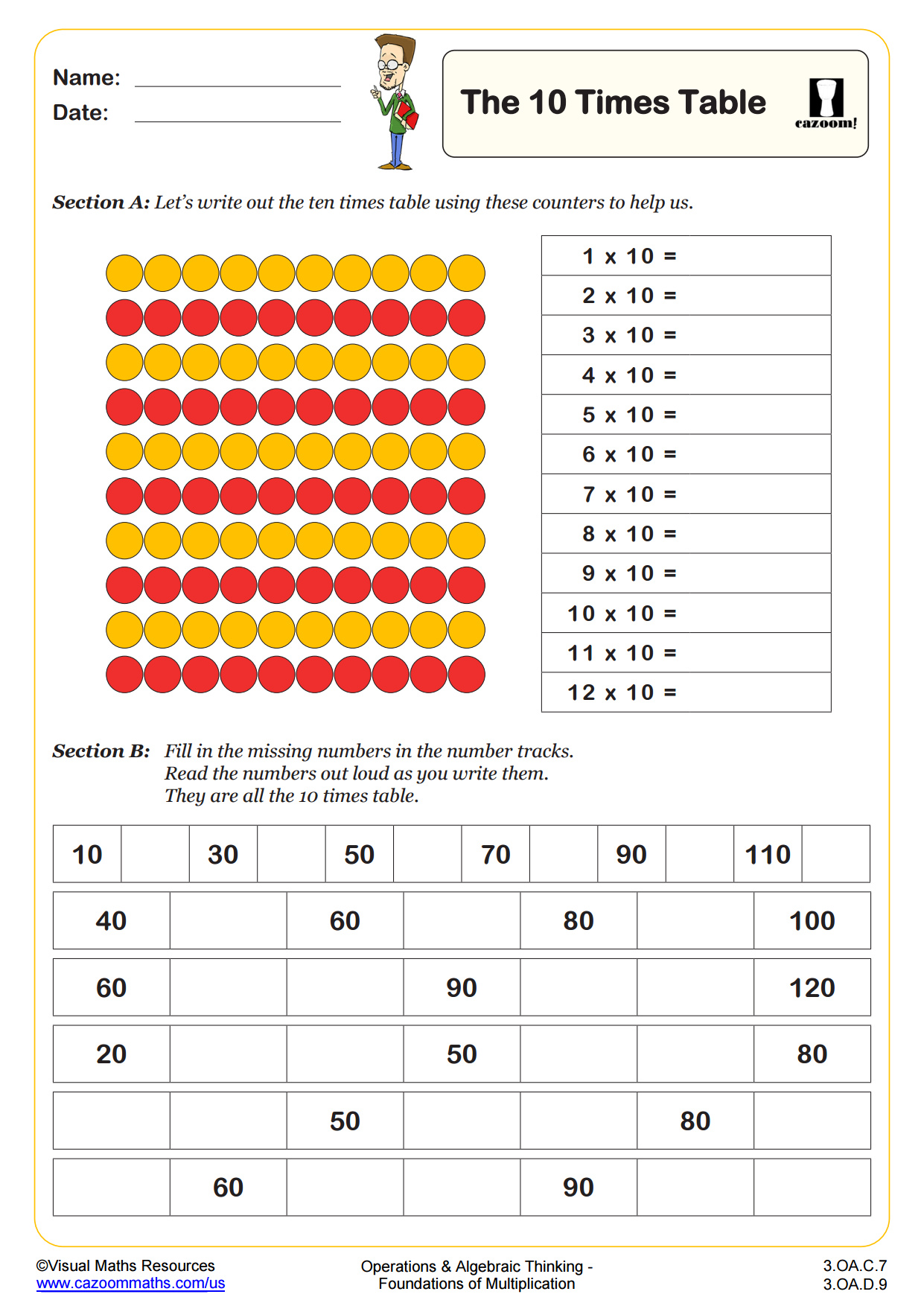
The Three Times Table
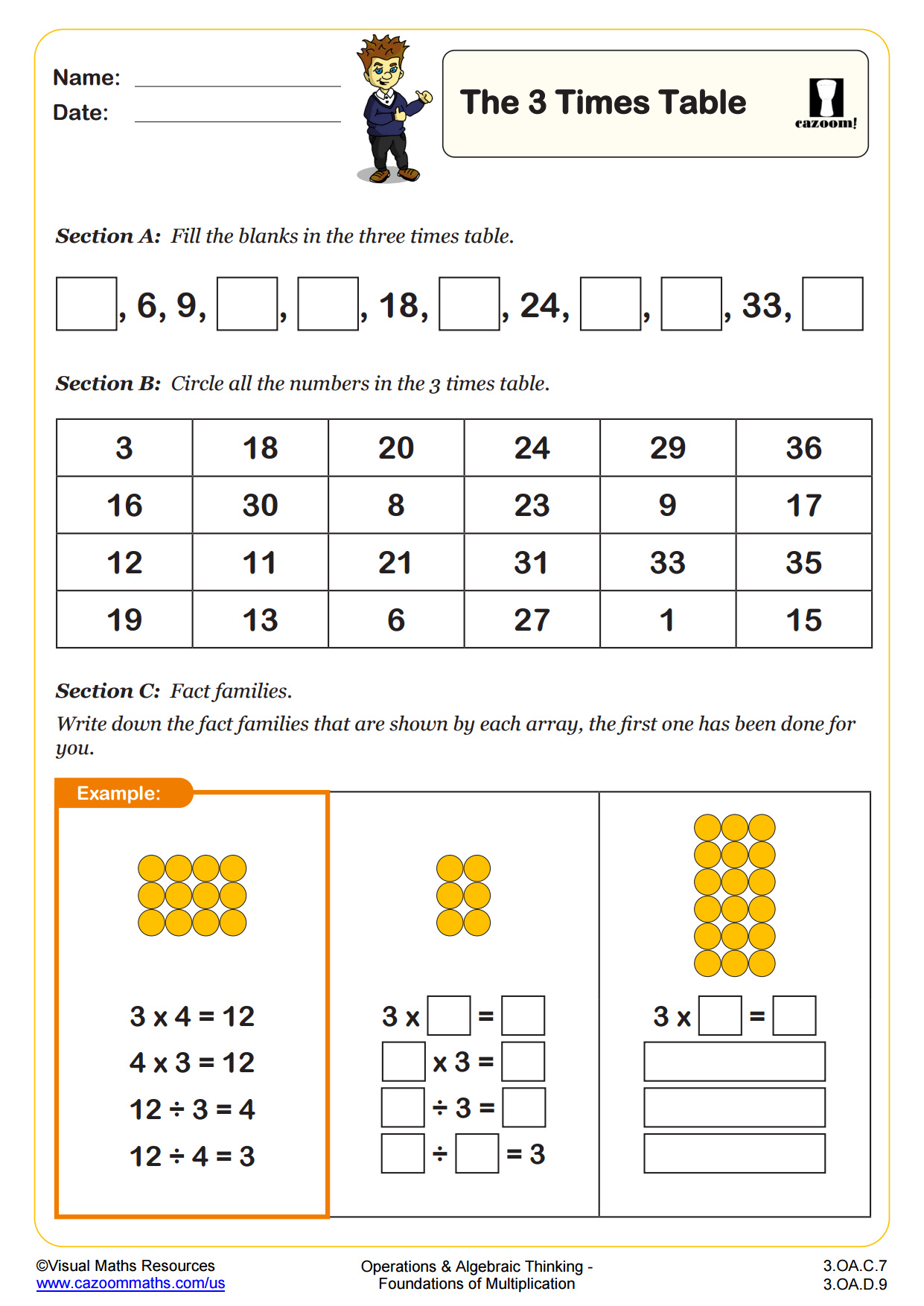
The Two Times Table
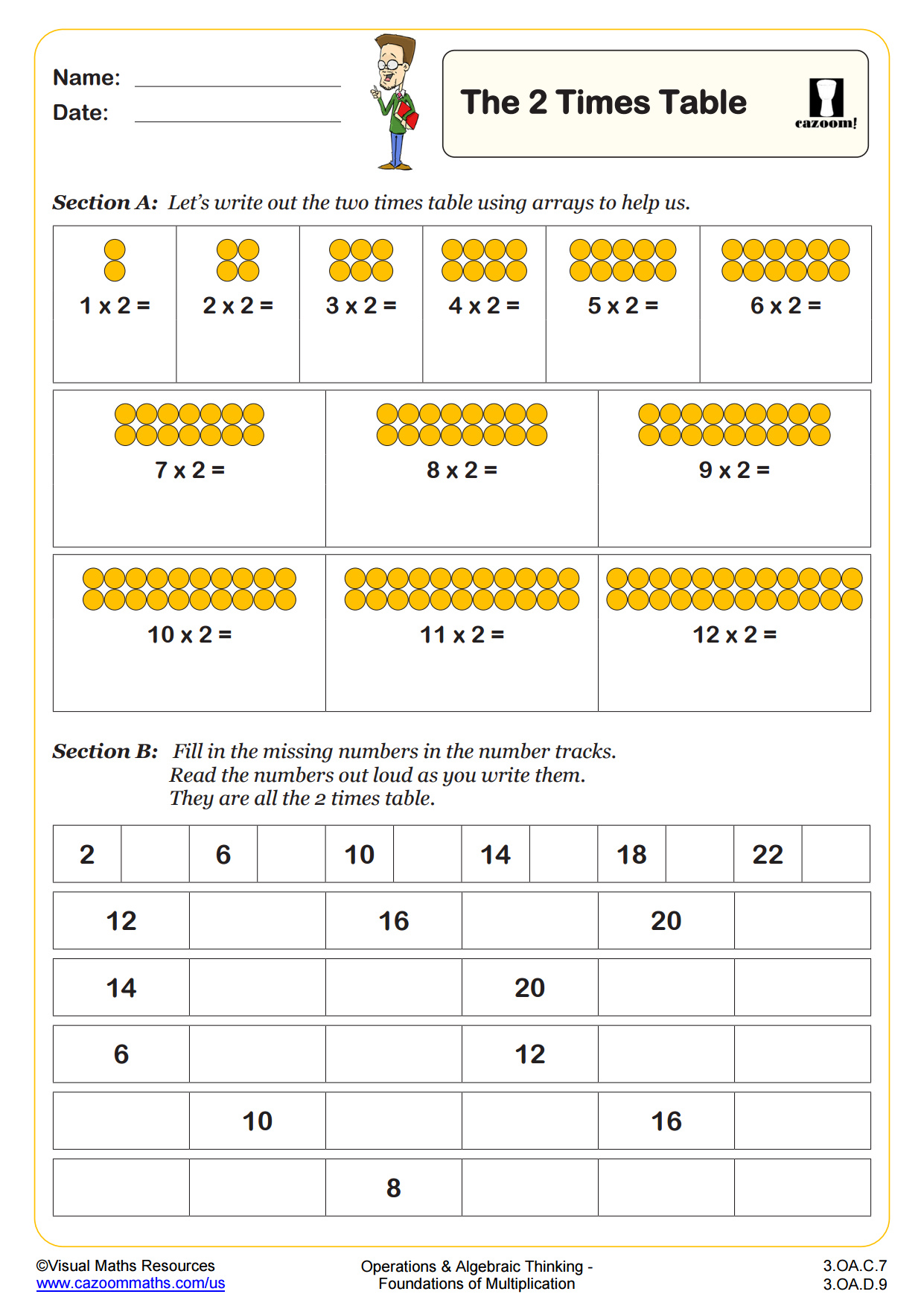
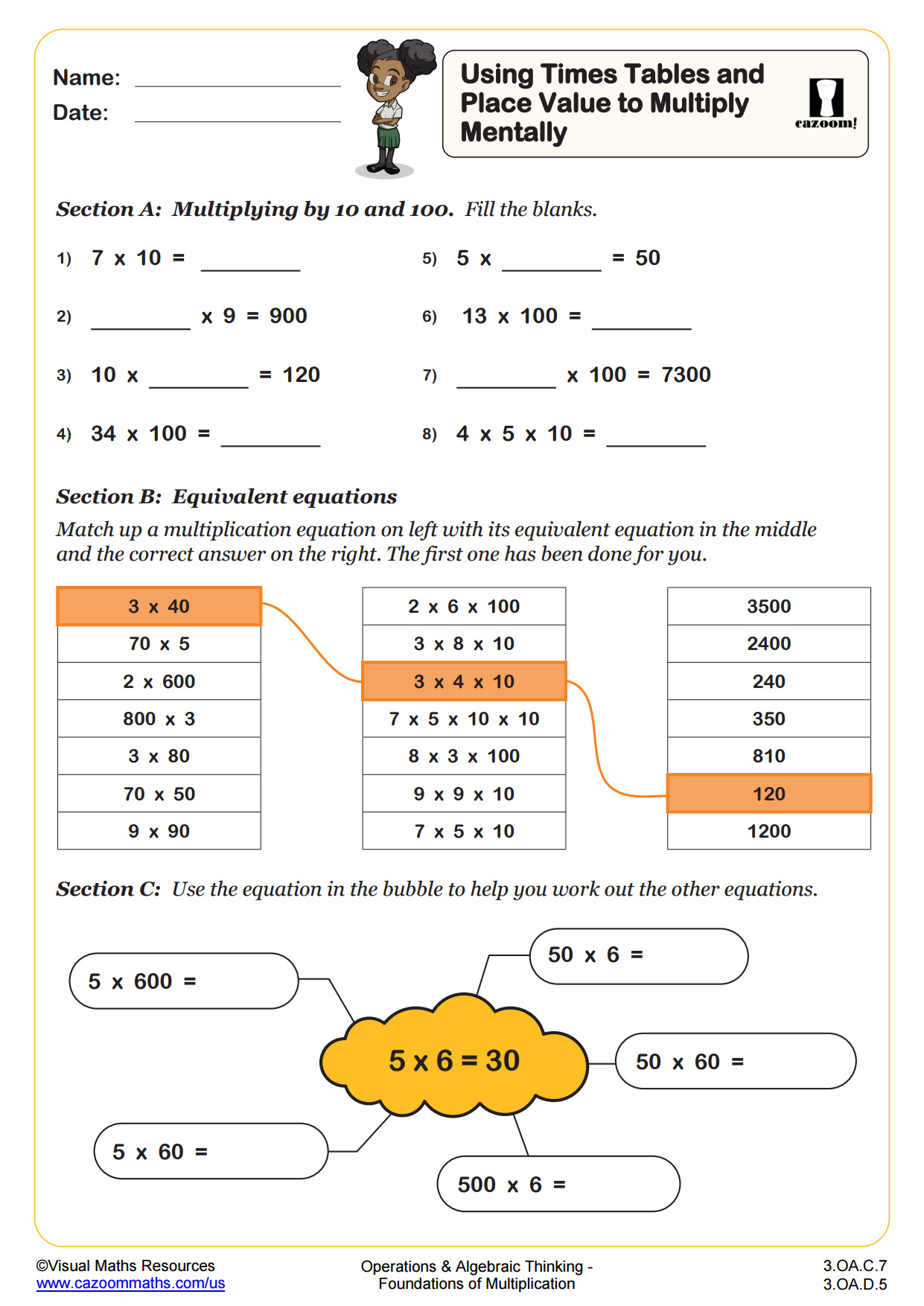
Using Times Tables and Place Value to Multiply Mentally
All worksheets are created by the team of experienced teachers at Cazoom Math.
What Are the Foundations of Multiplication?
The foundations of multiplication include understanding multiplication as repeated addition, recognizing groups and arrays, memorizing multiplication tables, and identifying factors and multiples. These concepts align with Common Core standards from early elementary grades, where students transition from additive thinking to multiplicative reasoning. This shift represents one of the most significant cognitive leaps in elementary mathematics.
Students frequently lose points on assessments when they confuse factors with multiples or fail to recognize all factor pairs for a number. For example, when finding factors of 24, many students list 1, 2, 3, 4, 6, but forget 8, 12, and 24 itself. The factor pair puzzle approach helps students systematically organize their thinking by pairing factors (1×24, 2×12, 3×8, 4×6) rather than listing randomly.
Which Grade Levels Use Foundations of Multiplication Worksheets?
These worksheets span kindergarten through 5th grade at the elementary school level. Kindergarten and 1st grade worksheets introduce the conceptual groundwork through equal groups and repeated addition, while 2nd and 3rd grade materials focus heavily on multiplication table fluency and basic factor identification. By 4th and 5th grade, students work with more complex factor relationships, larger multiples, and connections to division.
The progression mirrors how multiplication understanding deepens over time. Second graders typically memorize facts within 10×10, while 4th graders analyze why some numbers have many factors (like 24) while others have few (like prime numbers). Fifth graders apply factor knowledge to finding greatest common factors and least common multiples, skills they'll use extensively when working with fractions in middle school.
How Do Factor Pairs Help With Problem Solving?
Factor pairs organize multiplication facts into connected relationships, showing how two numbers multiply to create a product. When students understand that 6 and 4 form a factor pair of 24, they're simultaneously learning a multiplication fact and its corresponding division facts (24÷6=4 and 24÷4=6). This reciprocal relationship strengthens number sense and makes division less mysterious. Teachers find that students who visualize factor pairs as rectangle dimensions develop stronger spatial reasoning.
Architects and engineers use factor pair thinking constantly when designing spaces. A rectangular room with 48 square feet of floor space could measure 6×8, 4×12, or 3×16 feet—each factor pair creates different room proportions. Garden designers apply the same logic when planning planting beds, and manufacturing engineers optimize product packaging by finding factor pairs that minimize wasted space. Understanding factors as flexible building blocks rather than isolated facts prepares students for real-world optimization problems.
How Should Teachers Use These Multiplication Worksheets?
The worksheets provide structured practice that moves from conceptual understanding to procedural fluency, with problems designed to reveal common misconceptions. Answer keys allow students to self-check during independent work or enable quick grading during intervention time. The variety of formats—from multiplication tables to factor puzzles—prevents the rote memorization approach that leaves students unable to apply multiplication in new contexts.
Many teachers use these worksheets in stations or for differentiated math groups, assigning simpler factor problems to students still building fluency while challenging advanced learners with larger numbers or multi-step factor relationships. The materials work well for homework because answer keys let parents support practice at home. Some teachers report success using the worksheets as warm-ups, giving students three minutes of timed practice to build automaticity, then reviewing together to address misconceptions before introducing new content.