Elementary School Fractions Decimals Percentages Worksheets
Add Mixed Numbers with the Same Denominator
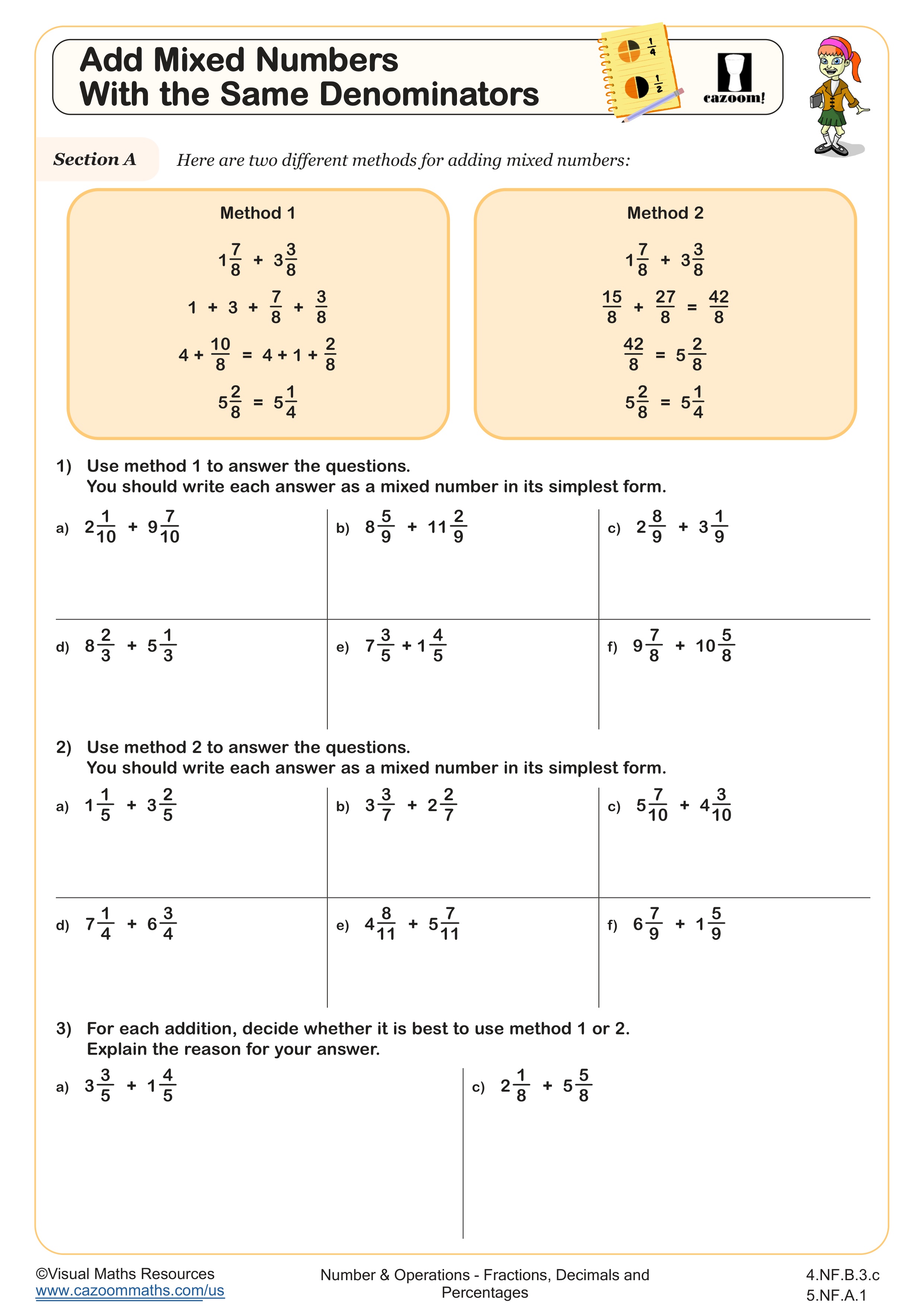
Adding and Subtracting Decimals
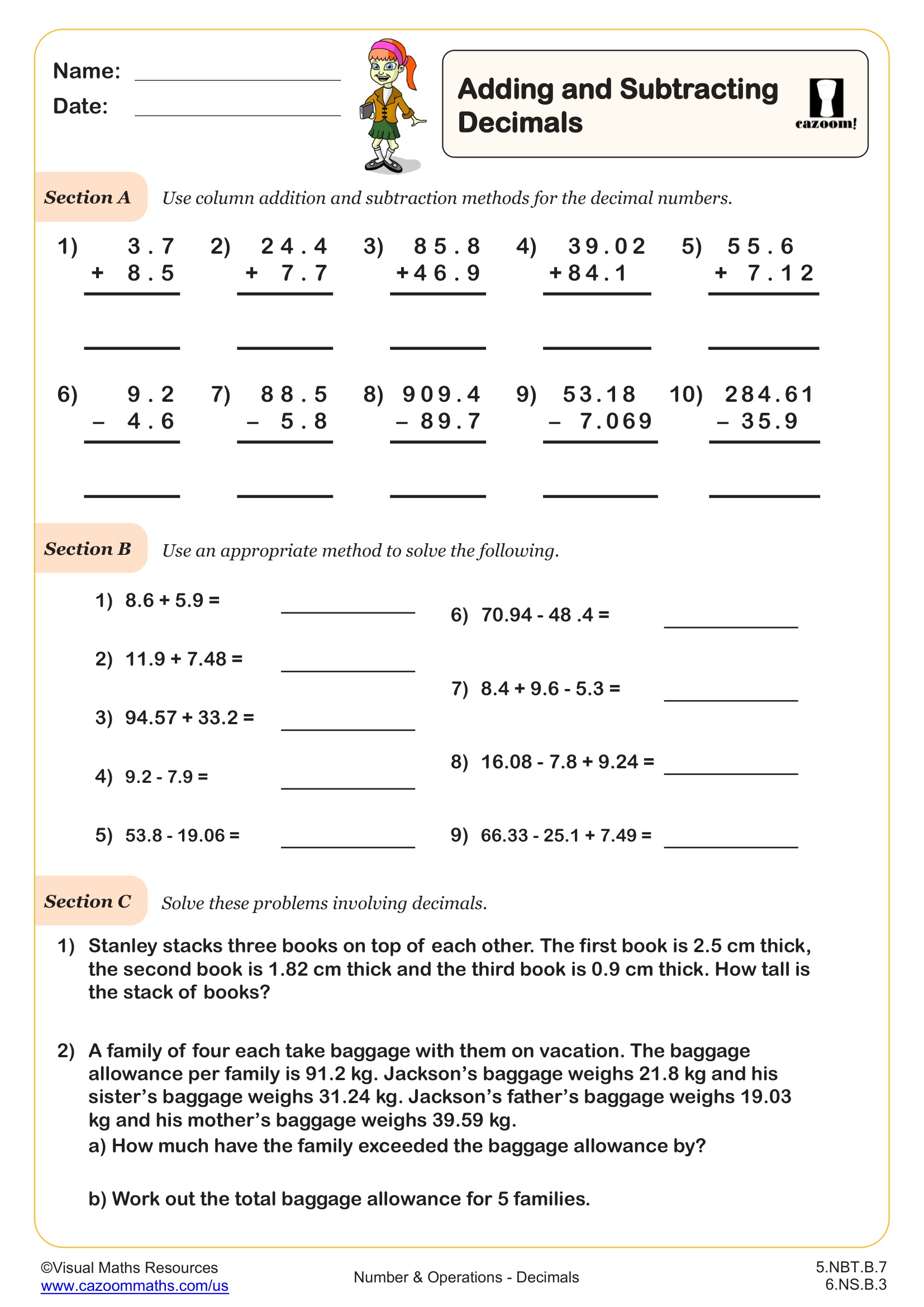
Calculating from Related Addition and Subtraction Facts
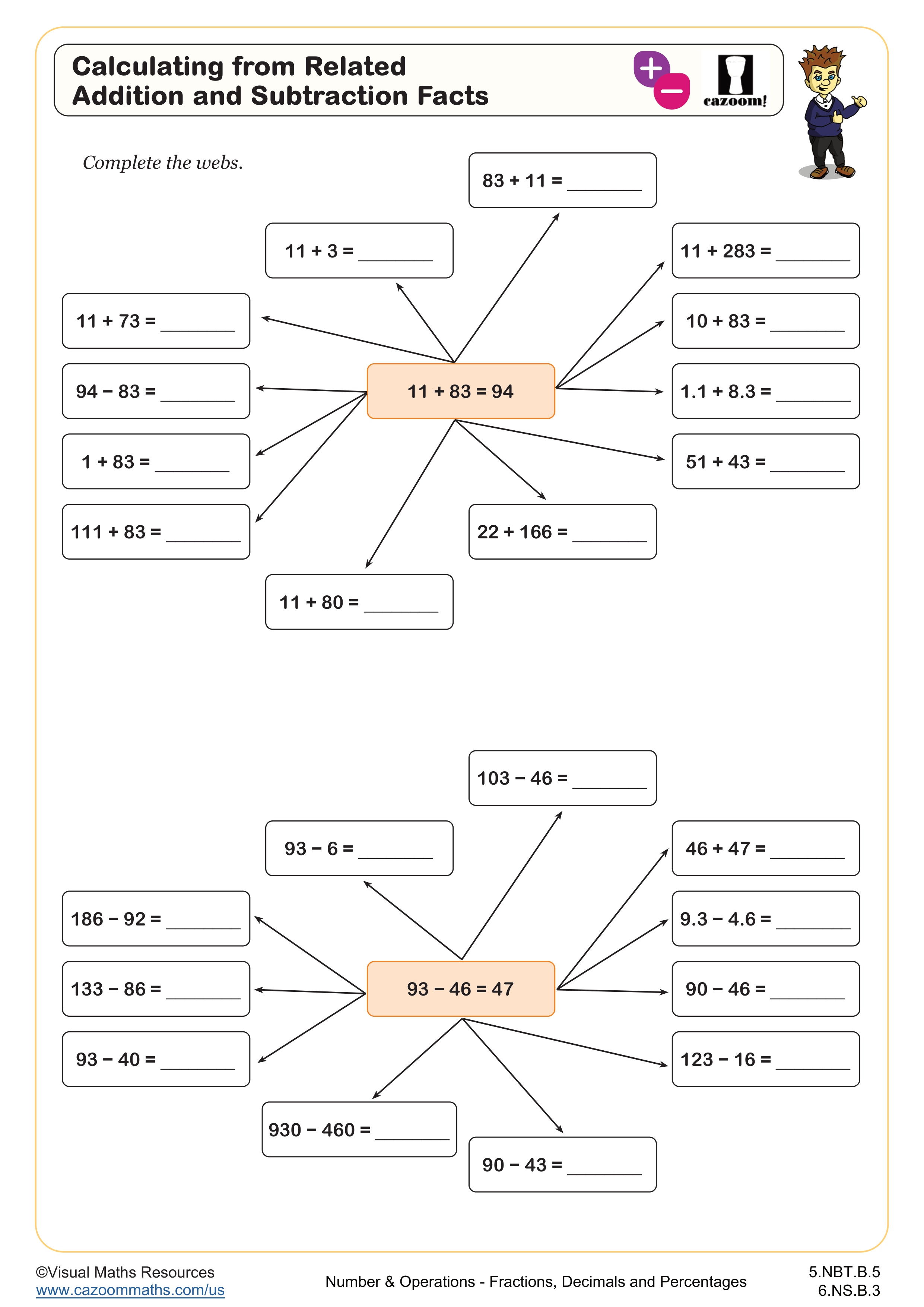
Comparing Decimals (A)
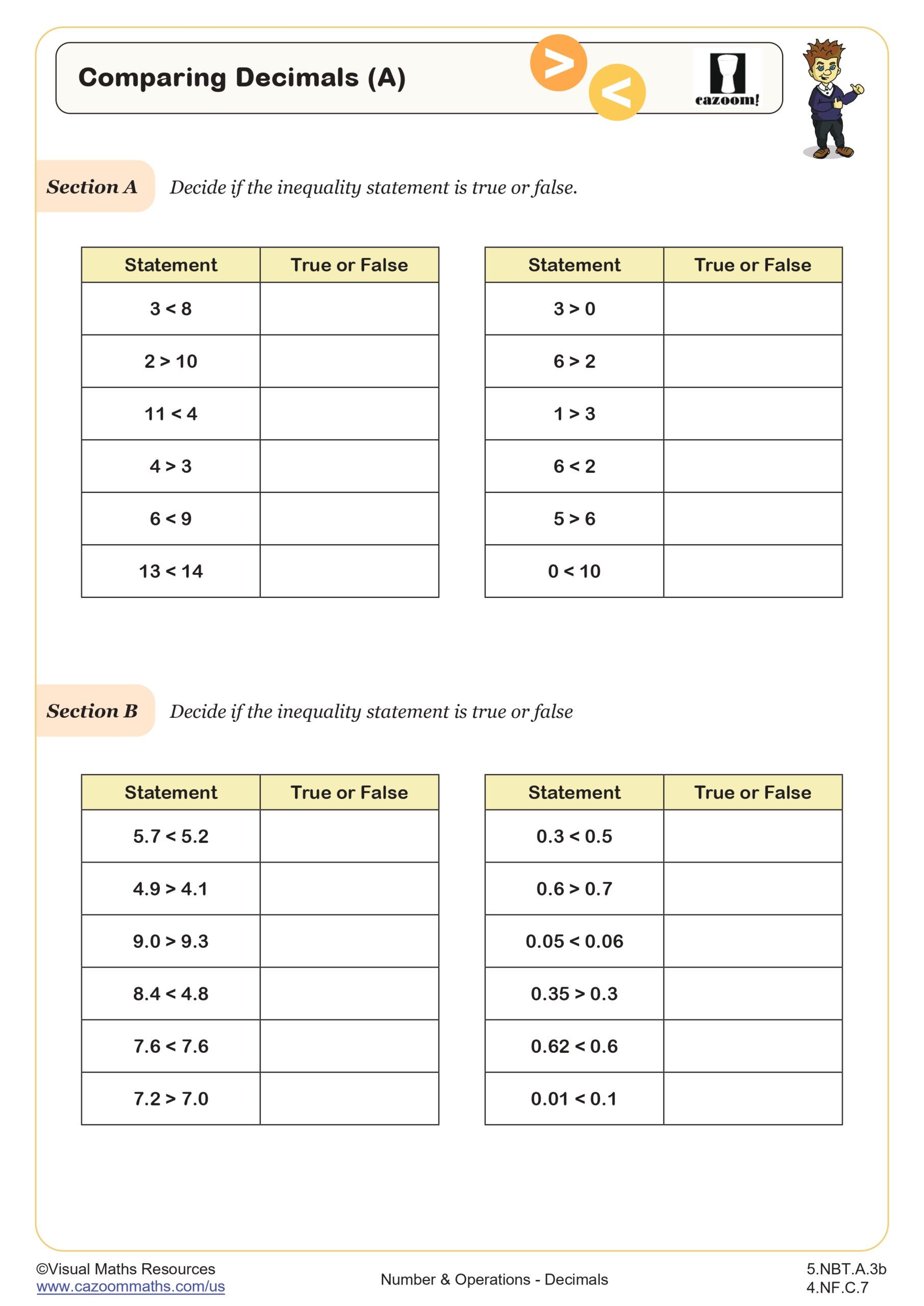
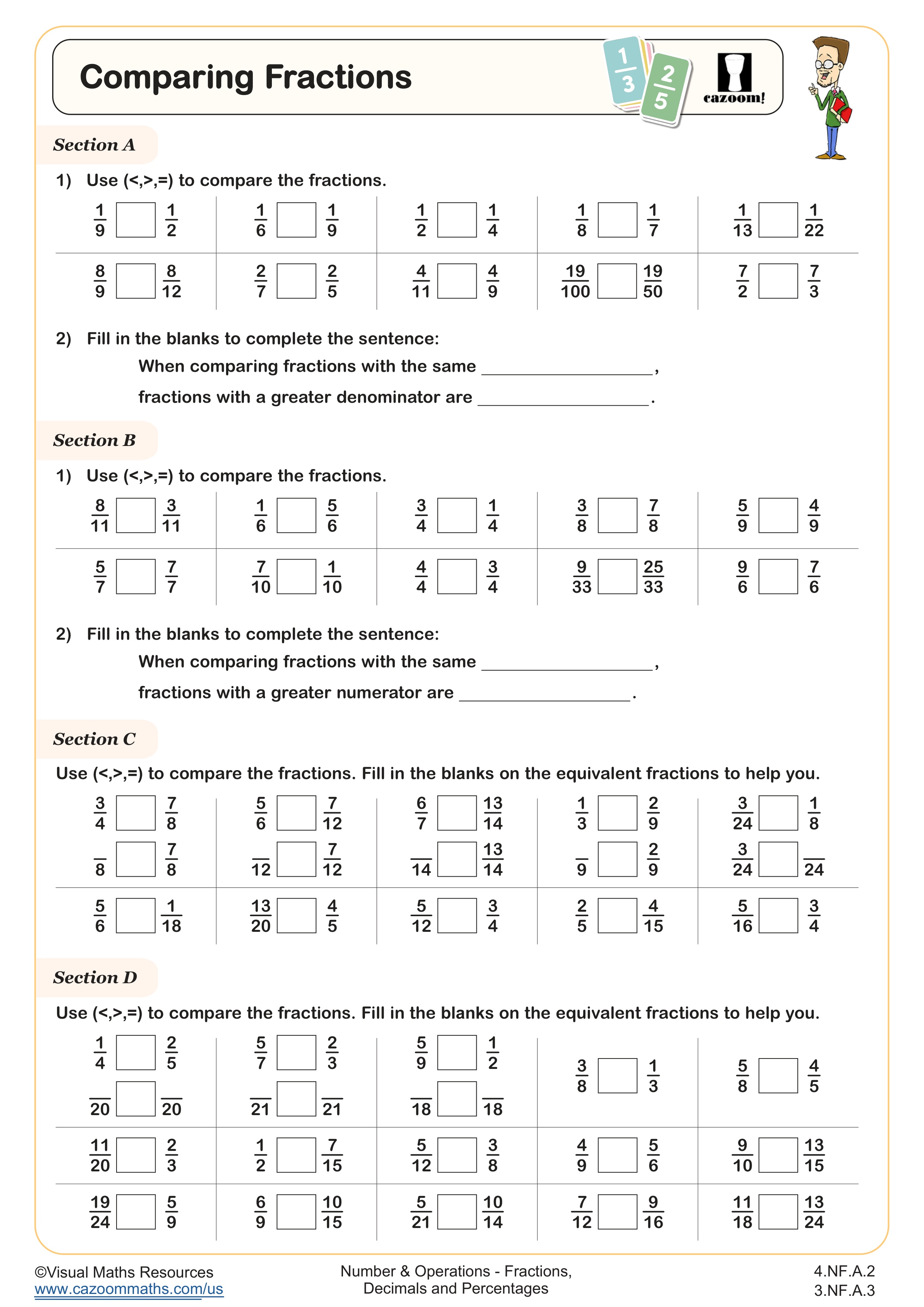
Comparing Fractions
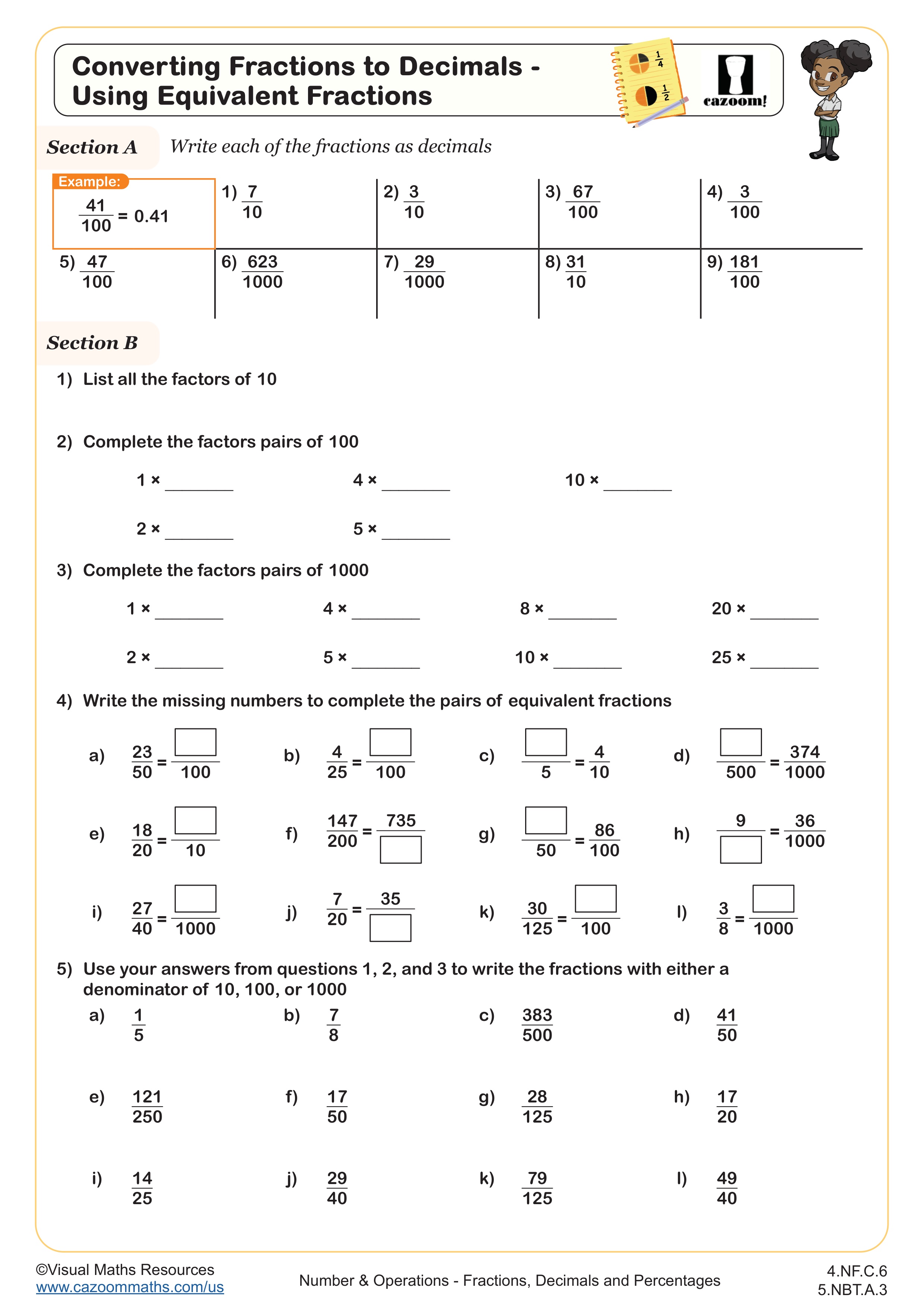
Converting Fractions to Decimals - Using Equivalent Fractions
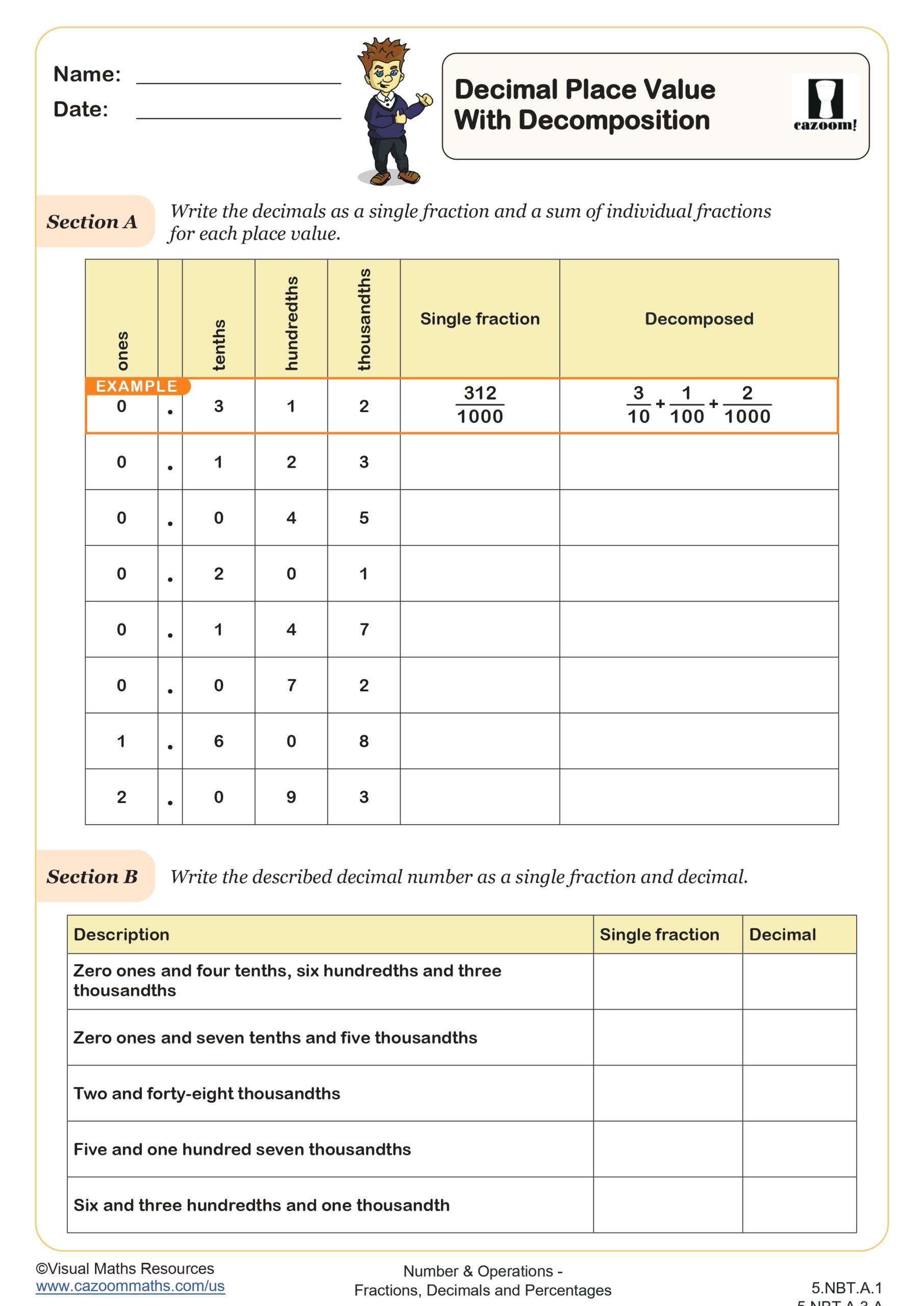
Decimal Place Value With Decomposition
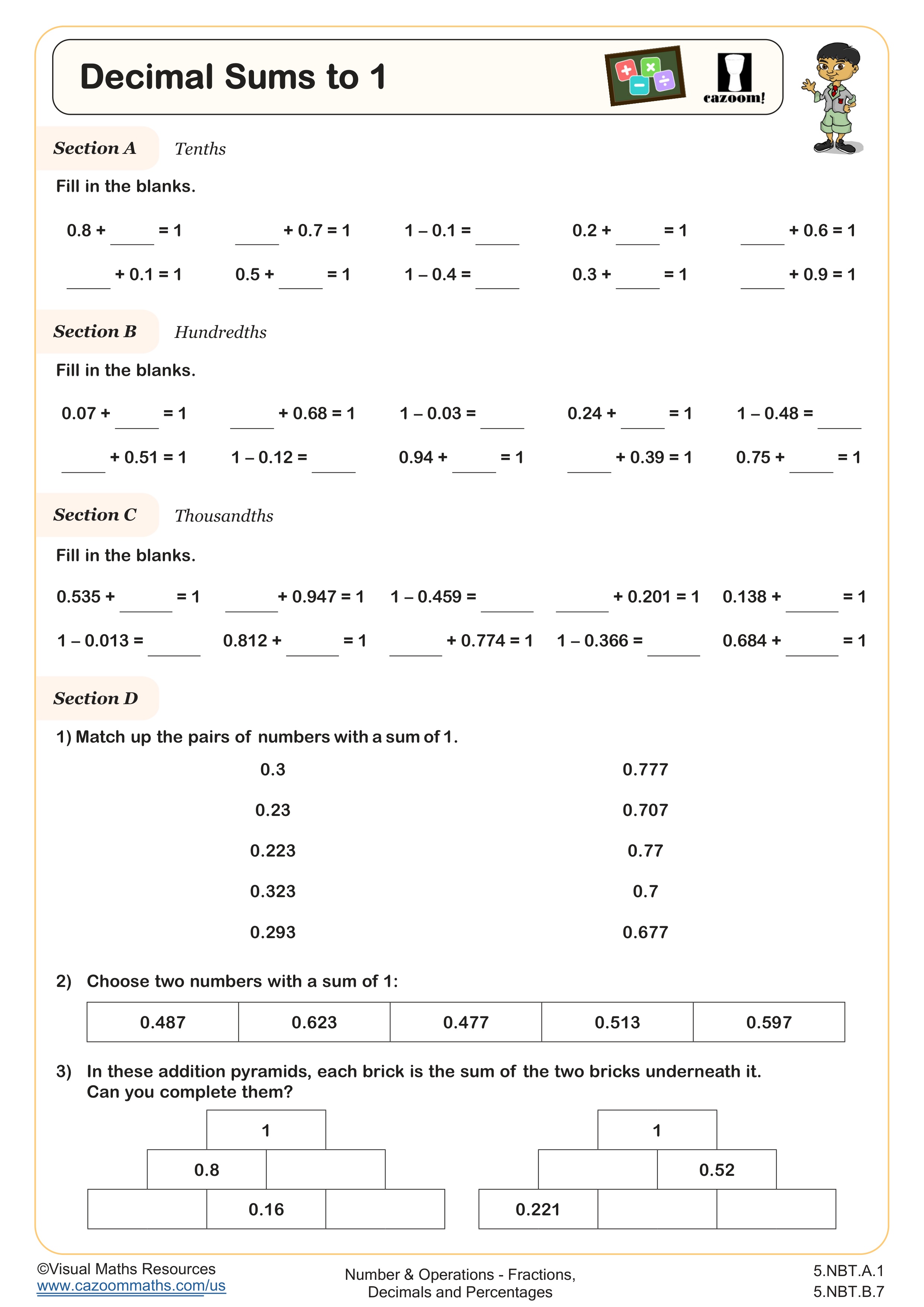
Decimal Sums to 1
Decimals on a Number Line - Beyond 1
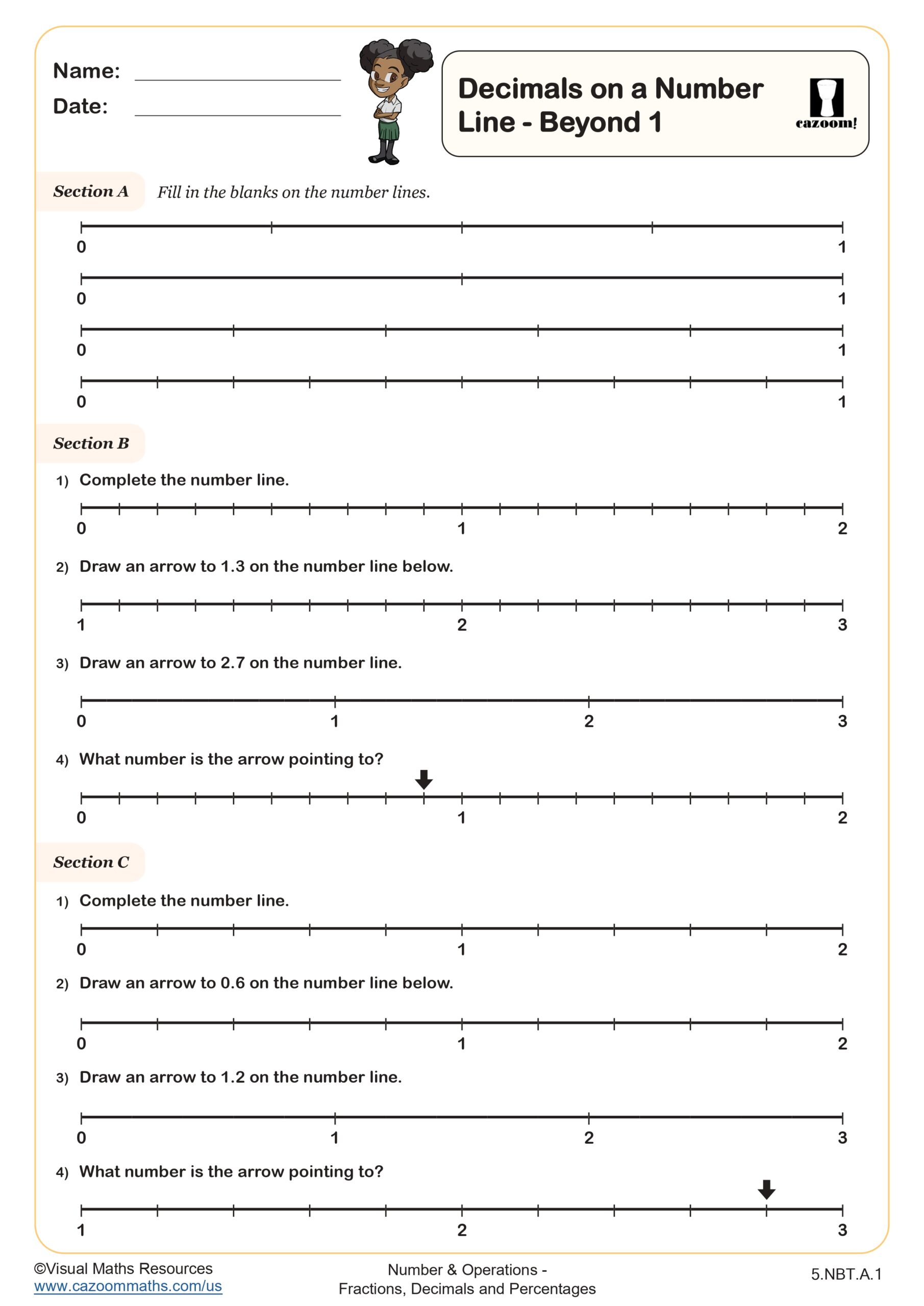
Decimals on a Number Line - Up to 1
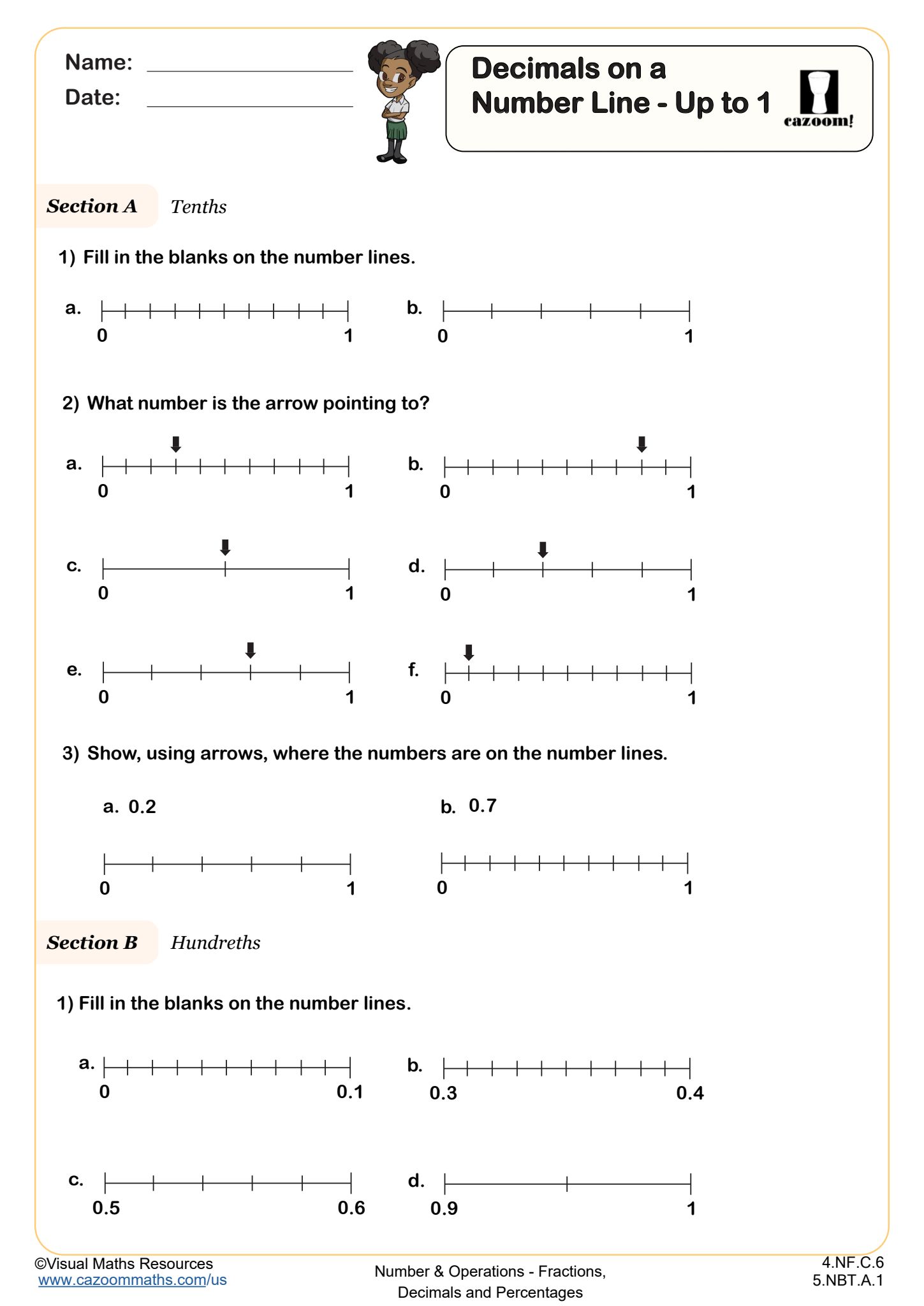
Dividing by Decimals
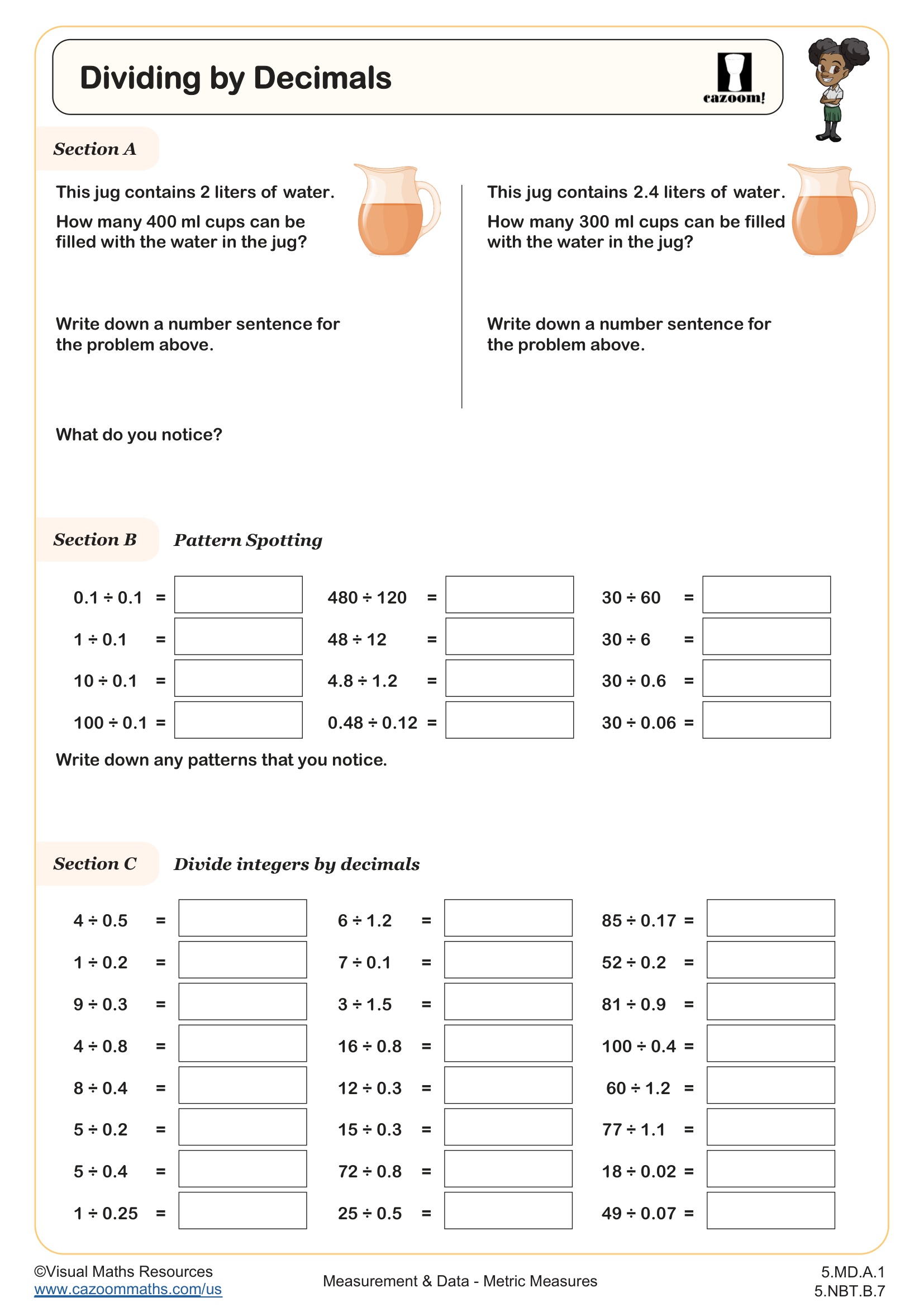
Dividing Fractions by Integers
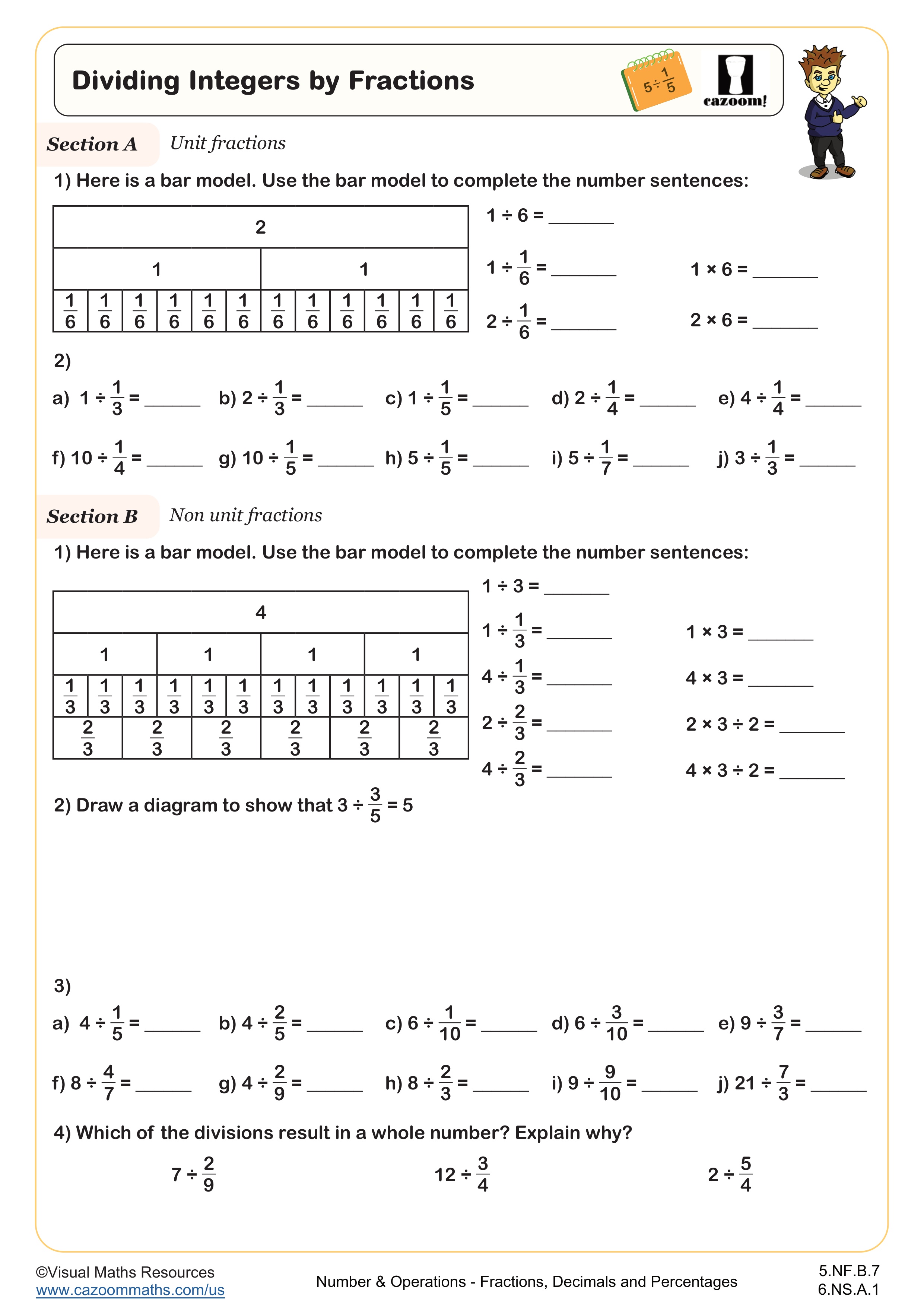
Dividing Integers by Fractions
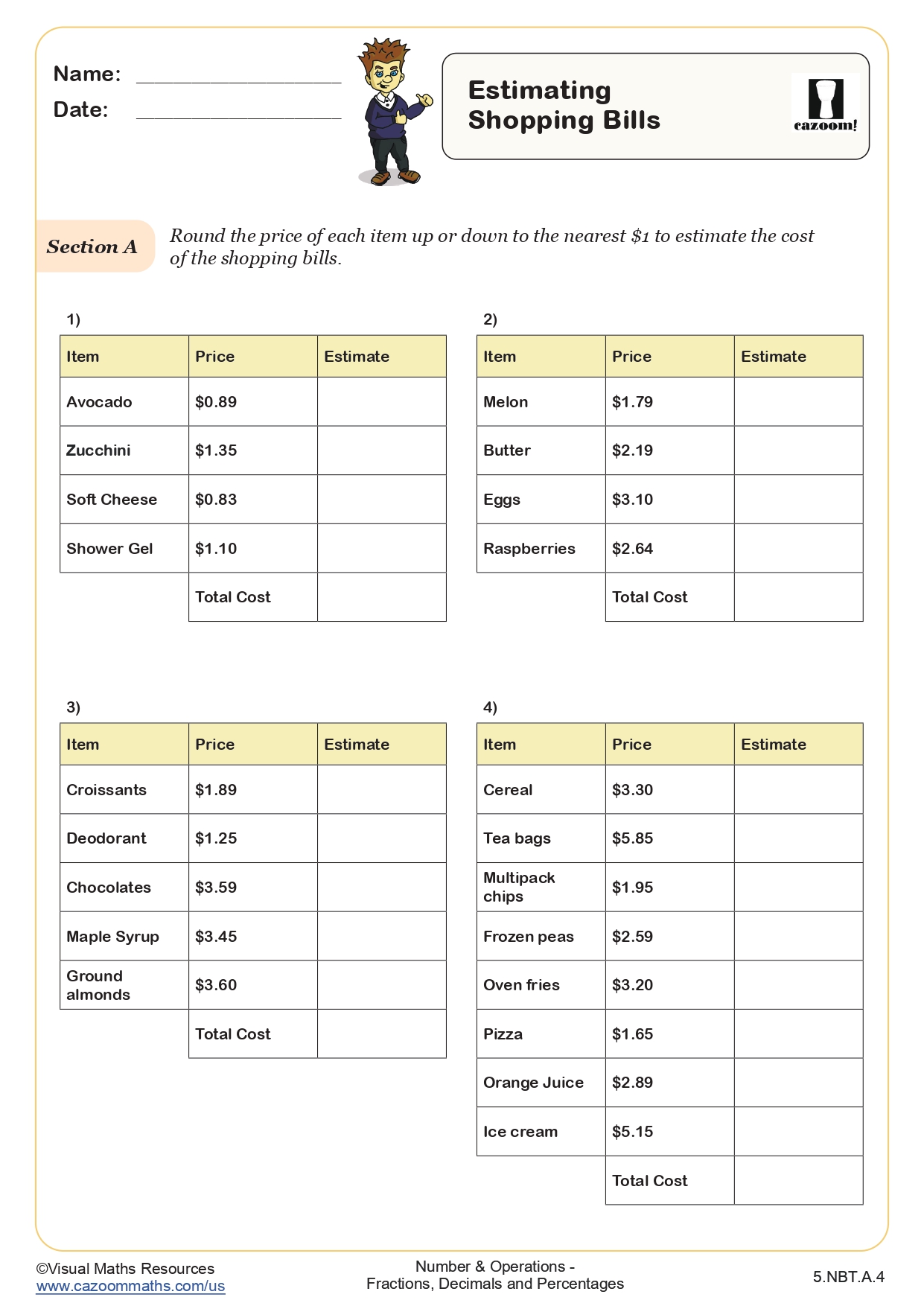
Estimating Shopping Bills
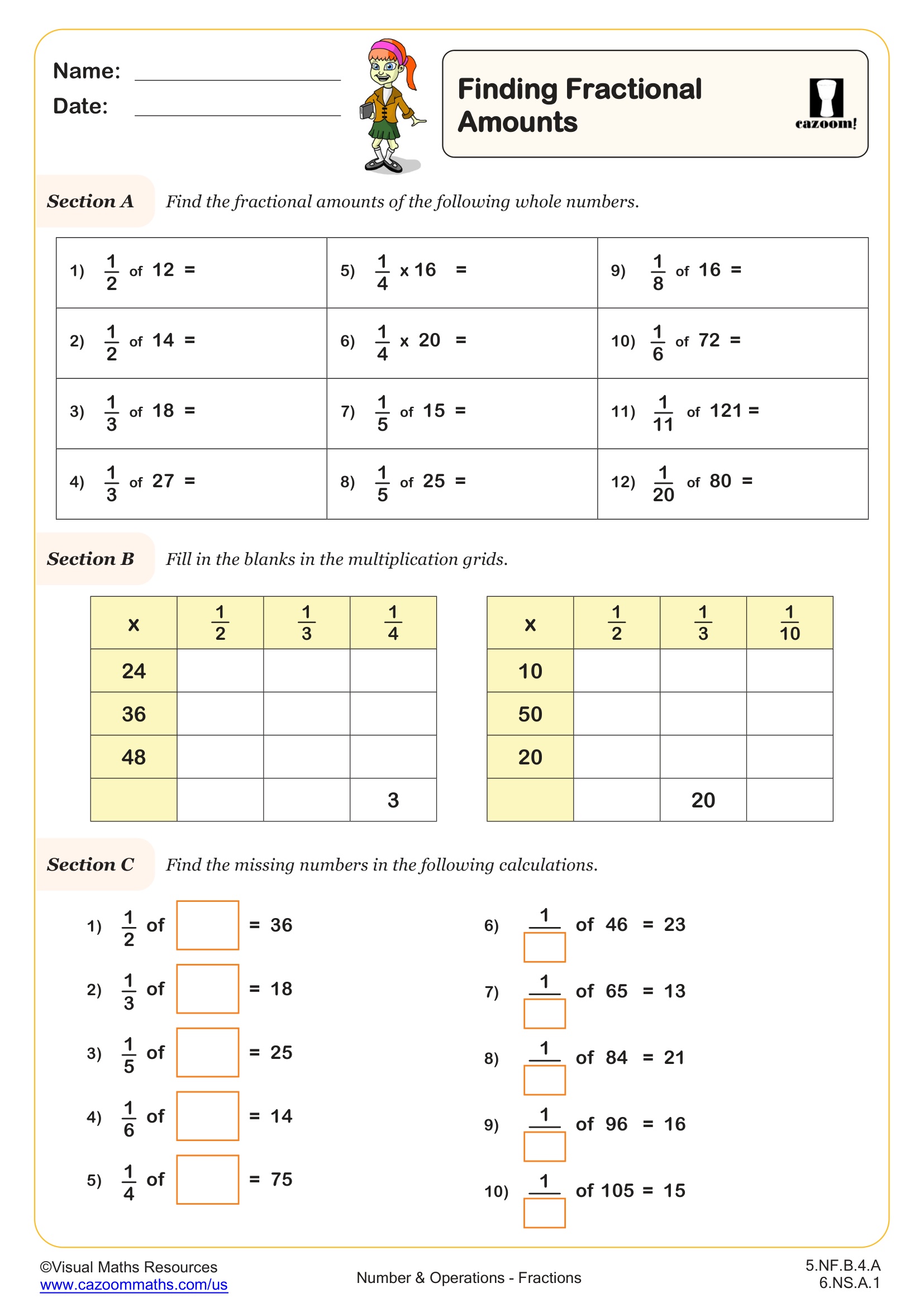
Finding Fractional Amounts
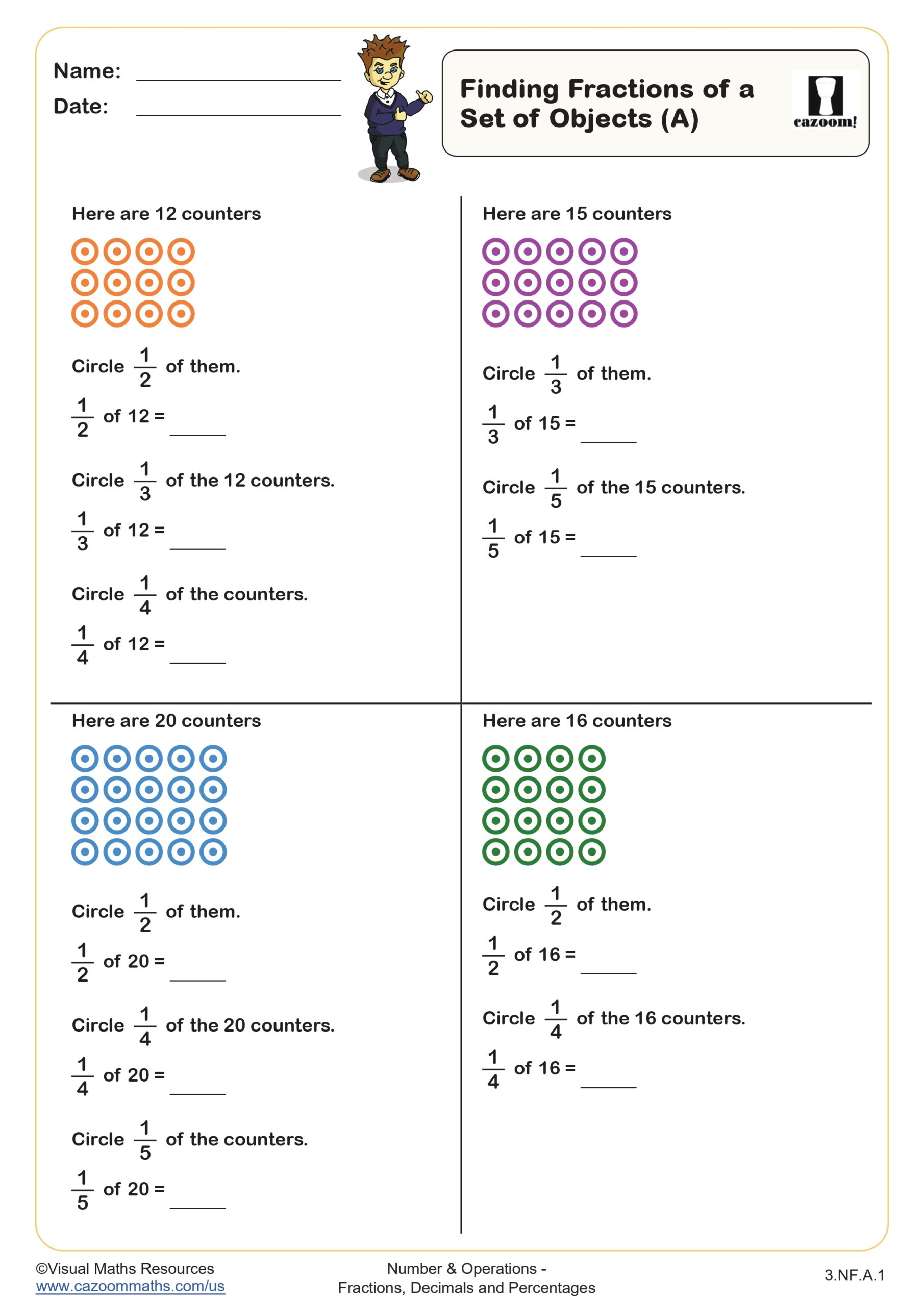
Finding fractions of a set of objects (A)
Finding fractions of a set of objects (B)
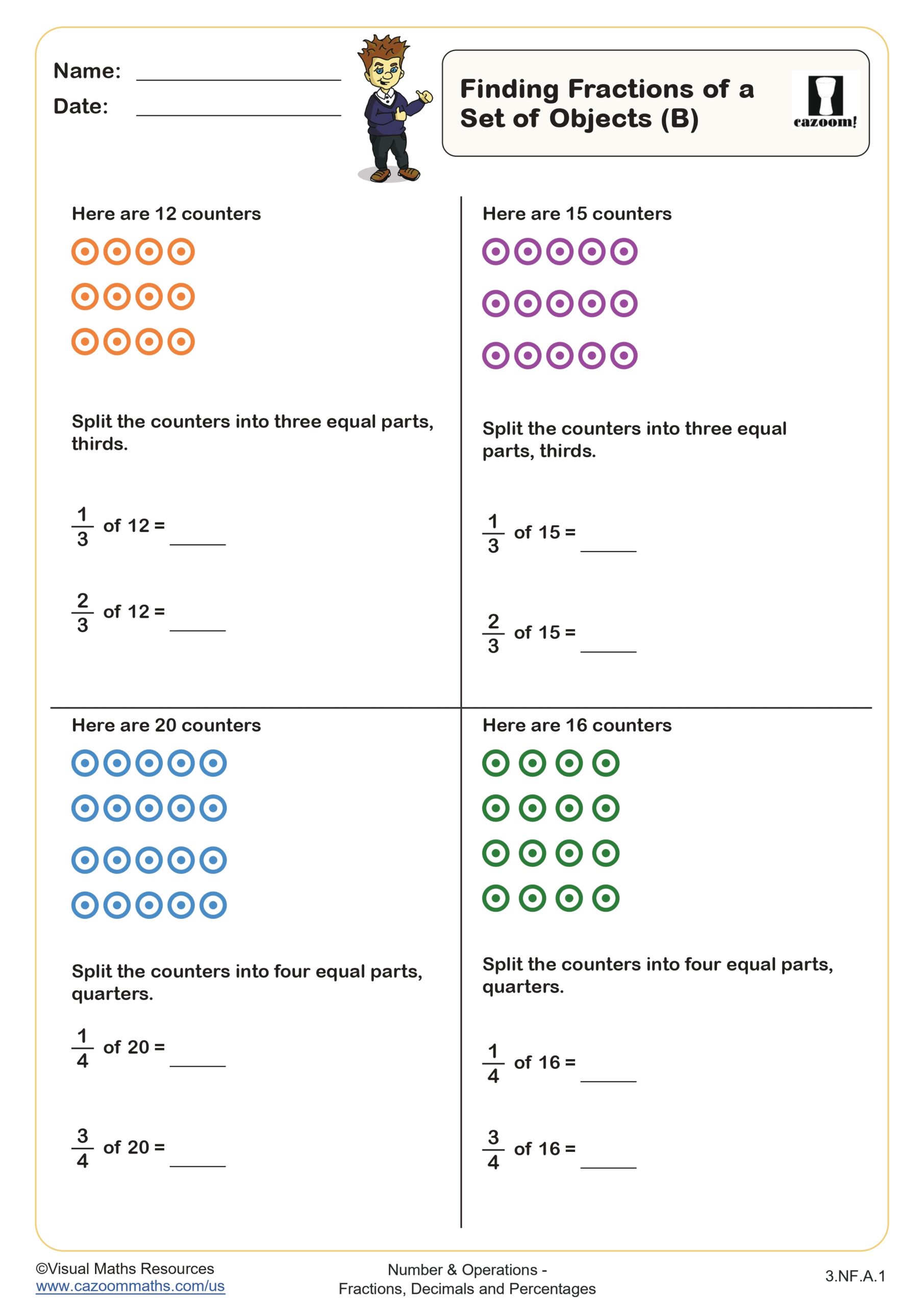
Finding fractions of a set of objects (C)
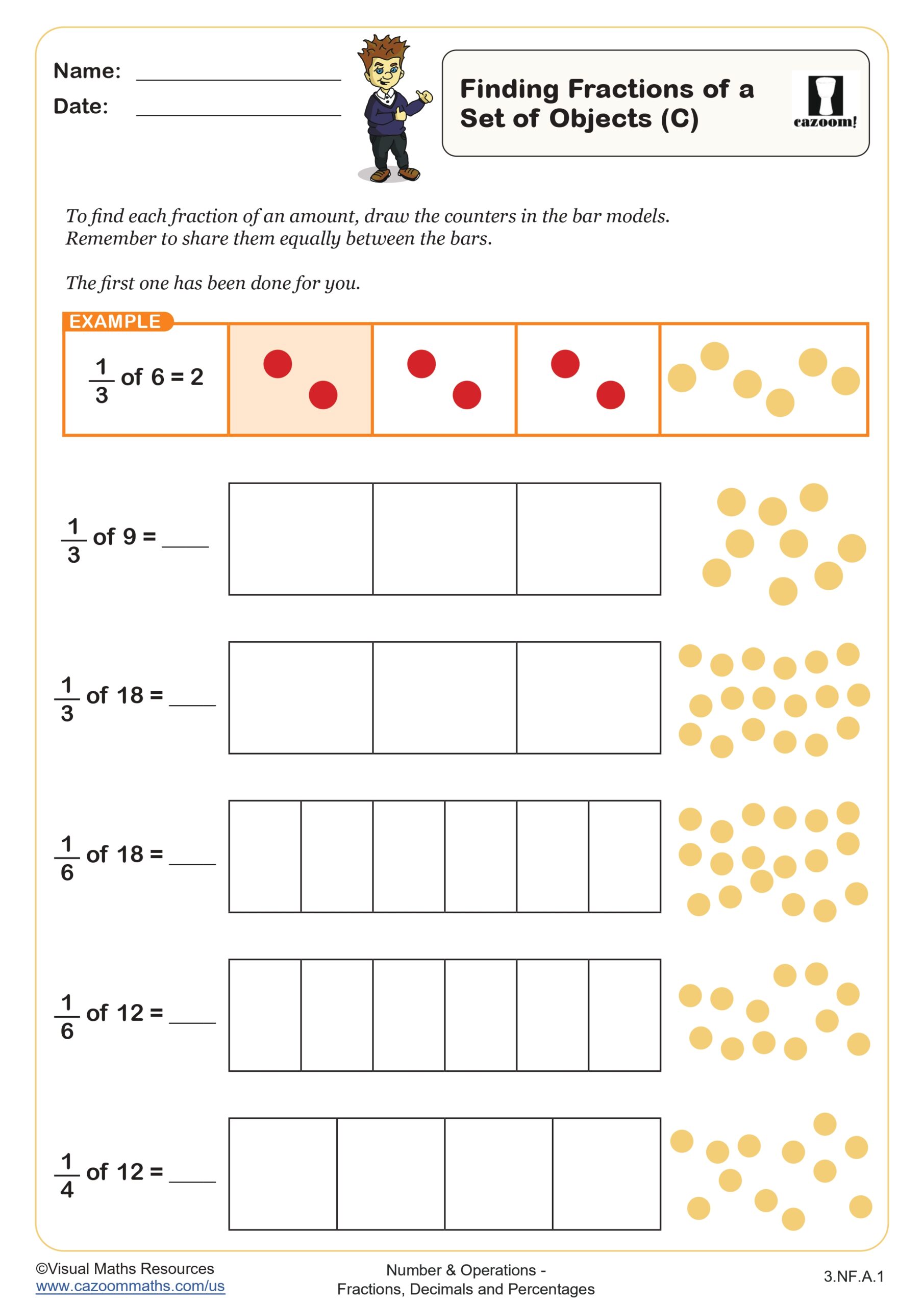
Finding fractions of a set of objects (D)
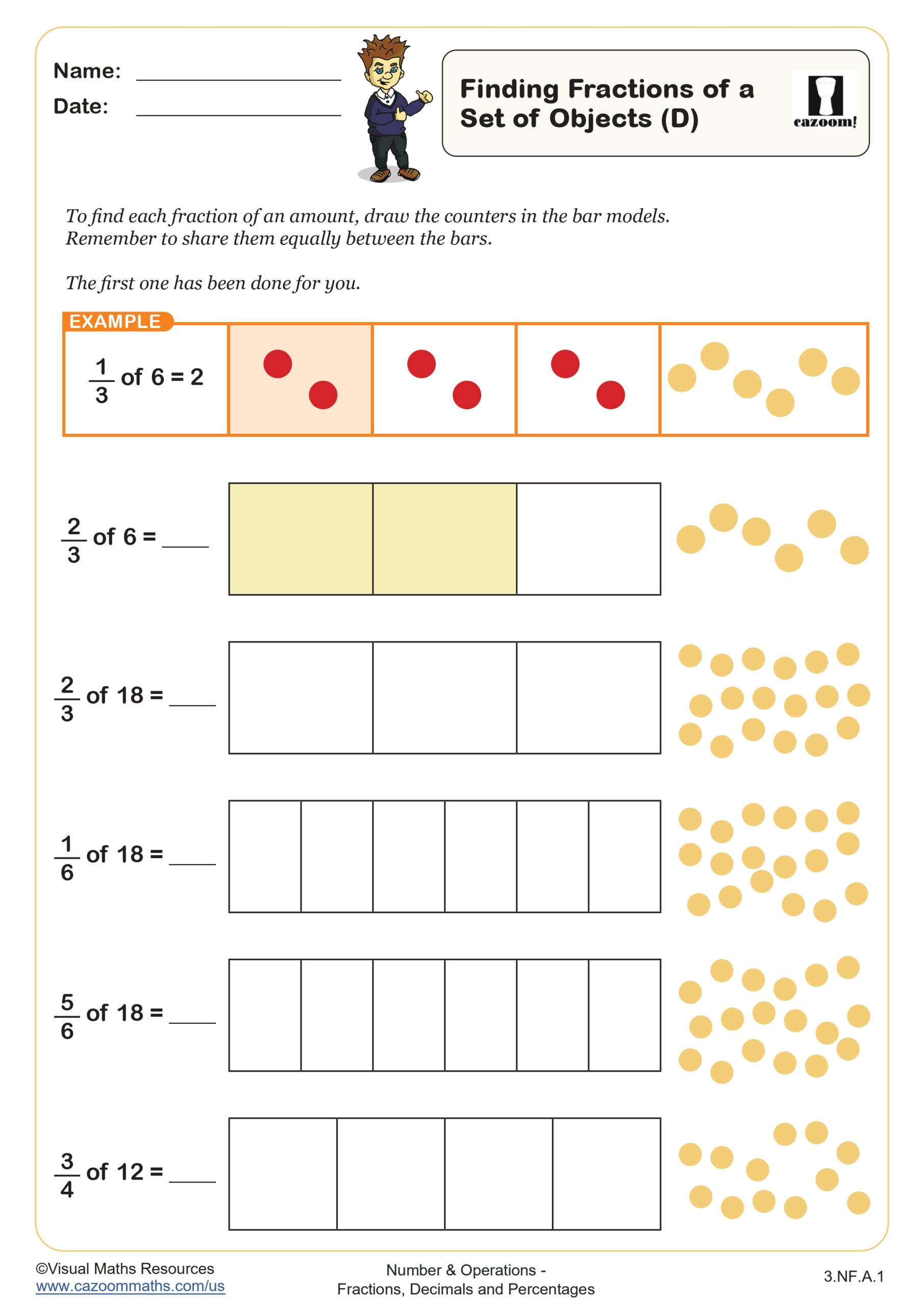
Finding Fractions of Amounts
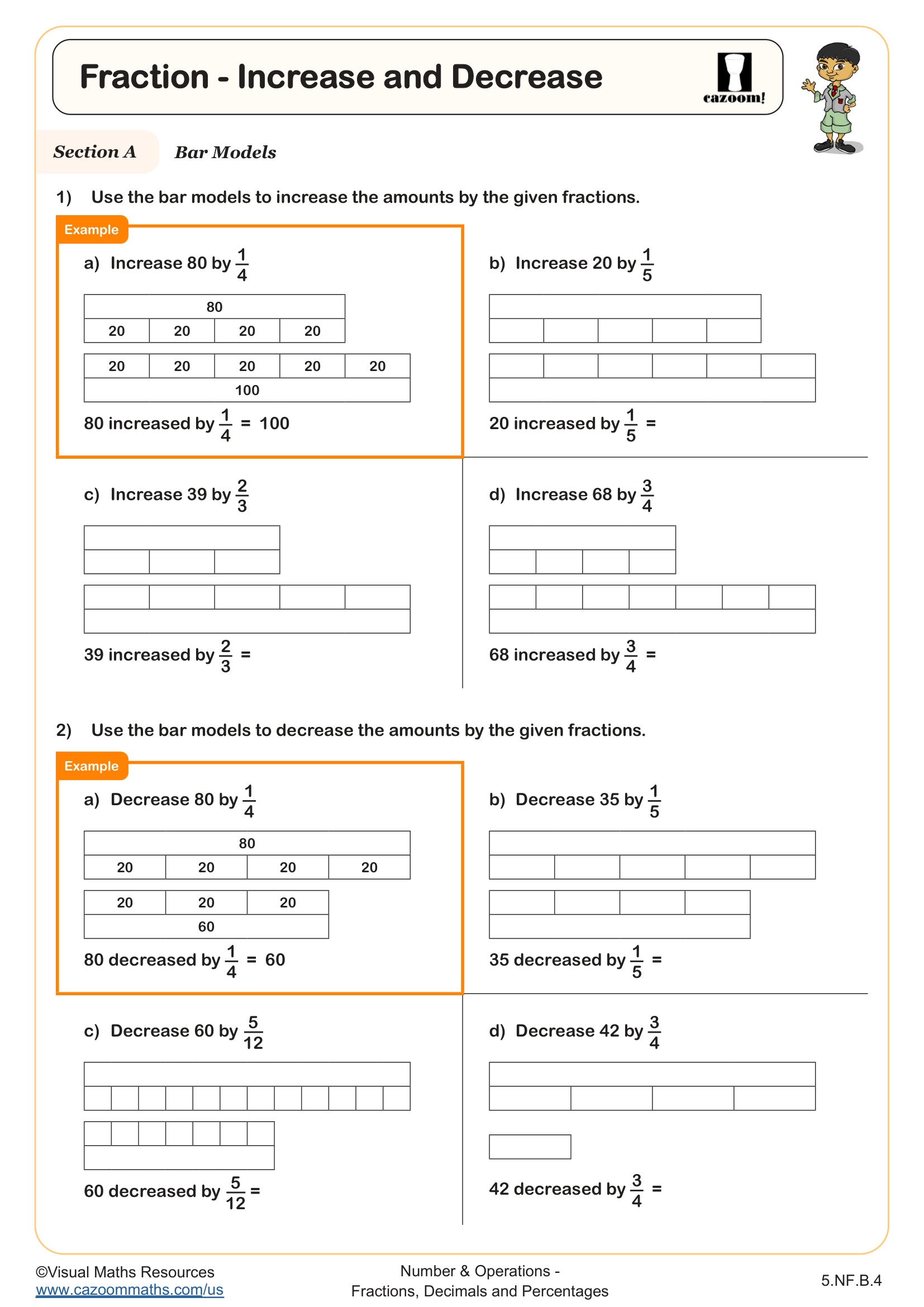
Fraction - Increase and Decrease
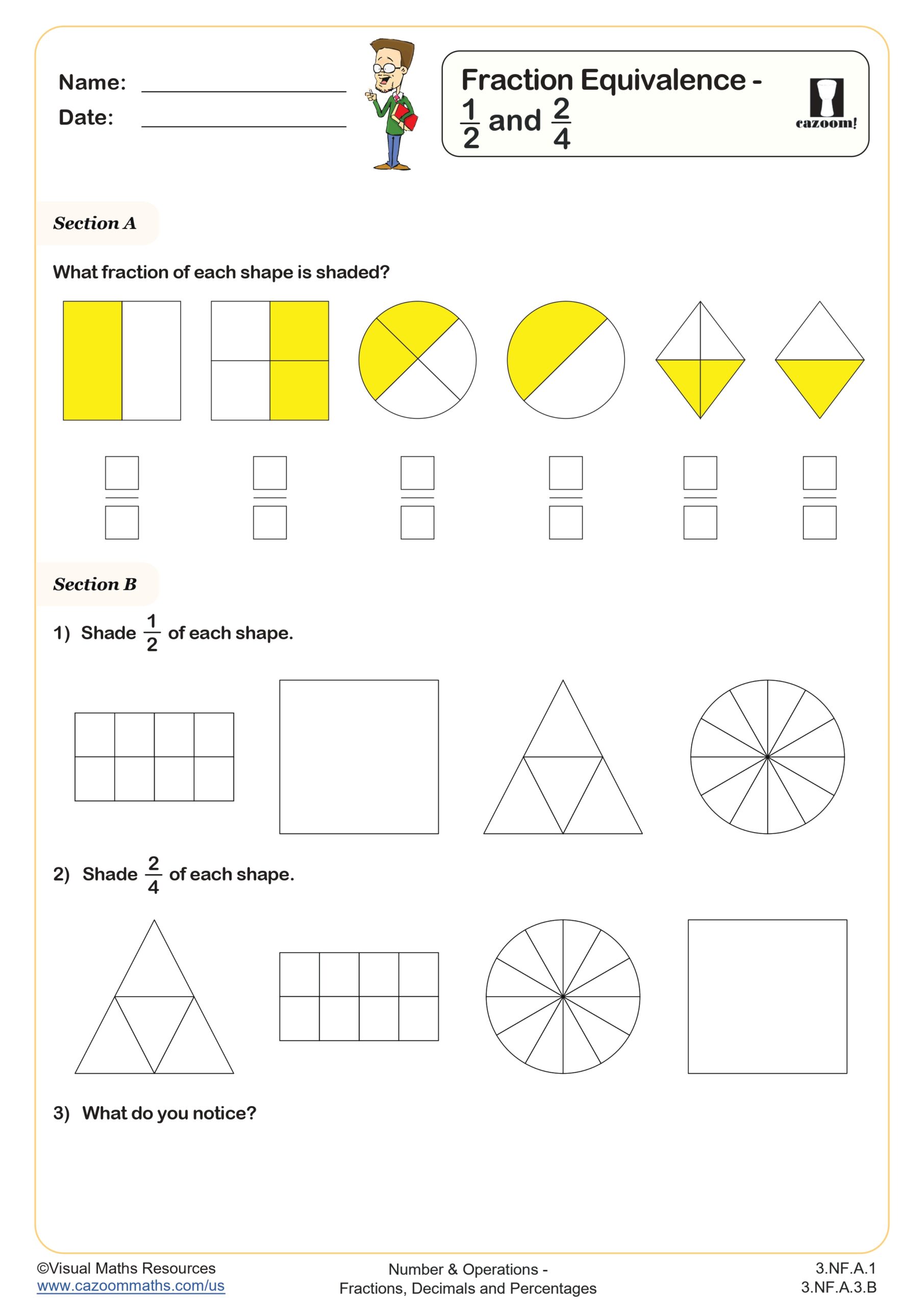
Fraction Equivalence - 1/2 and 2/4
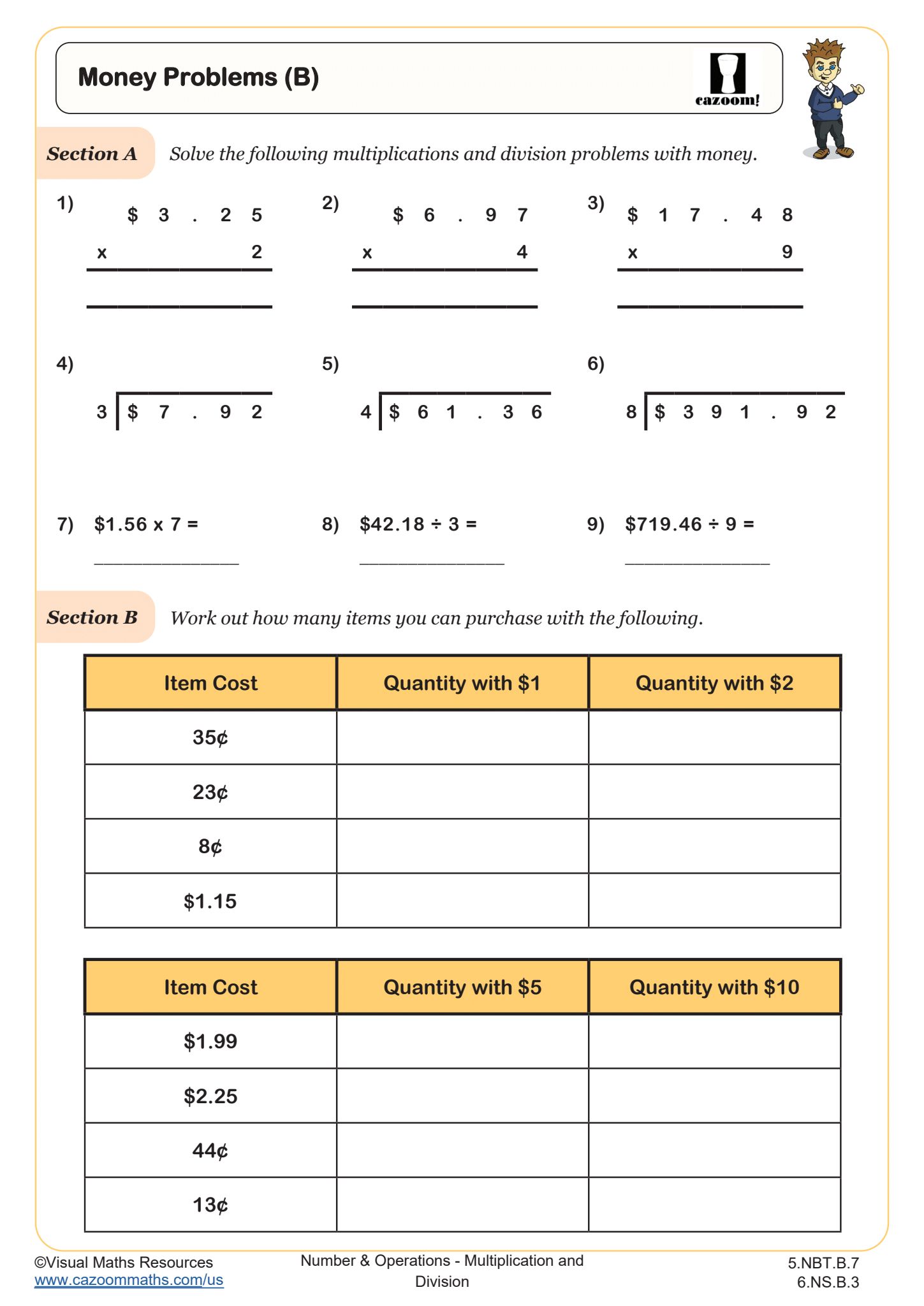
Money Problems (B)
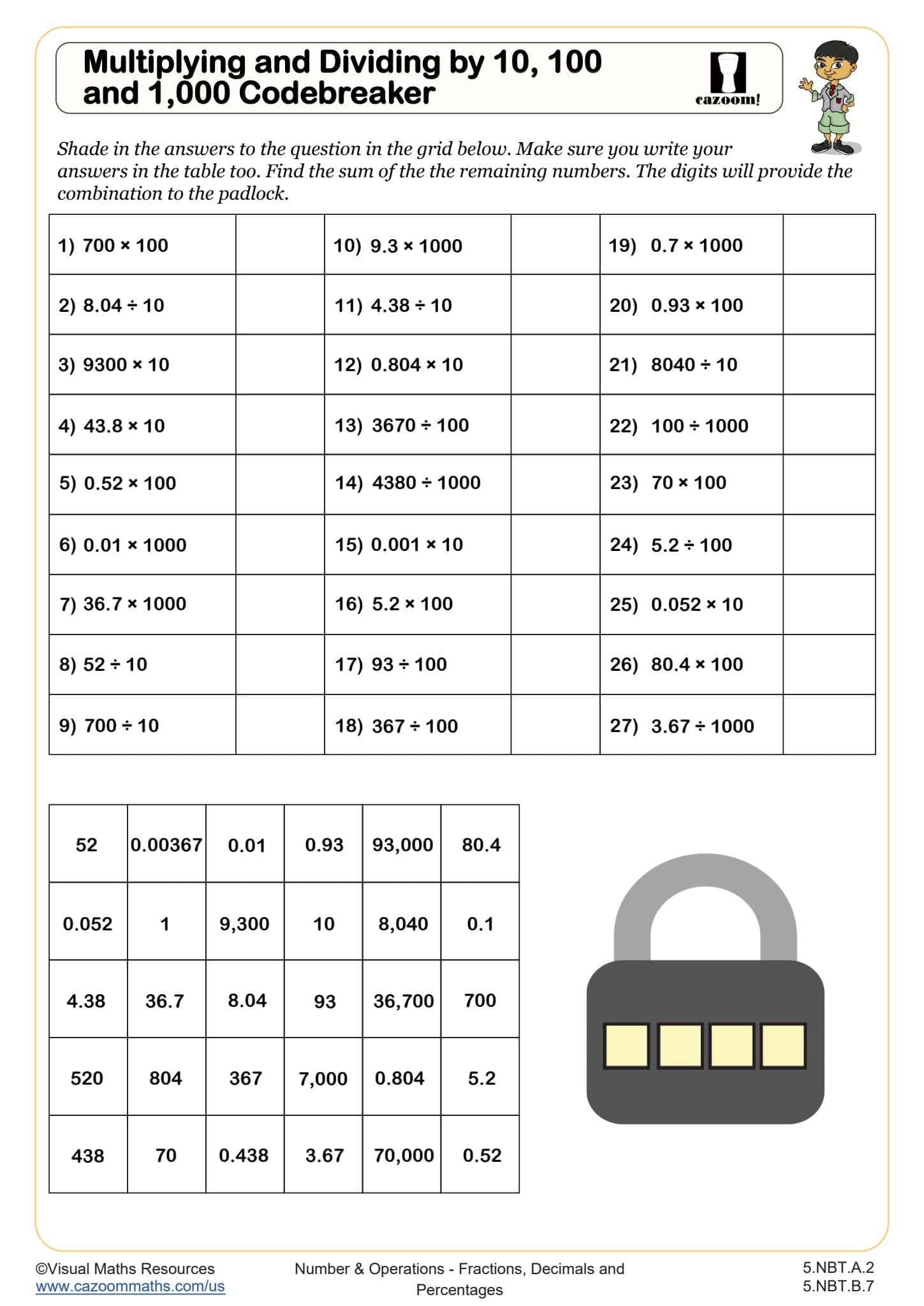
Multiplying and Dividing by 10, 100 and 1,000 Codebreaker
Partitioning Decimals - Tenths and Hundredths (A)
-Questions-Worksheet.jpg?w=3840)
Partitioning Decimals - Tenths and Hundredths (B)
-Questions-Worksheet.jpg?w=3840)
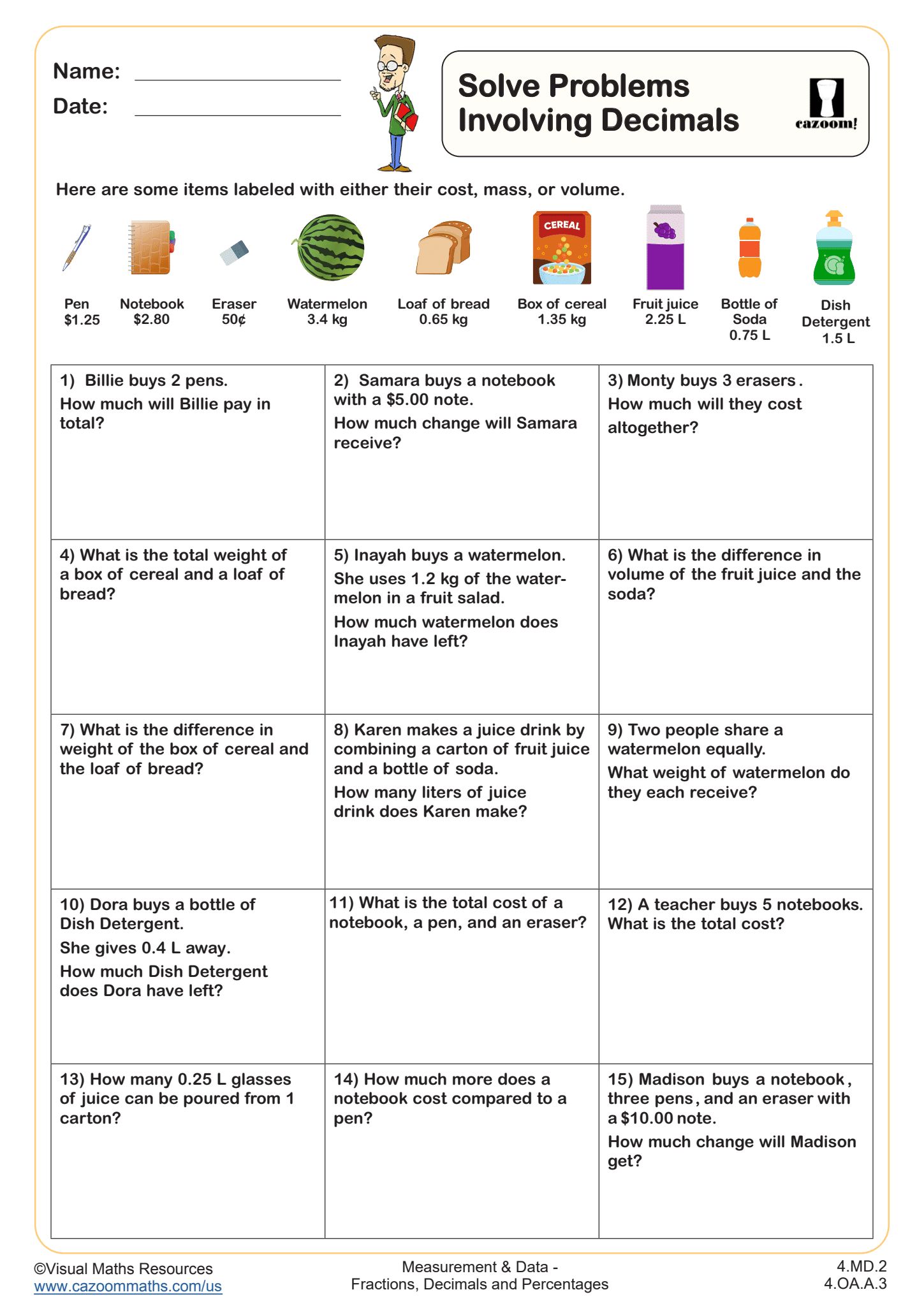
Solve Problems Involving Decimals
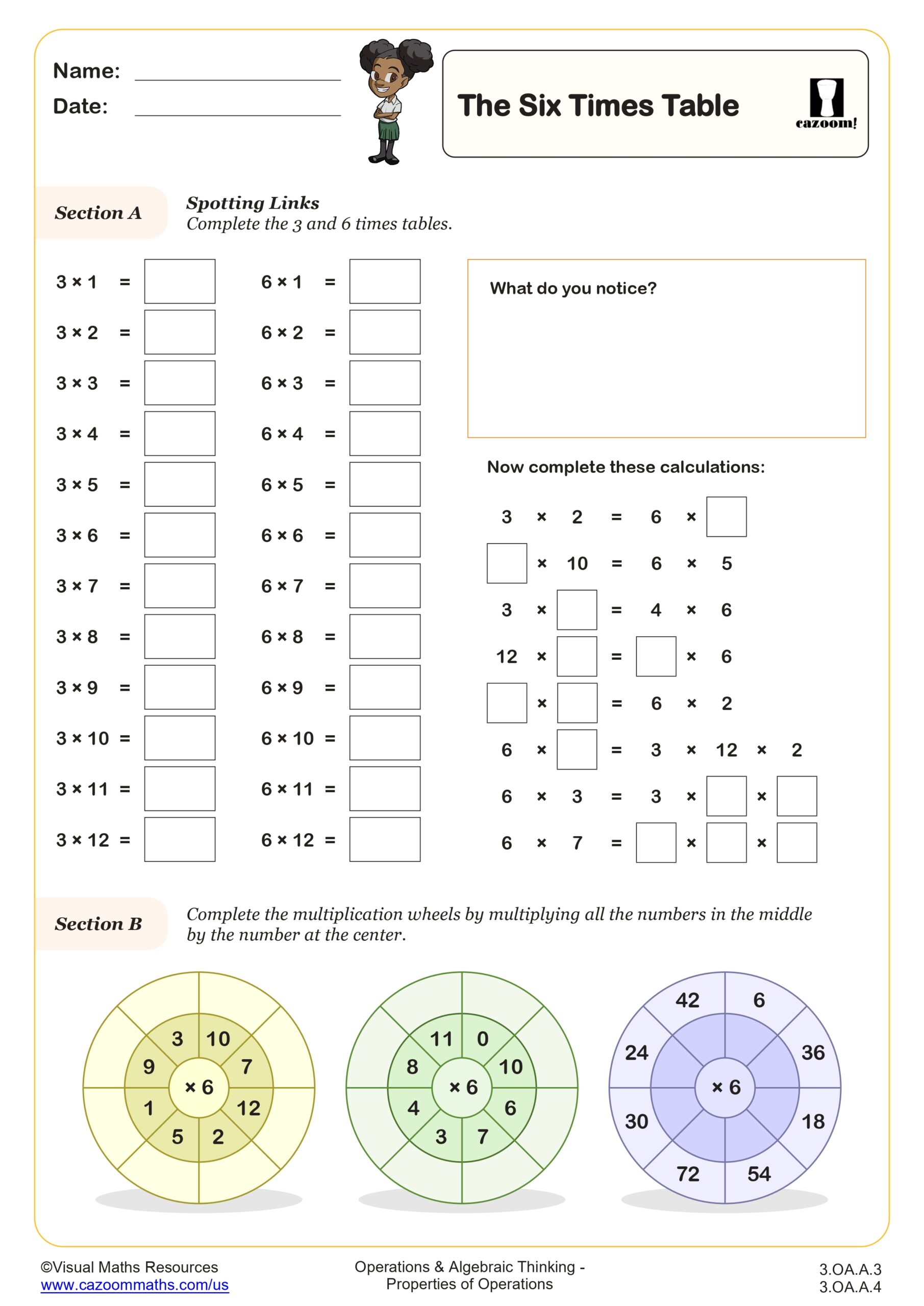
The Six Times Table
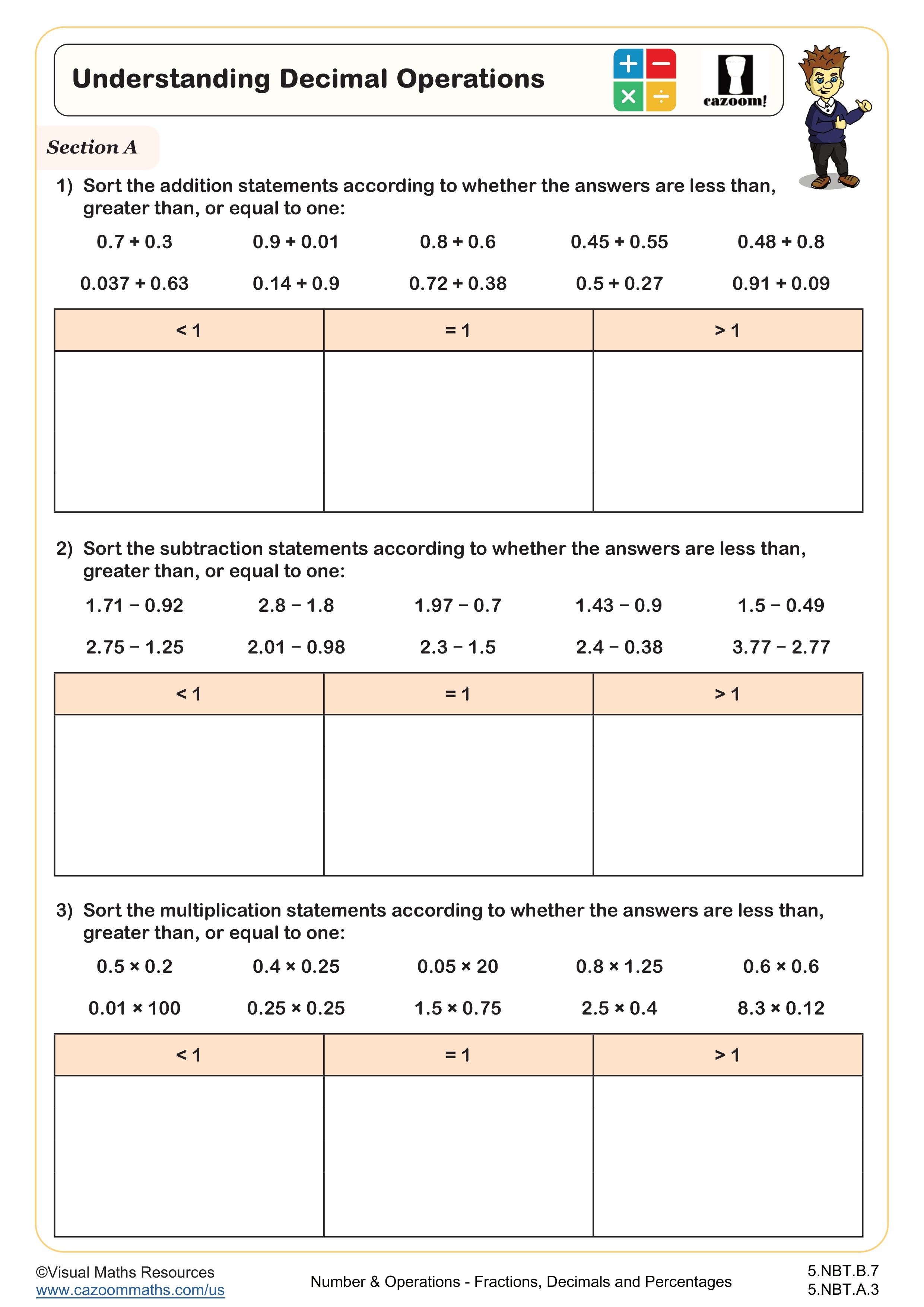
Understanding Decimal Operations
All worksheets are created by the team of experienced teachers at Cazoom Math.
What Are Fractions, Decimals, and Percentages and Why Are They Connected?
Fractions, decimals, and percentages are three different notations for representing parts of a whole or values between integers. Fractions show parts over a whole (3/4), decimals use place value beyond the ones place (0.75), and percentages express parts per hundred (75%). Elementary math standards emphasize understanding these representations as equivalent, not isolated topics, because this equivalence forms the basis for algebraic thinking and problem-solving in middle school and beyond.
Students lose points on standardized tests when they fail to recognize that a question asking for "25% of 80" is mathematically identical to finding "1/4 of 80" or multiplying "0.25 × 80." Teachers frequently notice that students who memorize conversion rules without understanding the underlying relationships struggle when problems require flexible thinking. Spending time with visual models—fraction bars, decimal grids, and hundred charts—helps students see why 1/2, 0.5, and 50% all represent the exact same quantity.
Which Grade Levels Use These Fractions, Decimals, and Percentages Worksheets?
This collection spans kindergarten through fifth grade, covering the full elementary school progression for fractions, decimals, and percentages. Kindergarten and first grade worksheets introduce foundational fraction concepts like halves and fourths through visual models. Second and third grade materials expand to comparing fractions, introducing decimal notation for tenths and hundredths, and understanding percentages as parts of 100.
By fourth and fifth grade, students work with more complex conversions between fractions, decimals, and percentages, along with practical applications like estimating shopping bills and calculating with recurring decimals. The progression follows Common Core State Standards, starting with concrete representations and moving toward abstract symbolic manipulation. Teachers notice that students who receive consistent practice across all three representations in elementary school show greater confidence when tackling proportional reasoning and linear relationships in middle school algebra courses.
How Do Students Learn to Convert Between Fractions, Decimals, and Percentages?
Converting between fractions, decimals, and percentages requires understanding place value relationships and equivalent forms. Students learn that converting a fraction to a decimal involves dividing the numerator by the denominator (3 ÷ 4 = 0.75), while converting decimals to percentages means multiplying by 100 and adding the percent symbol (0.75 × 100 = 75%). Converting percentages back to fractions involves writing the percent over 100 and simplifying (75/100 = 3/4). These worksheets build fluency through repeated practice with benchmark values and less common conversions.
This skill connects directly to financial literacy and data analysis in real-world contexts. When students compare interest rates (5.5% versus 0.055), analyze survey results ("3 out of 5 students prefer..." becomes 60%), or calculate discounts ("25% off" means multiply by 0.75), they apply these conversion skills. Engineers, scientists, and financial professionals use these representations interchangeably throughout their careers, making elementary mastery foundational for STEM pathways.
How Can Teachers Use These Worksheets to Build Student Mastery?
These worksheets provide structured practice that moves from visual representation to symbolic manipulation, with answer keys allowing students to check their work and identify specific error patterns. Teachers can use the scaffolded subtopics—starting with comparing decimals, progressing through conversions, and culminating in applications like estimating shopping bills—to differentiate instruction based on student readiness. The answer keys make these worksheets particularly valuable for formative assessment, helping teachers quickly identify whether students struggle with computational accuracy or conceptual understanding.
Many teachers assign these worksheets during math centers or stations, pairing students to work through problems collaboratively while discussing their reasoning. They also work well for homework assignments when families want to support learning at home, spiral review to maintain skills between units, and targeted intervention for students who need additional practice with specific conversion types. The variety of subtopics means teachers can select worksheets that address the exact skill gaps revealed through classroom assessments or state testing data.