Elementary School Functions Worksheets
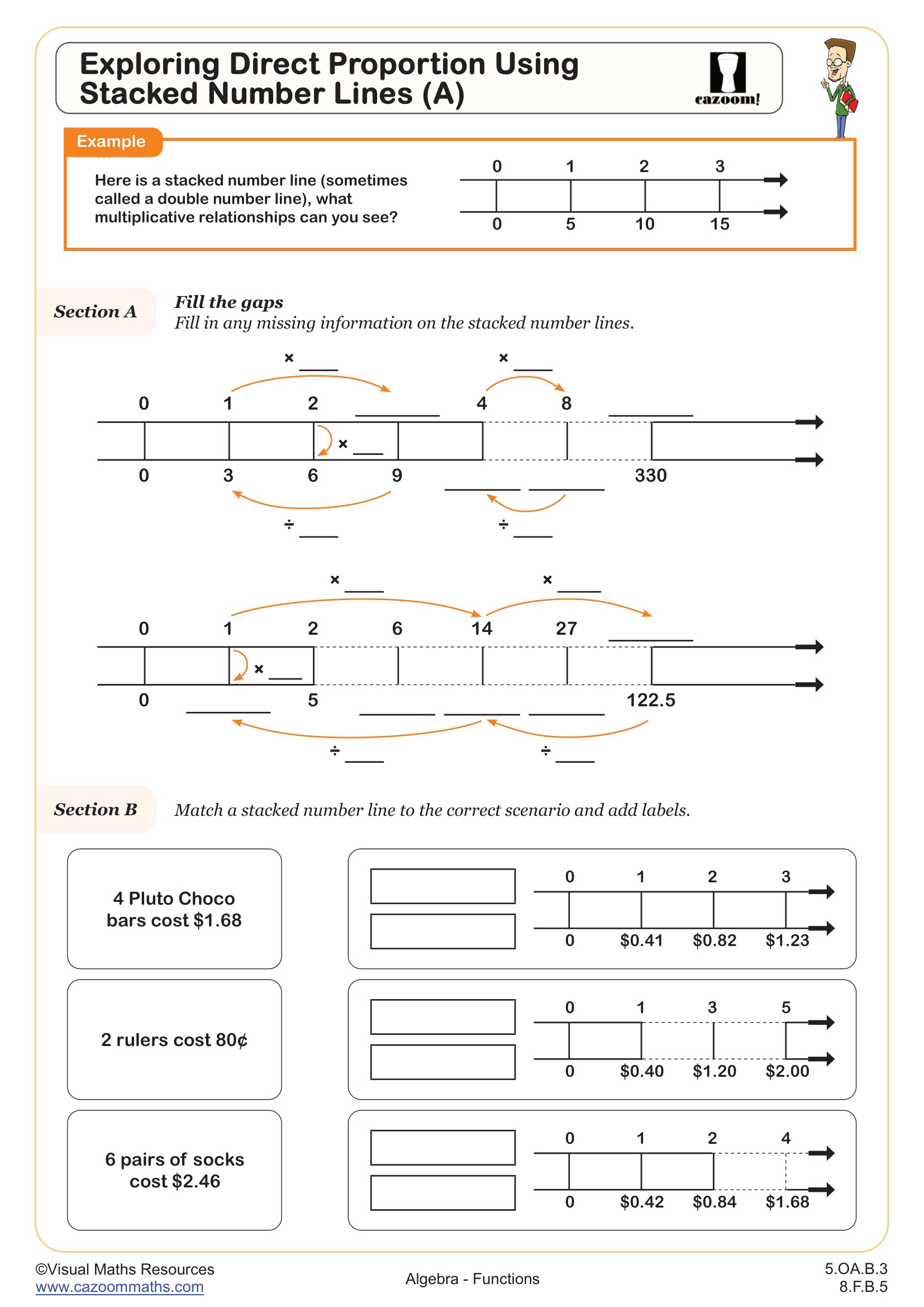
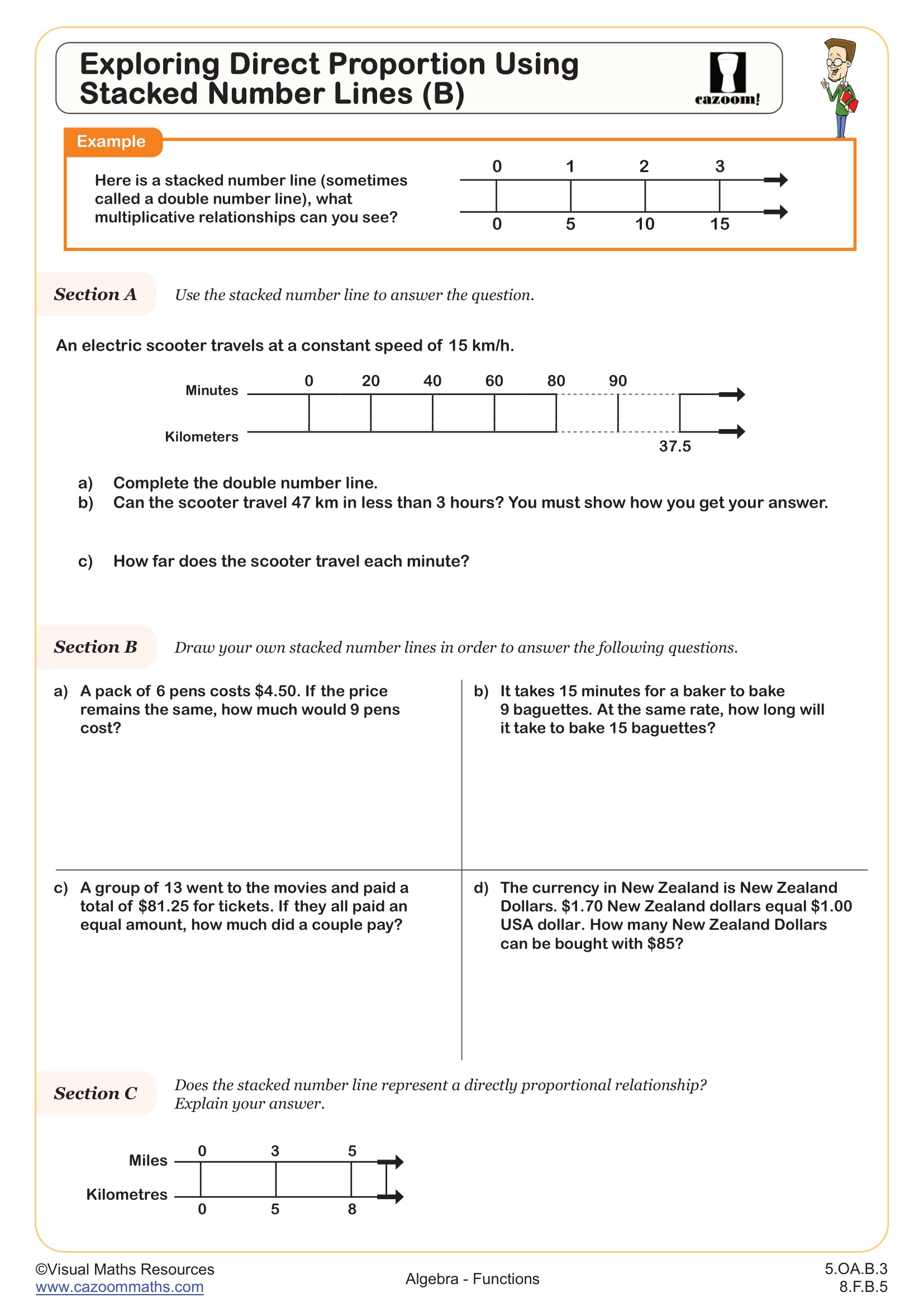
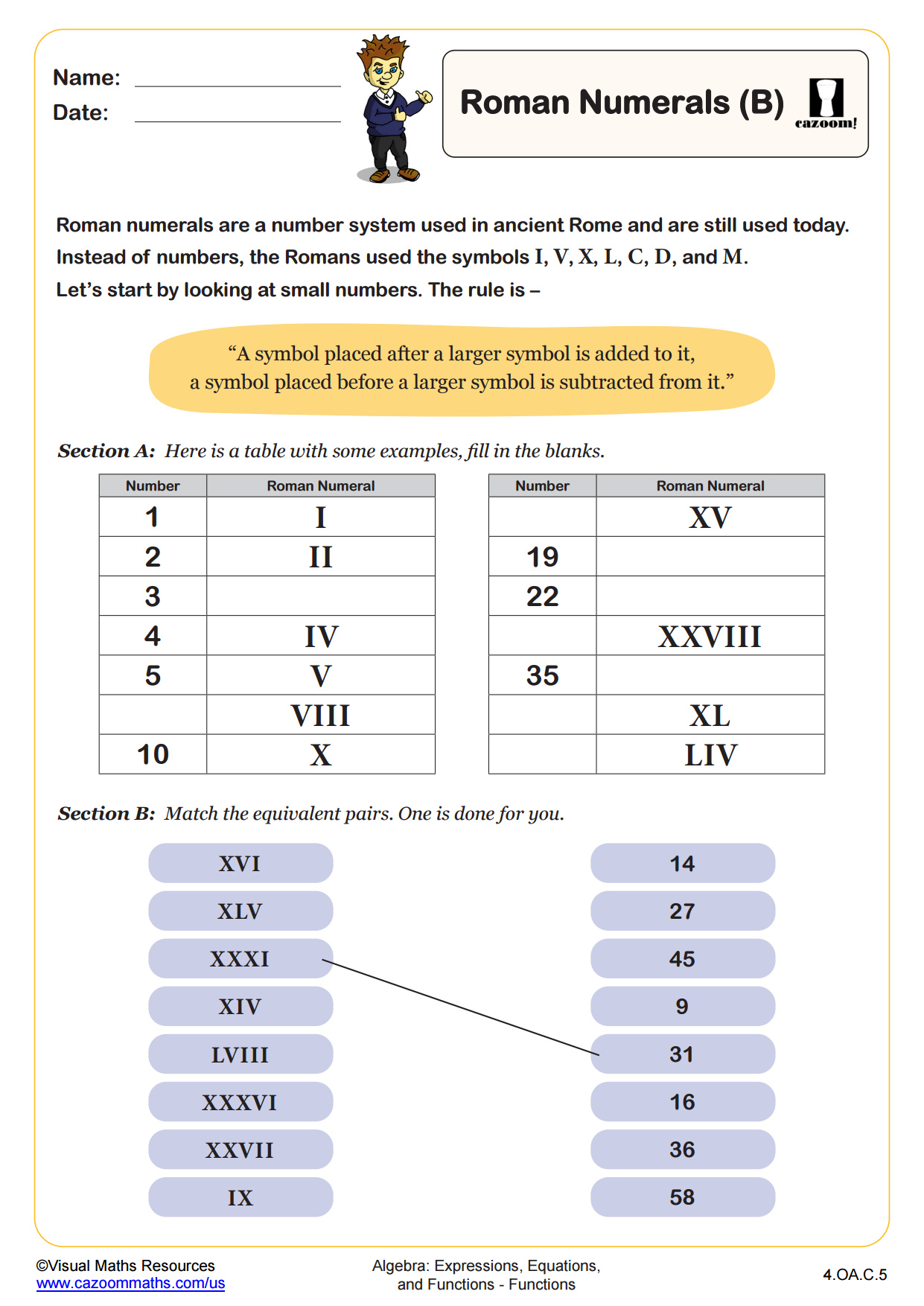
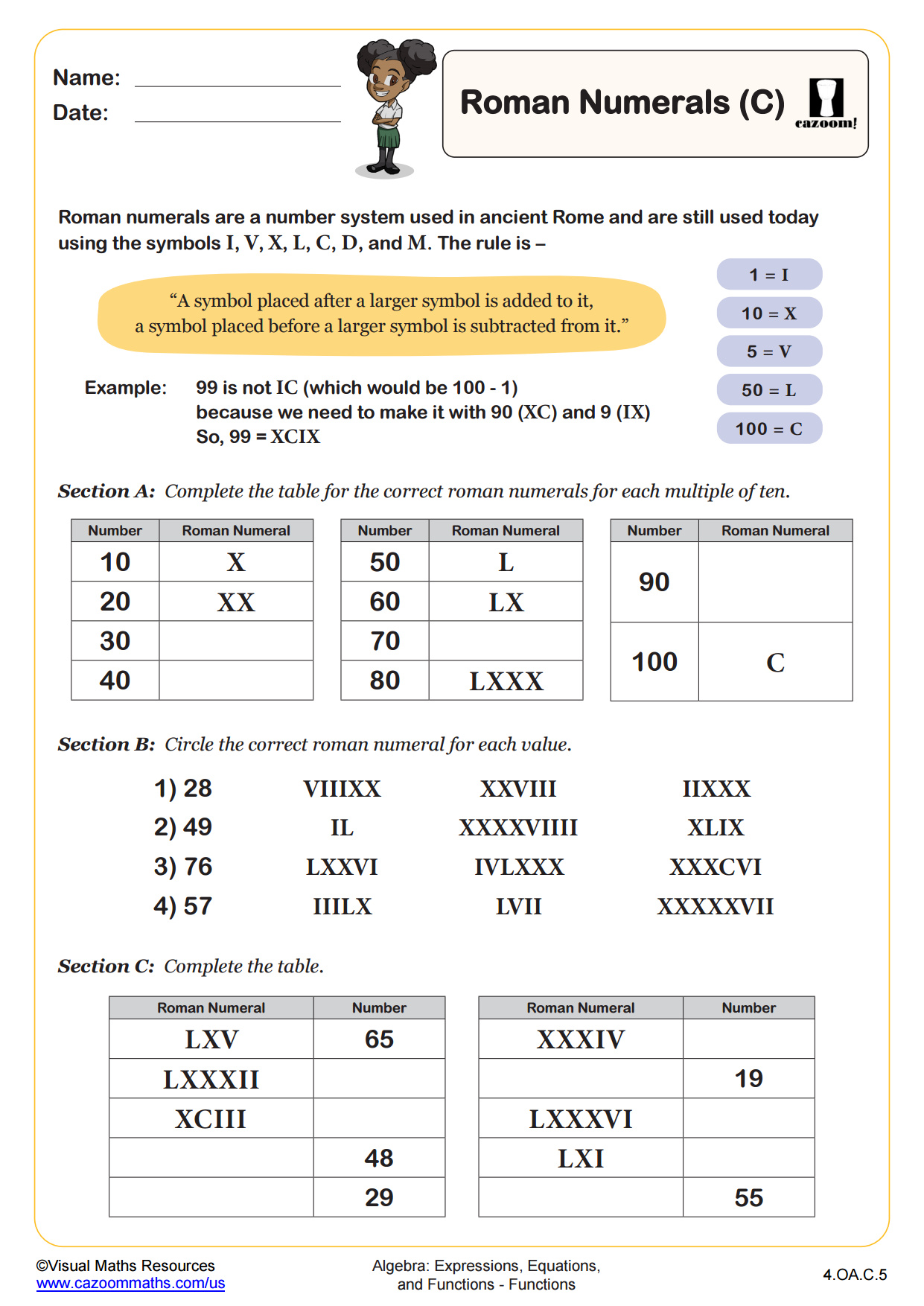
All worksheets are created by the team of experienced teachers at Cazoom Math.
What Are Functions in Elementary Math?
In elementary mathematics, functions represent consistent rules that transform input values into output values. Students explore this concept through function machines, input-output tables, and simple equations like y = x + 3 or y = 2x. These early experiences establish that functions follow predictable patterns where the same input always produces the same output, laying groundwork for formal algebraic notation in middle school.
A common misconception emerges when students believe the output must always be larger than the input. For example, with the function y = x - 5, students sometimes expect outputs to grow rather than decrease. Teachers often address this by having students test their predictions with concrete numbers, helping them recognize that the rule itself determines the relationship, not assumptions about size or direction.
Which Grade Levels Use Elementary Functions Worksheets?
These functions worksheets span kindergarten through fifth grade, covering the elementary school stage. Kindergarten and first grade students typically work with simple repeating patterns and basic addition rules. Second and third graders progress to multiplication patterns and two-step function rules. Fourth and fifth grade worksheets introduce coordinate graphing, composite functions, and more sophisticated linear relationships.
The progression across elementary grades mirrors how algebraic thinking develops naturally. Early grades focus on recognizing and extending patterns, while upper elementary students begin analyzing multiple representations of the same function. By fifth grade, students evaluate functions using graphs and work with composite functions where one rule feeds into another, preparing them for the formal function notation they'll encounter in middle school algebra.
How Do Composite Functions Work in Elementary Math?
Composite functions involve applying two or more rules in sequence, where the output from one function becomes the input for the next. For elementary students, this might look like: first multiply by 3, then add 4. If the input is 5, students calculate 5 × 3 = 15, then 15 + 4 = 19. This two-step thinking requires careful attention to the order of operations and strengthens logical sequencing skills.
Composite functions mirror real-world processes in fields like computer programming and manufacturing. When engineers design assembly lines, each station performs a specific function on the product before passing it to the next station. Similarly, when students code simple games or animations, they chain commands together where one action triggers the next. Understanding that functions can combine and build upon each other prepares students for computational thinking across STEM disciplines.
How Can Teachers Use These Function Worksheets Effectively?
The worksheets scaffold learning by presenting functions through multiple representations: tables, equations, graphs, and word problems. Students benefit from seeing the same mathematical relationship expressed different ways, which reinforces that a function describes a consistent pattern regardless of format. Worked examples on many worksheets demonstrate the step-by-step thinking required, particularly helpful when students first encounter composite functions or graph interpretation.
Teachers often use these worksheets during math centers for differentiated practice, allowing students working below grade level to build pattern recognition while advanced learners tackle composite functions. The answer keys make them practical for independent work during intervention blocks or as homework assignments that parents can confidently check. Many teachers find that pairing students to explain their reasoning about function rules strengthens both partners' understanding, as articulating the pattern often reveals misconceptions that need addressing.