Elementary School Geometry Worksheets
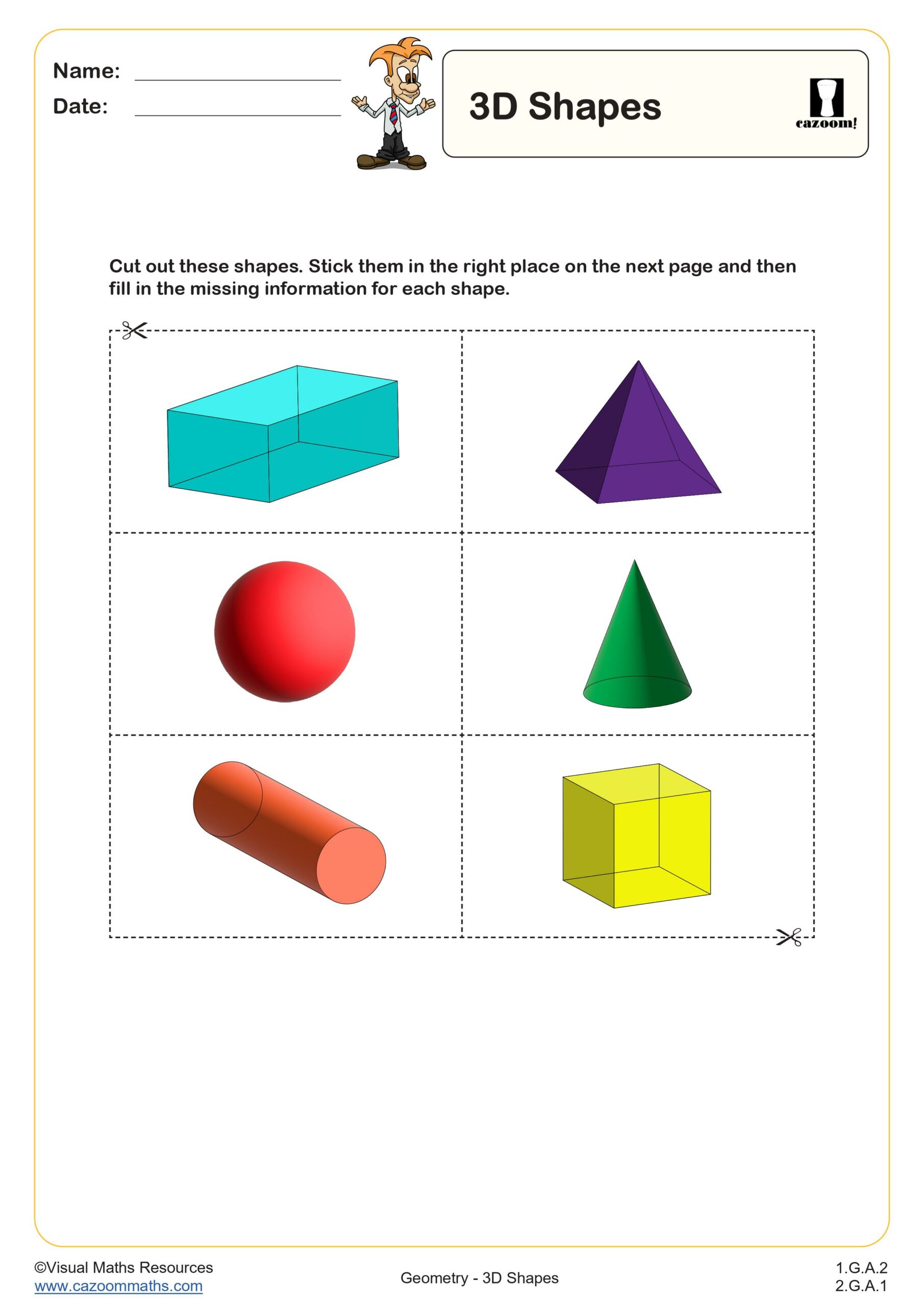
3D Shapes
Calculating Angles in Triangles (A)
-Questions.jpg?w=3840)
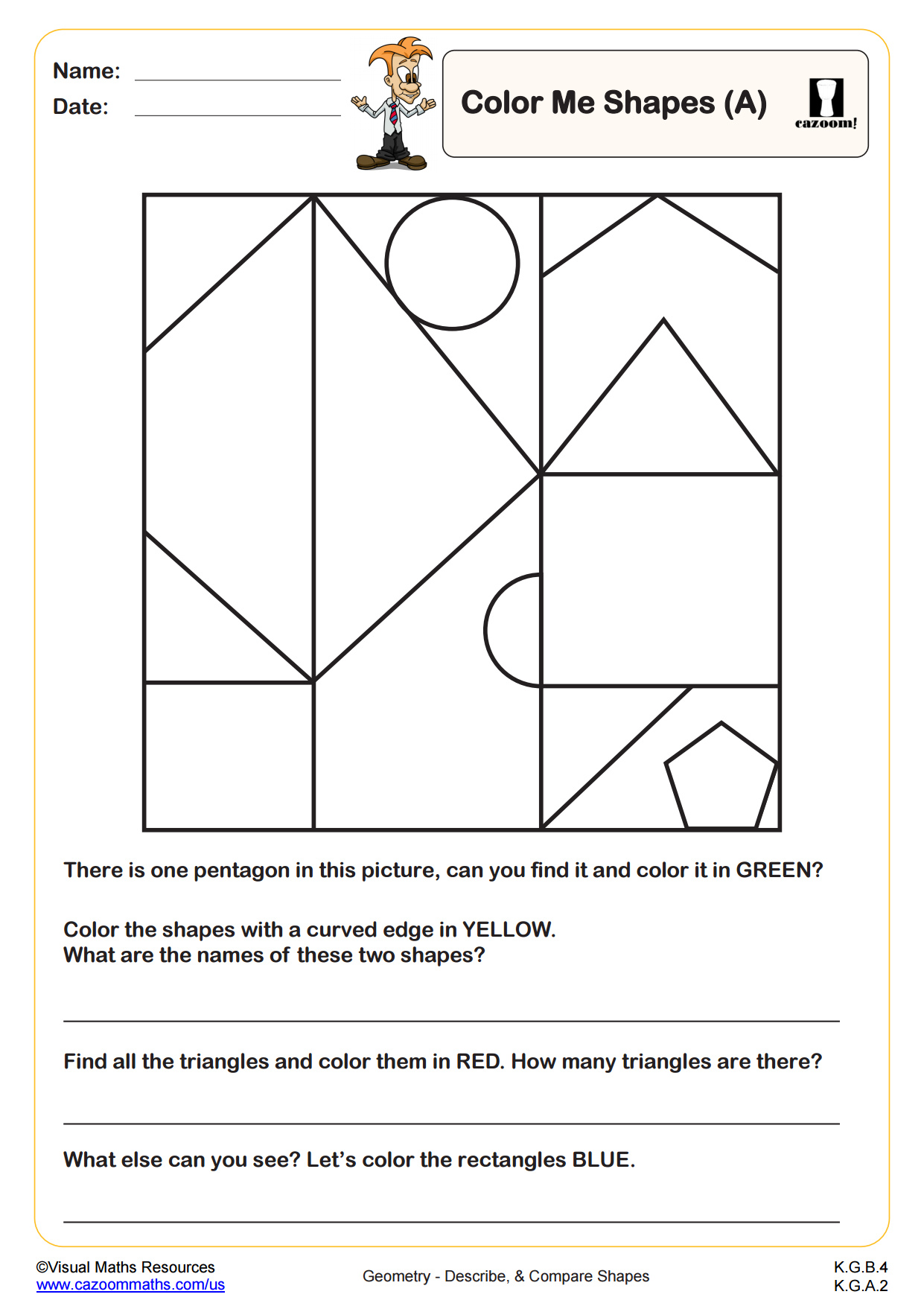
Colour Me Shapes (A)
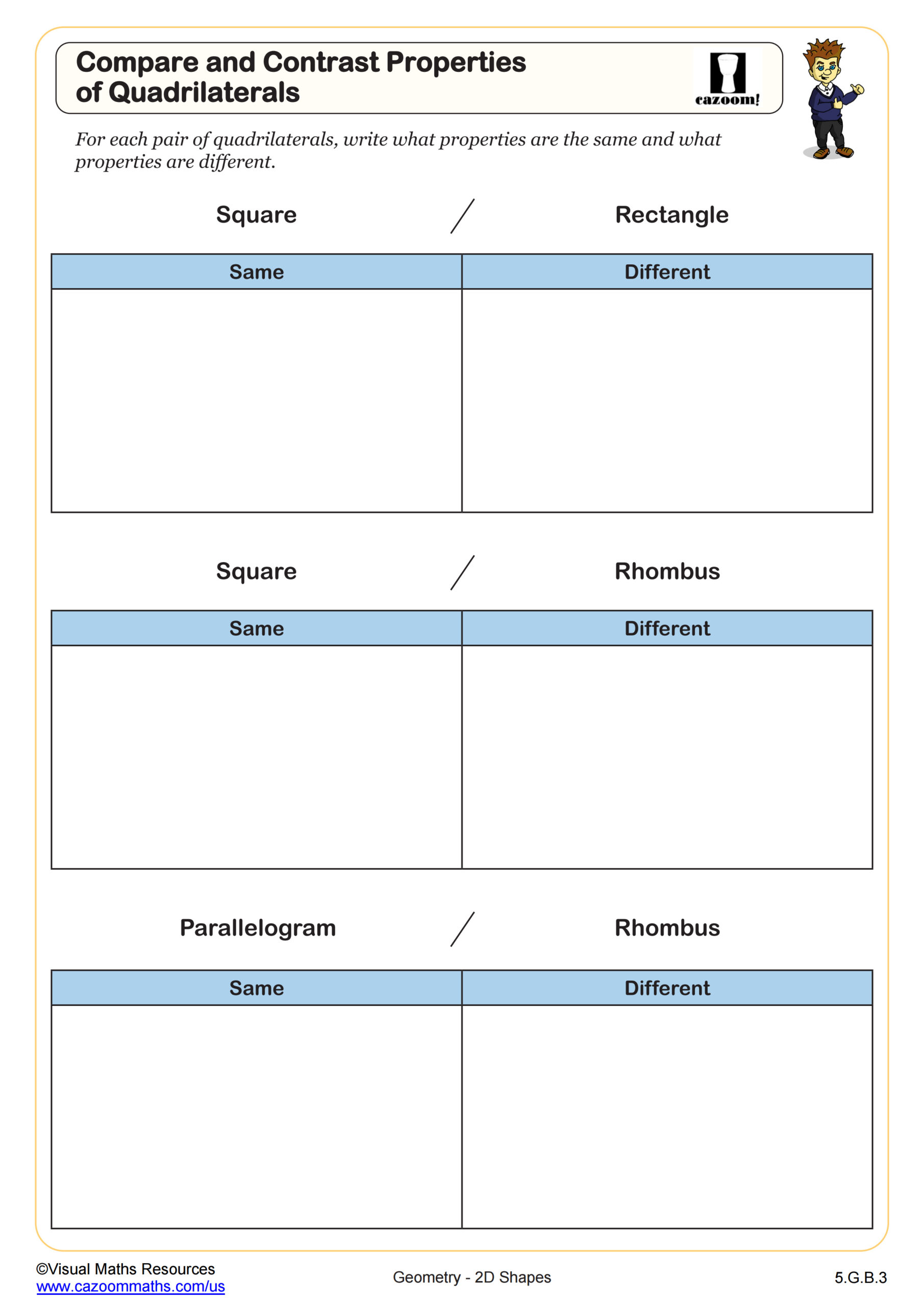
Compare and Contrast Properties of Quadrilaterals
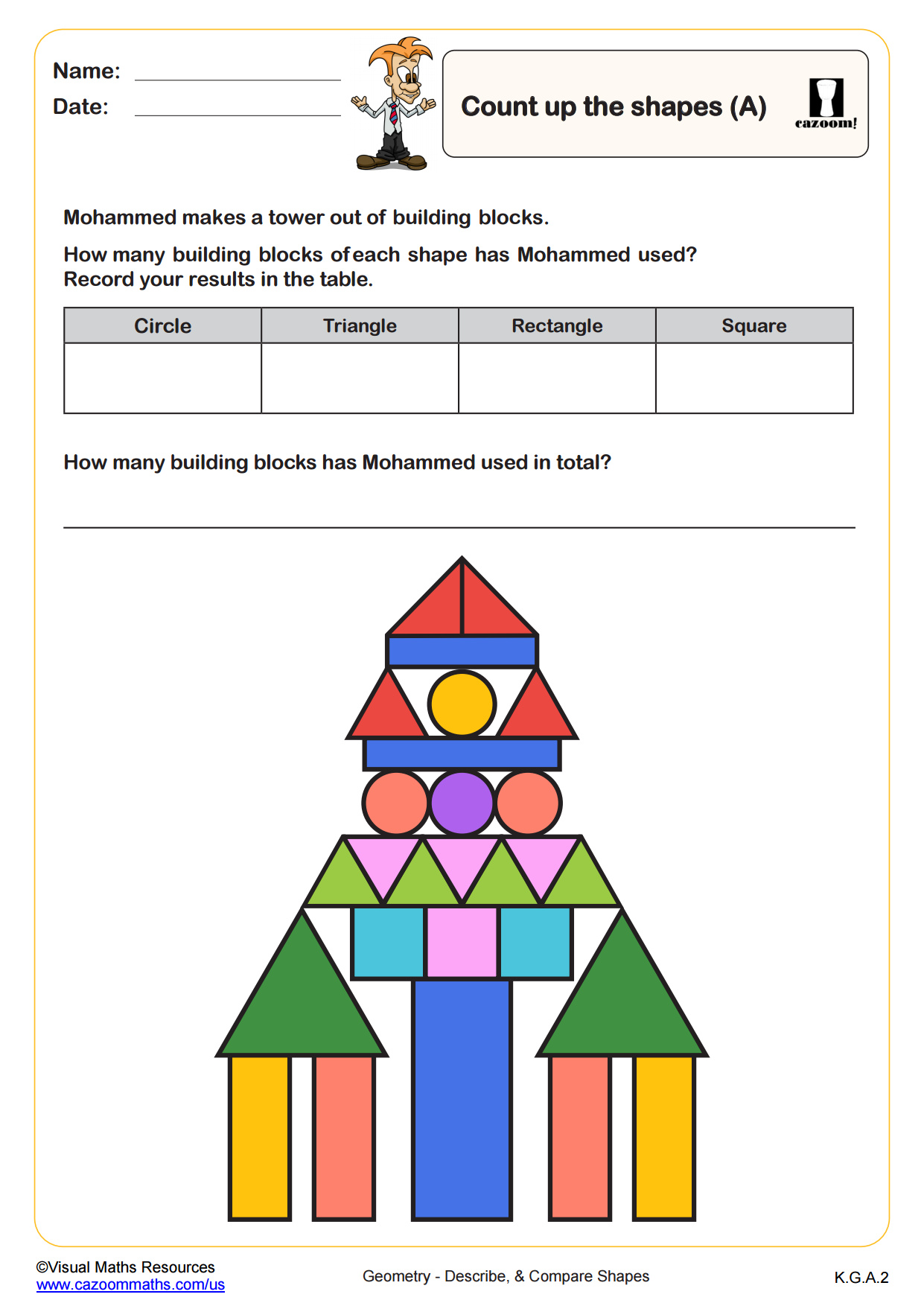
Count up the Shapes (A)
Counting Sides and Vertices
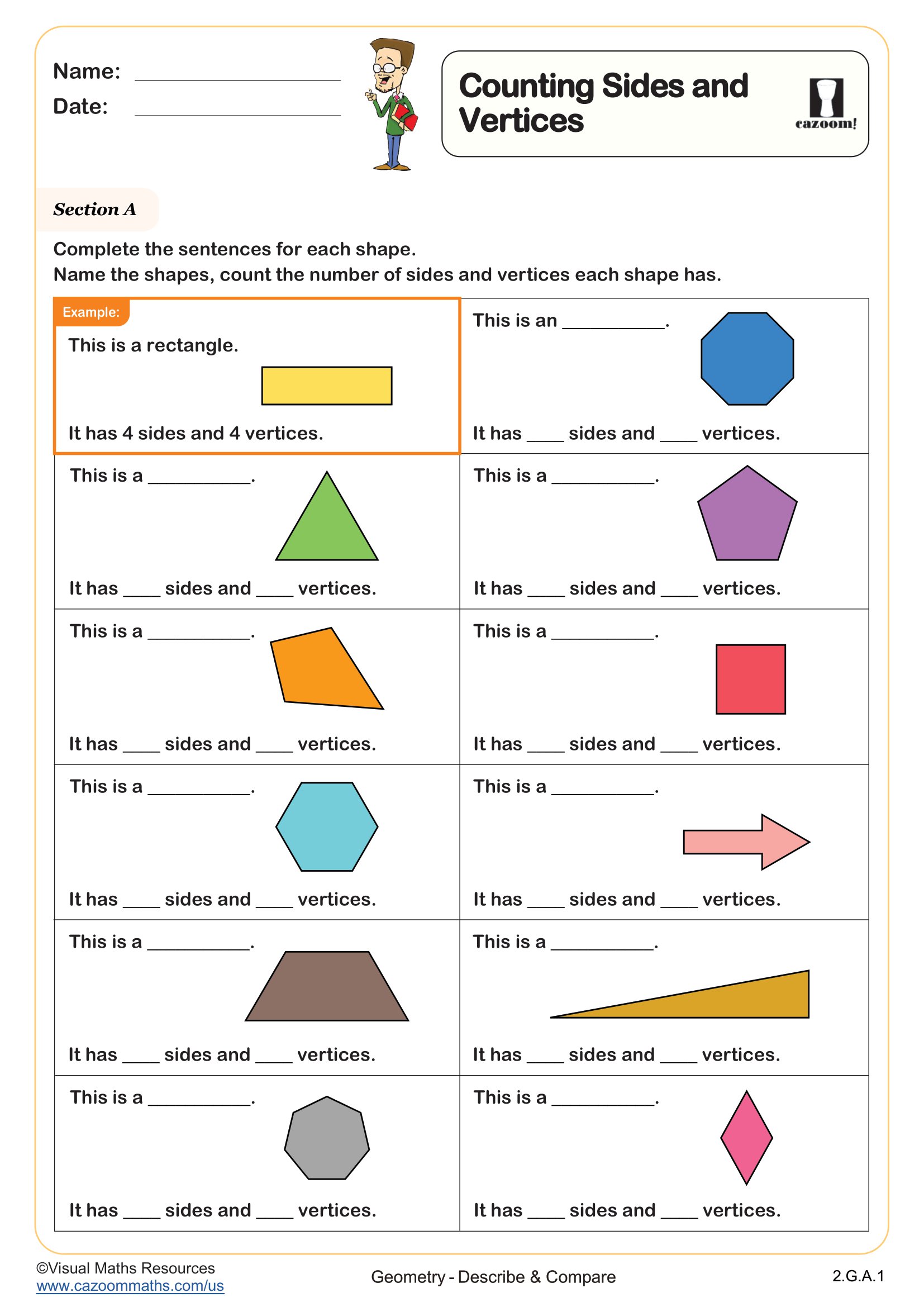
Describing Movement
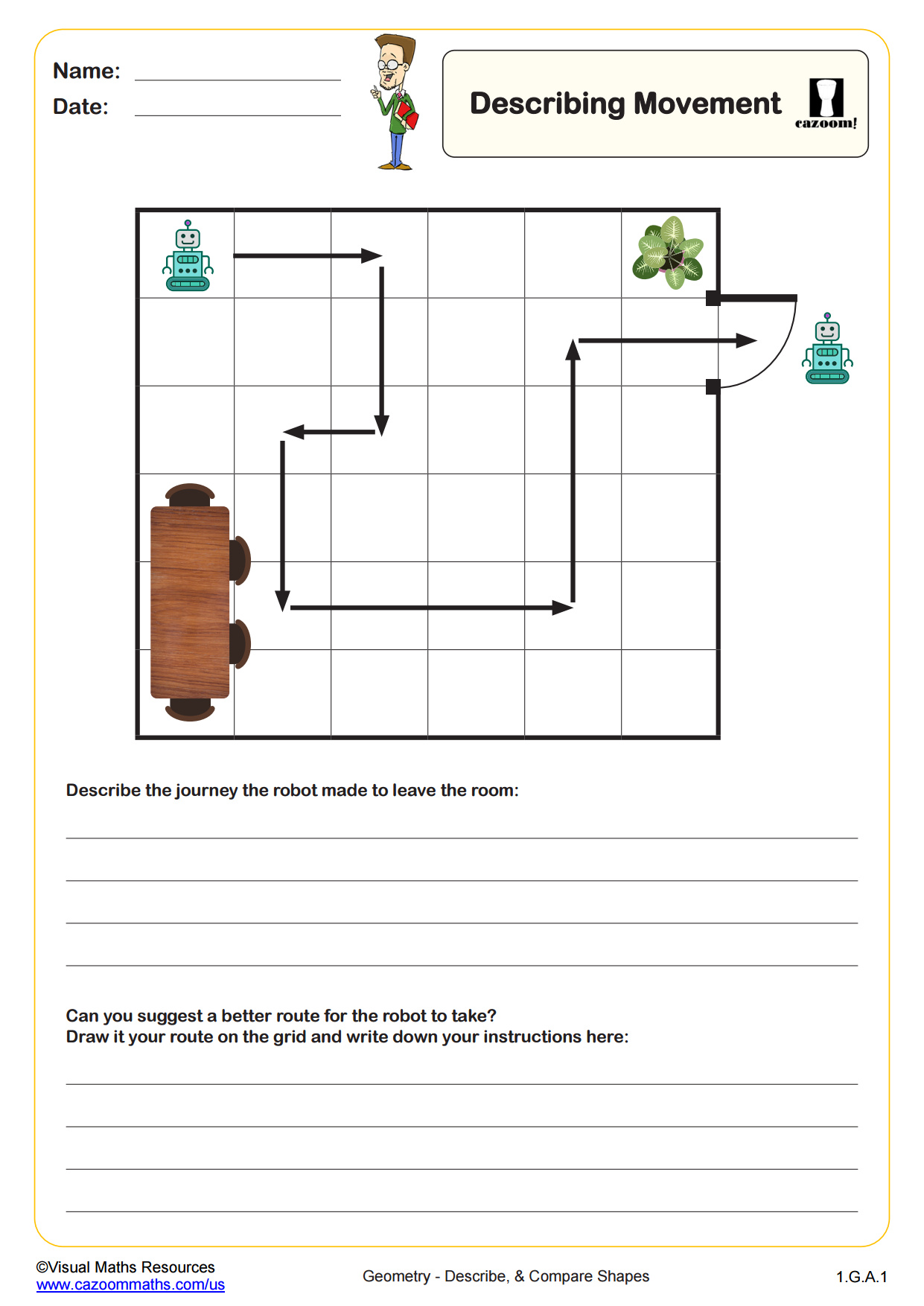
Describing Positions (A)
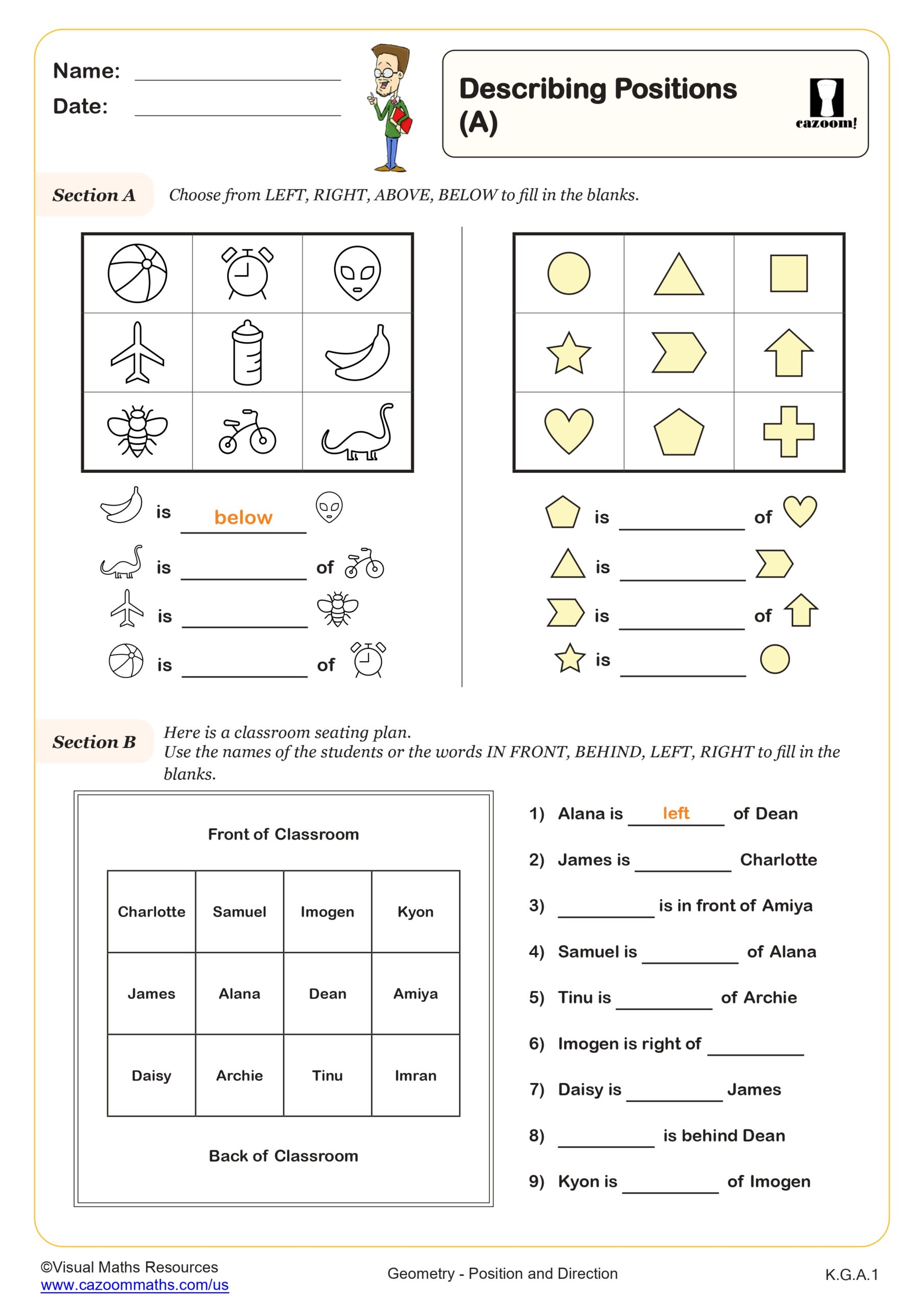
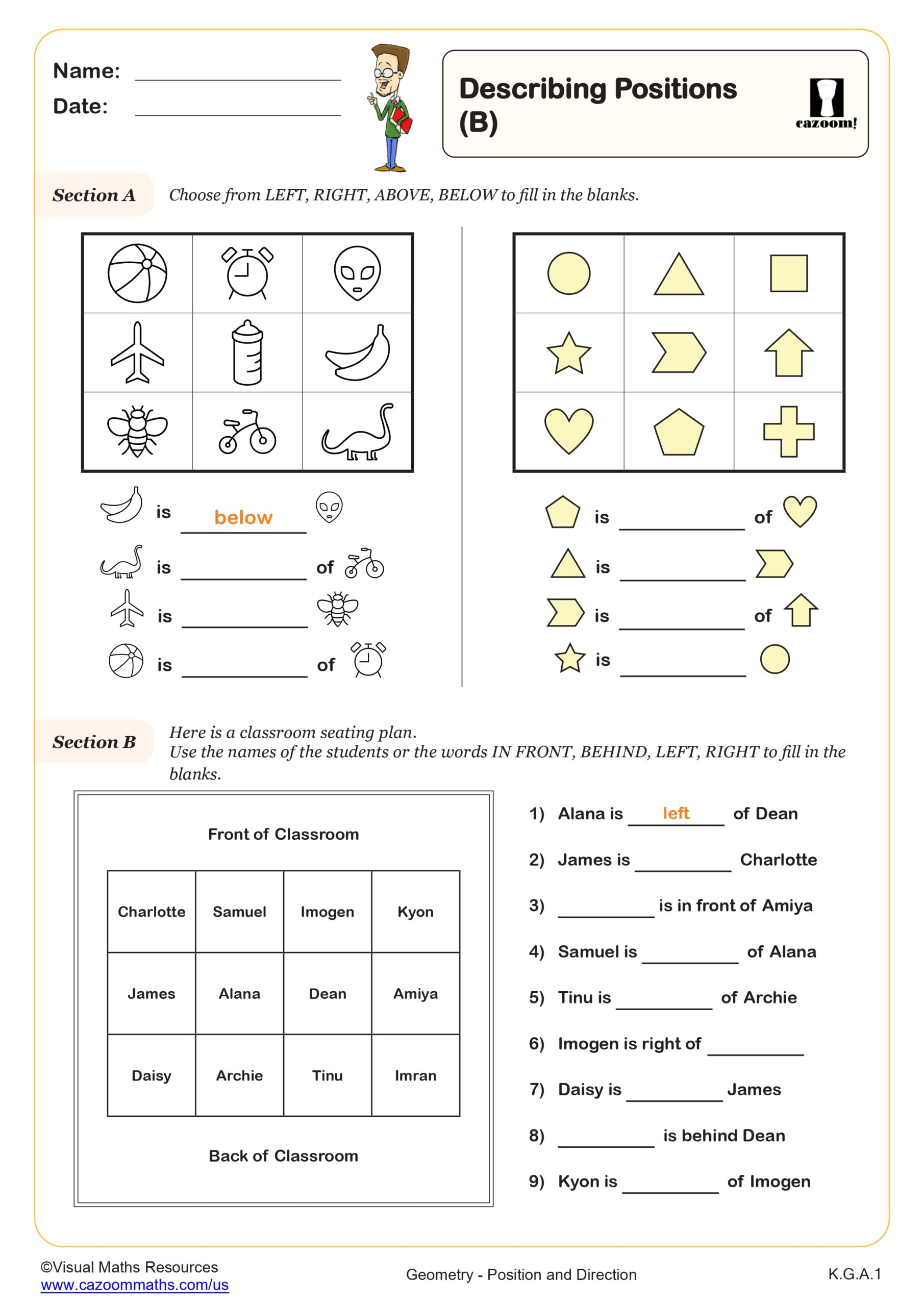
Describing Positions (B)
Draw 2D Shapes (A)
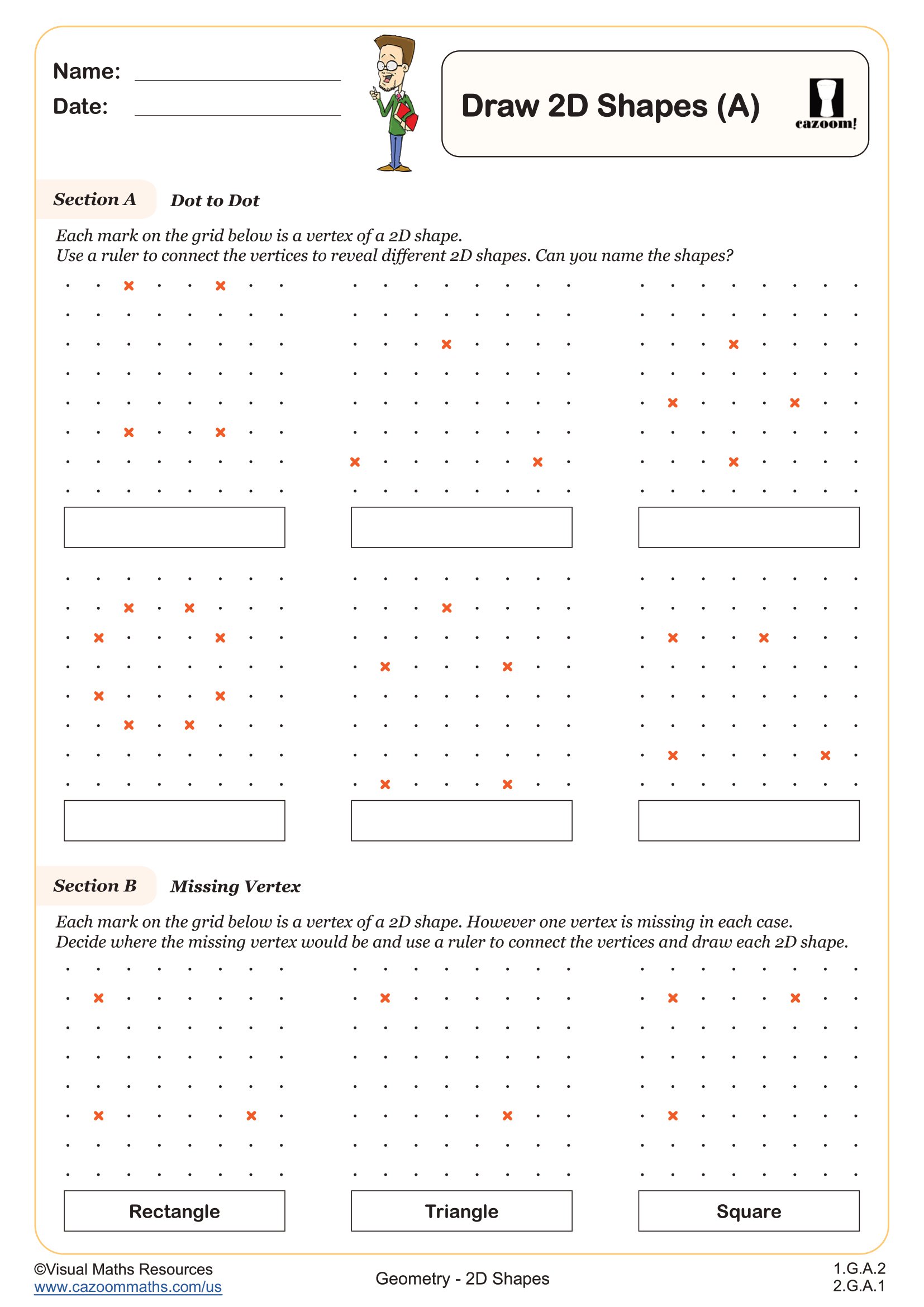
Drawing 2D Shapes
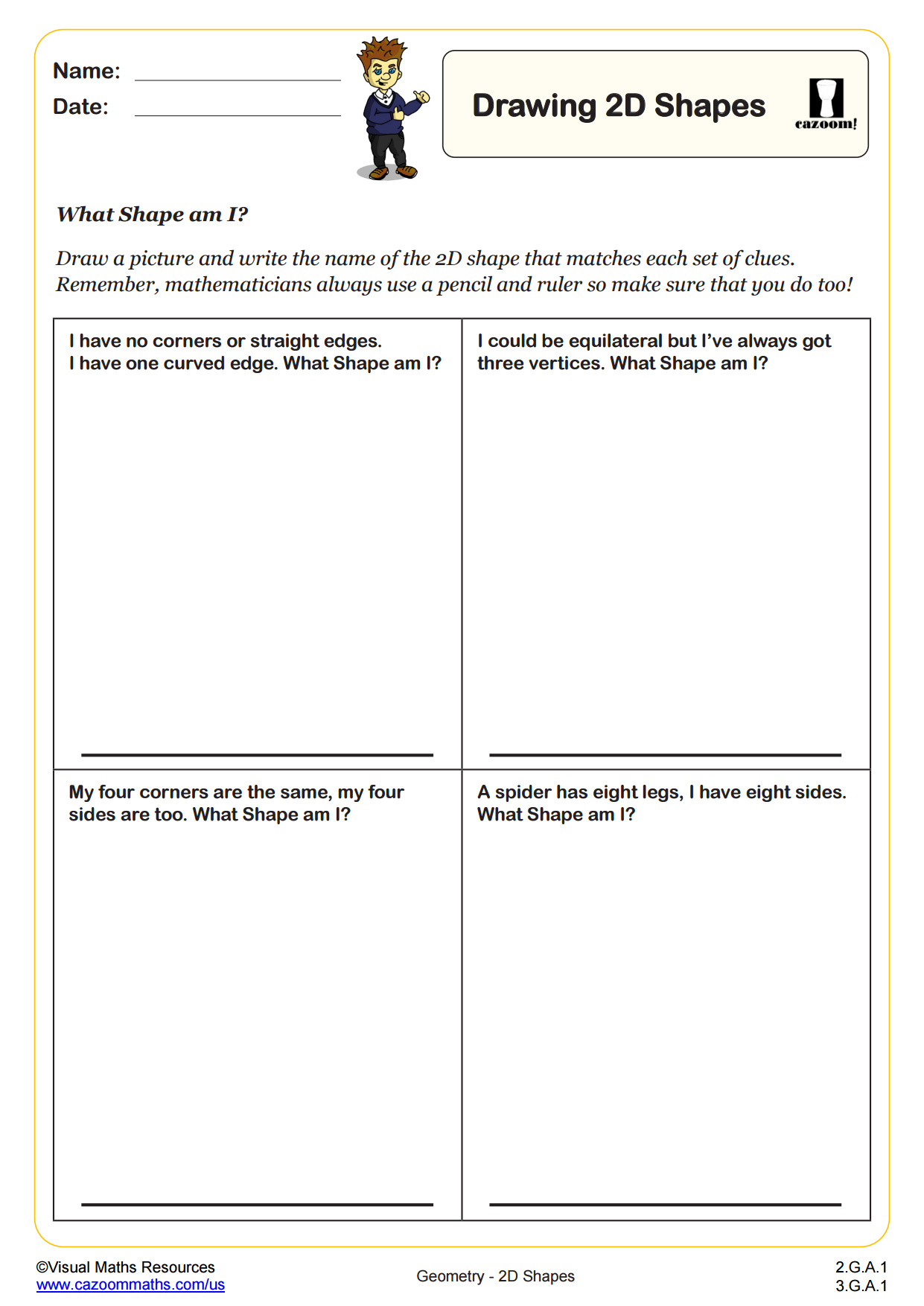
Drawing Straight Lines
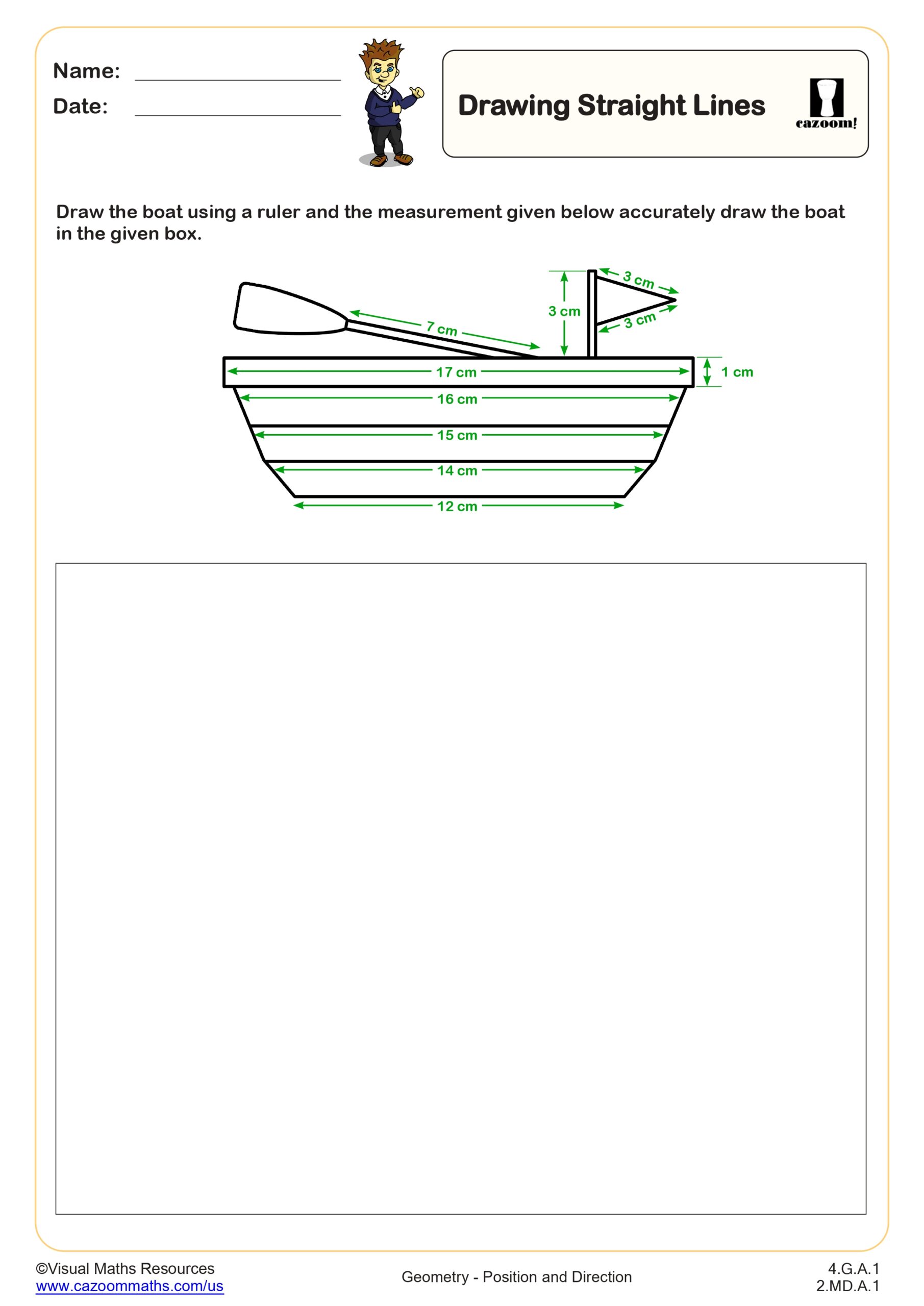
Finding Shapes In Everyday Objects
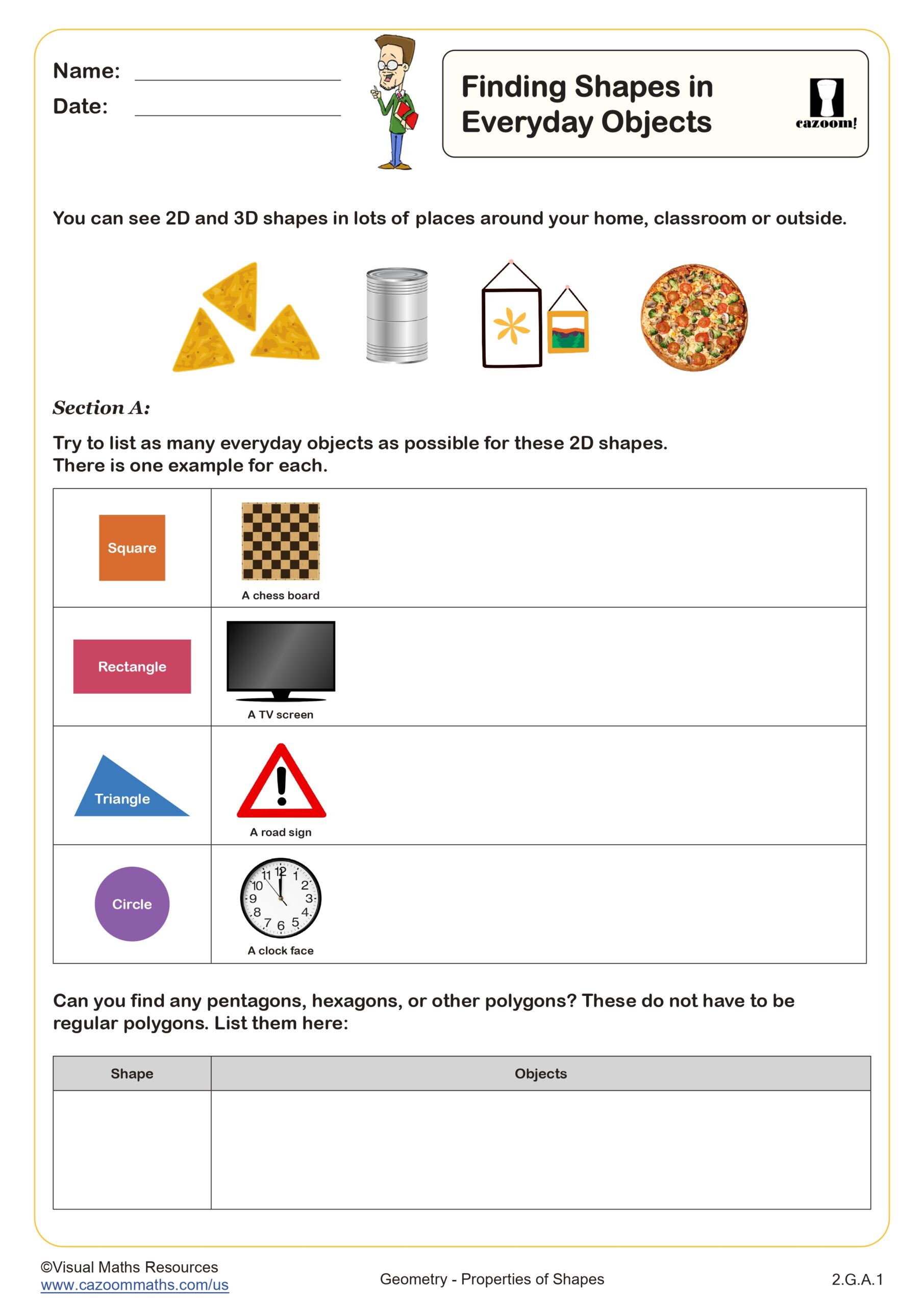
Horizontal Lines of Symmetry (A)
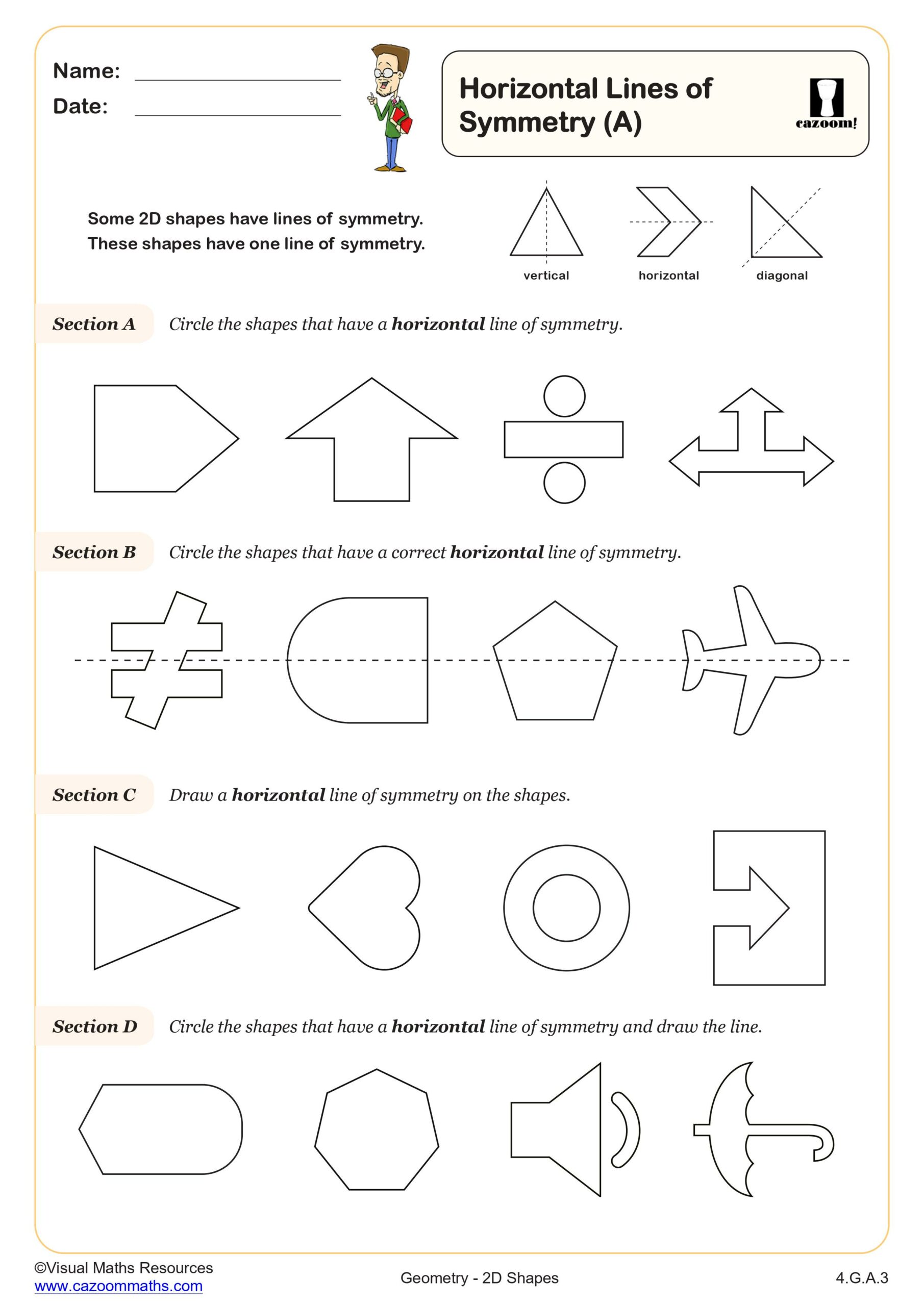
Horizontal Lines of Symmetry (B)
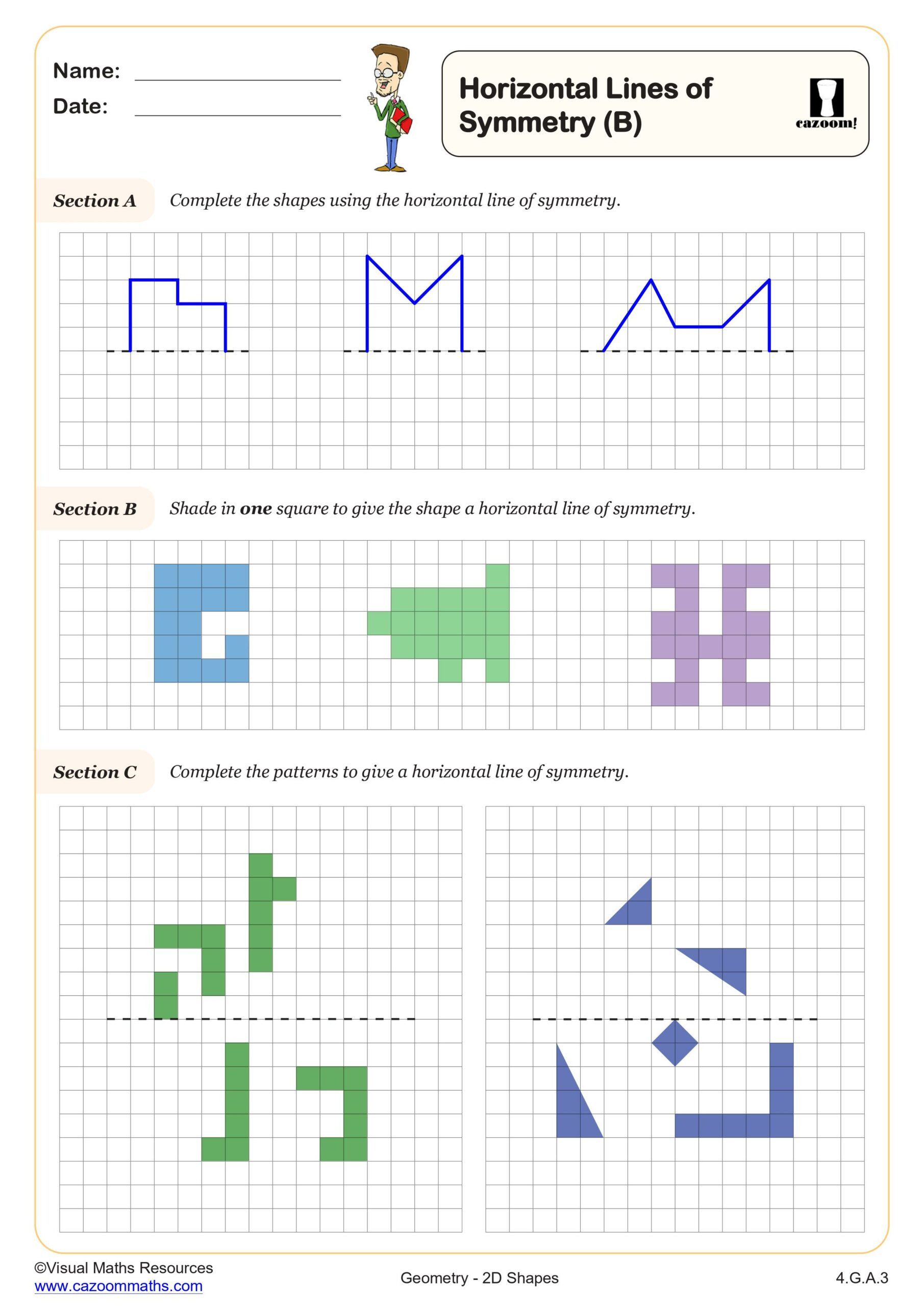
Identifying 2D Shapes as the Faces of 3D Shapes
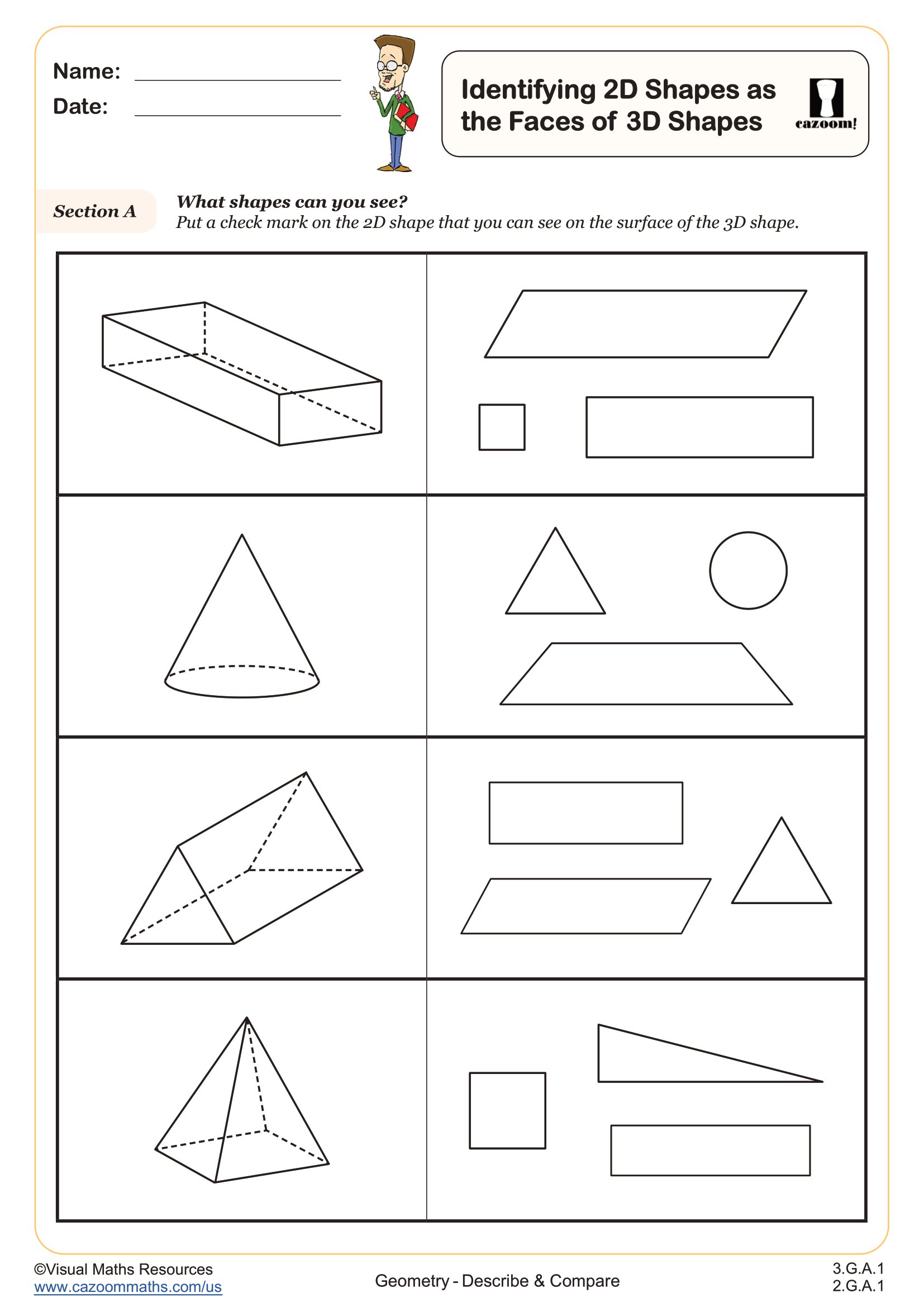
Identifying Regular and Irregular Polygons
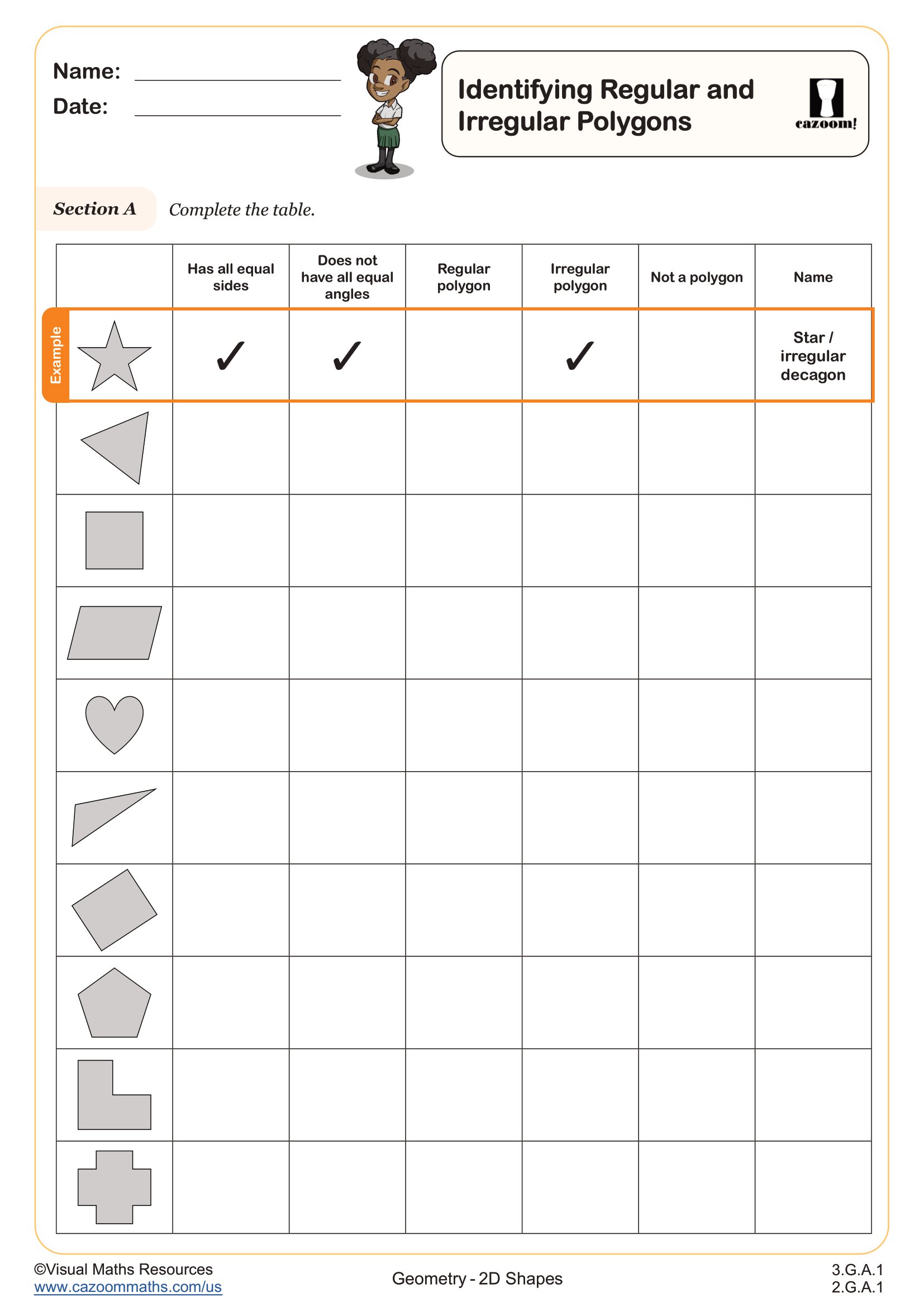
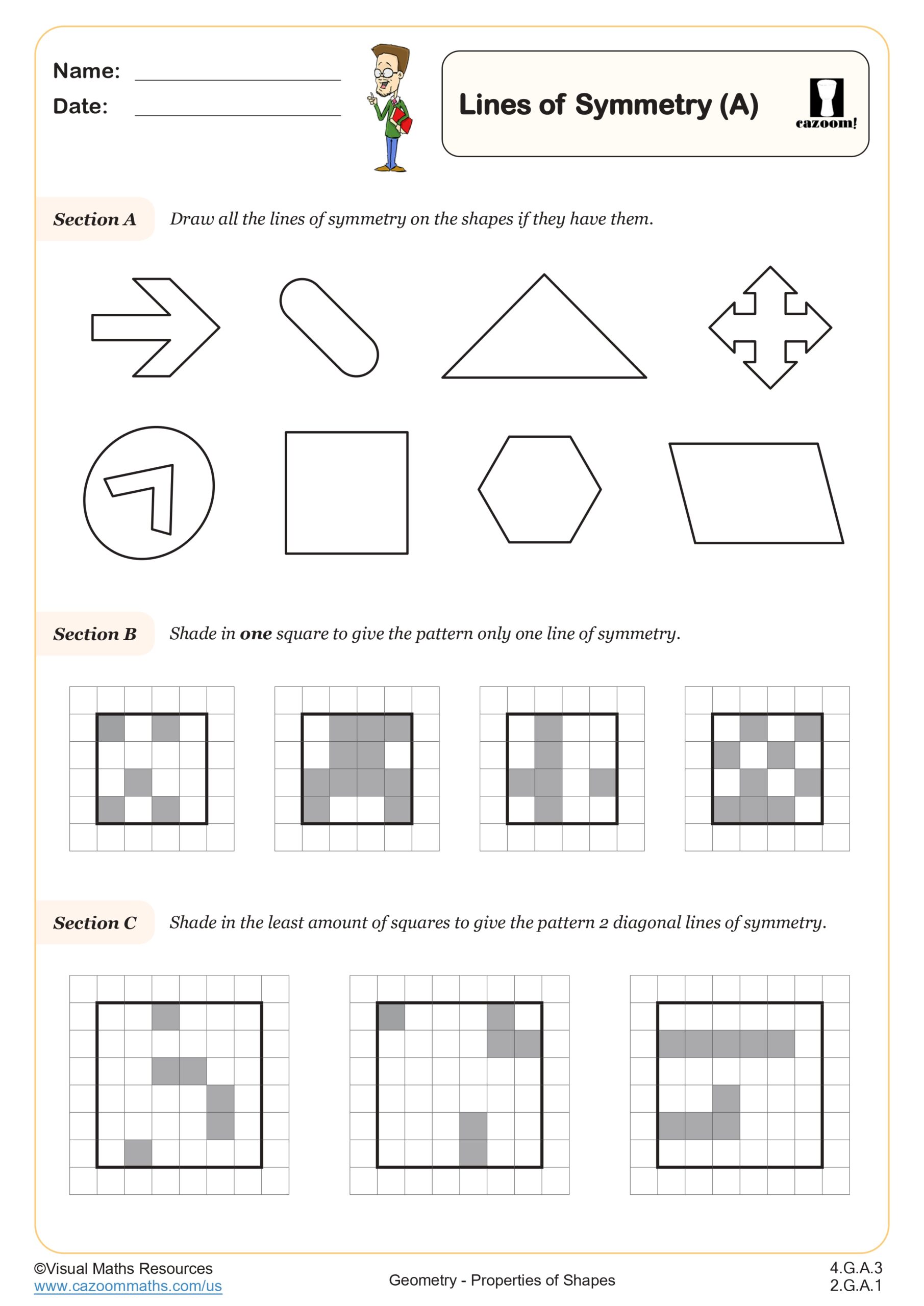
Lines of Symmetry (A)
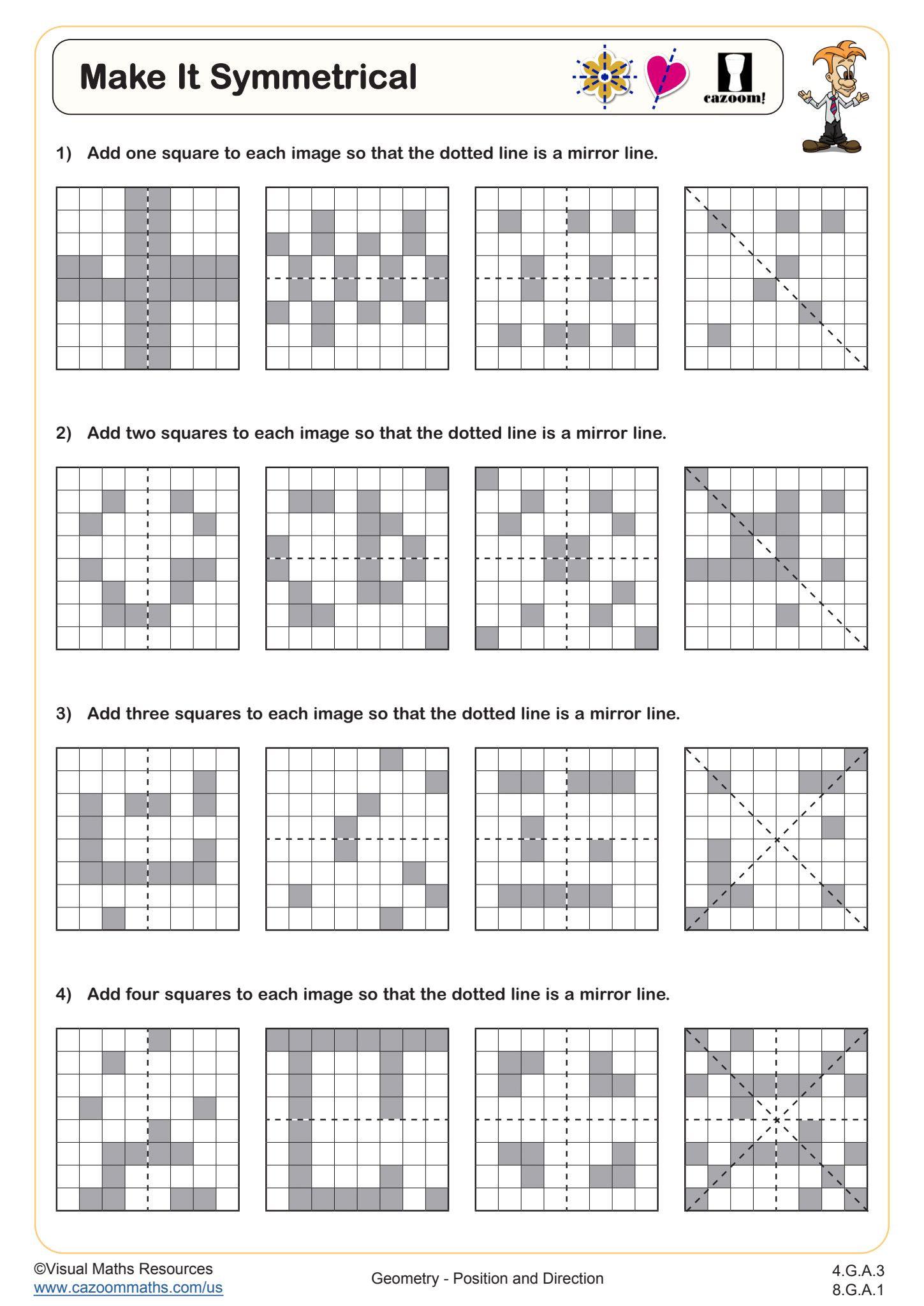
Make it Symmetrical
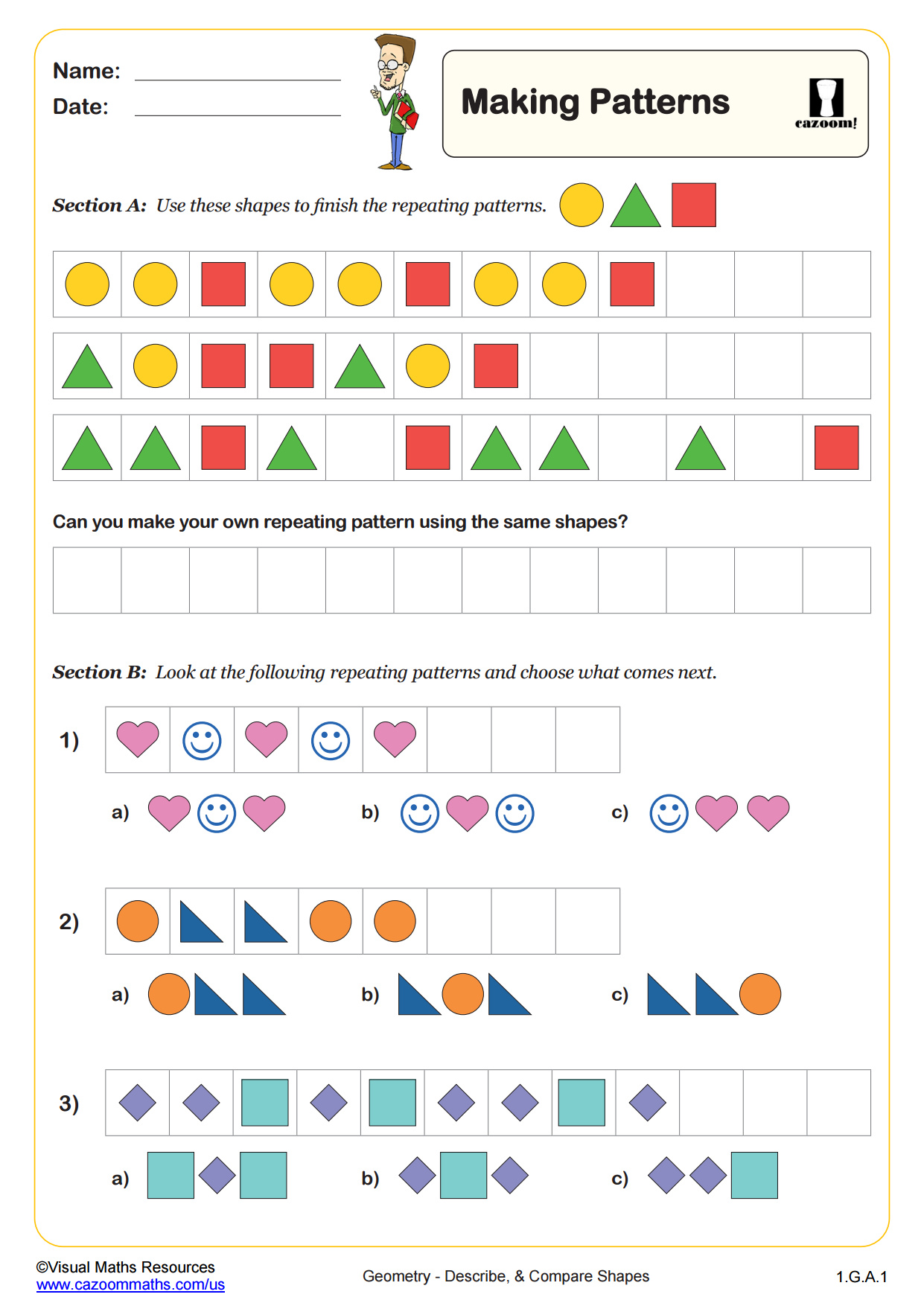
Making Patterns
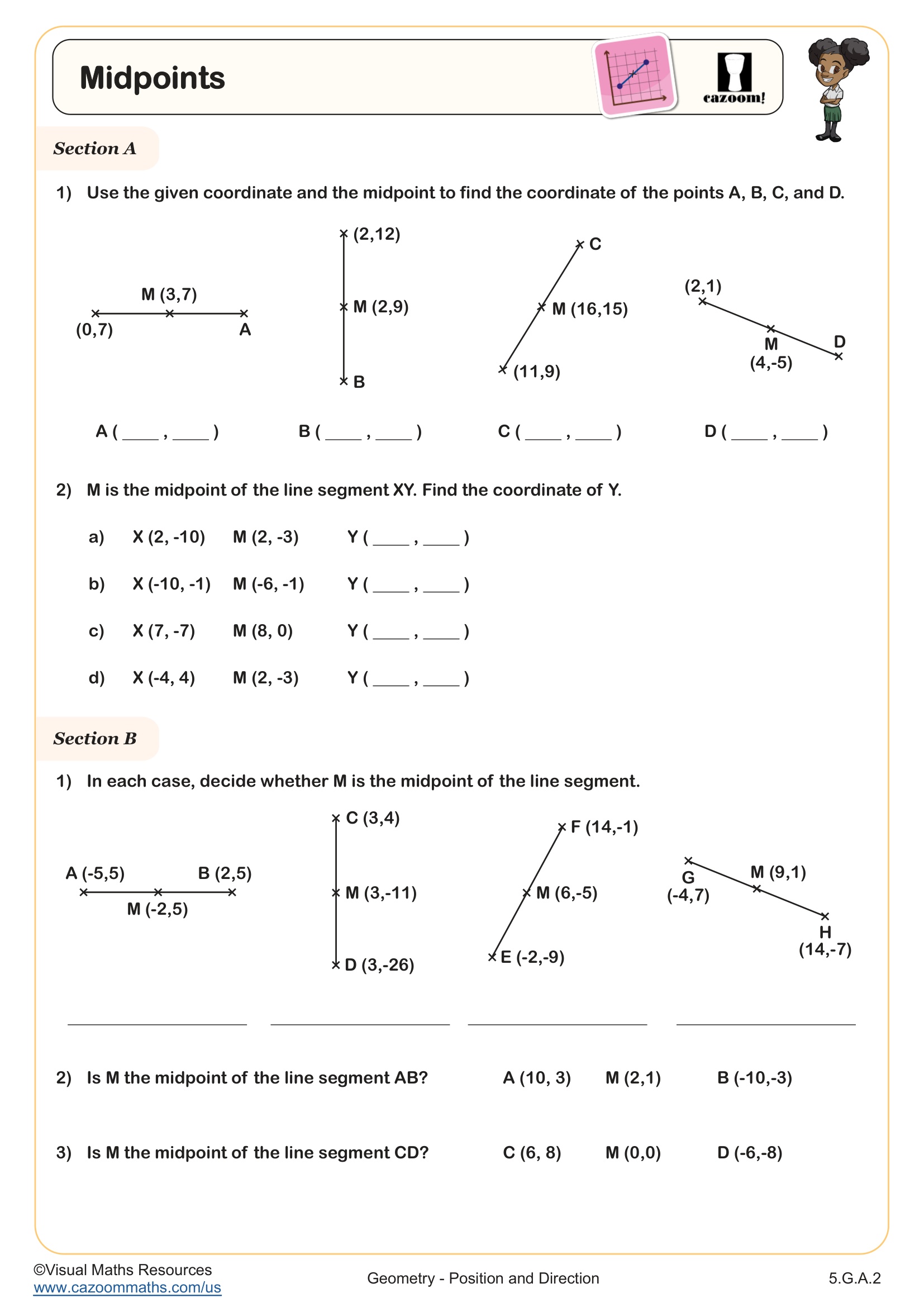
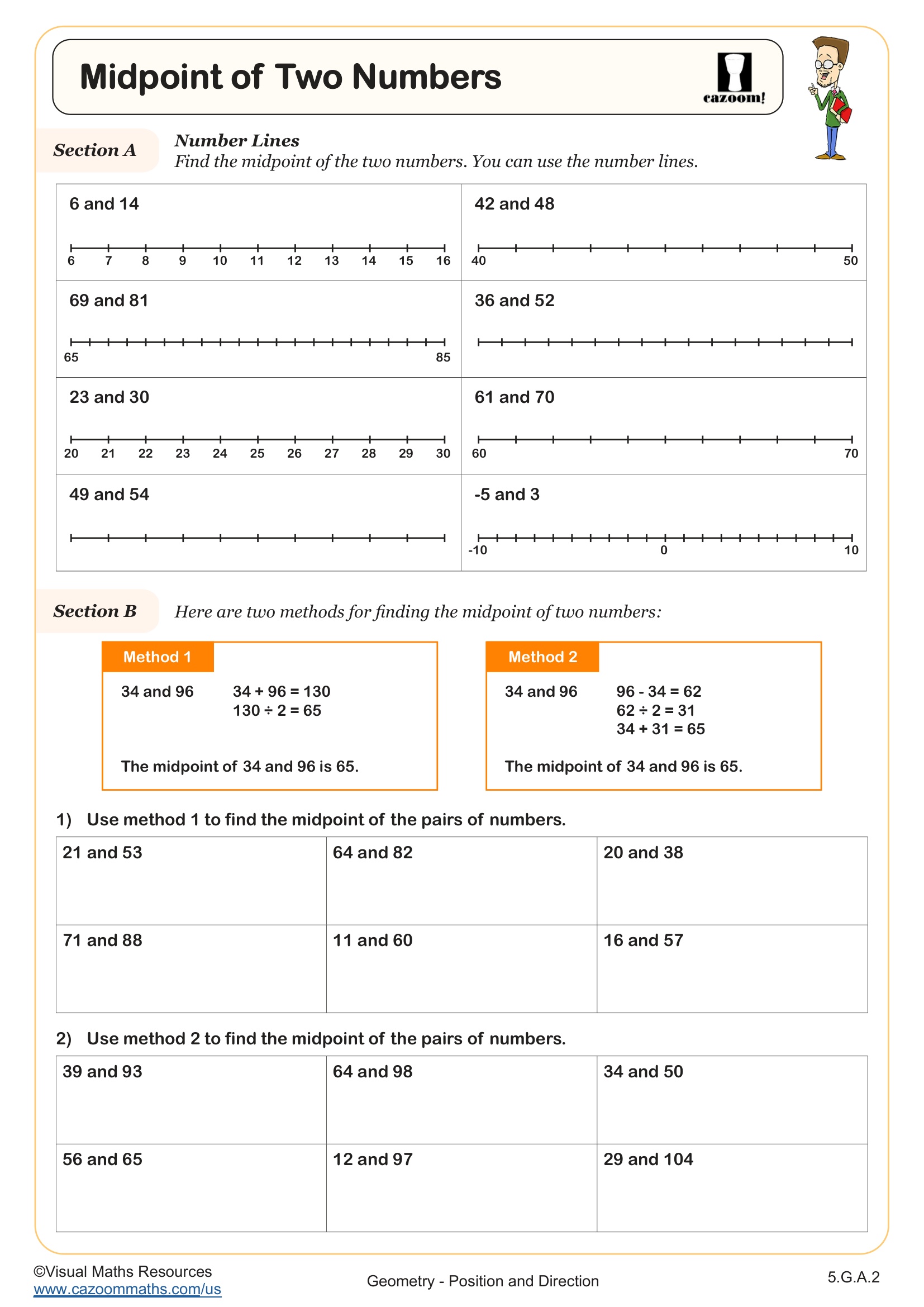
Midpoints
Midpoints of Two Numbers
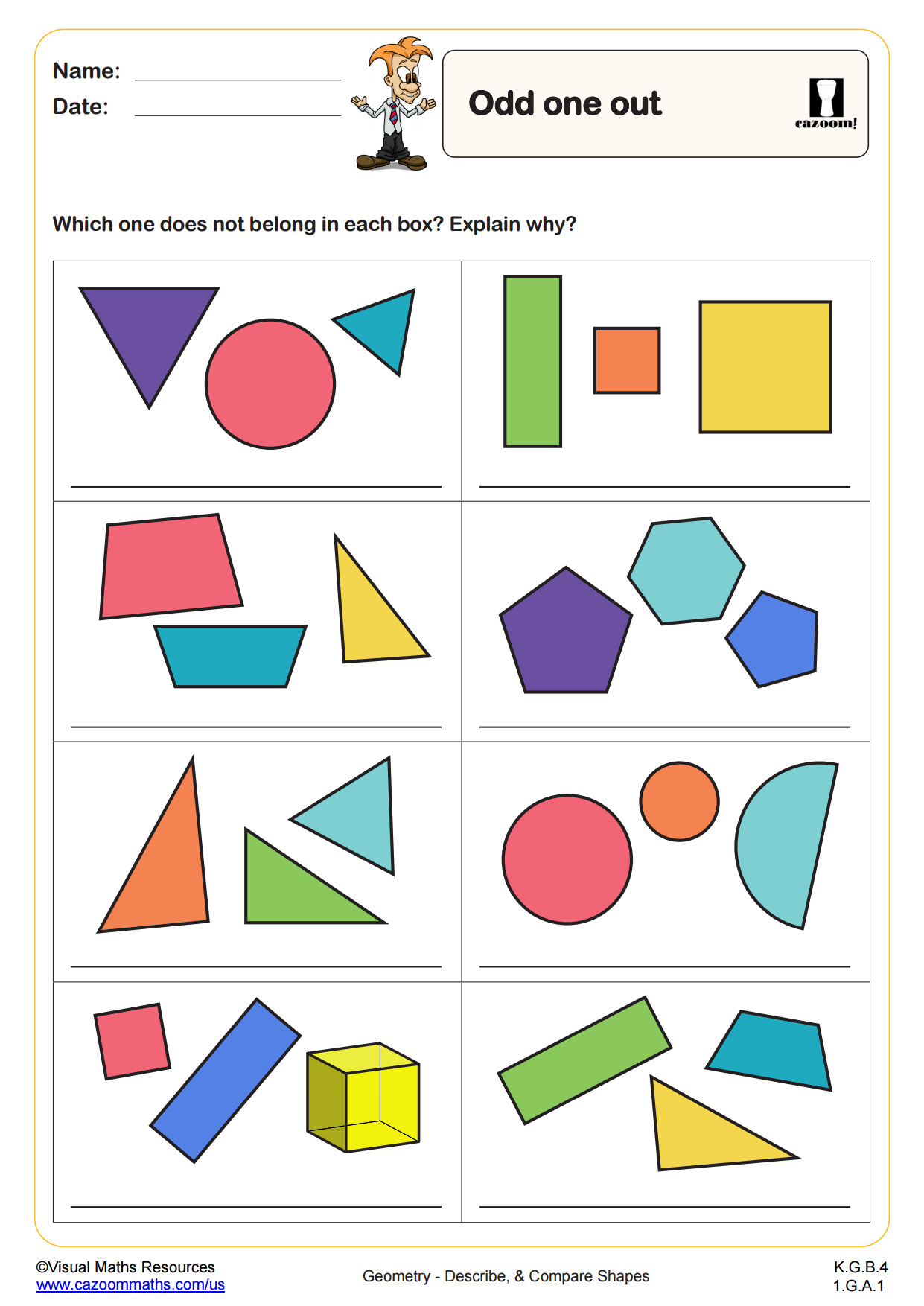
Odd One Out
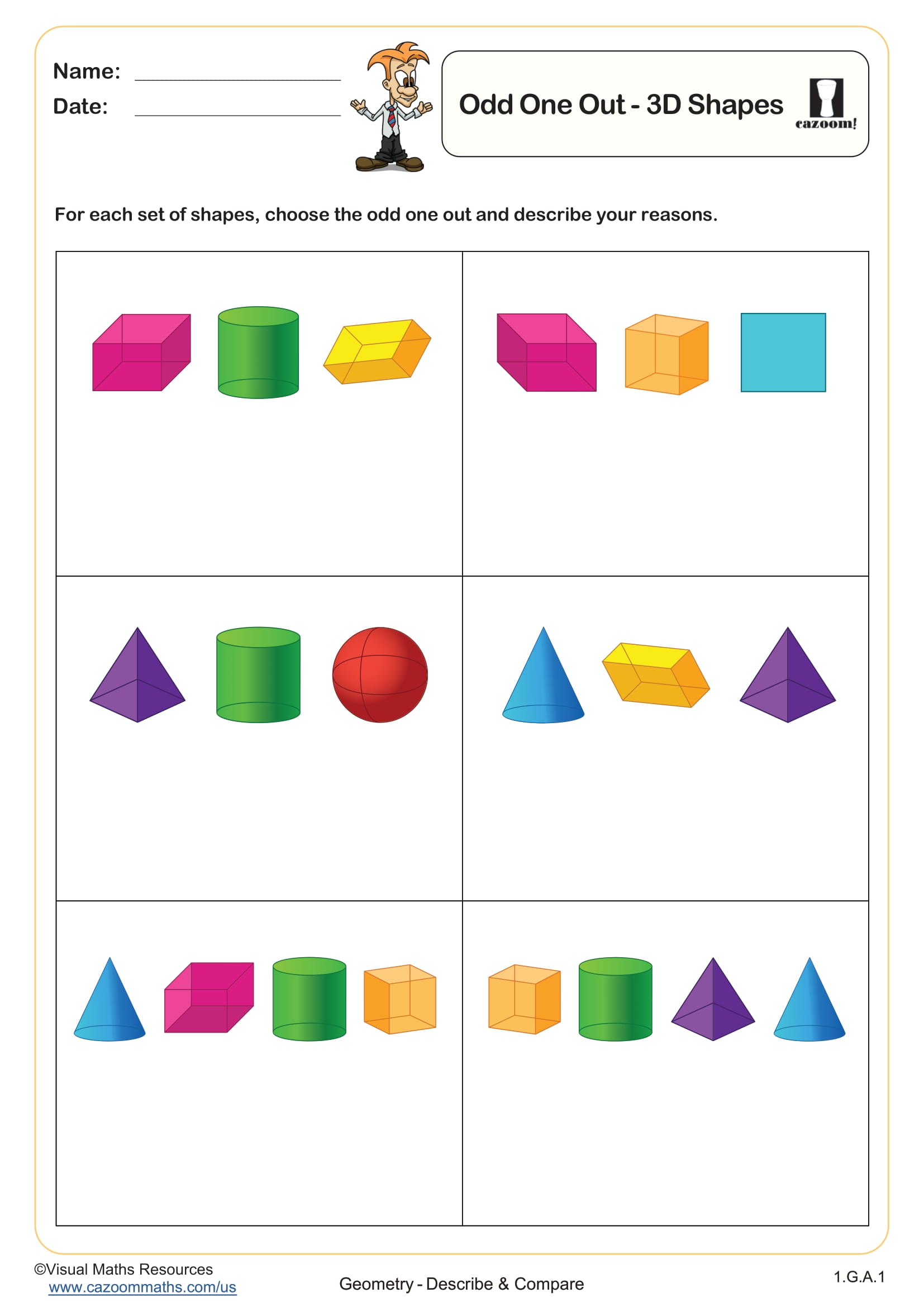
Odd One Out 3D Shapes
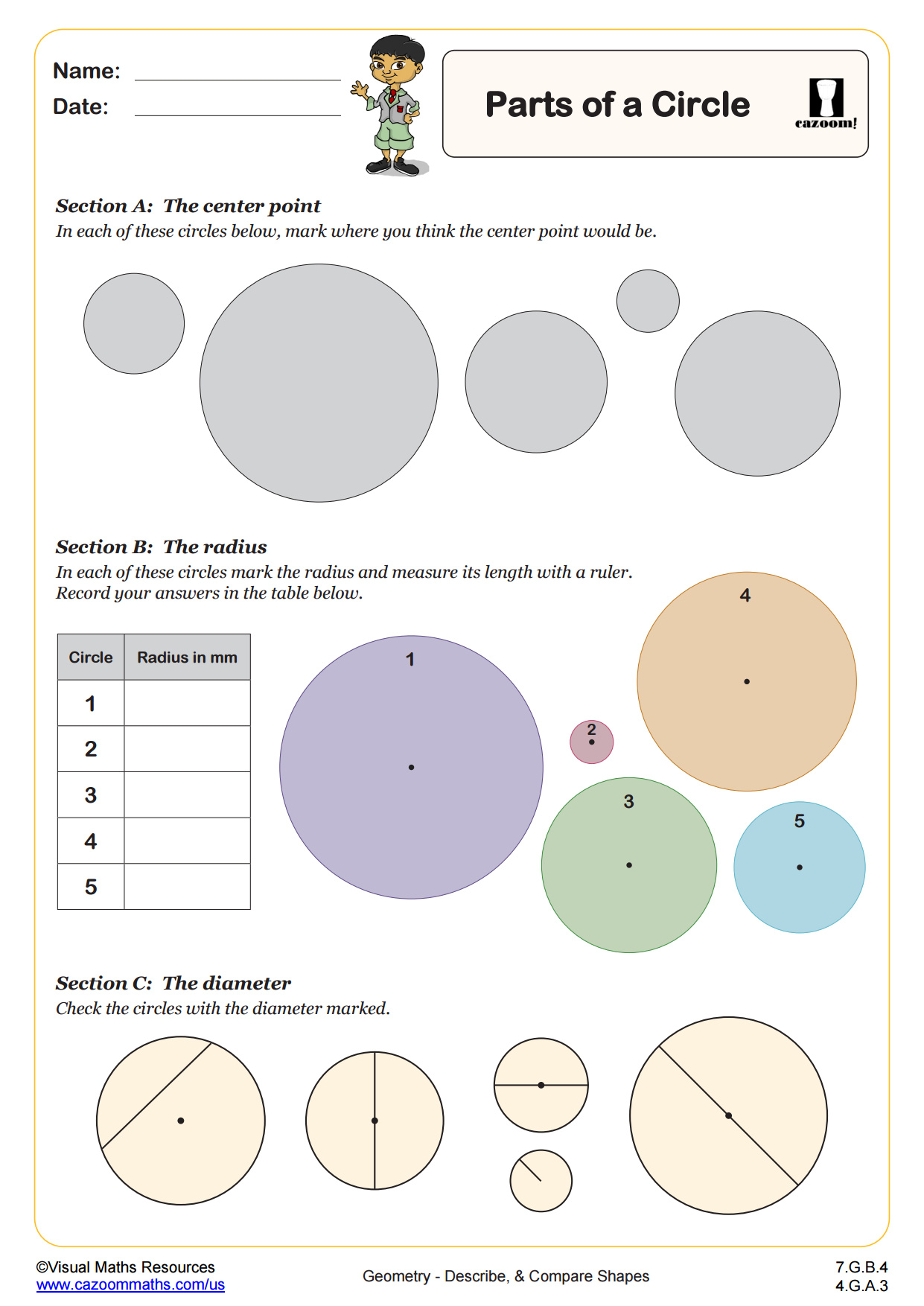
Parts of a Circle
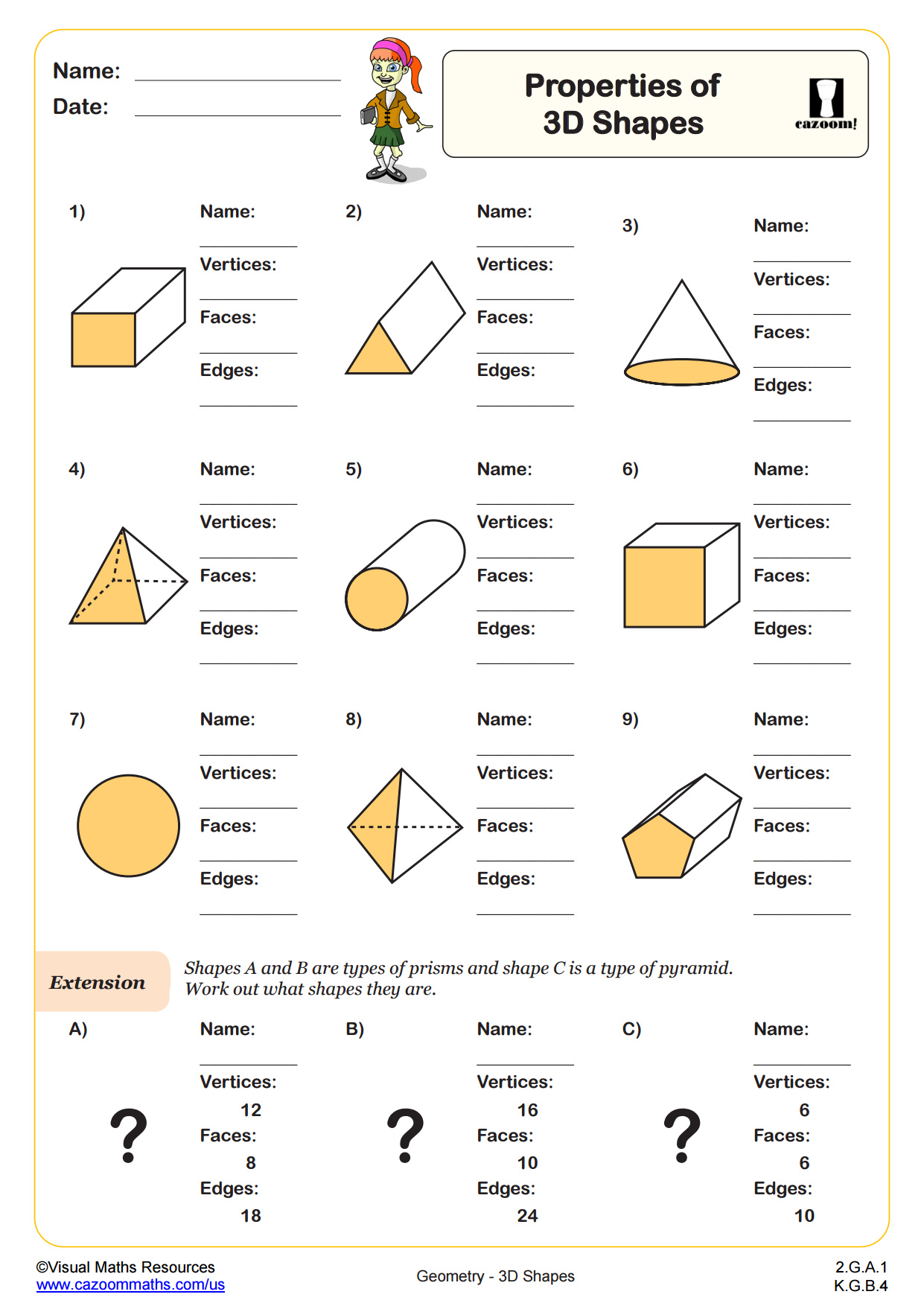
Properties of 3D Shapes
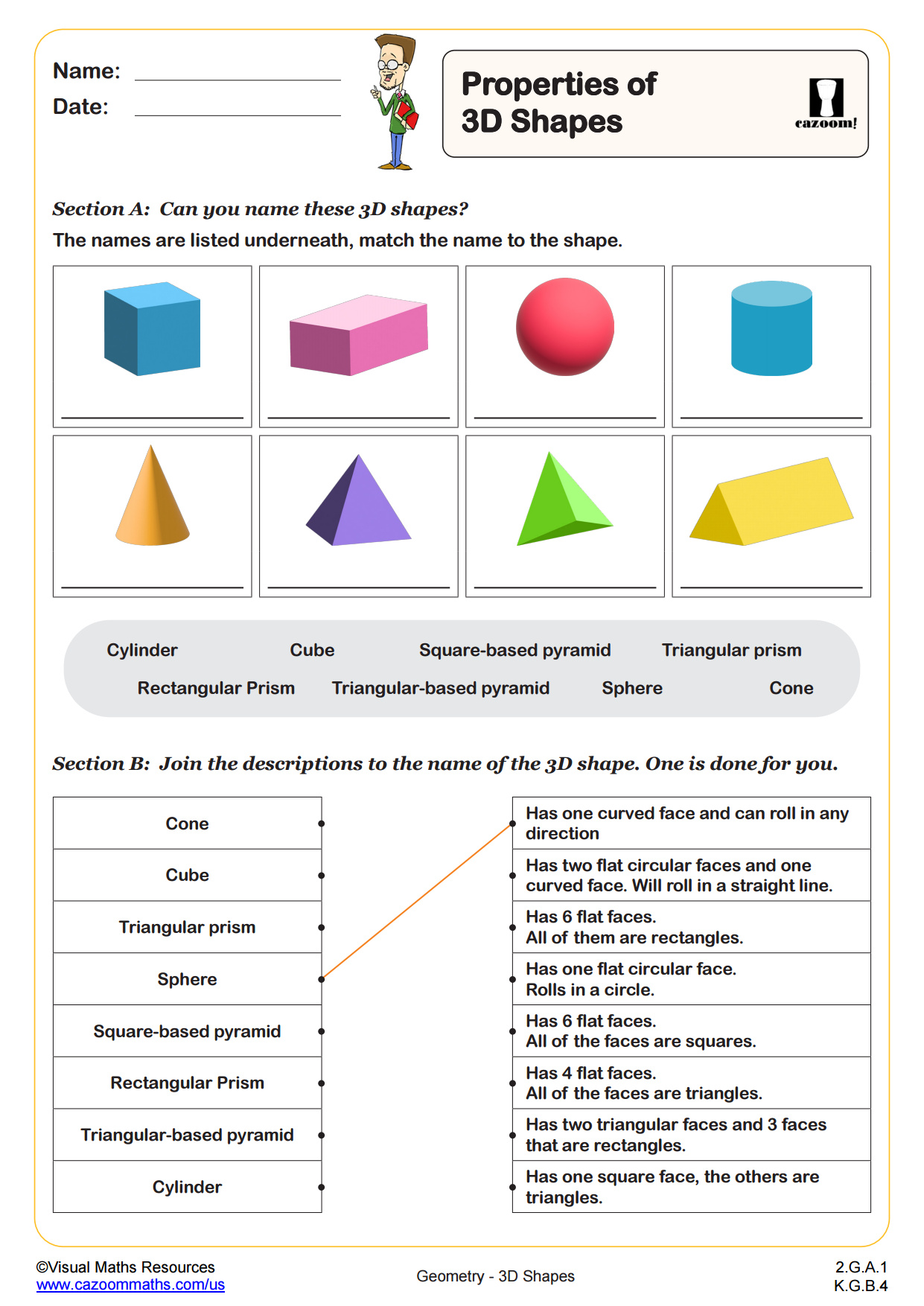
Properties of 3D Shapes
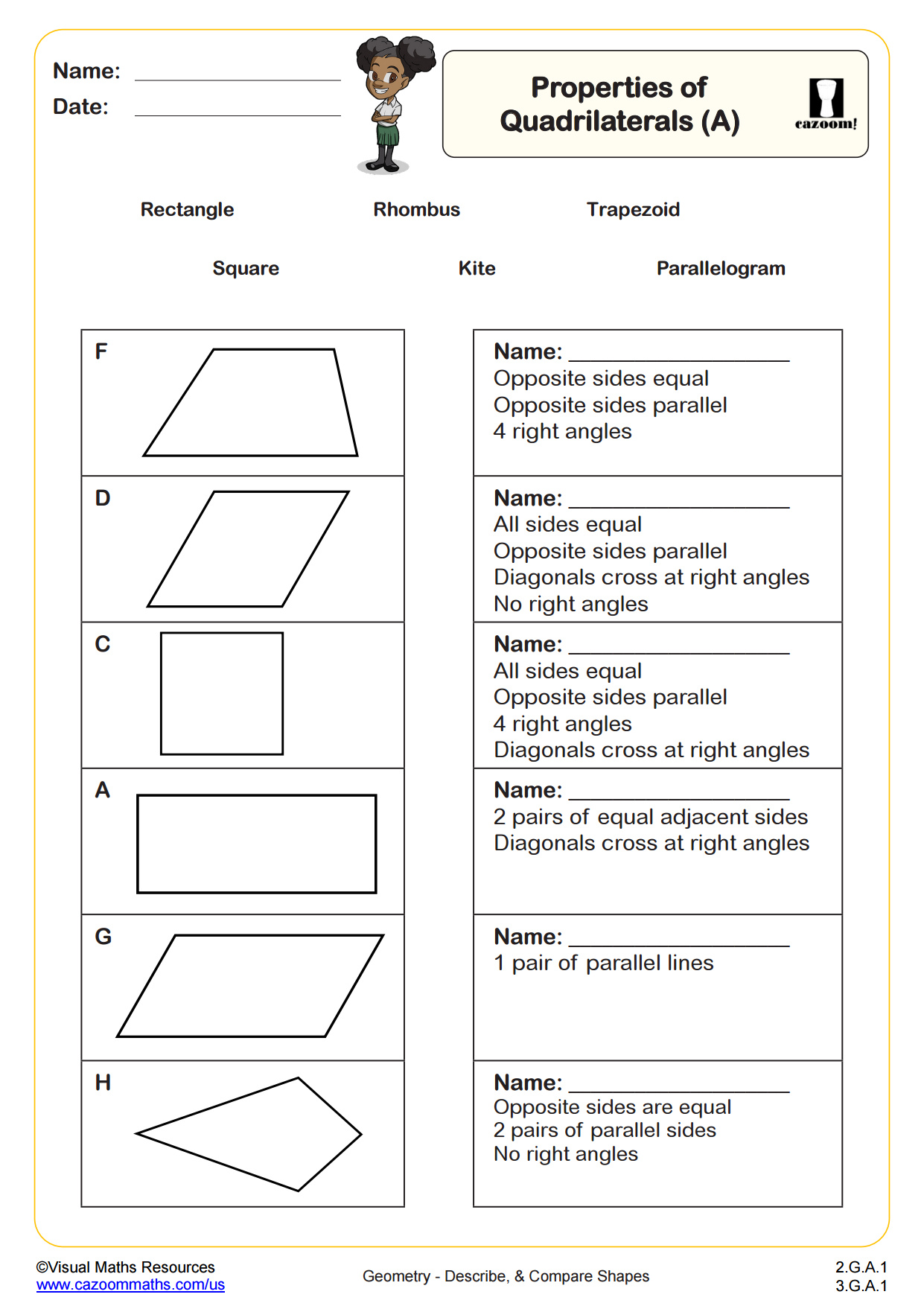
Properties of Quadrilaterals (A)
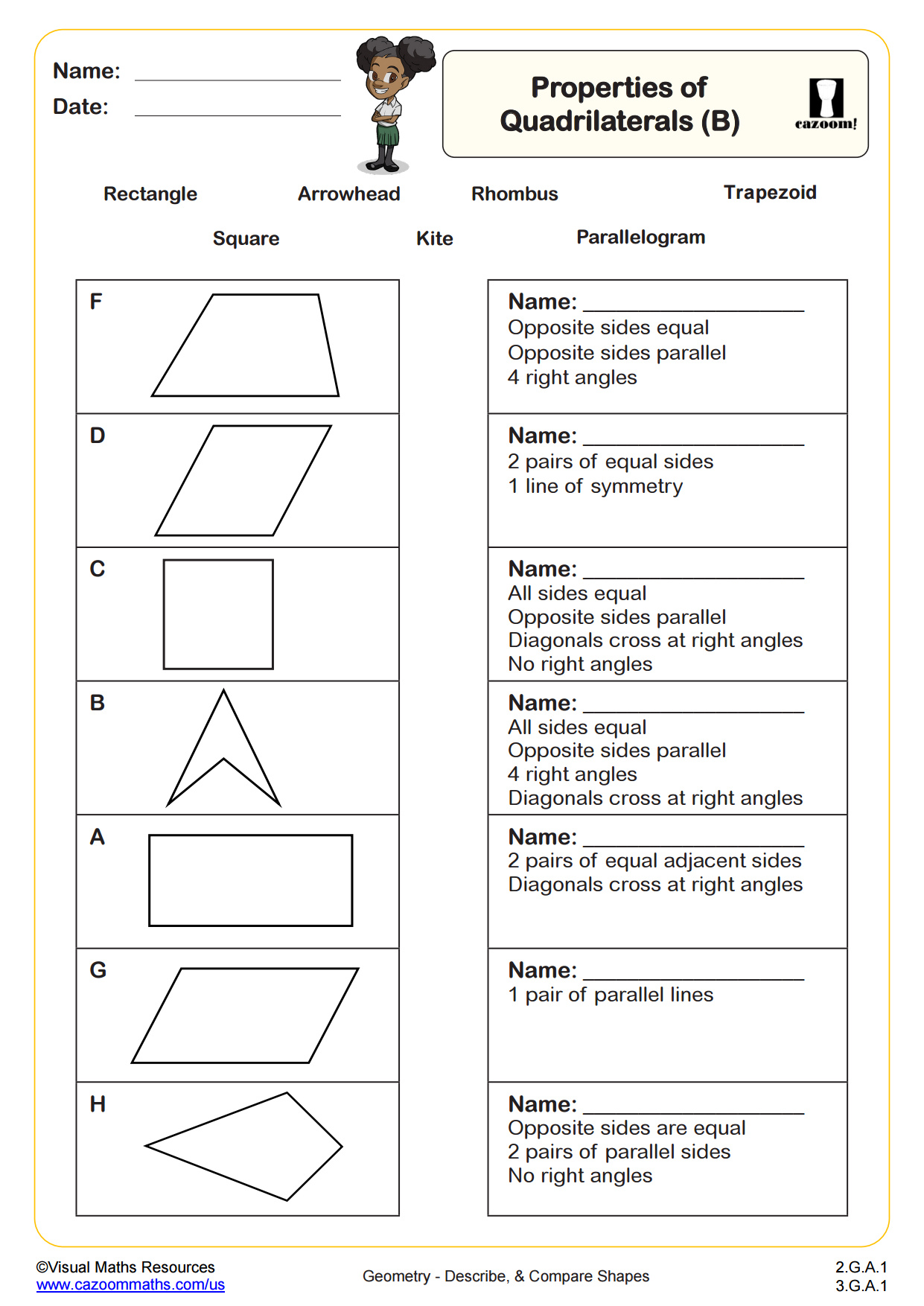
Properties of Quadrilaterals (B)
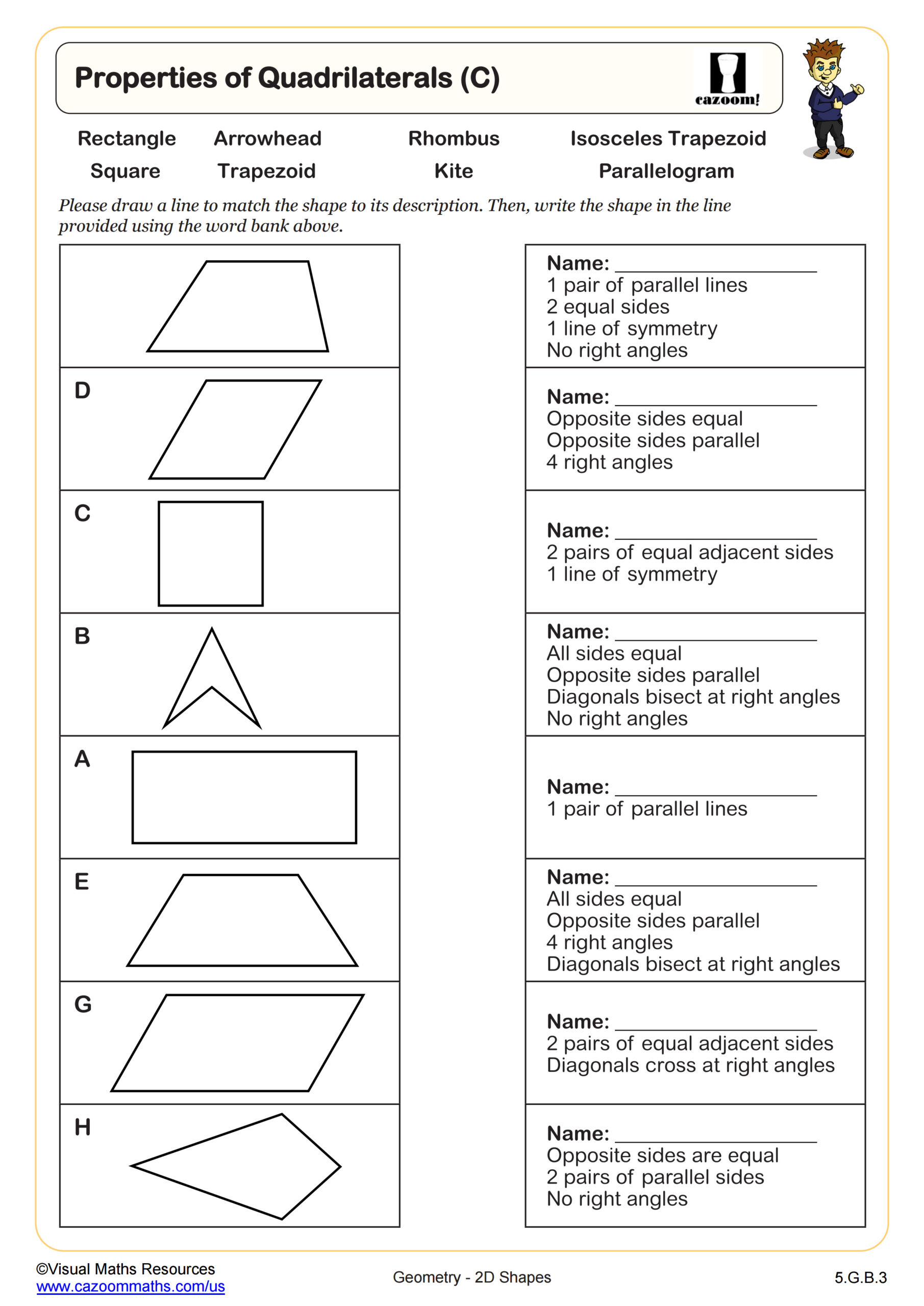
Properties of Quadrilaterals (C)
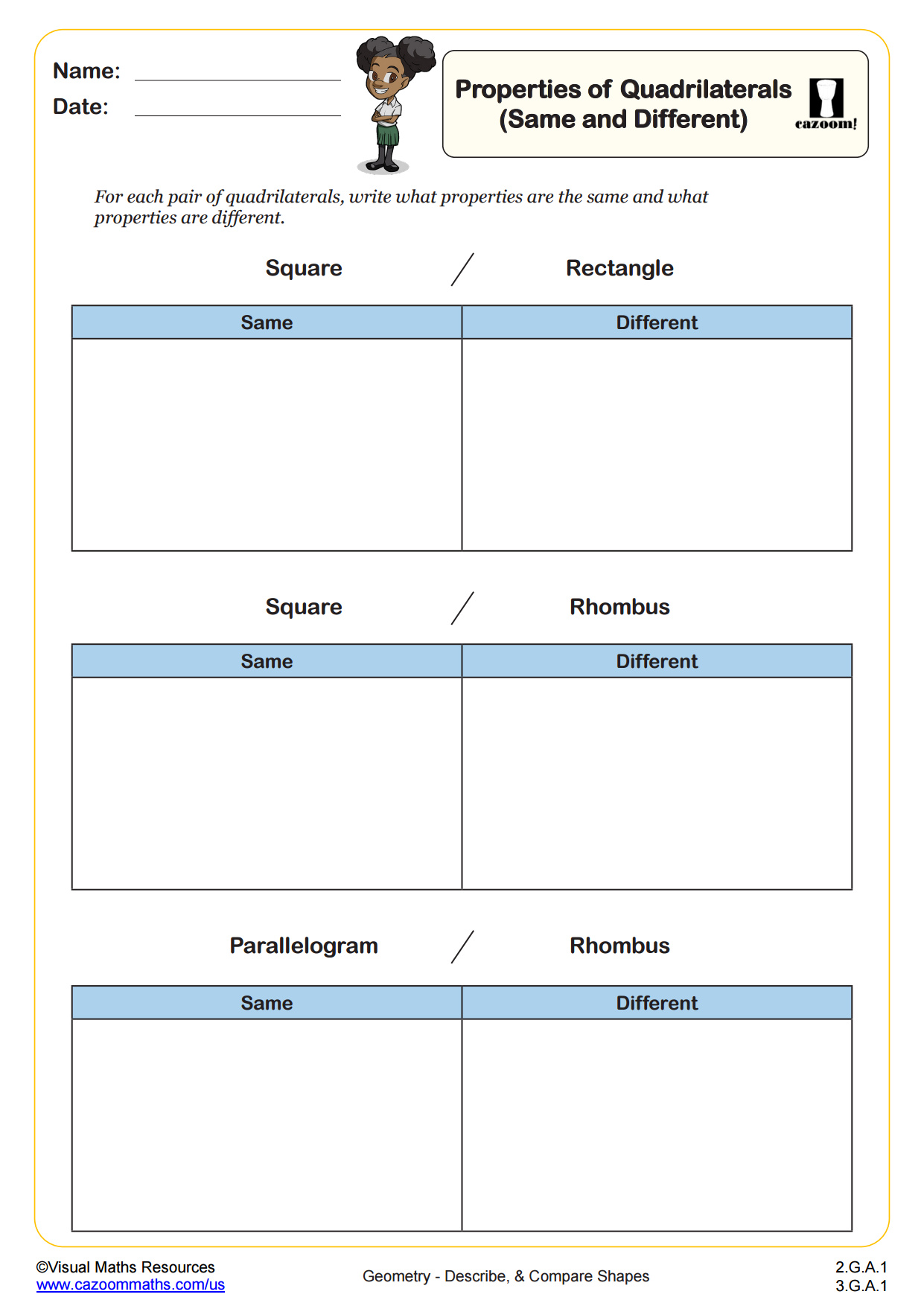
Properties of Quadrilaterals (Same and Different)
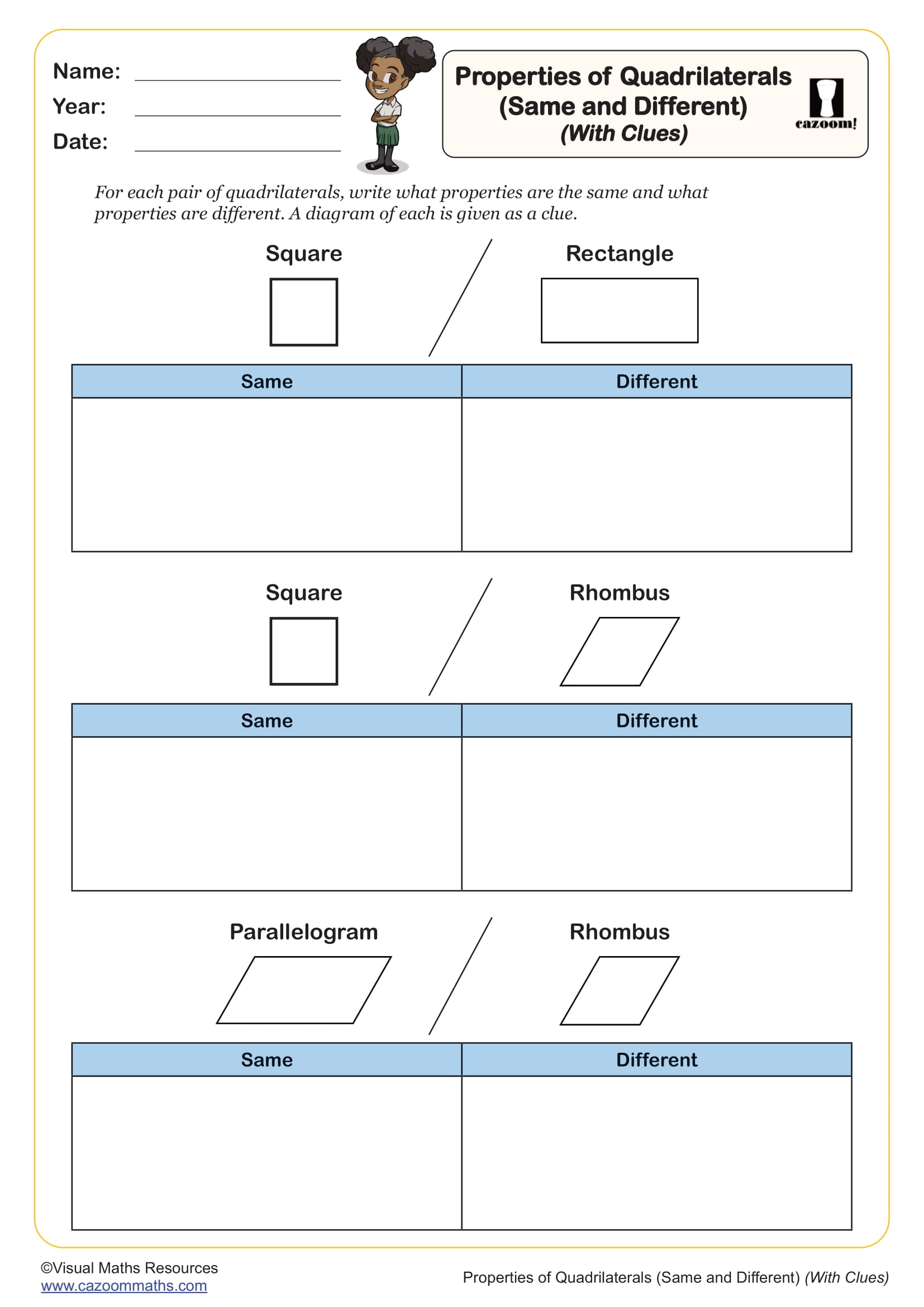
Properties of Quadrilaterals (Same and Different) (with clues)
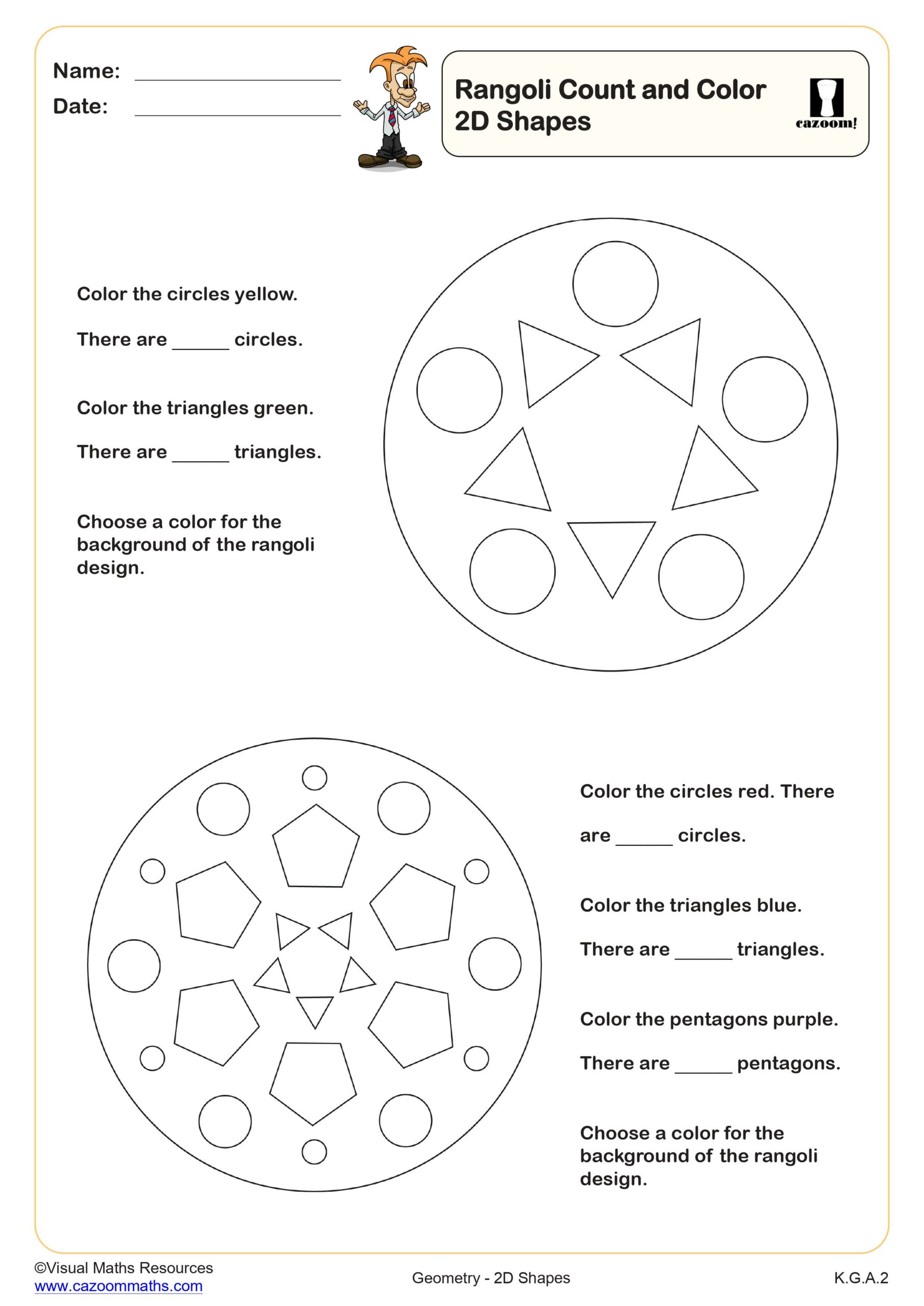
Rangoli Count and Color 2D Shapes
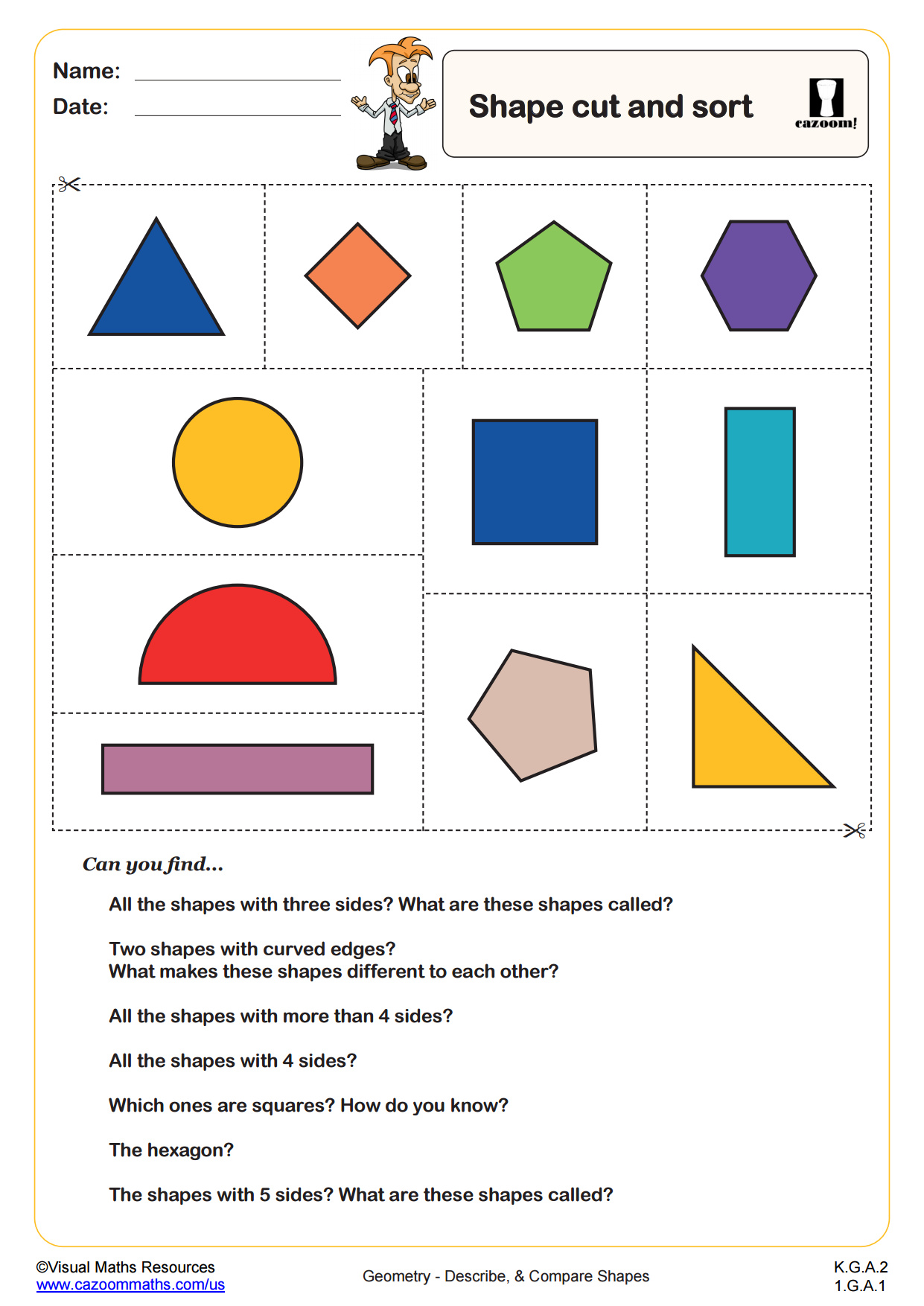
Shape Cut and Sort
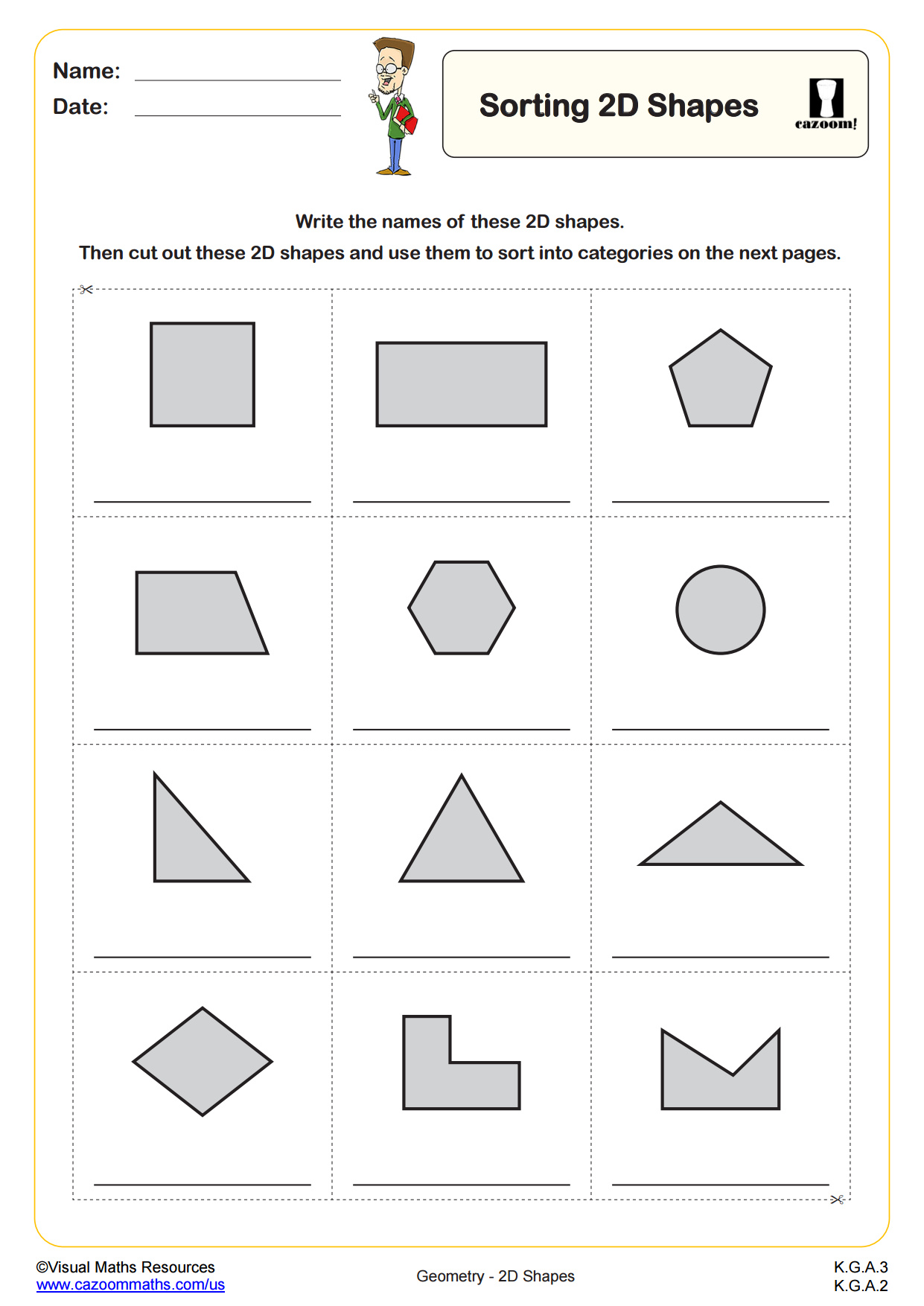
Sorting 2D Shapes
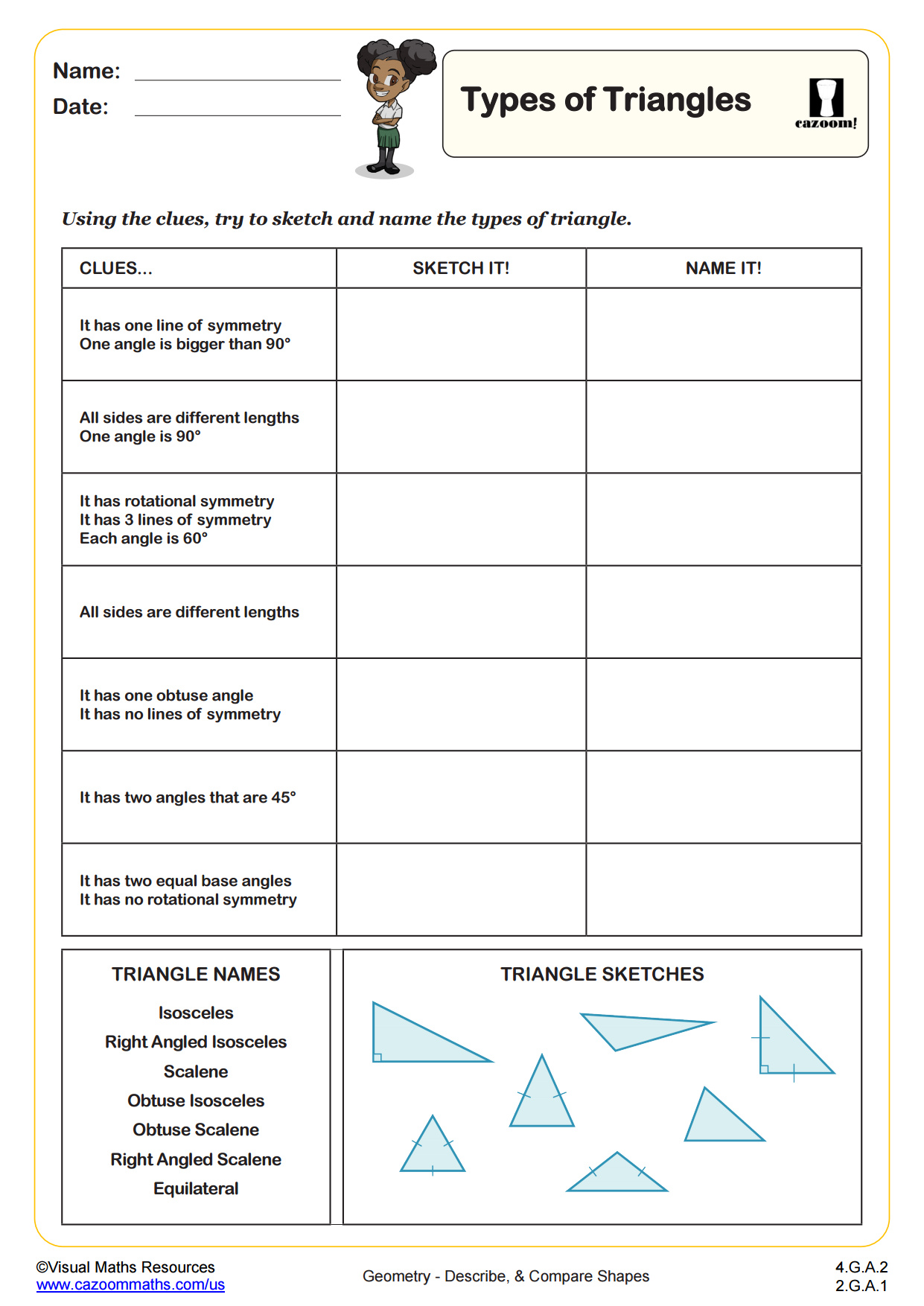
Types of Triangles
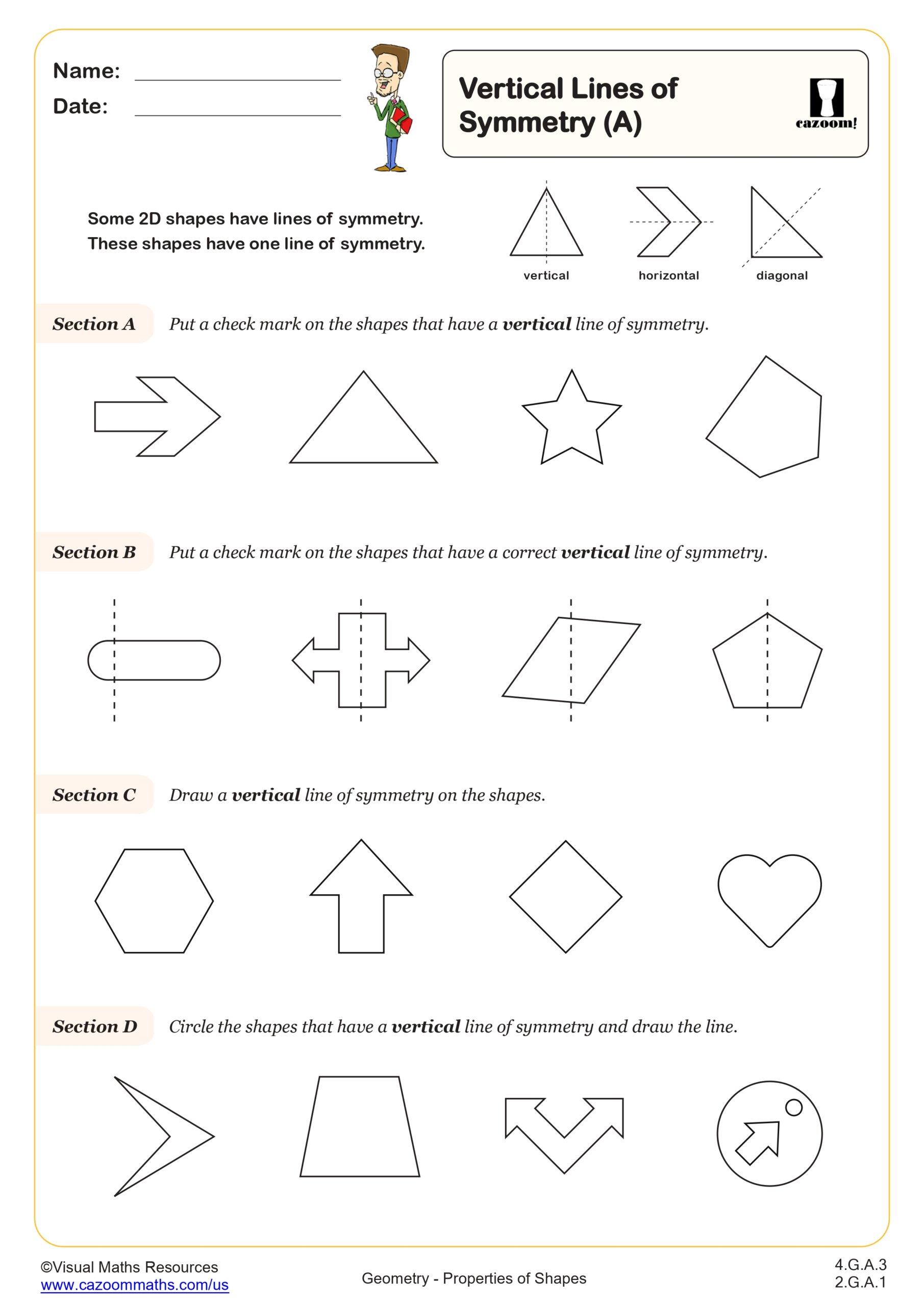
Vertical Lines of Symmetry (A)
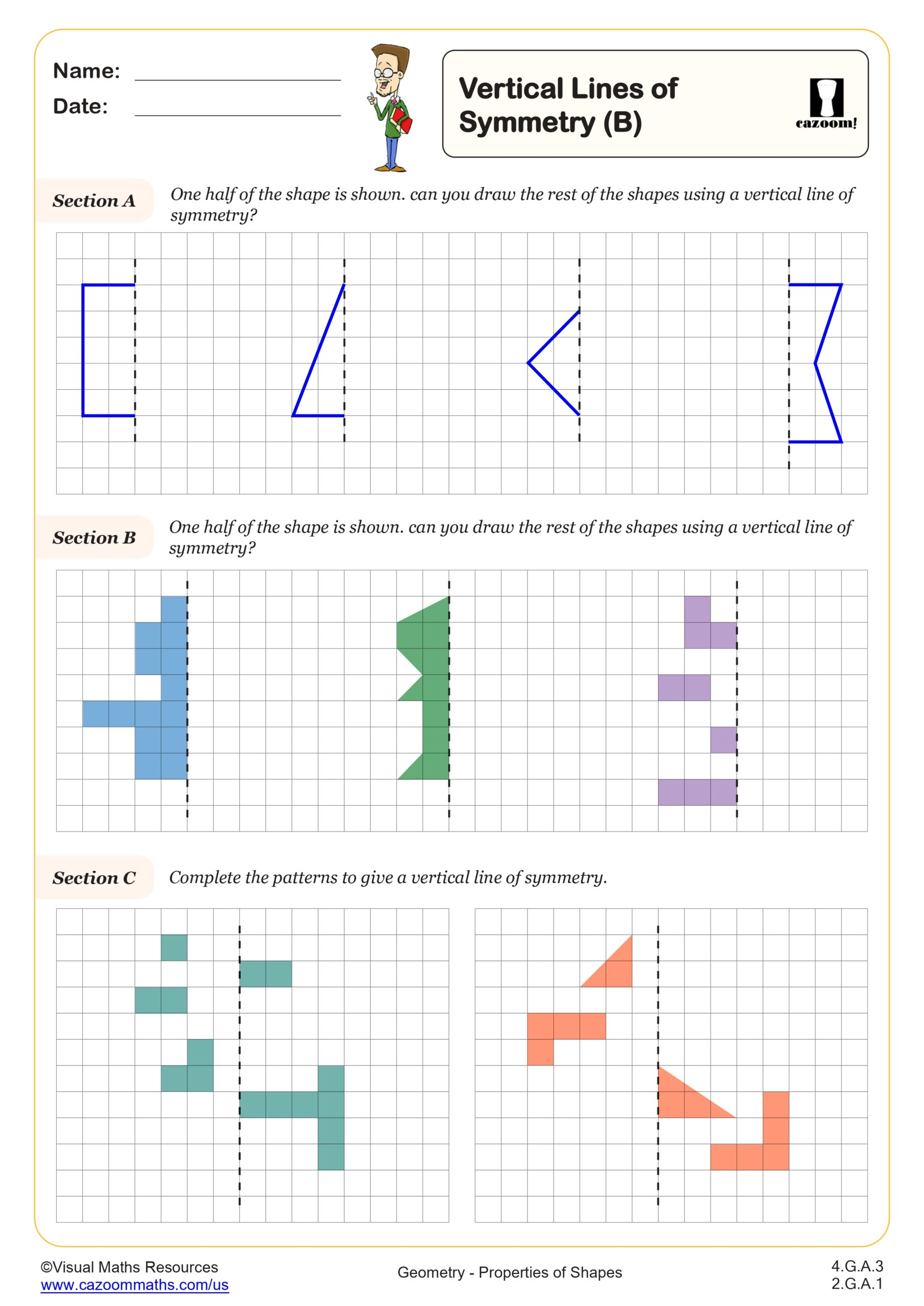
Vertical Lines of Symmetry (B)
All worksheets are created by the team of experienced teachers at Cazoom Math.
Why Should Teachers Start With Our Printable Elementary School Geometry Worksheets?
Students who learn early geometry develop spatial abilities that become fundamental for every math subject they will encounter in their future studies. Students who learn to identify shapes, calculate area, and understand angles develop mental models that help them with fraction work, graphing, and measurement in future grades. Young learners develop their ability to recognize shape patterns through regular practice, which enables them to link two-dimensional drawings to real-life three-dimensional objects they experience every day.
The foundation establishes a base for students to learn middle school content, which includes coordinate planes, formal proofs, and transformations. The skills follow a logical sequence, enabling students to progress from basic shape identification to advanced analysis of geometric relationships.
Topics at a Glance: Different Types of Shapes, Area, Perimeter, Angles, and More
This collection introduces geometry through hands-on exploration before moving to drawn figures and abstract reasoning. Students start by identifying and comparing shapes, then progress to calculating properties such as area, perimeter, and volume, and finally explore transformations and spatial reasoning. Each worksheet includes detailed, step-by-step answer keys explaining the methods used. Covering shape identification, angle work, coordinate geometry, transformations, and advanced topics like trigonometry and proofs, this set builds a complete foundation in geometry.
Trusted by Educators: Why Parents Value Cazoom Math Elementary School Geometry Resources
Teachers select these worksheets because they require minimal prep time and adapt easily to different ability levels. Each sheet offers built-in differentiation with problems ranging from basic practice to extension challenges. The clear structure facilitates quick assessment and targeted intervention when students require extra support or more challenging activities.
Teachers can create sheets for morning work, small-group instruction, or homework without having to create materials from scratch. The variety of question types keeps practice engaging while covering essential curriculum standards. Time saved on planning and preparation means more time for individual student support.
From Cooking to Architecture: Where These Skills Show Up in Real Life
Geometry skills help students navigate and understand their physical world daily. Young learners use spatial reasoning when reading maps, arranging furniture, or following assembly instructions. These worksheets connect abstract concepts to practical situations that students recognize in their homes, schools, and neighborhoods.
• Calculating floor space in a bedroom
• Measuring ingredients and recipe ratios
• Estimating distances on walks or trips
• Comparing package sizes and prices while shopping