Elementary School Lines and Angles Worksheets
-Questions.jpg?w=3840)
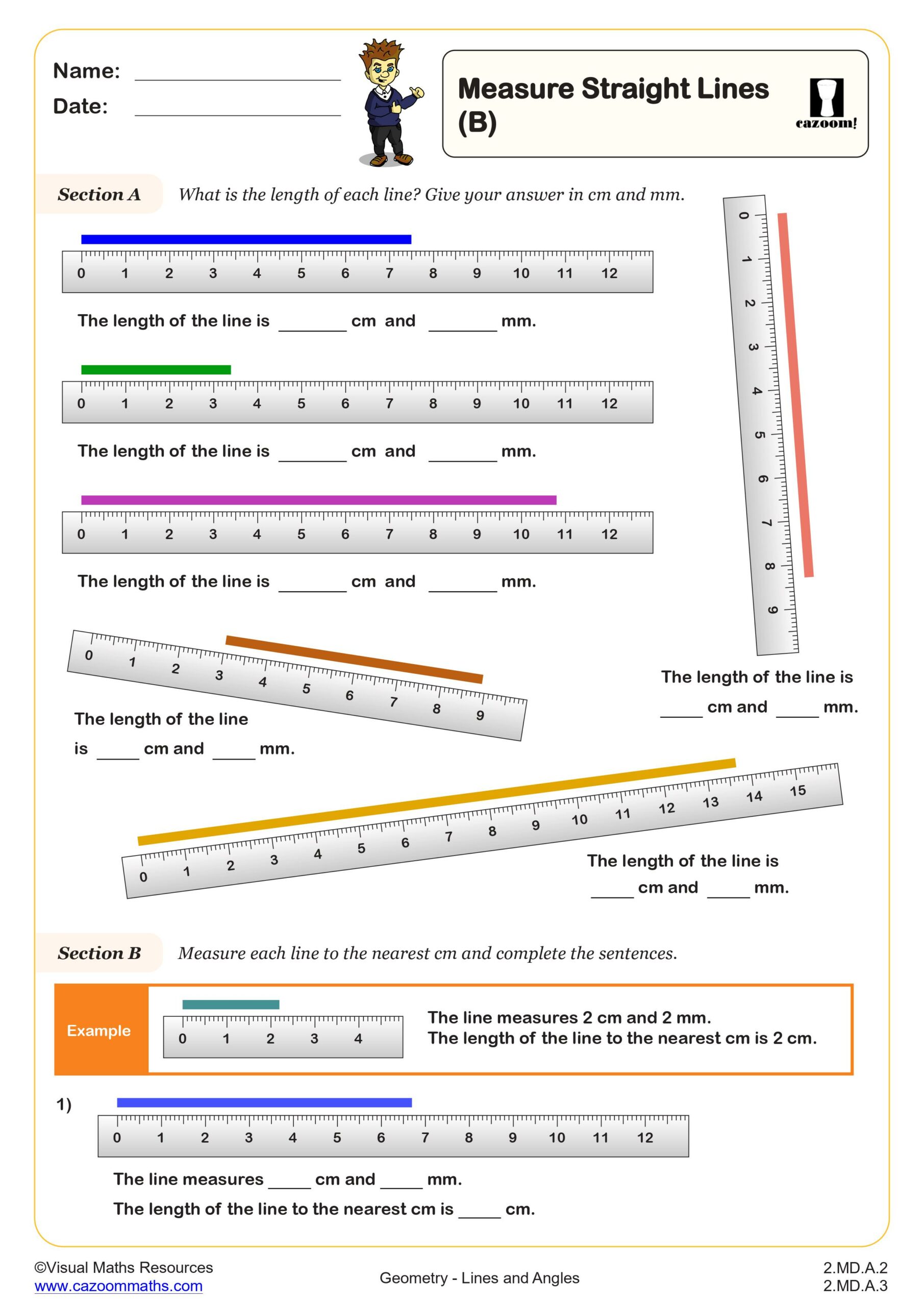
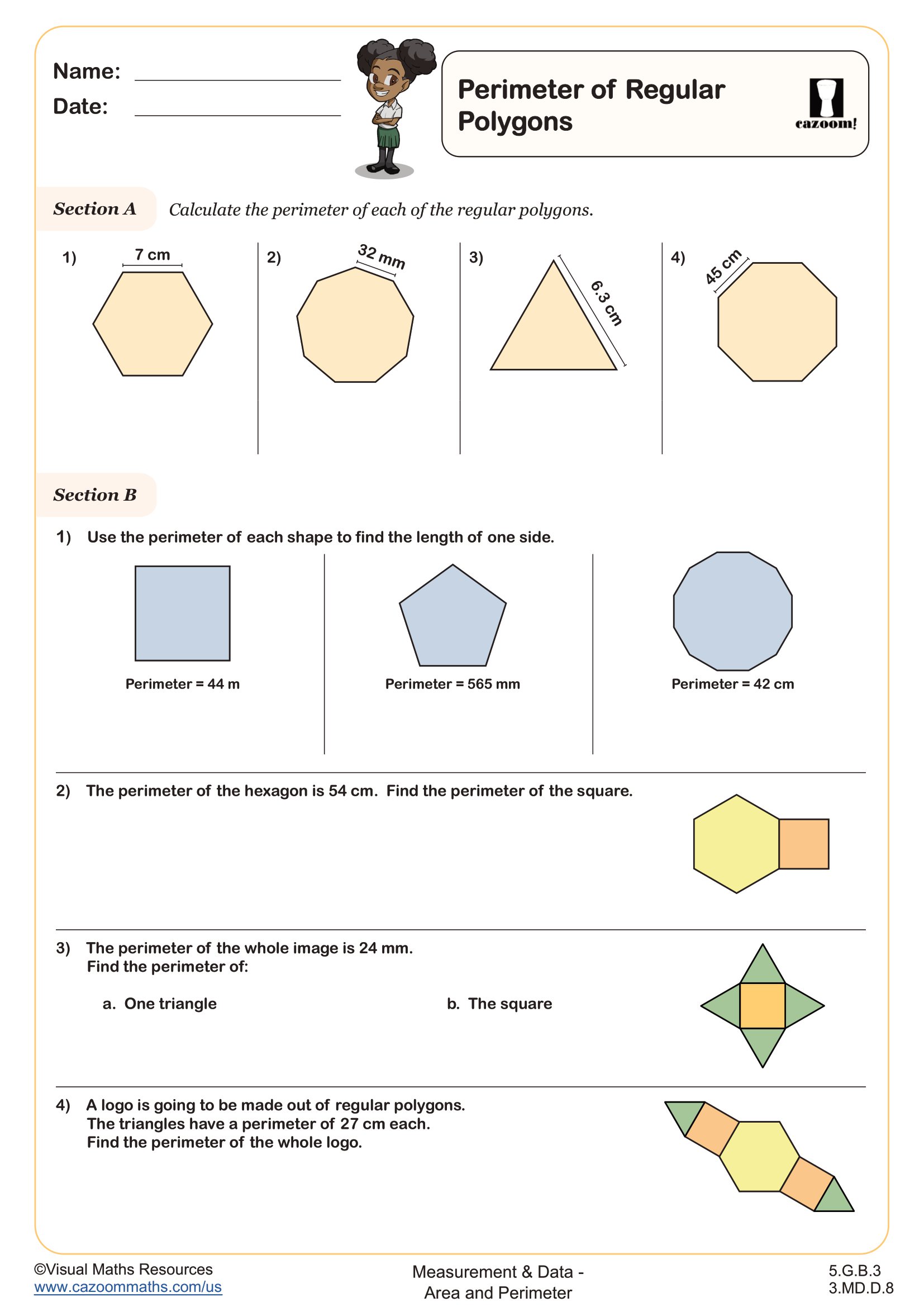
All worksheets are created by the team of experienced teachers at Cazoom Math.
What topics are covered in a lines and angles worksheet?
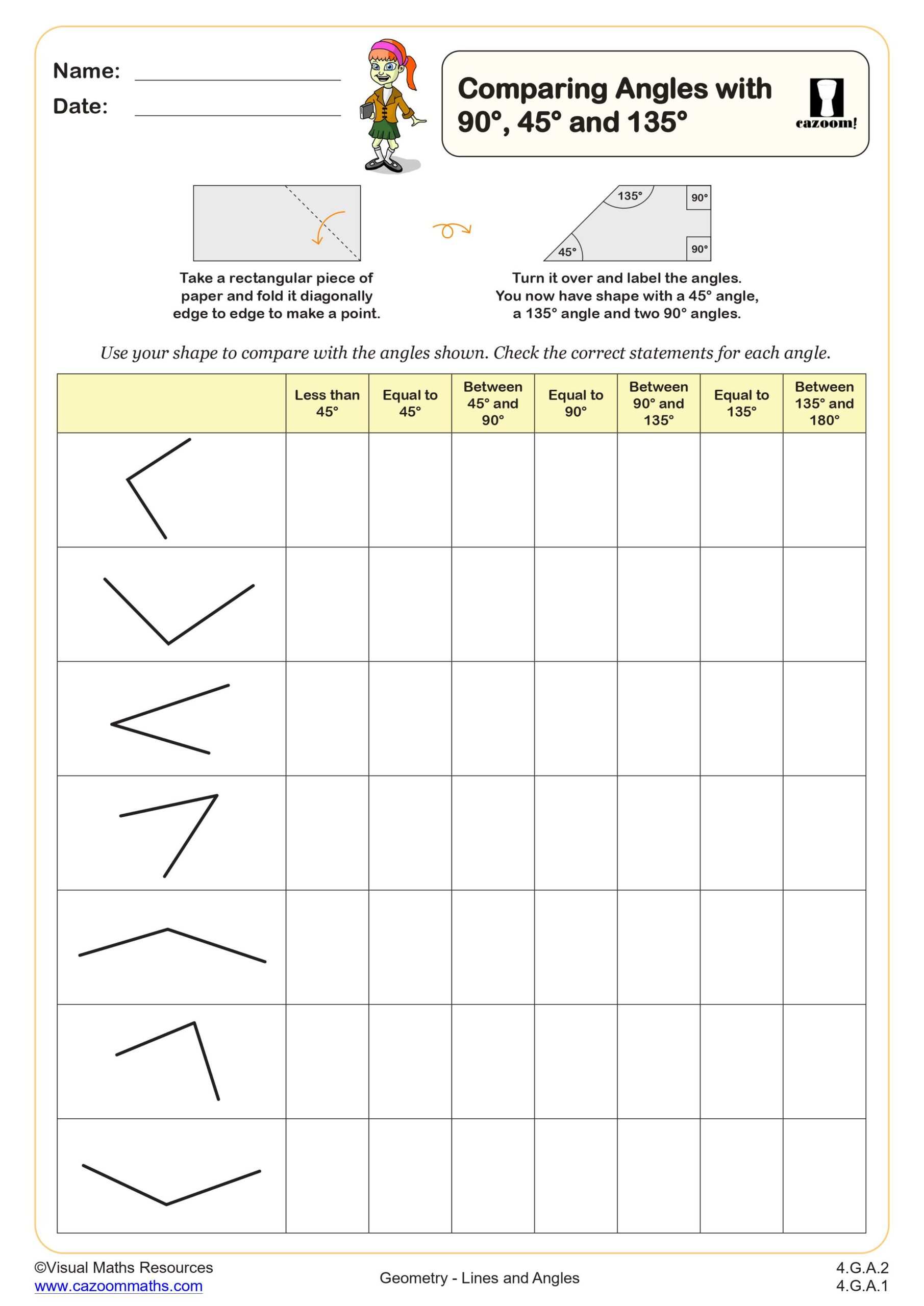
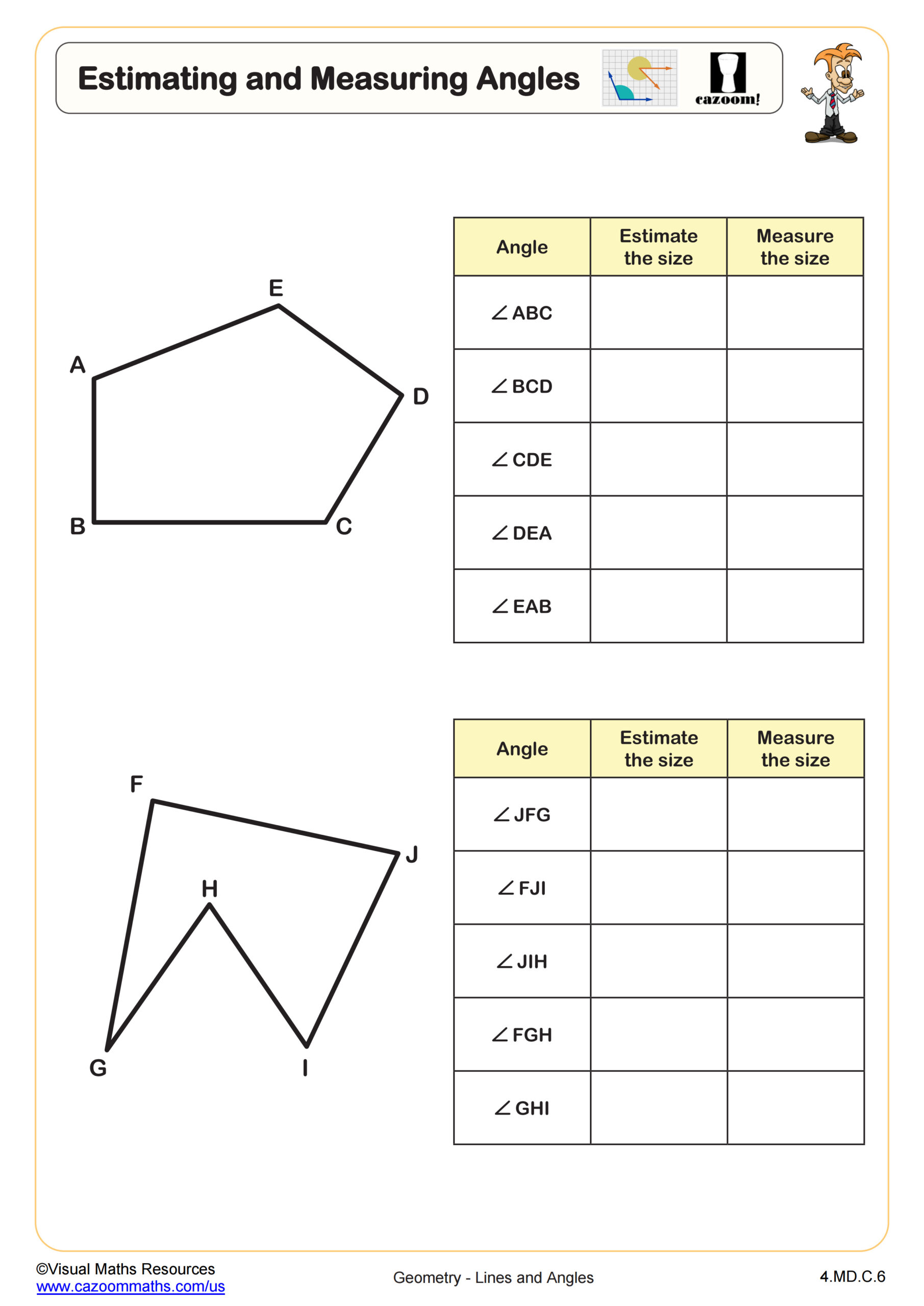
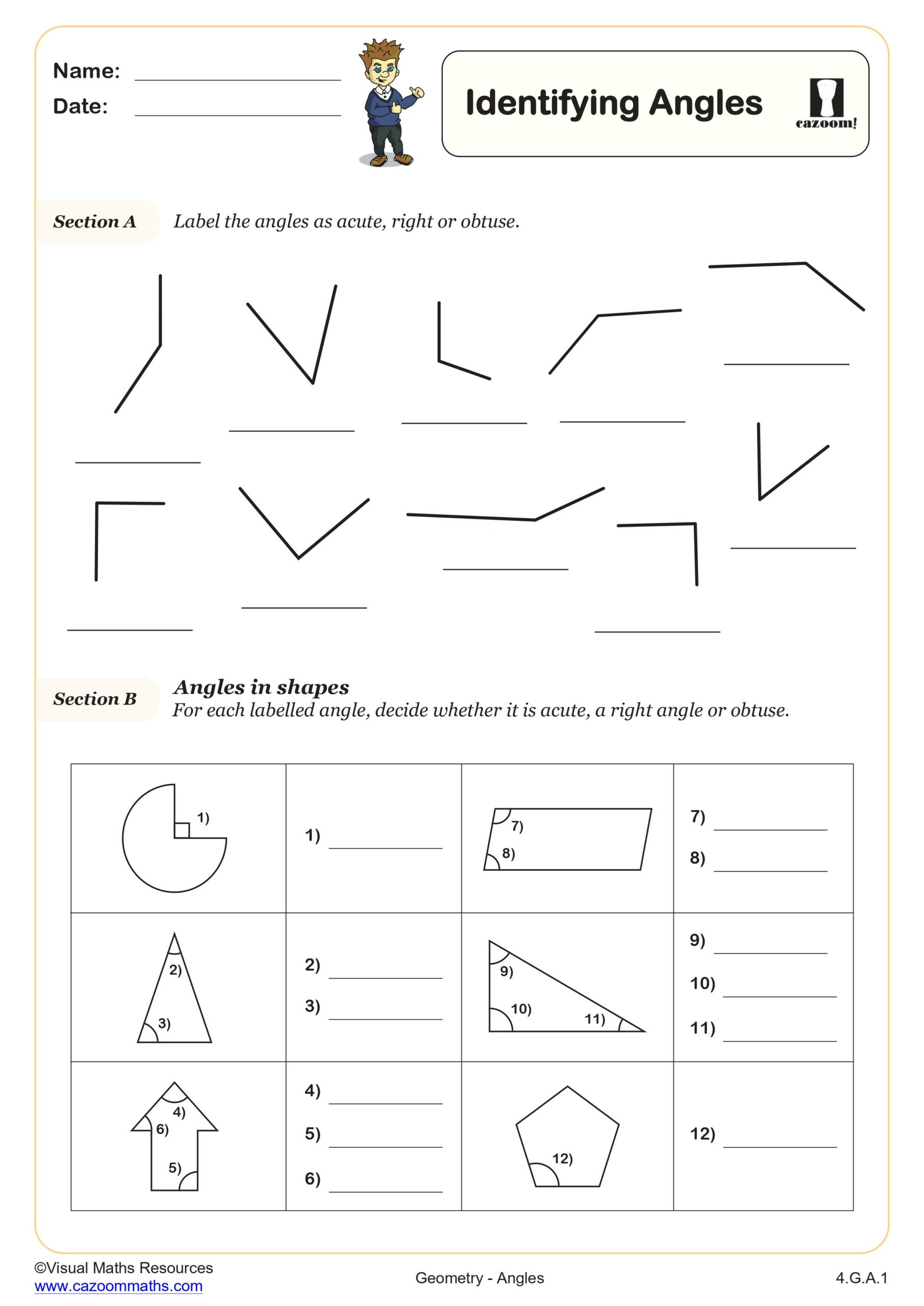
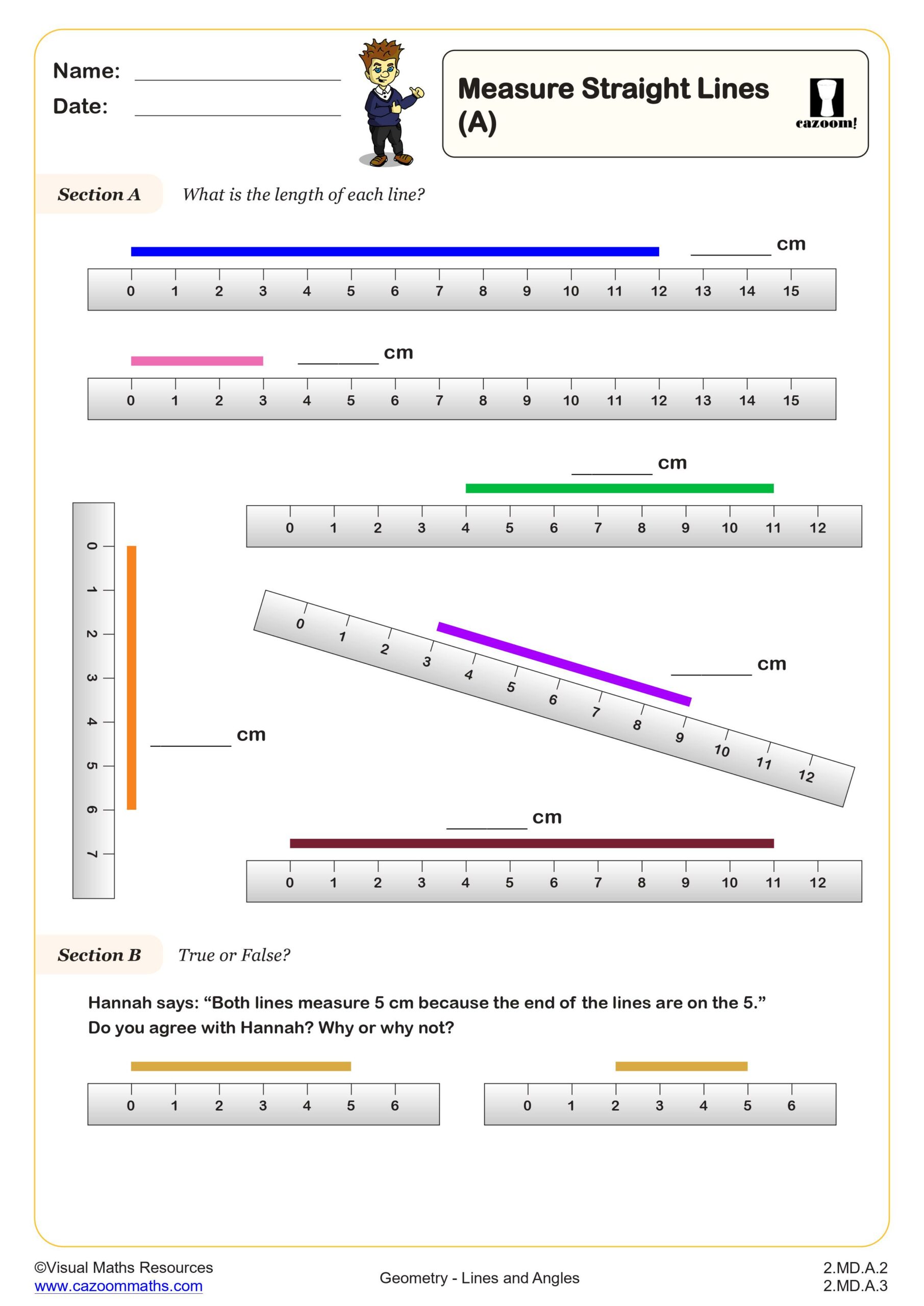
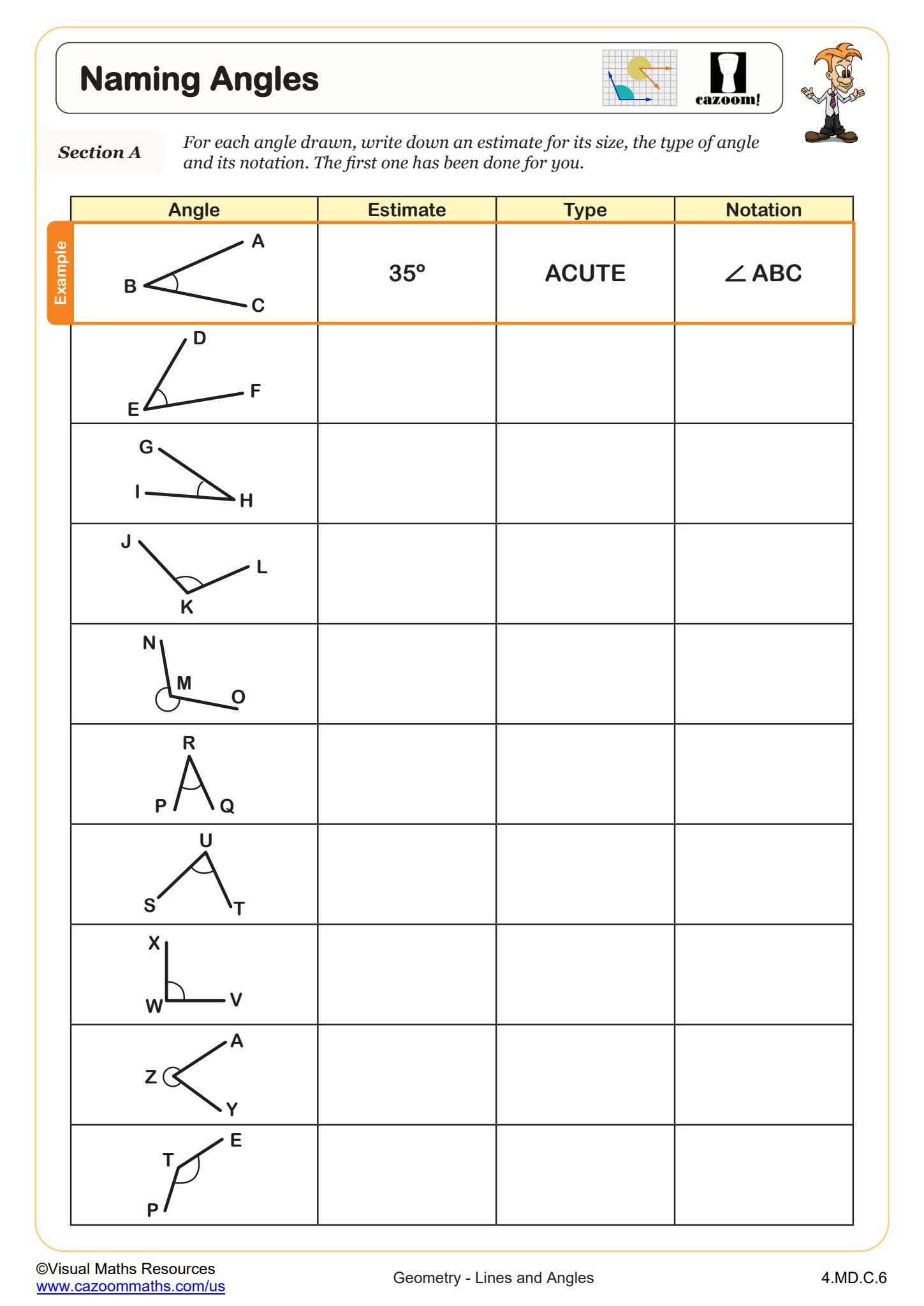
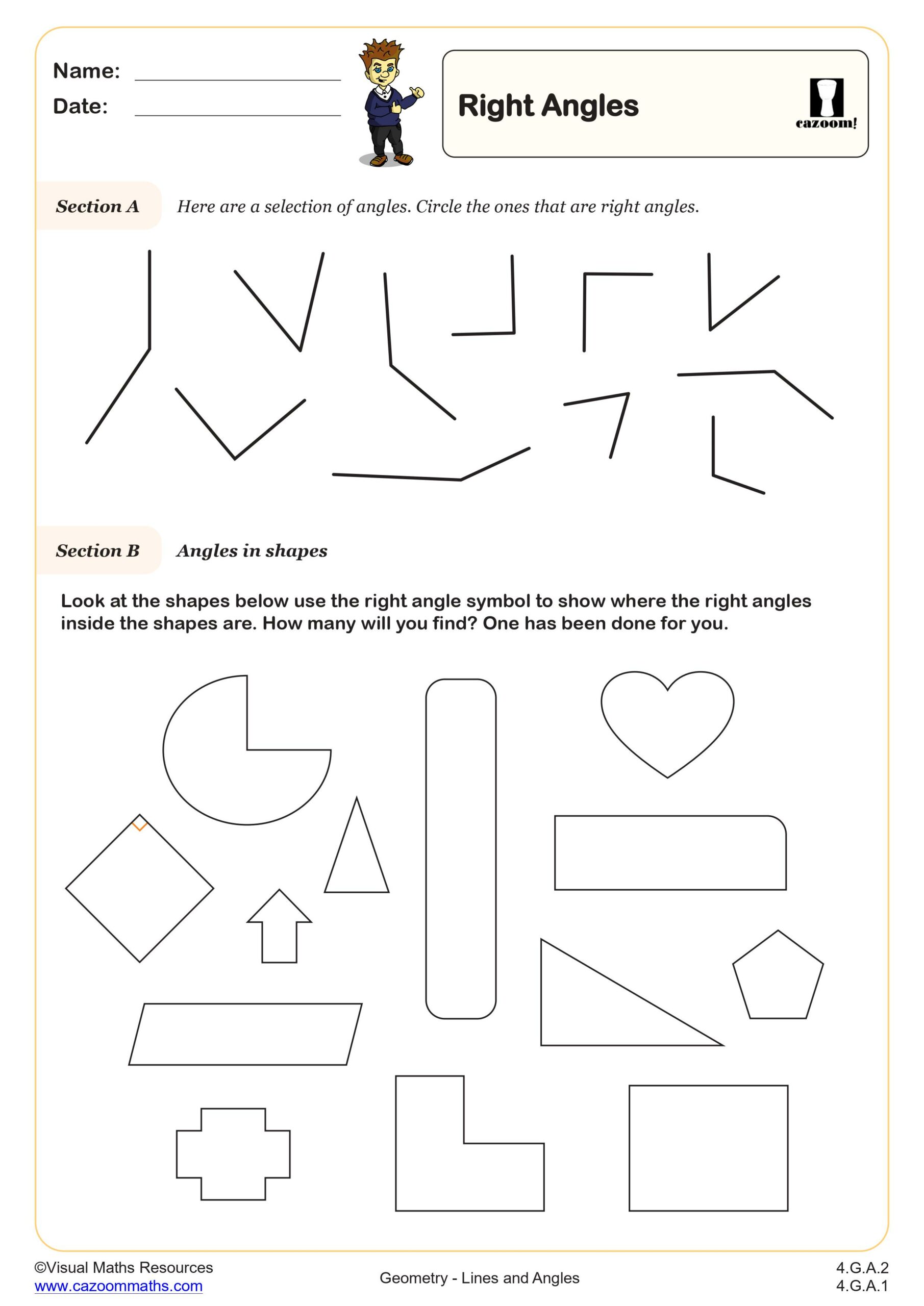
A thorough lines and angles worksheet typically covers identifying and naming points, lines, rays, and line segments, plus classifying angles as acute, right, obtuse, or straight. Students practice measuring angles with protractors, finding missing angle measures using angle relationships, and working with parallel lines cut by transversals.
Teachers notice that students often lose points when they forget to include proper notation symbols, such as using arrows for rays or the angle symbol when writing angle measures. The worksheets progress from basic identification tasks to more complex problems involving angle pairs like complementary, supplementary, vertical, and adjacent angles.
Which grade levels use lines and angles worksheets most effectively?
Lines and angles concepts typically begin in grade 4 with basic angle identification and continue through middle school with more complex relationships. Elementary students focus on recognizing different angle types and understanding perpendicular and parallel lines, while grades 6-8 explore angle relationships and algebraic applications.
The progression allows teachers to scaffold learning appropriately, starting with visual recognition before moving to measurement and calculation. High school geometry courses revisit these concepts as foundational knowledge for proofs and more advanced theorems, making early mastery crucial for student success in later mathematics courses.
How do students learn to measure and classify angles effectively?
Students develop angle measurement skills through hands-on practice with protractors, starting with benchmark angles like 30°, 45°, 60°, and 90° before progressing to more precise measurements. Many worksheets include visual angle problems where students must classify angles without measuring tools, building their estimation abilities.
Teachers observe that students frequently misread protractor scales or align the tool incorrectly, leading to measurement errors. Successful instruction combines worksheet practice with physical manipulatives and real-world connections, such as finding angles in architecture, sports, or engineering applications where precise angle measurements are critical.
How can teachers maximize student success with angles homework assignments?
Effective angles homework requires clear instructions and varied problem types that reinforce classroom learning without overwhelming students. Teachers find success when they assign a mix of identification, measurement, and relationship problems that build on previously mastered concepts.
Providing answer keys allows students to self-check their work and identify areas needing additional support before the next class. Many teachers recommend starting homework sessions with a few basic review problems to activate prior knowledge, then progressing to more challenging applications that prepare students for upcoming lessons or assessments.