Elementary School Methods for Addition Worksheets
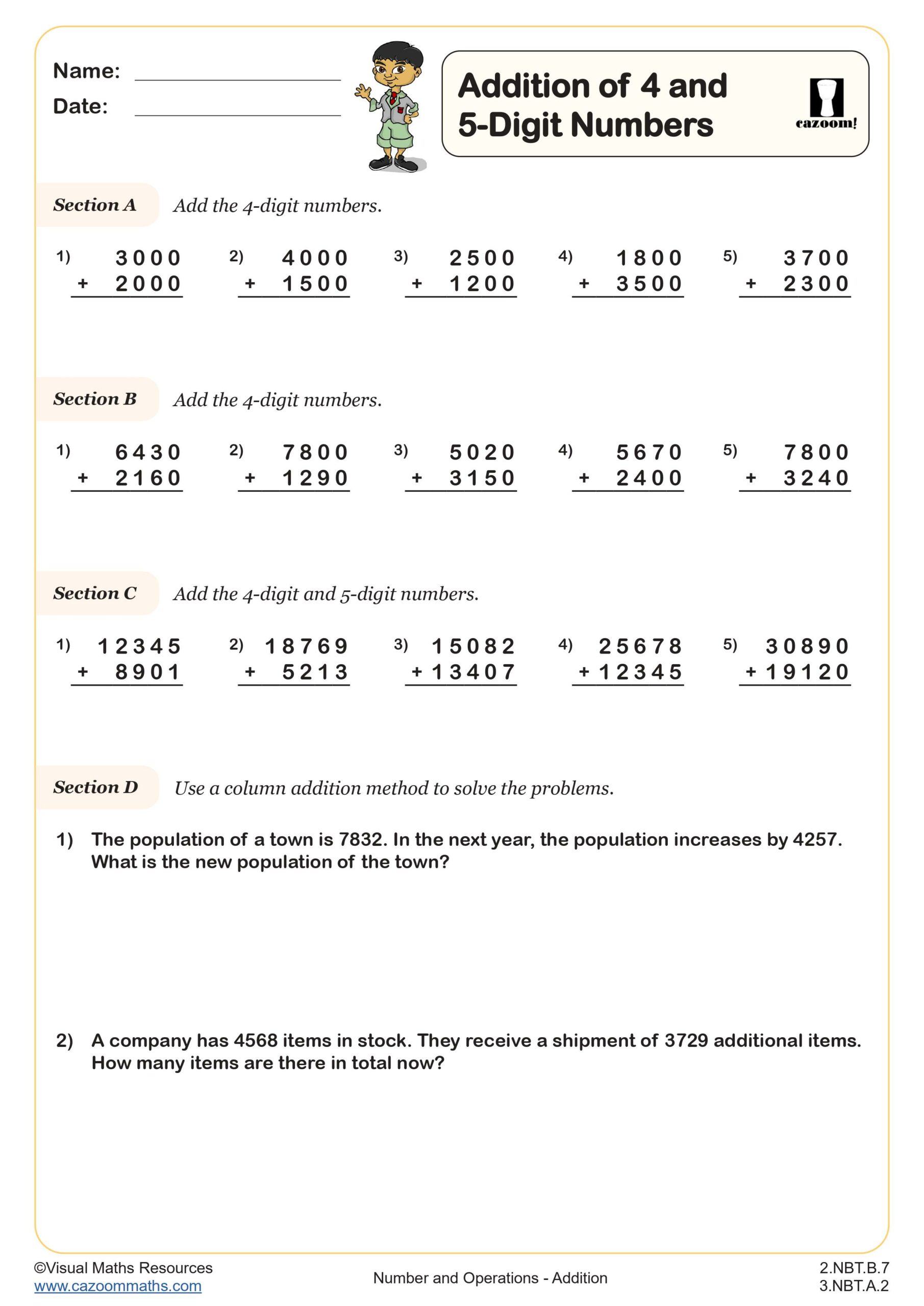
Addition of 4 and 5-digit Numbers
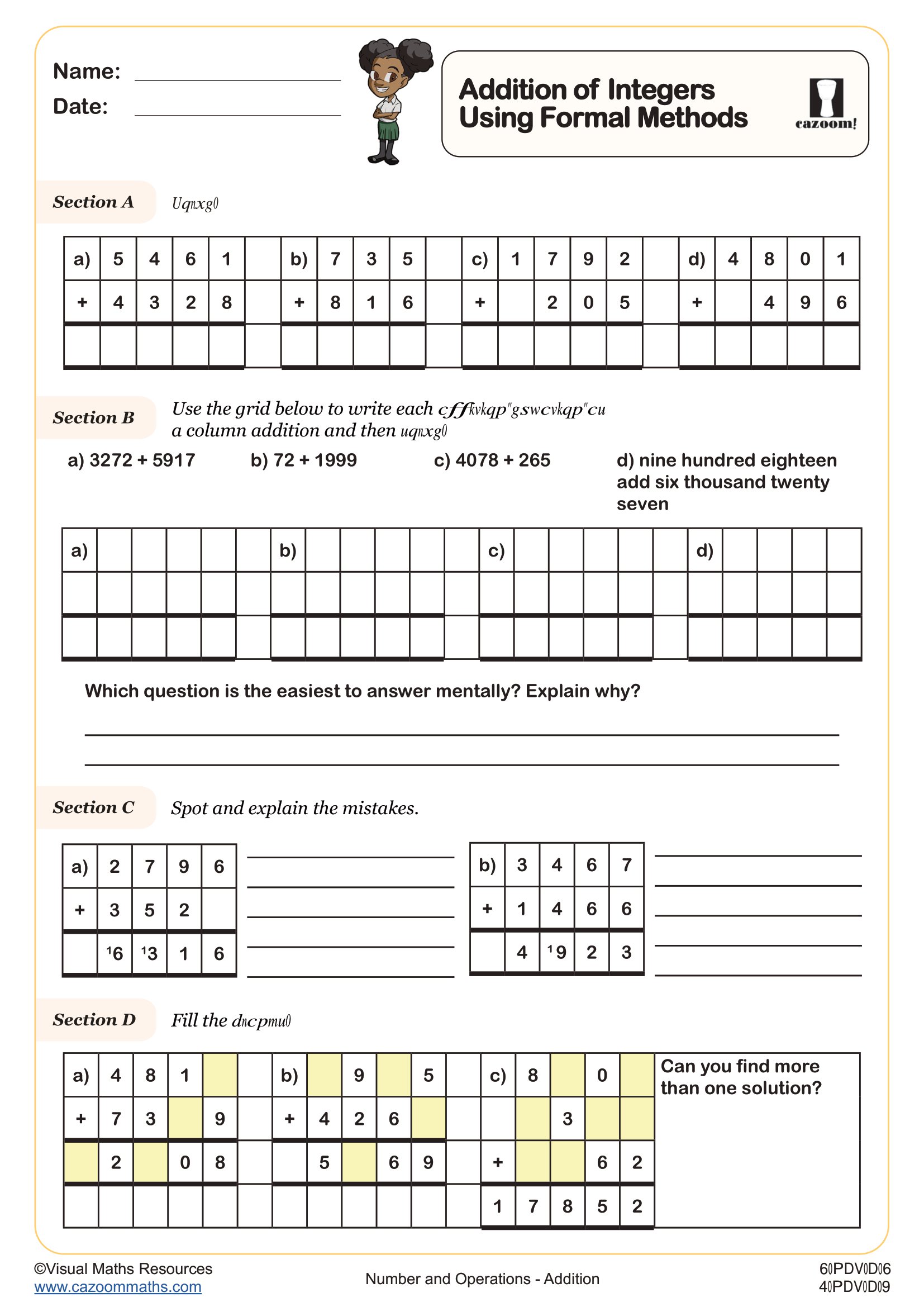
Addition of Integers Using Formal Methods
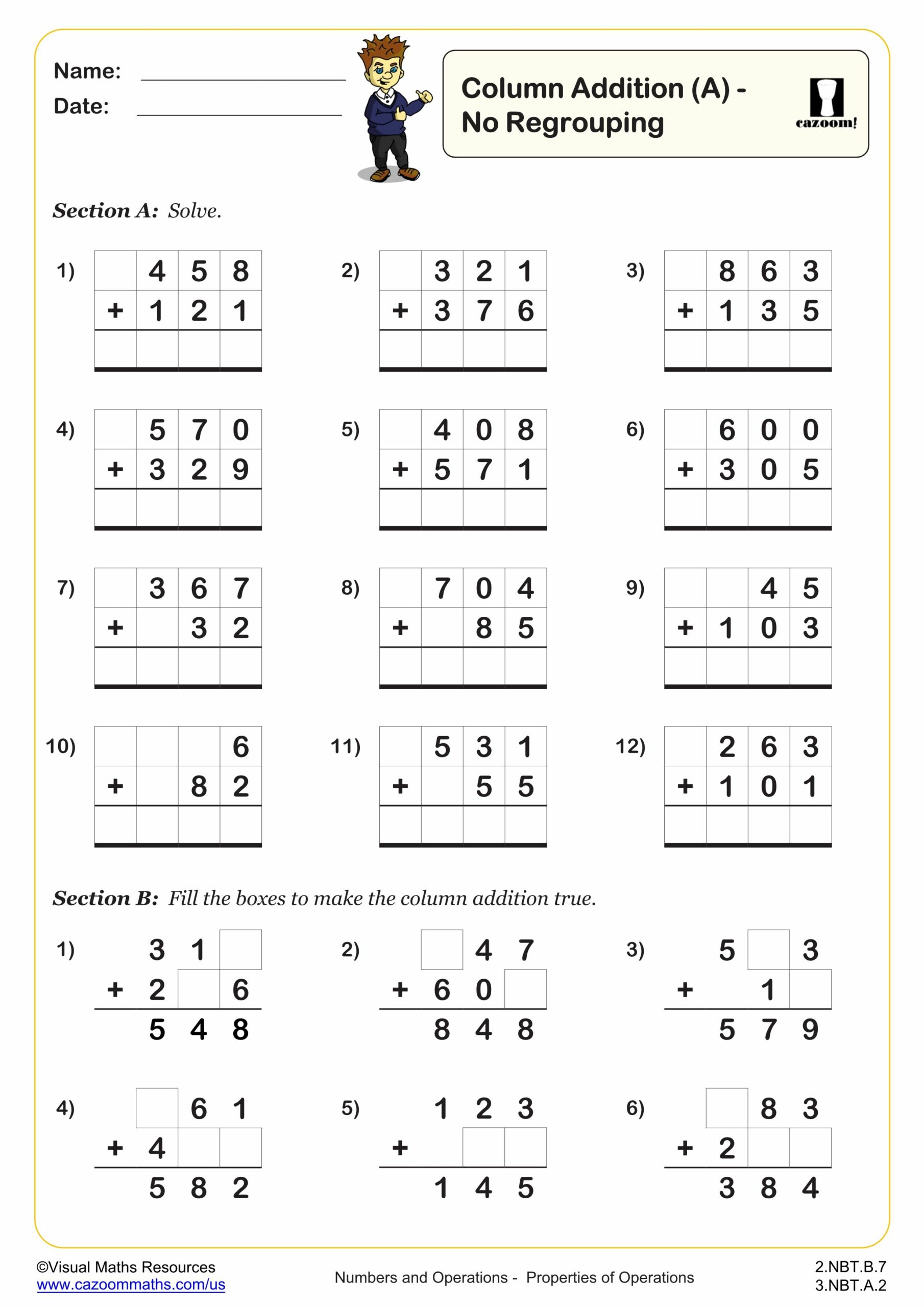
Column Addition (A)
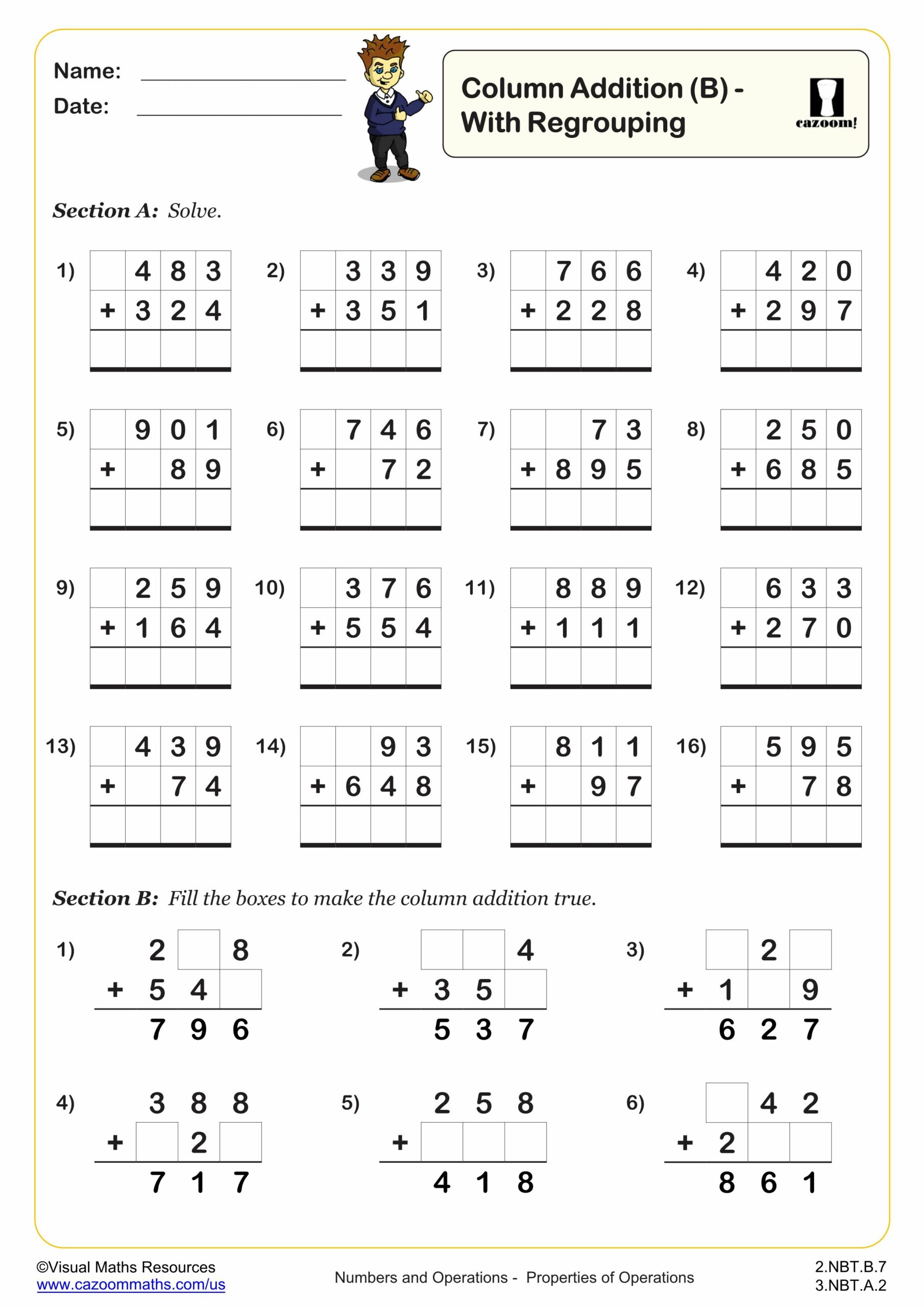
Column Addition (B)
Column Addition (C)
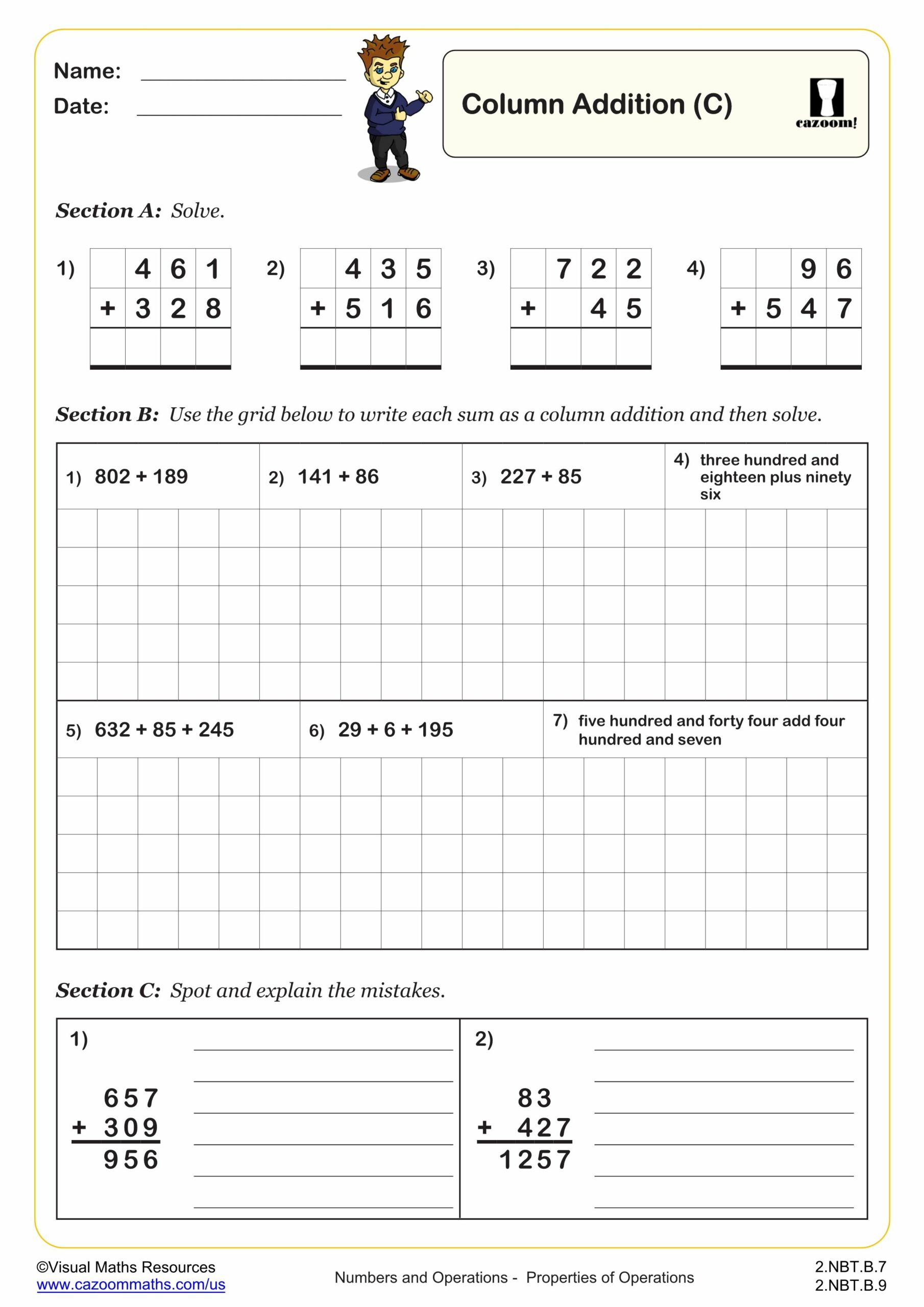
Column Addition Challenge
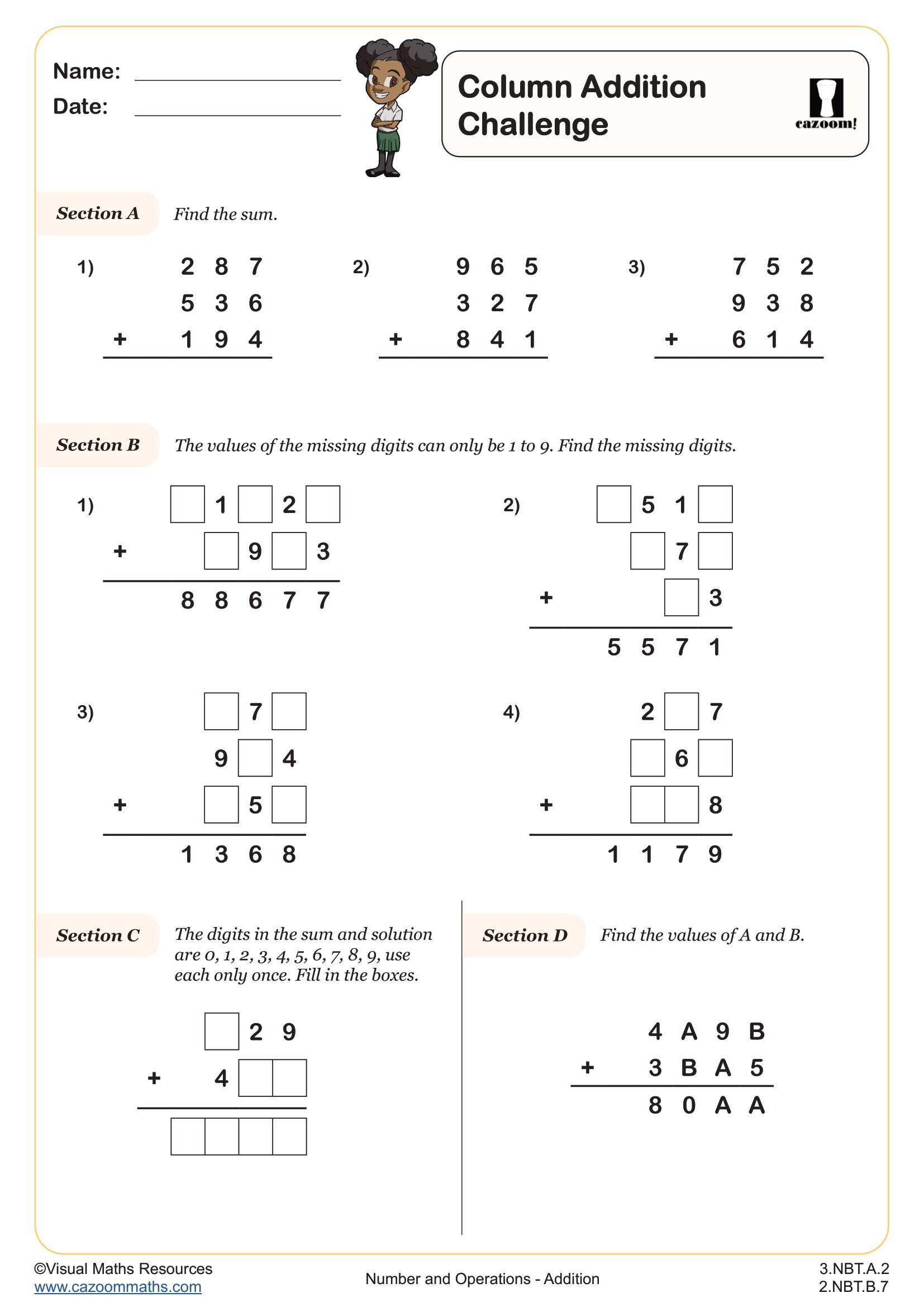
Column Addition of up to 3 Digits - No Regrouping
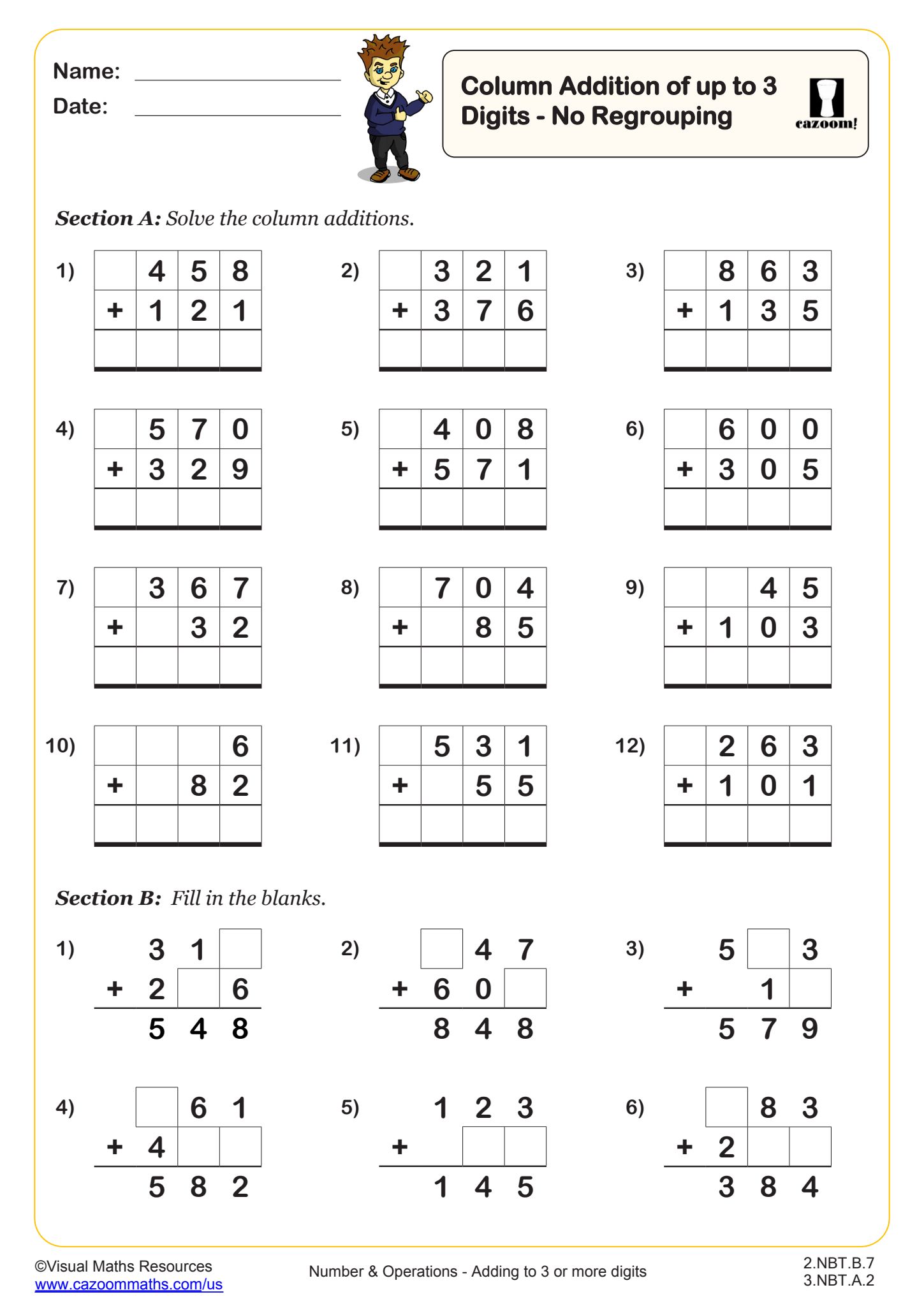
Column Addition of up to 3 Digits - With Regrouping (A)
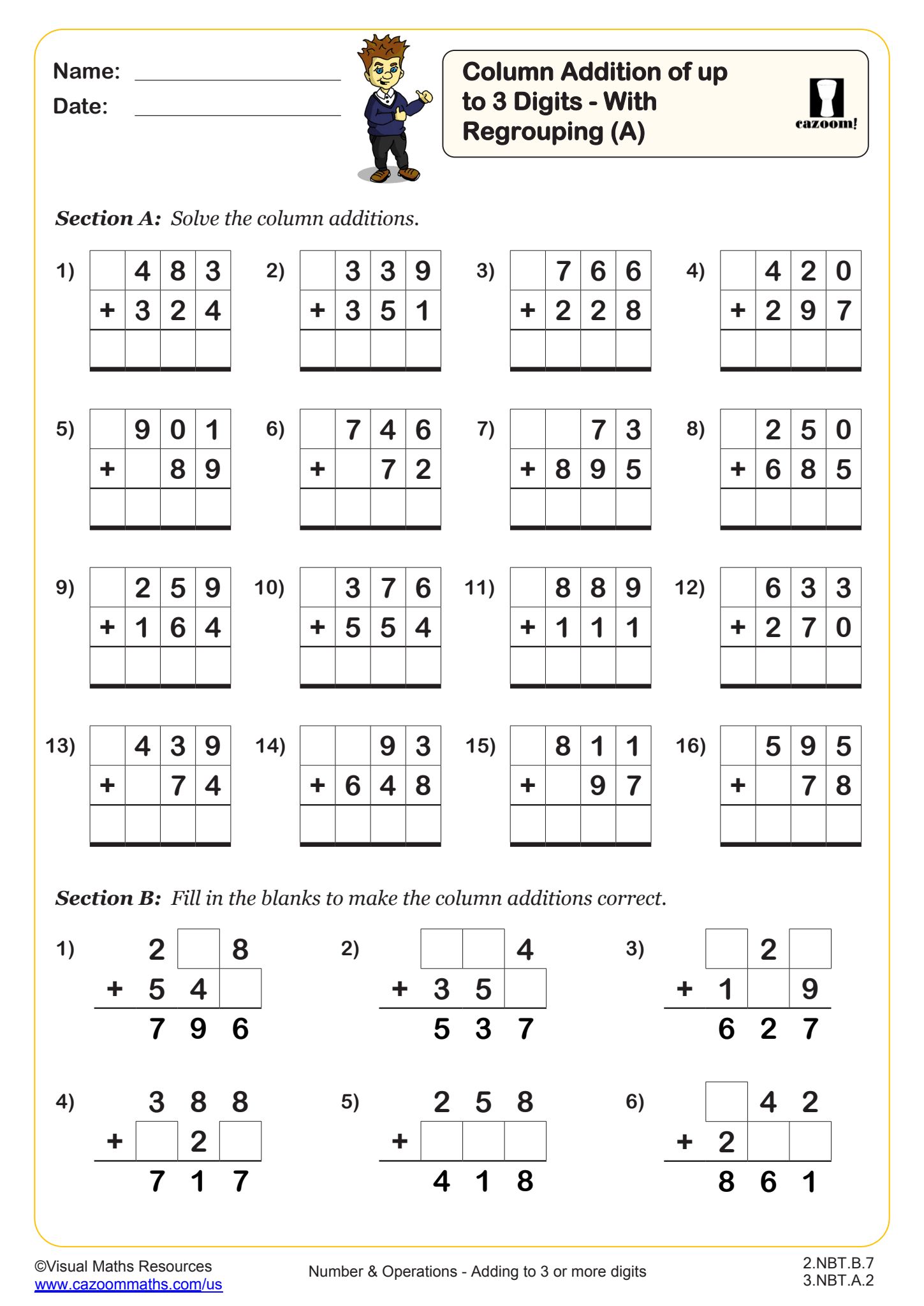
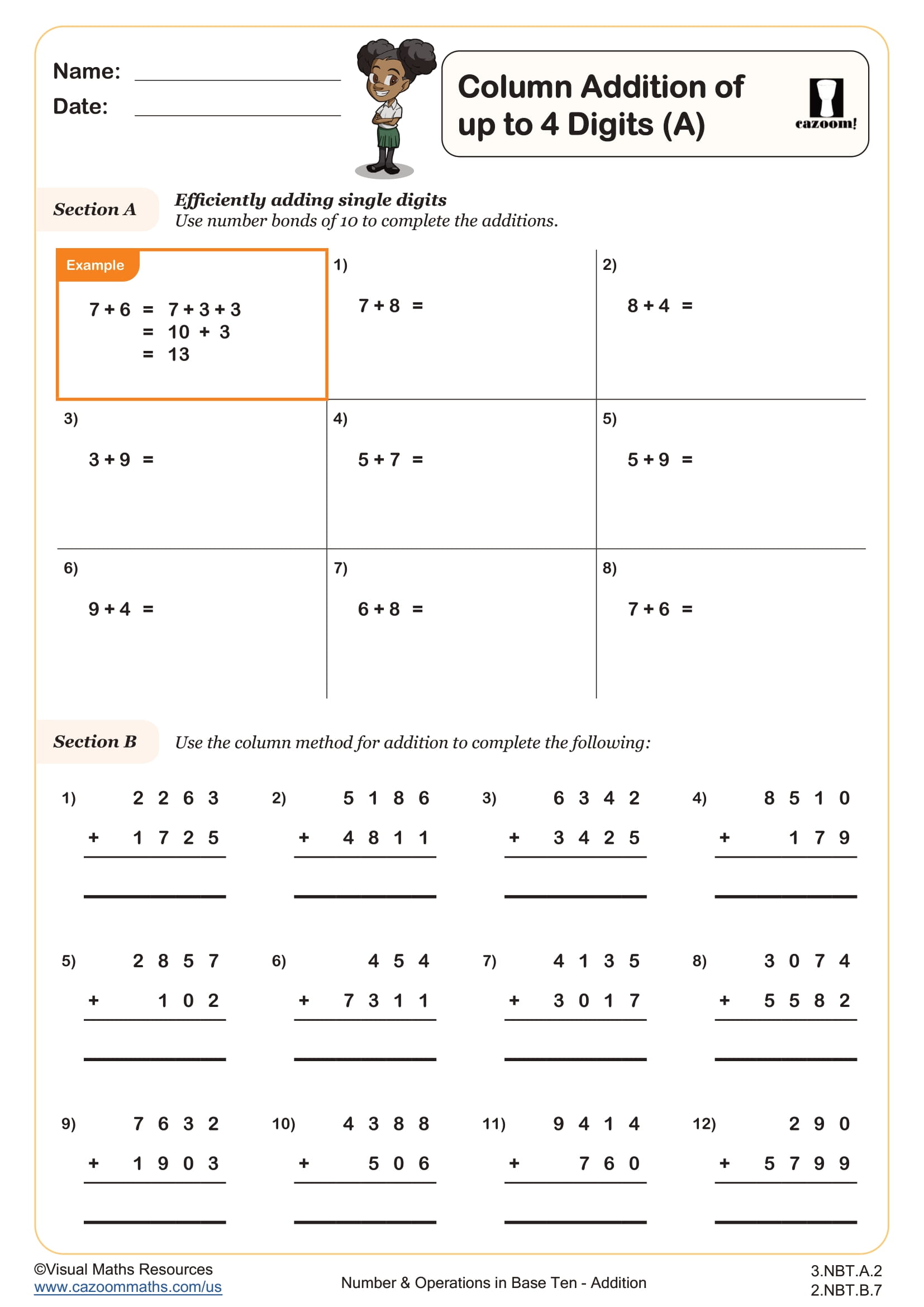
Column Addition of up to 4 Digits (A)
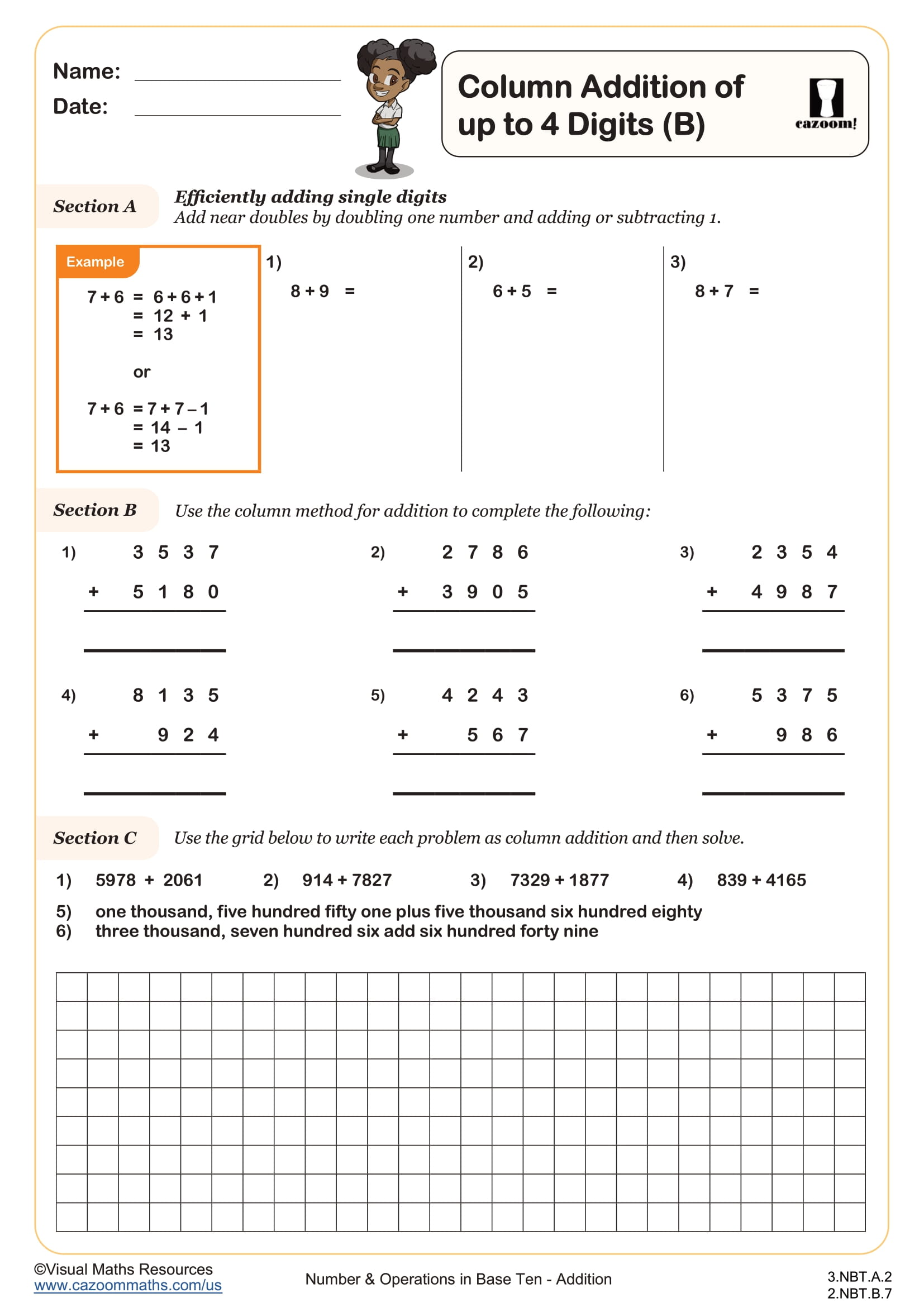
Column Addition of up to 4 Digits (B)
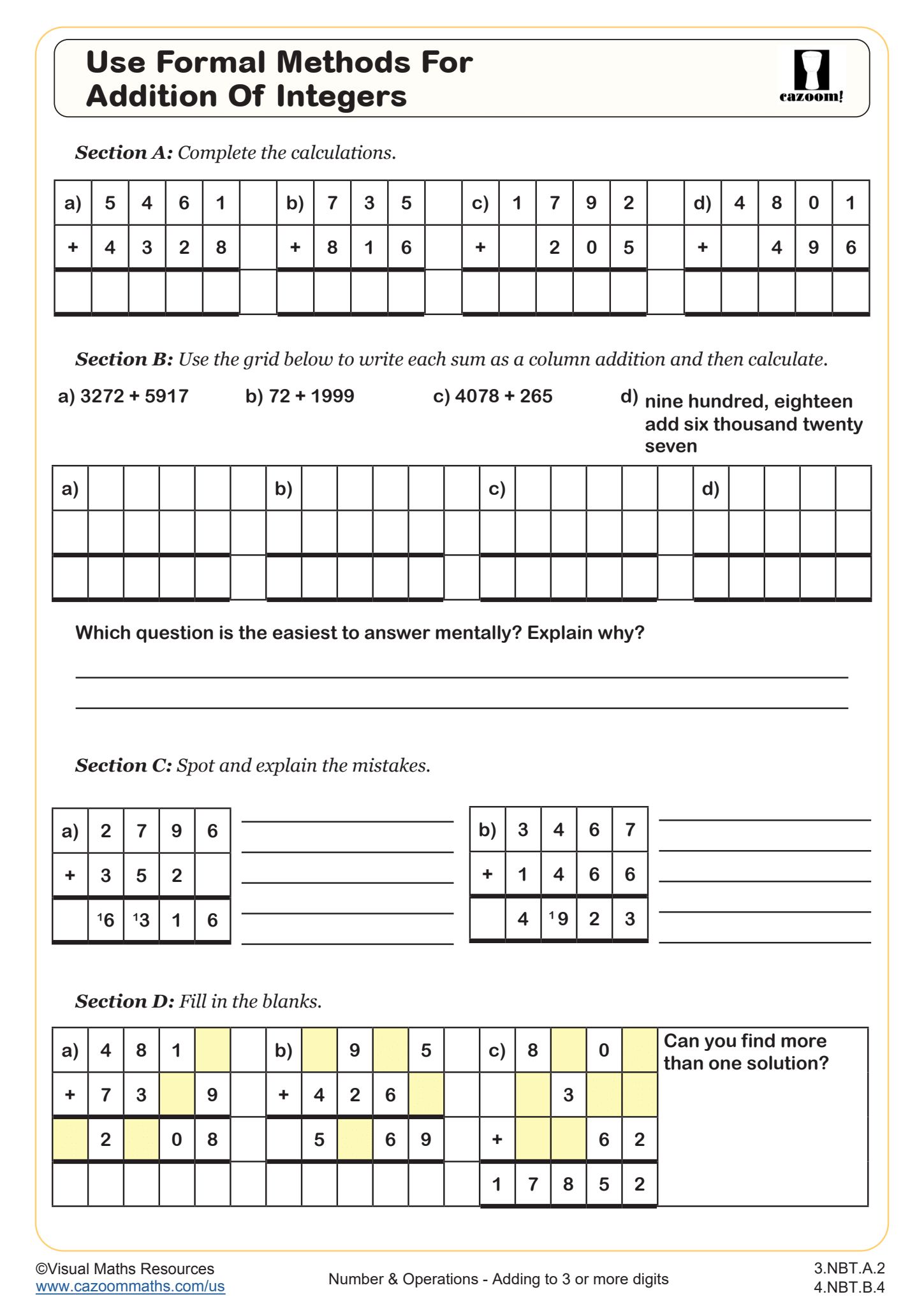
Use Formal Methods For Addition of Integers
All worksheets are created by the team of experienced teachers at Cazoom Math.
What are the most effective methods for teaching addition?
The most effective addition methods include counting on, making ten, using doubles and near doubles, breaking apart numbers, and the standard algorithm. Elementary curricula typically introduce concrete strategies first (counting objects, number lines) before moving to mental math strategies and formal algorithms. This progression aligns with how students develop mathematical reasoning, moving from concrete manipulatives to abstract symbolic understanding.
Students often struggle when asked to use the standard algorithm before they understand what addition represents. Teachers notice breakthrough moments when students recognize that breaking 8 + 7 into (8 + 2) + 5 uses the same thinking as regrouping in column addition. The Products and Sums approach specifically helps students see relationships between multiplication facts they've memorized and addition combinations, strengthening both operations simultaneously.
Which grade levels use these addition method worksheets?
These worksheets span kindergarten through fifth grade, covering the full elementary school progression of addition skills. Kindergarten and first grade focus on foundational strategies like counting on and making ten with single-digit numbers. Second and third grade extend these methods to two-digit addition with and without regrouping, while fourth and fifth grade apply multiple strategies to larger numbers and begin connecting addition to algebraic thinking.
The difficulty increases systematically across grade levels. Early worksheets emphasize visual models and concrete strategies, while upper elementary worksheets expect students to select appropriate methods efficiently. By fifth grade, students typically choose between mental math strategies and the standard algorithm based on number relationships, demonstrating computational fluency that state assessments measure. This progression ensures students build on prior knowledge rather than relearning addition each year.
How do products and sums worksheets develop addition skills?
Products and sums worksheets present problems where students work with both multiplication products and addition sums in coordinated exercises. This approach reinforces the relationship between operations, helping students recognize patterns like how 3 × 4 = 12 connects to addition facts that sum to 12 (such as 5 + 7 or 8 + 4). Students develop flexibility by seeing numbers through multiple operational lenses, which strengthens fact fluency and computational thinking.
This skill has direct applications in STEM fields where understanding relationships between operations matters. Engineers calculating material quantities, scientists analyzing data sets, and computer programmers writing algorithms all rely on recognizing when to apply different operations efficiently. Students who understand how products relate to sums can quickly estimate whether calculations make sense, a critical skill when checking answers on standardized tests or validating results in real-world problem solving.
How should teachers use these addition method worksheets in the classroom?
These worksheets work best when teachers introduce one strategy at a time, allowing students to practice until comfortable before adding new methods. The answer keys enable quick formative assessment, helping teachers identify which students have mastered a strategy versus those who need additional instruction or different approaches. Many teachers use these worksheets after whole-group instruction to reinforce concepts, or during small-group intervention to target specific gaps in understanding.
The worksheets function effectively as independent practice during math centers, homework assignments that parents can support using the answer keys, or warm-up activities reviewing previously taught strategies. Teachers often assign different methods to paired students, then have partners compare solutions and explain their thinking, which builds mathematical communication skills. The variety of products and sums problems also works well for differentiation, allowing advanced students to explore pattern relationships while others focus on accuracy with the standard algorithm.