Elementary School Methods for Subtraction Worksheets
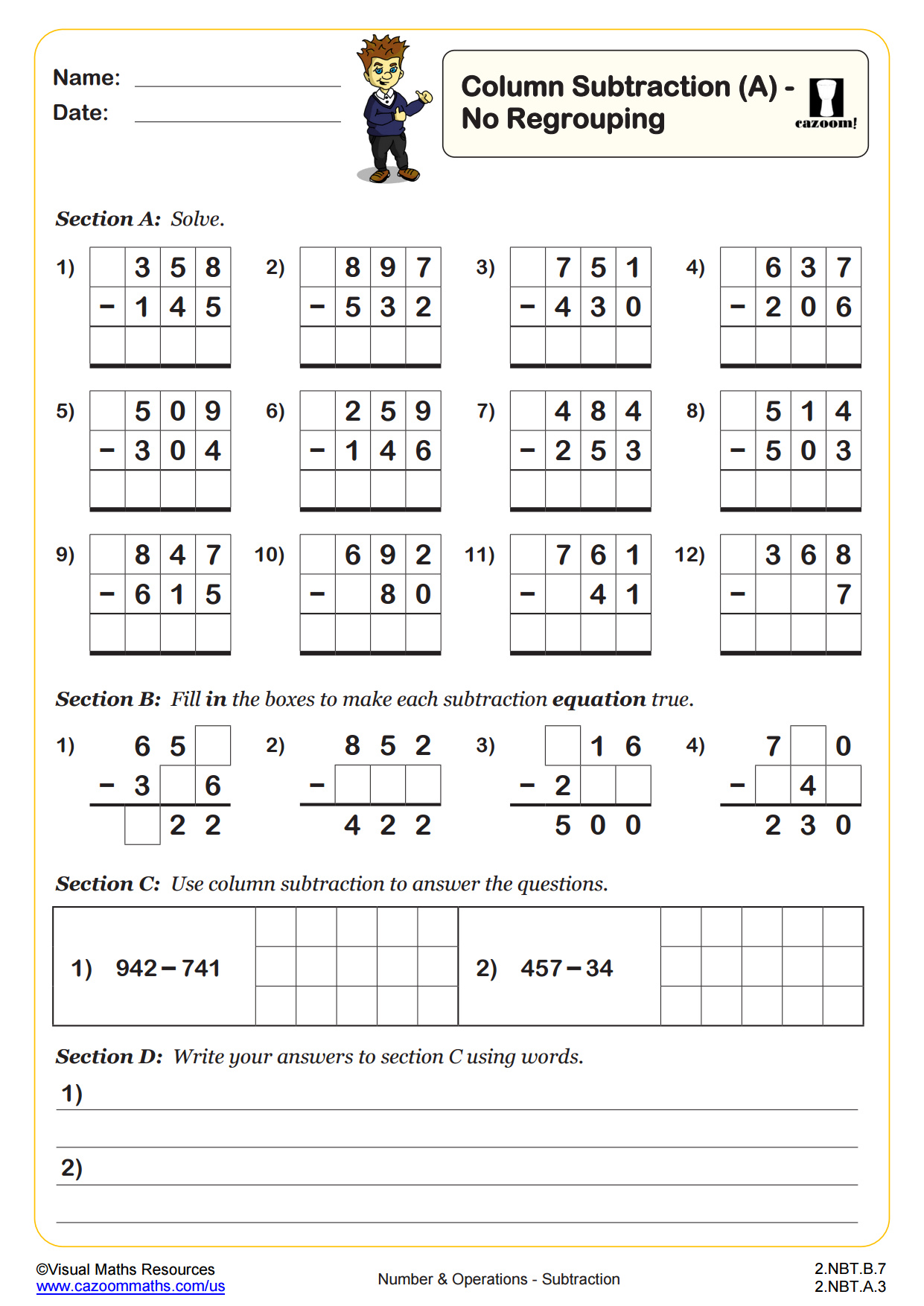
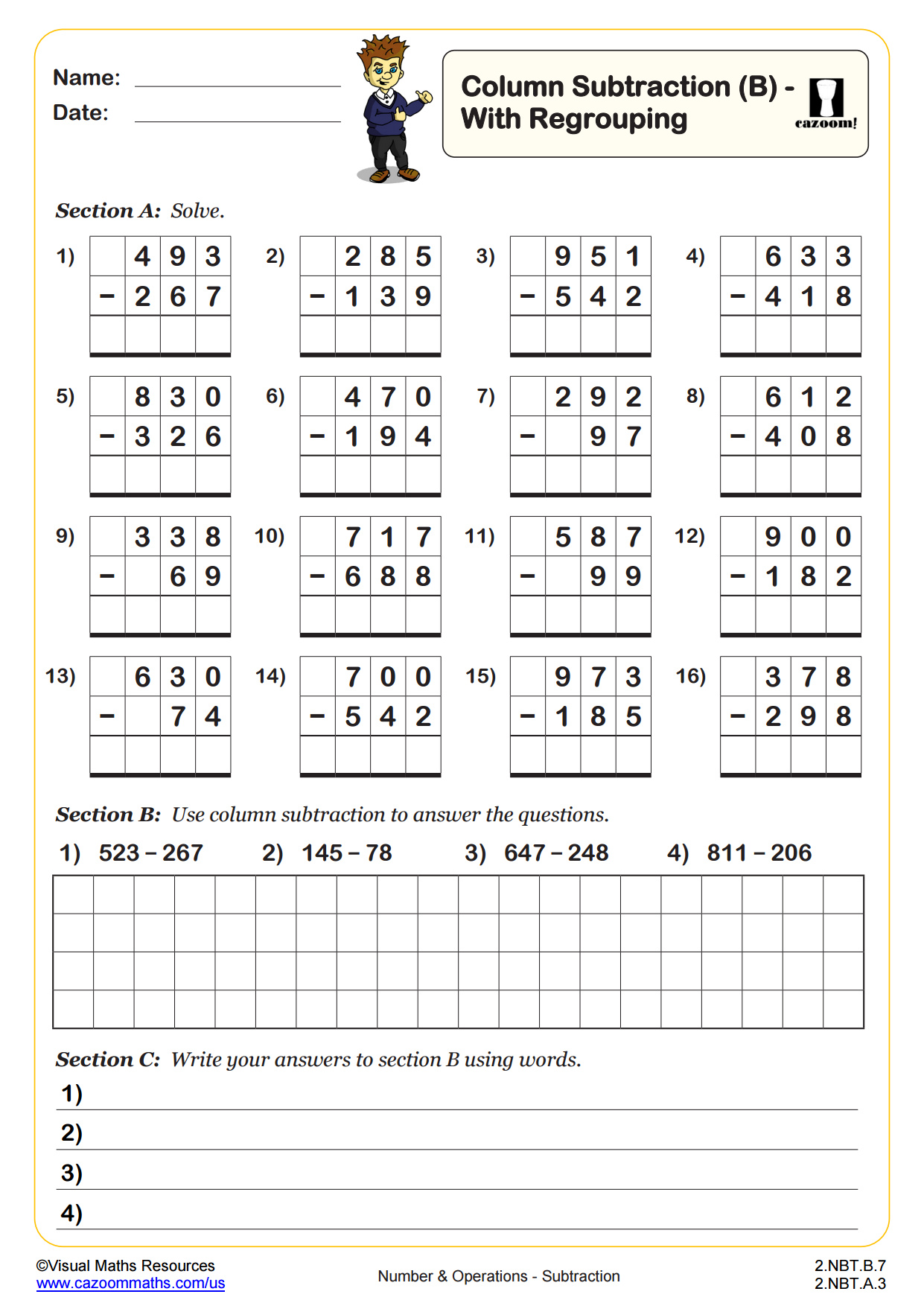
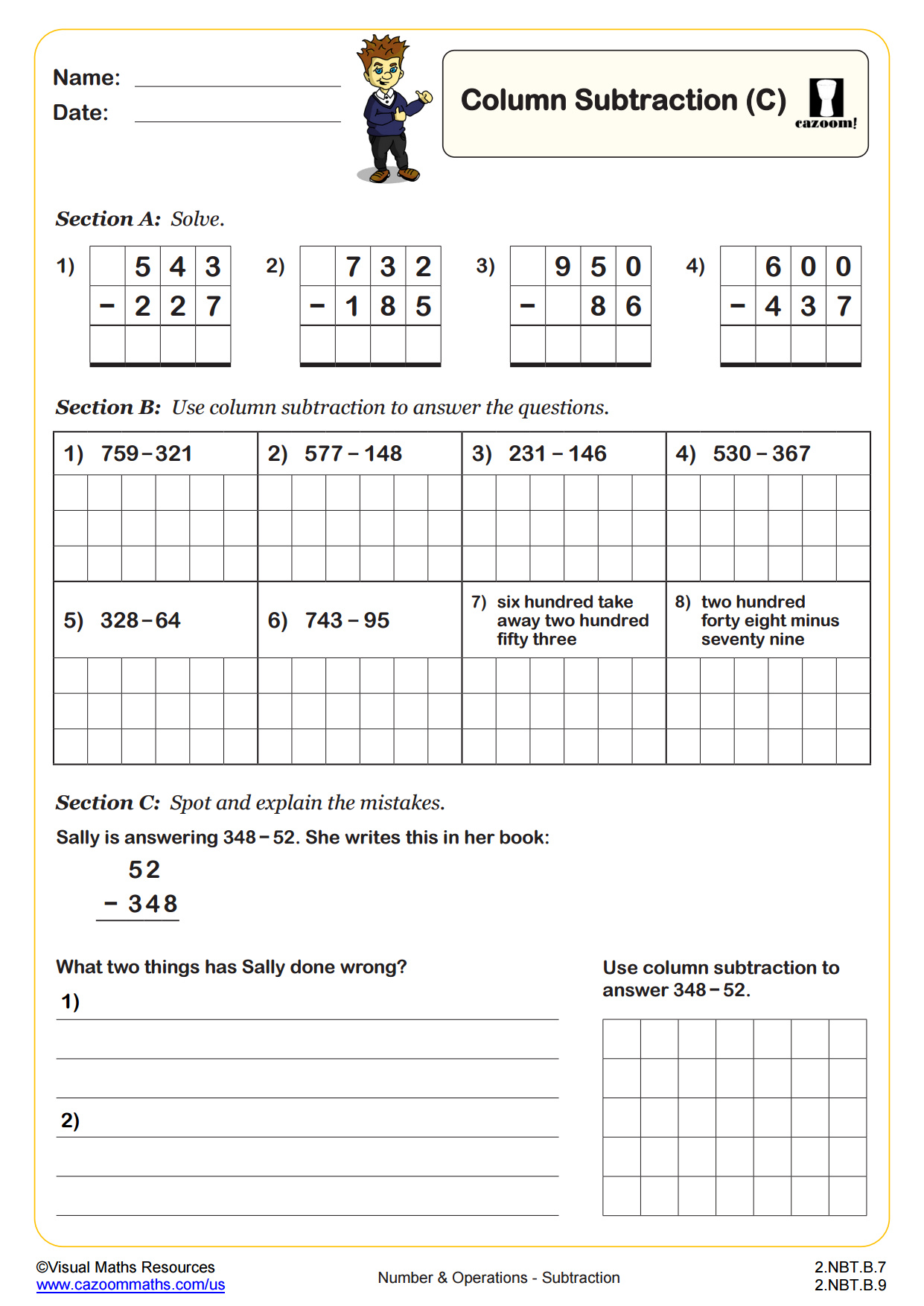
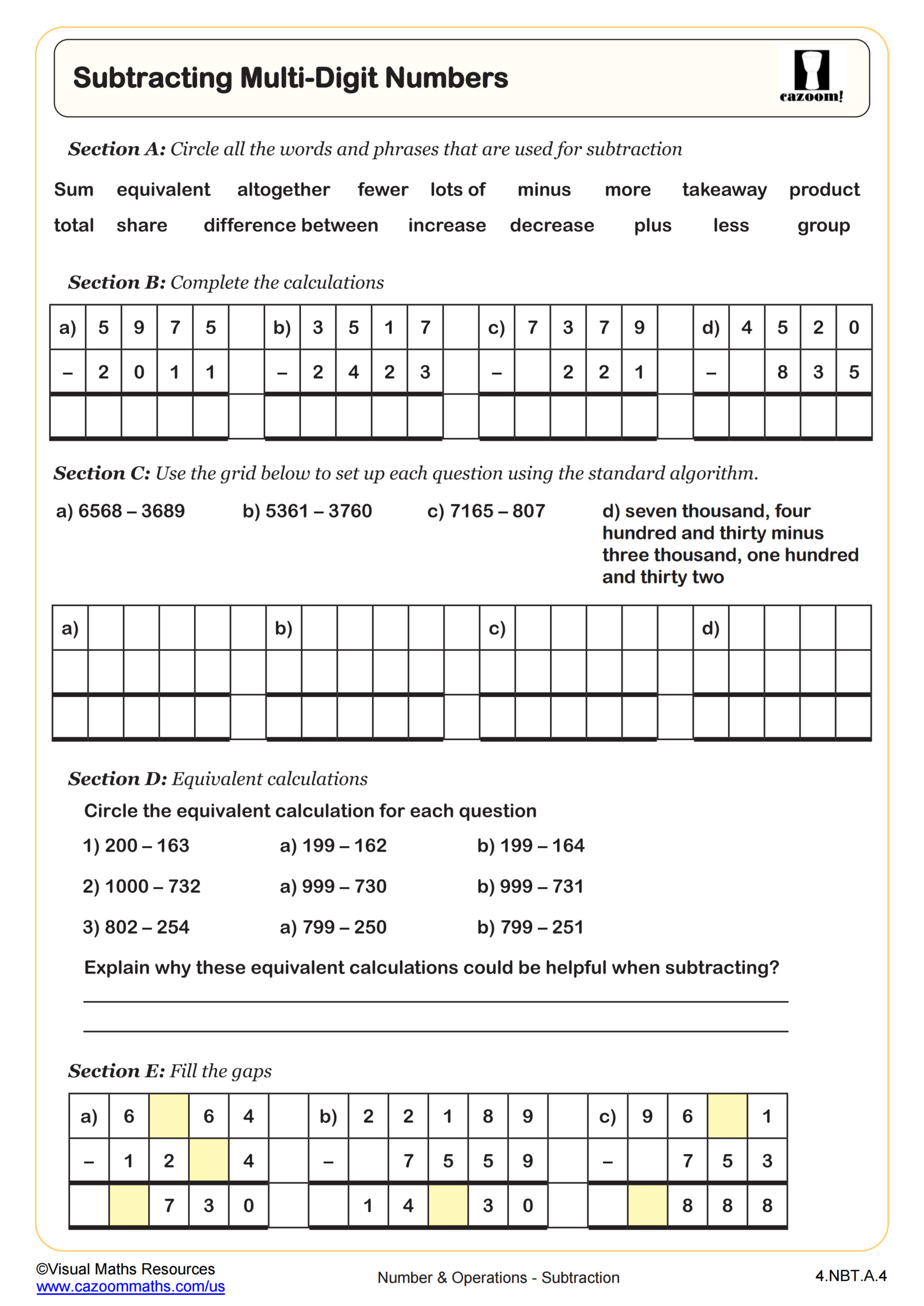
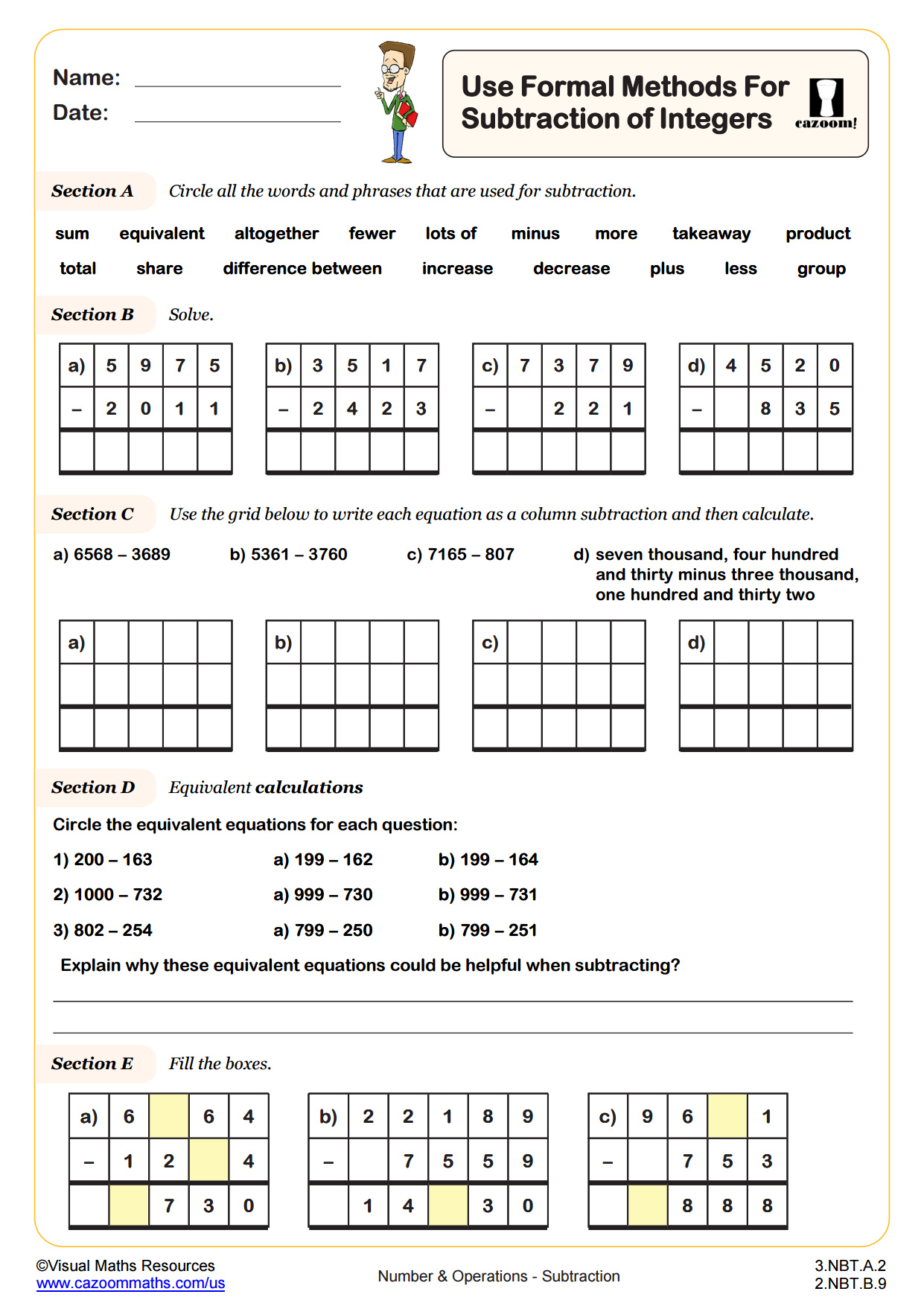
All worksheets are created by the team of experienced teachers at Cazoom Math.
What Are the Different Methods for Subtraction That Students Learn?
Elementary students typically learn several subtraction methods, starting with concrete strategies like counting back and using manipulatives, then progressing to mental math strategies such as making tens or using number lines. The formal algorithm—column subtraction with regrouping (sometimes called borrowing)—becomes the focus in second and third grade, where students learn to subtract multi-digit numbers by aligning place values vertically. Supplementary strategies like using compensation (adjusting both numbers to create easier calculations) or subtracting in parts help build number sense alongside procedural skills.
A common error pattern emerges when students mechanically subtract the smaller digit from the larger one in each column without checking which number is the minuend. For example, in 52 - 37, students might write 25 instead of 15 because they subtract 2 from 7 in the ones place. Teachers frequently see this mistake disappear once students understand that regrouping means exchanging one ten for ten ones, not just "crossing out and making the number smaller."
Which Grade Levels Use Methods for Subtraction Worksheets?
These methods for subtraction worksheets span kindergarten through fifth grade, covering the full elementary school progression. Kindergarten and first grade students work with basic subtraction facts and simple strategies, while second and third graders focus heavily on column subtraction with regrouping. Fourth and fifth grade students refine their skills with larger multi-digit numbers and work toward automatic recall of efficient subtraction methods, including formal algorithms for integers.
The difficulty progression is carefully structured across grade levels. Early grades emphasize building conceptual understanding through visual models and concrete representations, while upper elementary worksheets shift toward efficiency and accuracy with the standard algorithm. By third grade, standardized tests expect students to subtract fluently within 1,000 using the standard algorithm, so worksheets at this level provide targeted practice with three-digit problems and multiple regrouping steps. Fifth graders extend these same methods to work with larger numbers and prepare for integer operations in middle school.
How Does Column Subtraction with Regrouping Work?
Column subtraction with regrouping (or borrowing) is the standard algorithm where students align numbers by place value and subtract starting from the ones column. When a digit in the minuend is smaller than the corresponding digit in the subtrahend, students regroup by borrowing one unit from the next higher place value. For example, in 325 - 178, students can't subtract 8 from 5, so they regroup one ten (making it 15 ones) and reduce the tens place from 2 to 1, then continue the process as needed through each column.
This skill connects directly to financial literacy and budgeting in real-world contexts. When calculating change from a purchase or determining how much more money is needed for a goal, adults naturally use subtraction with regrouping. In STEM fields, engineers and scientists subtract measurements with different units of precision, relying on the same place value understanding students develop through column subtraction. Students who master this method gain the numerical foundation for algebra, where they'll eventually subtract polynomials using similar alignment and regrouping principles.
How Can Teachers Use These Subtraction Worksheets Effectively?
These worksheets provide structured practice that helps students move from guided instruction to independent mastery of subtraction methods. The progression from simpler column subtraction problems to more complex multi-digit scenarios allows teachers to differentiate instruction based on student readiness. Answer keys enable students to self-check their work during independent practice, helping them identify whether errors stem from computational mistakes or conceptual misunderstandings about the regrouping process.
Many teachers use these worksheets during math centers or stations, pairing students strategically so stronger students can verbalize their thinking while supporting peers. The worksheets work equally well as homework to reinforce classroom learning, as warm-up activities to maintain procedural fluency, or as intervention tools during small-group instruction. Teachers often notice that reviewing just three to four problems together as a class—having students explain their regrouping steps aloud—prevents more errors than assigning longer problem sets without discussion. The consistent format across worksheets helps students focus on the mathematics rather than deciphering new directions each time.