Elementary School Metric Measures Worksheets
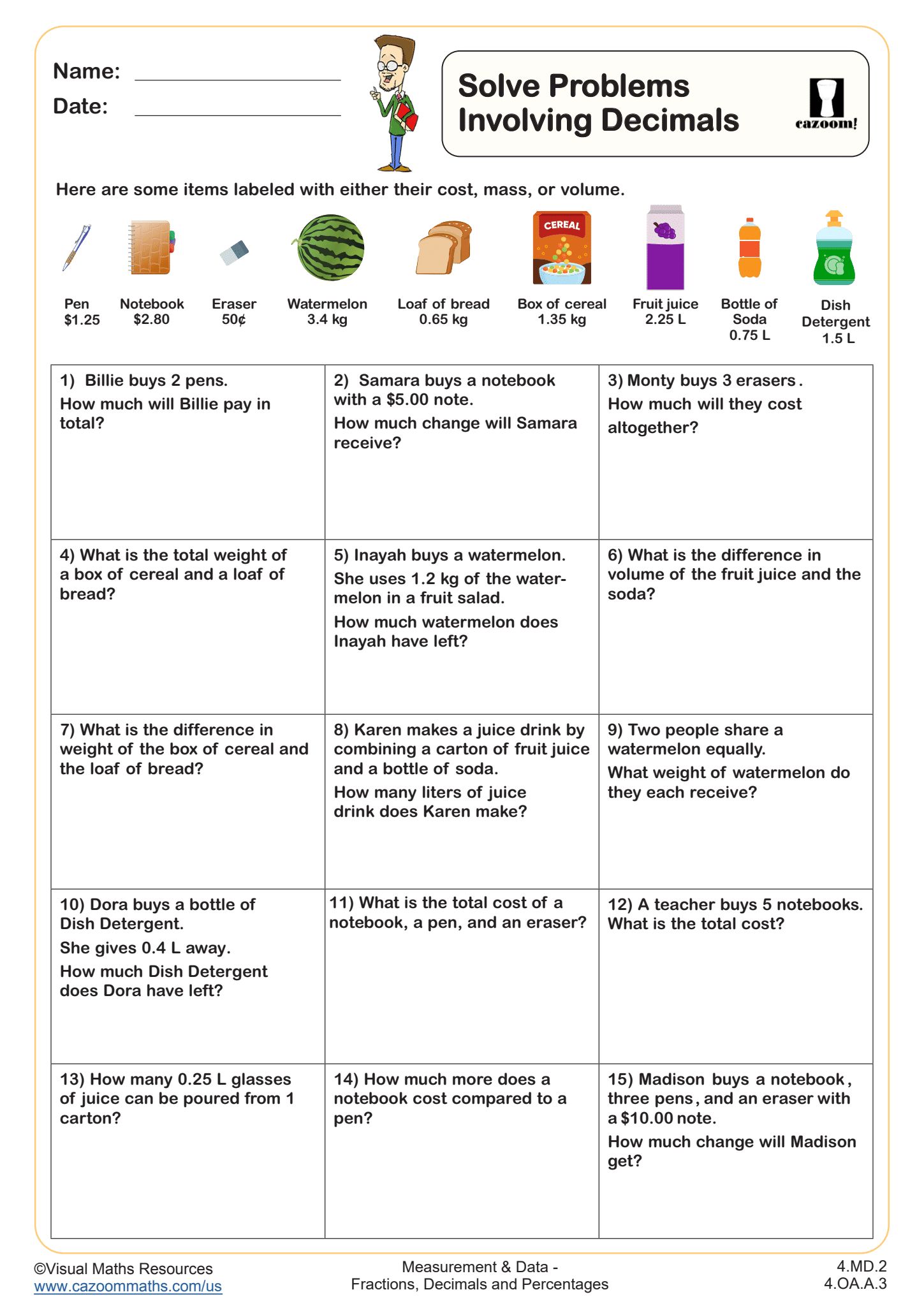
All worksheets are created by the team of experienced teachers at Cazoom Math.
What Metric Measurement Skills Do Elementary Students Need to Master?
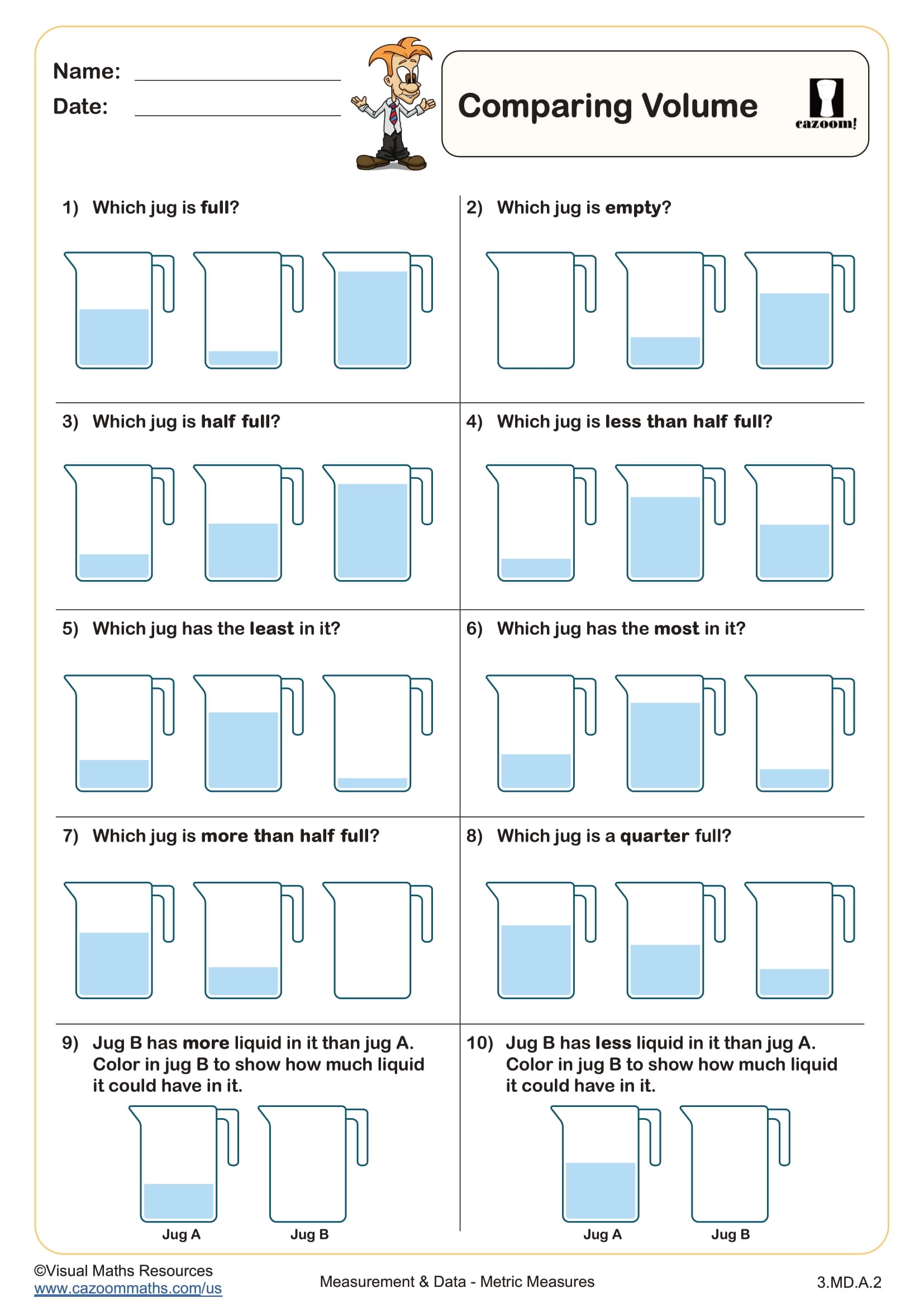
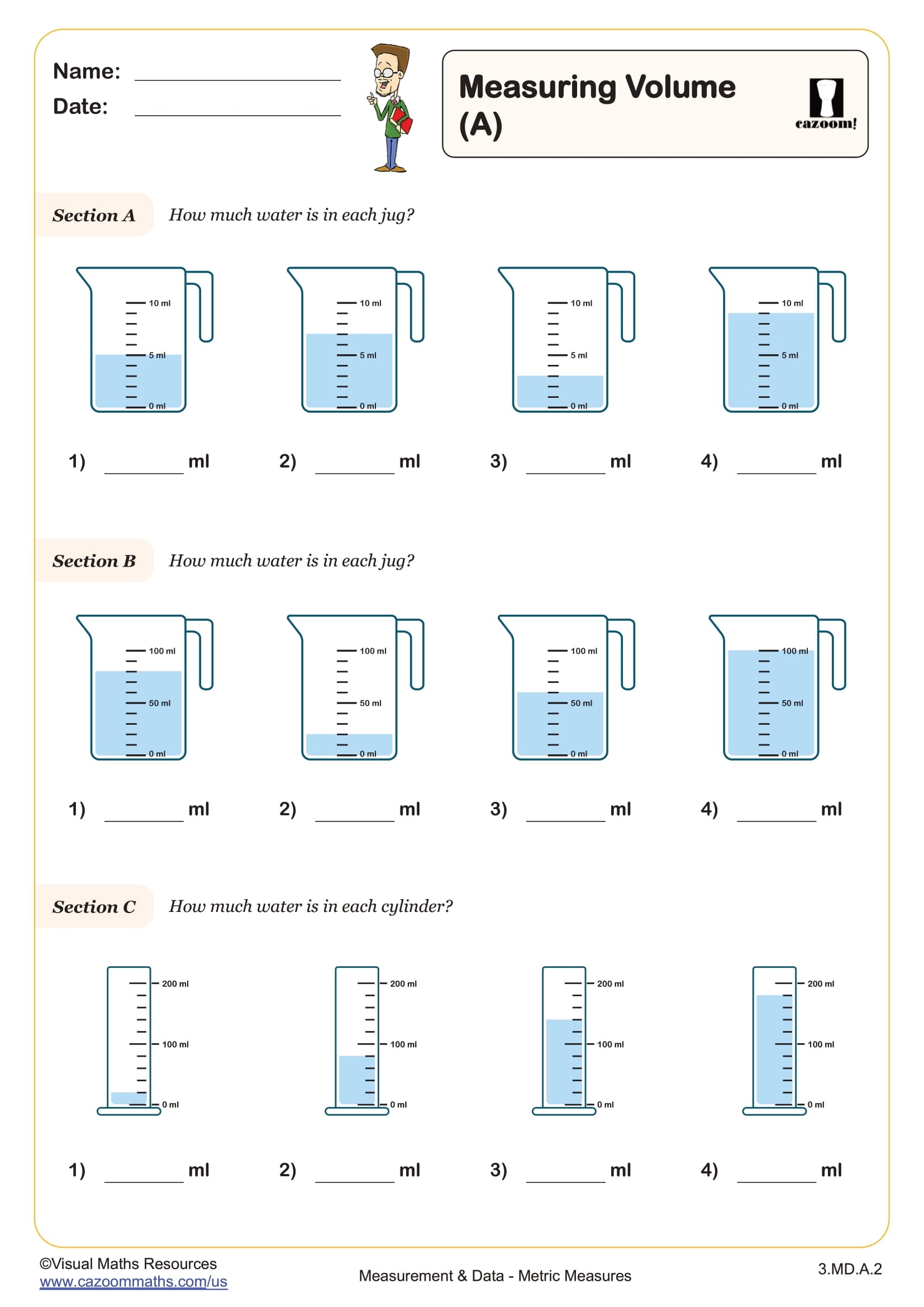
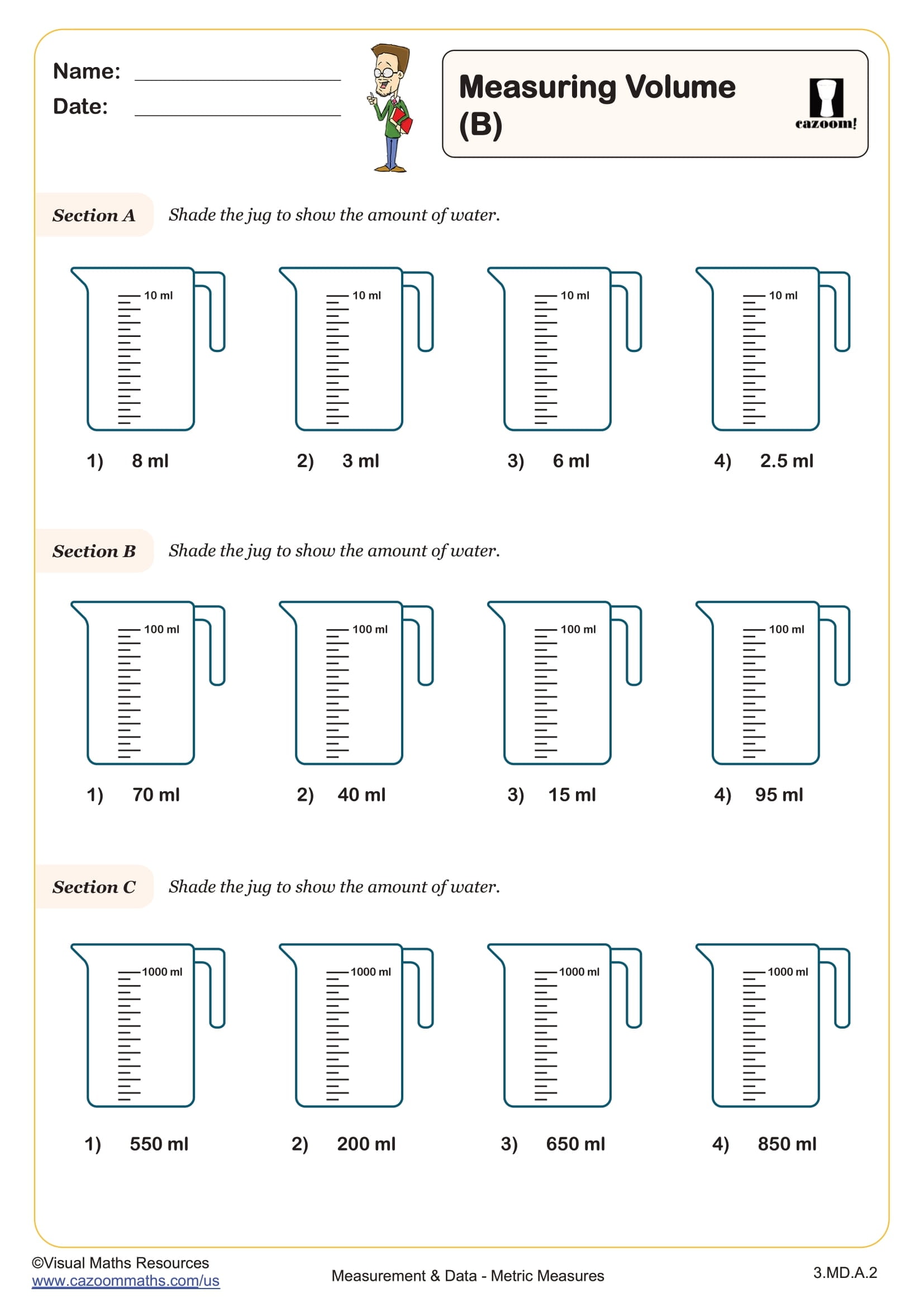
Elementary students progress from basic comparisons of metric volume (which container holds more) through complex decimal operations involving metric units. The curriculum builds from concrete measurement experiences in early grades to abstract problem-solving with metric decimals by fifth grade, aligning with Common Core standards for measurement and data.
Students lose points on assessments when they confuse metric prefixes or apply conversion strategies incorrectly. Teachers frequently observe that students need repeated exposure to the relationship between liters and milliliters (1 L = 1,000 mL) before they confidently solve multi-step volume problems. The worksheets address these pain points by presenting measurement contexts that require both conceptual understanding and procedural fluency with metric units.
Which Grade Levels Cover Metric Measures in Elementary School?
These metric measures worksheets span kindergarten through fifth grade, covering the full elementary school range. Kindergarten and first grade students work with direct comparisons and basic measurement concepts, while upper elementary grades tackle metric conversions, decimal operations, and multi-step problem solving with volume.
The progression reflects how measurement complexity increases across elementary years. Second and third graders transition from whole-number measurements to understanding fractional parts of metric units. By fourth and fifth grade, students divide by decimals in measurement contexts and solve real-world problems requiring metric conversions—skills that state assessments test regularly. This developmental approach ensures students build measurement sense before tackling abstract metric calculations.
How Do Students Learn to Divide by Decimals in Metric Contexts?
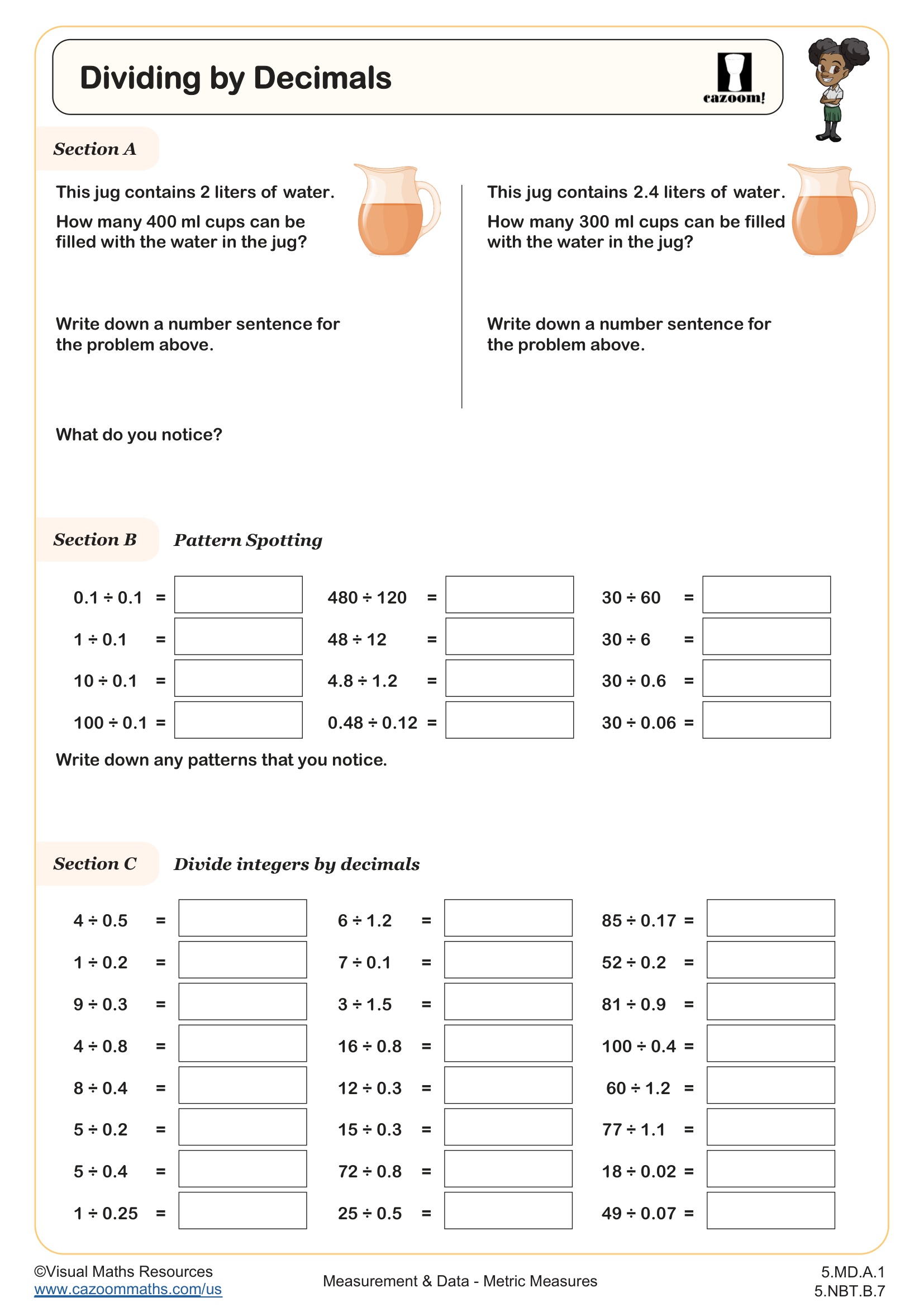
Dividing by decimals challenges students because it requires both understanding division and managing decimal placement. The key breakthrough happens when students recognize they can multiply both the dividend and divisor by powers of 10 to create whole number divisors—essentially shifting the decimal point the same number of places in both numbers. This preserves the quotient while simplifying the calculation.
This skill directly applies to STEM fields where metric measurements dominate. Pharmacists divide medication volumes by decimal dosages, environmental scientists calculate pollutant concentrations per liter, and engineers determine material quantities using metric specifications. Students who master decimal division in measurement contexts develop the numerical flexibility required for scientific calculations, where metric units and decimal precision are standard practice across all disciplines.
How Can Teachers Use These Metric Measures Worksheets Effectively?
The worksheets provide structured practice that moves from guided examples to independent problem-solving. Answer keys allow students to check their work immediately, which research shows strengthens learning more effectively than delayed feedback. Teachers can use the progression across subtopics to identify exactly where students need additional support with metric measurement concepts.
Many teachers assign these worksheets as targeted intervention for students who struggle during state assessment preparation, particularly with word problems involving metric units. The volume measurement worksheets work well for paired activities where students compare strategies for solving the same problem. Teachers also use them as homework to reinforce classroom instruction or as warm-up activities to maintain measurement fluency throughout the school year, not just during dedicated measurement units.