Elementary School Number Bonds Over 20 Worksheets
Making 100 with 2 Numbers (A) (multiples of 10)
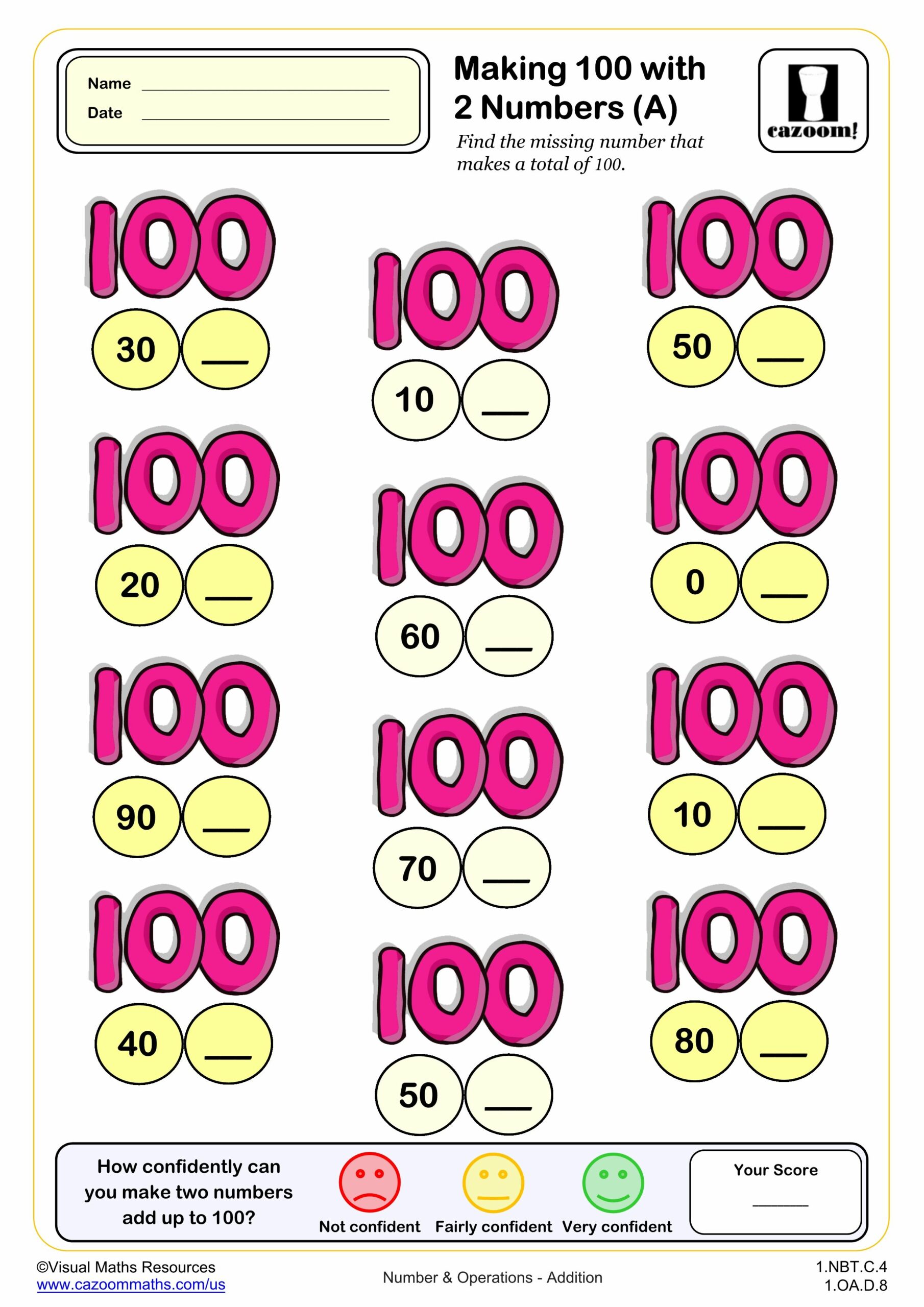
Making 100 with 2 numbers (B) (multiples of 5)
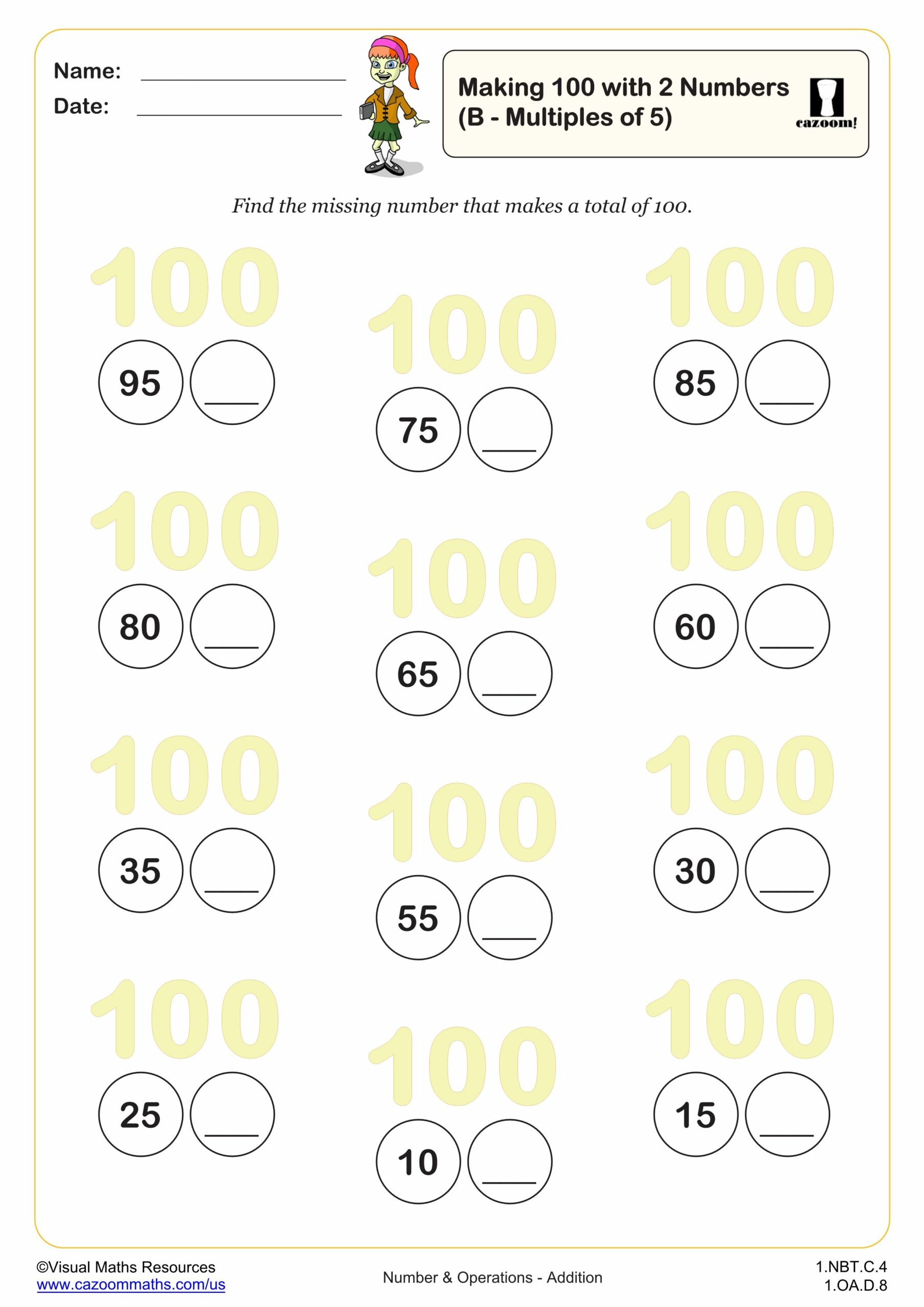
Making 100 with 2 numbers (blanks)
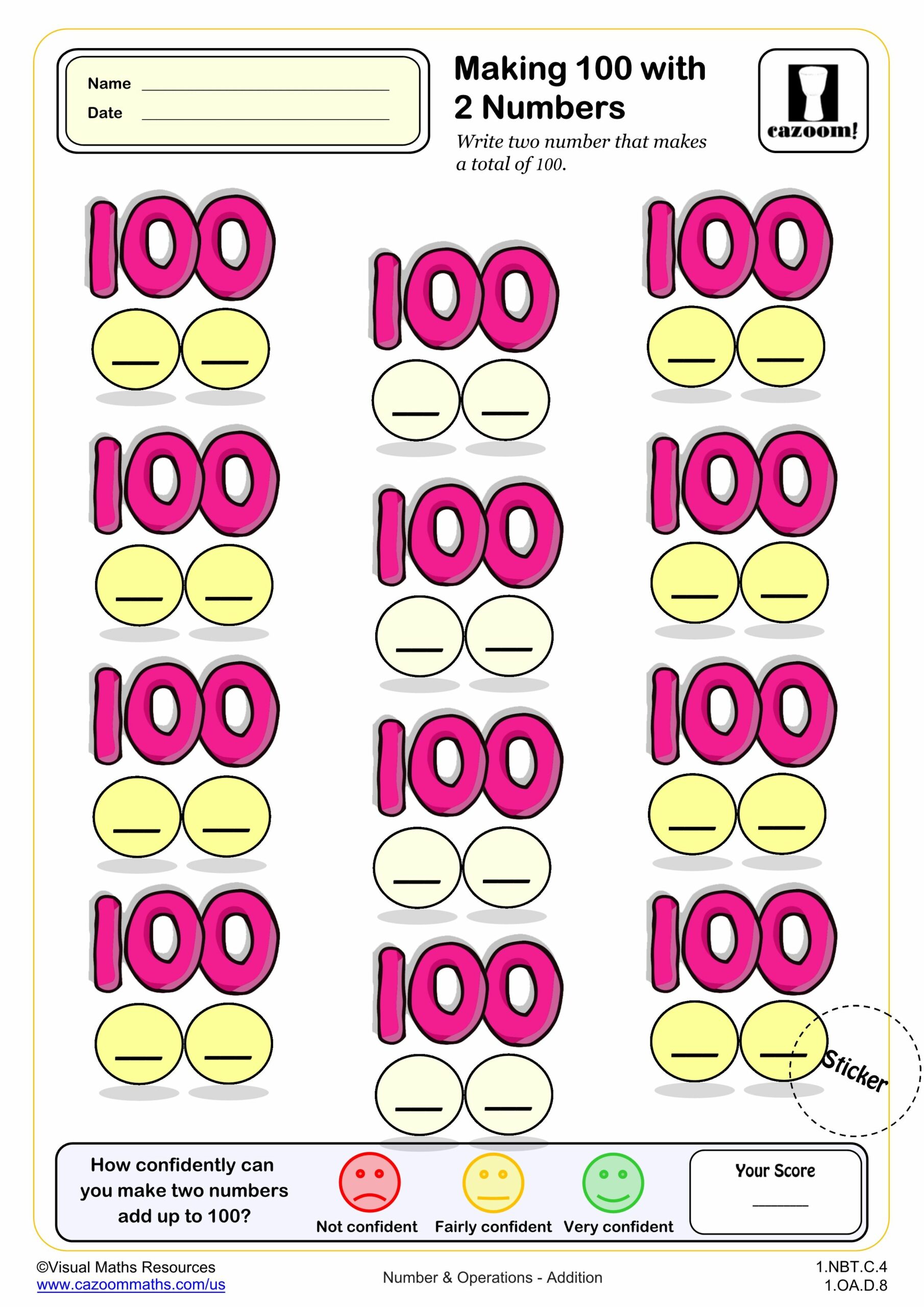
Making 100 with 2 numbers (C)
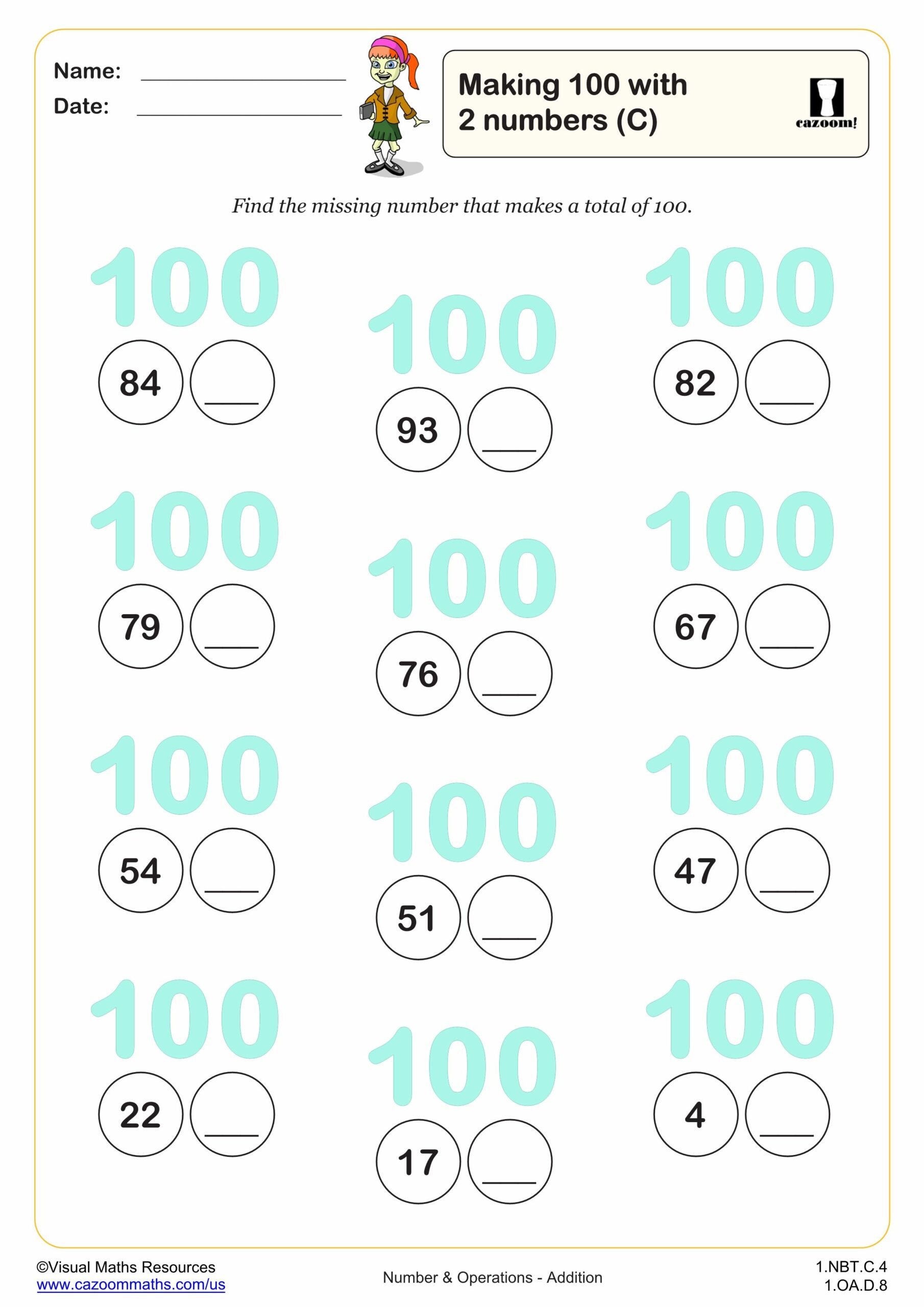
Making 100 with 3 Numbers (A) (multiples of 10)
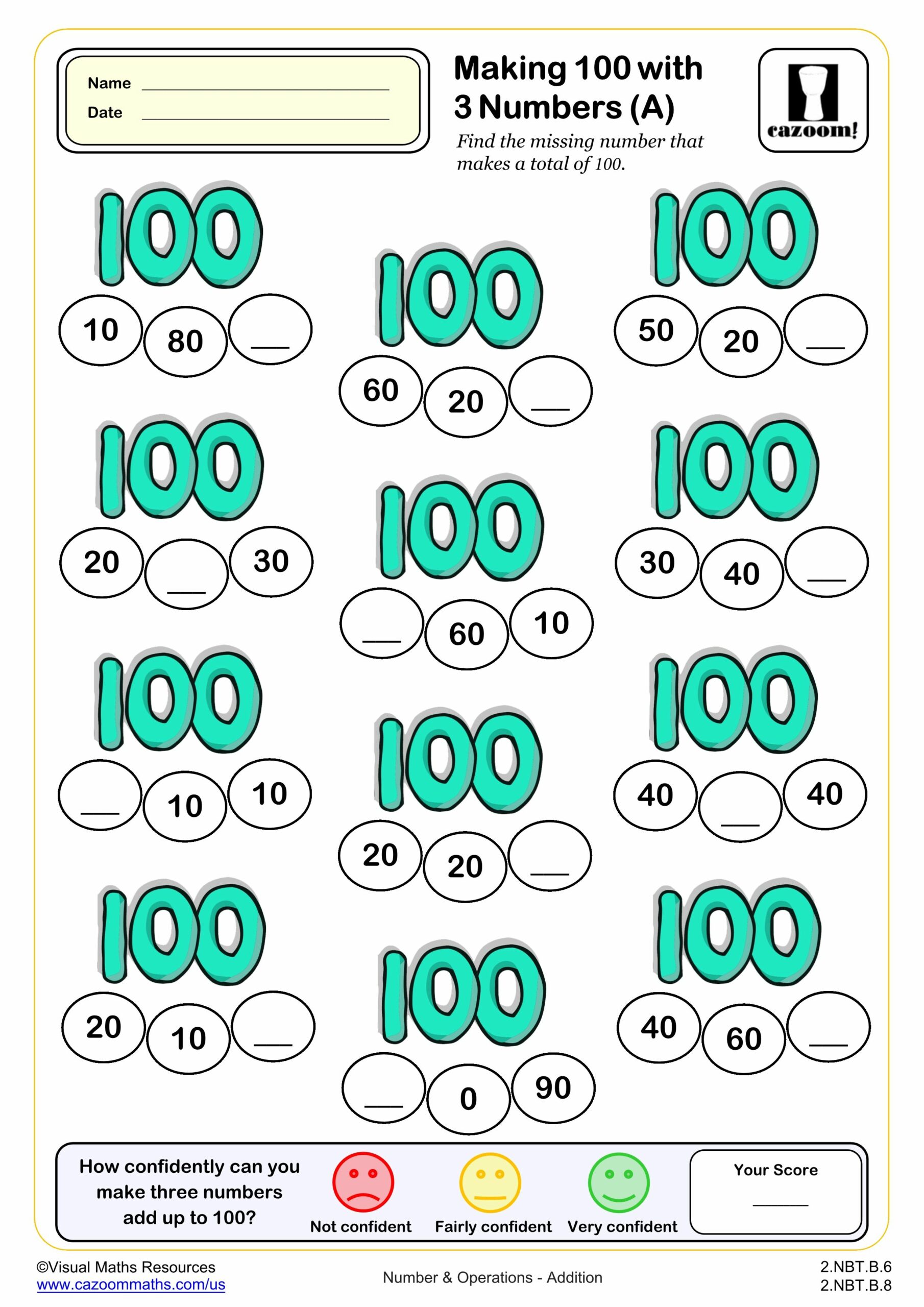
Making 100 with 3 numbers (B) (multiples of 5)
Making 100 with 3 numbers (blanks)
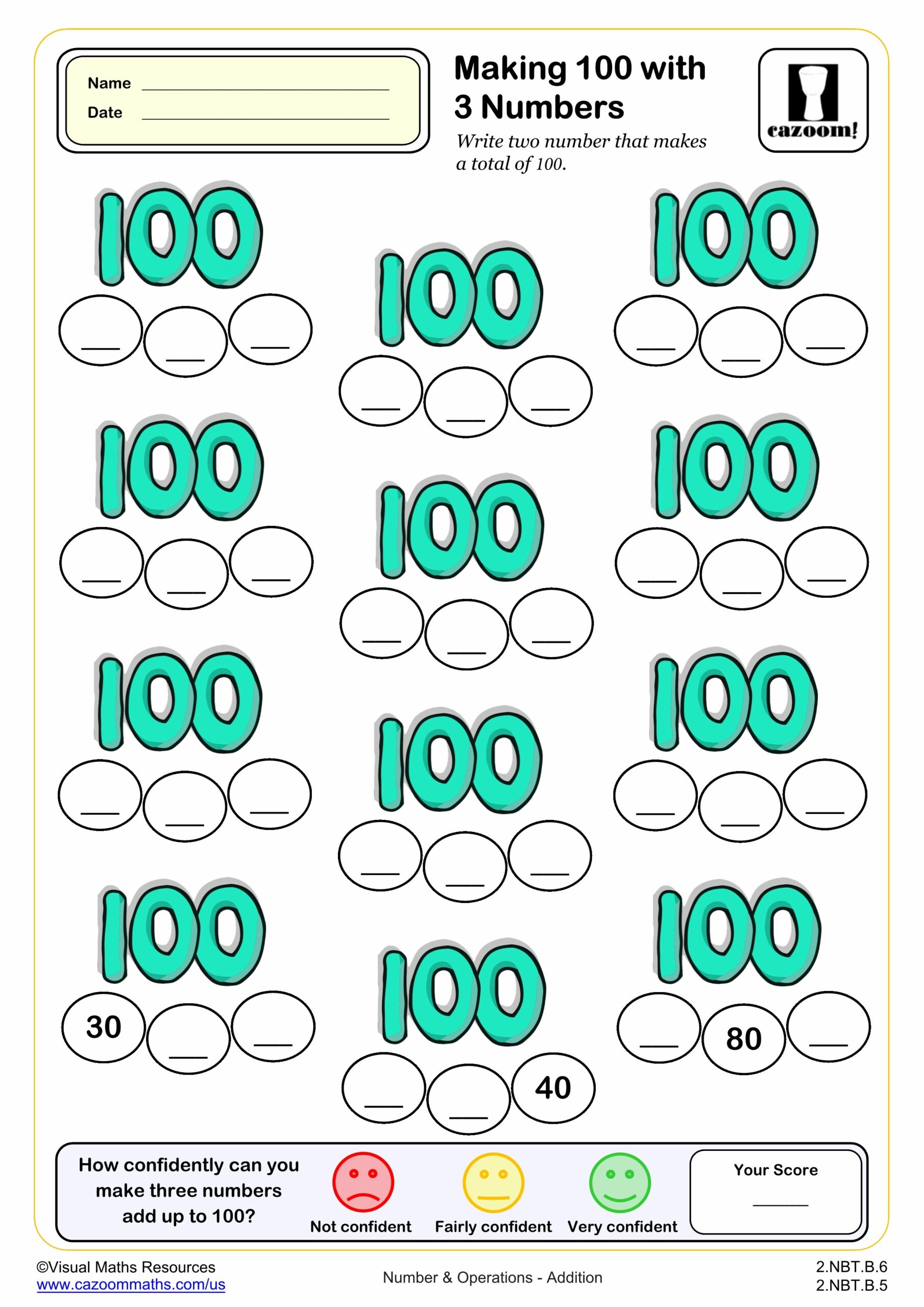
Making 100 with 3 numbers (C)
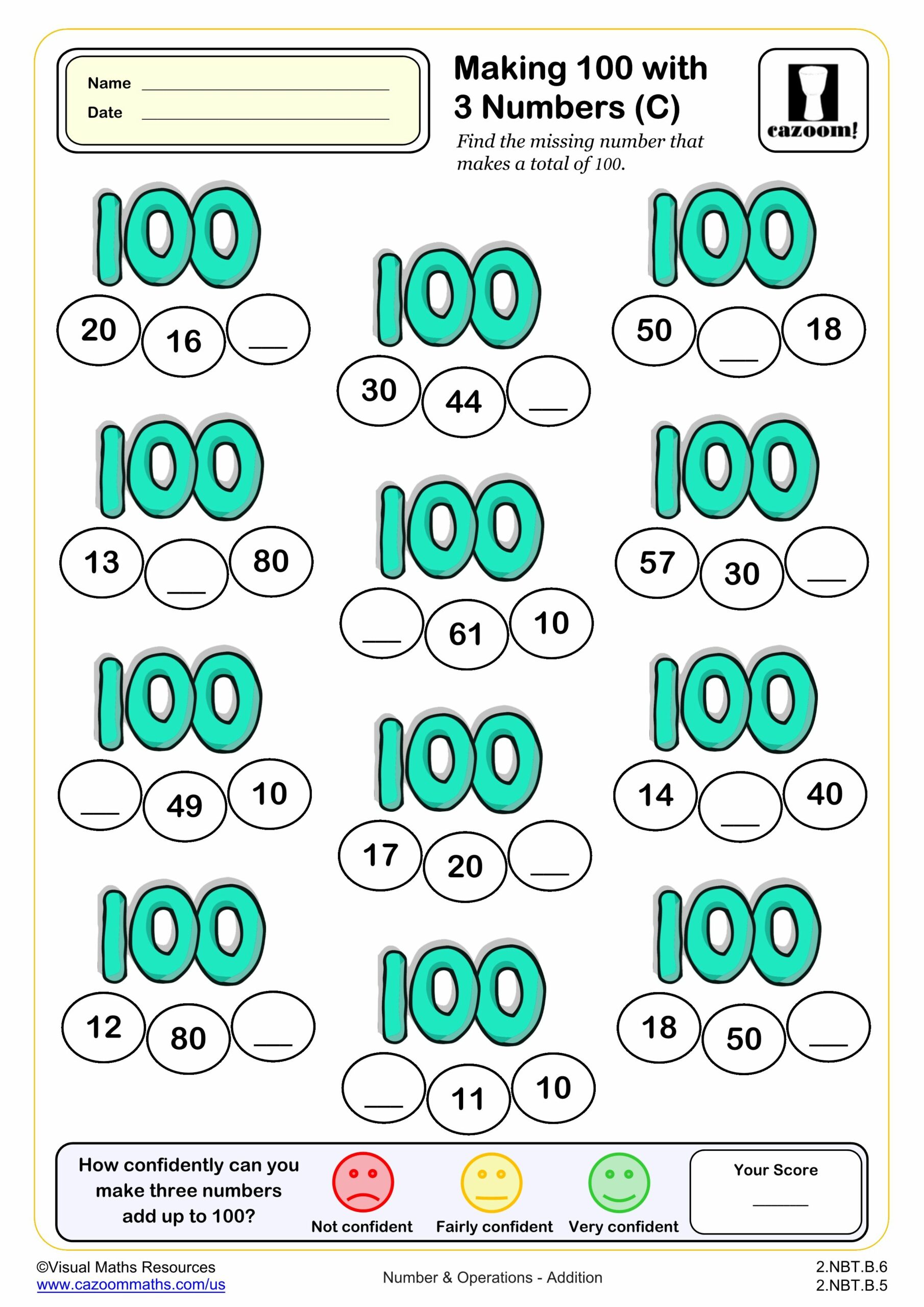
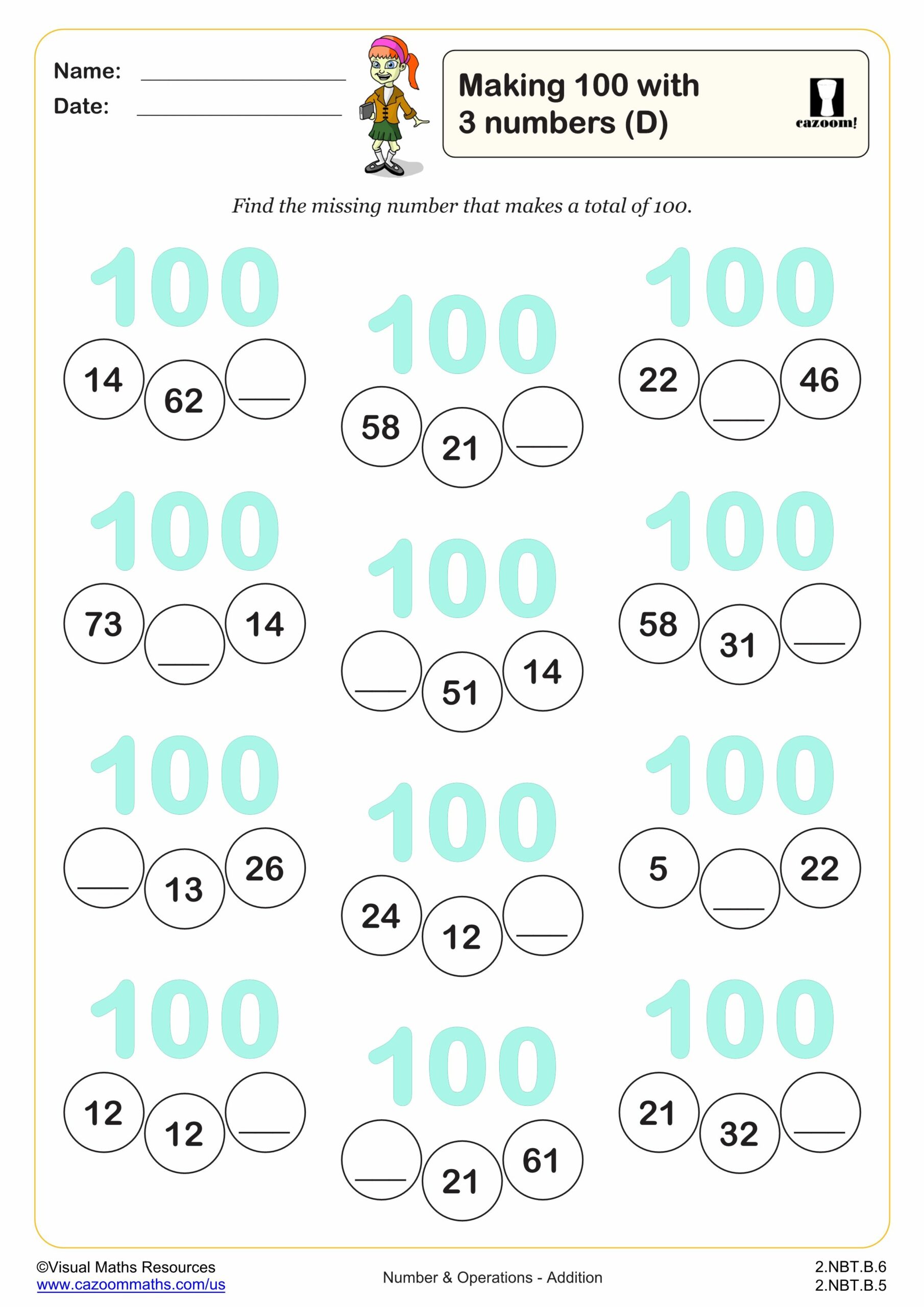
Making 100 with 3 numbers (D) (no regrouping)
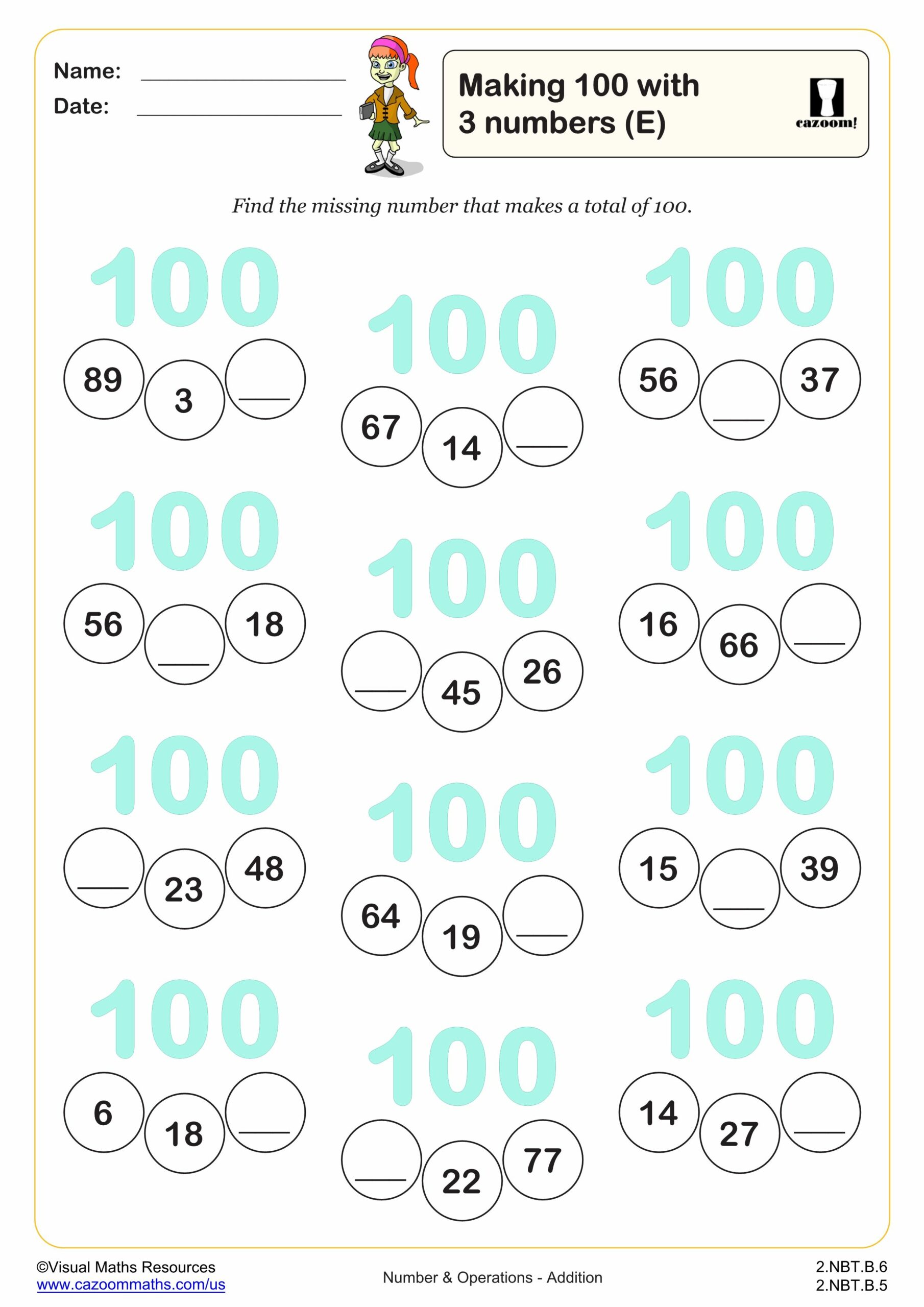
Making 100 with 3 numbers (E) (with regrouping)
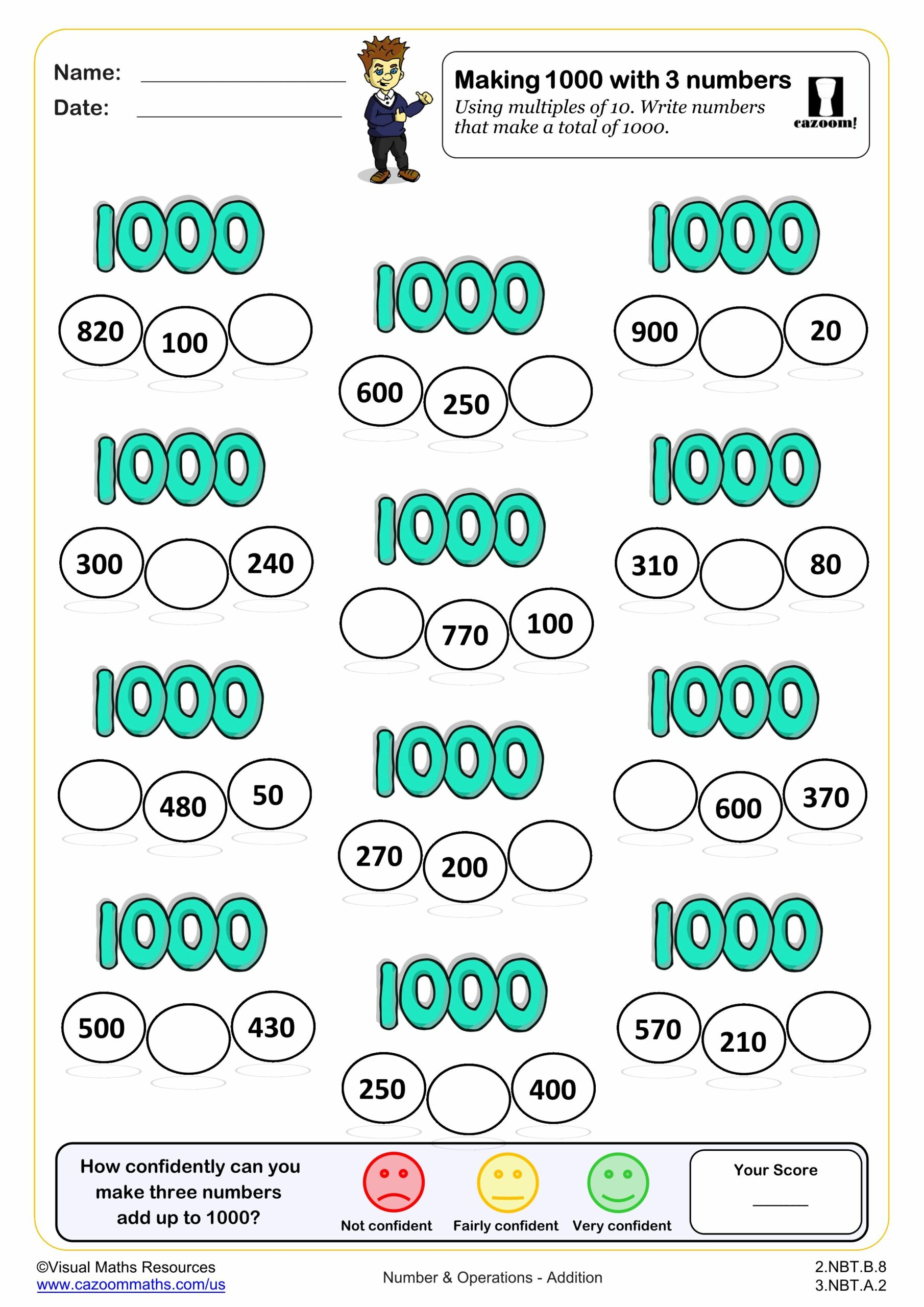
Making 1000 with 3 numbers using multiples of 10
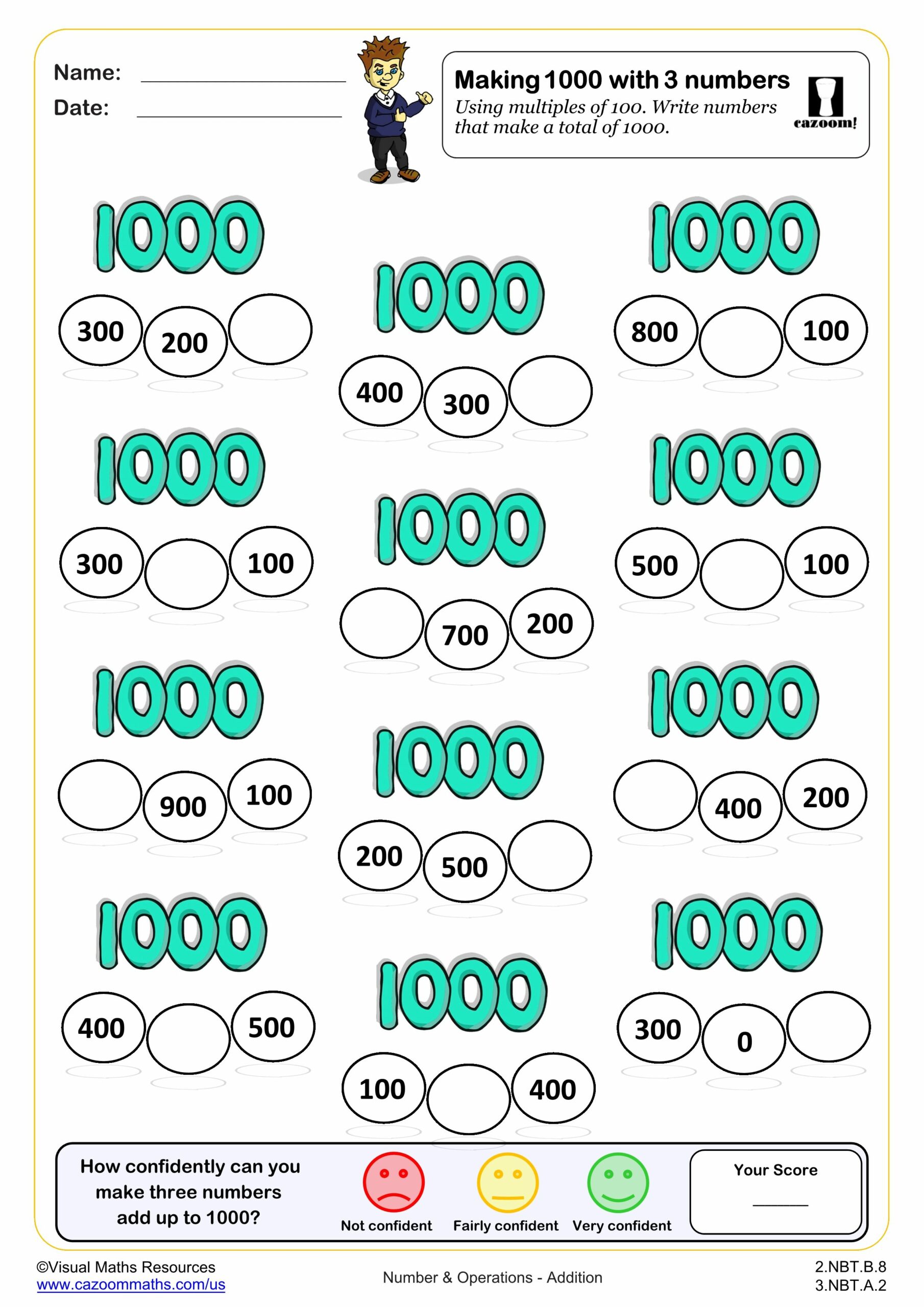
Making 1000 with 3 numbers using multiples of 100
Making 25
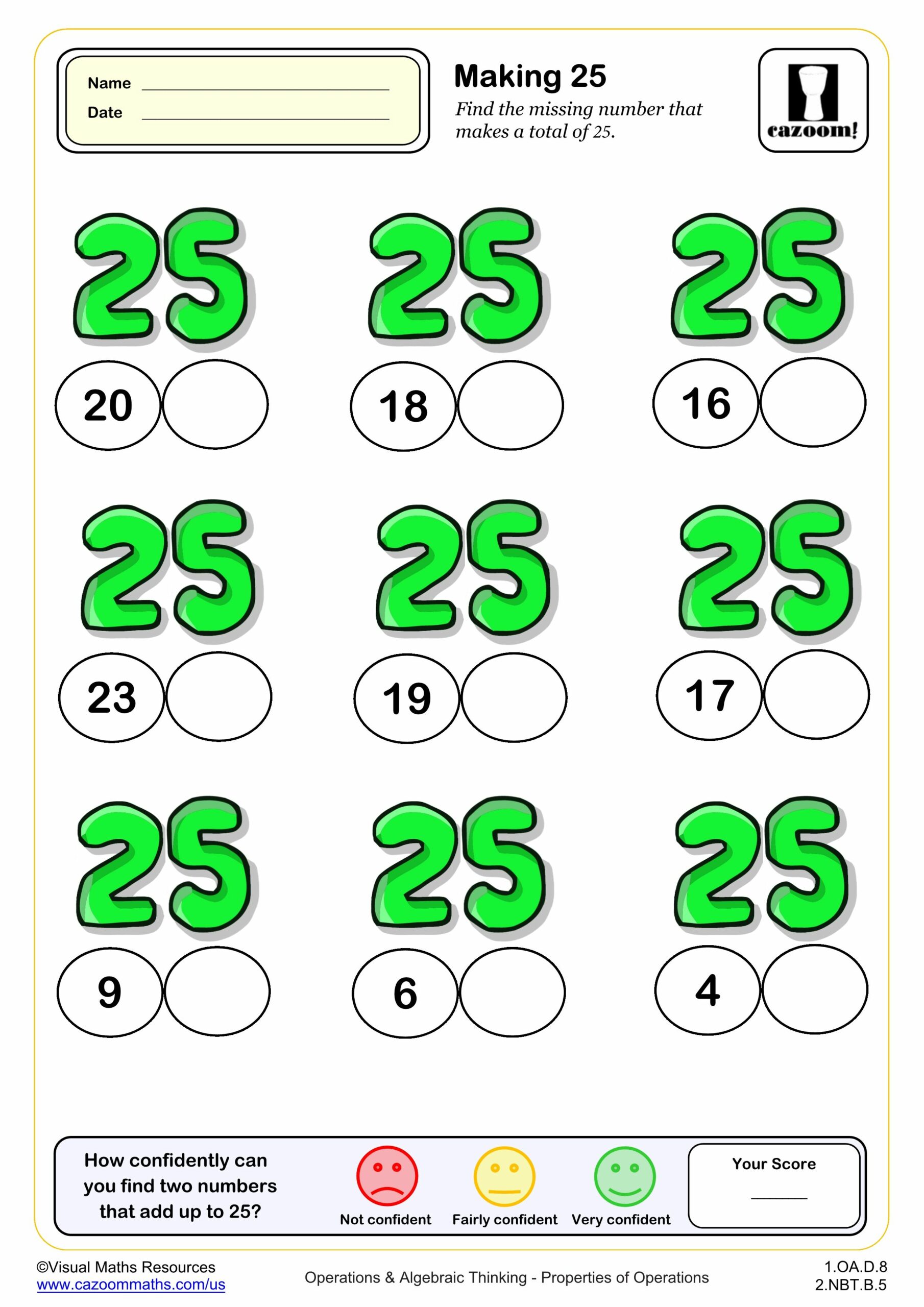
Making 25 (Blanks)
Making 28
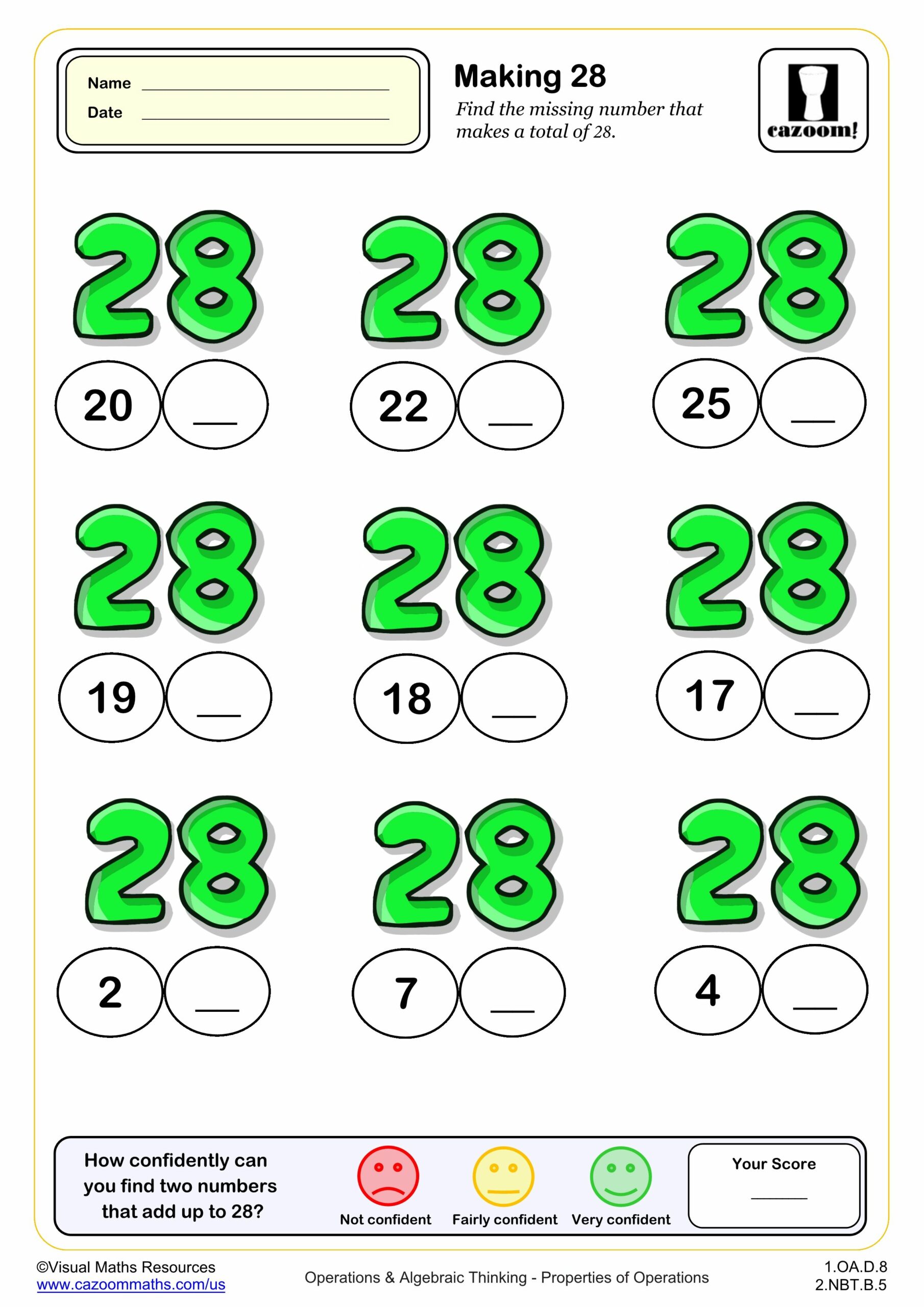
Making 28 (Blanks)
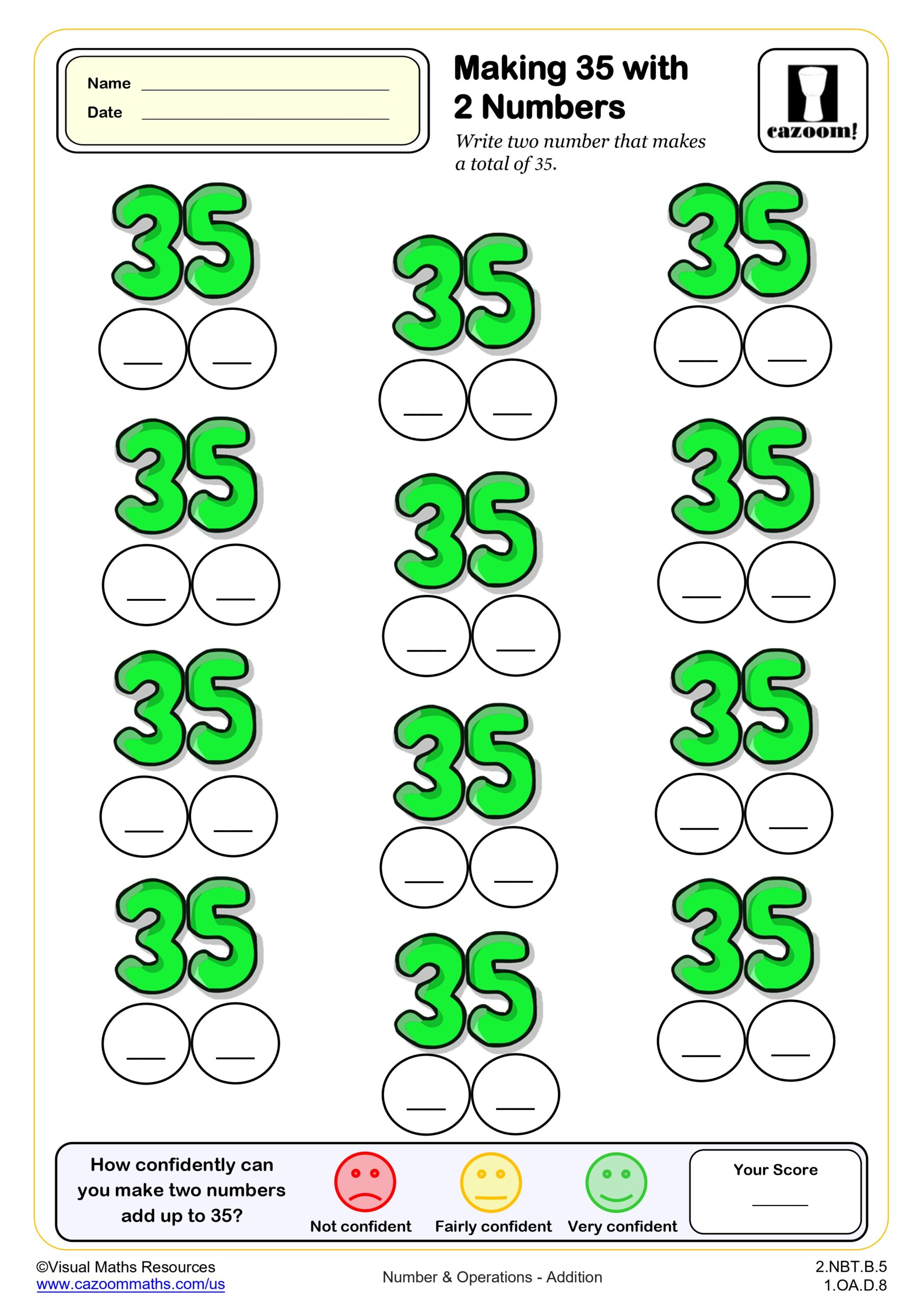
Making 35 (blanks)
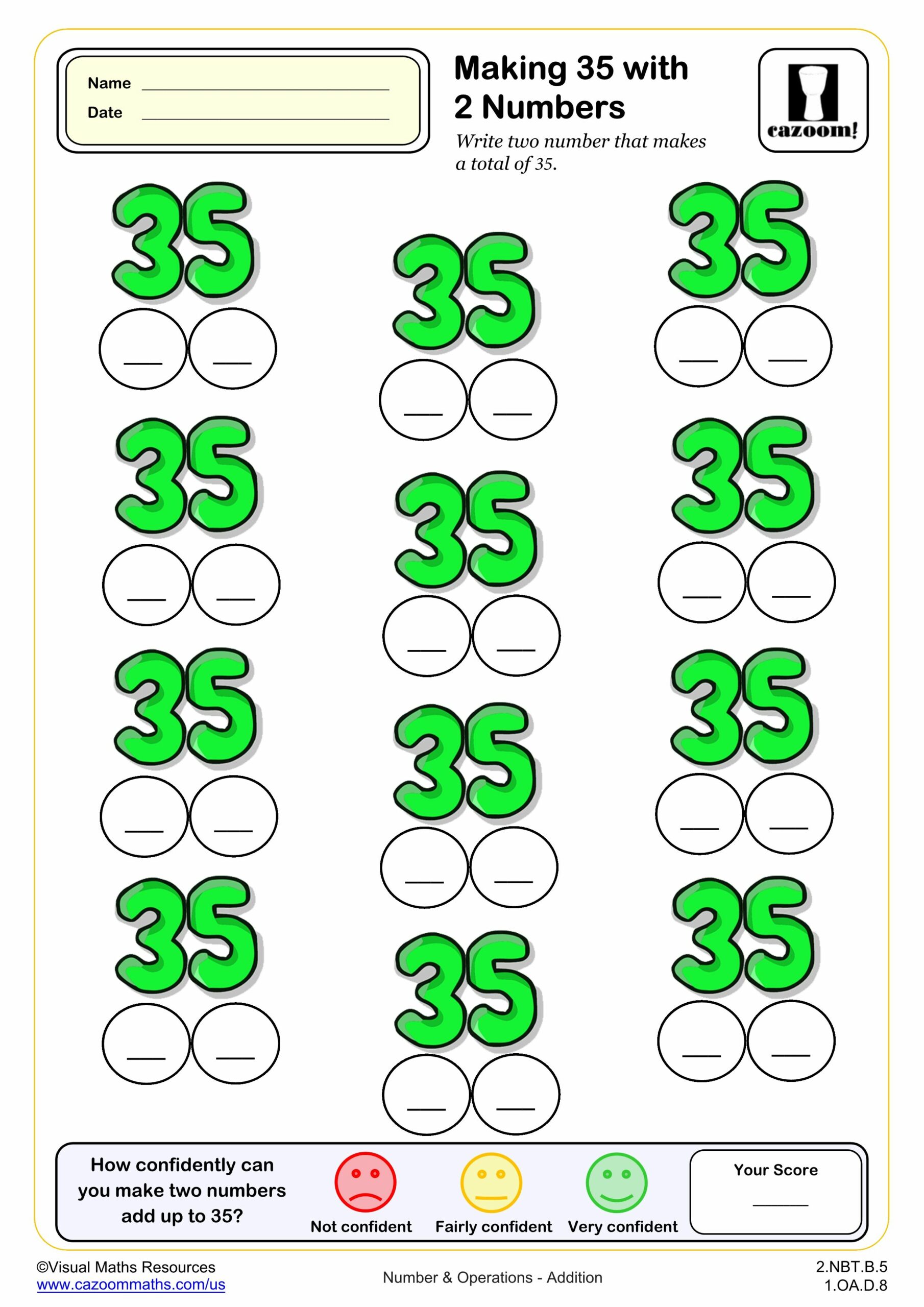
Making 35 with 2 numbers
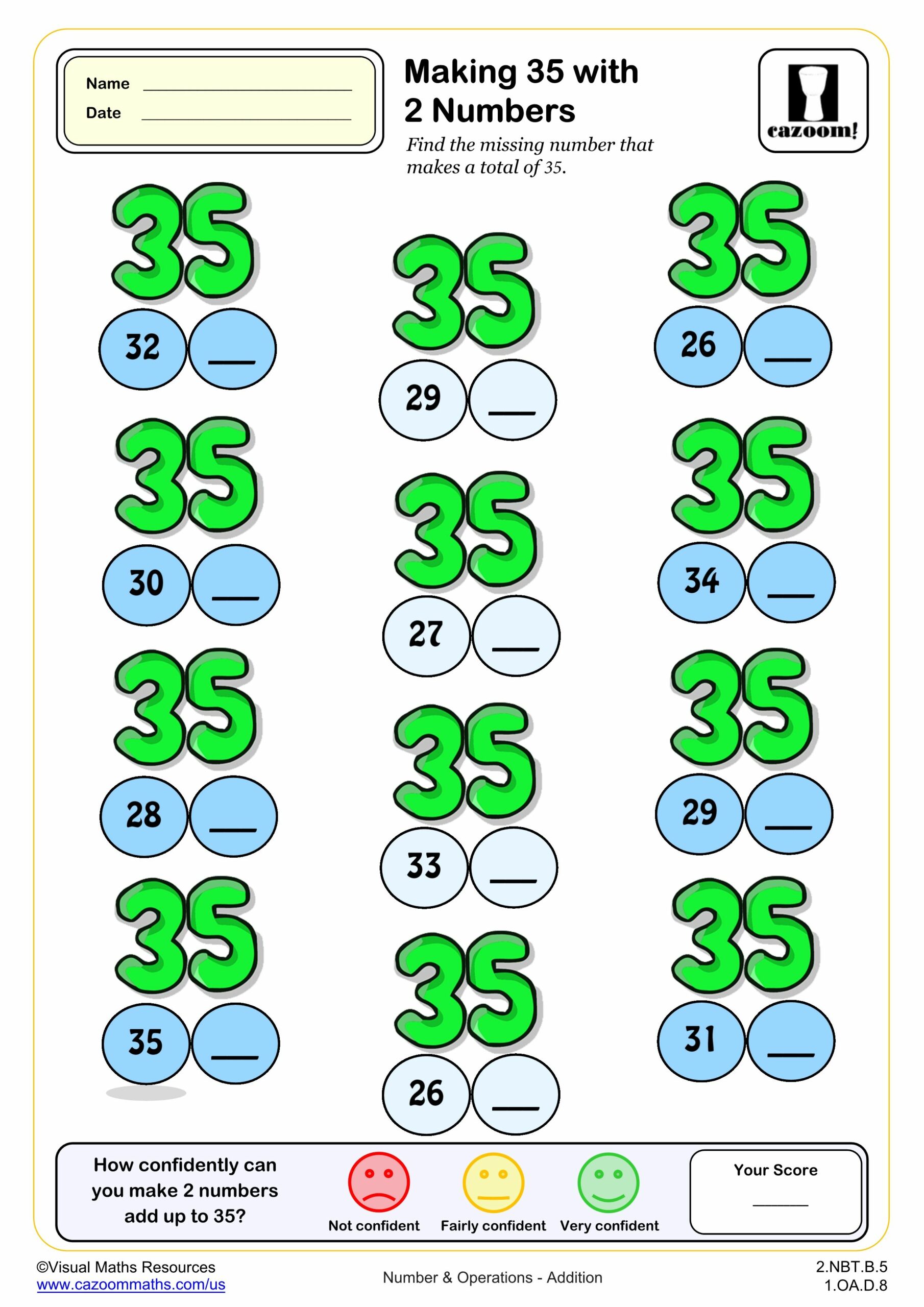
Making 35 with 2 Numbers (BONDS)
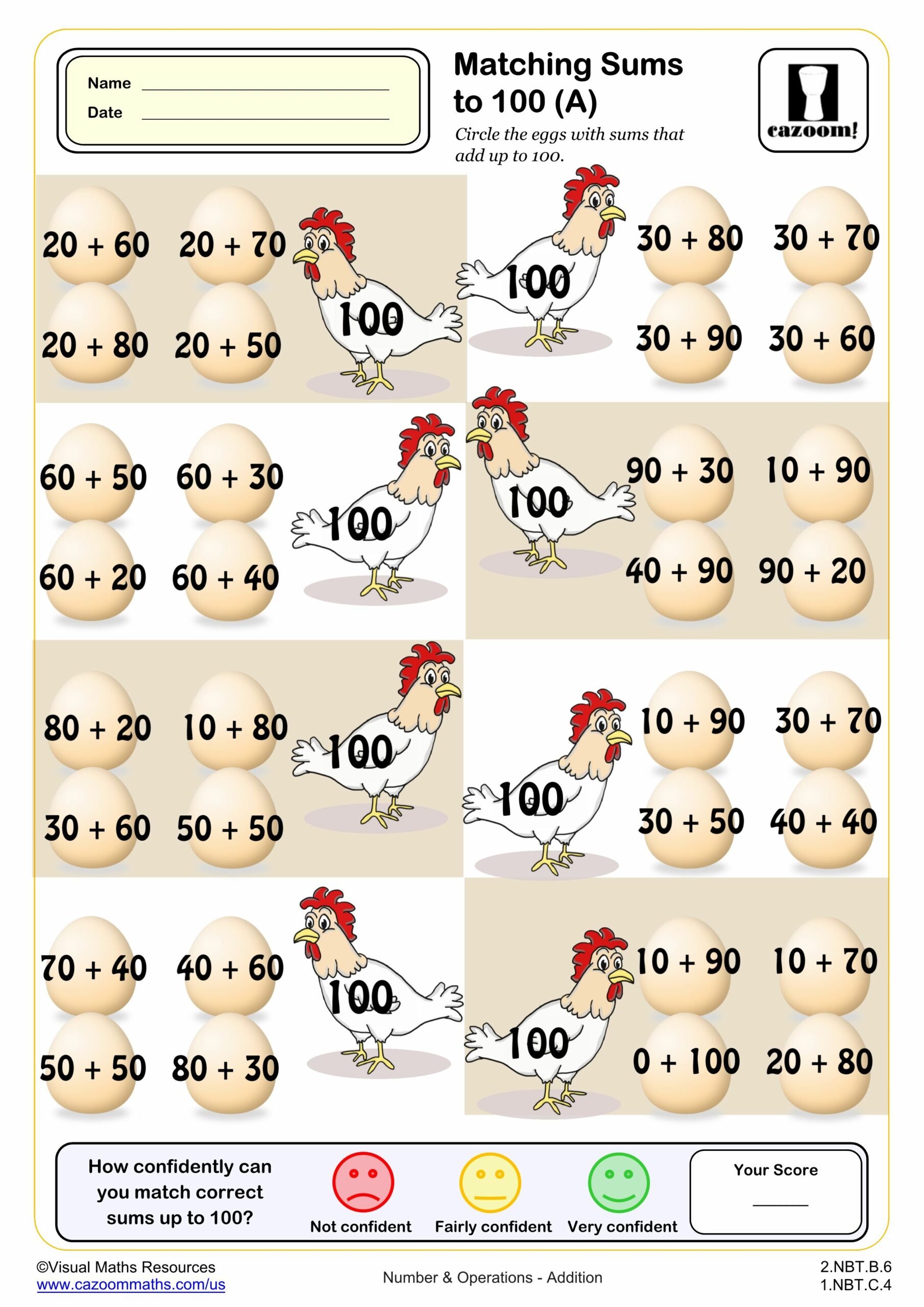
Matching sums to 100 (A)
Matching sums to 100 (B)
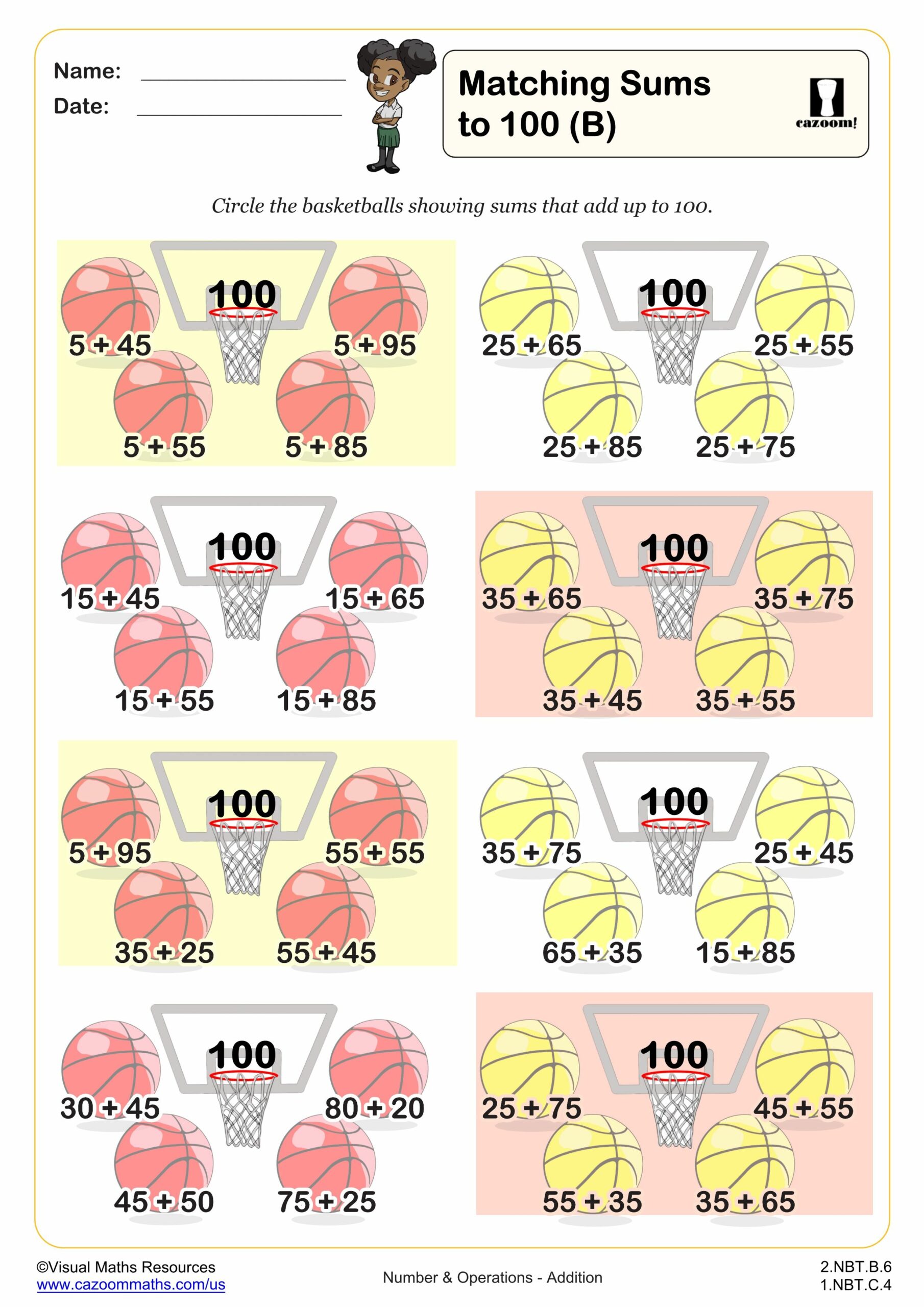
Matching sums to 100 (C)
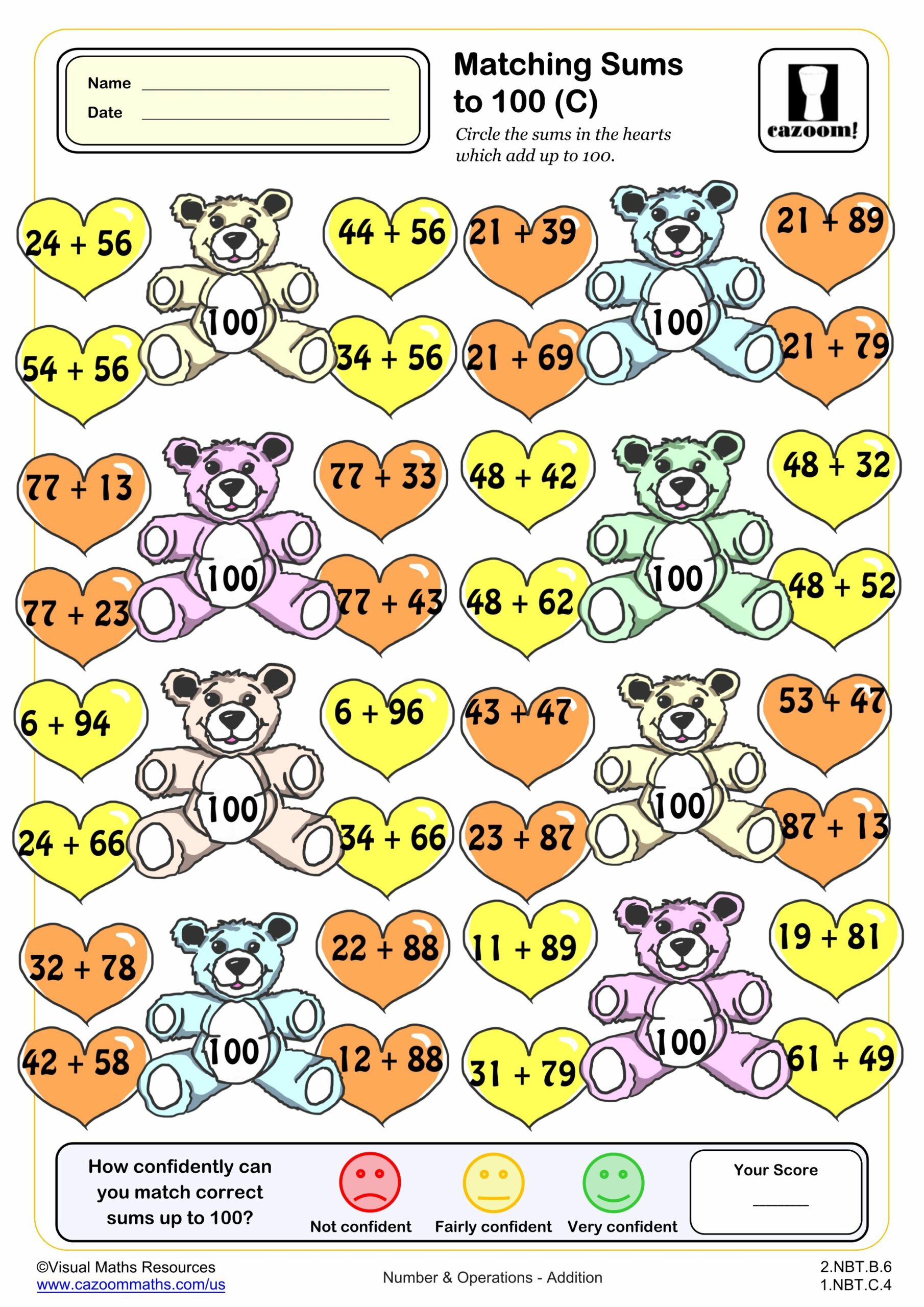
Number bond to 100 Drills (A) (10 questions)
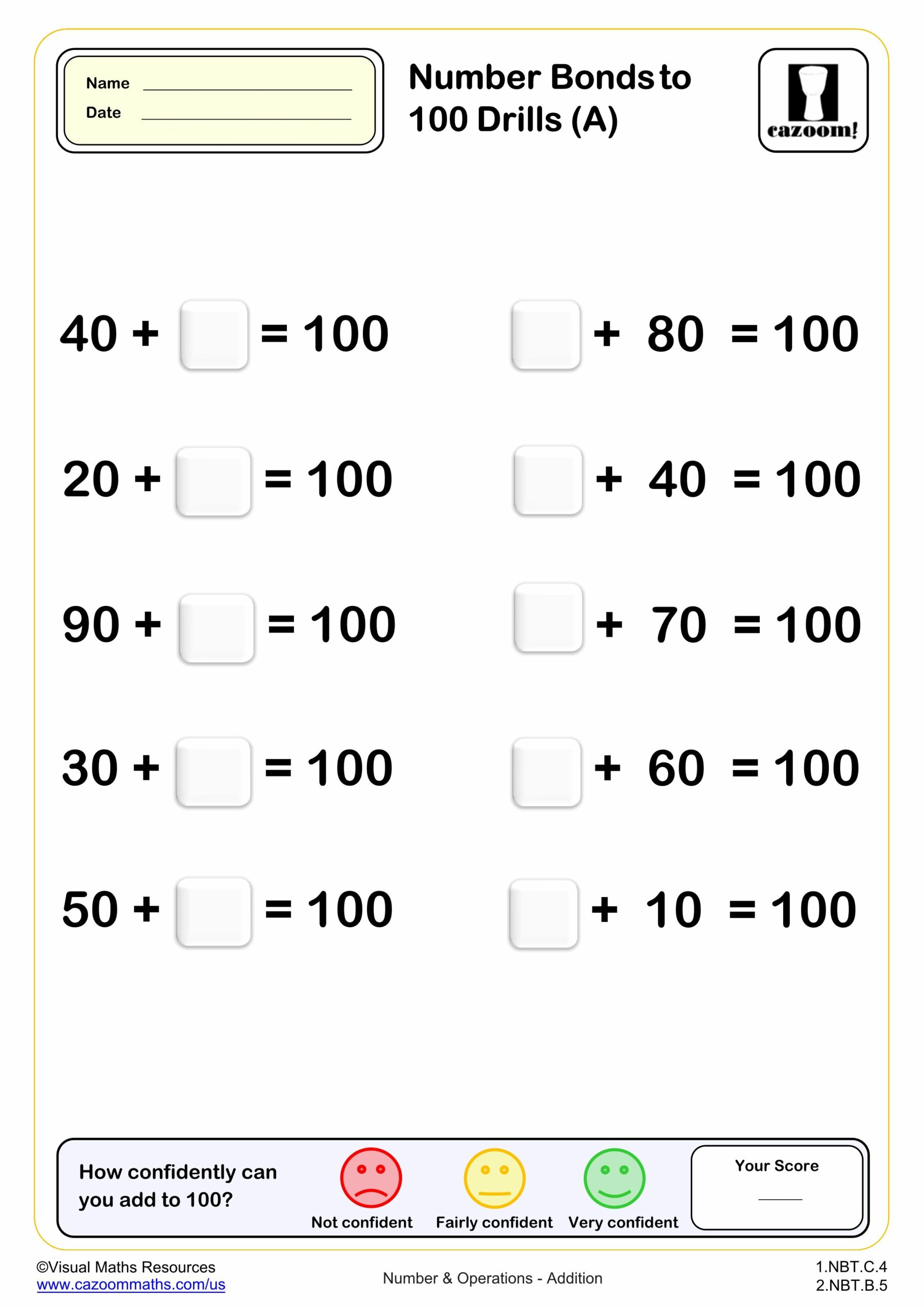
Number bond to 100 Drills (A) (20 questions)
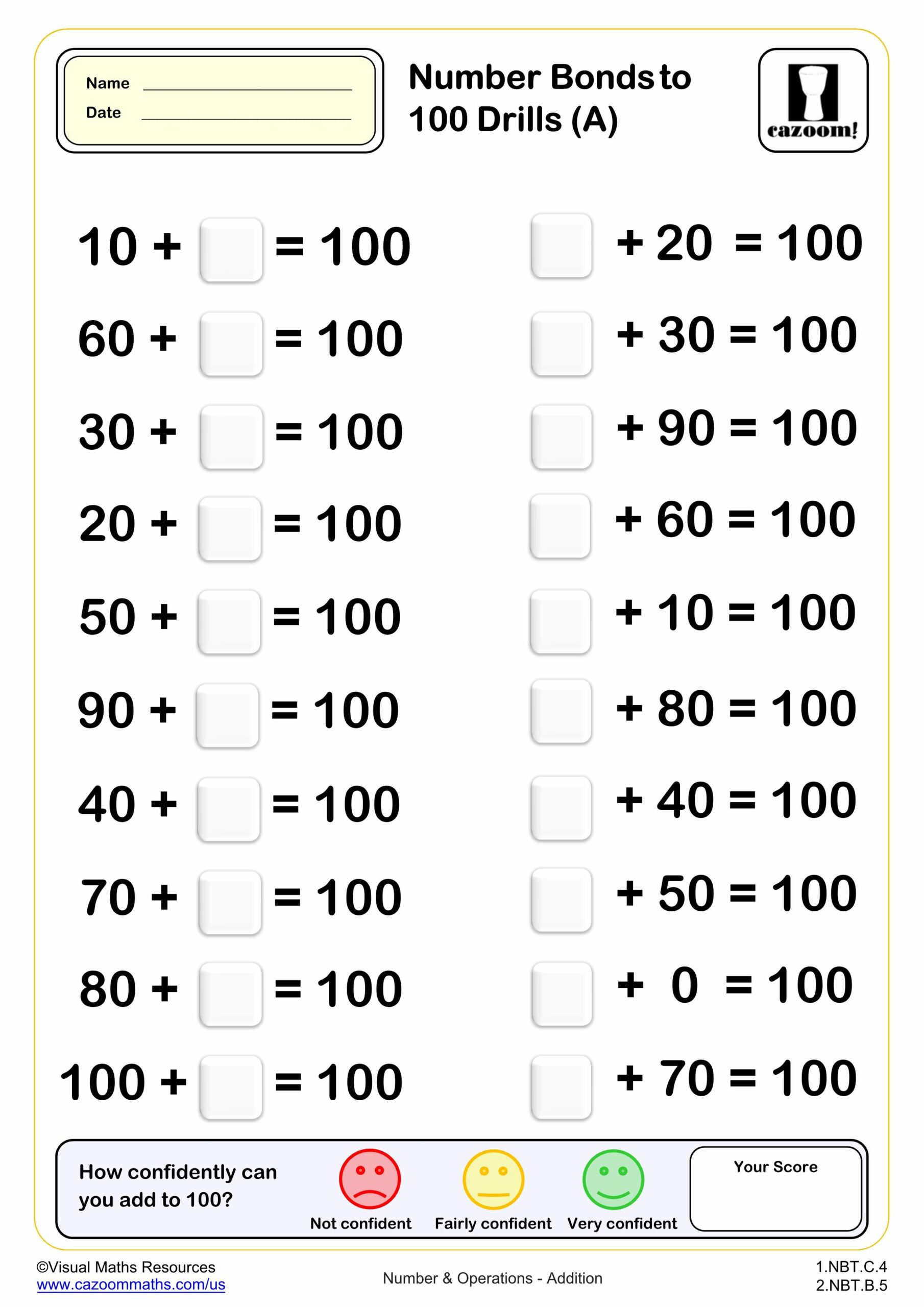
Number bond to 100 Drills (A) (50 questions)
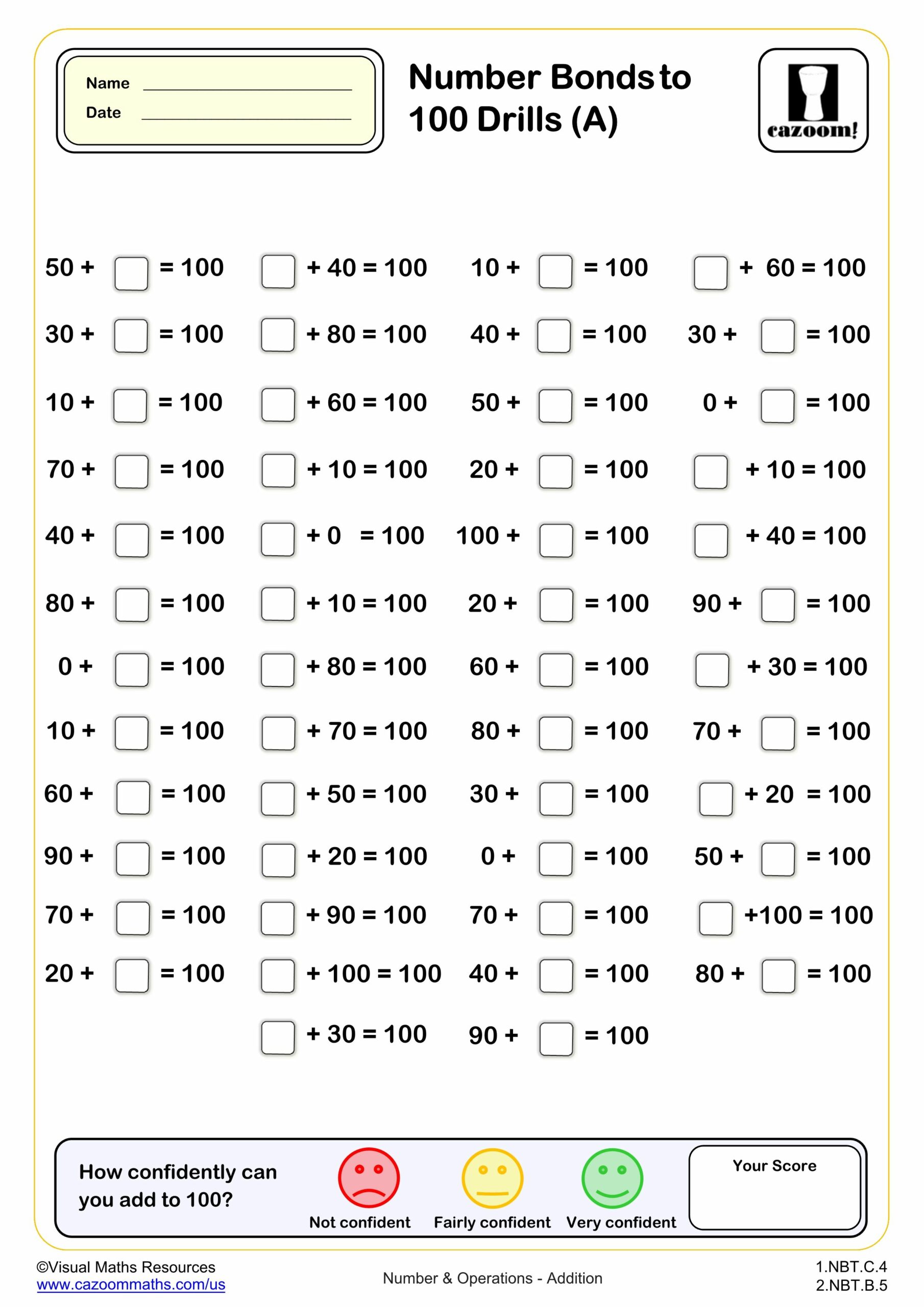
Number bond to 100 Drills (B) (10 questions)
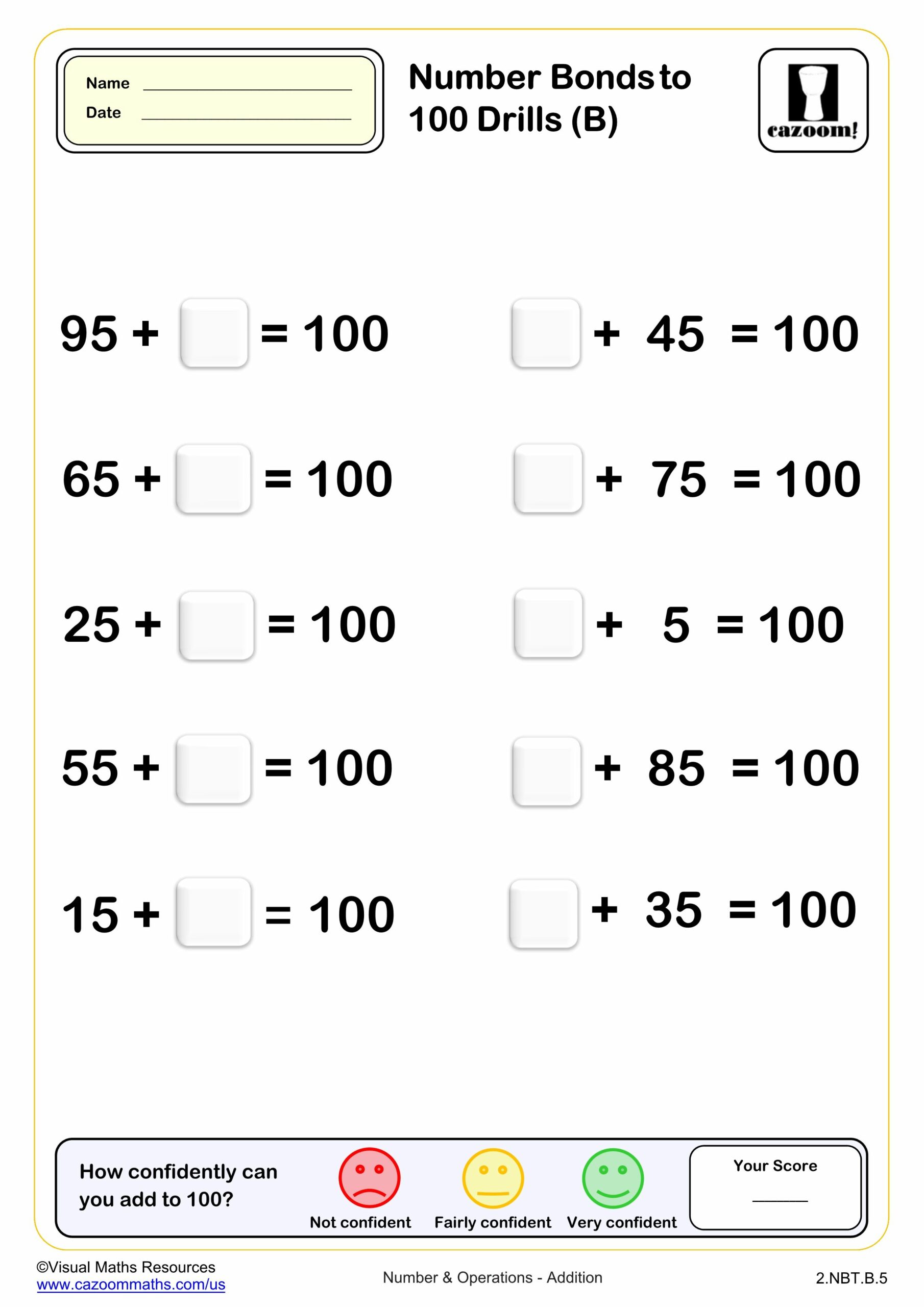
Number bond to 100 Drills (B) (20 questions)
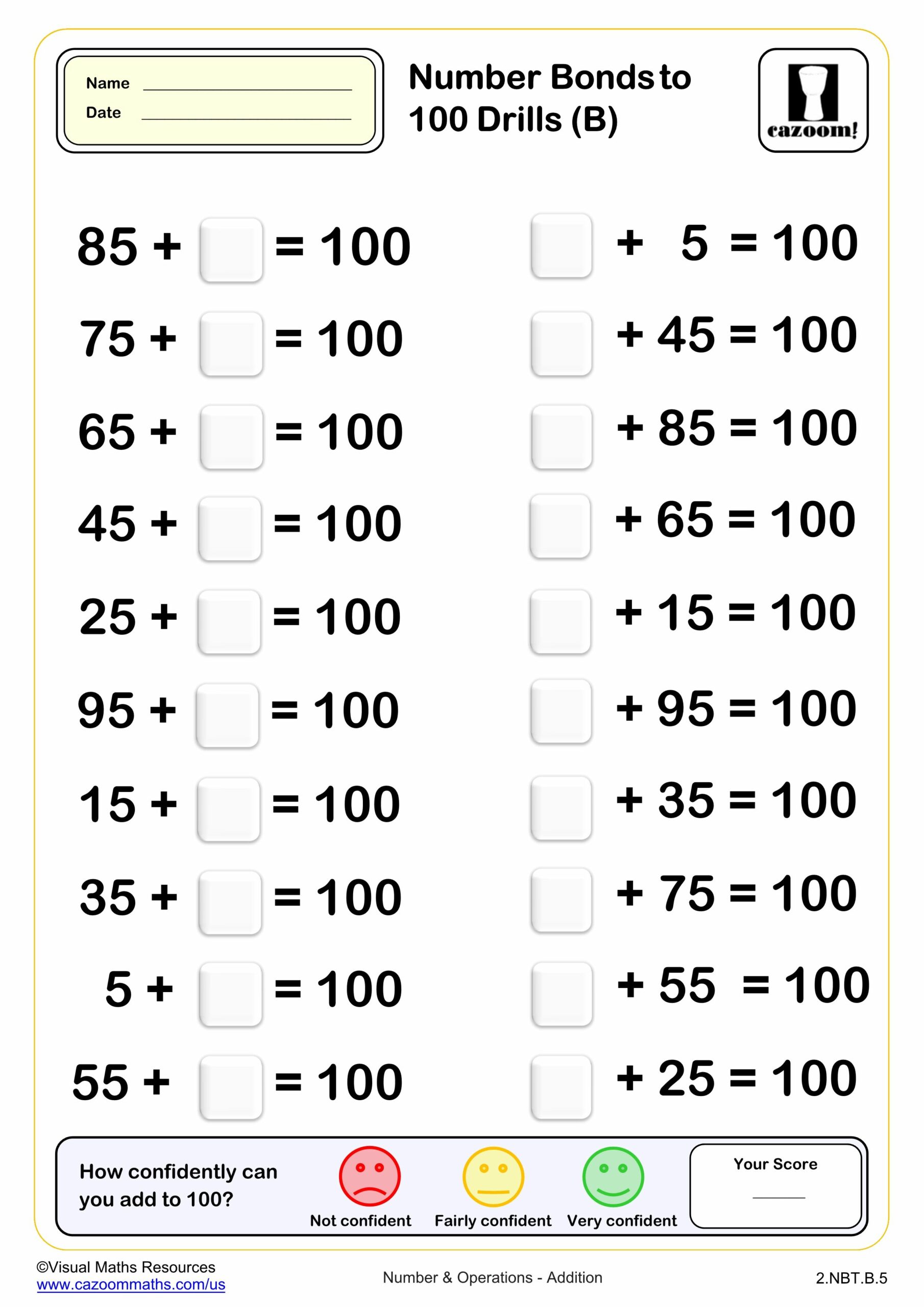
Number bond to 100 Drills (B) (50 questions)
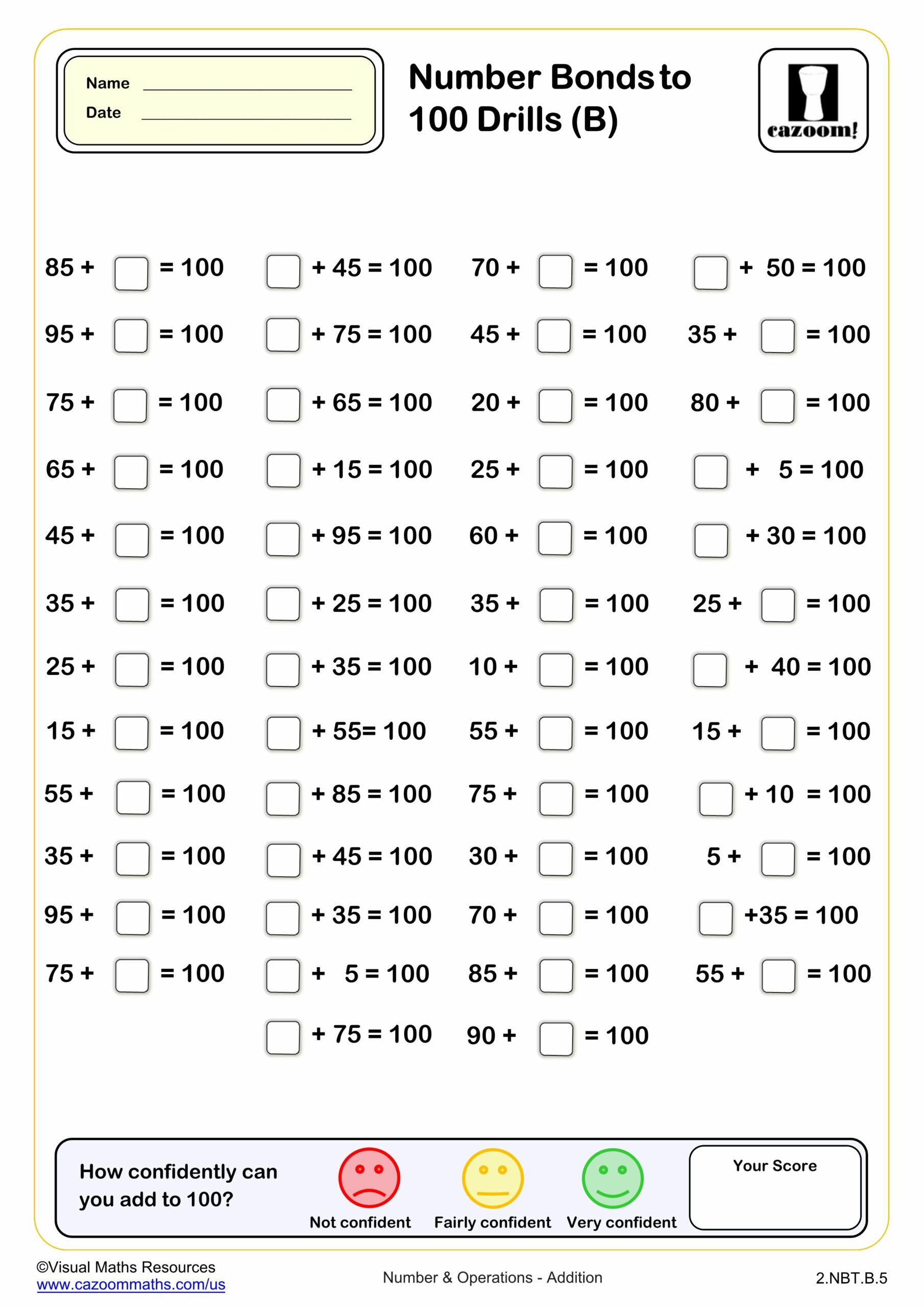
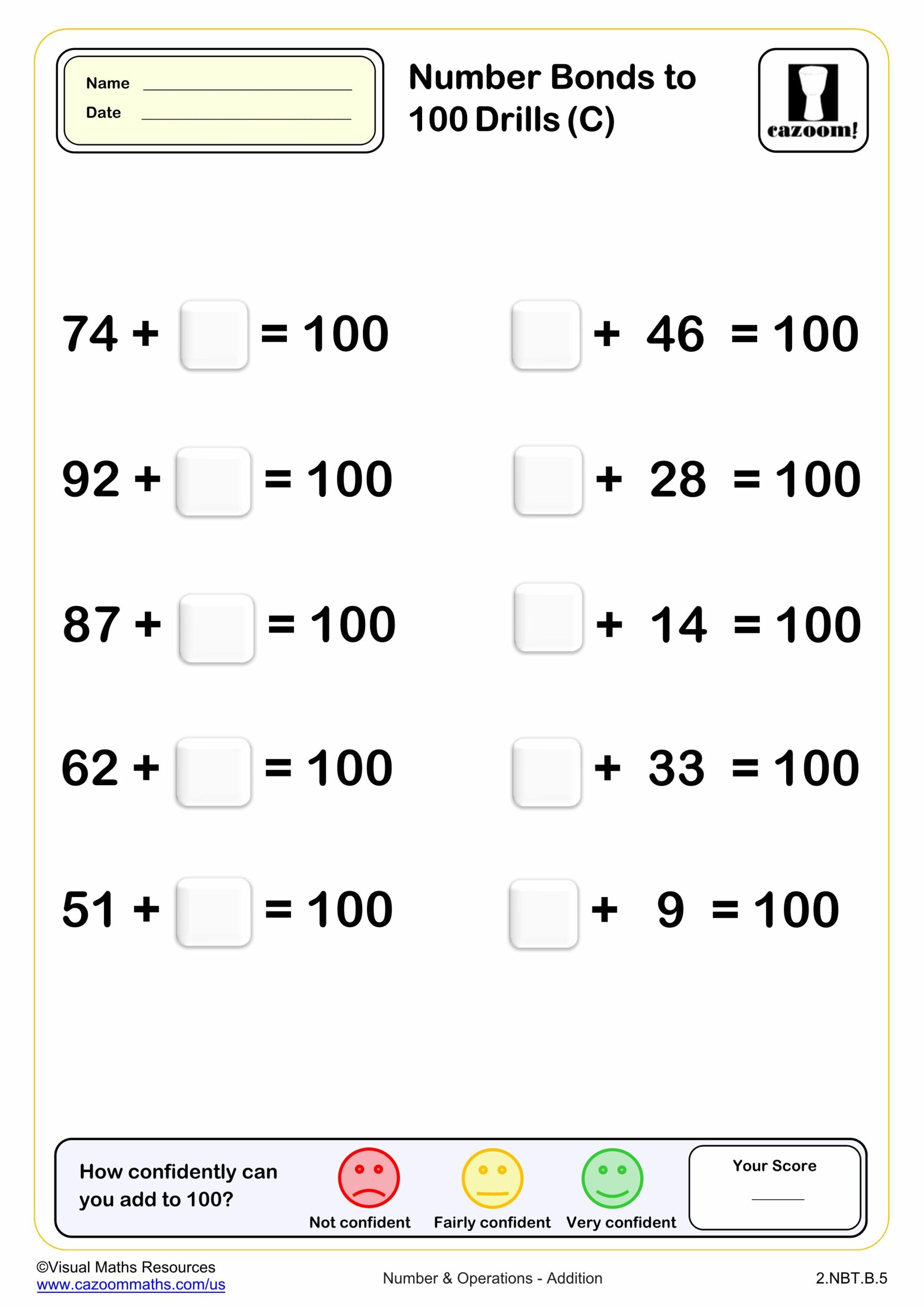
Number bond to 100 Drills (C) (10 questions)
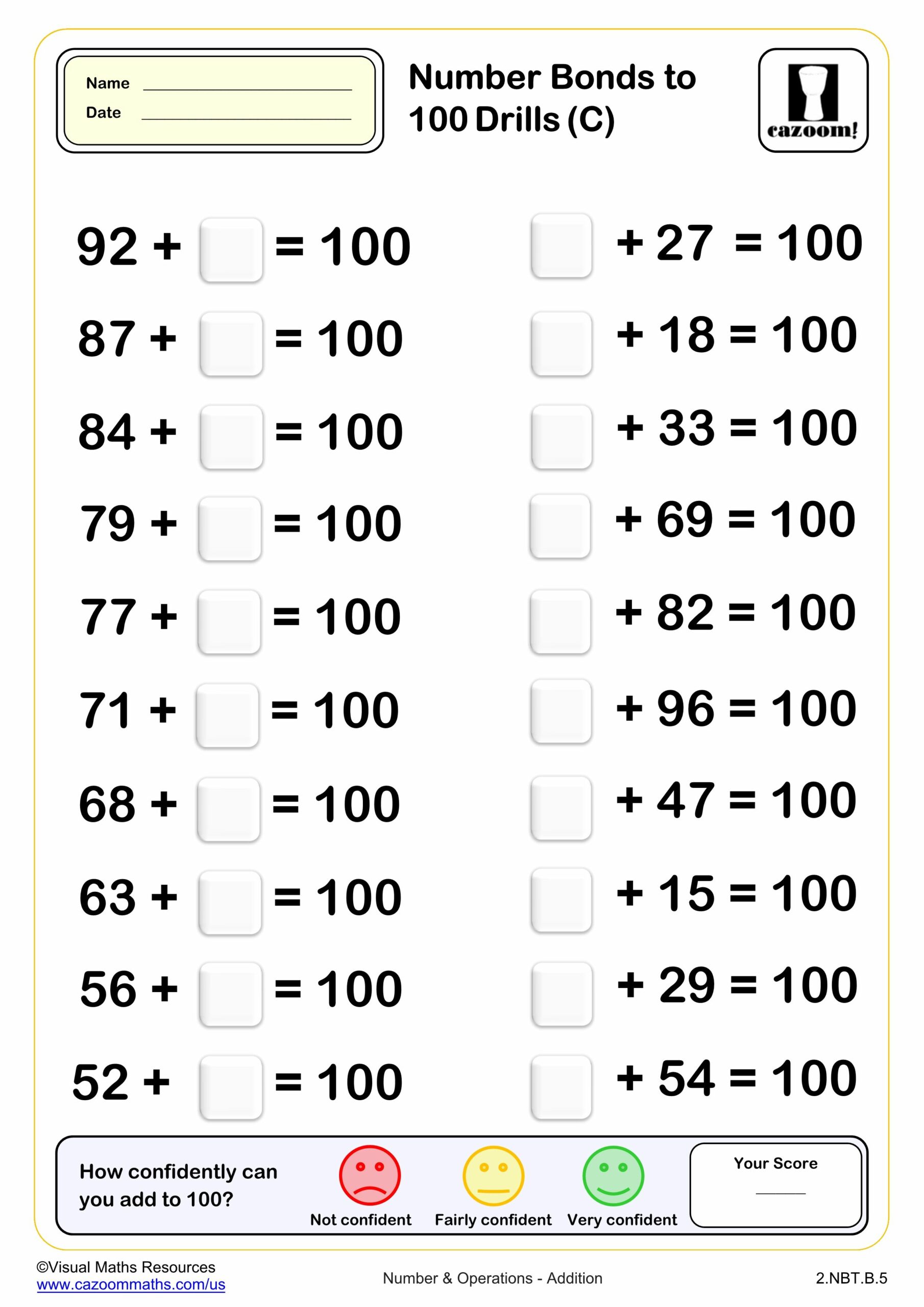
Number bond to 100 Drills (C) (20 questions)
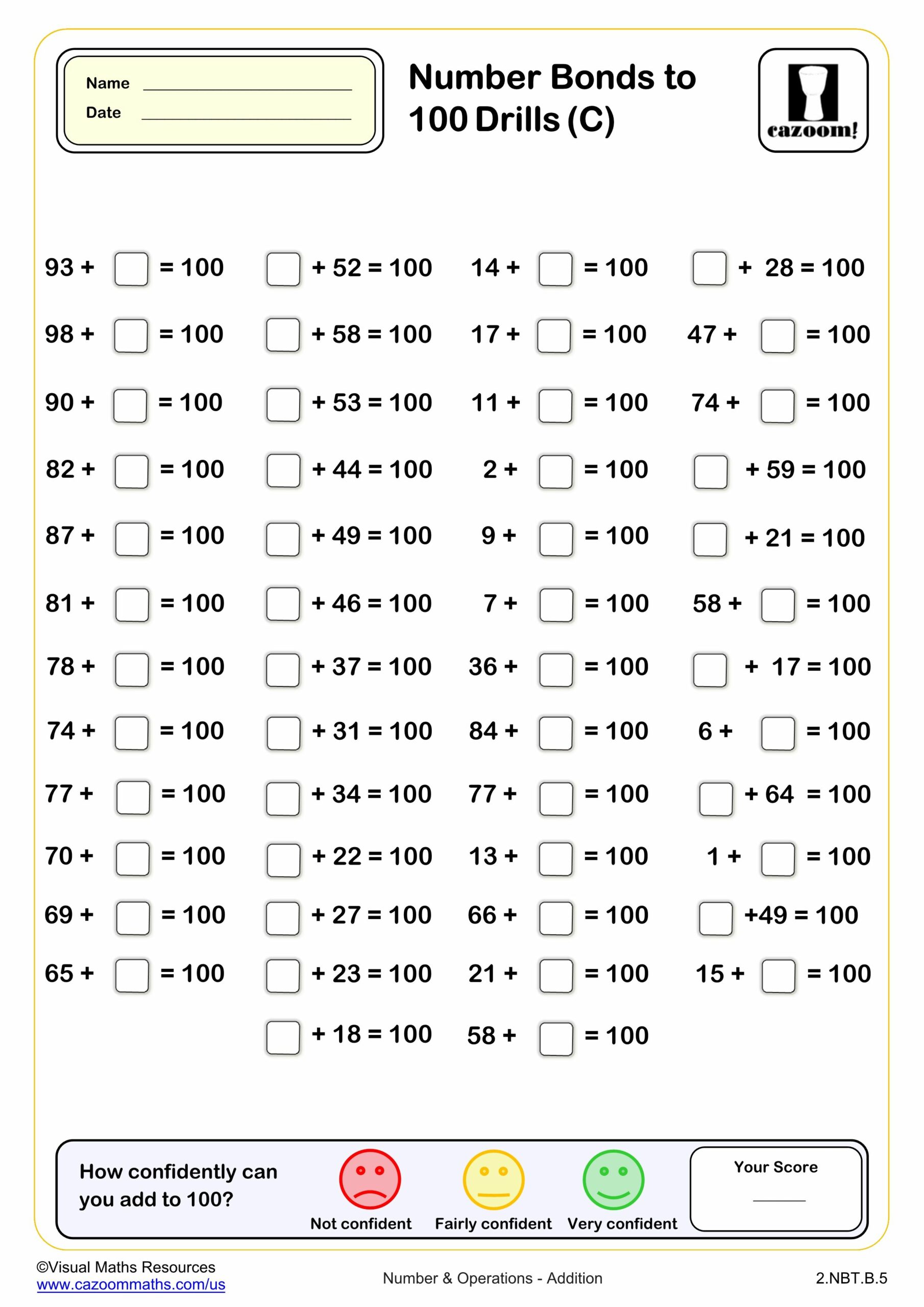
Number bond to 100 Drills (C) (50 questions)
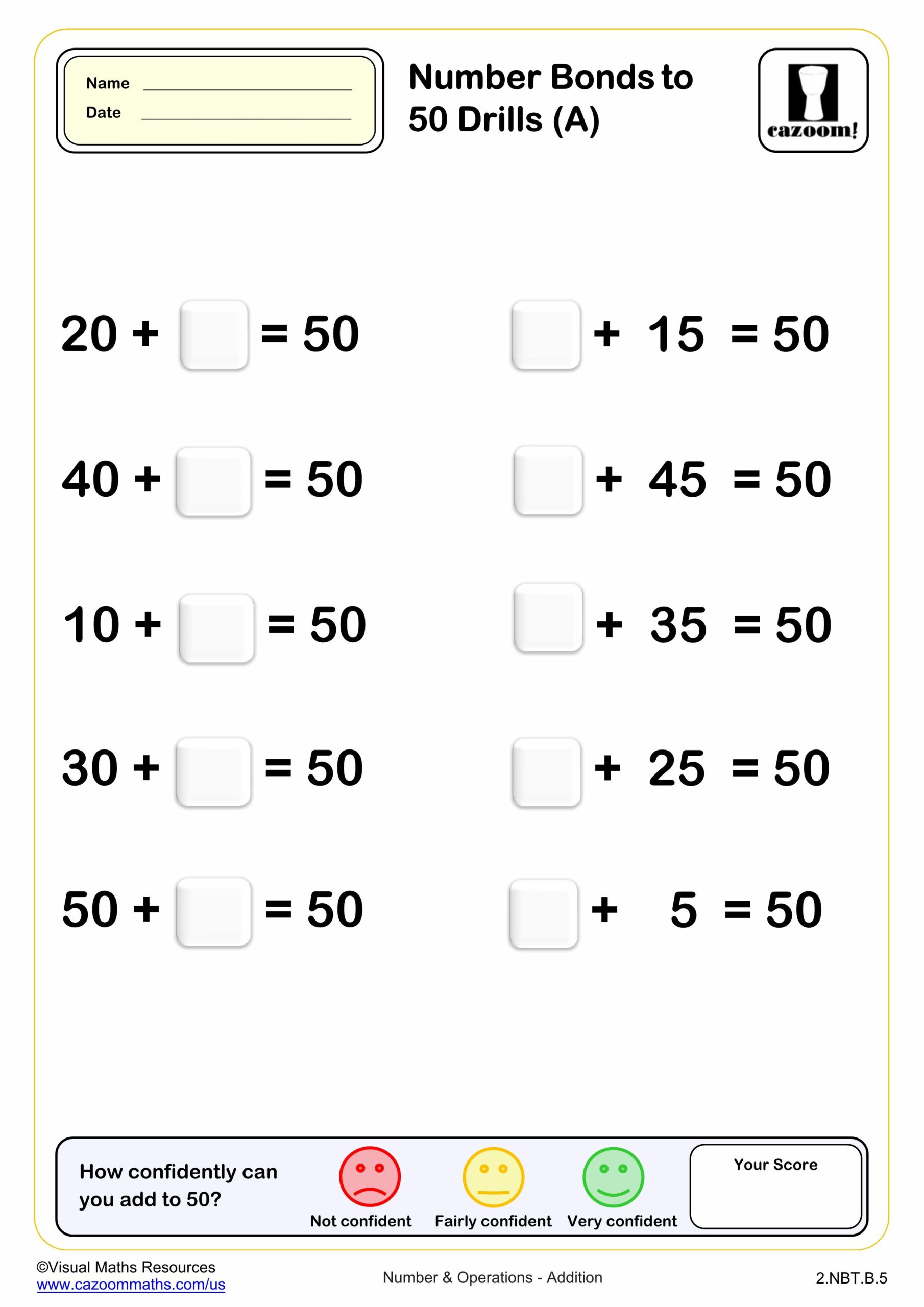
Number bond to 50 Drills (A) (10 questions)
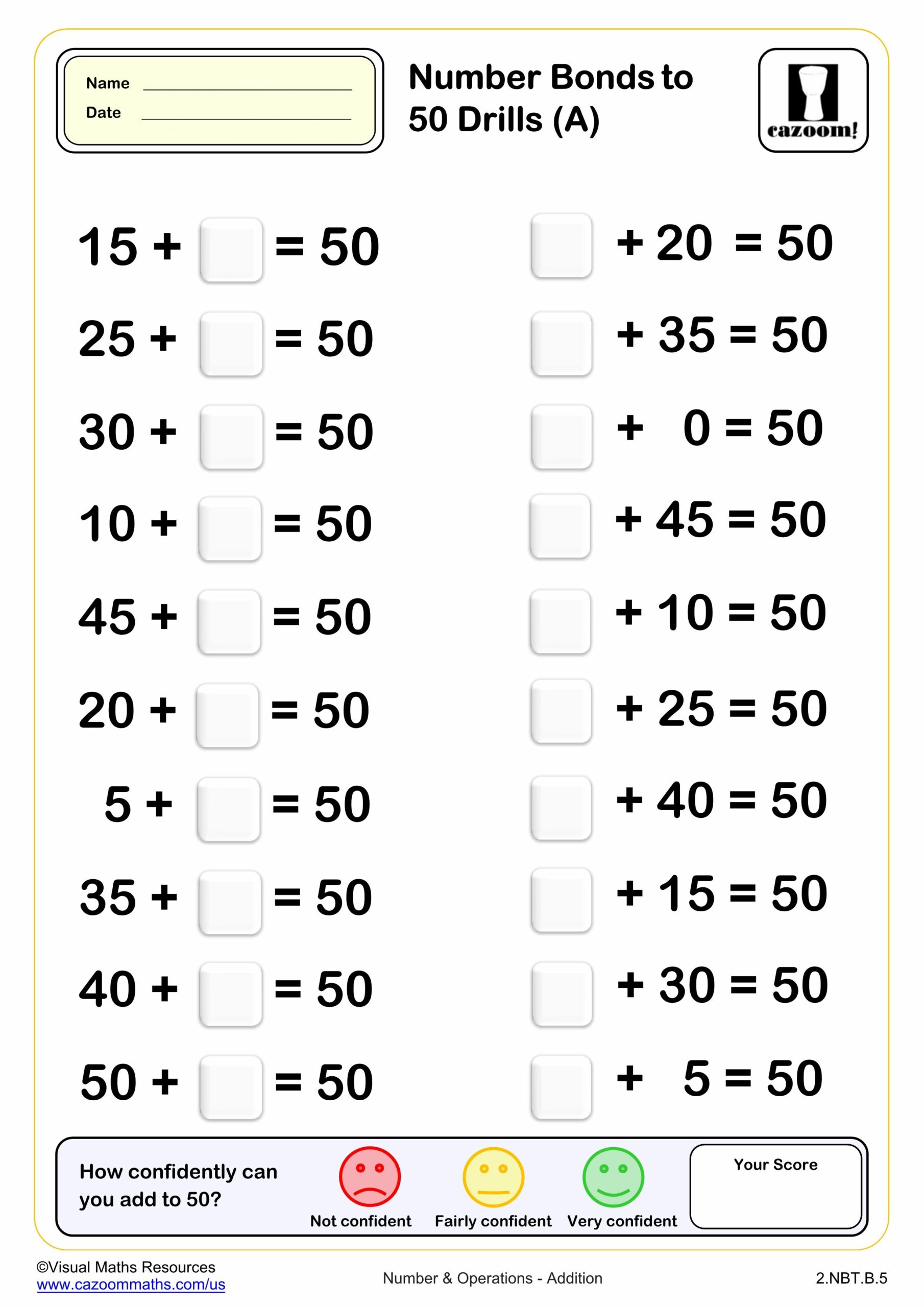
Number bond to 50 Drills (A) (20 questions)
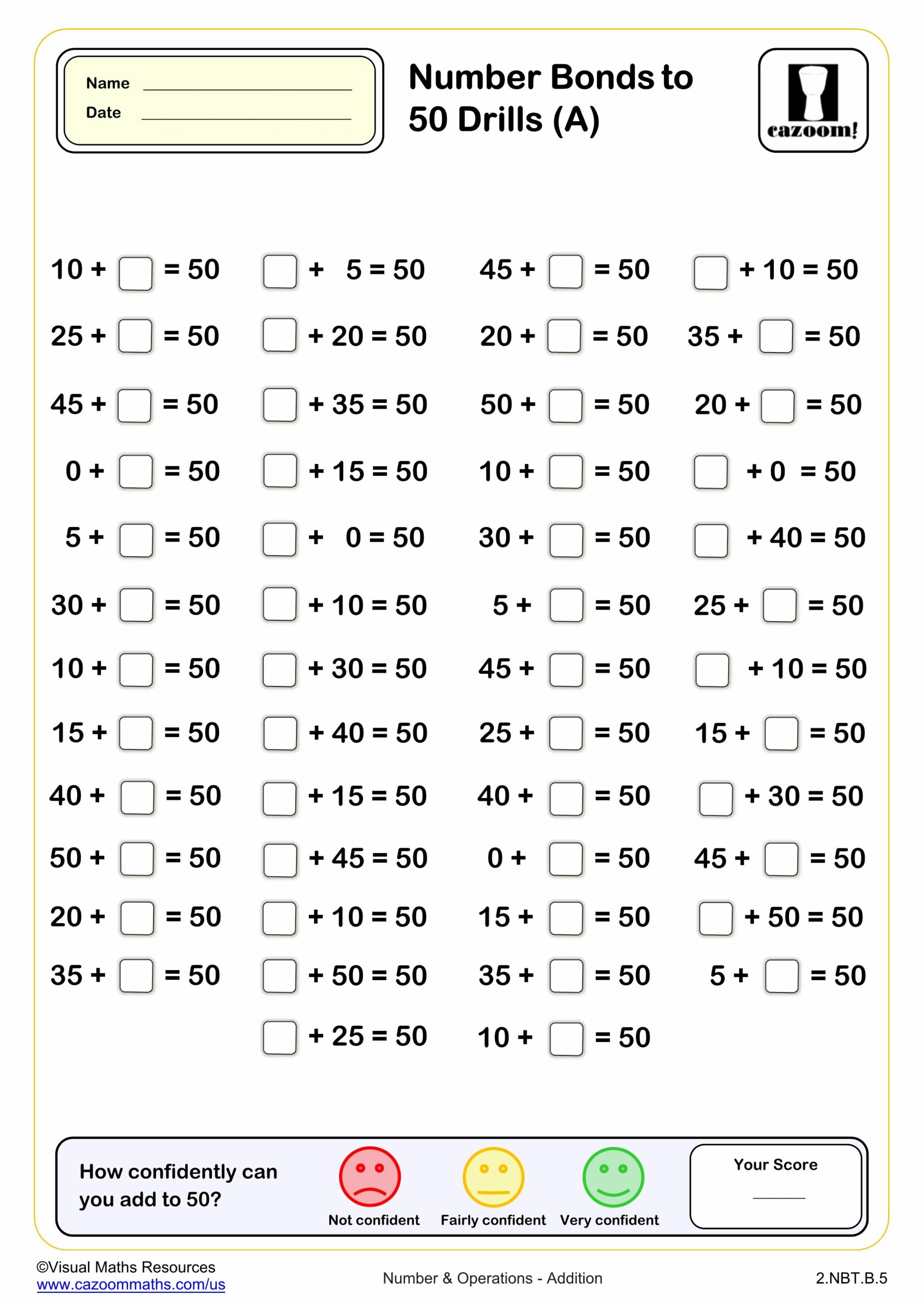
Number bond to 50 Drills (A) (50 questions)
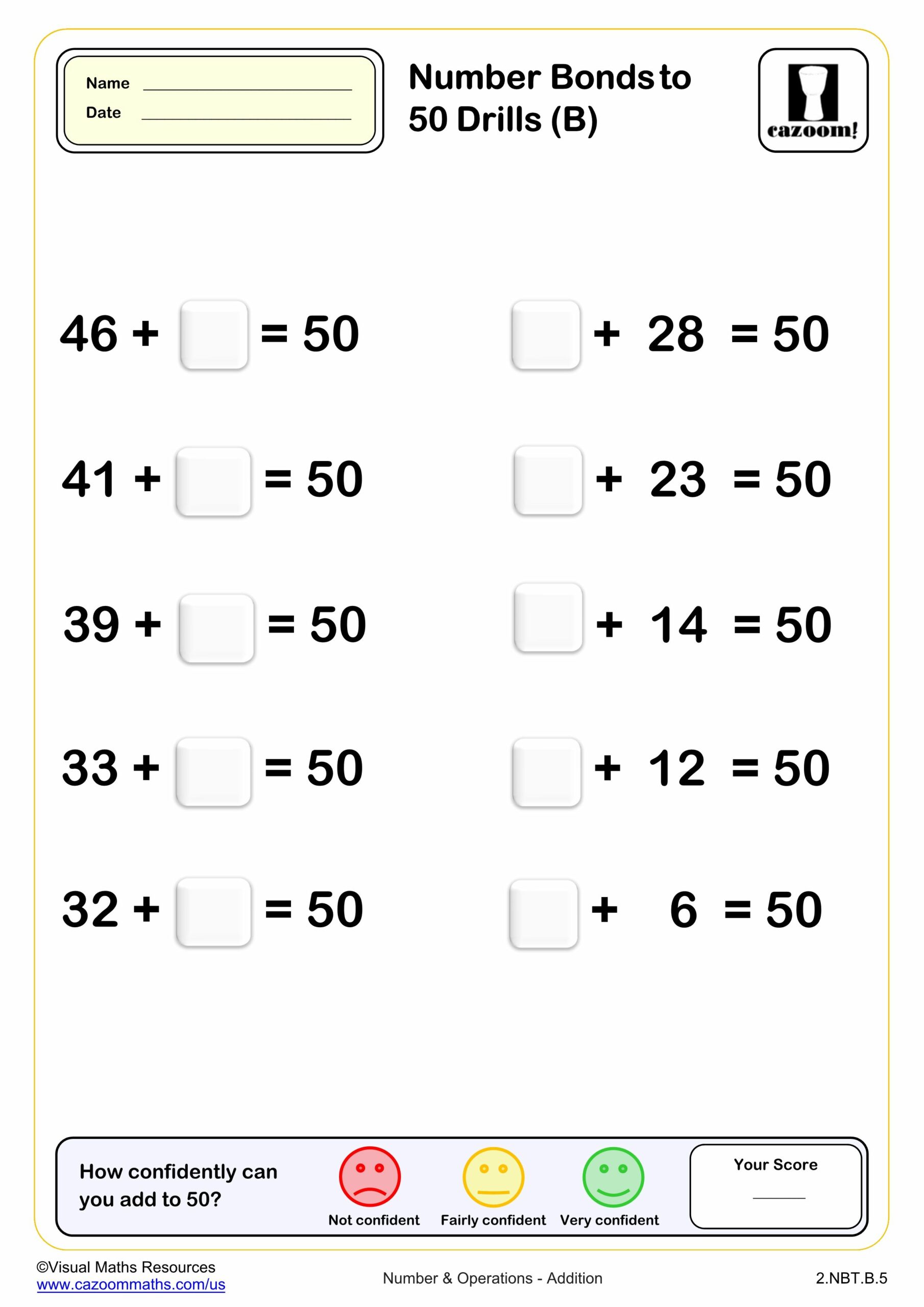
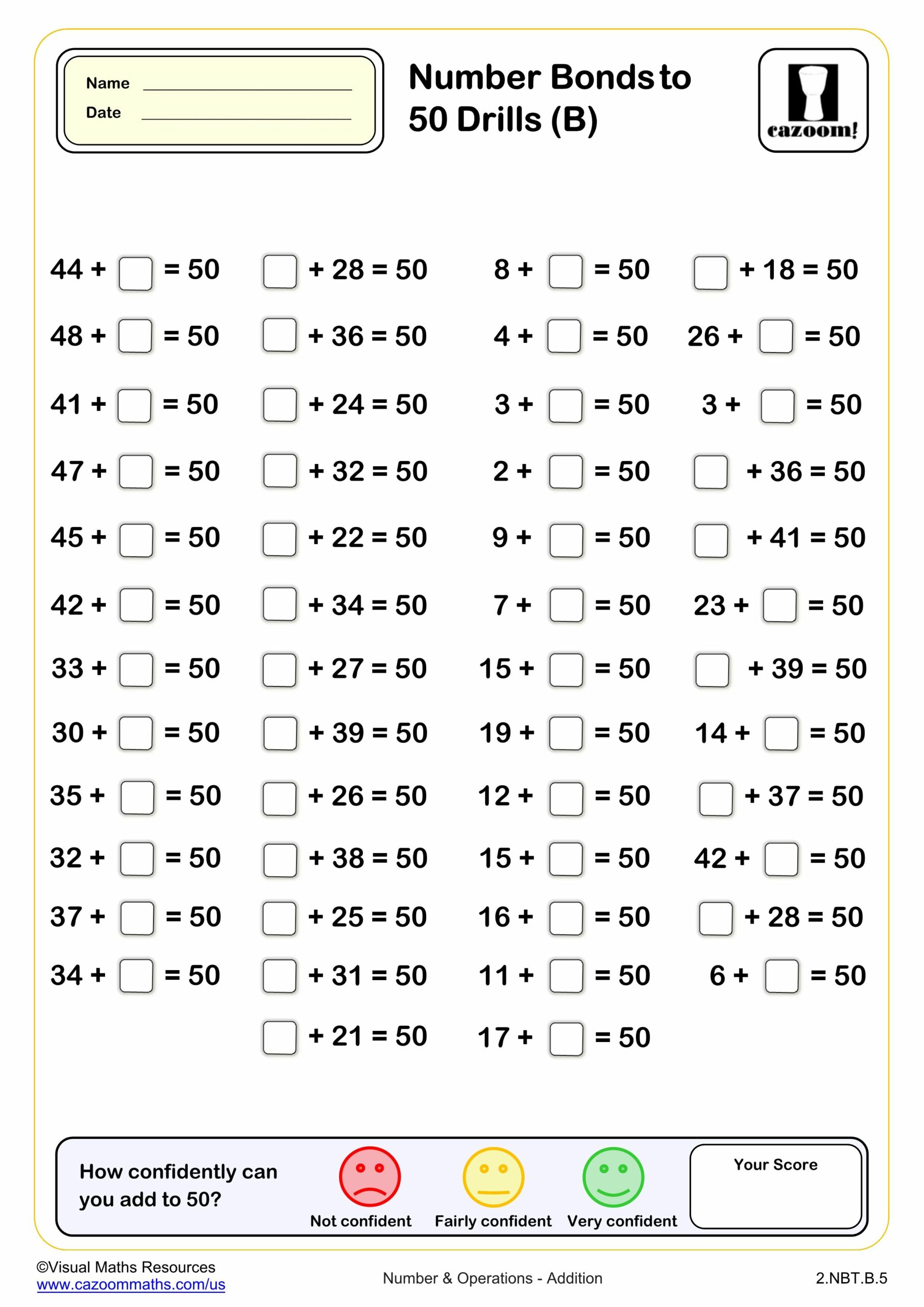
Number bond to 50 Drills (B) (10 questions)
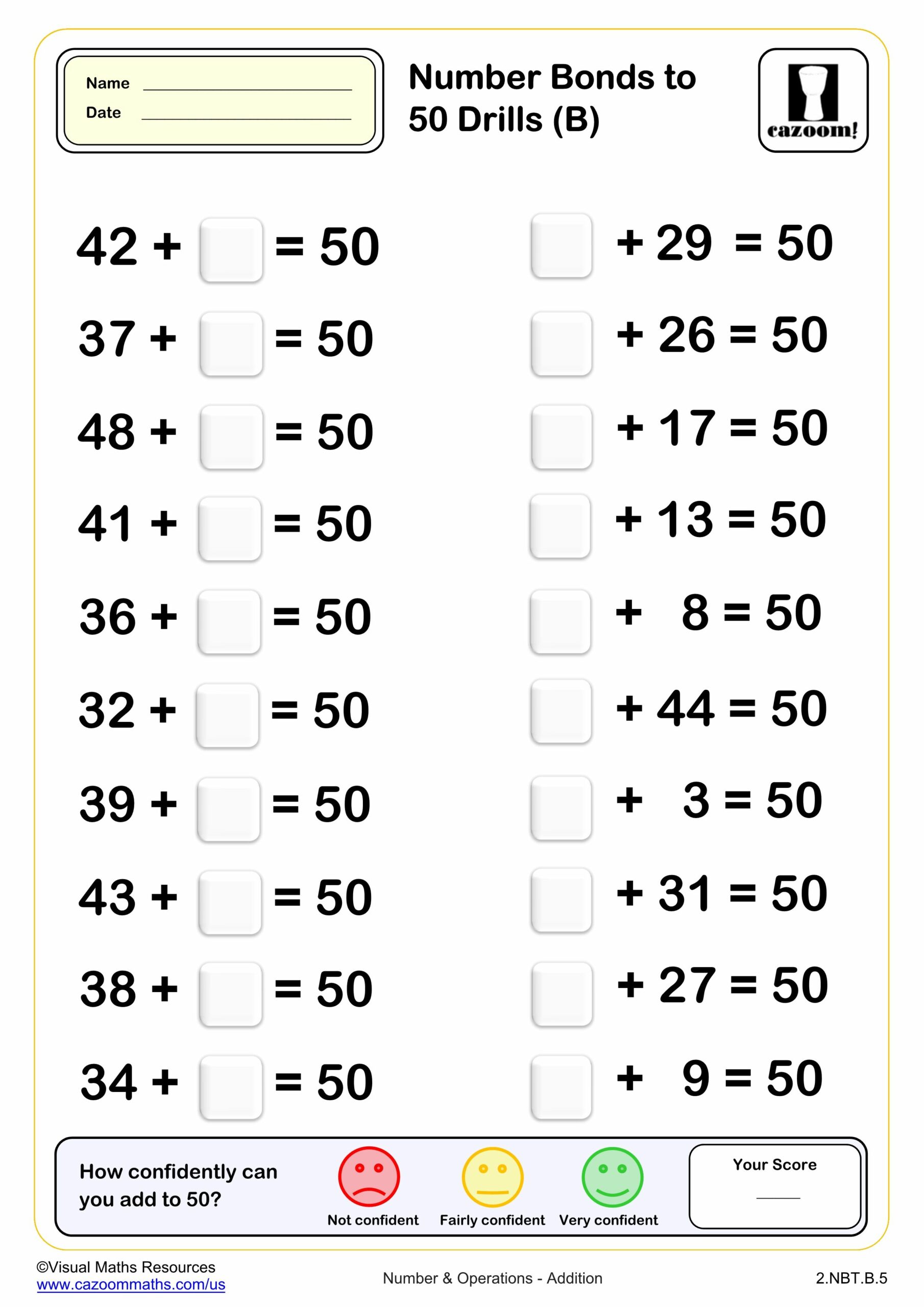
Number bond to 50 Drills (B) (20 questions)
Number bond to 50 Drills (B) (50 questions)
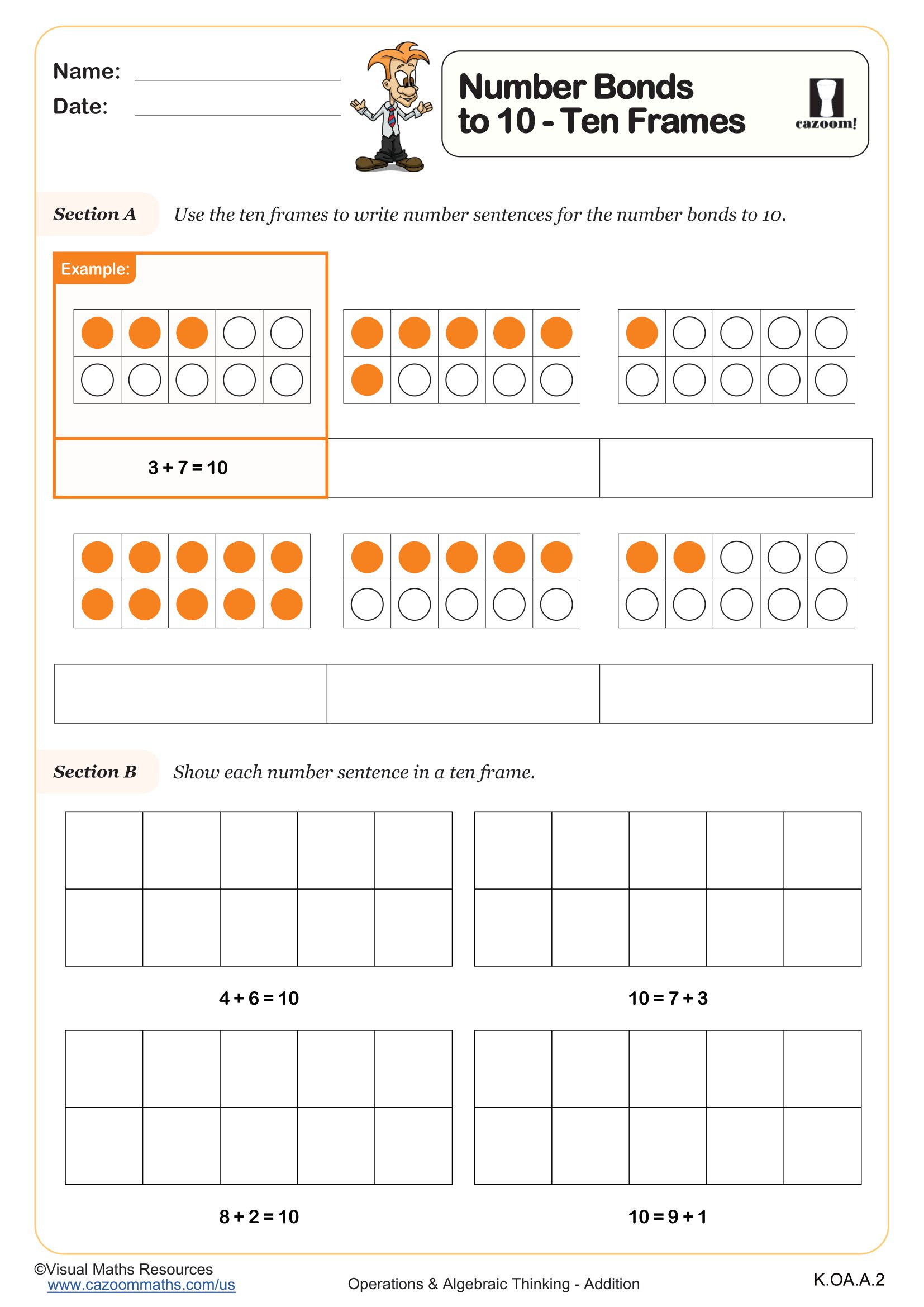
Number Bonds to 10 Ten Frames
All worksheets are created by the team of experienced teachers at Cazoom Math.
What are number bonds over 20 and why do students need them?
Number bonds over 20 represent part-whole relationships where the total exceeds 20, showing how two or more numbers combine to create a larger sum. These bonds extend the foundational understanding students built with number bonds to 10 and 20, preparing them for mental calculation strategies, estimation, and algebraic thinking. Students learn to recognize that numbers like 70 and 30, or 600 and 400, are related through their sum—knowledge that becomes essential for Common Core standards requiring fluency with addition and subtraction within 1000.
A common misconception emerges when students treat making 100 problems the same way they approached making 10, forgetting to account for place value. For example, when finding the missing number in 60 + ___ = 100, students might write 4 instead of 40, counting on their fingers without considering the tens place. This error highlights why these worksheets emphasize multiples of 10 and 100, reinforcing that the patterns students know still apply but at a larger scale.
Which grade levels use number bonds over 20 worksheets?
These worksheets span kindergarten through 5th grade, covering the entire elementary school progression as students build increasingly sophisticated number relationships. While kindergarten students might work with simpler bonds like making 35, upper elementary students tackle making 100 with various combinations and making 1000 with three addends, all skills aligned with grade-level expectations for operations and algebraic thinking.
The difficulty progression mirrors how students develop place value understanding. Early worksheets focus on smaller totals and concrete number bonds, while later worksheets introduce missing addend formats that require students to think flexibly about part-whole relationships. By the time students work with making 1000 using multiples of 10 and 100, they're applying proportional reasoning and recognizing that 200 + 300 + 500 follows the same logic as 2 + 3 + 5, just scaled by powers of ten.
How do making 100 and making 1000 worksheets build number sense?
Making 100 and making 1000 worksheets teach students to recognize complementary numbers—pairs or groups that combine to reach these benchmark totals. Students learn that 30 + 70 = 100, 200 + 800 = 1000, and that these relationships hold true regardless of the addend order. The blank formats require students to work backwards from the total, strengthening their understanding of the inverse relationship between addition and subtraction and building the algebraic thinking needed for solving equations.
These skills connect directly to financial literacy and real-world problem solving. When students need to determine how much more money they need to reach $100 for a purchase, or calculate how many more meters a team must run to complete a 1000-meter relay, they're applying these number bond relationships. This same reasoning appears in STEM contexts when scientists measure quantities to reach specific totals or engineers calculate missing dimensions to meet design specifications.
How can teachers use these number bonds over 20 worksheets effectively?
The worksheets scaffold learning through varied problem types, from straightforward addition equations to missing addend challenges that require deeper reasoning. The inclusion of both structured formats (like making 100 with two numbers) and more complex arrangements (making 1000 with three numbers) allows teachers to differentiate based on student readiness. Students benefit from seeing the same concept presented multiple ways—sometimes with blanks at the beginning, sometimes at the end, sometimes requiring them to find multiple combinations.
Many teachers use these worksheets during math centers or as warm-up activities to build automaticity with benchmark numbers. The answer keys make them practical for independent work stations where students can self-check, while the progressive difficulty supports intervention groups working on place value gaps. Some teachers assign specific worksheets for homework after introducing a concept, then use different variations for in-class practice or partnered problem-solving where students explain their thinking to develop mathematical communication skills.