Elementary School Number Bonds Up to 20 Worksheets
Making 10
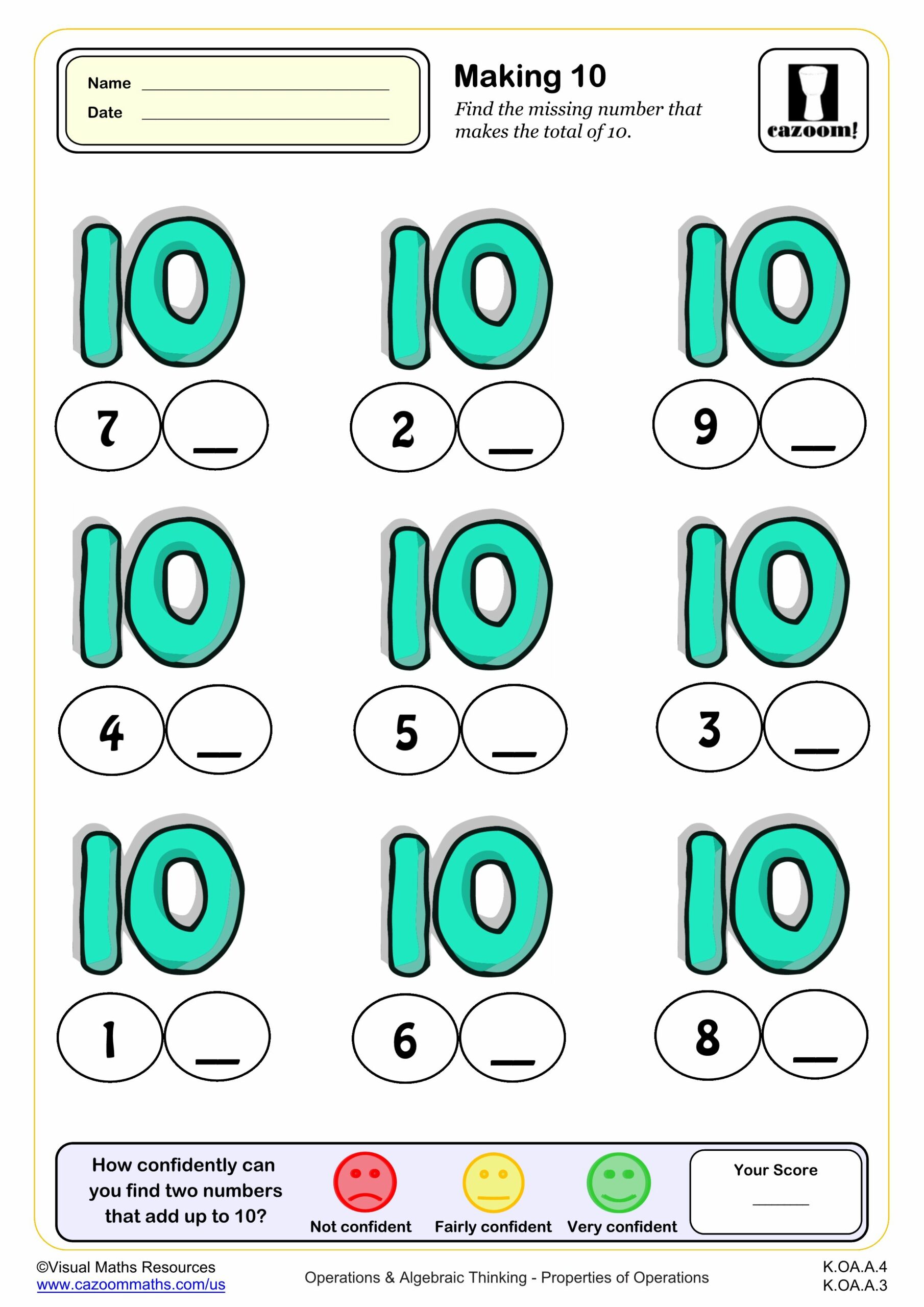
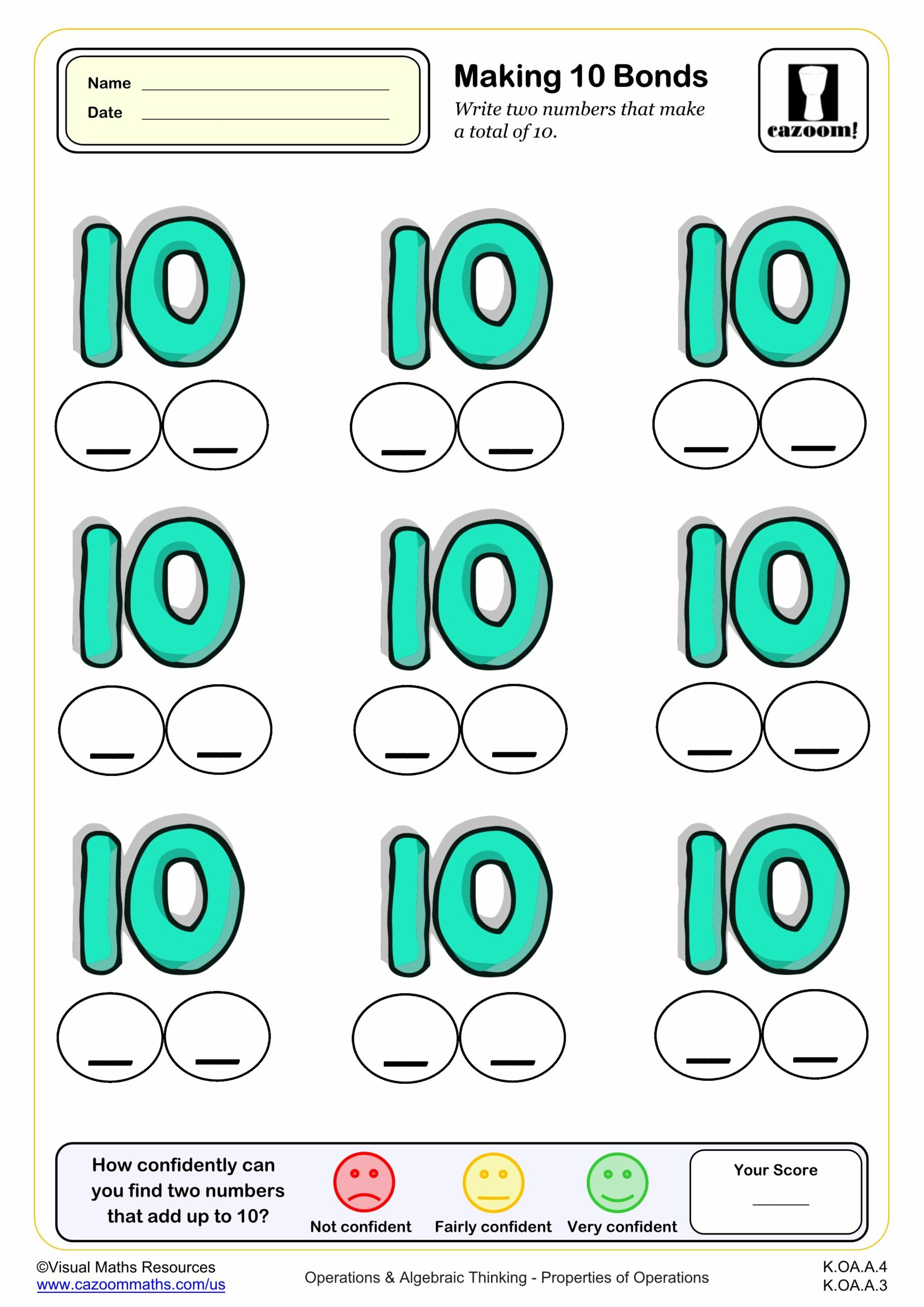
Making 10 (BONDS)
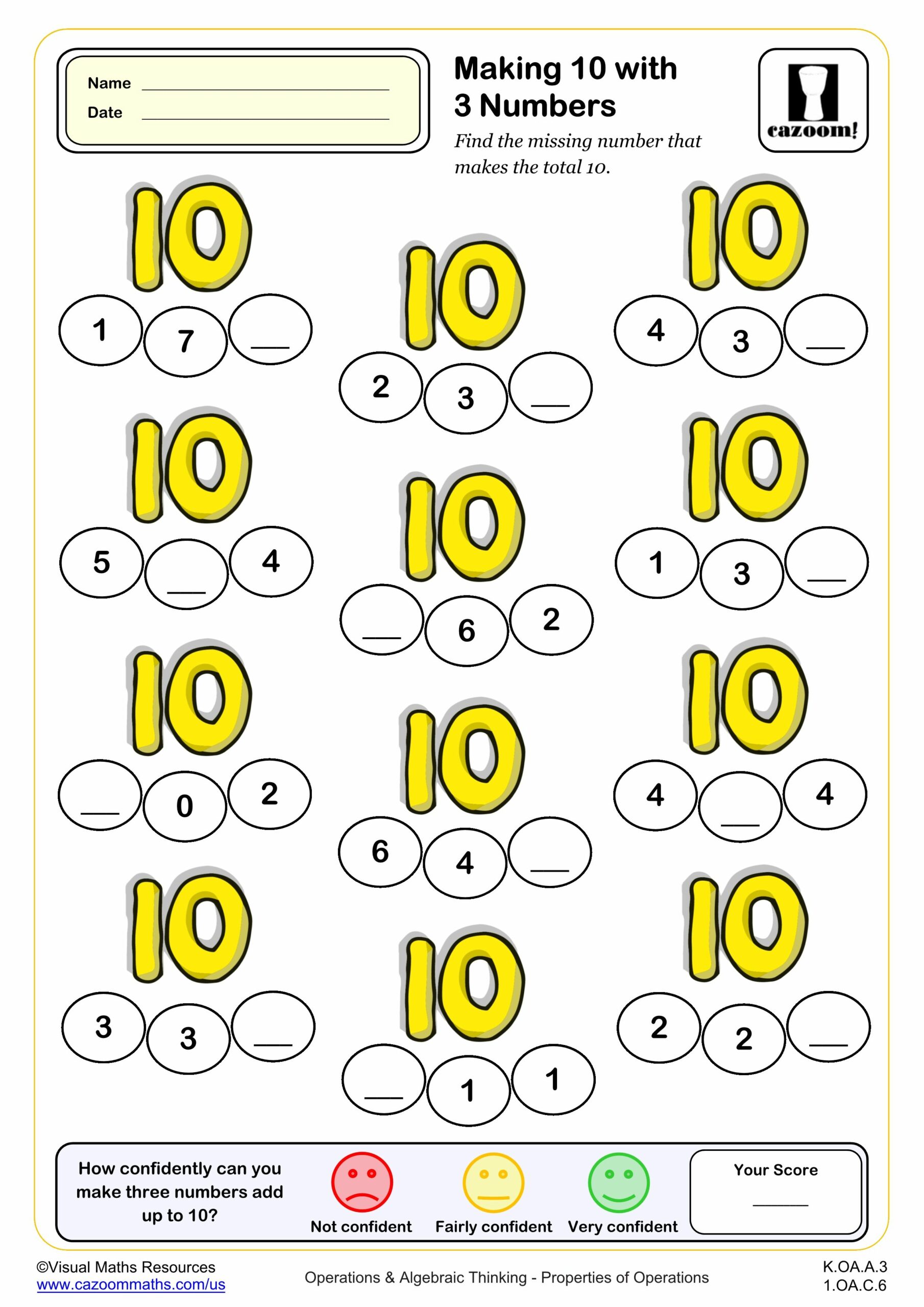
Making 10 with three numbers
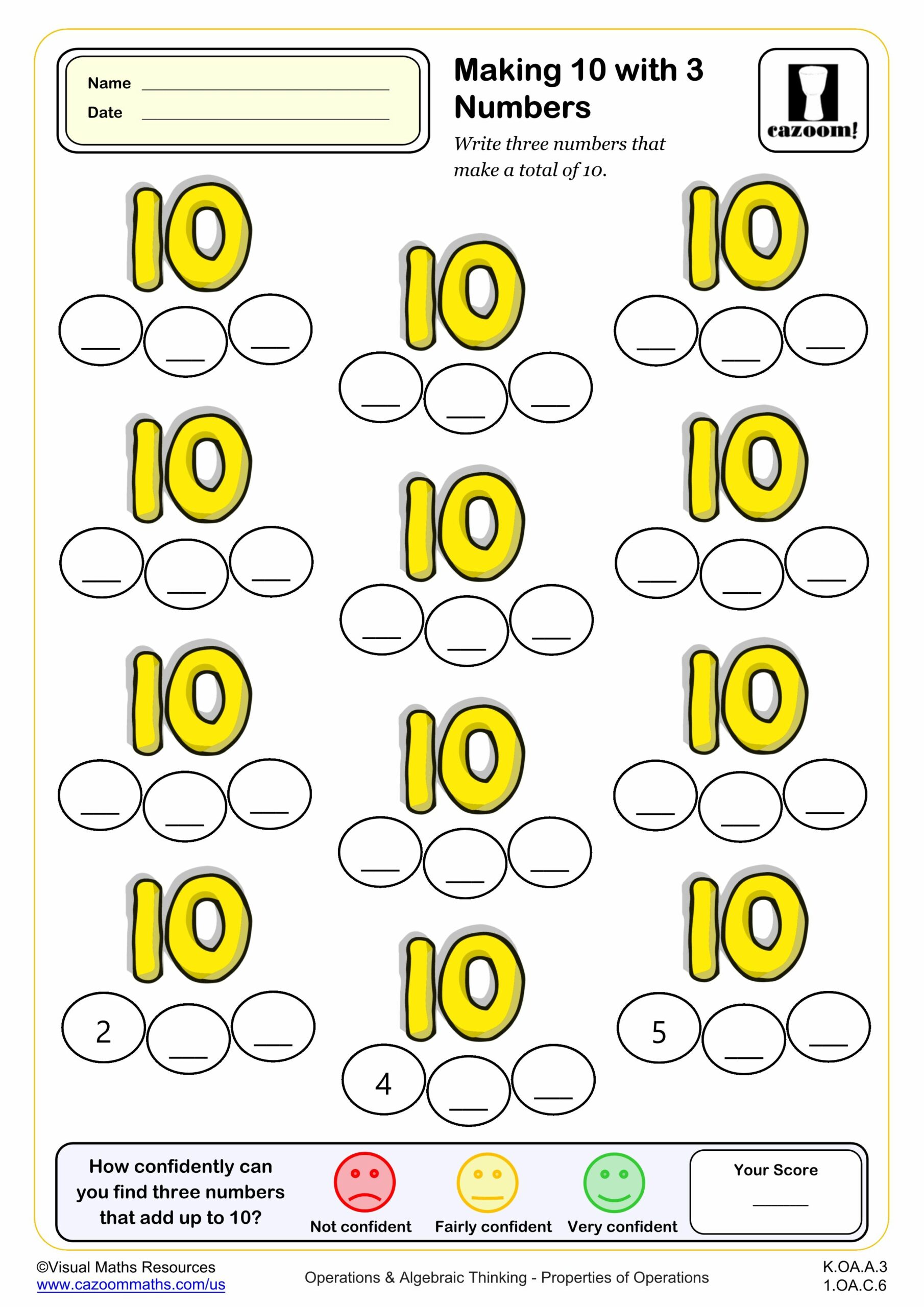
Making 10 with three numbers (Blanks)
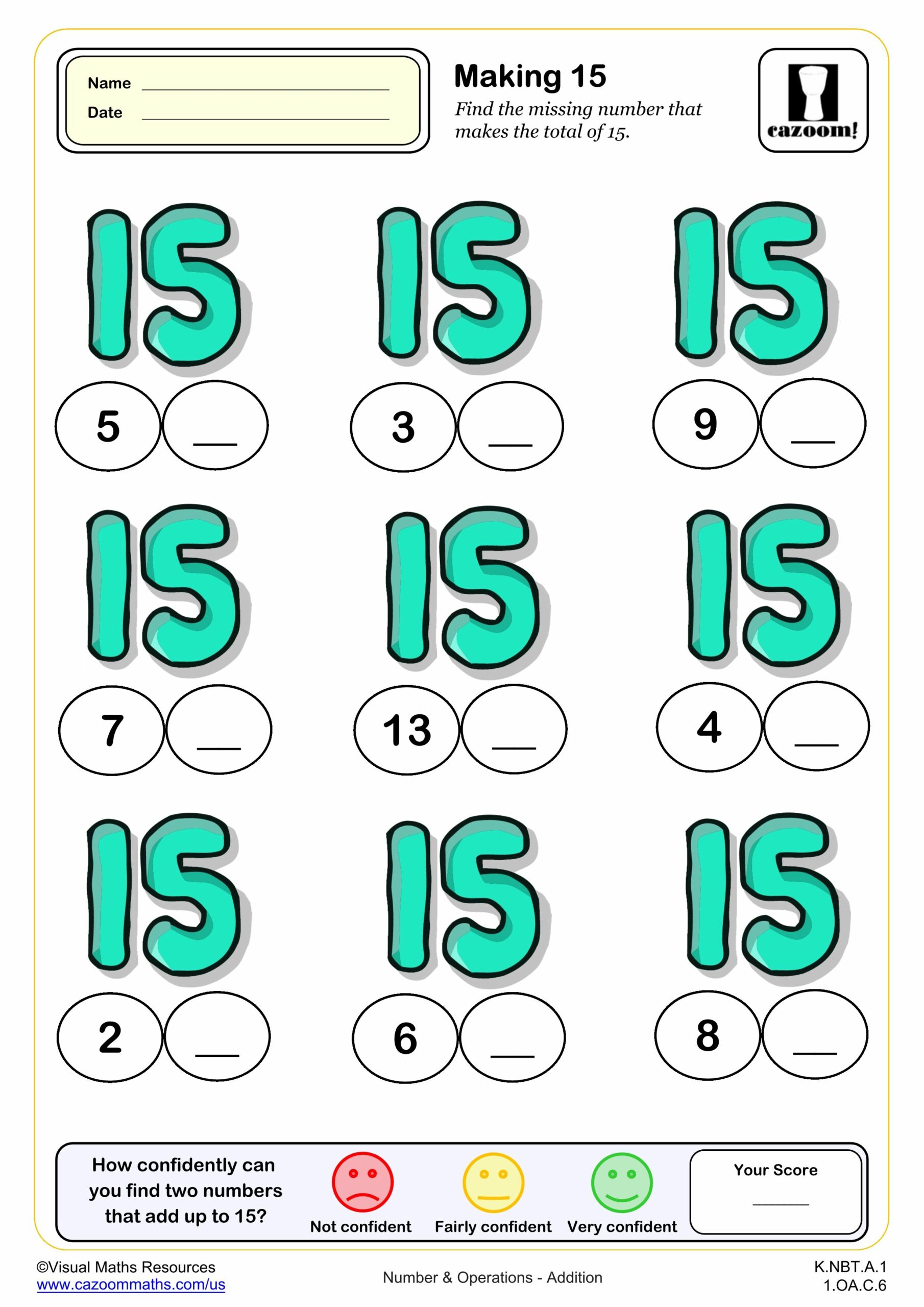
Making 15
Making 15 (BONDS)
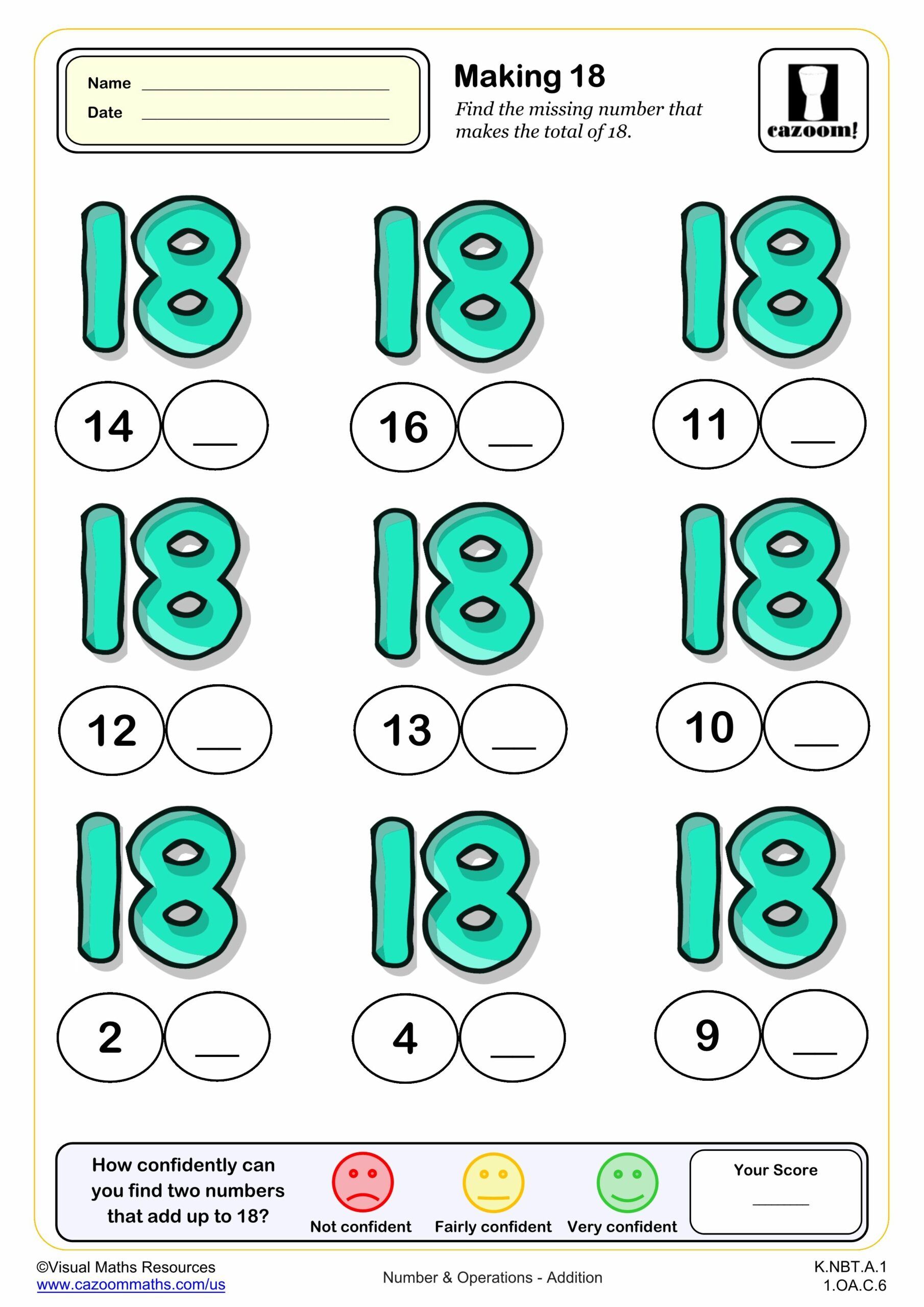
Making 18
Making 18 (BONDS)
Making 20 (A)
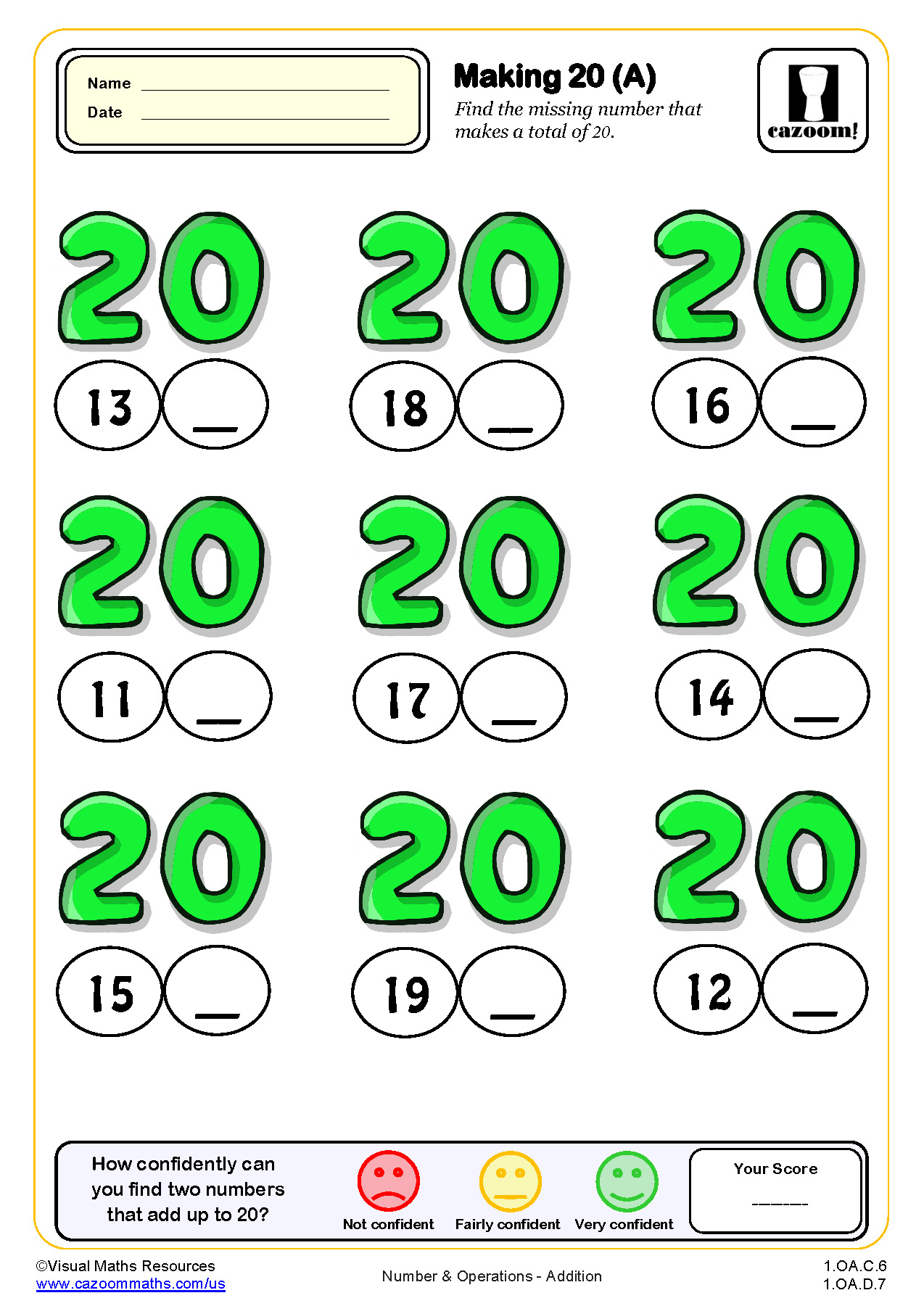
Making 20 (B)
Making 20 (BONDS)
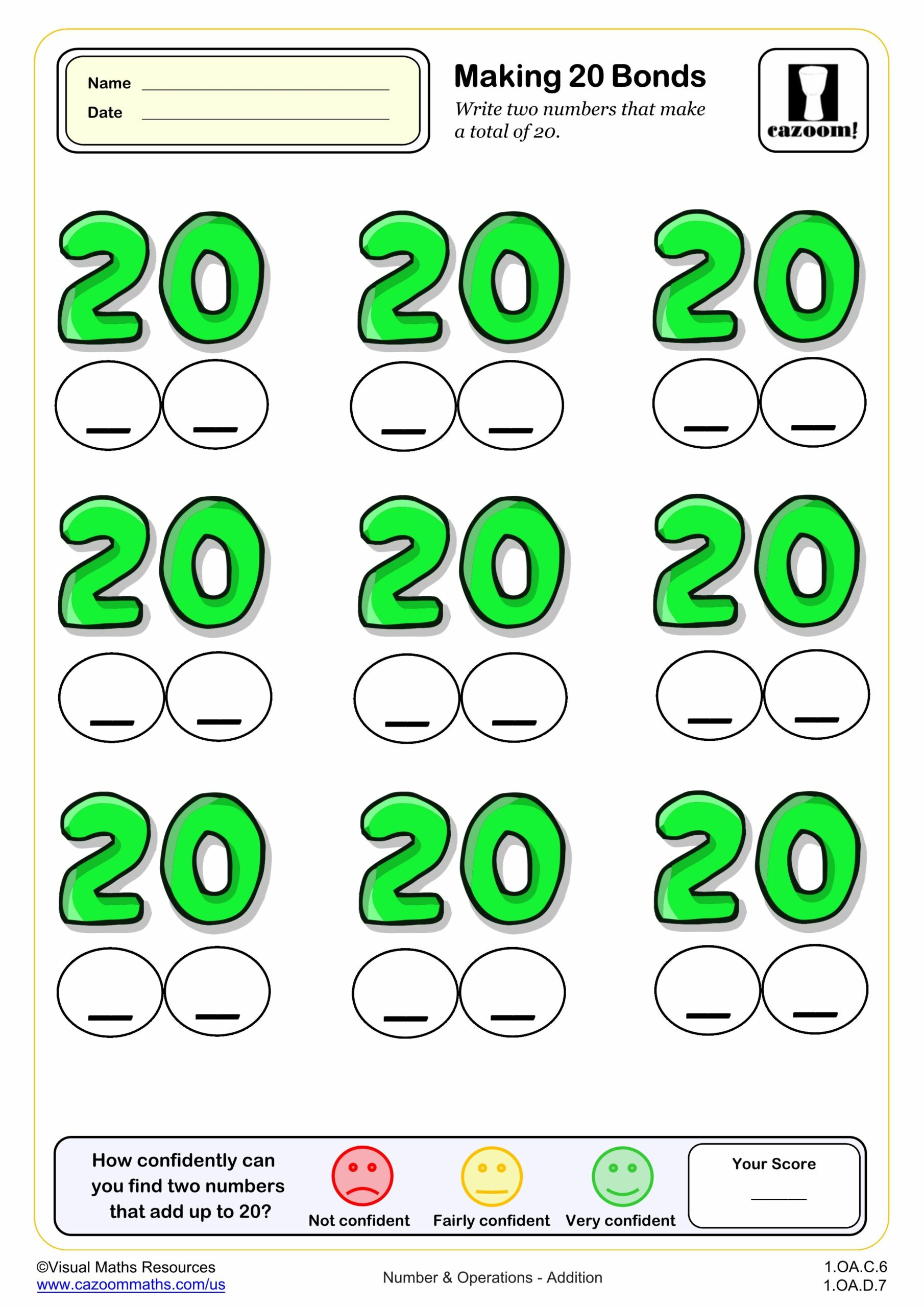
Making 20 (C)
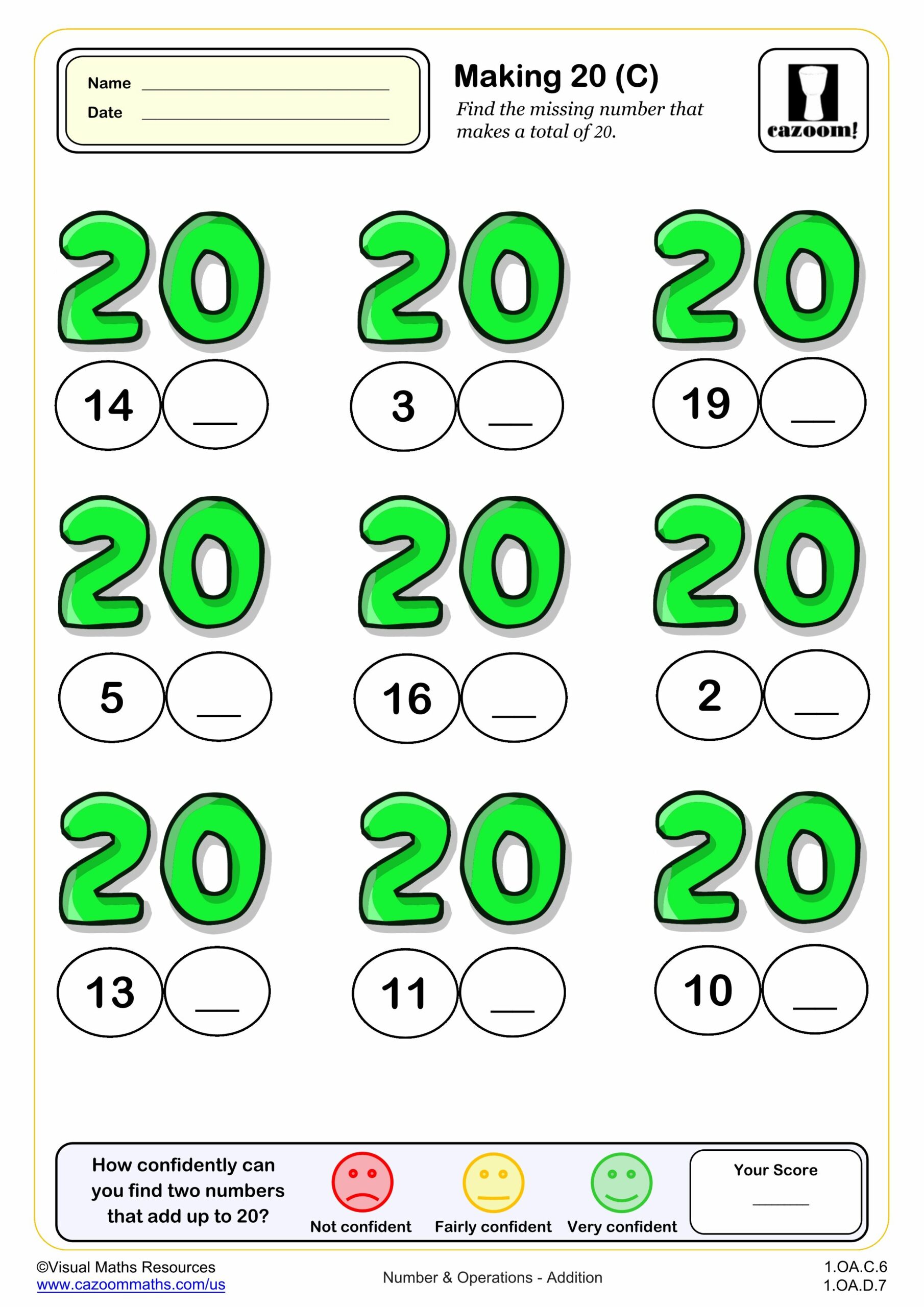
Making 20 with three numbers
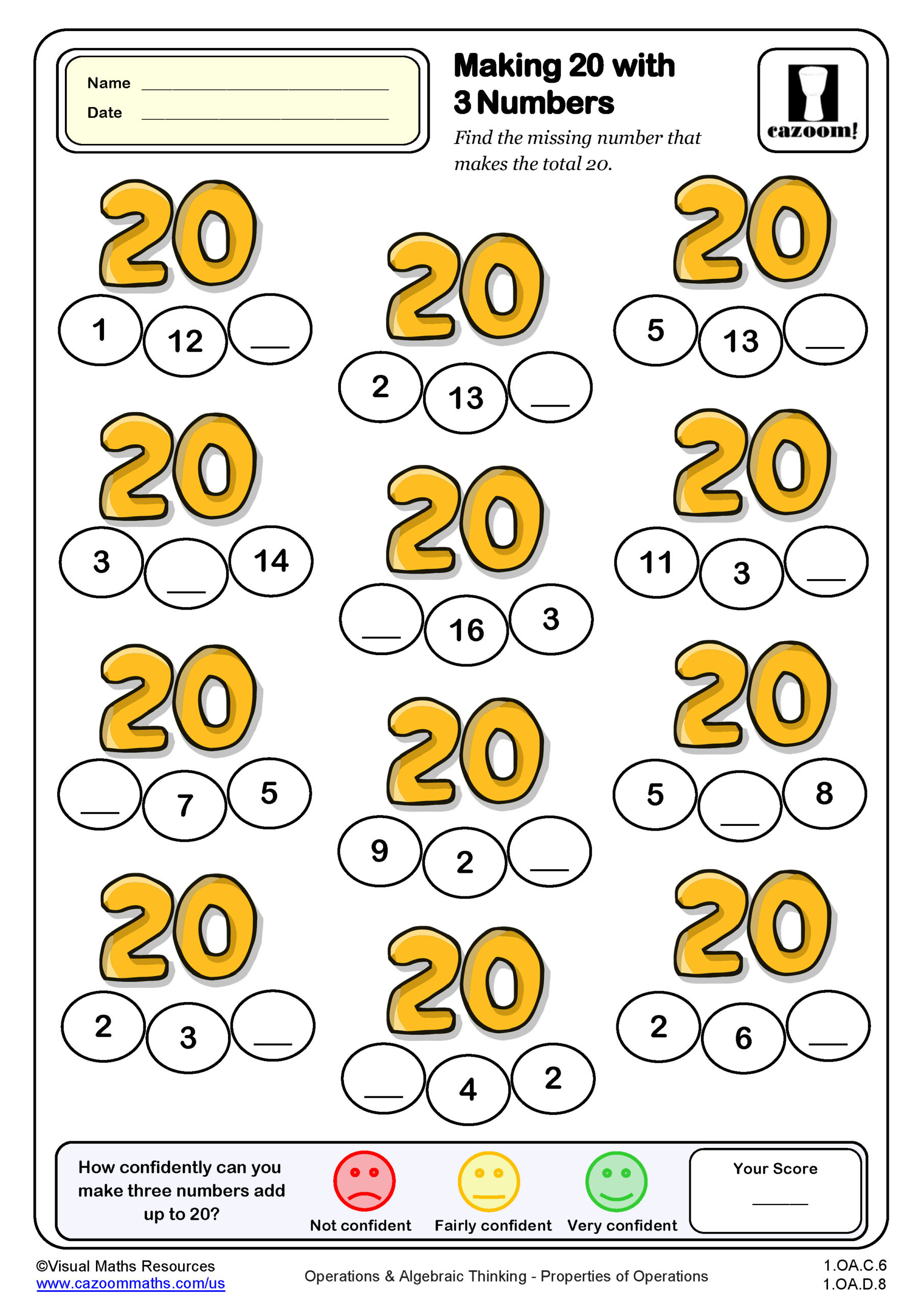
Making 20 with three numbers (Blanks)
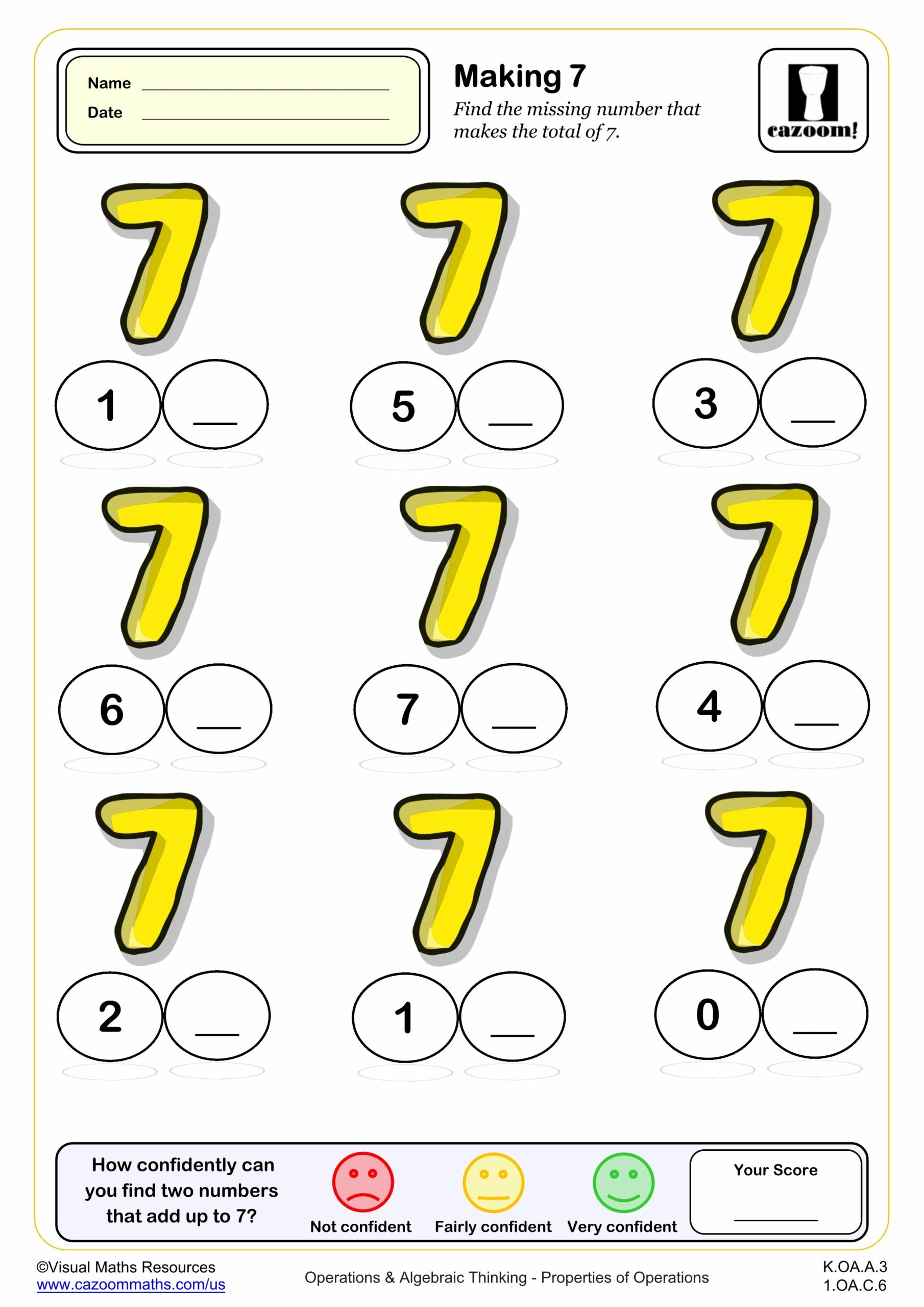
Making 7
Making 7 (Bonds)
Making 8
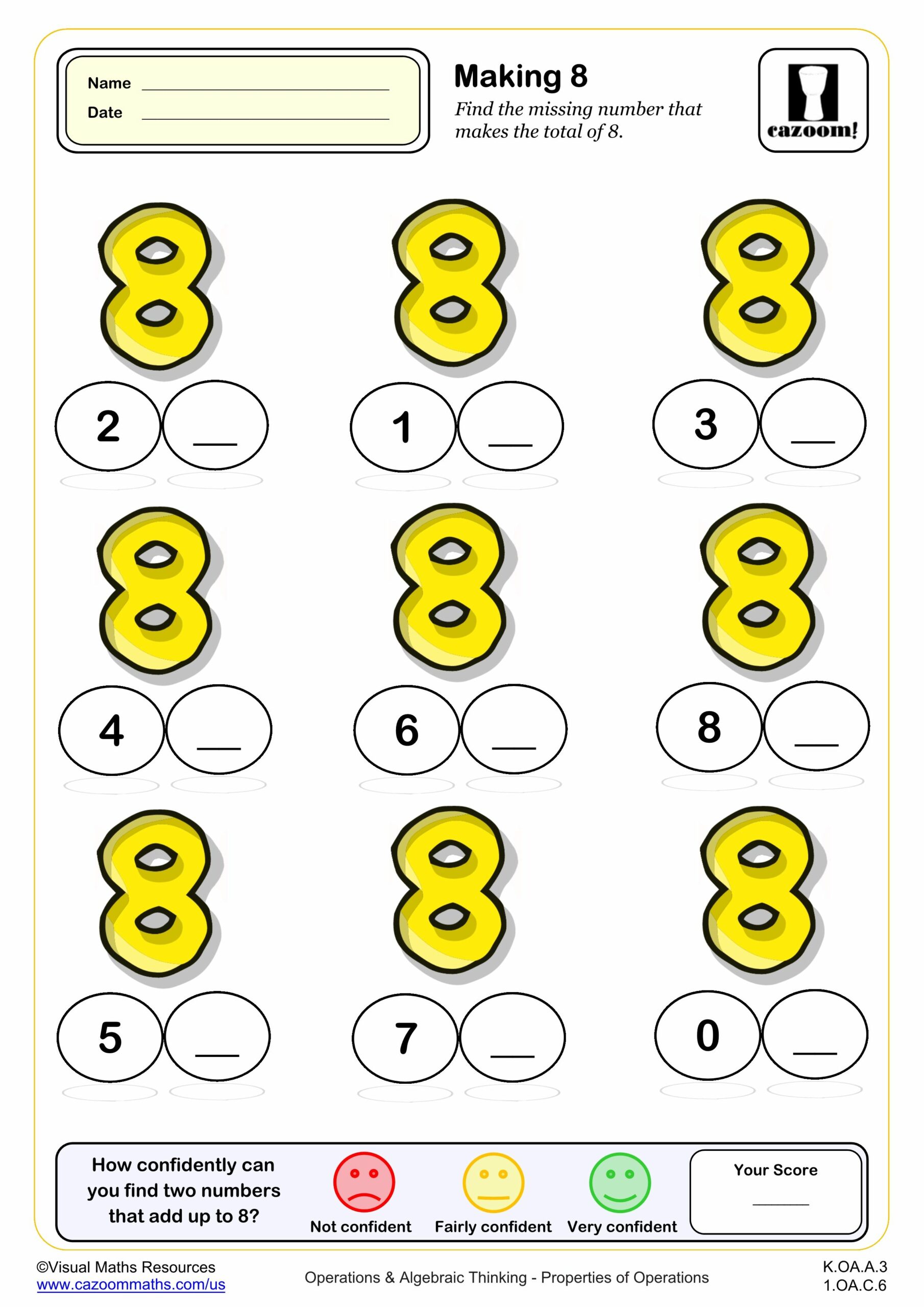
Making 8 (BONDS)
Making 9
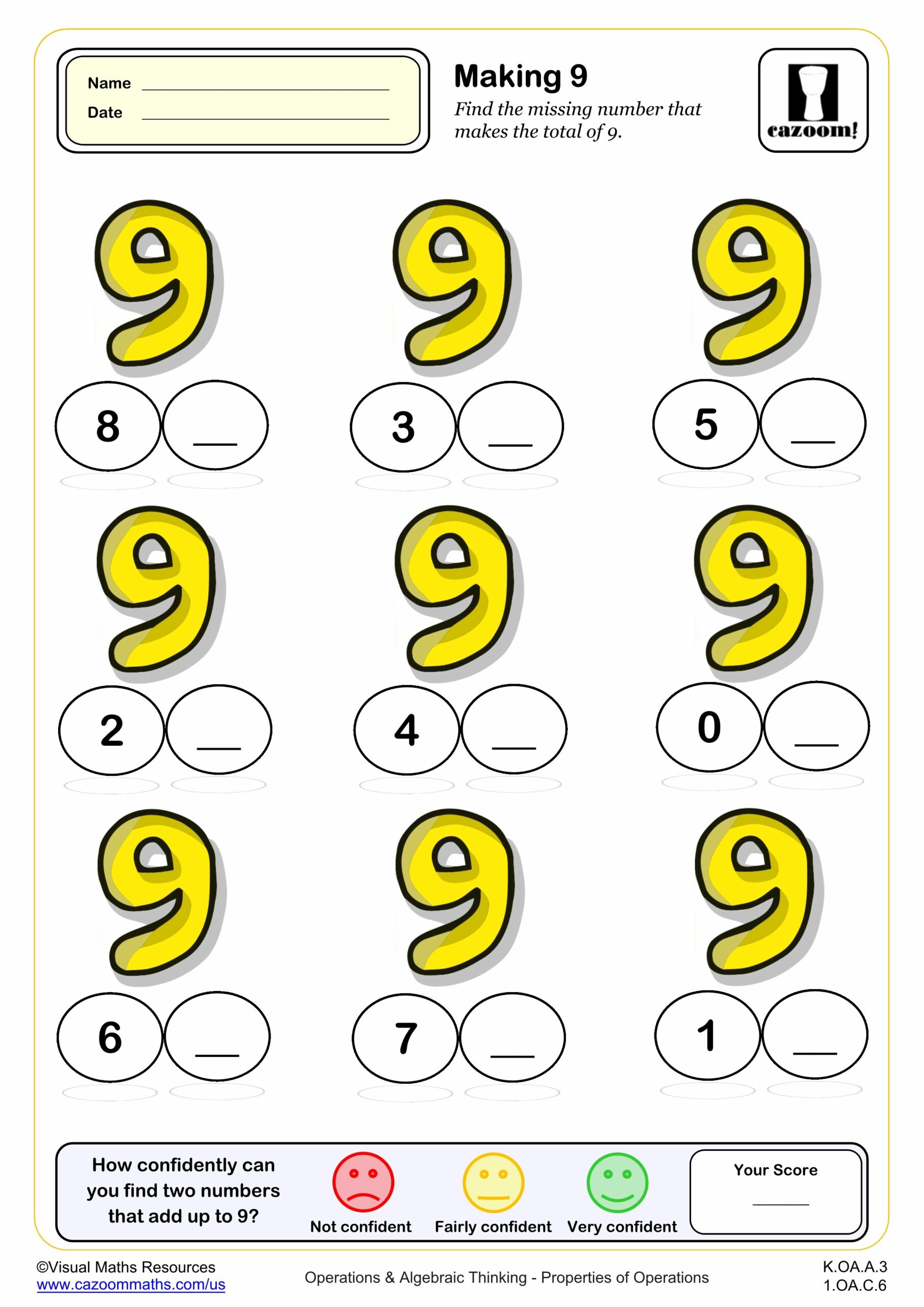
Making 9 (BONDS)
Matching sums (20 only)
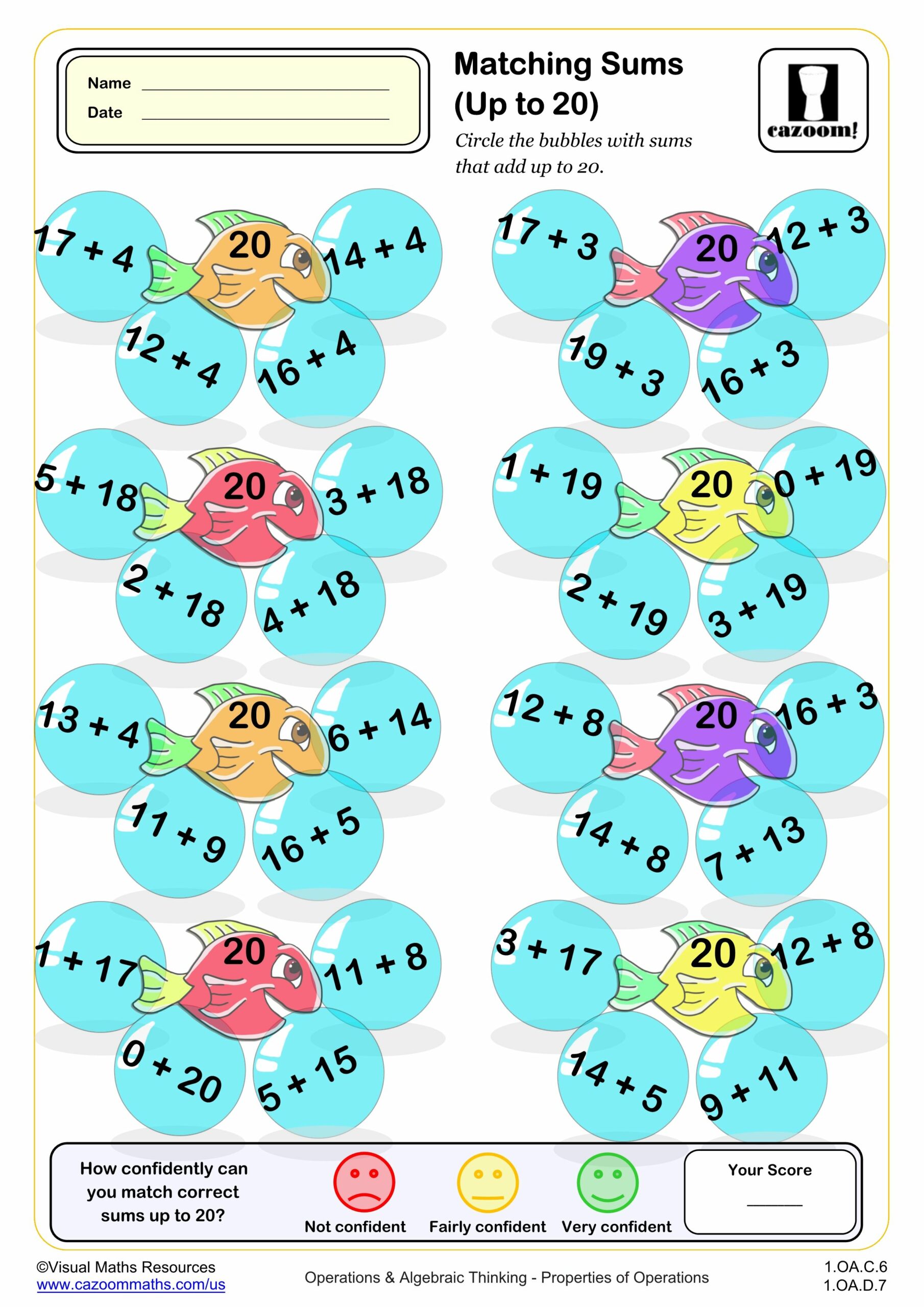
Matching Sums (to 10)
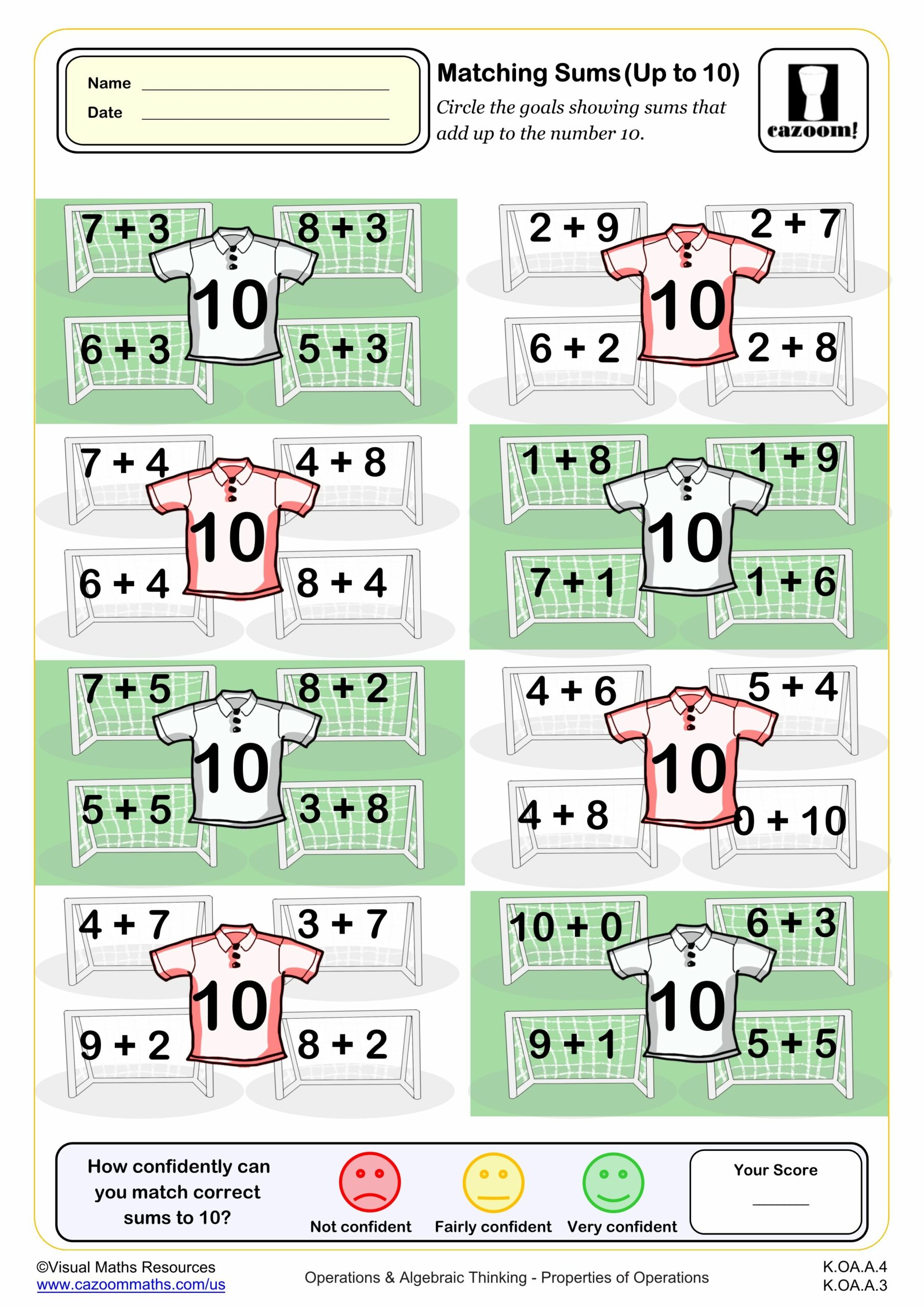
Number Bonds to 10 drills (10 questions)
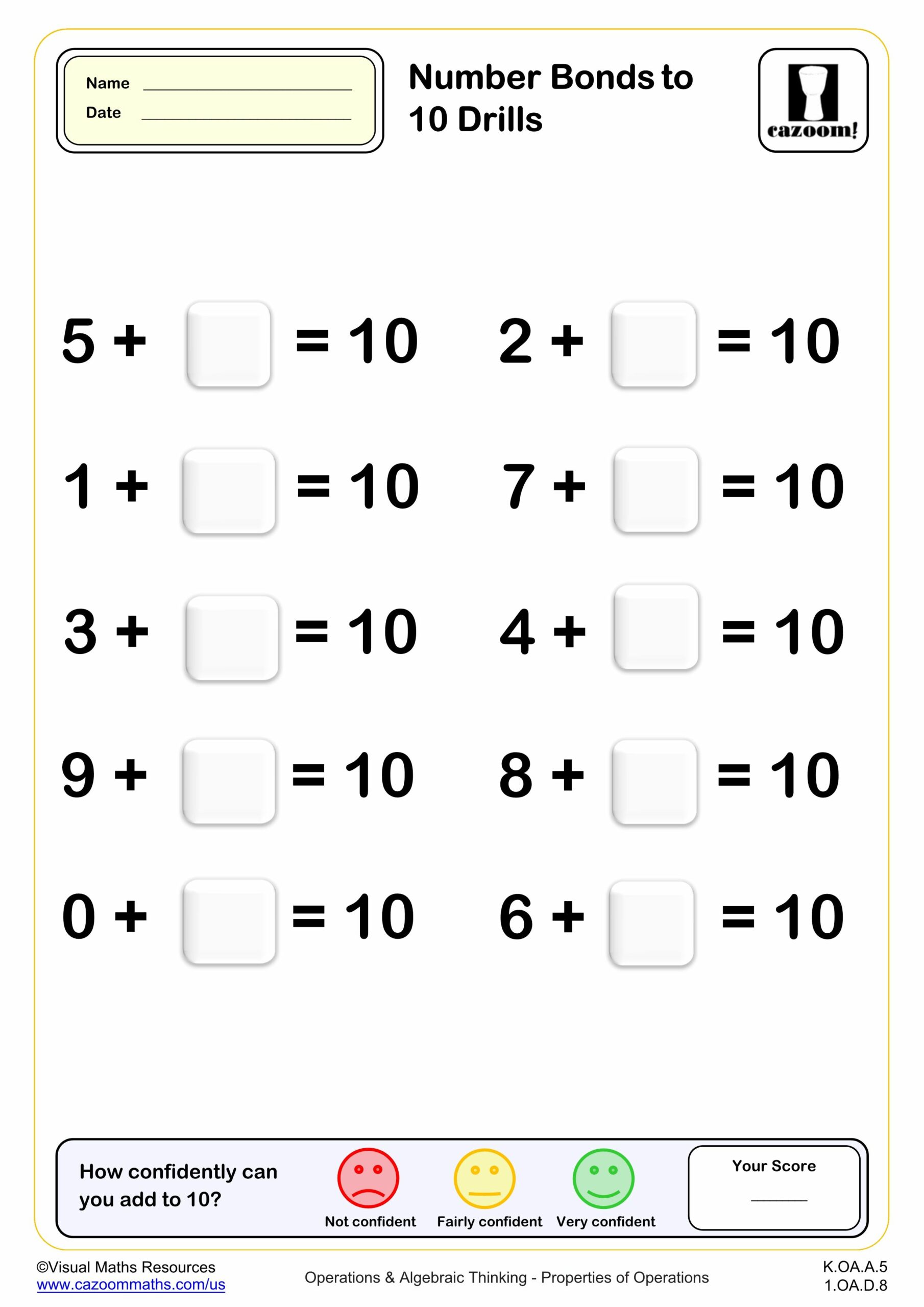
Number Bonds to 10 drills (20 questions)
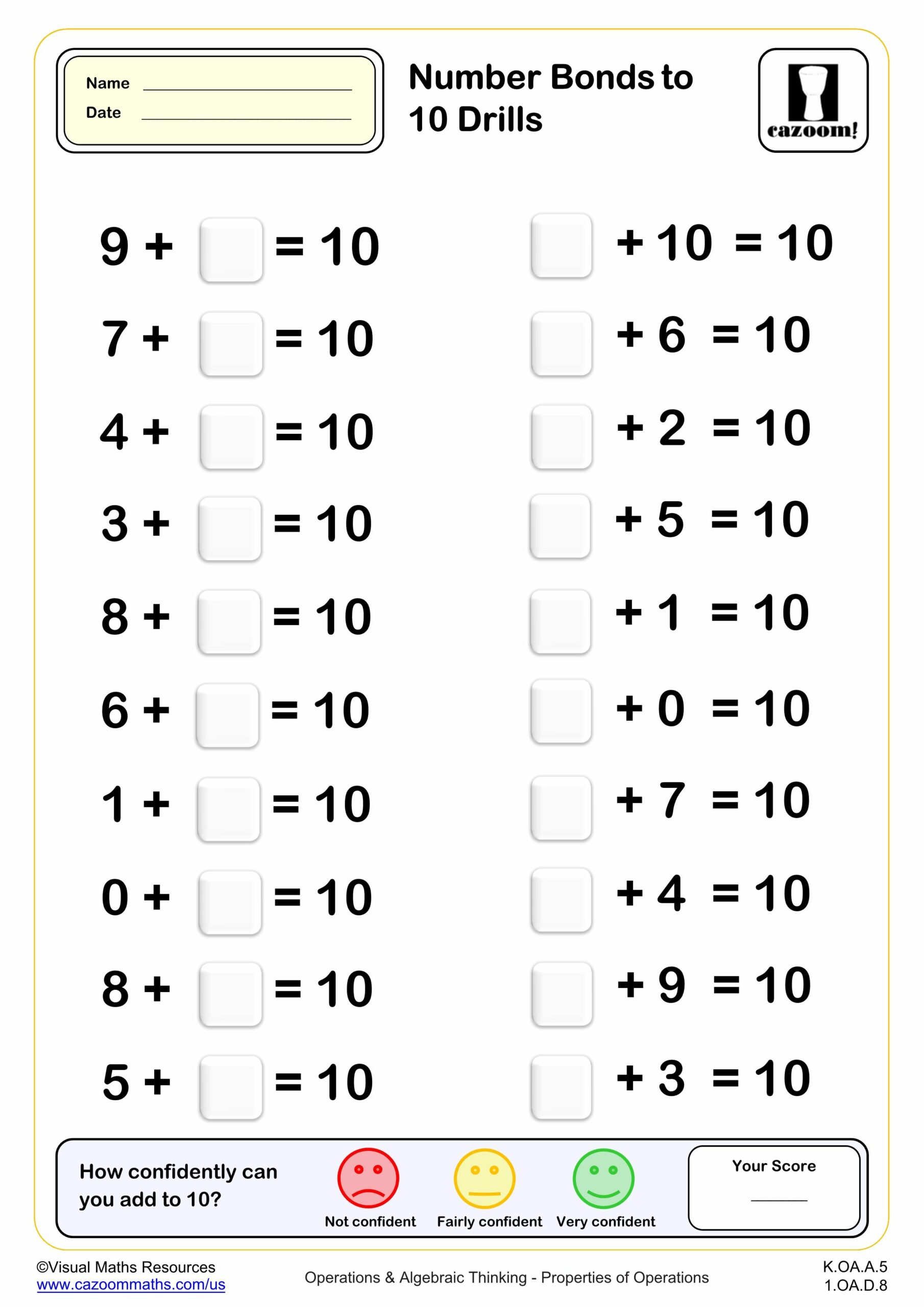
Number Bonds to 10 drills (50 questions)
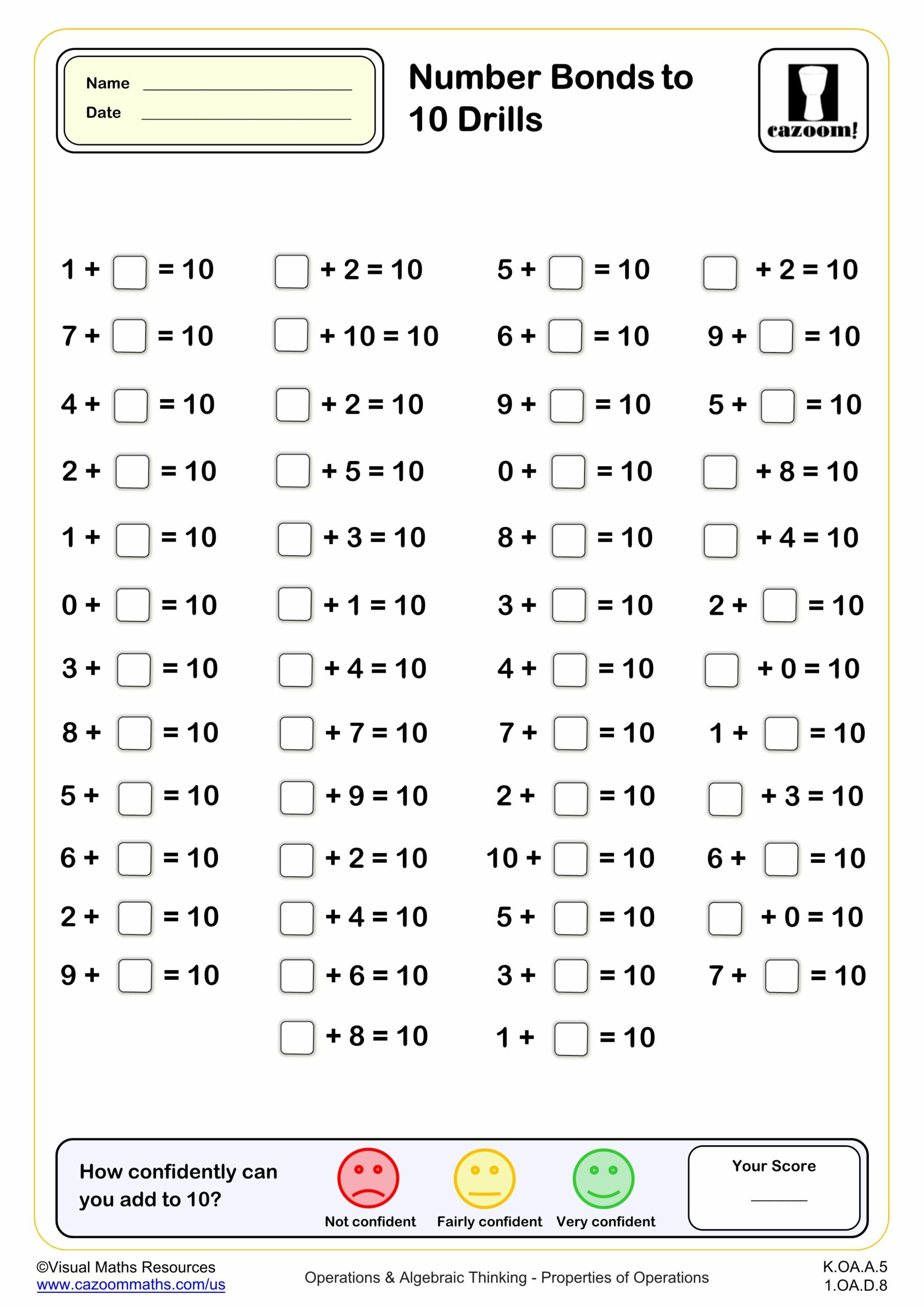
Number Bonds to 10 with Dots
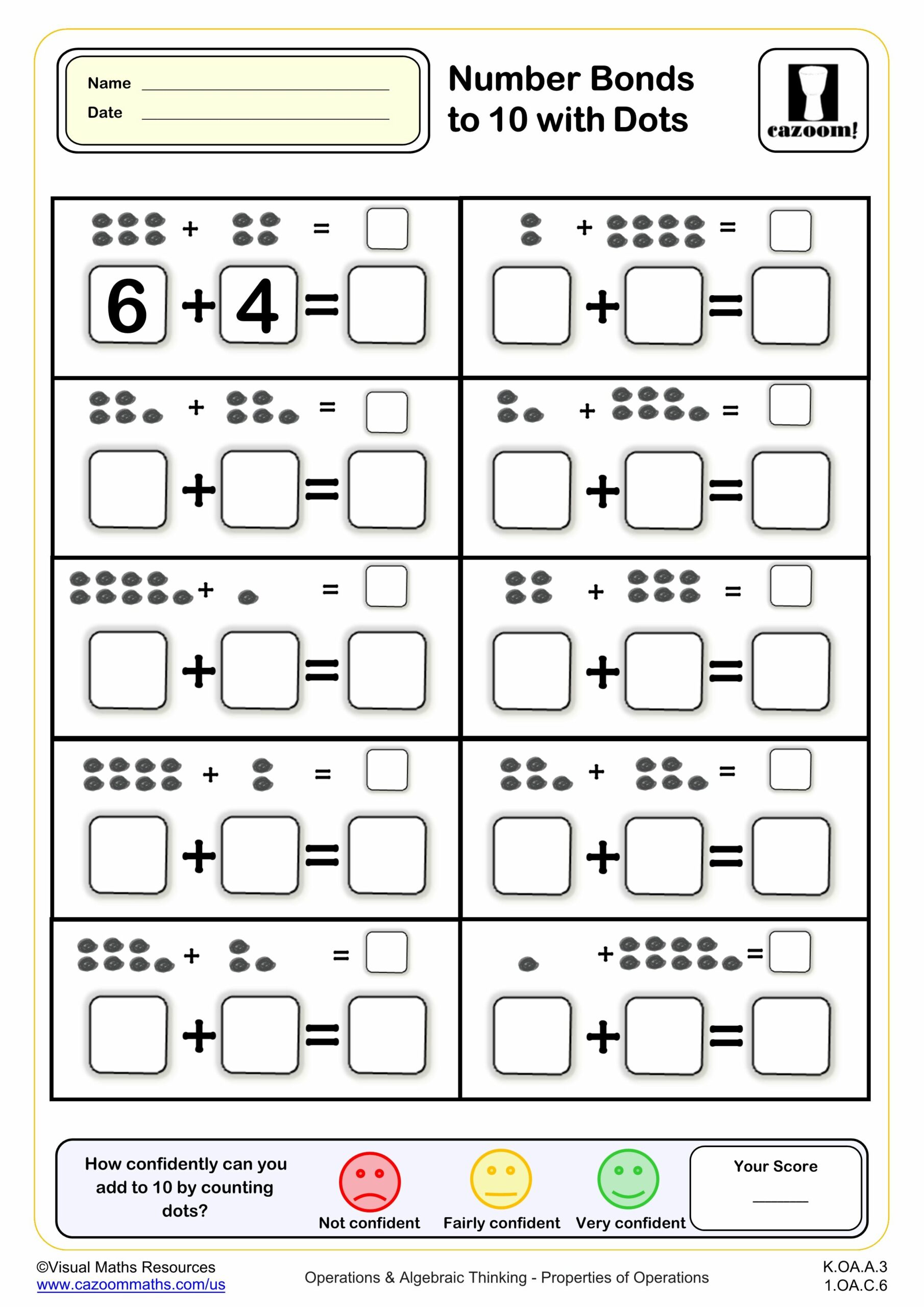
Number bonds to 10 with number lines
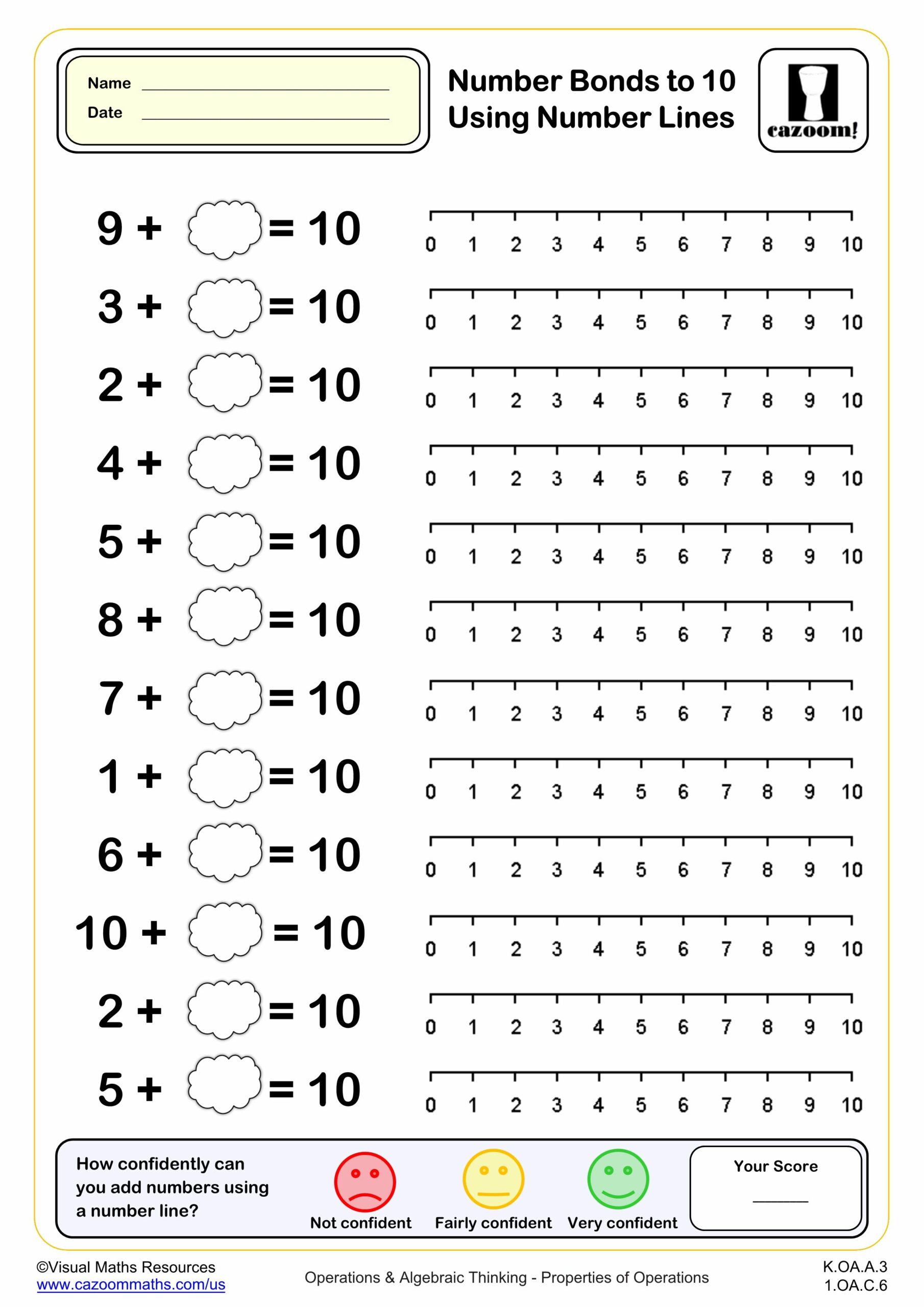
Number Bonds to 20 drills (10 questions)
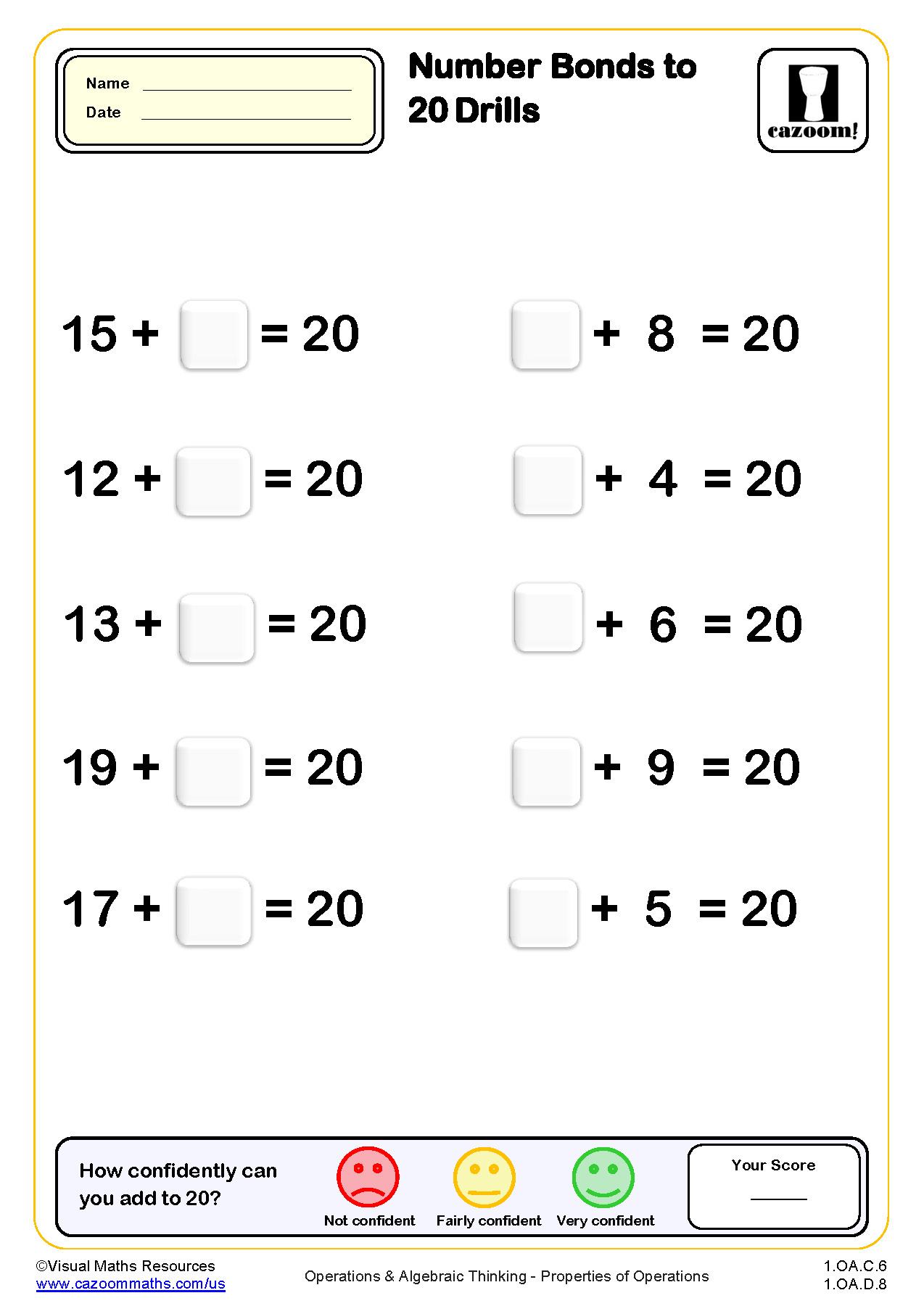
Number Bonds to 20 drills (20 questions)
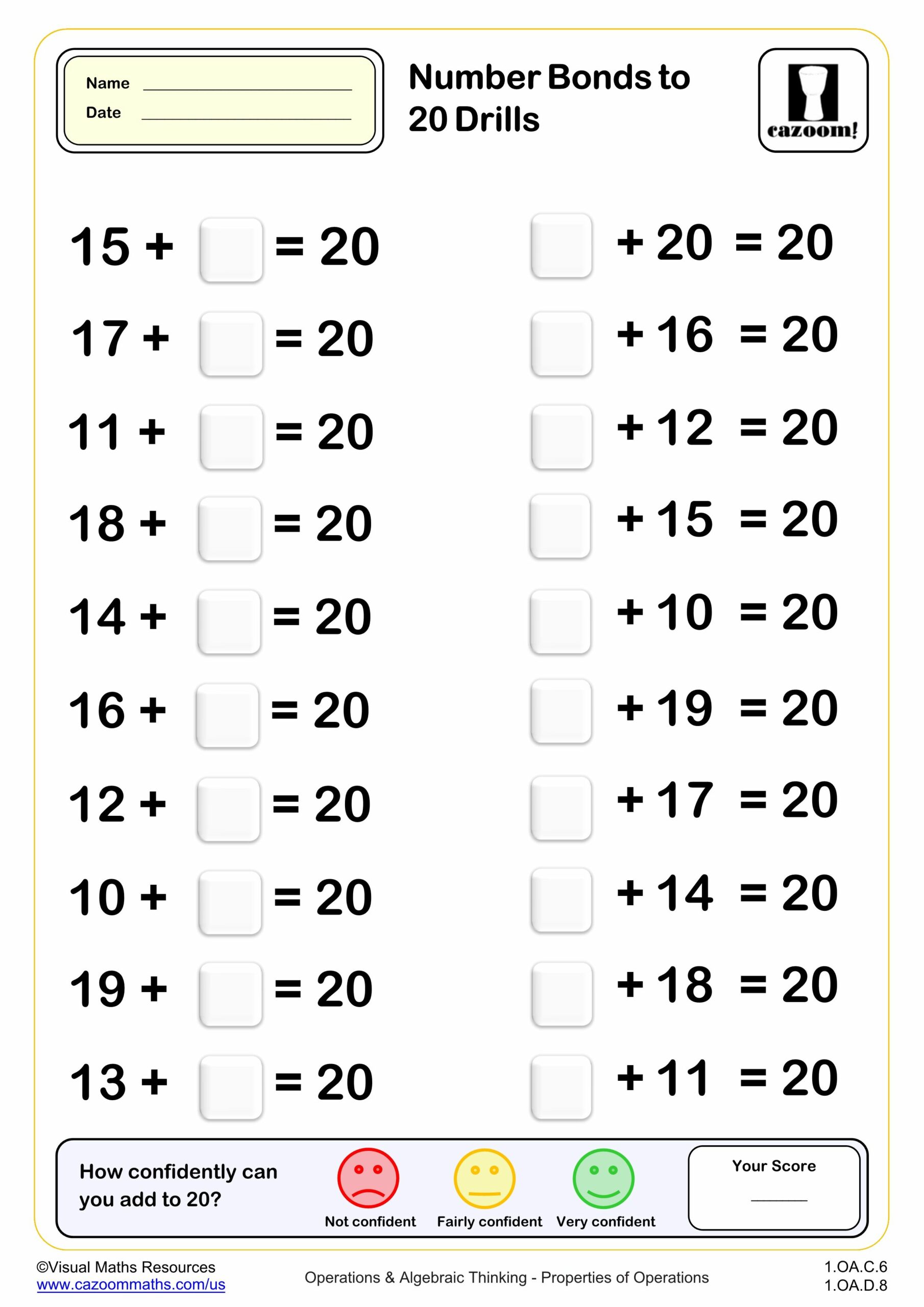
Number Bonds to 20 drills (50 questions)
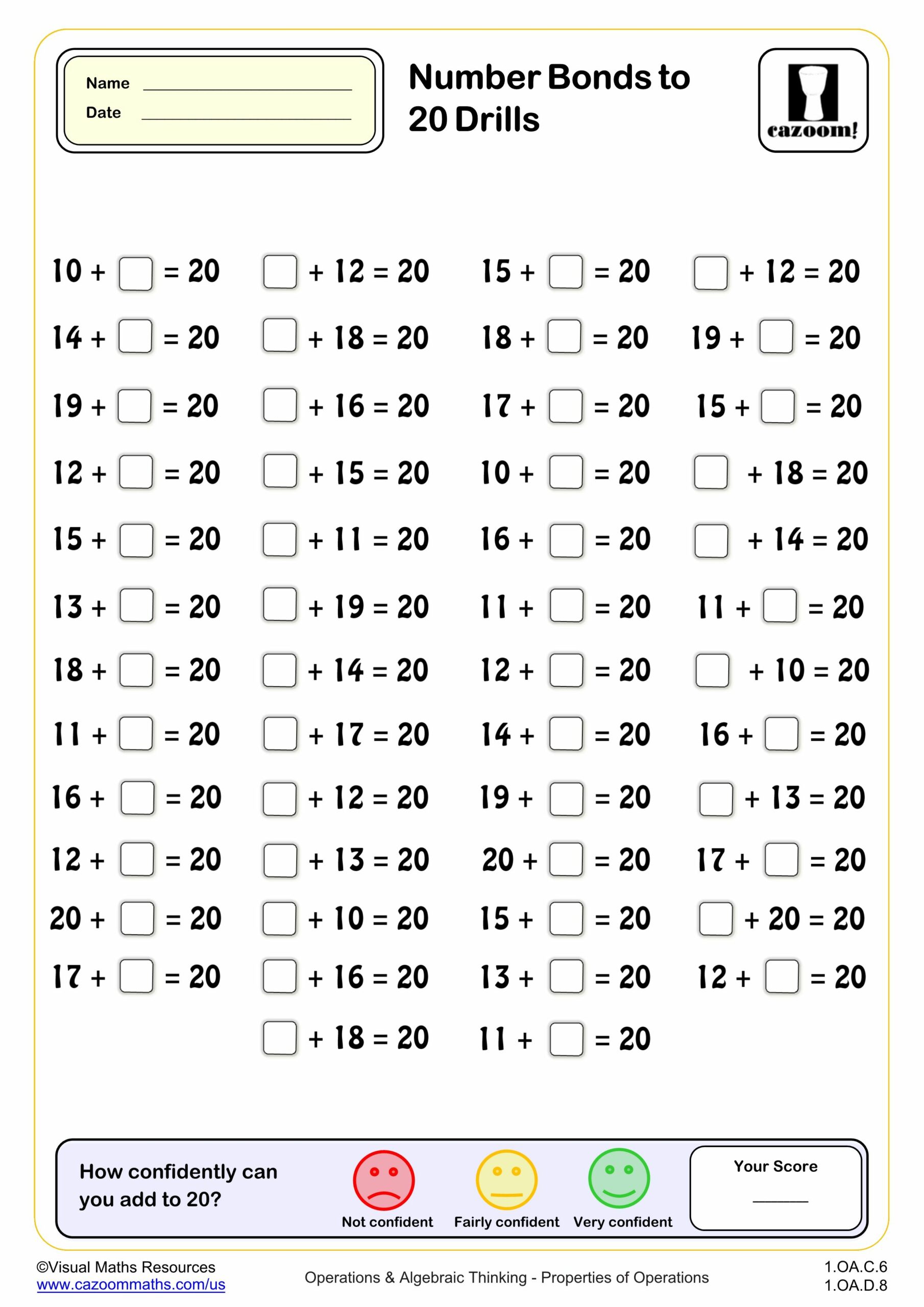
Number Bonds to 20 drills (B) (20 questions)
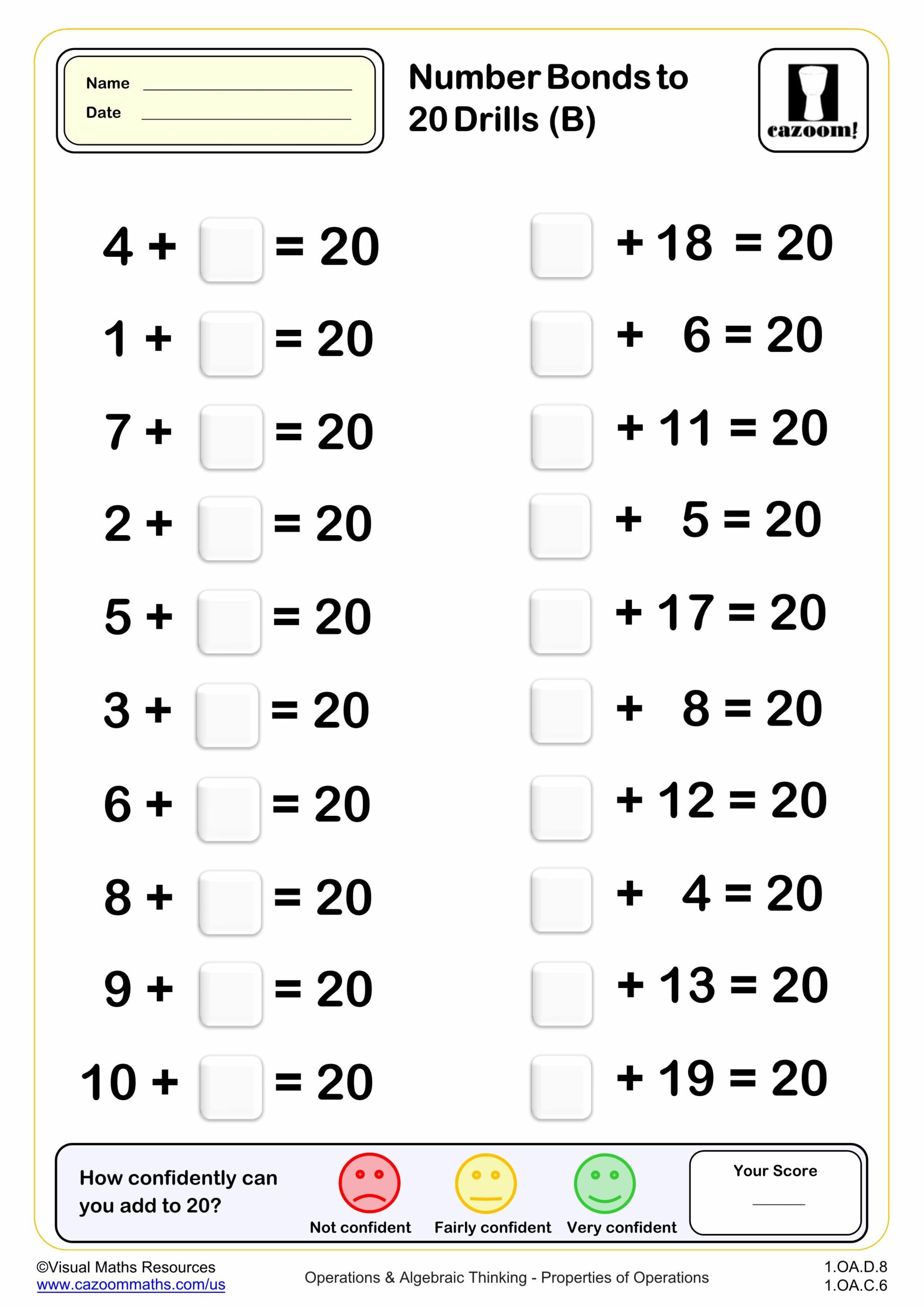
Number Bonds to 20 drills (B) (50 questions)
Number bonds to 20 with dots
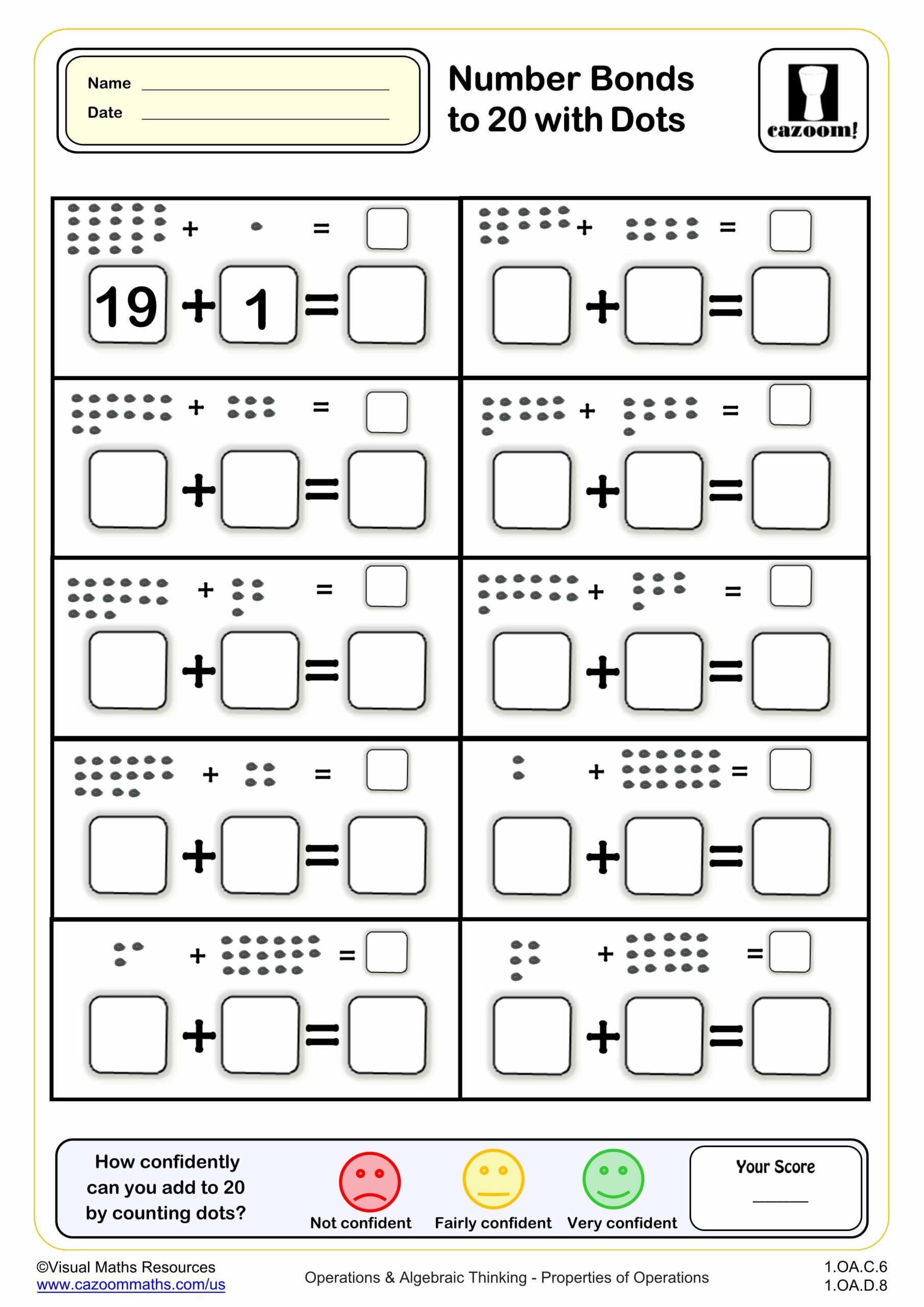
Number bonds to 20 with number lines
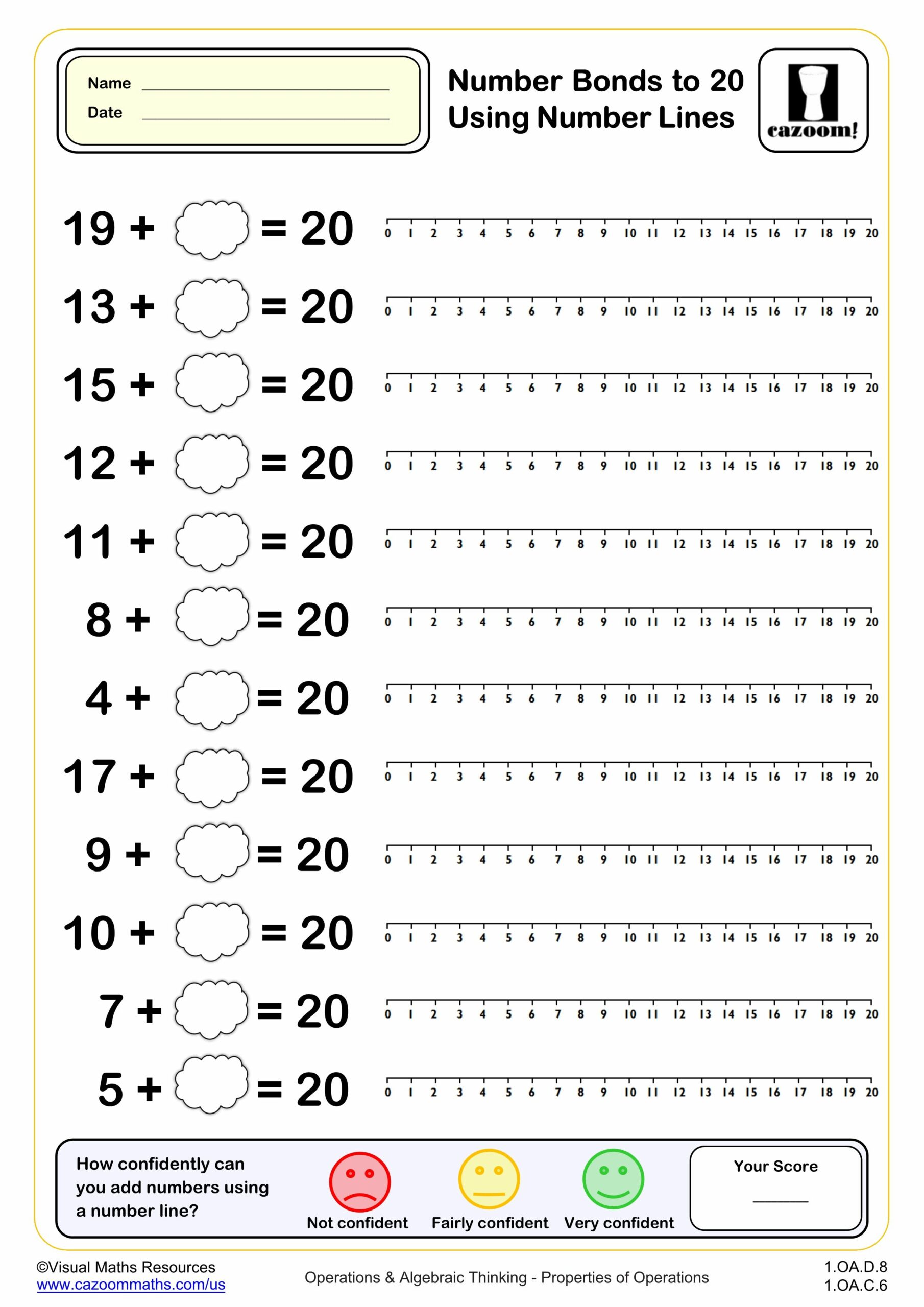
Number Bonds to 5 drills (10 questions)
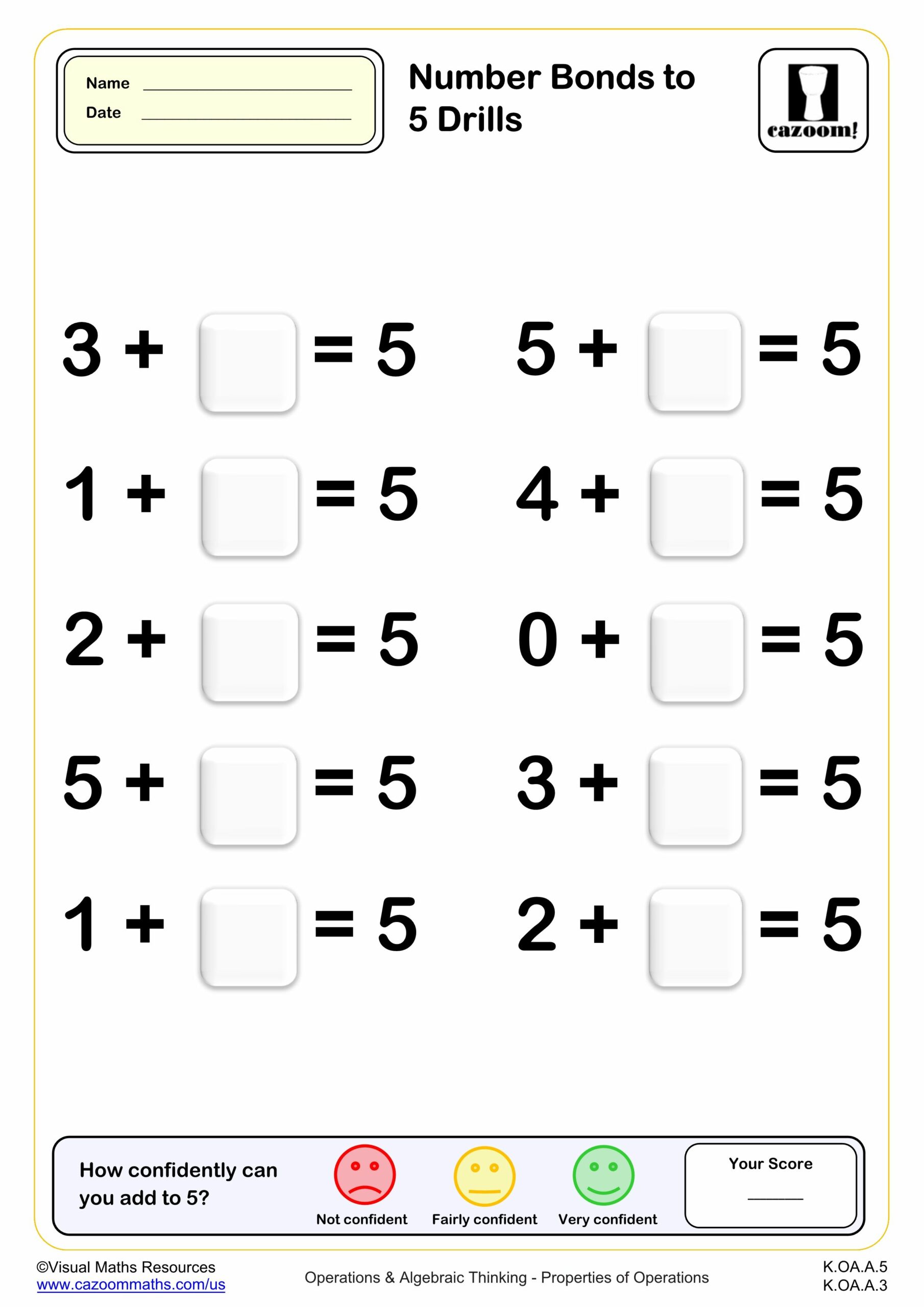
Number Bonds to 5 drills (20 questions)
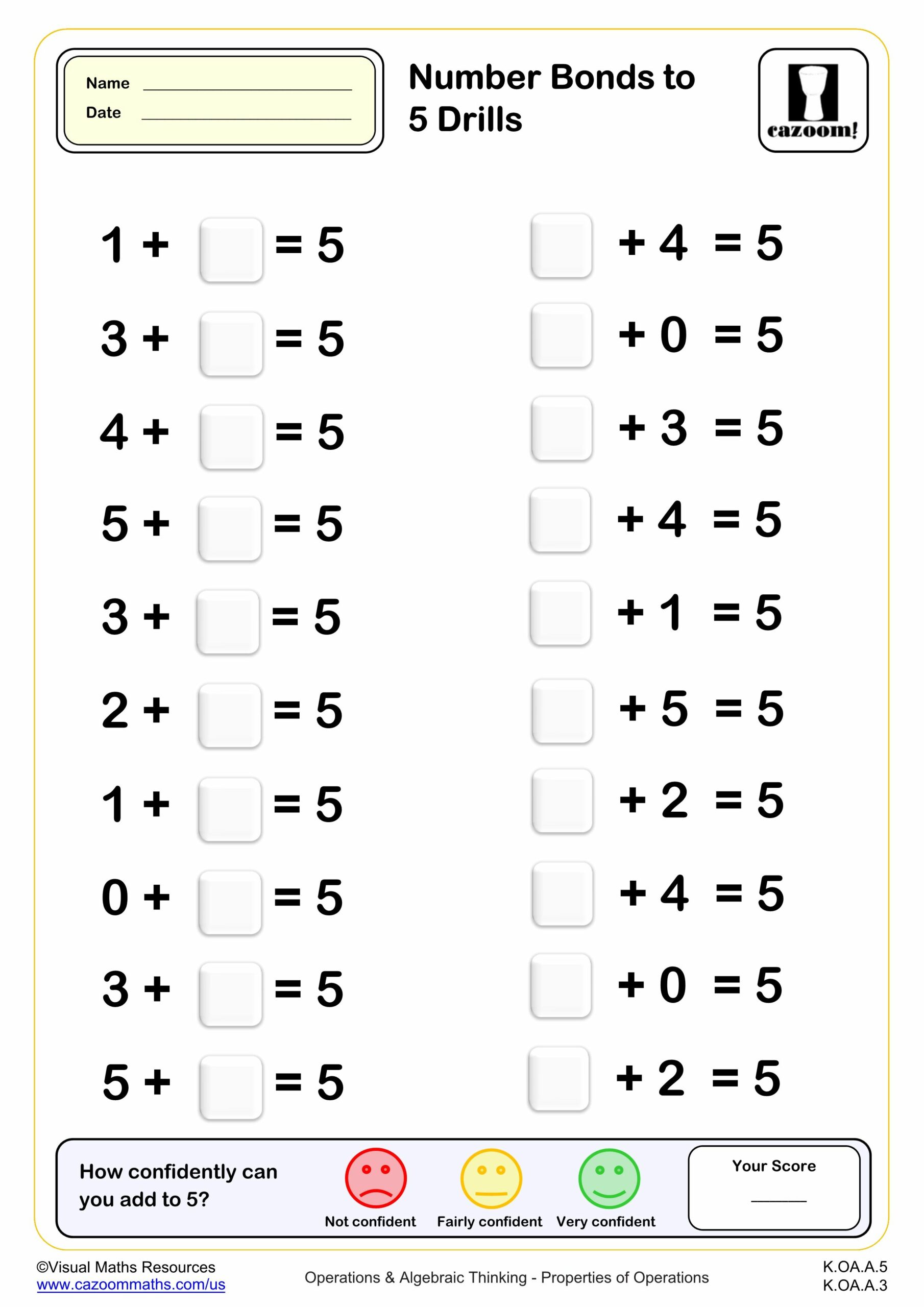
Number Bonds to 5 drills (50 questions)
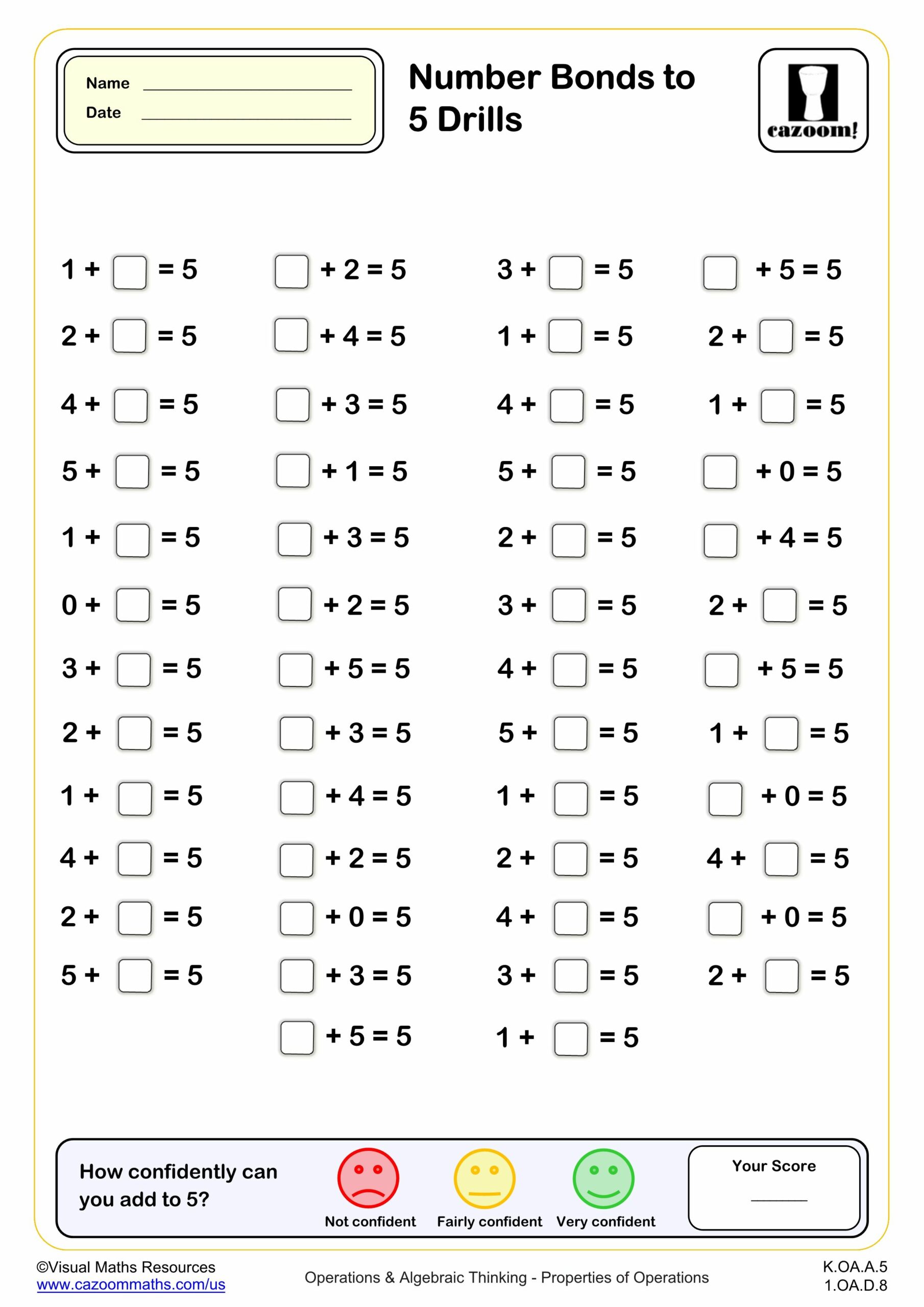
All worksheets are created by the team of experienced teachers at Cazoom Math.
What Are Number Bonds and Why Do Students Practice Them?
Number bonds are visual representations showing how a whole number breaks apart into component parts, typically displayed as circles or boxes connected by lines. Students practice number bonds because they develop part-whole thinking, which forms the conceptual foundation for both addition and subtraction. Understanding that 7 and 3 make 10 simultaneously reveals that 10 minus 7 equals 3, helping students see the inverse relationship between operations that standardized tests assess regularly.
Students often struggle initially when they treat each number bond as an isolated fact to memorize rather than recognizing patterns. A common misconception appears when students see 4 + 6 = 10 but don't immediately connect it to 6 + 4 = 10, missing the commutative property. Teachers find that using manipulatives alongside worksheet practice helps students discover these patterns themselves, creating more durable understanding than rote memorization alone.
Which Grade Levels Use Number Bonds Up to 20 Worksheets?
These number bonds worksheets span kindergarten through 5th grade at the elementary school level. Kindergarten and 1st grade students typically encounter number bonds up to 10 as they build foundational addition skills, while 2nd and 3rd graders extend their work to bonds up to 20 as they develop fluency with larger single-digit combinations. Upper elementary students in 4th and 5th grade use these worksheets for review and intervention when gaps in basic fact fluency interfere with more complex operations.
The progression across grade levels emphasizes both increased number size and problem complexity. Early worksheets focus on making 10 with two numbers and visual support, while later activities introduce three addends and bonds to 15, requiring students to apply flexible thinking. Teachers notice that students who master bonds to 10 first show significantly more confidence when extending to bonds up to 20, as they apply familiar decomposition strategies to slightly larger numbers.
How Does Making 10 Help with Mental Math Strategies?
Making 10 is a compensation strategy where students break apart numbers to create a friendly ten, then adjust. When solving 8 + 7, students recognize they can take 2 from the 7 to make 10 + 5, arriving at 15 more efficiently than counting on. This strategy reduces cognitive load because working with multiples of ten requires less mental effort than managing numbers that don't align with our base-ten system.
This skill connects directly to real-world financial literacy and STEM applications. When calculating change from a $20 bill after a $13 purchase, mentally making 10 ($13 to $20 is $7) happens faster than traditional subtraction algorithms. Engineers and scientists routinely use compensation when estimating measurements or checking calculations, making 10 or 100 to verify results quickly. Students who internalize making 10 as a flexible strategy rather than a worksheet exercise develop quantitative reasoning that extends well beyond elementary arithmetic.
How Can Teachers Use These Worksheets Most Effectively?
These worksheets scaffold learning by starting with visual number bond diagrams before progressing to fill-in-the-blank formats where students identify missing addends. The variety in presentation helps students move from concrete representation to abstract number relationships, which supports conceptual understanding alongside procedural fluency. Answer keys allow students to check their own work during independent practice, promoting self-correction and mathematical reasoning rather than passive completion.
Many teachers use these worksheets during math warm-ups to build daily fact practice without requiring extensive preparation time. They work particularly well for differentiated instruction, where students working below grade level complete bonds to 10 while on-level peers tackle three-addend problems or bonds to 15. Small group intervention sessions benefit from the focused practice, and the worksheets serve as effective homework because the format remains consistent across problem sets, reducing confusion for families supporting learning at home.