Elementary School Properties of Shapes Worksheets
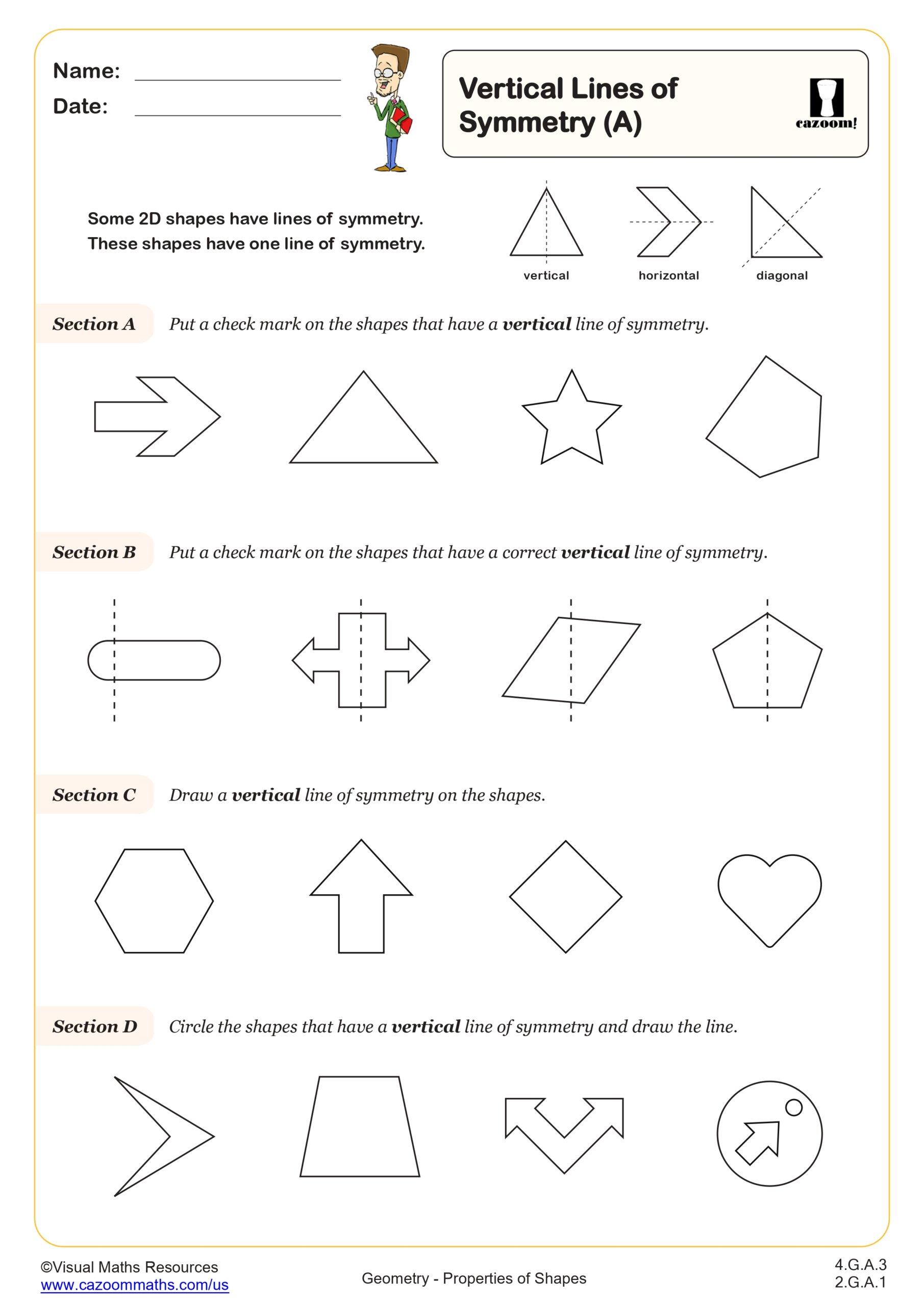
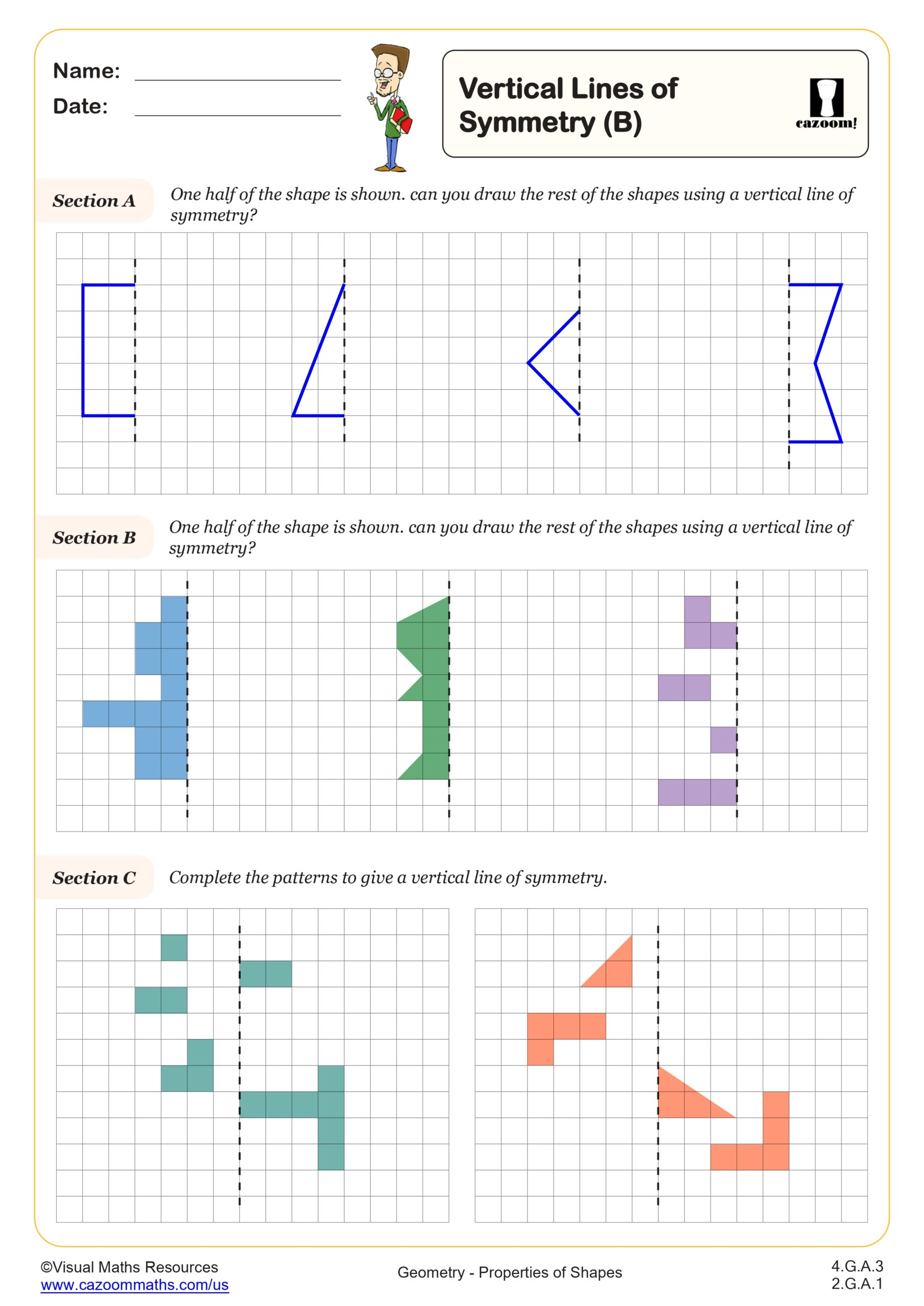
All worksheets are created by the team of experienced teachers at Cazoom Math.
What Are the Key Properties of Shapes Students Learn in Elementary School?
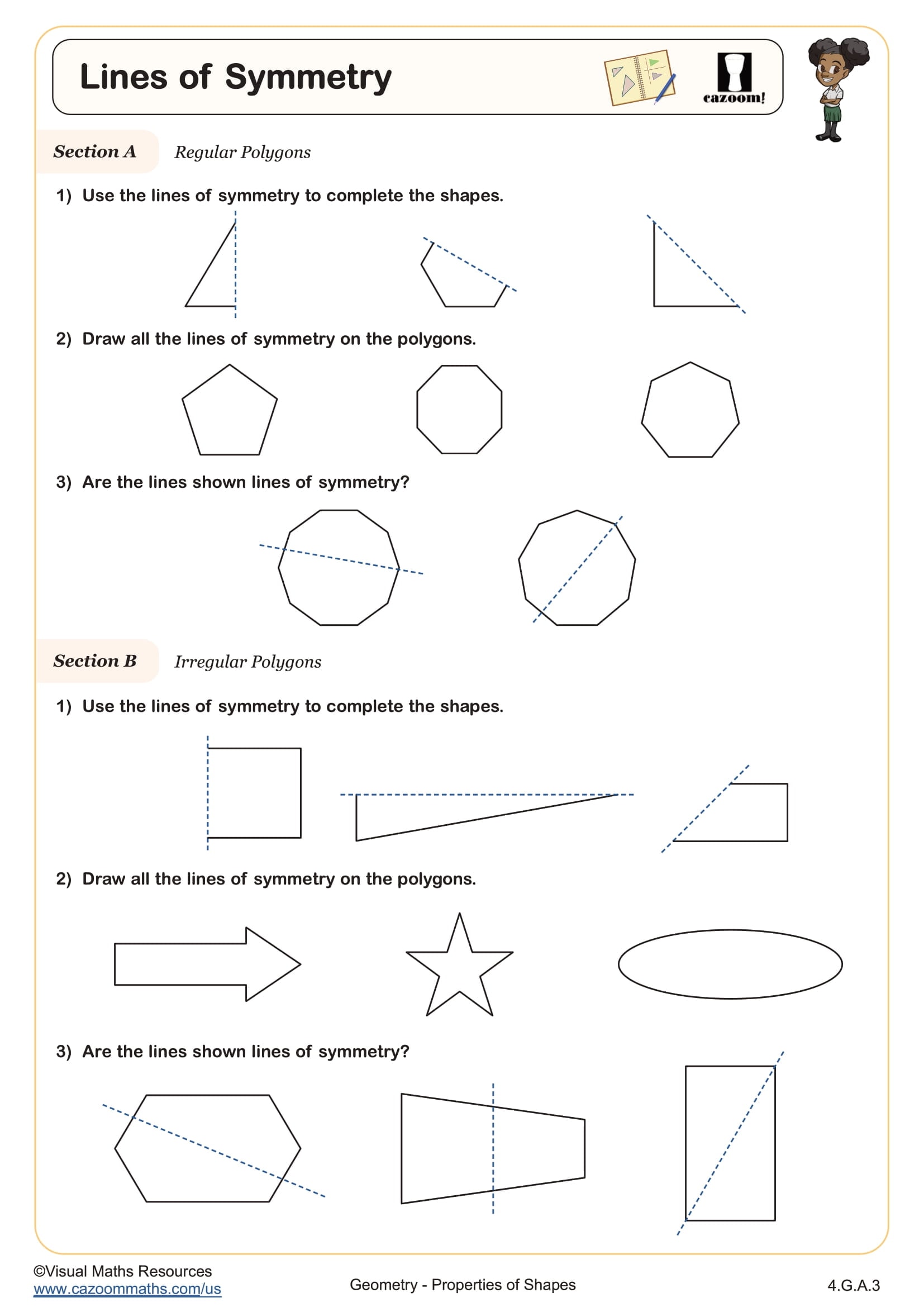
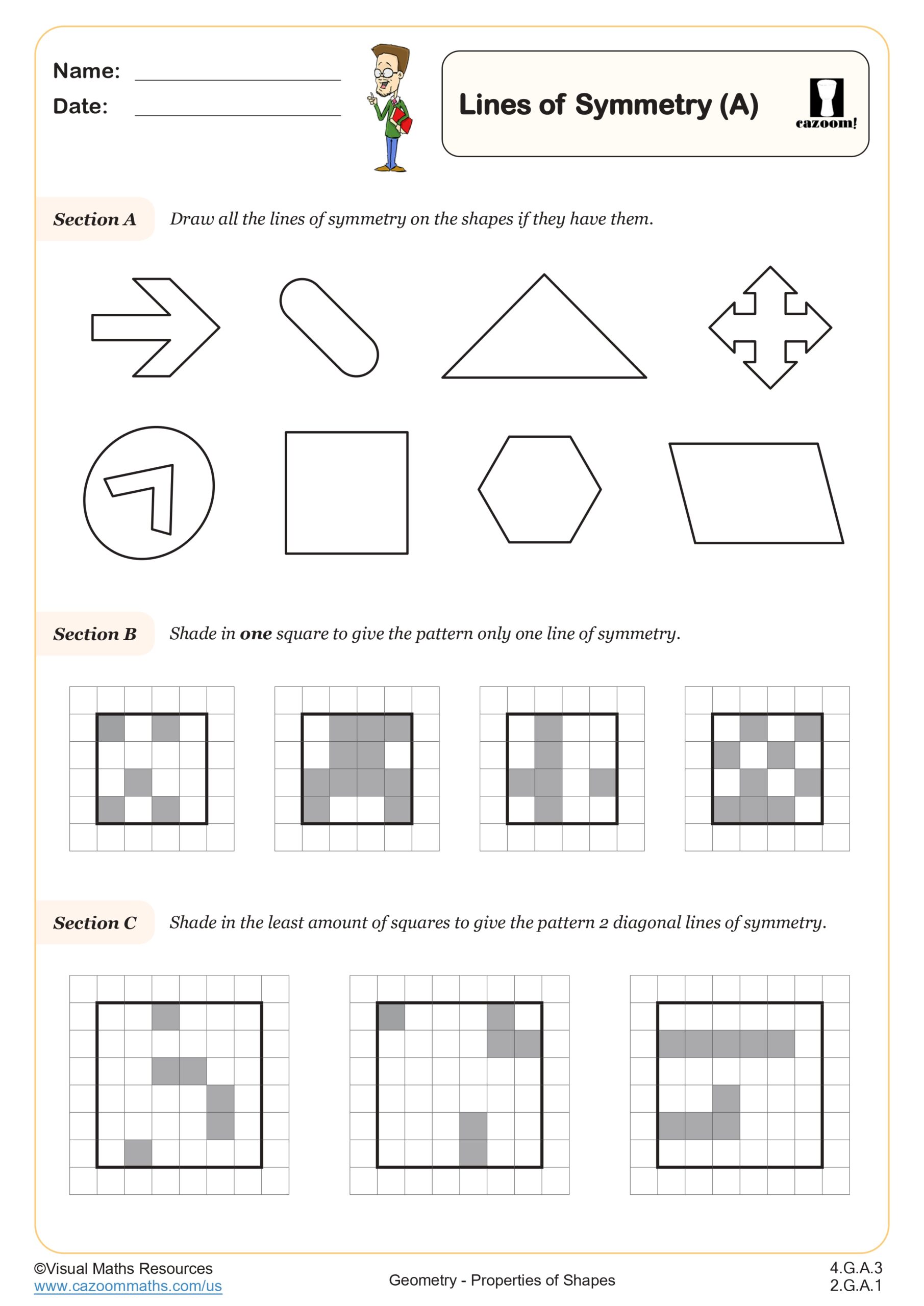
Elementary students progress from identifying basic shape names to analyzing specific attributes like number of sides, vertices, angles, symmetry, and parallel or perpendicular lines. In kindergarten through second grade, the focus centers on recognizing and describing 2D shapes (circles, triangles, rectangles, squares, hexagons) and their basic features. By third through fifth grade, students classify shapes based on shared properties, understand that shapes can belong to multiple categories, and explore concepts like congruence and transformations.
A common misconception surfaces when students confuse necessary versus sufficient properties—many believe that having four sides automatically makes a shape a rectangle, missing the requirement for right angles. State assessments frequently include questions where students must identify which property distinguishes one quadrilateral from another, such as why a rhombus with right angles is actually a square. Teachers find that sorting activities where students physically group shapes by properties help solidify these distinctions more effectively than worksheet identification alone.
Which Grade Levels Use Properties of Shapes Worksheets?
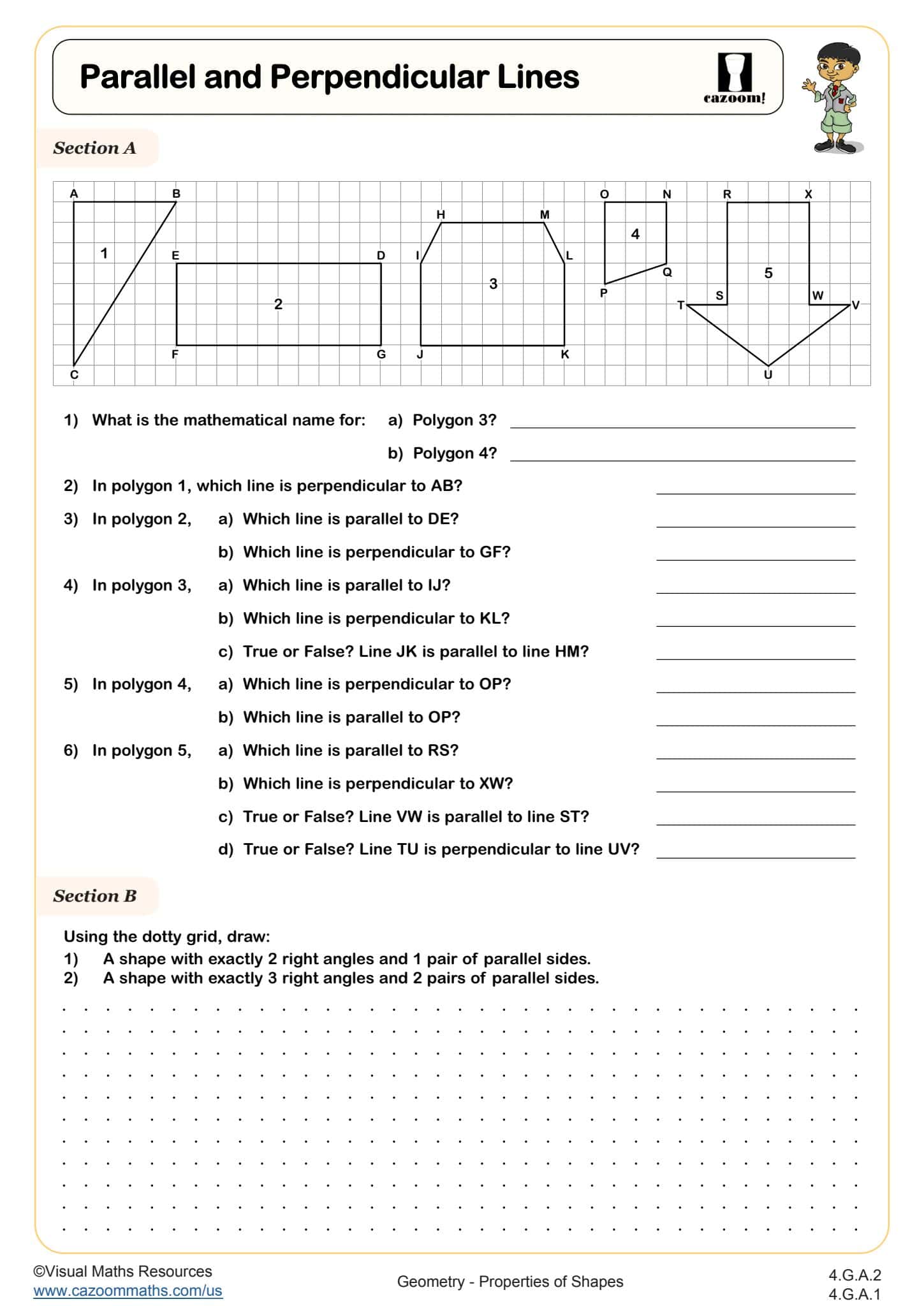
These properties of shapes worksheets span kindergarten through fifth grade, covering the full elementary school progression. Kindergarten students begin by identifying and describing basic 2D shapes in their environment, while first and second graders explore attributes like the number of sides and corners. Third graders start classifying shapes into categories and understanding subcategories, fourth graders analyze parallel and perpendicular lines within shapes, and fifth graders work with coordinate grids and more complex transformations.
The progression moves from concrete recognition to abstract reasoning about shape properties. Early elementary worksheets might show pictures of real-world objects for students to match with shape names, while upper elementary materials present shapes in various orientations and ask students to justify classifications using precise geometric vocabulary. Teachers notice that students who struggle with shape properties in fourth and fifth grade often missed foundational work distinguishing attributes from non-defining characteristics—for instance, understanding that color and size don't determine whether something is a triangle, but three straight sides and three vertices do.
How Do Students Calculate the Area of Regular Hexagons?
Regular hexagon area calculation introduces students to decomposing complex shapes into familiar ones—typically by dividing the hexagon into six equilateral triangles that share a common center point. Students apply the triangle area formula (½ × base × height) to each triangle, then multiply by six, or use the direct formula: Area = (3√3/2) × s², where s represents the side length. This concept bridges basic area understanding with more sophisticated geometric problem-solving that appears on upper elementary assessments.
Hexagonal shapes appear throughout engineering and natural sciences because they efficiently fill space with minimal material—explaining why honeycombs use hexagons rather than circles or squares. Architects designing floor tiles, engineers creating structural supports, and materials scientists studying crystal formations all rely on hexagonal properties. Students who understand hexagon area calculations can analyze why hex-grid game boards provide more movement options than square grids, or calculate the surface area needed for tessellating bathroom tiles, connecting abstract geometry formulas to practical design decisions in construction and manufacturing.
How Can Teachers Use These Shape Properties Worksheets Effectively?
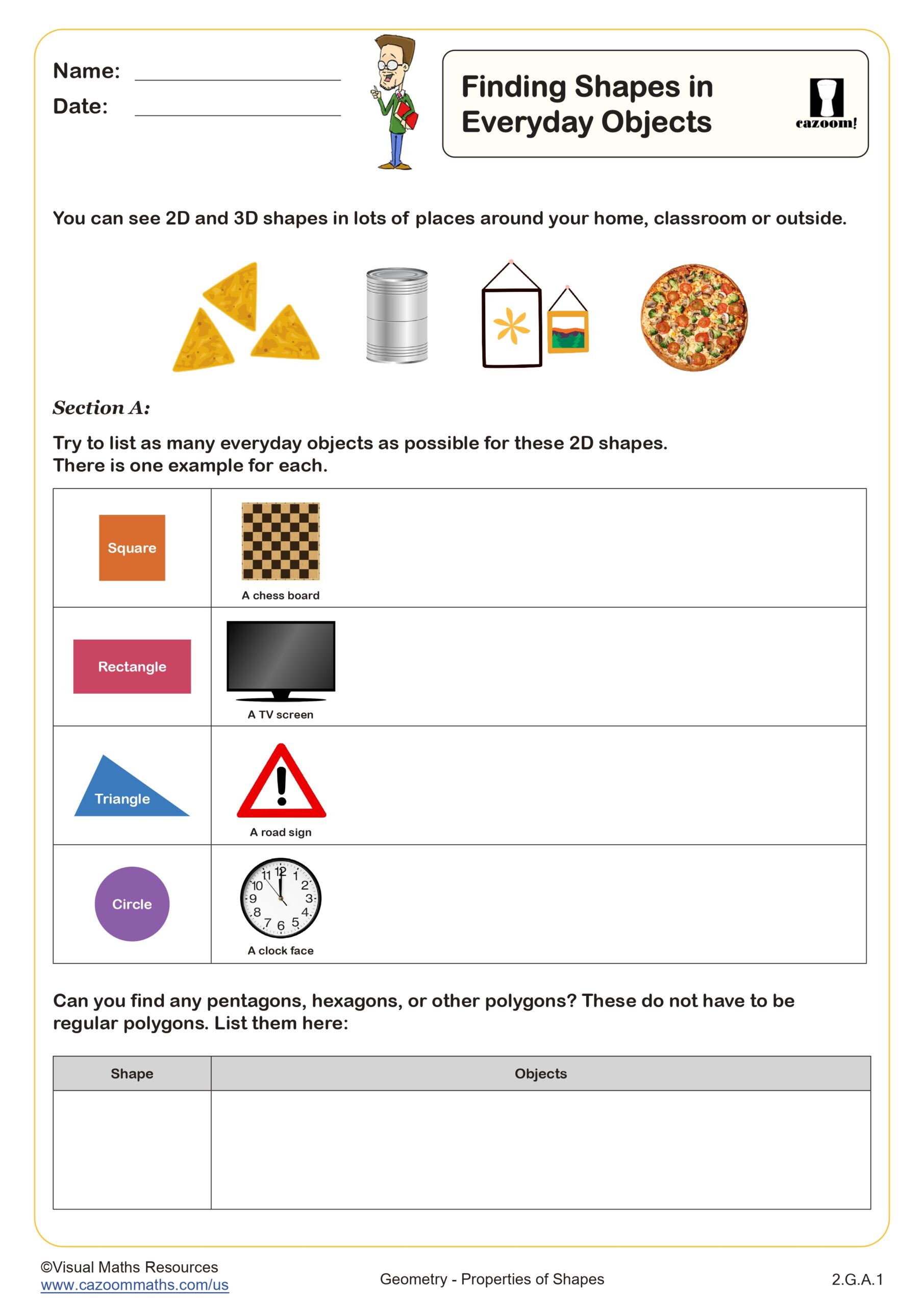
These worksheets provide scaffolded practice that moves students from basic identification through analytical reasoning about geometric properties. The collection includes varied formats—word searches that reinforce vocabulary, calculation exercises for area formulas, visual identification activities for finding shapes in everyday contexts, and transformation tasks using coordinate grids or column vectors. The included answer keys allow students to self-check during independent work or enable quick assessment during intervention sessions, helping teachers identify exactly which properties need reteaching.
Many teachers assign different worksheets based on formative assessment results, using simpler shape identification sheets for students still building foundational recognition while giving transformation and enlargement activities to students ready for challenge work. The word search worksheets work particularly well as warm-up activities before introducing new geometric vocabulary, while the everyday objects worksheets make effective homework because students can look around their homes for real examples. During math centers or stations, pairing students with different skill levels on the same worksheet encourages peer explanation of shape properties, which often reveals misconceptions more clearly than individual work alone.