Elementary School Reason with Shapes Worksheets
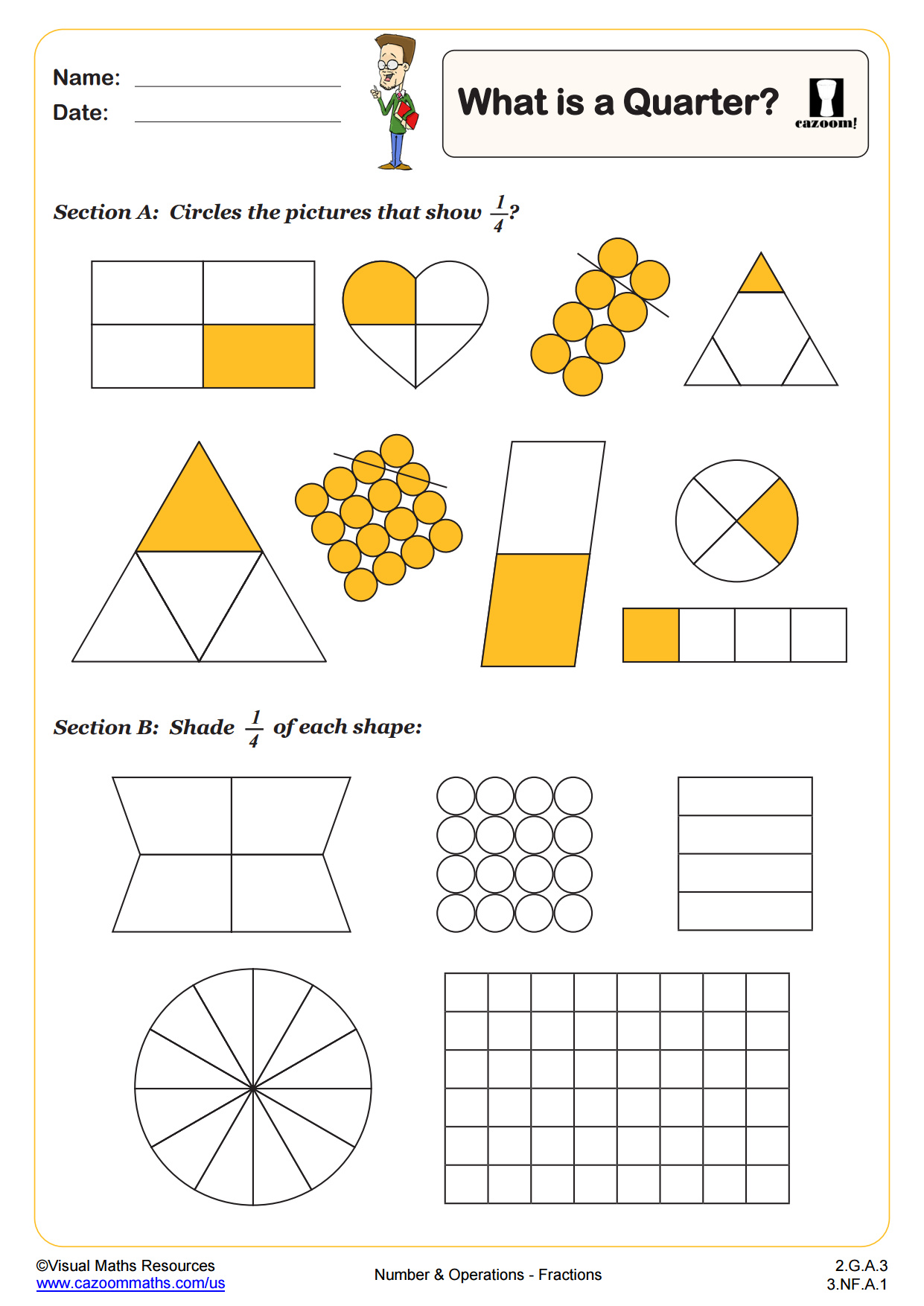
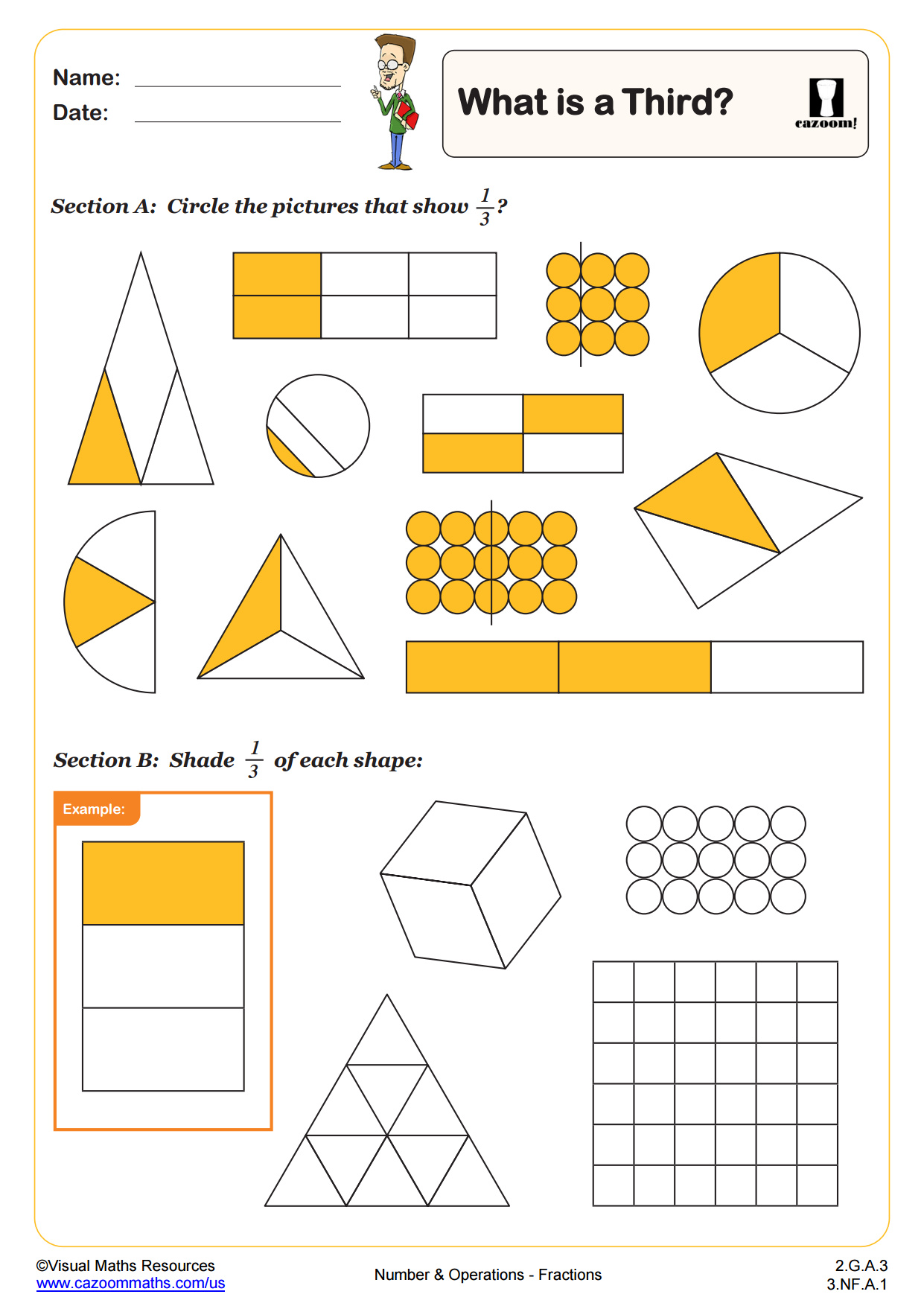
All worksheets are created by the team of experienced teachers at Cazoom Math.
What Does Reasoning with Shapes Mean in Elementary Math?
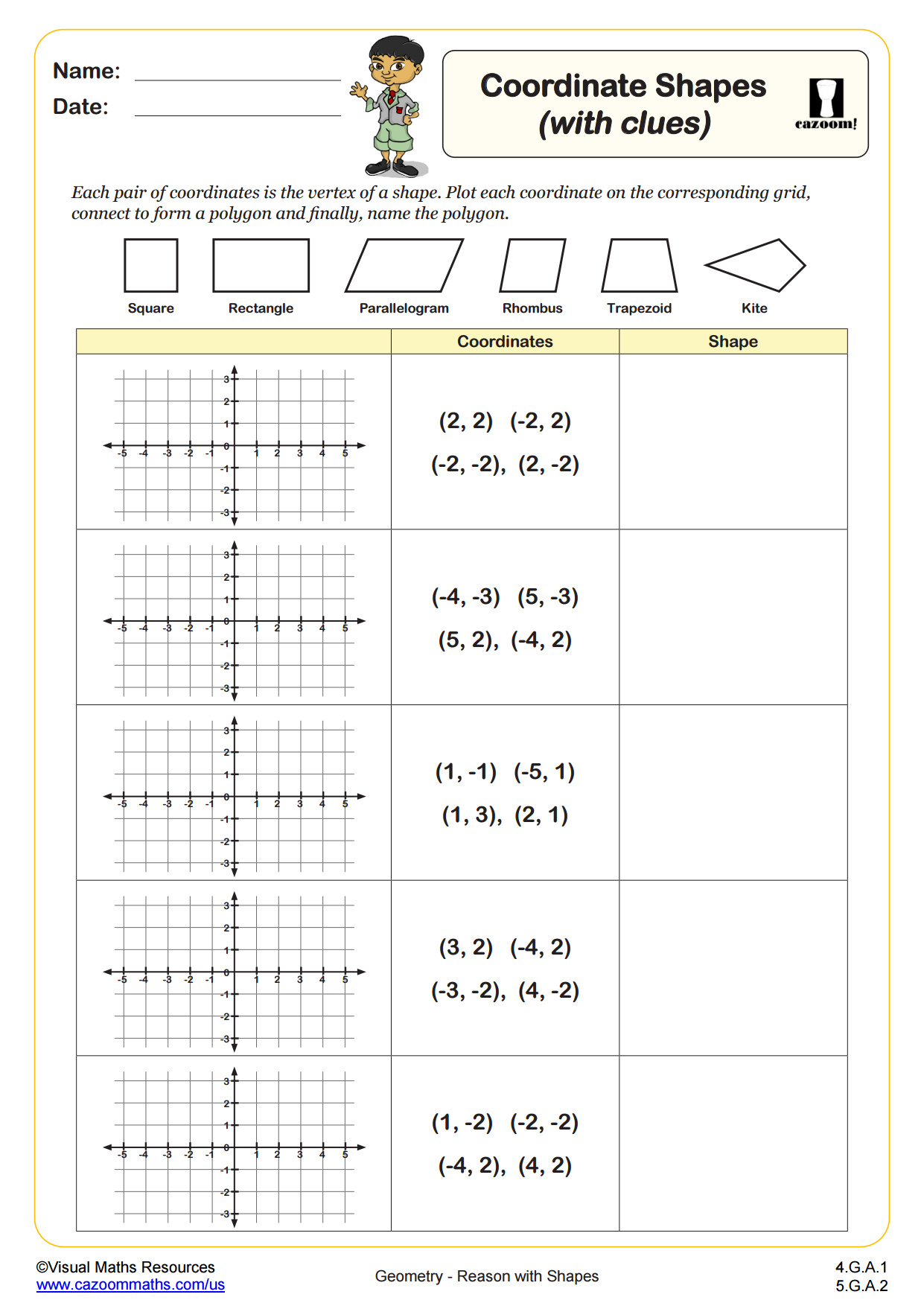
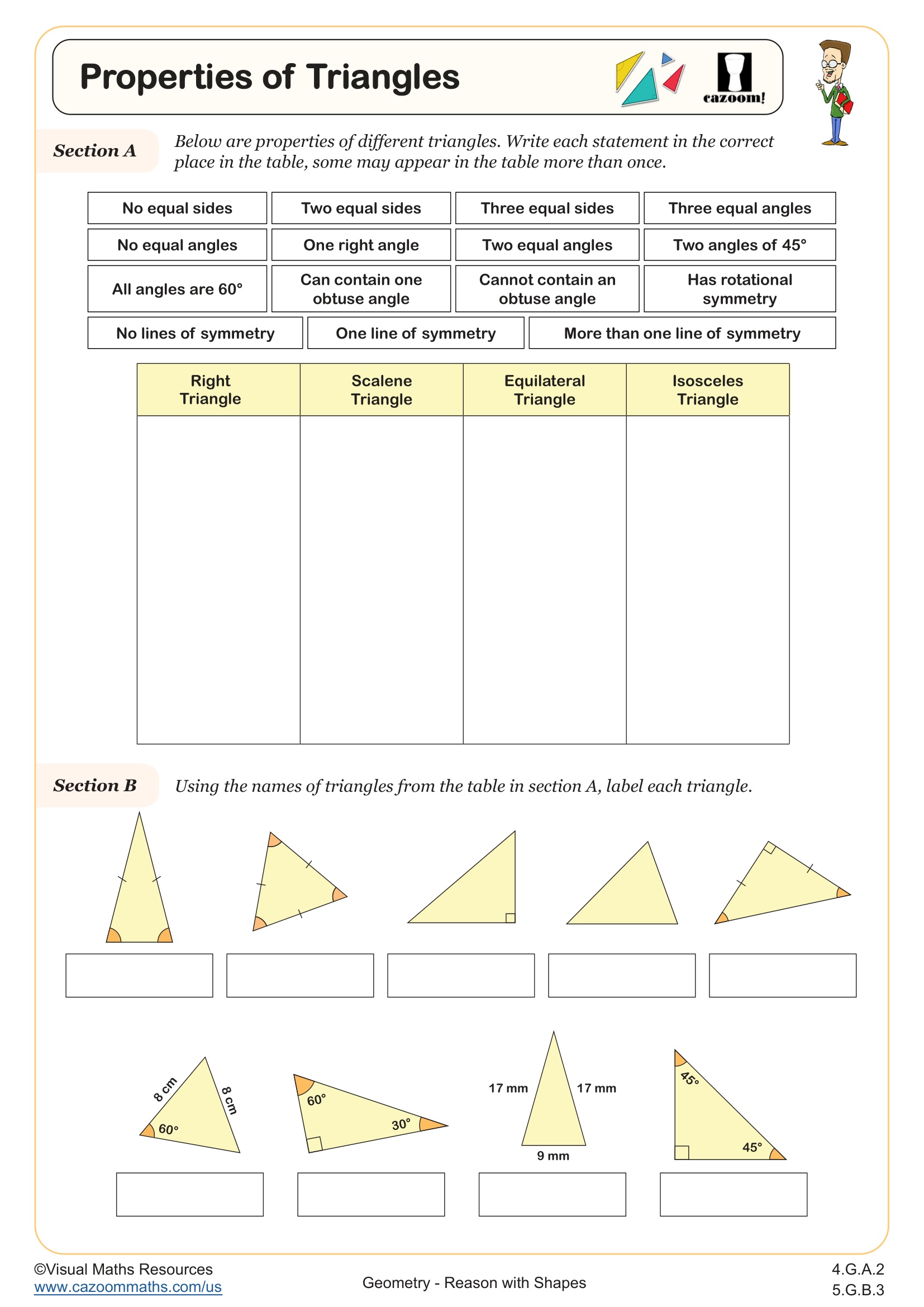
Reasoning with shapes involves analyzing, comparing, and making logical conclusions about geometric figures based on their attributes. Rather than simply naming shapes, students examine properties like number of sides, angle types, symmetry, and relationships between shapes. This aligns with Common Core geometry standards that emphasize both identifying shapes and understanding why shapes belong to specific categories.
A common misconception emerges when students confuse visual similarity with geometric classification. Many students initially claim a tilted square is a diamond or different shape entirely, not recognizing that orientation doesn't change a shape's properties. Teachers find that hands-on activities with pattern blocks or tangrams, followed by targeted worksheet practice, help students focus on defining attributes rather than appearance alone.
Which Grade Levels Use Reason with Shapes Worksheets?
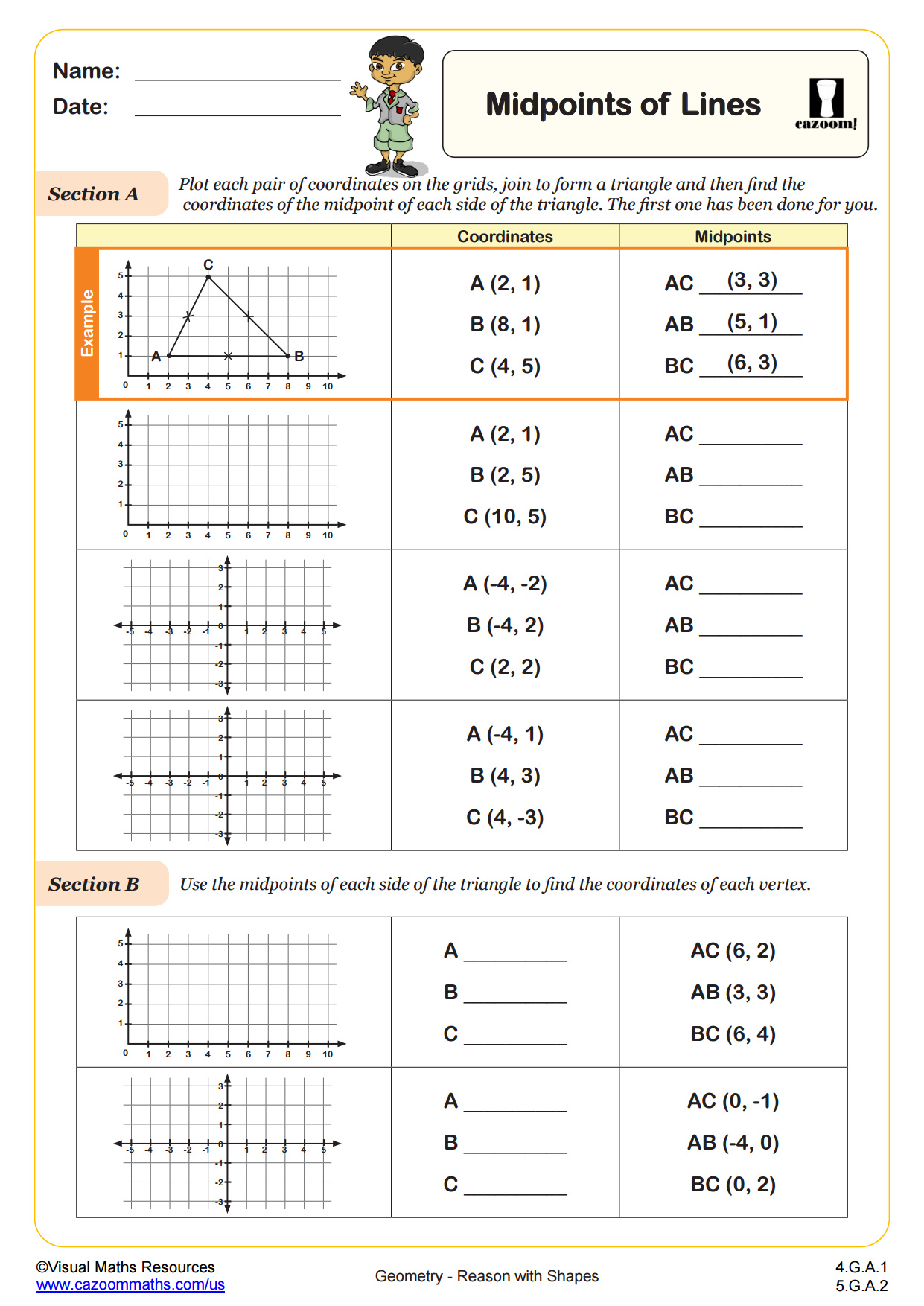
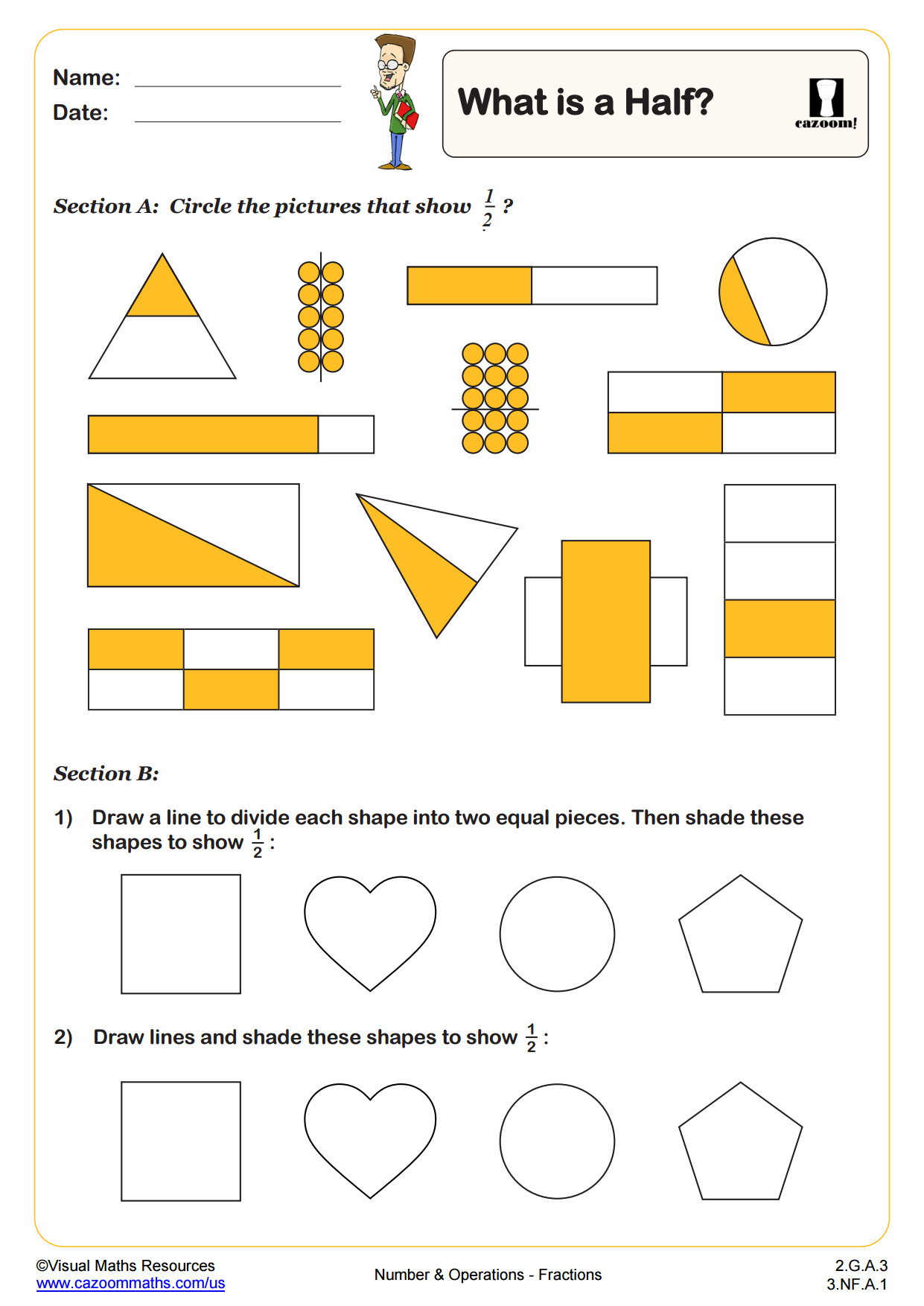
These worksheets span kindergarten through 5th grade, covering the full elementary school range. Kindergarten and 1st grade students begin with fundamental concepts like identifying halves and quarters of shapes, while 2nd and 3rd graders tackle more complex ideas including shape properties and basic coordinate work. Fourth and 5th grade worksheets address sophisticated topics like midpoints of lines and detailed triangle classifications.
The progression mirrors how geometric thinking develops across elementary years. Early grade worksheets use visual models and concrete partitioning, while upper elementary resources incorporate coordinate grids and multiple-step reasoning. Students lose points on standardized assessments when they haven't built this foundation systematically, particularly when questions combine geometric vocabulary with logical deduction or require transferring skills across different shape contexts.
How Do Students Learn to Identify Midpoints of Lines?
Finding midpoints teaches students to locate the exact center point of a line segment, either by measuring or using coordinate formulas in upper grades. Students begin with physical measurement, folding paper strips or using rulers to find equal distances from endpoints. As they advance, they apply the midpoint formula or count units on coordinate grids to identify center points precisely.
This skill connects directly to real-world applications in construction, design, and computer graphics. Architects use midpoints when creating symmetrical building plans, while graphic designers apply midpoint concepts when centering elements or creating balanced layouts. Engineers rely on midpoint calculations for structural support placement. Students often make the connection between midpoints and balance when teachers demonstrate with a ruler balanced on a pencil, suddenly recognizing why the concept matters beyond mathematics class.
How Can Teachers Use These Worksheets Most Effectively?
These worksheets provide structured practice that reinforces geometric vocabulary and reasoning skills through varied question types. Each worksheet includes answer keys, allowing teachers to quickly review student work and identify which specific properties or concepts need reteaching. The resources work well for differentiation since they span multiple grade levels and complexity, letting teachers match worksheets to individual student readiness rather than just grade placement.
Many teachers use these worksheets for math centers, pairing students to discuss their reasoning before finalizing answers. This collaborative approach reveals misconceptions quickly when partners justify their thinking aloud. The worksheets also function effectively as homework following hands-on lessons, as formative assessments before unit tests, or as targeted intervention for students who struggle with spatial reasoning. Teachers notice students show more confidence on benchmark assessments when they've had consistent practice explaining shape relationships rather than just identifying them.