Elementary School Single Digit Subtraction Worksheets
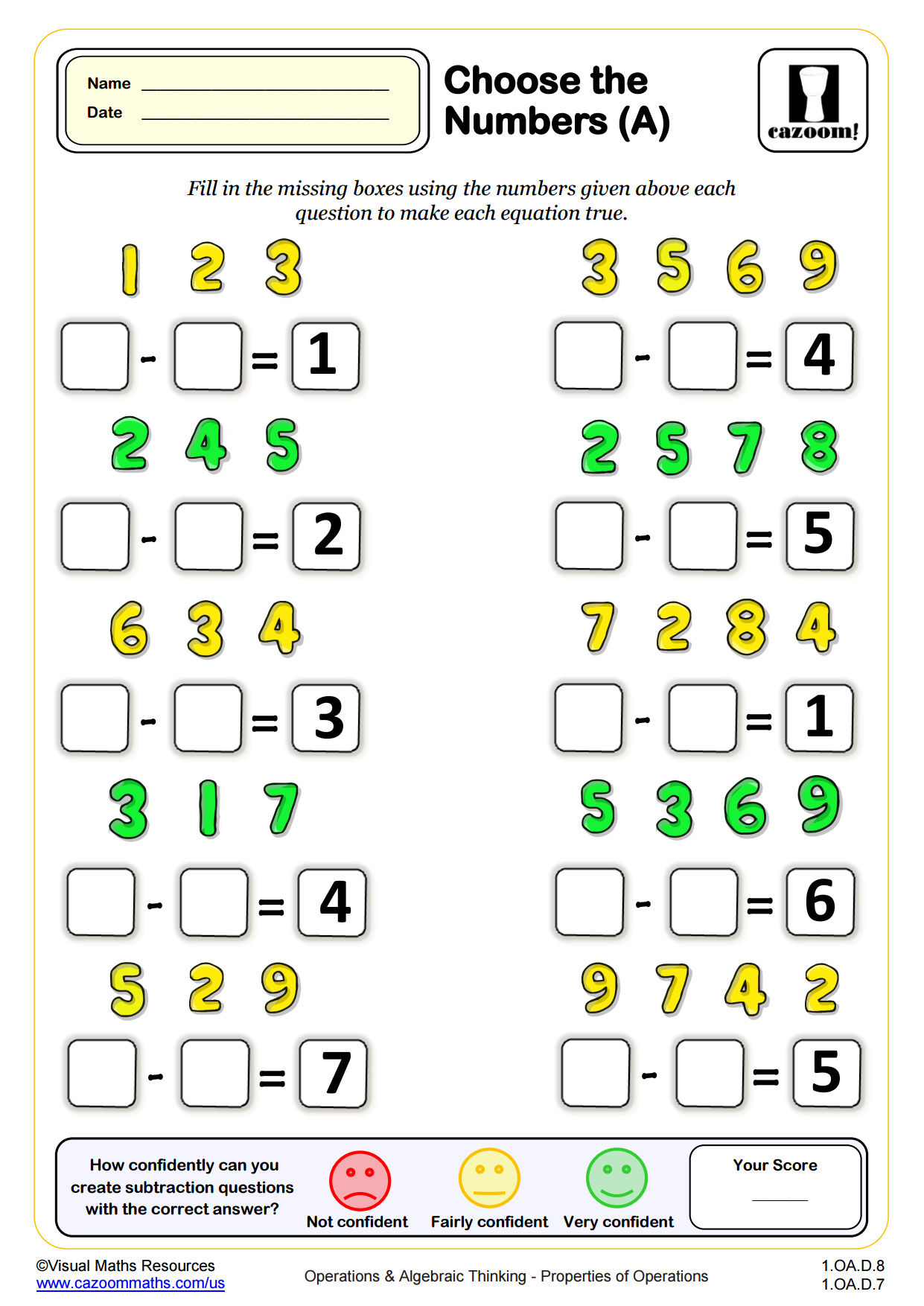
Choose the Numbers (A)
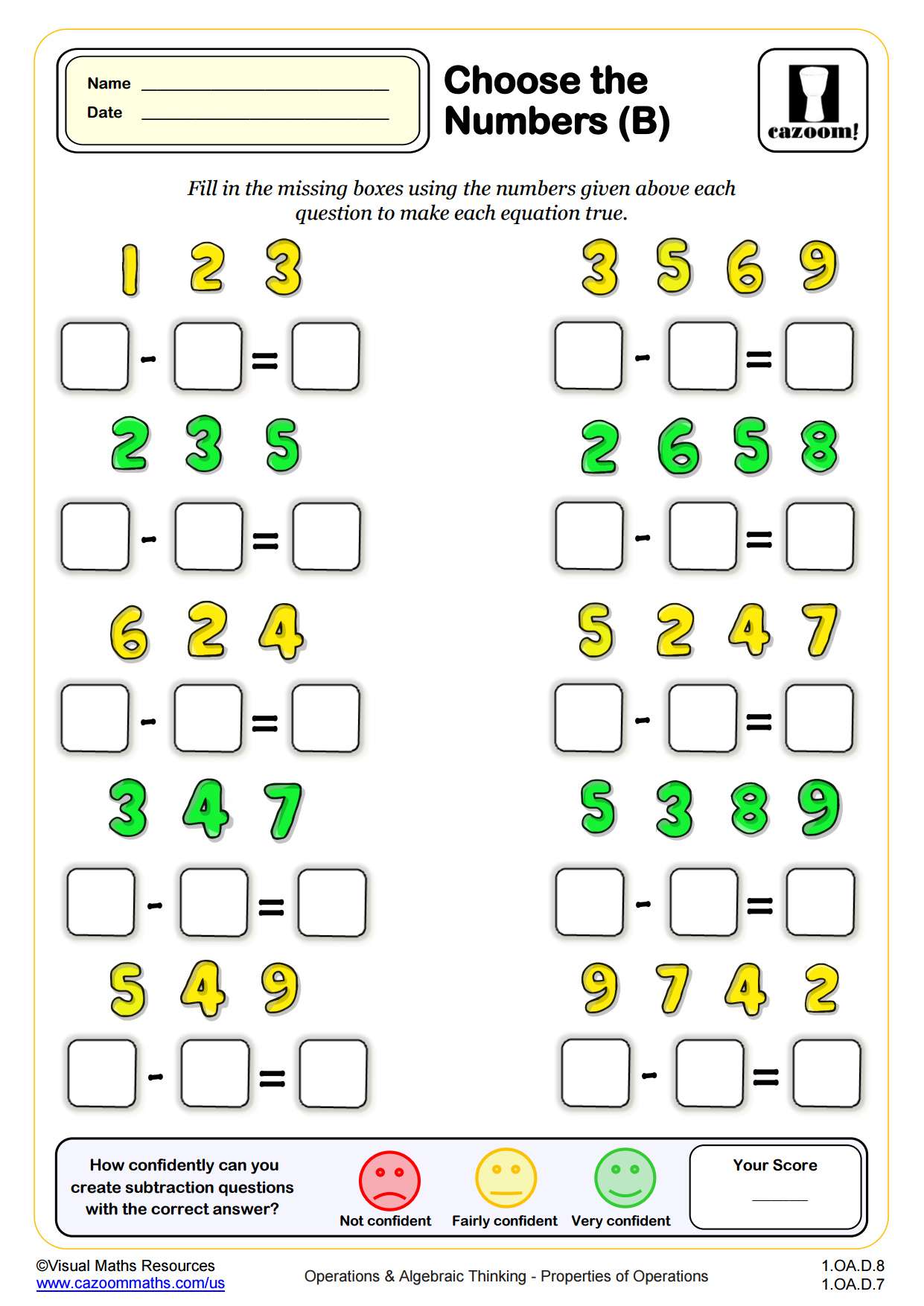
Choose the Numbers (B)
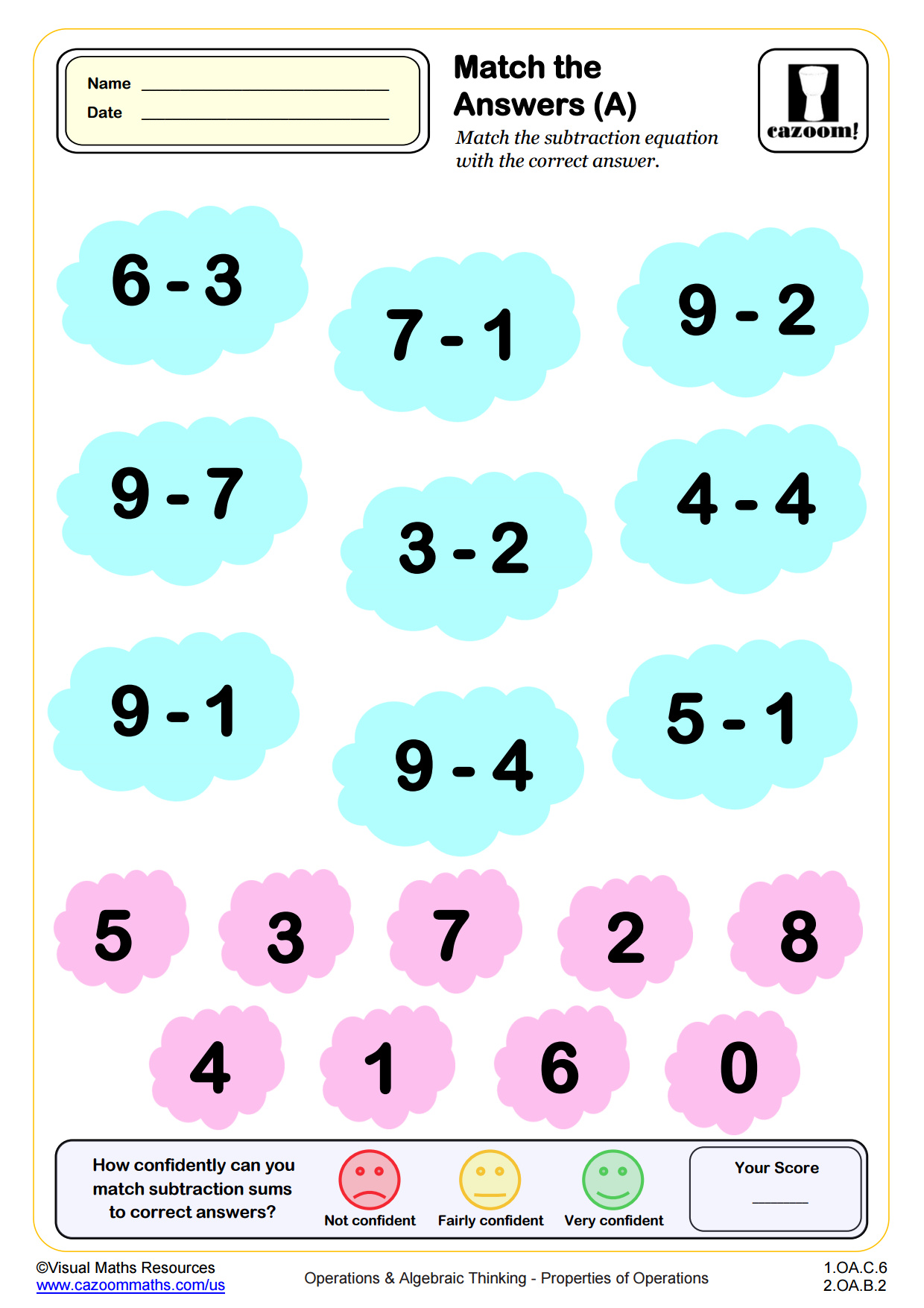
Match the Answers (A)
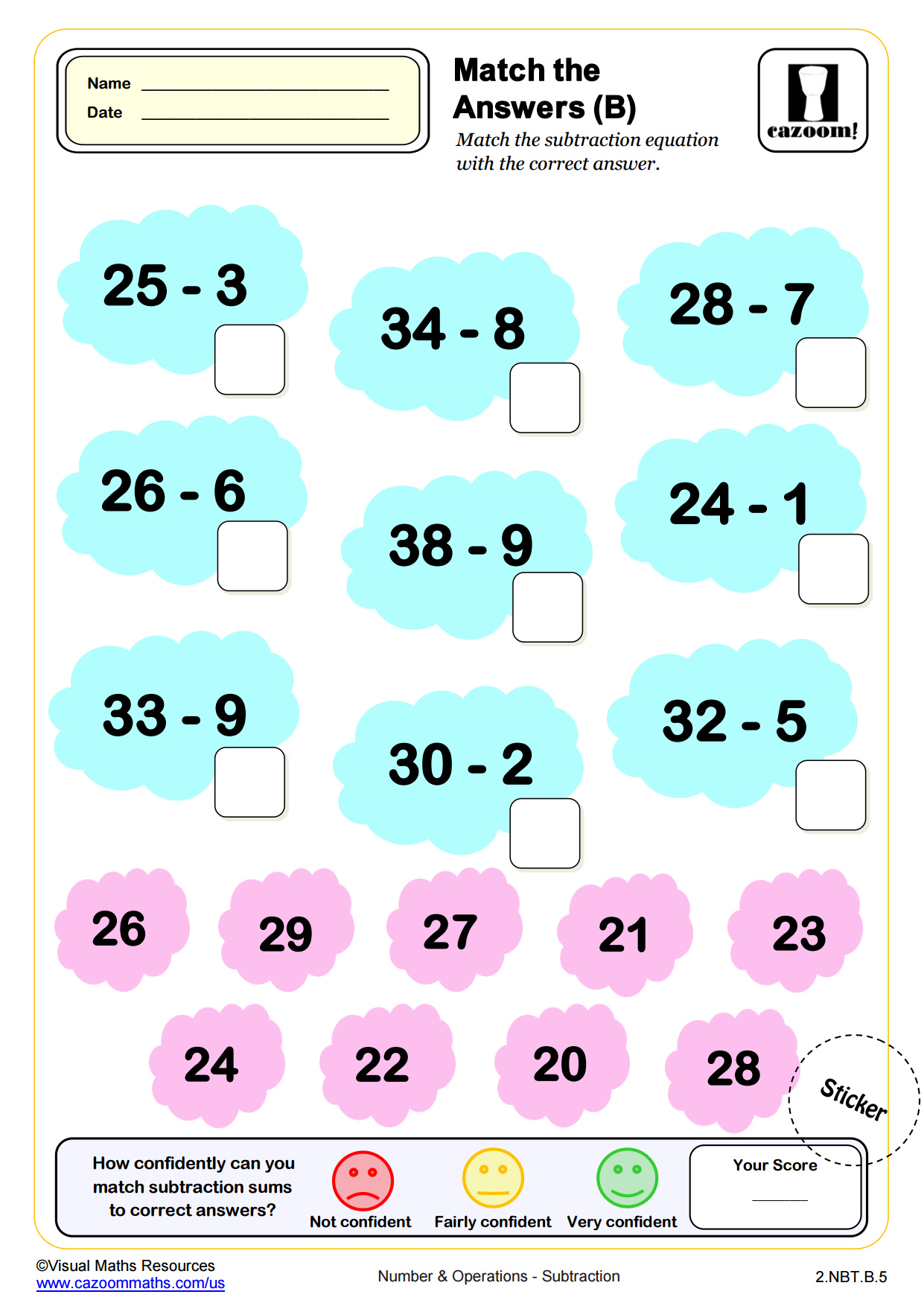
Match the Answers (B)
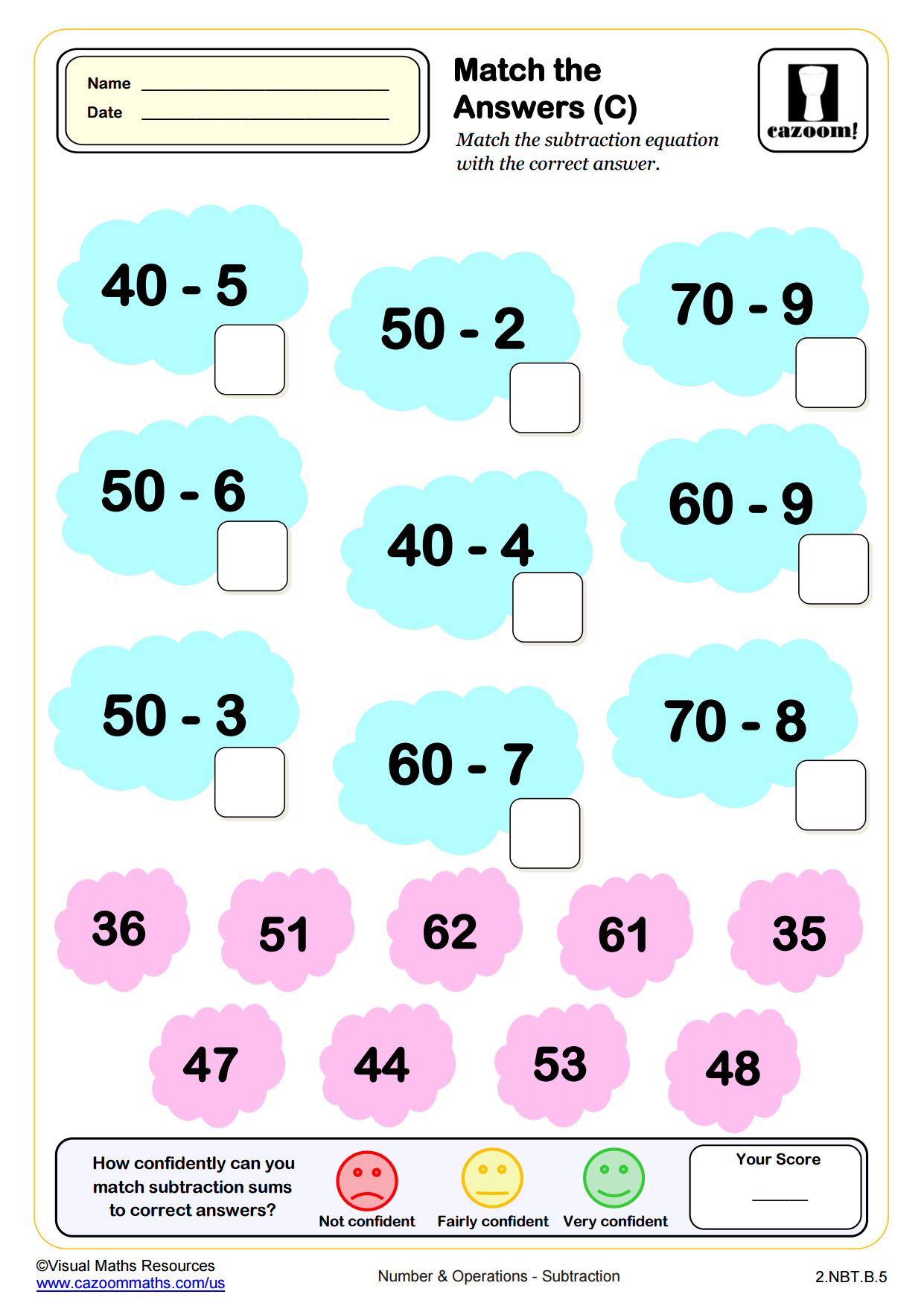
Match the Answers (C)
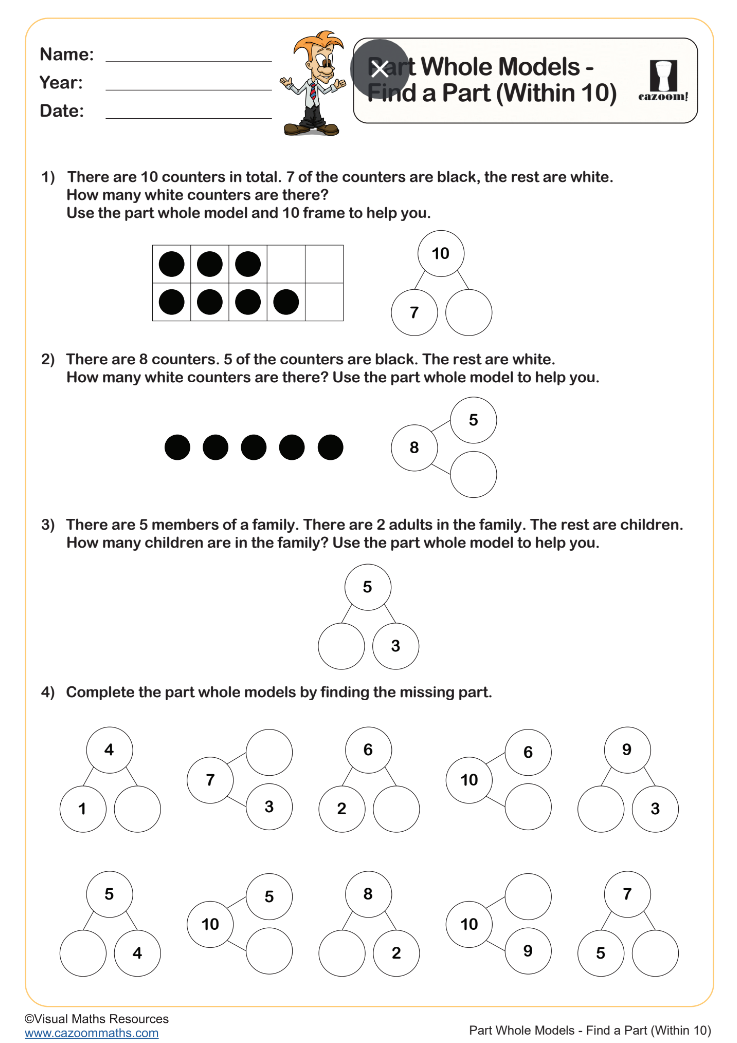
Part Part Whole Models - Find a Part (Within 10)
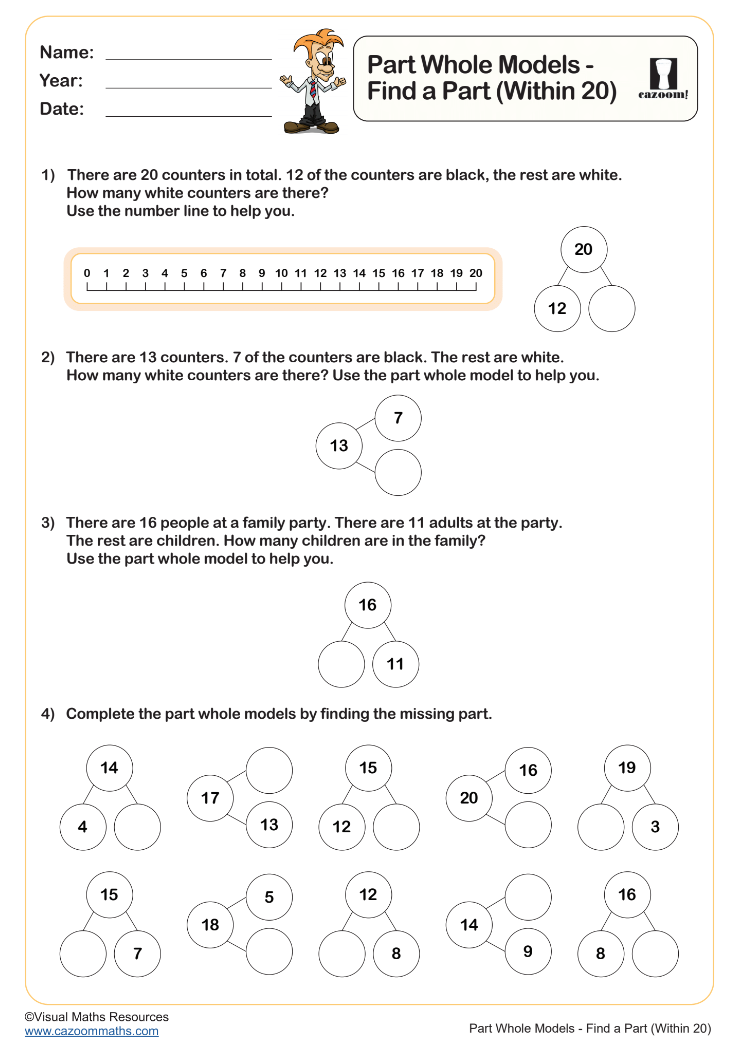
Part Part Whole Models - Find a Part (Within 20)
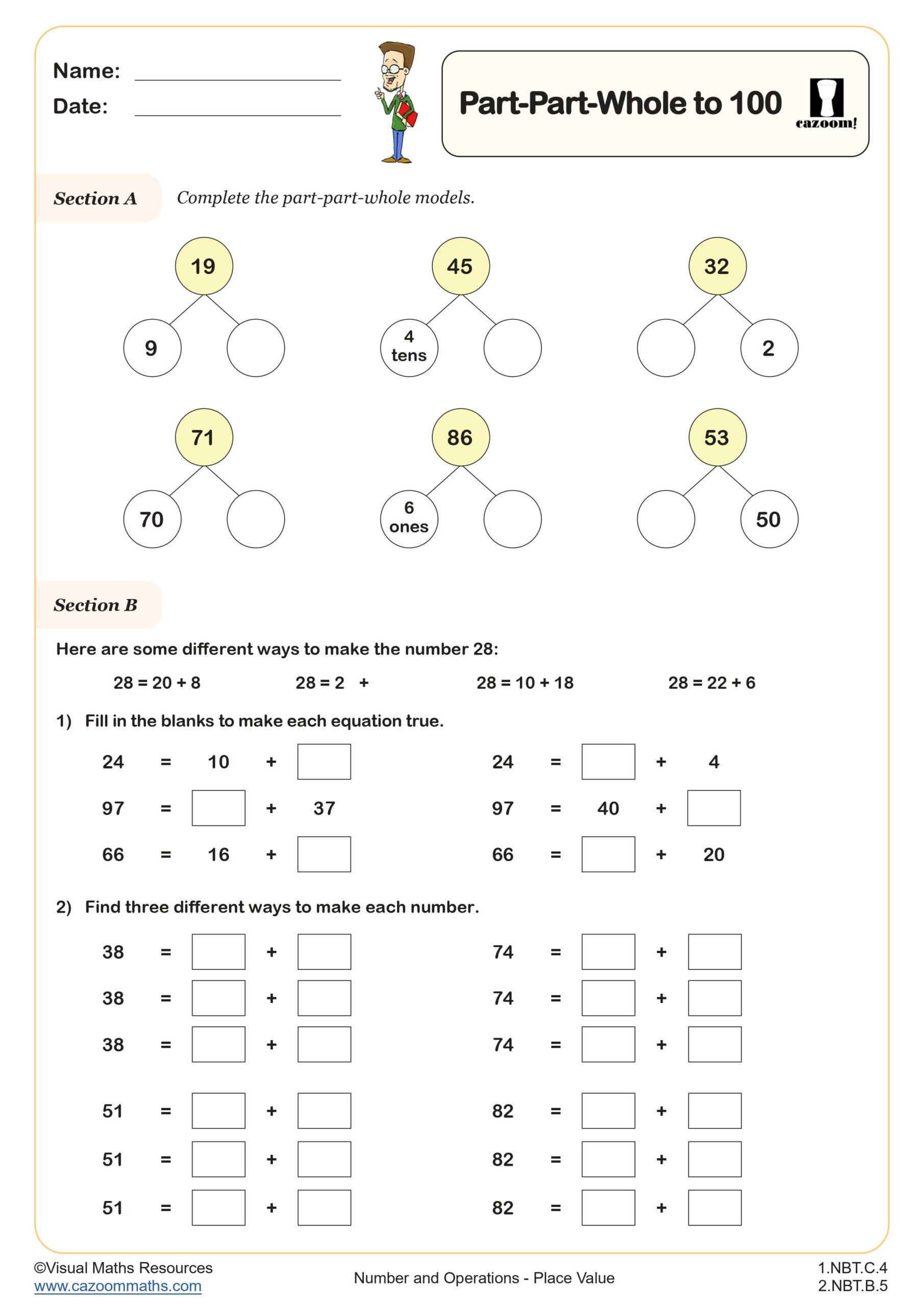
Part Part Whole to 100
Subtracting 1 (10 questions)
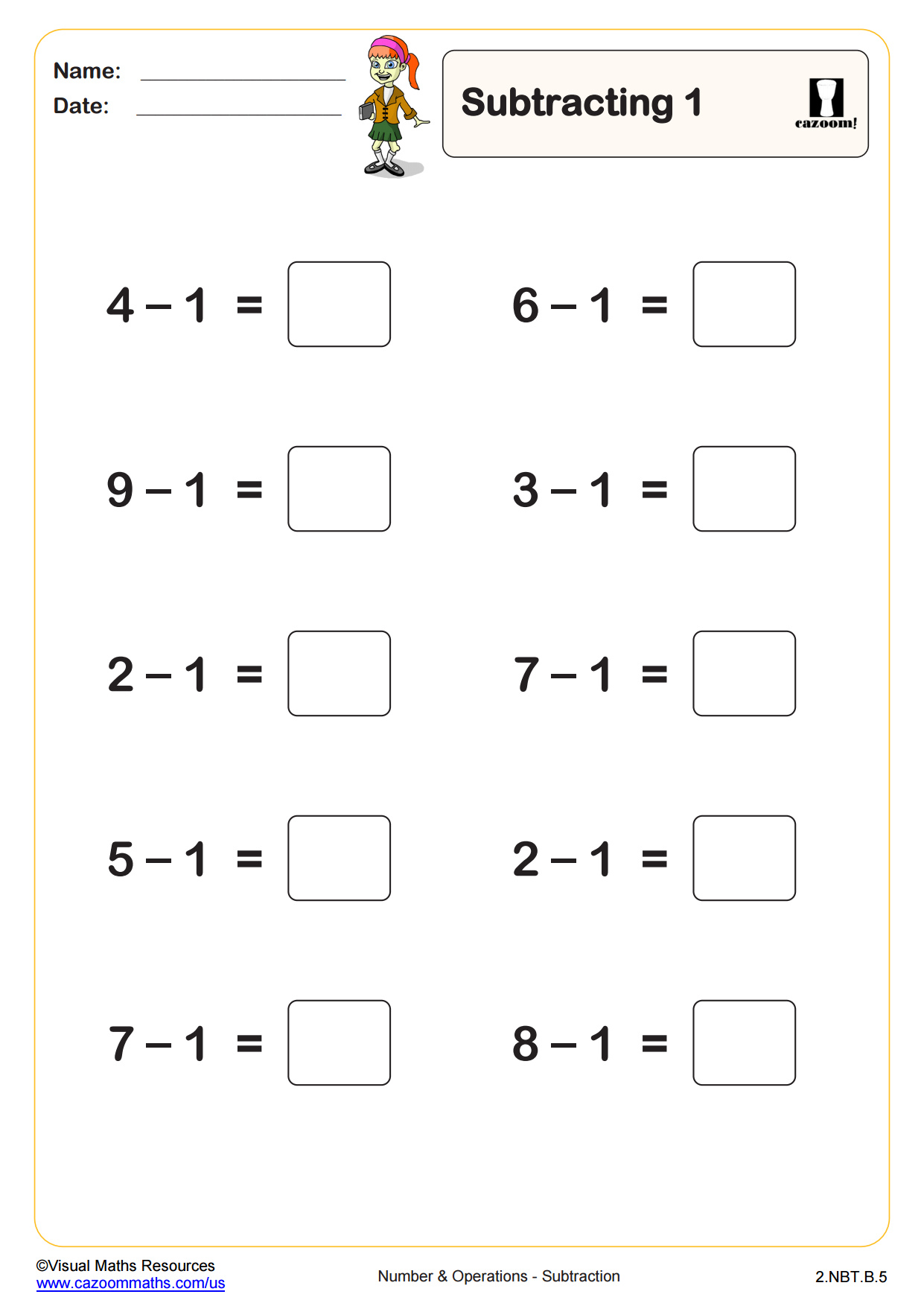
Subtracting 1 (20 questions)
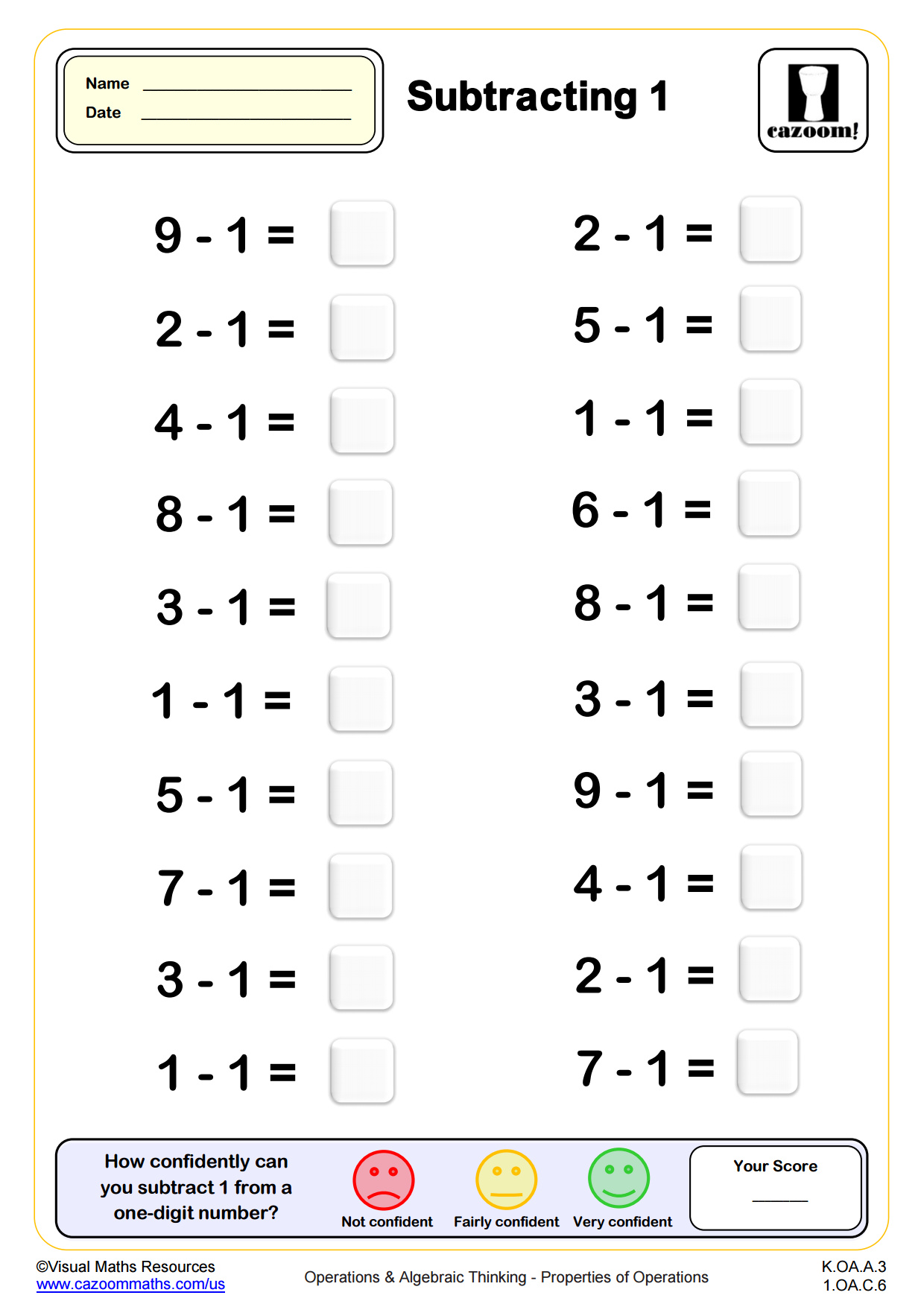
Subtracting 1 (50 questions)
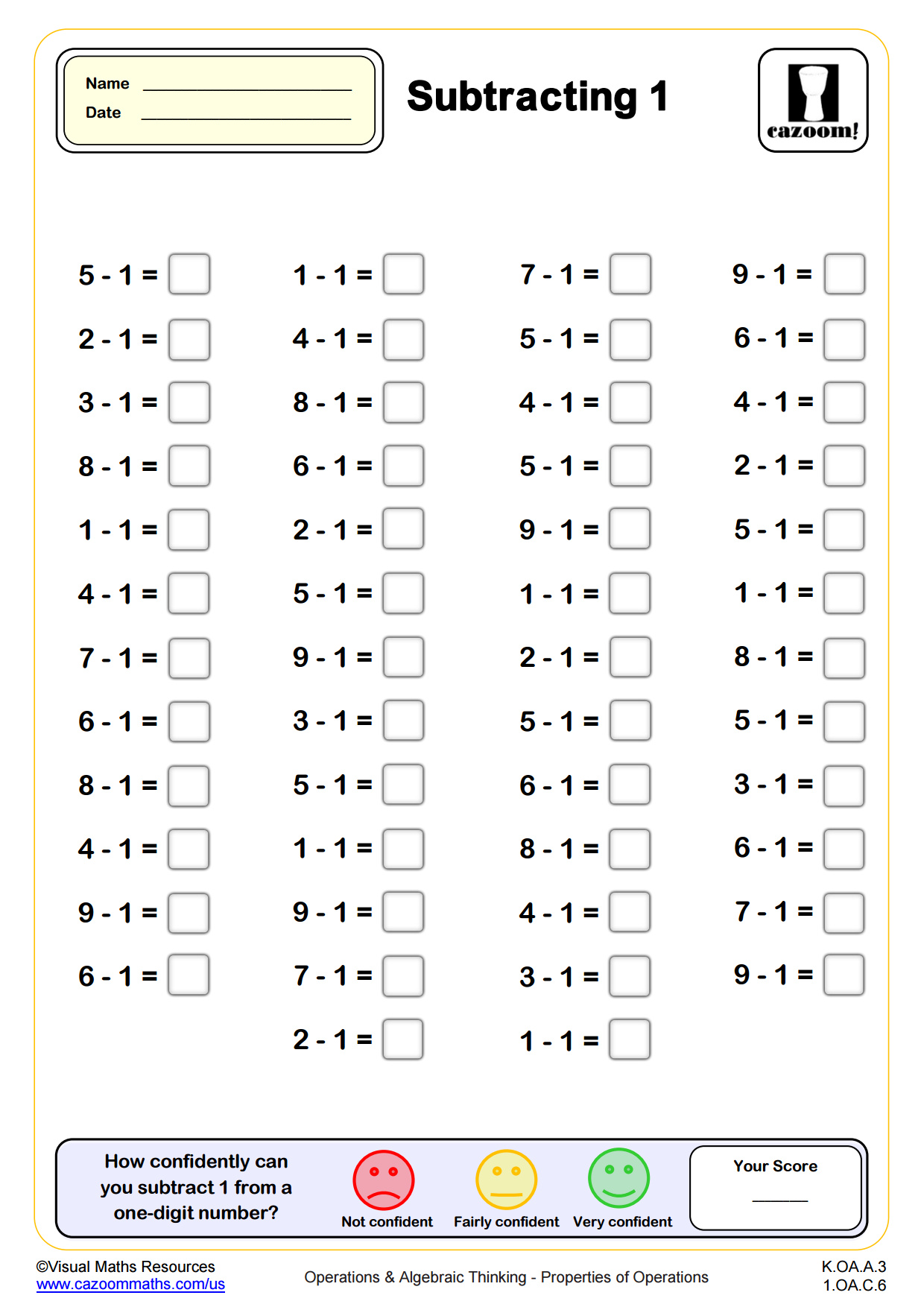
Subtracting 1 Digit from 2 Digits (A)
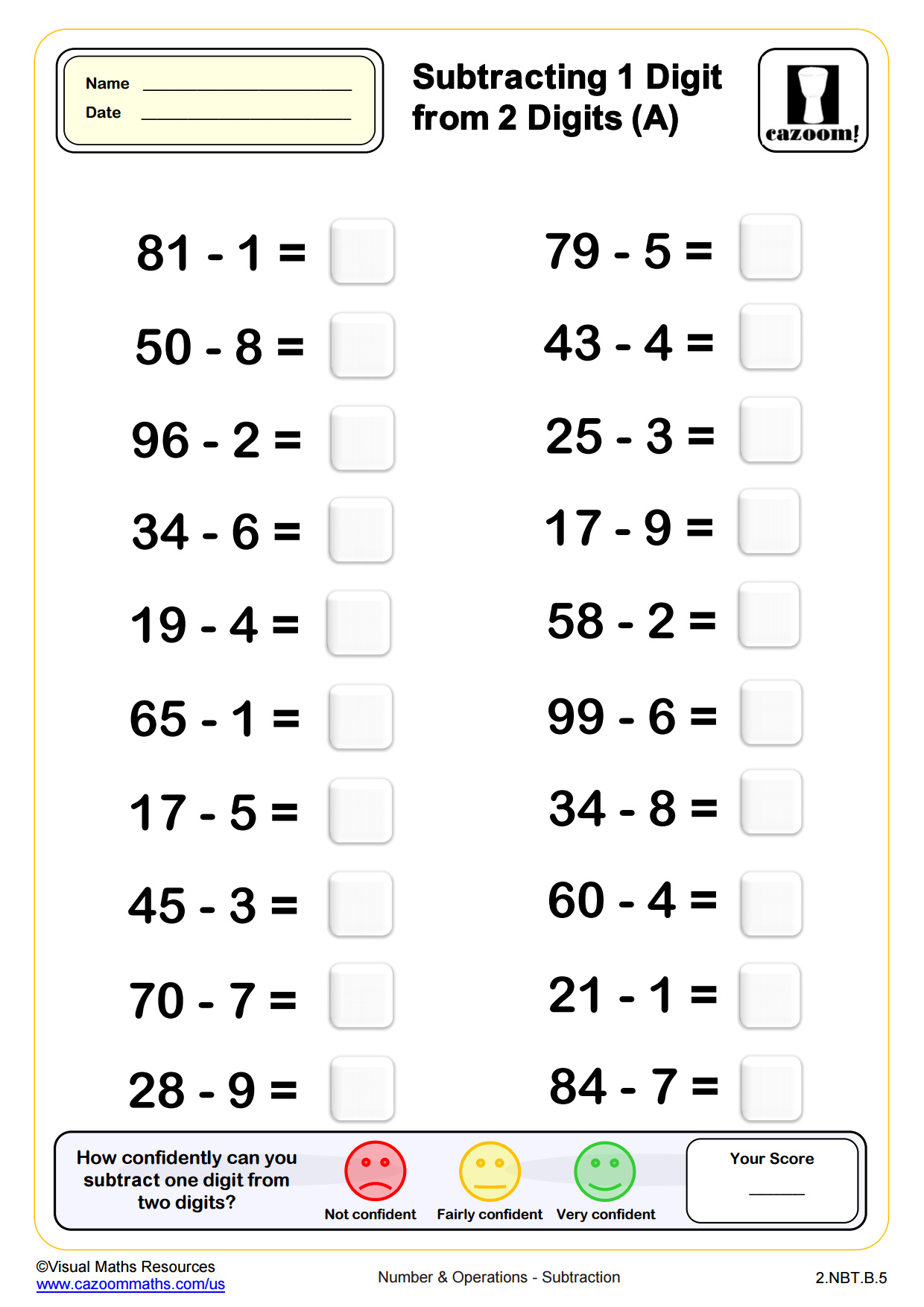
Subtracting 1 Digit from 2 Digits (B)
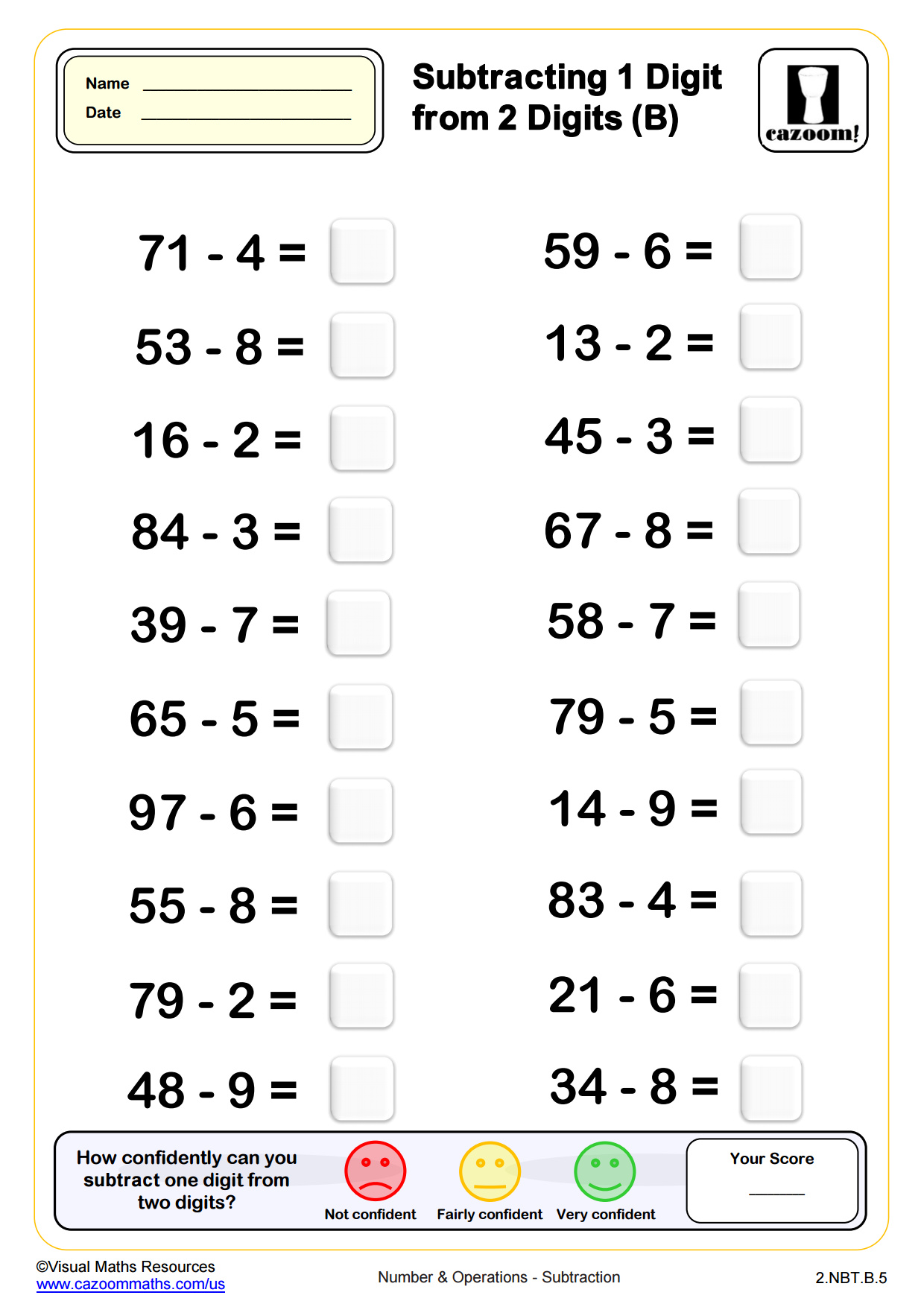
Subtracting 1 Digit from 2 Digits (C)
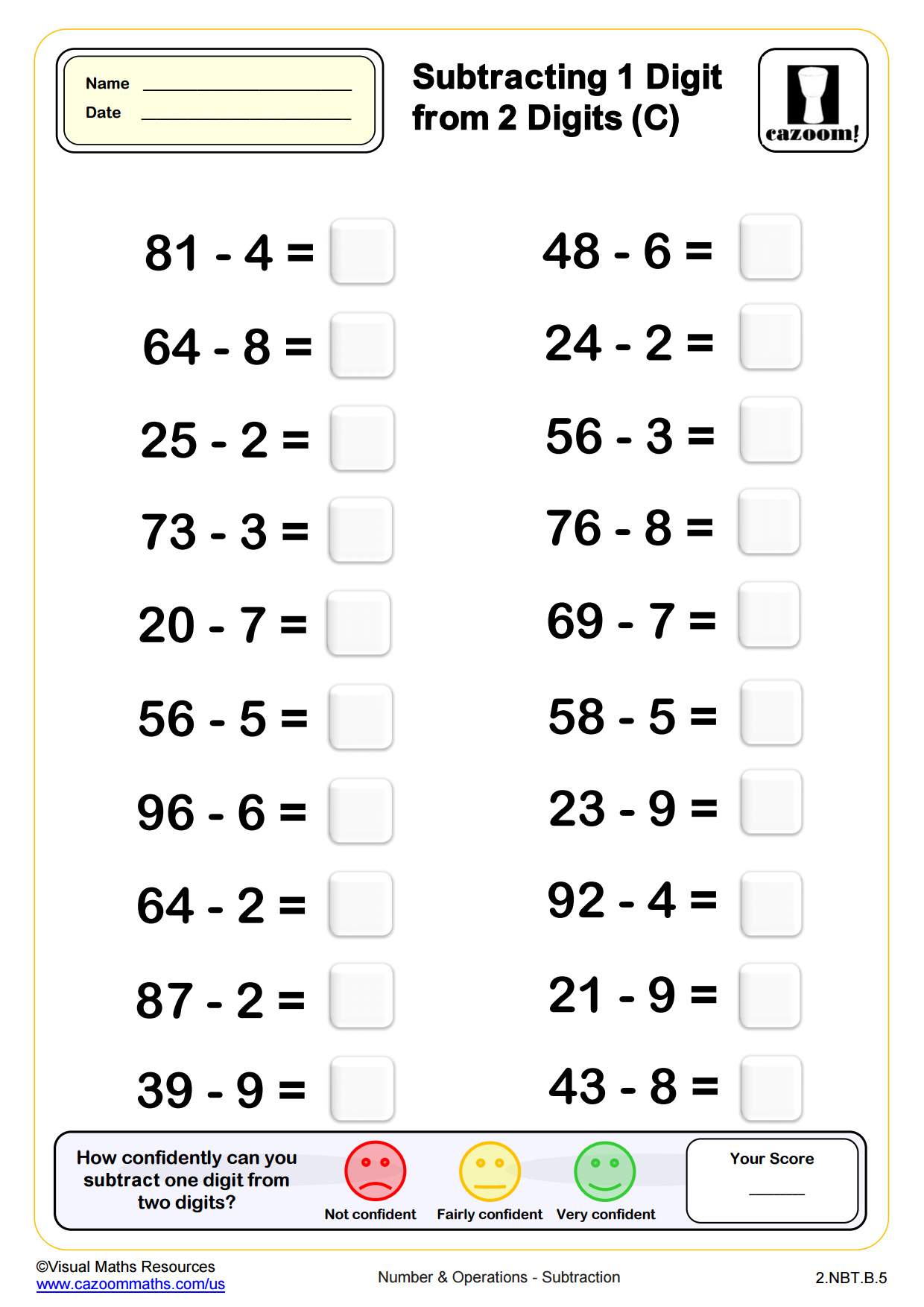
Subtracting 1 from two digit numbers (10 questions)
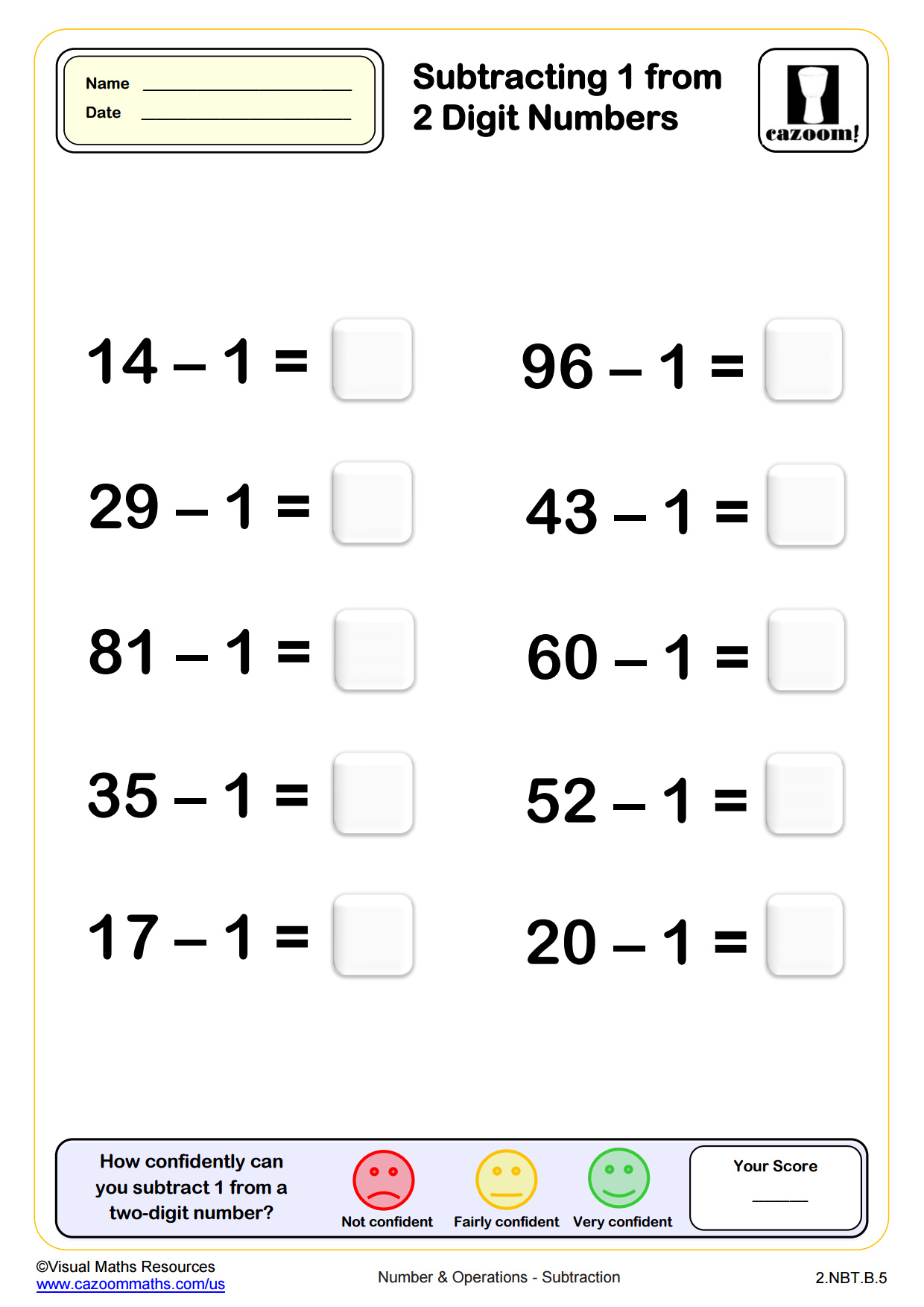
Subtracting 1 from two digit numbers (20 questions)
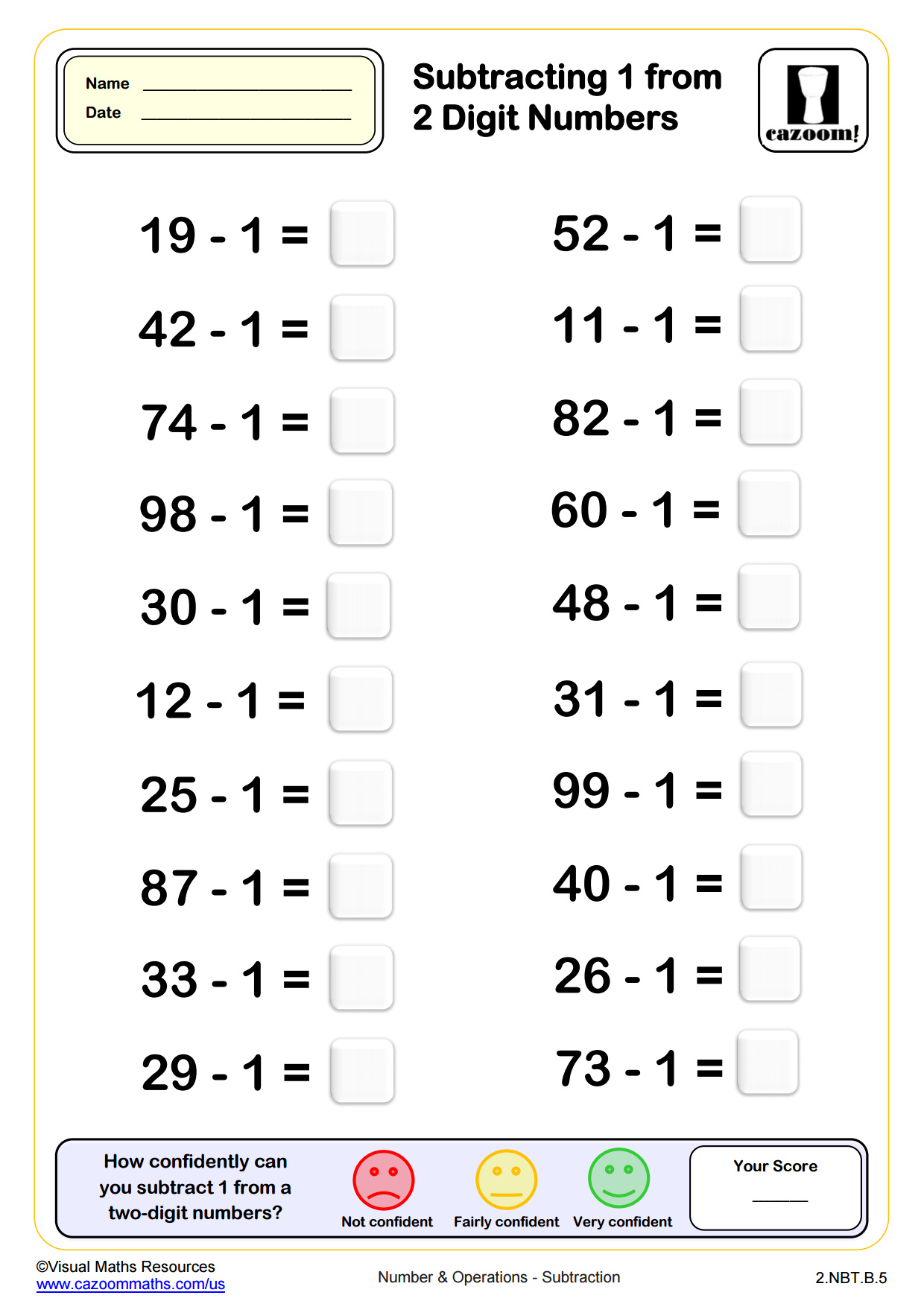
Subtracting 1 from two digit numbers (50 questions)
Subtracting 2 (10 questions)
Subtracting 2 (20 questions)
Subtracting 2 (50 questions)
Subtracting 2 from two digit numbers (20 questions)
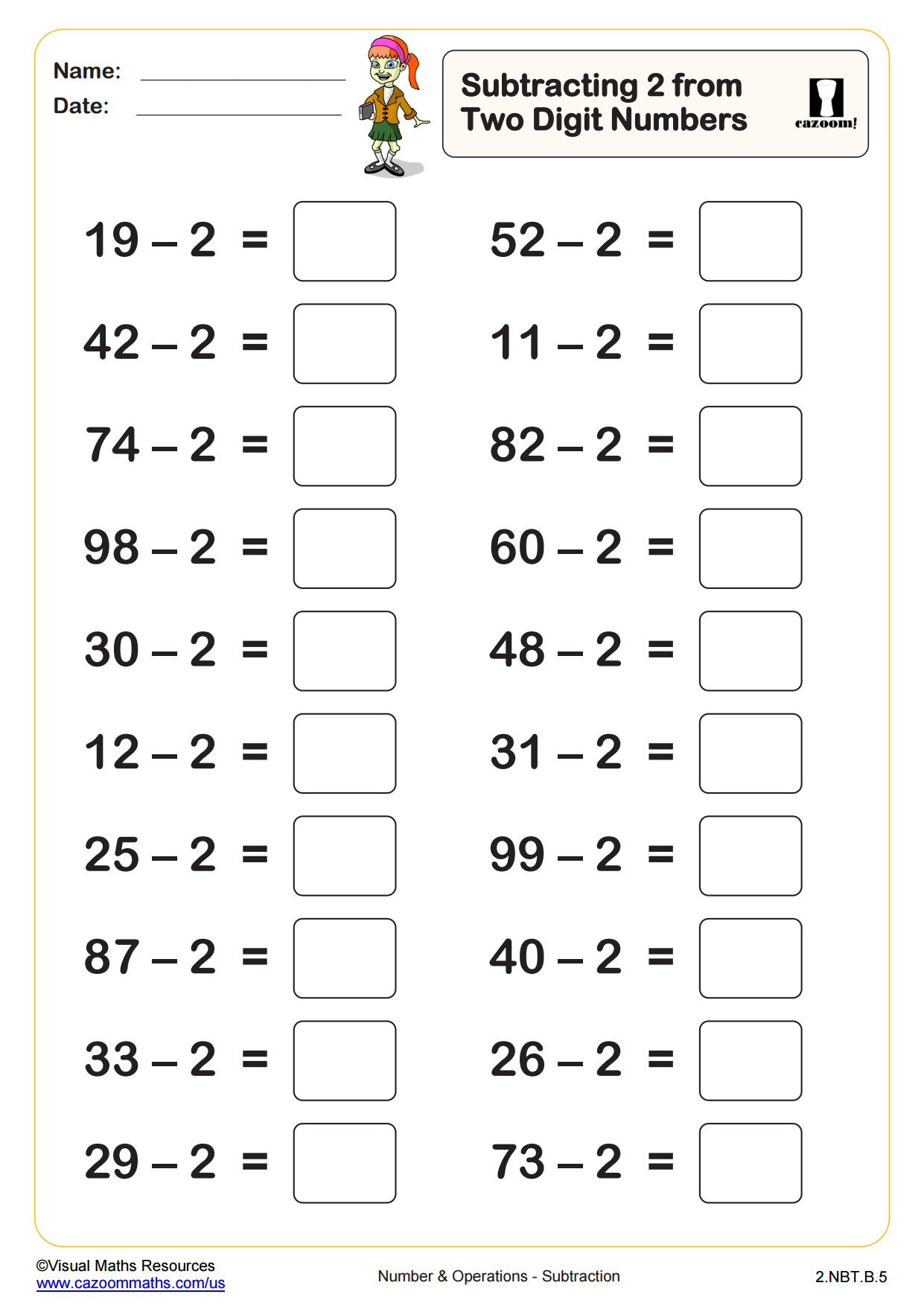
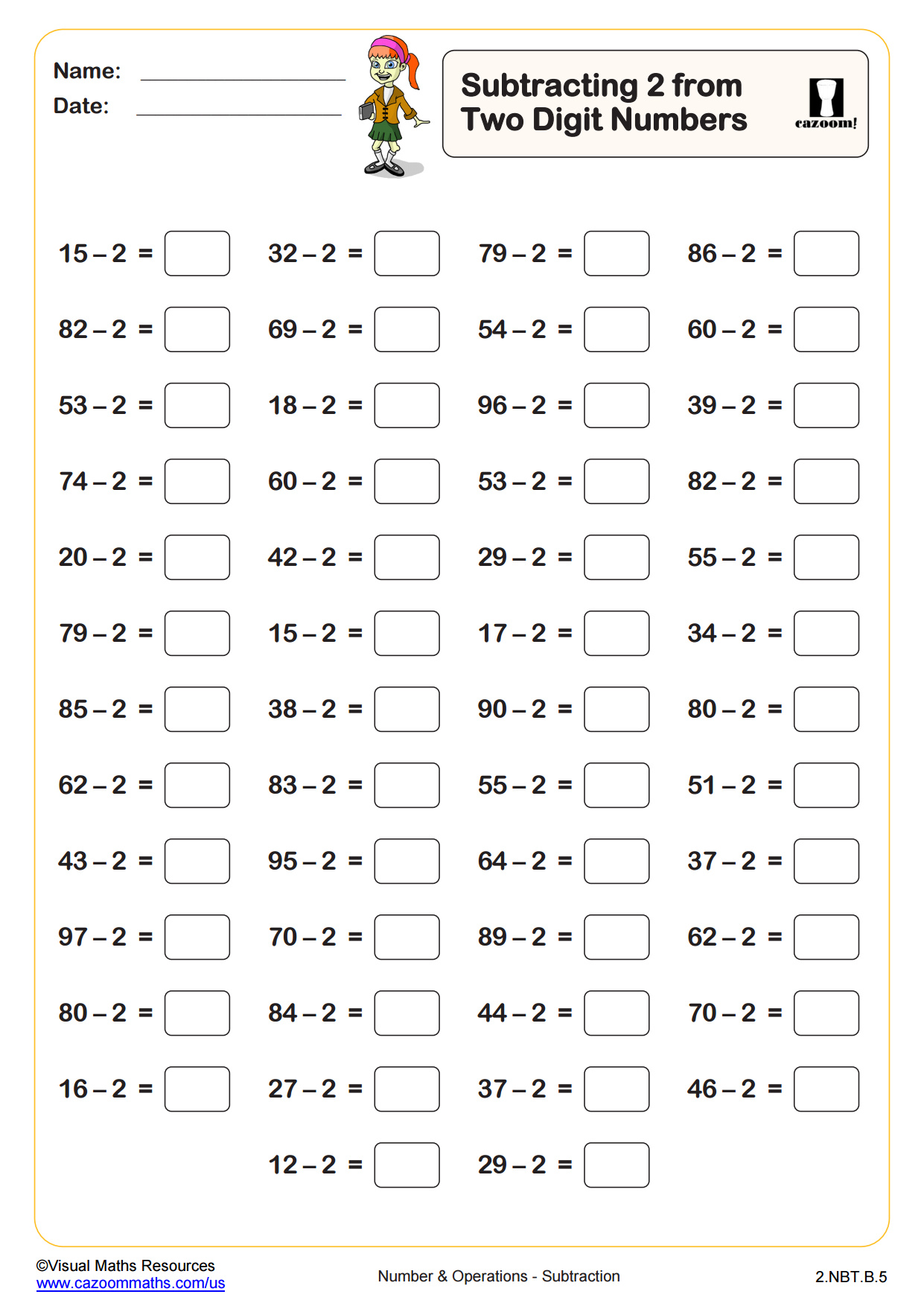
Subtracting 2 from two digit numbers (50 questions)
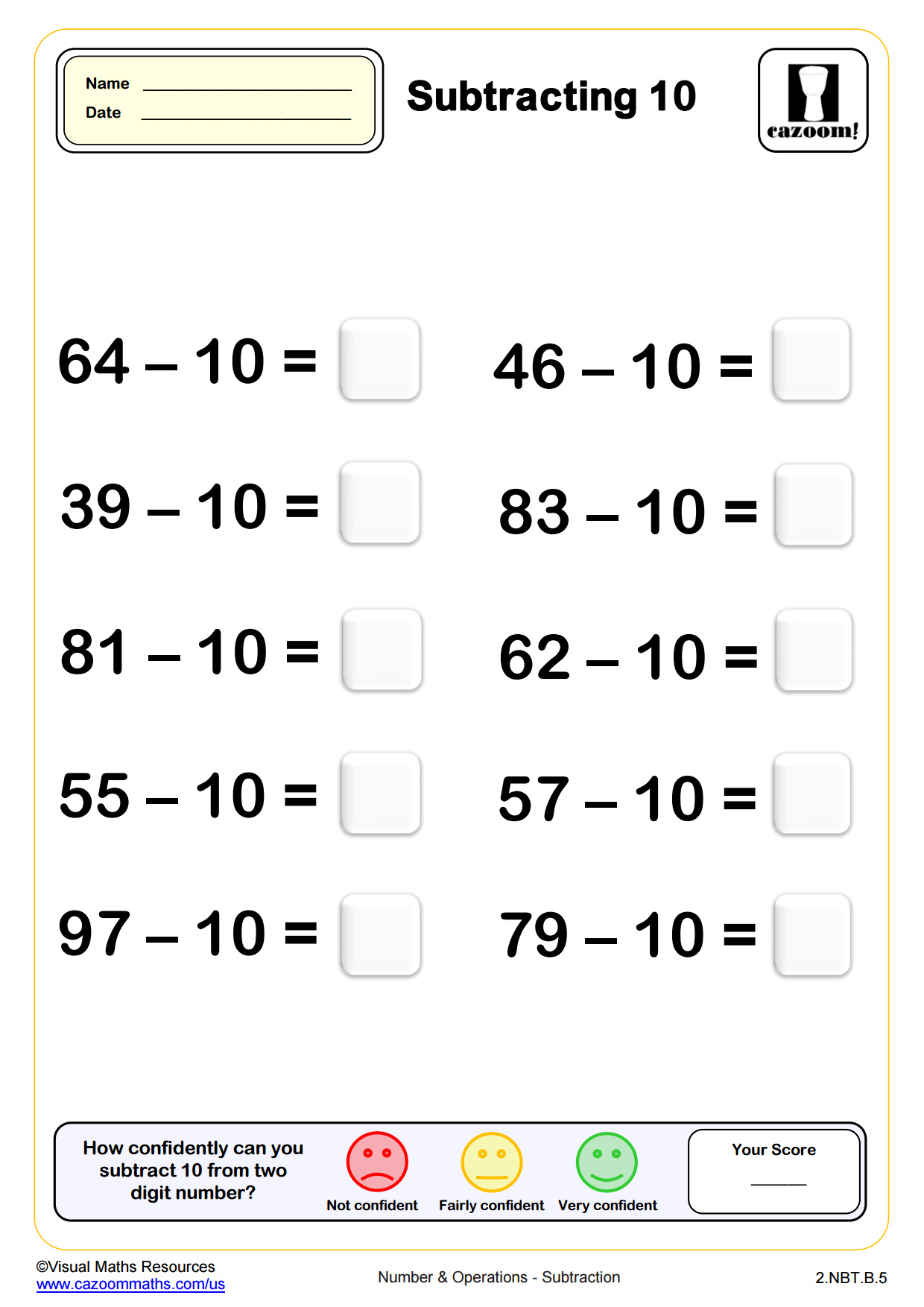
Subtracting 3 from Two Digit Numbers (10 questions)
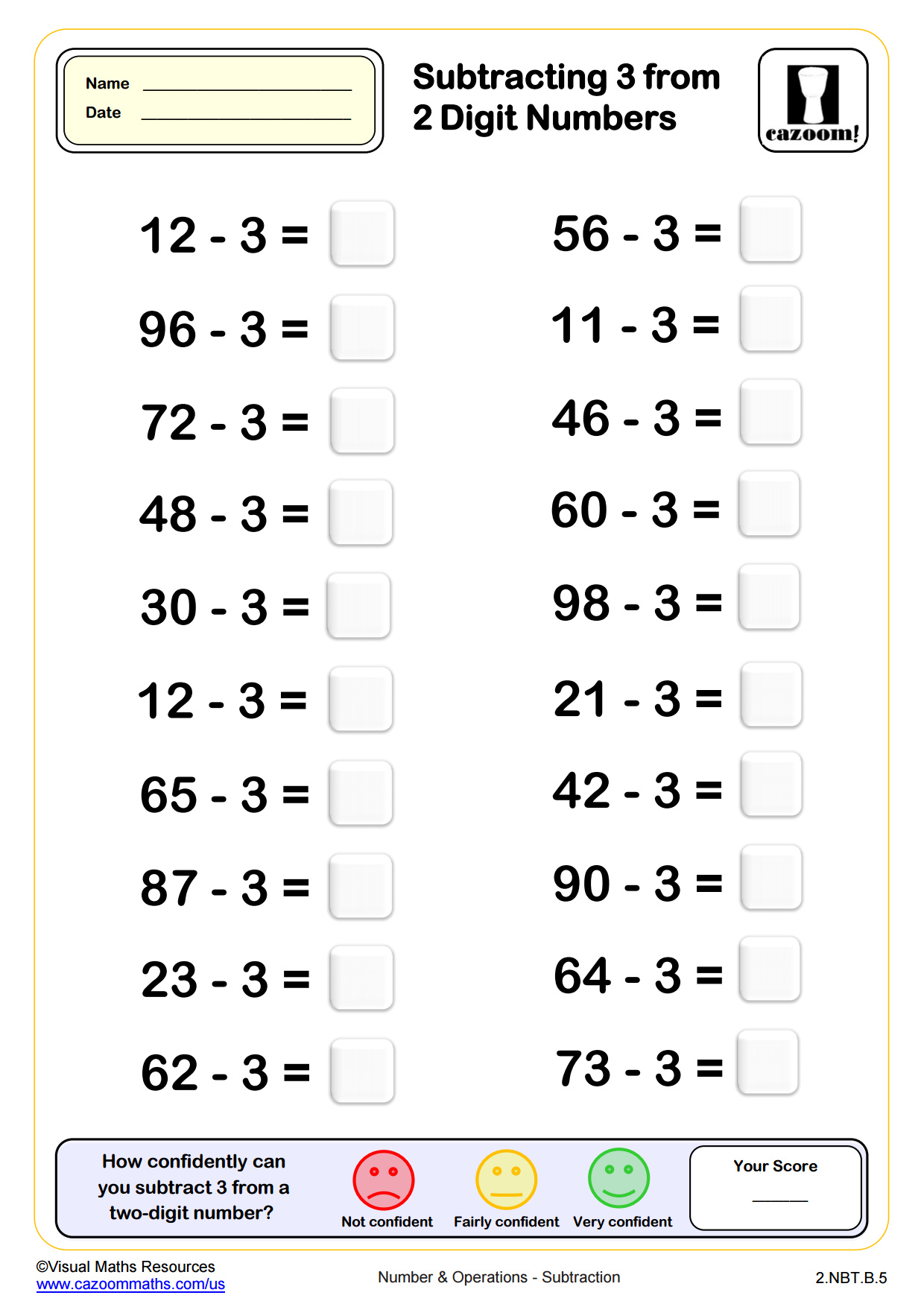
Subtracting 3 from Two Digit Numbers (20 questions)
Subtracting 3 from Two Digit Numbers (50 questions)
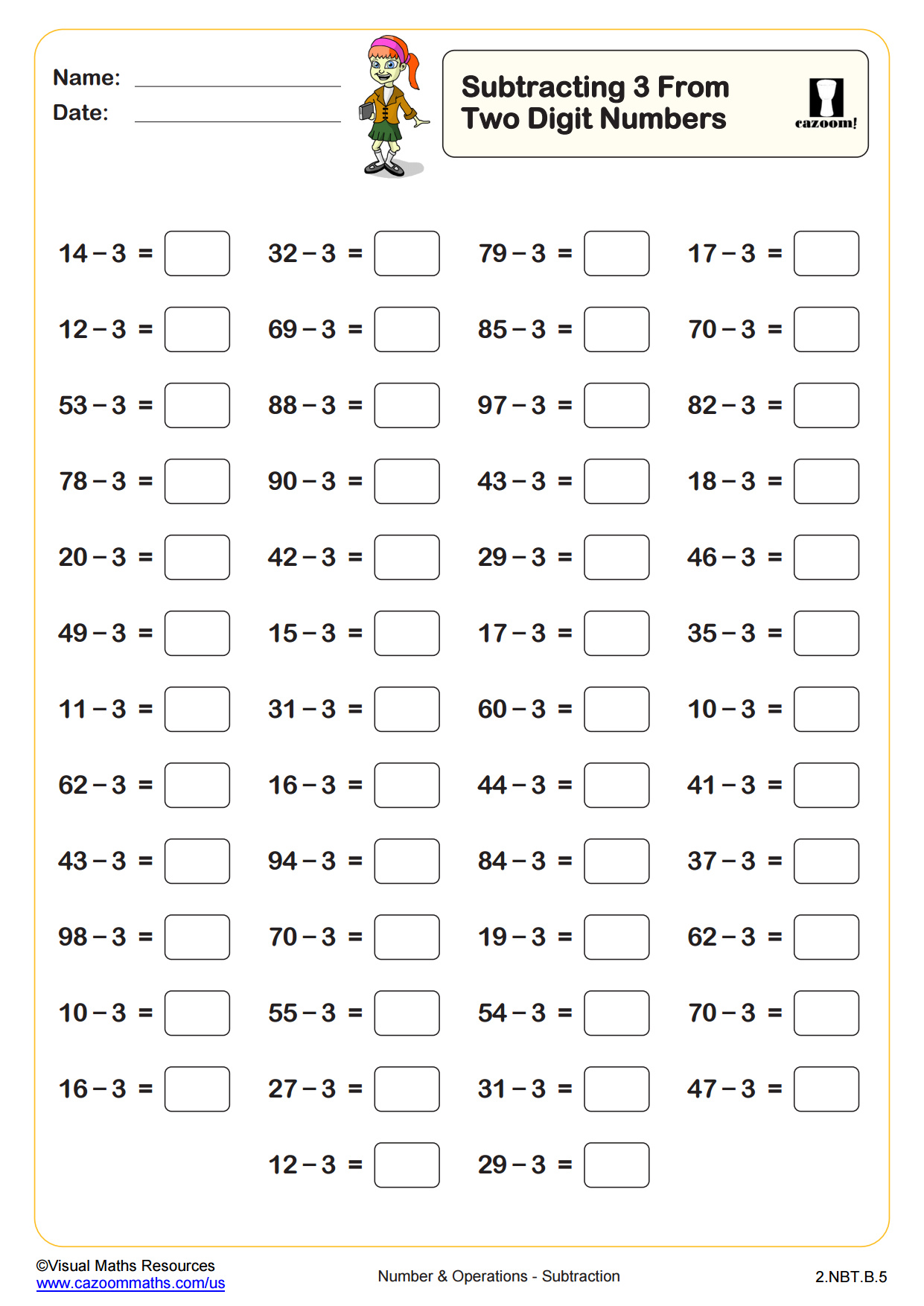
Subtracting 4 from Two Digit Numbers (10 questions)
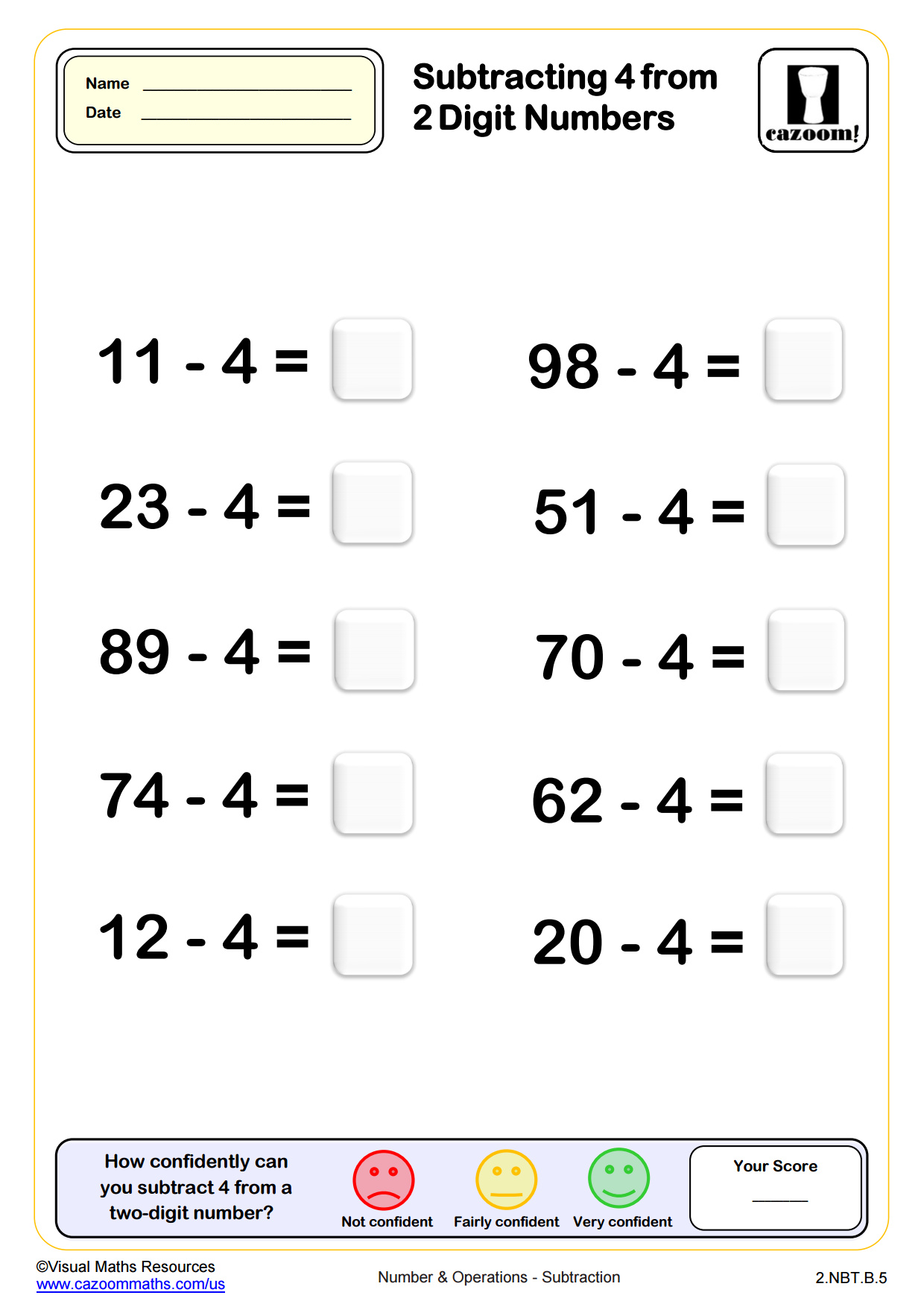
Subtracting 4 from Two Digit Numbers (20 questions)
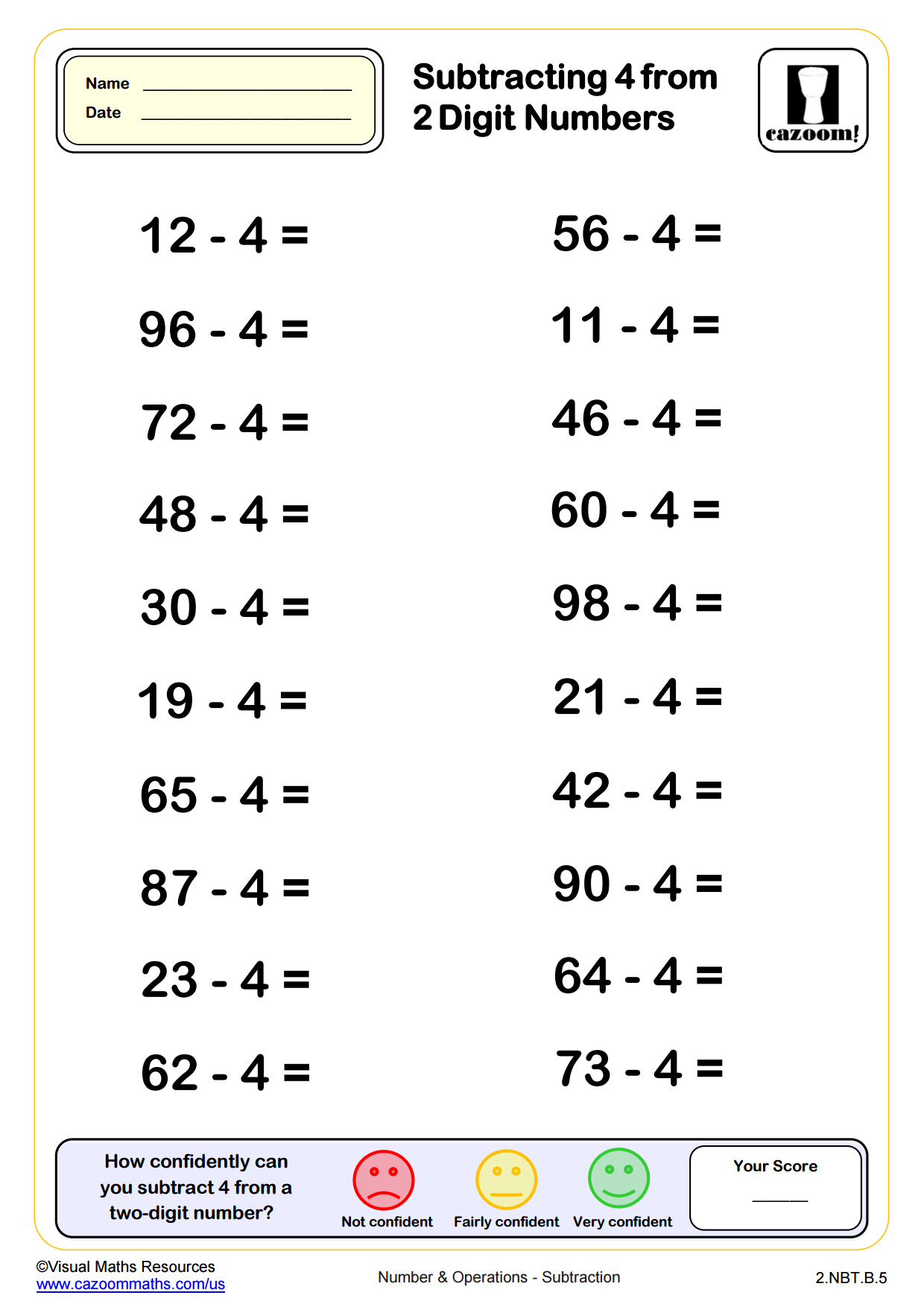
Subtracting 4 from Two Digit Numbers (50 questions)
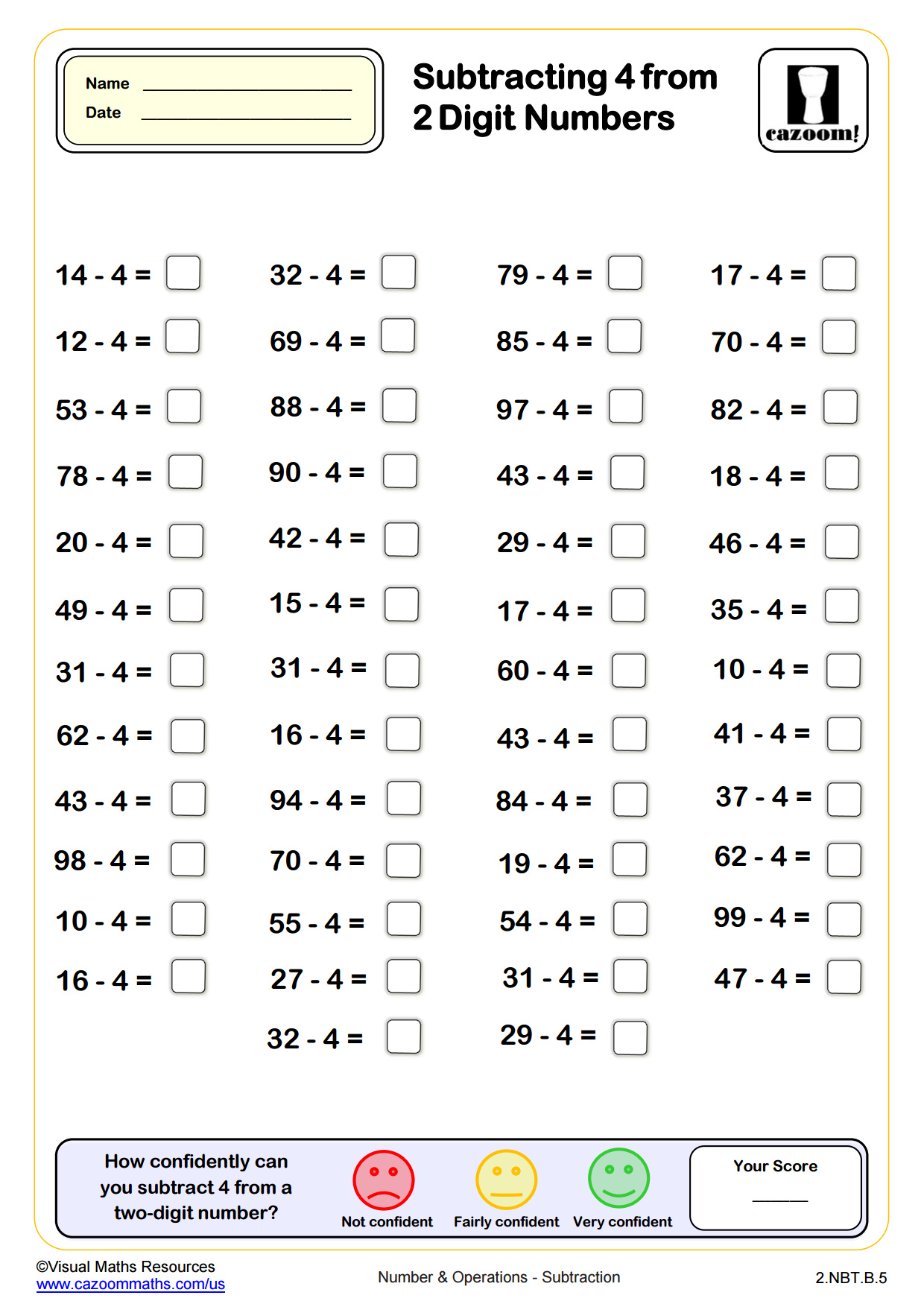
Subtracting 5 from Two Digit Numbers (10 questions)
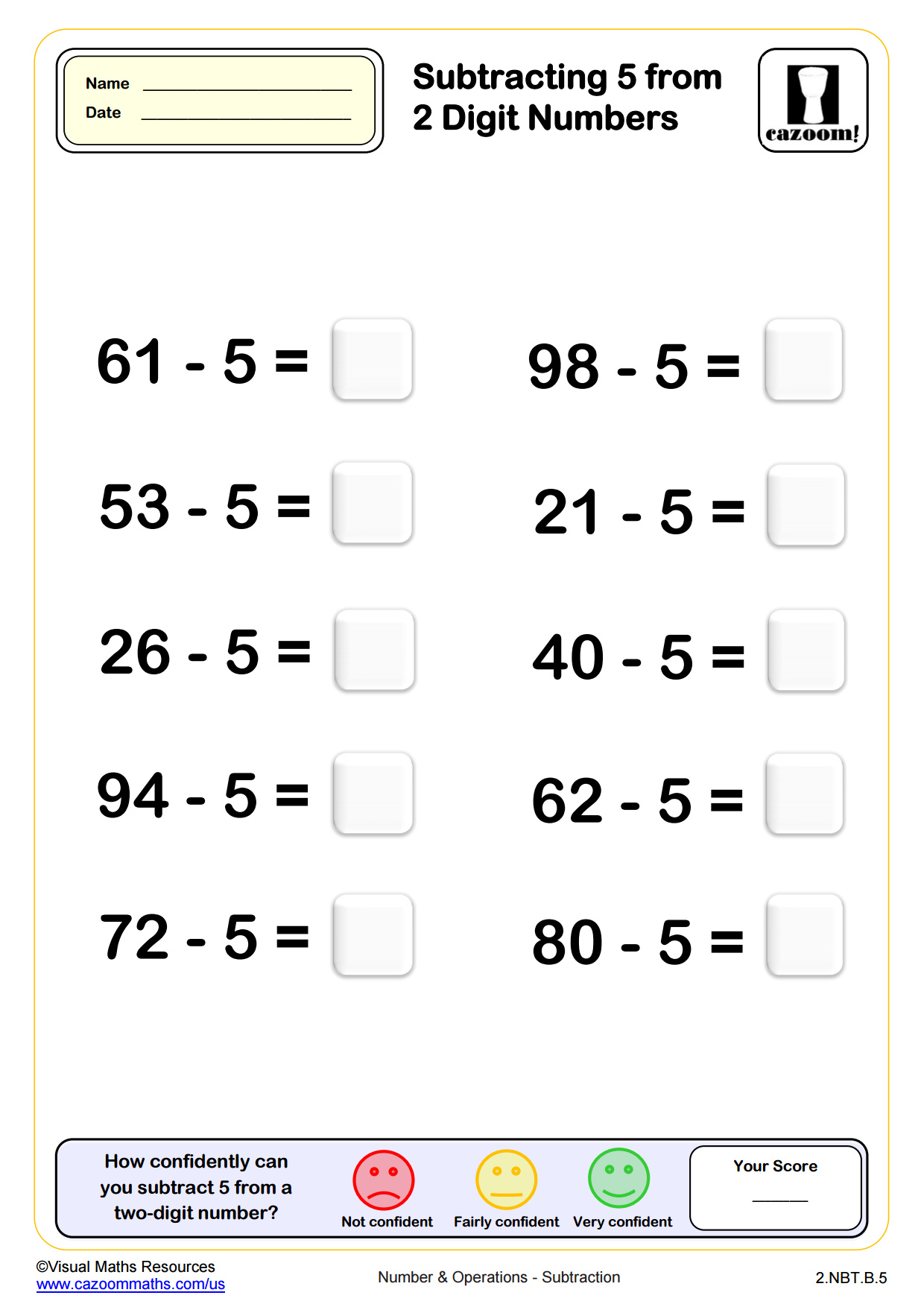
Subtracting 5 from Two Digit Numbers (20 questions)
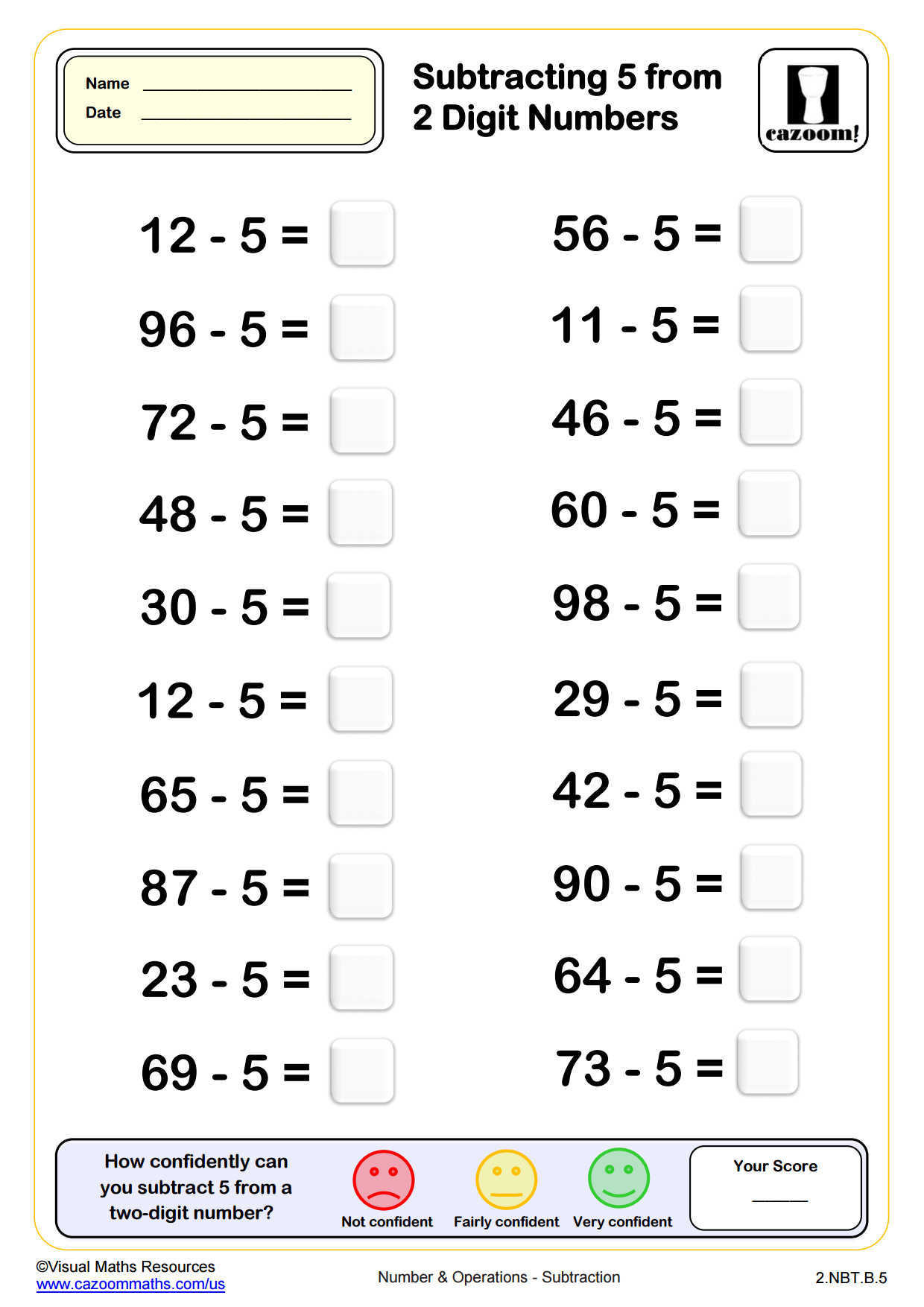
Subtracting 5 from Two Digit Numbers (50 questions)
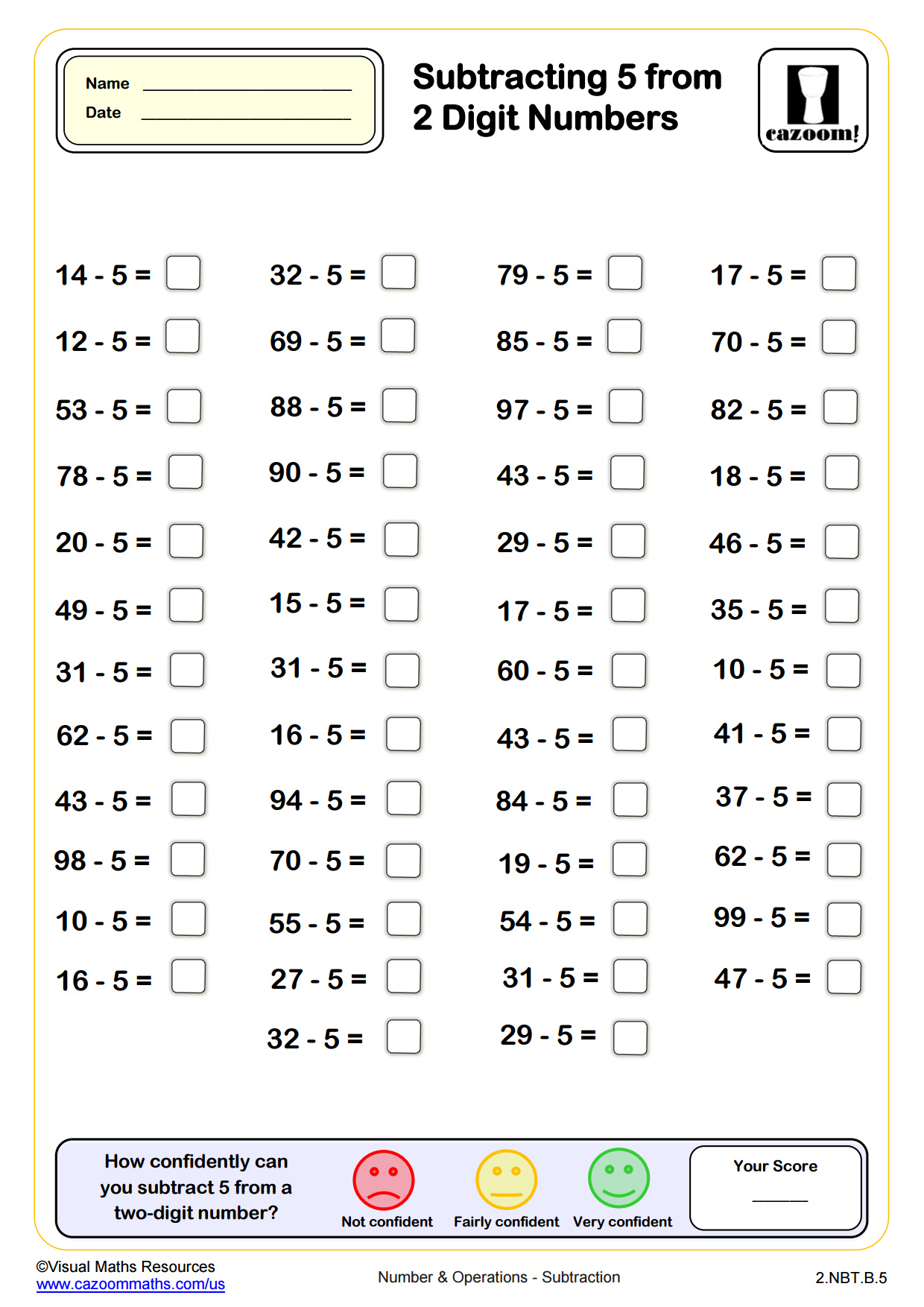
Subtracting from 10 Drills (10 questions)
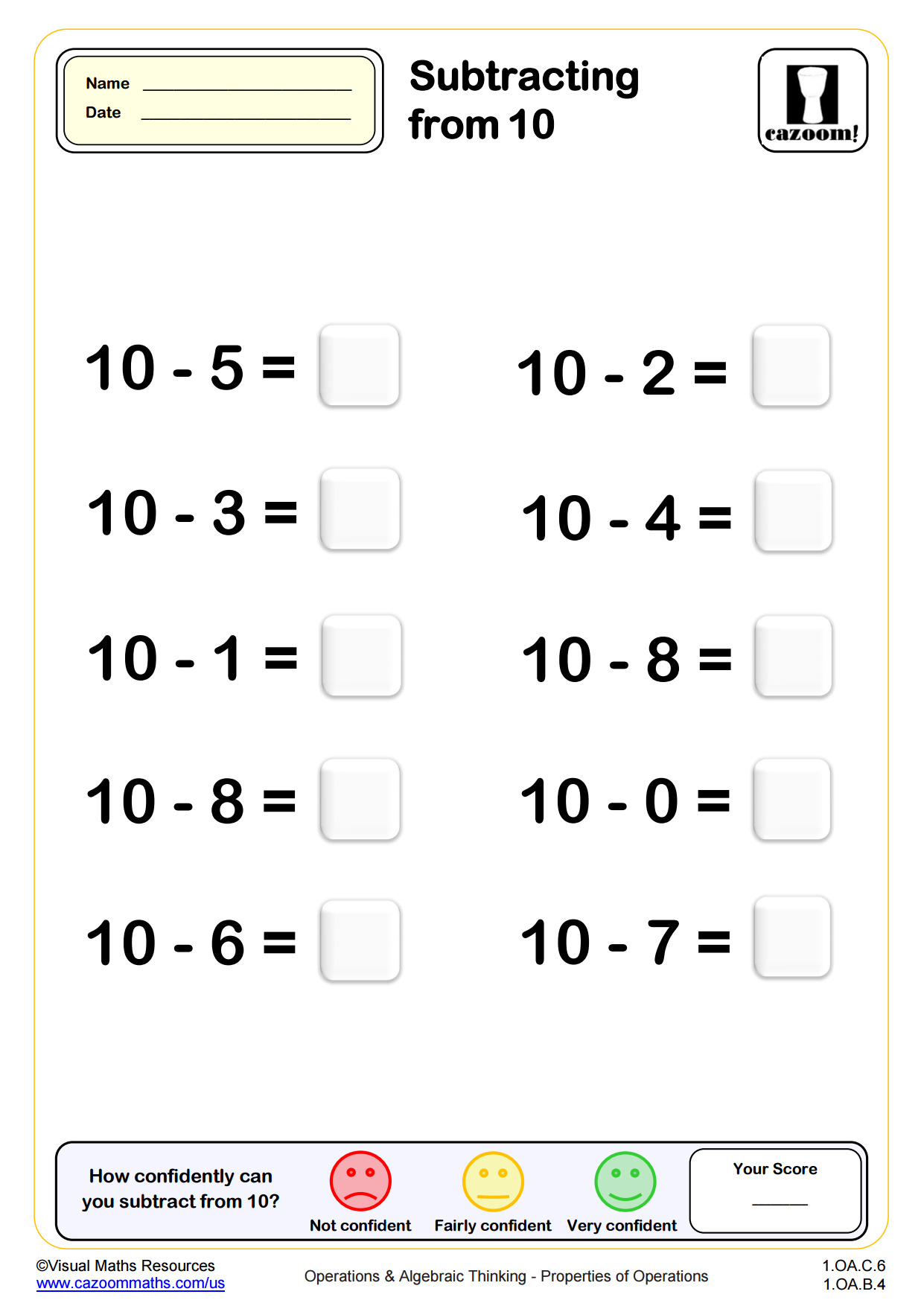
Subtracting from 10 Drills (20 questions)
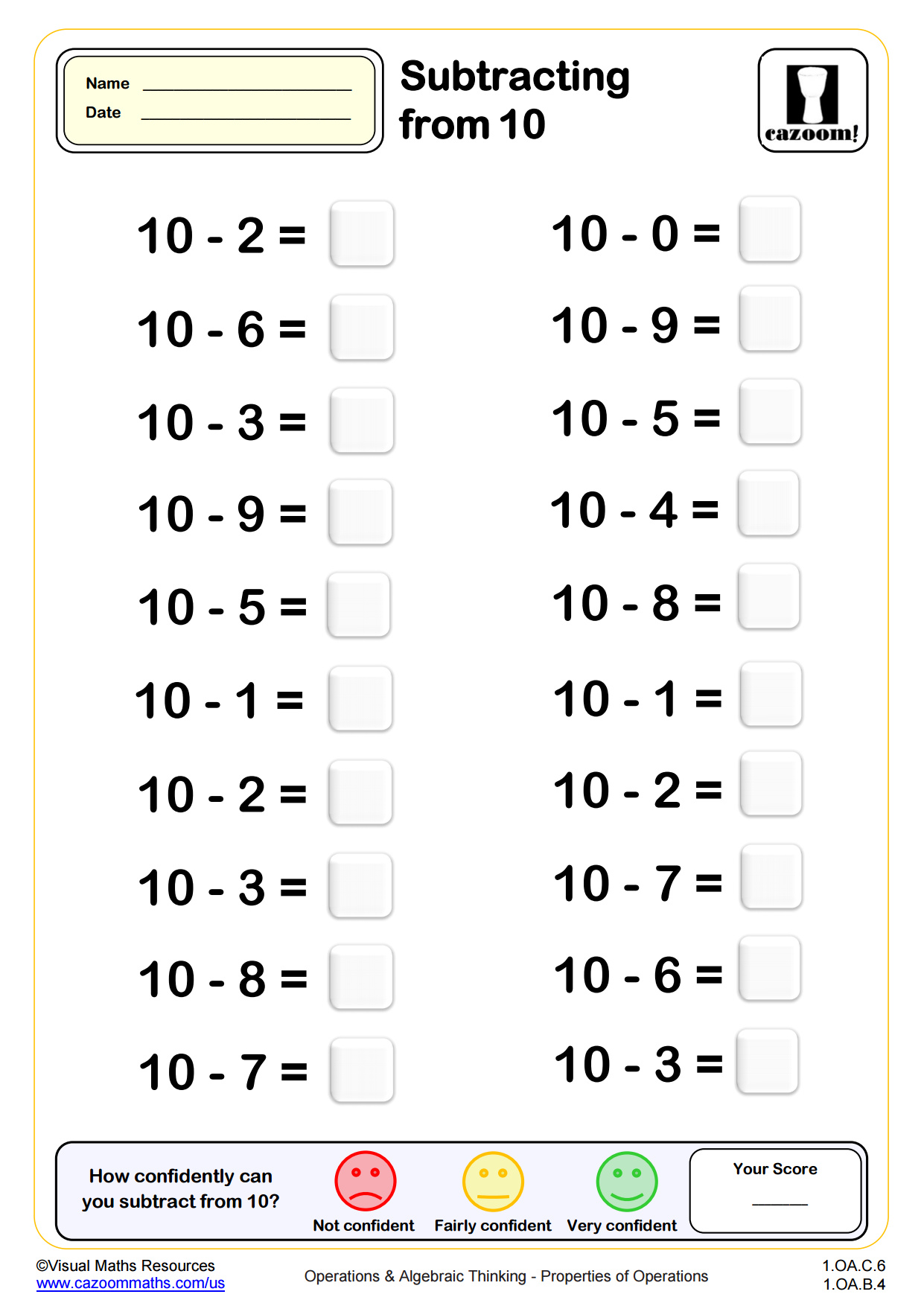
Subtracting from Multiples of 10 (A)
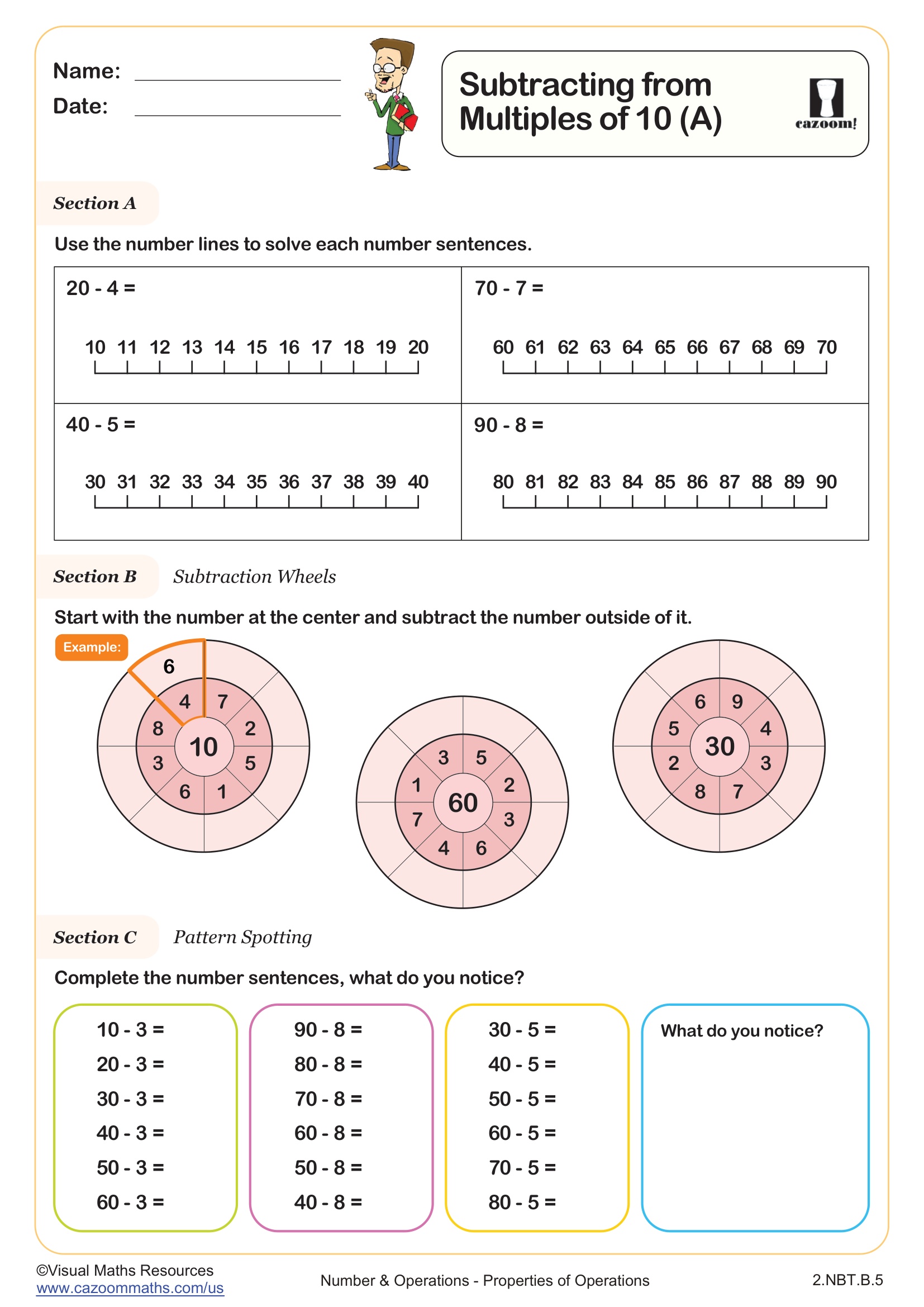
Subtracting Numbers Less Than 10 (A)
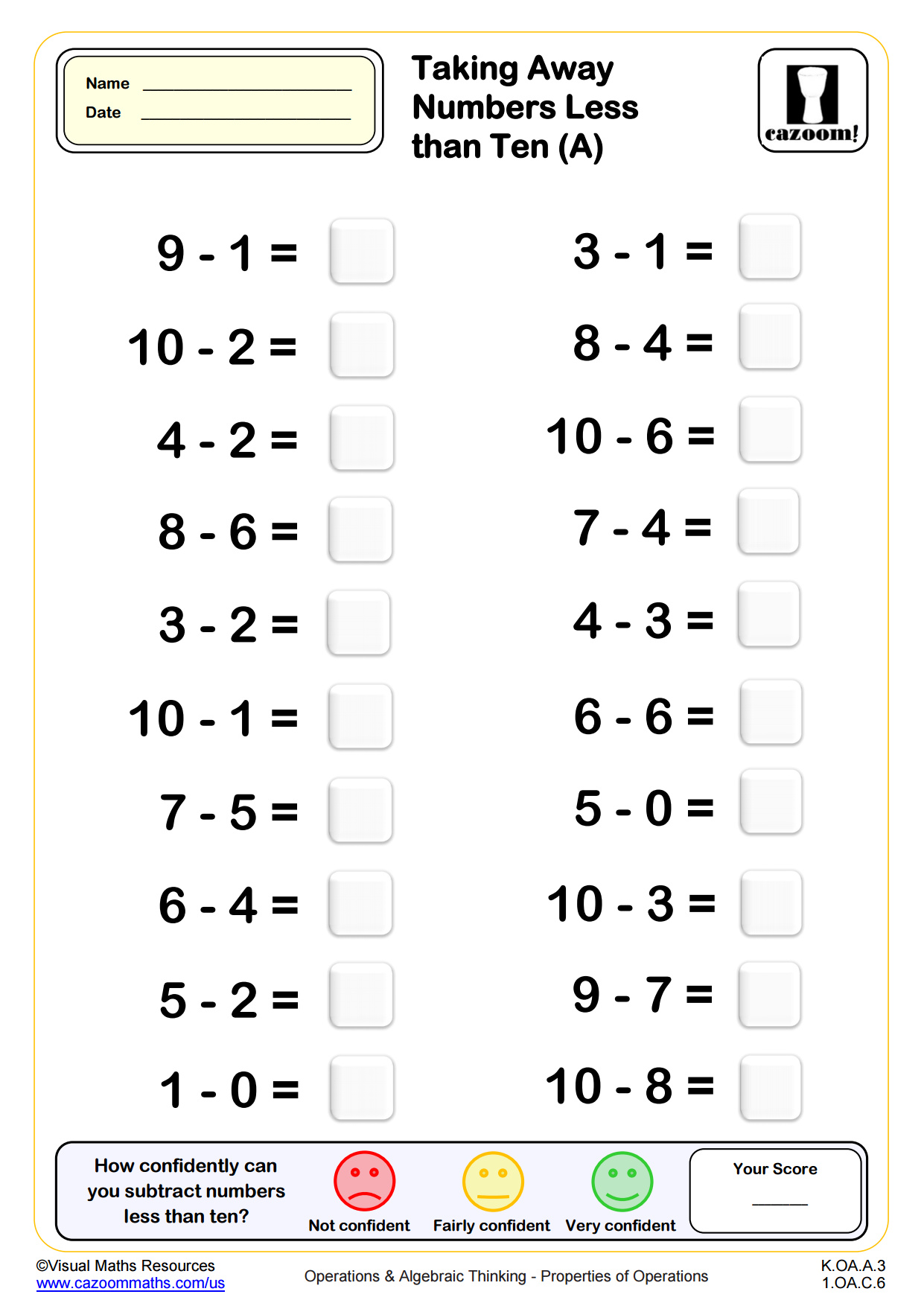
Subtracting Numbers Less Than 10 (B)
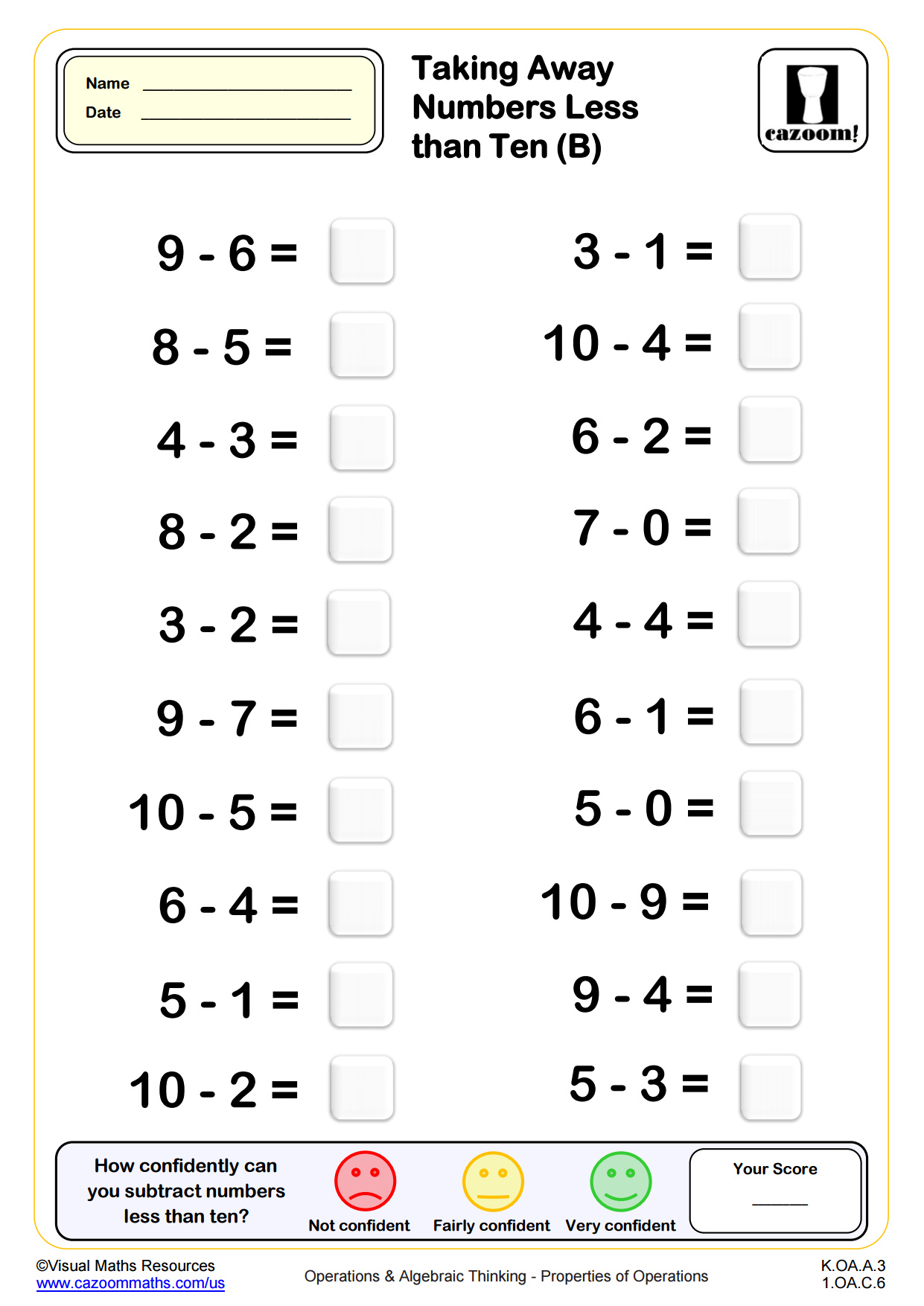
Subtracting Numbers Less Than 10 (C)
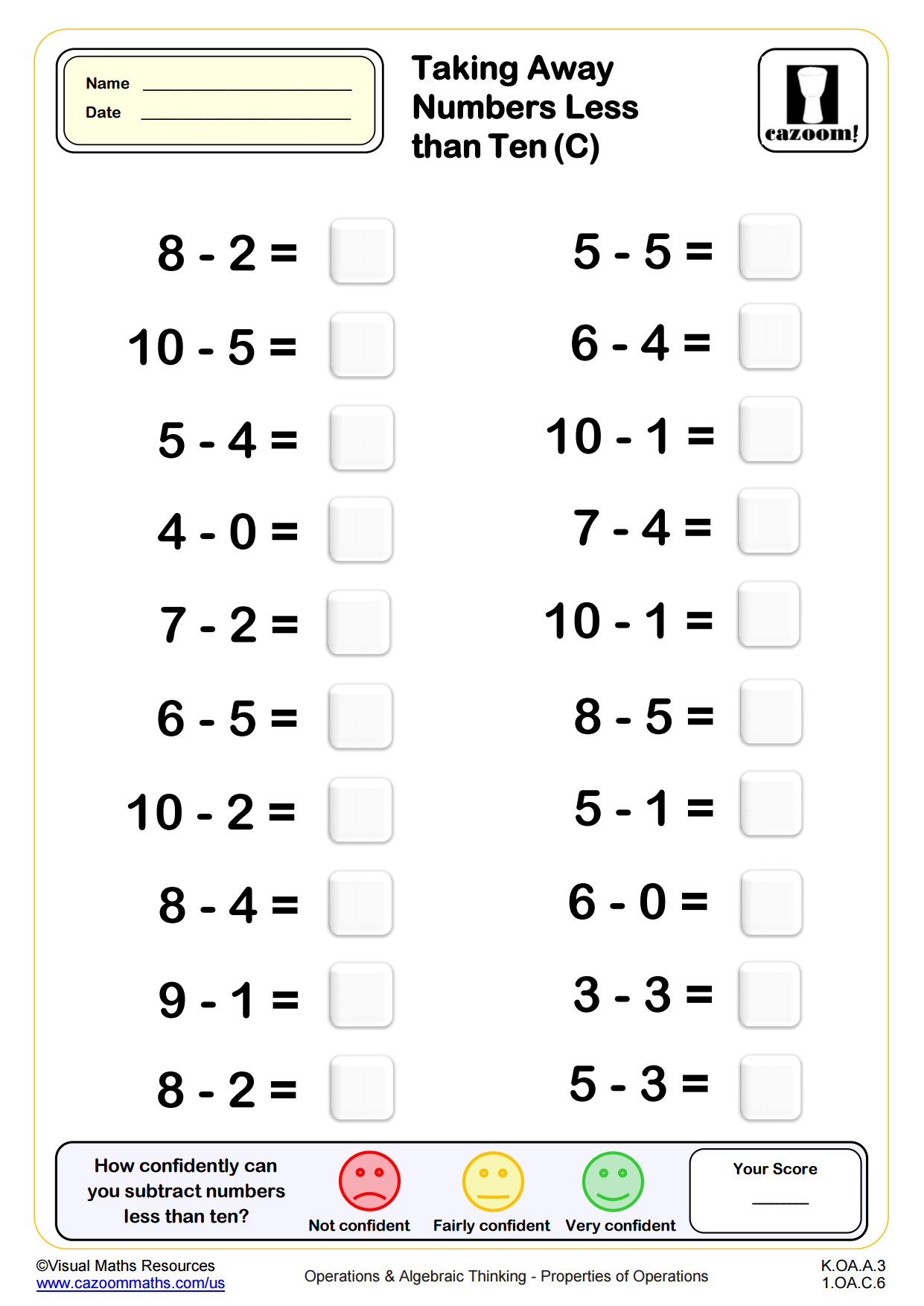
Subtracting Numbers Less Than 6 (A)
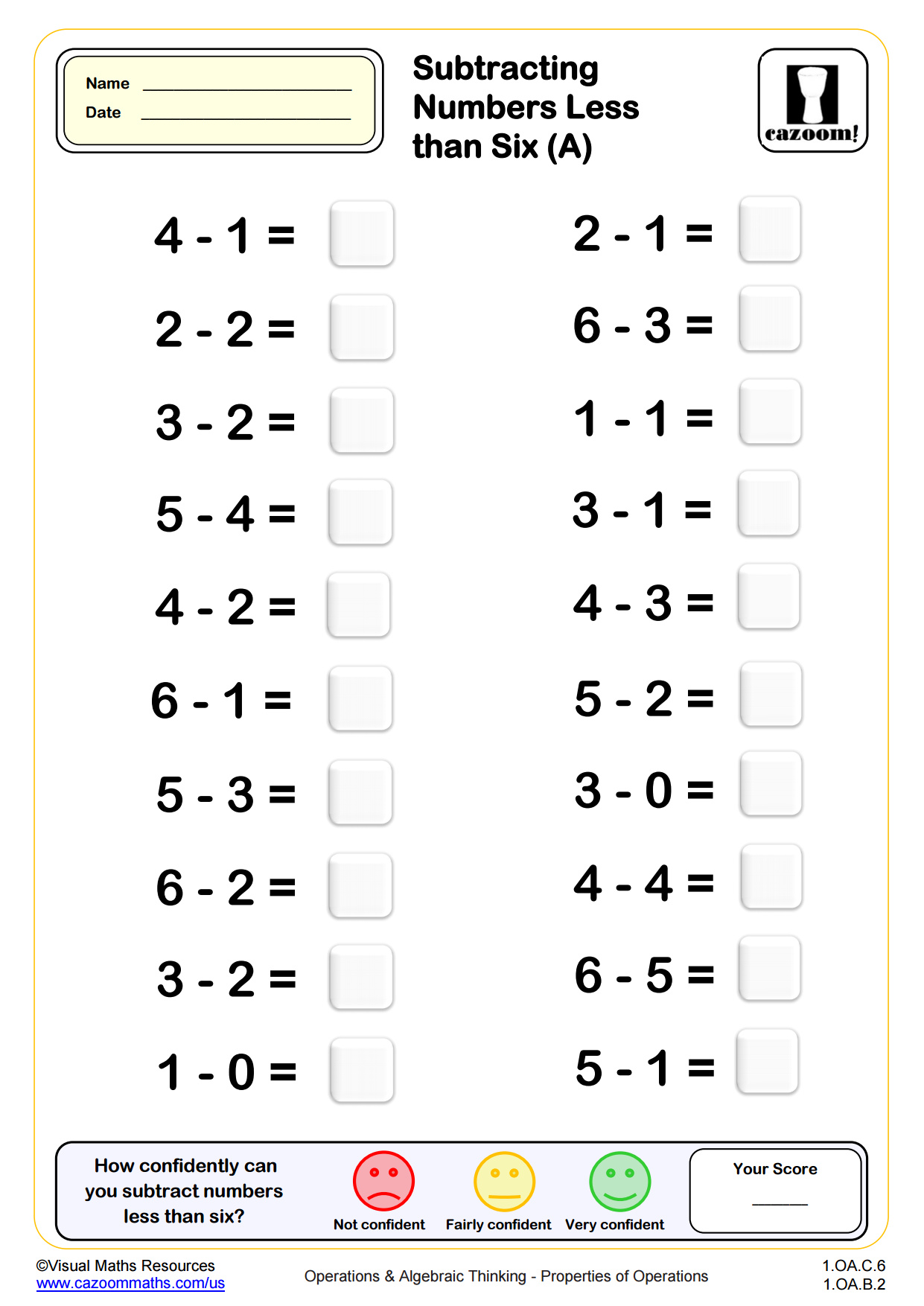
Subtracting Numbers Less Than 6 (B)
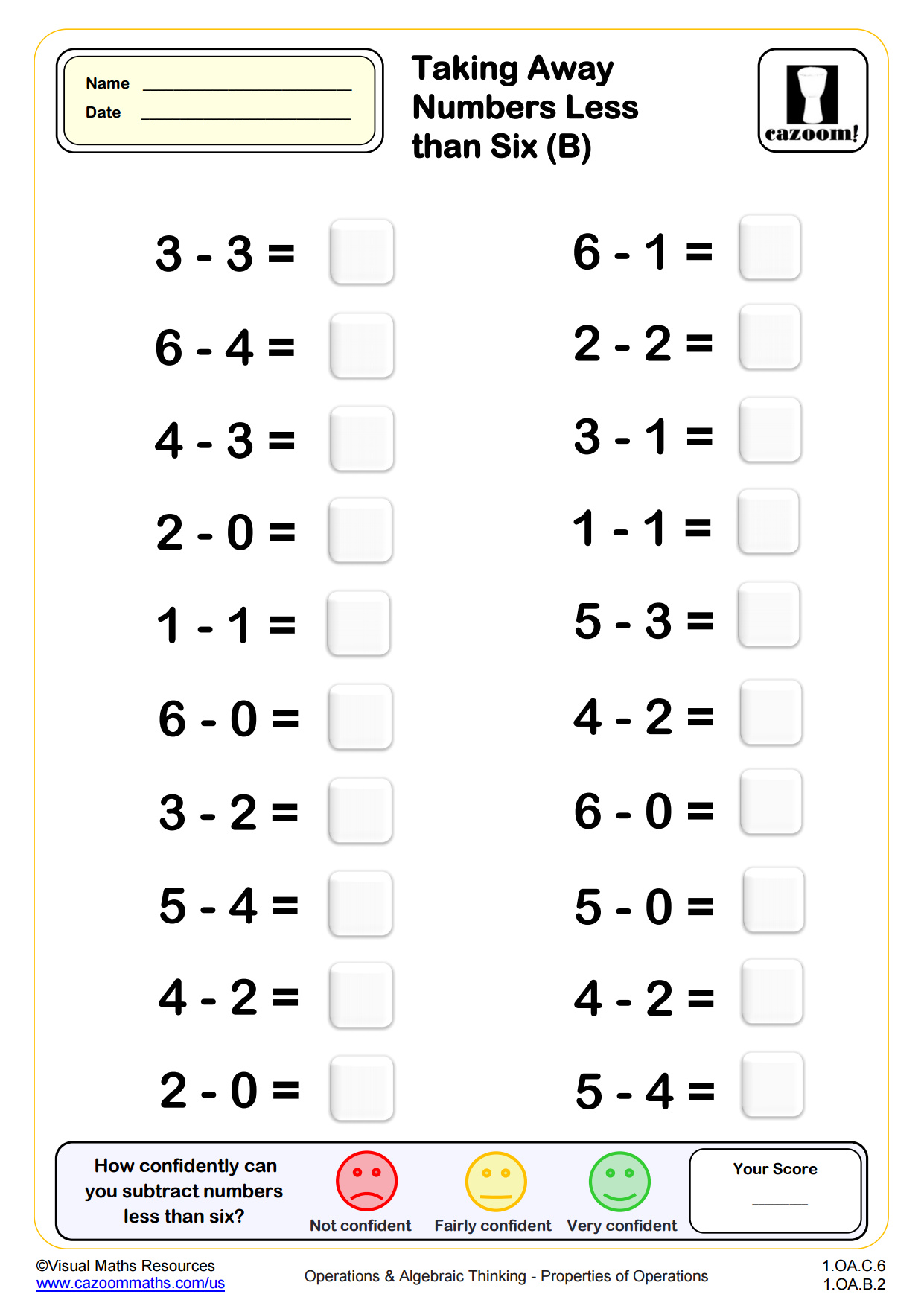
Subtracting Numbers Less Than 6 (C)
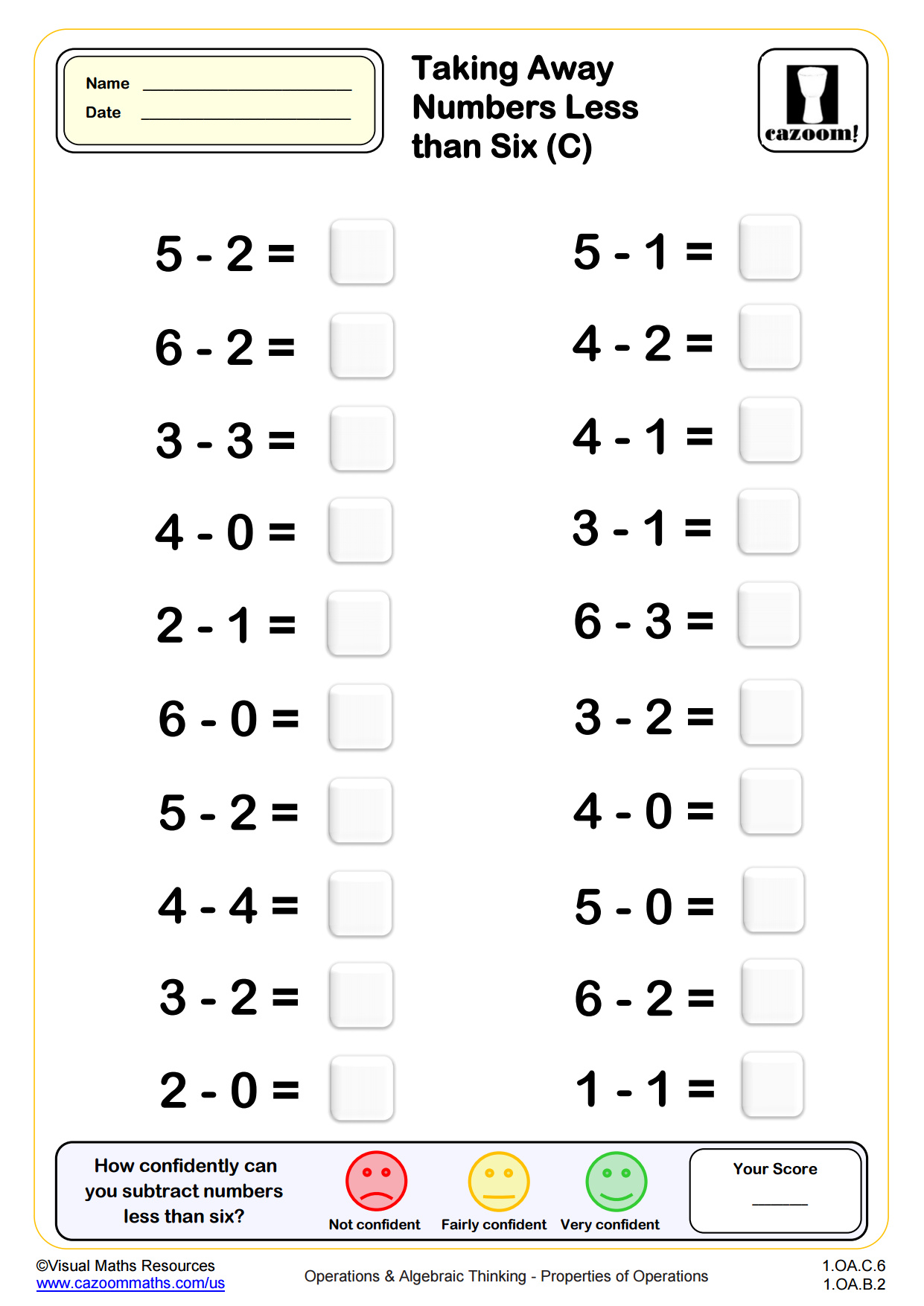
Subtracting Single Digits from Two Digit Numbers (Using Number Lines)
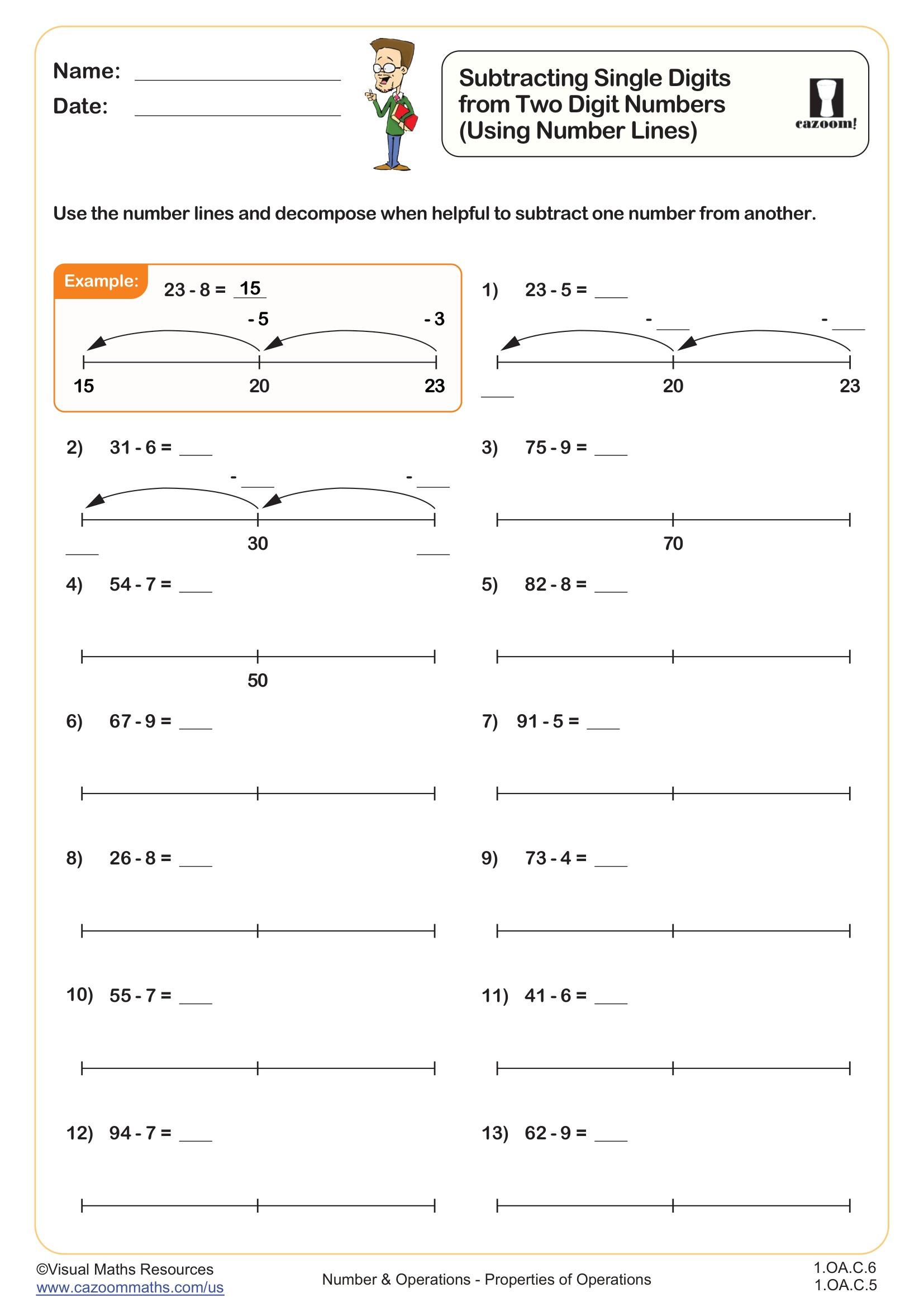
Subtraction Using Number Lines (Subtracting Single Digits from Numbers up to 20)
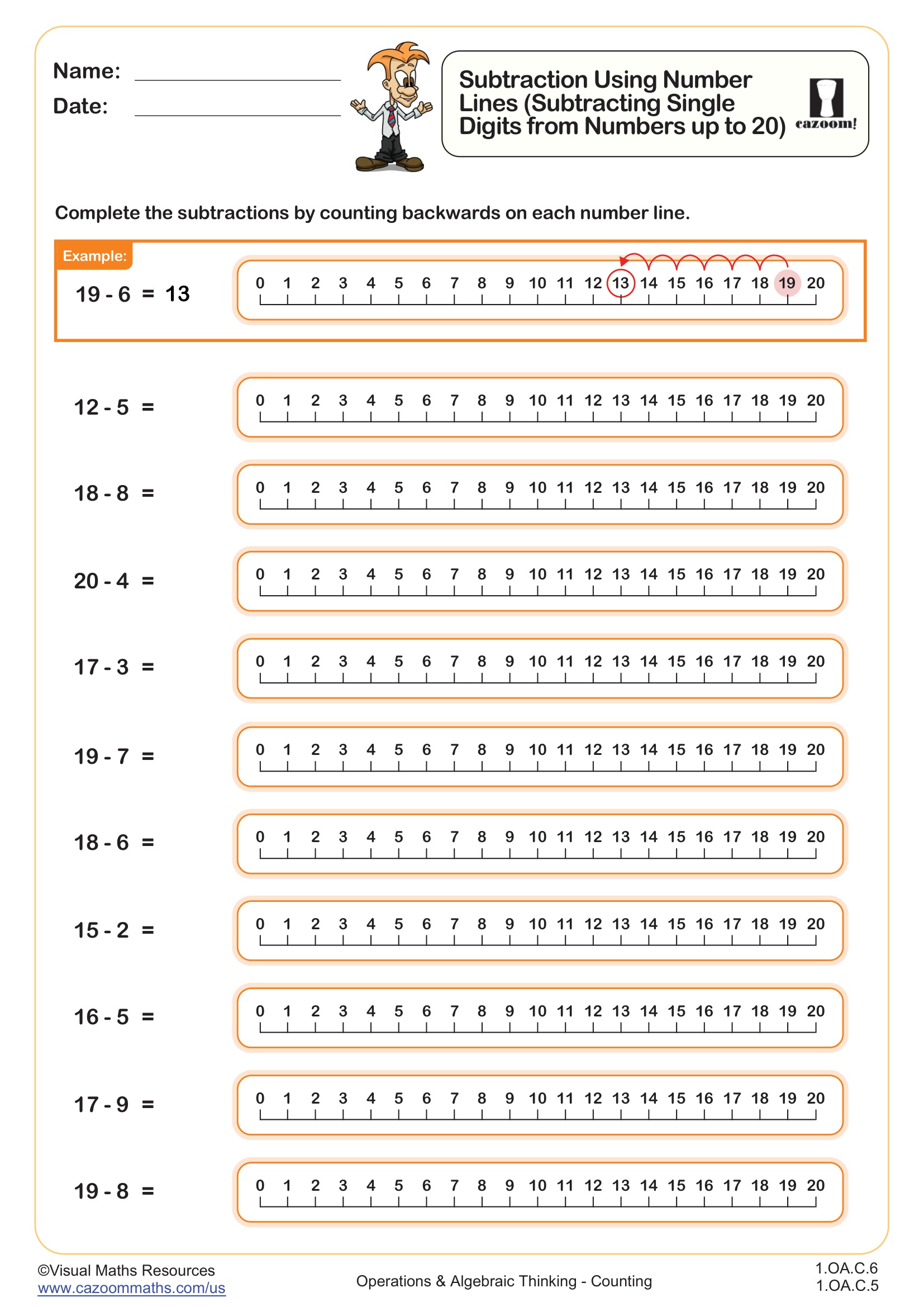
Subtraction Using Number Lines (Up to 10)
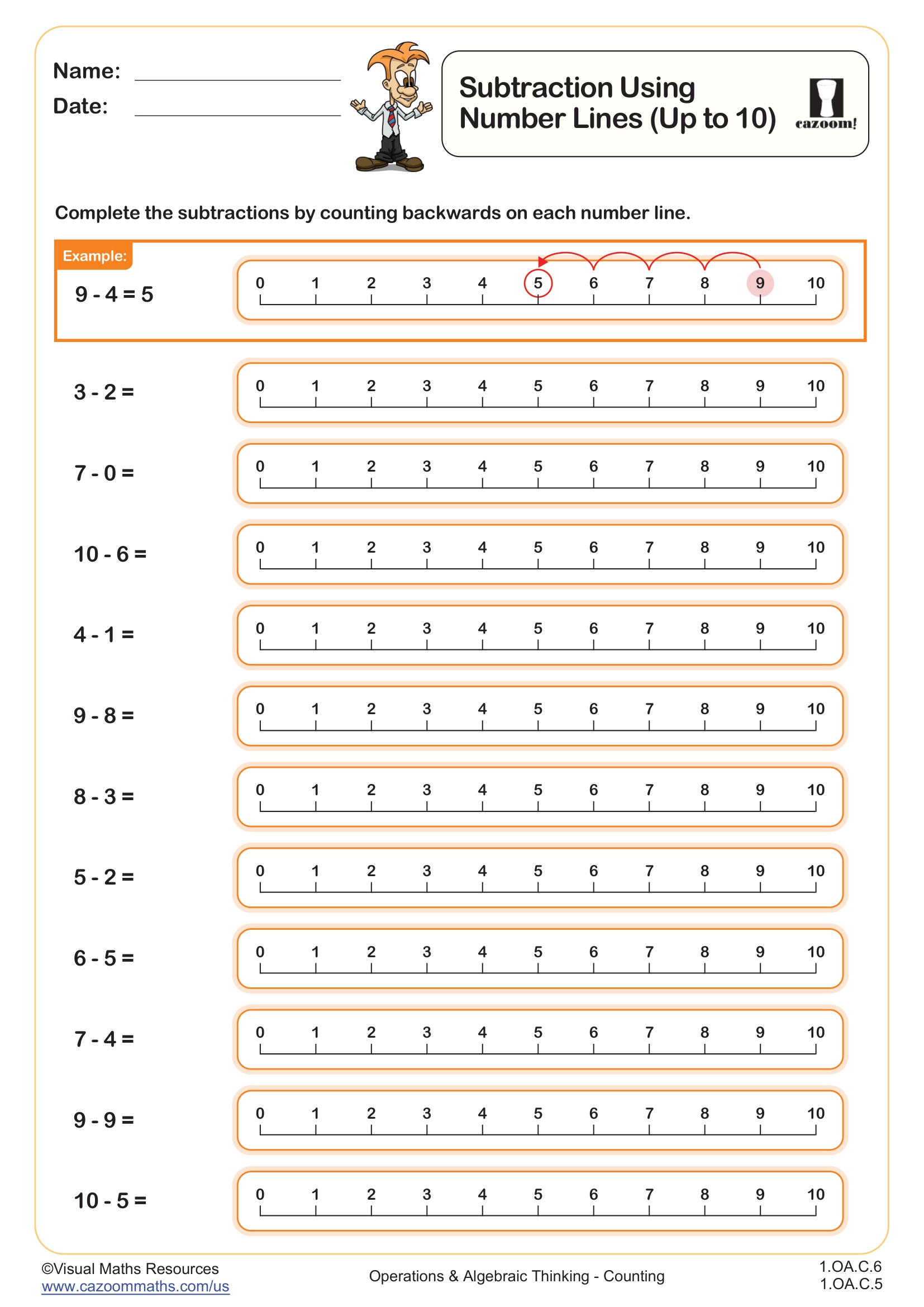
Subtraction Wheels (Subtracting 1)
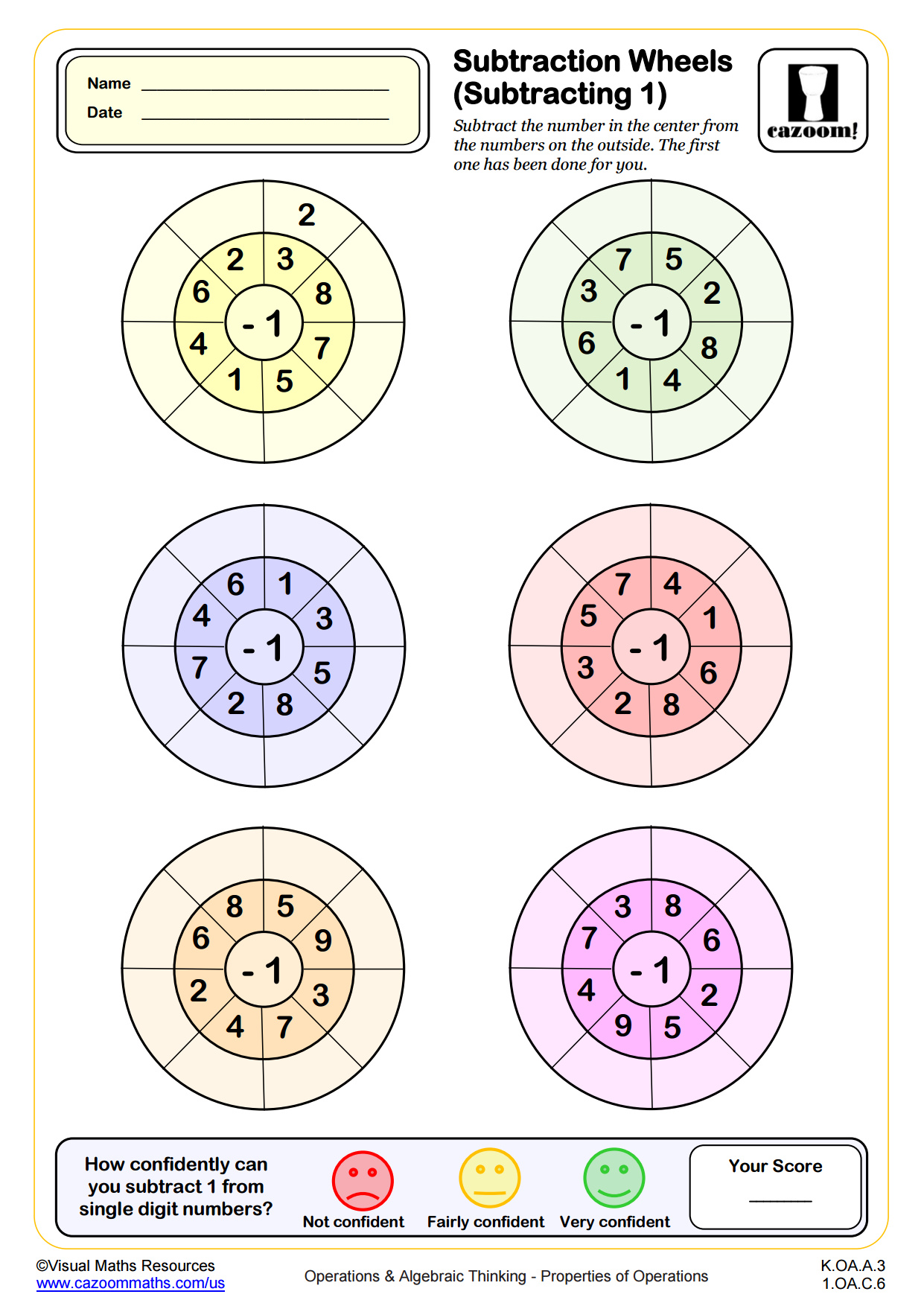
Subtraction Wheels (Subtracting 2)
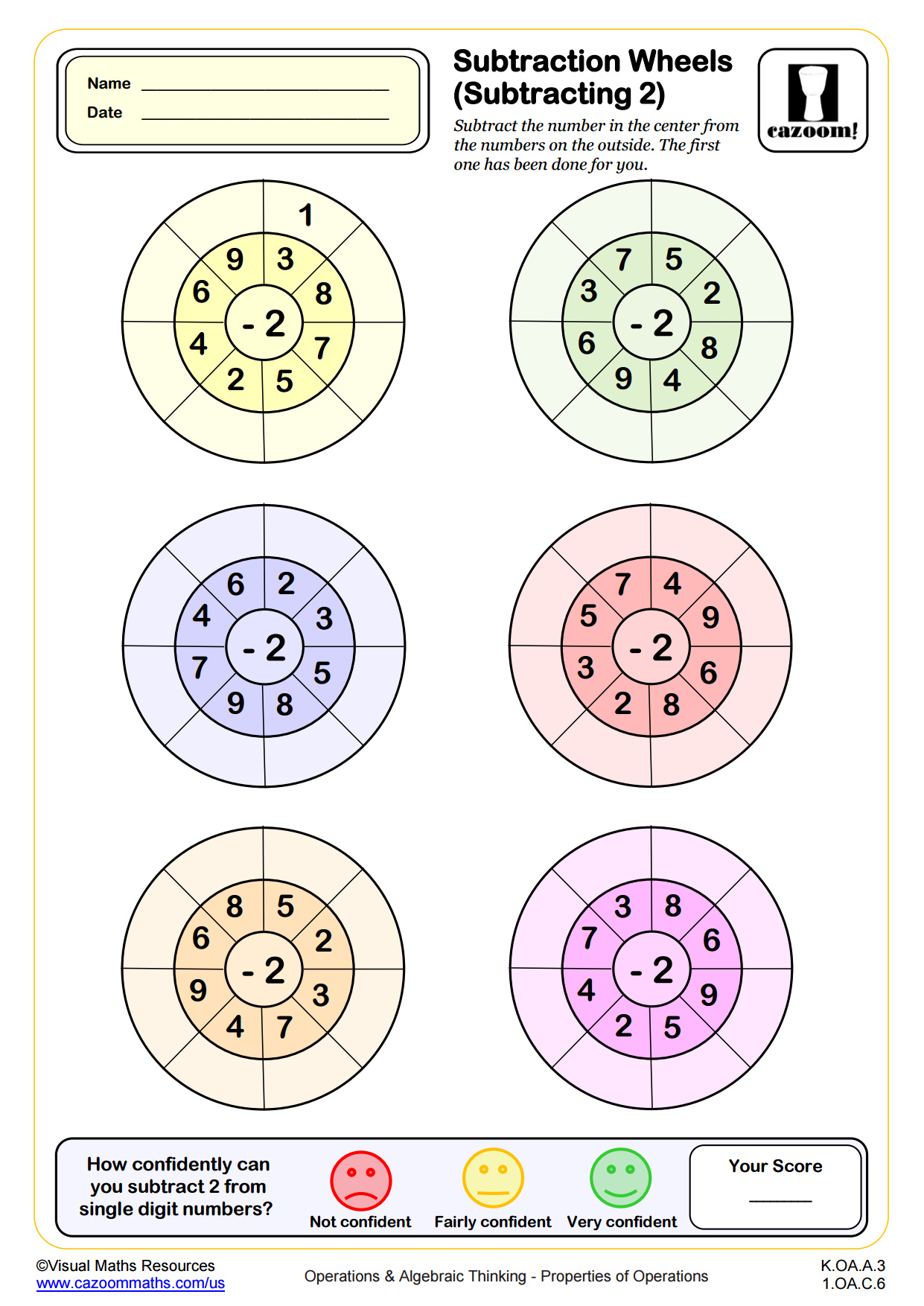
Subtraction Wheels (Subtracting 5)
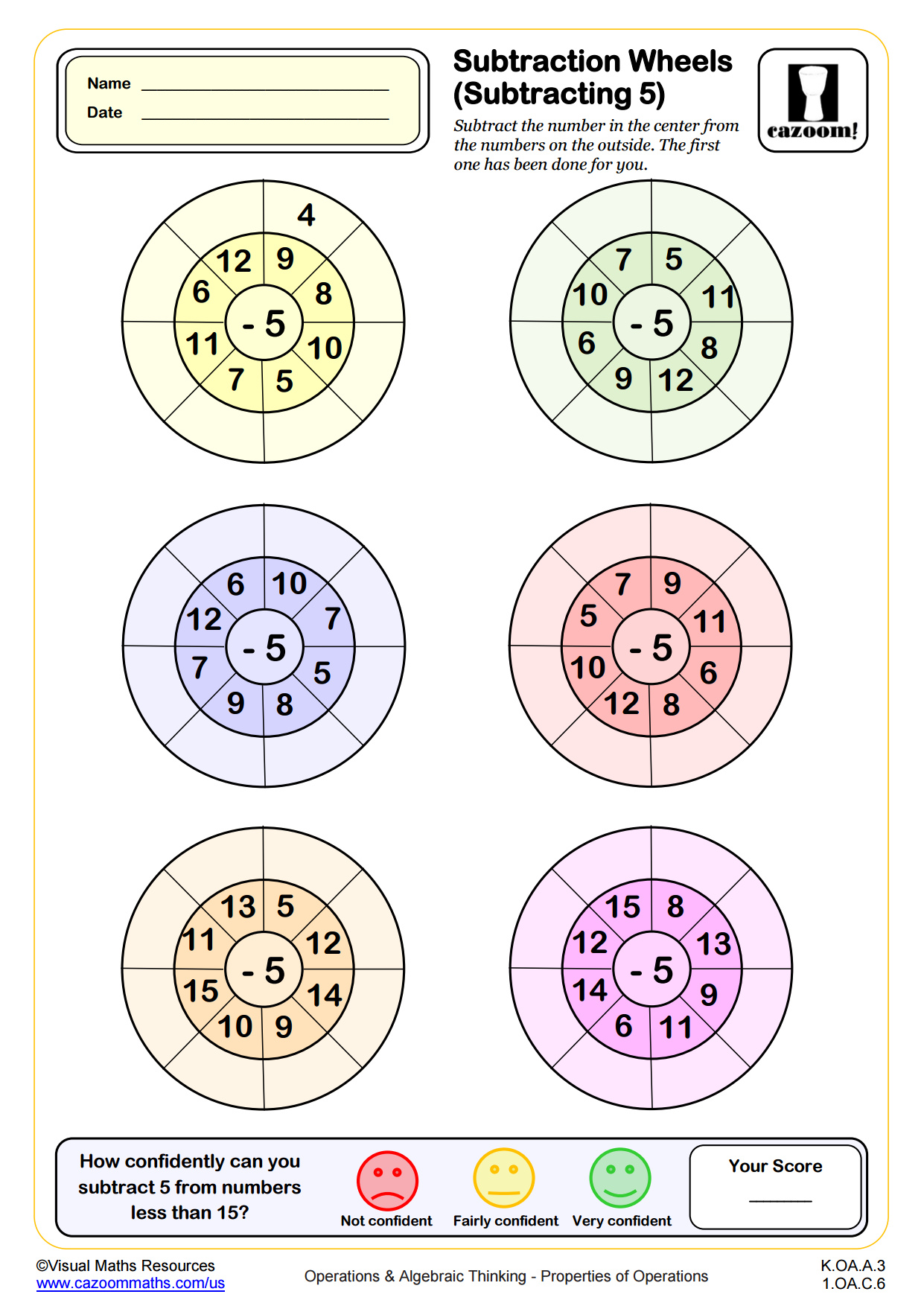
Subtraction Wheels (Subtracting up to 10) A
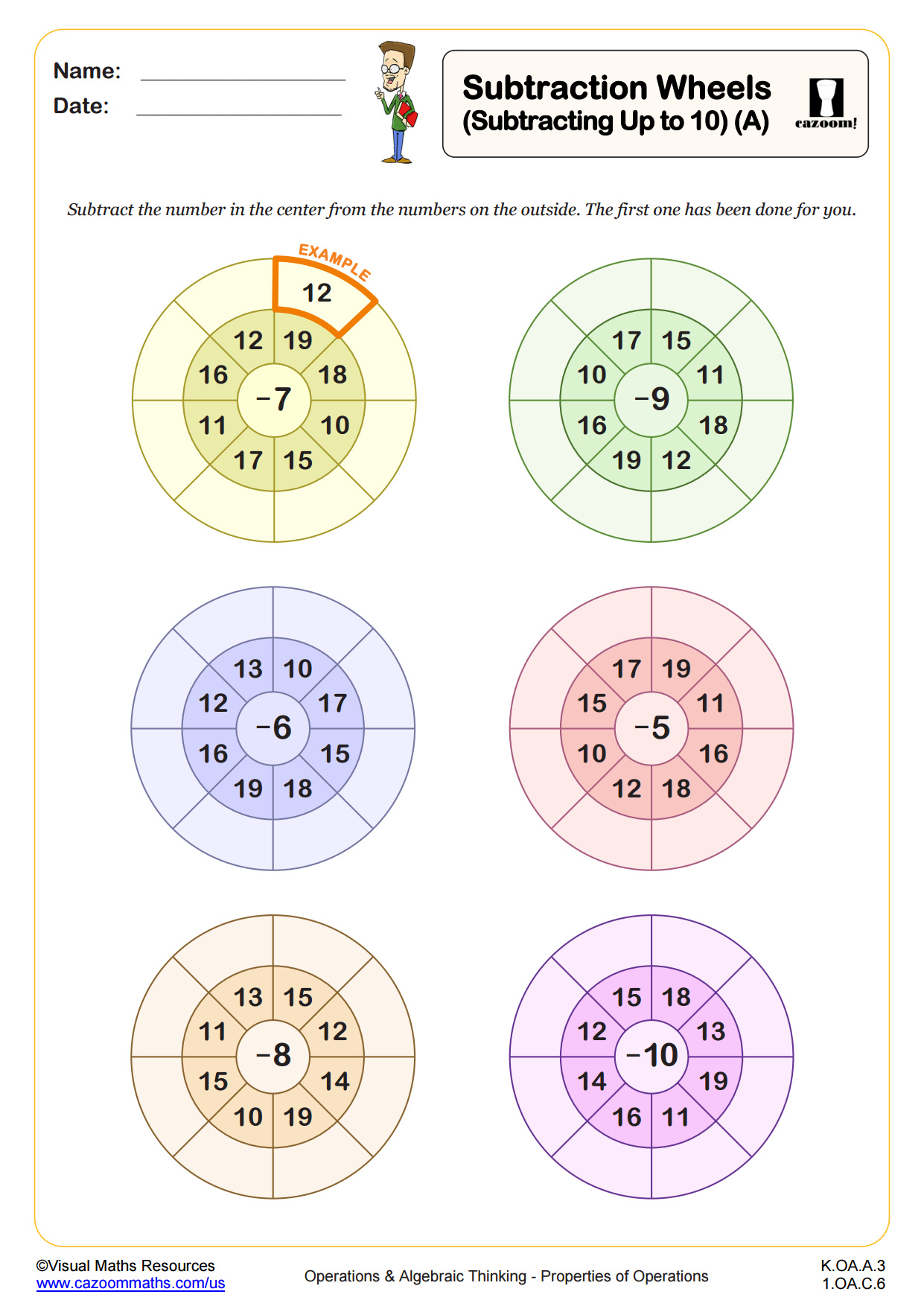
Subtraction Wheels (Subtracting up to 4)
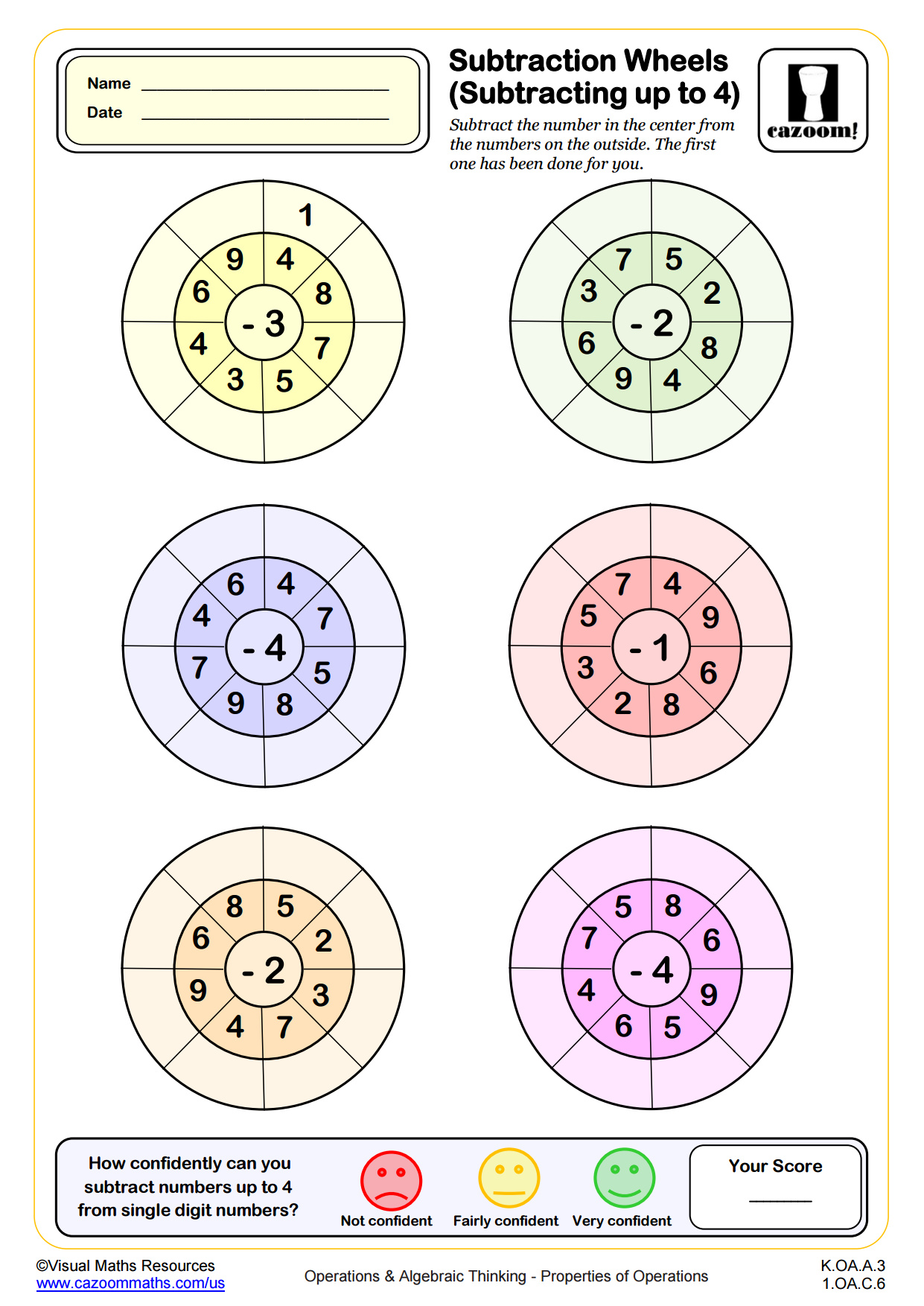
All worksheets are created by the team of experienced teachers at Cazoom Math.
What Makes Single Digit Subtraction a Critical Skill?
Single digit subtraction represents one of the fundamental operations students must master to progress through elementary math. According to the Common Core State Standards, kindergarteners begin exploring subtraction concepts, while first and second graders solidify automatic recall of subtraction facts within 20. This foundational skill directly supports understanding of place value, multi-digit operations, and algebraic thinking in later grades.
Teachers often observe that students who struggle with single digit subtraction facts continue to face challenges with more complex operations because they're still counting on fingers or using inefficient strategies. State assessments expect fluency with these facts by the end of second grade, and students lose valuable time on standardized tests when they haven't developed automatic recall. The relationship between addition and subtraction as inverse operations becomes clearer once students master basic facts, helping them check their work and build mathematical reasoning skills.
Which Grade Levels Use Single Digit Subtraction Worksheets?
These worksheets serve students from kindergarten through fifth grade at the elementary school level. Kindergarteners work on foundational subtraction concepts with smaller numbers, while first and second graders focus on achieving fluency with all single digit subtraction facts. Third through fifth graders use these worksheets for review, intervention, or warm-up activities to maintain their fact fluency.
The progression across grade levels reflects increasing expectations for speed and accuracy. Kindergarten students might use manipulatives alongside worksheets to visualize taking away, while first graders transition toward mental math strategies like counting back or using related addition facts. By second grade, students work toward automatic recall without counting. Upper elementary students who haven't yet mastered these facts benefit from targeted practice before tackling fraction operations and decimal arithmetic, which require solid foundational skills.
How Do Matching Activities Support Subtraction Learning?
Matching activities present subtraction problems and answers in separate columns, requiring students to compute each problem and then locate the corresponding answer. This format encourages students to check their work more carefully than traditional problem sets because they must verify that their answer appears among the choices. Teachers notice that matching exercises help students recognize patterns in subtraction facts, such as subtracting zero or subtracting a number from itself.
This skill connects directly to real-world problem solving where students must match quantities to situations. Scientists use subtraction when calculating the difference between experimental results and control groups, while engineers subtract measurements to determine tolerances and adjustments. The ability to quickly recognize correct differences among multiple options prepares students for standardized test formats and builds the number sense needed for estimation tasks like determining correct change when shopping or calculating time remaining until an event.
How Can Teachers Use These Worksheets Most Effectively?
The worksheets provide structured practice that builds from concept introduction to fluency development. The variety of formats, including number selection and matching exercises, prevents students from disengaging with repetitive drill work while still providing the practice needed for automaticity. Teachers can use the included answer keys to quickly assess student understanding and identify which facts still require focused attention.
Many teachers find these worksheets valuable for differentiated math stations, where students working below grade level practice foundational facts while others tackle advanced problems. The worksheets work well for timed fluency practice in second and third grade, homework assignments that reinforce classroom instruction, or intervention sessions for students who struggle with fact recall. Paired work allows stronger students to explain their thinking to peers, reinforcing their own understanding while supporting classmates who need additional help with specific subtraction facts.