Elementary School Subtracting with Single Digits Worksheets
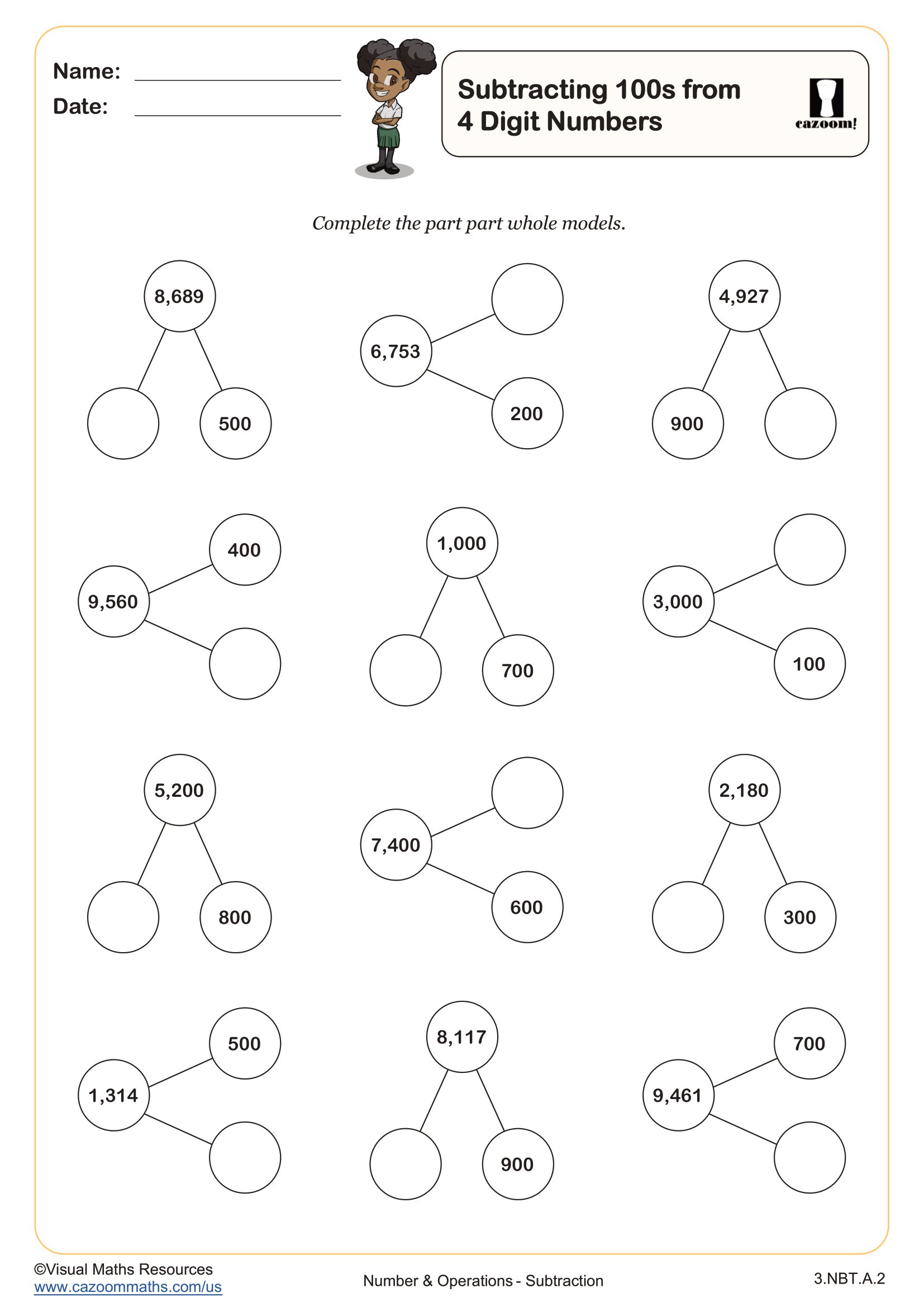
Subtracting 100s from 4 Digit Numbers
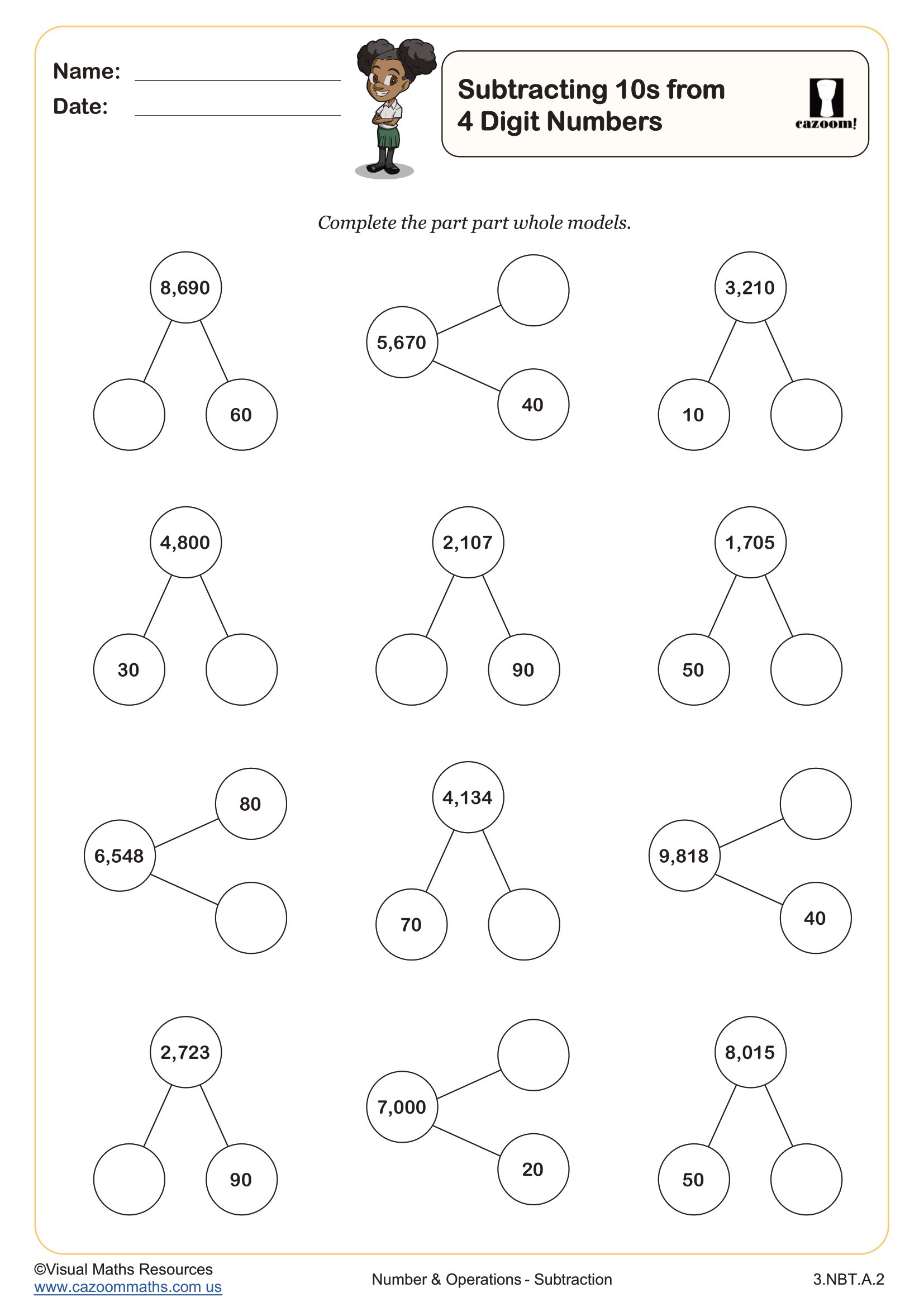
Subtracting 10s from 4 Digit Numbers
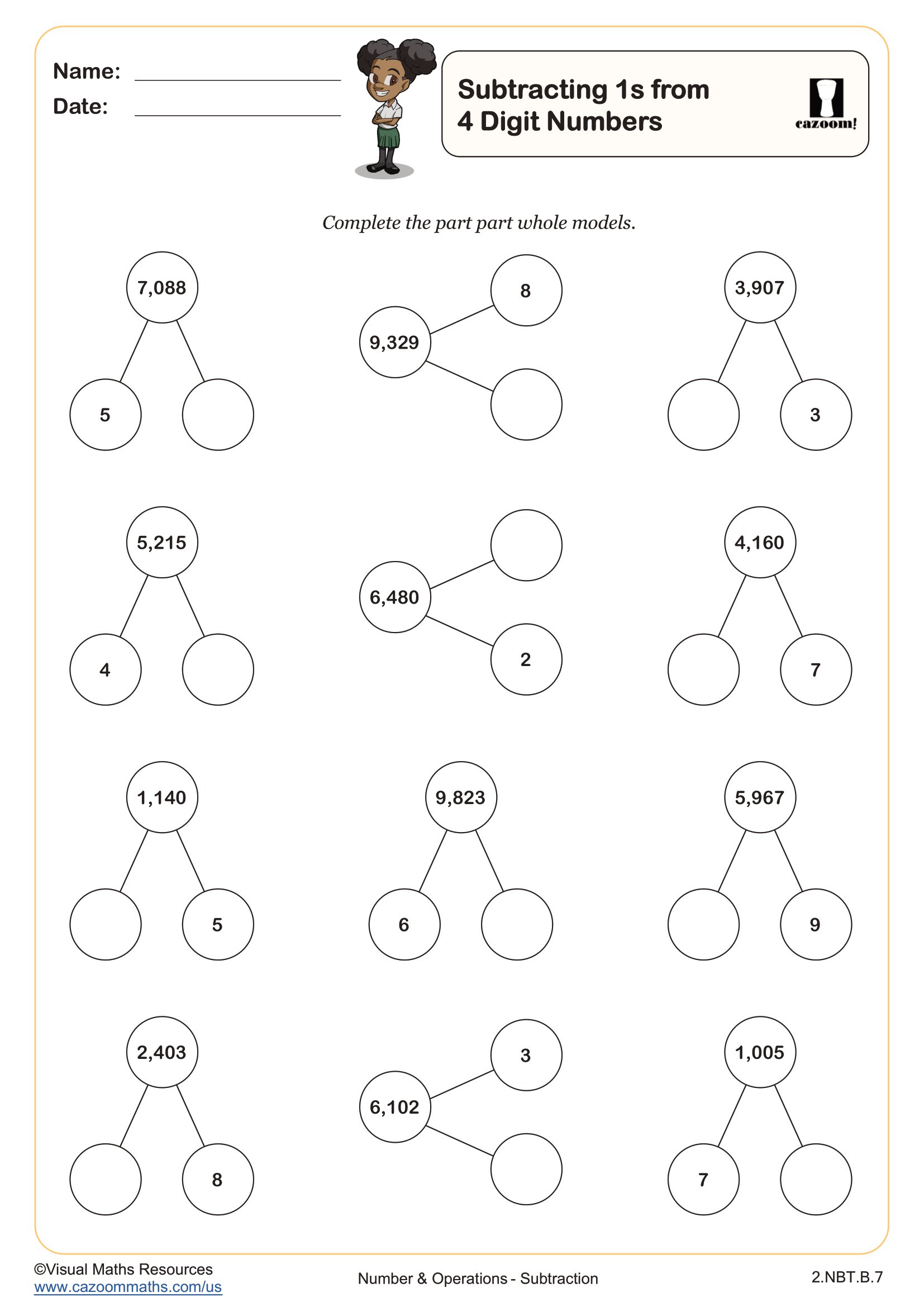
Subtracting 1s from 4 Digit Numbers
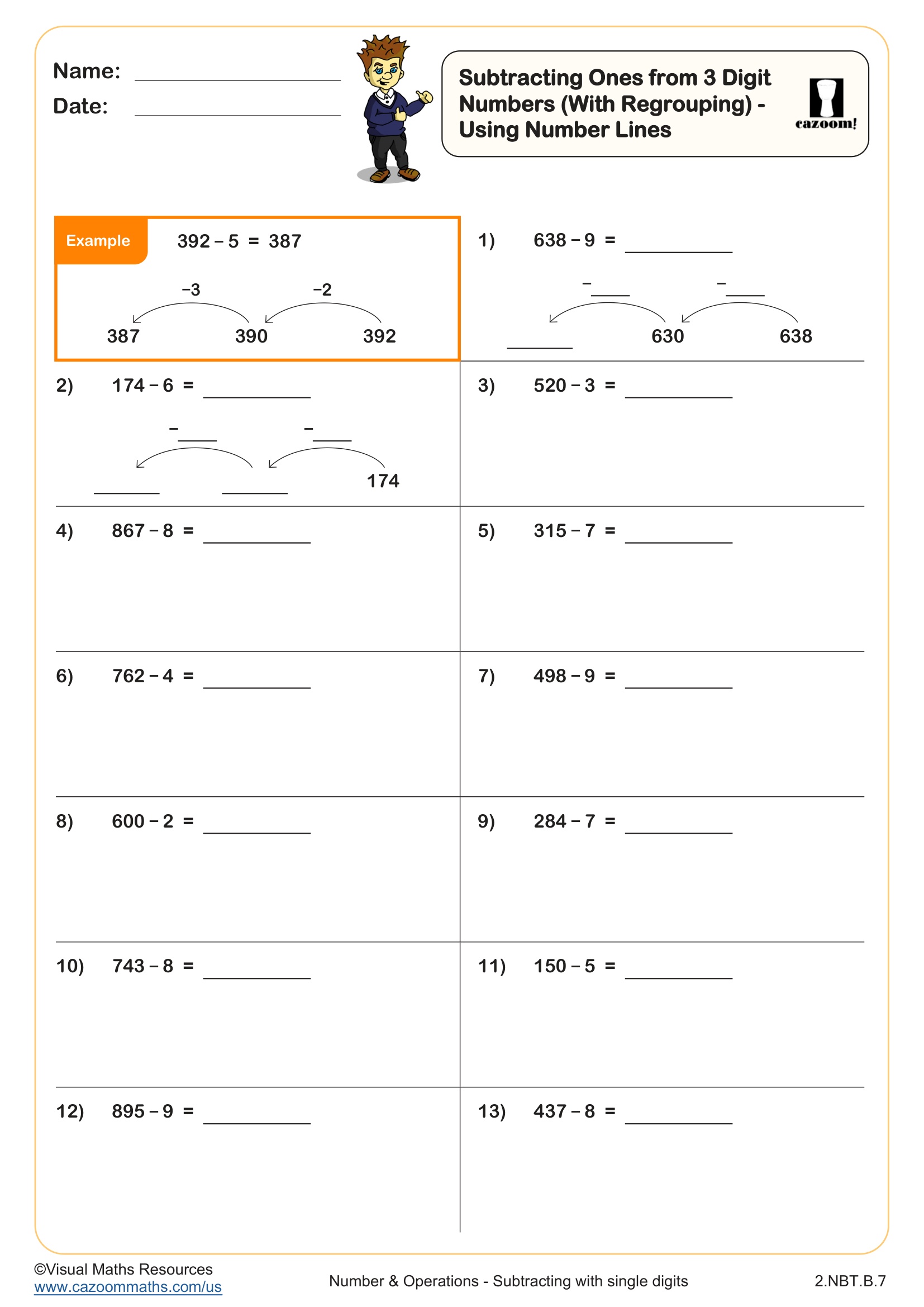
Subtracting Ones from 3 Digit Numbers (With Regrouping) - Using Number Lines
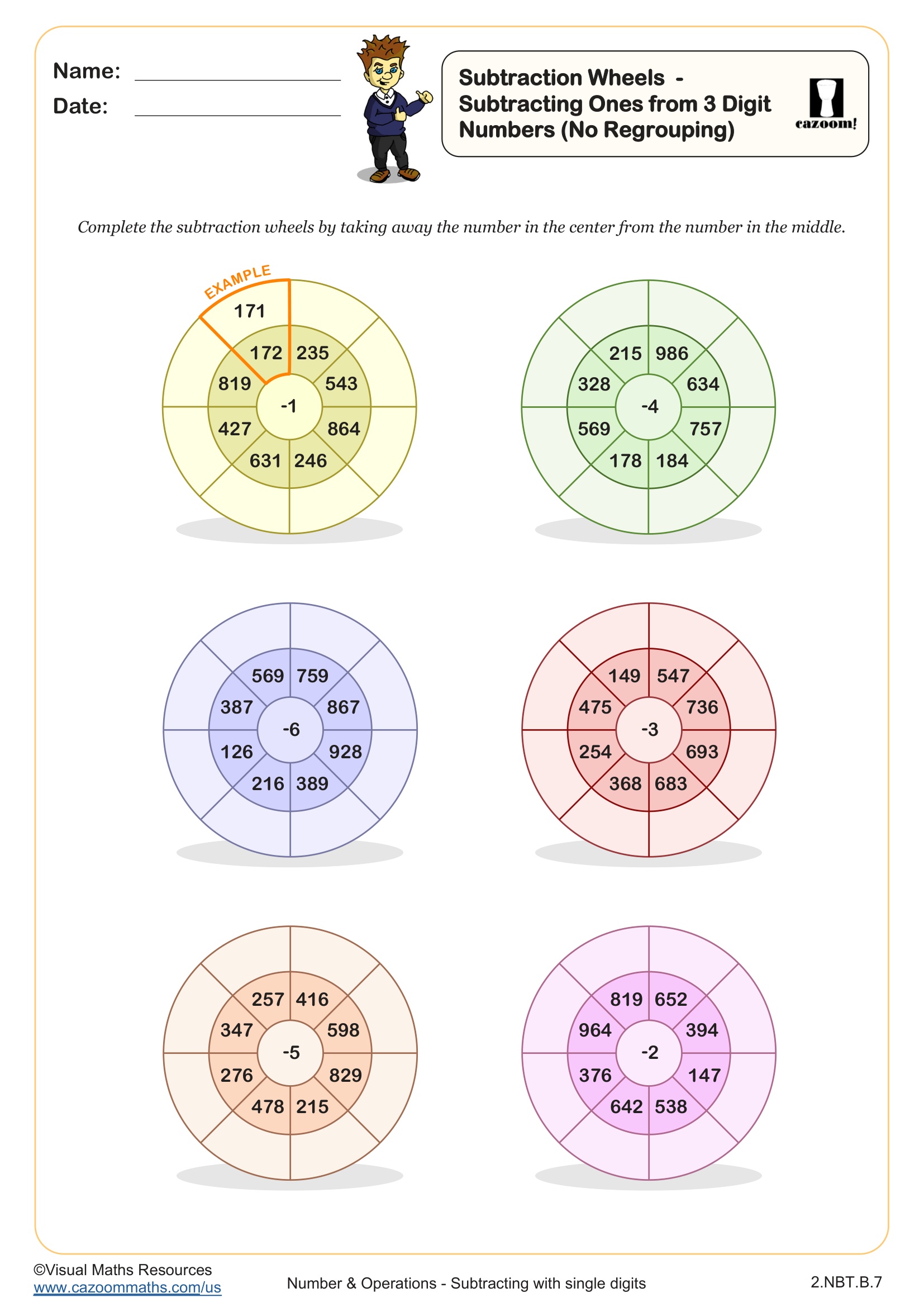
Subtraction Wheels - Subtracting Ones from 3 Digit Numbers (No Regrouping)
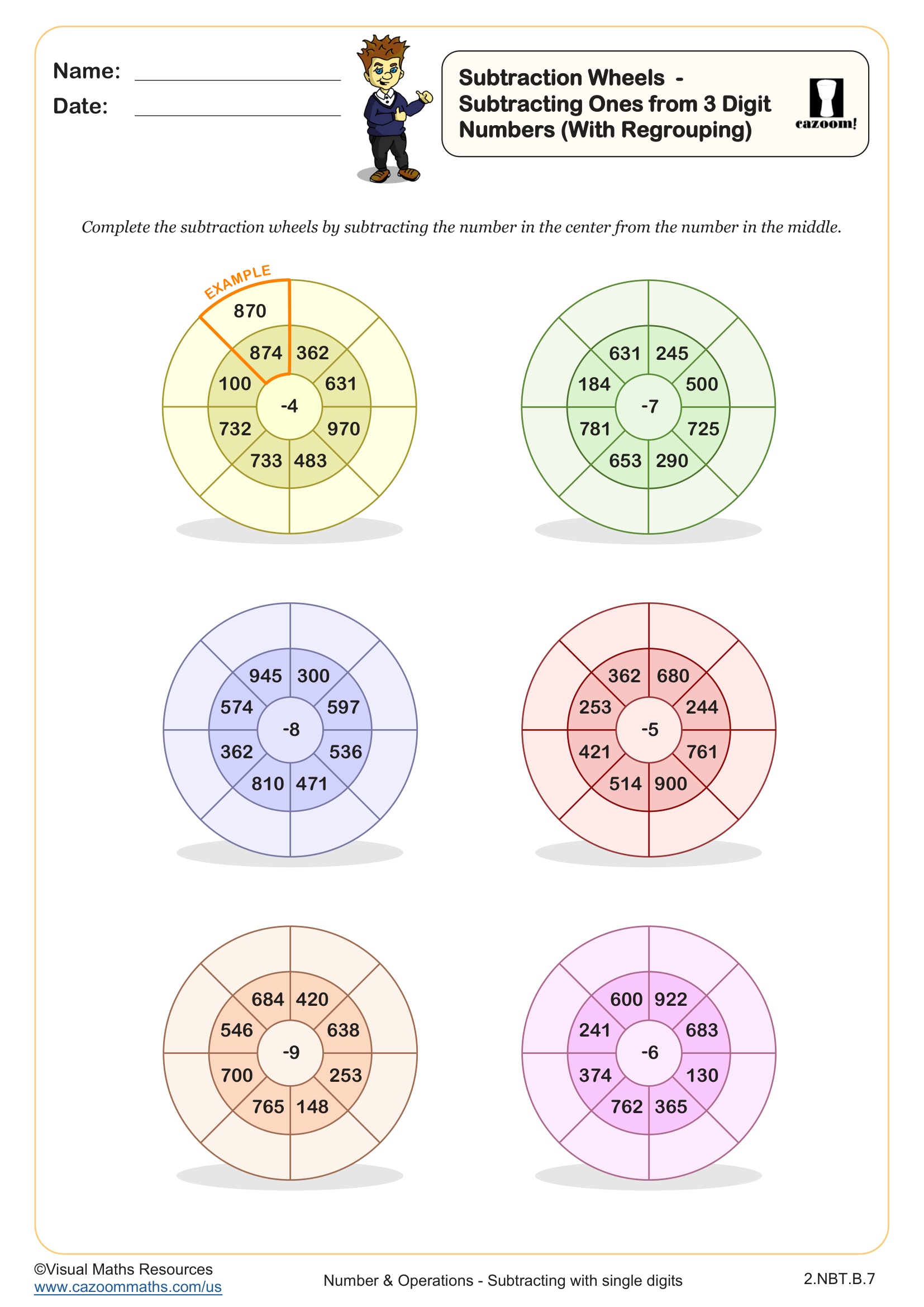
Subtraction Wheels - Subtracting Ones from 3 Digit Numbers (With Regrouping)
All worksheets are created by the team of experienced teachers at Cazoom Math.
What Skills Do Students Practice with Single Digit Subtraction Worksheets?
Single digit subtraction worksheets develop foundational computational skills that extend far beyond basic fact recall. Students practice subtracting ones from three-digit and four-digit numbers, subtracting tens from four-digit numbers, and subtracting hundreds from four-digit numbers. These worksheets strengthen place value understanding, regrouping strategies, and the ability to isolate specific place values during computation.
A common misconception occurs when students subtract single digits from any position in a multi-digit number rather than the appropriate place value. For example, when subtracting 3 from 5,247, students sometimes incorrectly compute 5,217 by subtracting from the tens place instead of the ones place. Worksheets that emphasize place value notation and use visual models like number lines help students recognize that the digit's position determines which place value changes during subtraction.
Which Grade Levels Use Single Digit Subtraction Worksheets?
These elementary school worksheets span kindergarten through 5th grade, meeting students at different stages of their subtraction development. Kindergarten and 1st grade students typically work with basic subtraction facts and simple regrouping, while 2nd and 3rd grade students tackle more complex problems involving three-digit numbers with and without regrouping. By 4th and 5th grade, students apply these skills to four-digit numbers and use subtraction strategically across all operations.
The progression builds systematically, starting with concrete visual supports like subtraction wheels and number lines before moving to abstract numerical computation. Early elementary worksheets focus on developing fact fluency and understanding regrouping with smaller numbers, while upper elementary materials challenge students to subtract efficiently from larger numbers and recognize patterns across place values. This scaffolded approach ensures students build confidence before tackling more complex subtraction scenarios.
How Do Number Lines Help Students Subtract with Regrouping?
Number lines provide a visual representation that helps students understand regrouping as movement along a continuous number path rather than an abstract borrowing procedure. When subtracting ones from three-digit numbers that require regrouping, students can see how jumping backward from a number like 342 by 5 requires crossing a decade boundary. This visual model reinforces that 342 minus 5 means moving from 342 to 340, then to 337, making the regrouping process more concrete and less procedural.
This visualization skill translates directly to real-world contexts in STEM fields. Engineers use number line thinking when calculating tolerances and measurements that cross unit boundaries, while scientists apply similar reasoning when working with temperature changes across zero or measuring time intervals that span midnight. Students who master number line subtraction develop stronger estimation skills and better number sense for situations requiring mental calculation or quick approximations.
How Can Teachers Use These Subtraction Worksheets Effectively in Class?
The worksheets provide structured practice that moves from visual models to abstract computation, allowing teachers to differentiate based on student readiness. Problems involving subtraction wheels offer kinesthetic learners a hands-on entry point, while number line exercises bridge concrete and abstract thinking. The variety of subtopic focuses means teachers can target specific skills where students struggle, whether that's regrouping with three-digit numbers or isolating place values in four-digit subtraction.
Many teachers use these worksheets during math centers, pairing students of similar ability levels for collaborative problem-solving and peer discussion. The answer keys make them practical for independent practice stations where students can self-check their work and identify error patterns. Teachers also find them valuable for quick formative assessments before unit tests, as warm-up activities that review prior concepts, or as targeted homework when students need additional practice with specific subtraction strategies.