Elementary School Sudoku Worksheets
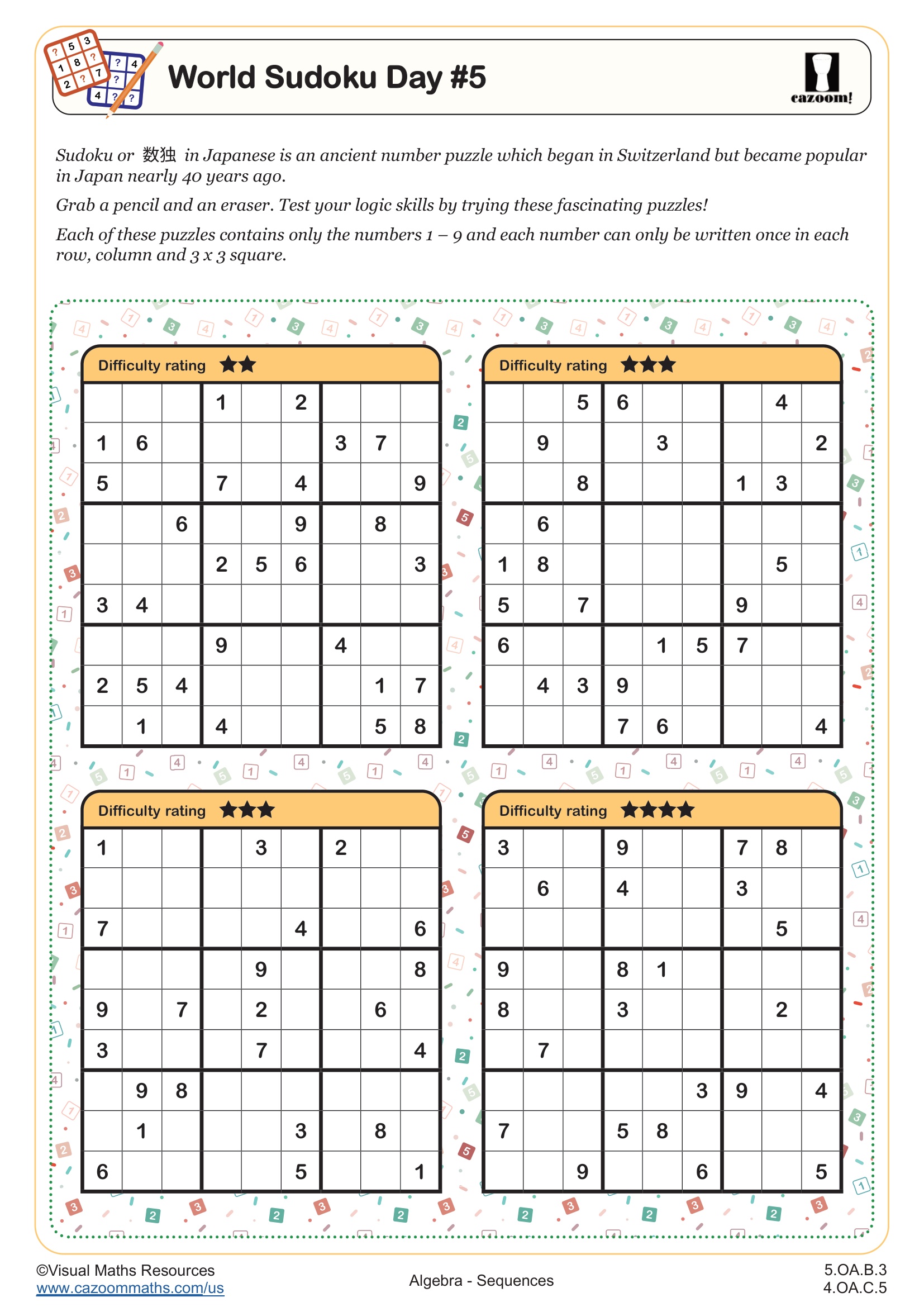
All worksheets are created by the team of experienced teachers at Cazoom Math.
What Math Skills Do Students Practice with Sudoku Puzzles?
Sudoku puzzles develop essential mathematical reasoning skills including logical deduction, pattern recognition, spatial reasoning, and systematic problem-solving. Students practice eliminating possibilities, testing hypotheses, and checking their work for consistency. These puzzles strengthen number sense as students learn to track which numbers appear in rows, columns, and sections, building the organizational skills needed for more complex math tasks.
Students often make the mistake of guessing randomly rather than using elimination strategies. Teachers find that encouraging students to mark possible numbers in empty cells helps them visualize their options and make logical choices. This process of narrowing down possibilities mirrors the reasoning students will later use in algebra, geometry proofs, and data analysis.
Which Grade Levels Can Use Elementary School Sudoku Worksheets?
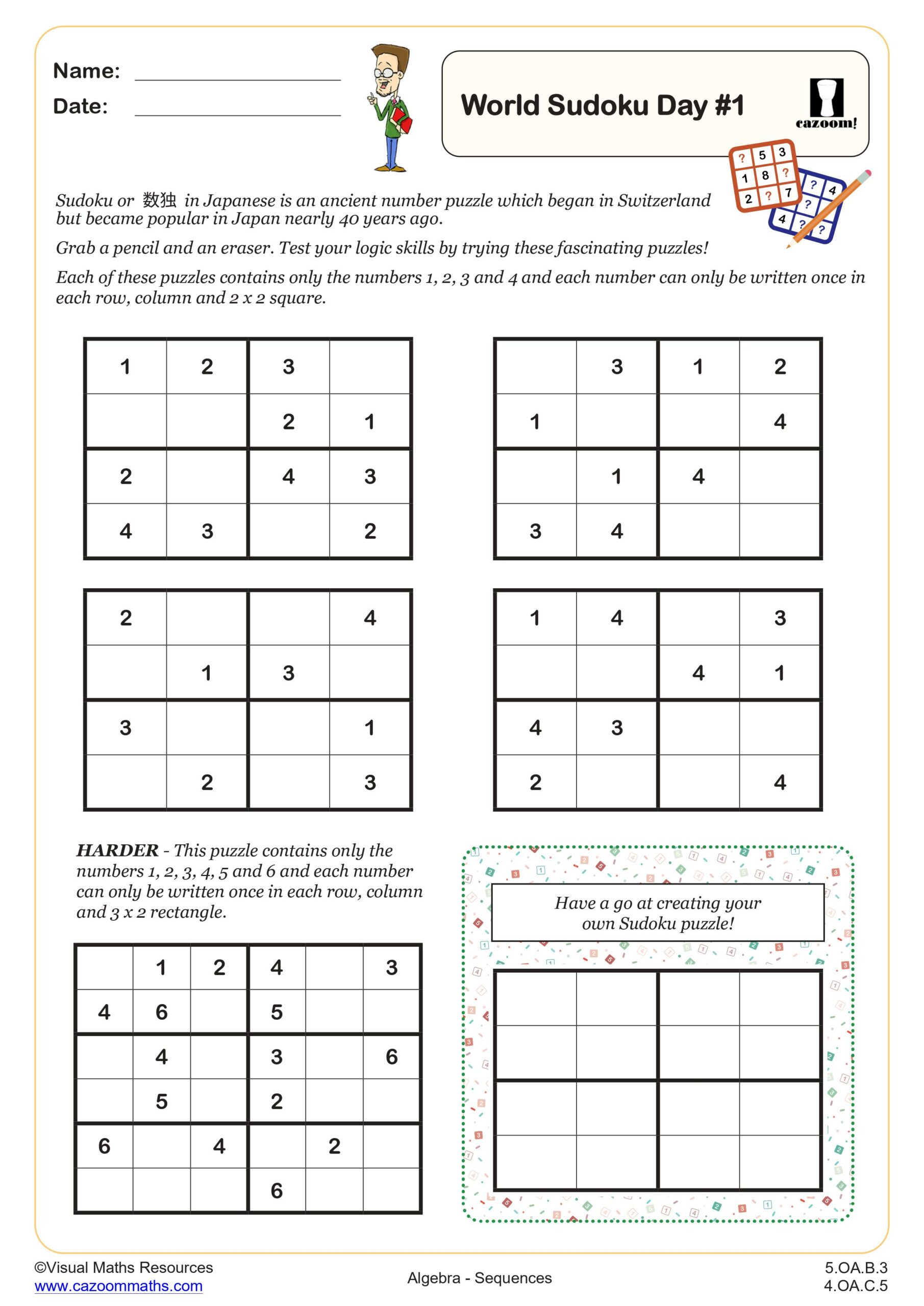
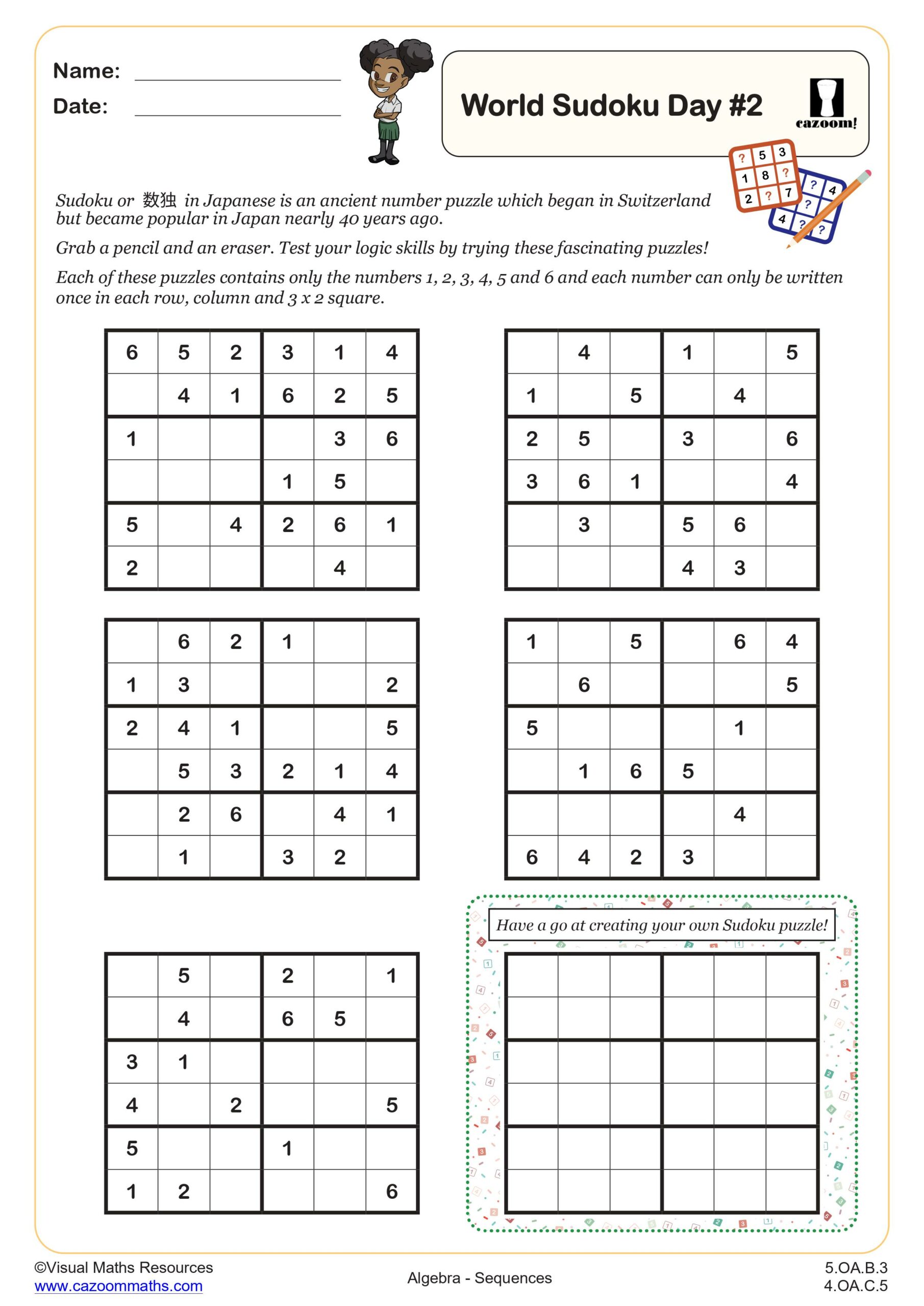
These Sudoku worksheets span kindergarten through 5th grade, covering the complete elementary school stage. Early elementary versions use smaller grids (typically 4x4) with pictures or fewer numbers, while upper elementary puzzles progress to more challenging configurations that require deeper logical thinking. The puzzles adapt to students' developing cognitive abilities while maintaining the core reasoning skills that make Sudoku valuable.
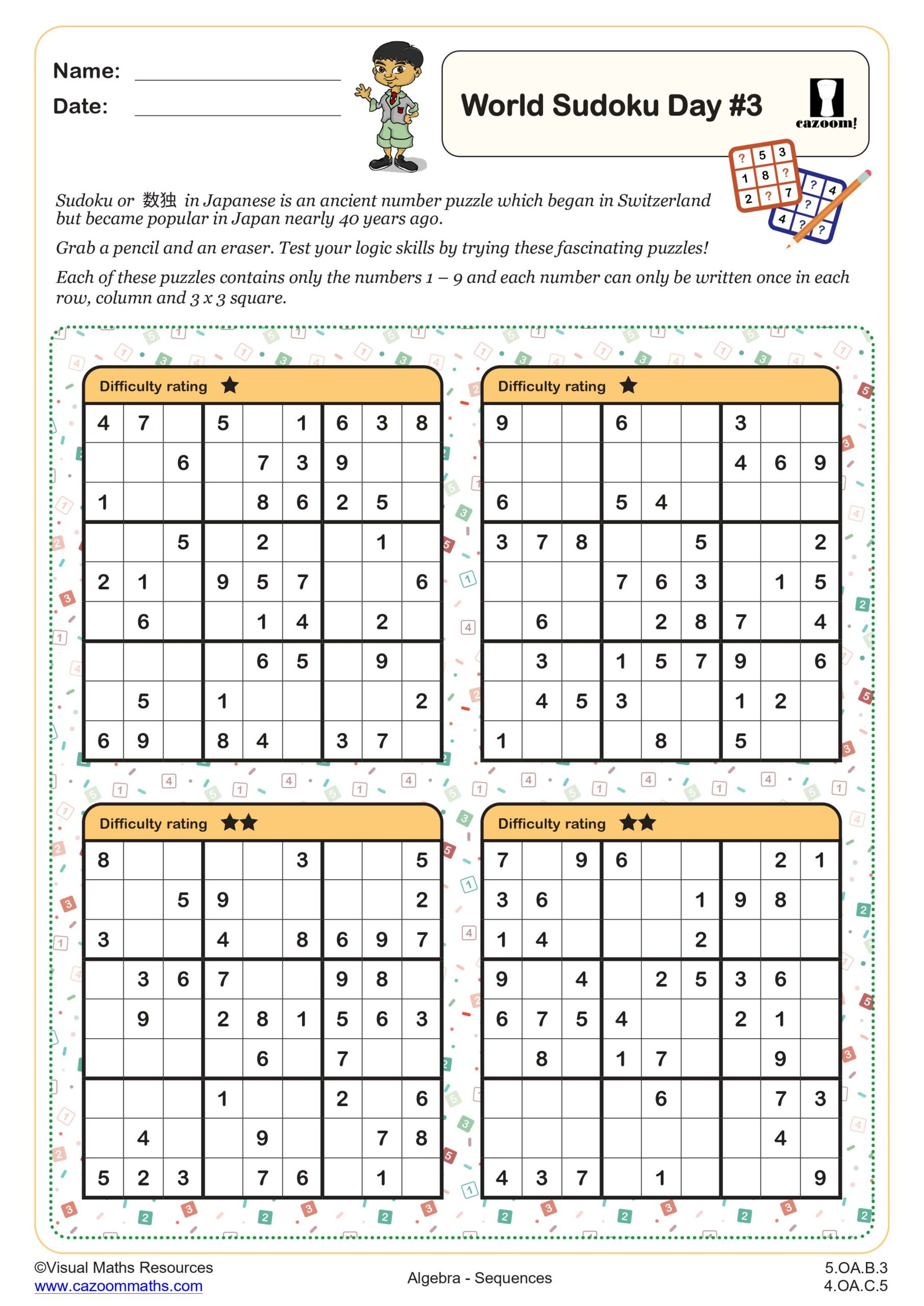
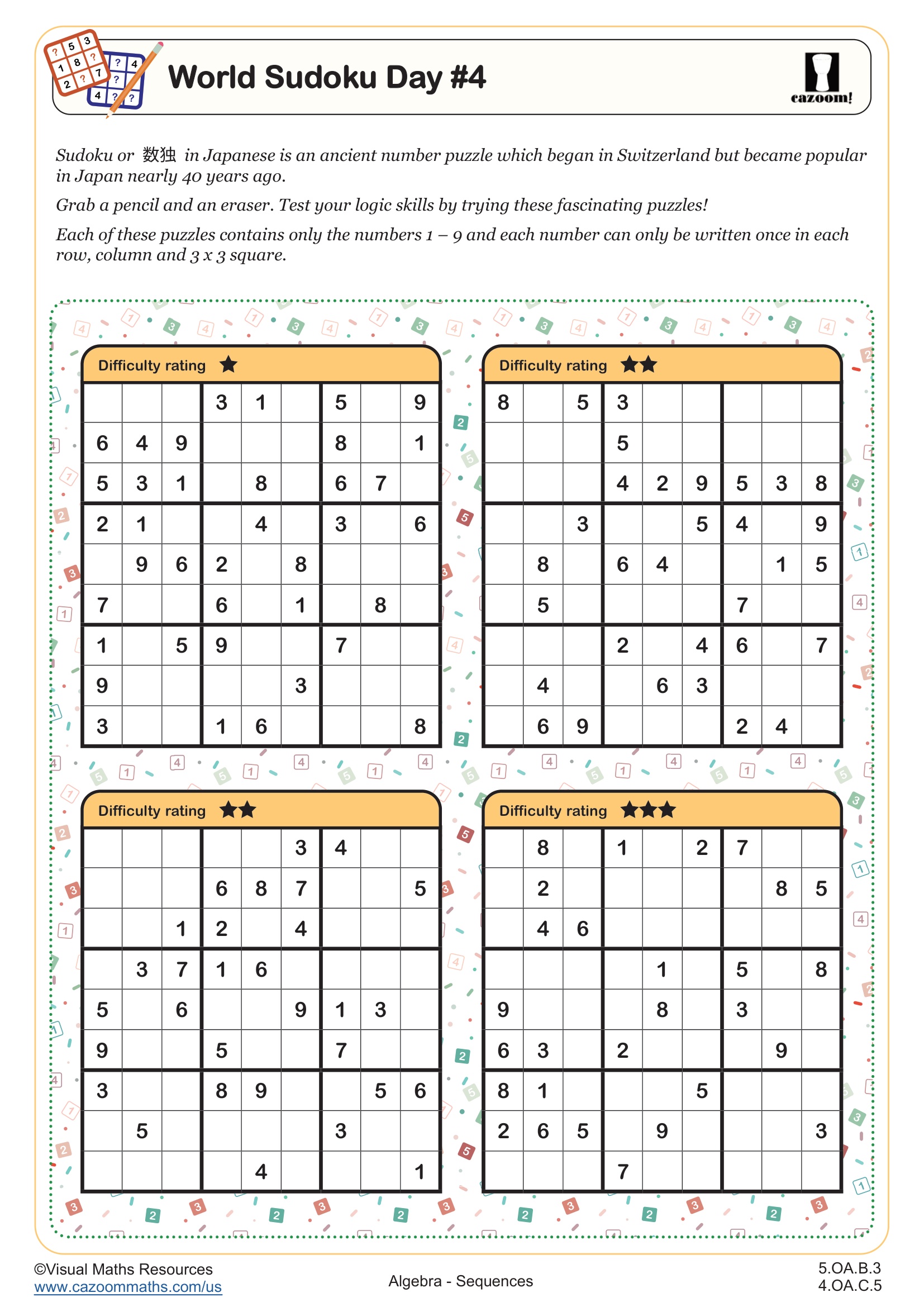
The progression across grade levels reflects students' growing capacity for abstract thinking and sustained focus. Kindergarten and 1st grade students typically work with visual Sudoku using shapes or colors, while 2nd and 3rd graders transition to number-based puzzles with smaller grids. By 4th and 5th grade, students tackle more complex arrangements that demand strategic planning and the ability to track multiple constraints simultaneously.
How Does Sudoku Connect to STEM Learning and Real-World Applications?
Sudoku puzzles teach constraint satisfaction and logical reasoning, the same skills computer scientists use when programming, engineers apply when designing systems with multiple requirements, and data analysts employ when organizing information. The systematic approach students develop through Sudoku—identifying what's known, determining what's possible, and testing solutions—mirrors the scientific method and computational thinking processes used across STEM fields.
Professionals in scheduling, logistics, and operations research use similar logic-based problem-solving daily. Air traffic controllers manage flight patterns by considering multiple constraints simultaneously, just as students consider row, column, and section rules in Sudoku. Software developers debug code using the same elimination strategies students practice when determining which number belongs in each cell, making these puzzles authentic preparation for careers requiring analytical thinking.
How Can Teachers Use These Sudoku Worksheets in the Classroom?
These worksheets provide scaffolded practice that allows students to work independently while building confidence in their reasoning abilities. The included answer keys let students self-check their solutions and identify where their logic broke down, promoting metacognition and error analysis. Teachers can differentiate instruction by selecting puzzles that match individual students' readiness levels, ensuring all learners experience productive struggle without overwhelming frustration.
Many teachers use Sudoku puzzles as early finisher activities, brain breaks between lessons, or Friday enrichment that keeps students engaged while reinforcing logical thinking. The worksheets work well for math centers where students practice problem-solving strategies, or as homework assignments that families can complete together. Special education teachers often incorporate Sudoku into intervention plans because the puzzles build executive functioning skills like planning, organization, and self-monitoring without requiring computational fluency.