Elementary School Two Digit Subtraction 0-100 Worksheets
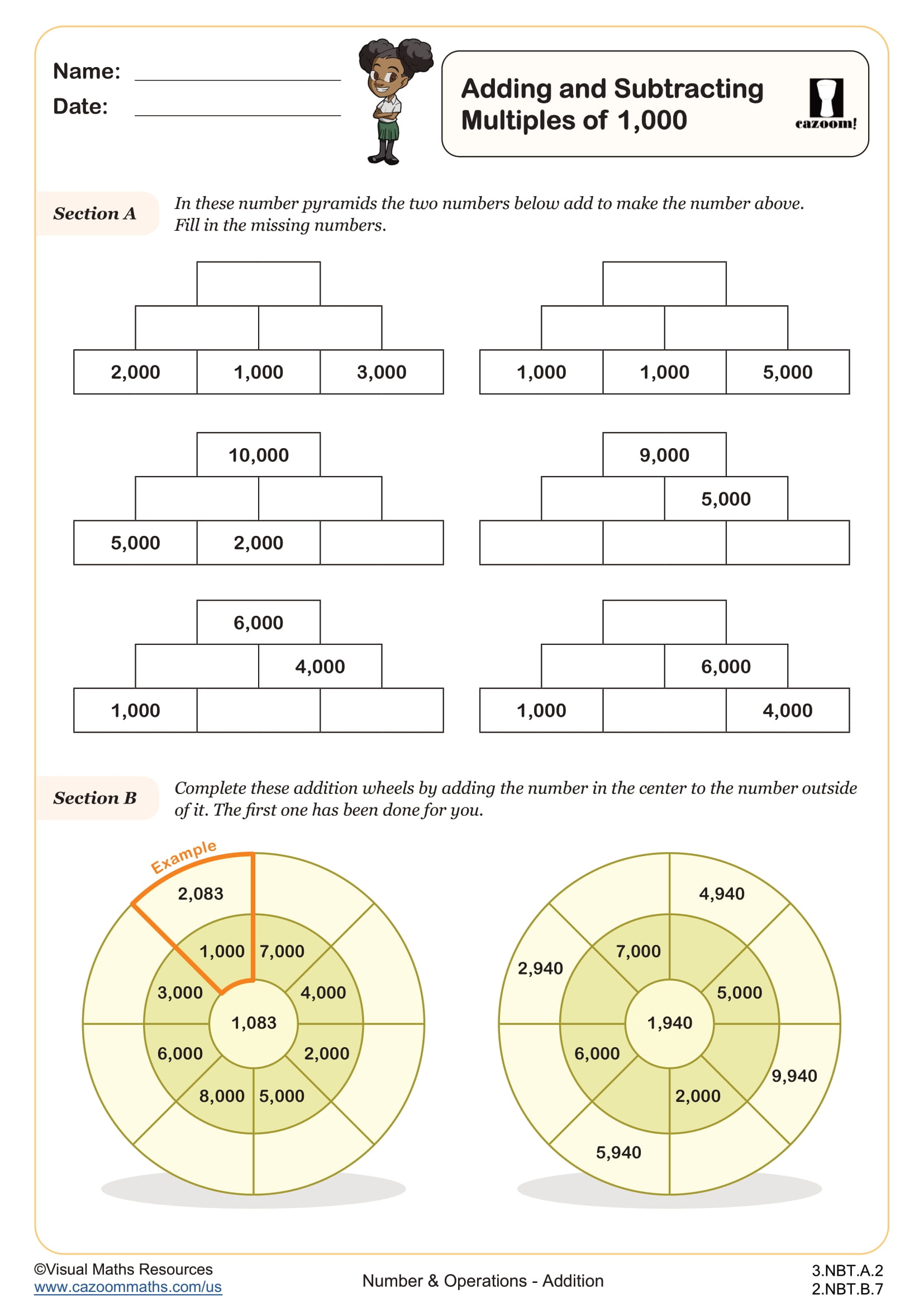
Adding and Subtracting Multiples of 1,000
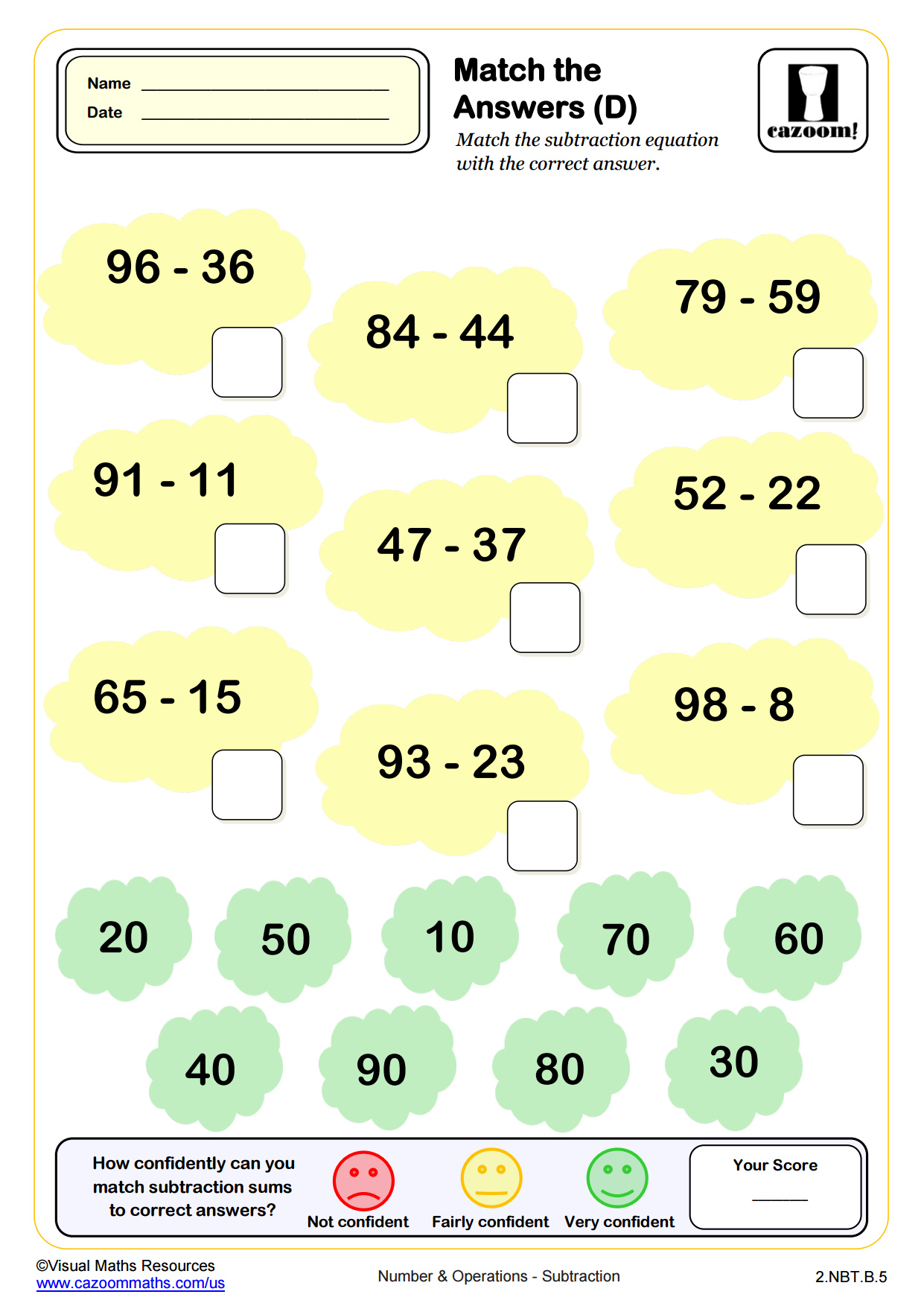
Match the Answers (D)
Misisng Gaps (B) (Without a Number Line)
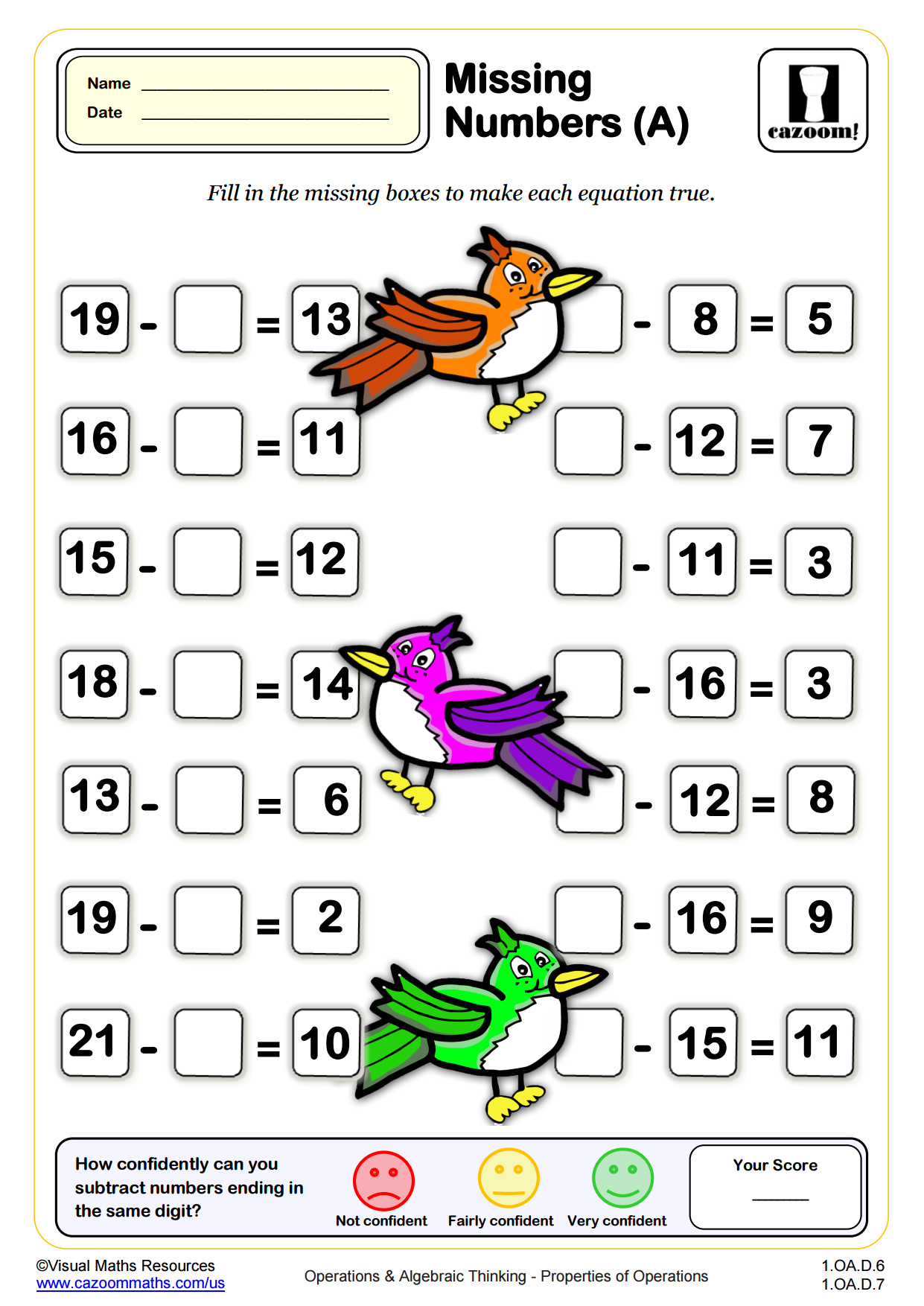
Missing Numbers (A)
Missing Numbers (A) (With a Number Line)
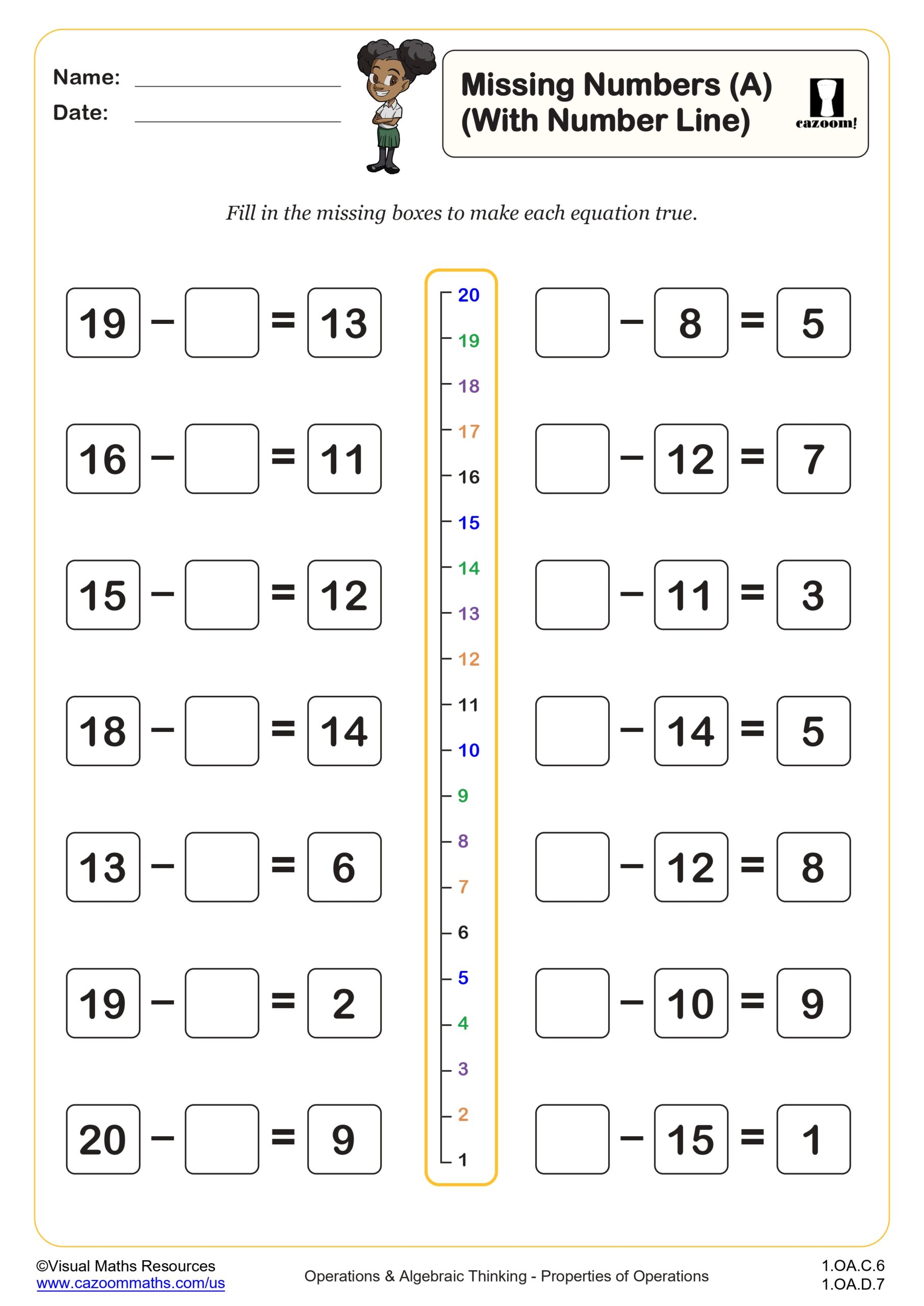
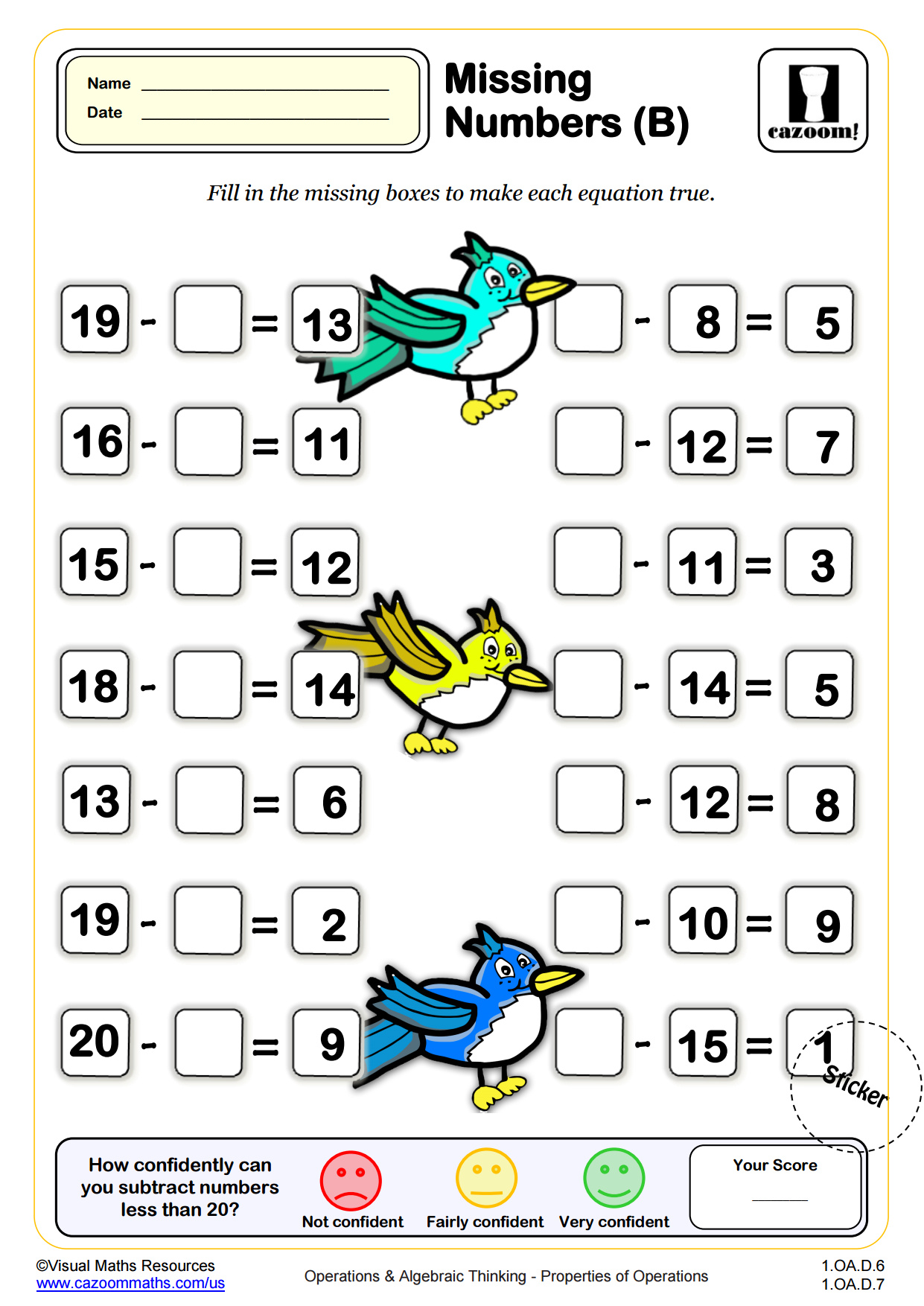
Missing Numbers (B)
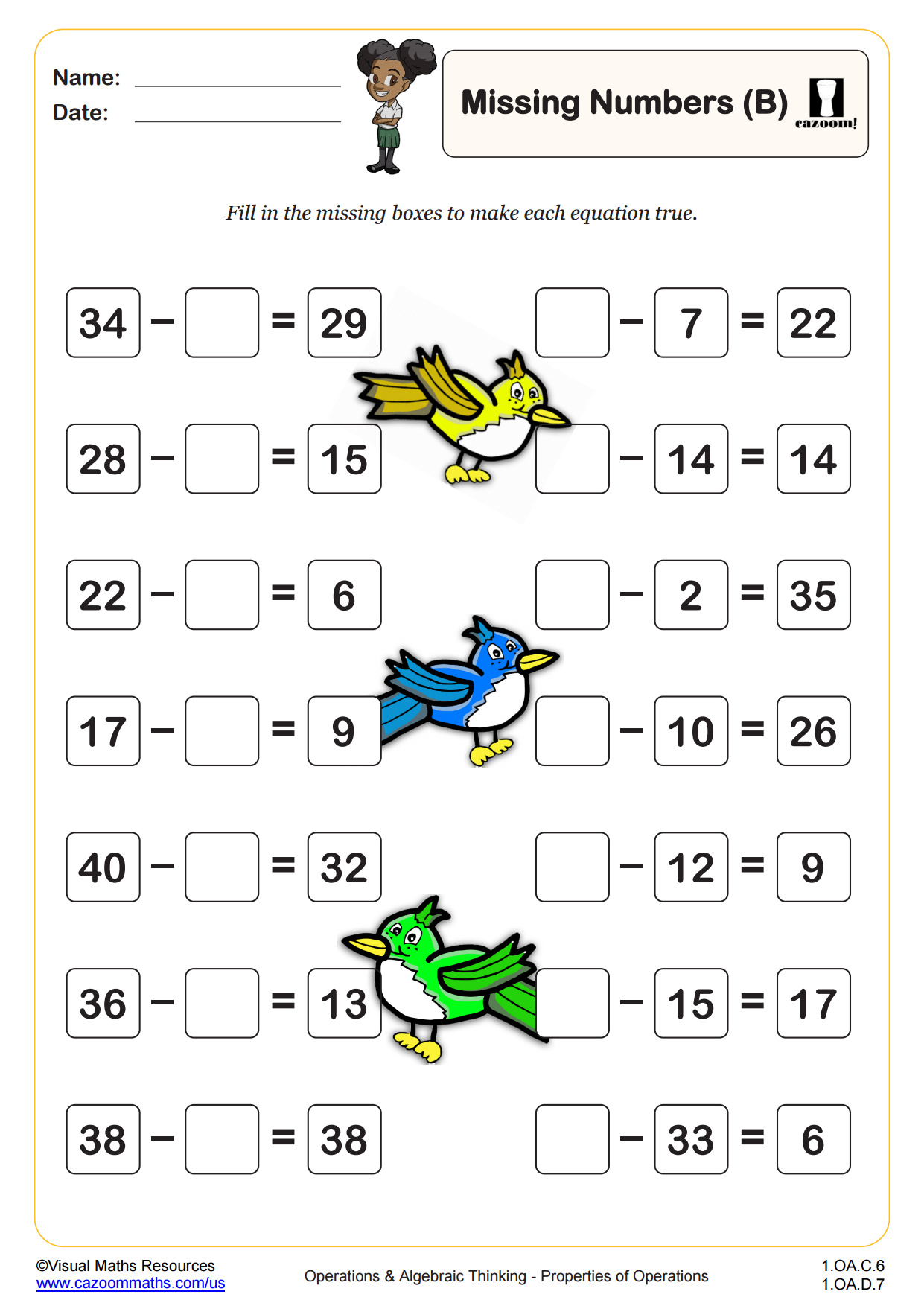
Missing Numbers (B) (With a Number Line)
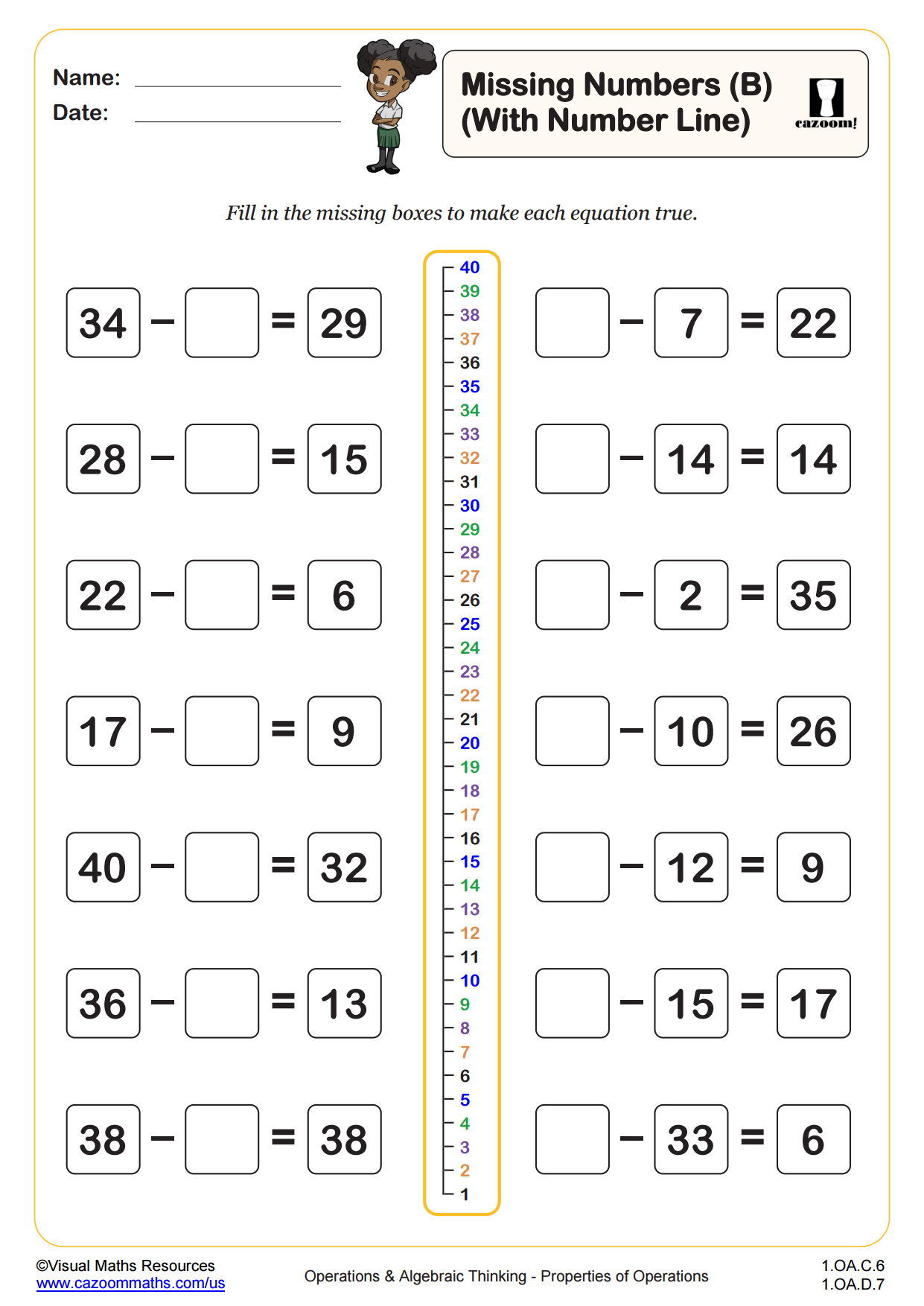
Subtracting 10 (10 questions)
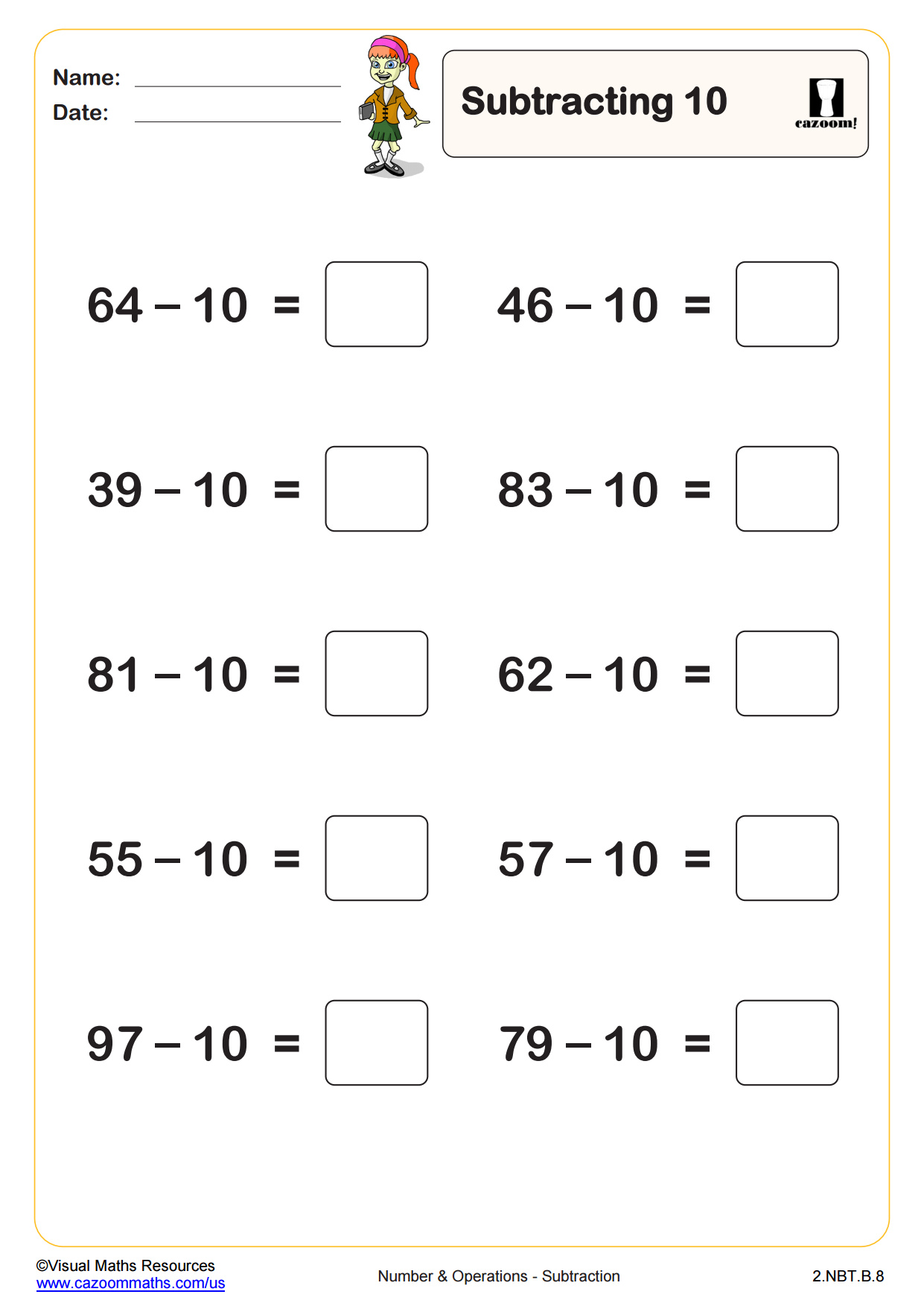
Subtracting 10 (20 questions)
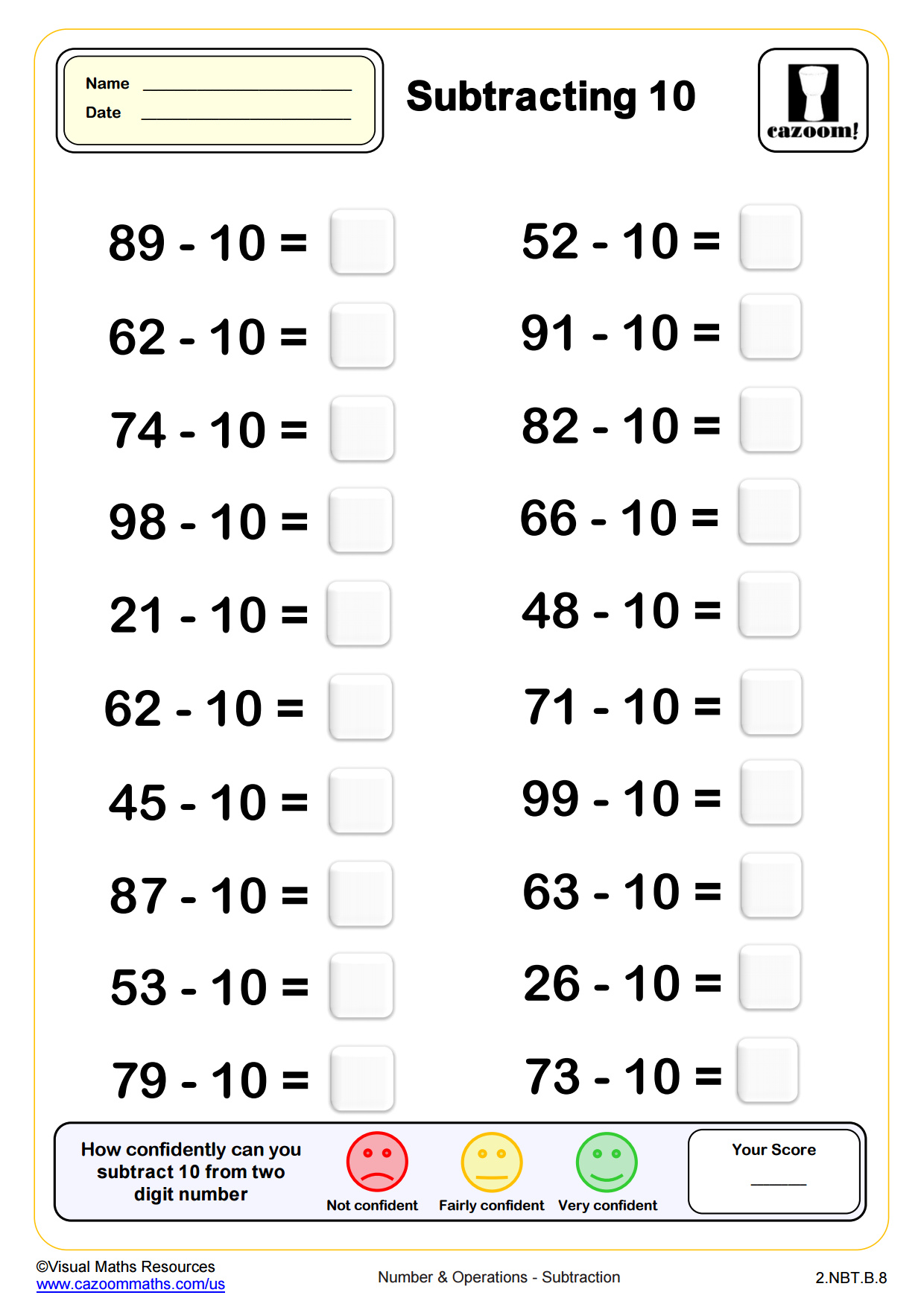
Subtracting 10 (50 questions)
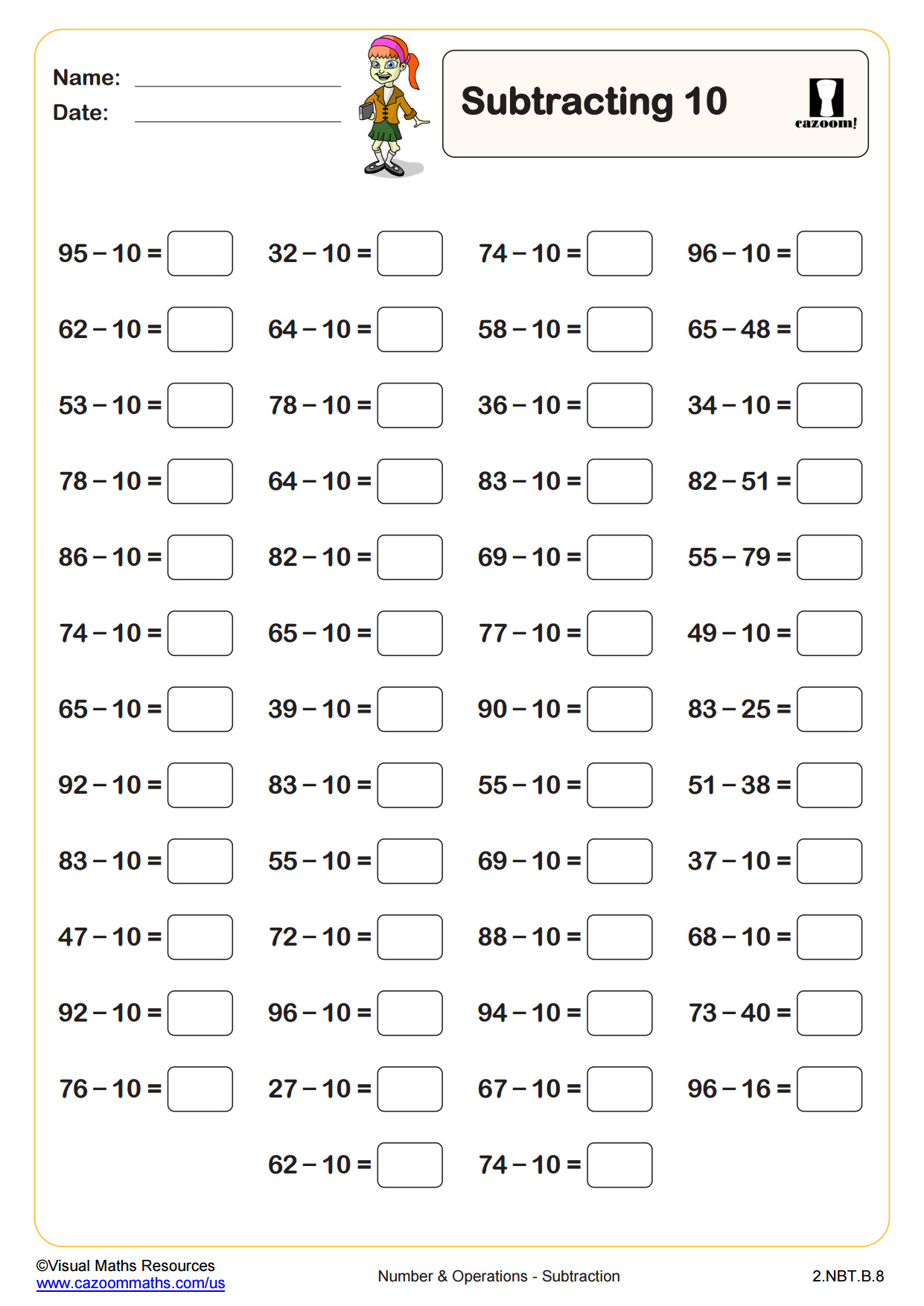
Subtracting 20 (10 questions)
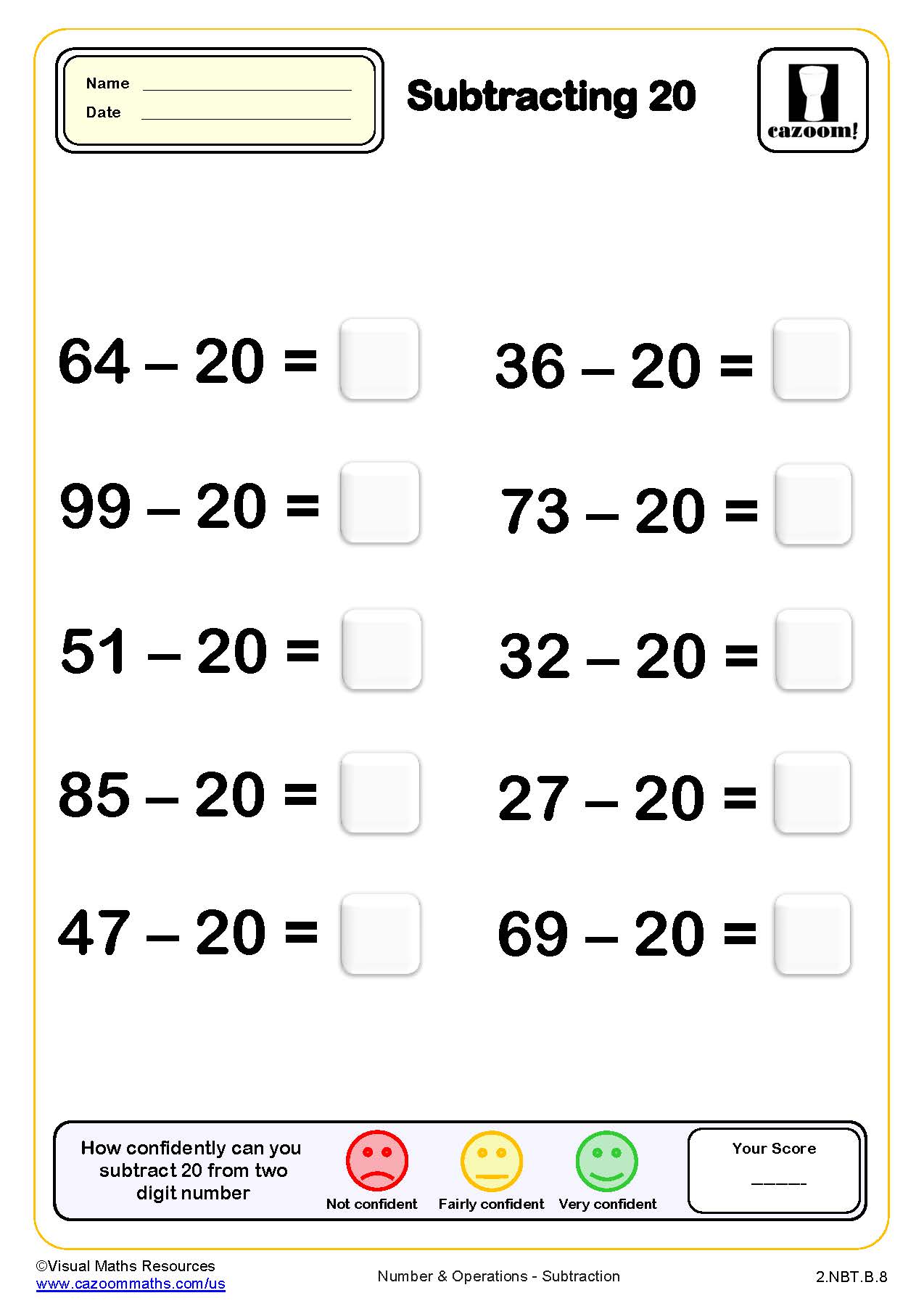
Subtracting 20 (20 questions)
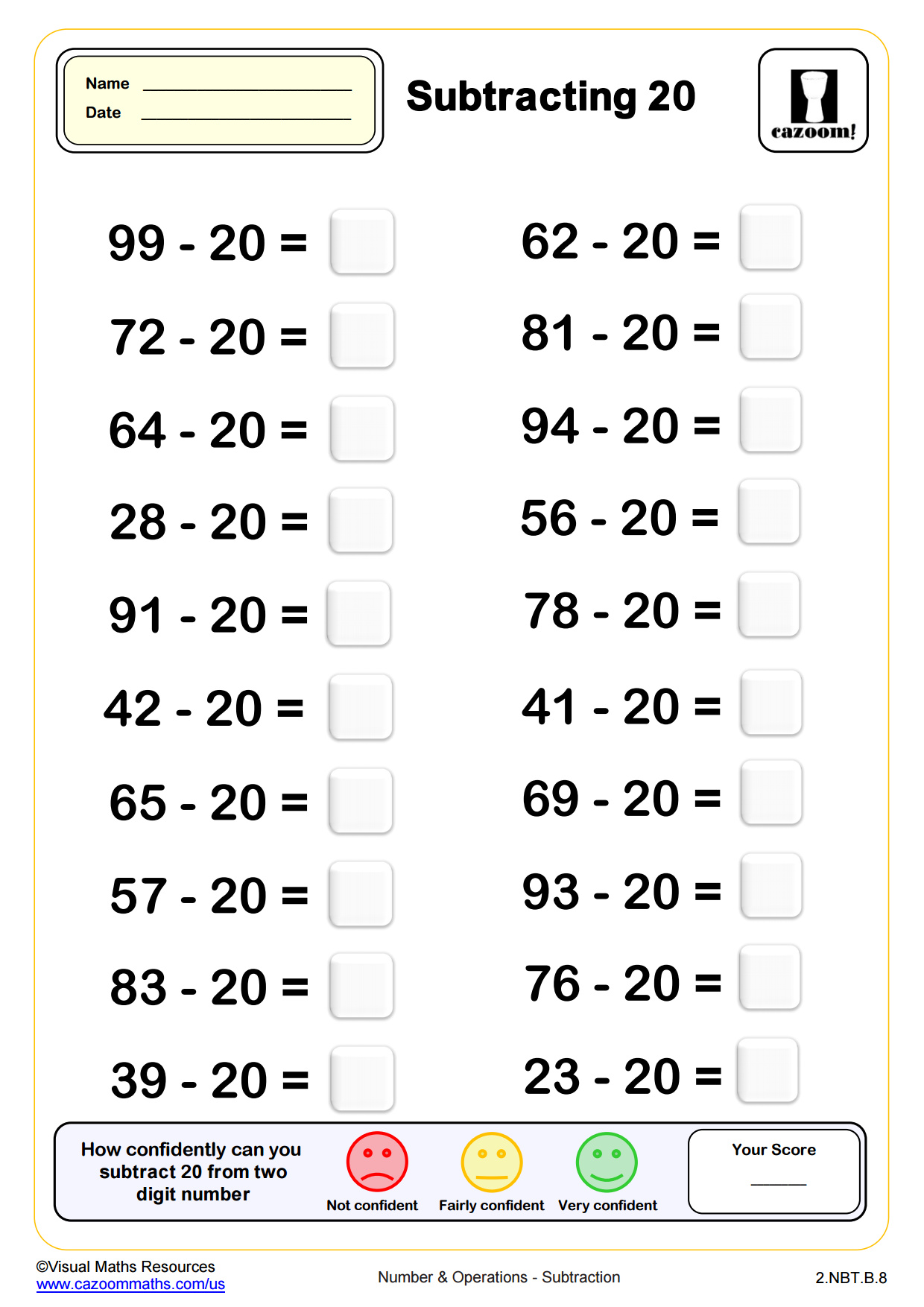
Subtracting 20 (50 questions)
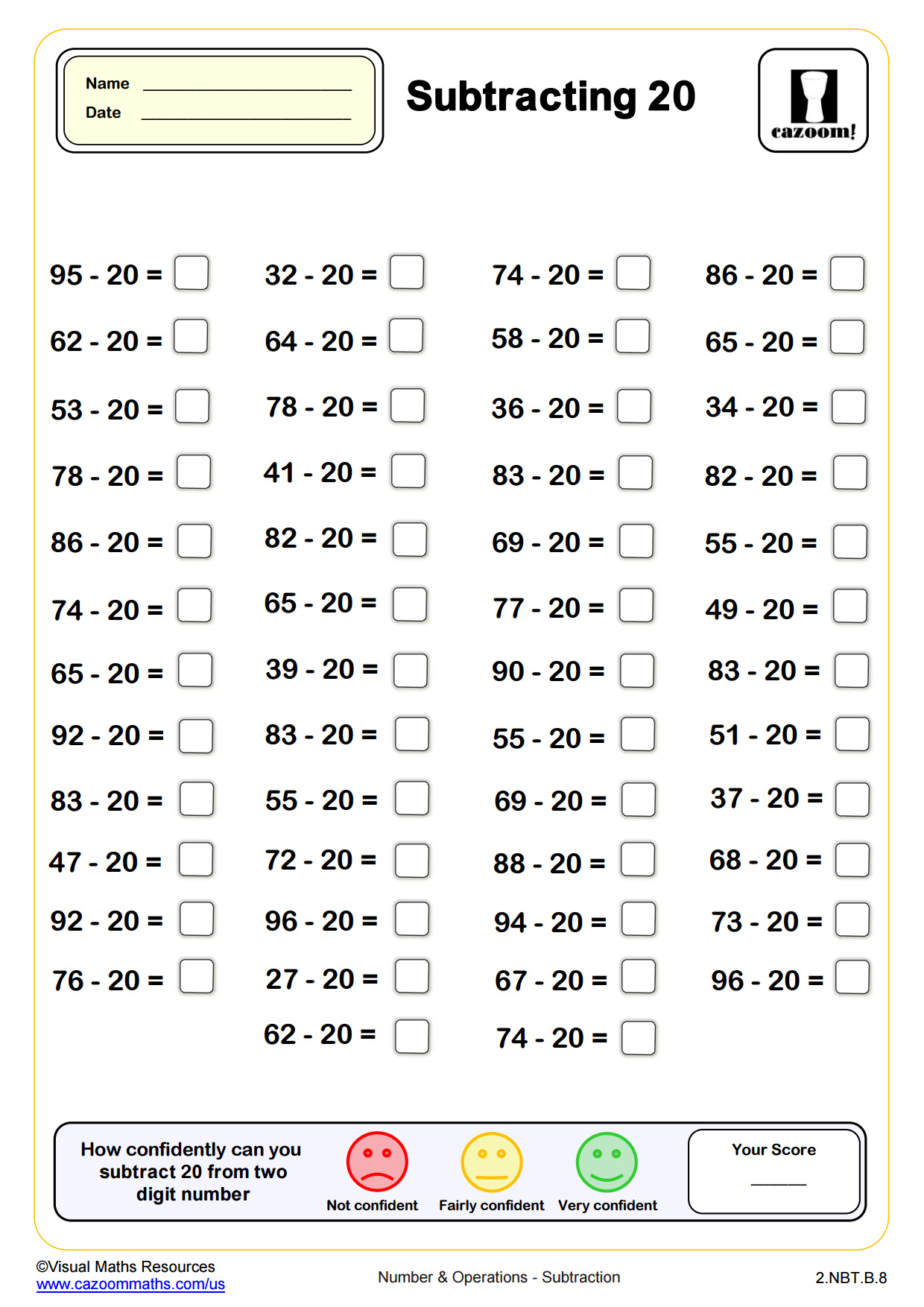
Subtracting from Multiples of 10 (B)
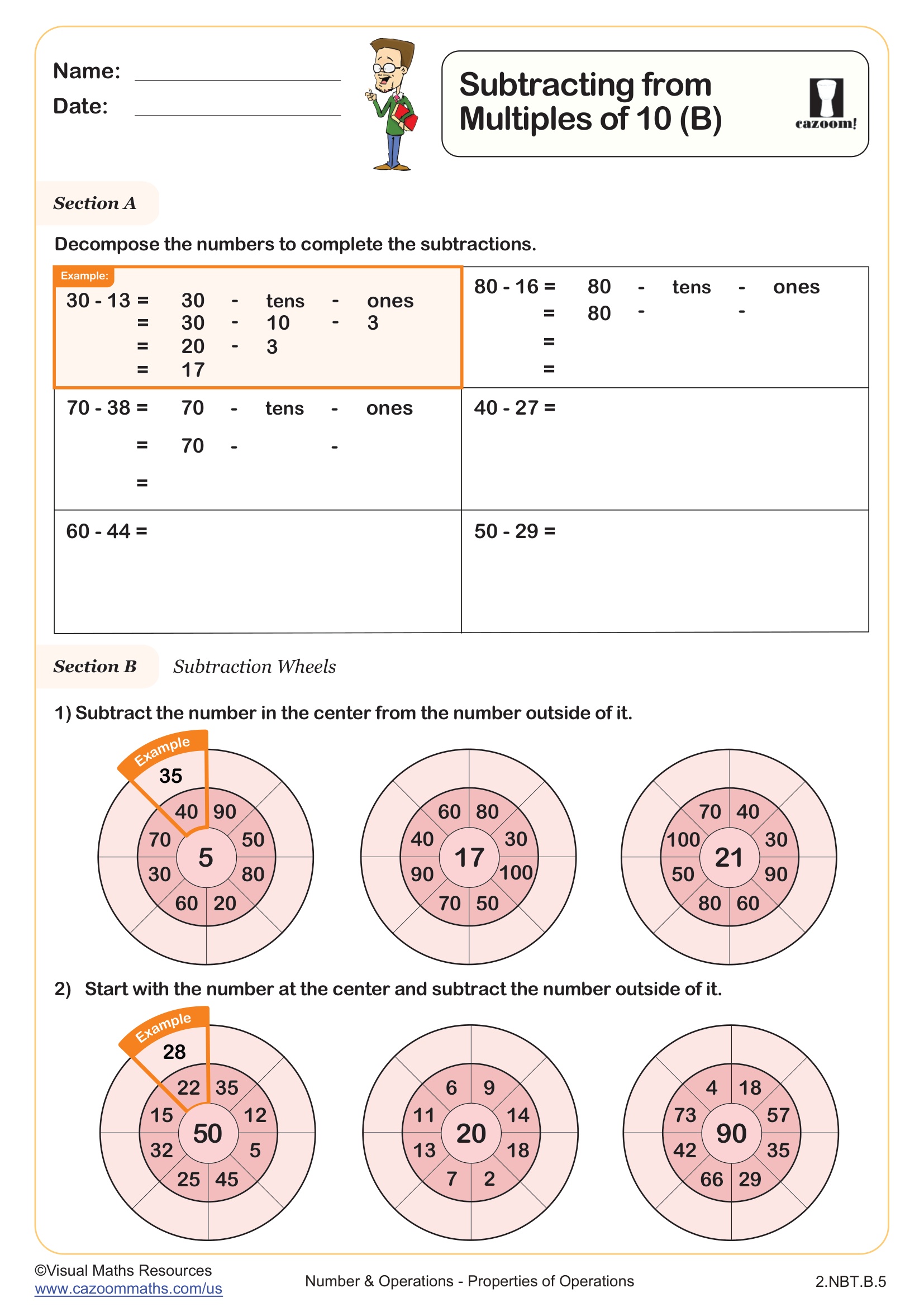
Subtracting Numbers Less Than 15 (A)
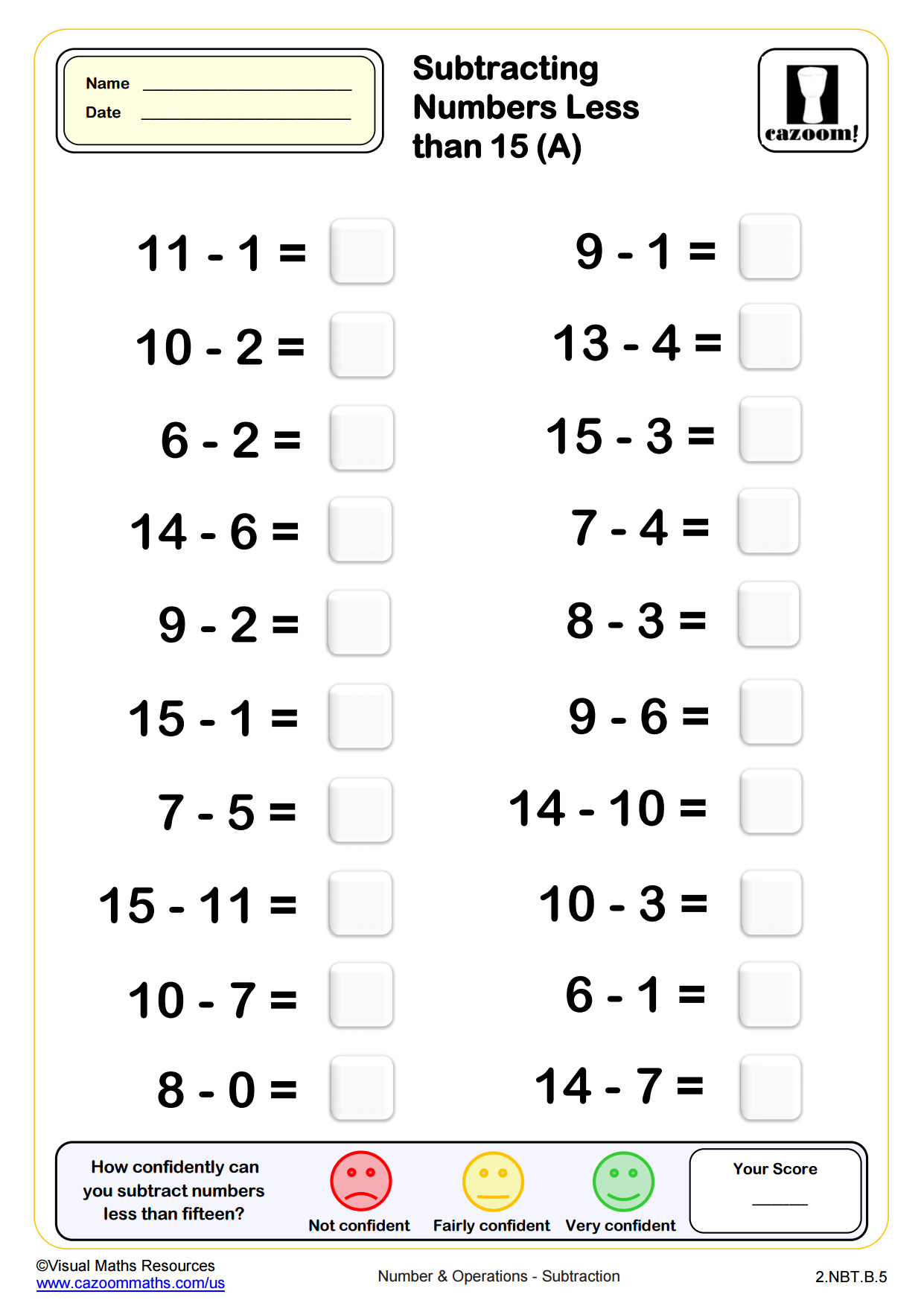
Subtracting Numbers Less Than 15 (B)
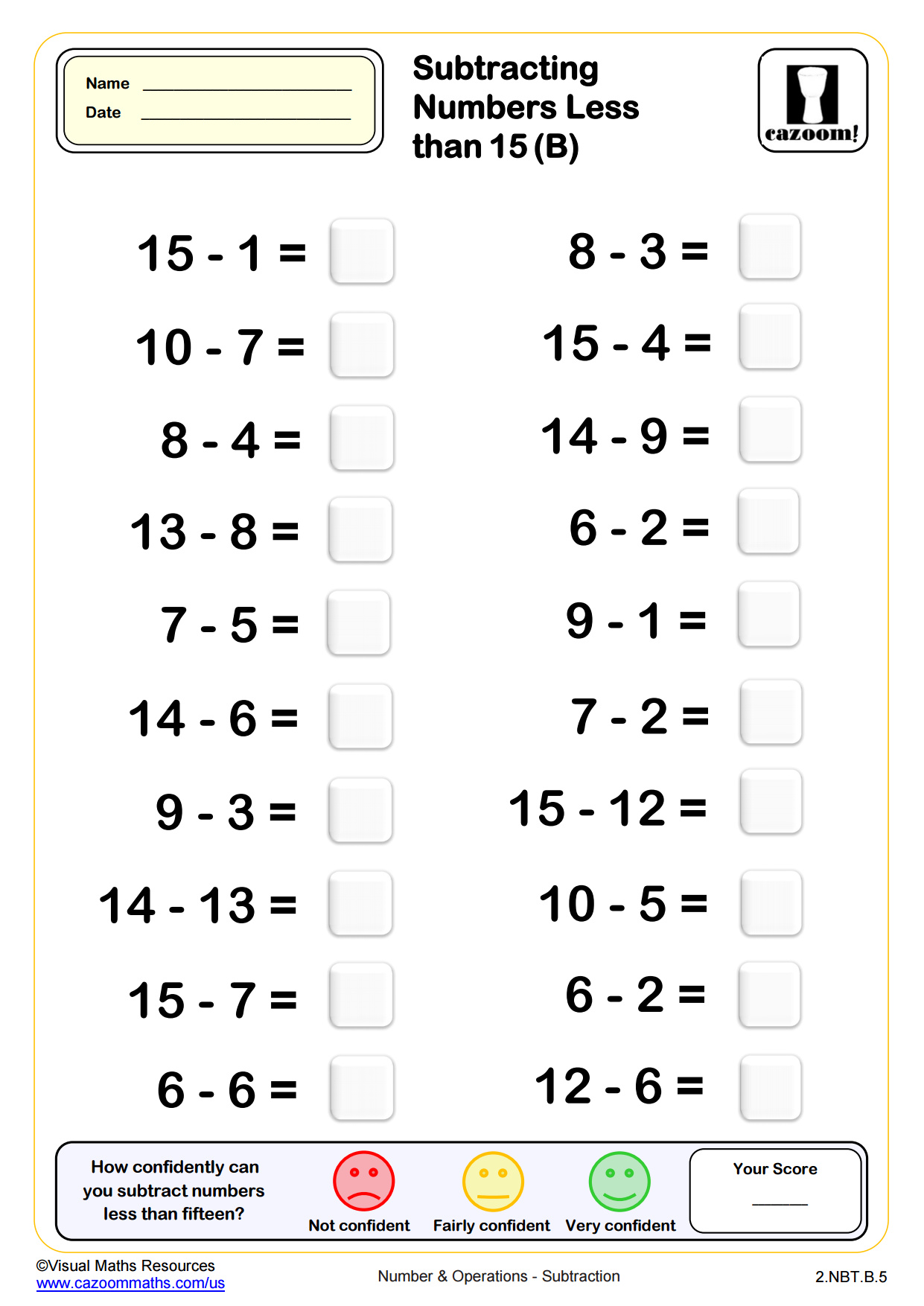
Subtracting Numbers Less Than 15 (C)
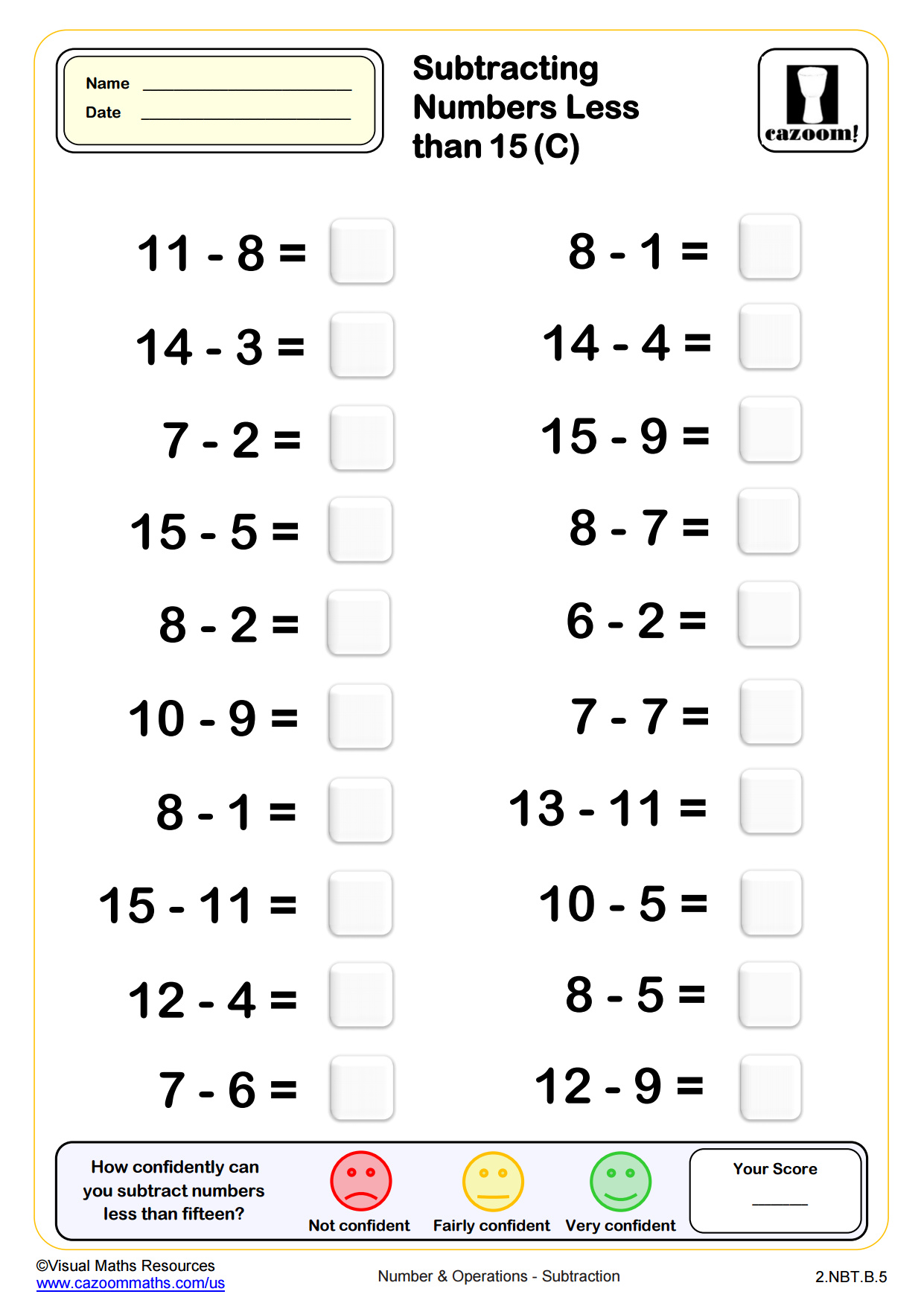
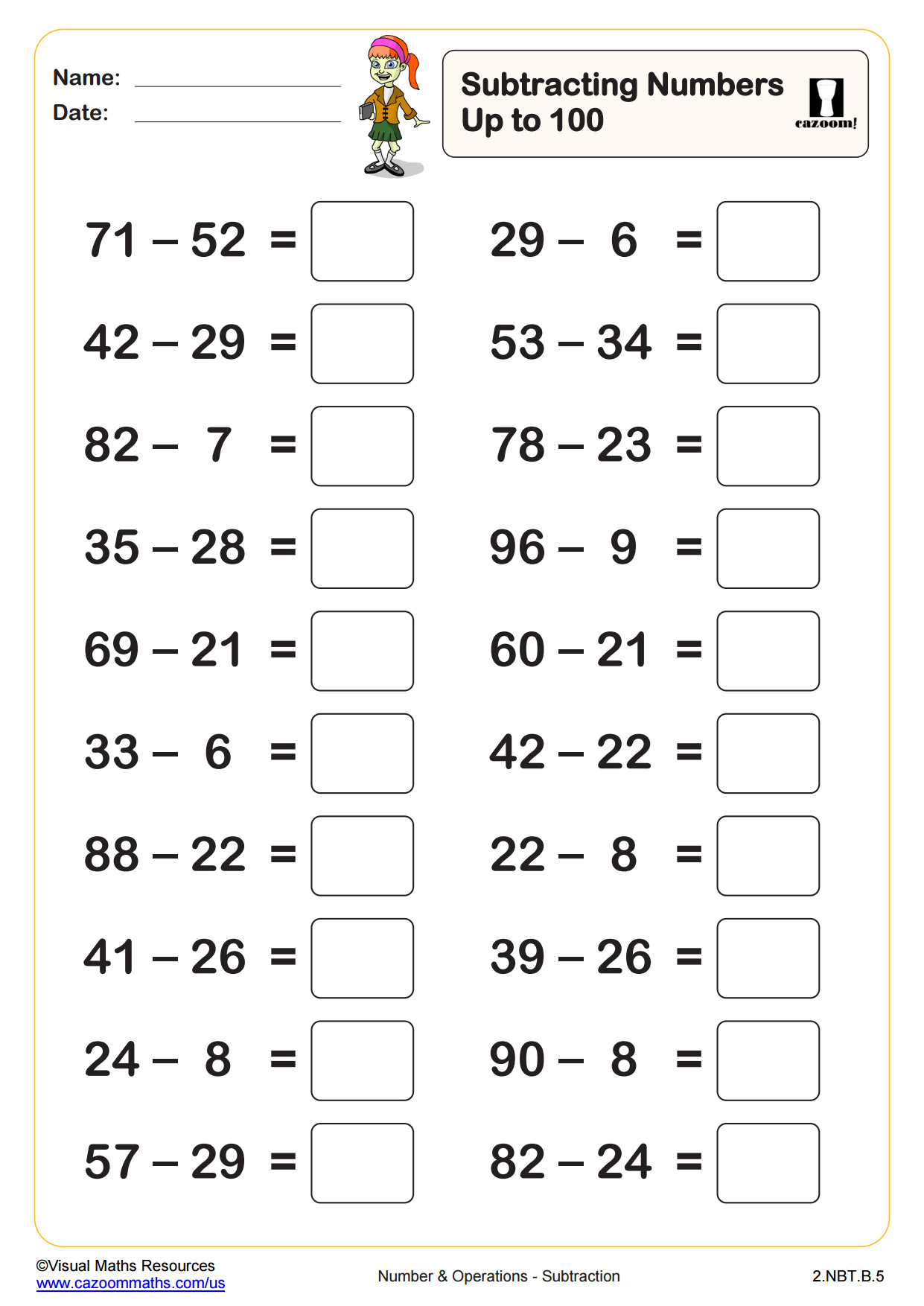
Subtracting Numbers Up to 100
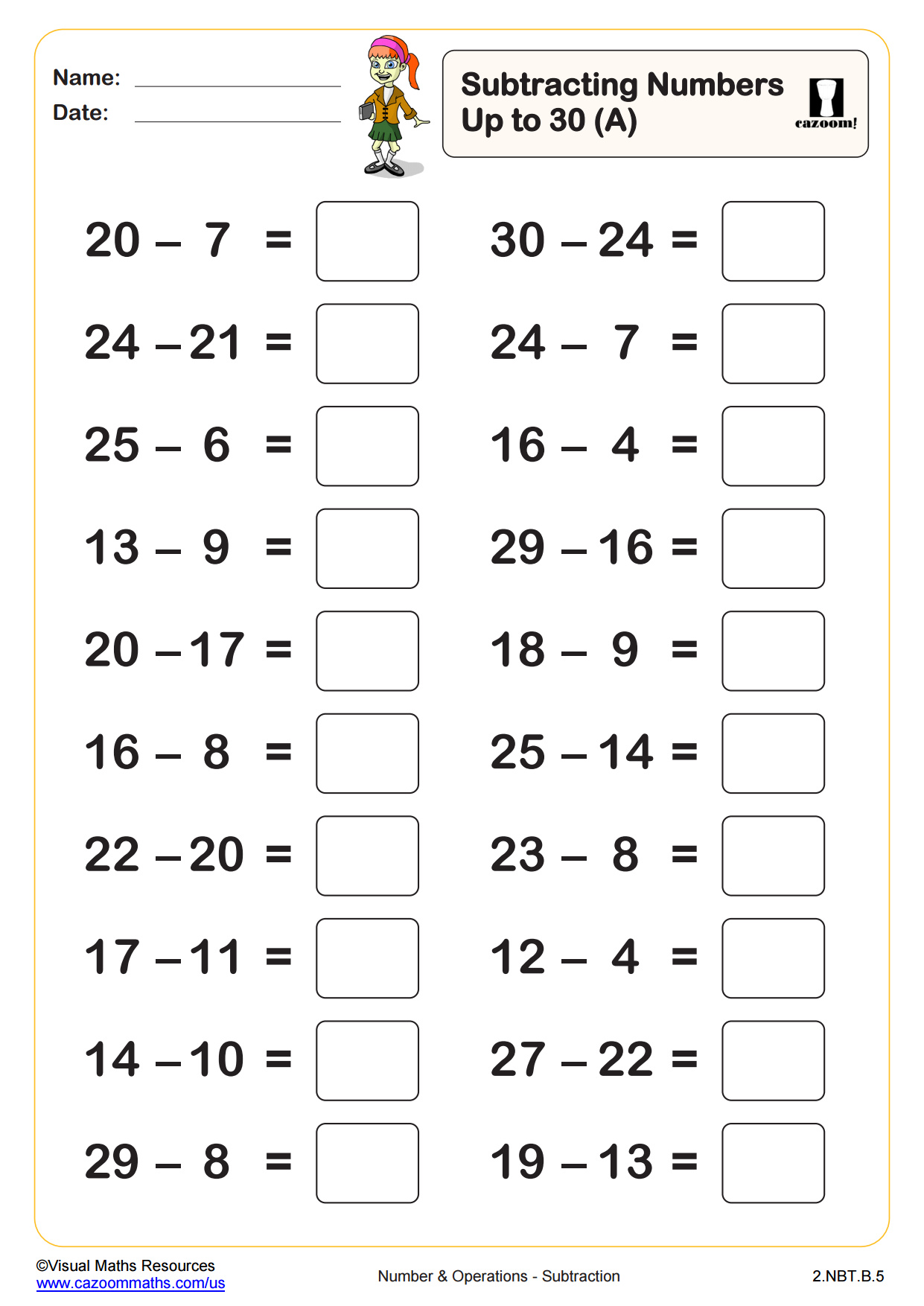
Subtracting Numbers Up to 30 (A)
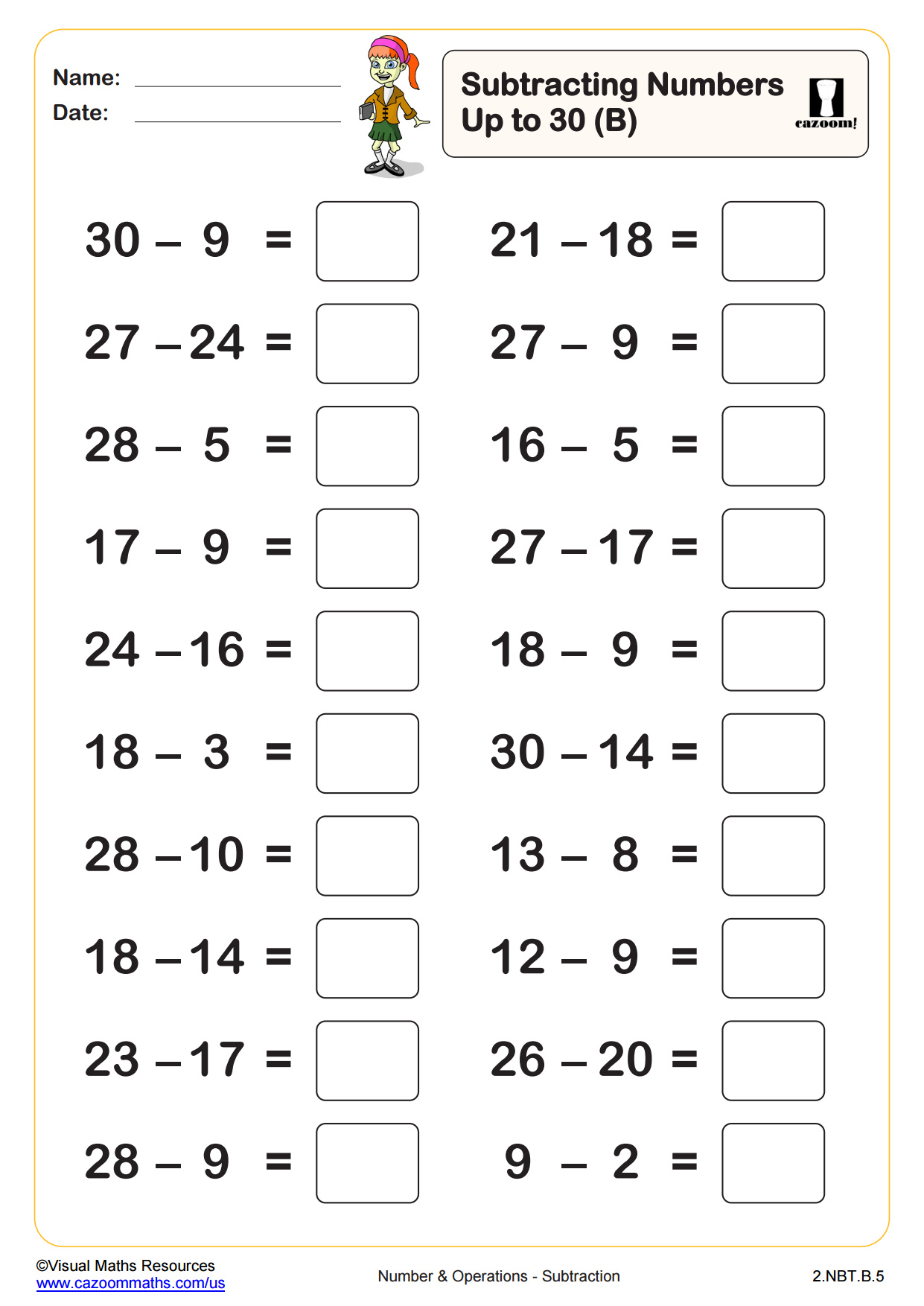
Subtracting Numbers Up to 30 (B)
Subtracting Numbers Up to 30 (C)
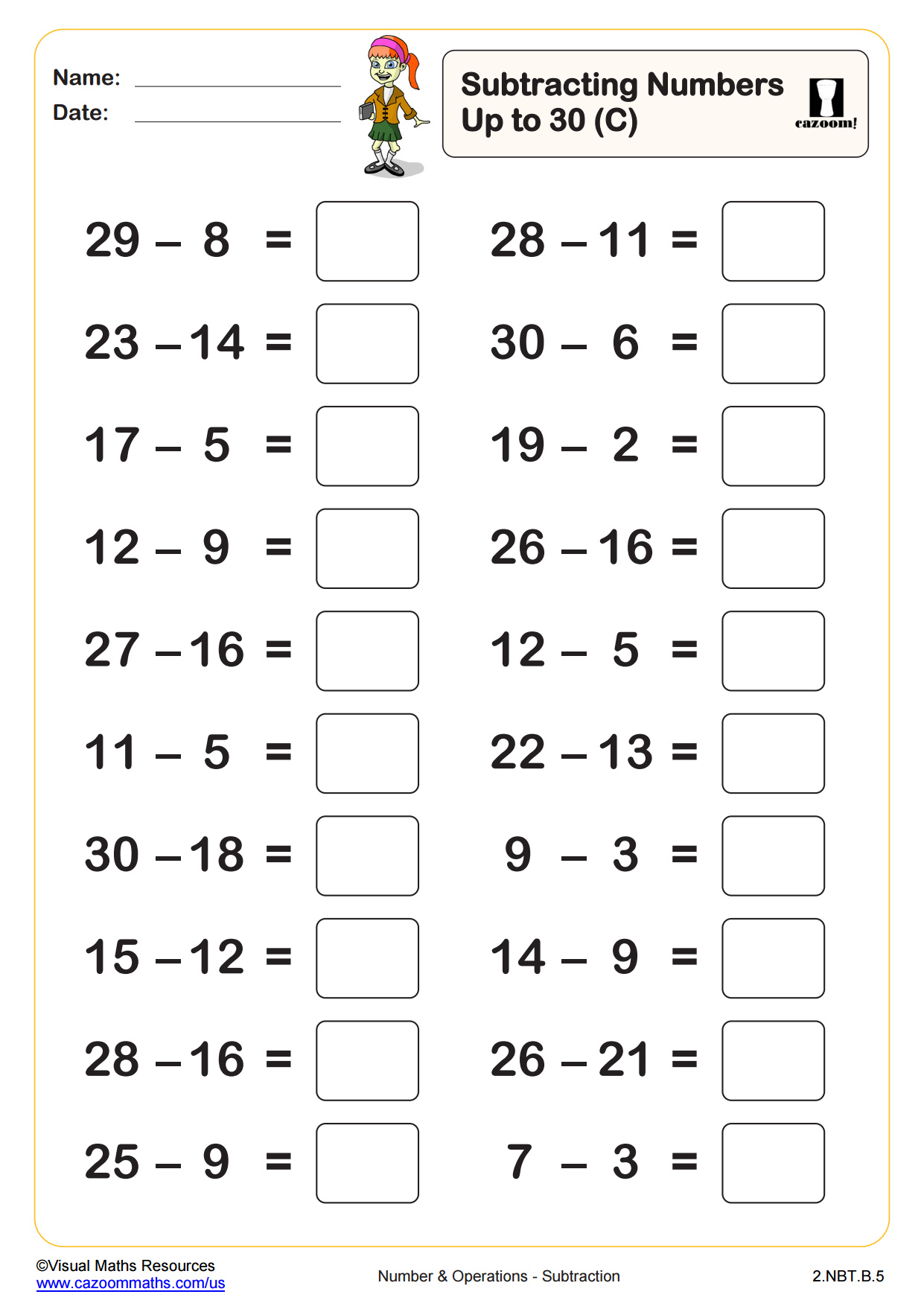
Subtracting Numbers Up to 50
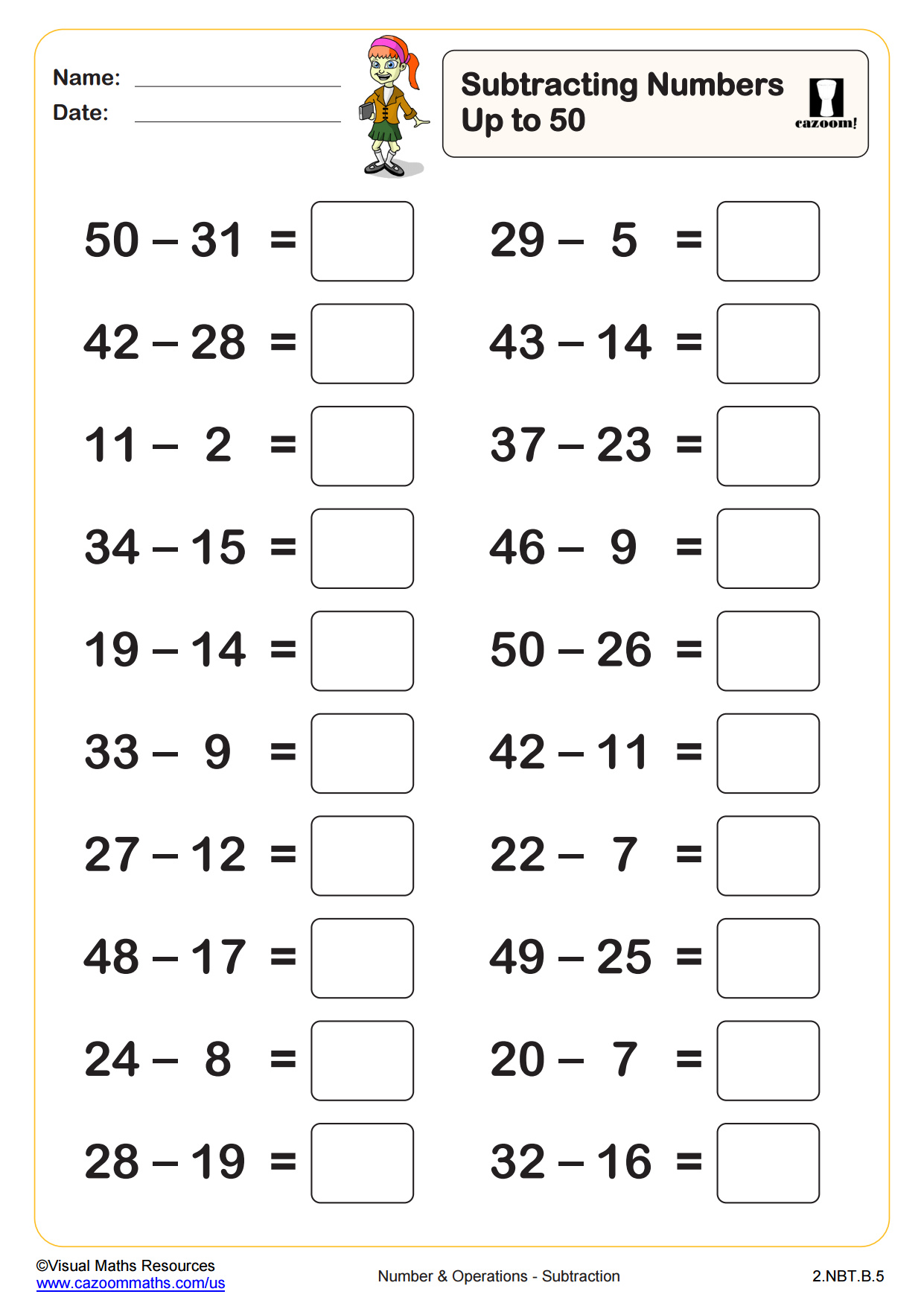
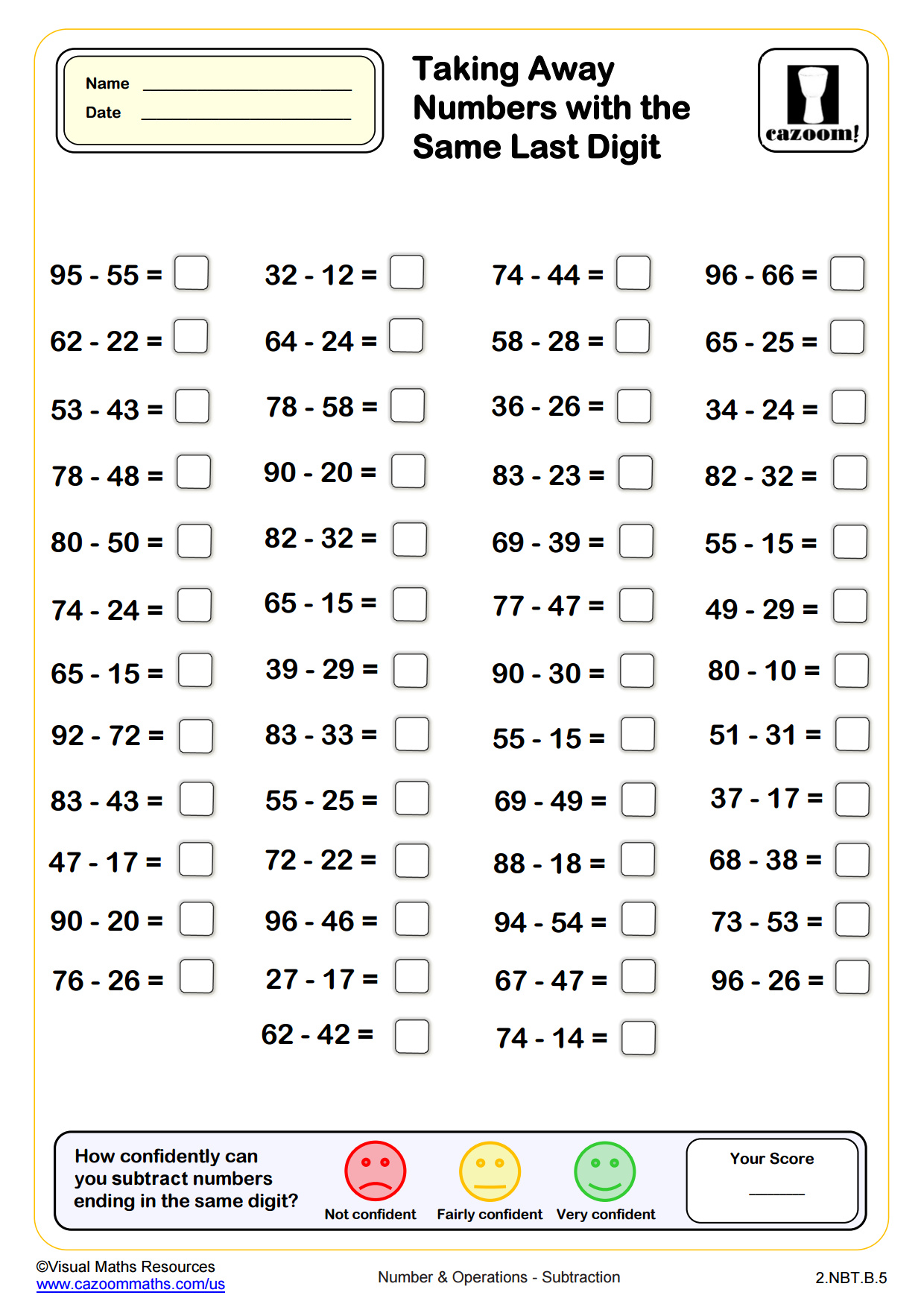
Subtracting Numbers with the Same Last Digit (10 questions)
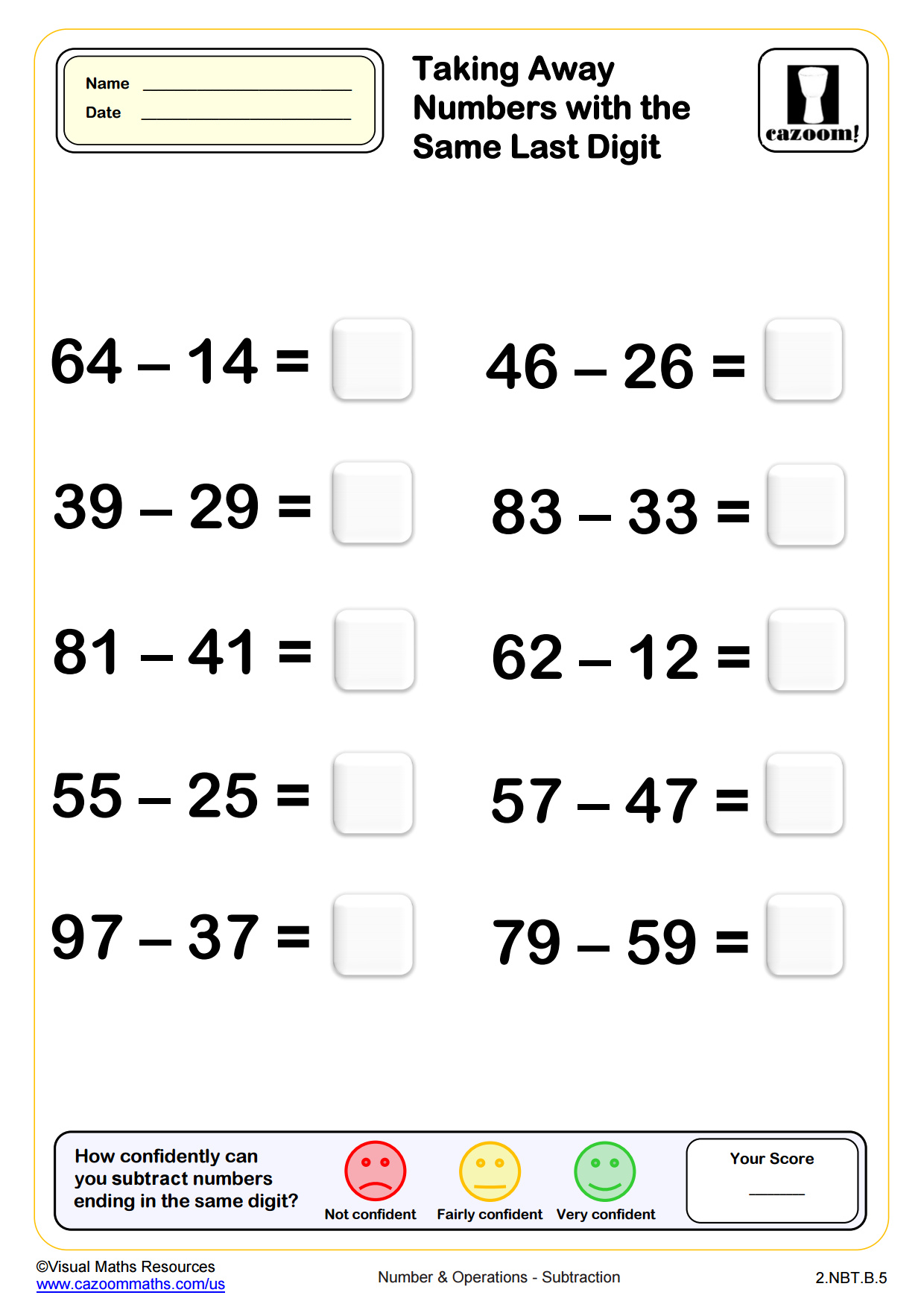
Subtracting Numbers with the Same Last Digit (20 questions)
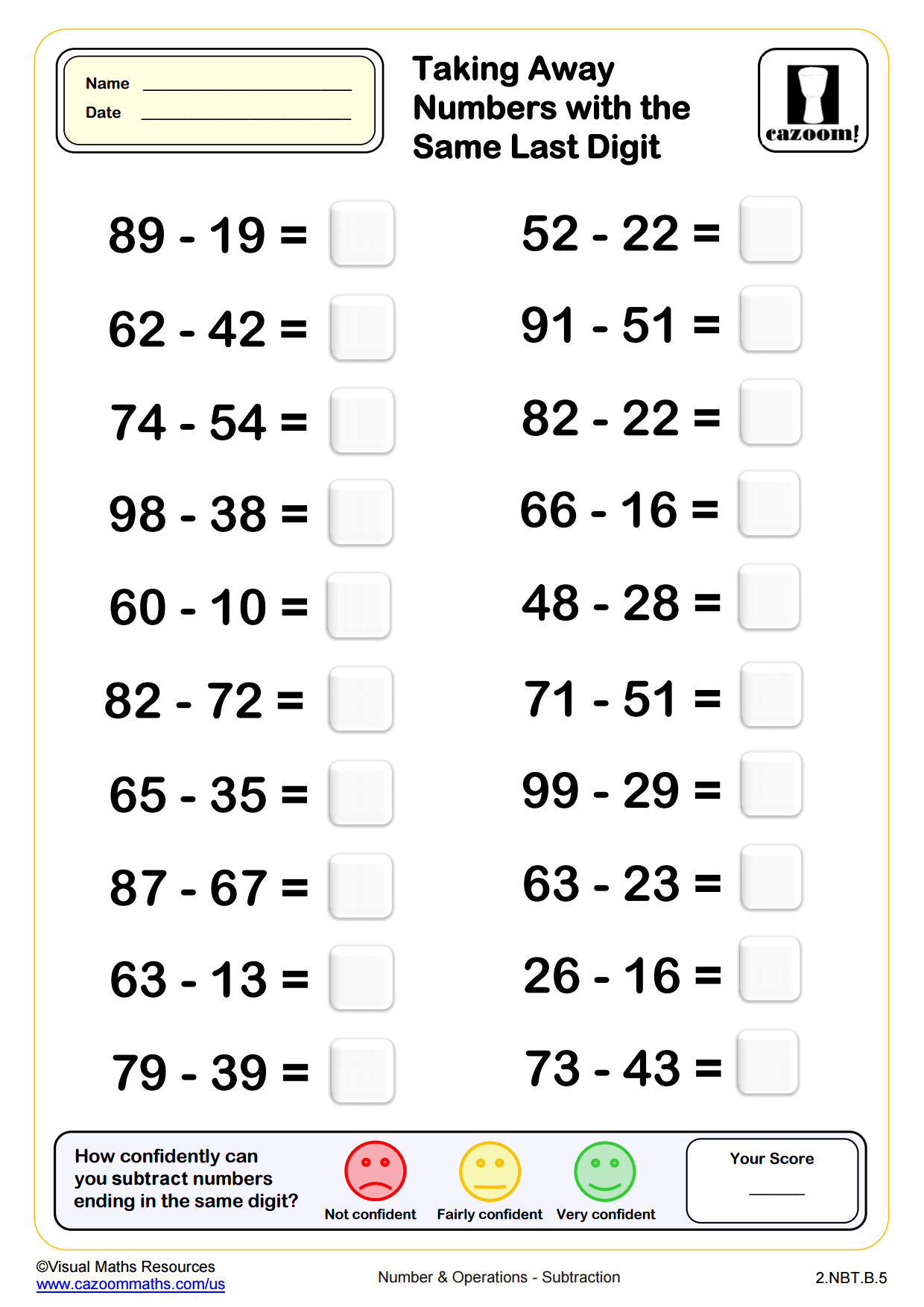
Subtracting Numbers with the Same Last Digit (50 questions)
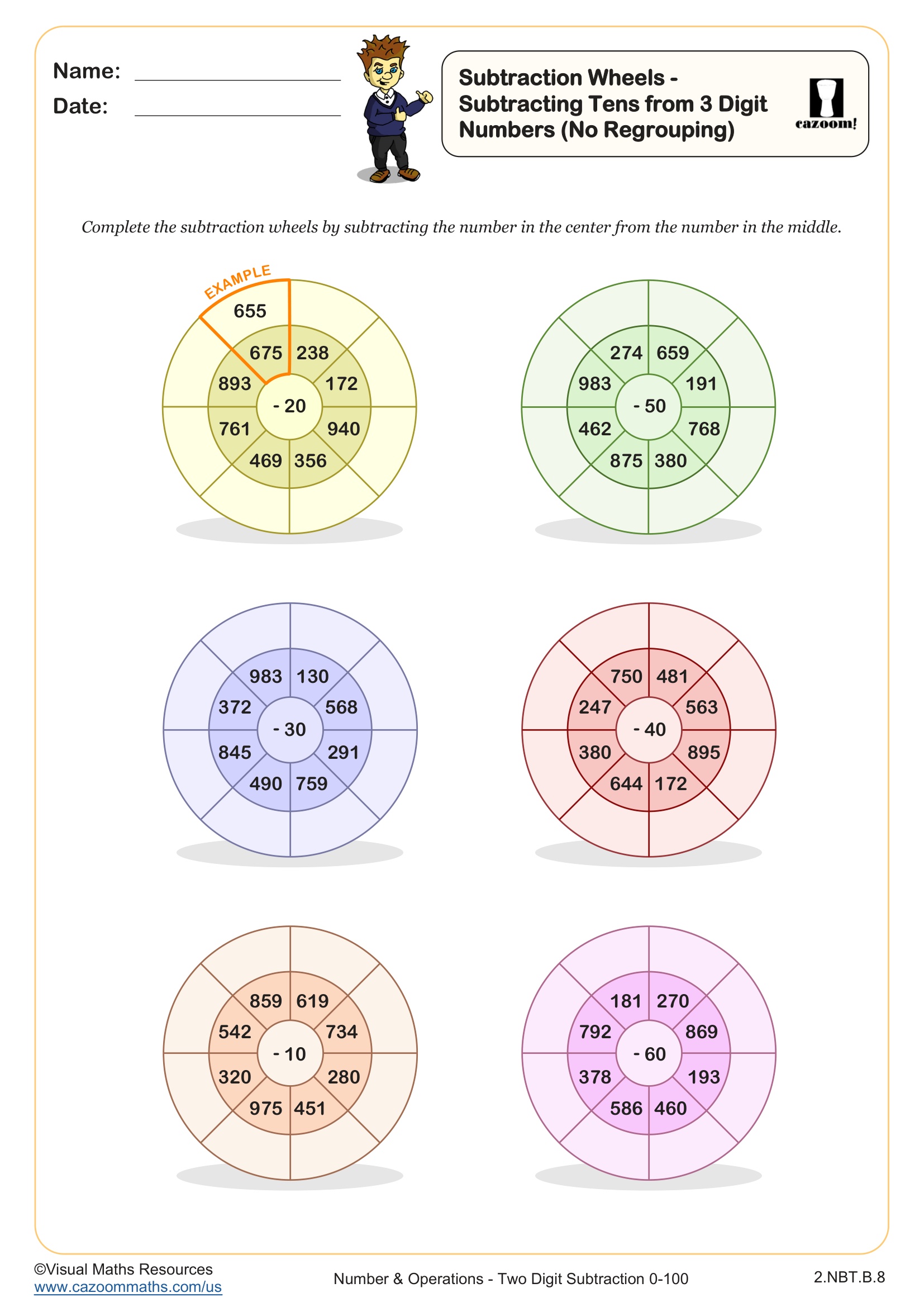
Subtraction Wheels - Subtracting Tens from 3 Digit Numbers (No Regrouping)
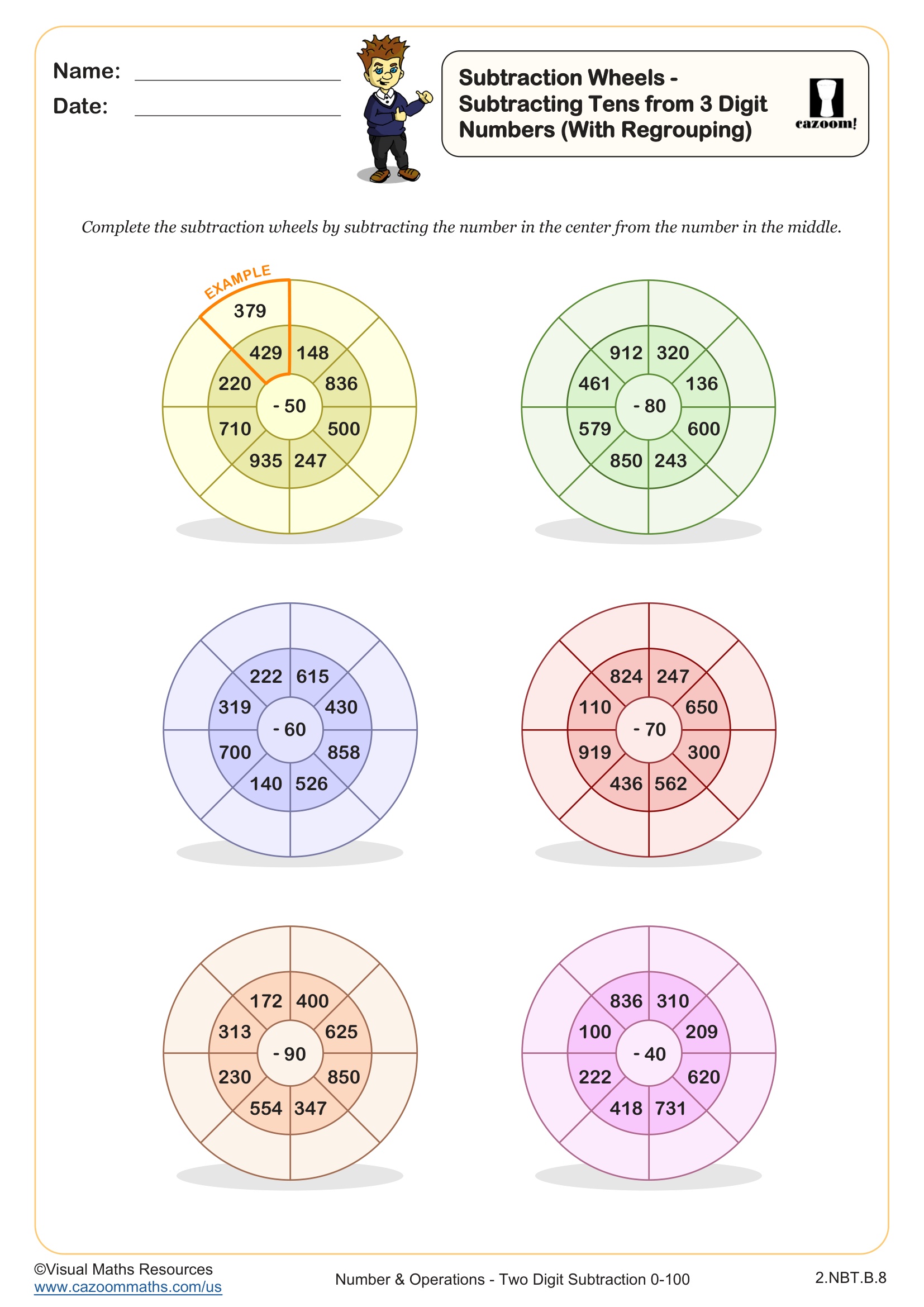
Subtraction Wheels - Subtracting Tens from 3 Digit Numbers (With Regrouping)
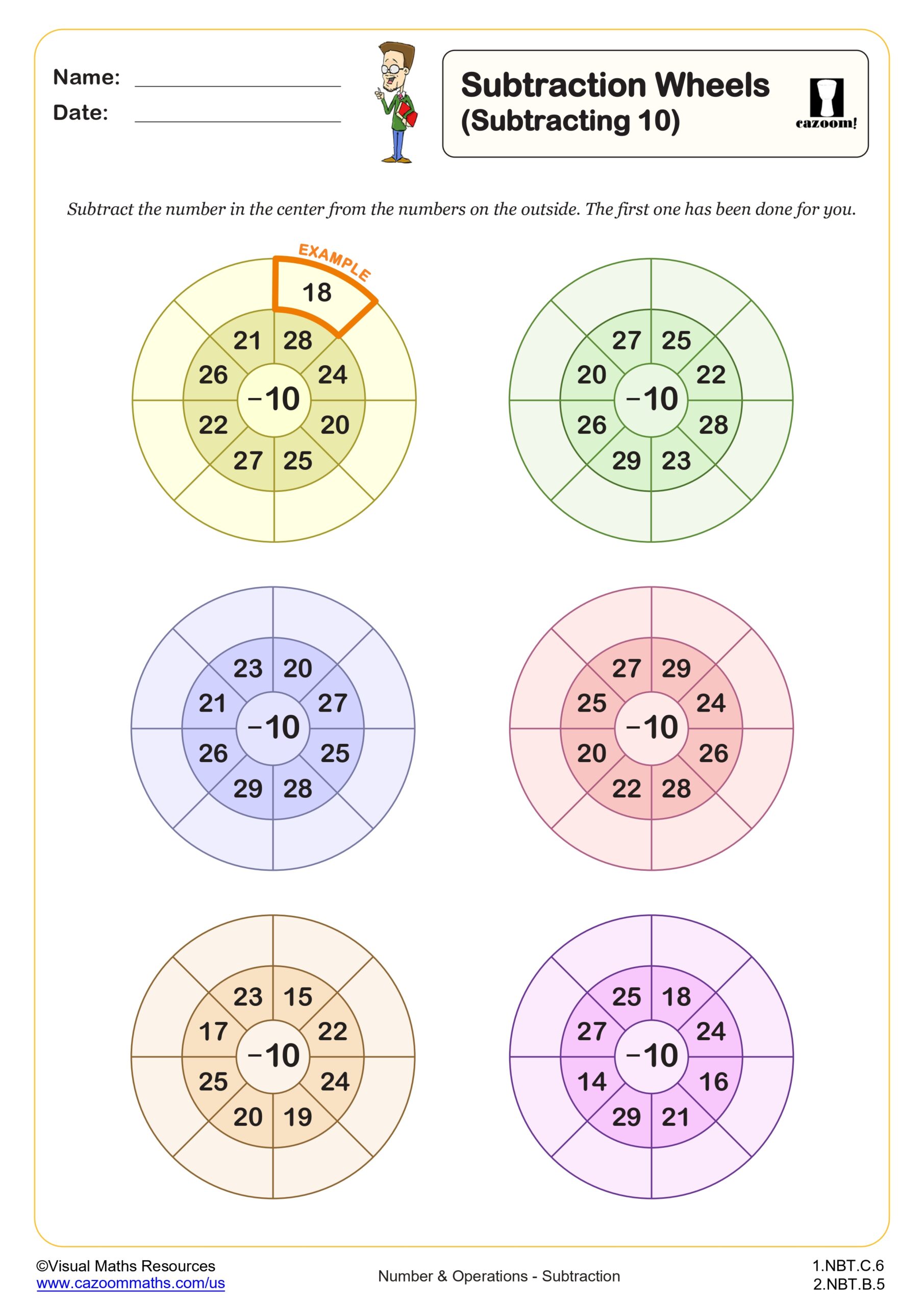
Subtraction Wheels (Subtracting 10)
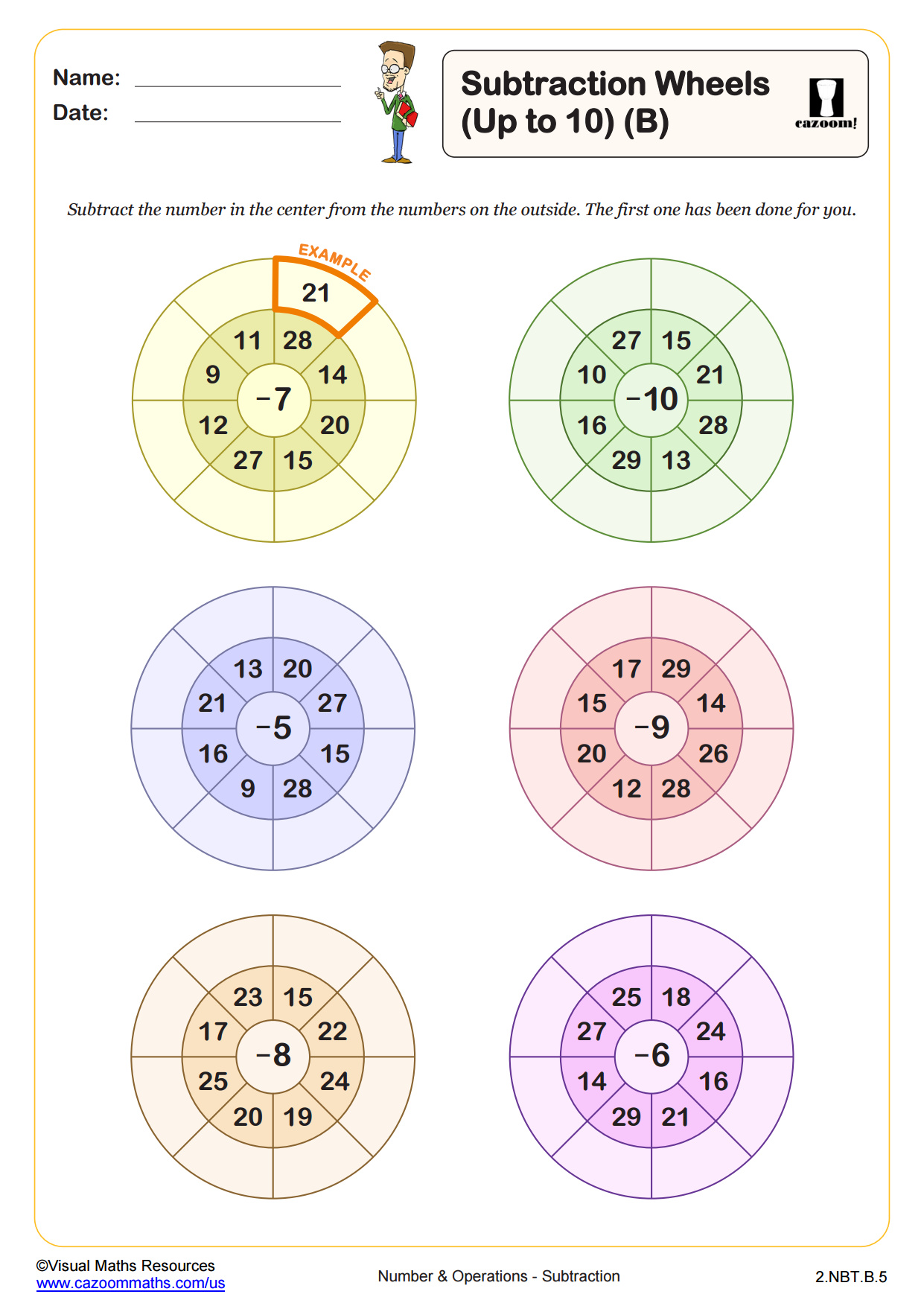
Subtraction Wheels (Up to 10 B)
All worksheets are created by the team of experienced teachers at Cazoom Math.
What strategies do students learn with two-digit subtraction?
Students develop multiple strategies for subtracting two-digit numbers, including counting back, breaking apart numbers by place value, and regrouping (borrowing). The worksheets introduce subtraction both with and without regrouping, allowing students to first master simpler problems like 48 - 23 before tackling problems like 52 - 28 where borrowing becomes necessary. Visual supports like number lines help students see subtraction as movement along a number track.
A common error occurs when students subtract the smaller digit from the larger digit in each place value column regardless of position. For example, in 42 - 17, some students calculate 4 - 1 = 3 and 7 - 2 = 5, incorrectly arriving at 35 instead of 25. The missing number problems help address this by forcing students to check whether their answer makes logical sense when they verify the original equation.
Which grade levels use two-digit subtraction worksheets?
These worksheets span kindergarten through 5th grade, covering the full elementary school progression of two-digit subtraction skills. Kindergarten and 1st grade worksheets typically focus on subtracting within 20 and simple two-digit problems without regrouping. Second grade marks the major introduction to regrouping with two-digit numbers, aligning with Common Core standards that expect fluent addition and subtraction within 100.
By 3rd grade, students apply two-digit subtraction to word problems and multi-step calculations. Fourth and 5th grade worksheets use two-digit subtraction as a review skill and building block for decimal subtraction and mental math strategies. The difficulty increases through larger numbers, more regrouping requirements, and problems presented in varied formats like missing minuends or subtrahends rather than straightforward equations.
How do missing number problems strengthen subtraction understanding?
Missing number problems require students to work backward from the answer or use algebraic thinking to find an unknown minuend, subtrahend, or difference. For example, in __ - 18 = 34, students must recognize this as an addition problem (34 + 18) or use logical reasoning about what number minus 18 gives 34. These problems develop flexibility with the relationship between addition and subtraction, moving beyond rote calculation.
This skill connects directly to real-world budgeting and planning scenarios. When someone knows they spent $27 and have $48 remaining, they use missing number reasoning to determine their starting amount. In STEM fields, scientists use similar inverse operations when calculating how much of a substance was present before a reaction, given the amount consumed and what remains. The number line versions help students visualize these relationships spatially before moving to abstract equations.
How can teachers use these worksheets most effectively?
The worksheets scaffold learning by presenting problems in multiple formats, starting with standard subtraction equations before introducing missing number challenges. The match-the-answers activities provide self-checking opportunities where students can verify their calculations by finding corresponding problems and solutions. Number line versions offer concrete visual support for students who need to see the subtraction process spatially before transitioning to abstract algorithms.
Teachers use these worksheets for differentiated instruction during math centers, pairing stronger students with missing number challenges while others work on standard problems with number line support. The answer keys make them practical for homework that parents can check, morning work that students self-correct, or intervention sessions where students need immediate feedback. Many teachers pull specific problem types for exit tickets to quickly assess which students have mastered regrouping versus those who need additional support.