Elementary School Understanding the Difference Worksheets
Find Number Pairs with a Difference of 1
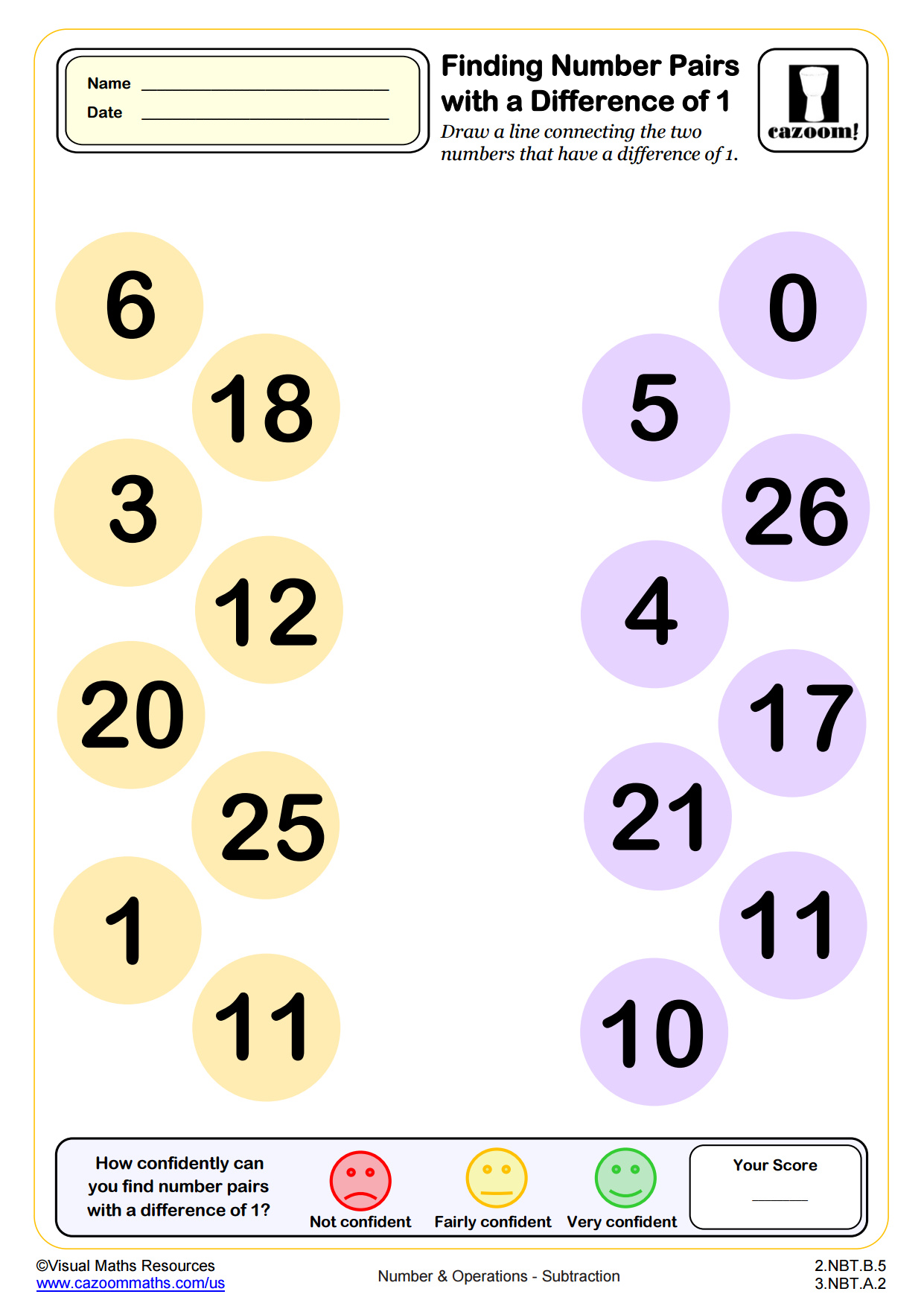
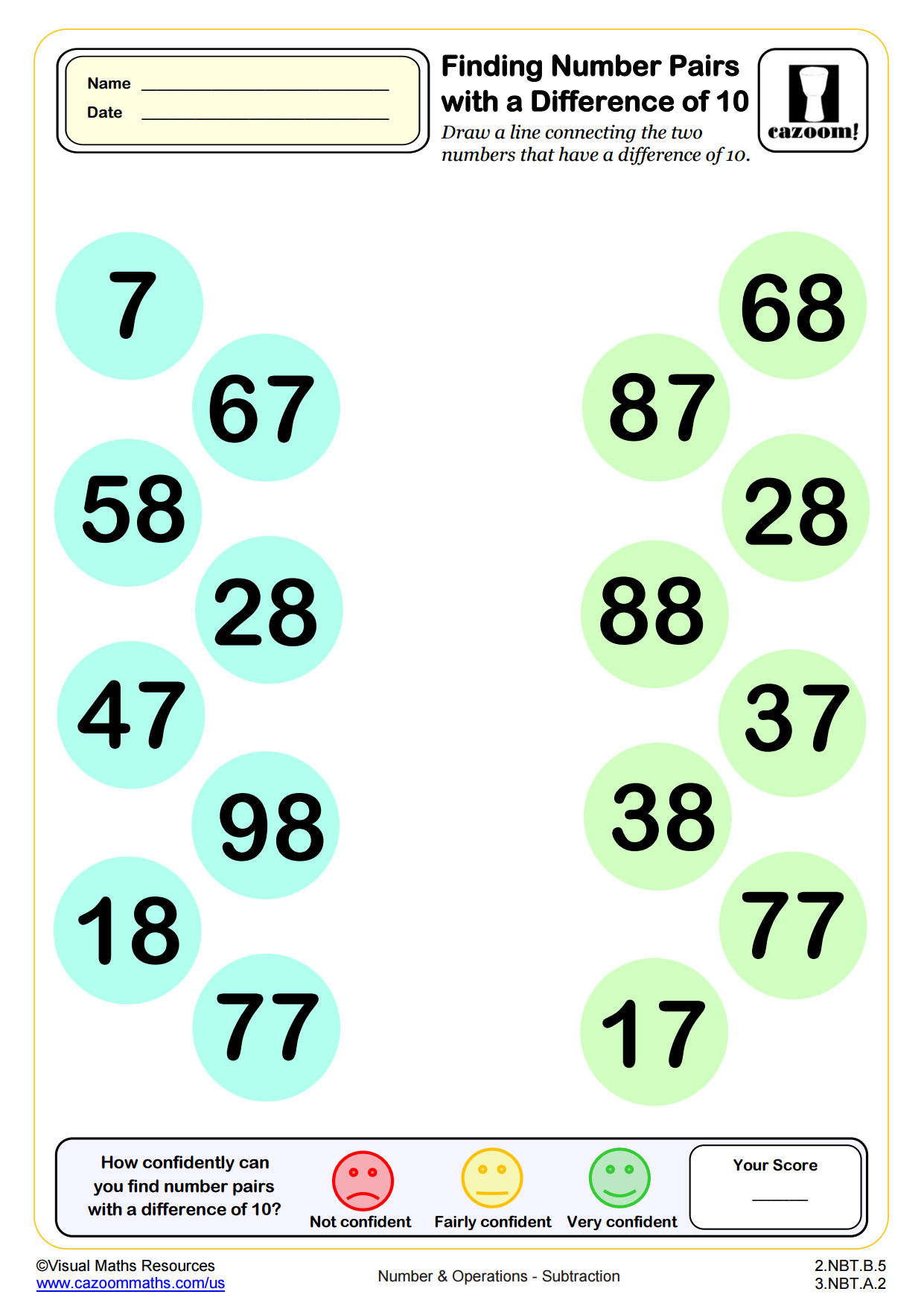
Find Number Pairs with a Difference of 10
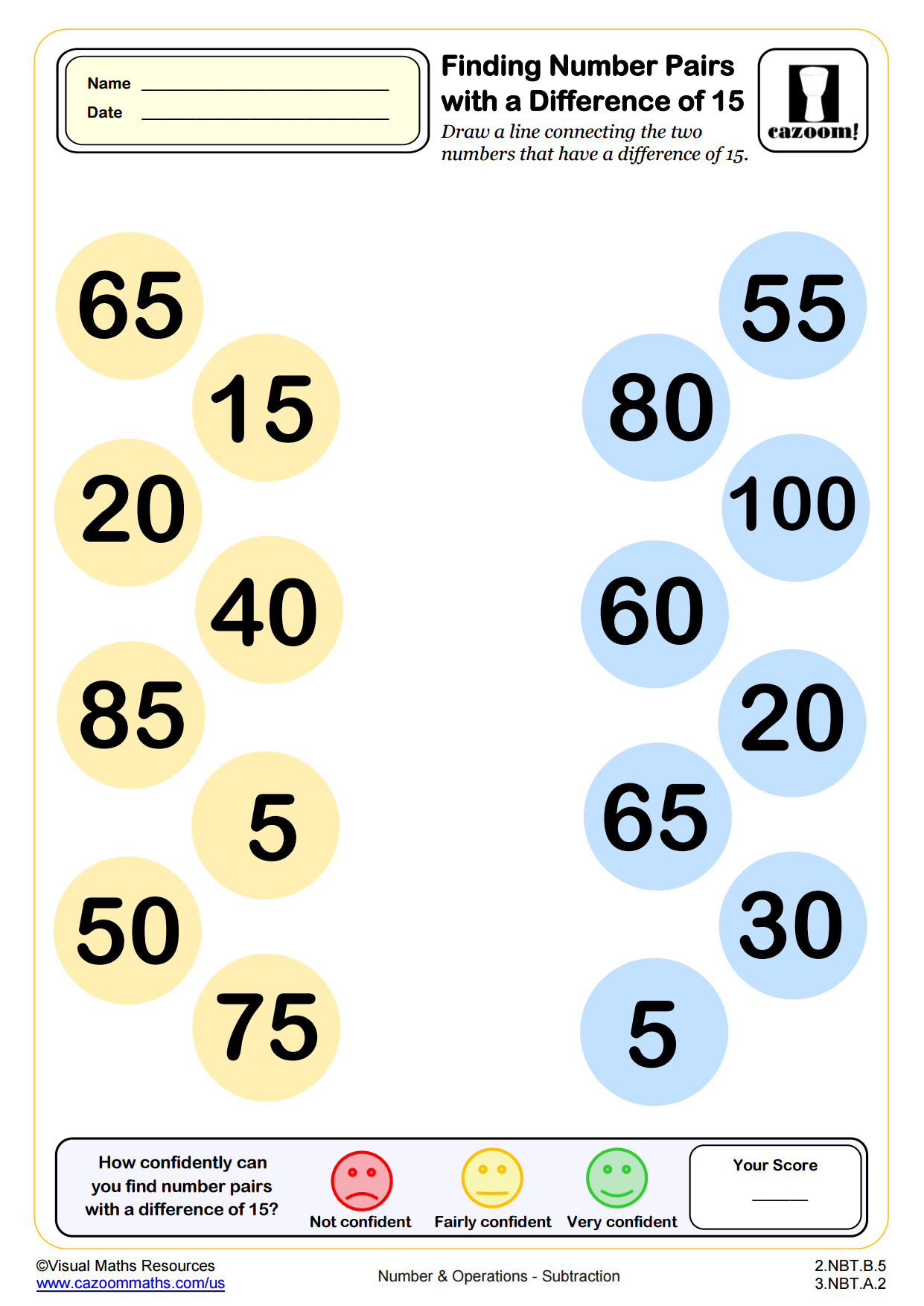
Find Number Pairs with a Difference of 15
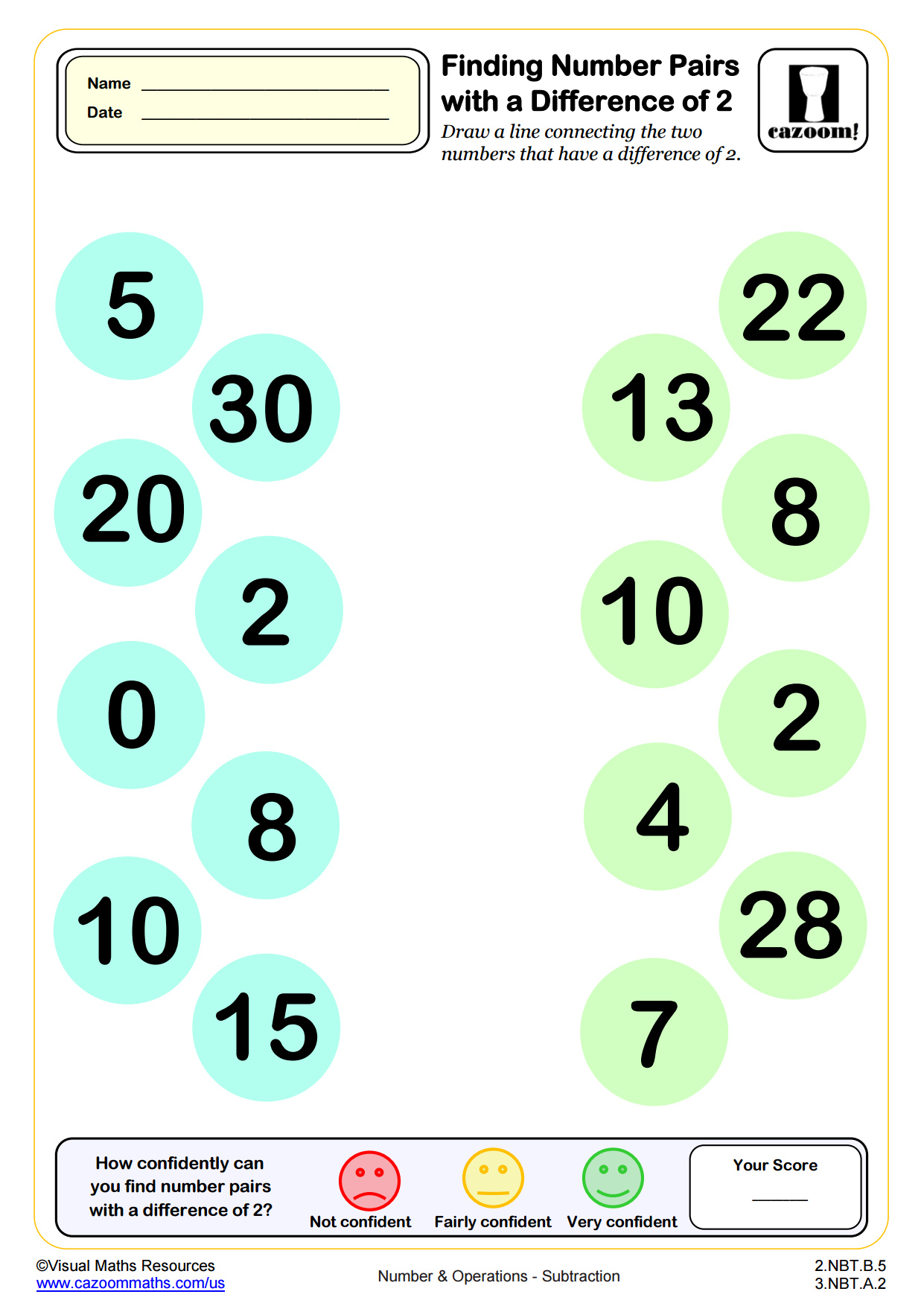
Find Number Pairs with a Difference of 2
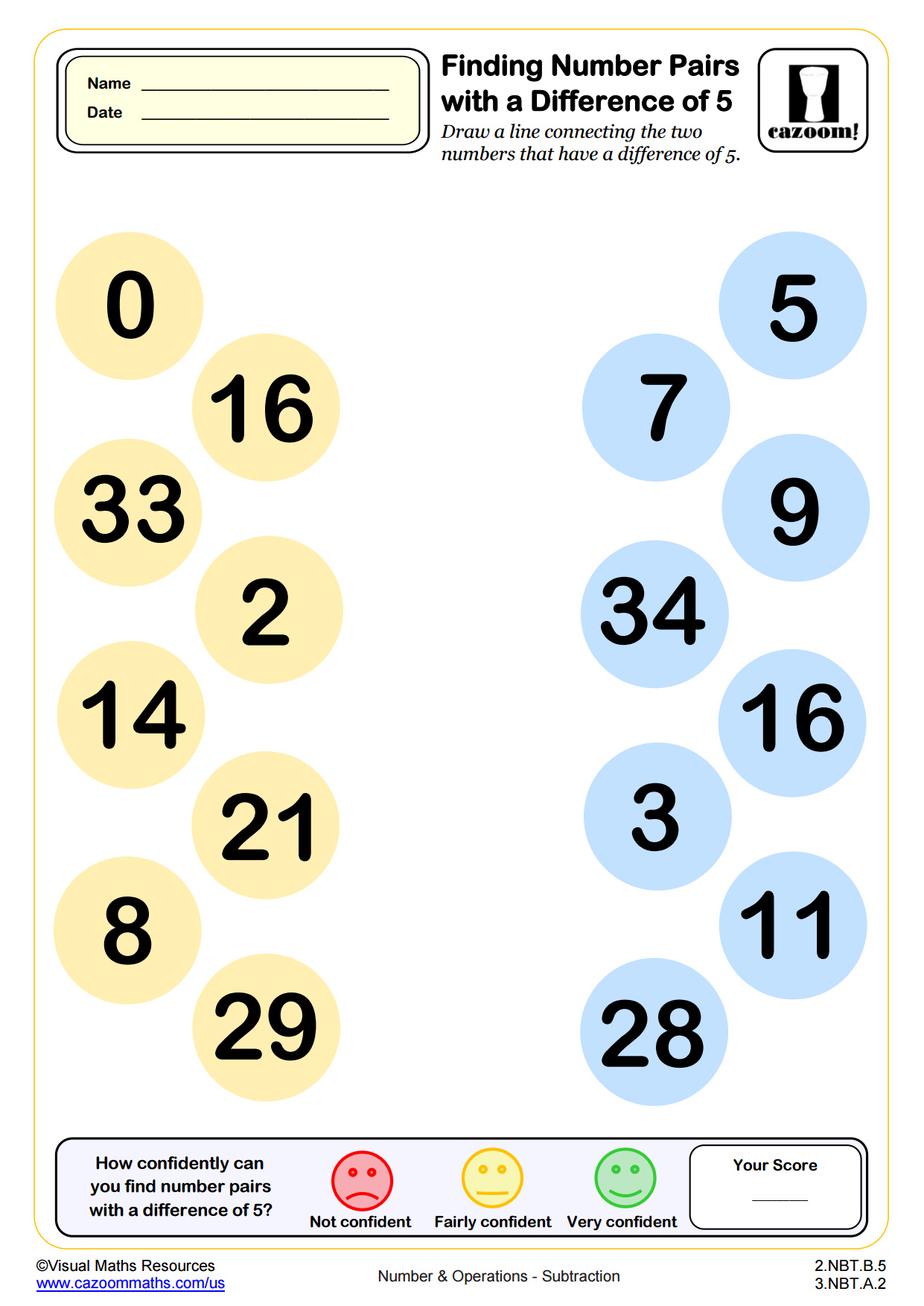
Find Number Pairs with a Difference of 5
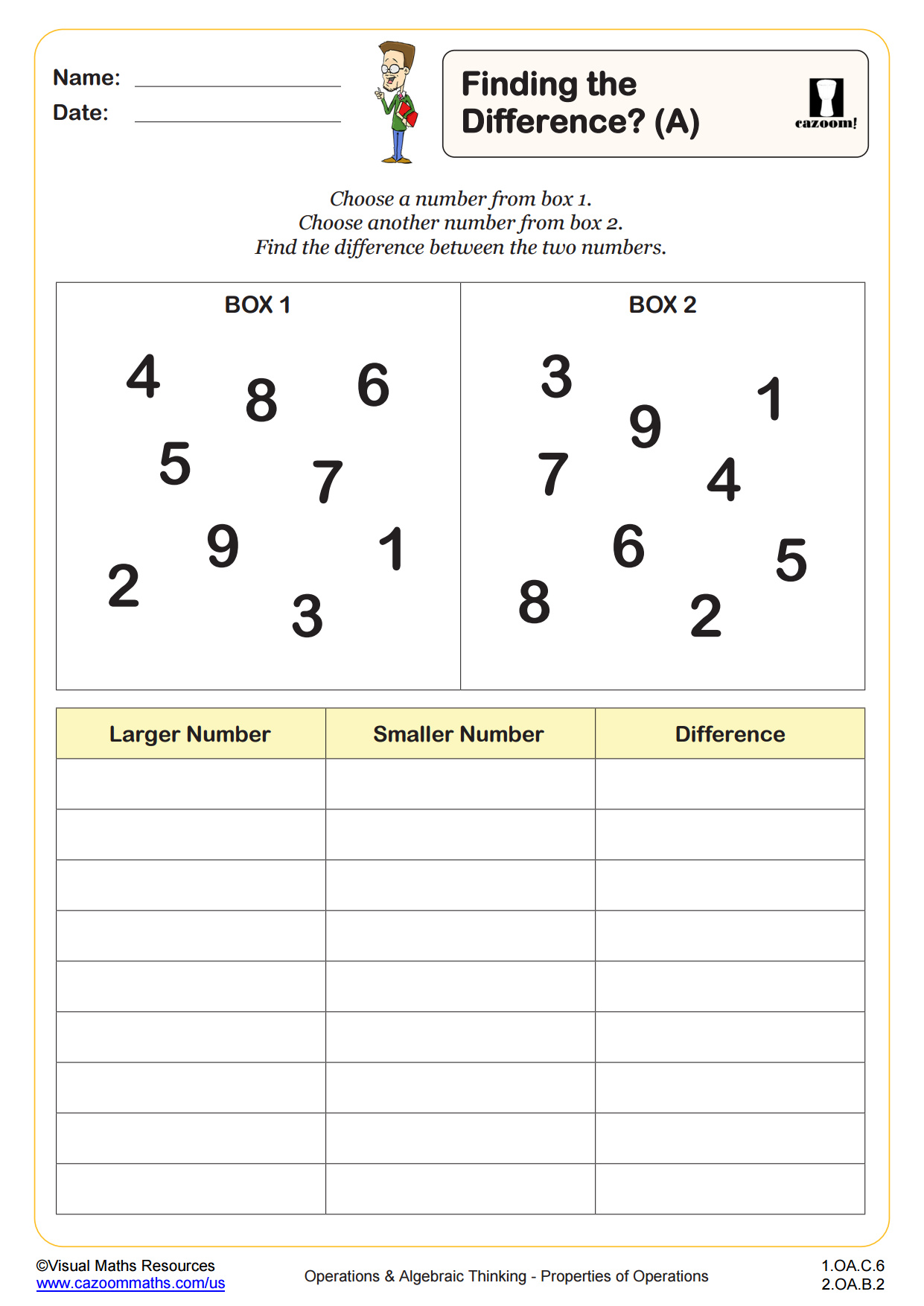
Finding the Difference (A)
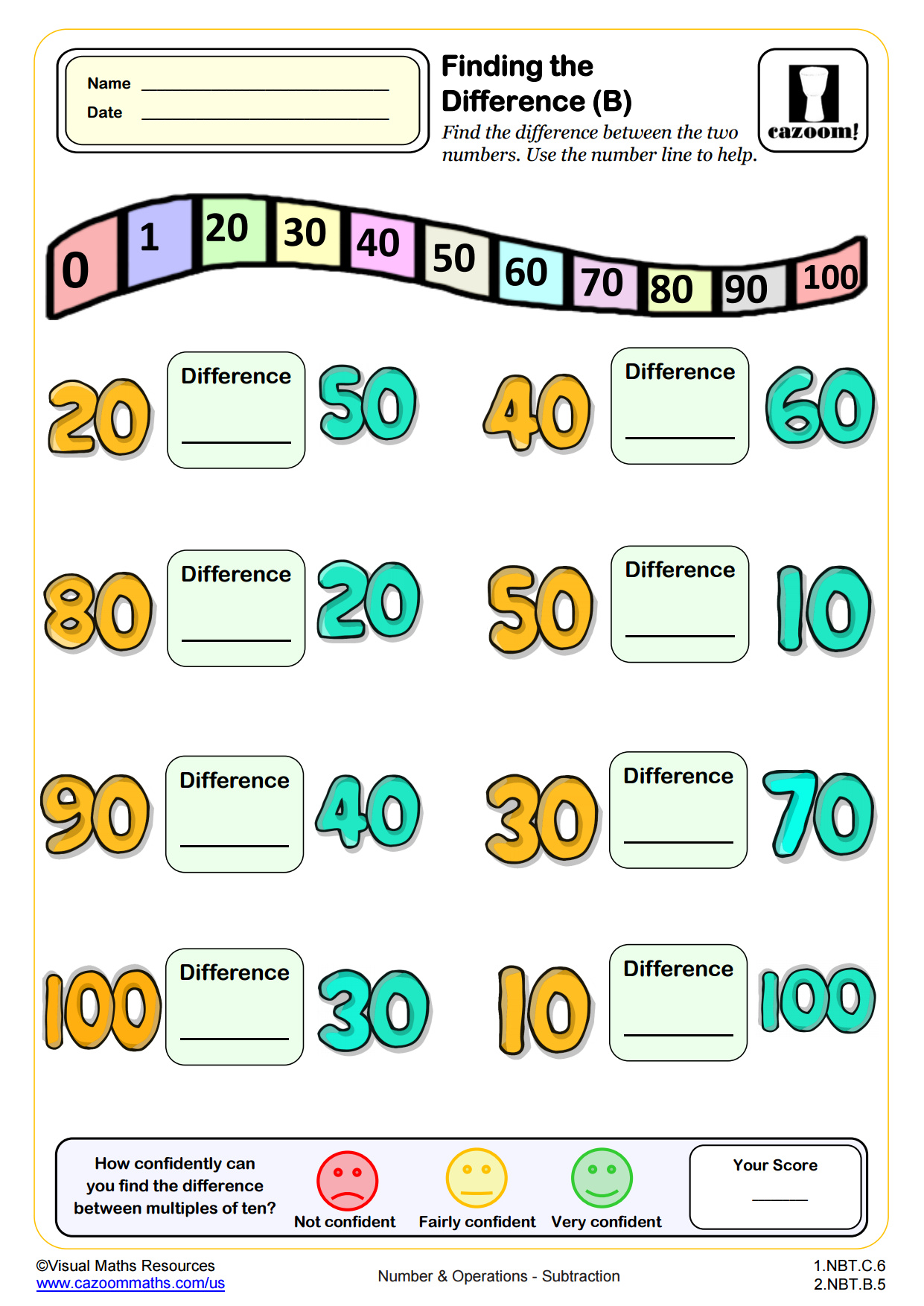
Finding the Difference (B)
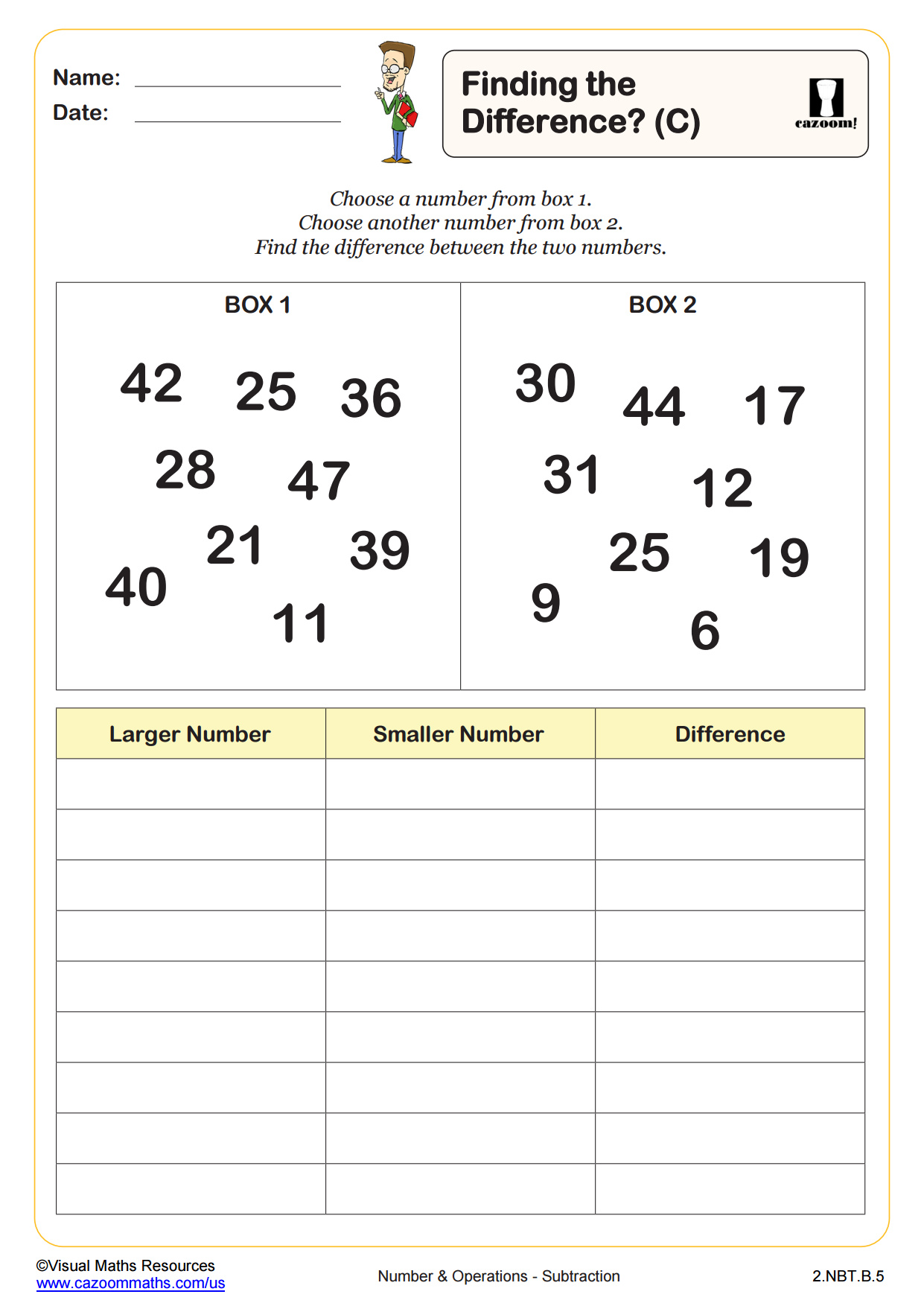
Finding the Difference (C)
Subtraction Wheels - Subtracting Hundreds from 3 Digit Numbers
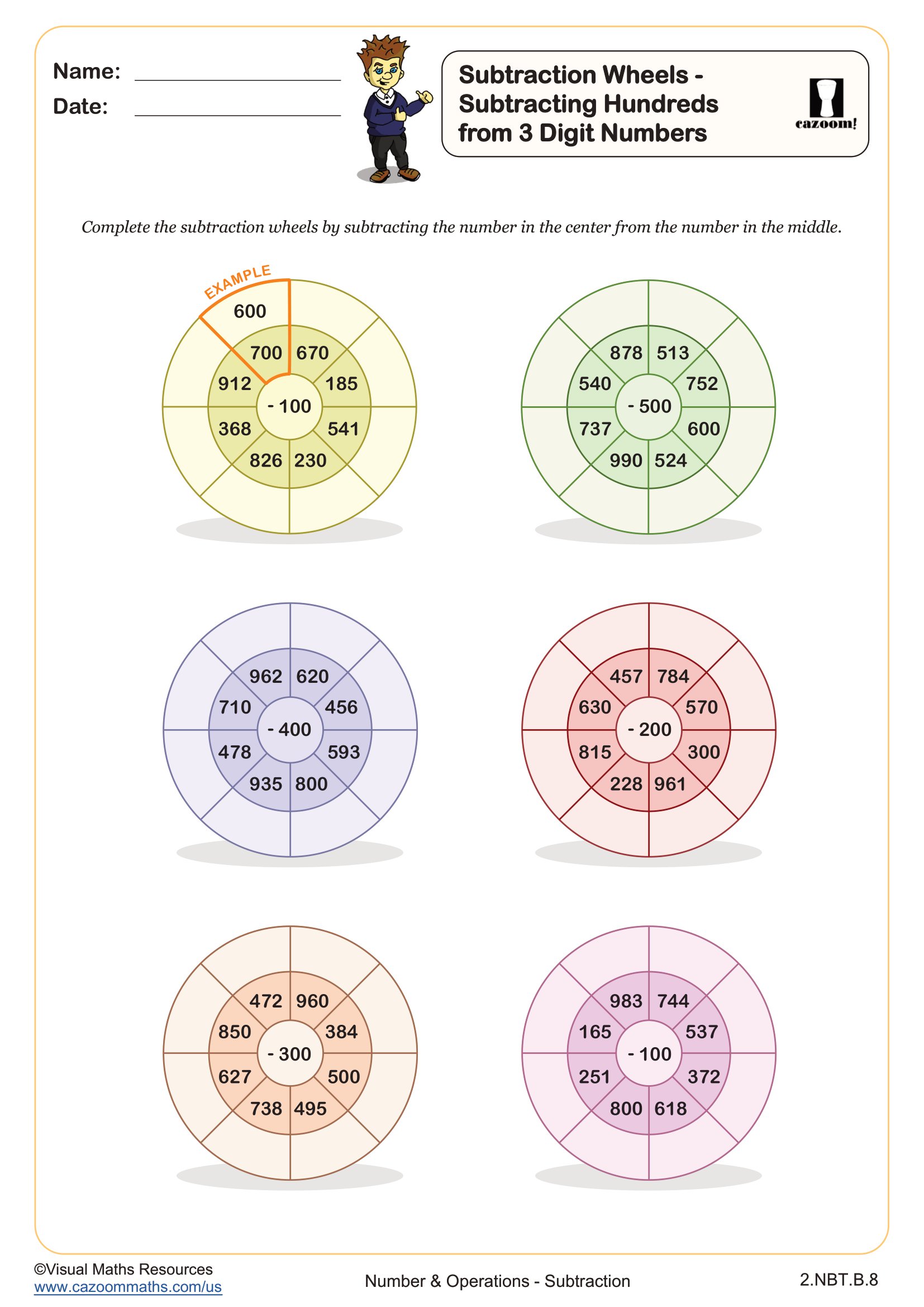
All worksheets are created by the team of experienced teachers at Cazoom Math.
What Does Understanding the Difference Mean in Elementary Math?
Understanding the difference refers to grasping that the difference between two numbers represents how far apart they are, which forms the conceptual basis for subtraction. In early elementary grades, this means recognizing that finding the difference answers the question "how many more" or "how many less," while older students connect this understanding to operations with larger numbers and apply it to problem-solving situations.
Many students initially confuse "difference" with other operations, particularly when word problems use phrases like "what's the difference between." Teachers frequently observe that students who practice with varied problem formats, including visual models like number lines and bar diagrams, develop stronger number sense around this concept. State assessments regularly test whether students can identify the difference in multiple representations, not just solve isolated subtraction problems.
Which Grade Levels Use Understanding the Difference Worksheets?
These worksheets span kindergarten through 5th grade, covering the full elementary school progression. Kindergarten and 1st grade students work with basic difference concepts using smaller numbers, while 2nd and 3rd graders extend their understanding to larger numbers and begin recognizing patterns. Fourth and 5th grade students tackle multi-digit differences and apply this knowledge to more complex mathematical situations.
The progression across grades reflects how difference-finding evolves from concrete counting strategies to abstract number relationships. Early worksheets might show visual representations like counters or number lines, while upper elementary materials challenge students to find number pairs that have a specific difference, requiring reverse thinking that strengthens algebraic reasoning. This scaffolded approach aligns with Common Core standards for operations and algebraic thinking at each grade level.
How Do Students Find Number Pairs with a Specific Difference?
Finding number pairs with a specific difference, such as 10 or 15, requires students to think flexibly about the relationship between two numbers rather than simply calculating an answer. Students identify multiple pairs where the distance between numbers equals the target difference, such as recognizing that 25 and 35, 50 and 60, or 18 and 28 all have a difference of 10. This skill develops pattern recognition and prepares students for algebraic thinking where they'll work with variables.
This concept connects directly to measurement and data analysis in STEM fields. Scientists calculate differences between data points to identify trends, engineers determine tolerance ranges where parts must differ by specific amounts, and meteorologists track temperature differences to predict weather patterns. When students practice finding number pairs with set differences, they're building the foundation for understanding variance, error margins, and comparative analysis they'll use in scientific investigations throughout their education.
How Can Teachers Use These Difference Worksheets in the Classroom?
The worksheets provide structured practice that moves from straightforward difference-finding to more challenging applications like identifying number pairs with target differences. This progression allows teachers to match worksheet difficulty to student readiness, using simpler sheets for introducing concepts and more complex ones for reinforcing and extending understanding. The included answer keys make these materials practical for both instruction and independent practice.
Many teachers use these worksheets during math centers, pairing students to discuss their strategies for finding differences and compare approaches. They work well as warm-up activities to reinforce previously taught concepts or as targeted intervention materials when assessment data shows gaps in subtraction fluency. The variety of formats helps teachers differentiate instruction, assigning specific worksheets based on individual student needs while maintaining focus on the same core skill across the classroom.