High School Circle Worksheets
Area of Arc Lengths & Sectors
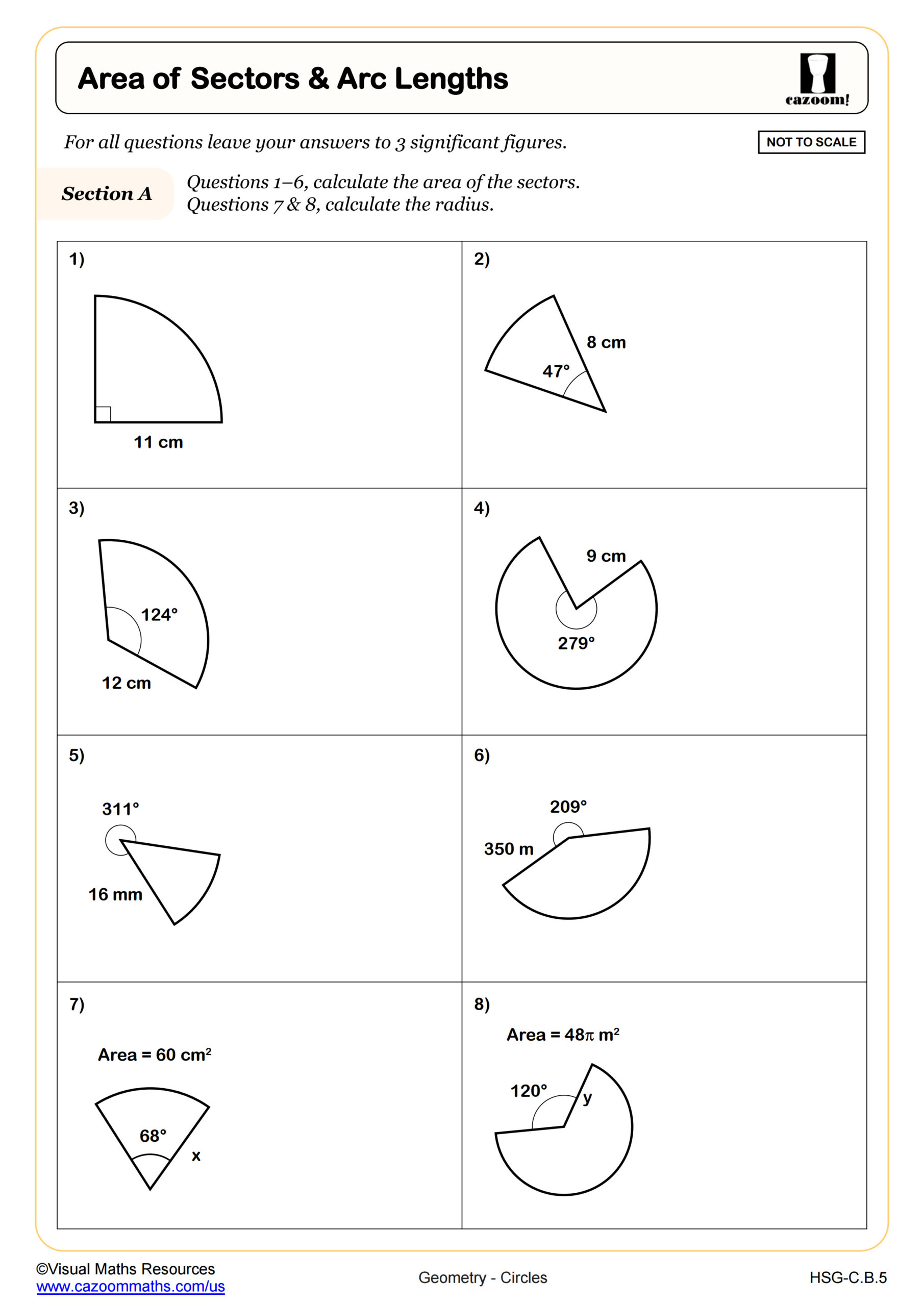
Area of Shaded Regions of Circles
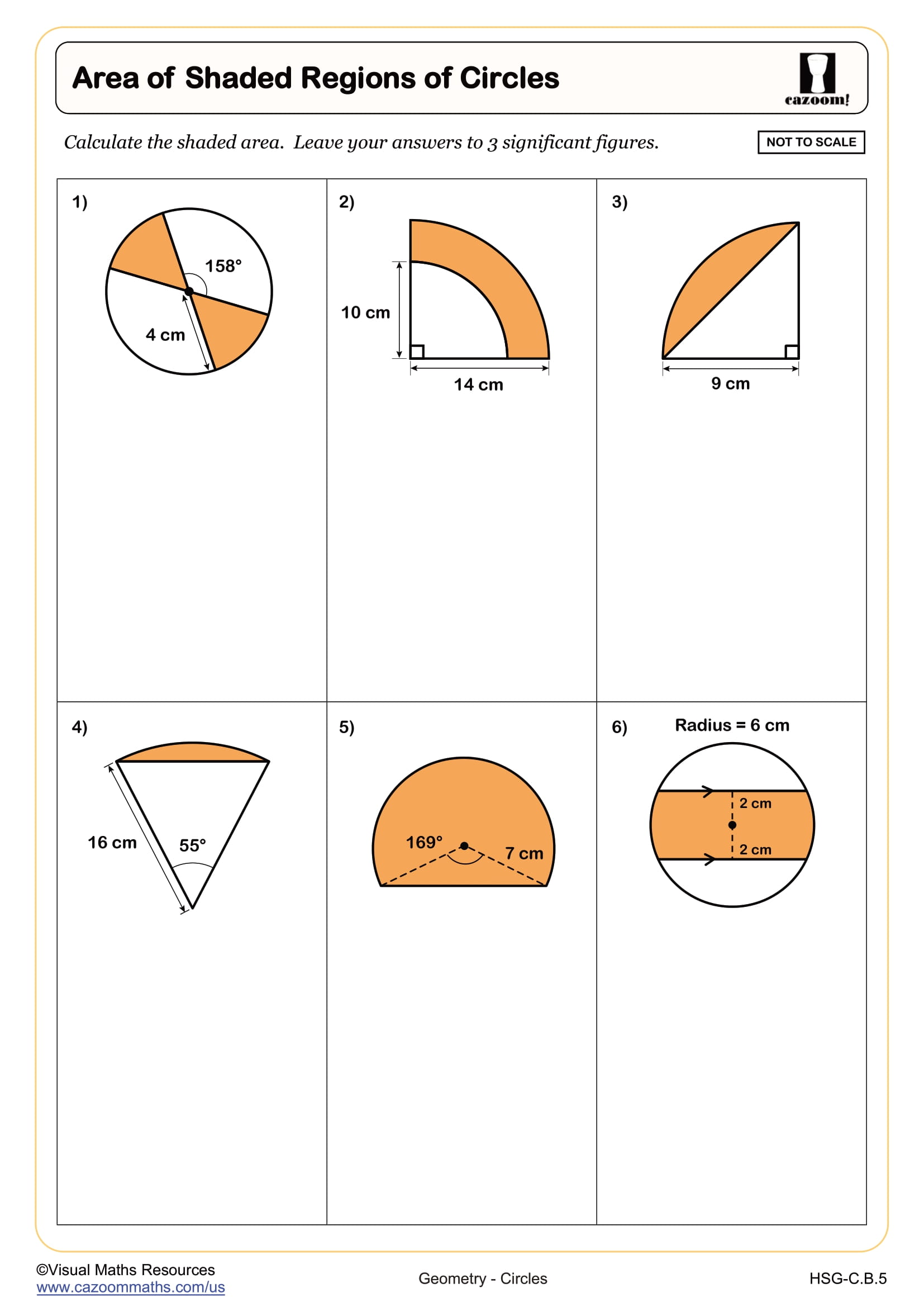
Area of Shaded Regions of Circles (with clues)
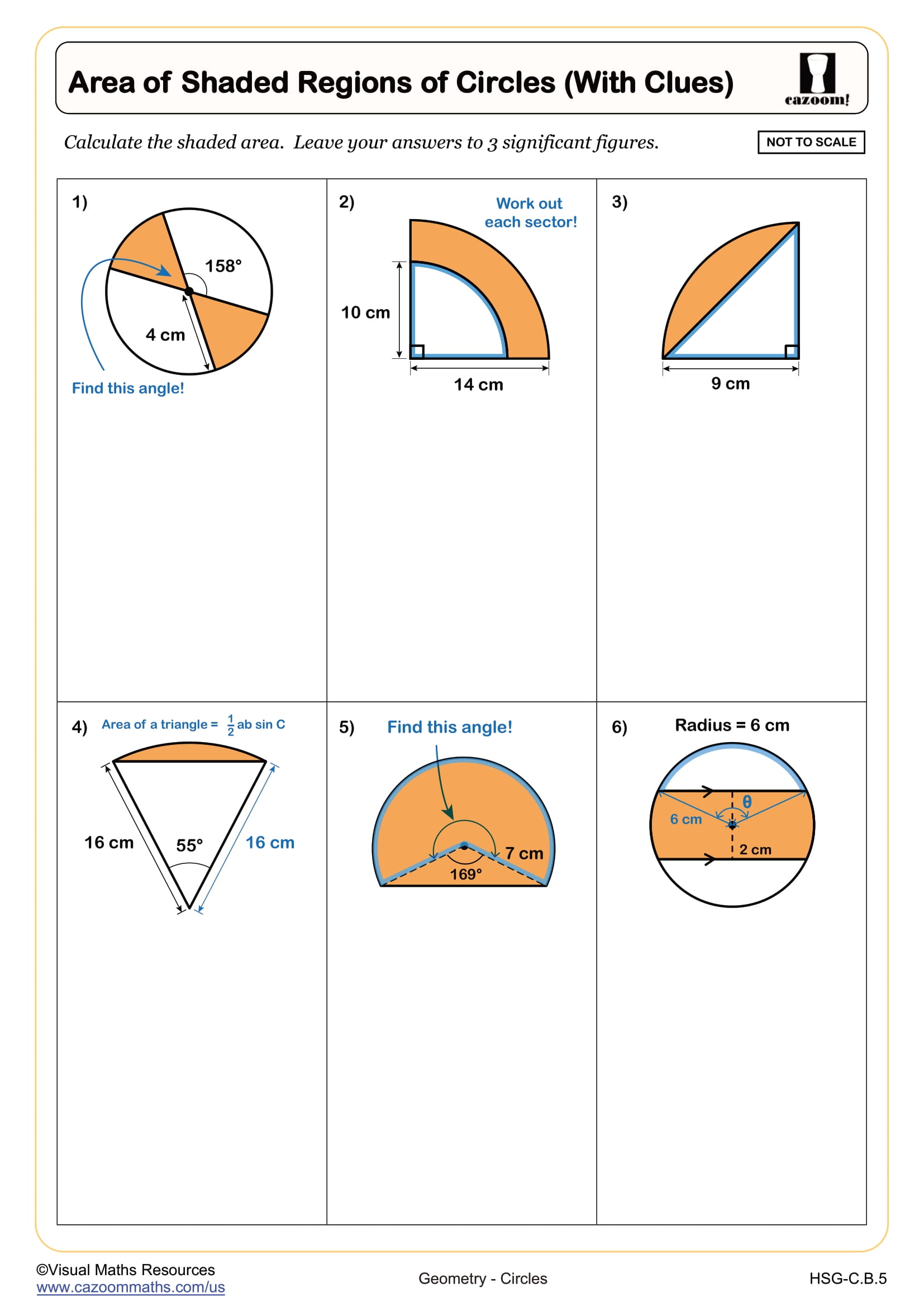
Area With Pi (A)
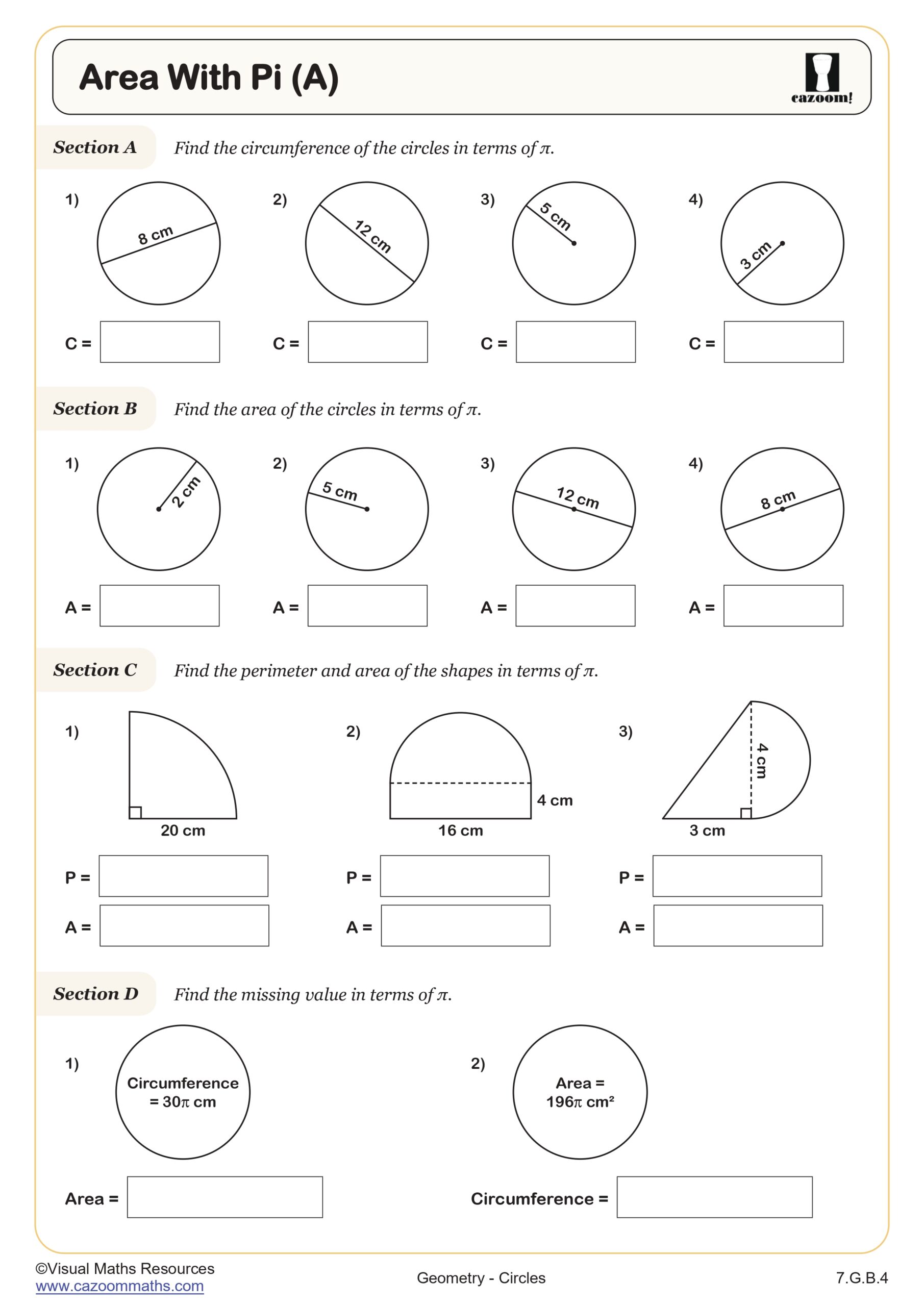
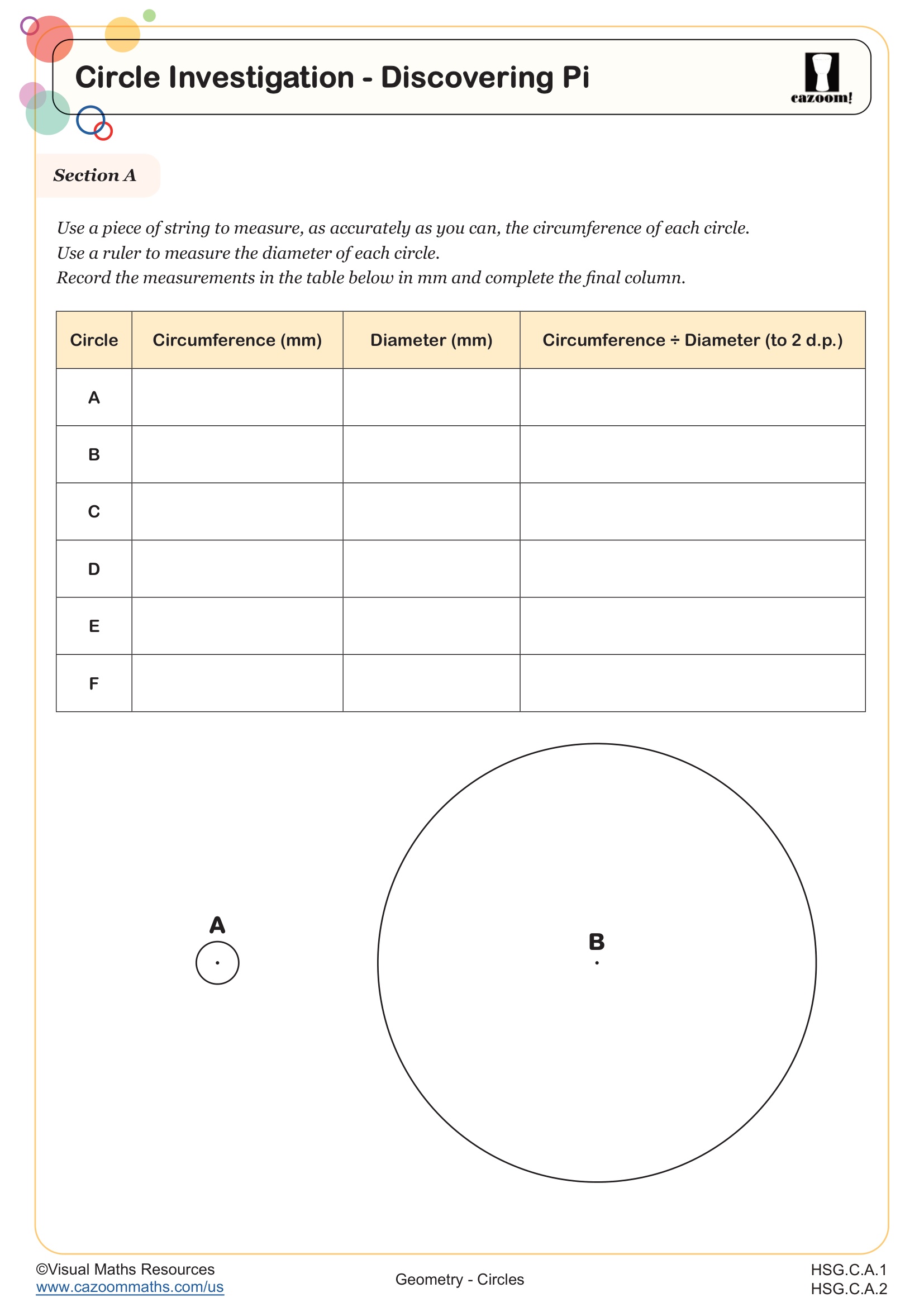
Circle Investigation - Discovering Pi
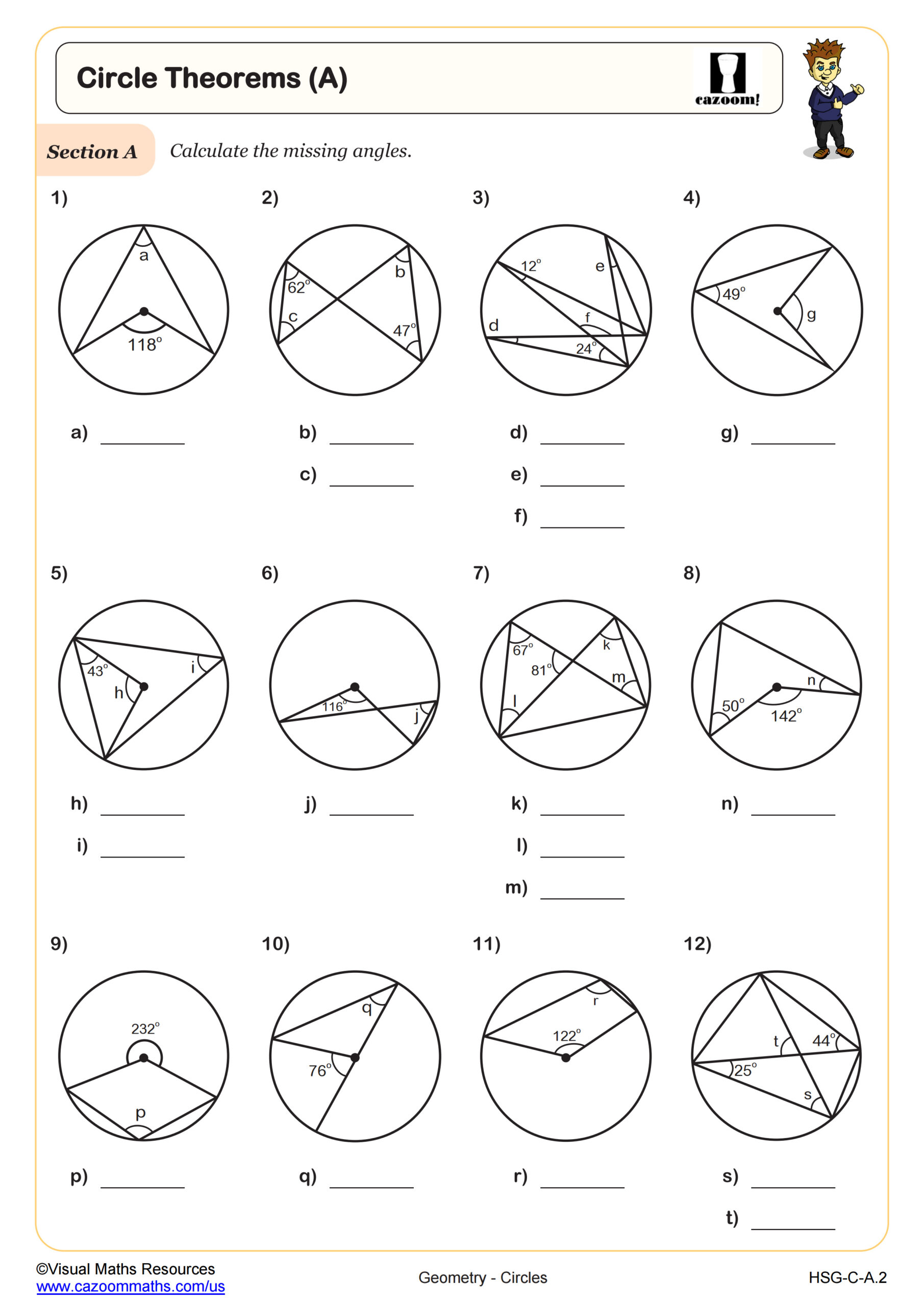
Circle Theorems (A)
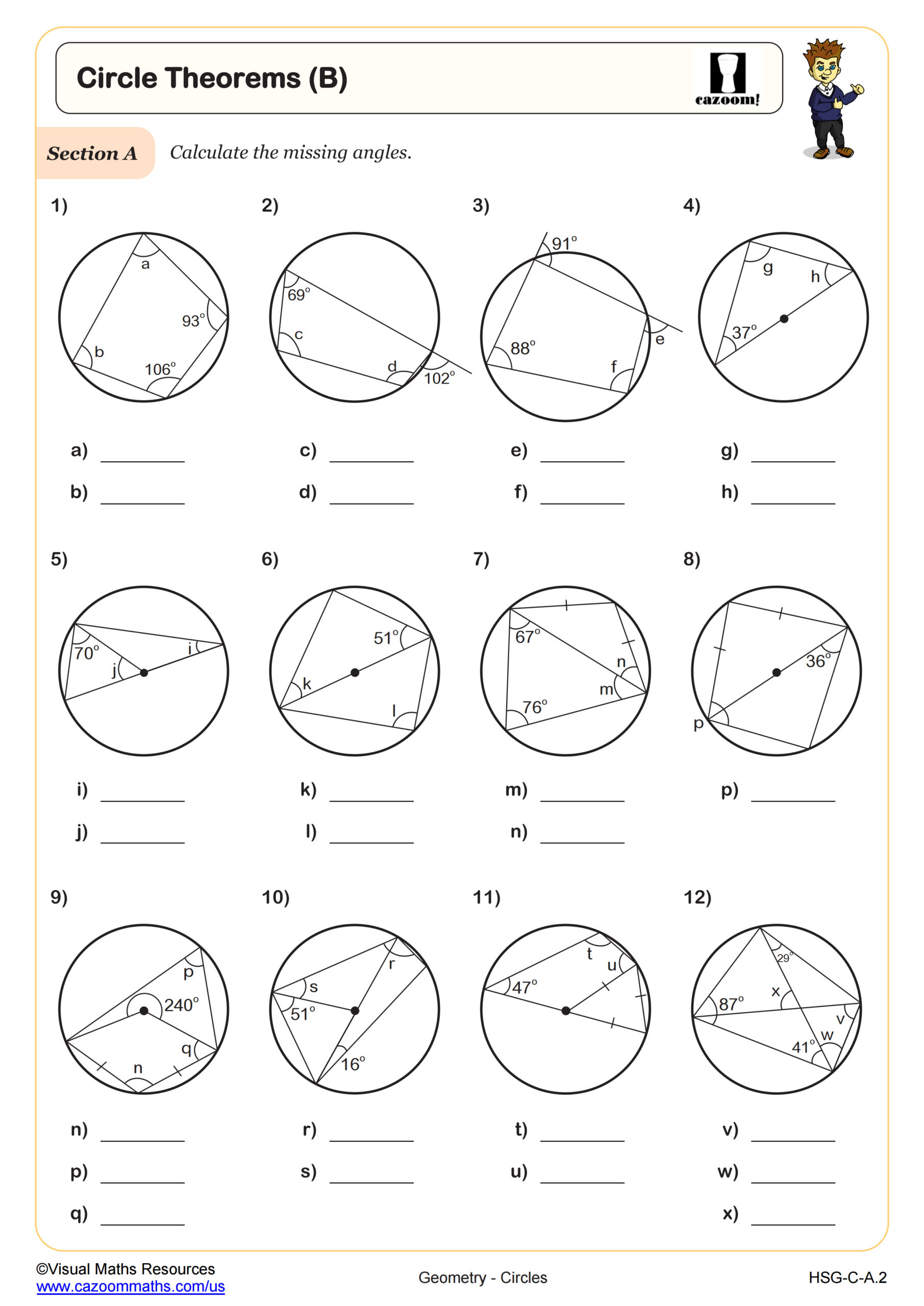
Circle Theorems (B)
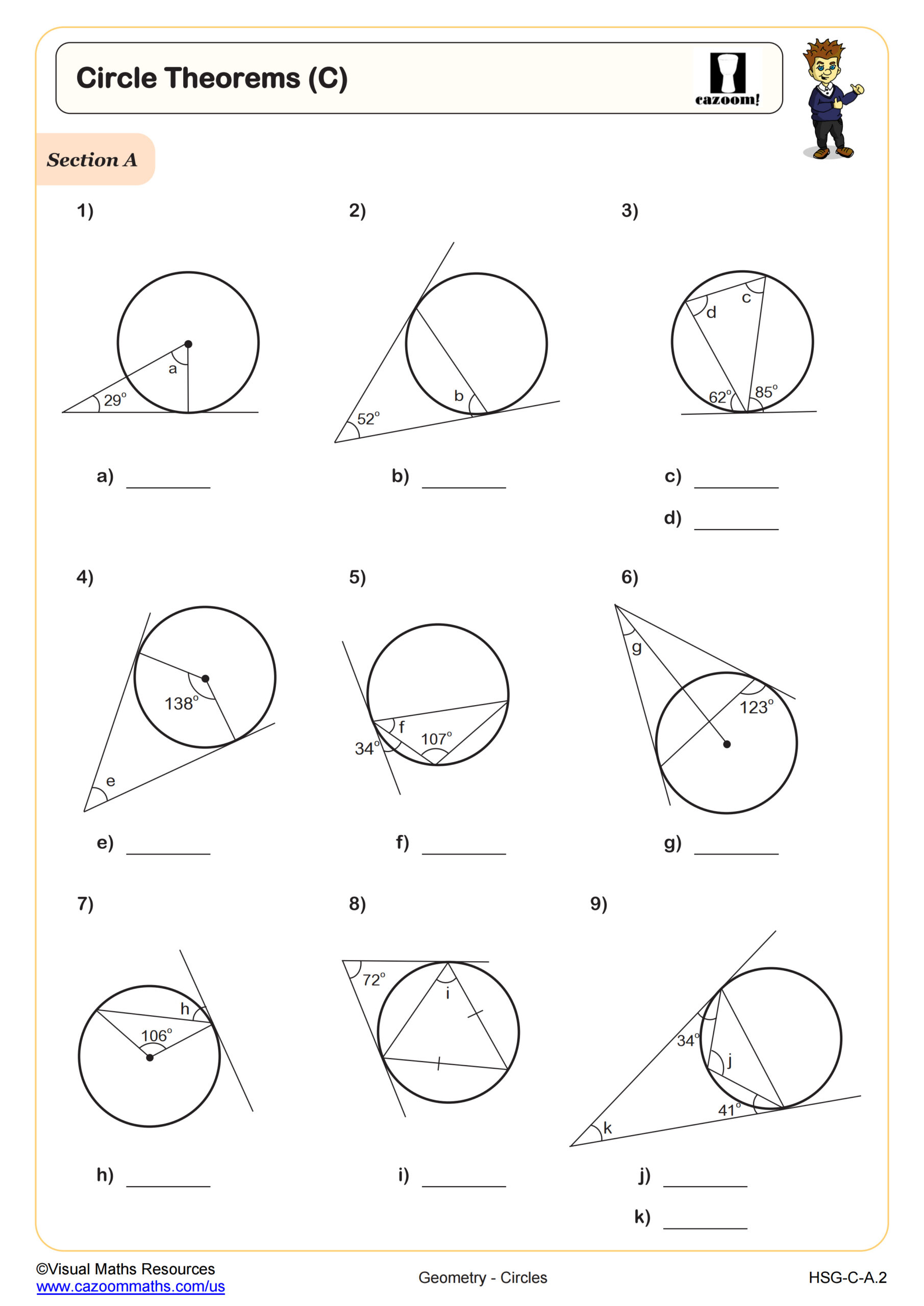
Circle Theorems (C)
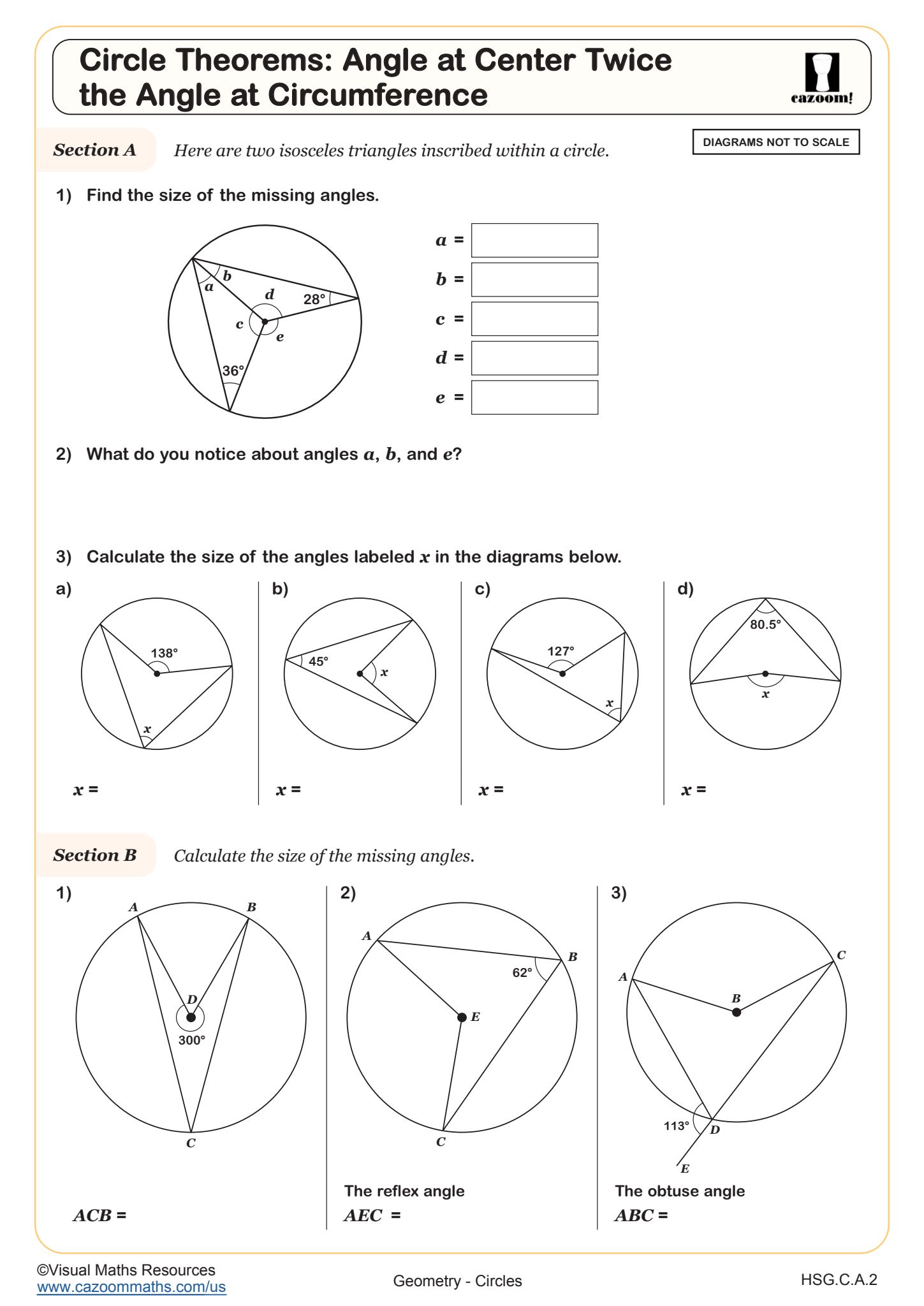
Circle Theorems: Angle at Center Twice the Angle at Circumference
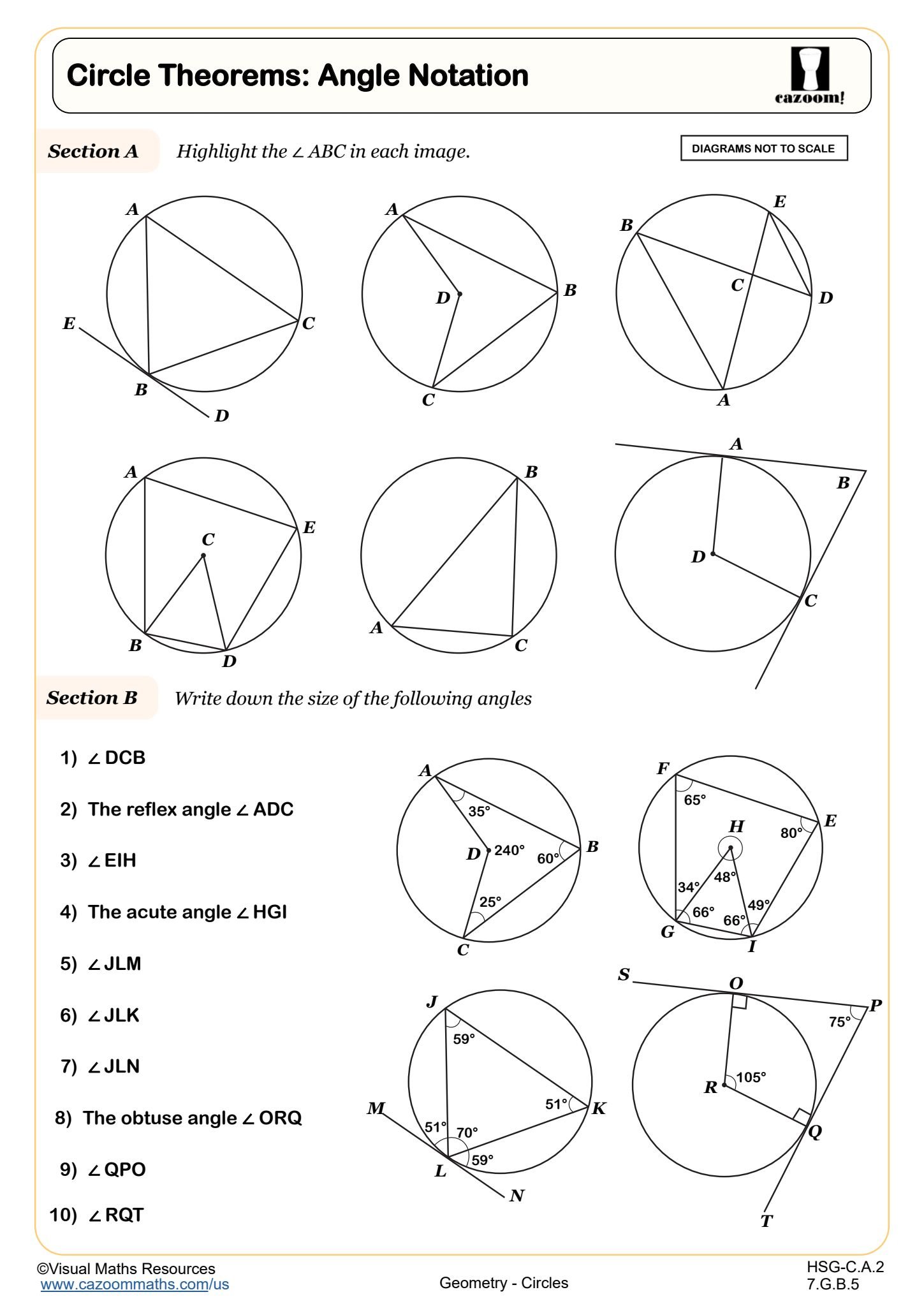
Circle Theorems: Angle Notation
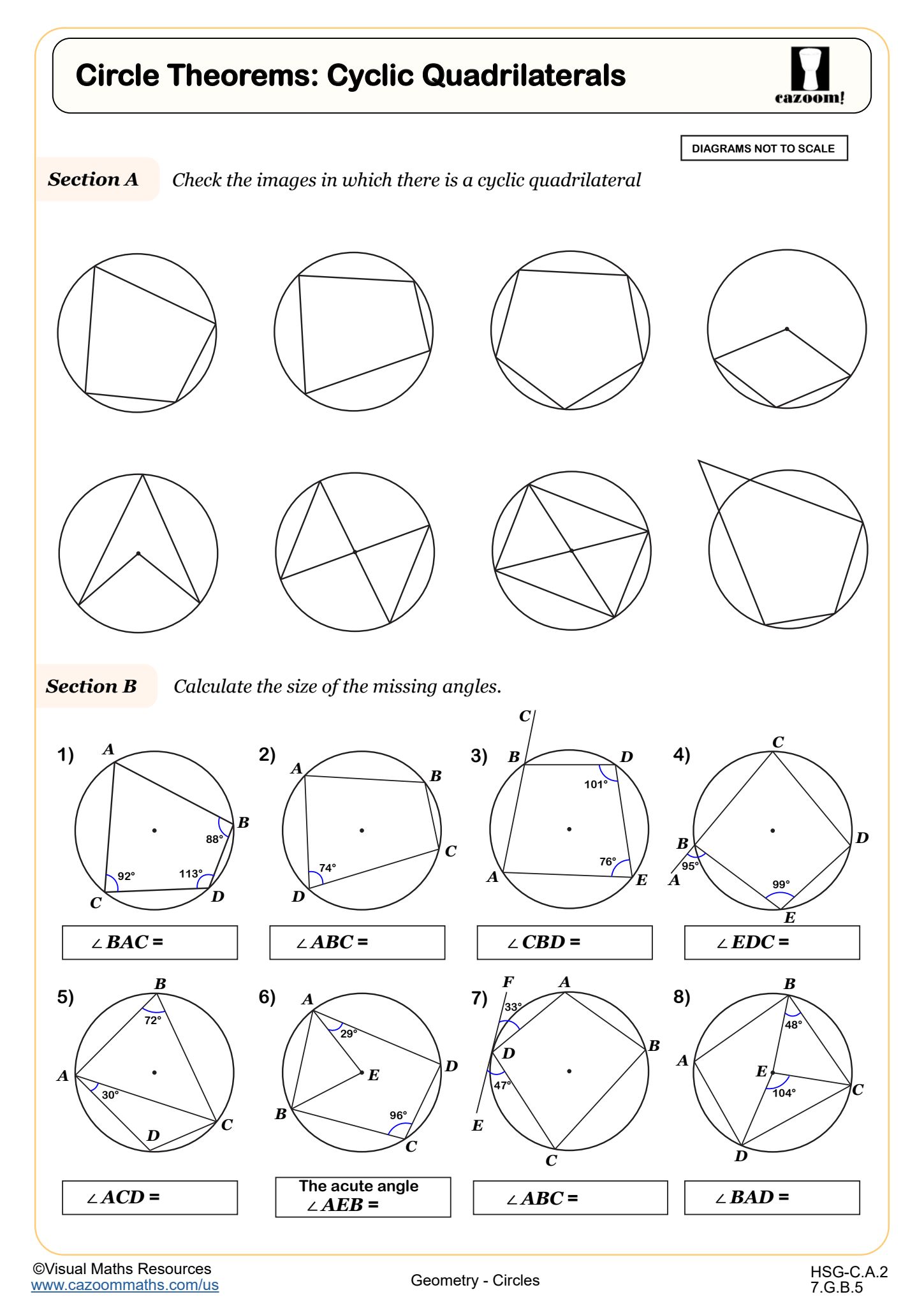
Circle Theorems: Cyclic Quadrilaterals
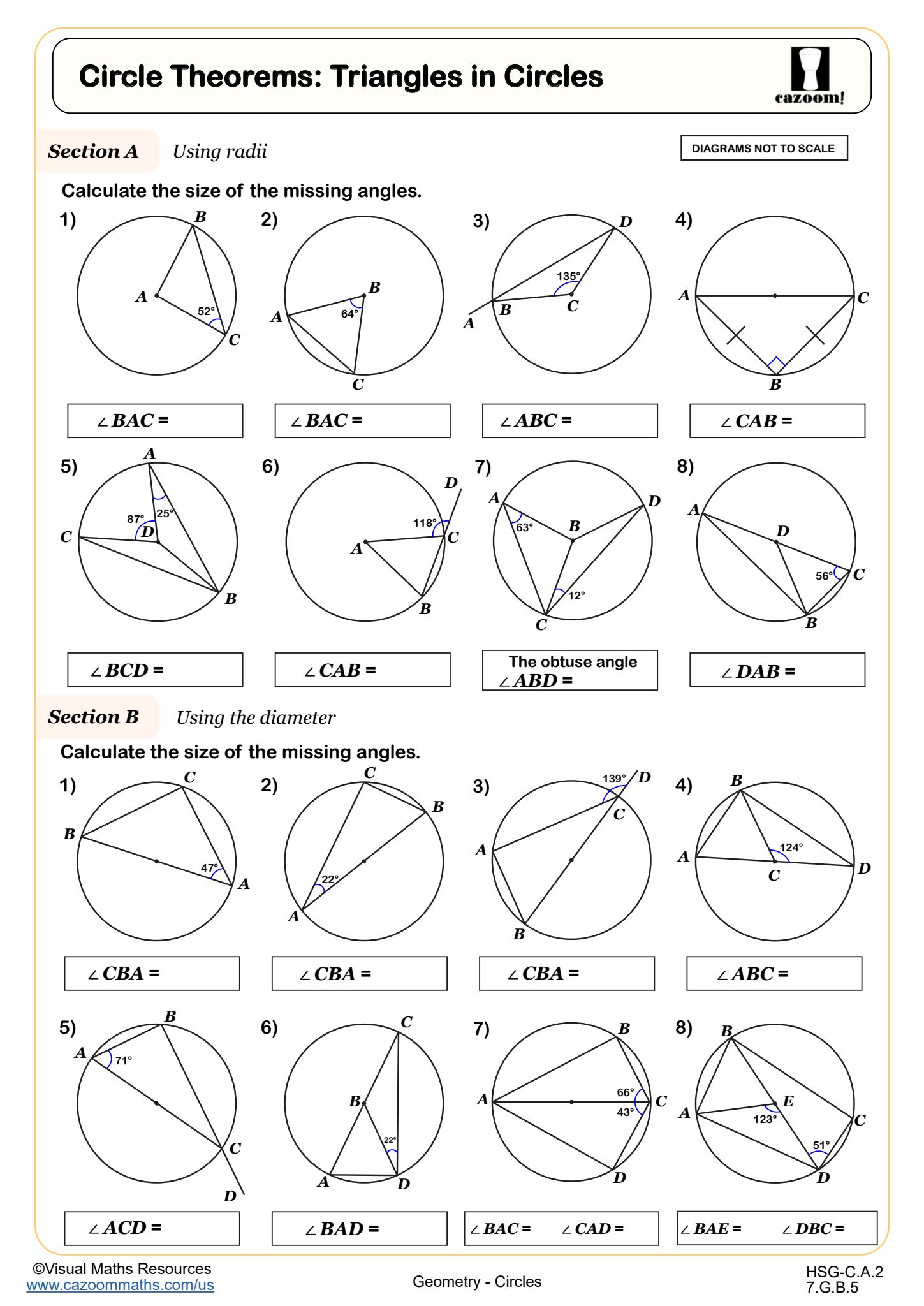
Circle Theorems: Triangles in Circles
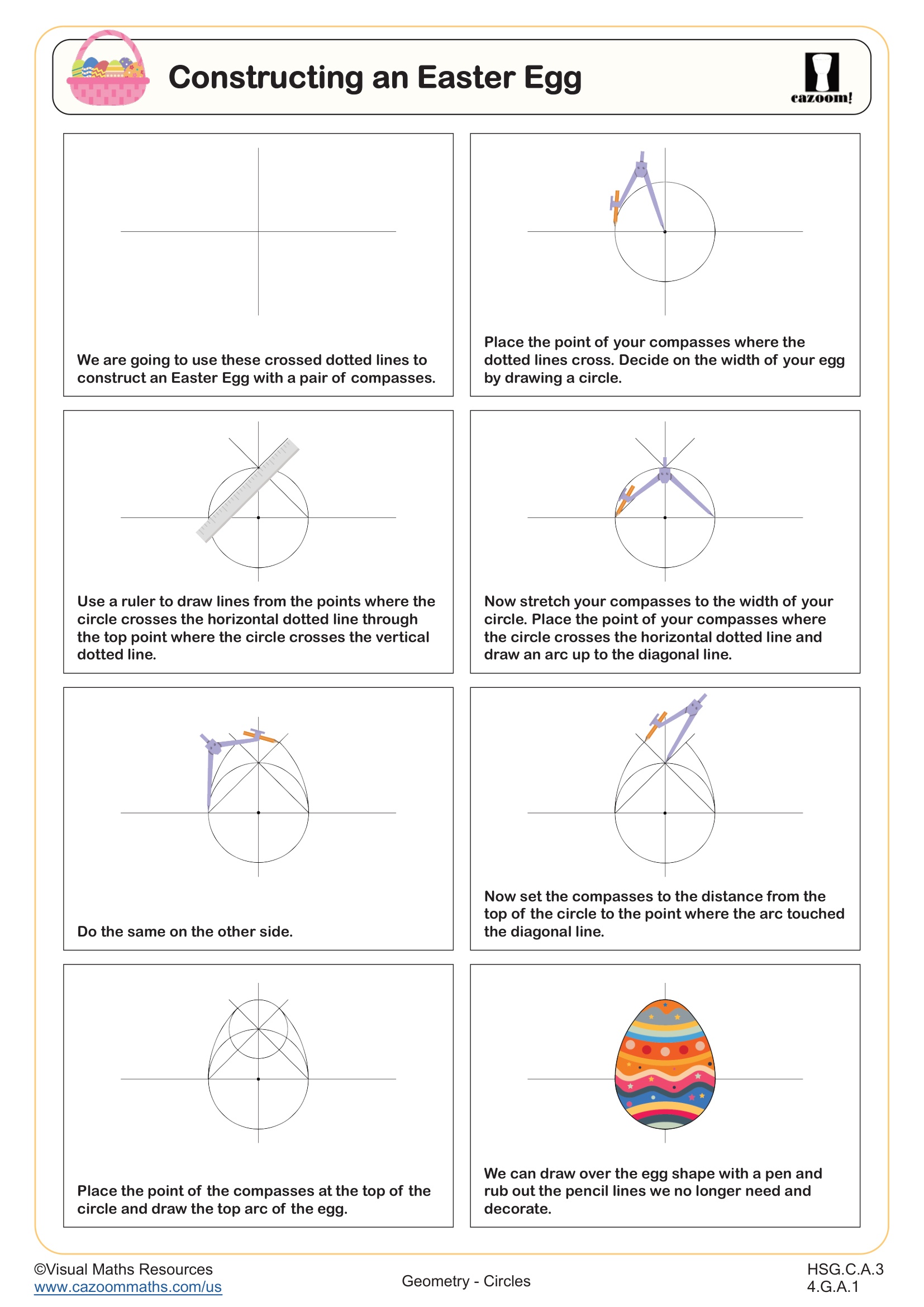
Constructing an Easter Egg
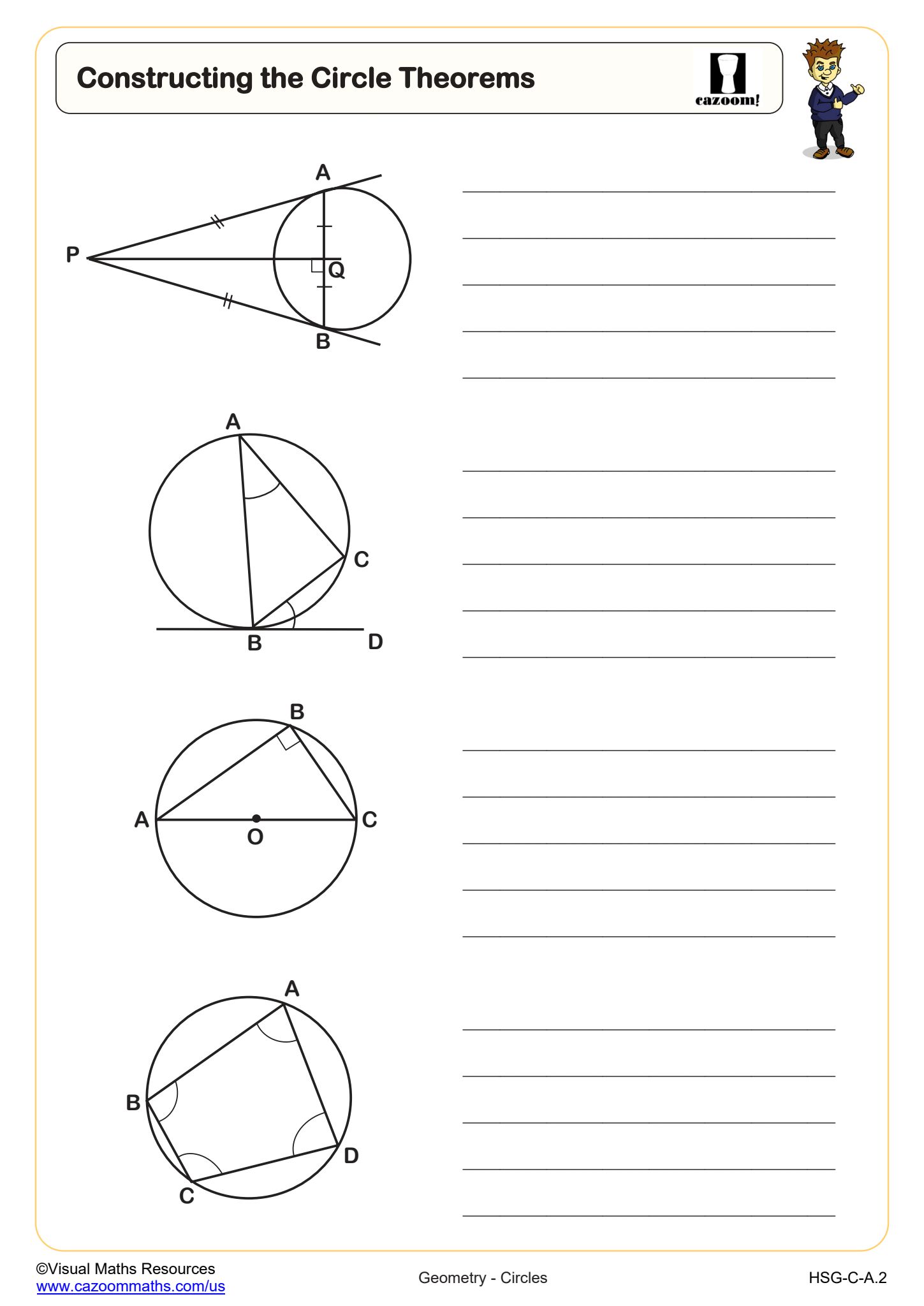
Constructing the Circle Theorems
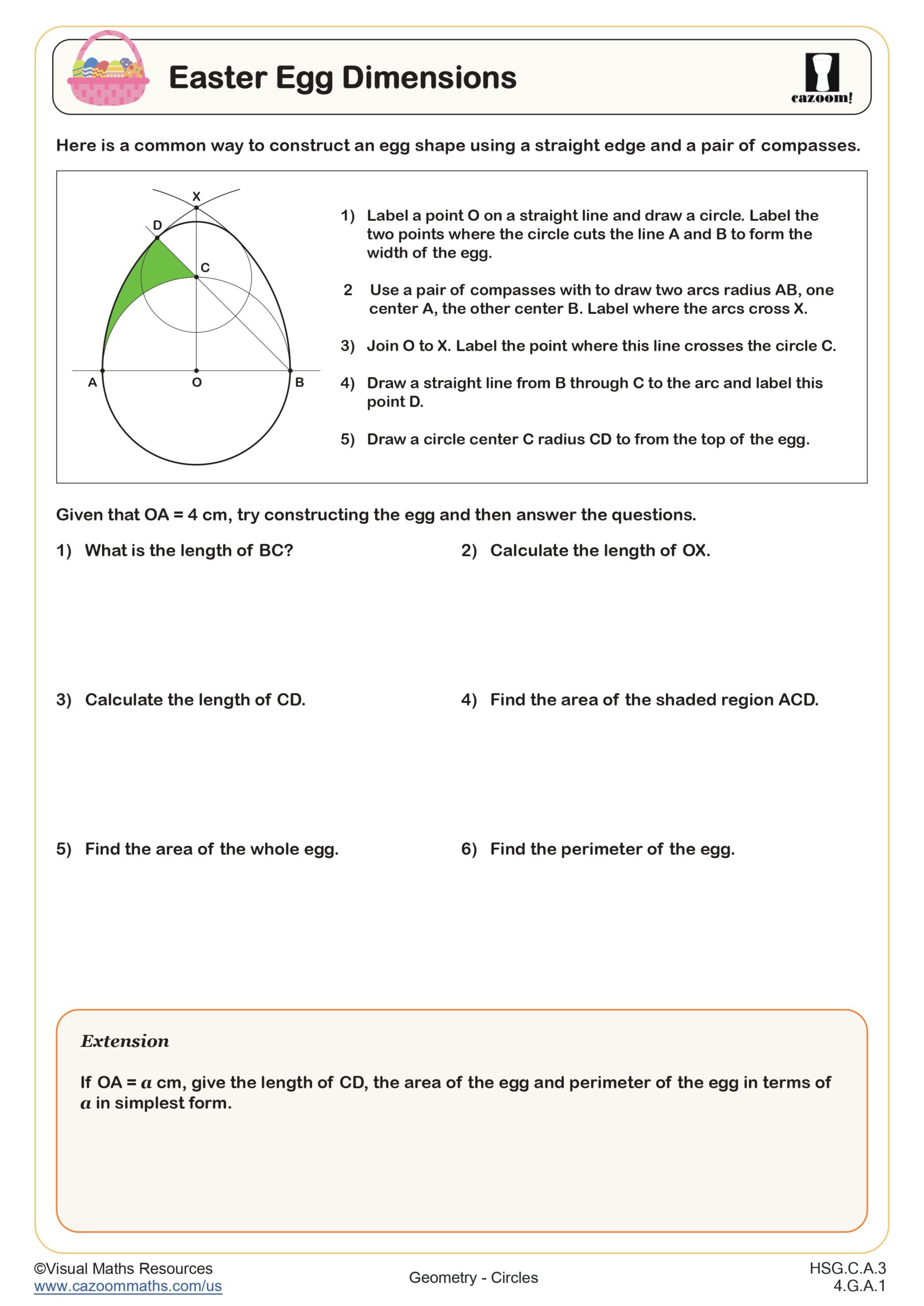
Easter Egg Dimension
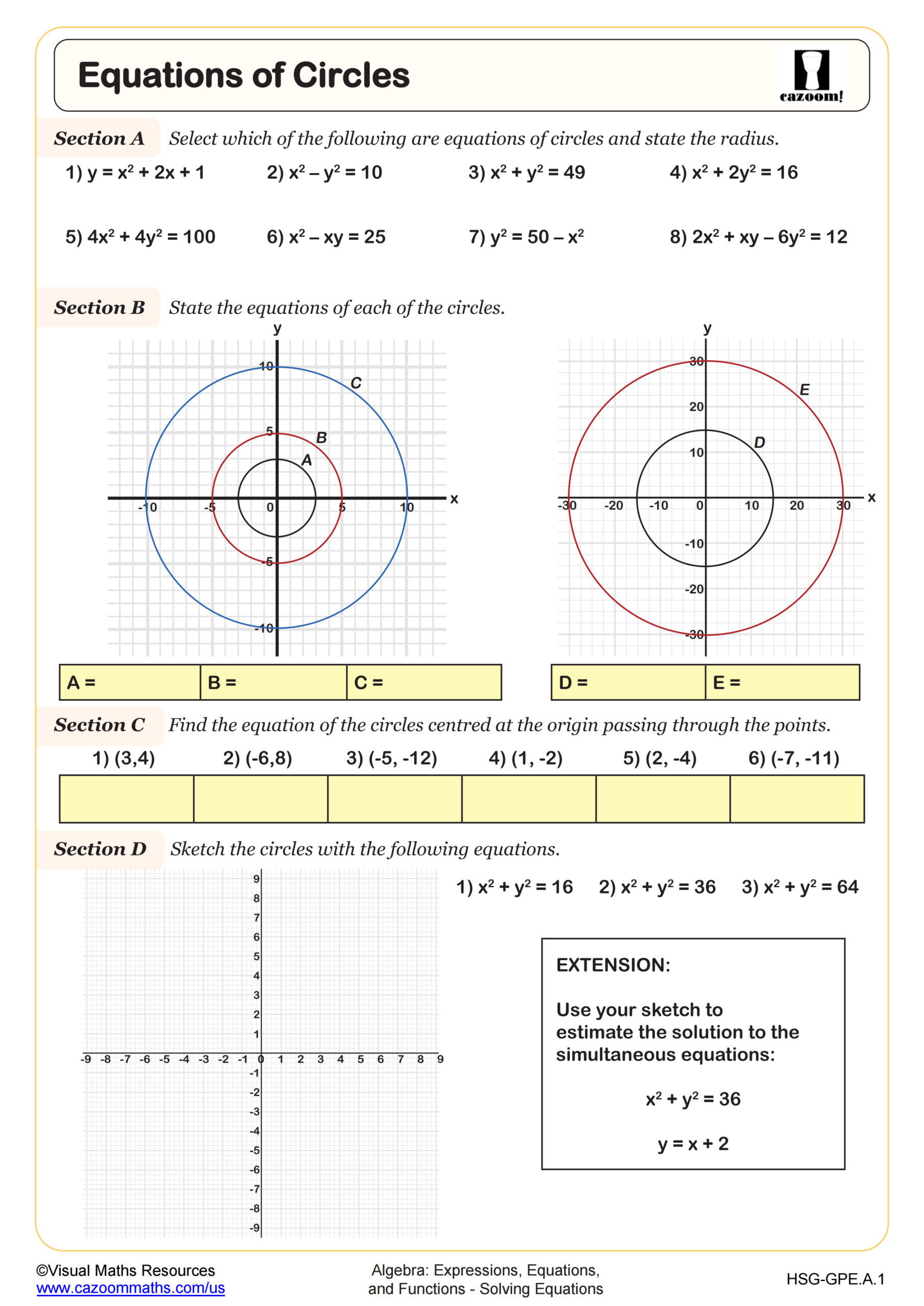
Equations of Circles
Equations of Lines Tangent to Circles
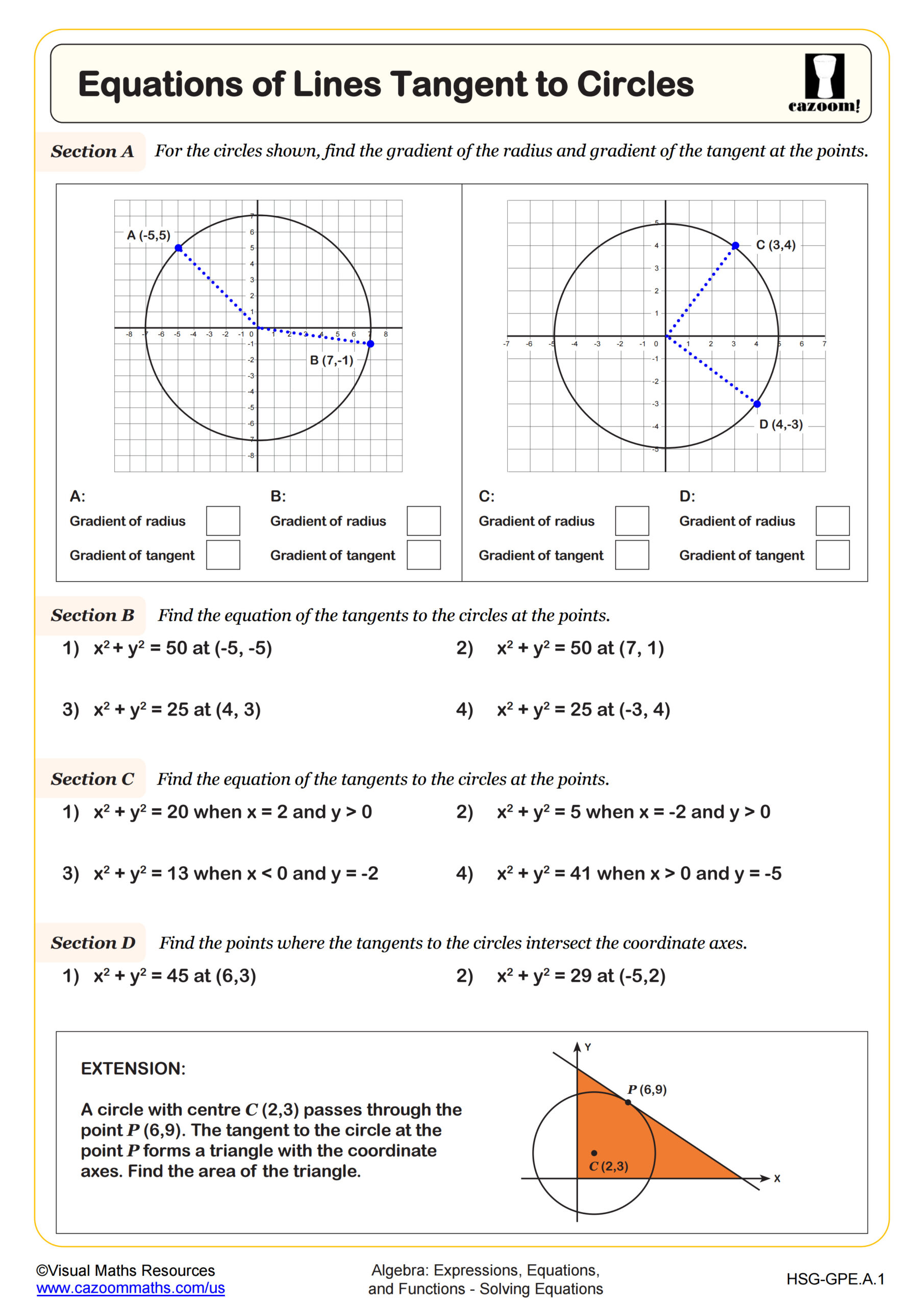
Formula for Area of Arc Length & Sectors
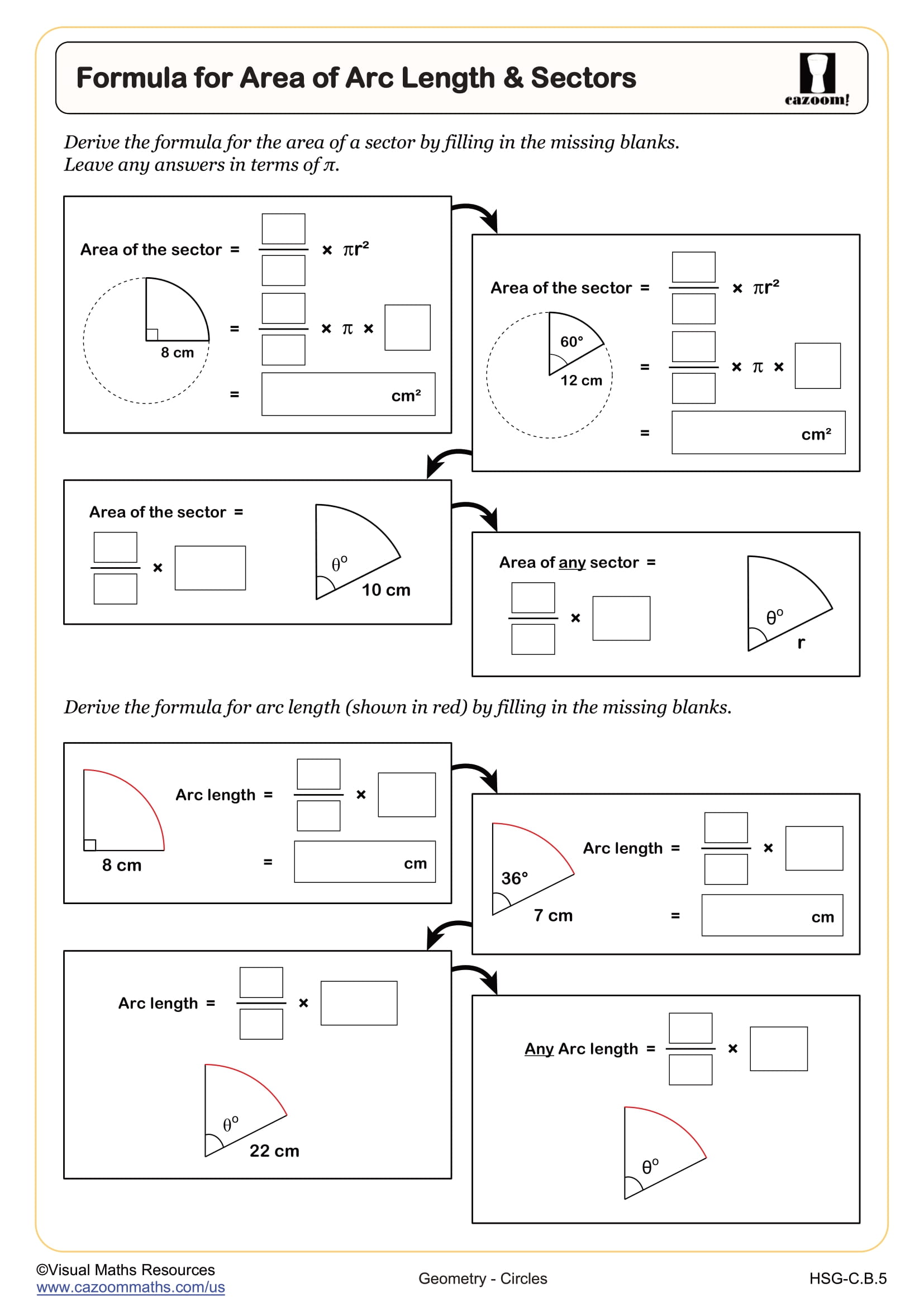
In Terms of Pi (B)
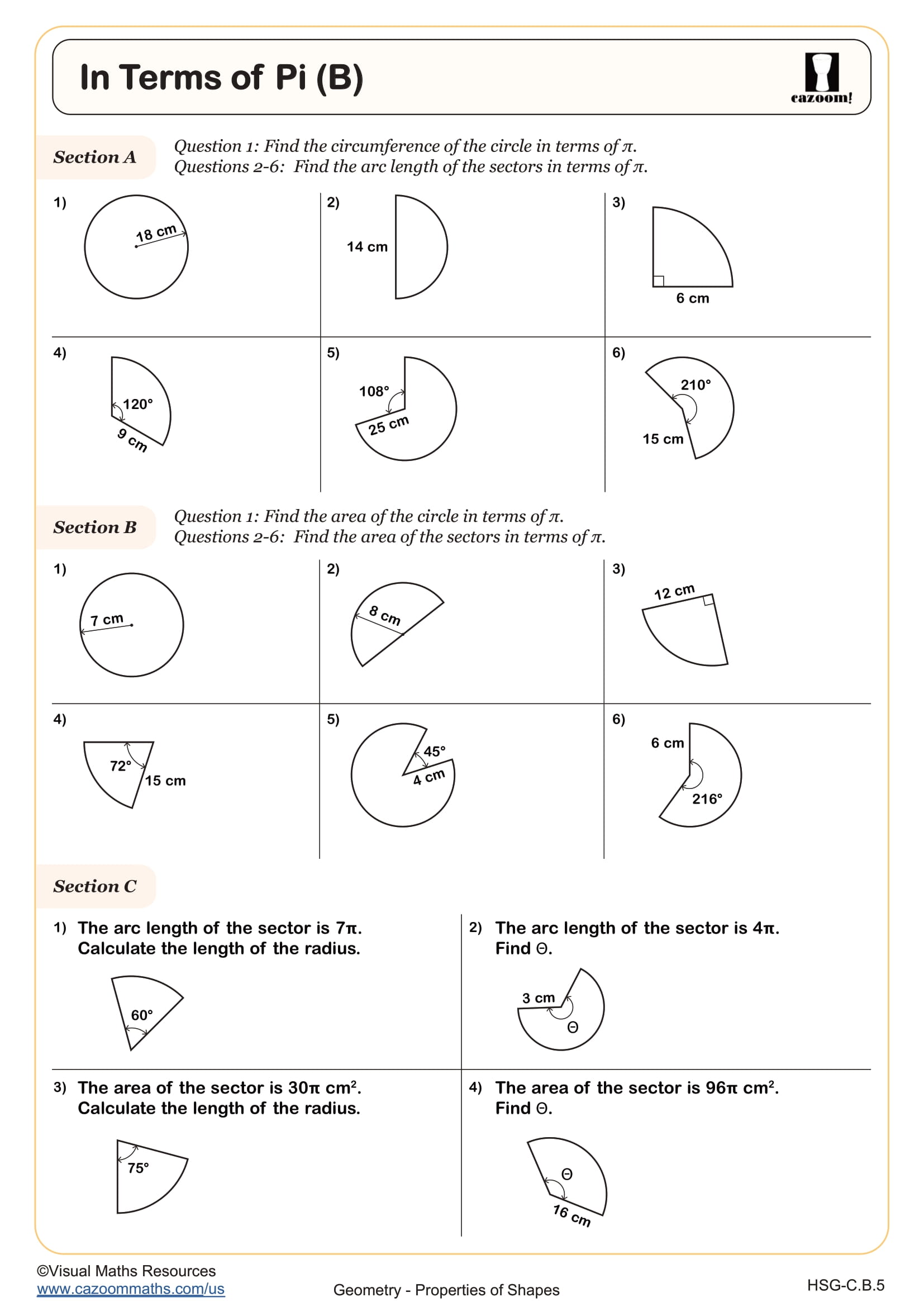
Introducing Radians
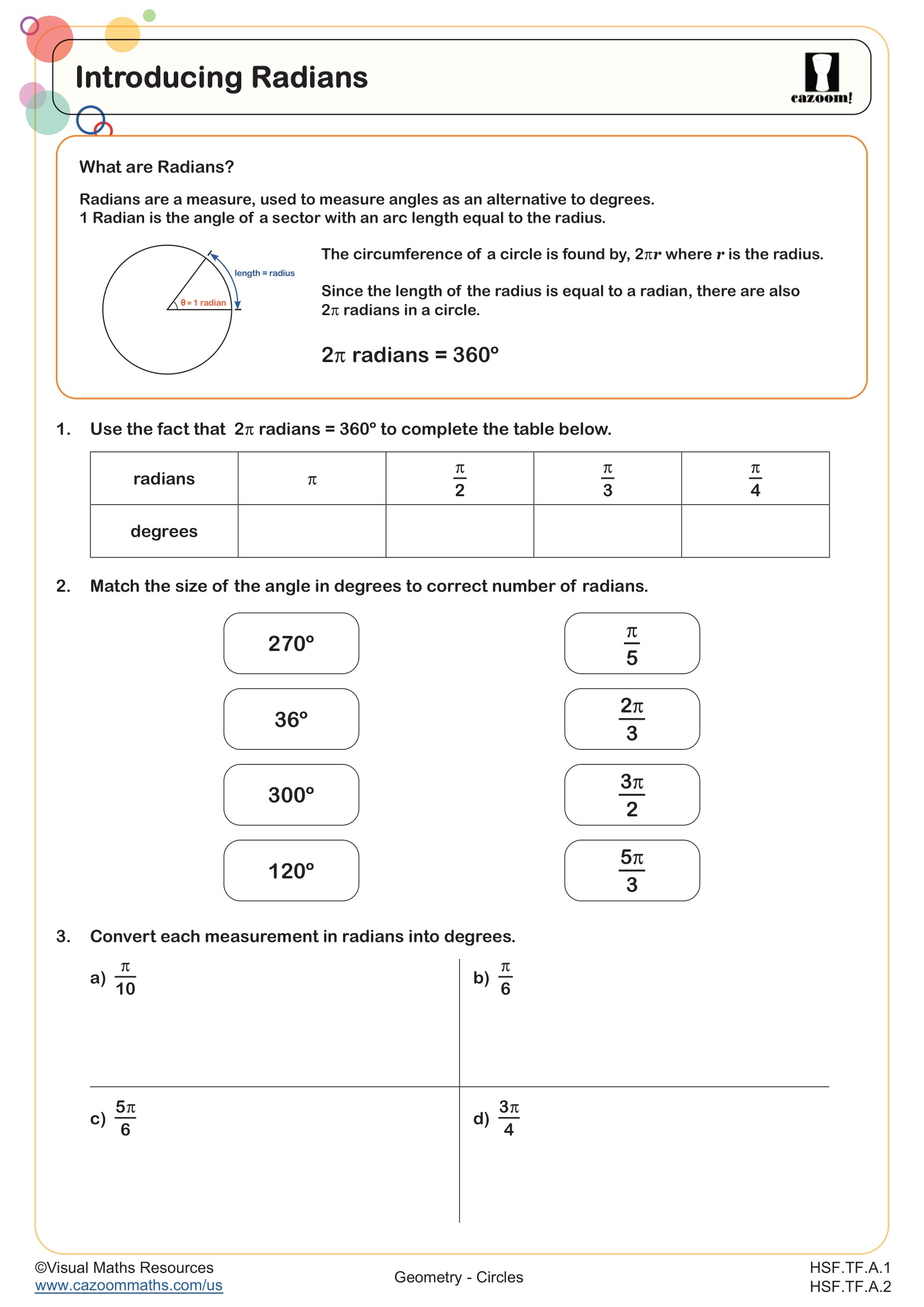
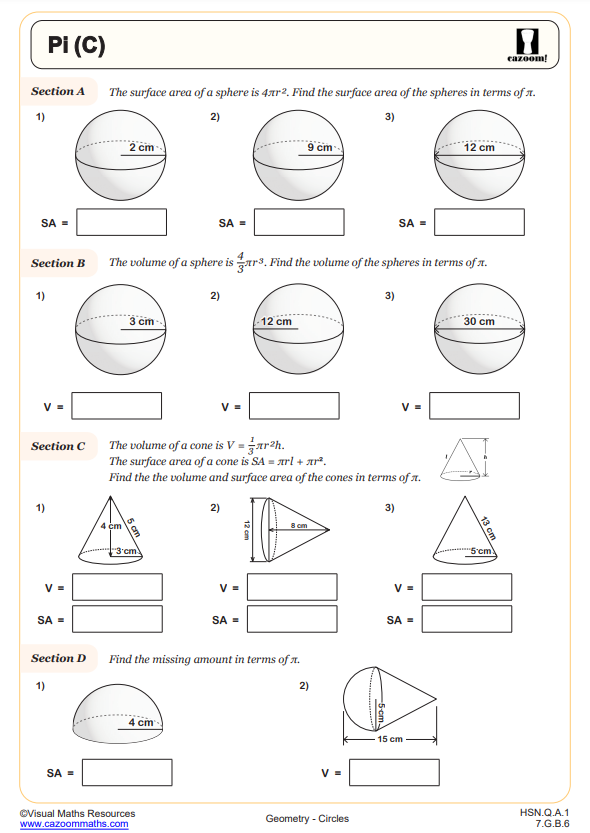
Pi (C)
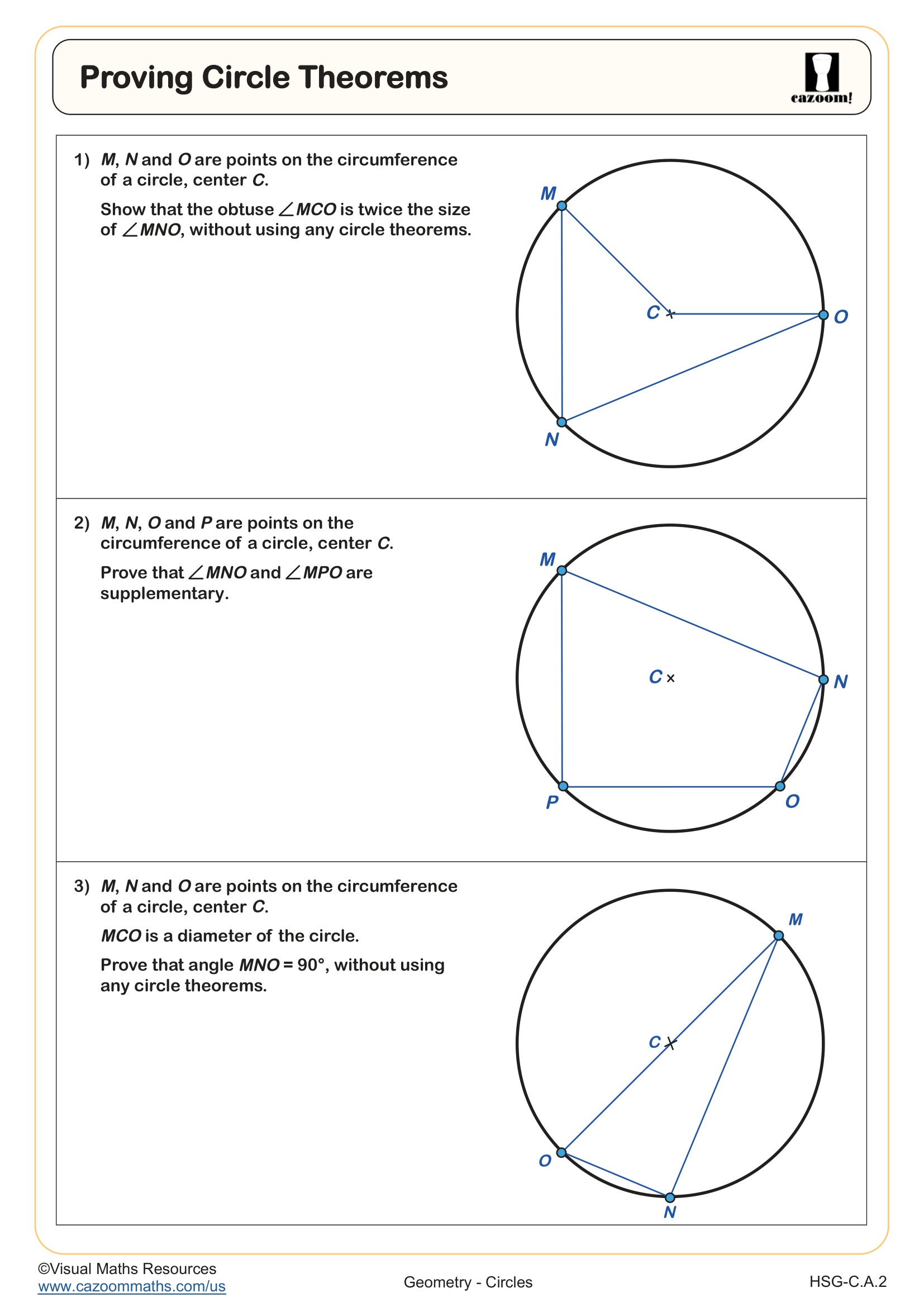
Proving Circle Theorems
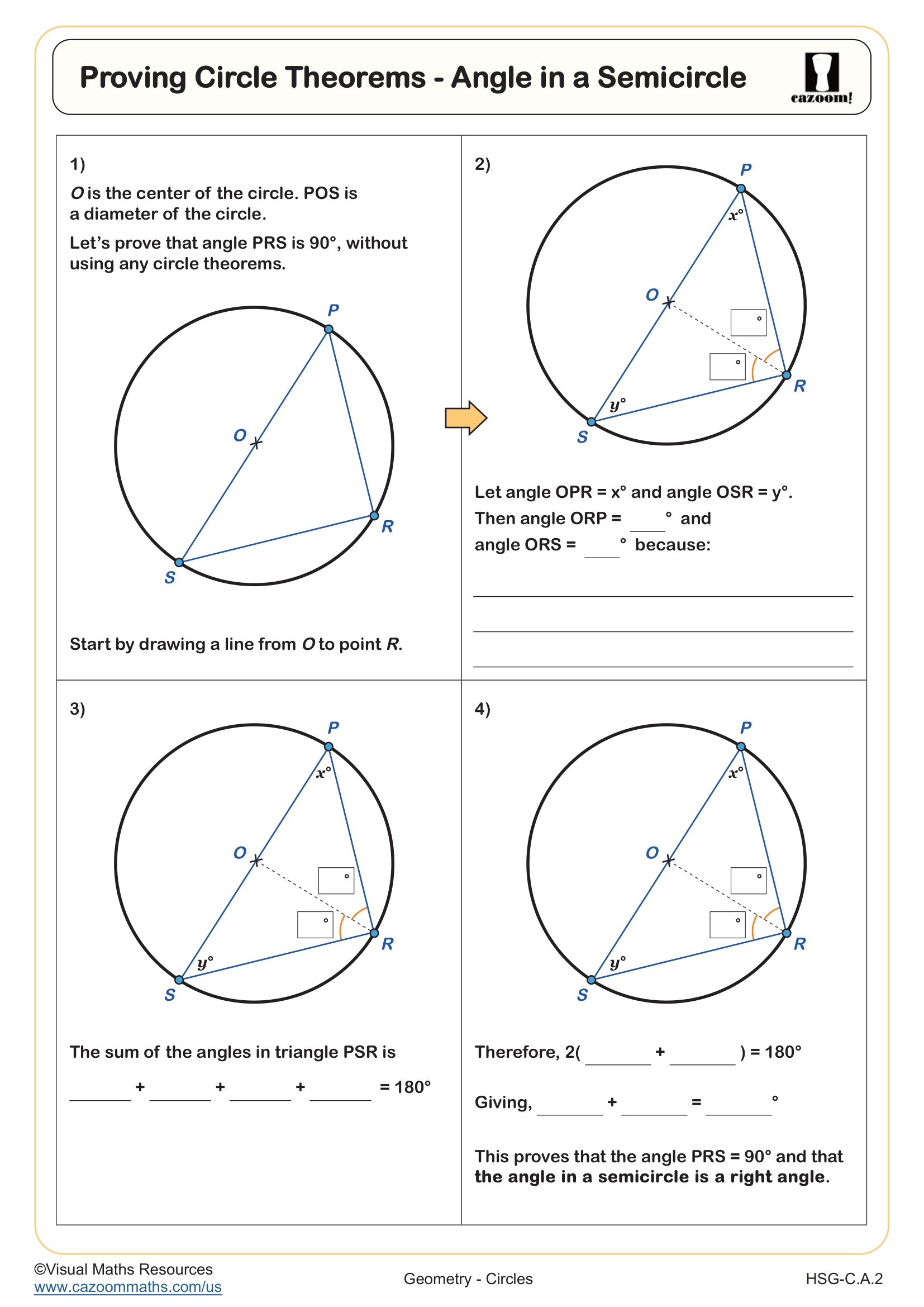
Proving Circle Theorems - Angle in a Semicircle
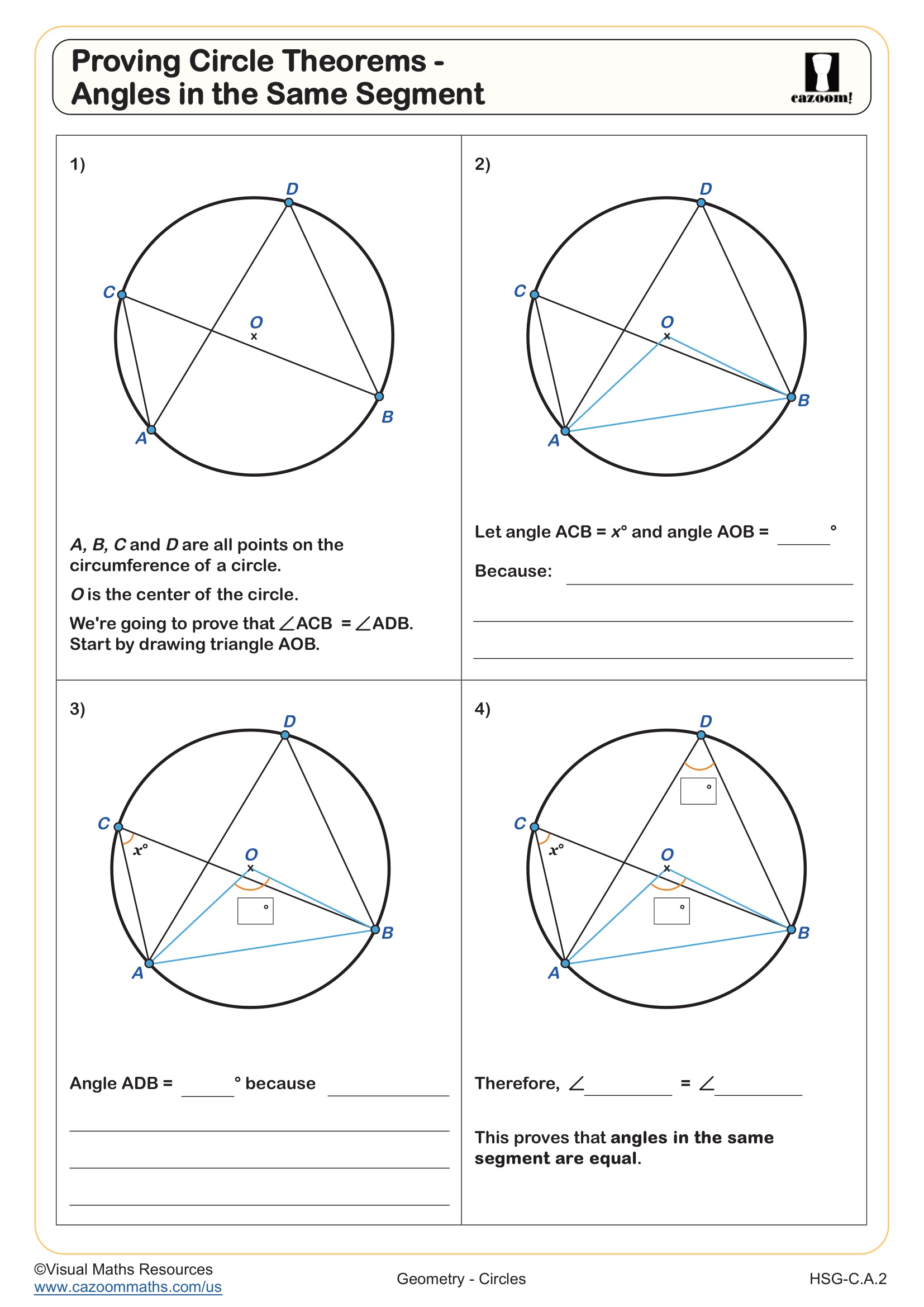
Proving Circle Theorems - Angles in the Same Segment
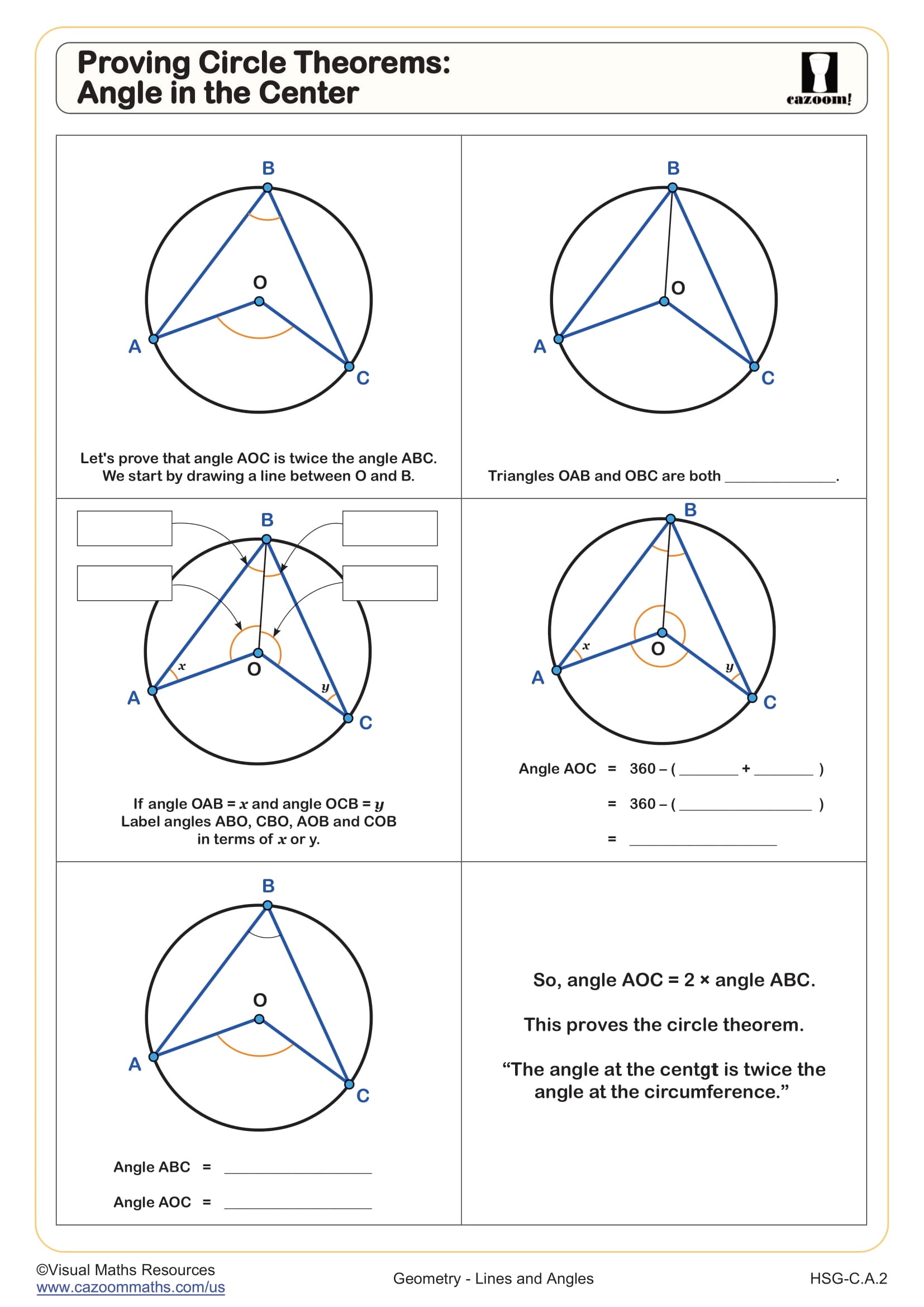
Proving Circle Theorems: Angle in the Center
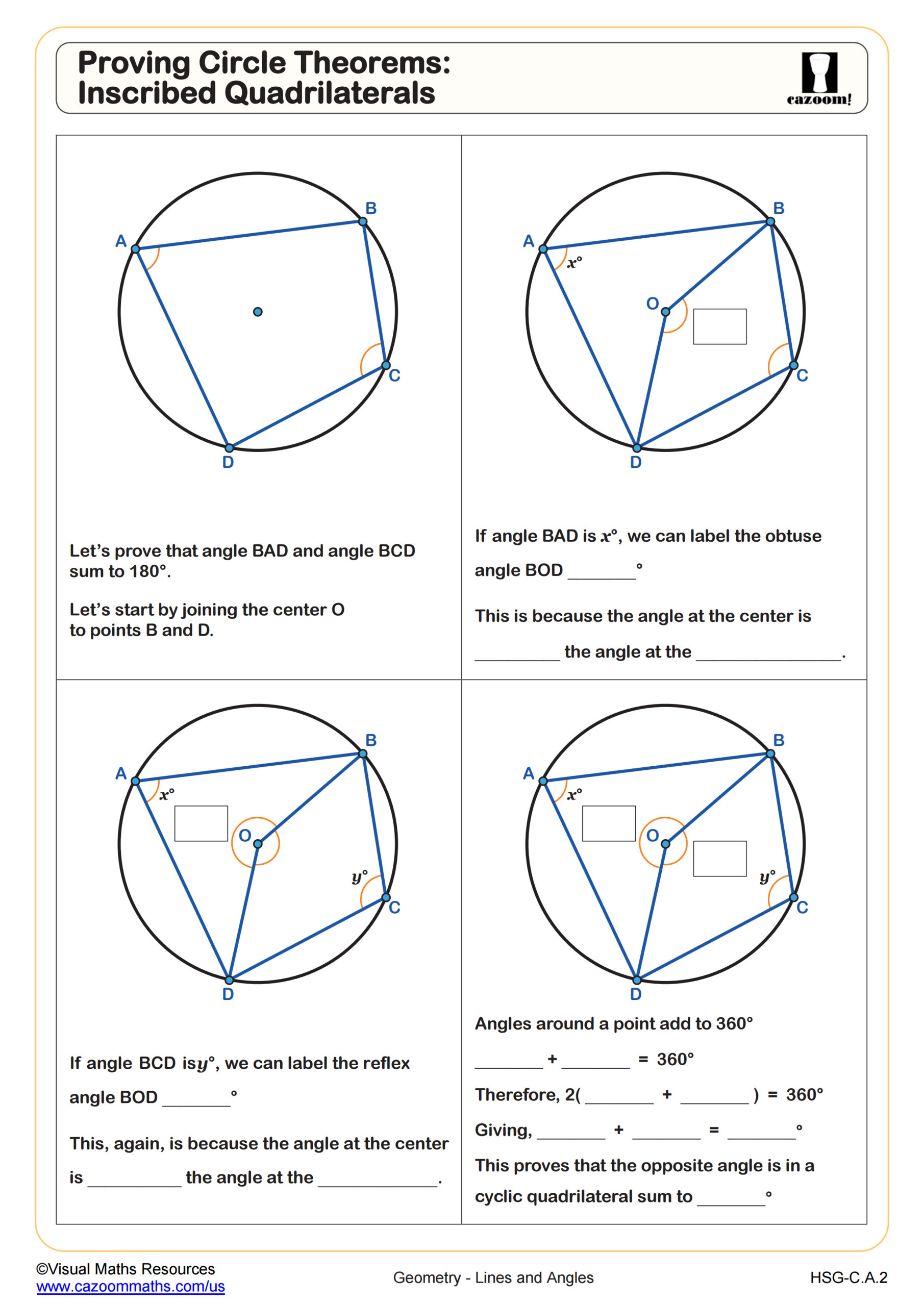
Proving Circle Theorems: Inscribed Quadrilaterals
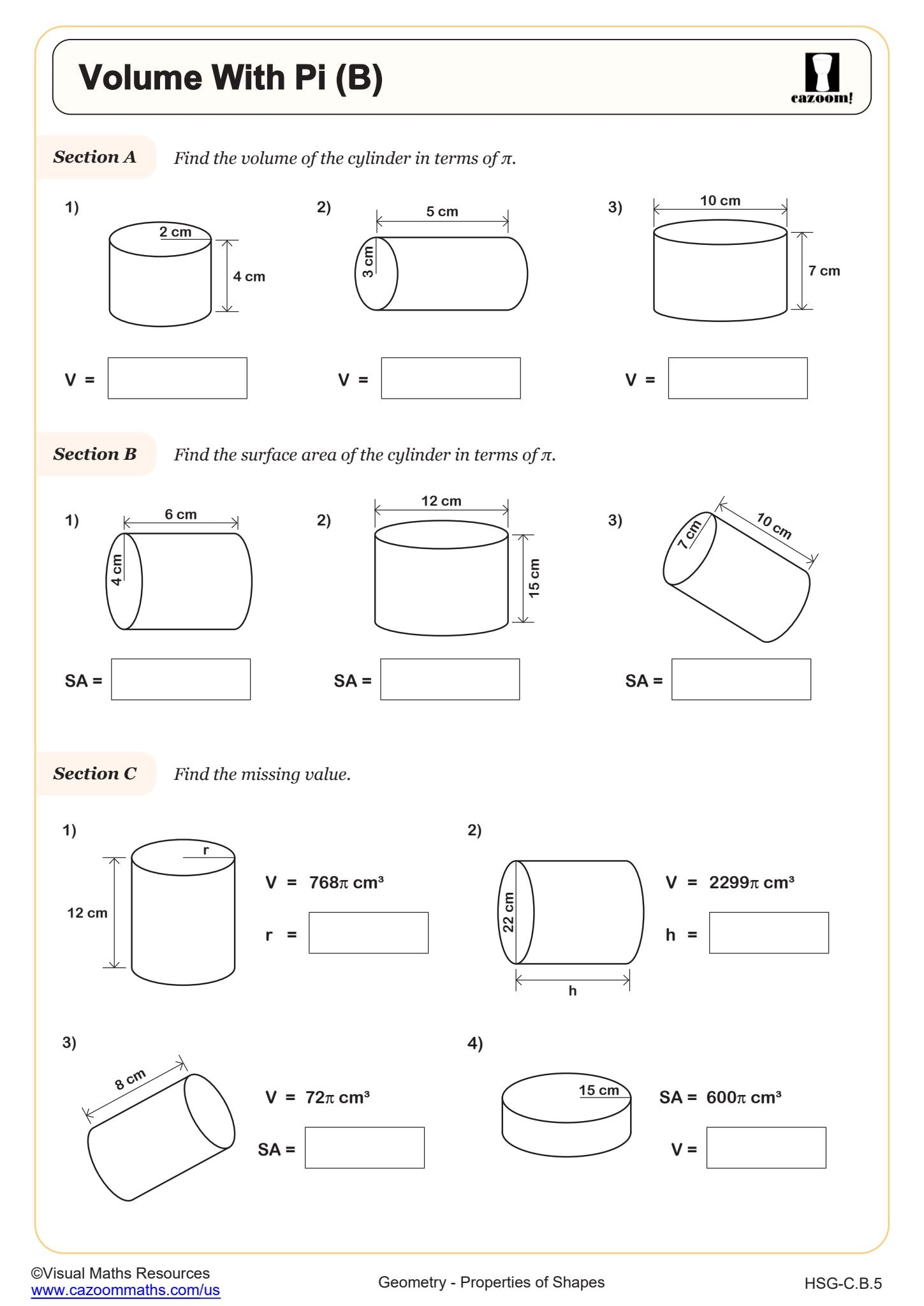
Volume With Pi (B)
Are You Teaching Geometry the Best Way? Try These Ready-to-Print High School Circle Resources
Students connect linear measurements to curved shapes through systematic practice with circles. They discover how radius, diameter, and circumference relate to each other mathematically. This foundation from middle school expands into sophisticated proofs and applications of coordinate geometry.
Working with arc lengths and sectors prepares students for concepts in trigonometry and calculus. They learn to think abstractly about space while maintaining precision in calculations. These skills transfer directly to physics problems involving rotation and circular motion.
Classroom-Ready High School Circle Activities for Lessons, Homework, and Revision
These worksheets take students from measuring circle properties to proving geometric theorems. Learners begin by calculating radius, diameter, circumference, and area before progressing to arcs, sectors, and circle theorems. Each worksheet includes detailed, worked examples demonstrating every step. Covering measurement, Pi investigations, coordinate geometry, and formal proofs, this collection helps students understand both the practical and theoretical aspects of circles through structured exploration and reasoning.
Why Schools Choose Cazoom Math Circle Worksheets Over Other Resources
Teachers save preparation time with ready-to-use materials designed for different ability levels. The worksheets offer natural differentiation through varied difficulty within each topic area. Extension problems challenge advanced students, while foundational exercises support those who need extra practice.
Solution guides reveal mathematical reasoning behind each step, not just final answers. This detailed feedback accelerates grading and helps identify common misconceptions promptly. Teachers use these sheets flexibly for homework assignments, classroom activities, or formative assessments. The clear topic progression makes unit planning straightforward without curriculum conflicts. Materials print cleanly and photocopy well for immediate classroom distribution.
Beyond Classrooms: Where These Skills Show Up in Real Life
Students apply circle measurements to calculate distances when they work with maps and GPS navigation systems. Engineers use these principles to design wheels, gears, and rotating machinery systems. Athletes, together with coaches, study circular tracks and field dimensions to develop their training methods. The concepts of geometry and trigonometry are applied in various fields, including architecture, manufacturing, and technology.
• Calculating pizza sizes and slice portions
• Determining material needs for circular gardens
• Designing round tables and seating
• Measuring tire rotation and vehicle speed