High School Circle Worksheets
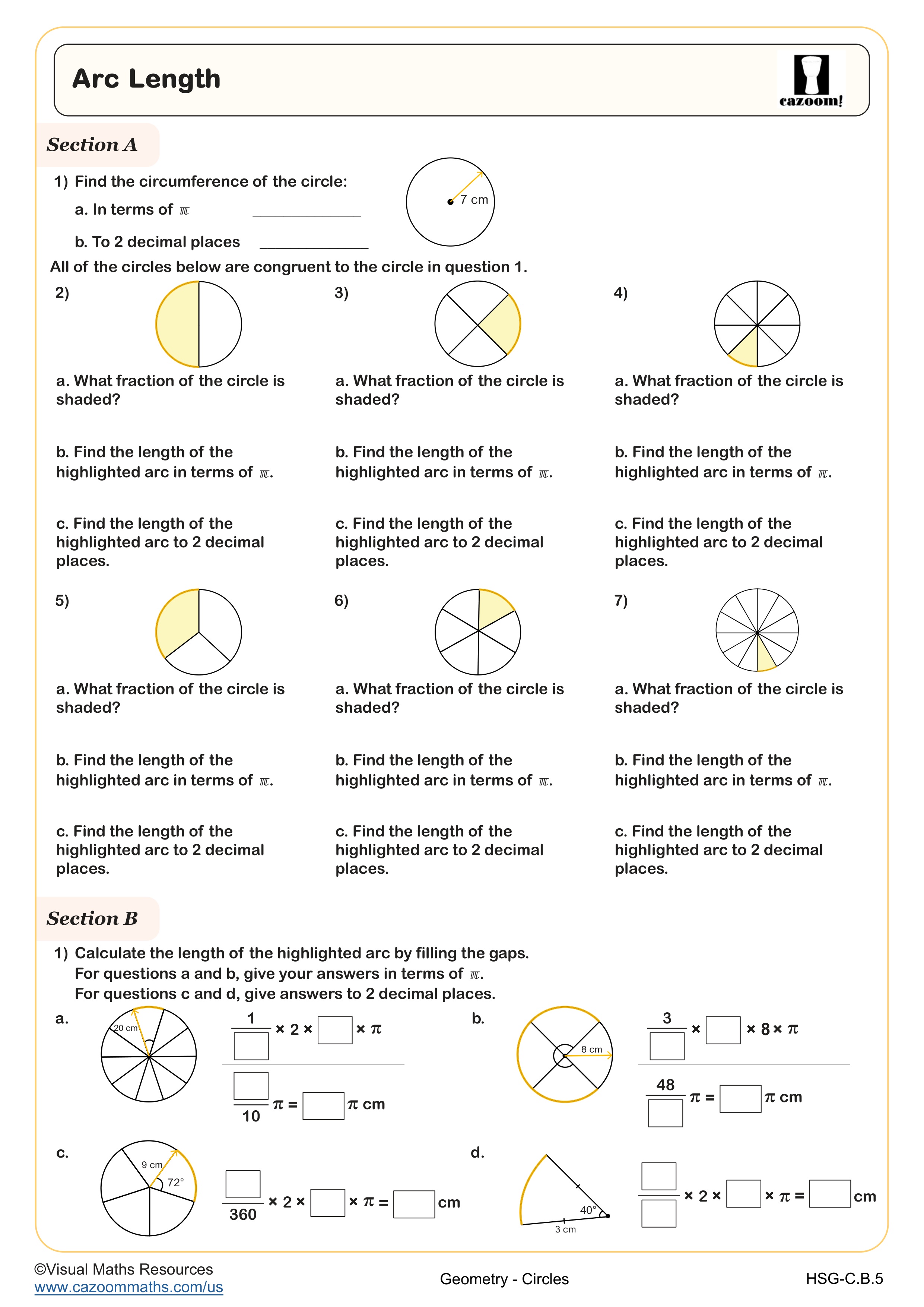
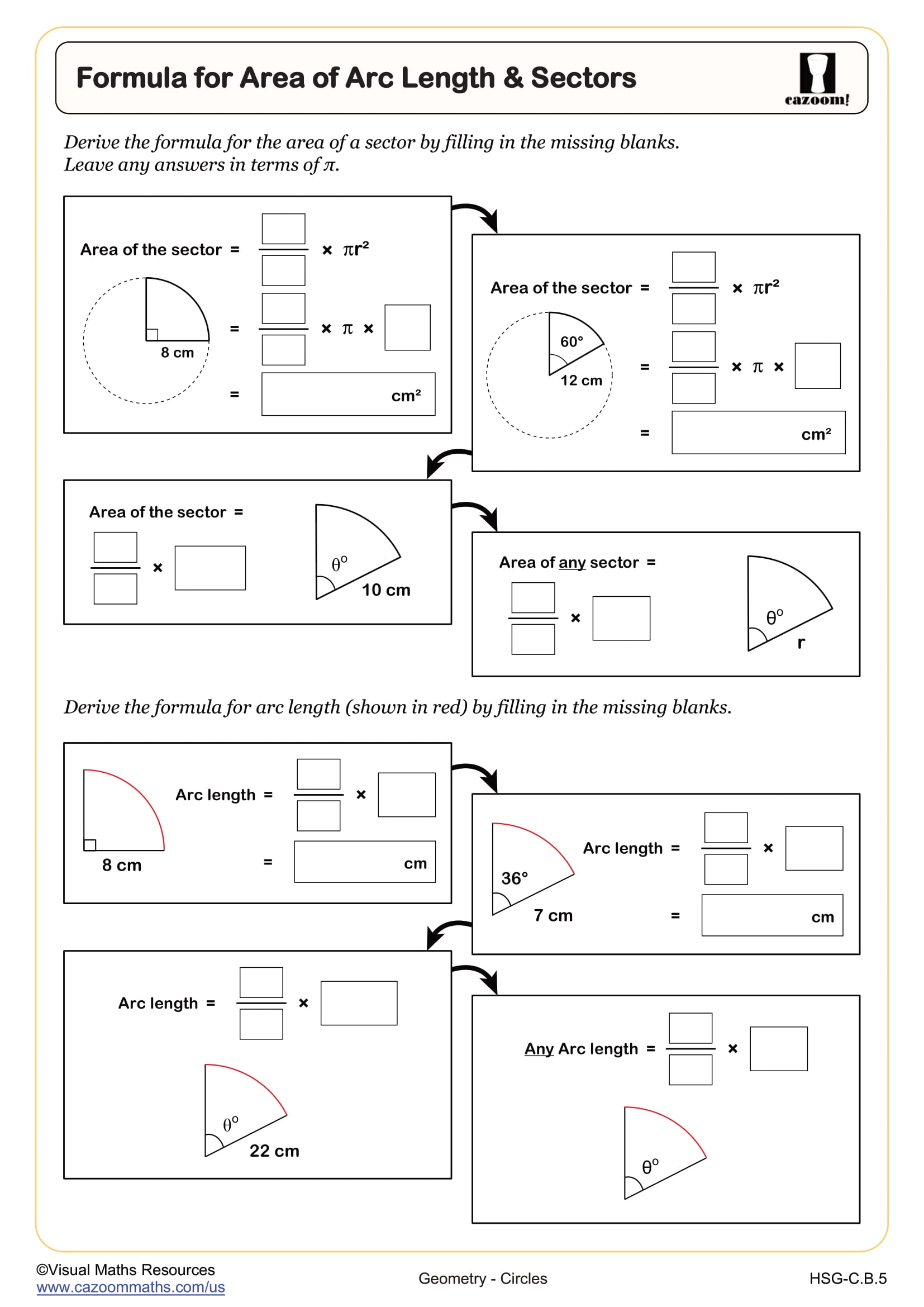
Arc Length
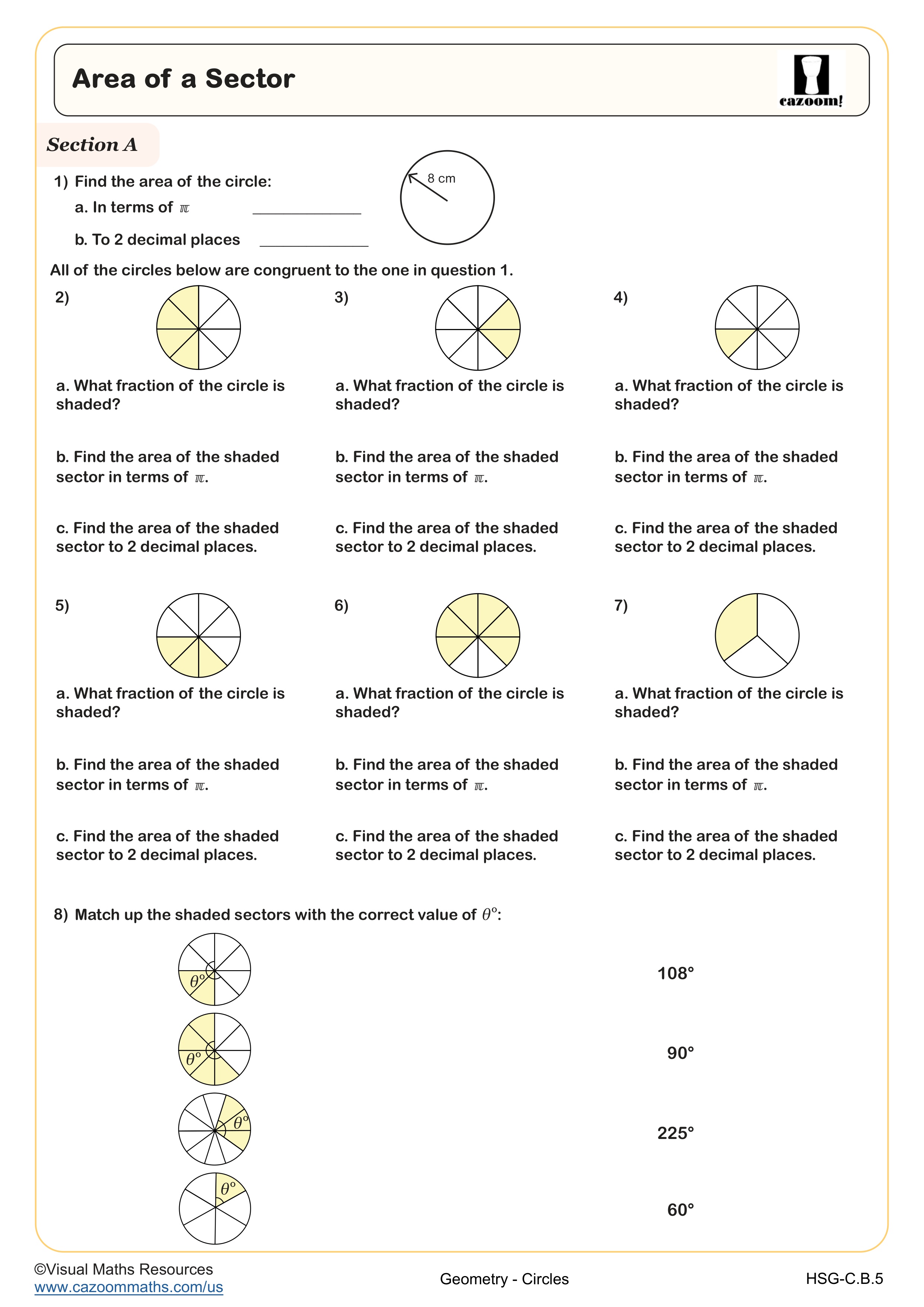
Area of a Sector
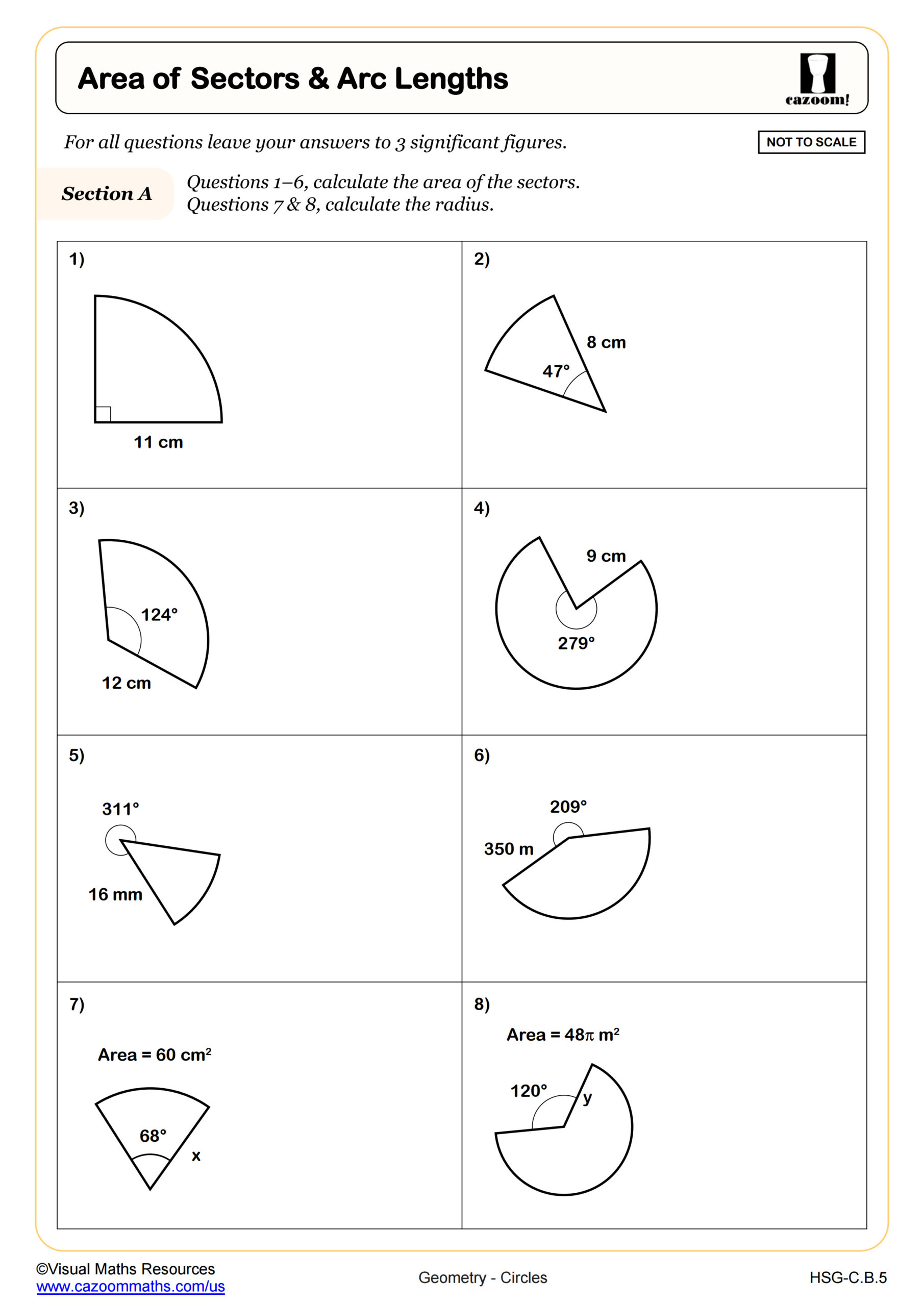
Area of Arc Lengths & Sectors
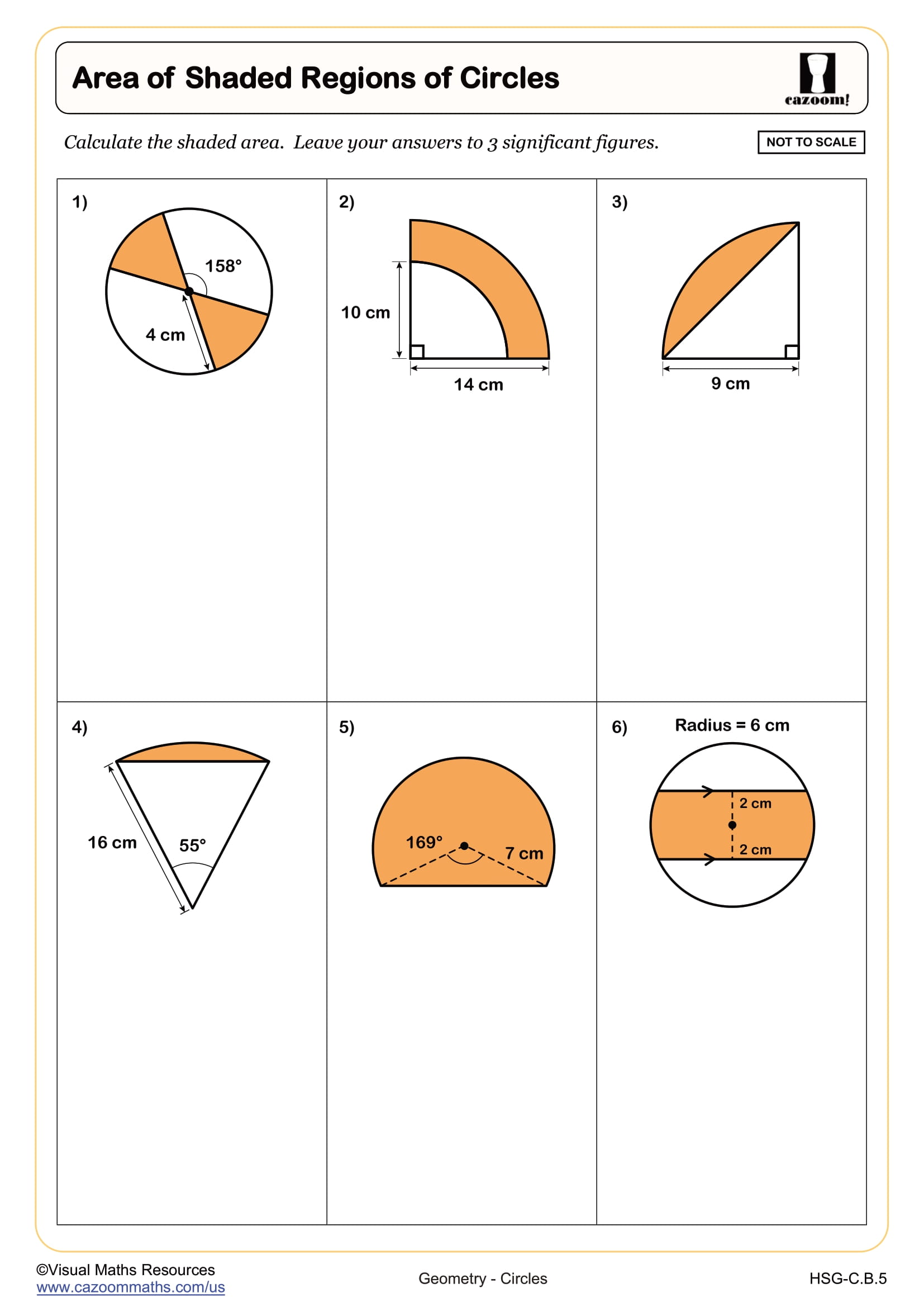
Area of Shaded Regions of Circles
Area of Shaded Regions of Circles (with clues)
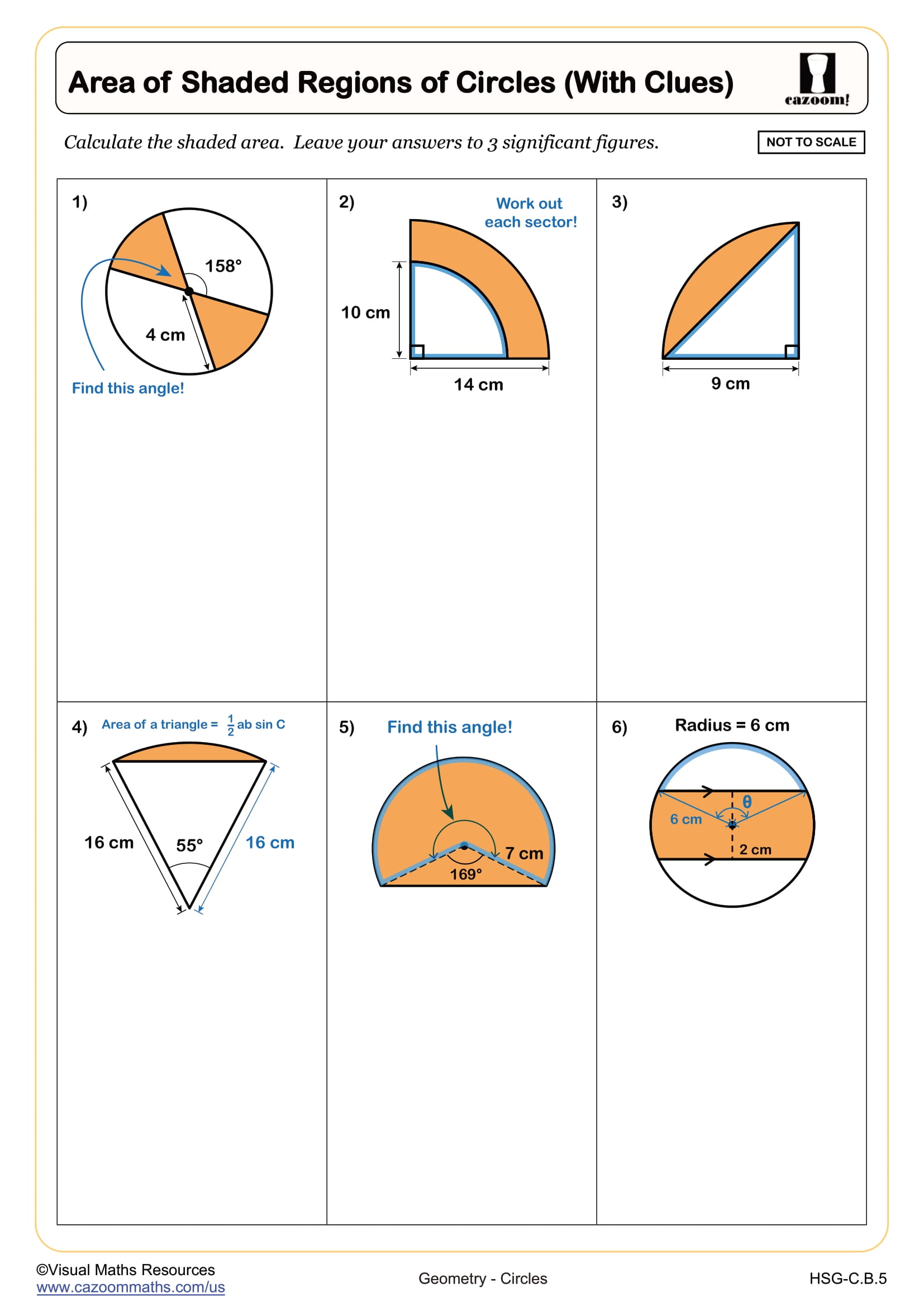
Area With Pi (A)
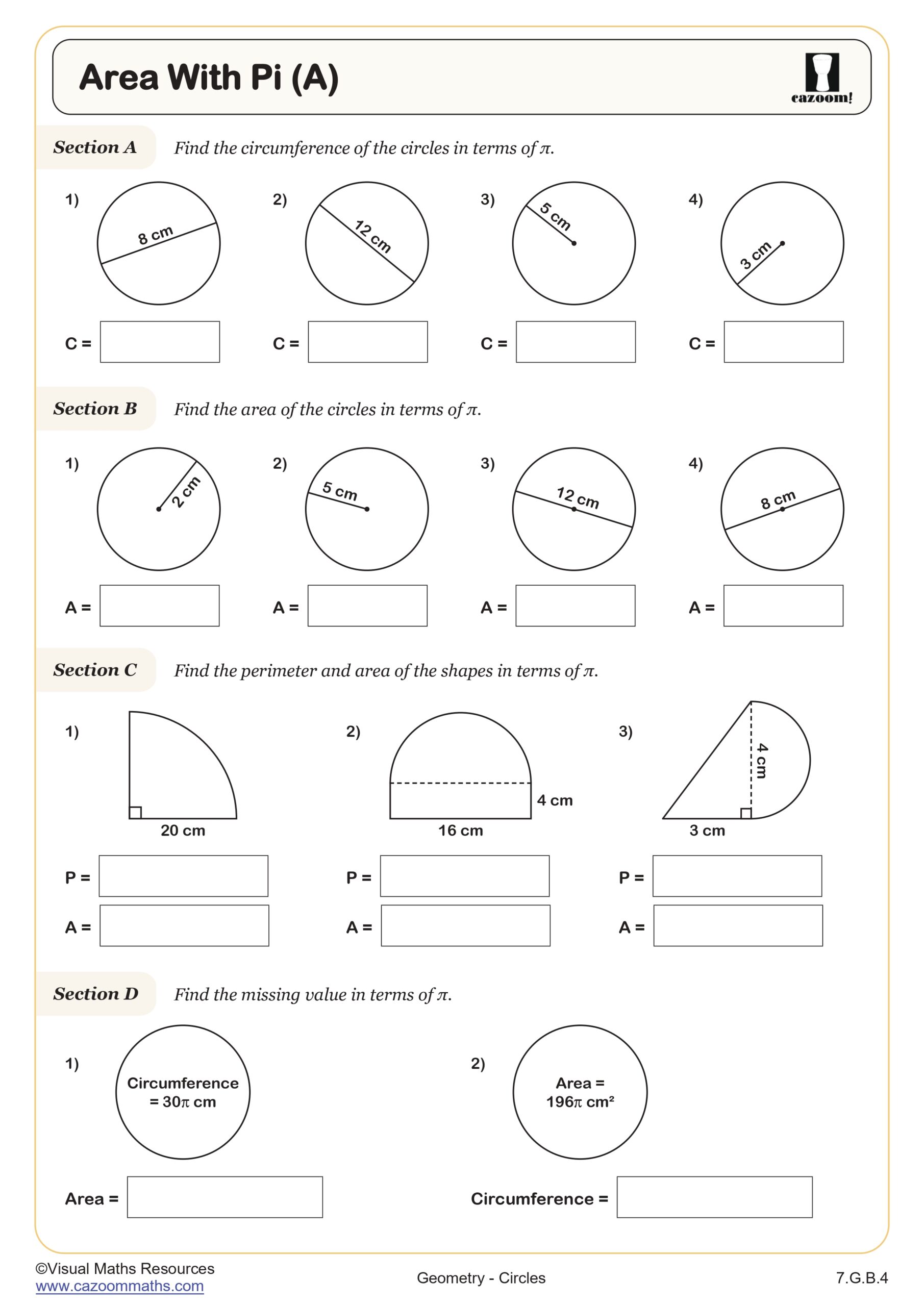
Circle Investigation - Discovering Pi
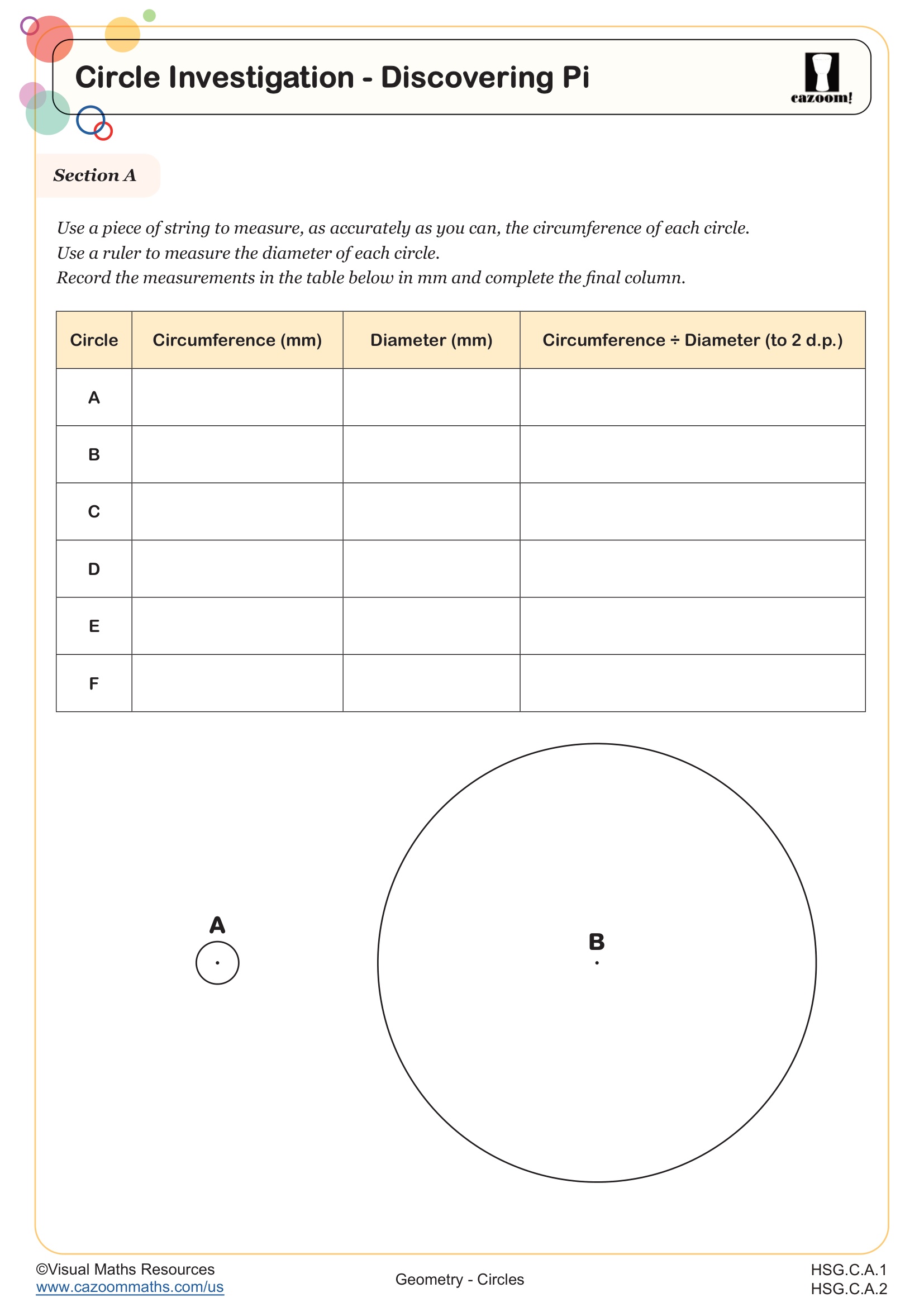
Circle Theorems (A)
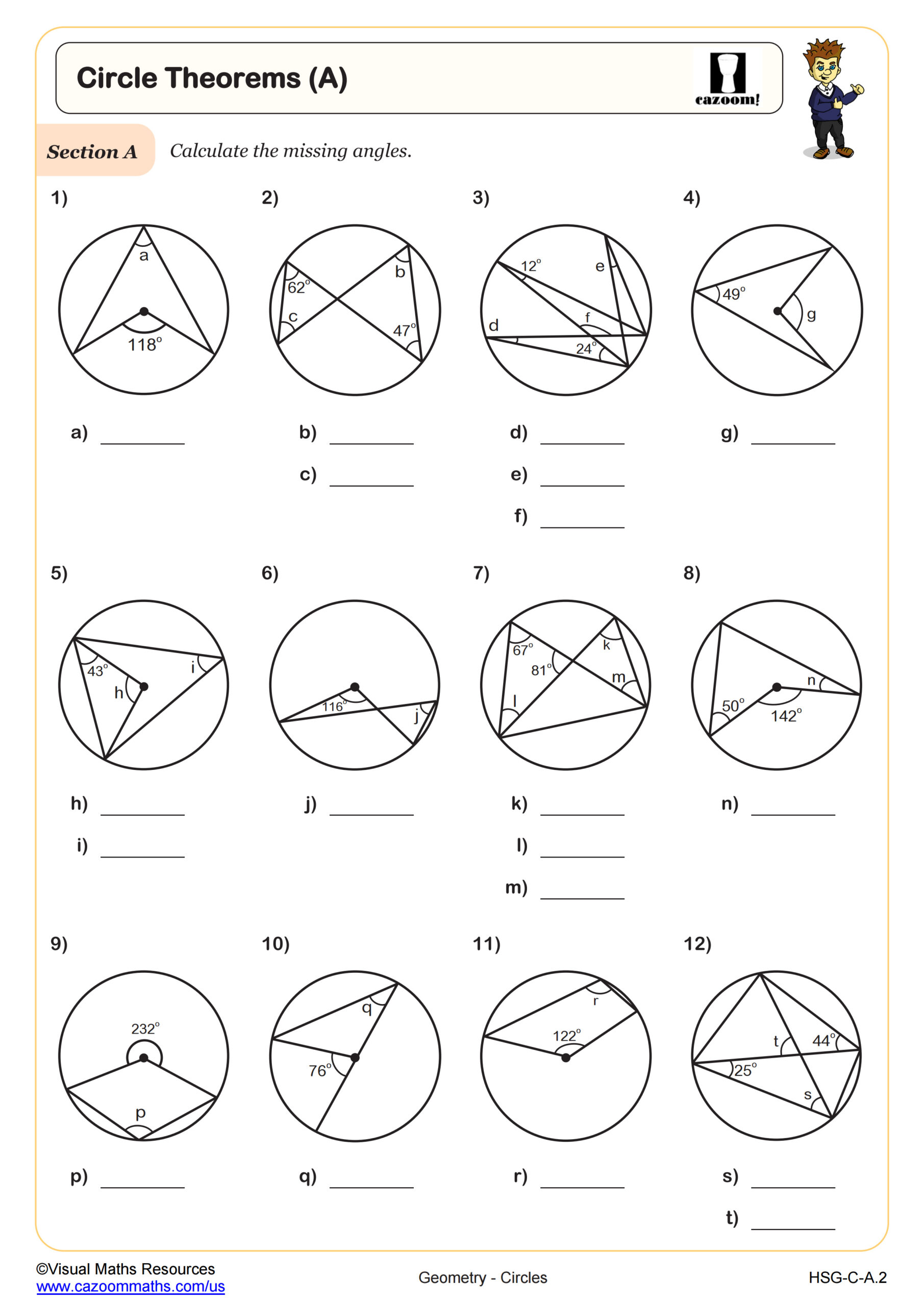
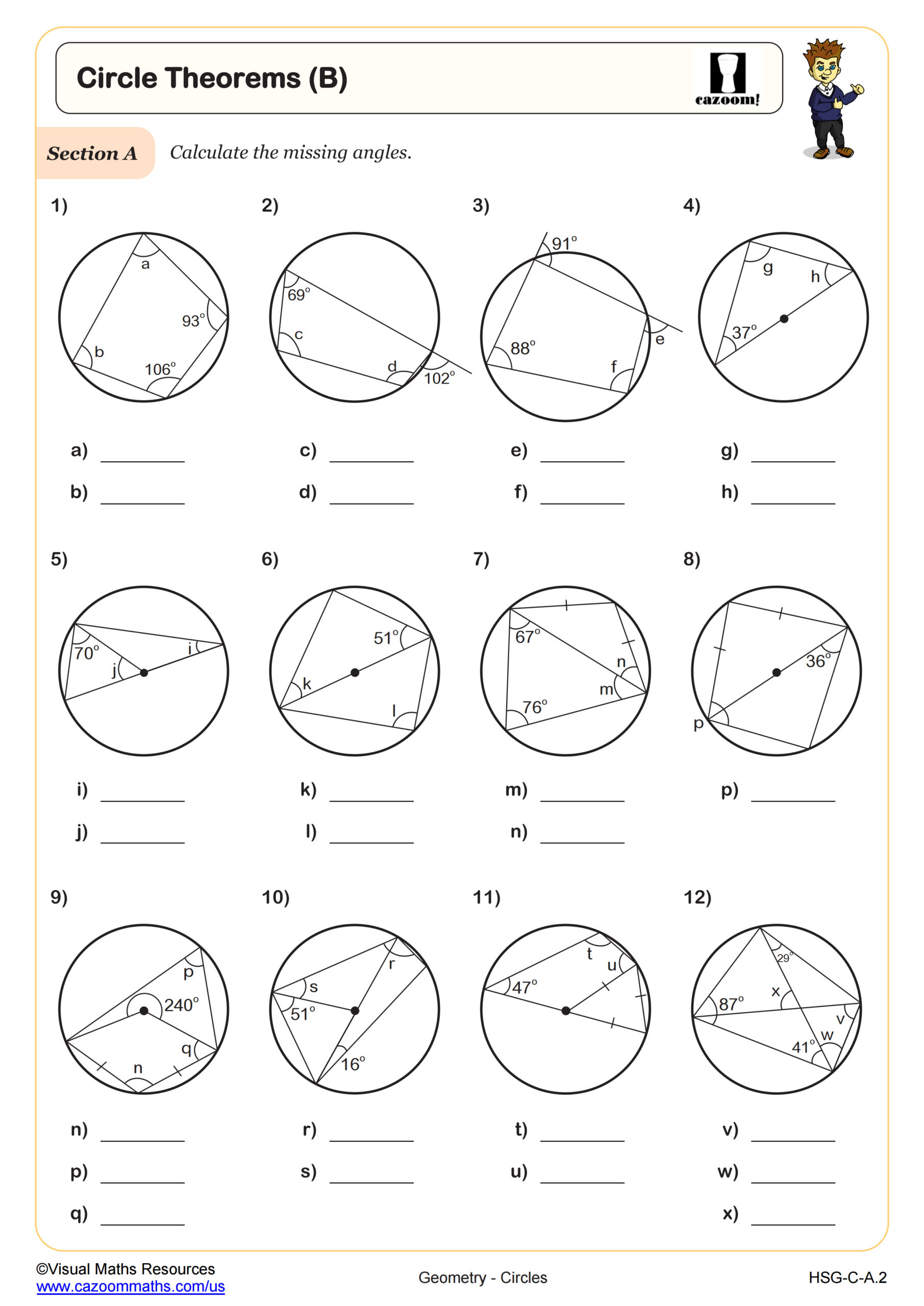
Circle Theorems (B)
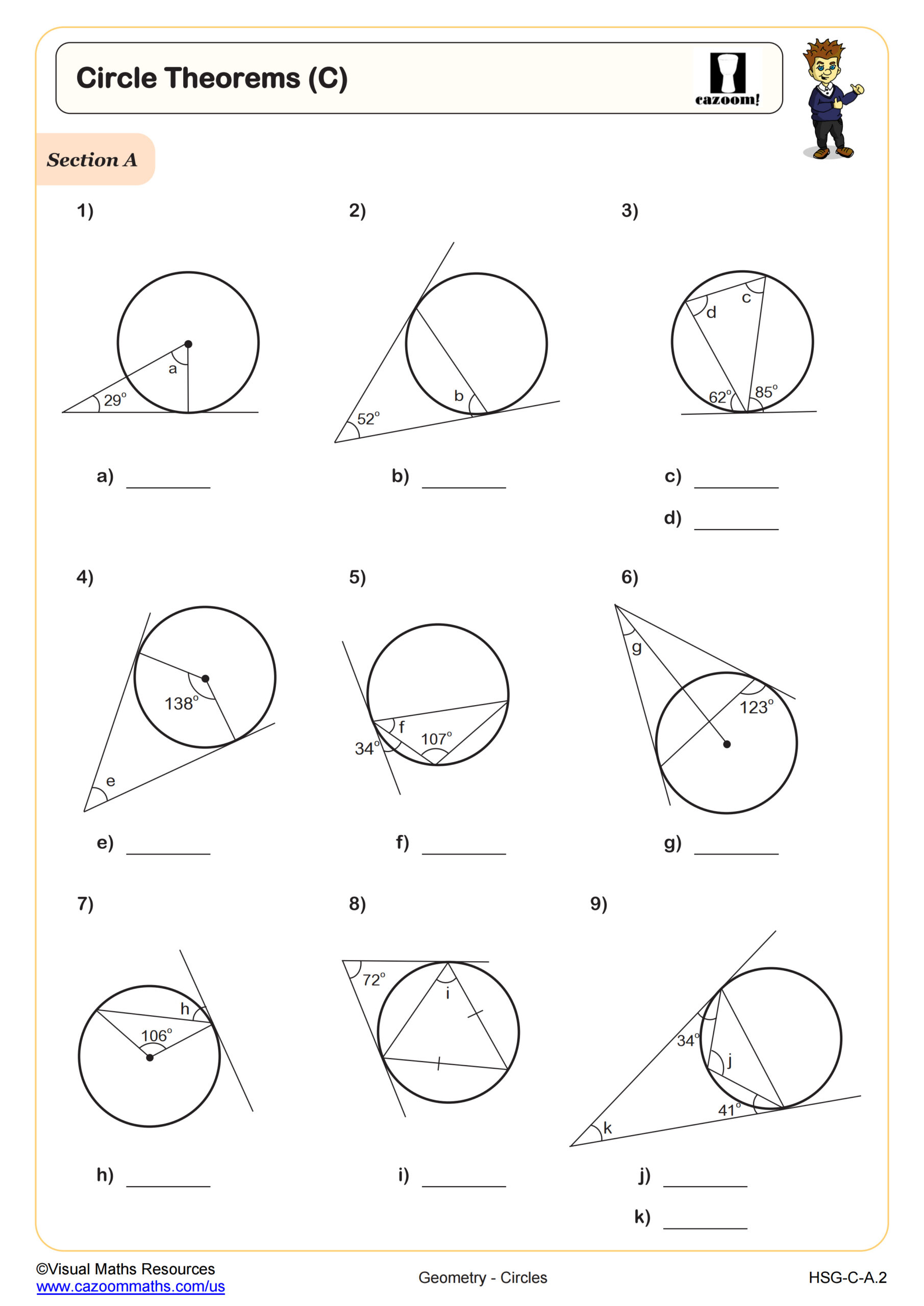
Circle Theorems (C)
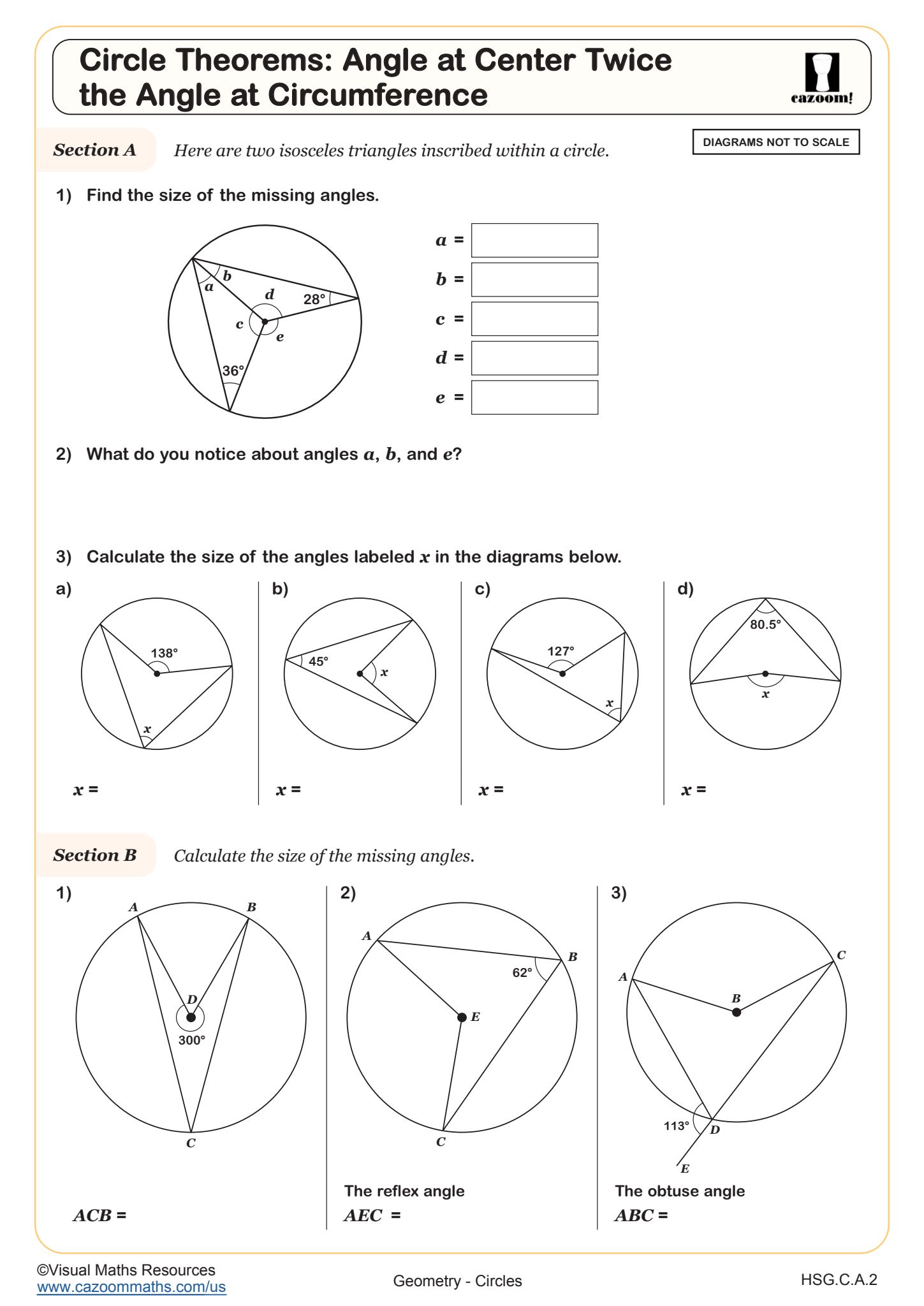
Circle Theorems: Angle at Center Twice the Angle at Circumference
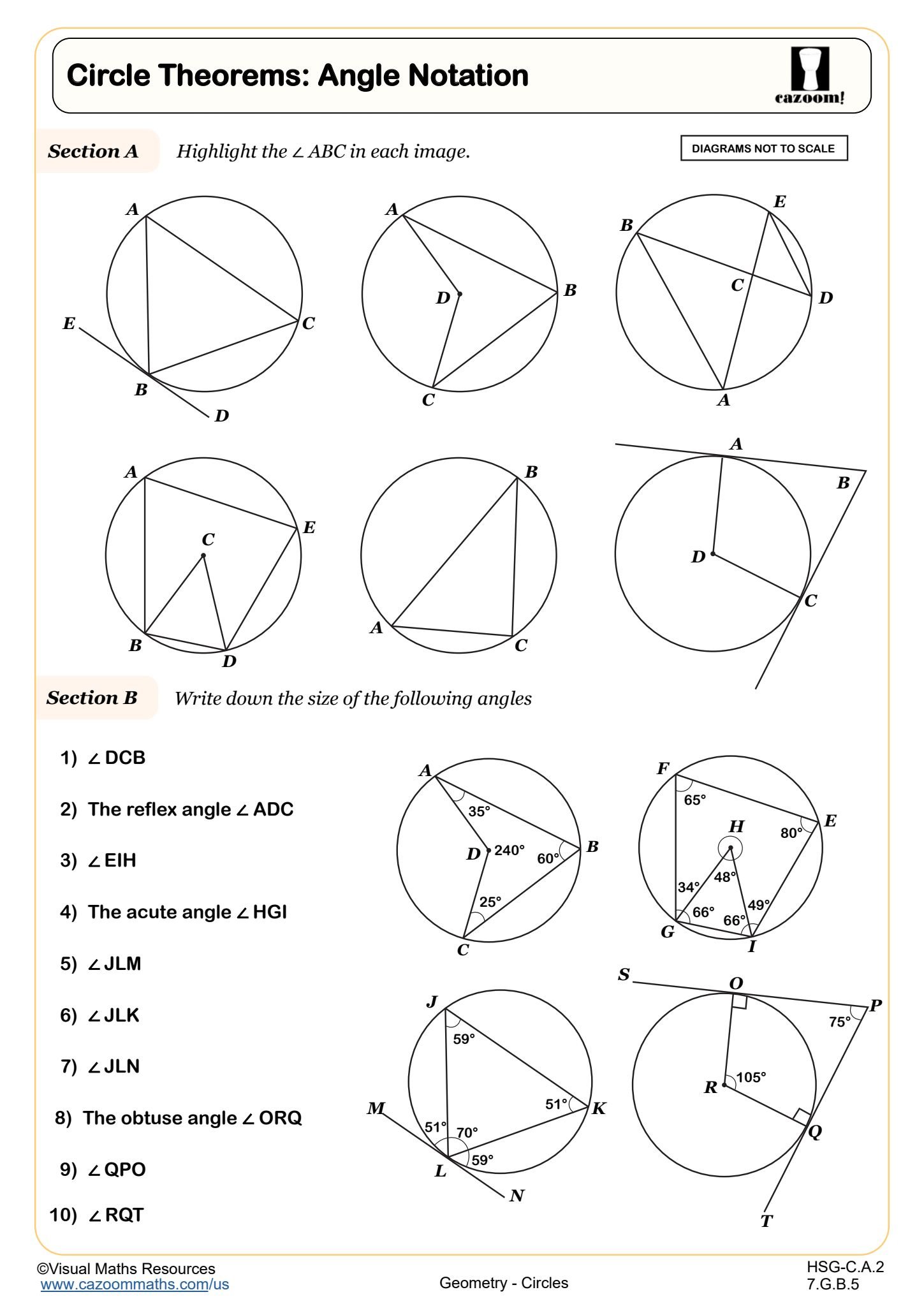
Circle Theorems: Angle Notation
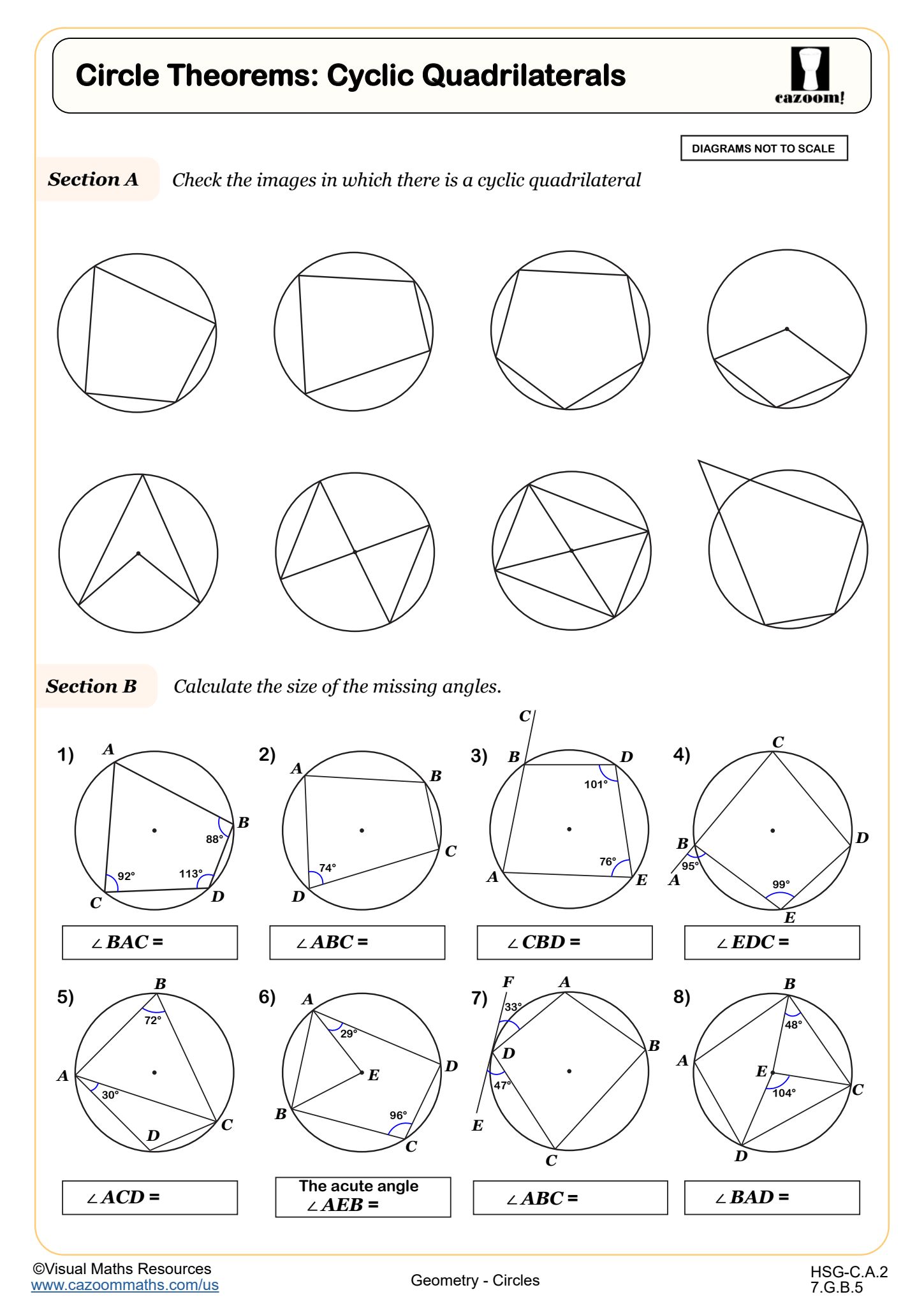
Circle Theorems: Cyclic Quadrilaterals
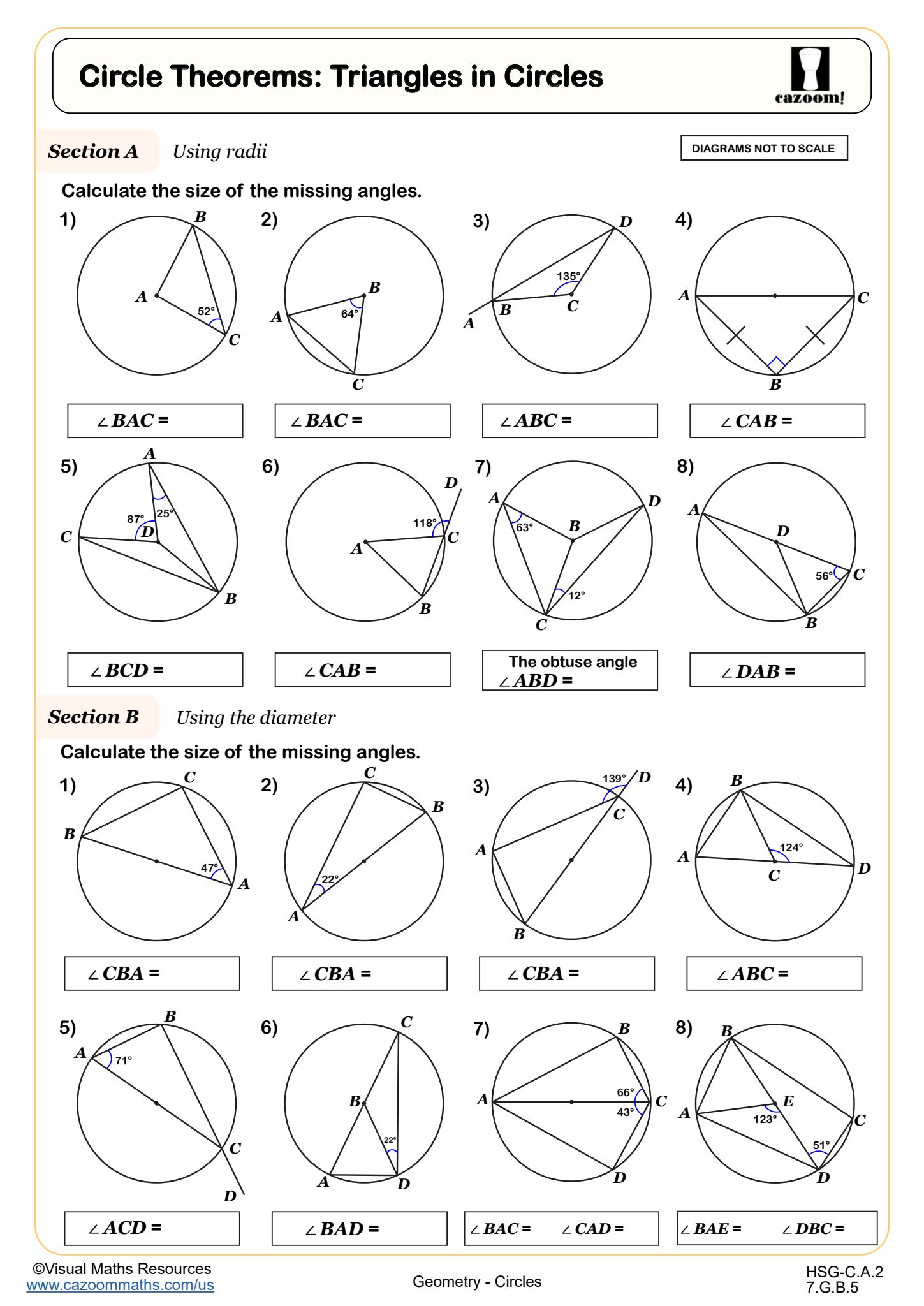
Circle Theorems: Triangles in Circles
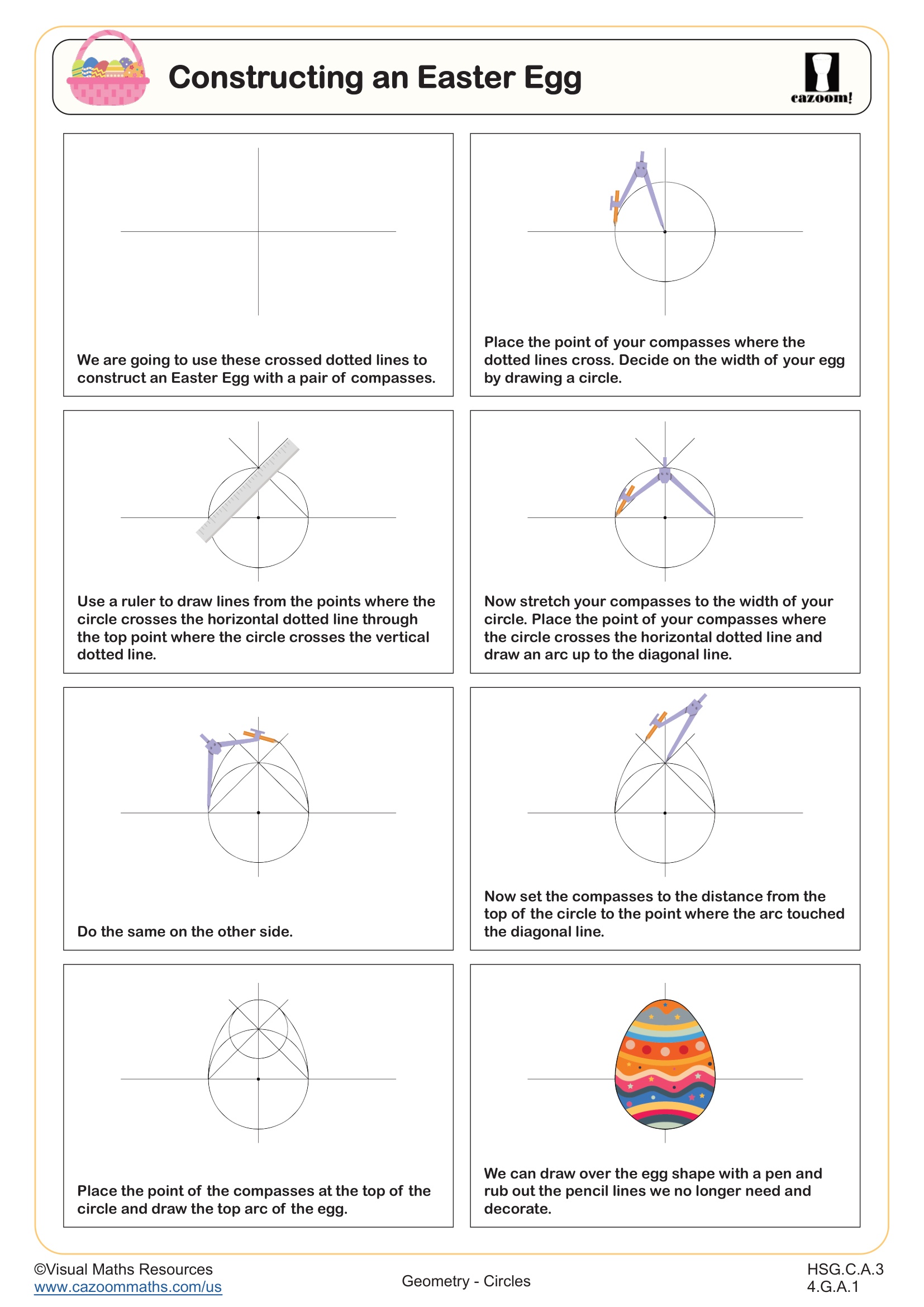
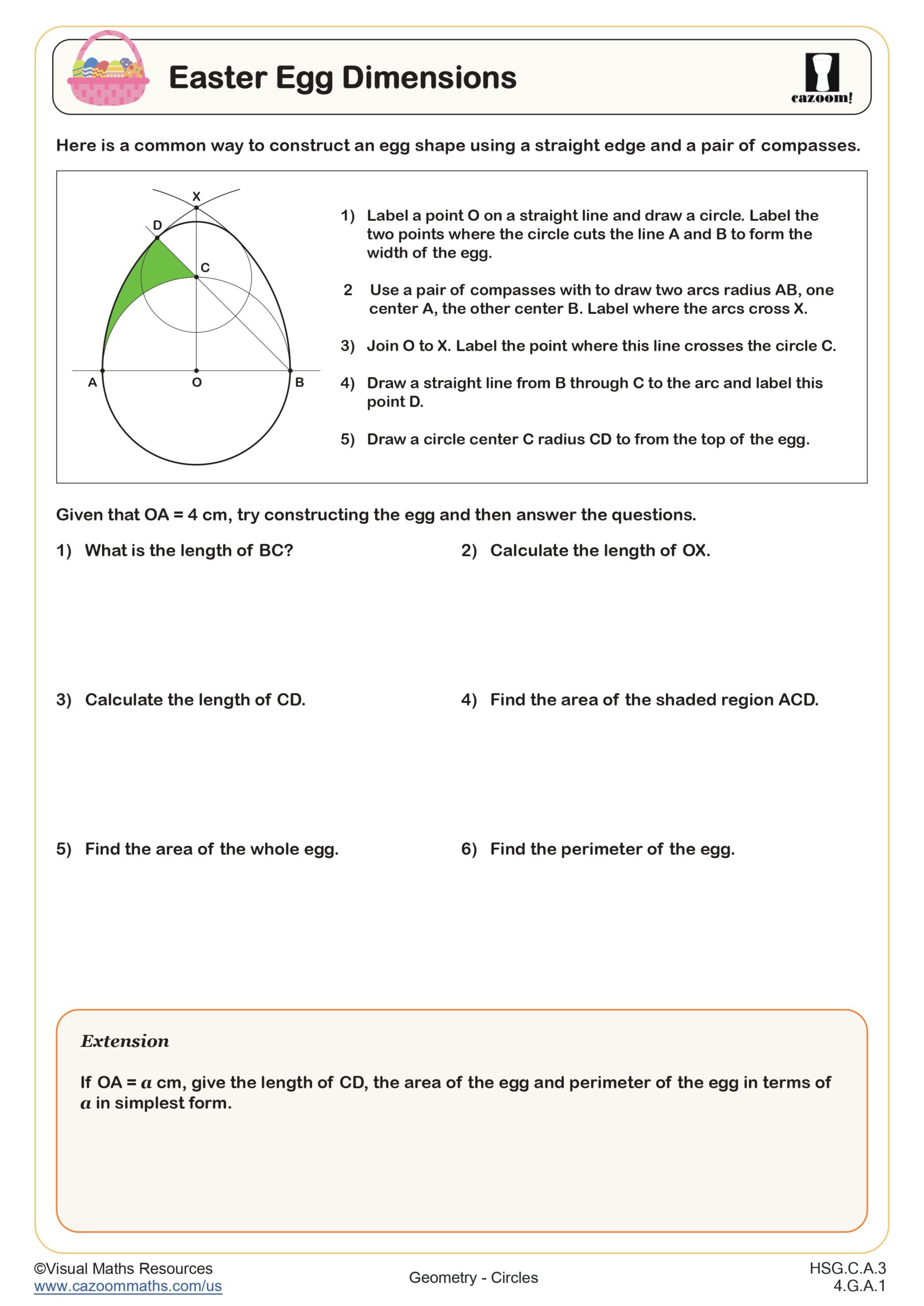
Constructing an Easter Egg
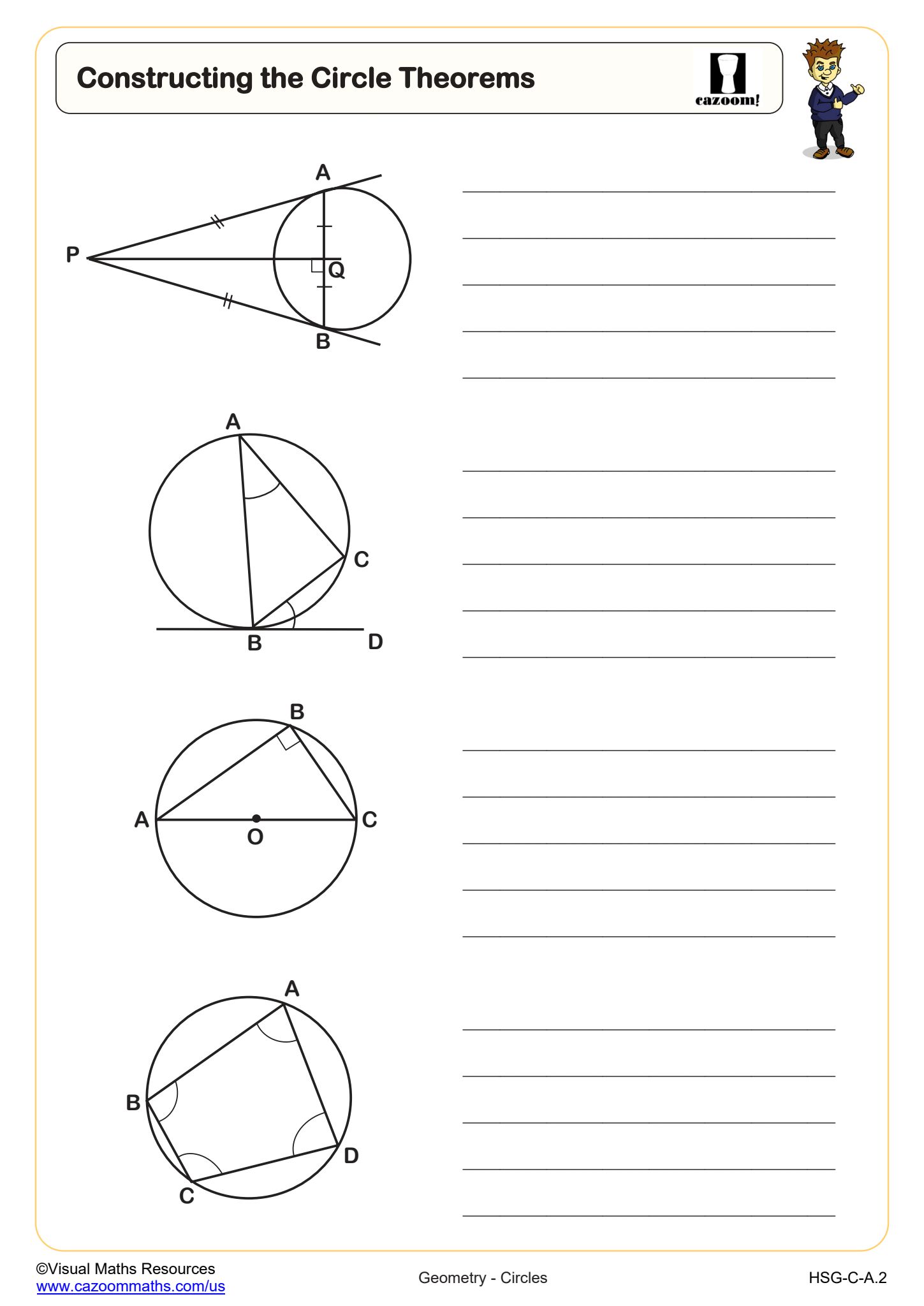
Constructing the Circle Theorems
Easter Egg Dimension
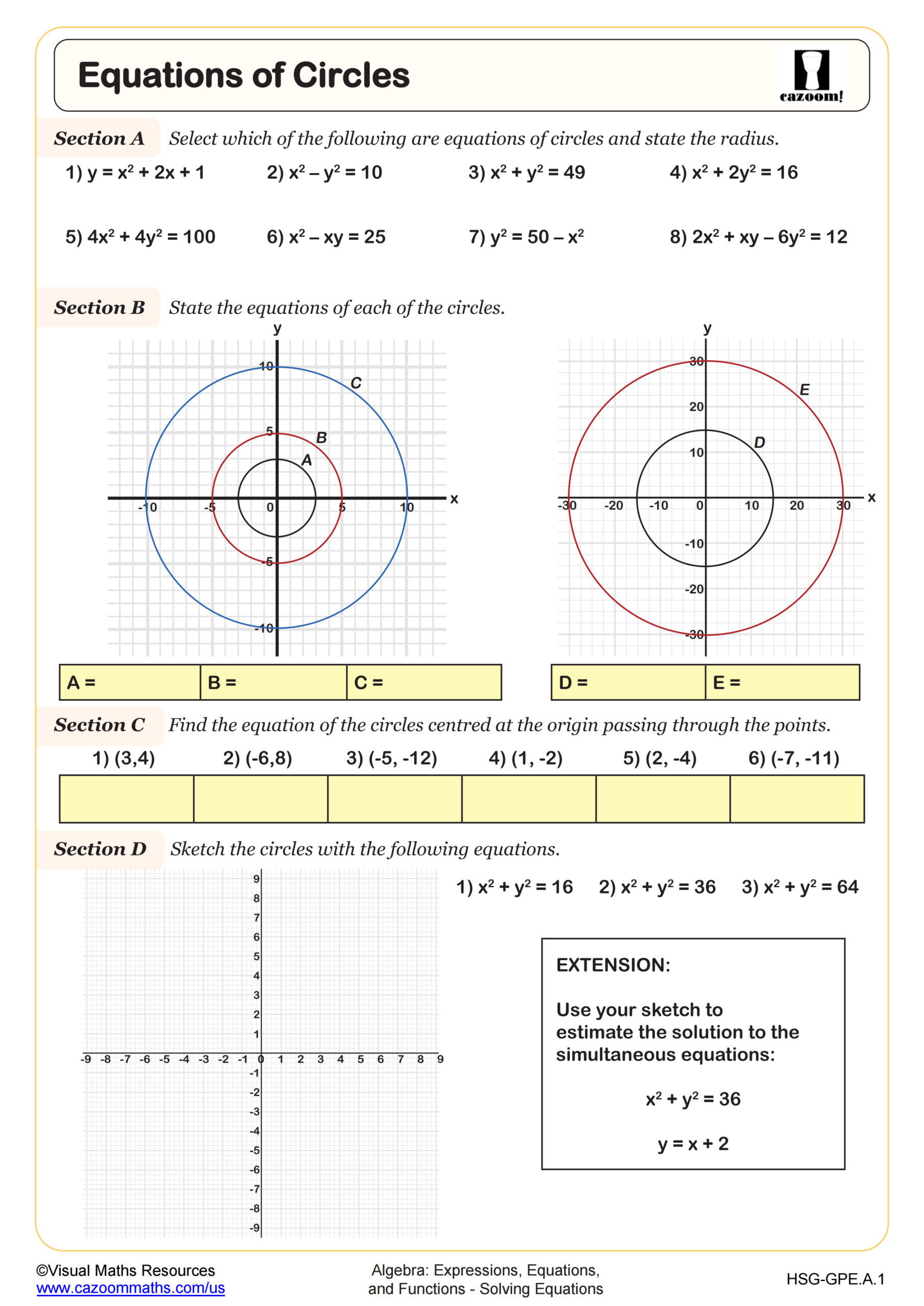
Equations of Circles
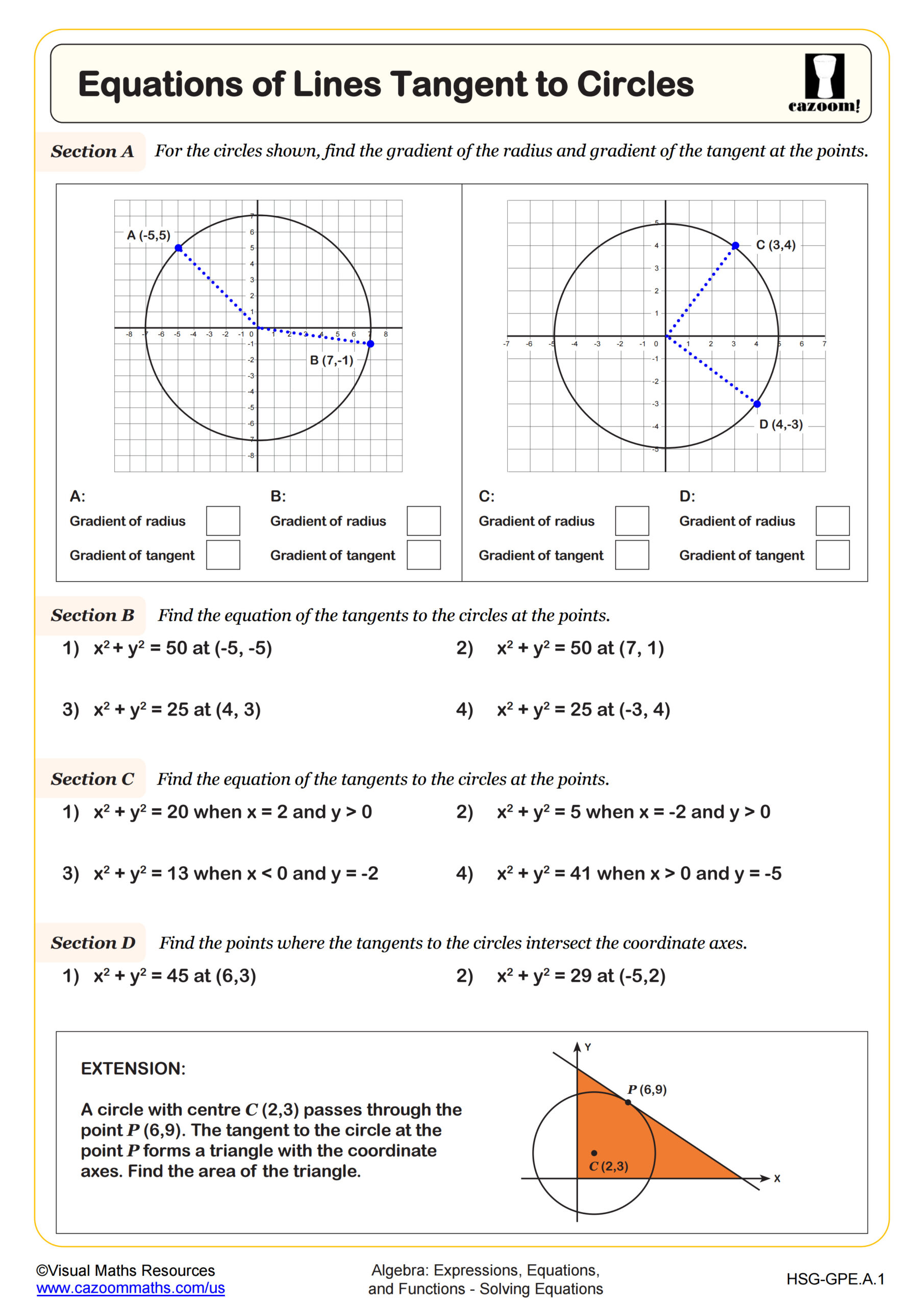
Equations of Lines Tangent to Circles
Formula for Area of Arc Length & Sectors
In Terms of Pi (B)
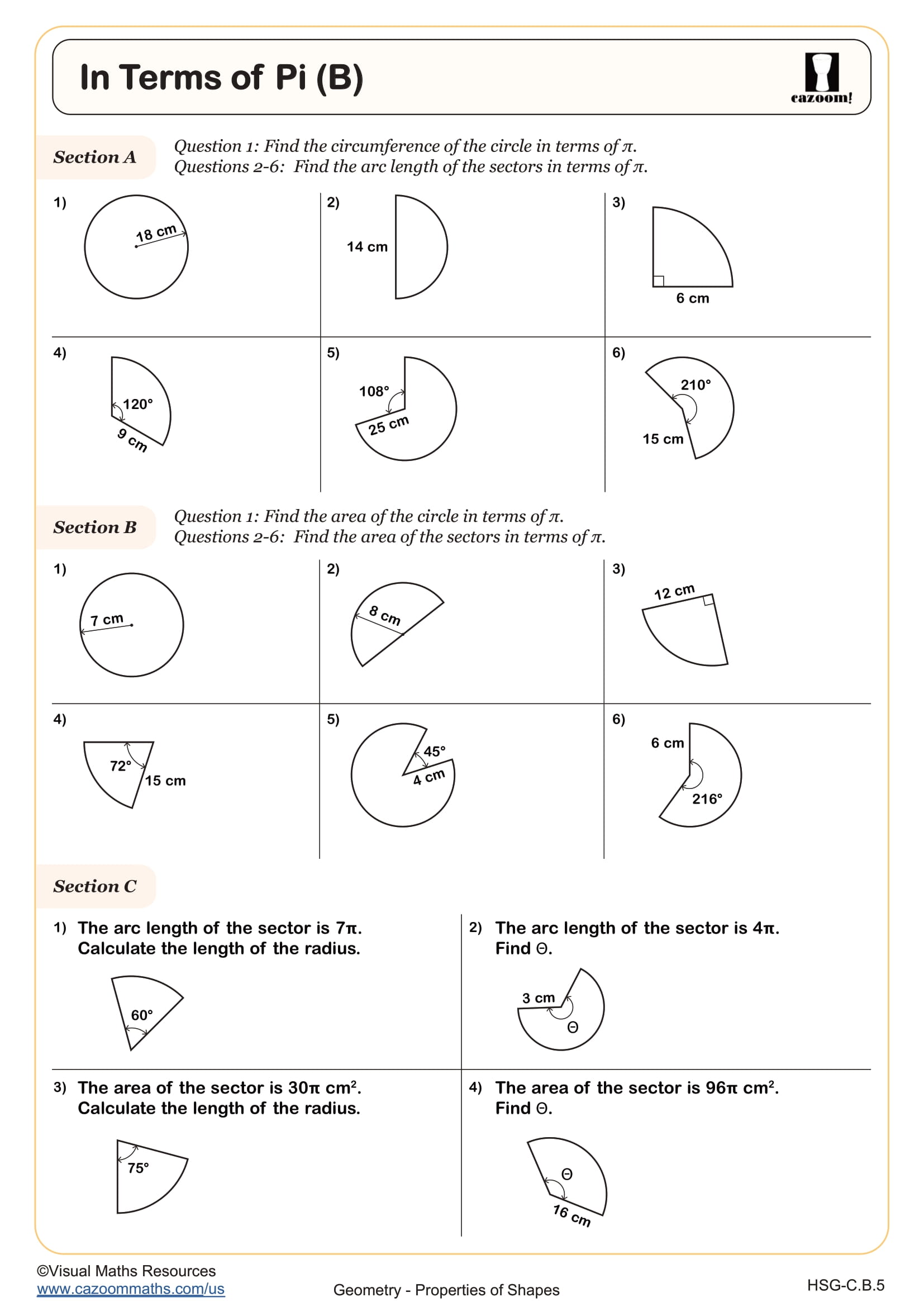
Introducing Radians
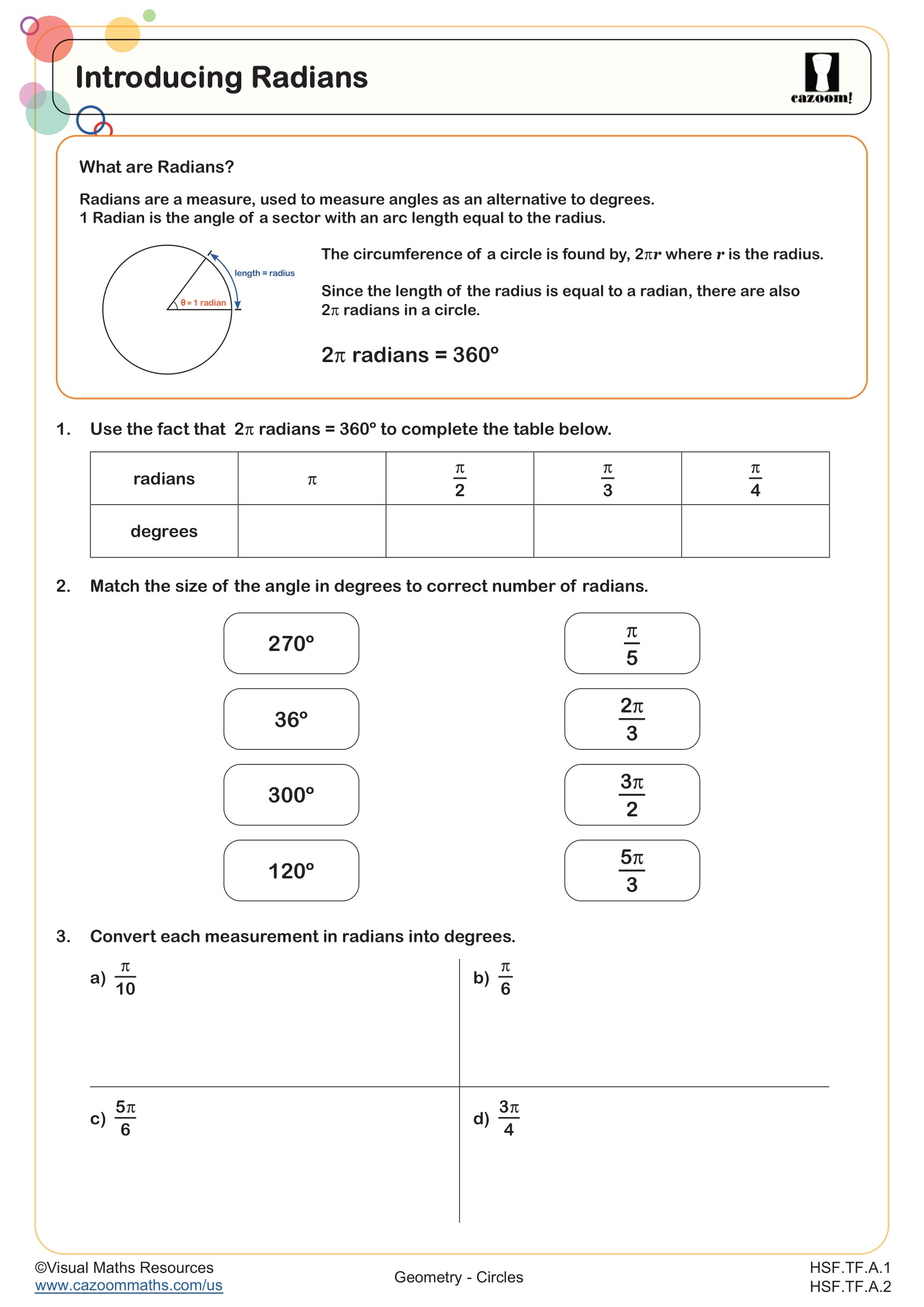
Pi (C)
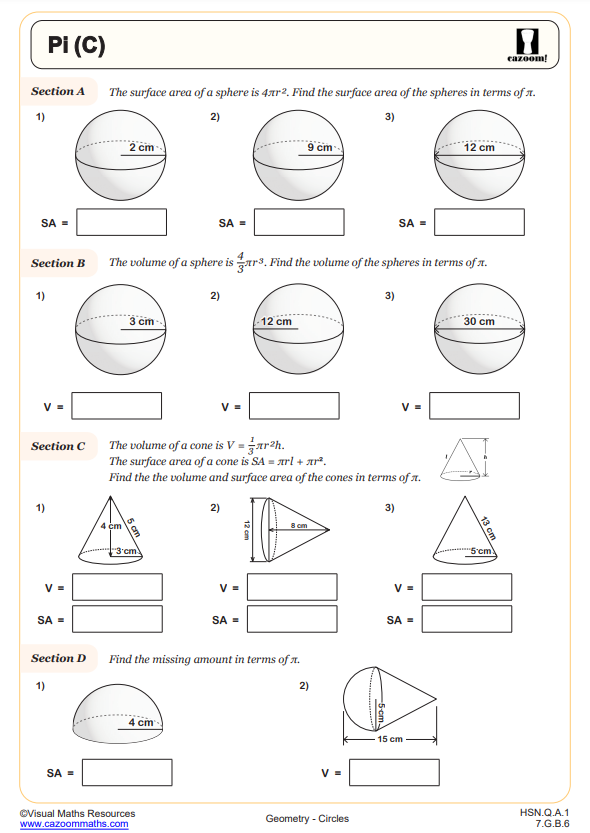
Proving Circle Theorems
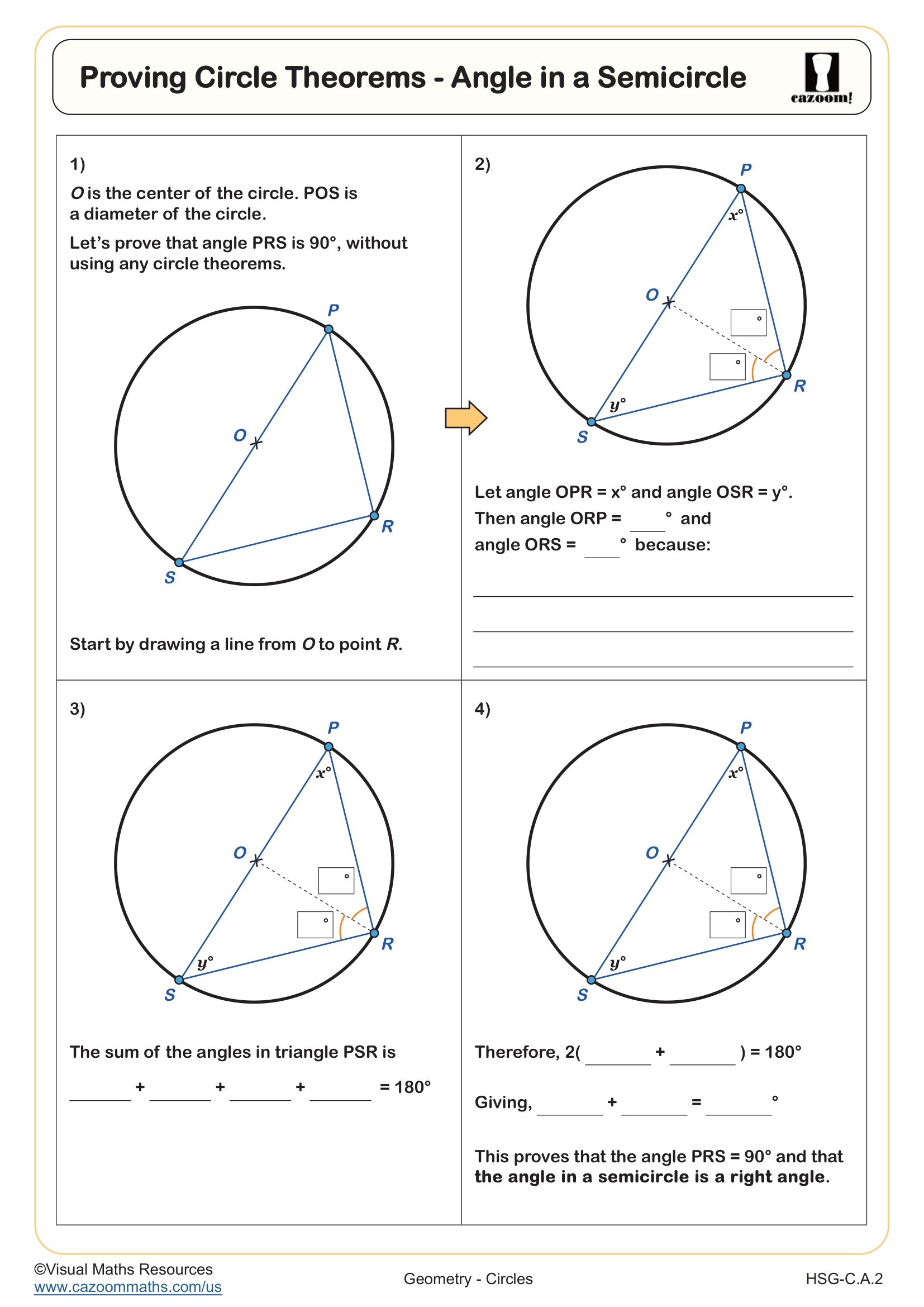
Proving Circle Theorems - Angle in a Semicircle
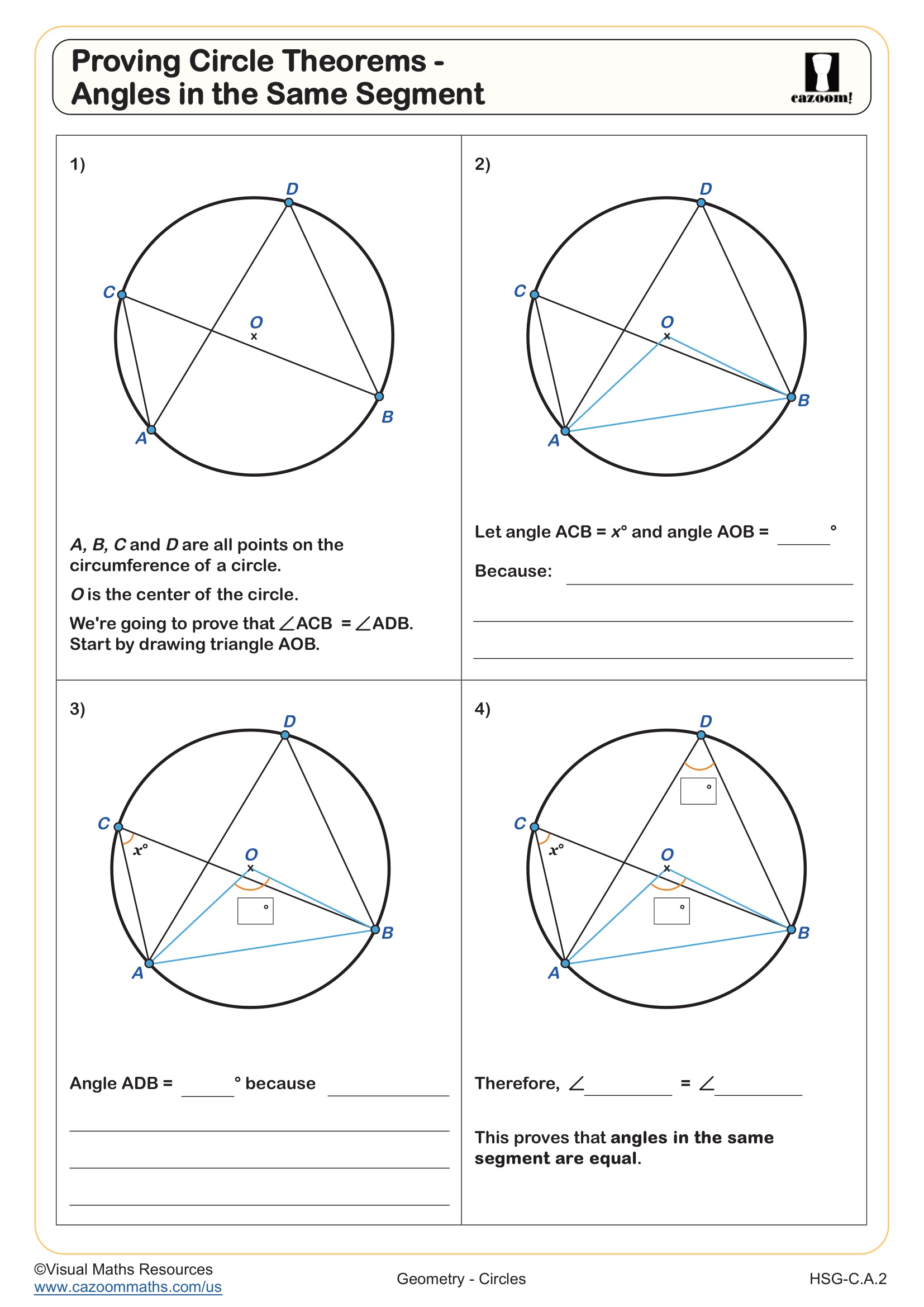
Proving Circle Theorems - Angles in the Same Segment
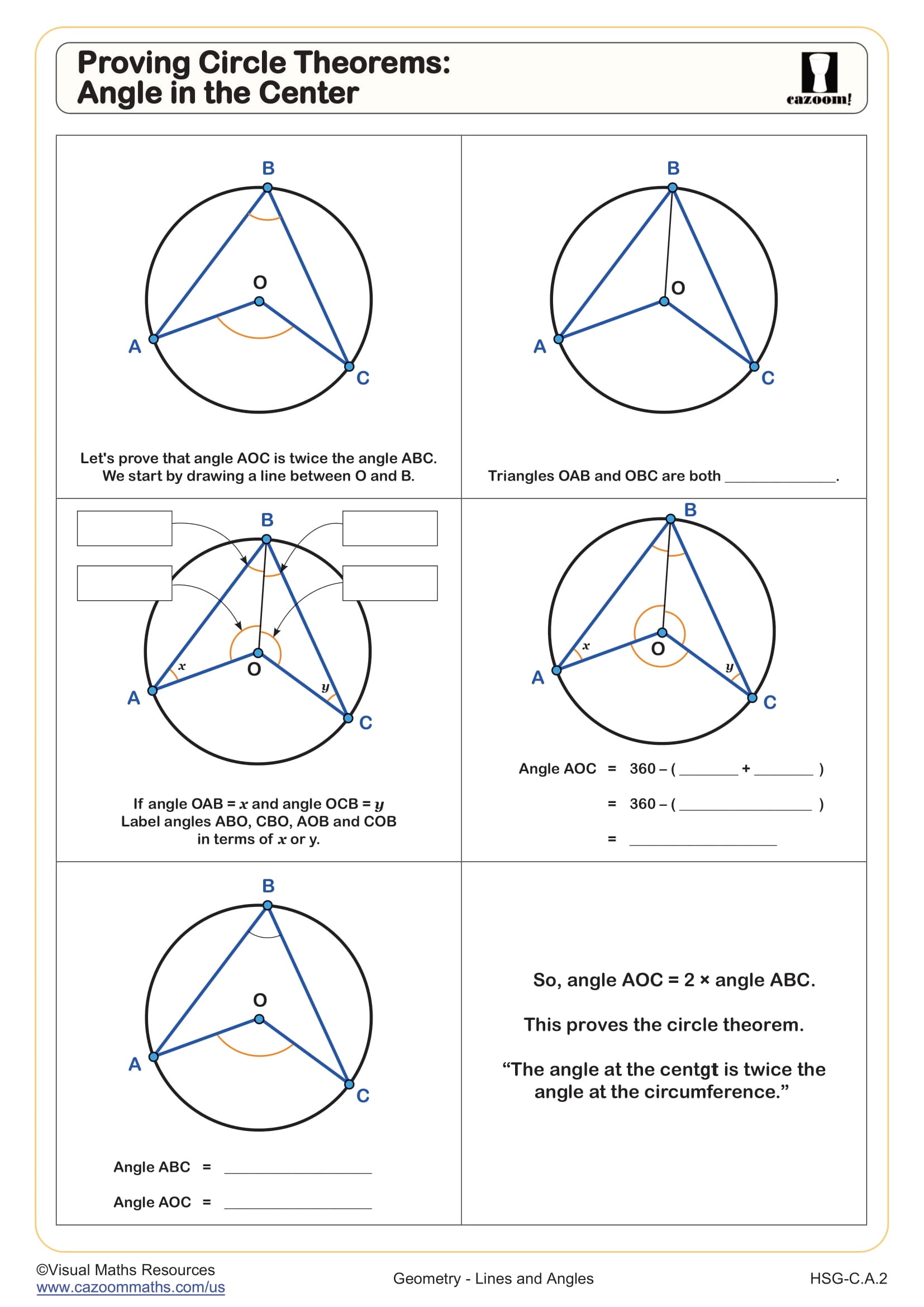
Proving Circle Theorems: Angle in the Center
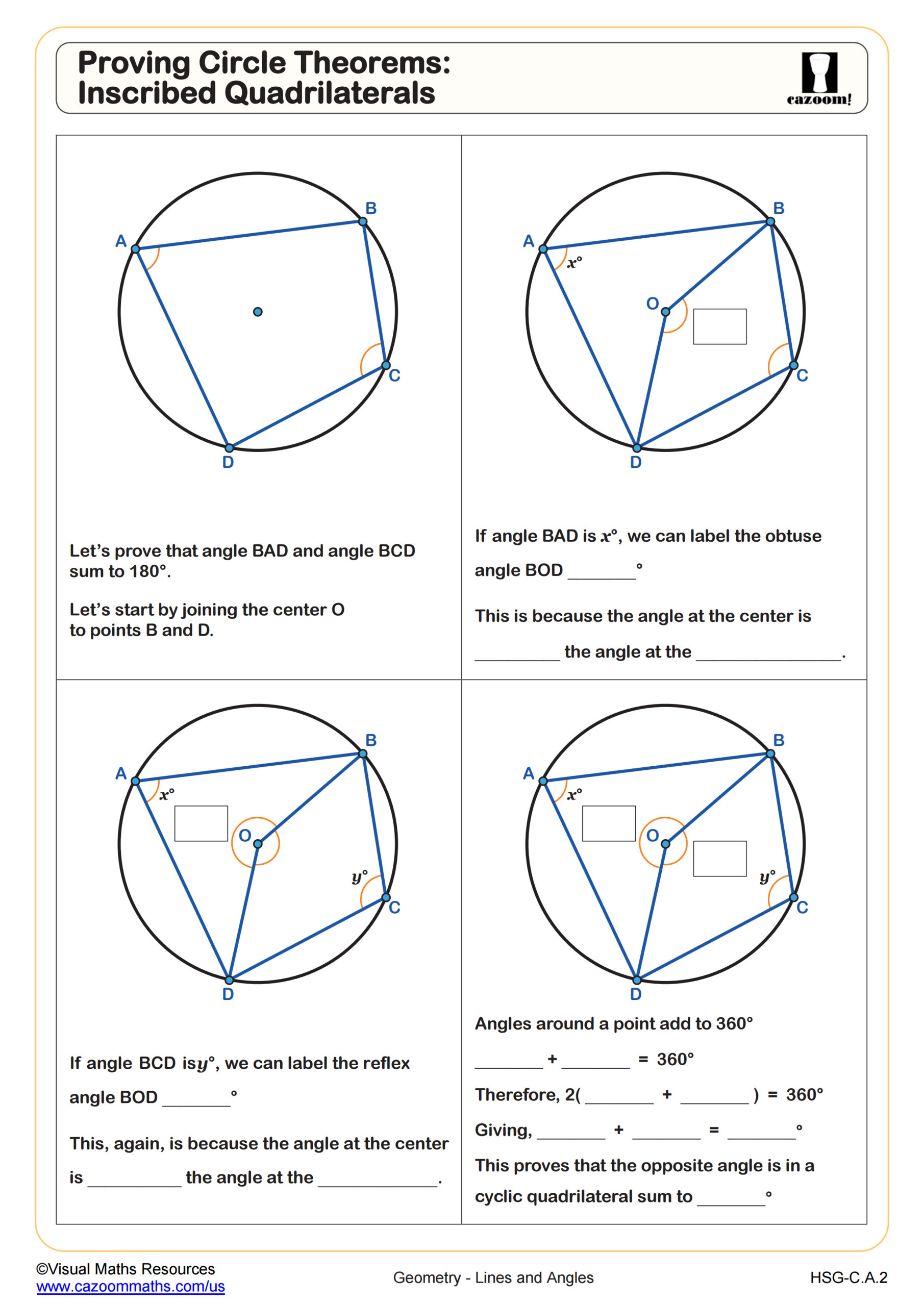
Proving Circle Theorems: Inscribed Quadrilaterals
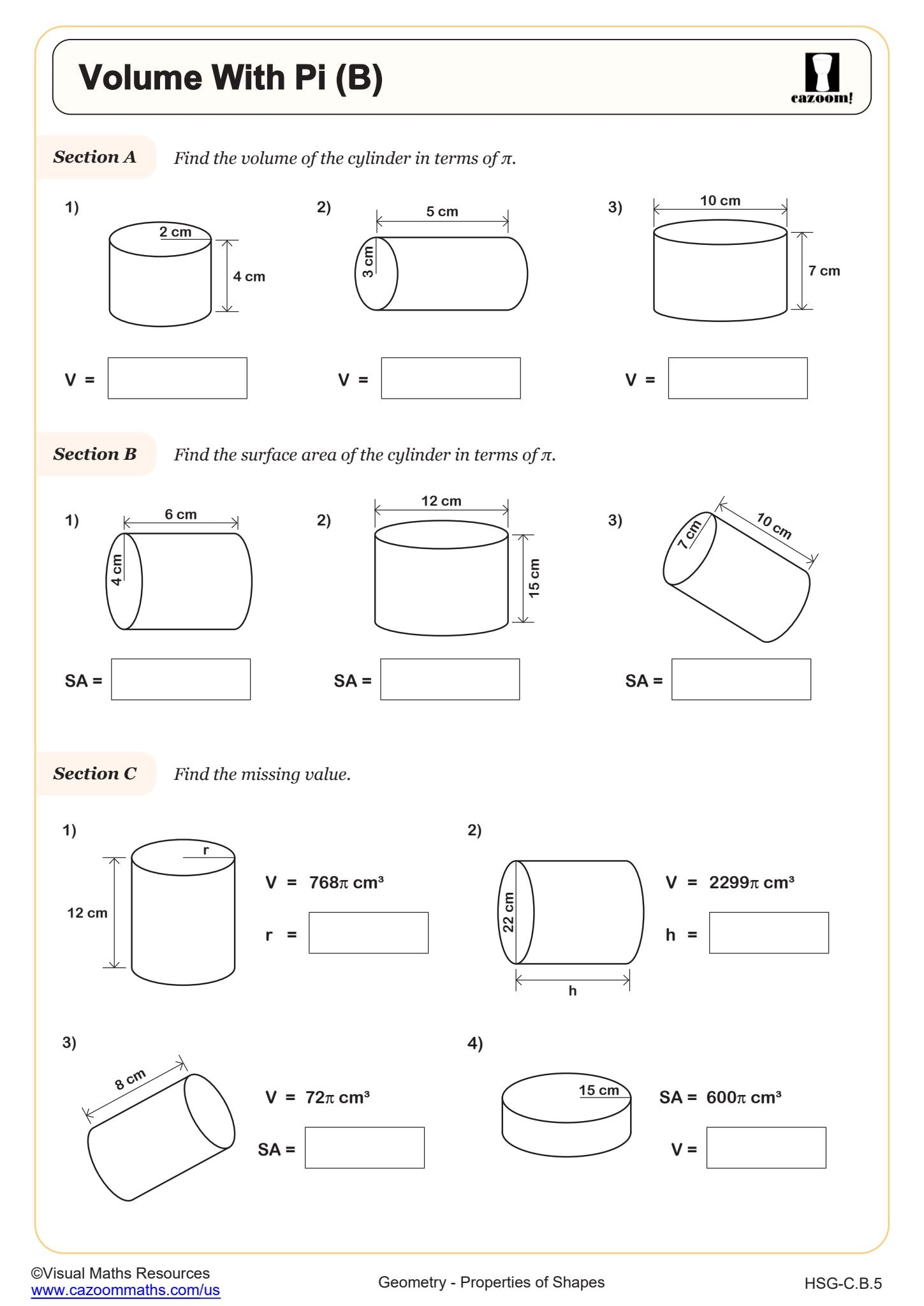
Volume With Pi (B)
All worksheets are created by the team of experienced teachers at Cazoom Math.
What topics do circle geometry worksheets typically cover?
Circle geometry worksheets focus on the fundamental properties and theorems that govern circular relationships. Students practice identifying and calculating central angles, inscribed angles, arc measures, chord lengths, and tangent-secant relationships. The worksheets also cover circle equations in both standard and general form, along with applications involving circles in coordinate geometry.
Teachers notice that students often confuse the various angle relationships within circles, particularly mixing up inscribed and central angle measures. Many geometry circle worksheets include visual diagrams with clearly labeled components to help students distinguish between these concepts and apply the appropriate theorems correctly.
Which high school grade levels use circle geometry worksheets?
Circle geometry worksheets are primarily used in grades 9-10 as part of formal geometry courses, aligning with Common Core State Standards for High School Geometry. Some advanced 8th grade students may encounter basic circle concepts, while 11th and 12th graders revisit these topics in pre-calculus when studying conic sections and polar coordinates.
The progression typically starts with basic circle vocabulary and properties, then advances to angle relationships and theorems. Advanced students work with circle equations and coordinate geometry applications. Teachers find that spacing these topics throughout the geometry course, rather than teaching them as one unit, helps students retain the concepts better.
How do students typically struggle with inscribed angle problems?
Students frequently misapply the inscribed angle theorem, which states that an inscribed angle measures half its intercepted arc. Teachers observe that many students incorrectly assume inscribed angles equal their intercepted arcs, leading to systematic errors throughout problem sets. This misconception often stems from confusing inscribed angles with central angles, which do equal their intercepted arcs.
Circles geometry worksheet problems that include mixed angle types help students practice distinguishing between these relationships. Teachers report success when they emphasize the visual differences: central angles have their vertex at the circle's center, while inscribed angles have vertices on the circle itself. Regular practice with labeled diagrams reinforces these distinctions.
How can teachers use circle geometry worksheets most effectively?
Teachers find that introducing circle geometry worksheets after students have mastered basic angle relationships and properties yields better results. Starting with simpler problems involving arc measures and central angles builds confidence before progressing to more complex inscribed angle and chord problems. The answer keys allow for immediate feedback and self-correction.
Many educators use a gradual release approach, working through the first few problems as guided practice before assigning independent work. Teachers also recommend having students sketch their own diagrams when problems provide only algebraic information, as this visual representation helps students identify which theorems apply to each situation.