High School Linear Functions Worksheet
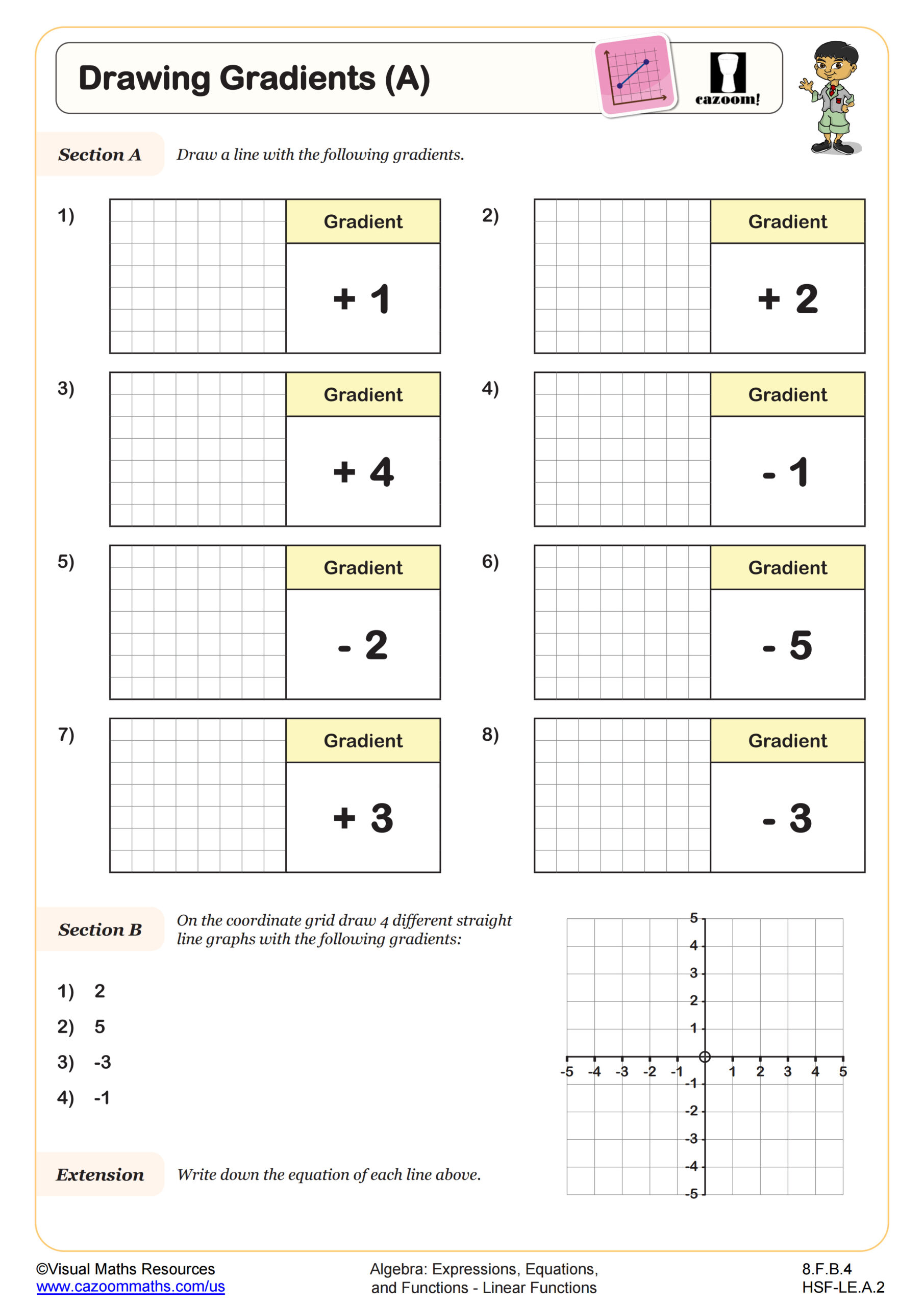
Drawing Gradients (A)
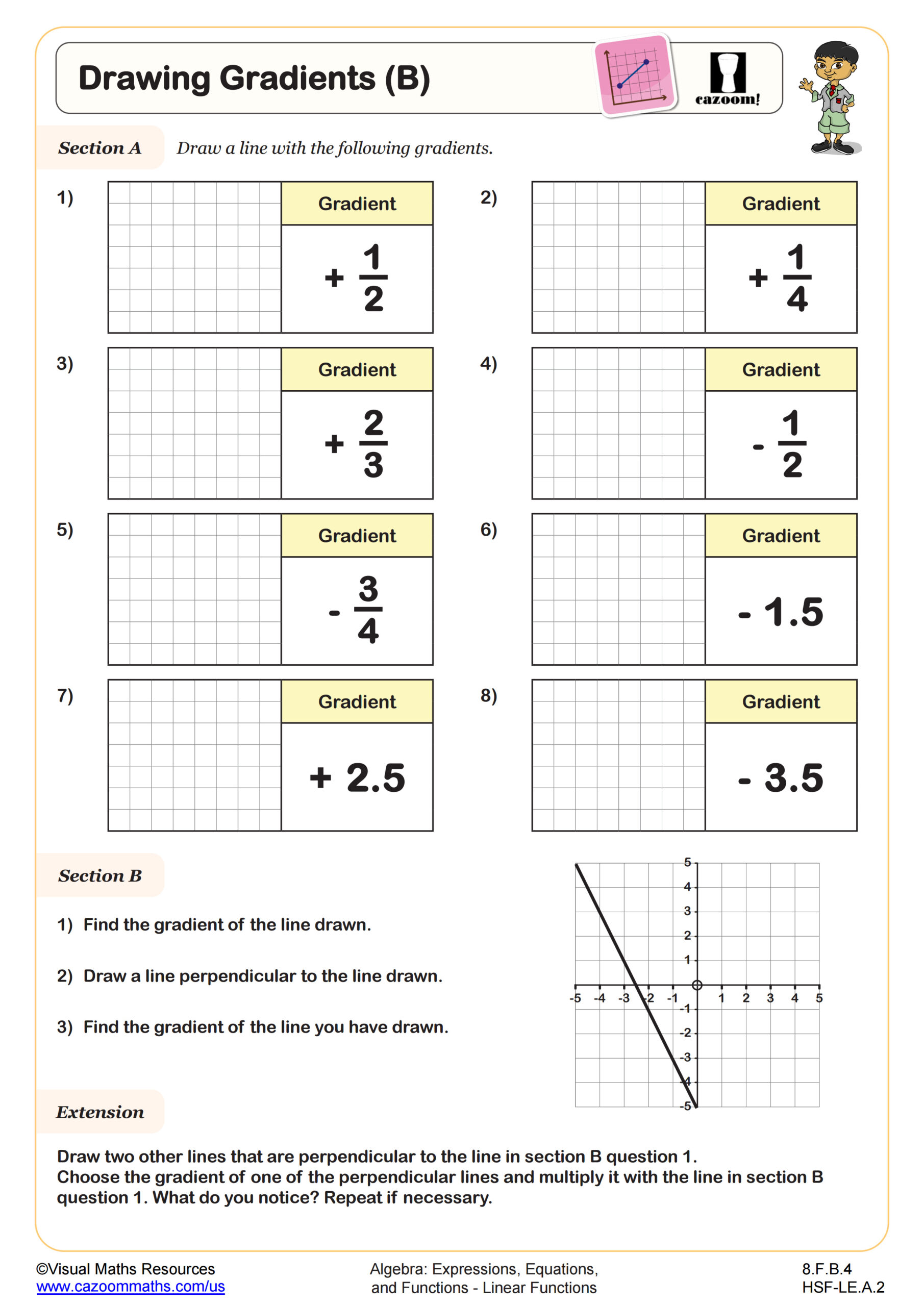
Drawing Gradients (B)
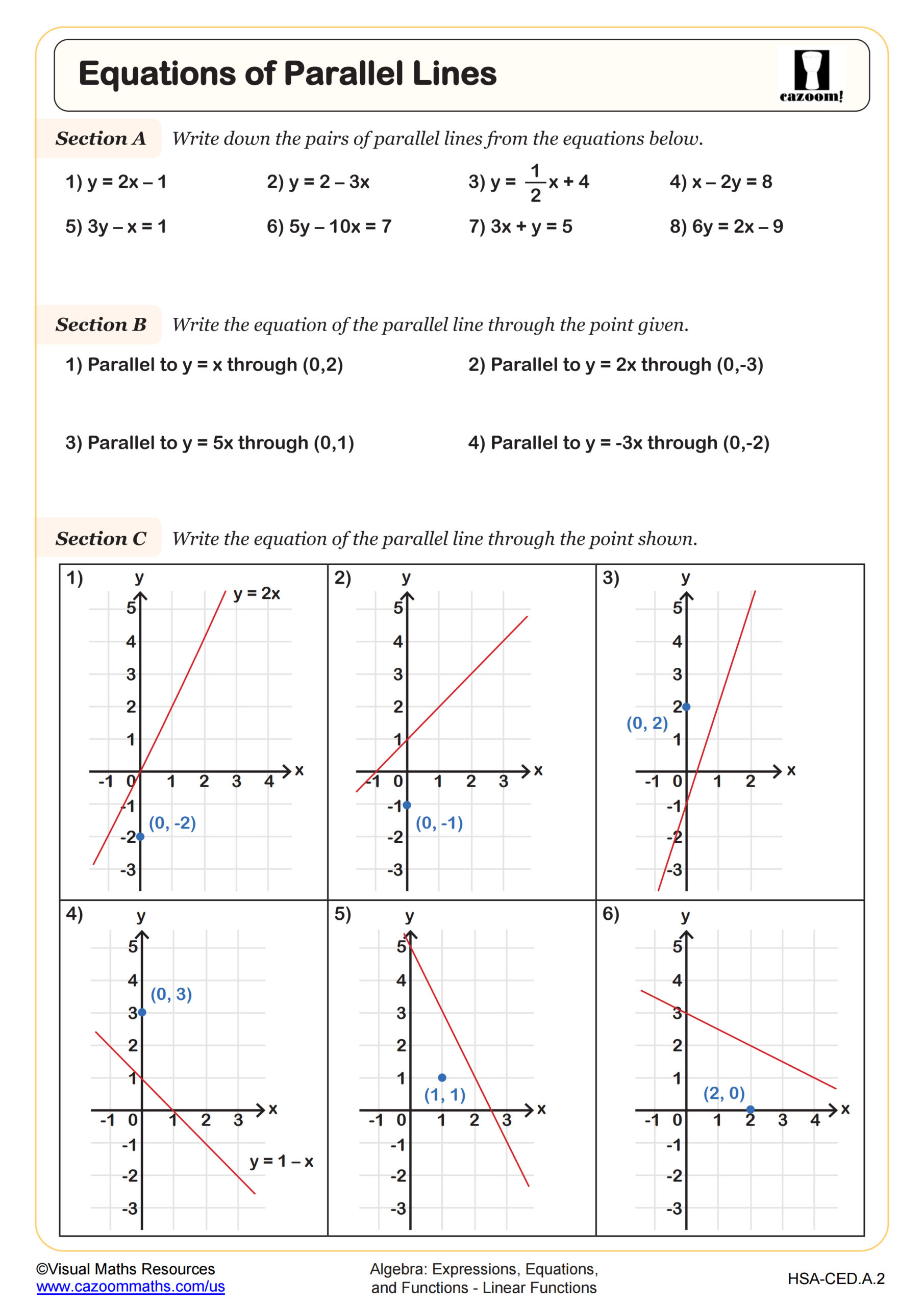
Equations of Parallel Lines
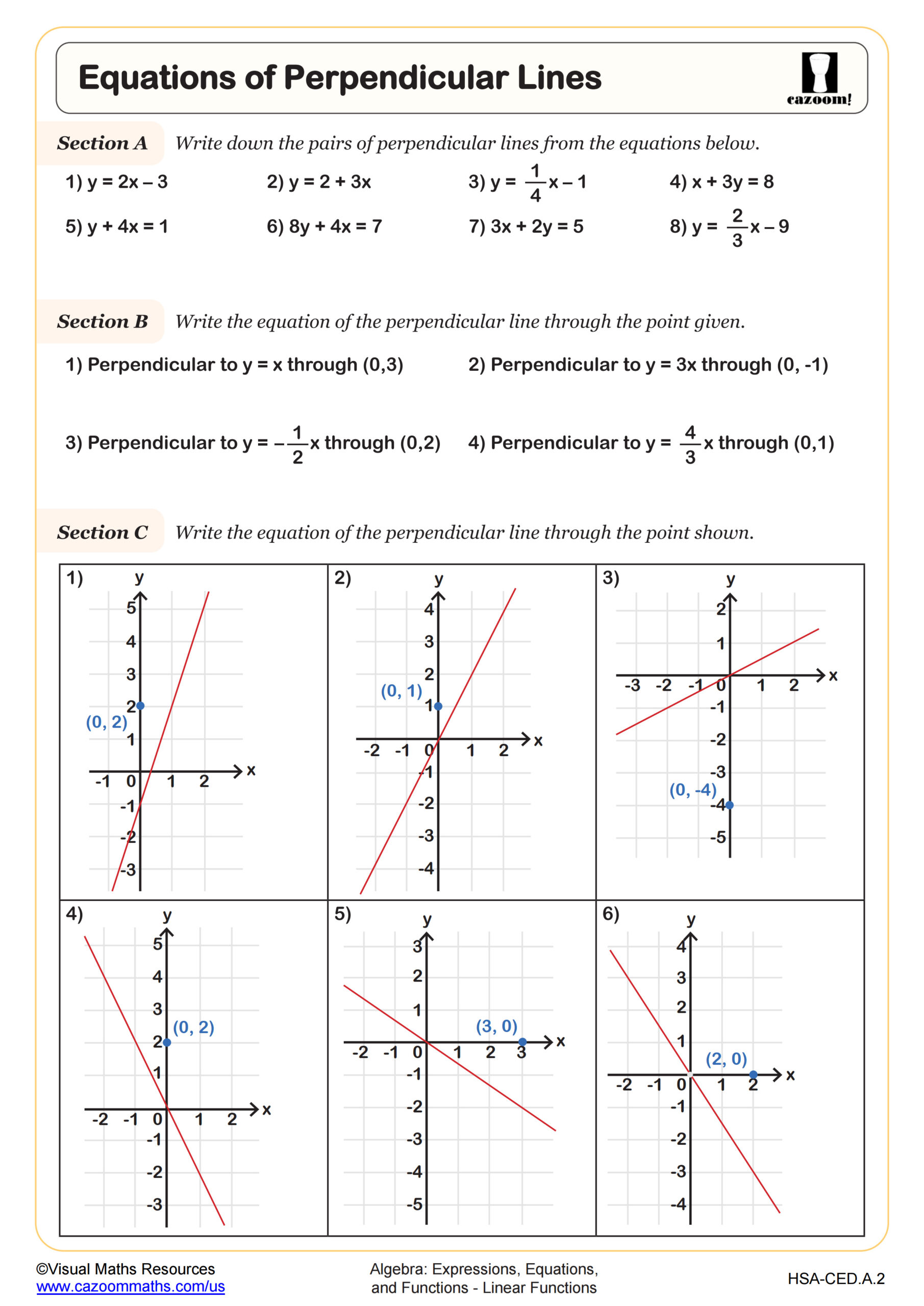
Equations of Perpendicular Lines
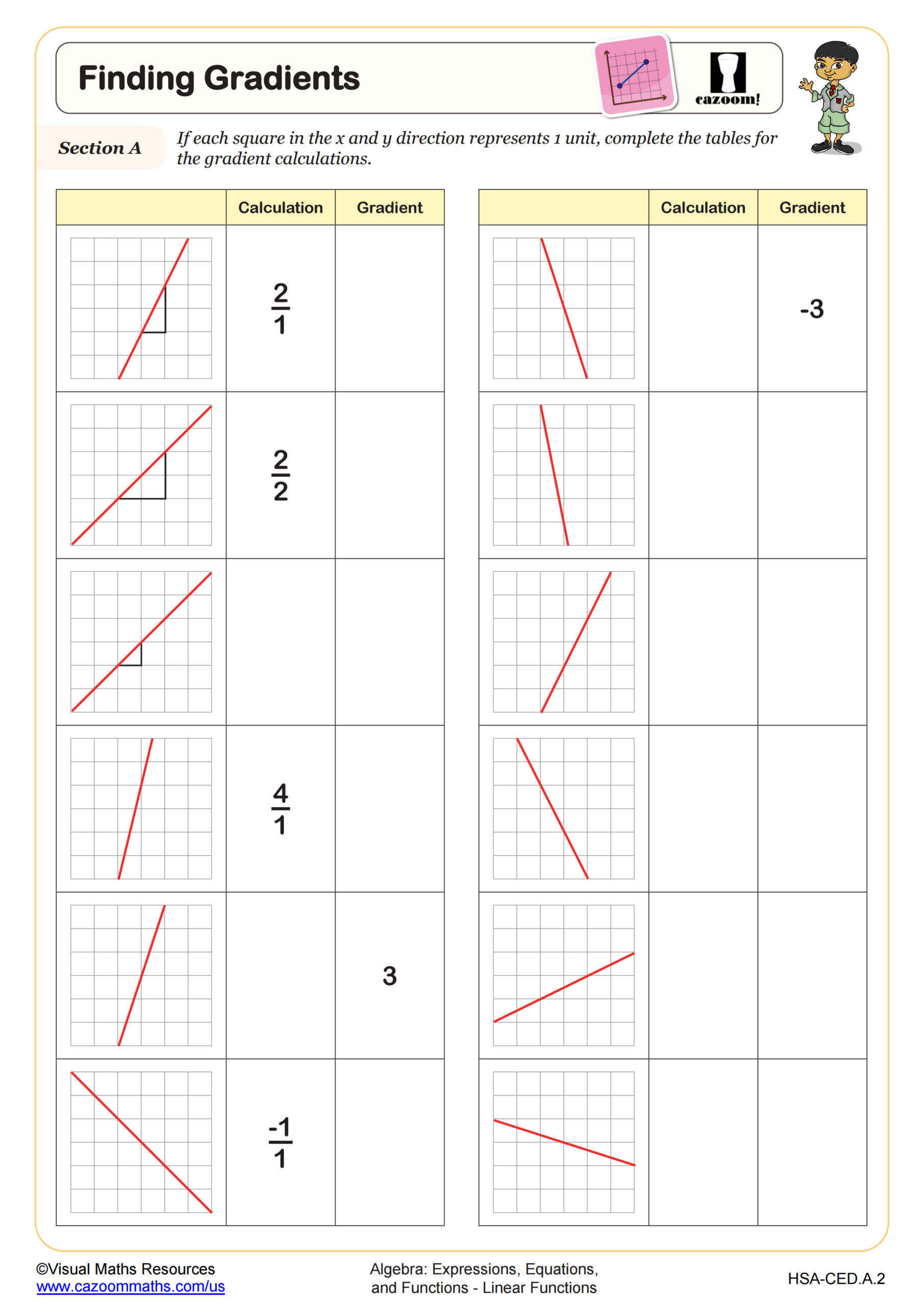
Finding Gradients
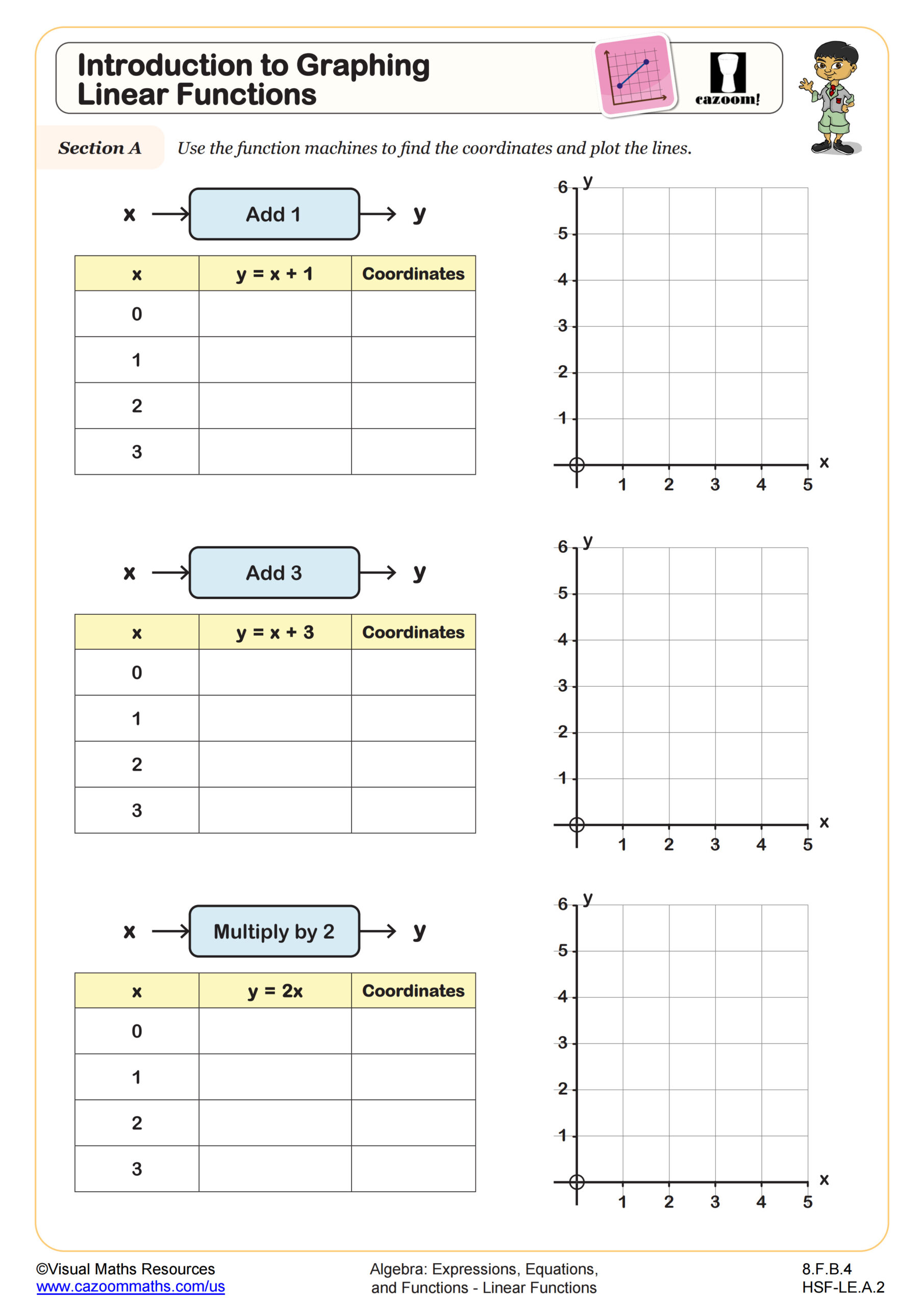
Introduction to Graphing Linear Functions
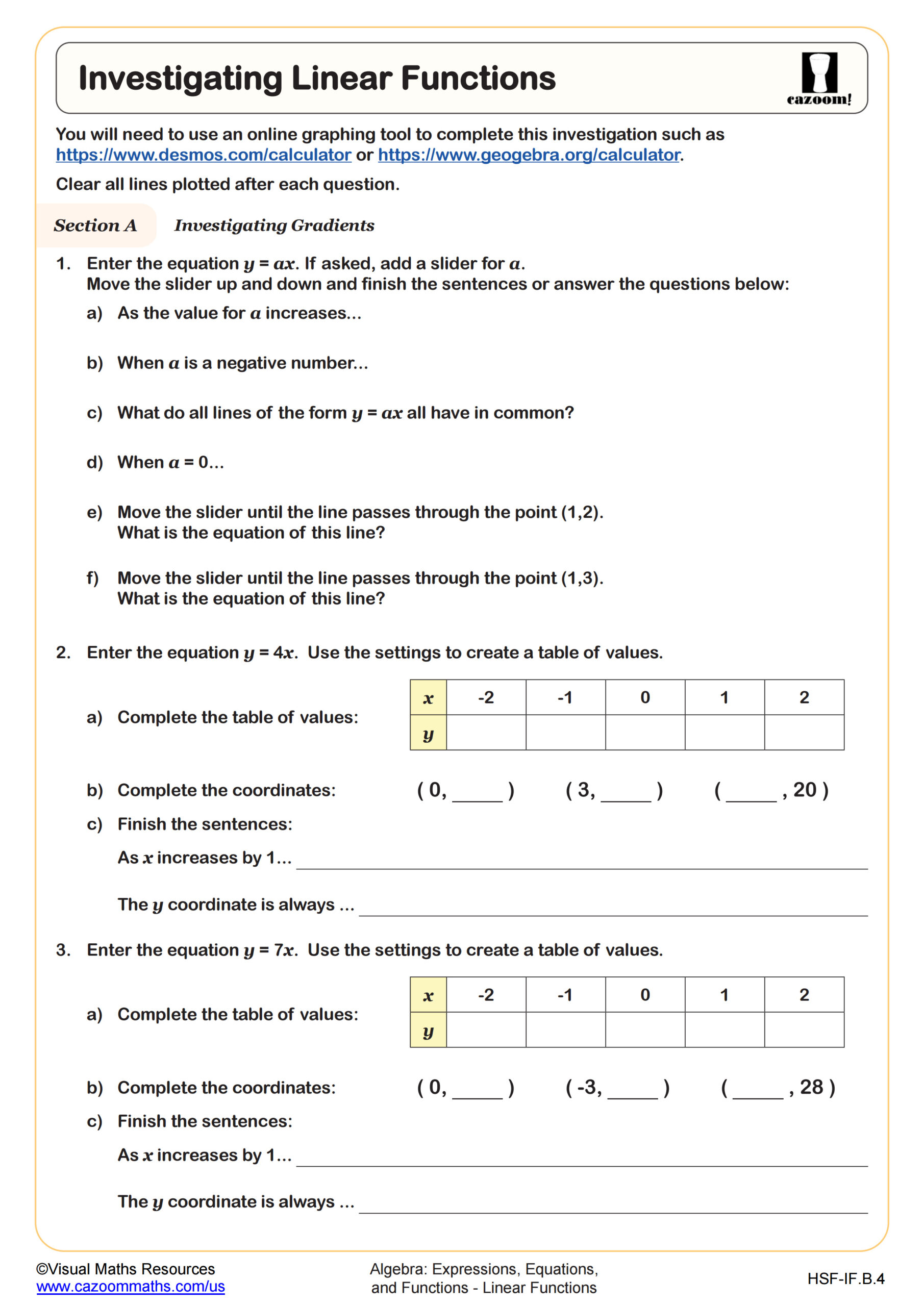
Investigating Linear Functions
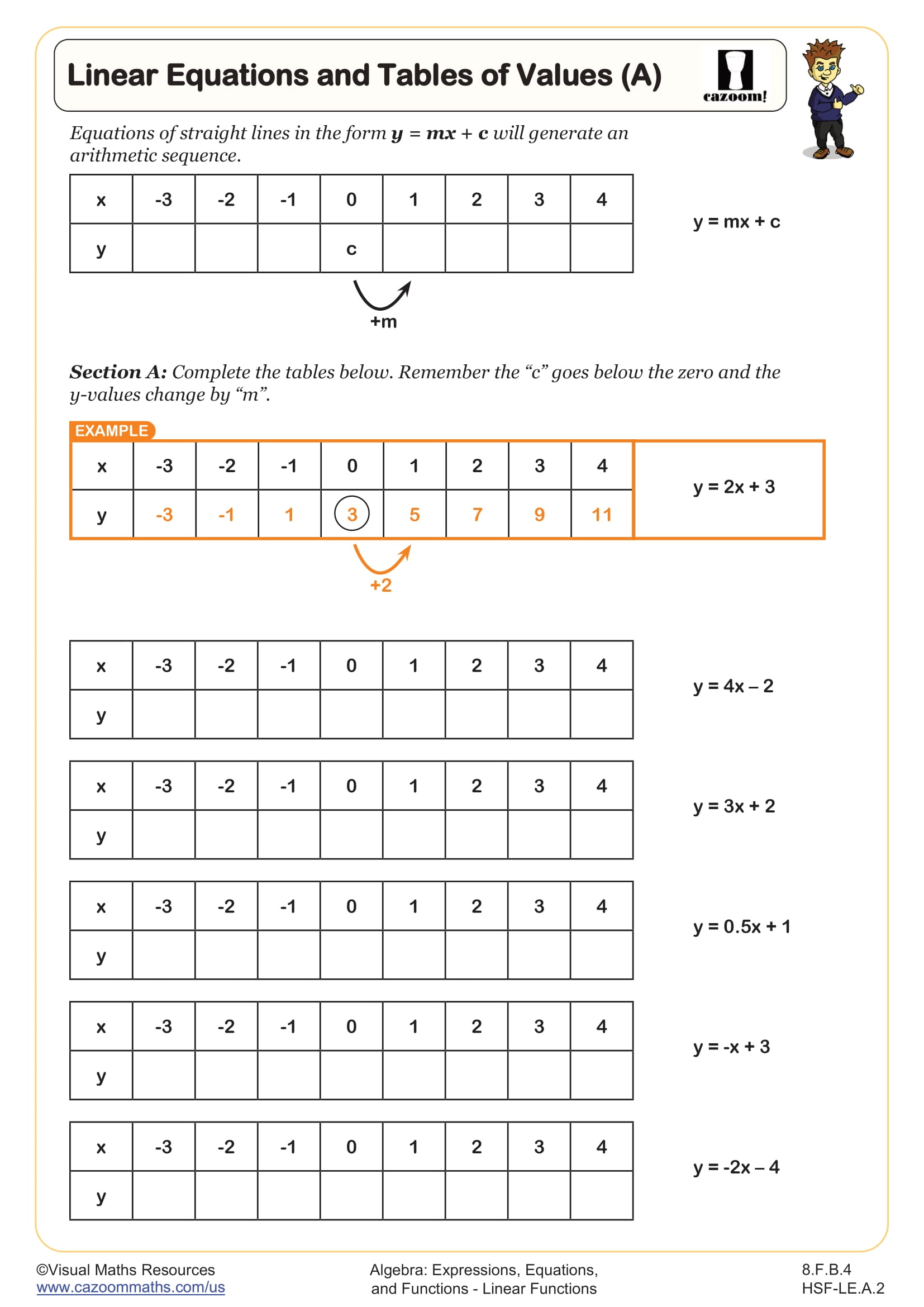
Linear Equations and Tables of Values (A)
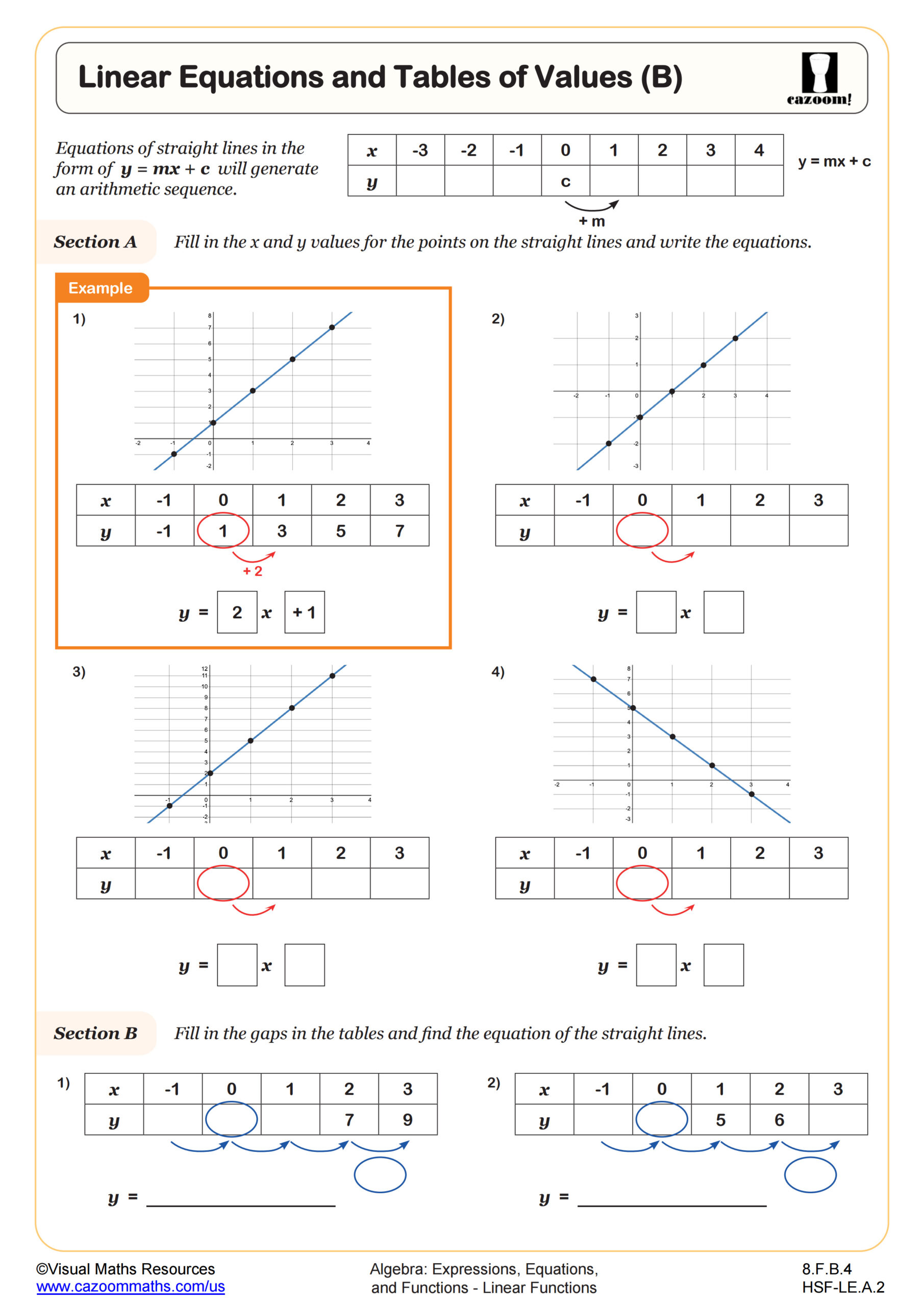
Linear Equations and Tables of Values (B)
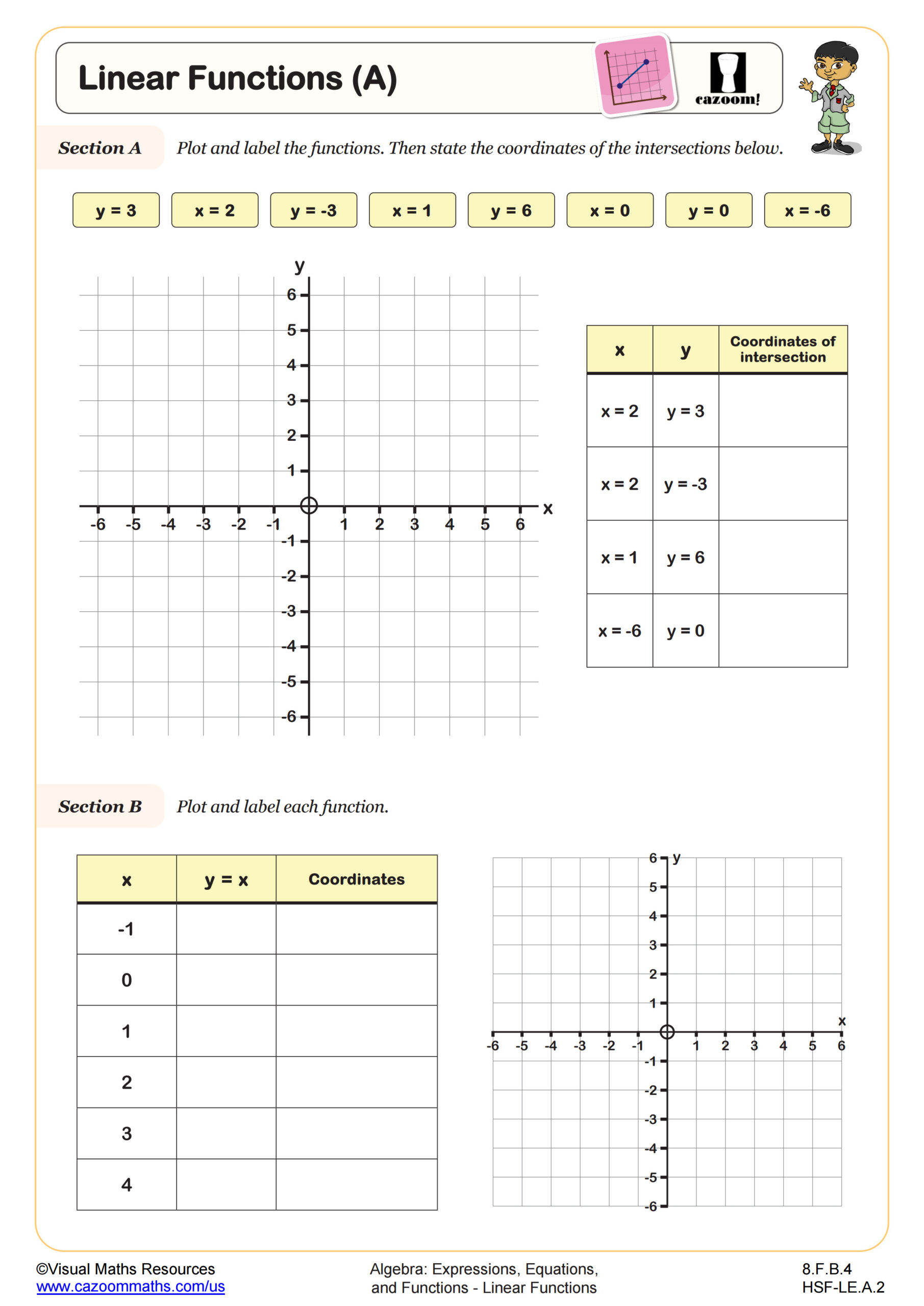
Linear Functions (A)
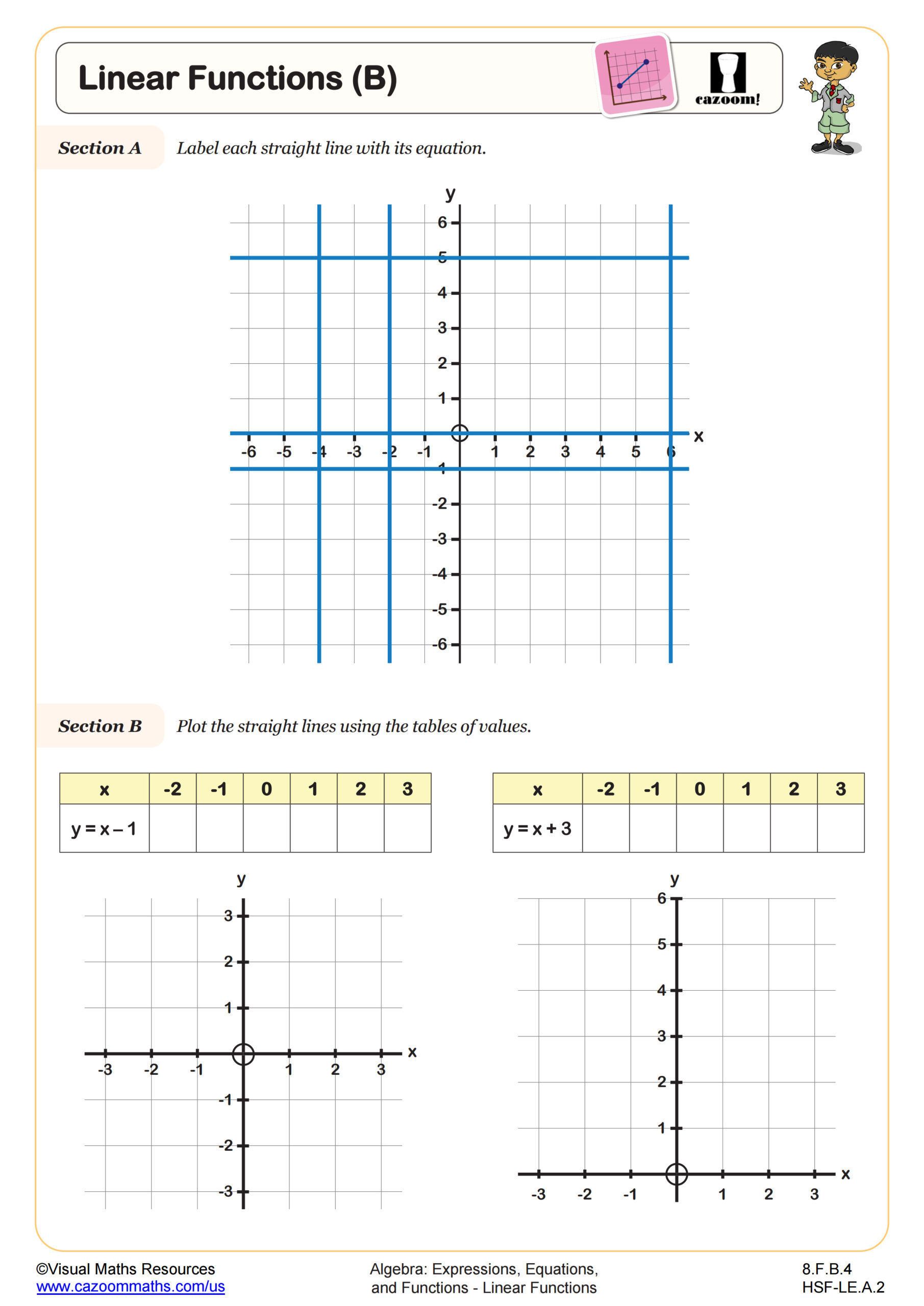
Linear Functions (B)
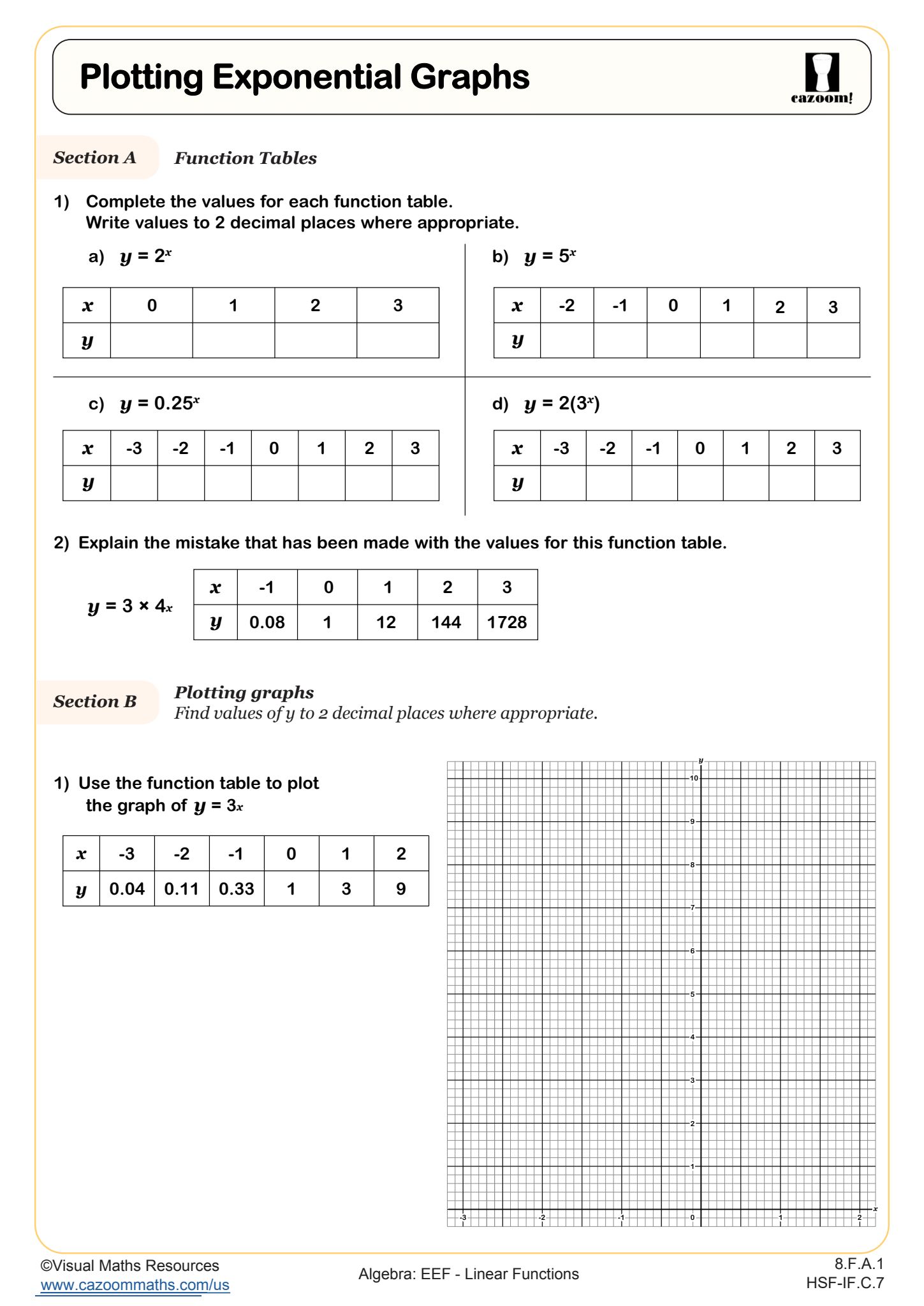
Plotting Exponential Graphs
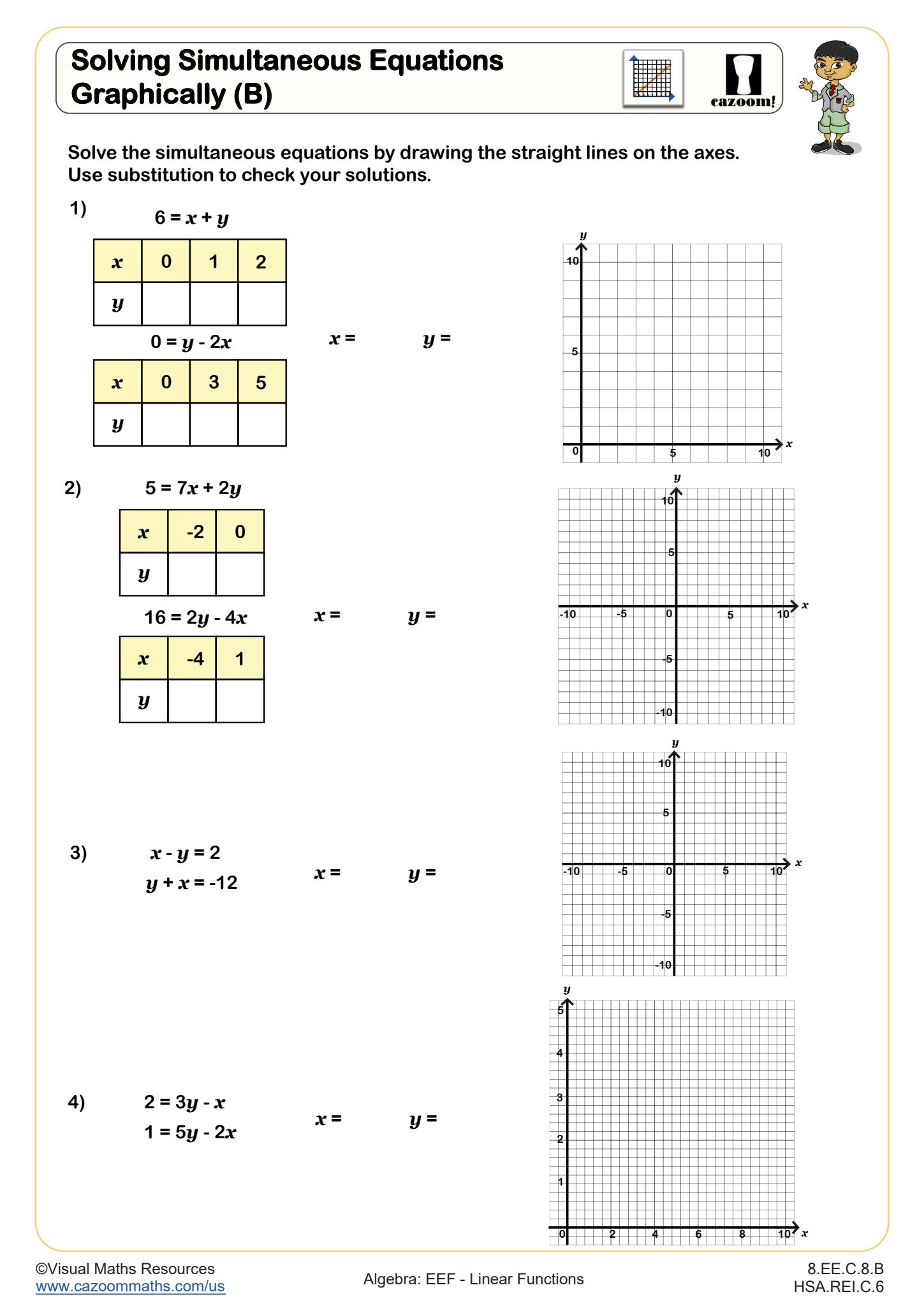
Solving Simultaneous Equations Graphically (B)
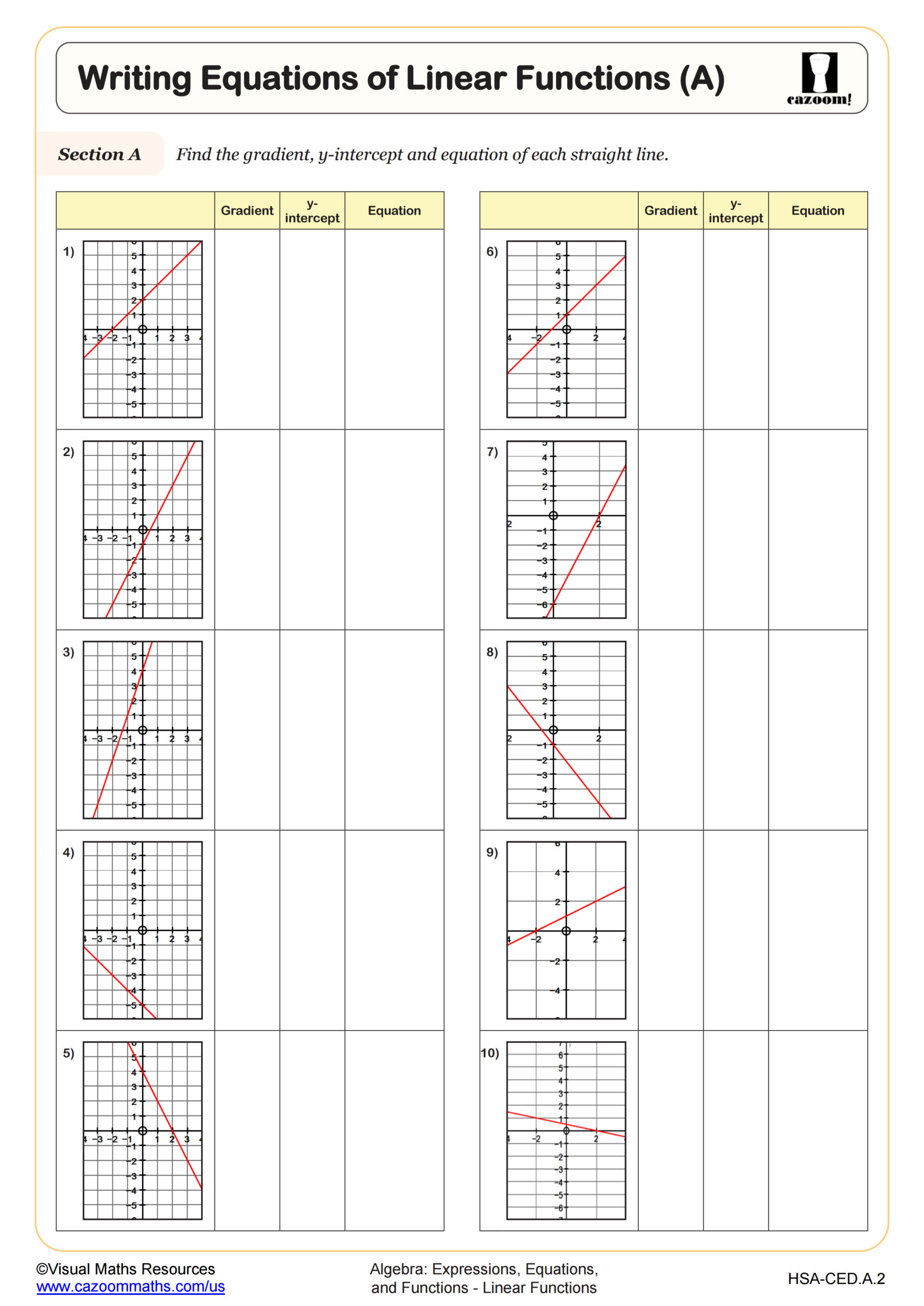
Writing Equations of Linear Functions (A)
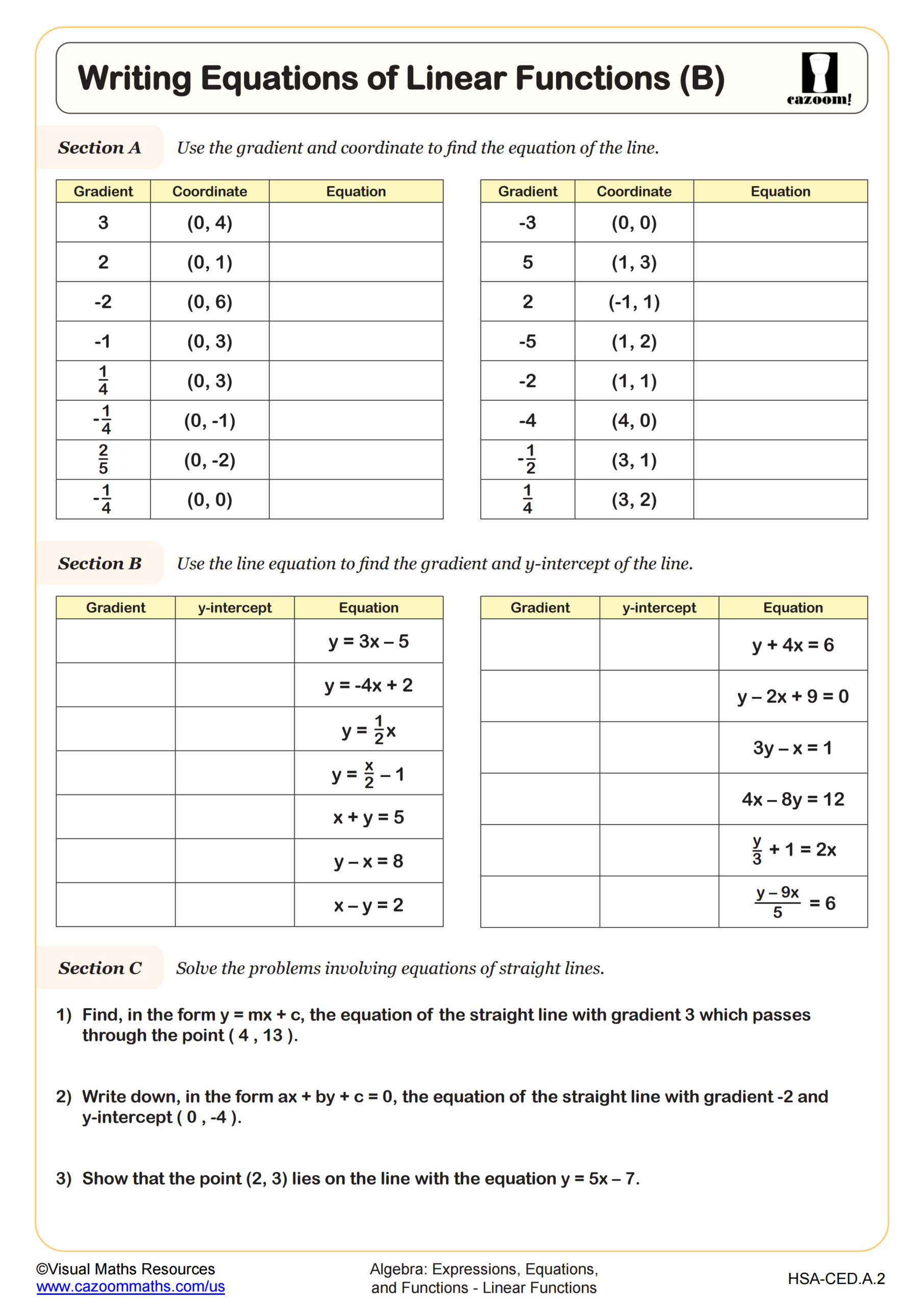
Writing Equations of Linear Functions (B)
All worksheets are created by the team of experienced teachers at Cazoom Math.
What topics are covered in linear functions worksheet collections?
Linear functions worksheets typically address Common Core standards A-CED.2 and F-IF.7, covering slope-intercept form, point-slope form, standard form, and graphing linear functions worksheets with various approaches. Students work through identifying domain and range, finding intercepts, and determining whether relationships represent functions.
Teachers frequently observe that students mix up the roles of x and y when writing equations from word problems, often reversing independent and dependent variables. The multiple representations worksheet answer key format helps students check their understanding across different problem types, from basic slope calculations to more complex real-world applications involving linear modeling in STEM contexts.
Which grade levels benefit most from linear function practice?
While linear functions appear as early as 8th grade in Common Core standards, high school courses from Algebra 1 through Pre-Calculus revisit these concepts with increasing complexity. Students in Algebra 1 focus on basic graphing and equation writing, while Algebra 2 students work with systems of linear equations and more sophisticated applications.
Many teachers notice that students who struggled with linear concepts in middle school often experience breakthrough moments in high school when they see connections to real-world problems. The scaffolded approach in these worksheets allows teachers to differentiate instruction, giving some students basic practice while challenging others with multi-step applications and analysis problems.
How do these worksheets address equations as functions concepts?
The equations as functions worksheet problems specifically help students understand that linear equations represent functional relationships where each input produces exactly one output. Students practice using function notation, evaluating functions at specific values, and determining whether given equations represent functions using the vertical line test.
Teachers often report that students initially resist function notation like f(x) = 2x + 3, preferring the familiar y = 2x + 3 format. These worksheets gradually introduce function notation alongside traditional forms, helping students recognize that both representations describe the same linear relationship. This foundation proves crucial for success in higher-level mathematics courses.
What strategies work best when implementing these worksheet materials?
Effective implementation involves using worksheets as guided practice after direct instruction, rather than independent discovery activities. Teachers find success pairing students for collaborative problem-solving, where one student graphs while another writes equations, then they compare results using the provided answer keys.
Many educators integrate technology by having students verify their worksheet solutions using graphing calculators or online tools. This combination approach reinforces the connection between algebraic and visual representations. The linear function worksheet pdf format supports flexible classroom management, allowing teachers to assign specific problem sets based on individual student needs and pacing requirements.