High School Polygons Worksheet
All worksheets are created by the team of experienced teachers at Cazoom Math.
What makes a "remedial polygons" worksheet effective for struggling students?
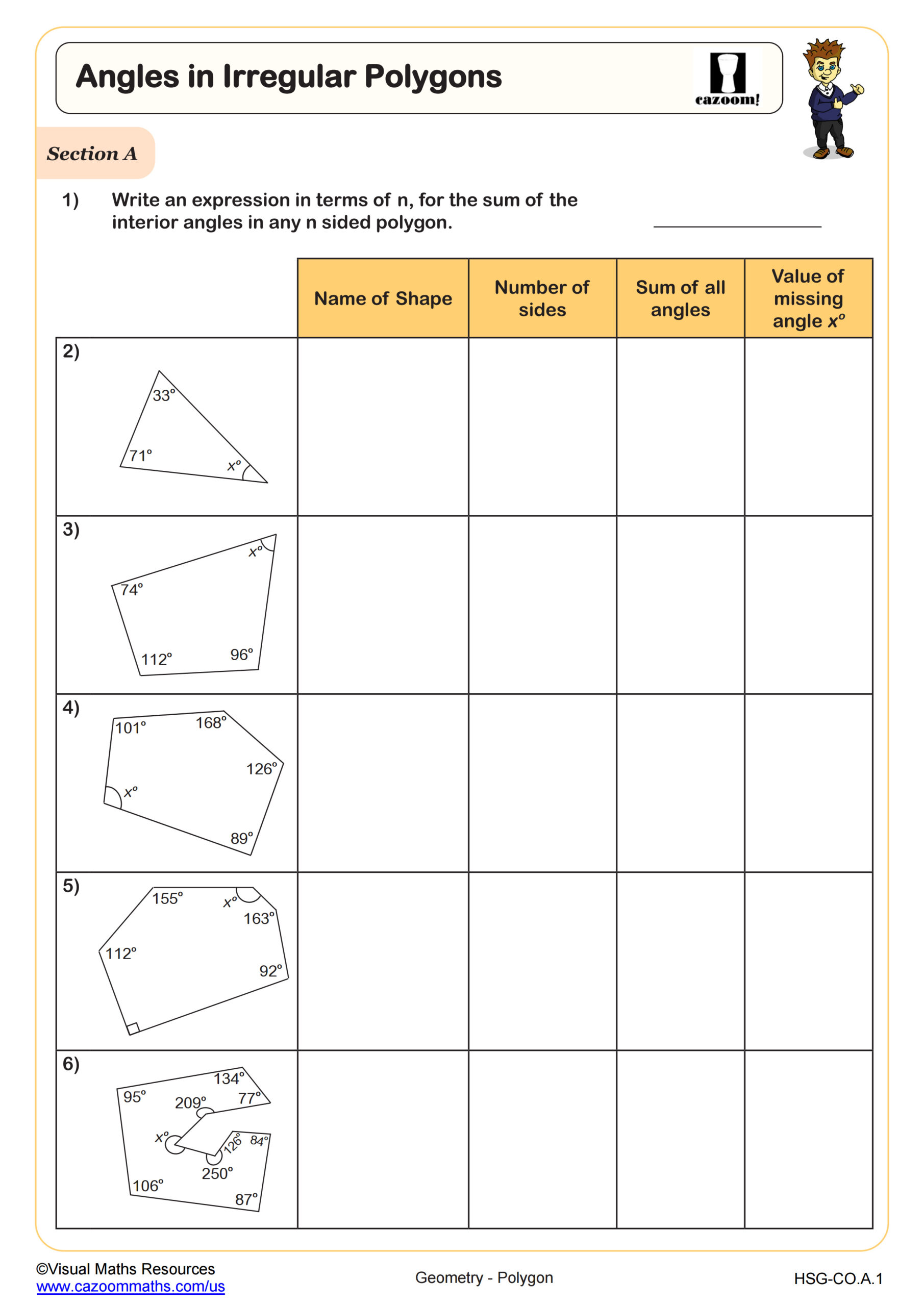
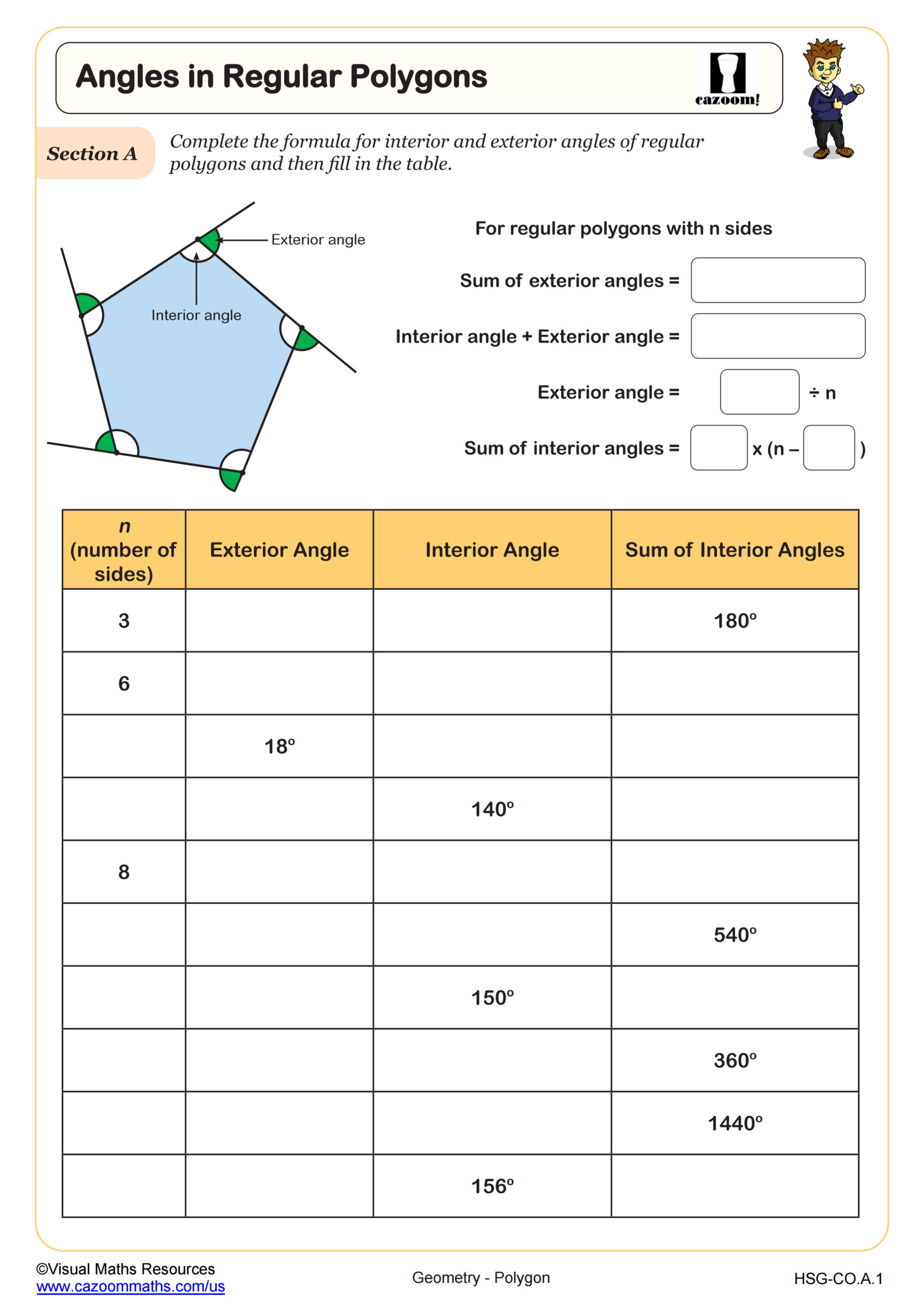
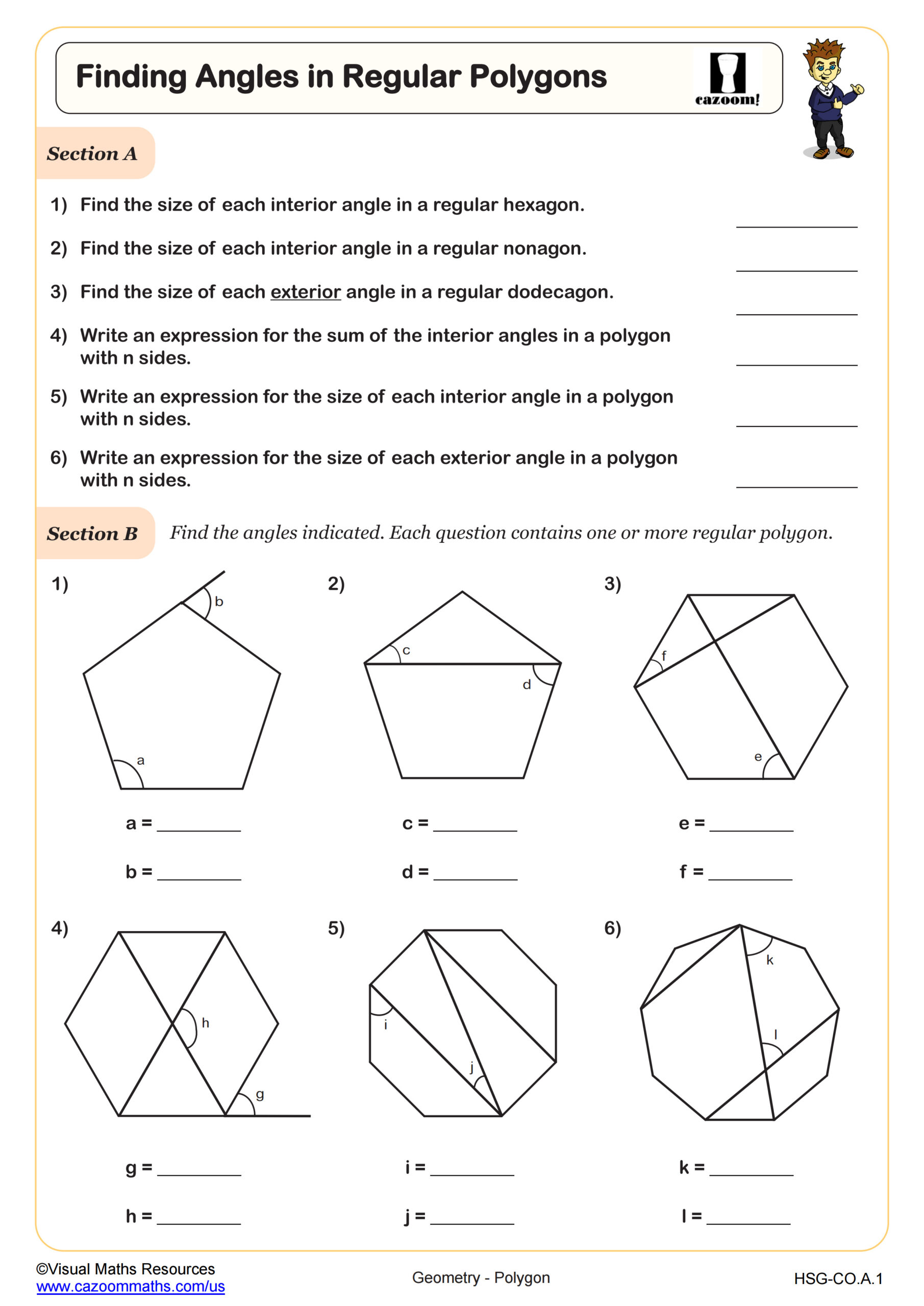
A "remedial polygons" worksheet breaks down complex polygon concepts into manageable steps, starting with basic polygon identification before progressing to angle calculations and properties. These worksheets typically emphasize visual learning with clearly labeled diagrams and step-by-step examples that align with Common Core geometry standards.
Teachers report that students benefit most when remedial worksheets include guided practice sections where students work through similar problems with decreasing support. The key is providing multiple representations of the same concept, such as showing both algebraic formulas and visual angle measurements, which helps students who may have missed foundational concepts in earlier grades build confidence with polygon properties.
Are these polygon worksheets appropriate for all high school grade levels?
High school polygon worksheets serve grades 9-12, though the complexity varies significantly based on the specific geometric concepts covered. Ninth-grade geometry typically introduces basic polygon classification and interior angle sums, while advanced courses explore coordinate geometry and polygon transformations.
Math teachers often use these worksheets for differentiated instruction within the same classroom, as polygon understanding varies widely among students. Some may need reinforcement of basic angle relationships, while others can handle complex polygon proofs and applications in coordinate planes. The answer keys help teachers quickly assess which students need additional support versus those ready for extension activities.
How do these worksheets address coordinate geometry applications with polygons?
Coordinate geometry polygon worksheets challenge students to work with vertices plotted on coordinate planes, calculating perimeters, areas, and analyzing geometric properties using algebraic methods. Students practice finding distances between vertices, determining if polygons are regular or irregular, and applying transformations.
Teachers notice that students often make sign errors when calculating distances or forget to apply the absolute value in coordinate formulas. These worksheets provide structured practice with coordinate polygon problems that mirror what students encounter on standardized assessments, helping them connect algebraic skills with geometric visualization in applications like computer graphics and engineering design.
How should teachers use these polygon worksheet answer keys most effectively?
Answer keys work best when teachers use them as diagnostic tools rather than just for grading, allowing students to self-check work and identify specific areas where they make consistent errors. Teachers can review common incorrect answers to pinpoint whether students struggle with angle formula application, polygon classification, or calculation accuracy.
Many geometry teachers find success in having students work through problems first, then check their answers before moving to the next section. This immediate feedback approach helps students catch misconceptions early and reinforces correct problem-solving strategies. The detailed solutions also support teachers in providing specific feedback during individual conferences or small group instruction.