HSN-Q.A.2 Worksheets
Common Core State Standards HSN.Q.A.2 Worksheets
Strand: Quantities
Objective: Reason quantitatively and use units to solve problems.
CCSS Description: Define appropriate quantities for the purpose of descriptive modeling.
Cazoom Math is a leading provider of Math Worksheets and used by over 50,000 teachers and parents around the world. Here you can find a set of math worksheets aligned to the common core standard HSN.Q.A.2. These worksheets are perfect for learners to develop critical math skills.
You can click on the images below to find out more about each math worksheet, and download and print the resource.
We have a great range of resources for students in High School. Check out our High School Math Worksheets page for more details.
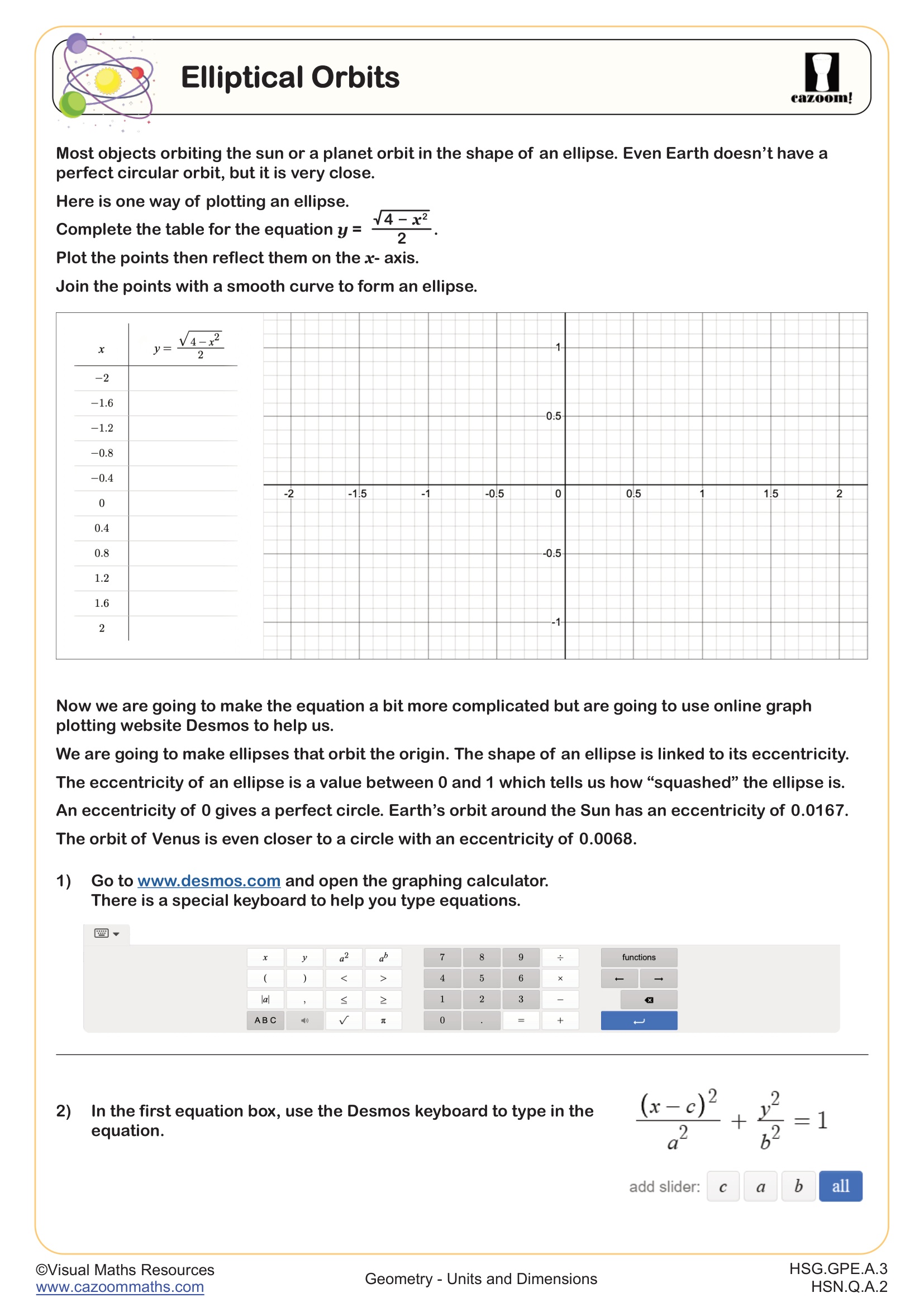
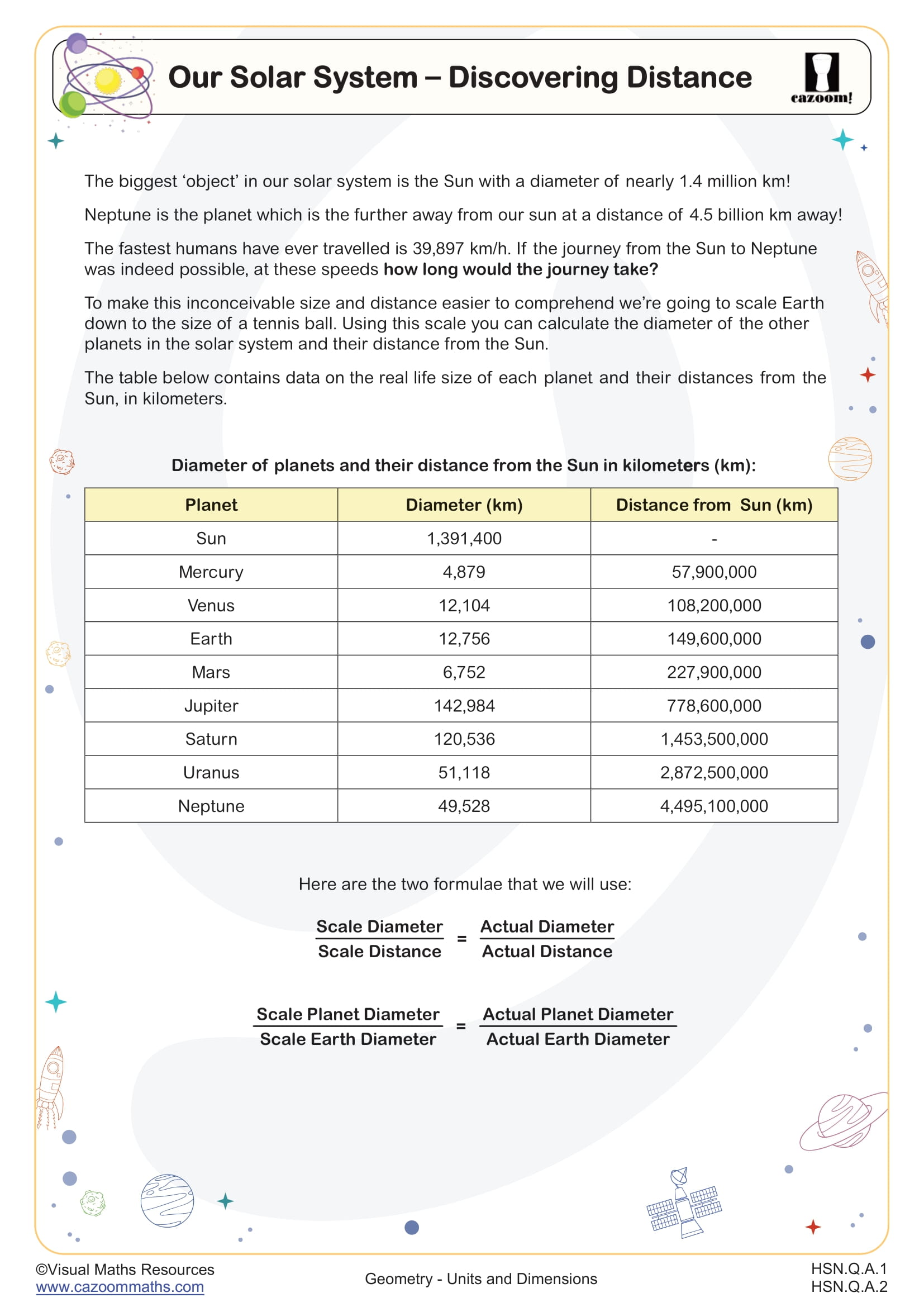
All worksheets are created by the team of experienced teachers at Cazoom Math.
What skills do students develop with QA worksheets?
QA worksheets focused on HSN.Q.A.2 develop students' ability to define appropriate quantities for modeling and analyzing real-world situations. Students learn to identify which variables are measurable, select appropriate units of measurement, and determine the level of accuracy needed for different contexts.
Teachers consistently observe that students initially want to include every possible variable in a problem rather than focusing on the most relevant quantities. These worksheets guide students through scenarios where they must justify their choices of quantities, helping them develop the mathematical reasoning skills valuable for advanced coursework in physics, chemistry, and engineering.
Which grade levels use HSN.Q.A.2 standards?
HSN.Q.A.2 primarily appears in high school curricula, typically introduced in Algebra II or Precalculus courses when students have developed sufficient mathematical maturity to handle complex real-world applications. The standard builds on foundational measurement concepts from middle school while preparing students for calculus and statistics.
The progression moves from simple single-variable situations in earlier high school courses to multi-variable analysis in advanced classes. Teachers notice that students who master quantity definition in Algebra II show stronger performance in AP Statistics and AP Physics, where appropriate variable selection becomes crucial for experimental design and data interpretation.
How do students learn to choose appropriate units of measurement?
Students develop unit selection skills through exposure to diverse problem contexts that require different measurement scales and precision levels. The worksheets present scenarios from scientific research, engineering design, and economic analysis where unit choice significantly impacts the usefulness of results.
A common error teachers observe is students defaulting to familiar units without considering the context. For example, measuring bacterial growth in inches rather than micrometers, or expressing global population changes in single digits rather than millions. The practice problems help students recognize when standard units are inappropriate and when they need to use scientific notation or different scales for meaningful analysis.
How can teachers effectively use these quantity definition worksheets?
Teachers find success using these worksheets as bridge activities between pure mathematics instruction and real-world application projects. The problems work well as warm-up exercises before laboratory work in science classes or as preparation for mathematical modeling competitions and projects.
Many teachers pair these worksheets with hands-on measurement activities where students actually collect data and compare their quantity definitions with real results. This approach helps students understand that mathematical precision must balance with practical constraints like measurement tools and time limitations, a skill that translates directly to STEM careers and research contexts.