K.CC.A.3 Worksheets
Common Core State Standards K.CC.A.3 Worksheets
Strand: Counting and Cardinality
Objective: Know number names and the count sequence.
CCSS Description: Write numbers from 0 to 20. Represent a number of objects with a written numeral 0-20 (with 0 representing a count of no objects).
Cazoom Math is a leading provider of Math Worksheets and used by over 50,000 teachers and parents around the world. Here you can find a set of math worksheets aligned to the common core standard K.CC.A.3. These worksheets are perfect for learners to develop critical math skills.
You can click on the images below to find out more about each math worksheet, and download and print the resource.
We have a great range of resources for students in Kindergarten. Check out our Kindergarten Math Worksheets page for more details.
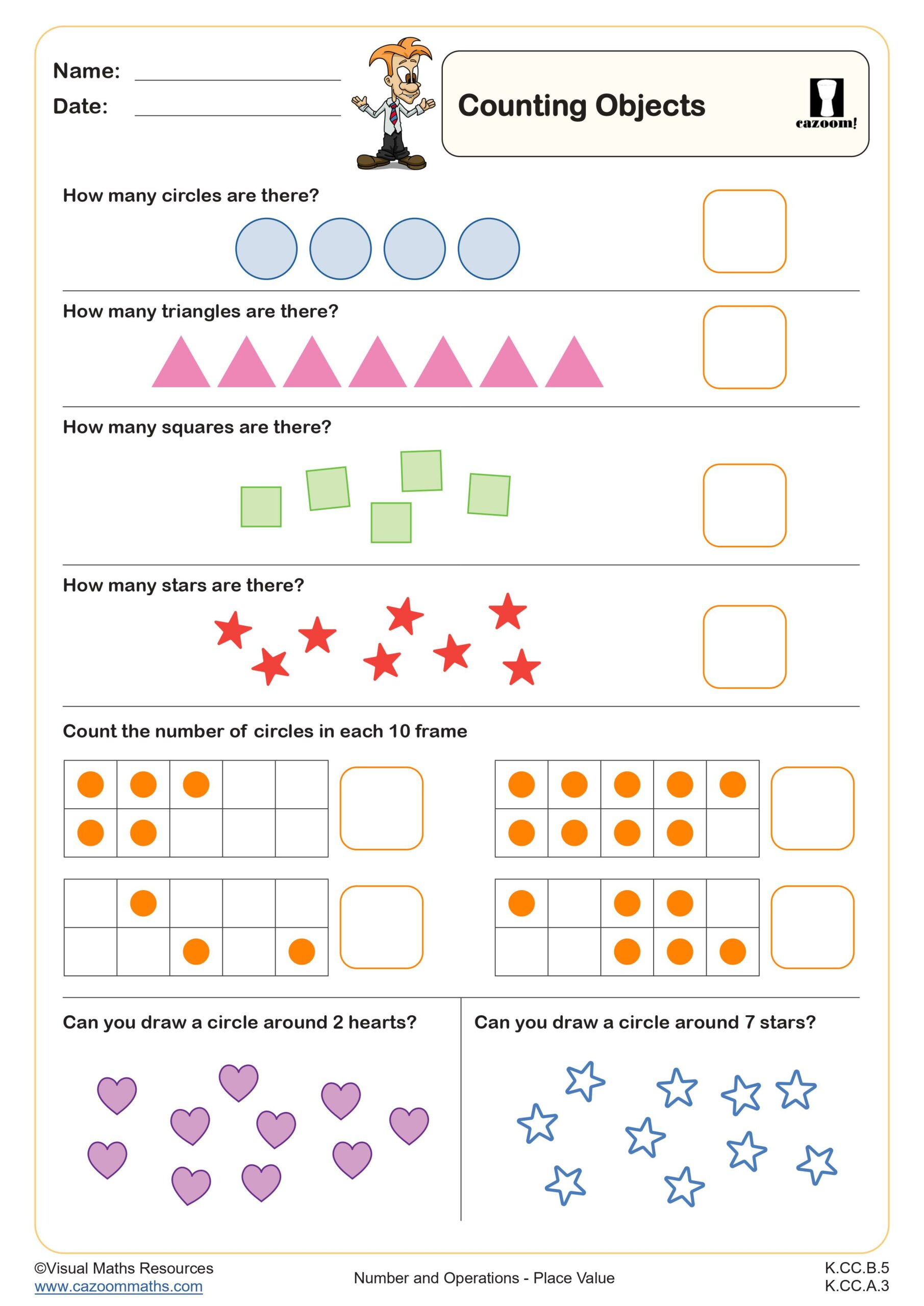
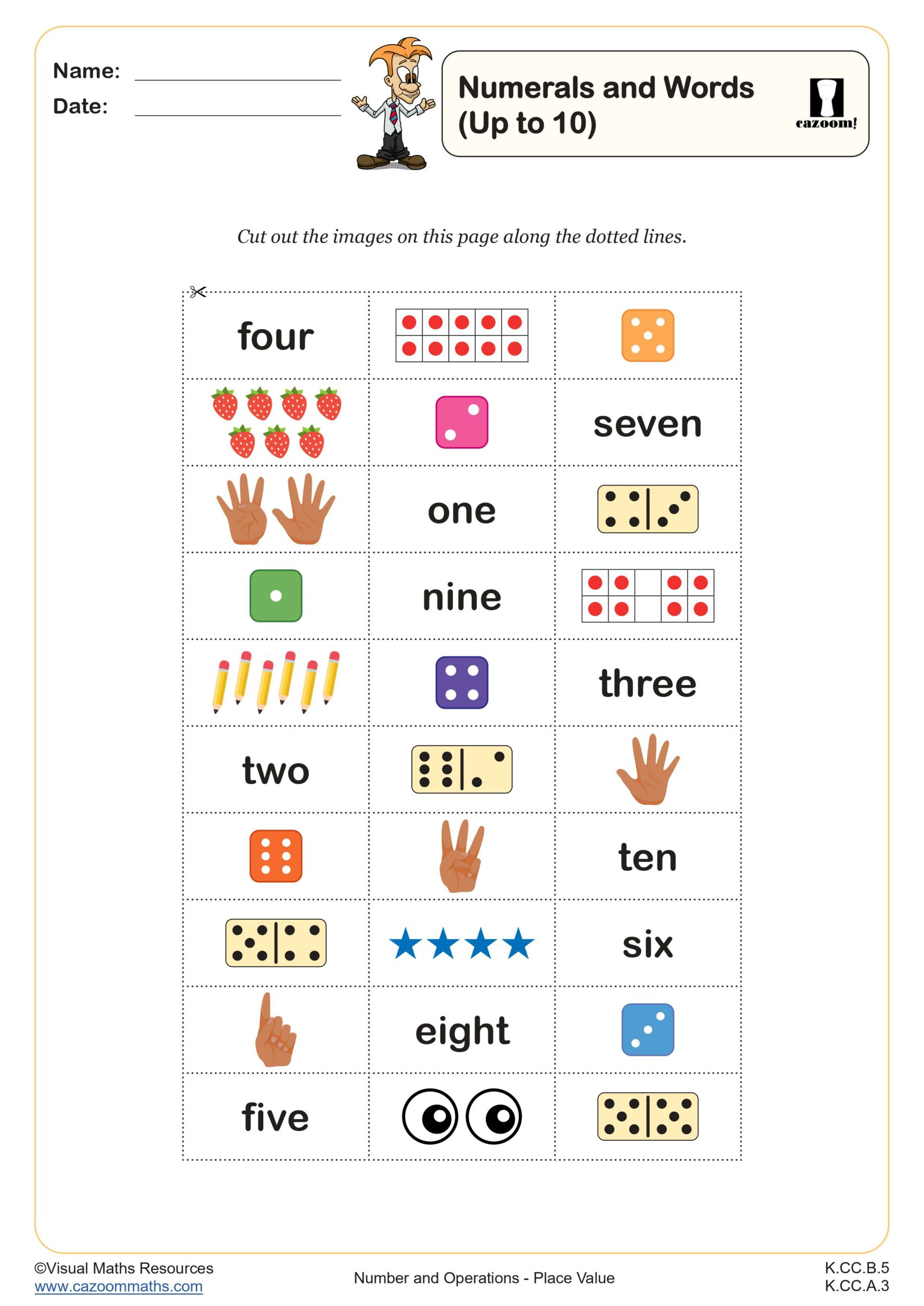
All worksheets are created by the team of experienced teachers at Cazoom Math.
What does k.cc.a.3 cover in the Common Core standards?
Standard k.cc.a.3 requires students to write numerals from 0 to 20 and represent a number of objects with a written numeral from 0-20, with 0 representing a count of no objects. This standard bridges the gap between verbal counting skills and written mathematical communication.
Teachers frequently observe that students who excel at rote counting often struggle with the fine motor skills needed for proper numeral formation. The most common errors include reversing 3, 6, 7, and 9, or writing entire numbers backwards. These worksheets address these specific challenges through repeated practice with visual guides and tracing activities.
Which grade levels benefit from K.CC.A.3 practice worksheets?
While specifically designed for kindergarten students, these worksheets serve various grades depending on individual learning needs. Pre-K students working ahead benefit from the foundational numeral recognition activities, while first-grade students who need remediation find the structured approach helpful for solidifying basic skills.
Special education teachers often use these materials with older students who require explicit instruction in number formation. The clear visual models and systematic progression make them valuable for students with developmental delays or fine motor challenges. English language learners also benefit from the visual nature of number writing practice, as numerals provide a universal mathematical language.
How do these worksheets address proper number formation techniques?
Effective number formation worksheets include starting dots, directional arrows, and dotted lines to guide students through correct stroke sequences. Teachers notice that students who learn proper formation early develop better number recognition skills and avoid persistent reversal errors that can impact later mathematics learning.
The worksheets typically progress from large-format tracing to independent writing in standard size. Many include number formation rhymes or verbal cues that help students remember the correct sequence of strokes. Teachers report that students who use multi-sensory approaches, combining visual guides with verbal cues, show faster improvement in both formation accuracy and number recognition speed.
What strategies help students succeed with K.CC.A.3 worksheet practice?
Successful implementation requires consistent daily practice sessions of 10-15 minutes rather than lengthy occasional sessions. Teachers find that students benefit from writing numbers in various contexts, such as labeling quantities of classroom objects or creating number books that connect numerals to real-world examples.
Using the provided answer keys strategically enhances learning outcomes. Rather than simply marking correct or incorrect, teachers can identify specific formation errors and provide targeted feedback. Many educators create individualized checklists based on common errors observed in their classrooms, helping students self-monitor their progress and develop independent number writing skills that transfer to other mathematical contexts.