K.CC.B.5 Worksheets
Common Core State Standards K.CC.B.5 Worksheets
Strand: Counting and Cardinality
Objective: Count to tell the number of objects.
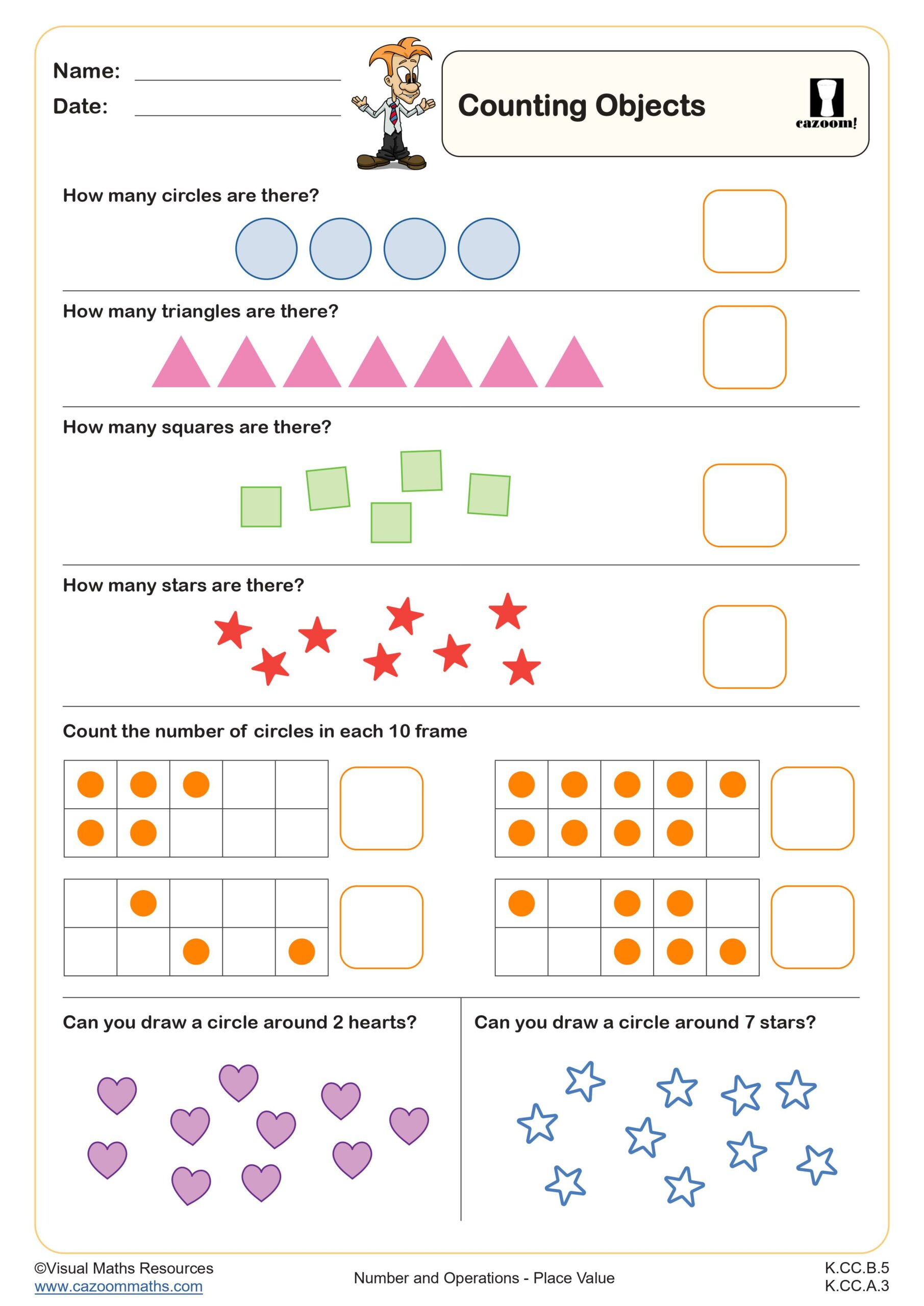
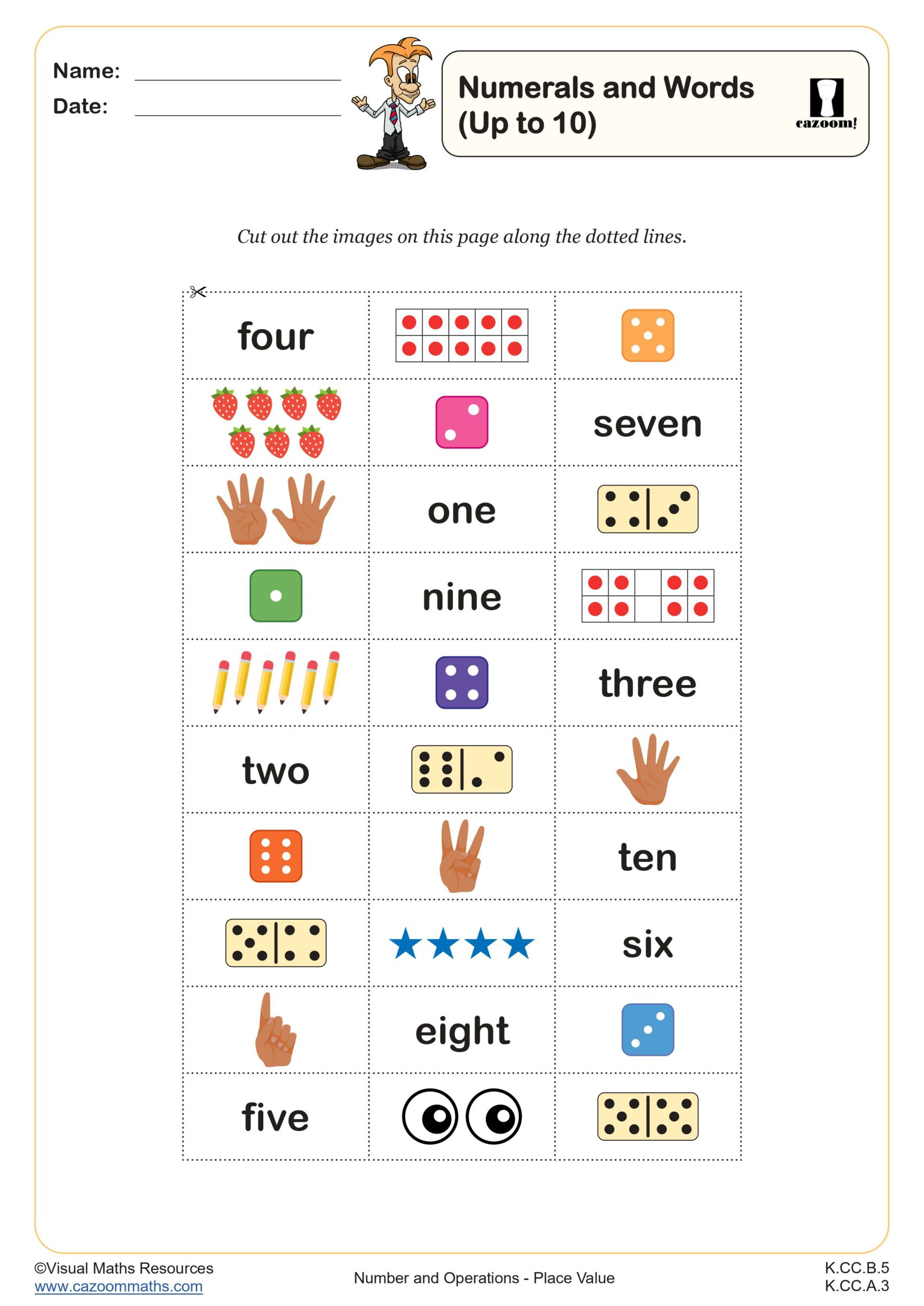
CCSS Description: Count to answer “how many?” questions about as many as 20 things arranged in a line, a rectangular array, or a circle, or as many as 10 things in a scattered configuration; given a number from 1–20, count out that many objects.
Cazoom Math is a leading provider of Math Worksheets and used by over 50,000 teachers and parents around the world. Here you can find a set of math worksheets aligned to the common core standard K.CC.B.5. These worksheets are perfect for learners to develop critical math skills.
You can click on the images below to find out more about each math worksheet, and download and print the resource.
We have a great range of resources for students in Kindergarten. Check out our Kindergarten Math Worksheets page for more details.
All worksheets are created by the team of experienced teachers at Cazoom Math.
What does k.cc.b.5 specifically require students to master?
The k.cc.b.5 standard requires students to count to answer "how many?" questions about collections of up to 20 objects arranged in lines, rectangular arrays, or circles, as well as scattered configurations. This standard emphasizes accurate counting regardless of object arrangement and connects directly to Common Core's focus on foundational number sense.
Classroom teachers notice students often recount the same object twice when items are scattered randomly, leading to incorrect totals. The most effective approach involves teaching students to touch or mark each object as they count, establishing the crucial one-to-one correspondence that prevents double-counting errors.
Which grade levels typically work on counting object arrangements?
While k.cc.b.5 targets kindergarten specifically, many teachers use these counting worksheets across multiple grade levels for differentiation and review. First-grade students who need additional foundational support benefit from practicing with the same object arrangements, while advanced kindergartners can tackle more challenging scattered configurations.
Preschool programs often introduce simpler versions with fewer objects in clear linear arrangements before progressing to the more complex patterns required by the standard. Second-grade teachers sometimes revisit these counting skills when introducing addition and subtraction with manipulatives, reinforcing the connection between counting accuracy and computational success.
How do rectangular arrangements help develop counting skills?
Rectangle shape objects for kids arranged in arrays provide structured practice that bridges counting and early multiplication concepts. When objects are organized in rows and columns, students learn to count systematically either by rows or by columns, developing organizational strategies that support higher-level math concepts.
Teachers observe that students who master counting rectangular arrays often transition more easily to understanding repeated addition and basic multiplication facts in later grades. The visual structure of arrays also helps students recognize patterns and relationships between numbers, making these worksheets valuable for building both counting fluency and mathematical reasoning skills.
How should teachers use these k-5 worksheets most effectively?
Teachers find the most success when they start with worksheets featuring objects in clear linear arrangements before progressing to scattered configurations. Beginning each lesson with a brief demonstration of systematic counting strategies helps students approach the worksheets with confidence and accuracy.
The included answer keys allow teachers to quickly identify which students need additional support with one-to-one correspondence or systematic counting approaches. Many educators use these worksheets during math centers, pairing struggling students with counting manipulatives while independent workers complete the paper-based practice to reinforce the same foundational skills.