K.G.A.2 Worksheets
Common Core State Standards K.G.A.2 Worksheets
Strand: Geometry
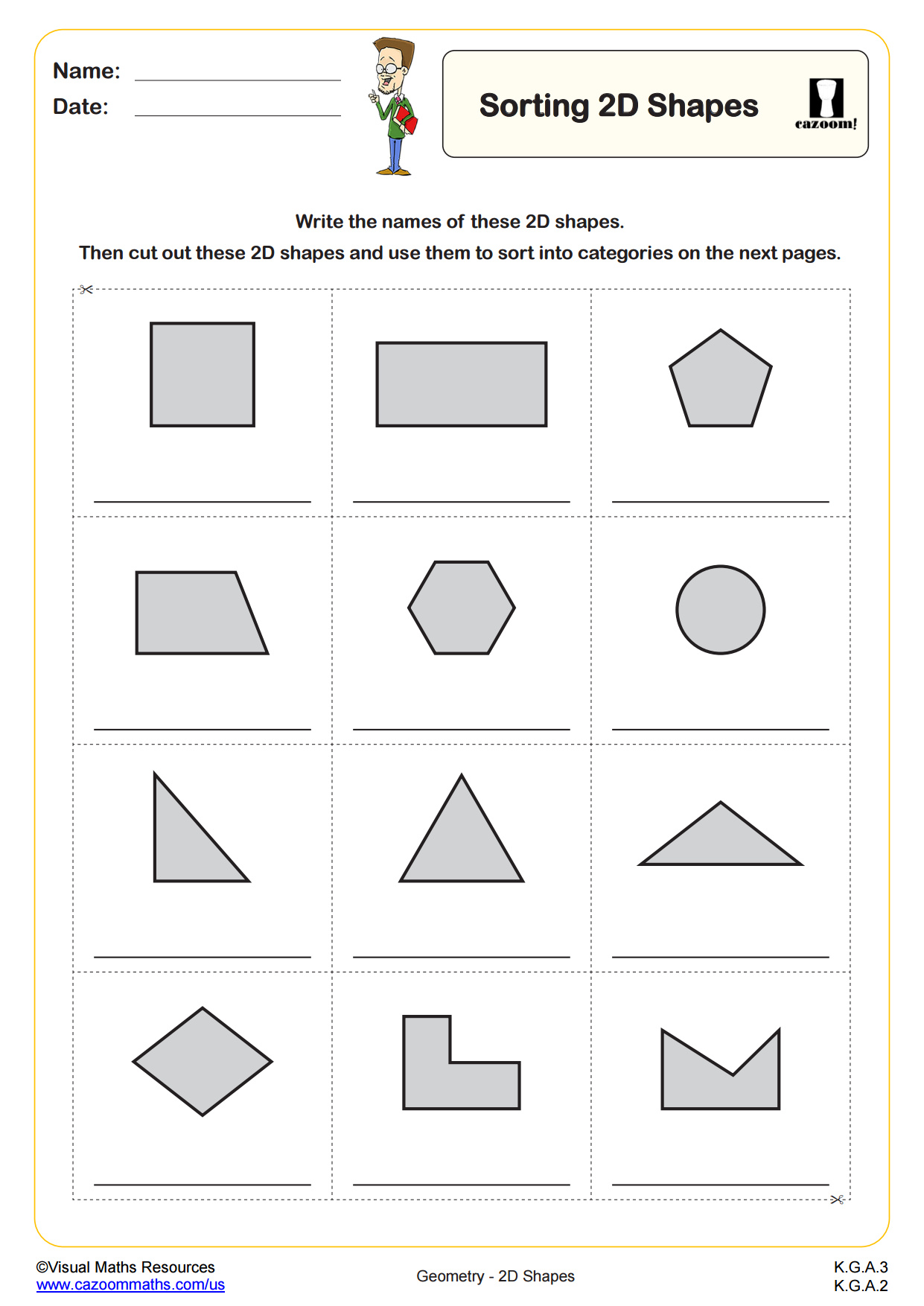
Objective: Identify and describe shapes (squares, circles, triangles, rectangles, hexagons, cubes, cones, cylinders, and spheres).
CCSS Description: Correctly name shapes regardless of their orientations or overall size.
Cazoom Math is a leading provider of Math Worksheets and used by over 50,000 teachers and parents around the world. Here you can find a set of math worksheets aligned to the common core standard K.G.A.2. These worksheets are perfect for learners to develop critical math skills.
You can click on the images below to find out more about each math worksheet, and download and print the resource.
We have a great range of resources for students in Kindergarten. Check out our Kindergarten Math Worksheets page for more details.
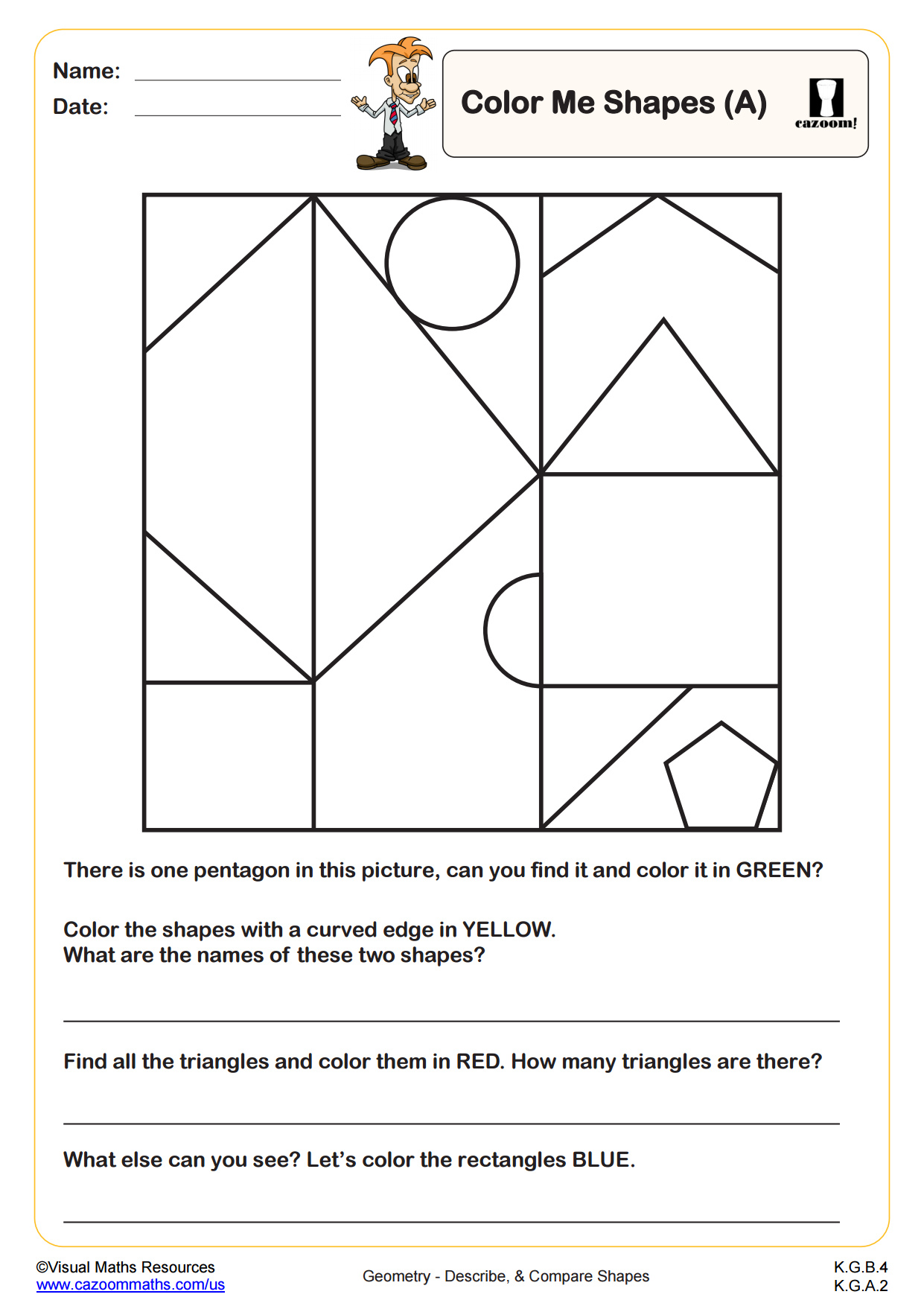
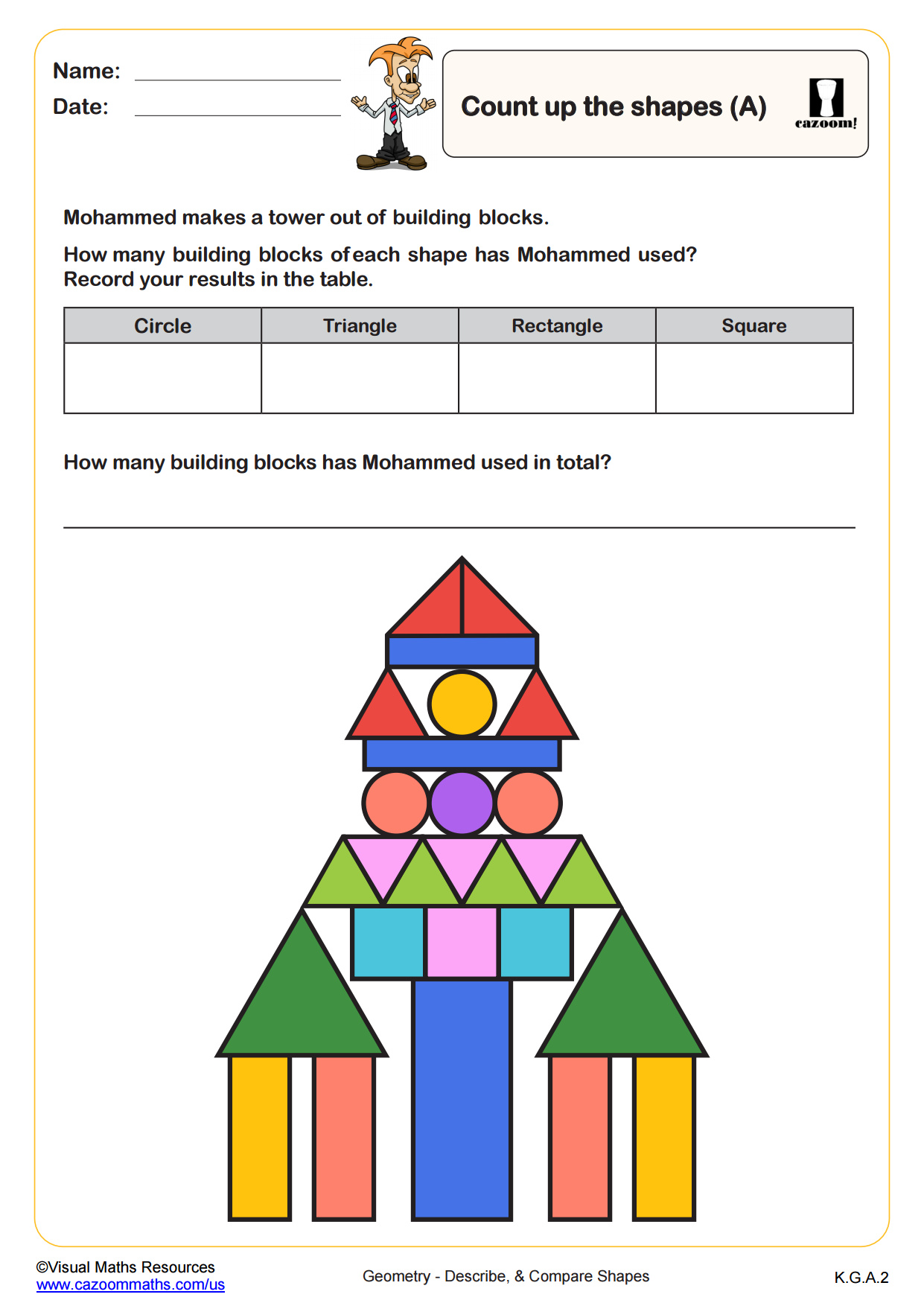
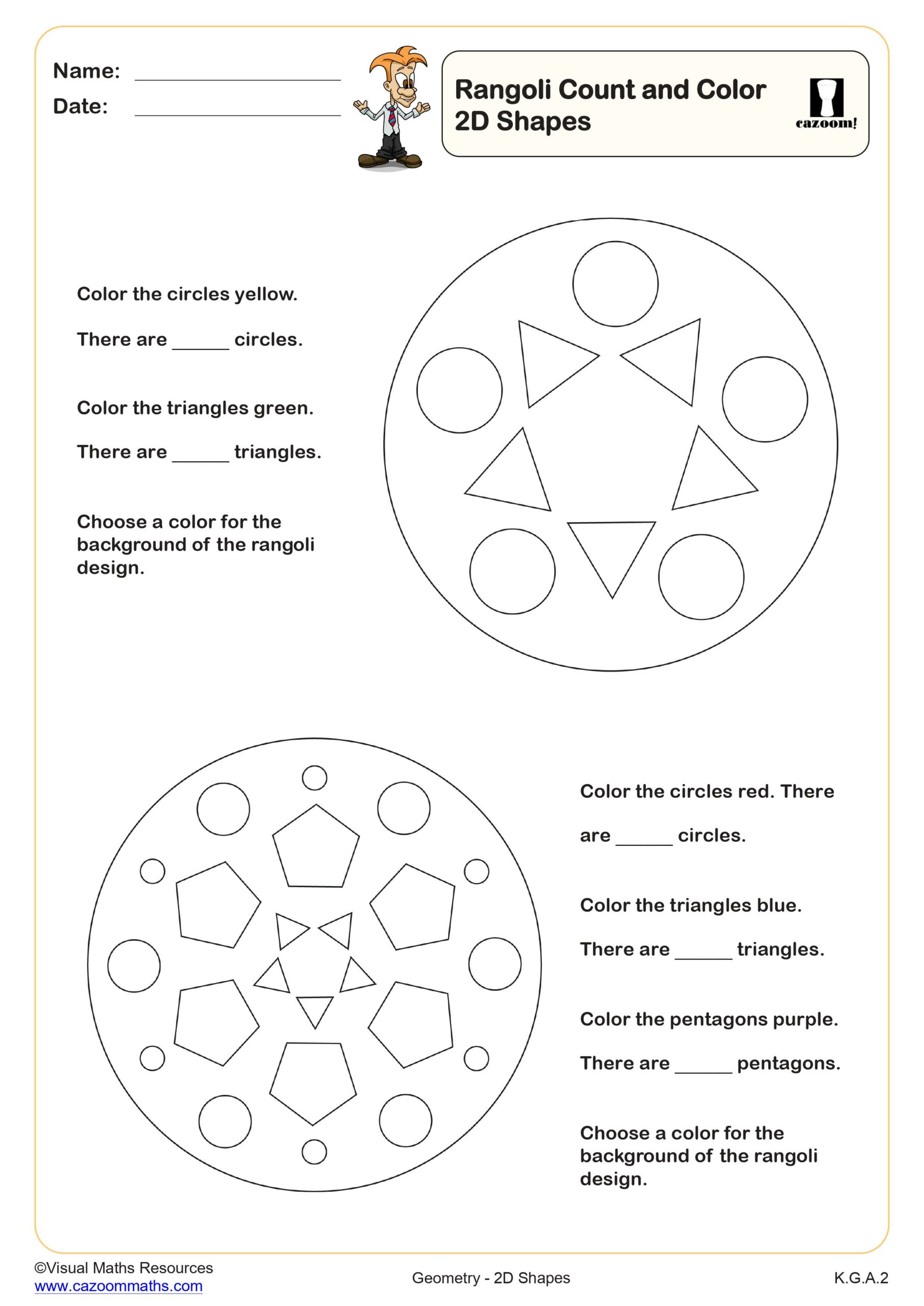
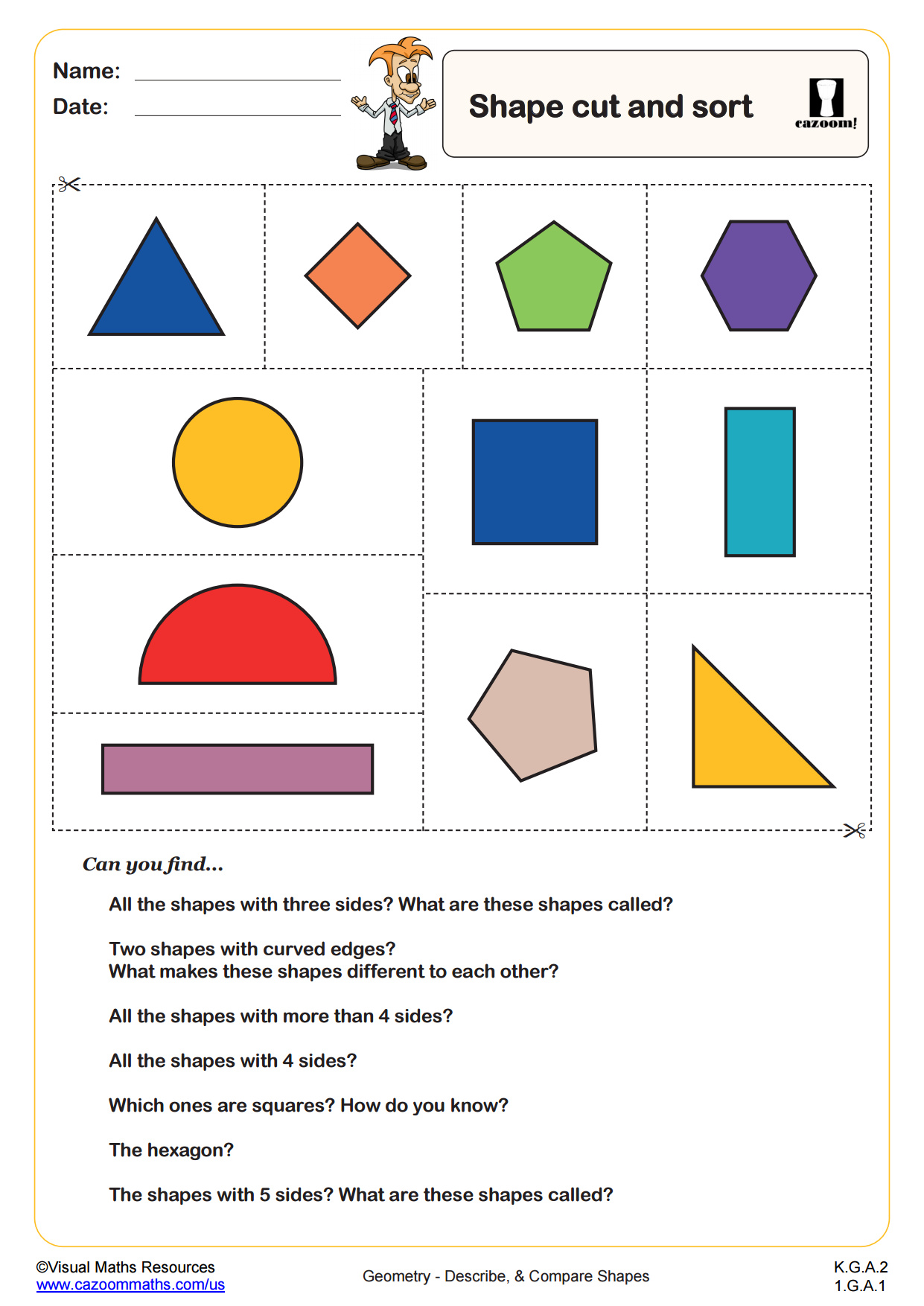
All worksheets are created by the team of experienced teachers at Cazoom Math.
What does k.g.a.2 cover in the Common Core standards?
The k.g.a.2 standard focuses on students correctly naming basic two-dimensional shapes regardless of their size or orientation. This kindergarten geometry standard specifically targets squares, circles, triangles, and rectangles, requiring students to identify these shapes when they appear in different positions, colors, or sizes.
Teachers notice that students often memorize shapes in one standard position but struggle when the same shape is rotated. A triangle pointing downward or a rectangle standing vertically can confuse students who learned these shapes in only one orientation. This standard deliberately addresses this limitation by exposing students to shapes in multiple presentations.
Which grade levels benefit most from shape naming practice?
While k.g.a.2 specifically targets kindergarten students, shape naming skills benefit learners across multiple grade levels. Kindergarten represents the foundational introduction, but first and second grade students often need continued reinforcement, especially when shapes appear in complex arrangements or artistic contexts like math shapes rangoli patterns.
Teachers working with struggling students in later elementary grades frequently return to these basic shape identification activities. Students with learning differences or those who missed early geometric concepts particularly benefit from systematic shape naming practice that builds confidence before advancing to more complex geometric relationships and measurements.
How do students learn to distinguish between squares and rectangles?
The square versus rectangle distinction challenges many kindergarten students because squares are actually special rectangles, though the standard treats them as separate categories for instructional purposes. Students learn that squares have four equal sides while rectangles have opposite sides that are equal but not necessarily all four sides matching.
Classroom experience shows students benefit from hands-on sorting activities where they physically manipulate shape cutouts. Teachers often use the "four corners, four sides" language first, then introduce the side length differences. Providing explicit comparison opportunities helps students internalize these distinctions rather than relying on visual memory alone.
What strategies help teachers use these worksheets effectively?
Successful implementation begins with introducing shapes through multiple modalities before students attempt independent worksheet practice. Teachers find that combining tactile exploration, verbal naming, and visual identification creates stronger retention than worksheet practice alone.
The included answer keys allow teachers to quickly assess student understanding and identify patterns in errors across the class. Many teachers use these worksheets as formative assessments, circulating during independent work to observe student thinking processes. Following up incorrect responses with concrete manipulatives or drawing activities helps address misconceptions before they solidify into persistent errors.