K.G.B.4 Worksheets
Common Core State Standards K.G.B.4 Worksheets
Strand: Geometry
Objective: Analyze, compare, create, and compose shapes.
CCSS Description: Analyze and compare two- and three-dimensional shapes, in different sizes and orientations, using informal language to describe their similarities, differences, parts (e.g., number of sides and vertices/“corners”) and other attributes (e.g., having sides of equal length).
Cazoom Math is a leading provider of Math Worksheets and used by over 50,000 teachers and parents around the world. Here you can find a set of math worksheets aligned to the common core standard K.G.B.4. These worksheets are perfect for learners to develop critical math skills.
You can click on the images below to find out more about each math worksheet, and download and print the resource.
We have a great range of resources for students in Kindergarten. Check out our Kindergarten Math Worksheets page for more details.
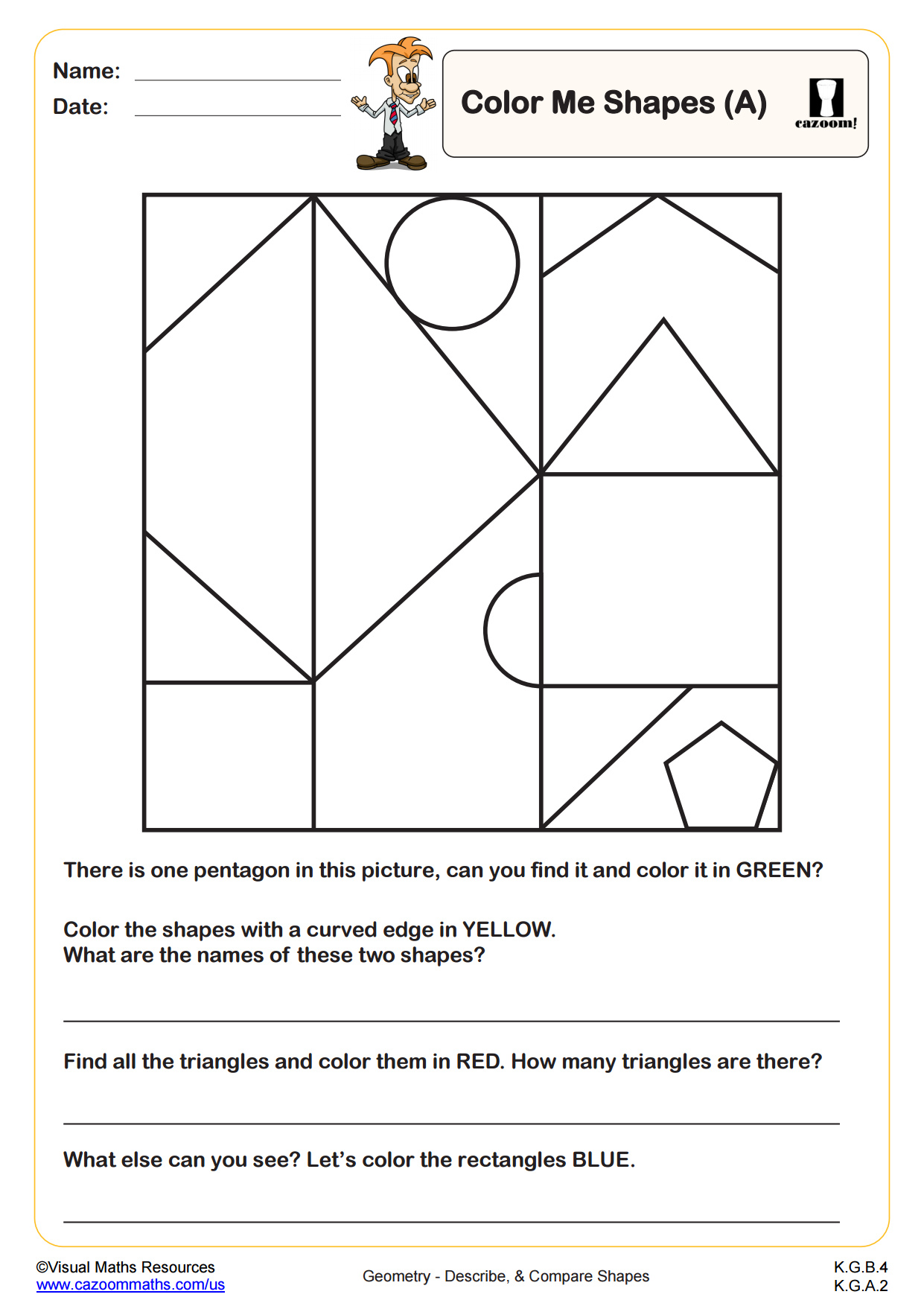
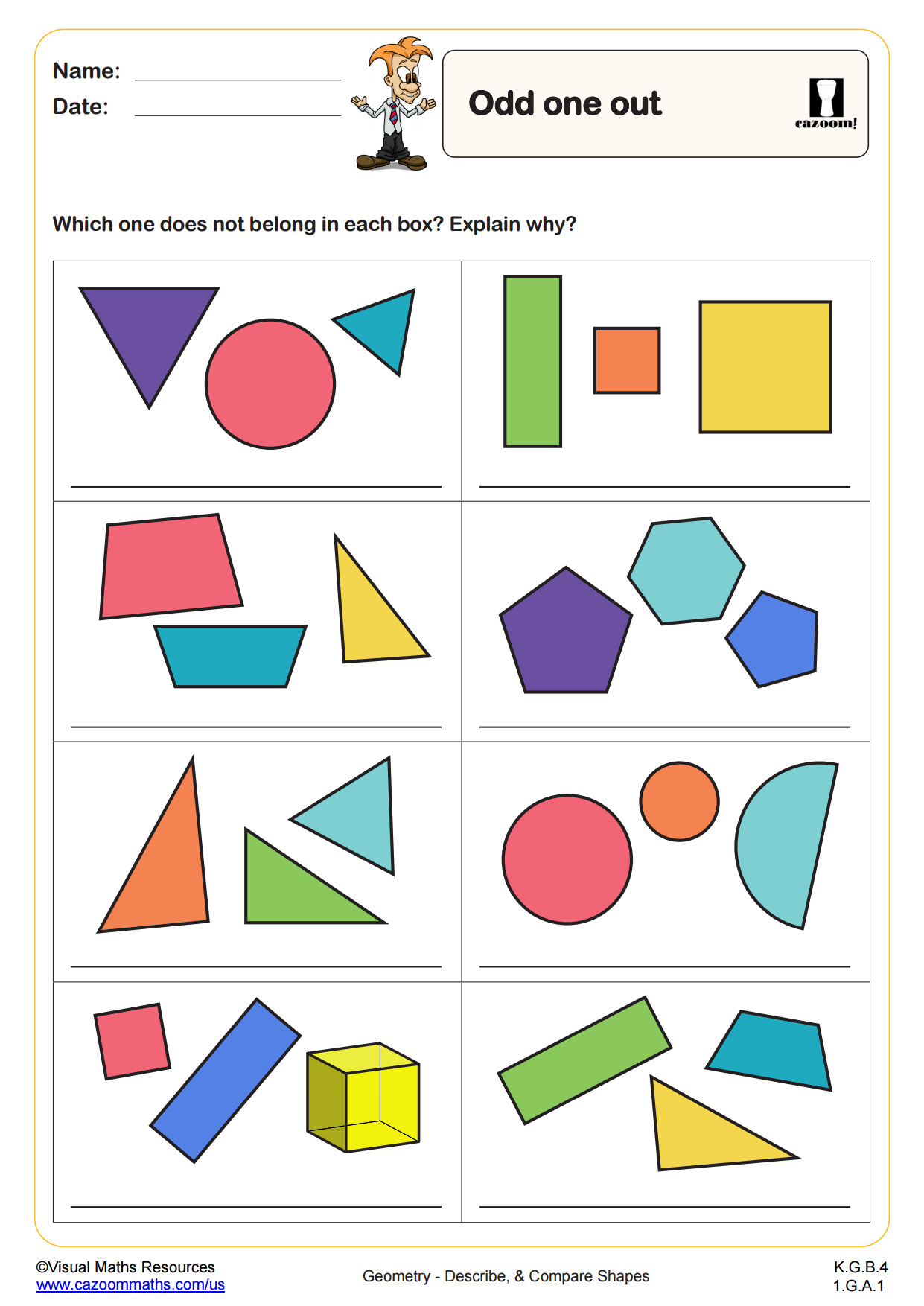
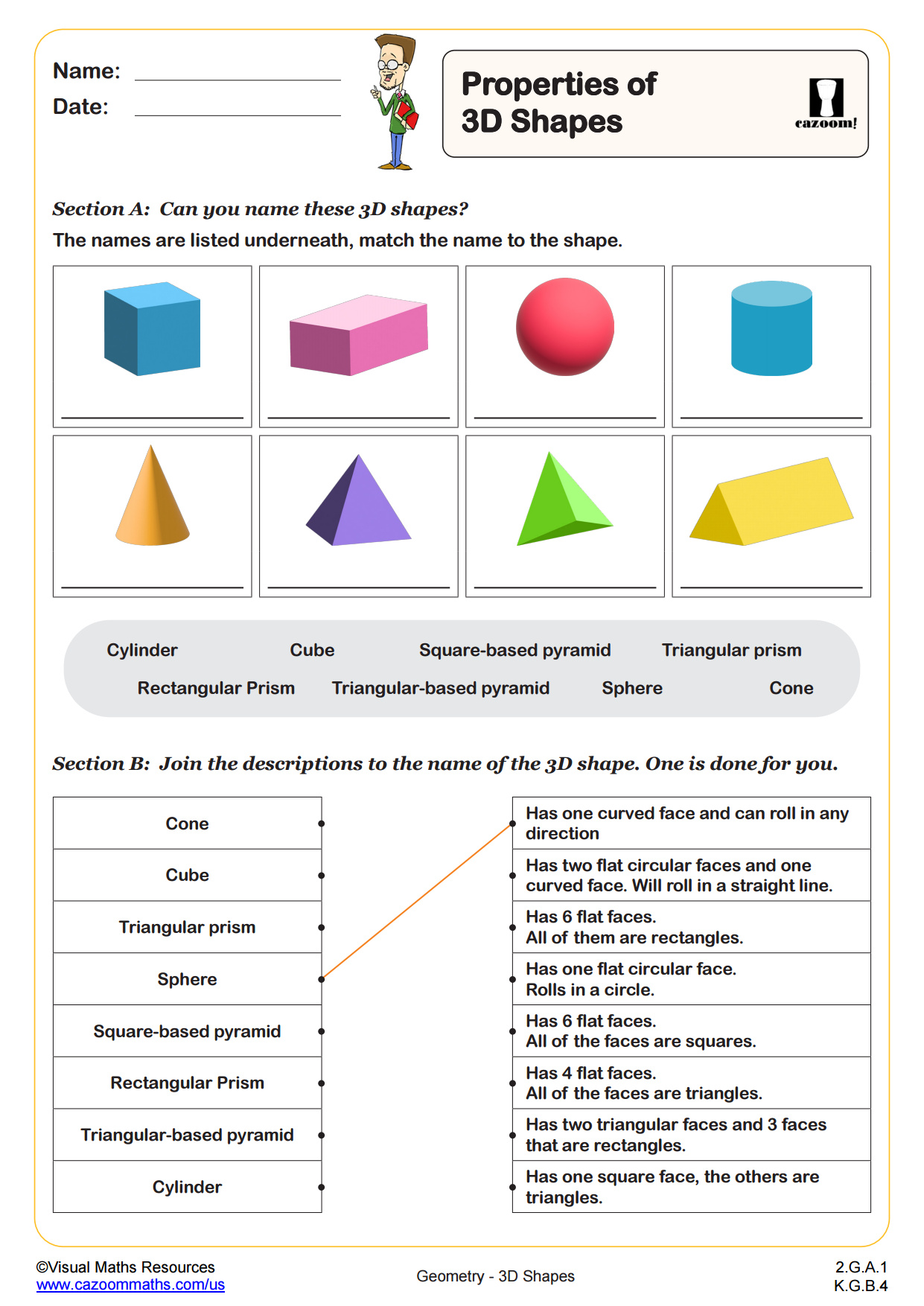
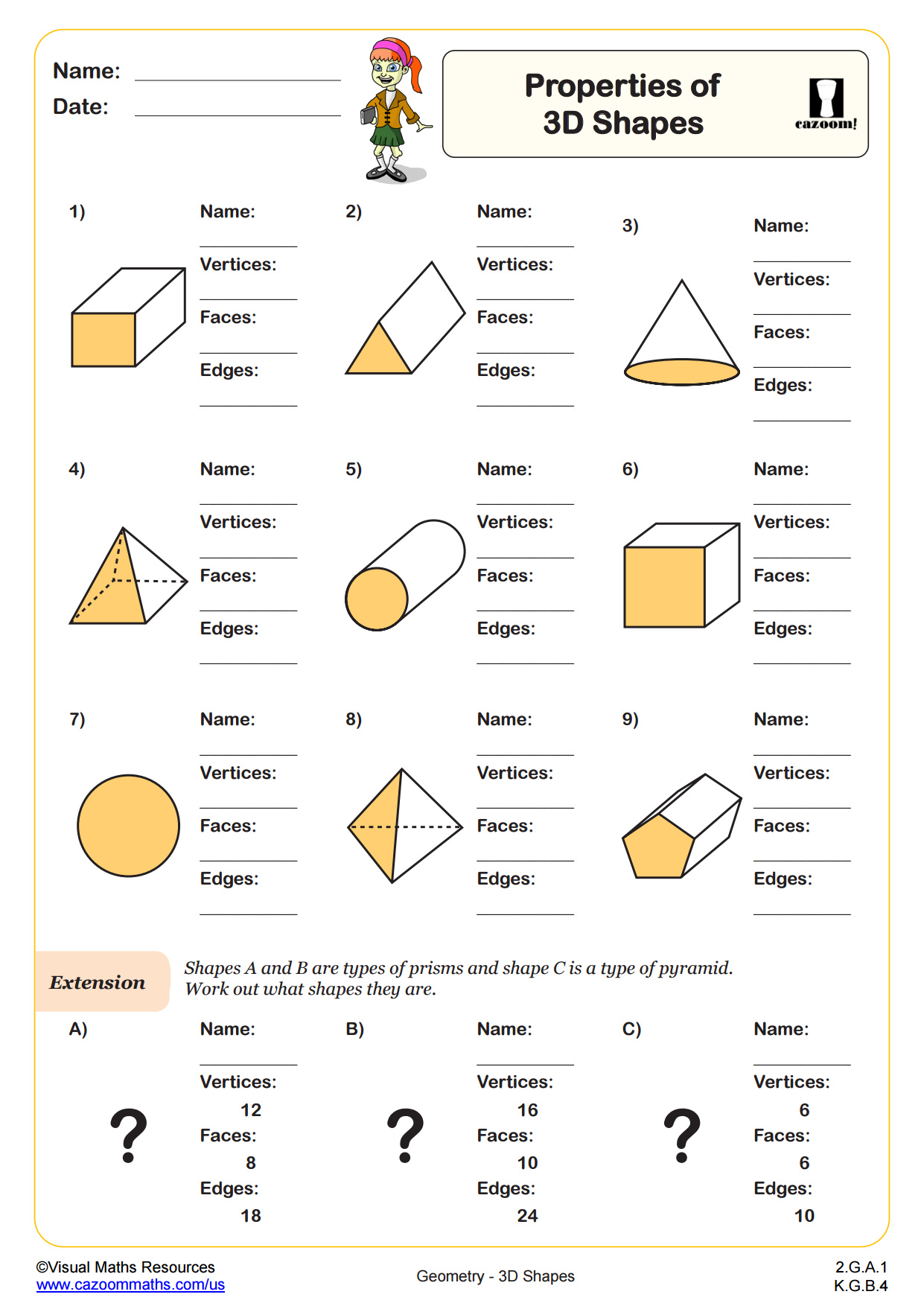
All worksheets are created by the team of experienced teachers at Cazoom Math.
What does k.g.b.4 cover in the Common Core standards?
The k.g.b.4 standard requires students to analyze and compare two- and three-dimensional shapes in different sizes and orientations using informal language to describe their similarities, differences, parts, and other attributes. This kindergarten geometry standard builds the foundation for spatial reasoning and geometric vocabulary development.
Teachers typically observe that students need multiple exposures to shapes in various orientations before they can consistently identify them. Many kindergarteners initially think a square standing on its corner is a diamond rather than recognizing it as the same shape in a different position, highlighting why this standard emphasizes analysis across different orientations.
Which grade levels use these k.g.b.4 worksheets?
These worksheets target kindergarten students as specified by the Common Core standard, though teachers often use them for remediation with first-grade students who need additional geometry support. The activities align specifically with kindergarten developmental expectations for shape recognition and comparison skills.
Some preschool teachers working with advanced students find these materials useful for introducing basic shape concepts, while special education teachers frequently adapt the worksheets for older students working on foundational geometry skills. The visual nature of shape comparison activities makes them accessible across different learning levels when appropriately scaffolded.
How do students practice comparing shape attributes effectively?
Students work with activities that require them to identify similarities and differences between shapes using informal language like 'pointy,' 'round,' 'flat sides,' and 'curved.' The worksheets include exercises where students sort shapes by attributes and explain their reasoning using kindergarten-appropriate vocabulary.
Teachers report that students often focus only on size differences initially, missing other important attributes like the number of sides or corners. Effective practice includes guided discussions where students verbalize what they notice about each shape, helping them develop the language skills needed to articulate geometric observations and comparisons.
What makes these worksheets effective for classroom use?
Each worksheet includes visual exercises that encourage hands-on exploration and discussion, supporting both independent work and small group activities. The answer keys allow teachers to quickly assess student understanding and identify areas where additional instruction may be needed.
Teachers find these materials work best when combined with physical manipulatives, allowing students to handle and rotate actual shapes before completing worksheet activities. The progression from concrete manipulation to worksheet representation helps bridge the gap between hands-on learning and more abstract geometric thinking that students will encounter in later grades.