K.MD.A.2 Worksheets
Common Core State Standards K.MD.A.2 Worksheets
Strand: Measurement and Data
Objective: Describe and compare measurable attributes.
CCSS Description: Directly compare two objects with a measurable attribute in common, to see which object has “more of”/“less of” the attribute, and describe the difference. For example, directly compare the heights of two children and describe one child as taller/shorter
Cazoom Math is a leading provider of Math Worksheets and used by over 50,000 teachers and parents around the world. Here you can find a set of math worksheets aligned to the common core standard K.MD.A.2. These worksheets are perfect for learners to develop critical math skills.
You can click on the images below to find out more about each math worksheet, and download and print the resource.
We have a great range of resources for students in Kindergarten. Check out our Kindergarten Math Worksheets page for more details.
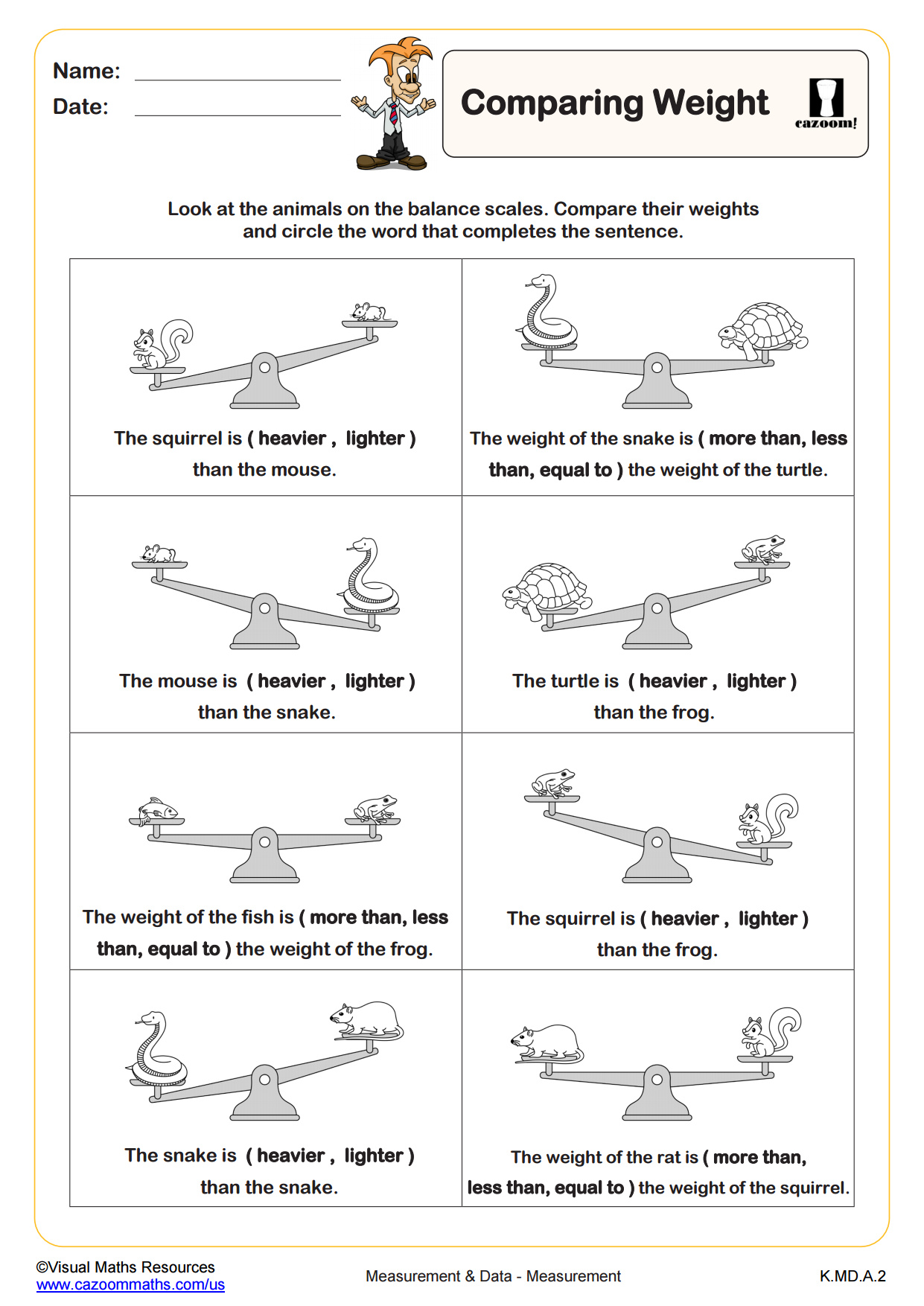
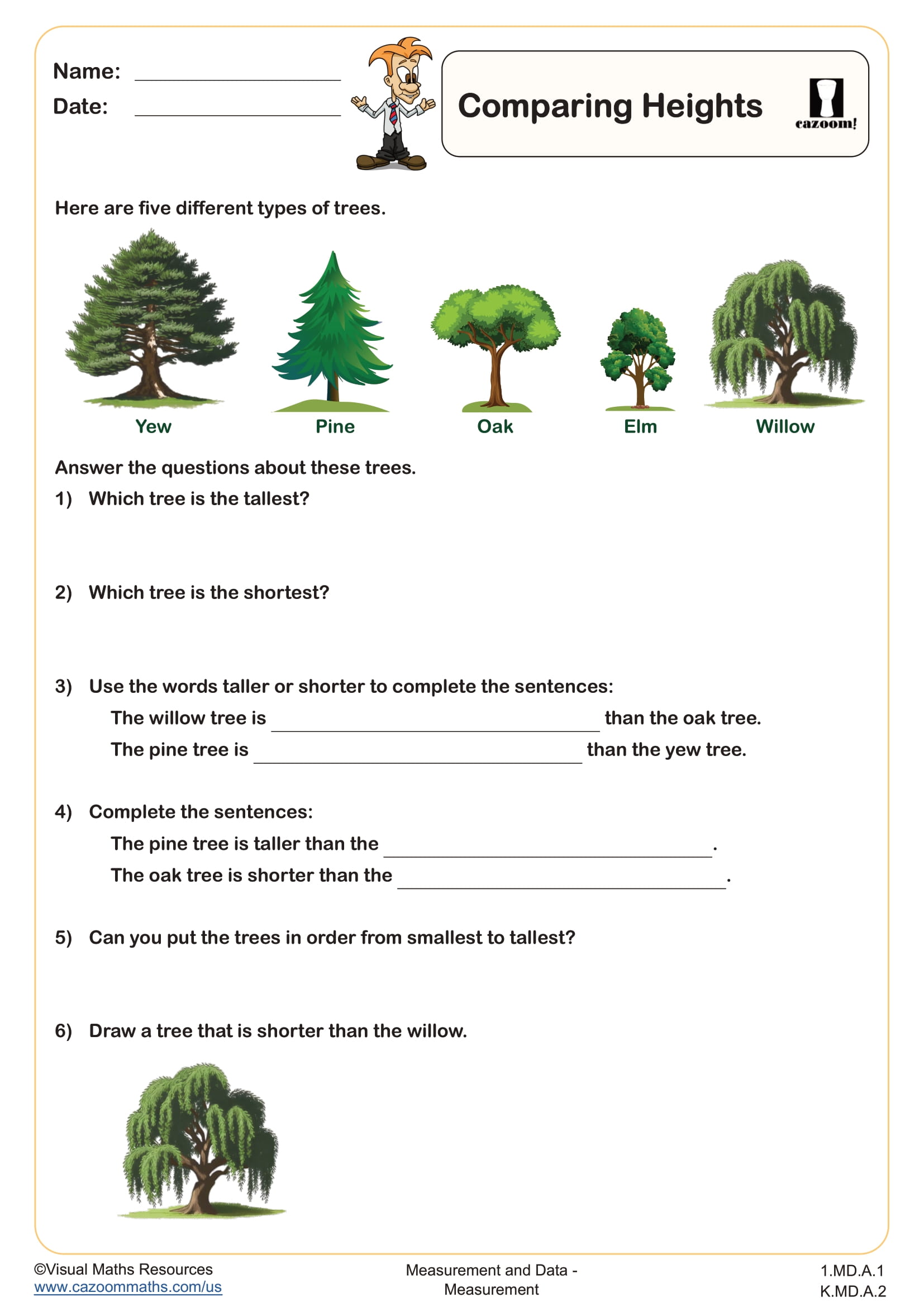
All worksheets are created by the team of experienced teachers at Cazoom Math.
What does k.md.2 cover in kindergarten math curriculum?
The k.md.2 standard focuses on directly comparing two objects with a common measurable attribute and describing the difference using appropriate vocabulary like longer, shorter, taller, heavier, or lighter. Students work without rulers or scales, using only visual and tactile comparison methods.
Teachers observe that students need explicit instruction on aligning objects properly for fair comparison. Many kindergarteners initially place objects side by side without matching starting points when comparing length, leading to incorrect conclusions about which object is actually longer.
How does comparing objects fit into different grade levels?
Kindergarten comparison work establishes the foundation for first grade measurement with non-standard units, then progresses to standard units in second grade. Students begin by understanding that objects have measurable attributes before learning to quantify those attributes with tools.
Teachers notice significant developmental variation in spatial reasoning at the kindergarten level. Some students naturally align objects for fair comparison, while others need repeated modeling and guided practice to develop this skill consistently across different contexts and object types.
What comparison vocabulary should kindergarten students learn?
Students need to master comparative terms like longer/shorter, taller/shorter, heavier/lighter, and bigger/smaller while understanding that these describe specific measurable attributes rather than general size. The vocabulary must connect directly to the attribute being compared.
Many kindergarteners confuse comparative terms or use vague language like 'big' and 'small' instead of precise descriptors. Teachers find success when they model proper vocabulary consistently and encourage students to identify which specific attribute they're comparing before making their comparison statement.
How can teachers use these comparison worksheets effectively?
These worksheets work best when combined with hands-on comparison activities using real classroom objects. Students benefit from manipulating actual items before transitioning to pictorial representations, helping them connect concrete experiences to abstract worksheet problems.
Teachers report better results when they preview comparison vocabulary before worksheet time and encourage students to trace or point along objects while comparing. This kinesthetic element helps students maintain focus on the specific attribute being measured and reduces random guessing on worksheet problems.