K.OA.A.3 Worksheets
Common Core State Standards K.OA.A.3 Worksheets
Strand: Operations and Algebraic Thinking
Objective: Understand addition as putting together and adding to, and understand subtraction as taking apart and taking from.
CCSS Description: Decompose numbers less than or equal to 10 into pairs in more than one way, e.g., by using objects or drawings, and record each decomposition by a drawing or equation (e.g., 5 = 2 + 3 and 5 = 4 + 1).
Cazoom Math is a leading provider of Math Worksheets and used by over 50,000 teachers and parents around the world. Here you can find a set of math worksheets aligned to the common core standard K.OA.A.3. These worksheets are perfect for learners to develop critical math skills.
You can click on the images below to find out more about each math worksheet, and download and print the resource.
We have a great range of resources for students in Kindergarten. Check out our Kindergarten Math Worksheets page for more details.
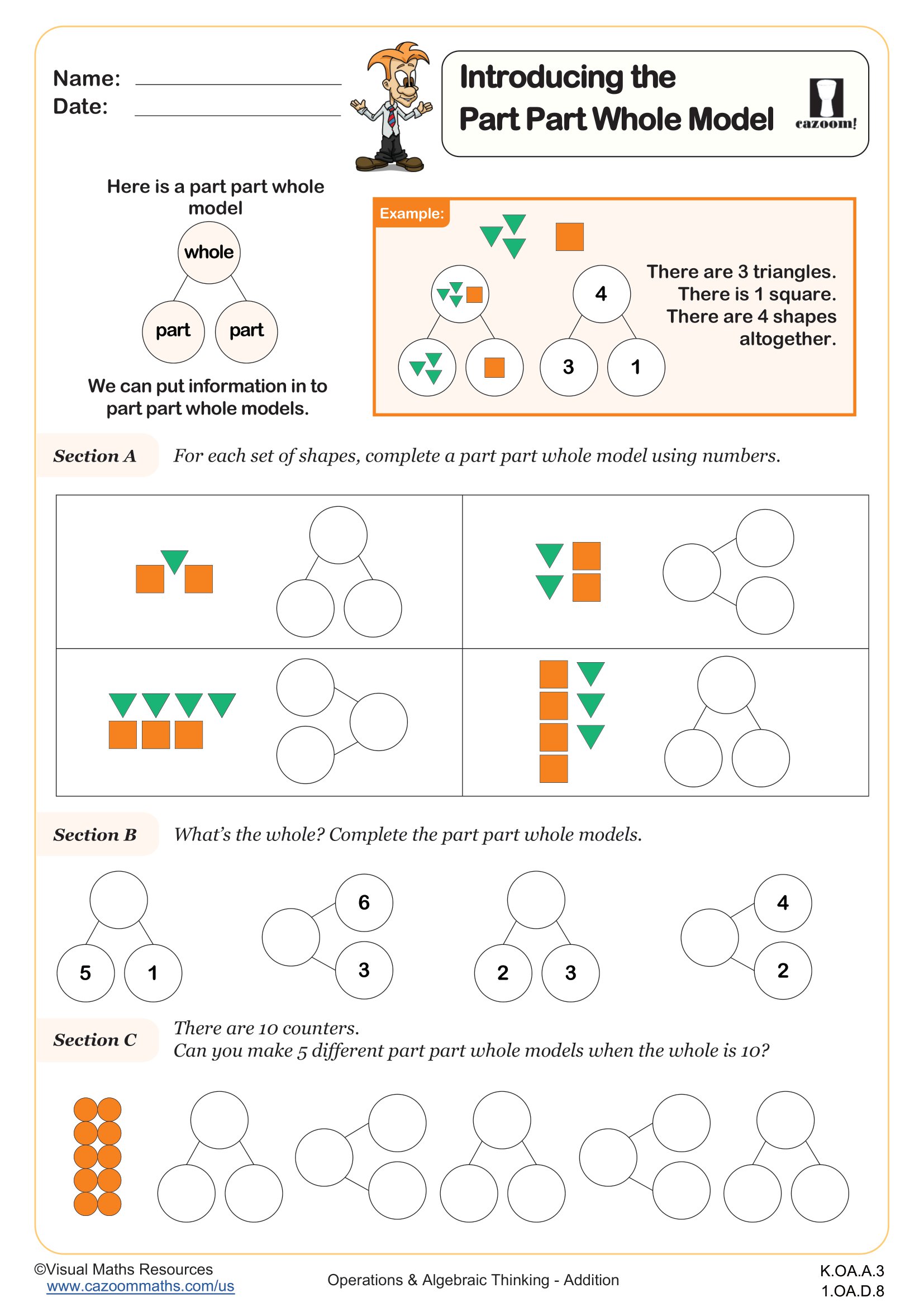
Introducing the Part Part Whole Model
Grades: Kindergarten, 1st Grade
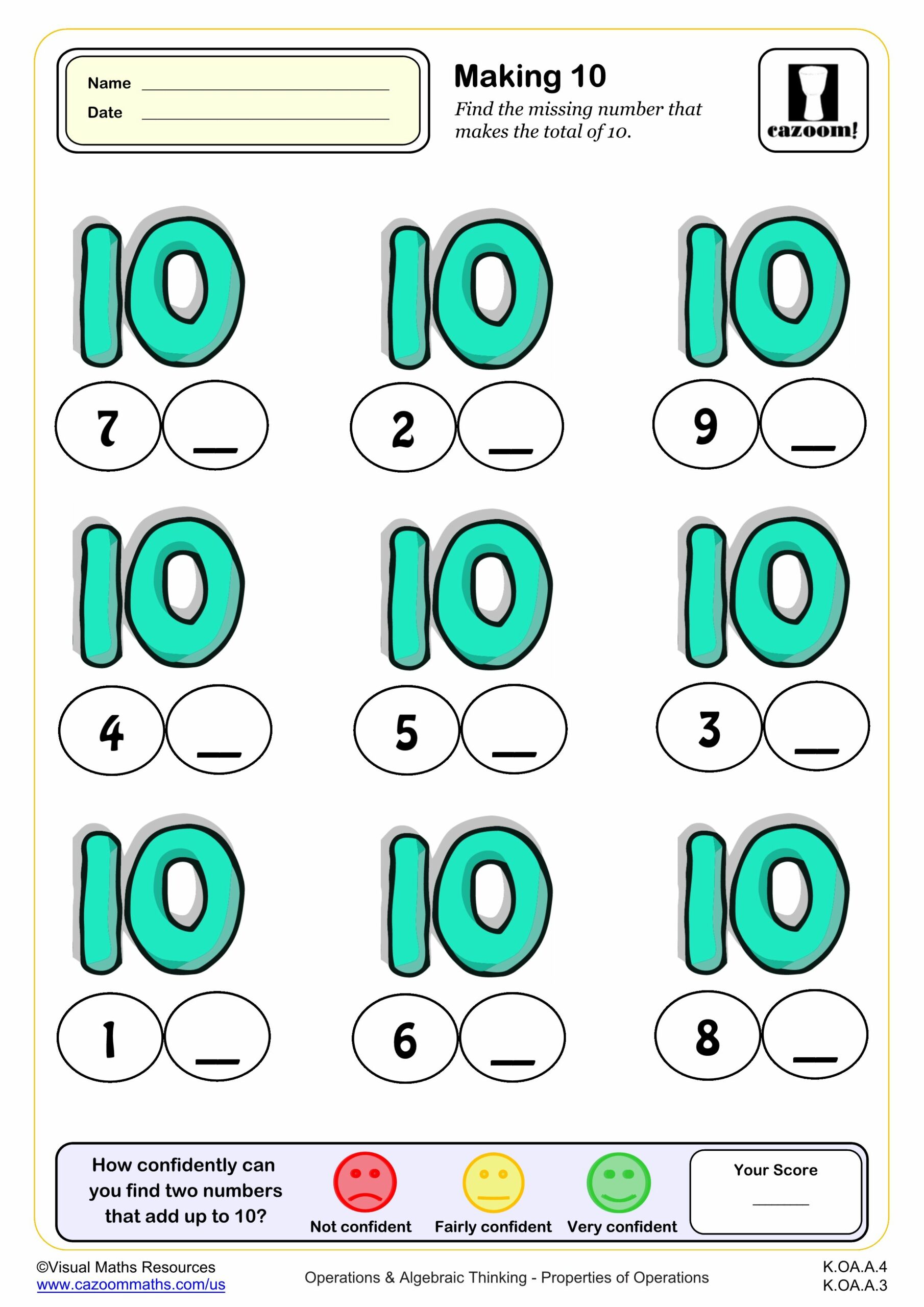
Making 10
Grades: Kindergarten
Making 10 (BONDS)
Grades: Kindergarten
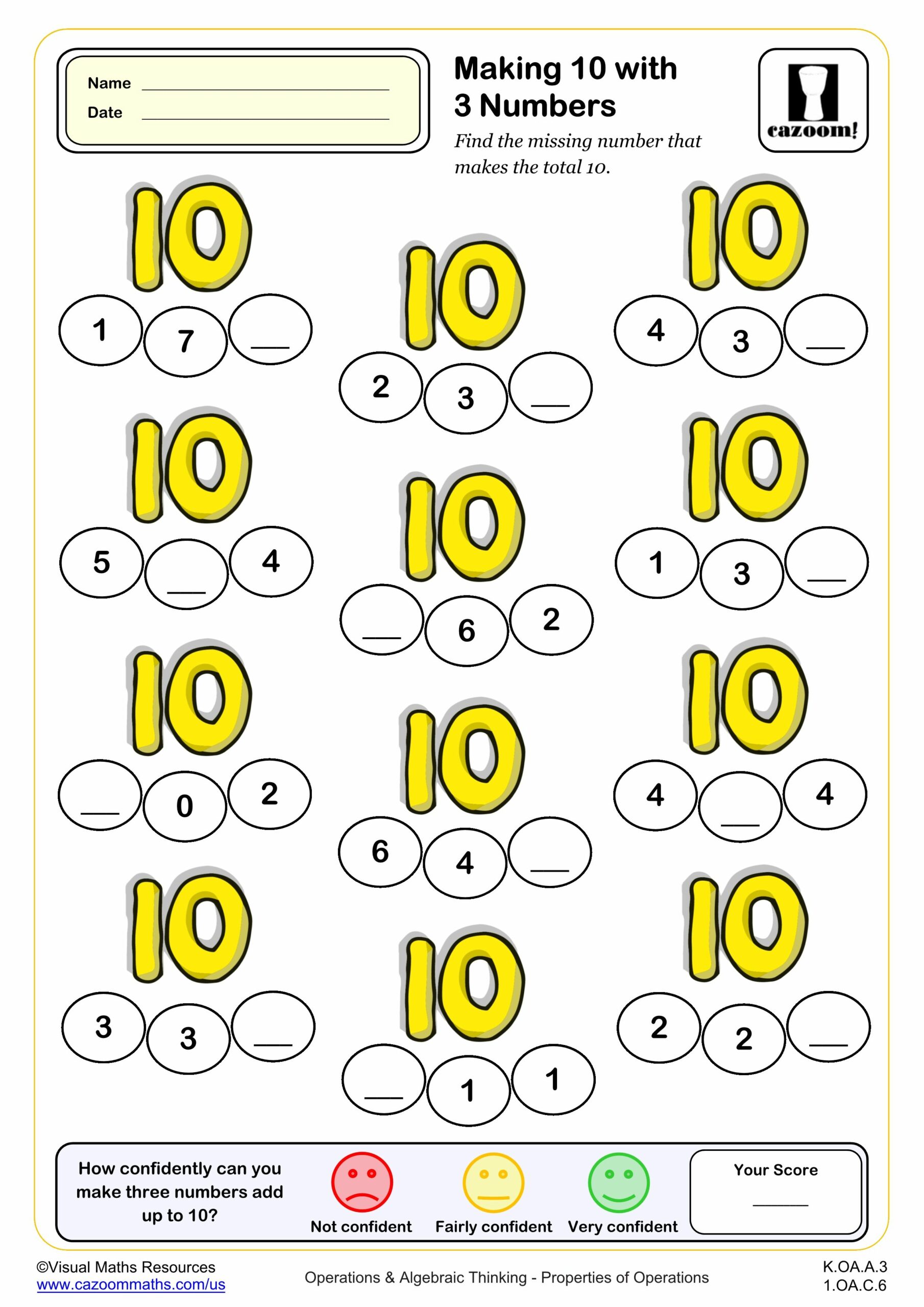
Making 10 with three numbers
Grades: Kindergarten, 1st Grade
Making 10 with three numbers (Blanks)
Grades: Kindergarten, 1st Grade
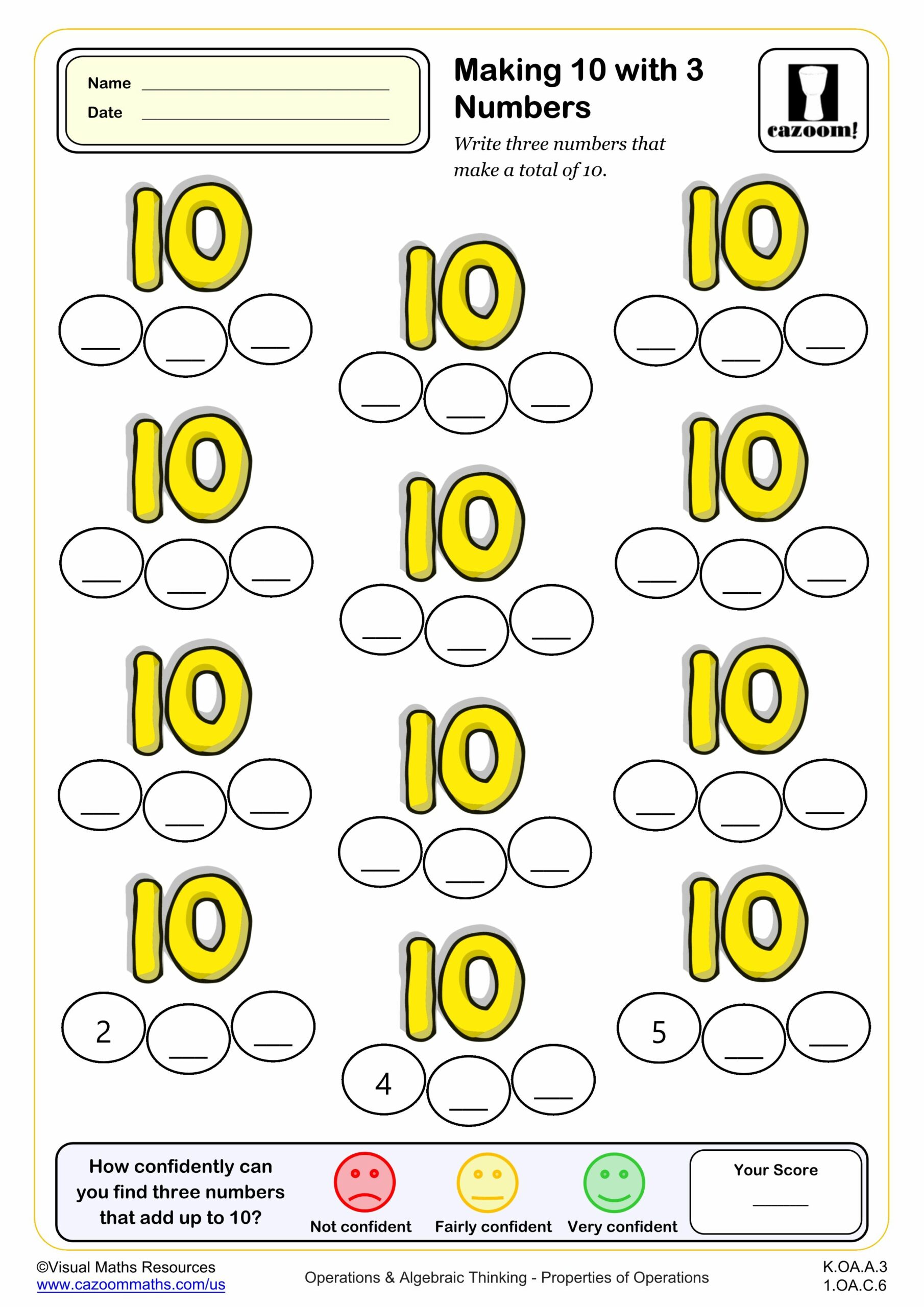
Making 7
Grades: Kindergarten, 1st Grade
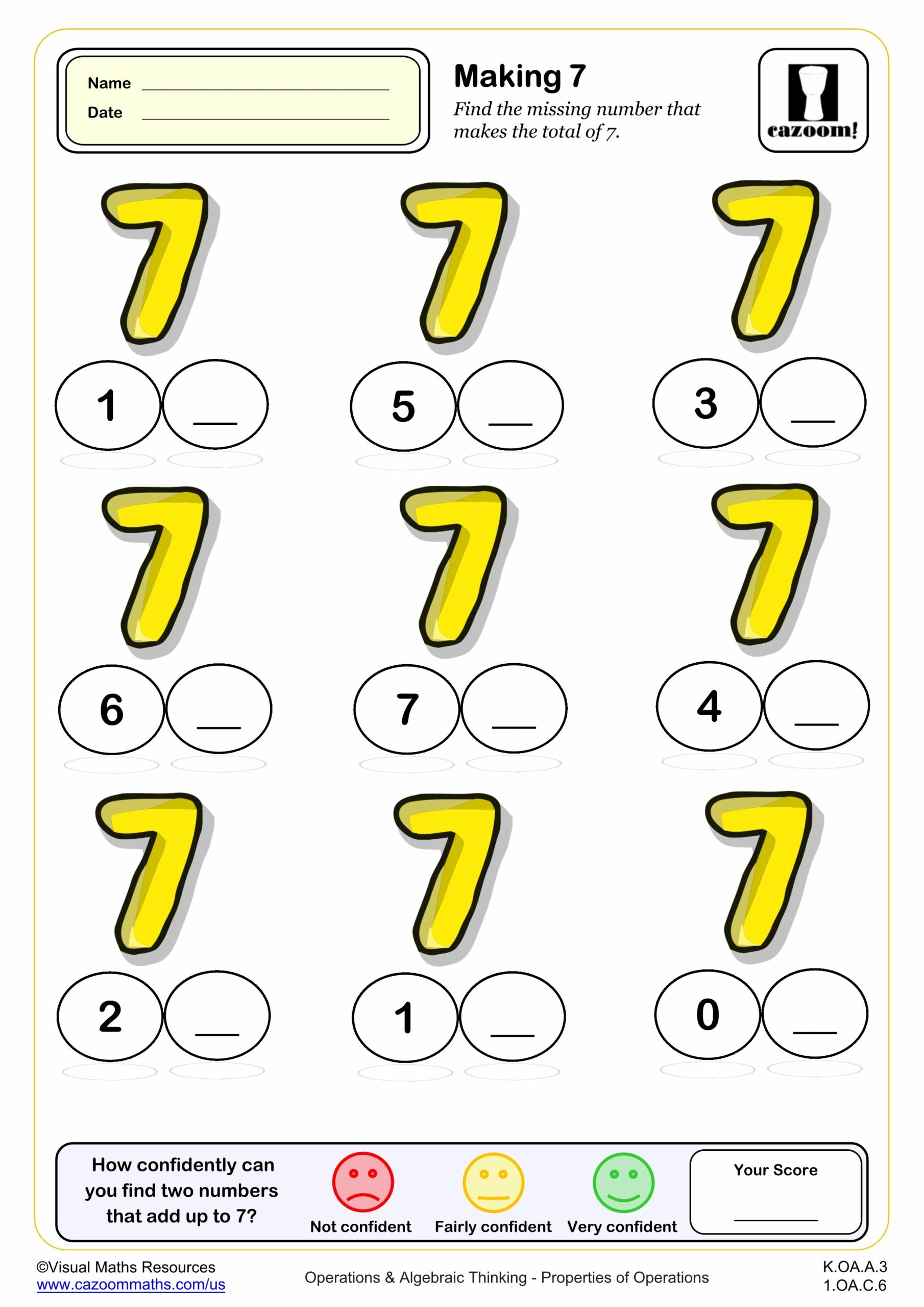
Making 7 (Bonds)
Grades: Kindergarten, 1st Grade
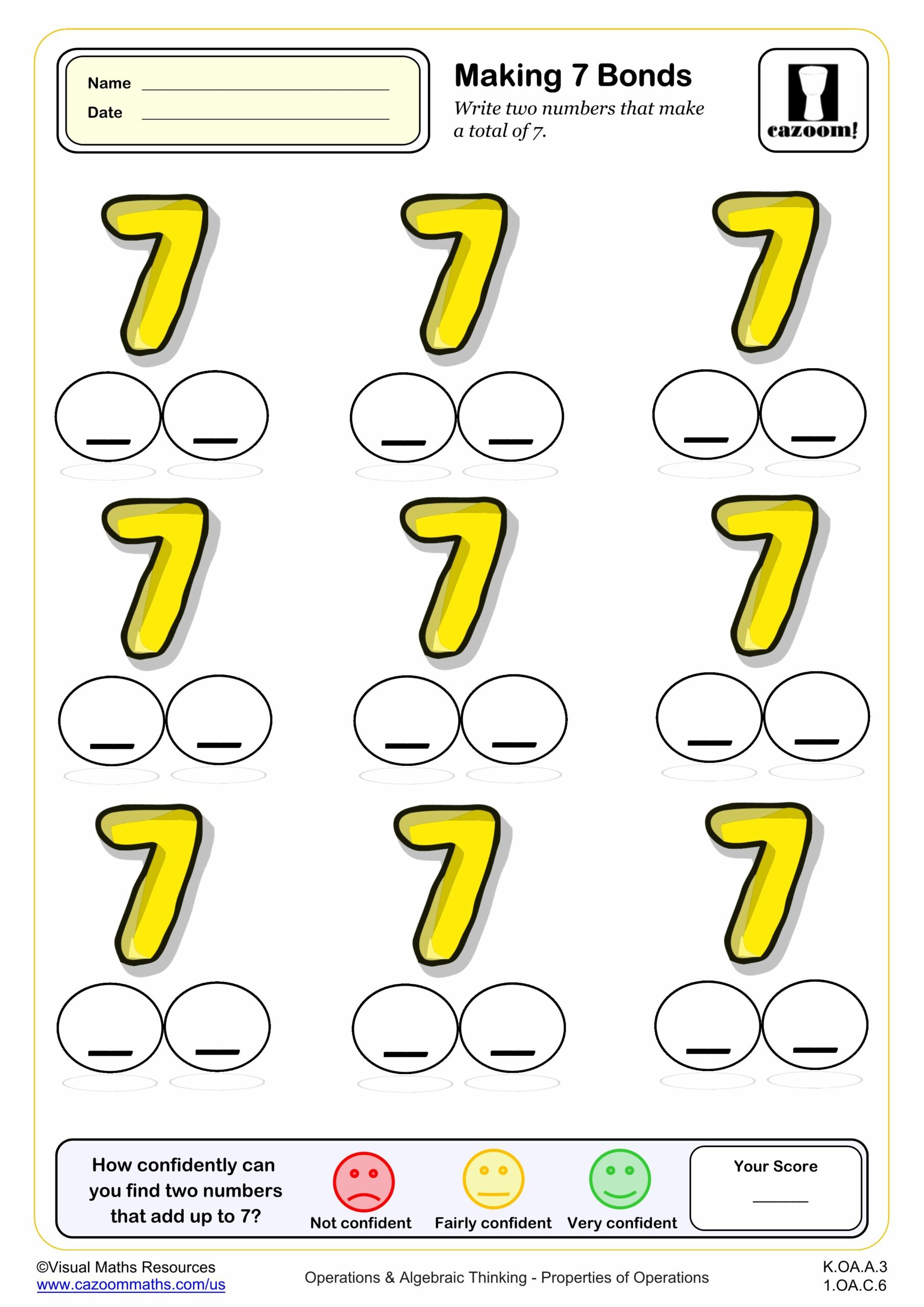
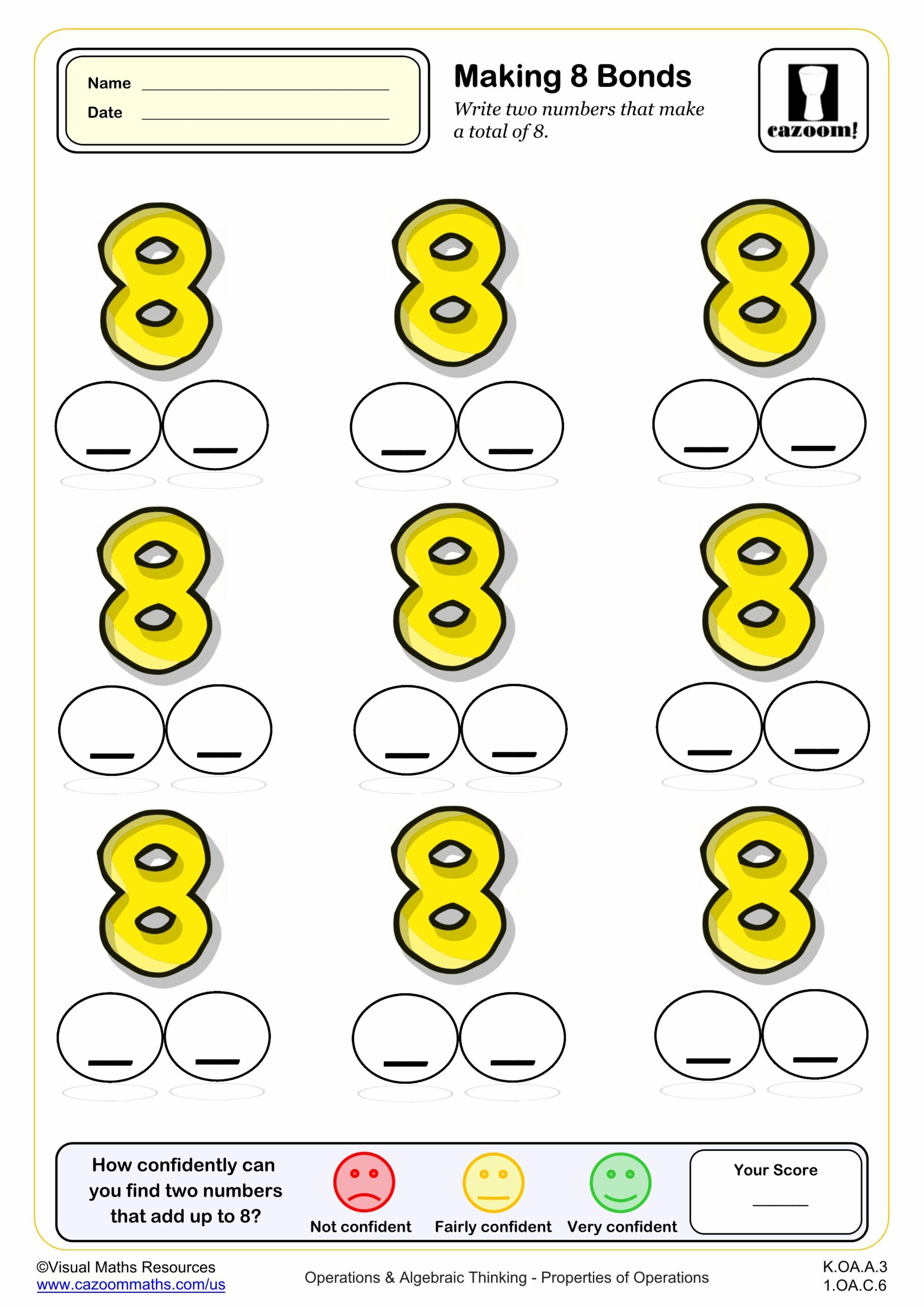
Making 8
Grades: Kindergarten, 1st Grade
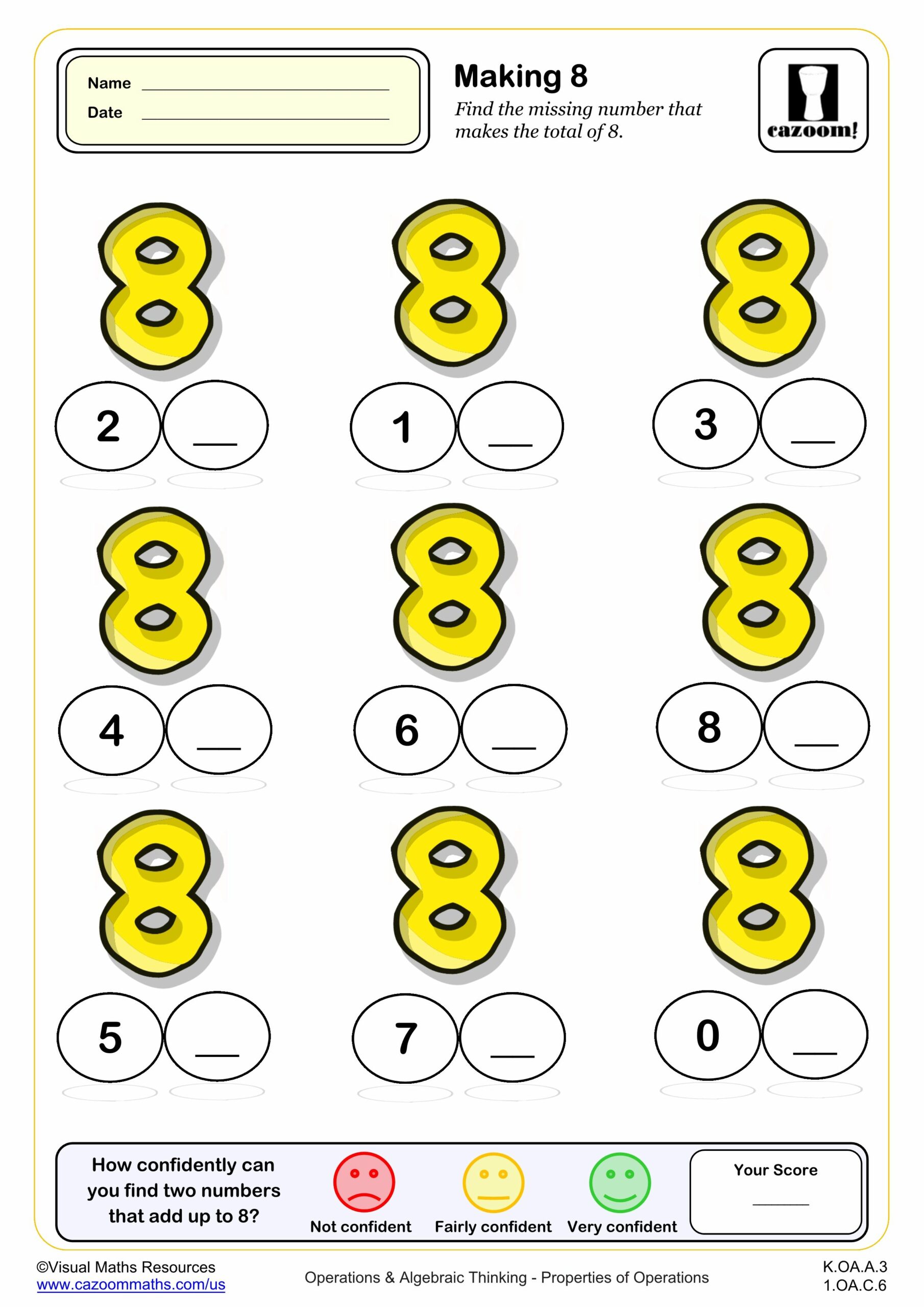
Making 8 (BONDS)
Grades: Kindergarten, 1st Grade
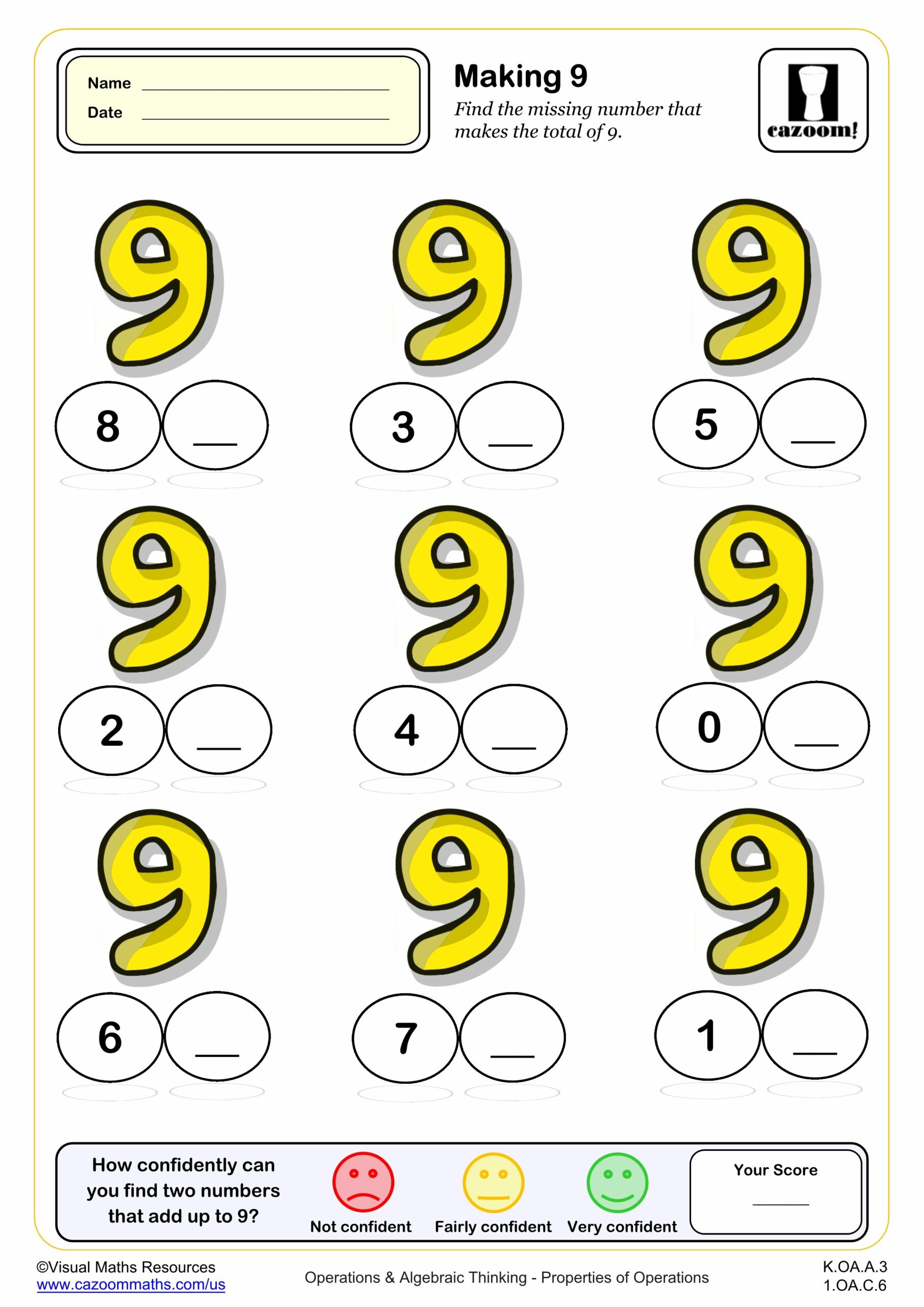
Making 9
Grades: Kindergarten, 1st Grade
Making 9 (BONDS)
Grades: Kindergarten, 1st Grade
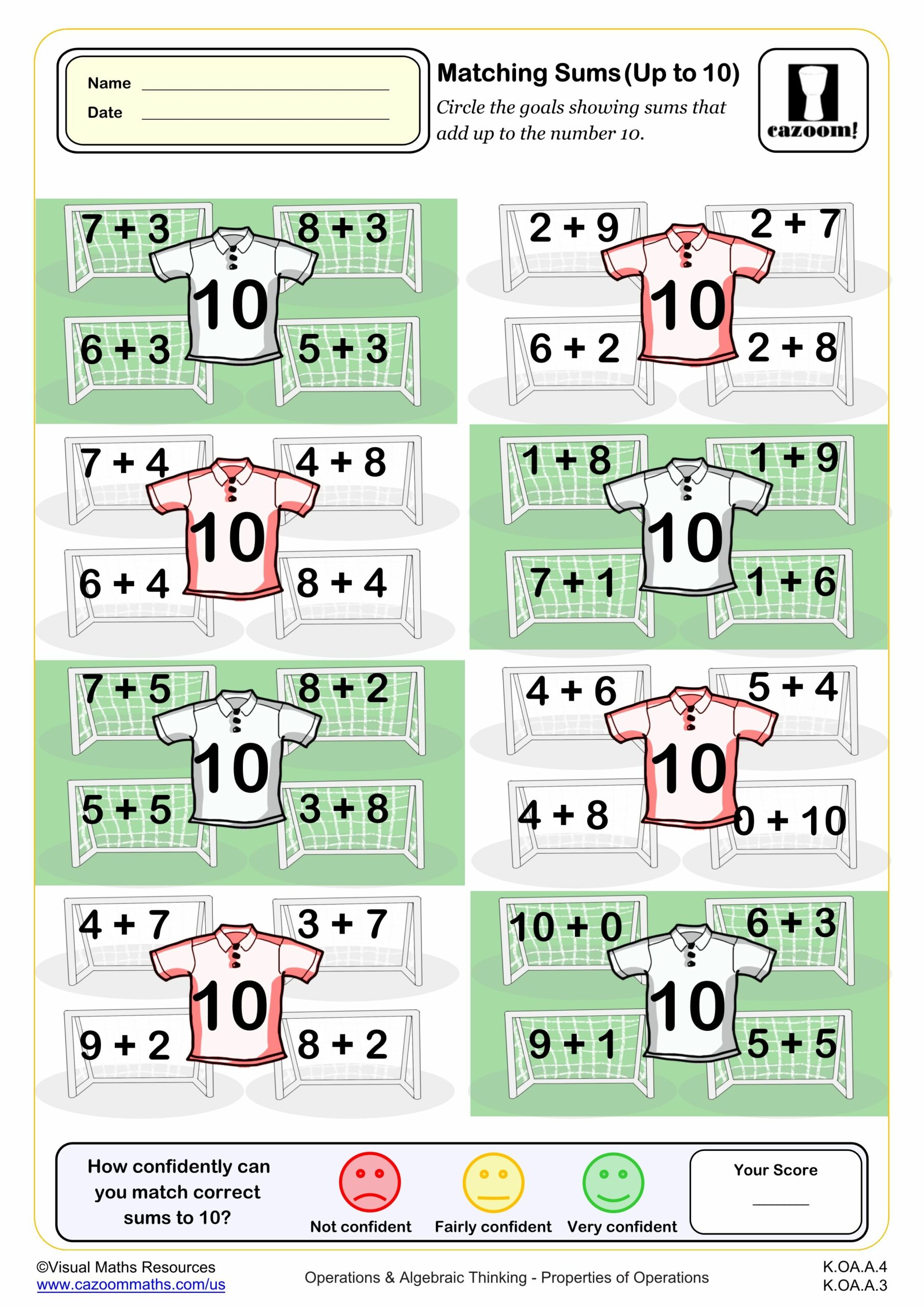
Matching Sums (to 10)
Grades: Kindergarten
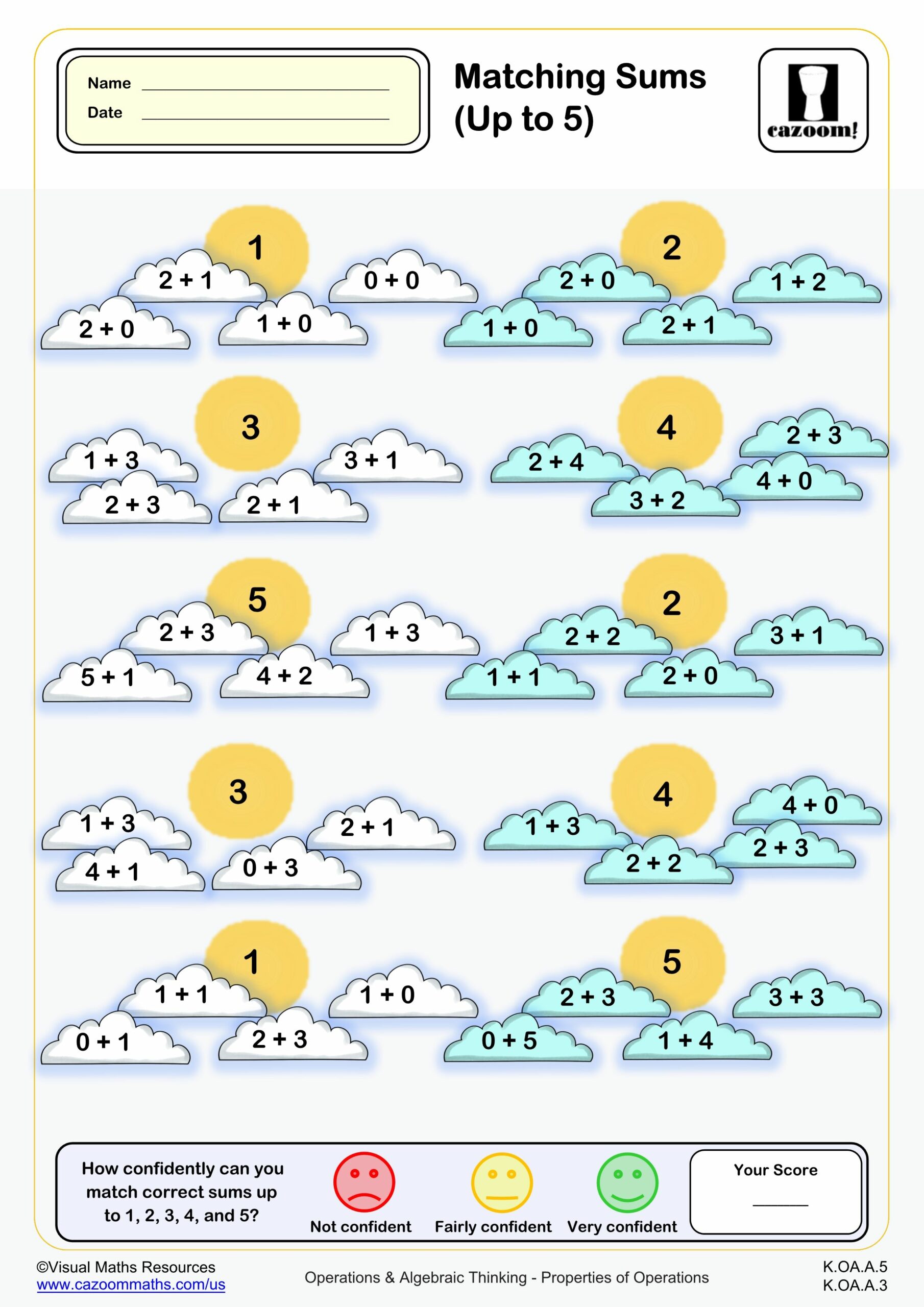
Matching Sums (up to 5)
Grades: Kindergarten
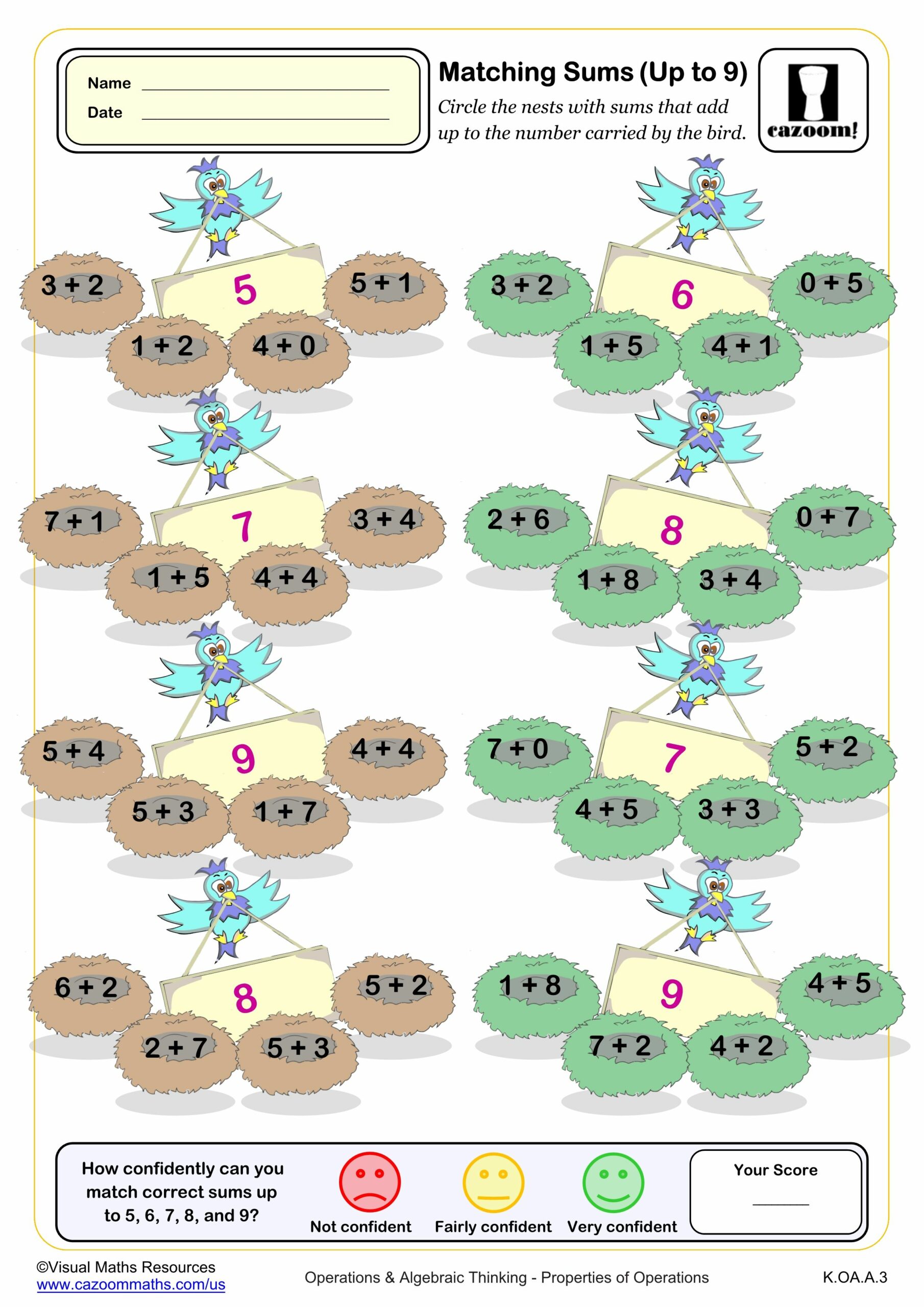
Matching Sums (up to 9)
Grades: Kindergarten
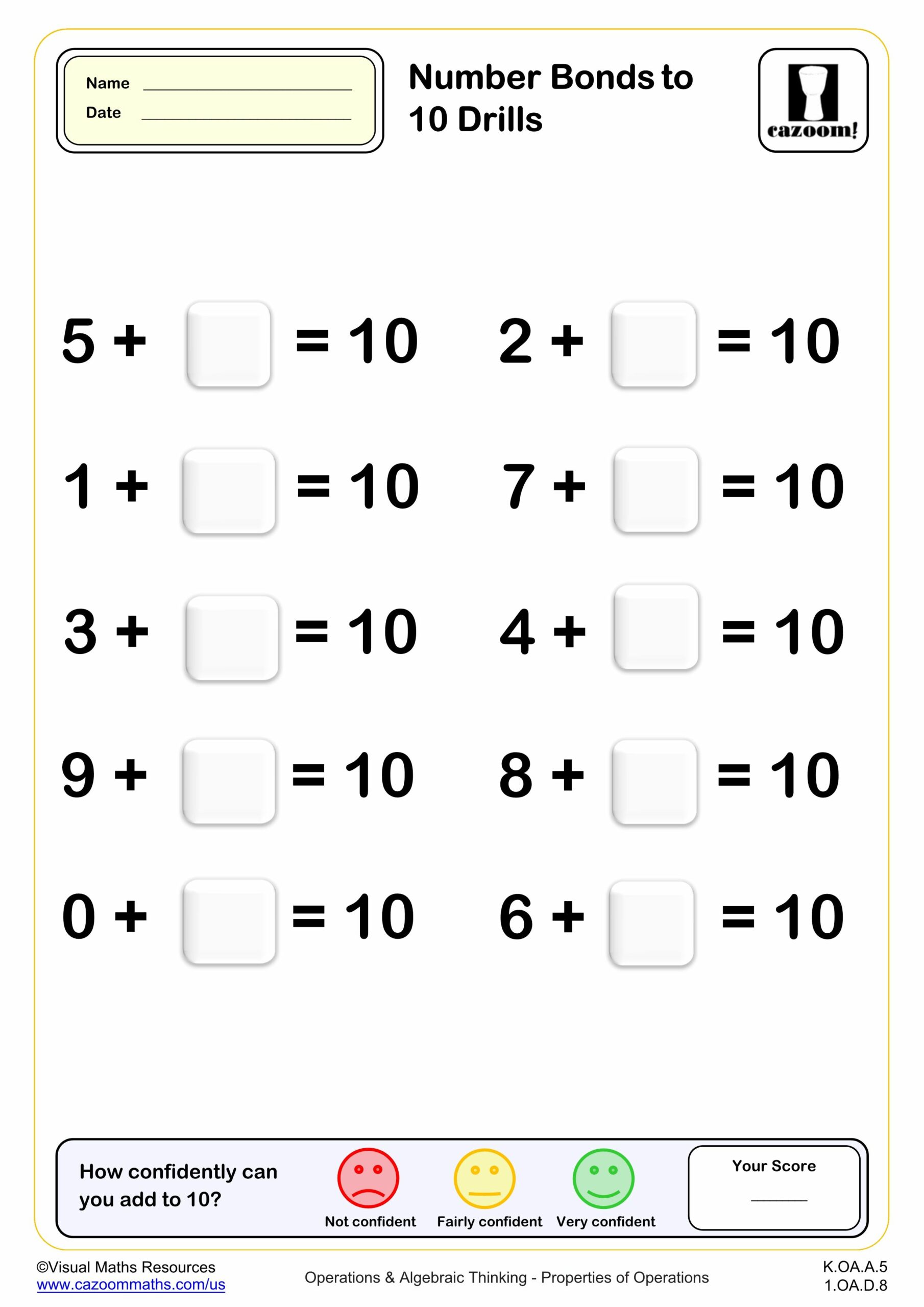
Number Bonds to 10 drills (10 questions)
Grades: Kindergarten, 1st Grade
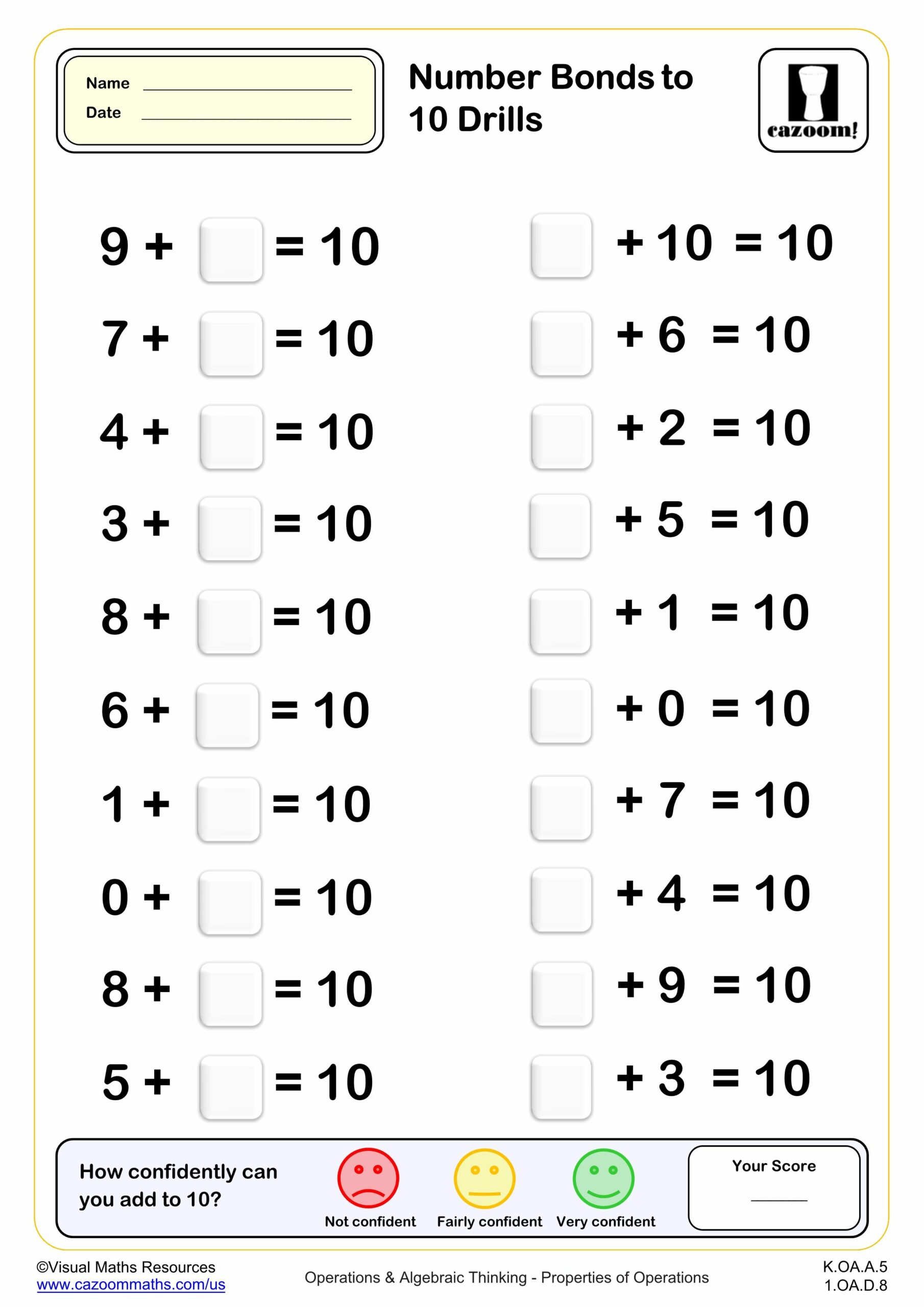
Number Bonds to 10 drills (20 questions)
Grades: Kindergarten, 1st Grade
Number Bonds to 10 drills (50 questions)
Grades: Kindergarten, 1st Grade
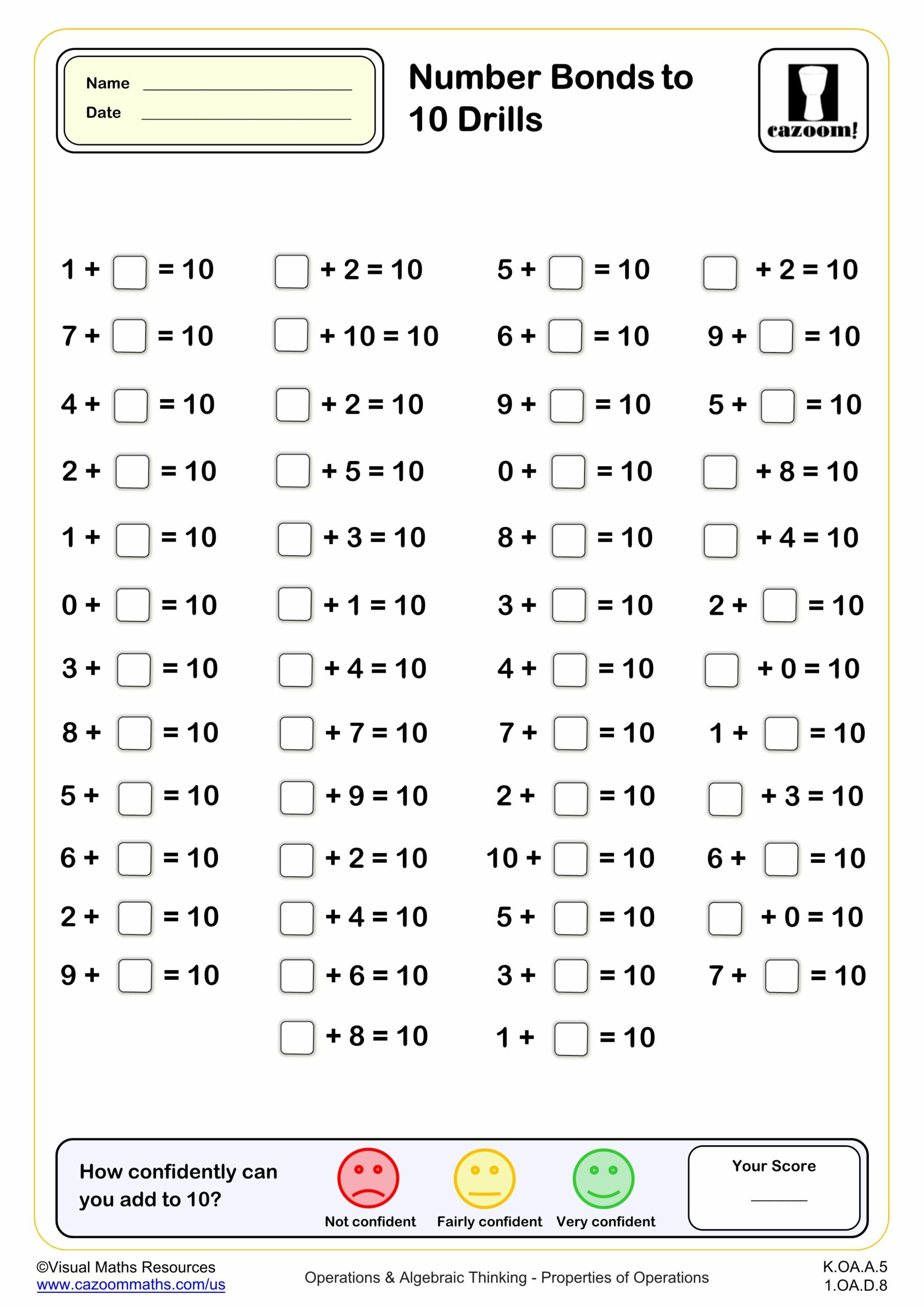
Number Bonds to 10 with Dots
Grades: Kindergarten, 1st Grade
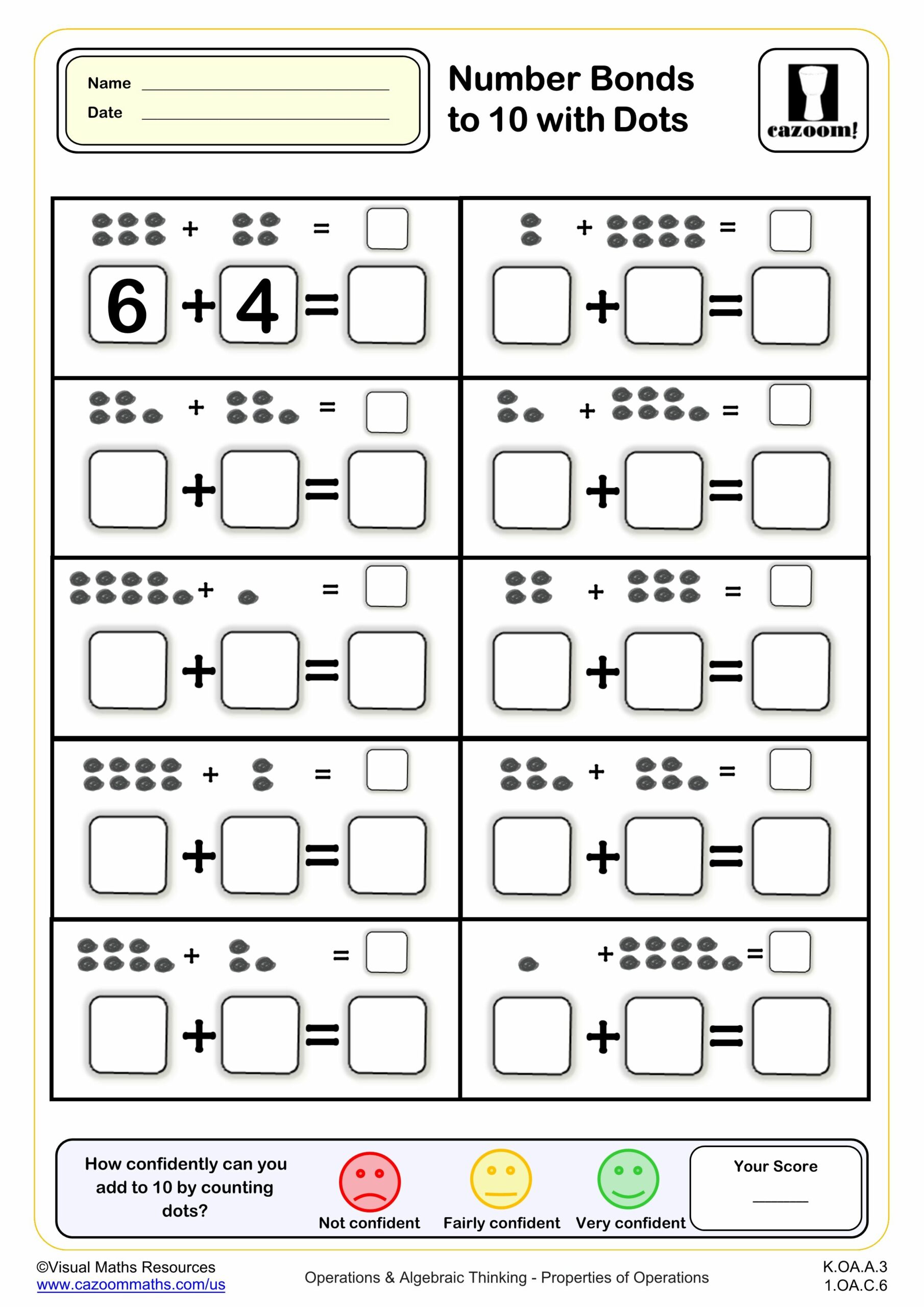
Number bonds to 10 with number lines
Grades: Kindergarten, 1st Grade
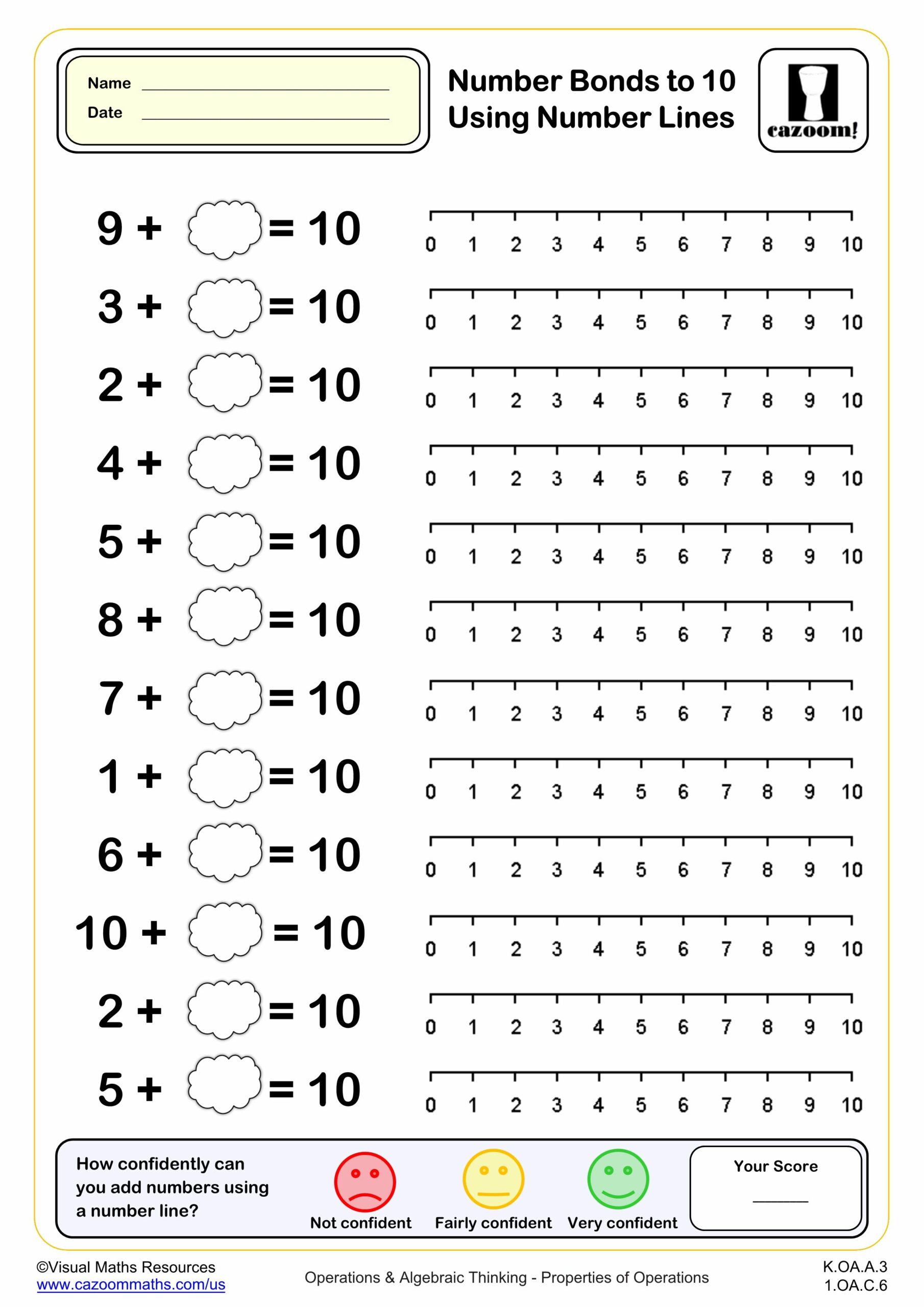
Number Bonds to 5 drills (10 questions)
Grades: Kindergarten
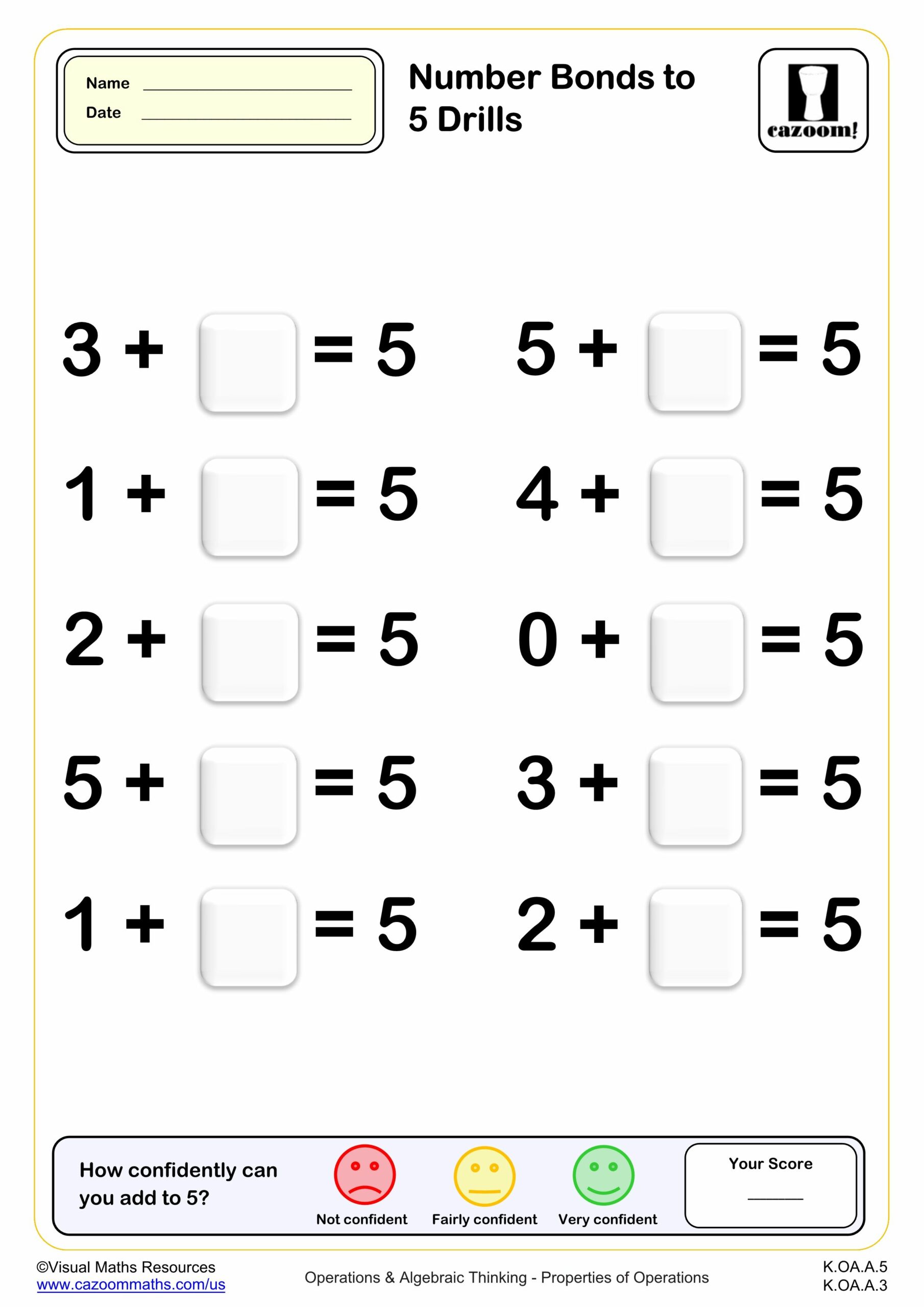
Number Bonds to 5 drills (20 questions)
Grades: Kindergarten
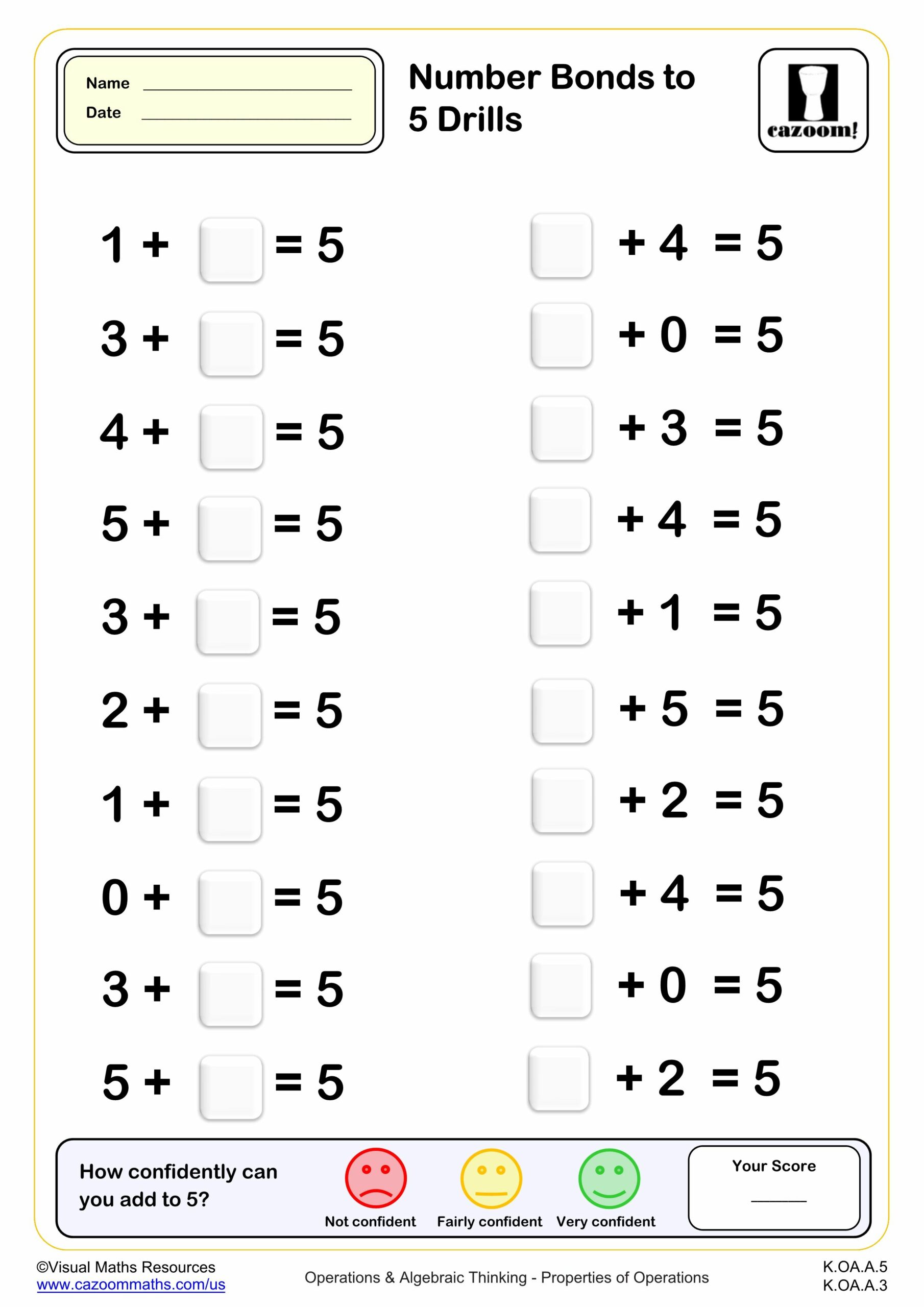
Subtracting 1 (10 questions)
Grades: Kindergarten, 1st Grade
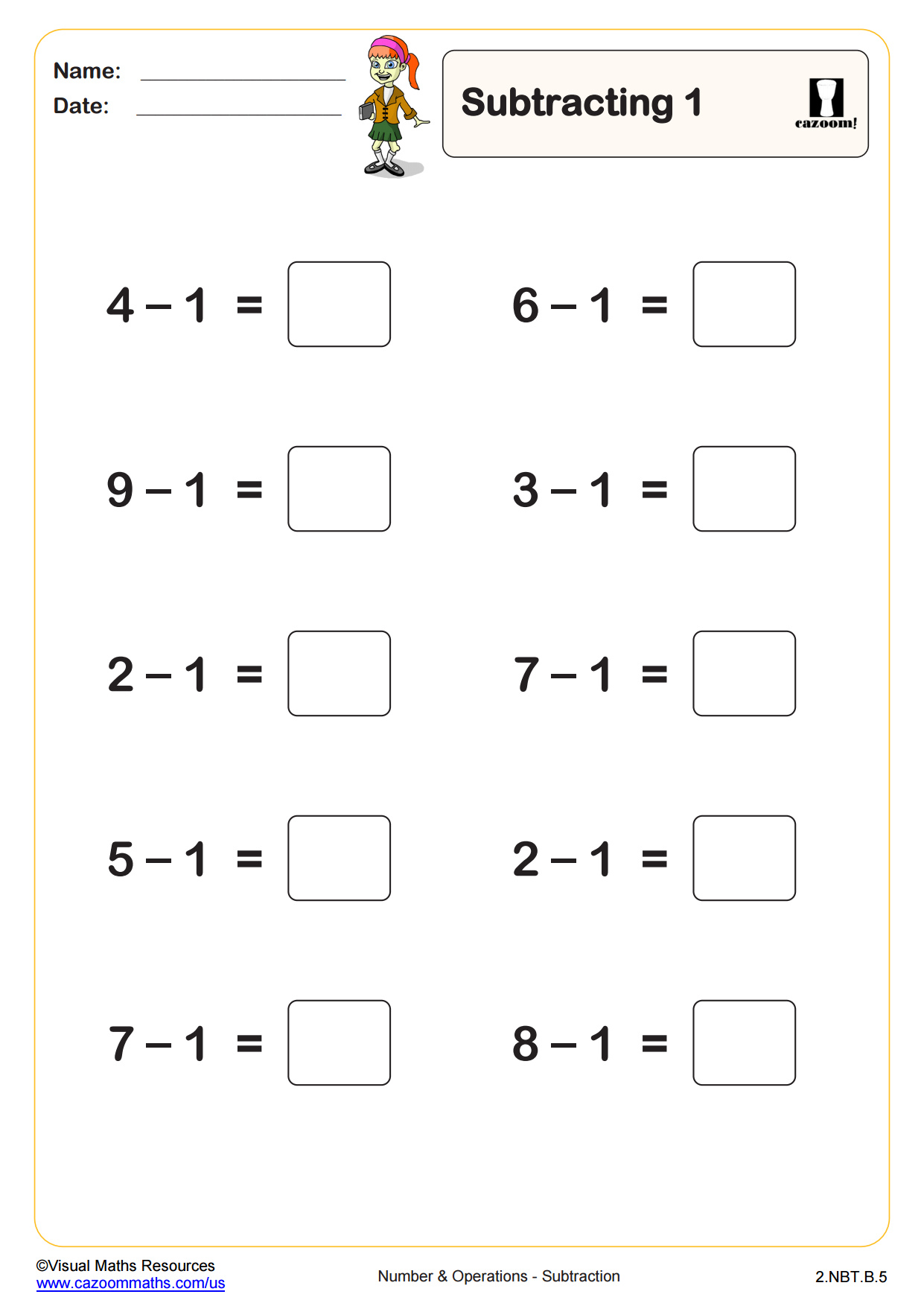
Subtracting 1 (20 questions)
Grades: Kindergarten, 1st Grade
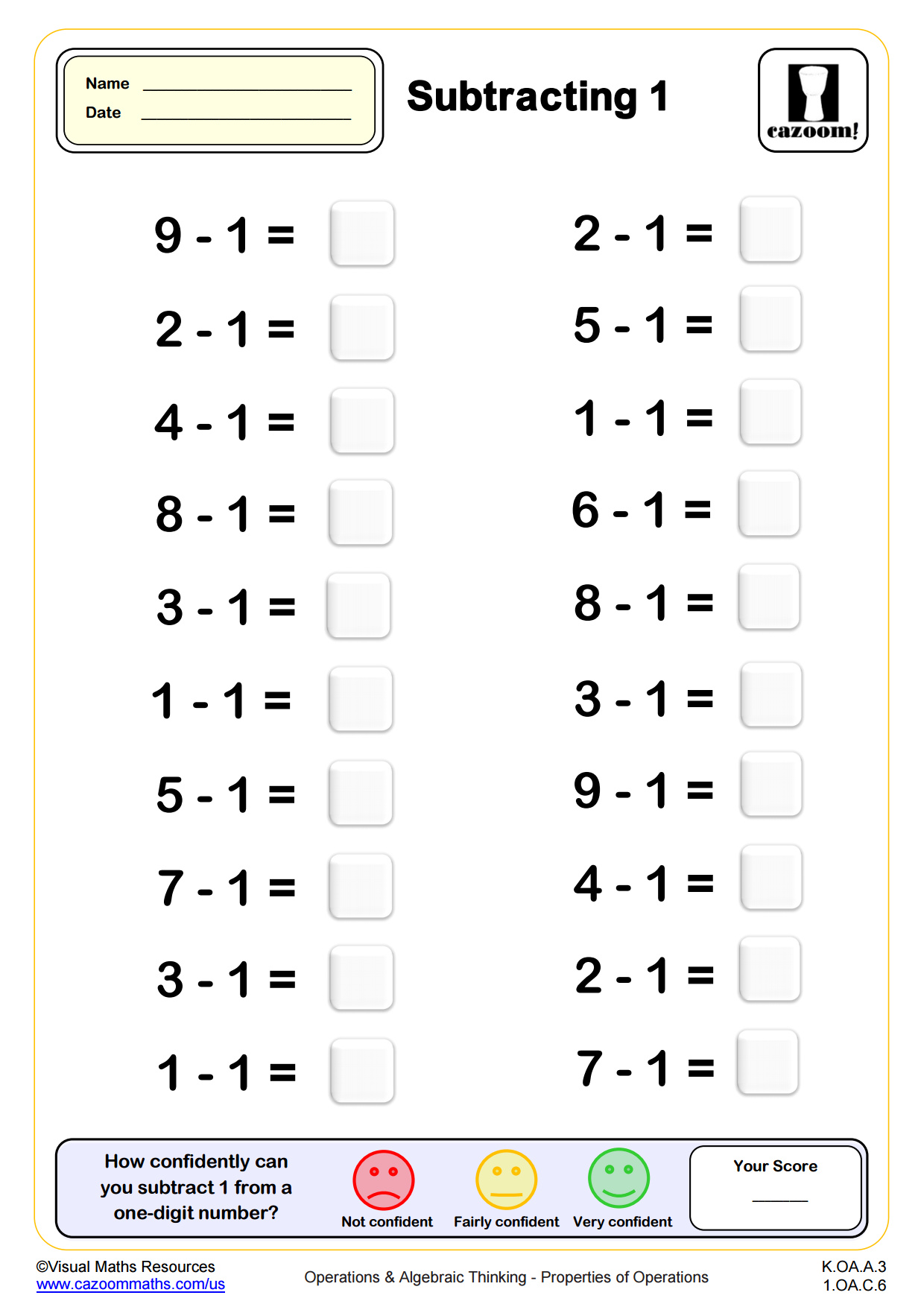
Subtracting 1 (50 questions)
Grades: Kindergarten, 1st Grade
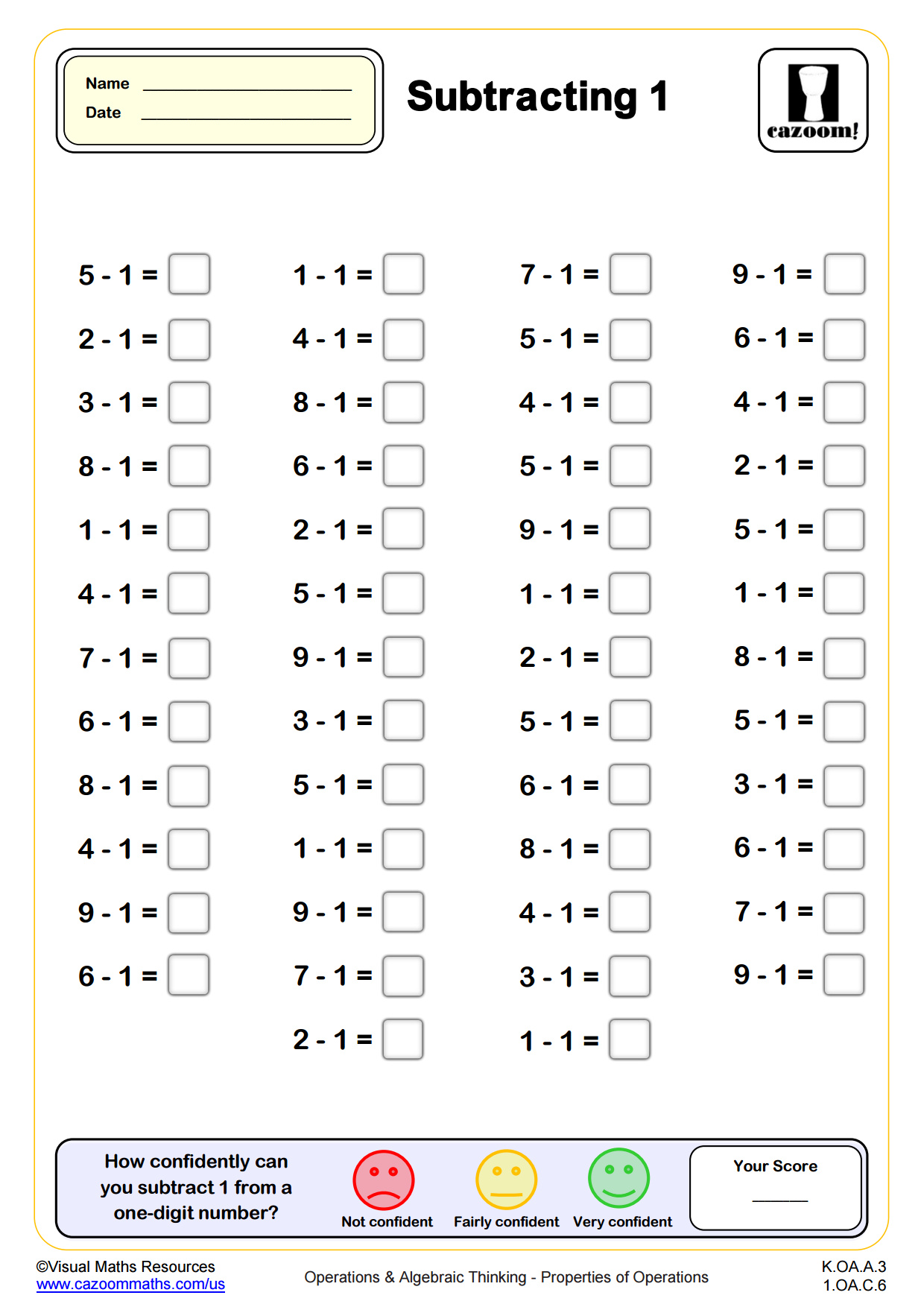
Subtracting 2 (10 questions)
Grades: Kindergarten, 1st Grade
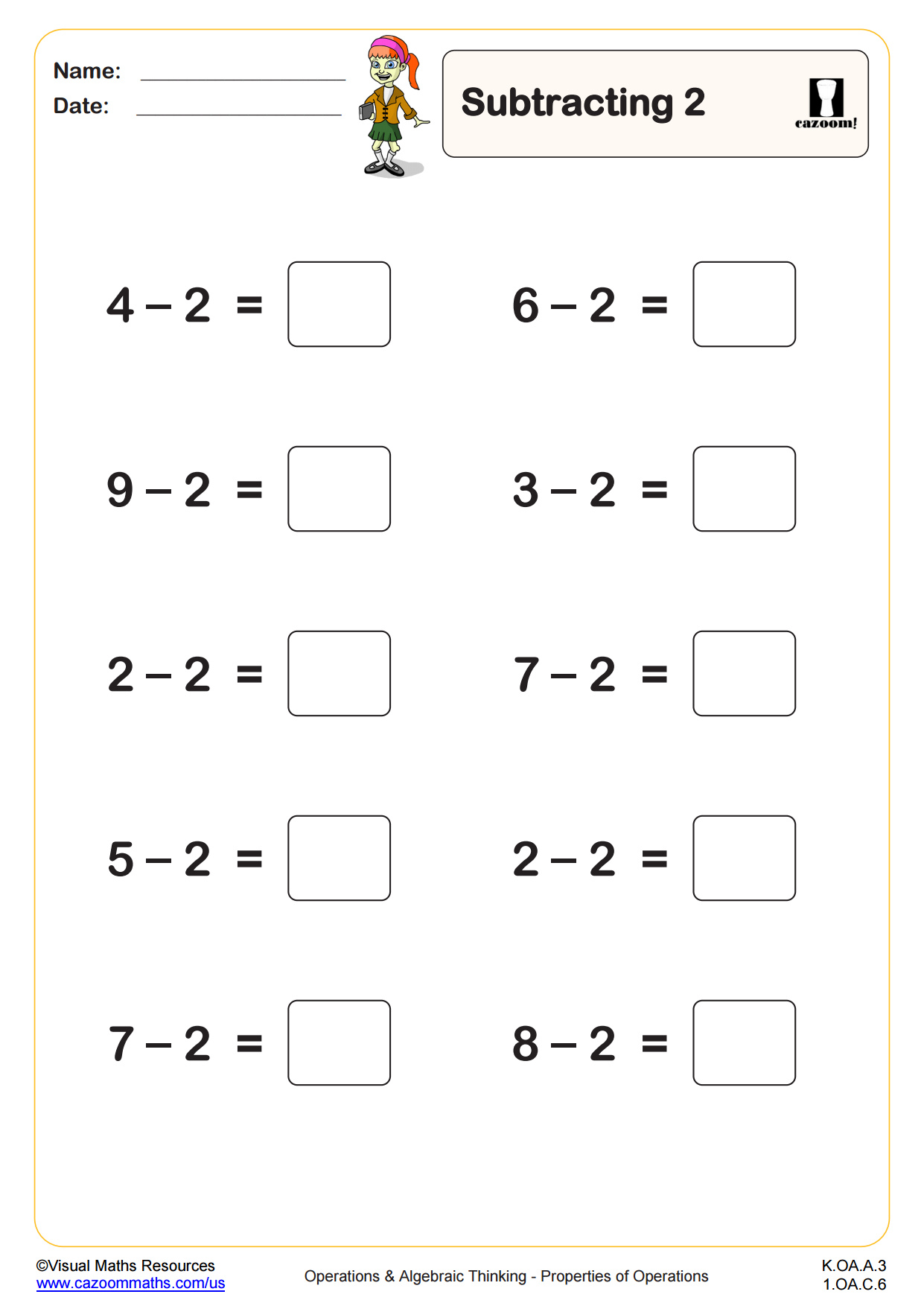
Subtracting 2 (20 questions)
Grades: Kindergarten, 1st Grade
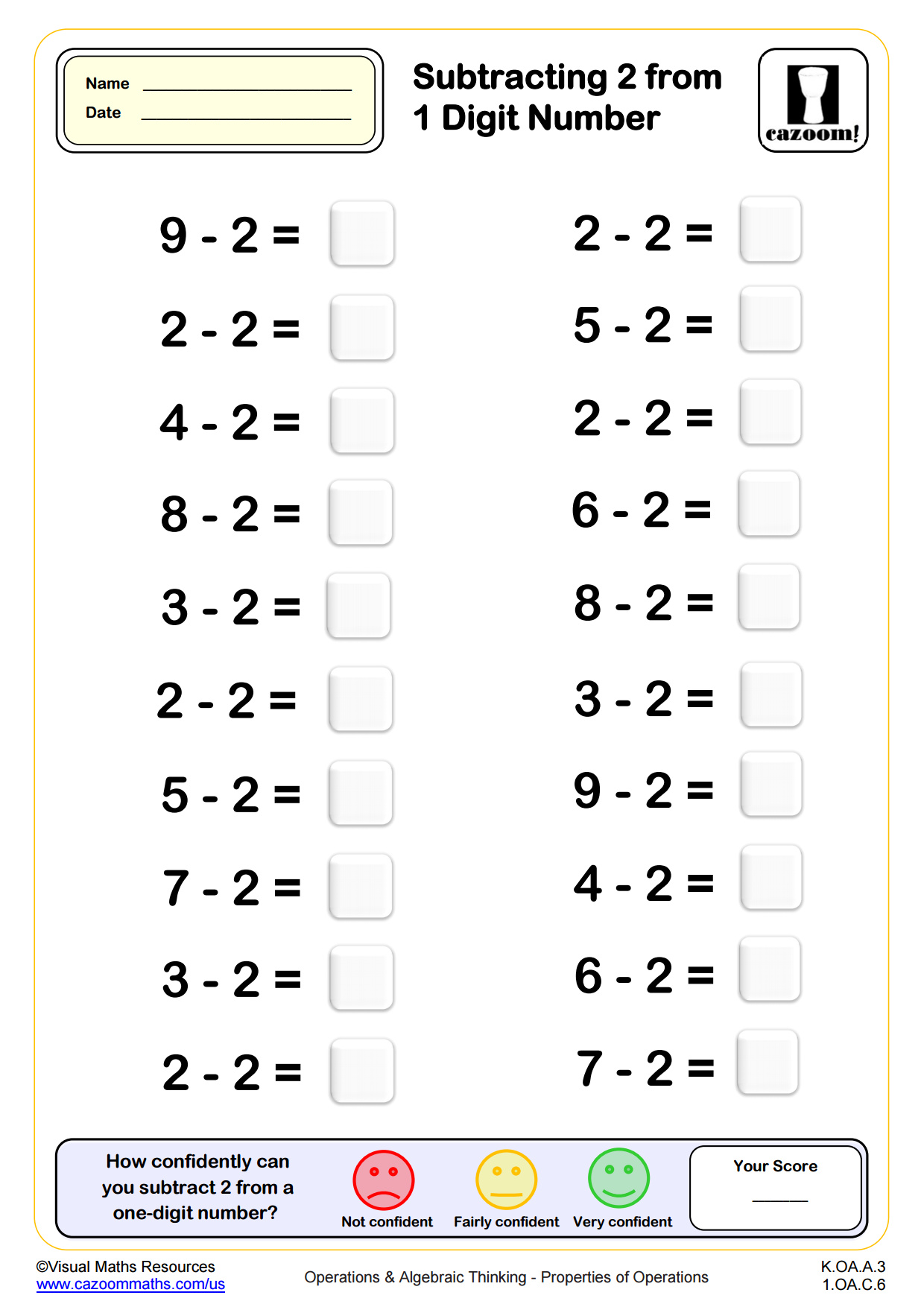
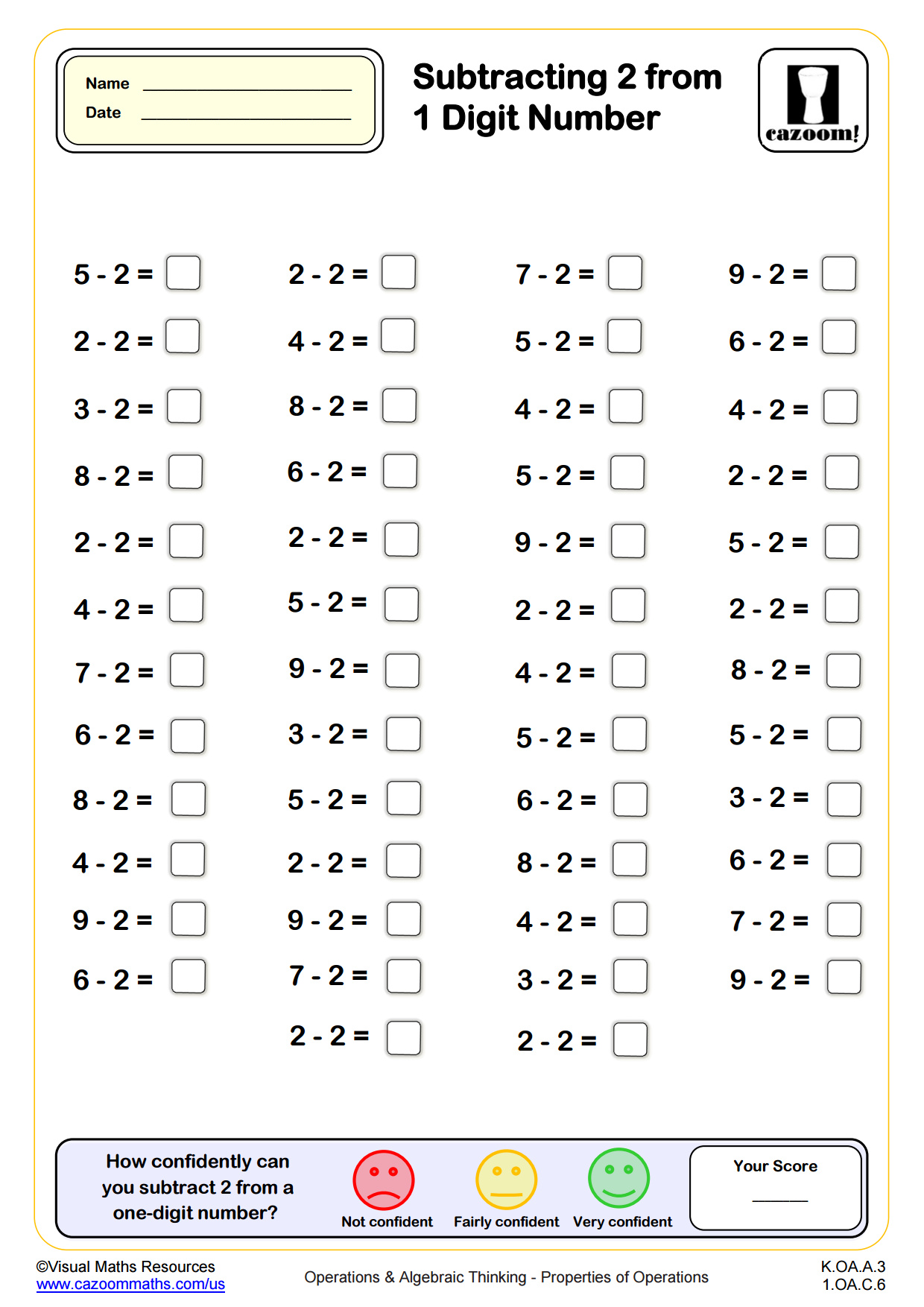
Subtracting 2 (50 questions)
Grades: Kindergarten, 1st Grade
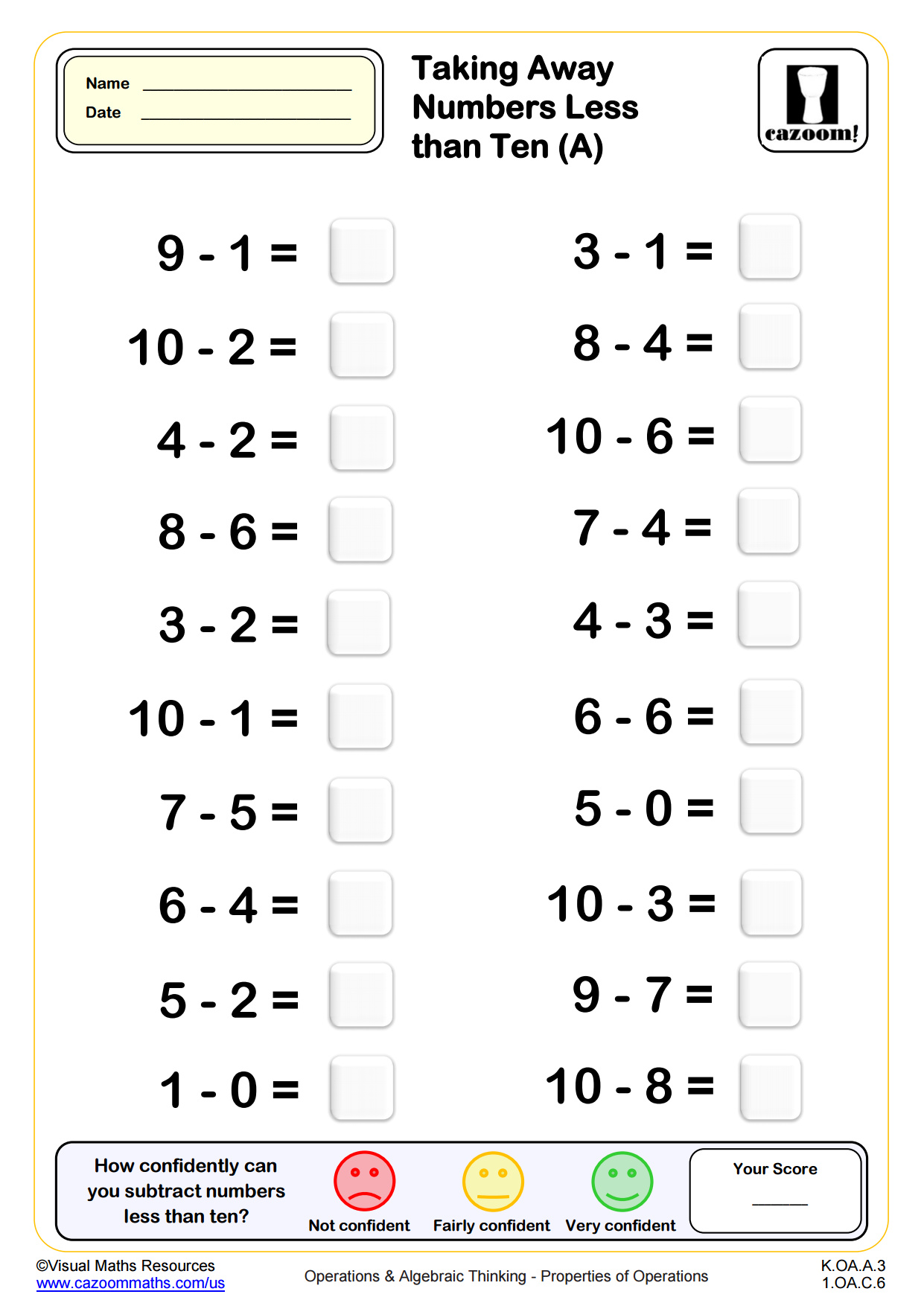
Subtracting Numbers Less Than 10 (A)
Grades: Kindergarten, 1st Grade
Subtracting Numbers Less Than 10 (B)
Grades: Kindergarten, 1st Grade
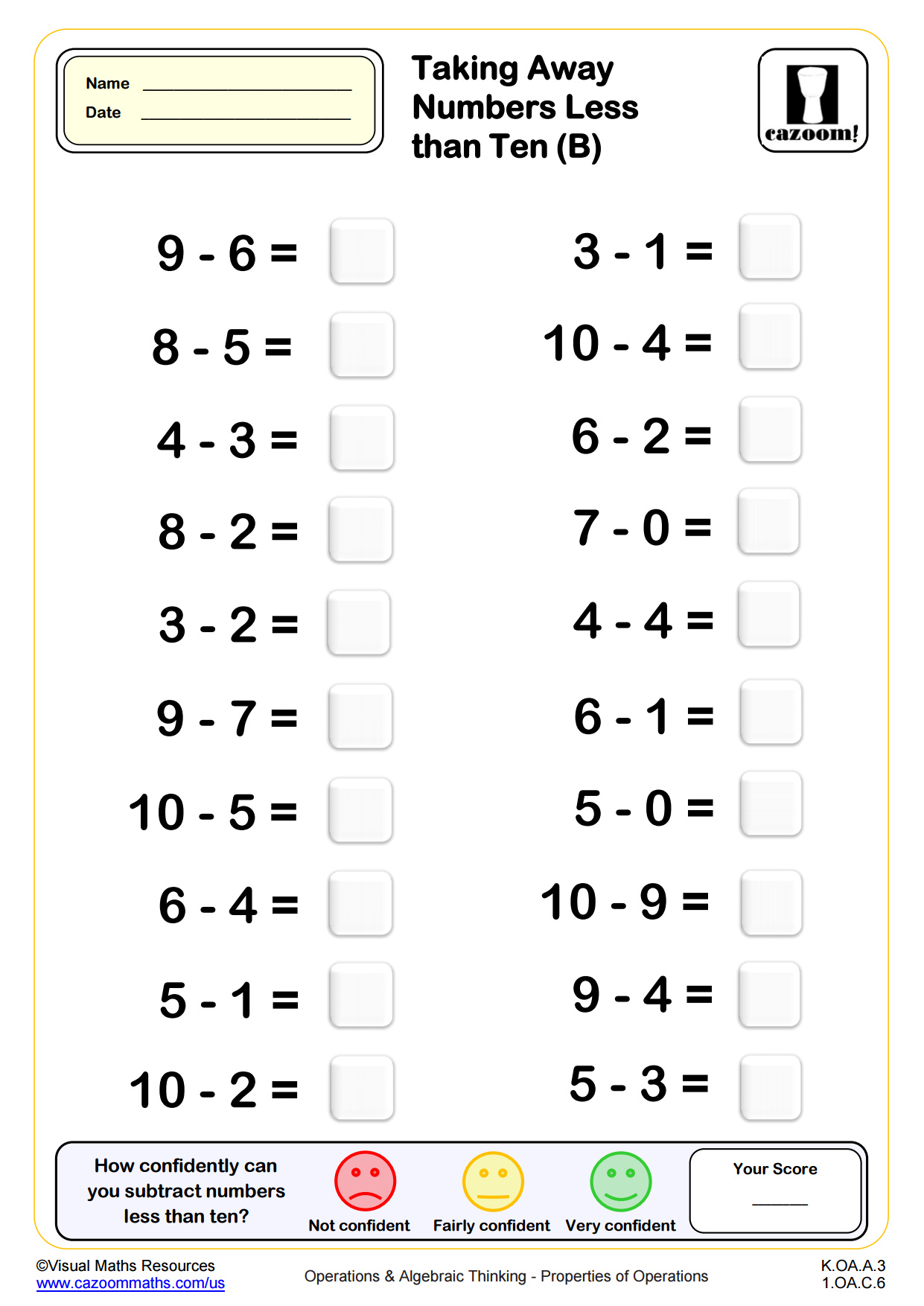
Subtracting Numbers Less Than 10 (C)
Grades: Kindergarten, 1st Grade
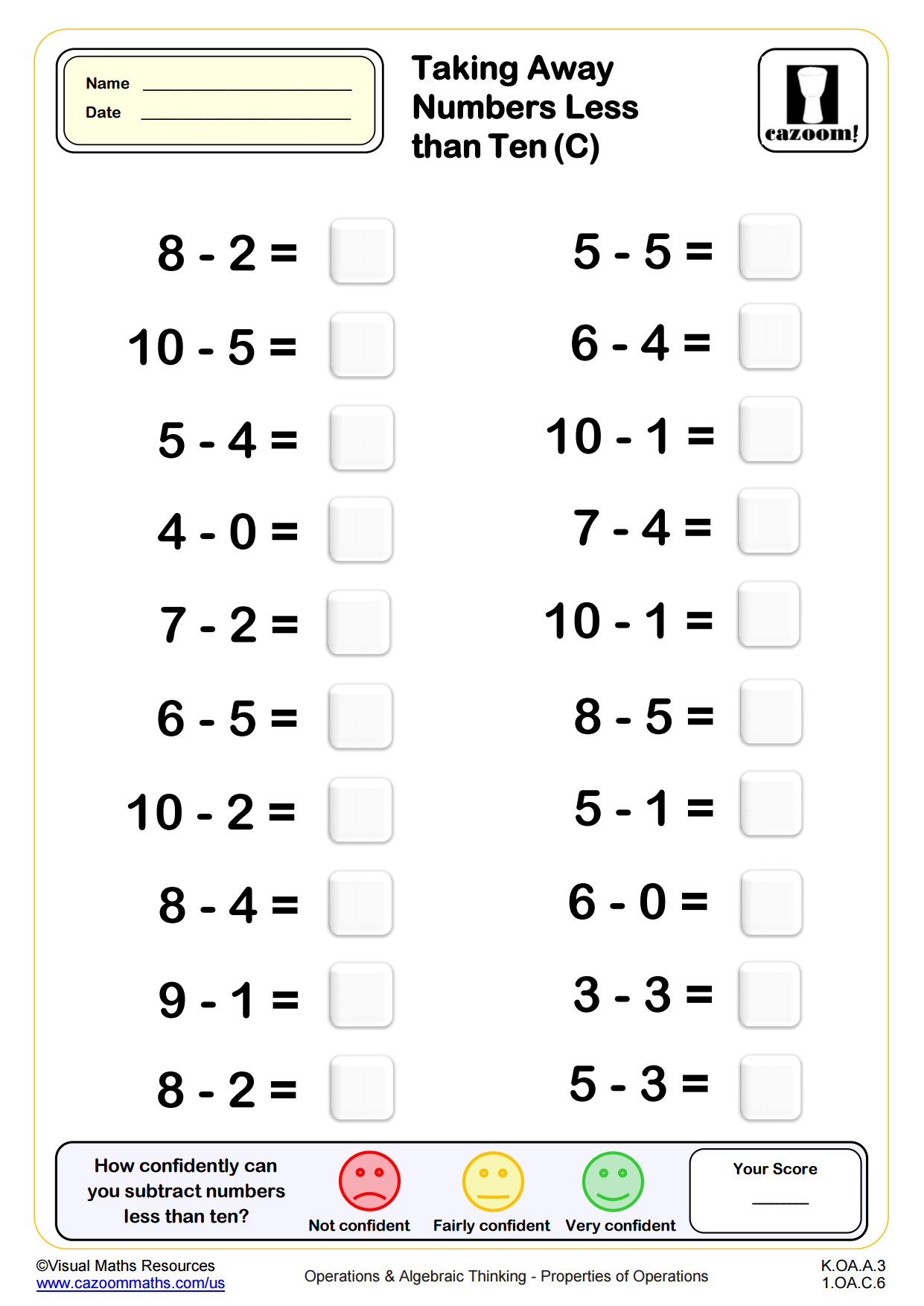
Subtraction Wheels (Subtracting 1)
Grades: Kindergarten, 1st Grade
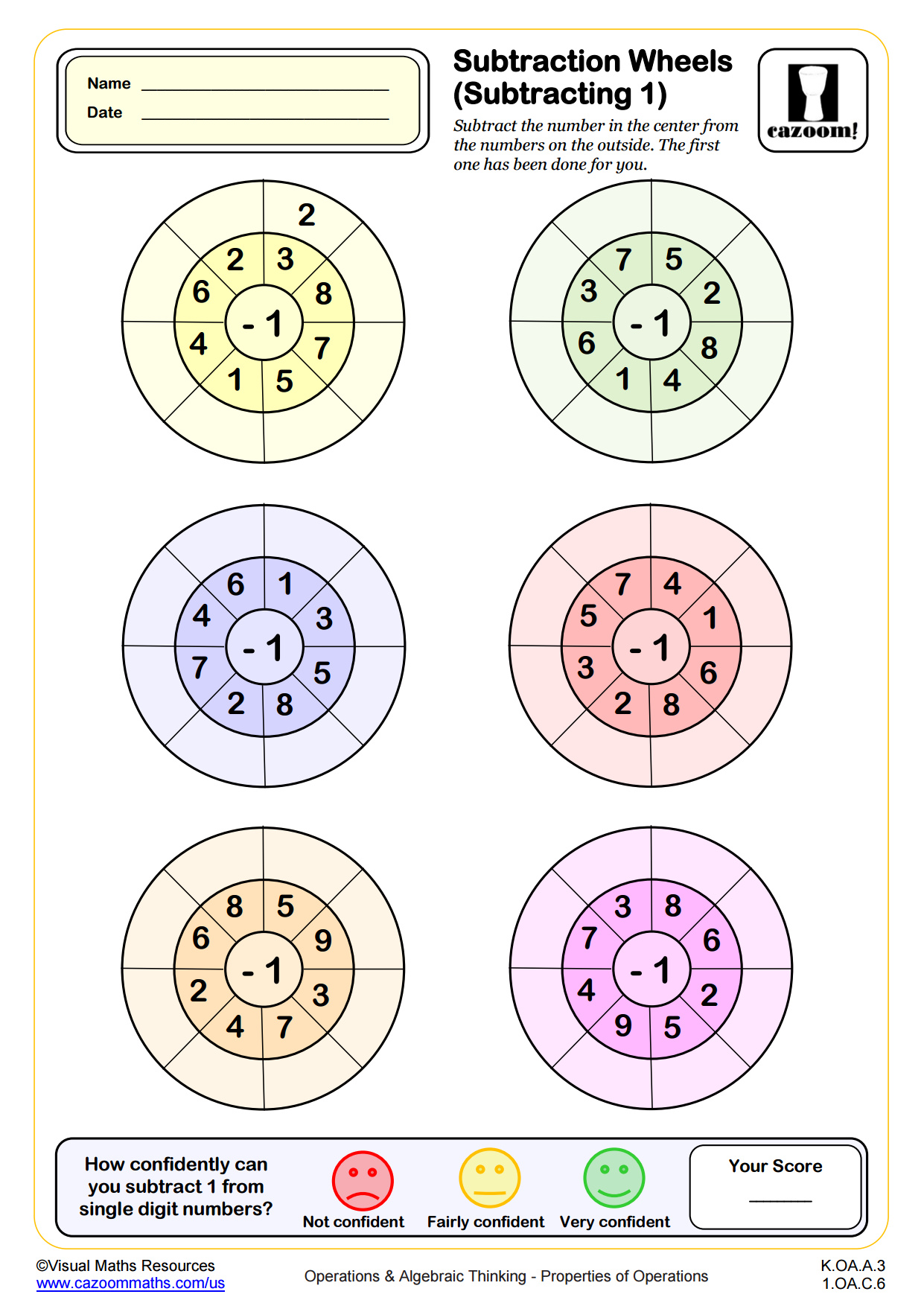
Subtraction Wheels (Subtracting 2)
Grades: Kindergarten, 1st Grade
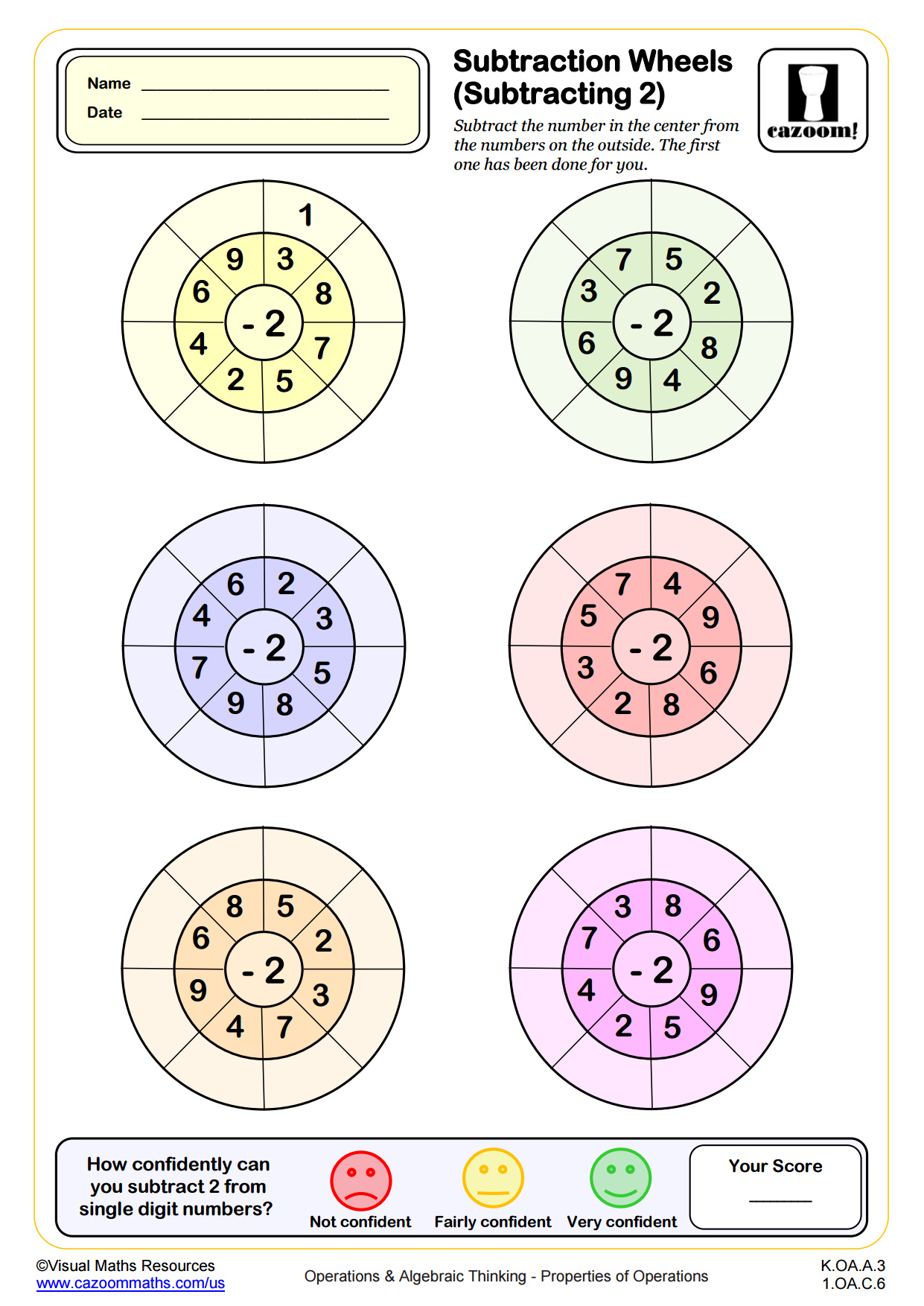
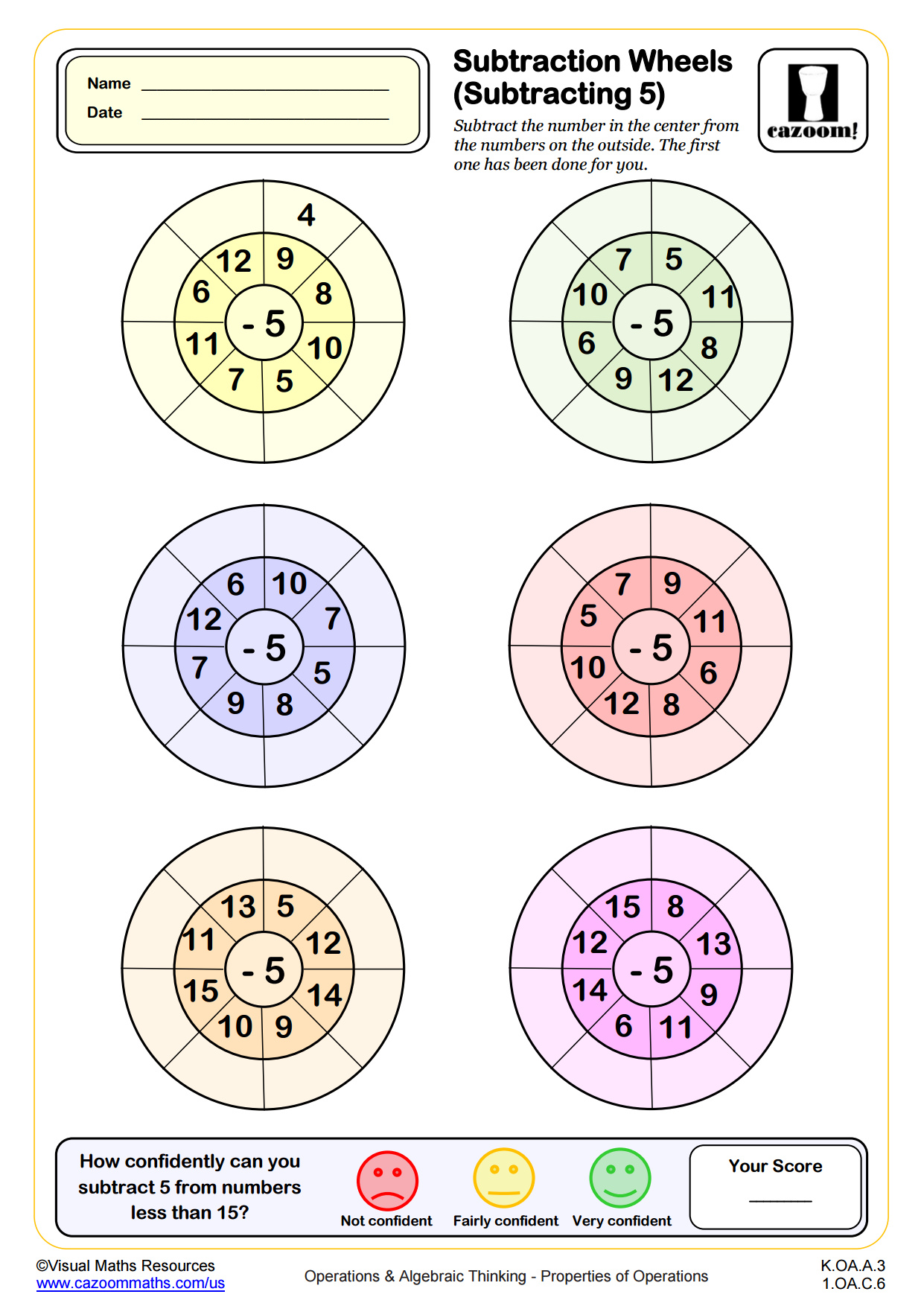
Subtraction Wheels (Subtracting 5)
Grades: Kindergarten, 1st Grade
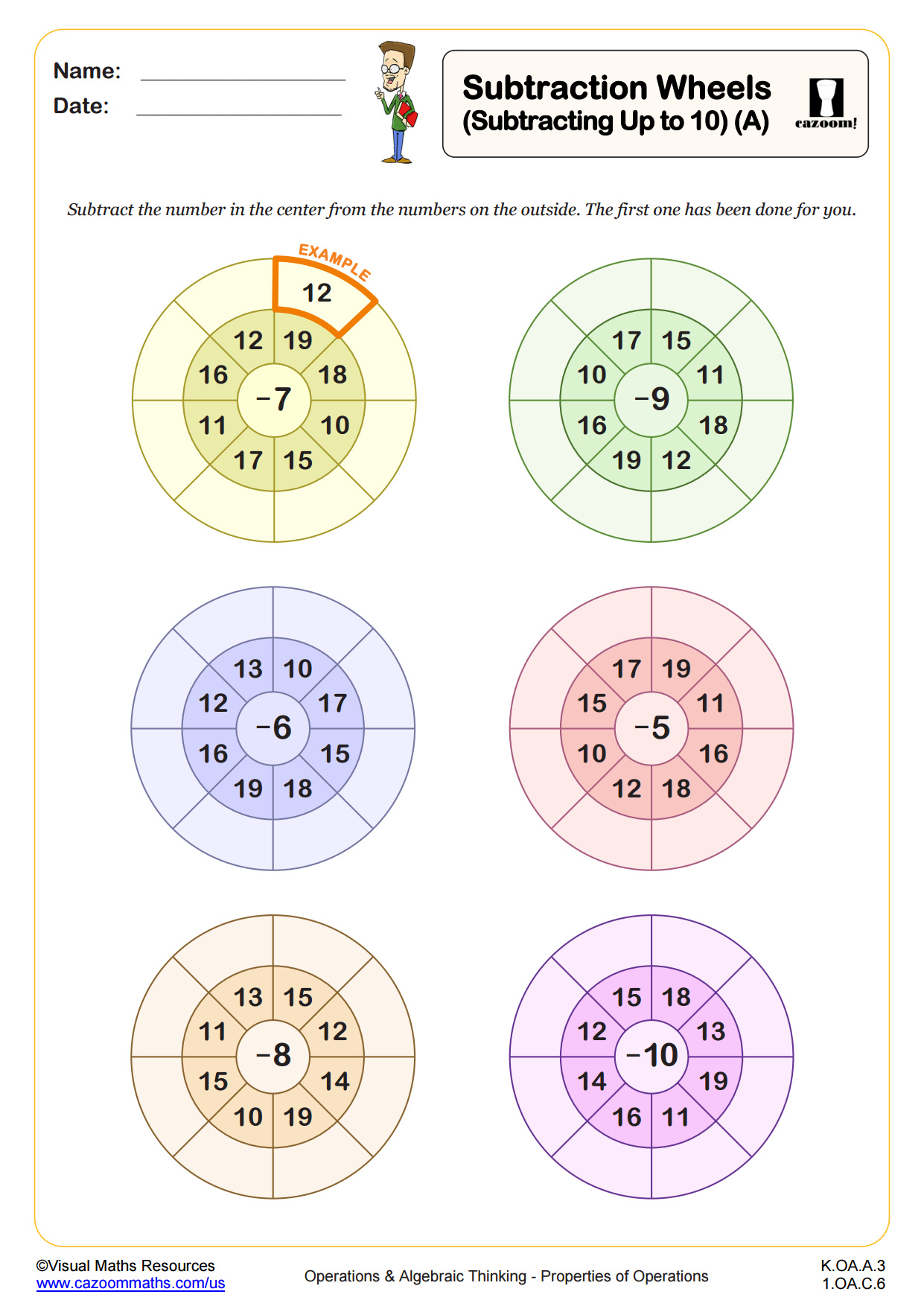
Subtraction Wheels (Subtracting up to 10) A
Grades: Kindergarten, 1st Grade
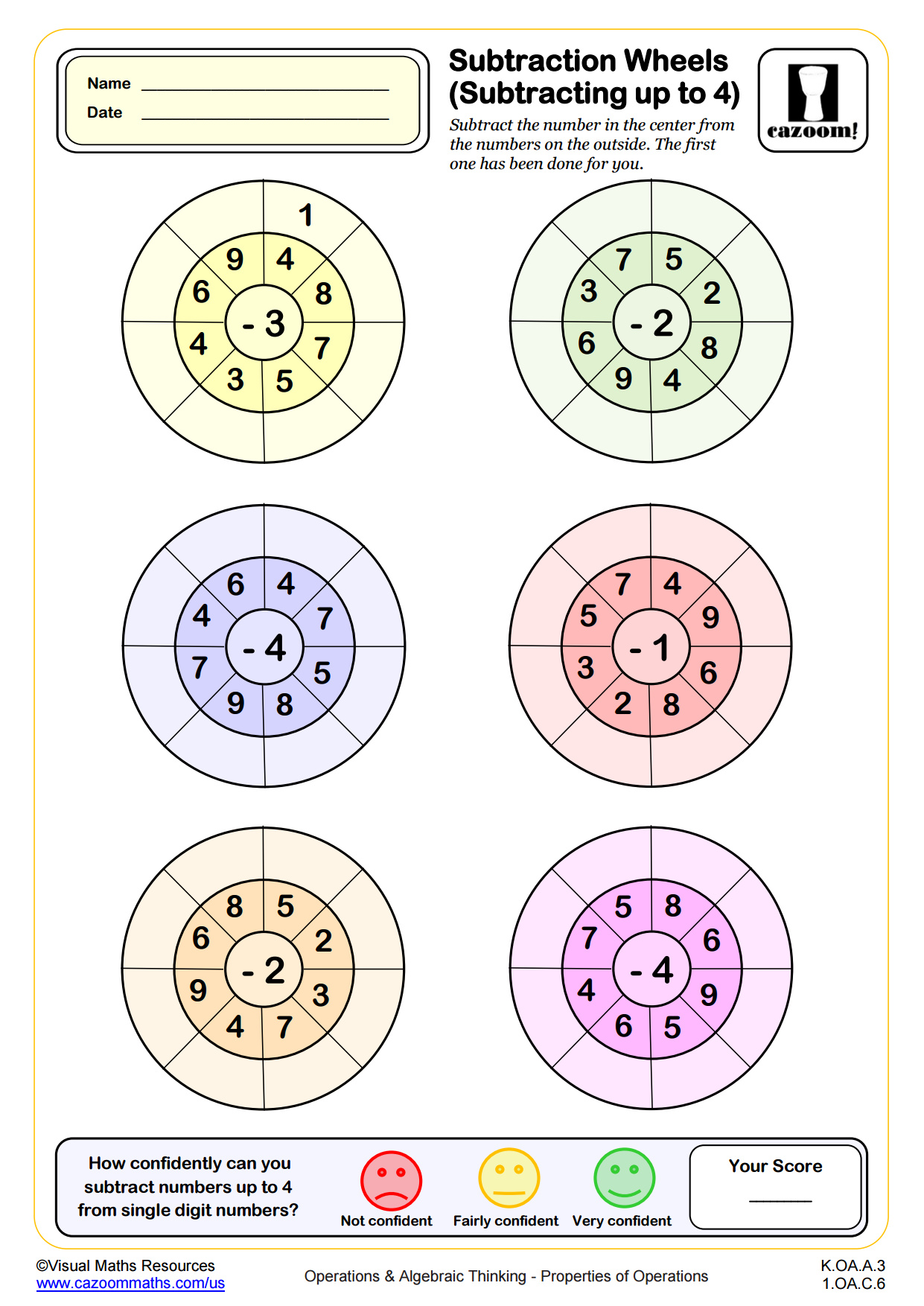
Subtraction Wheels (Subtracting up to 4)
Grades: Kindergarten, 1st Grade
All worksheets are created by the team of experienced teachers at Cazoom Math.
What does K.OA.A.3 mean in kindergarten math?
K.OA.A.3 is the Common Core State Standard that requires kindergarten students to decompose numbers from 4 to 10 into pairs in more than one way. Students must understand that any number can be broken into different combinations, such as showing that 5 can be 4+1, 3+2, or 2+3.
Teachers frequently observe that students need extensive hands-on practice with manipulatives before transitioning to abstract representations. Many students initially focus on just one way to break apart a number, missing the standard's emphasis on finding multiple decompositions. Using concrete objects like counting bears or blocks helps students physically experience how numbers can be separated in various ways.
Which grade levels use these decomposition worksheets?
While K.OA.A.3 is specifically a kindergarten standard, these decomposition concepts appear across multiple grade levels with increasing complexity. First grade students extend this work to numbers within 20, and second graders apply decomposition strategies to larger numbers and place value understanding.
Many teachers use these worksheets as intervention materials for struggling first and second grade students who missed foundational number sense concepts. The visual nature of the problems makes them accessible for special education settings and English language learners who benefit from concrete representations before moving to symbolic math notation.
How do students show number decomposition on worksheets?
Students demonstrate number decomposition through various visual methods including ten frames, dot patterns, number bonds, and equation writing. Most worksheets combine multiple representation styles to help students make connections between concrete and abstract thinking.
Teachers notice that students who start with manipulative-based activities transfer more successfully to paper-pencil tasks. Common errors include writing the same decomposition twice (like 3+2 and 2+3 as separate answers) or missing systematic approaches to find all possibilities. Encouraging students to use organized lists or patterns helps develop mathematical reasoning skills.
How can teachers use these worksheets most effectively?
Teachers get the best results when they use these worksheets after students have explored decomposition with physical manipulatives and interactive activities. The worksheets work well as guided practice during small group instruction or as independent work once students understand the concept.
Many teachers find success using the answer keys during peer checking activities, where students explain their thinking to classmates. This approach builds mathematical discourse while reinforcing correct procedures. The worksheets also serve as valuable assessment tools, helping teachers identify which students need additional support with number flexibility before moving to addition and subtraction strategies.