Kindergarten Adding 2 Digit Numbers to 100 Worksheets
All worksheets are created by the team of experienced teachers at Cazoom Math.
What Does Adding 2-Digit Numbers to 100 Mean for Kindergarteners?
For kindergarten students, adding 2-digit numbers to 100 focuses on working with numbers in the teen range and low twenties, rather than traditional two-digit addition like 47 + 38. Students typically practice combinations that result in sums up to 15 or 20, helping them recognize number patterns and develop early addition fluency. This foundational work aligns with kindergarten standards that emphasize composing and decomposing numbers within 20.
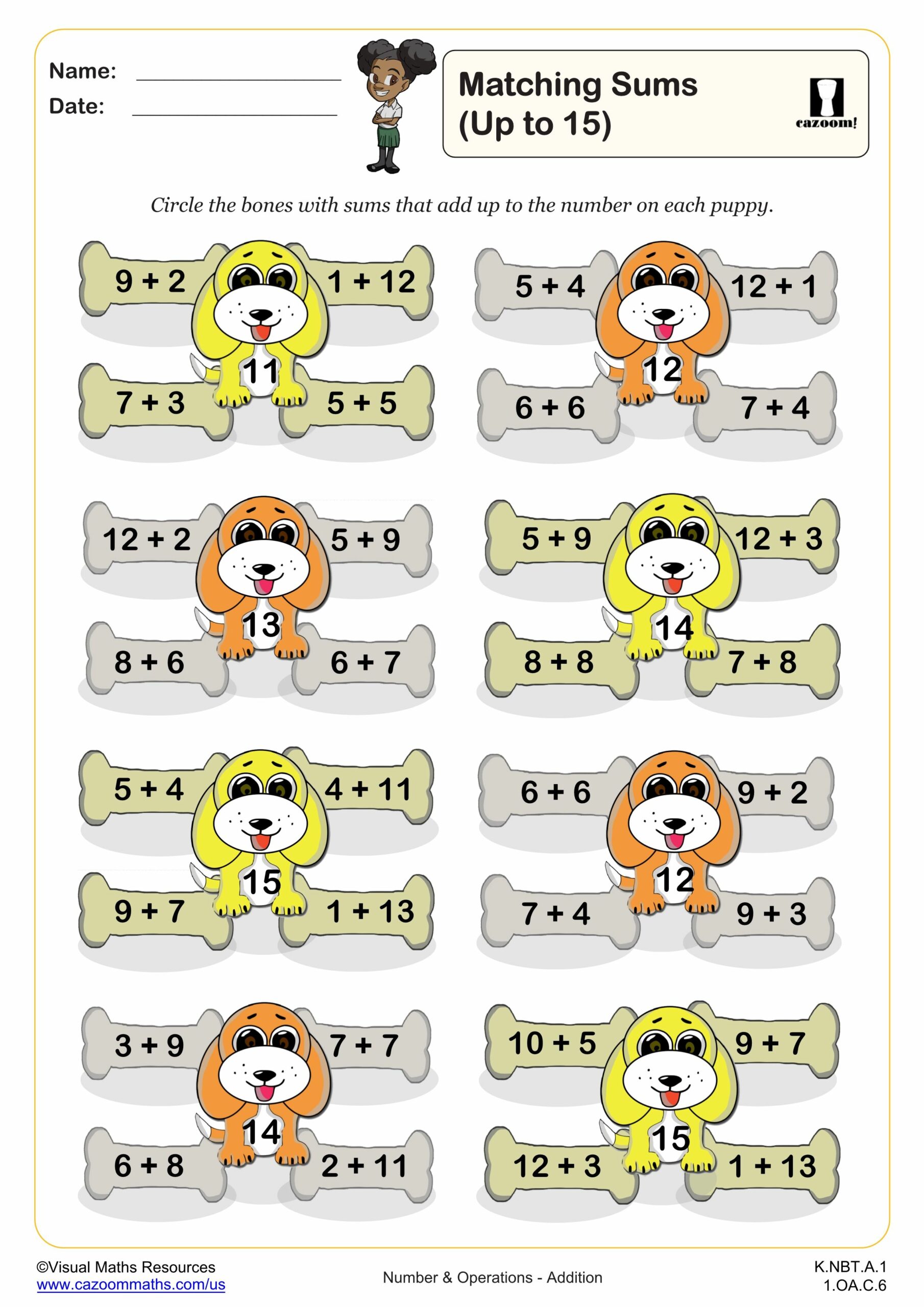
Teachers often observe that students confuse the terminology at this stage, thinking any number with two digits qualifies as complex addition. The matching format helps students connect visual representations with numerical expressions, reinforcing that 8 + 7 equals 15 regardless of how the problem appears on the page. Students lose confidence when they encounter these sums in different contexts without recognizing the underlying pattern.
Is Adding 2-Digit Numbers Appropriate for Kindergarten?
Kindergarten math standards focus on addition and subtraction fluently within 5 and working with numbers up to 20, making sums to 15 developmentally appropriate for this grade level. Students at this stage should recognize that adding means combining quantities and understand that the order of addends doesn't change the sum. These worksheets target the upper range of kindergarten expectations, preparing students who demonstrate readiness for first-grade content.
This early work with teen numbers creates a bridge to first grade, where students tackle addition within 20 and begin exploring place value with tens and ones. Many teachers find that kindergarteners who master sums to 15 transition more smoothly to first-grade addition strategies like making ten or using doubles. The foundation built here directly supports the Common Core expectation that first graders will add and subtract within 20 fluently by year's end.
What Strategies Help Kindergarteners Add Numbers to Get Sums Near 15?
Kindergarten students typically use counting strategies when adding to reach sums around 15, including counting all objects, counting on from the larger number, or using their fingers as concrete tools. Teachers introduce doubles facts like 7 + 7 = 14 and near-doubles like 7 + 8 = 15 to help students recognize patterns that make mental math easier. Matching activities strengthen these connections by allowing students to see multiple representations of the same sum simultaneously.
These early addition skills appear in everyday situations that kindergarteners readily understand, such as combining toys during playtime or counting snacks shared between friends. In STEM contexts, young students use these same addition concepts when measuring lengths with connecting cubes or counting objects sorted into two groups during science observations. Building fluency with these sums prepares students for more complex problem-solving in elementary mathematics and beyond.
How Should Teachers Use These Kindergarten Addition Worksheets?
The worksheets provide structured practice that helps kindergarteners recognize equivalent sums through matching formats, where students connect addition expressions with their answers. This visual approach supports different learning styles and allows students to self-check by verifying that each sum has a corresponding match. Answer keys enable teachers to quickly assess which number combinations students have mastered and which require additional instruction with manipulatives or number lines.
Many teachers use these worksheets during math centers, pairing students so they can discuss their thinking and explain how they found matching sums. The format works well for differentiated instruction, allowing advanced kindergarteners to work independently while teachers provide small-group support to students who need more guidance. Schools also find these worksheets valuable for homework assignments that reinforce classroom learning without overwhelming families, since the matching format clearly shows what students should accomplish.