Middle School 3D Shapes Worksheets
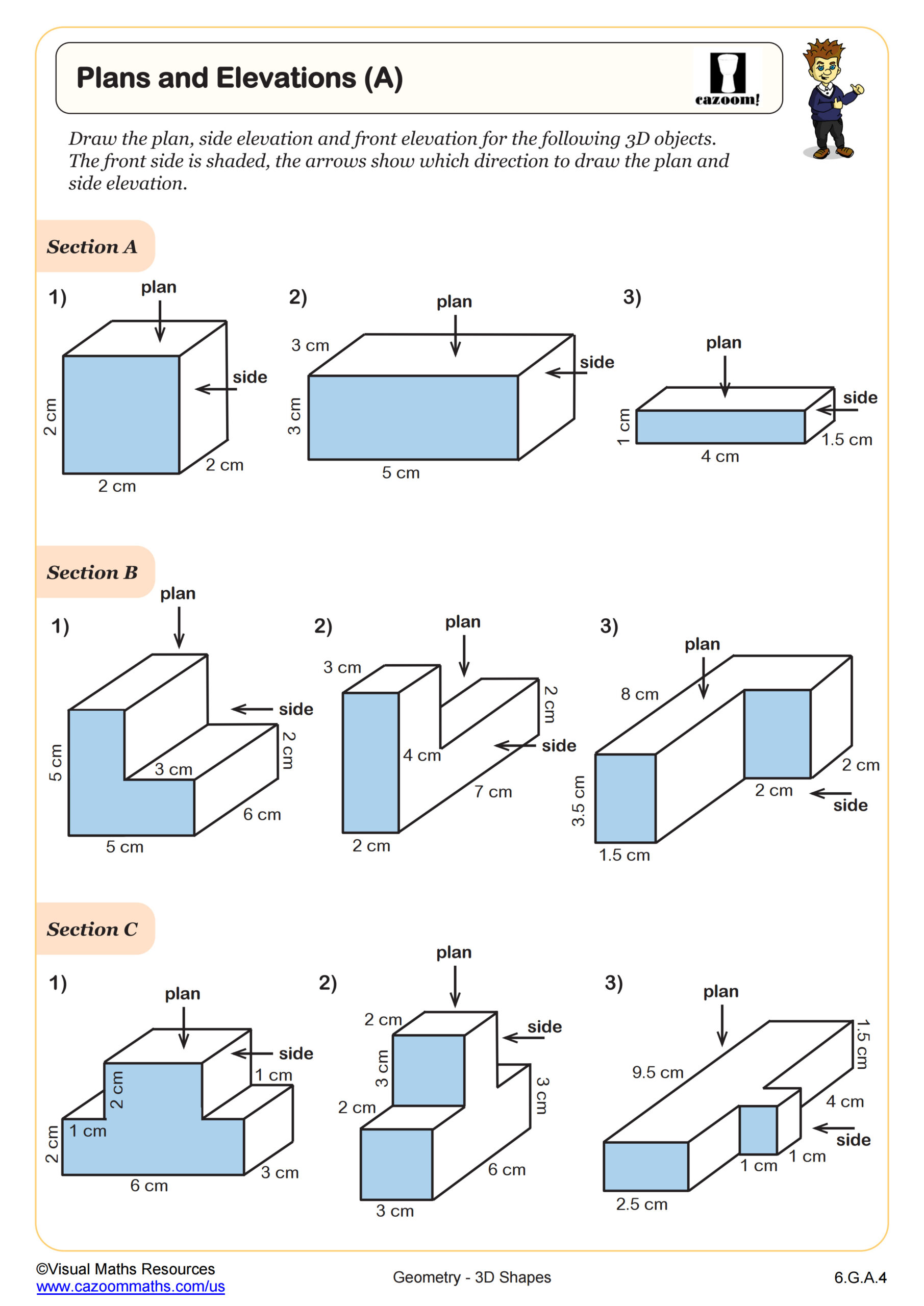
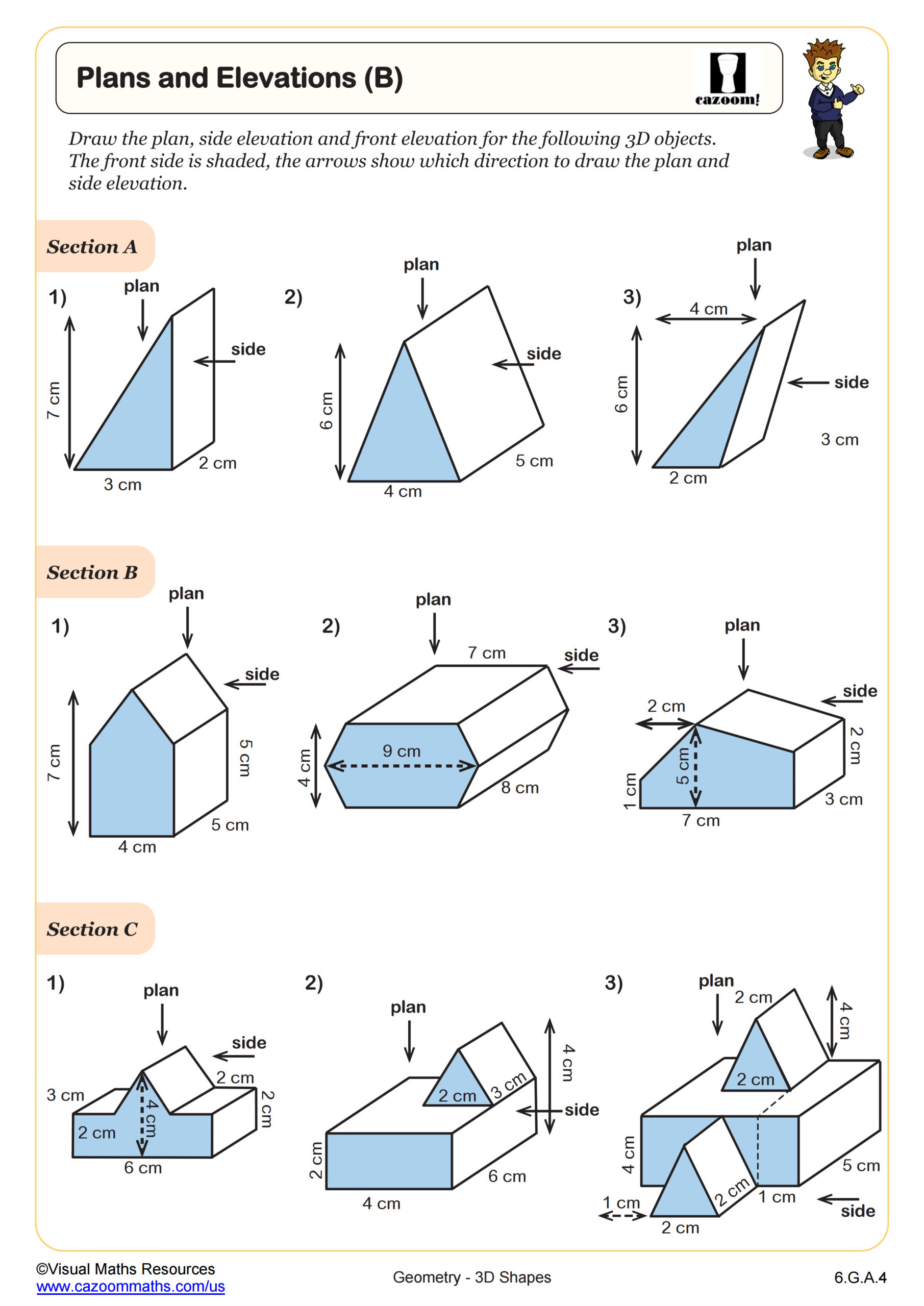
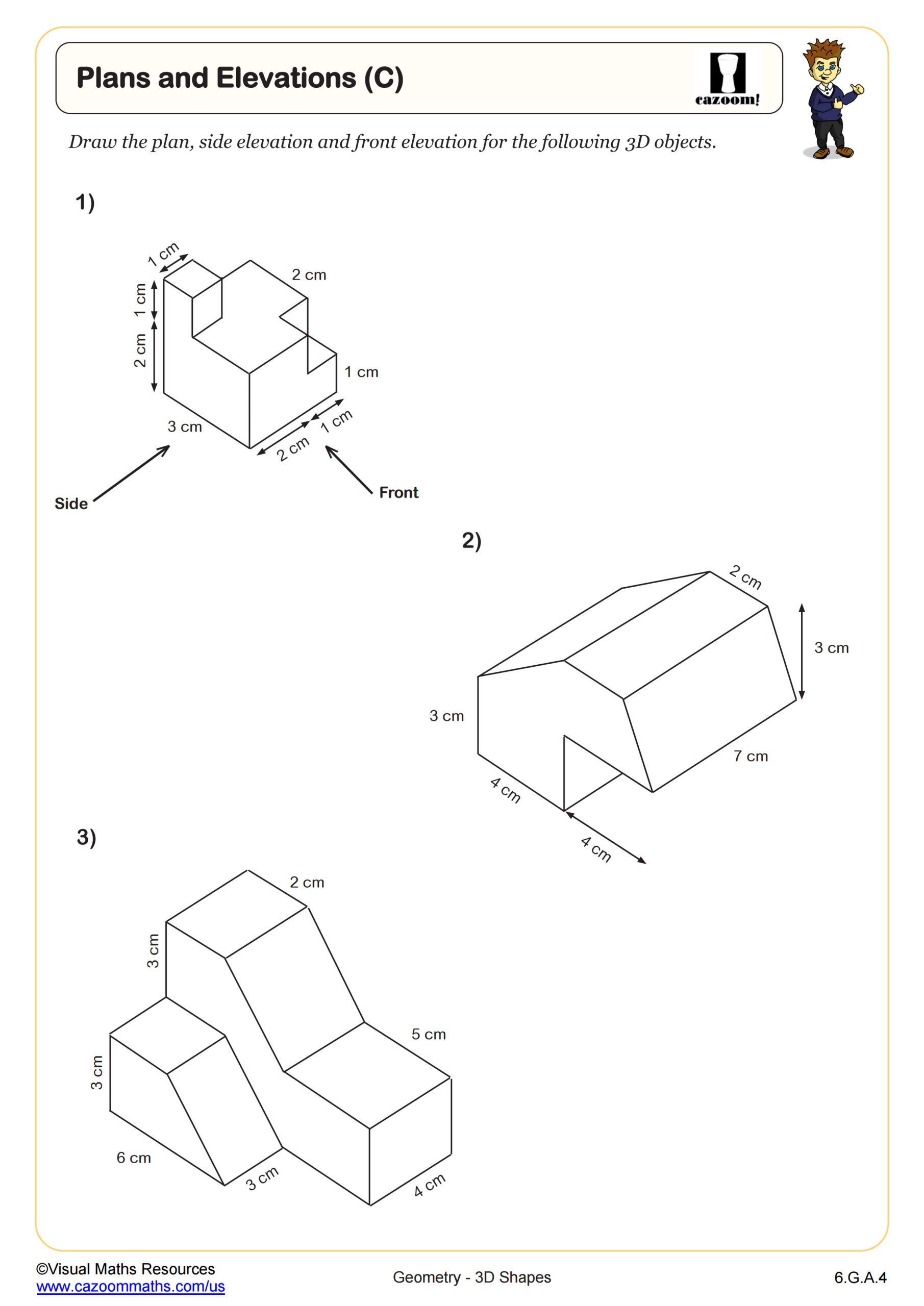
All worksheets are created by the team of experienced teachers at Cazoom Math.
What makes a good 3d shapes worksheet with answers for middle school students?
Effective 3D shapes worksheets combine visual representation with computational practice, aligning with Common Core standards 6.G.A.2 and 7.G.B.6 for geometry concepts. Quality materials include surface area and volume problems, net folding exercises, and cross-sectional analysis that build spatial reasoning skills progressively.
Teachers notice students perform better when worksheets include both calculation practice and visual interpretation tasks. Problems involving real objects like storage containers or architectural models help students connect abstract formulas to practical applications, while answer keys allow for self-assessment and reduce grading time.
Which grade levels benefit most from 3D shapes worksheet practice?
Middle school grades 6-8 represent the optimal window for intensive 3D shapes instruction, as students transition from concrete to abstract geometric thinking. Sixth graders focus on identifying and classifying solids, while seventh and eighth graders tackle surface area and volume calculations with increasing complexity.
Teachers observe that students who master 3D visualization in middle school show stronger performance in high school geometry and physics courses. The spatial reasoning skills developed through consistent worksheet practice directly support later learning in calculus, engineering graphics, and computer-aided design programs.
How do different views of objects worksheets improve spatial understanding?
Orthographic projection worksheets showing top, front, and side views help students develop the spatial visualization skills structured for STEM careers. These exercises mirror techniques used in engineering drafting, architecture, and manufacturing design processes.
Many teachers report that students initially struggle to mentally rotate objects and predict how they appear from different angles. Regular practice with multi-view drawings significantly improves this skill, with most students showing marked improvement after completing several worksheet sets that progress from simple rectangular prisms to more complex composite shapes.
How should teachers use these worksheets to maximize student learning?
Most effective implementation involves starting with hands-on manipulatives before transitioning to worksheet practice, allowing students to physically explore shapes before working abstractly. Teachers find success using worksheets as guided practice after initial instruction, then as independent review or homework assignments.
The included answer keys enable students to self-check their work and identify error patterns, particularly valuable for volume and surface area calculations where computational mistakes are common. Teachers recommend having students explain their reasoning for visual problems rather than just marking answers, as this builds deeper conceptual understanding.