Middle School Circles Worksheets
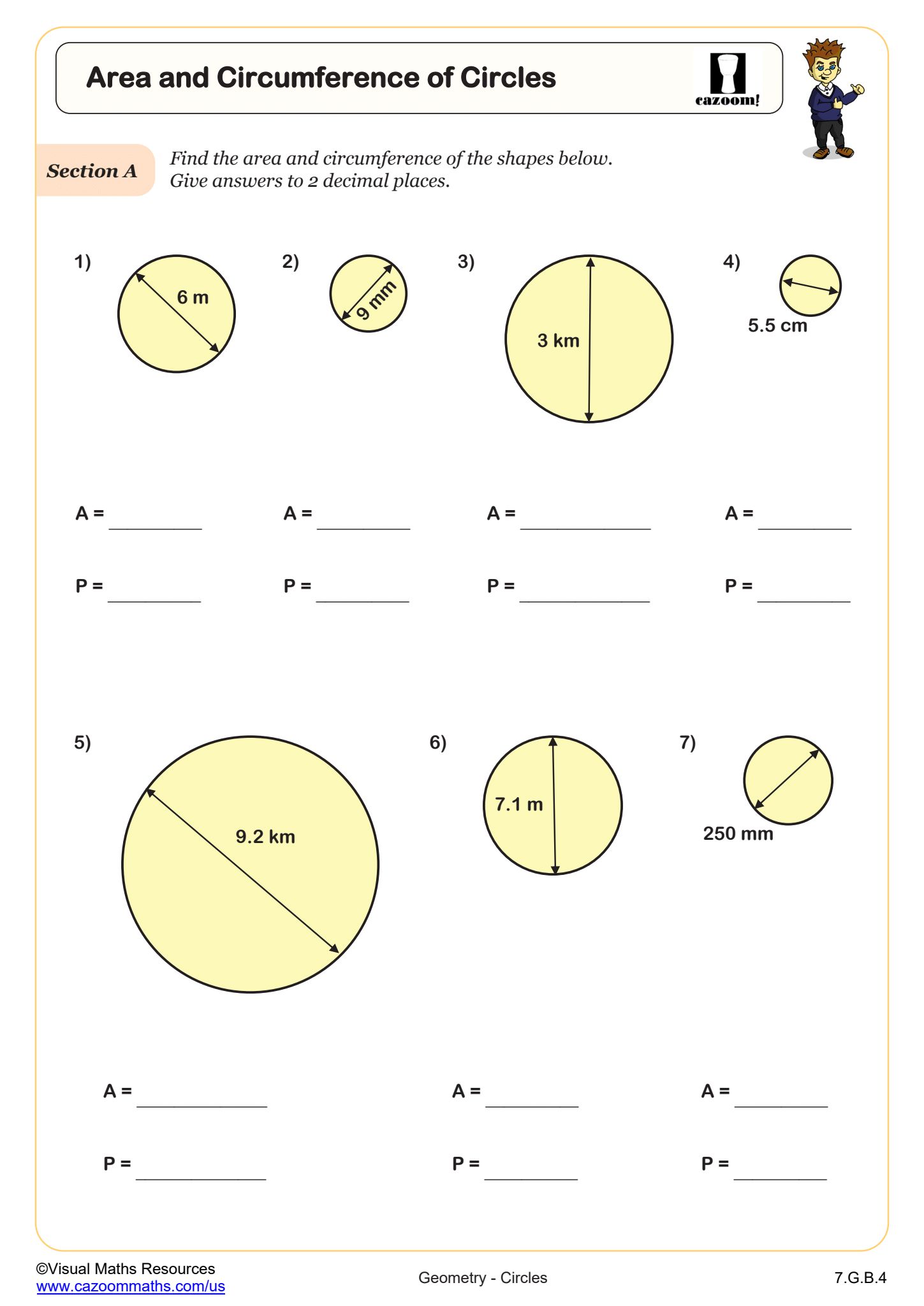
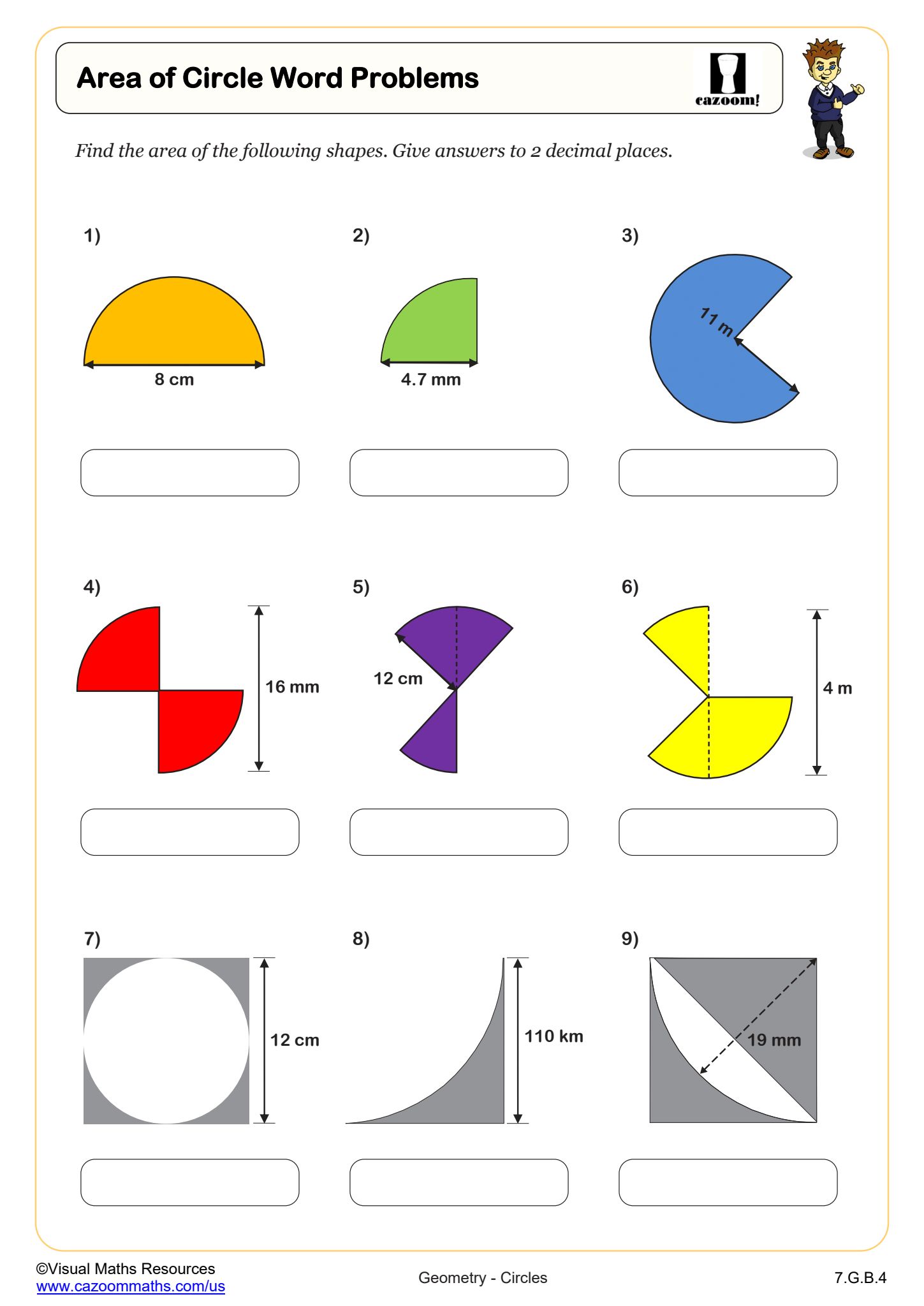
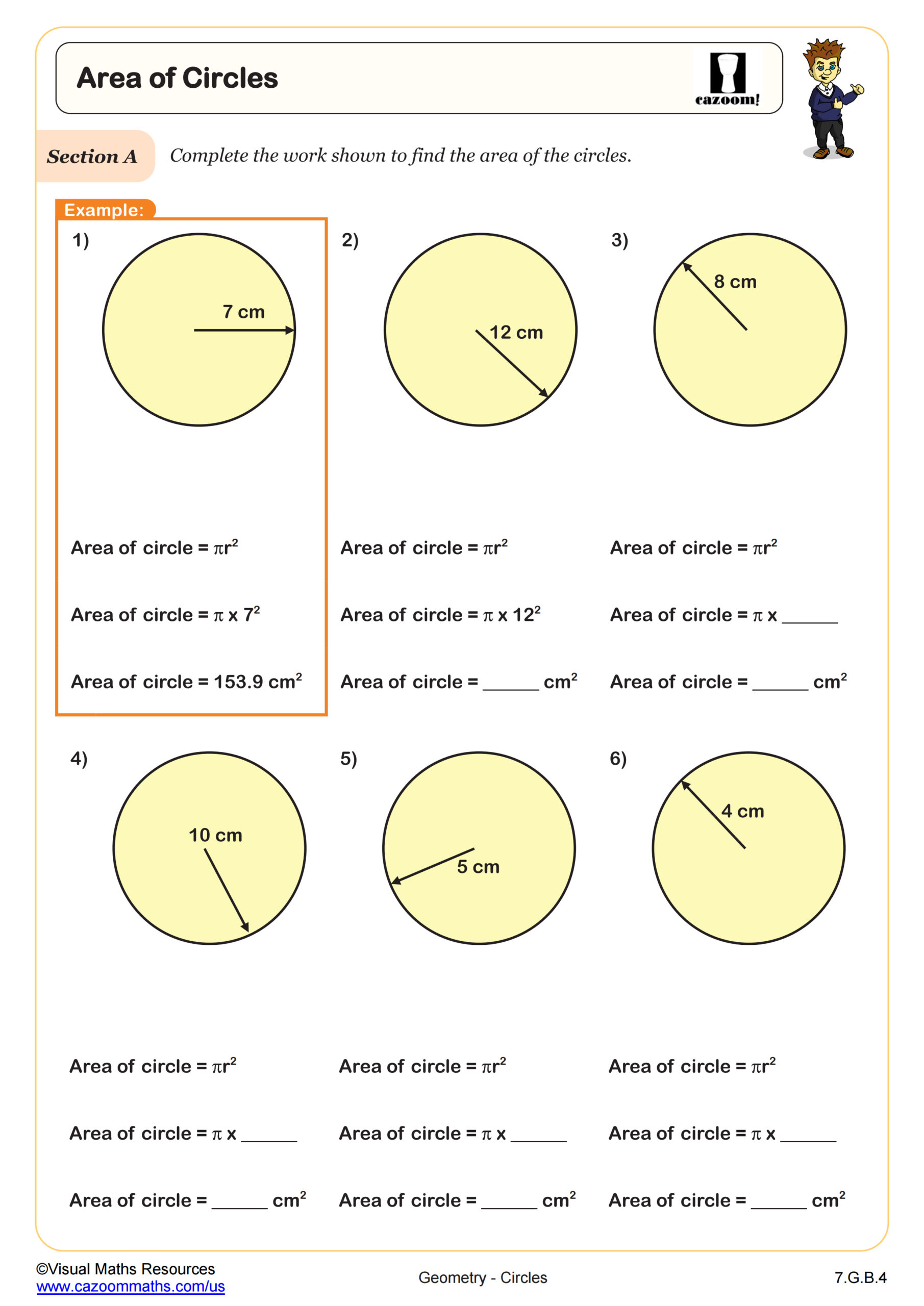
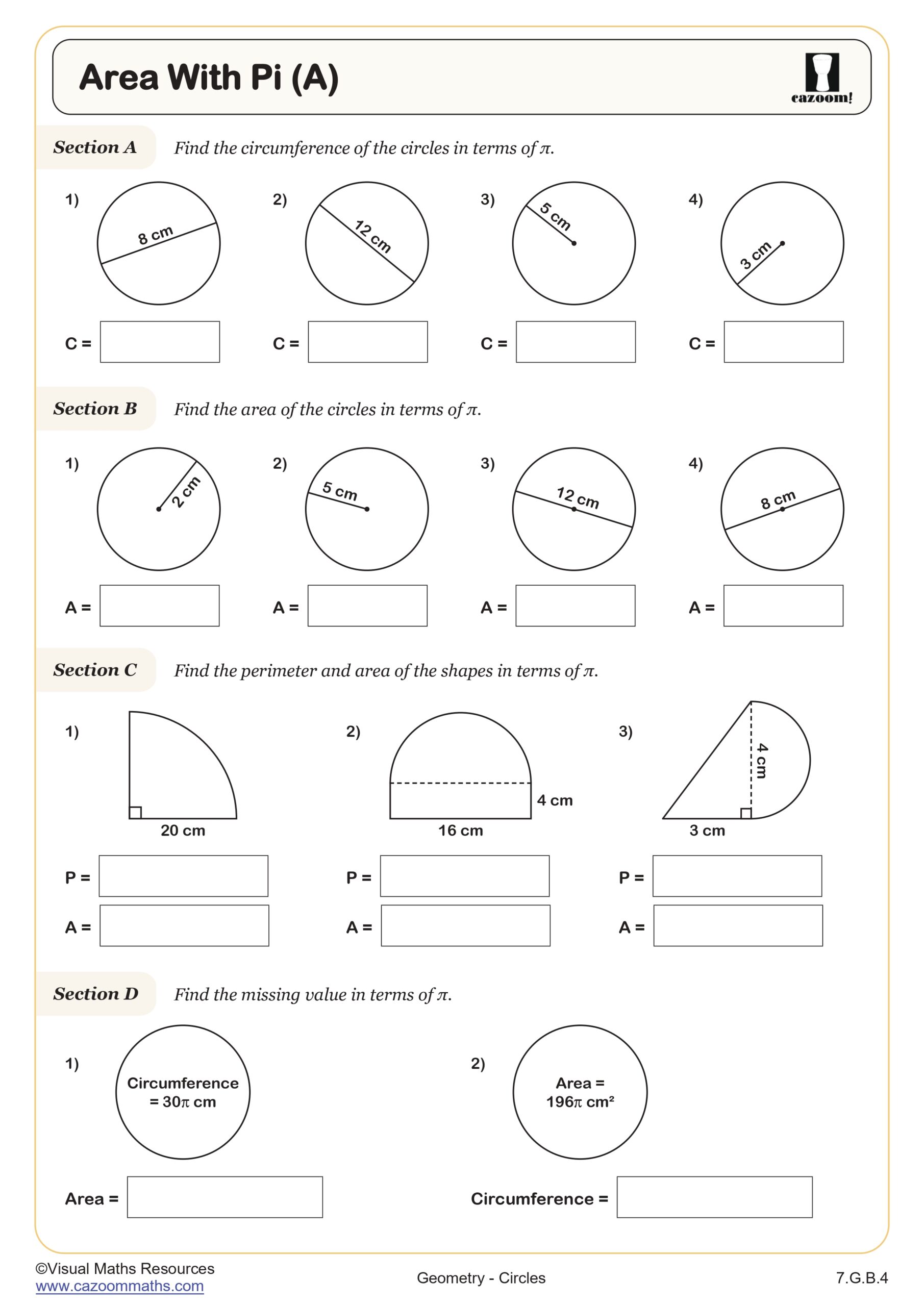
All worksheets are created by the team of experienced teachers at Cazoom Math.
Why do students struggle with shaded region problems in circles?
Shaded region problems require students to visualize composite shapes and determine which areas to add or subtract. Many students can calculate the area of a single circle but lose points when they need to identify that a shaded region equals the larger circle's area minus the smaller circle's area, or when they must calculate partial sectors and segments.
A common error occurs when students subtract diameters or radii before squaring them in the area formula, rather than calculating each complete area separately first. Teachers frequently notice that breakthrough happens when students sketch and label each shape independently, write out each area calculation, then perform the final subtraction as a separate step rather than trying to combine everything into one expression.
What grade levels learn about circles in middle school?
These circle worksheets cover 6th grade, 7th grade, and 8th grade, spanning the complete middle school mathematics curriculum. Students encounter circles progressively throughout these years, with each grade building conceptual depth and computational complexity.
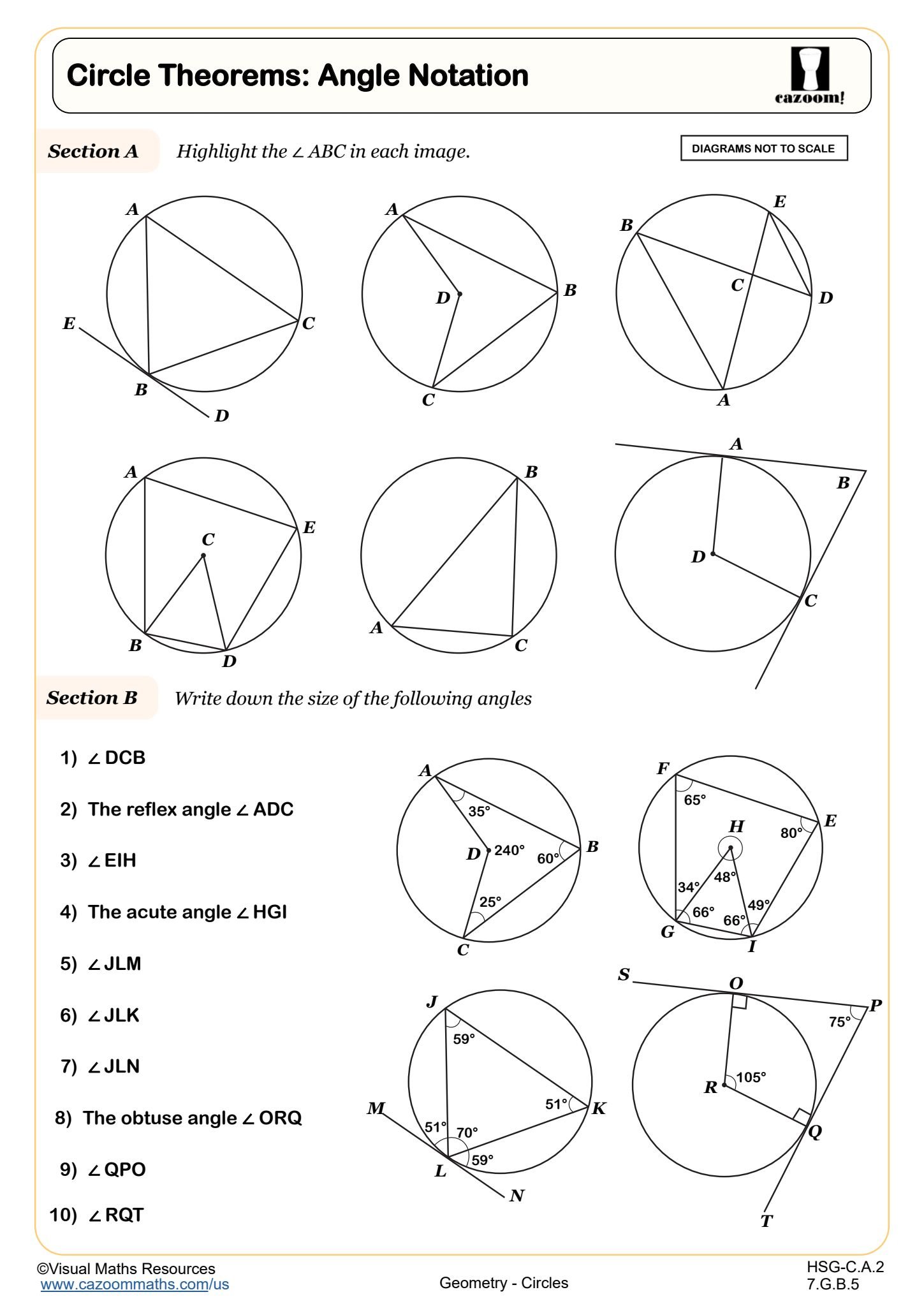
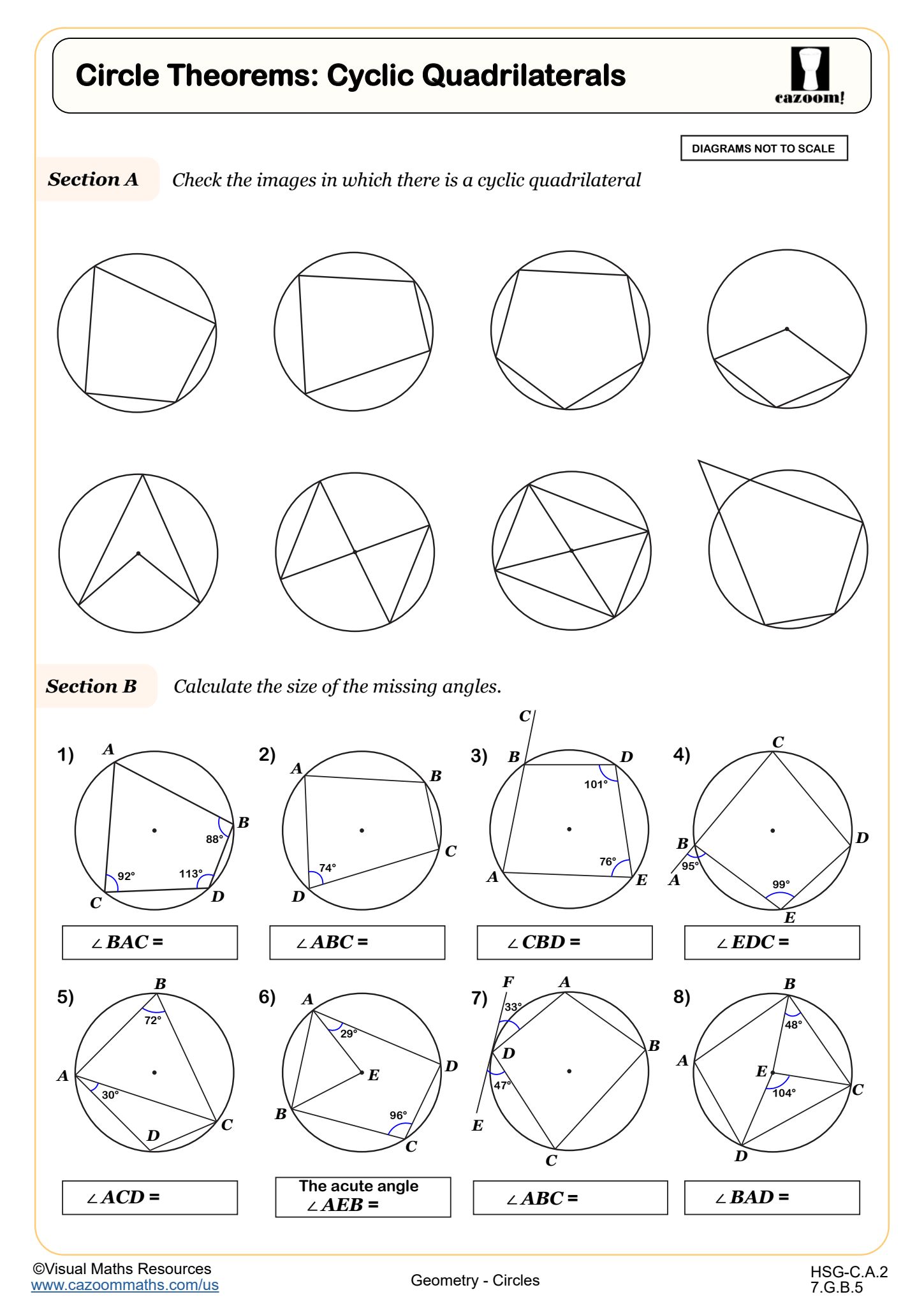
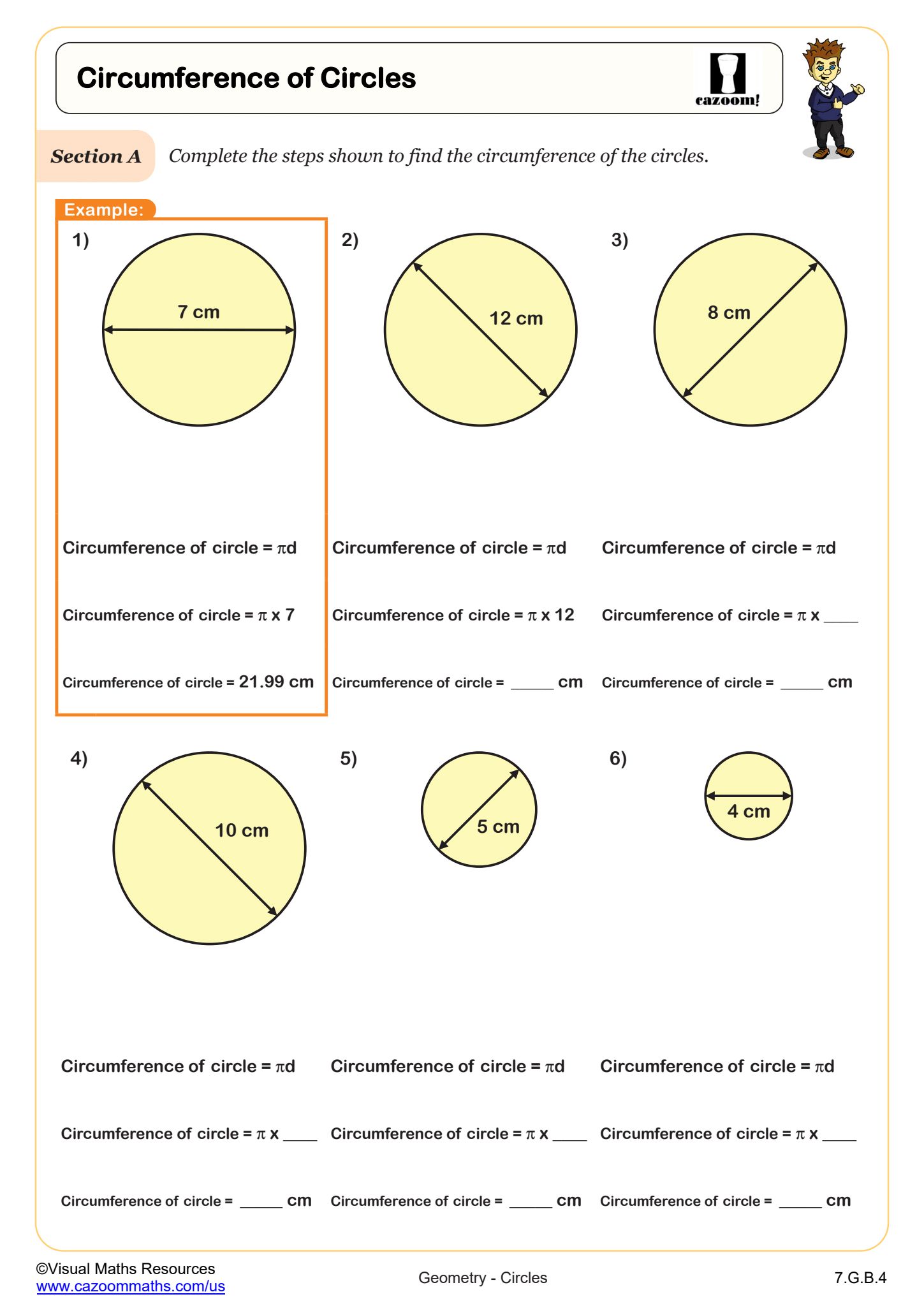
Sixth graders typically begin with finding area and circumference using given measurements. Seventh grade introduces problems requiring students to work backward from circumference to find radius, and to calculate composite shapes involving circles. Eighth graders tackle circle theorems, inscribed angles, and more sophisticated shaded region problems that combine circles with other polygons, preparing them for high school geometry where formal proofs and more advanced circle properties become central.
How do circle theorems connect to real-world applications?
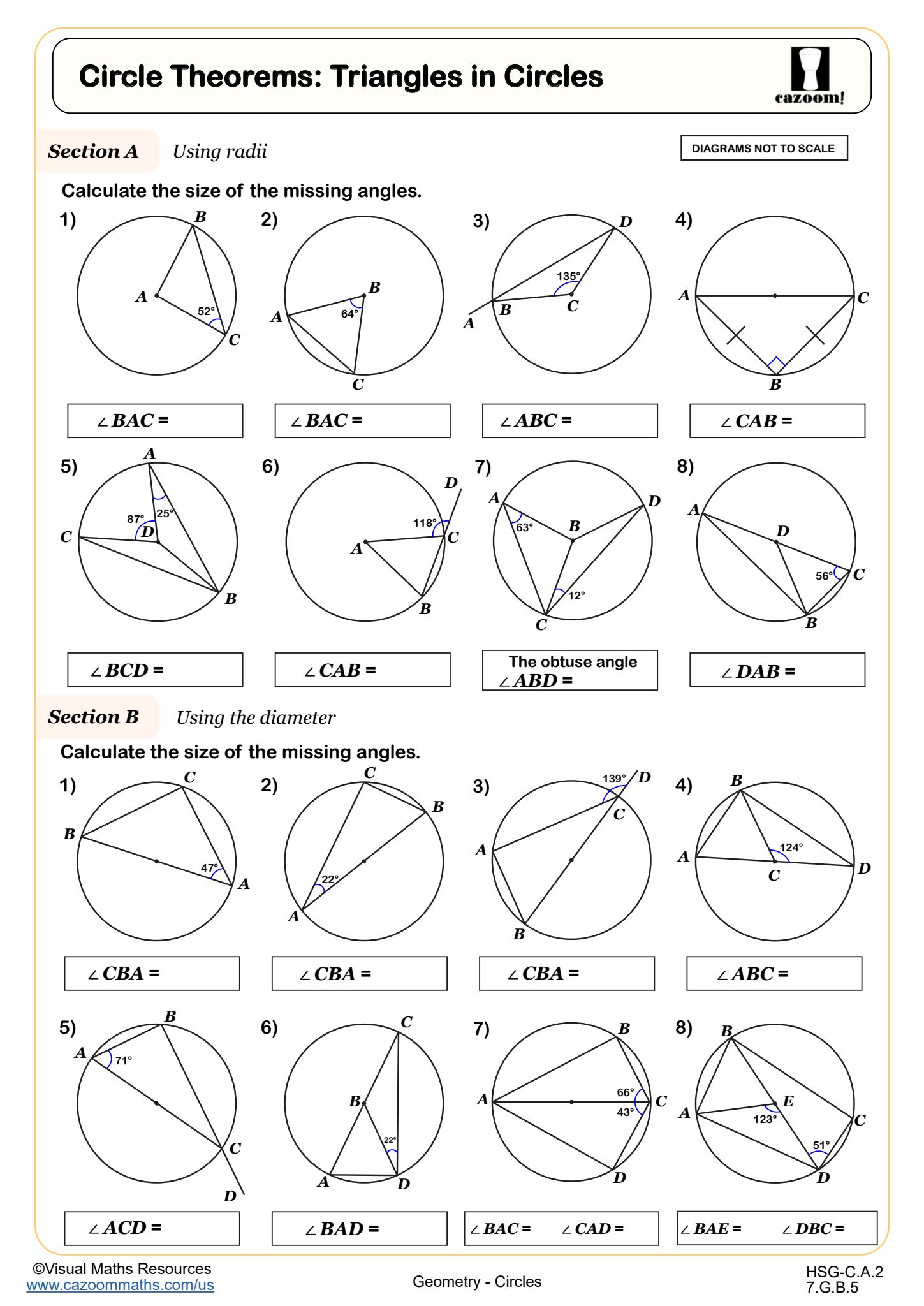
Circle theorems involving triangles inscribed in circles establish relationships between central angles, inscribed angles, and arc measures that students prove and apply throughout geometry. The theorem stating that an inscribed angle measures half its intercepted arc provides the foundation for understanding these relationships, while Thales' theorem shows that any triangle inscribed in a semicircle forms a right angle.
These theorems appear throughout engineering and design fields. Architects use inscribed angle relationships when designing circular windows, domed structures, and amphitheaters where sightlines matter. Satellite dish engineers apply these principles to position receivers at optimal angles. Navigation systems rely on circle theorems to calculate positions using triangulation from circular signal ranges, making these abstract mathematical relationships essential for GPS technology that students use daily.
How can teachers use these circle worksheets most effectively?
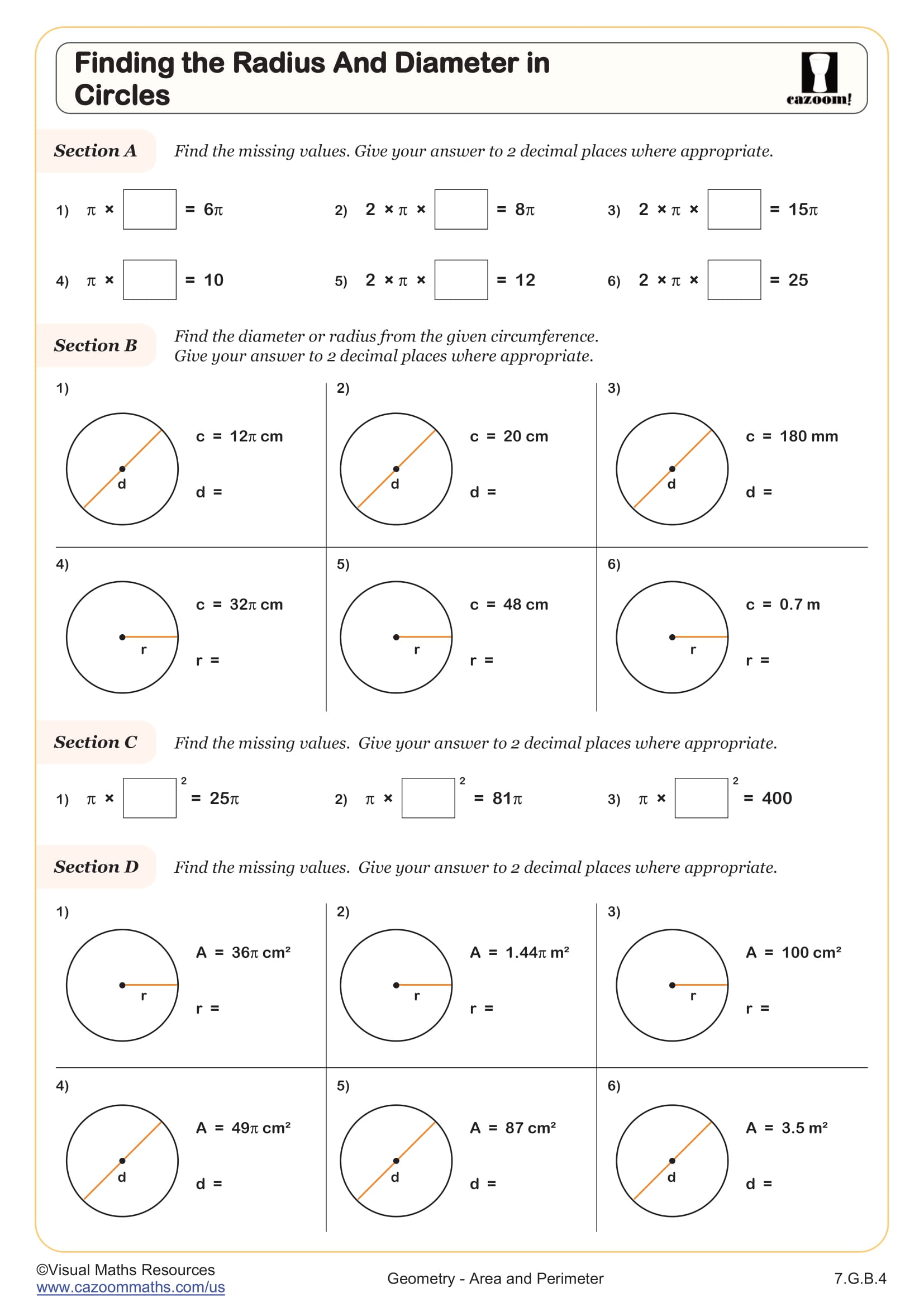
The worksheets progress from straightforward calculations to complex applications, allowing teachers to assign problems matching each student's readiness level. Problems requiring students to find dimensions with clues before calculating areas help develop algebraic reasoning alongside geometric skills, while varied contexts keep students engaged without overwhelming them with repetitive drill.
Many teachers use these worksheets for differentiated small group instruction, assigning basic area and circumference problems to students still building foundational skills while challenging advanced students with circle theorem proofs and multi-step shaded region problems. The complete answer keys make them practical for homework with parent support, math centers where students self-check their work, or test preparation where students need focused practice on specific circle concepts that appear on state assessments and standardized tests.