Middle School Coordinates Worksheets
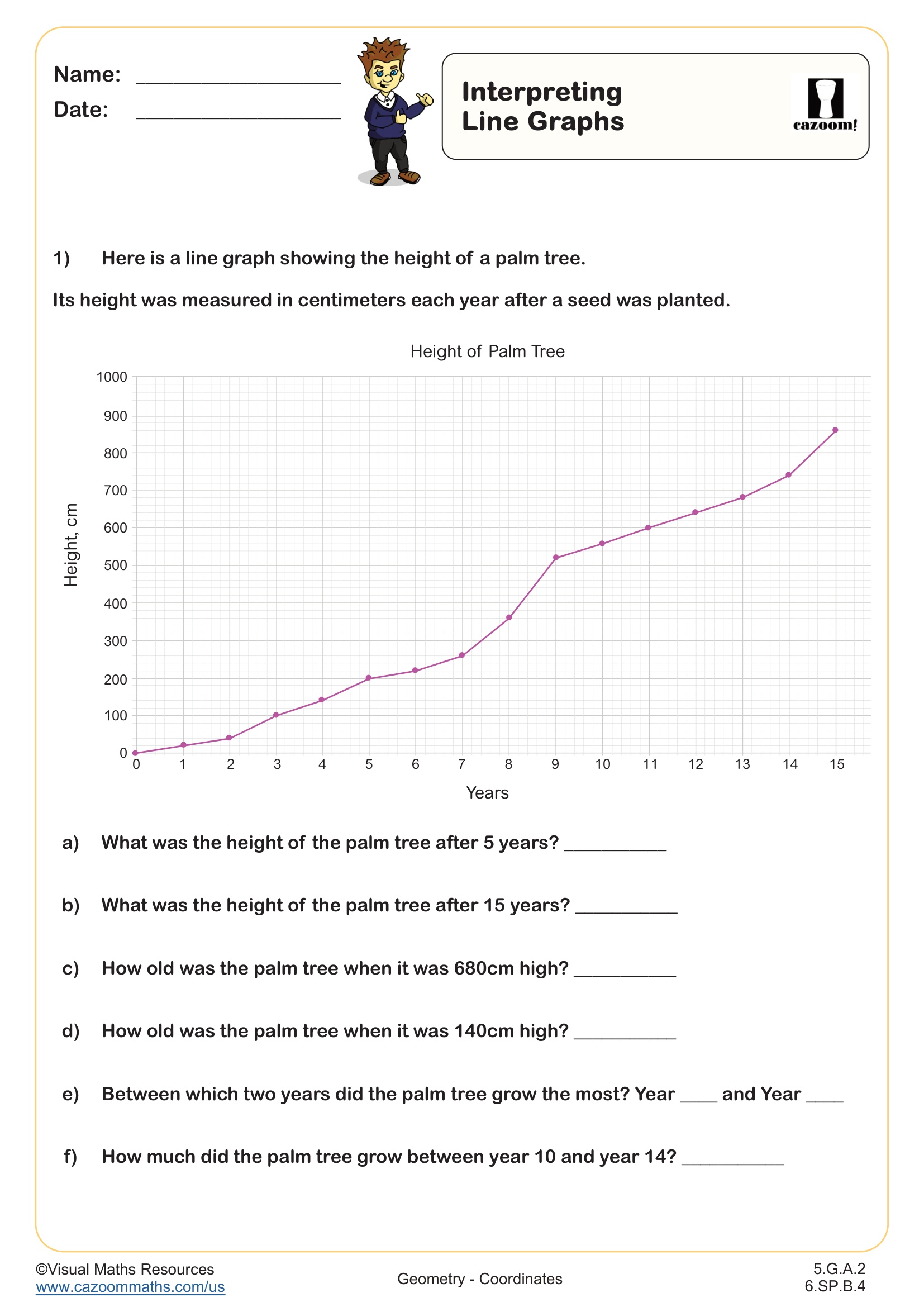
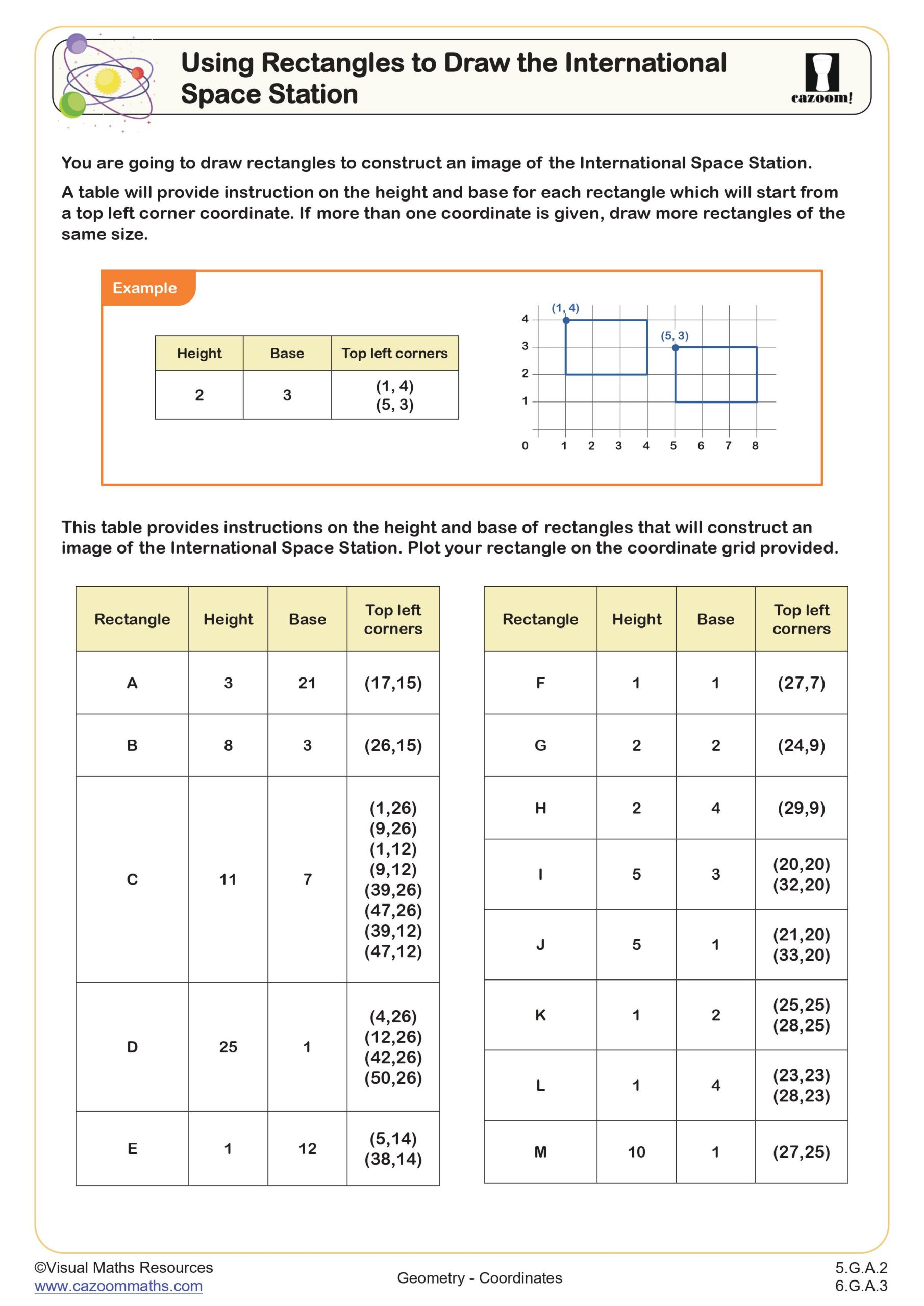
All worksheets are created by the team of experienced teachers at Cazoom Math.
What resources are available for teaching coordinate grids to middle school students?
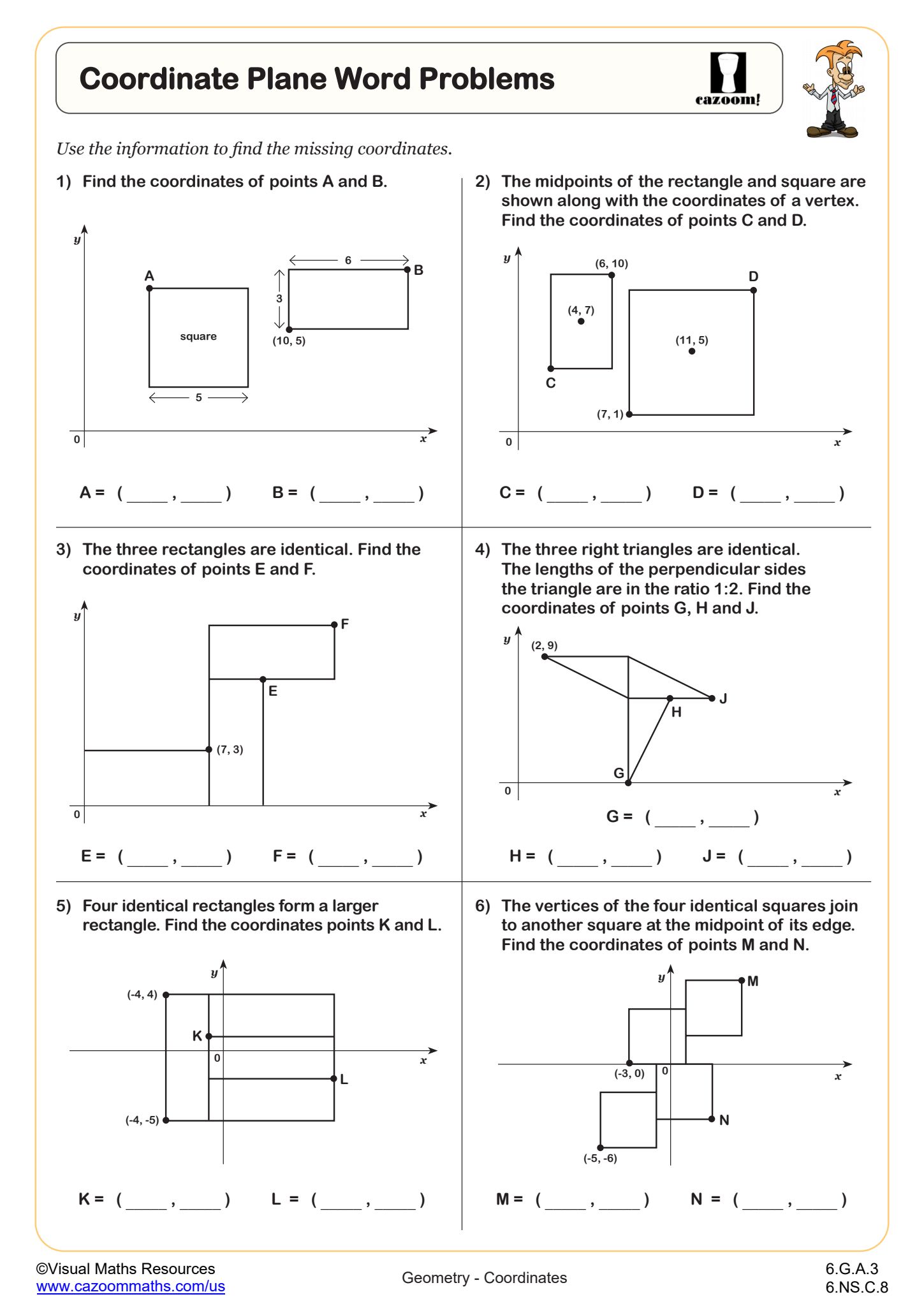
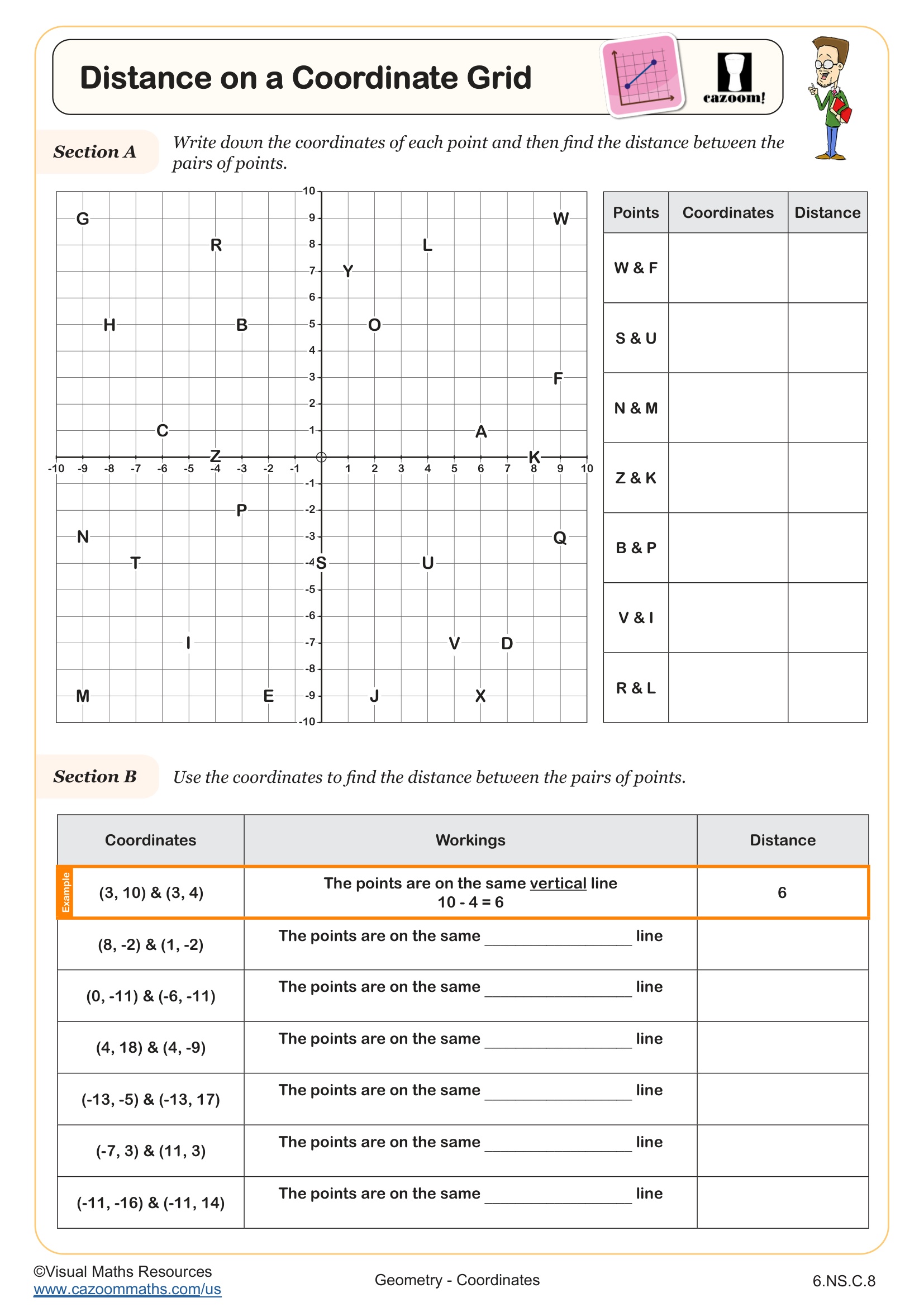
Coordinate grid worksheets serve as fundamental resources aligned with Common Core standards 6.NS.6 and 6.NS.8, providing systematic practice for plotting points and understanding the coordinate plane structure. These materials support teachers in building students' spatial reasoning skills through progressive exercises that move from basic quadrant identification to more complex coordinate relationships.
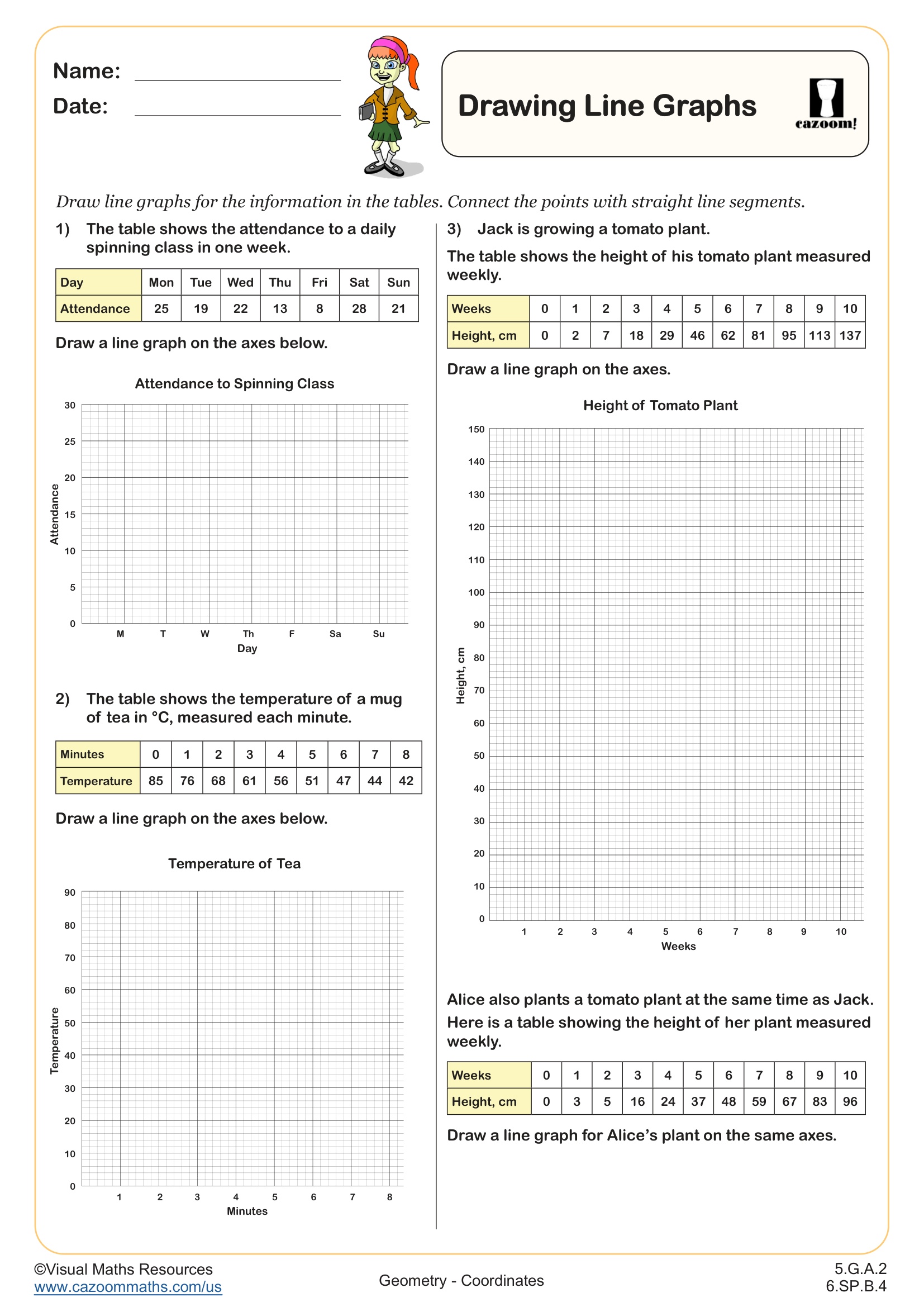
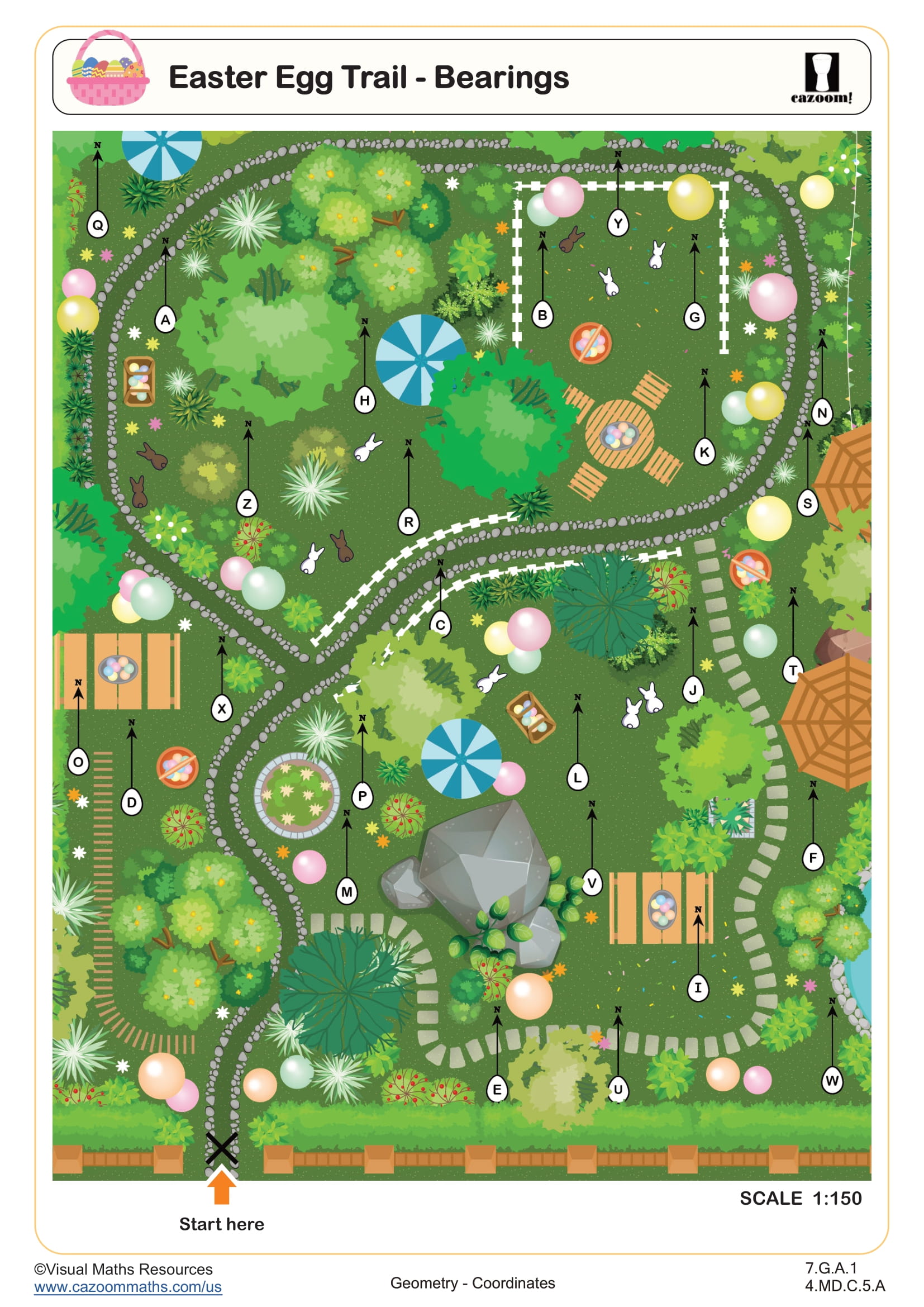
Teachers report that students benefit most when worksheets include visual coordinate grids with clear axis labels and consistent scaling. Many educators notice improved retention when practice problems incorporate real-world contexts like mapping locations or graphing data points from science experiments, helping students connect abstract coordinate concepts to practical applications in STEM fields.
Which grade levels benefit most from coordinate plane worksheets?
Coordinate plane concepts typically emerge in sixth grade mathematics curricula, where students first encounter ordered pairs and basic plotting skills. Seventh and eighth grade students build on these foundations by working with transformations, linear relationships, and more advanced coordinate geometry concepts that prepare them for high school algebra.
Middle school teachers observe that sixth graders often need extensive practice with quadrant identification and understanding positive versus negative coordinate values. By eighth grade, students should demonstrate fluency with coordinate plotting while applying these skills to analyze geometric shapes, calculate distances, and understand slope concepts that bridge into algebraic thinking.
How do students master plotting points in all four quadrants?
Students develop quadrant mastery through systematic practice that begins with positive coordinates in Quadrant I before introducing negative values in the remaining quadrants. Teachers find that explicit instruction about sign patterns helps students remember that Quadrant II contains negative x and positive y values, while Quadrant III contains both negative coordinates.
Common errors include sign confusion and axis orientation mistakes, where students might plot (3, -2) as (-3, 2) or confuse the x and y axis positions. Successful teachers use memory devices like "right and up for positive" and provide worksheets that emphasize checking both coordinate signs before plotting, building accuracy through repetitive but varied practice problems.
What makes coordinate worksheets effective for classroom instruction?
Effective coordinate worksheets provide clear visual grids with appropriate scaling and include diverse problem types that progress from basic plotting to coordinate relationships and applications. Teachers value materials that offer immediate feedback through detailed answer keys, allowing students to self-check their work and identify specific areas needing additional practice.
Classroom management improves when worksheets can be easily distributed as PDF downloads for both in-class activities and homework assignments. Teachers report better student engagement when coordinate problems connect to familiar contexts like video game positions, city maps, or sports field locations, making abstract mathematical concepts more accessible and meaningful for middle school learners.