Middle School Decimals Worksheets
Add and Subtract Fractions and Decimals
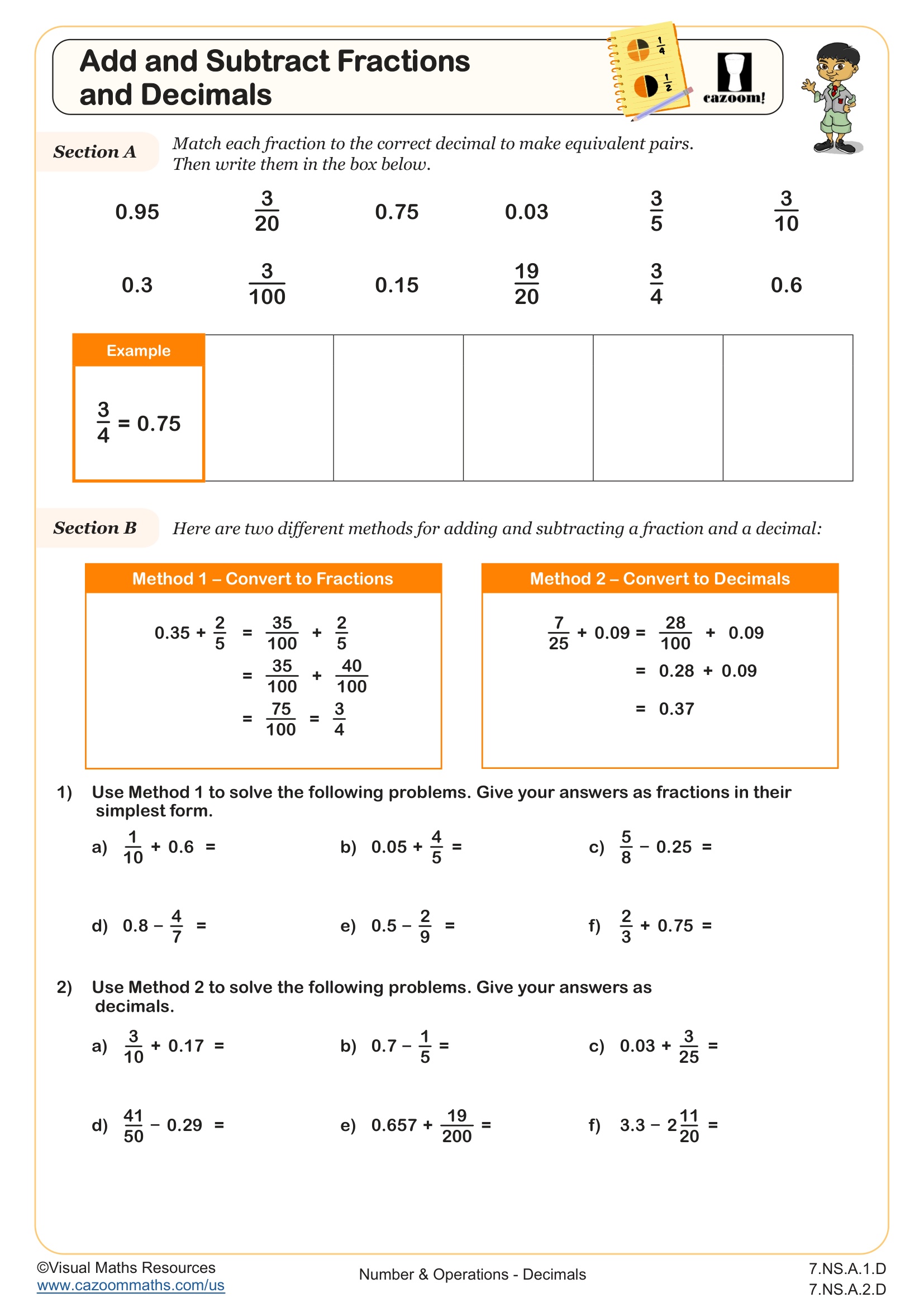
Adding and Subtracting Decimals
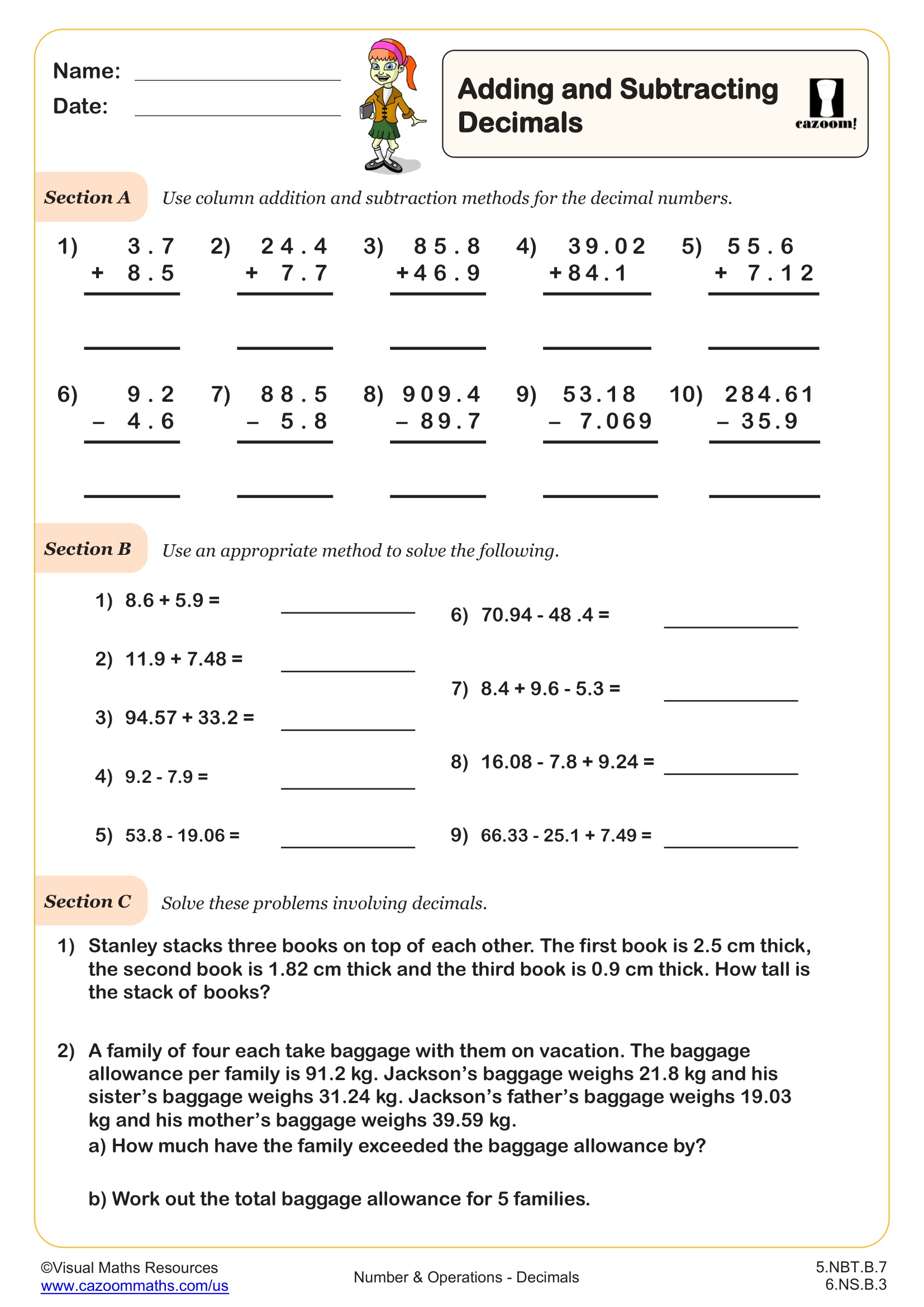
Column Addition - Decimals A
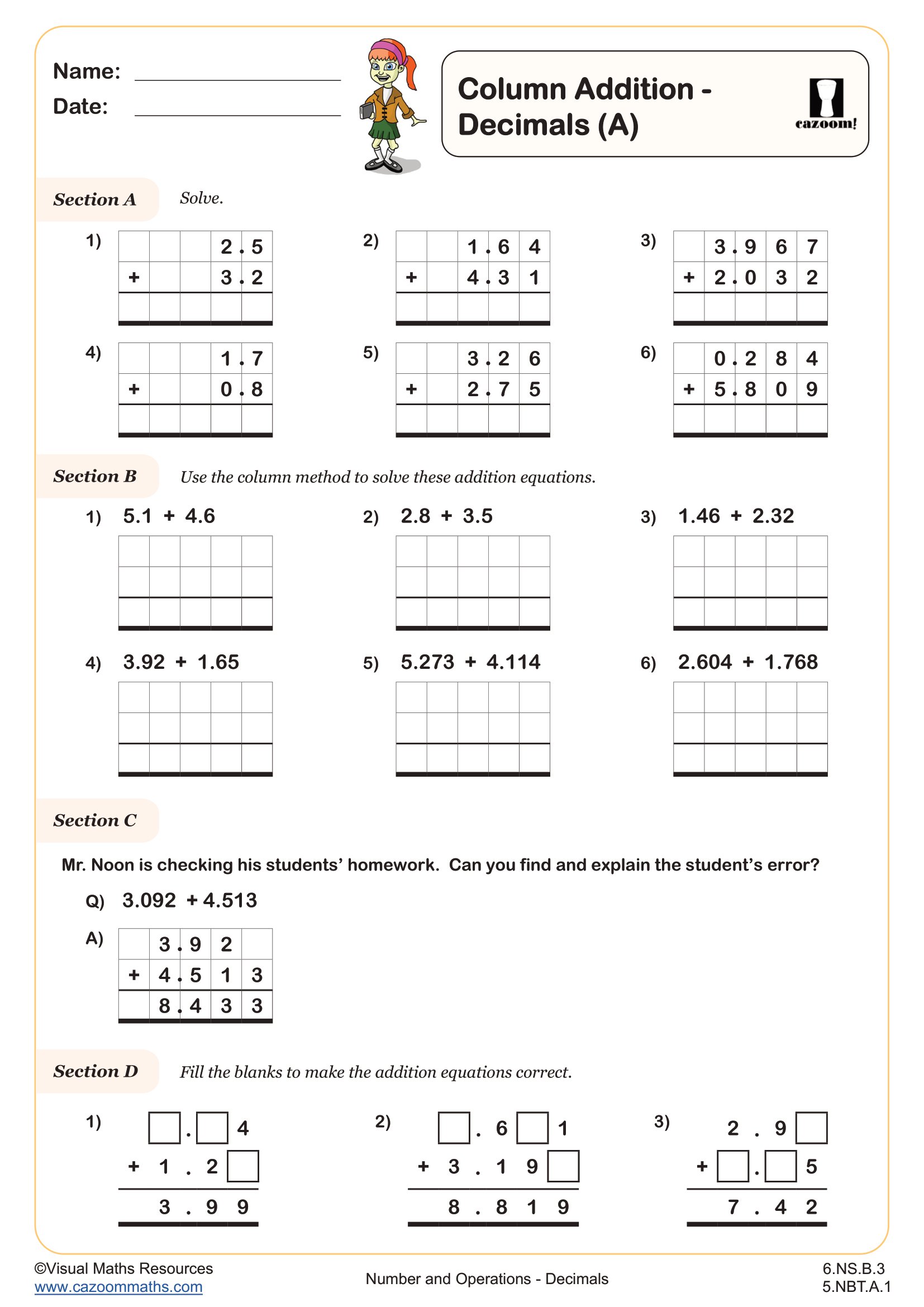
Column Addition - Decimals B
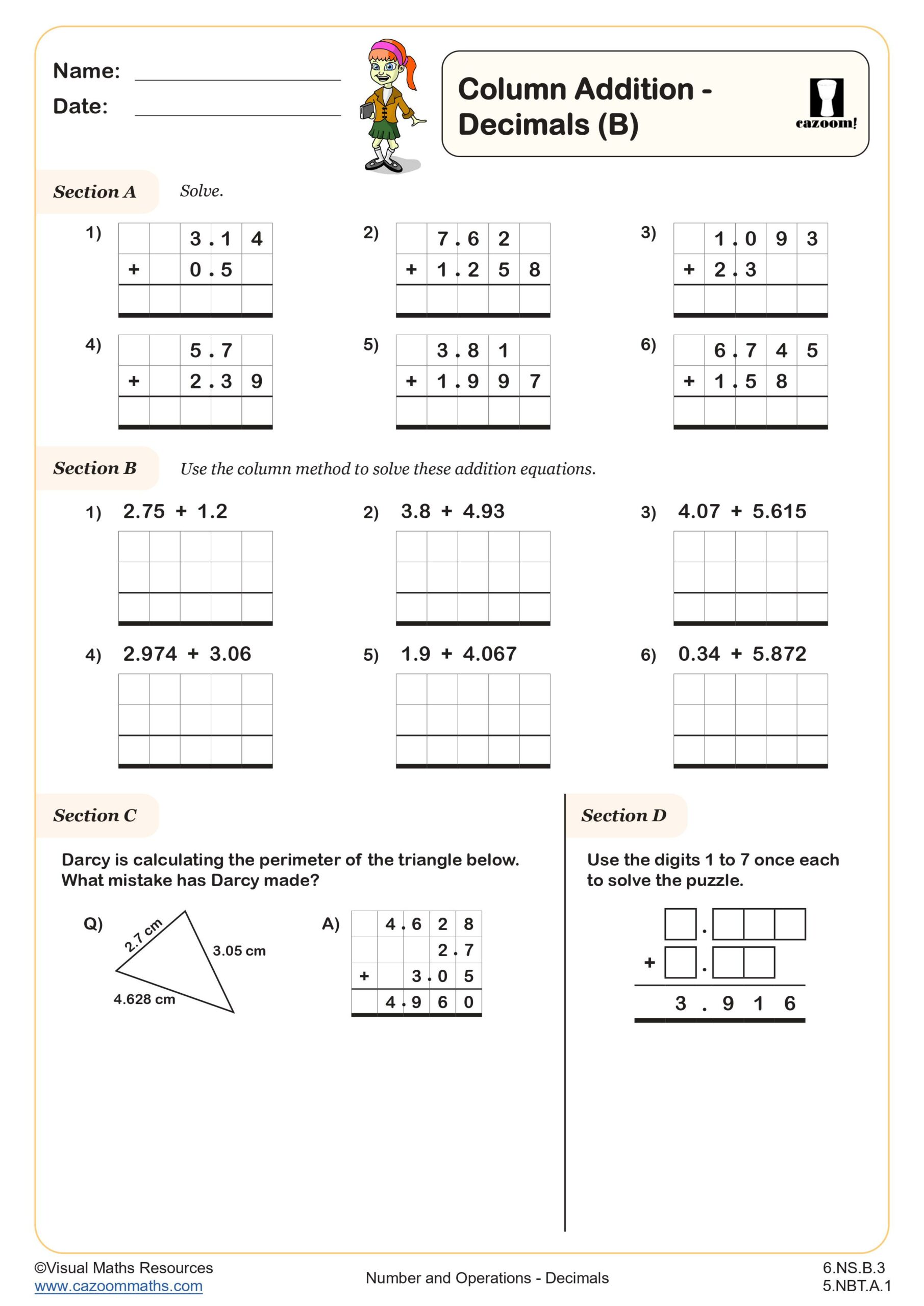
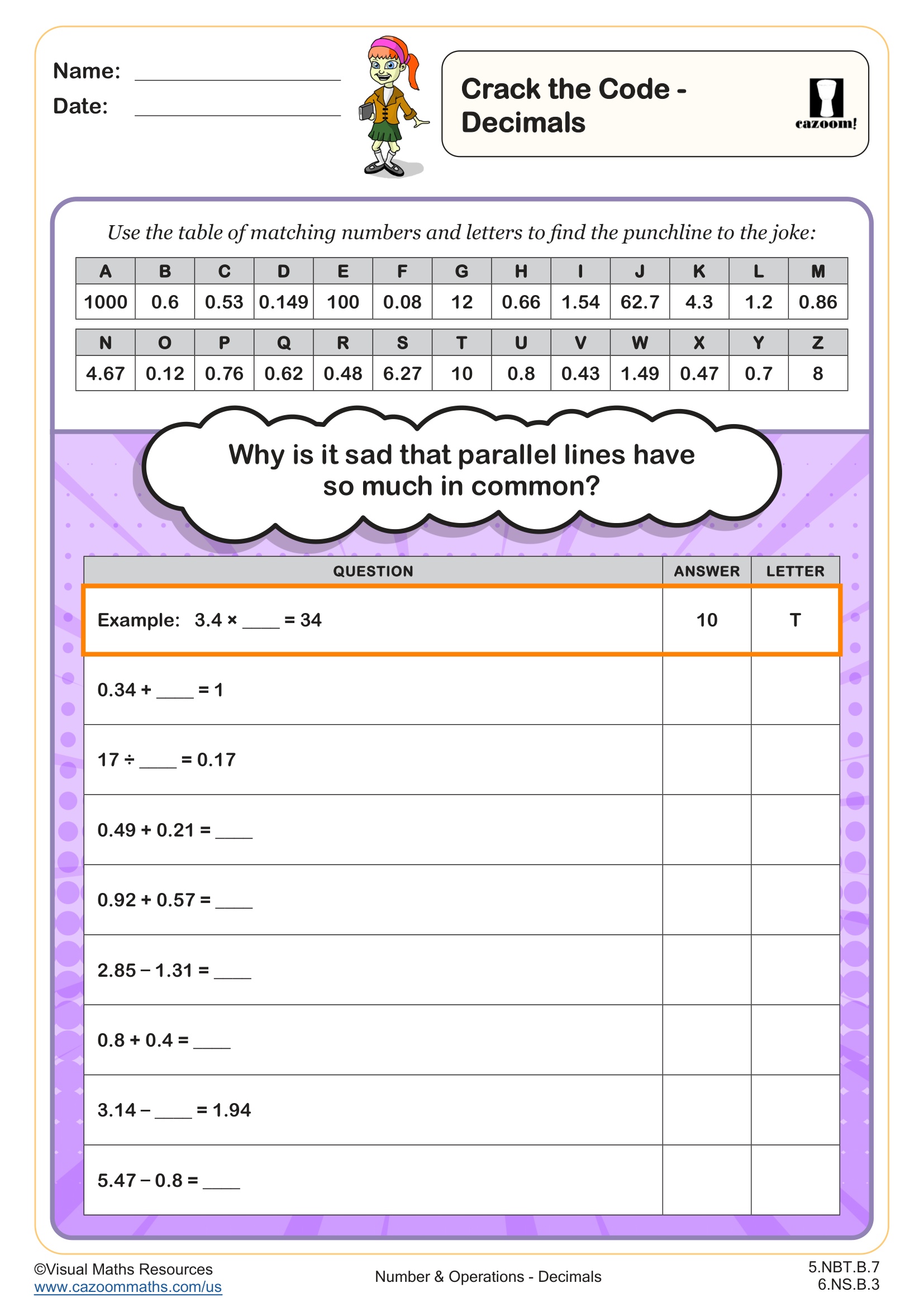
Crack the Code - Decimals
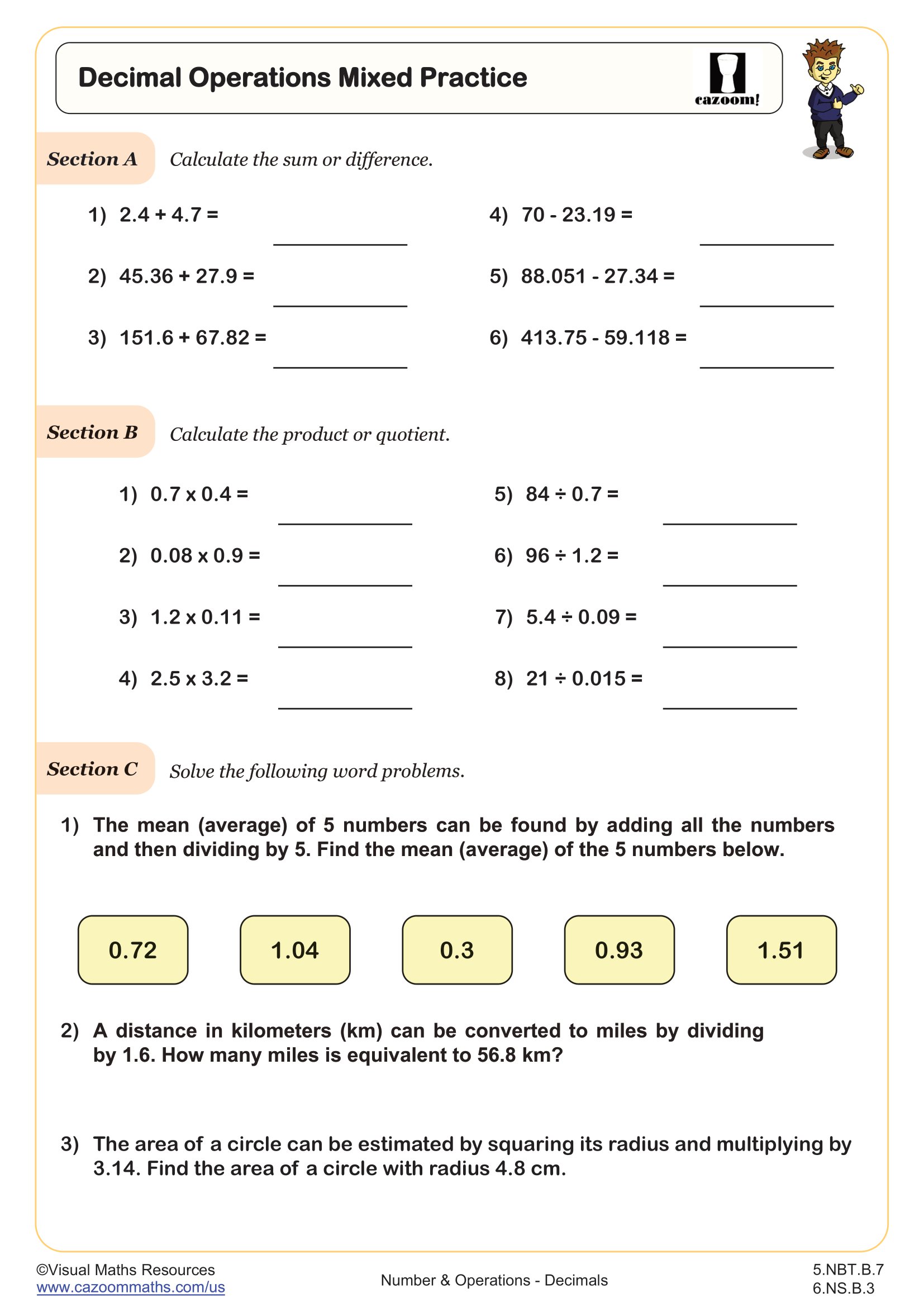
Decimal Operations Mixed Practice
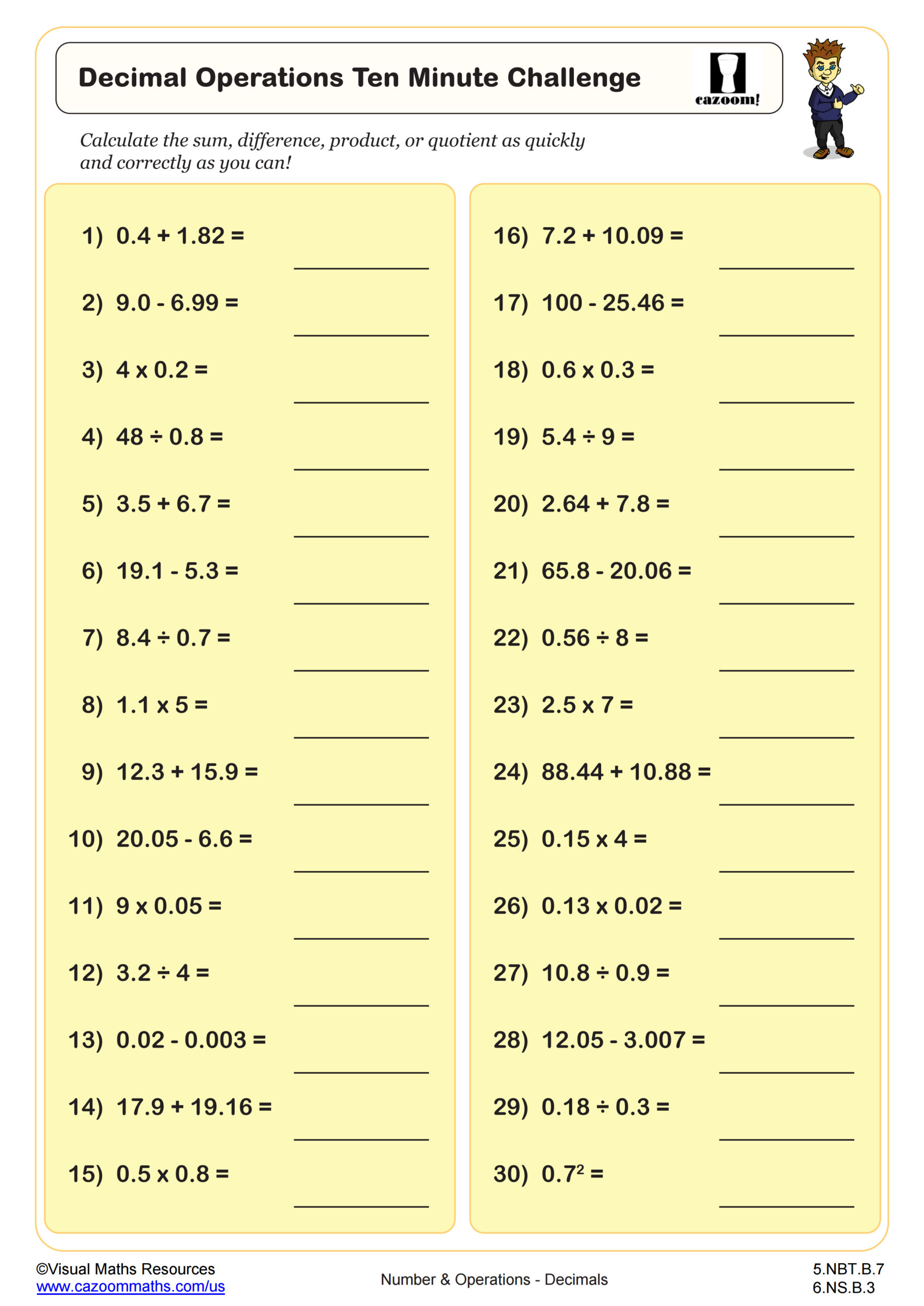
Decimal Operations Ten Minute Challenge
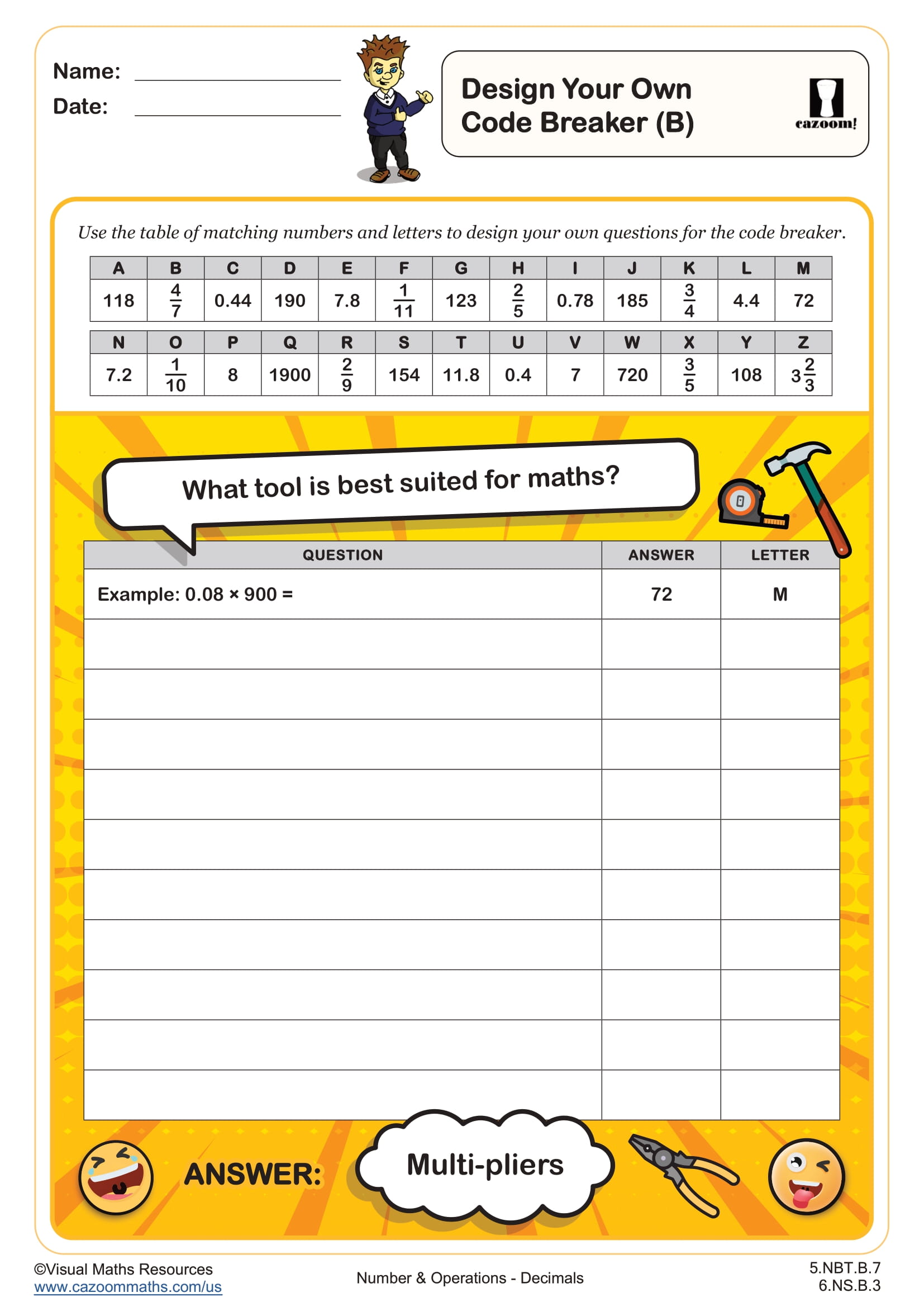
Design Your Own Code Breaker (B)
Divide Decimals by Integers (A)
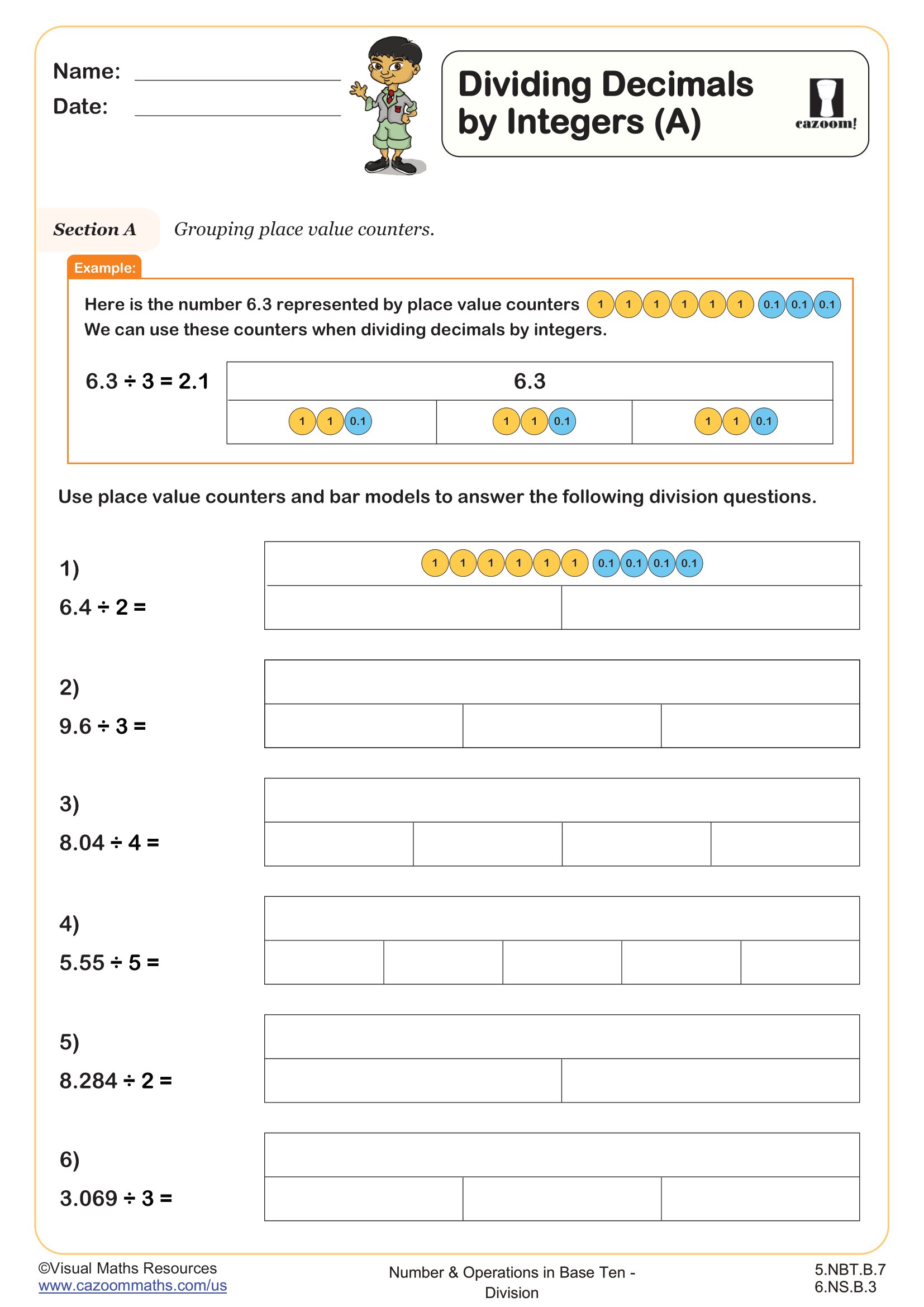
Divide Decimals Using Gattegno Charts by 10, 100, 1000
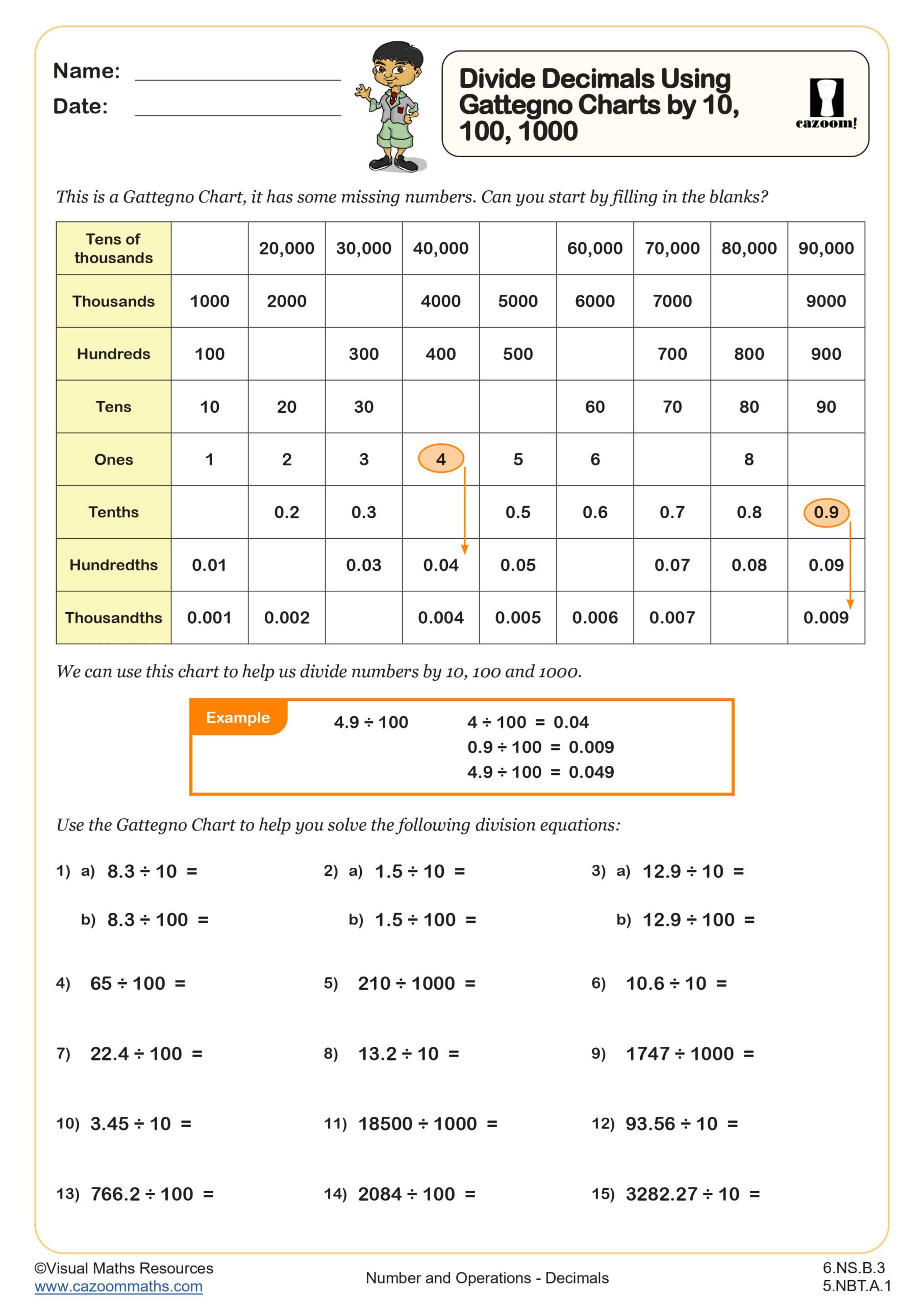
Dividing Decimals (A)
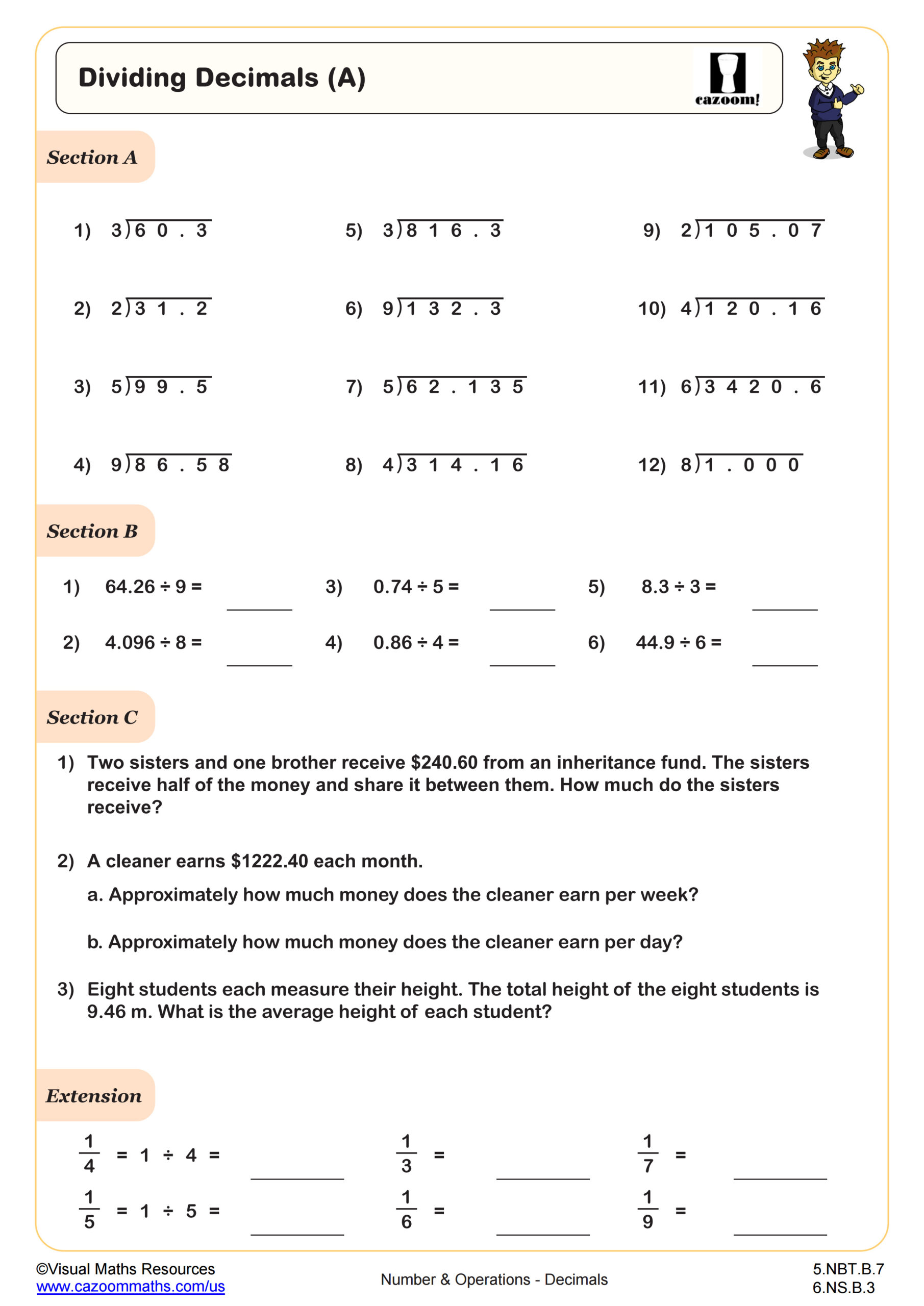
Dividing Decimals (B)
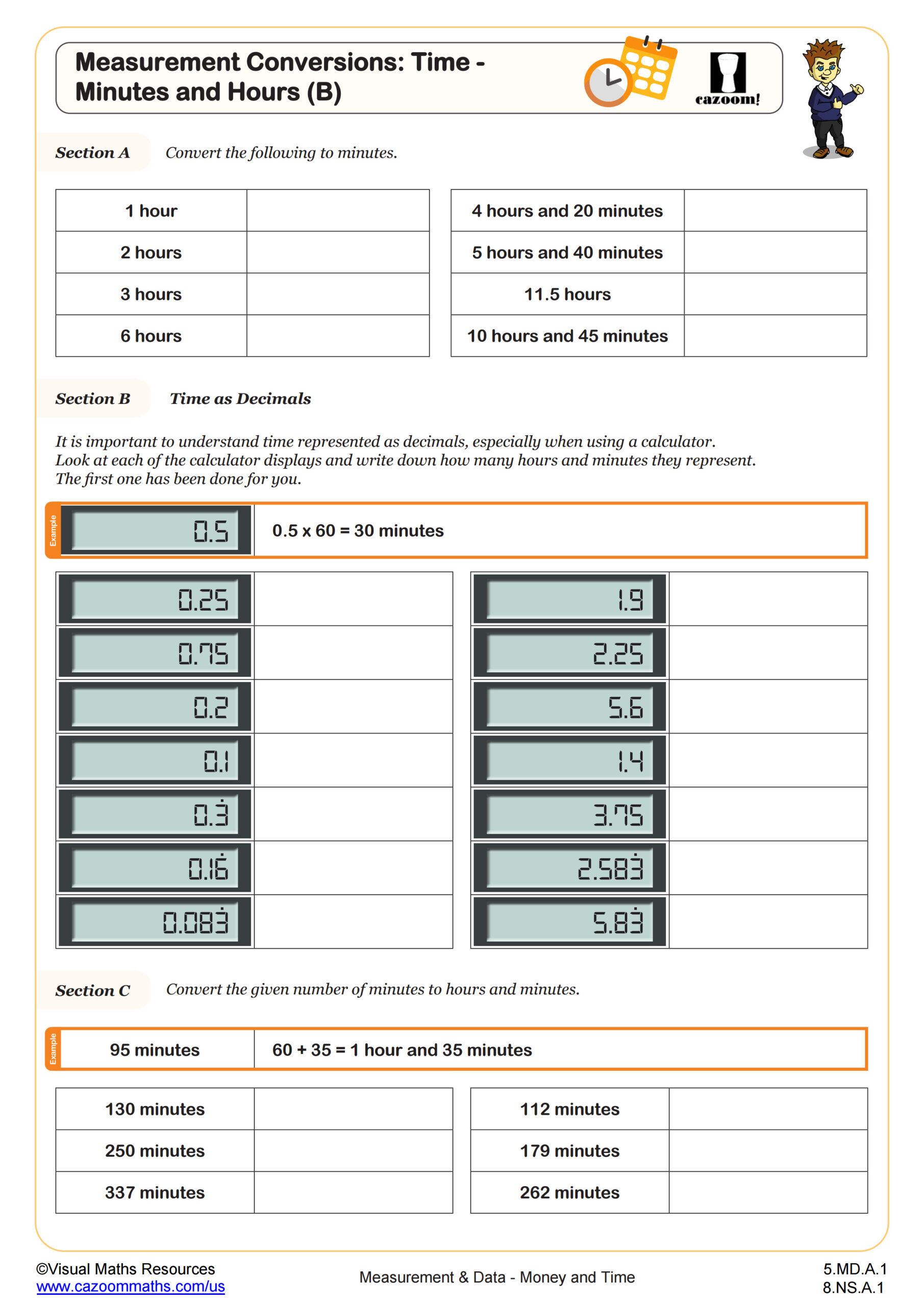
Measurement Conversions: Time - Minutes and Hours (B)
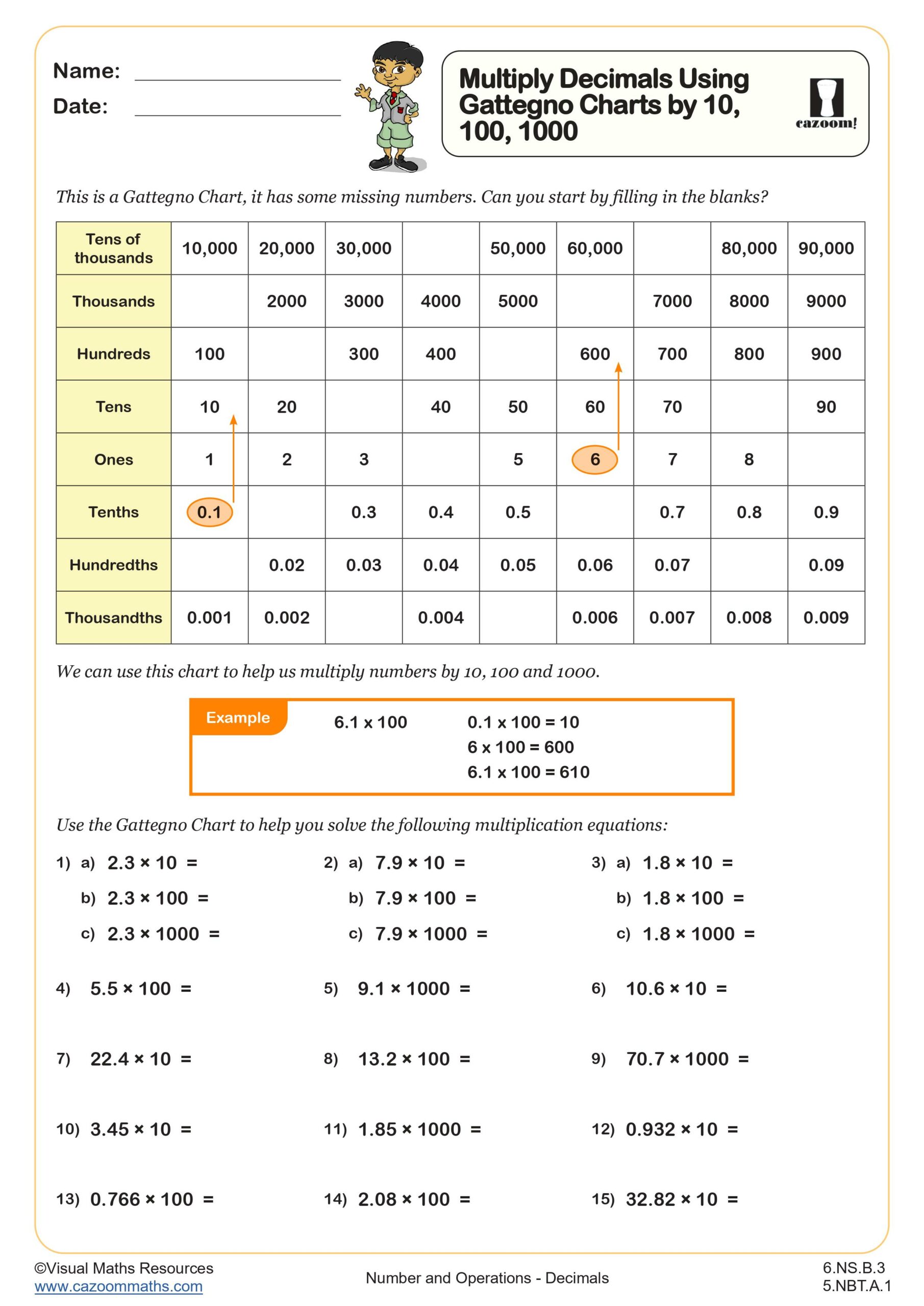
Multiply Decimals Using Gattegno Charts by 10, 100, 1000
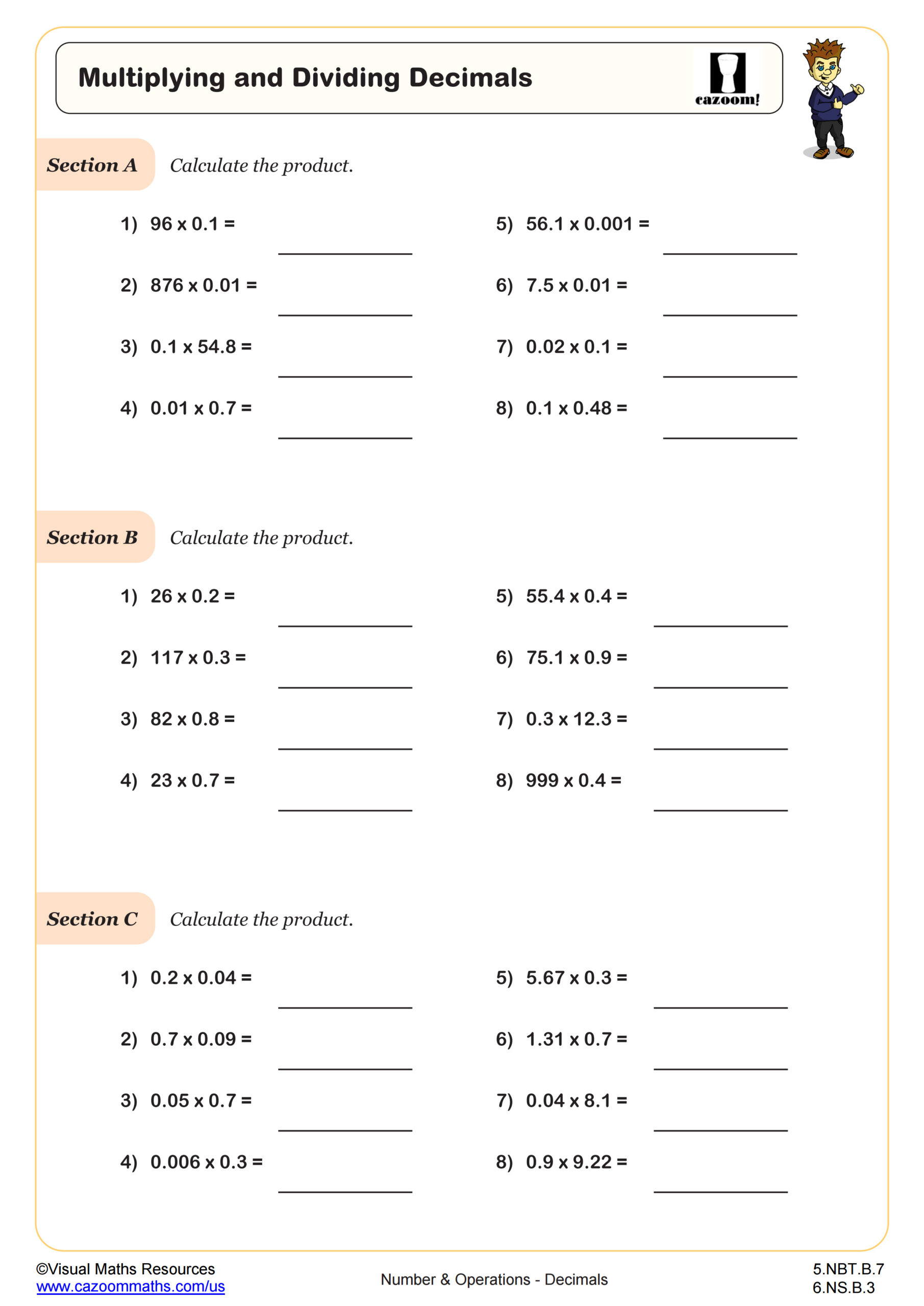
Multiplying and Dividing Decimals
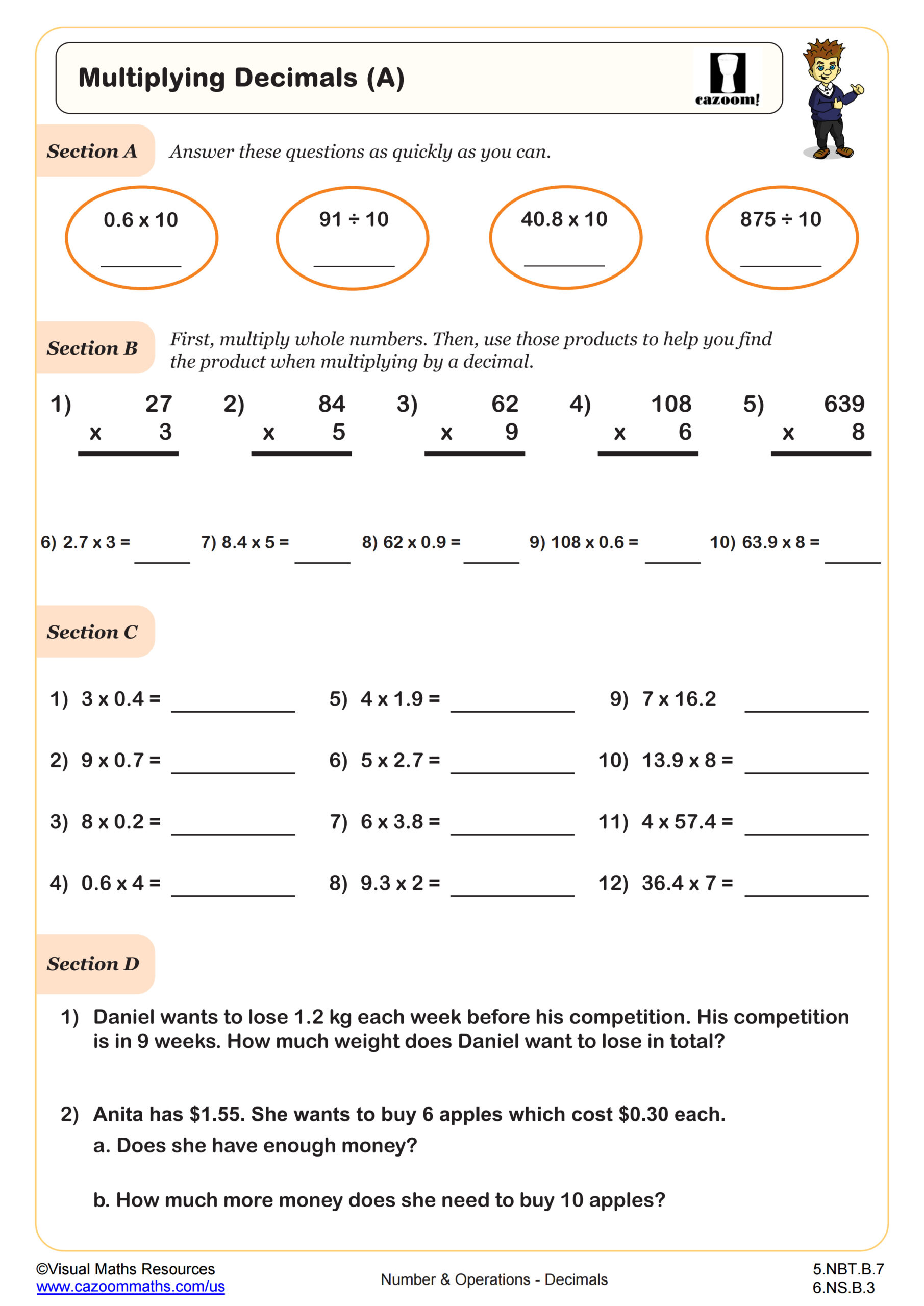
Multiplying Decimals (A)
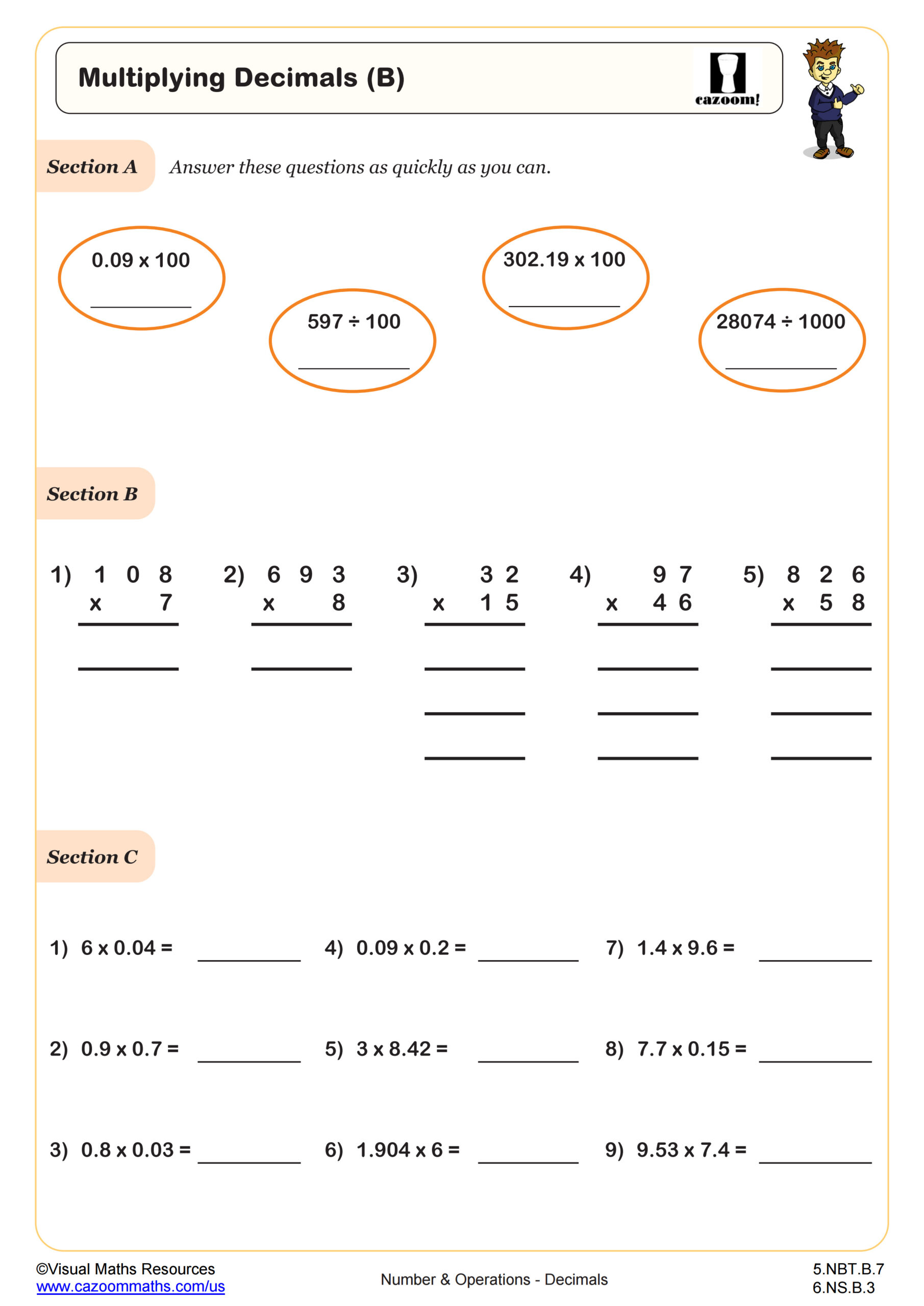
Multiplying Decimals (B)
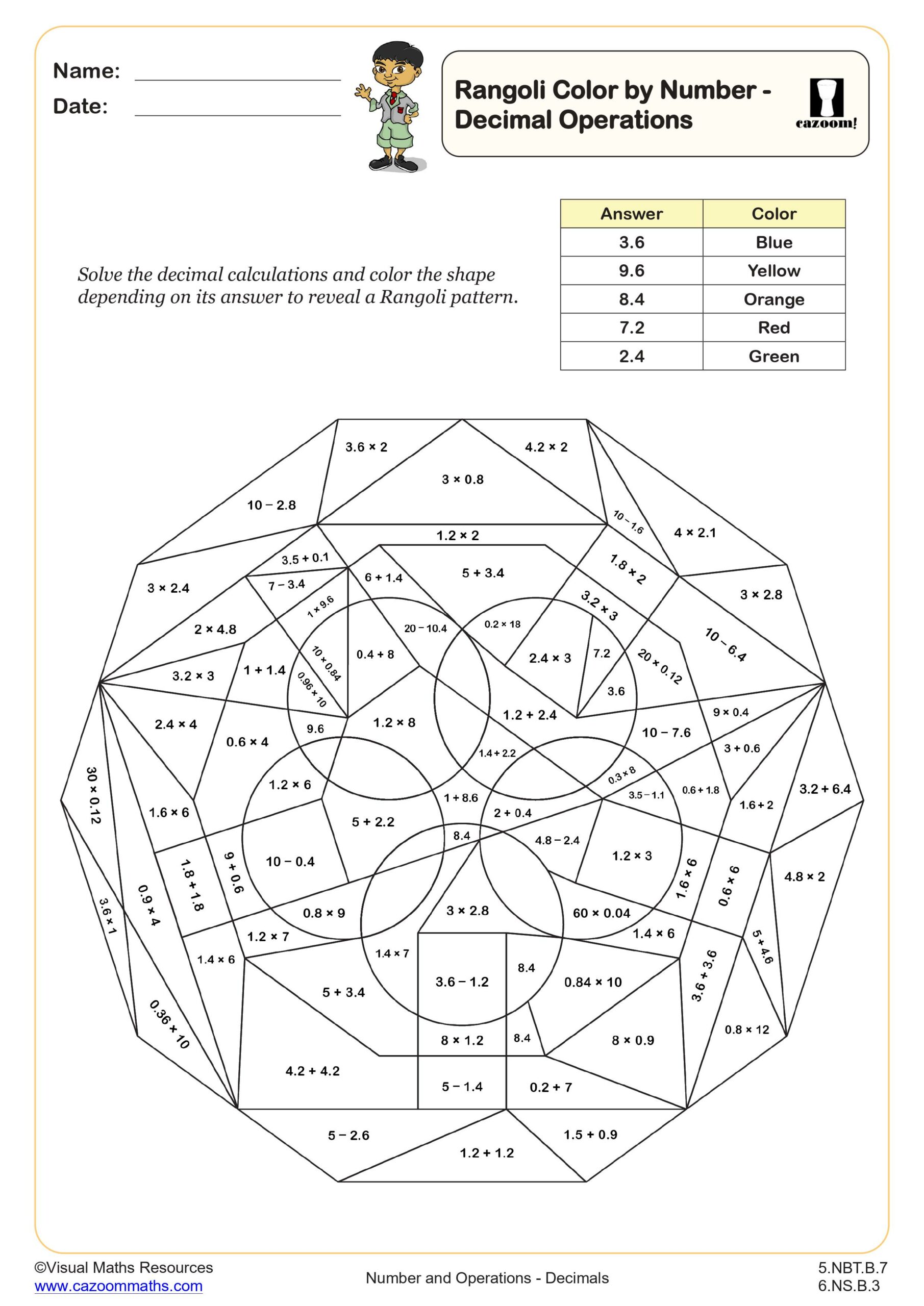
Rangoli Color by Number - Decimal Operations
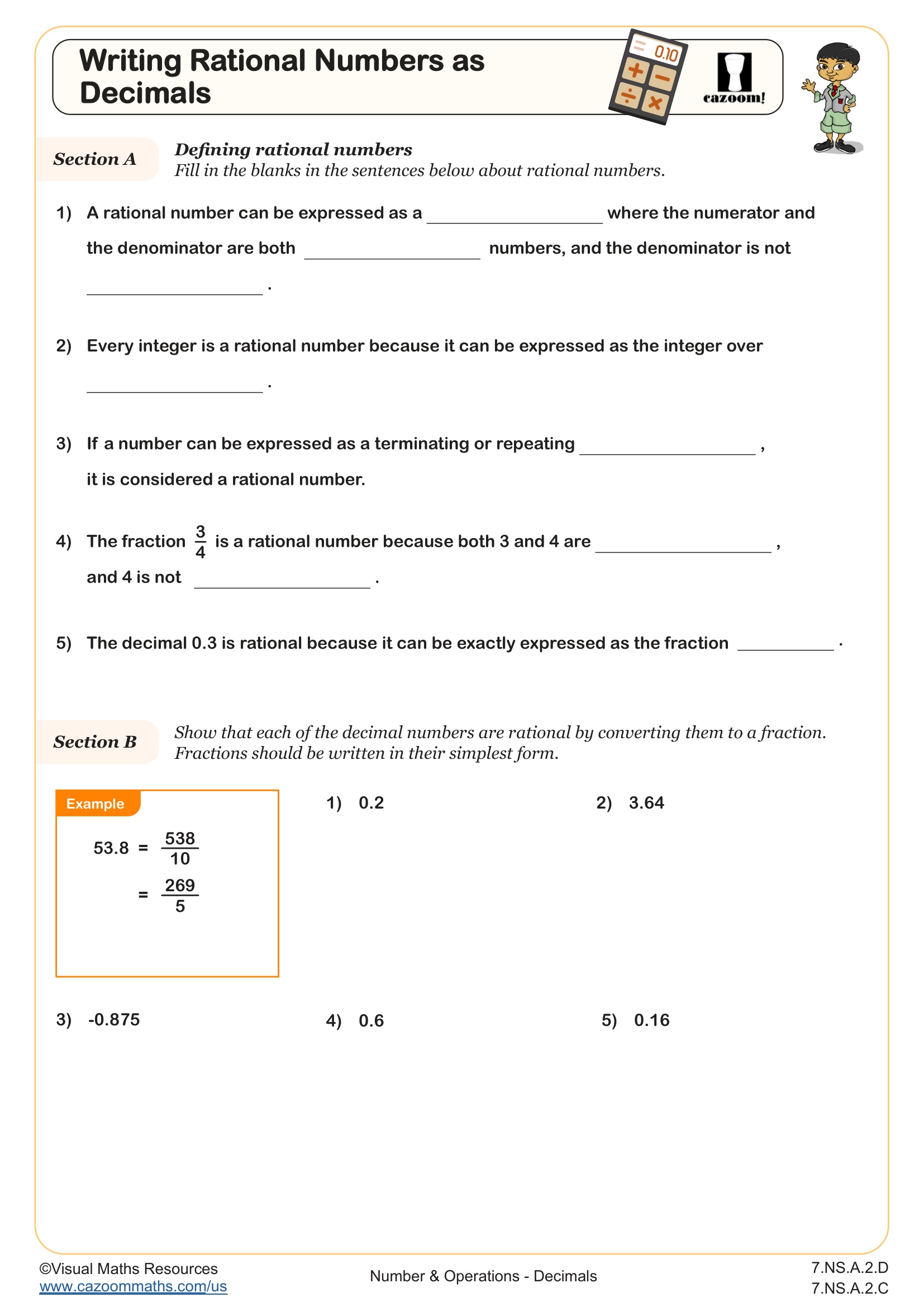
Writing Rational Numbers as Decimals
All worksheets are created by the team of experienced teachers at Cazoom Math.
Accuracy Holding Back Grades? Our Ready-to-Print Middle School Number Resources Will Solve It
Middle school students begin their education with established whole number abilities and fundamental fraction knowledge. The worksheets expand on this foundation by showing how decimals represent fractional parts through their place value system. Students develop their number sense and learn to connect fractions to decimals through the practice of decimal operations, including addition and subtraction, and multiplication and division. The activities in this work help students develop their ability to estimate and perform mental math calculations.
The practice of decimal operations results in efficient calculation skills. The knowledge of decimals enables students to handle percentage calculations, ratio operations, and measurement unit transformations. The skills practiced here form the backbone of quantitative reasoning in science and social studies classes. Students who learn decimal operations will achieve success in high school algebra and geometry because they will be able to focus on new material instead of struggling with basic math operations.
From Basic Operations to Ordering Decimals: What Decimal Skills are Covered in This Collection
The worksheets move from concrete models to abstract calculations. Students begin with visual representations like Gattegno charts that show how decimals shift when multiplied or divided by 10, 100, and 1000. They then practice column methods for addition and subtraction, building toward fluent mental strategies. Solutions are provided with complete working for every problem.
This collection groups worksheets into four main categories. Addition and subtraction sheets guide students through column methods and mixed operations with decimals of varying place values. Multiplication worksheets develop skills in placing the decimal point correctly and estimating products. Division sheets cover partitioning decimals by whole numbers and by other decimals using standard algorithms. practice and application activities include code breakers, timed challenges, and color-by-number tasks that reinforce all four operations in engaging formats.
Why teachers choose our Middle School Decimals Worksheets
These sheets save planning time because each one targets a specific skill or method. Teachers can assign different worksheets to different groups, making it simple to differentiate instruction. Students who require additional support can begin with visual models, while those ready for a challenge can tackle multi-step problems or timed tasks. The answer keys display step-by-step working, enabling students to pinpoint precisely where their thinking diverged from the correct method. This transparency allows learners to self-correct without requiring teacher intervention. The variety of formats—from structured column work to puzzle-based challenges—maintains student engagement across multiple practice sessions. Teachers use these worksheets for lesson starters, targeted intervention, homework assignments, or assessment preparation.
Beyond Classrooms: Where these skills show up in real life
Operations with decimals occur in various real-life situations that require exact measurements. Students apply these skills when managing their finances and performing tasks such as measuring ingredients, comparing prices, and calculating distances. Understanding decimals enables them to read news data, sports statistics, and scientific measurement information. Students understand the real-world application of their math education when they observe how decimals appear in their everyday experiences.
• Comparing unit prices for the best deals
• Measuring partial recipe ingredients
• Converting metric units in experiments
• Calculating fuel efficiency for trips