Middle School Decimals Worksheets
Add and Subtract Fractions and Decimals
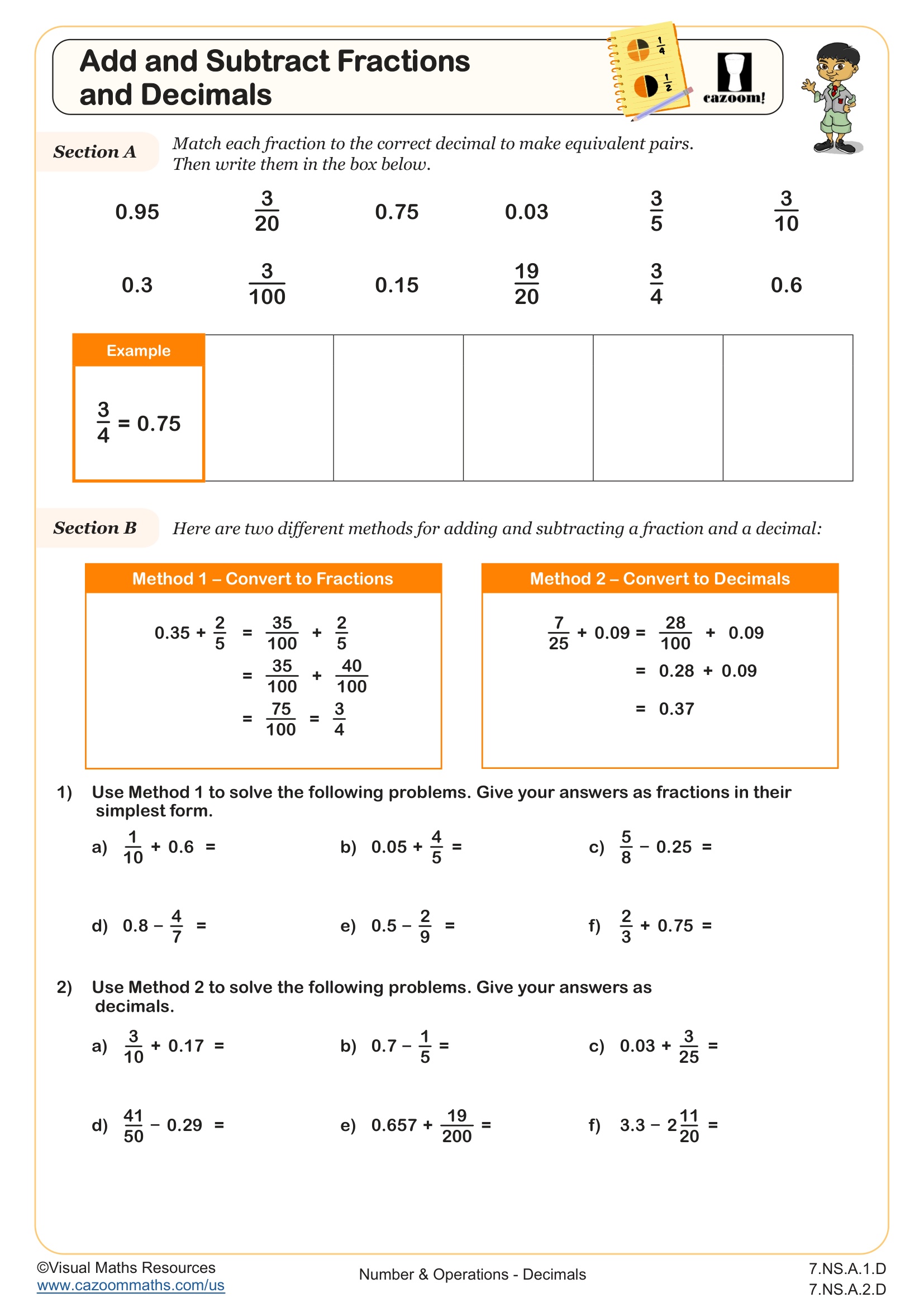
Adding and Subtracting Decimals
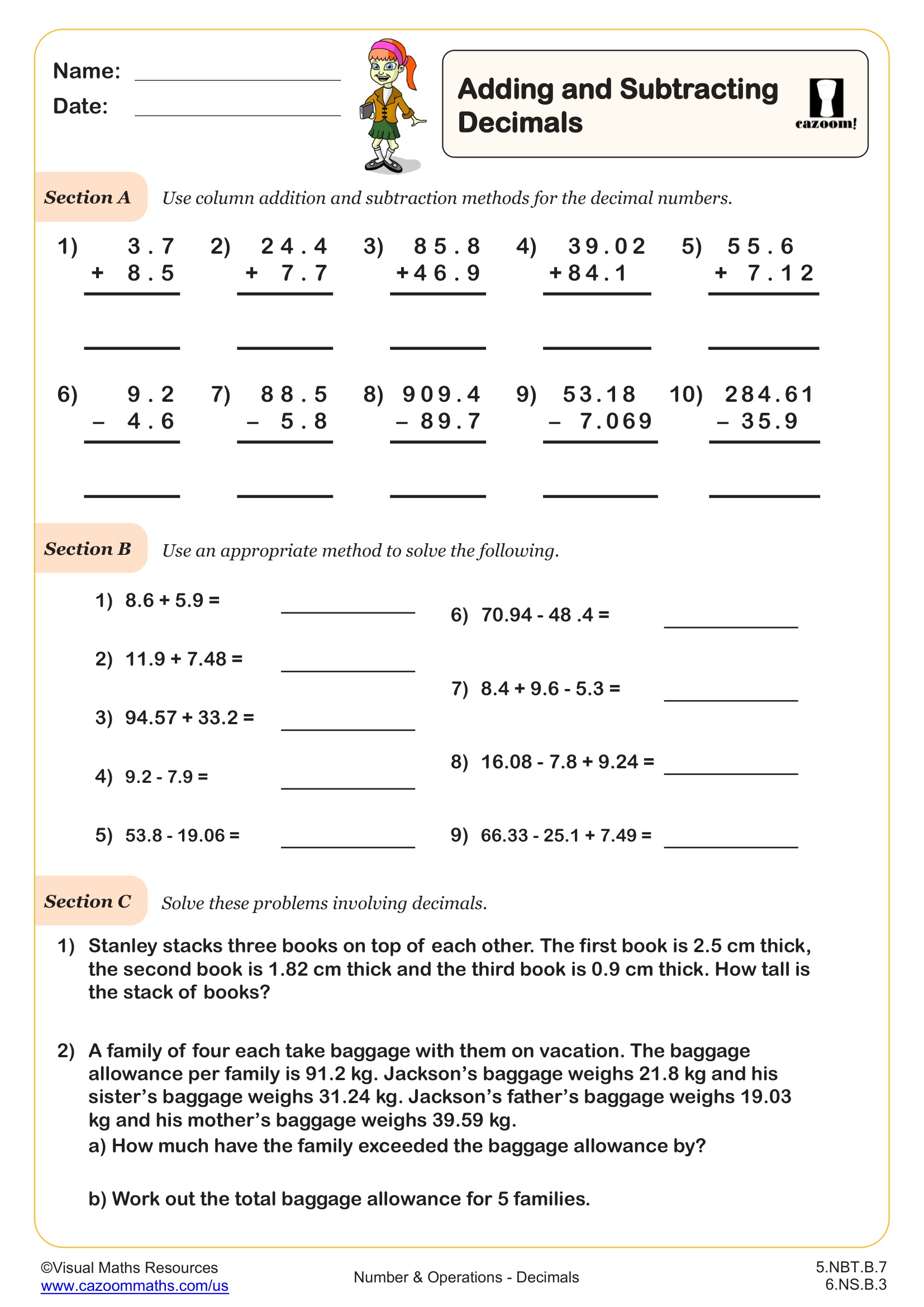
Column Addition - Decimals A
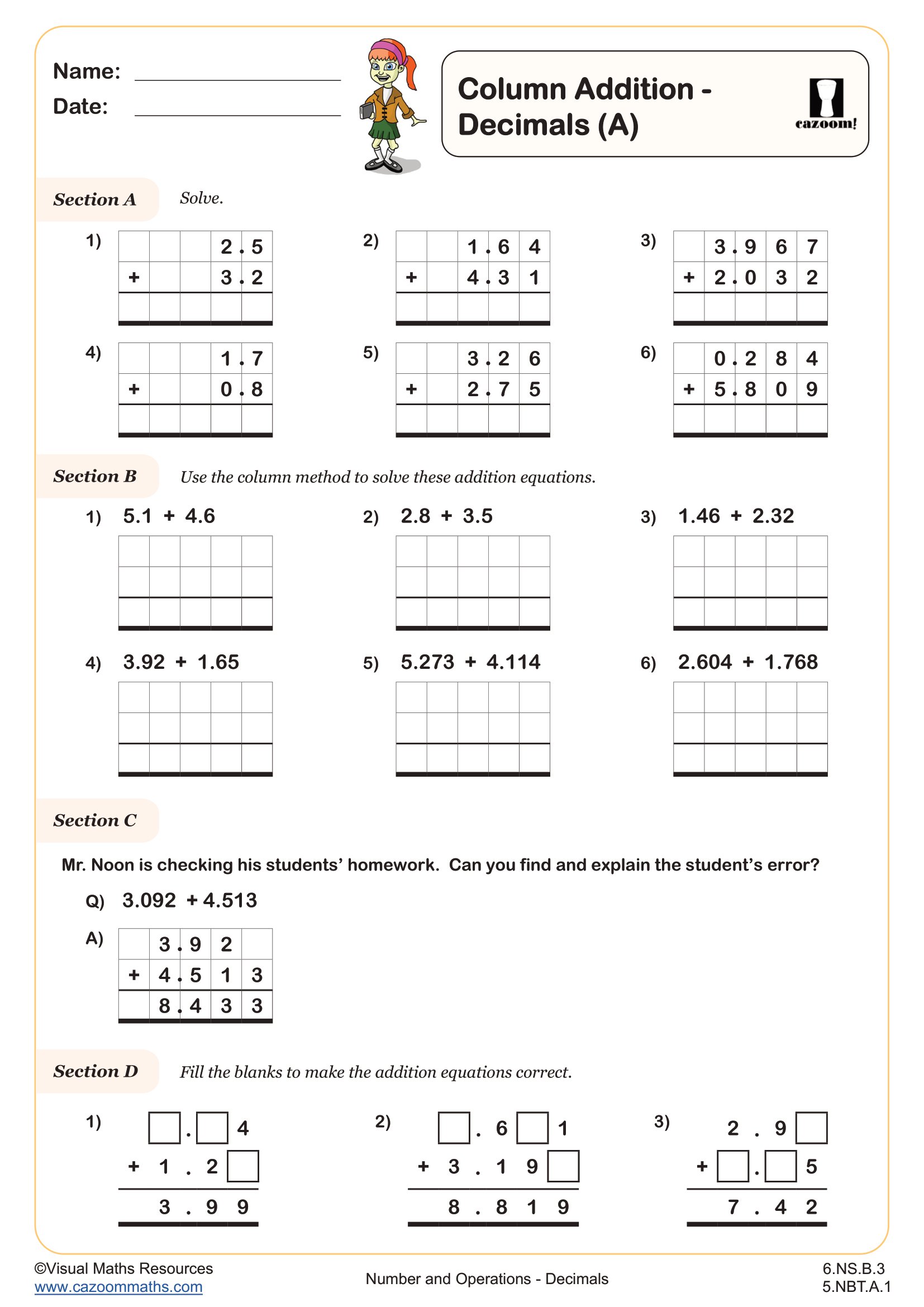
Column Addition - Decimals B
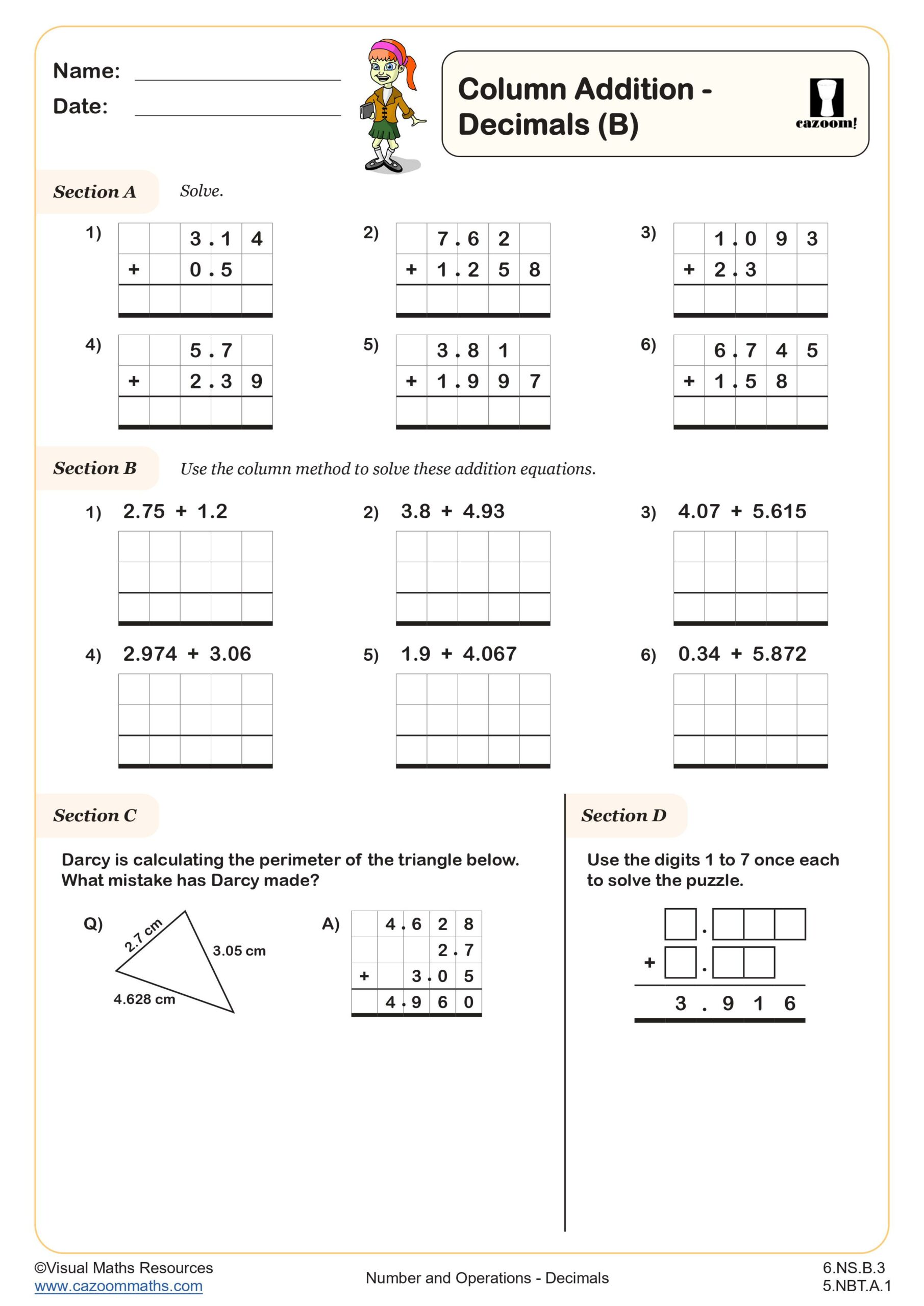
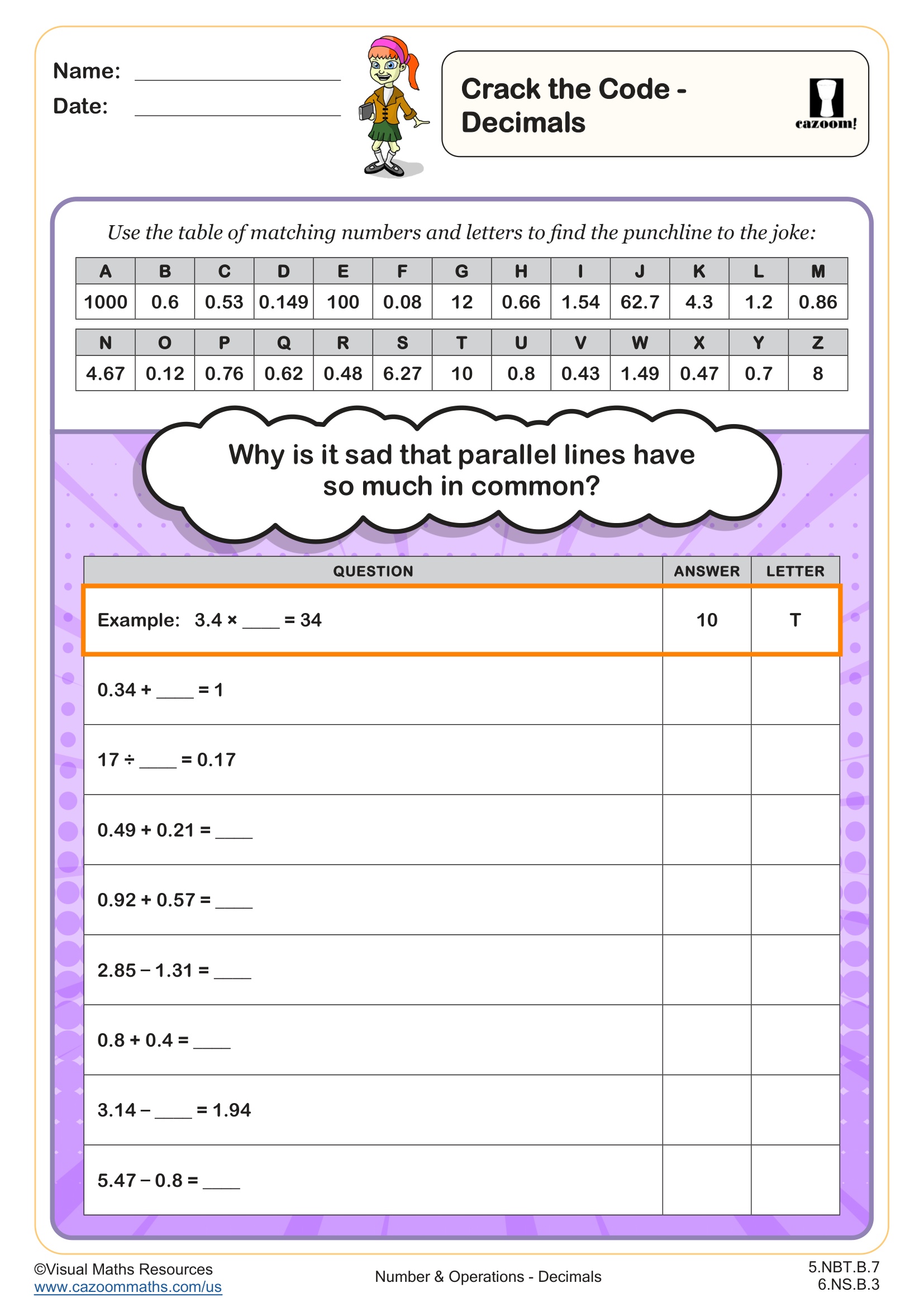
Crack the Code - Decimals
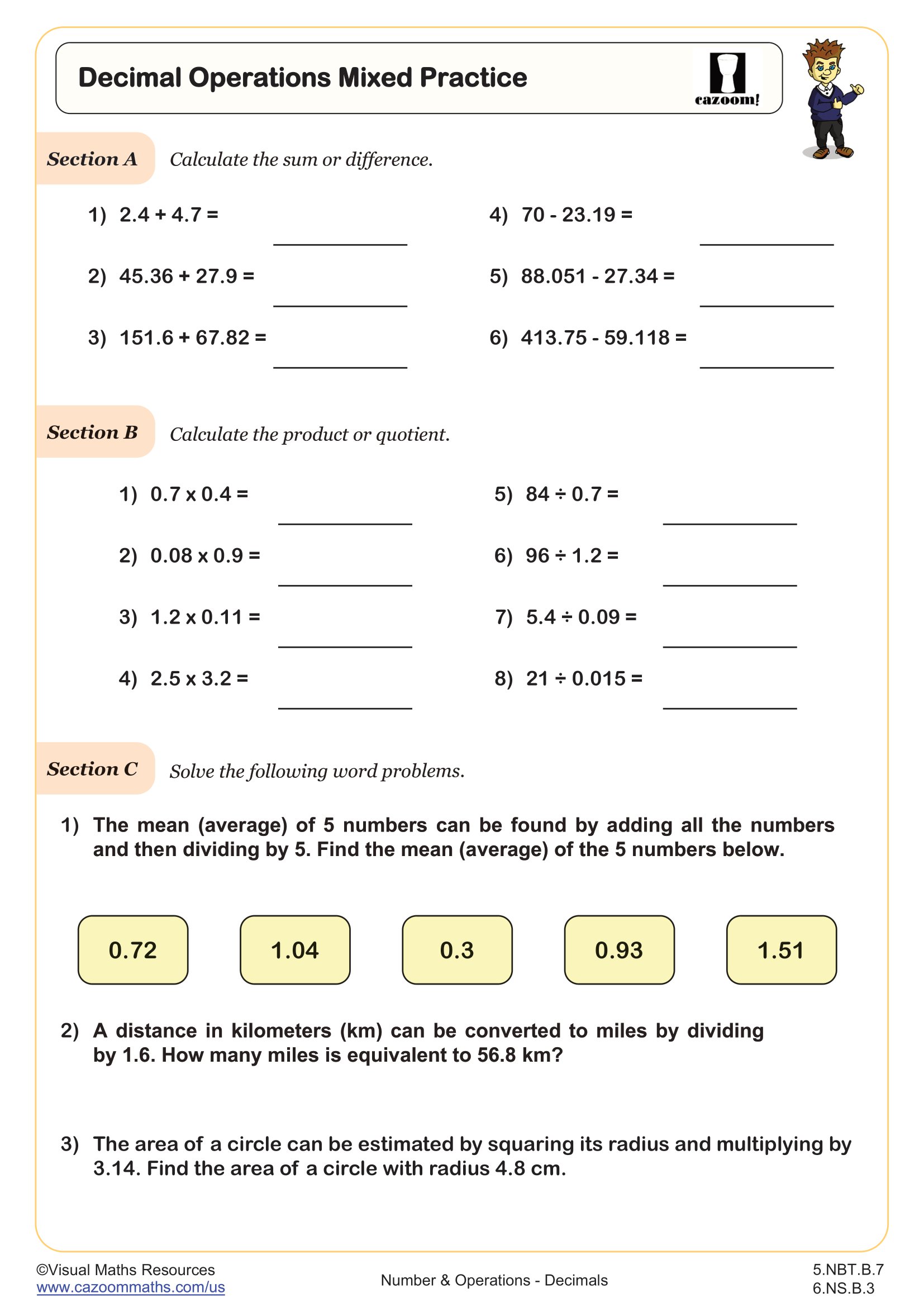
Decimal Operations Mixed Practice
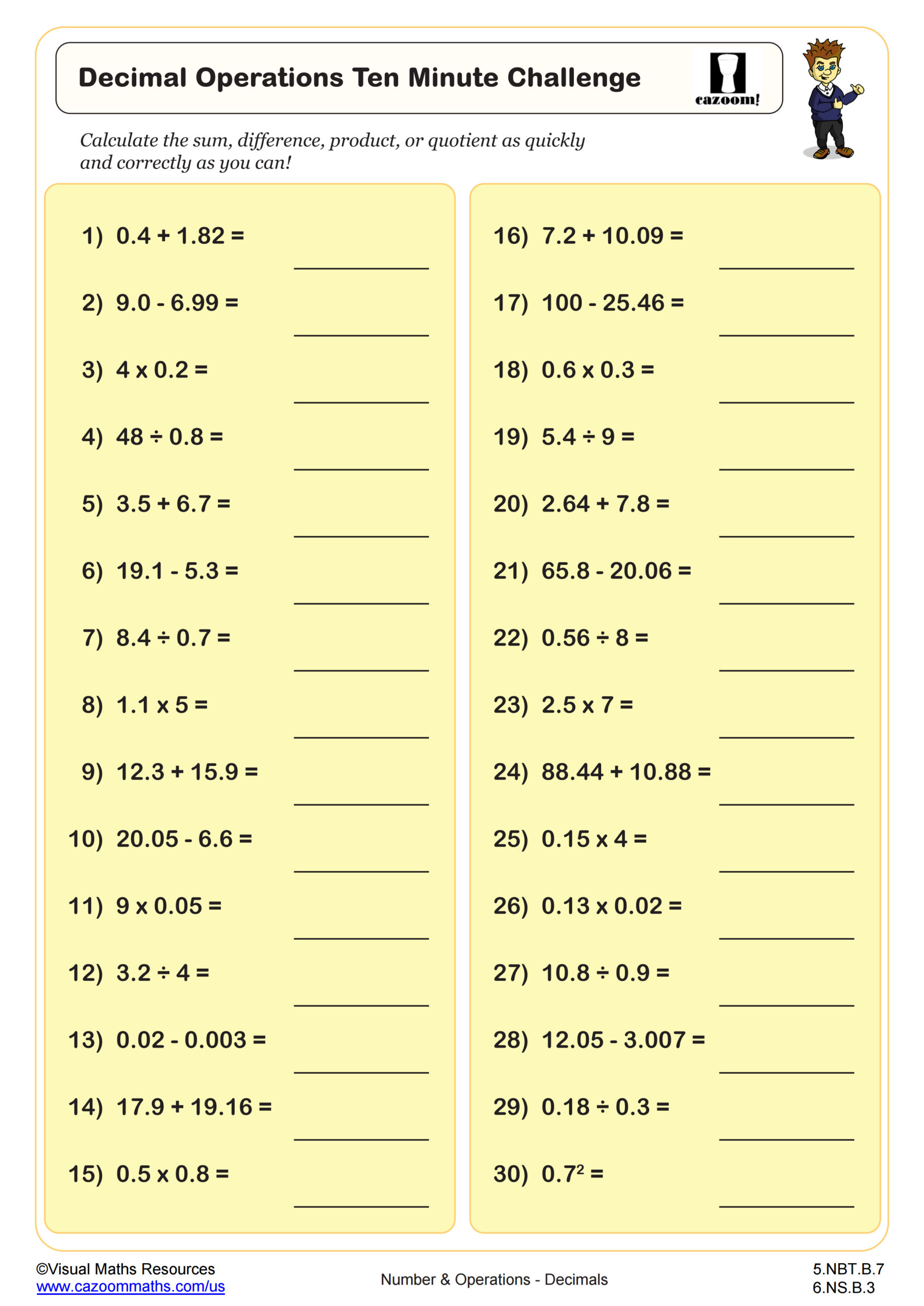
Decimal Operations Ten Minute Challenge
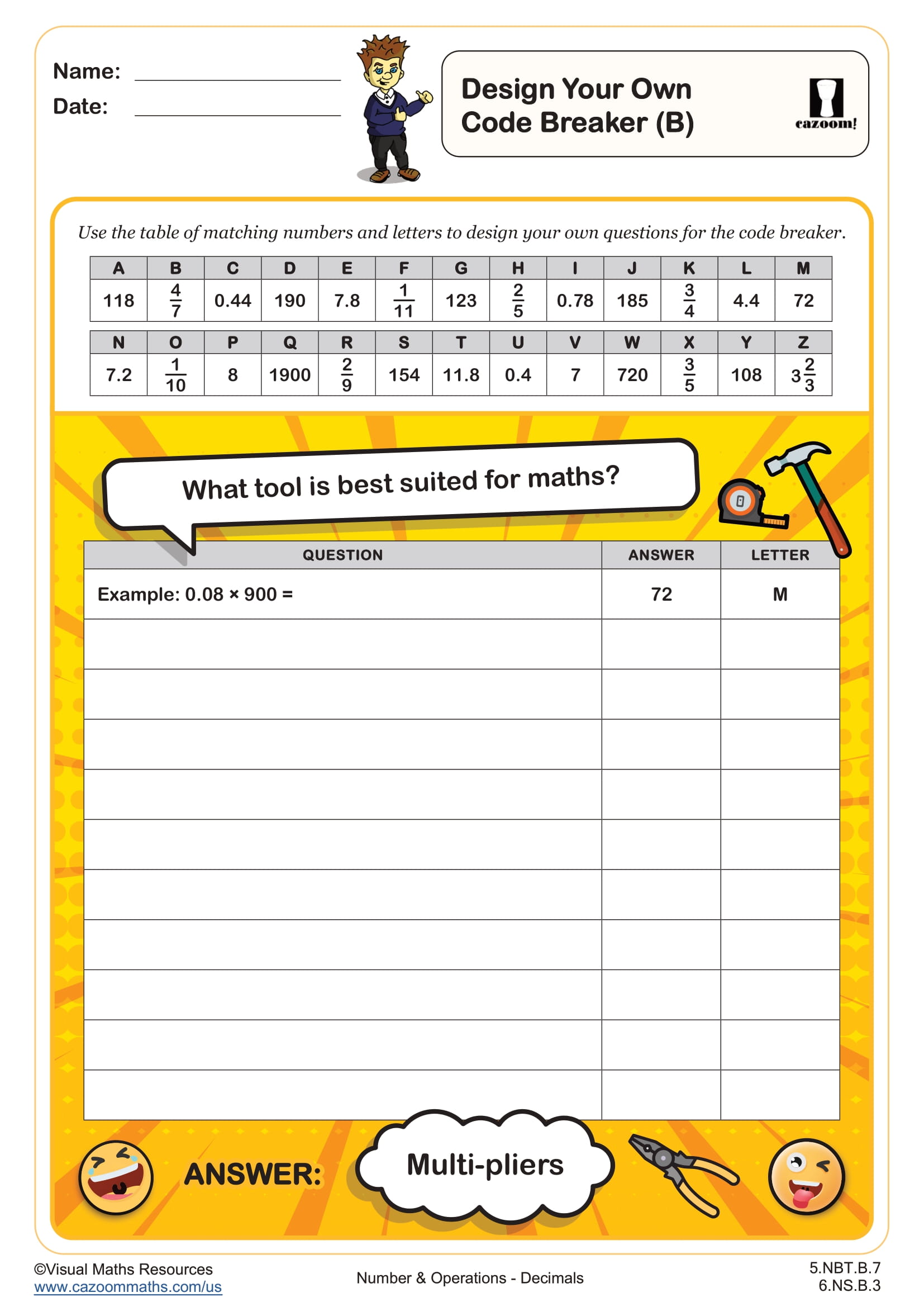
Design Your Own Code Breaker (B)
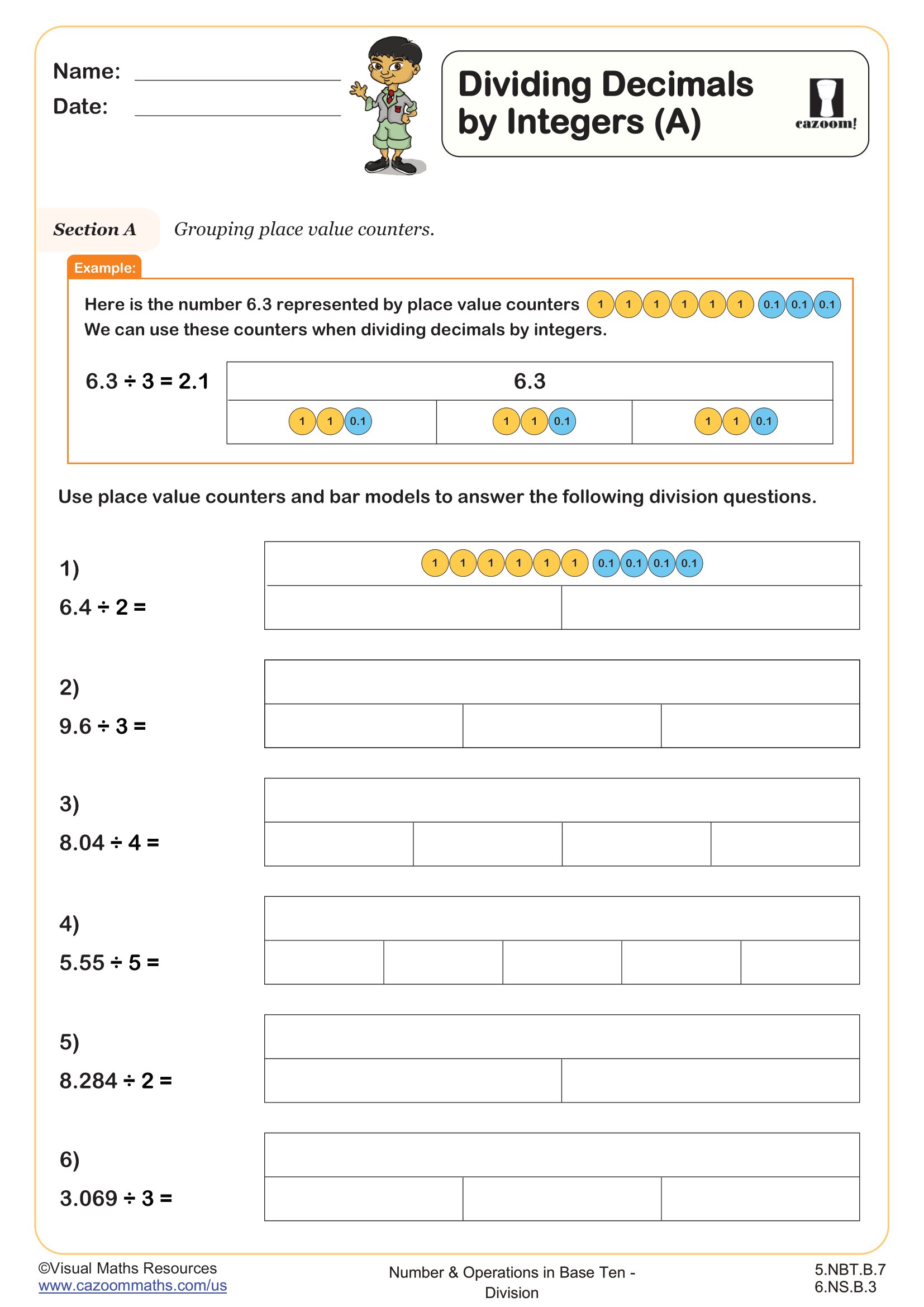
Divide Decimals by Integers (A)
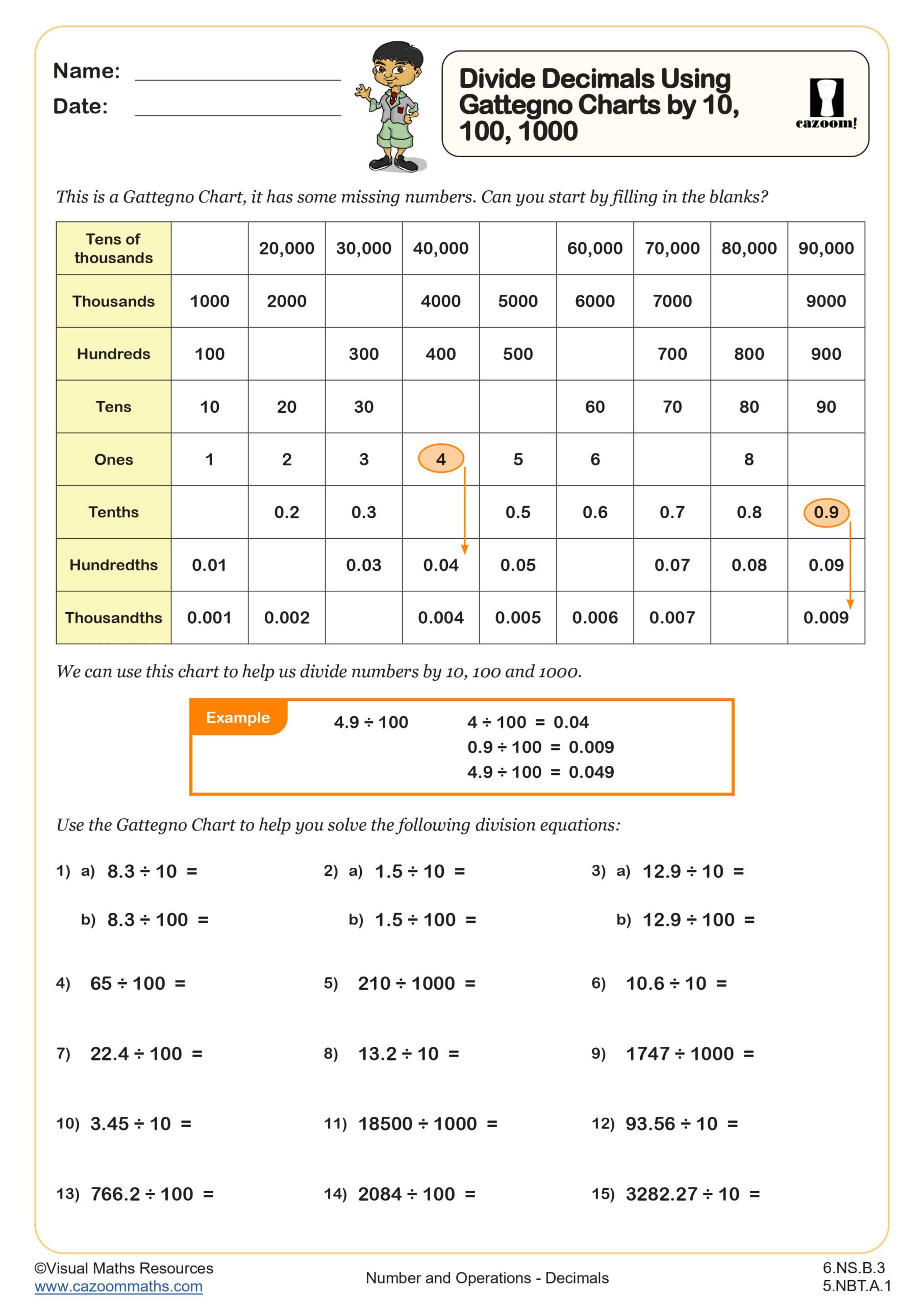
Divide Decimals Using Gattegno Charts by 10, 100, 1000
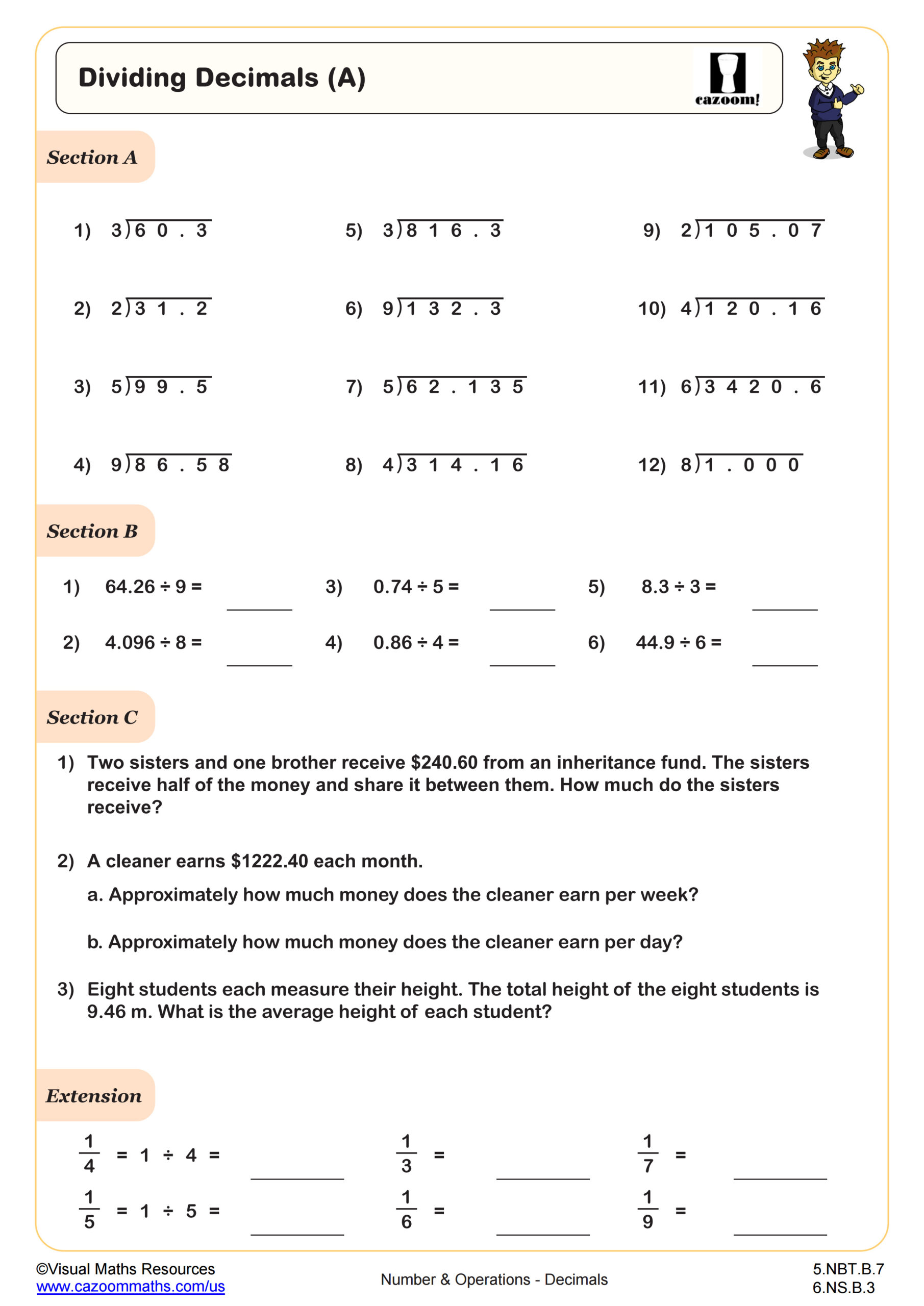
Dividing Decimals (A)
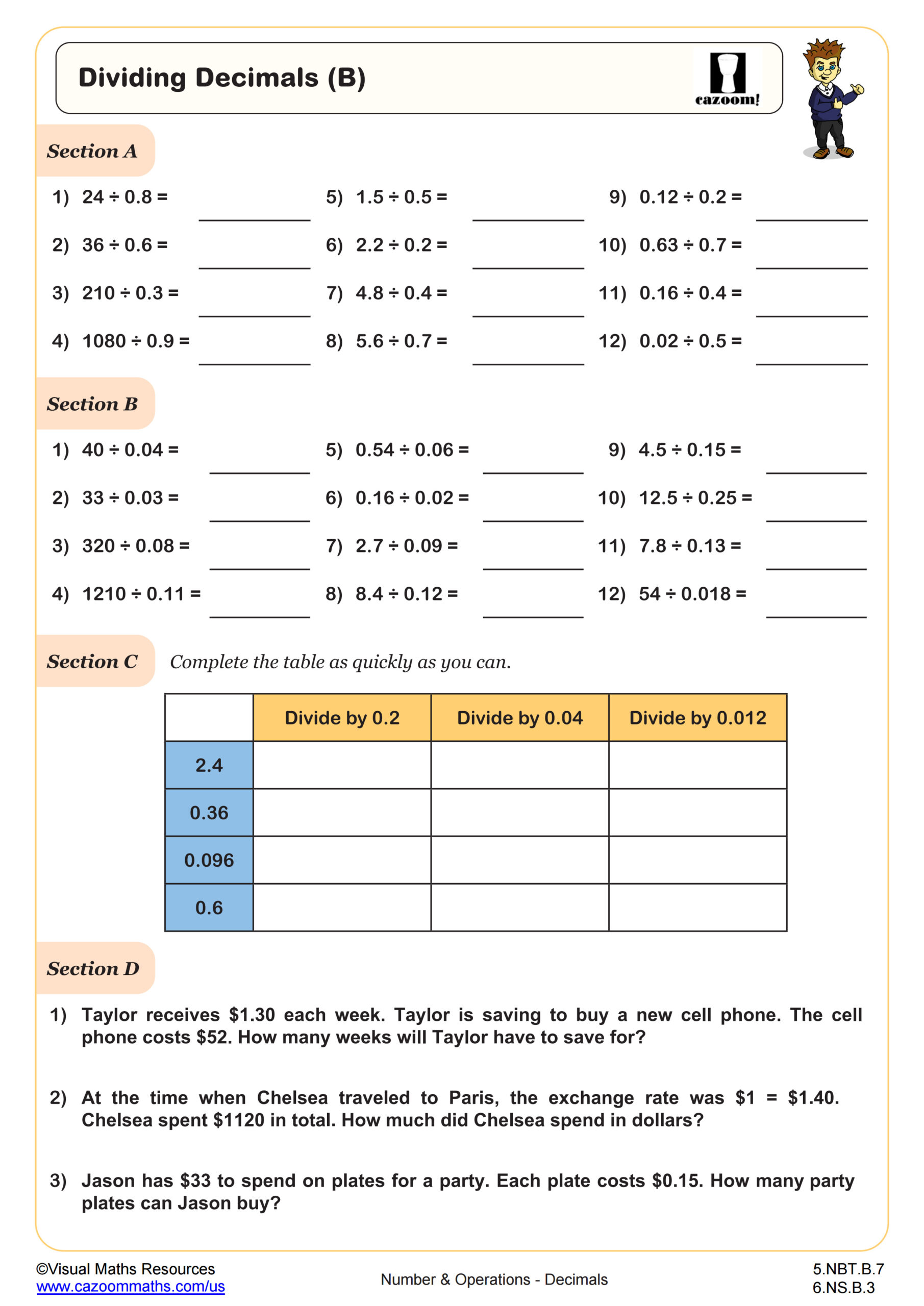
Dividing Decimals (B)
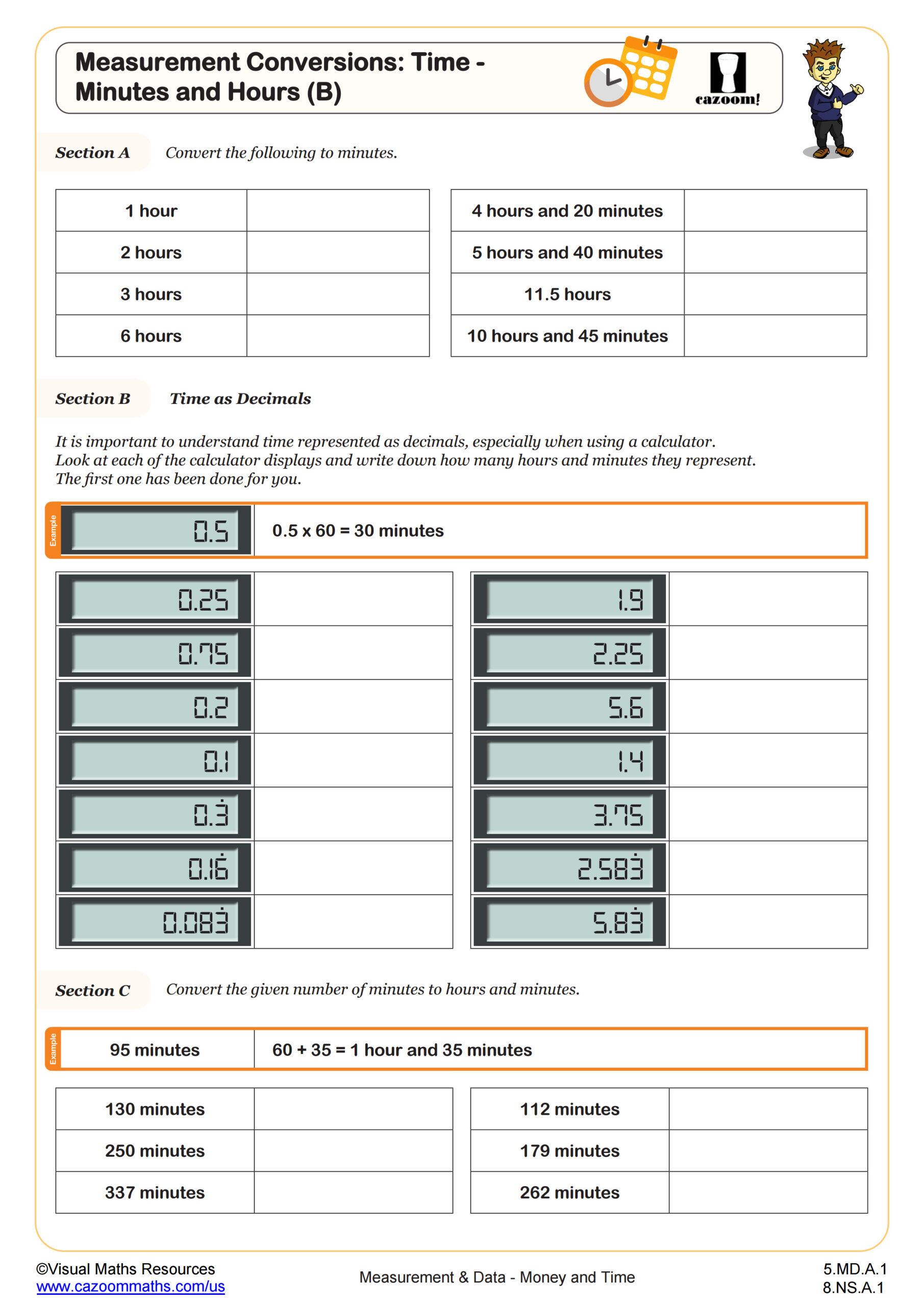
Measurement Conversions: Time - Minutes and Hours (B)
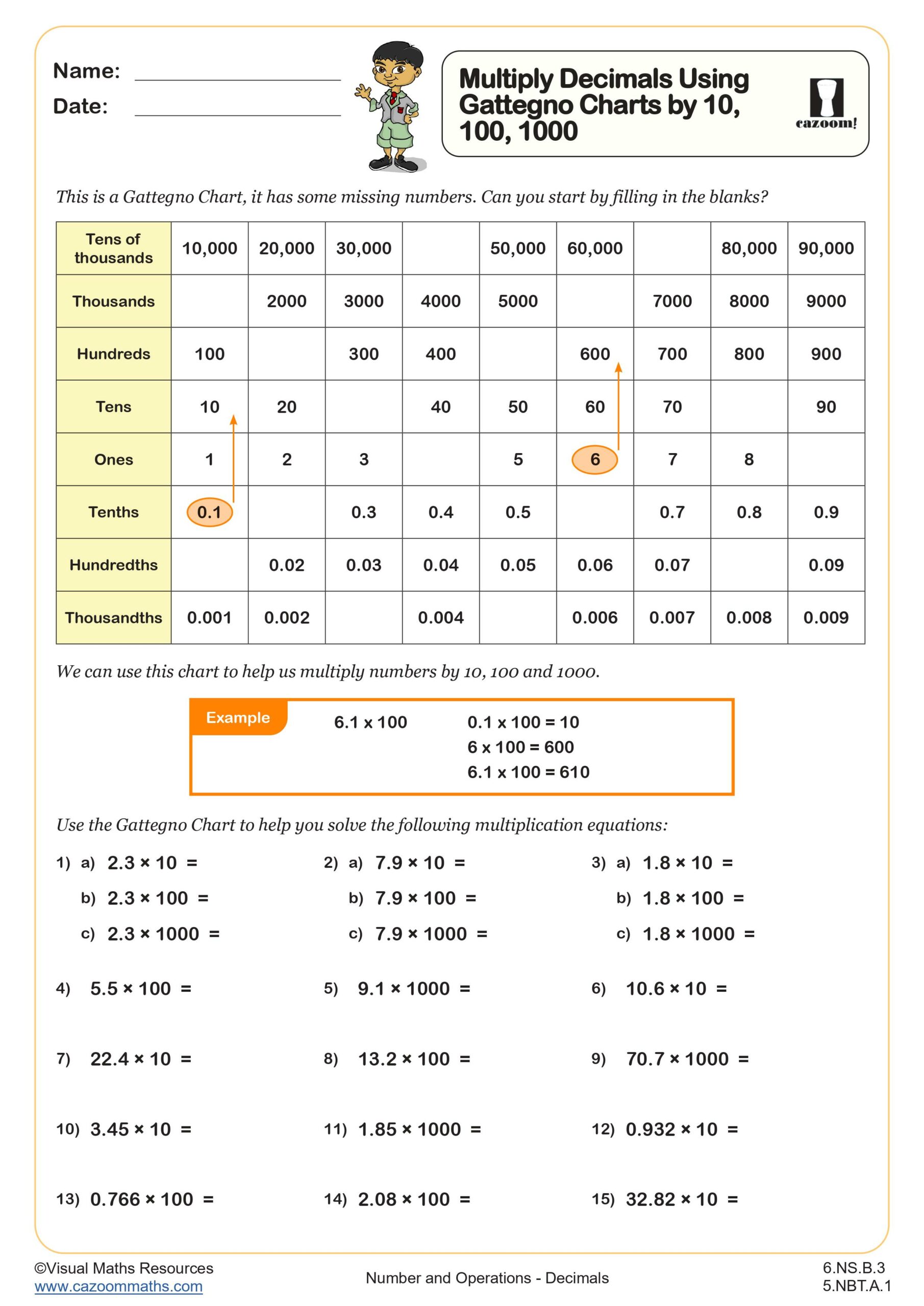
Multiply Decimals Using Gattegno Charts by 10, 100, 1000
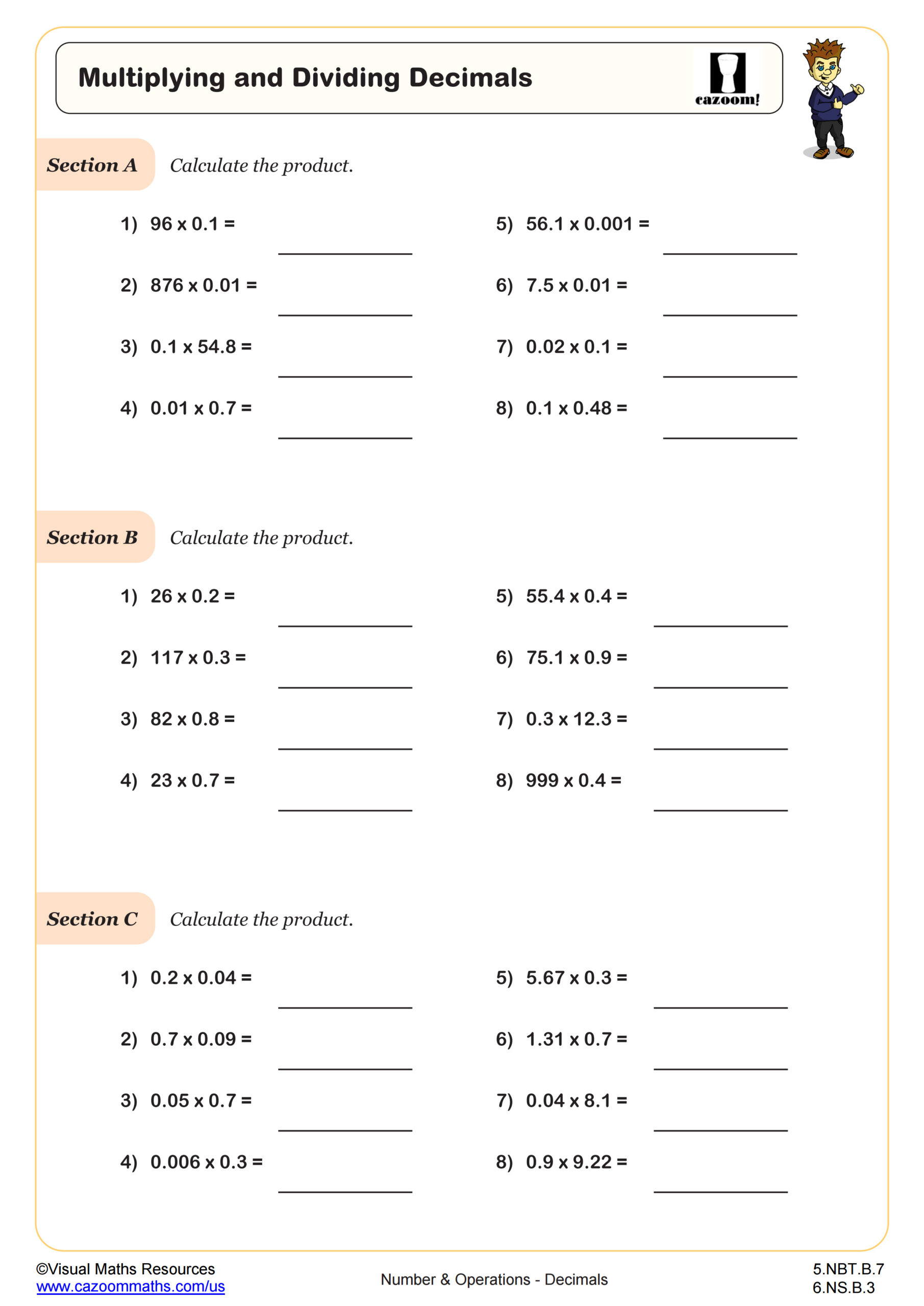
Multiplying and Dividing Decimals
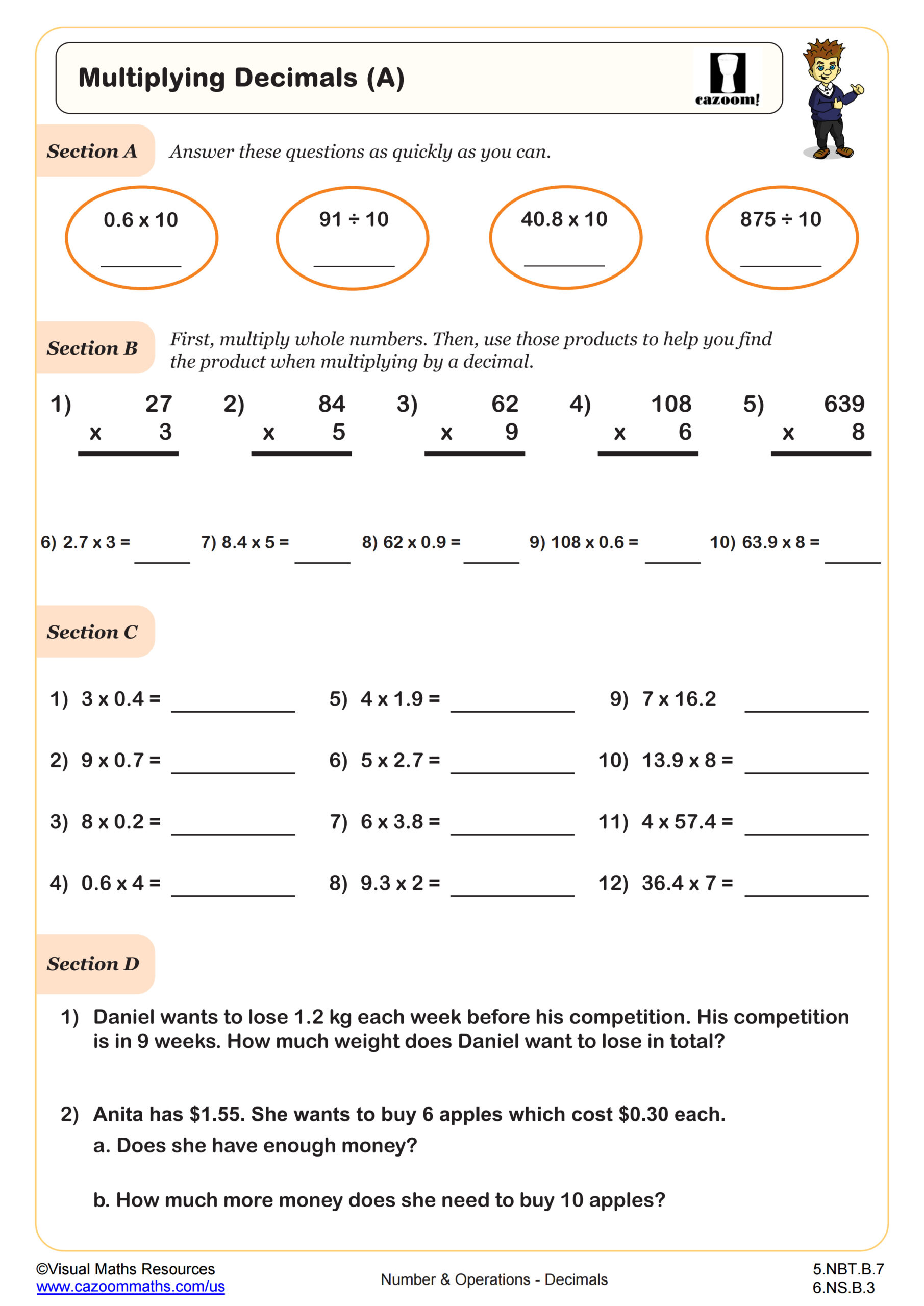
Multiplying Decimals (A)
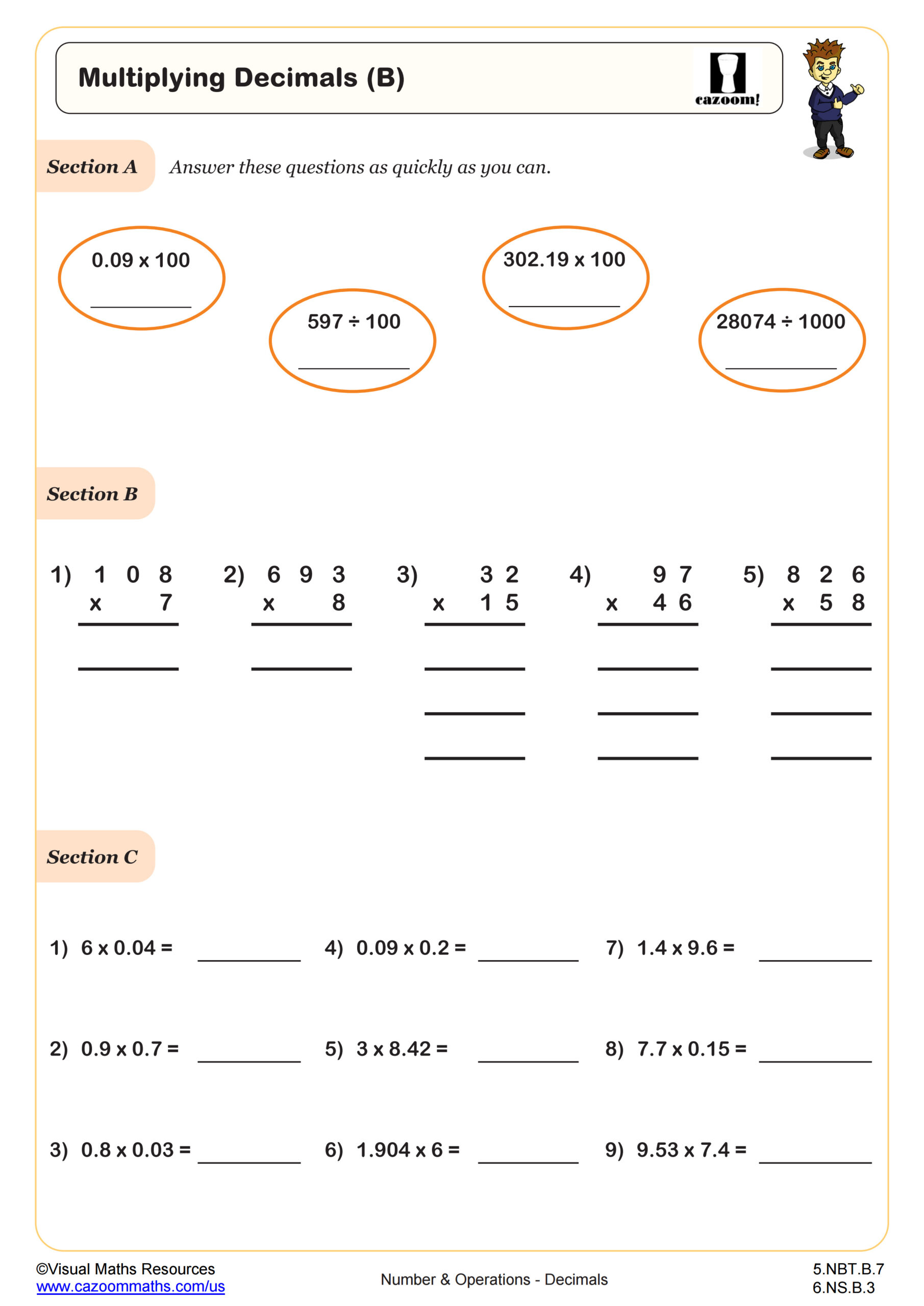
Multiplying Decimals (B)
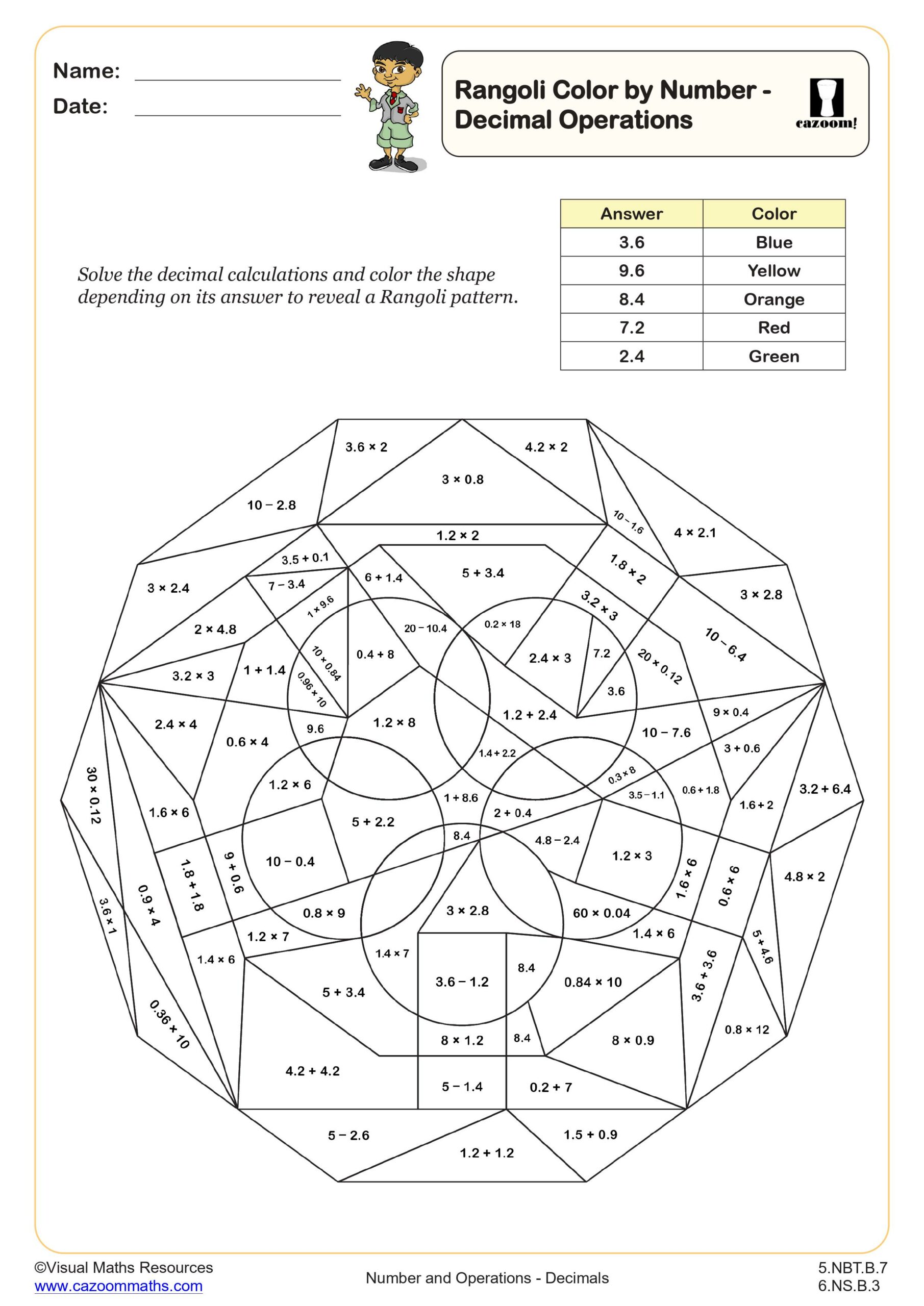
Rangoli Color by Number - Decimal Operations
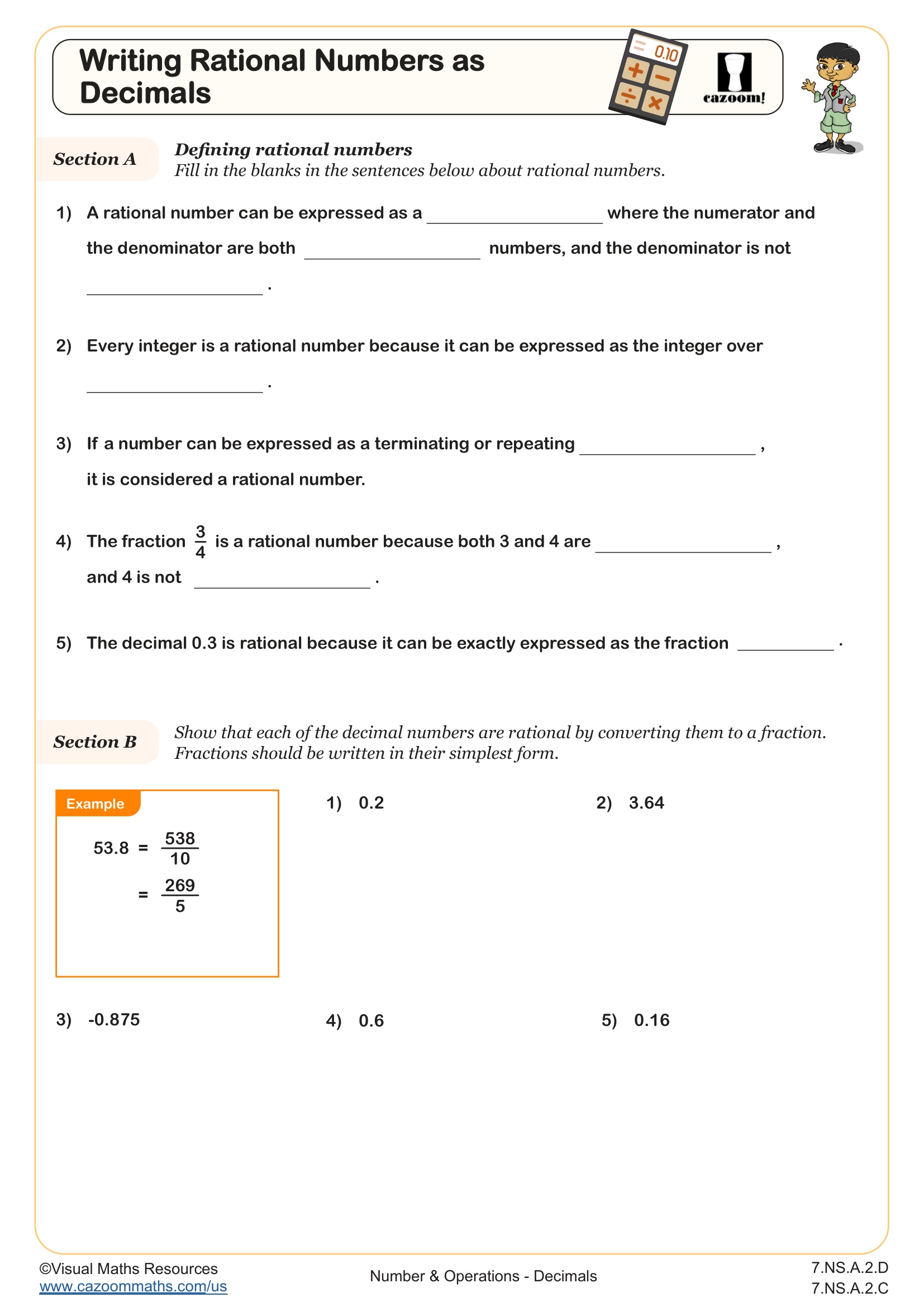
Writing Rational Numbers as Decimals
All worksheets are created by the team of experienced teachers at Cazoom Math.
Why do students struggle with decimal place value?
Decimal place value challenges students because it reverses the pattern they learned with whole numbers. While larger whole numbers have more digits, a decimal like 0.003 is smaller than 0.3, despite having more digits after the decimal point. Many students incorrectly assume that 0.25 is greater than 0.7 because 25 is larger than 7, applying whole number reasoning without considering place value.
The breakthrough typically happens when students connect decimals to money or measurement benchmarks they already understand. Teachers find success using number lines to show that each position to the right of the decimal point represents a smaller value—tenths, hundredths, thousandths—which helps students visualize why 0.7 (seven-tenths) occupies more space on the line than 0.25 (twenty-five hundredths). This visual representation builds the foundation needed for comparing and ordering decimals accurately.
Which grade levels use these decimal worksheets?
These worksheets address decimal concepts taught in 6th grade, 7th grade, and 8th grade as part of the middle school curriculum. According to Common Core State Standards, students begin working with decimal operations in elementary school but deepen their understanding during middle school as they connect decimals to fractions, ratios, and eventually algebraic thinking.
The progression across middle school builds systematically. Sixth graders typically focus on decimal place value, comparing decimals, and fluency with addition and subtraction using standard algorithms. Seventh grade extends to multiplying decimals and applying operations in real-world contexts like percentages and unit rates. By eighth grade, students work with decimals in scientific notation and apply decimal operations when solving multi-step equations, preparing them for high school algebra where precision with decimal calculations becomes essential for evaluating expressions and working with formulas.
How does multiplying decimals connect to real-world applications?
Multiplying decimals requires students to perform the multiplication as if the numbers were whole, then count the total decimal places in both factors to correctly place the decimal point in the product. For example, 2.5 × 1.3 becomes 25 × 13 = 325, then students count three total decimal places (one in 2.5, two in 1.3) to get 3.25. Students often forget this final step, leaving answers like 325 instead of 3.25.
This skill appears constantly in STEM fields and everyday situations. Calculating medication dosages, determining materials costs in construction (like 12.5 square feet of tile at $3.75 per square foot), or computing sales tax all require multiplying decimals. Scientists use decimal multiplication when converting units in the metric system or calculating concentrations in chemistry. Engineers rely on it when scaling blueprints or computing loads and stresses. Understanding decimal multiplication gives students the computational foundation for any career involving measurements, money, or data analysis.
How should teachers use these decimal worksheets in the classroom?
The worksheets provide structured practice with varied problem types, allowing students to develop procedural fluency alongside conceptual understanding. Column templates for addition and subtraction help students focus on the critical alignment step without getting overwhelmed by formatting, while number line activities build visual number sense. The answer keys let students check their work immediately, which helps them catch mistakes like misplaced decimal points before patterns become ingrained.
Many teachers use these worksheets for differentiated instruction during independent practice time, assigning different subtopics based on student readiness. The materials work well for intervention groups targeting specific gaps, as homework that reinforces classroom lessons, or as warm-up activities reviewing previously taught skills. Some teachers assign worksheets in pairs, having students compare answers and explain their reasoning when they disagree, which builds both accuracy and mathematical communication skills. The variety of subtopics also makes these worksheets useful for spiral review before state assessments.