Middle School Factors and Multiples Worksheets
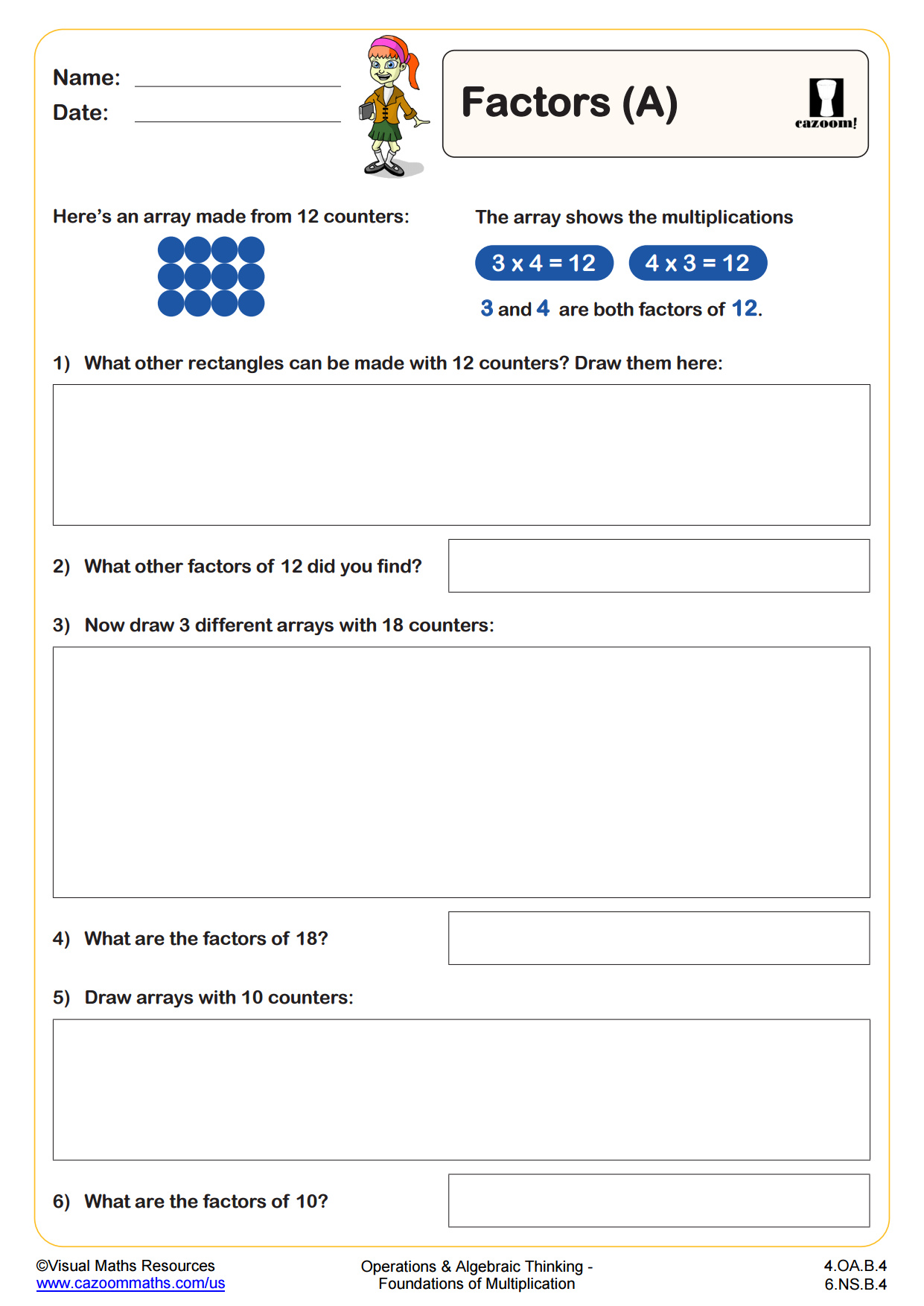
Factors (A)
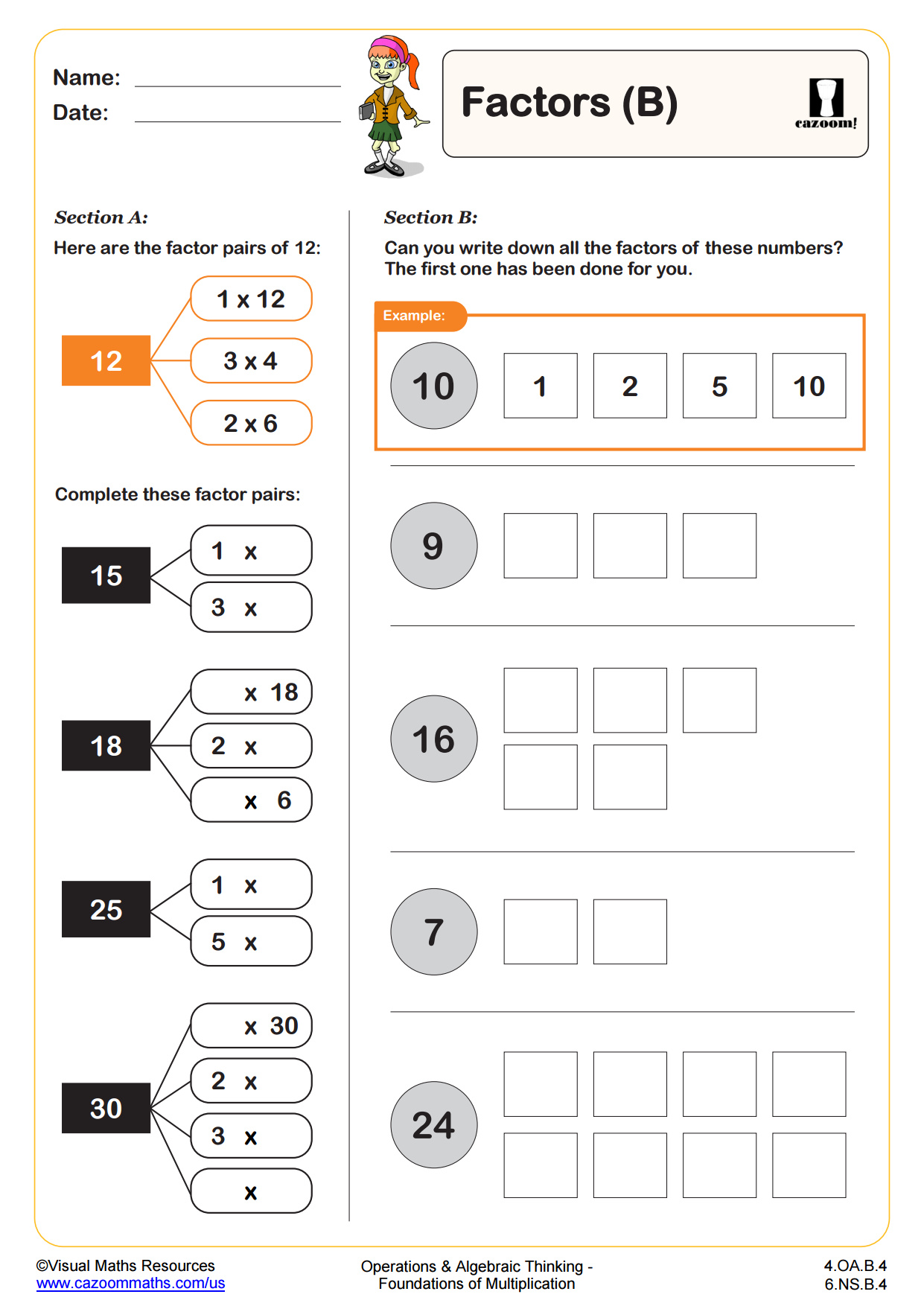
Factors (B)
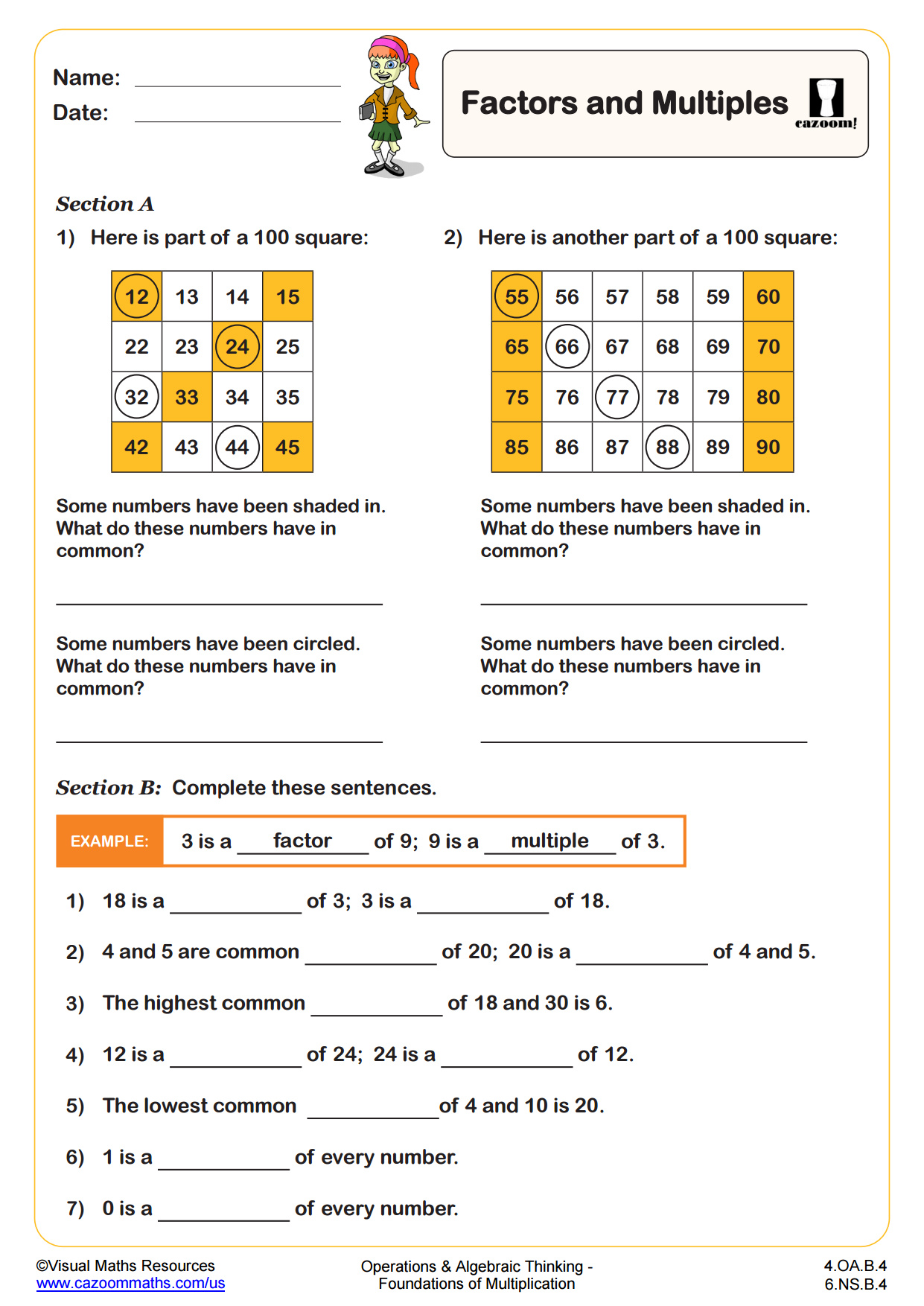
Factors and Multiples
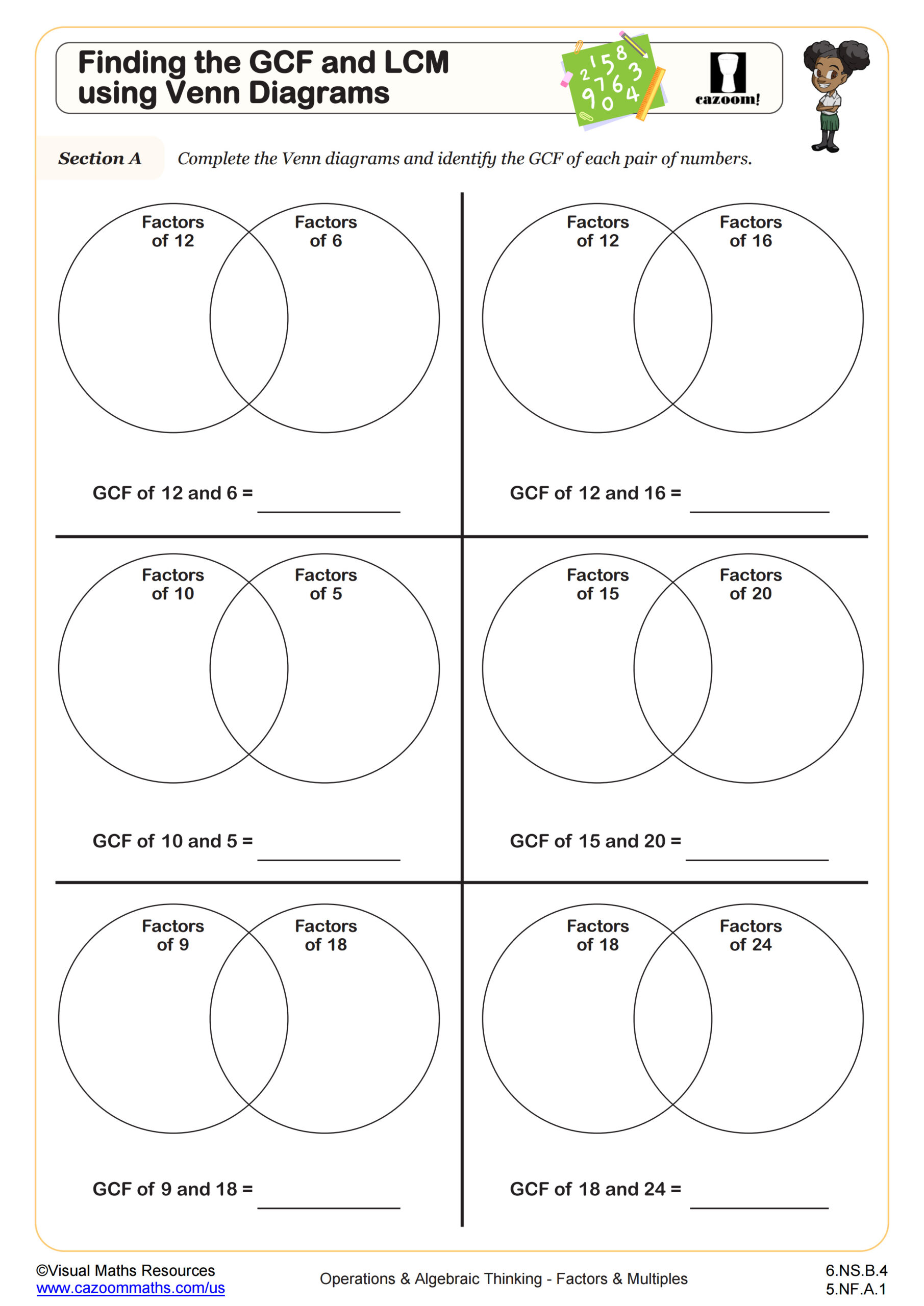
Finding the GCF and LCM using Venn Diagrams
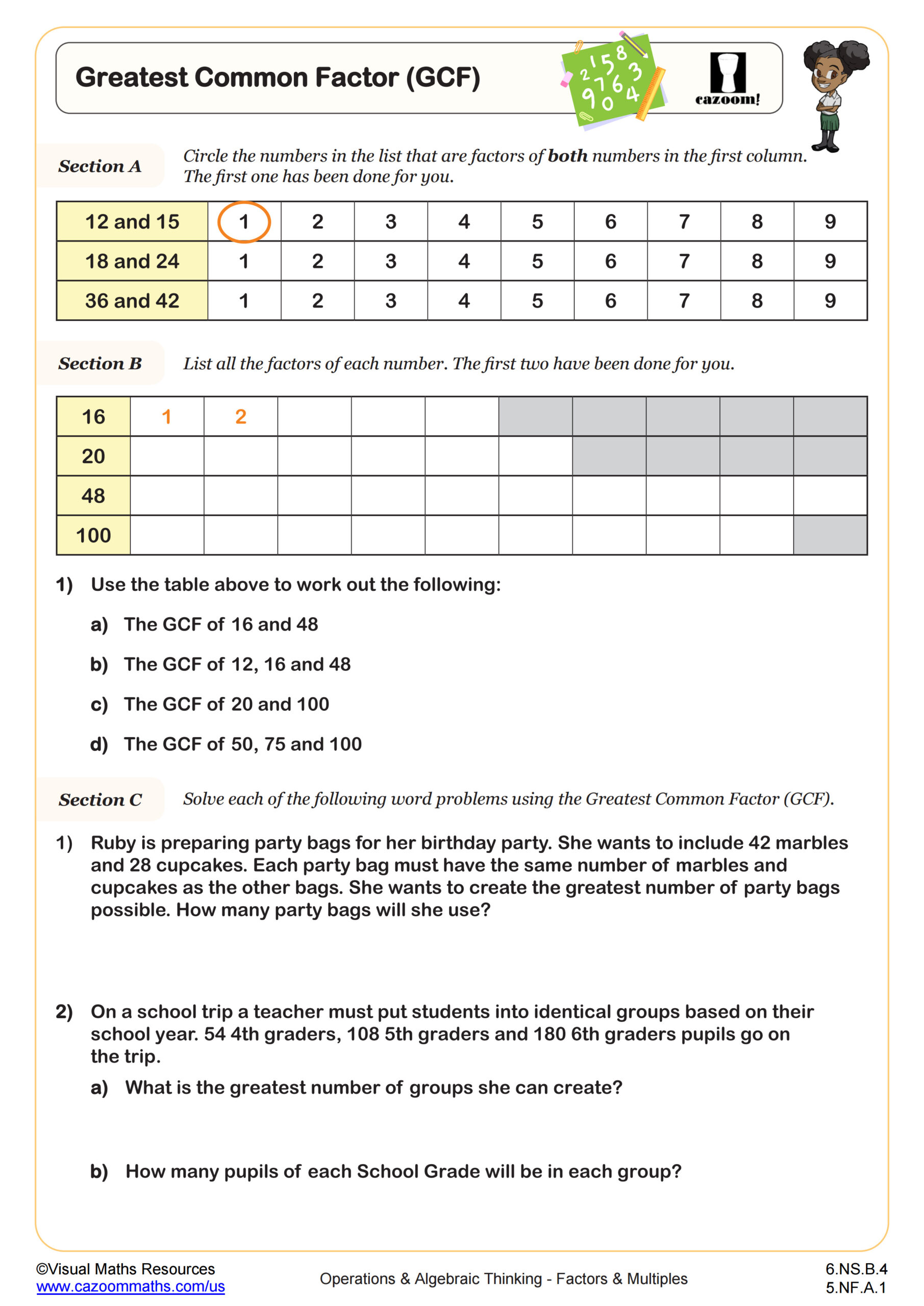
Greatest Common Factor (GCF)
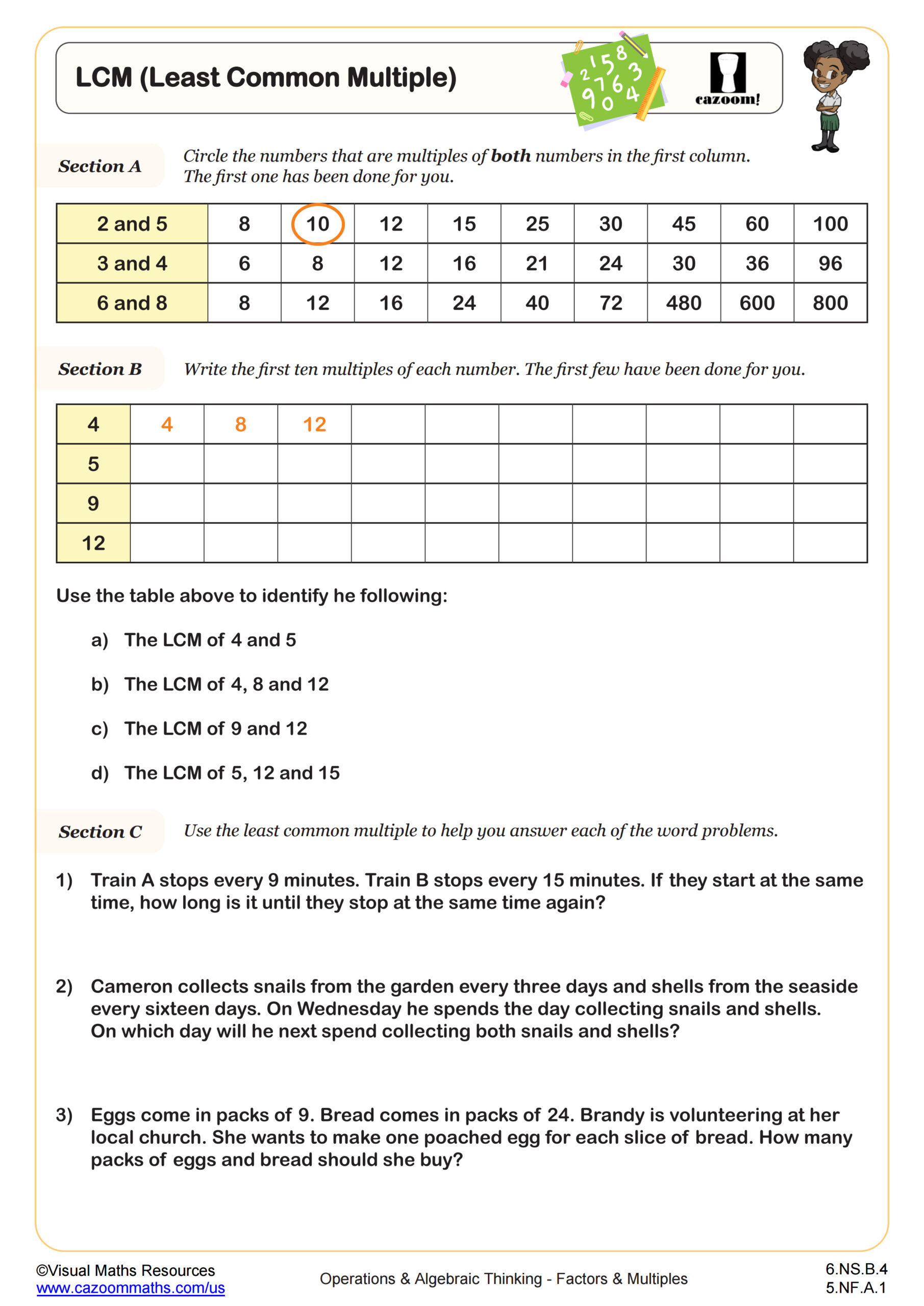
Least Common Multiple (LCM)
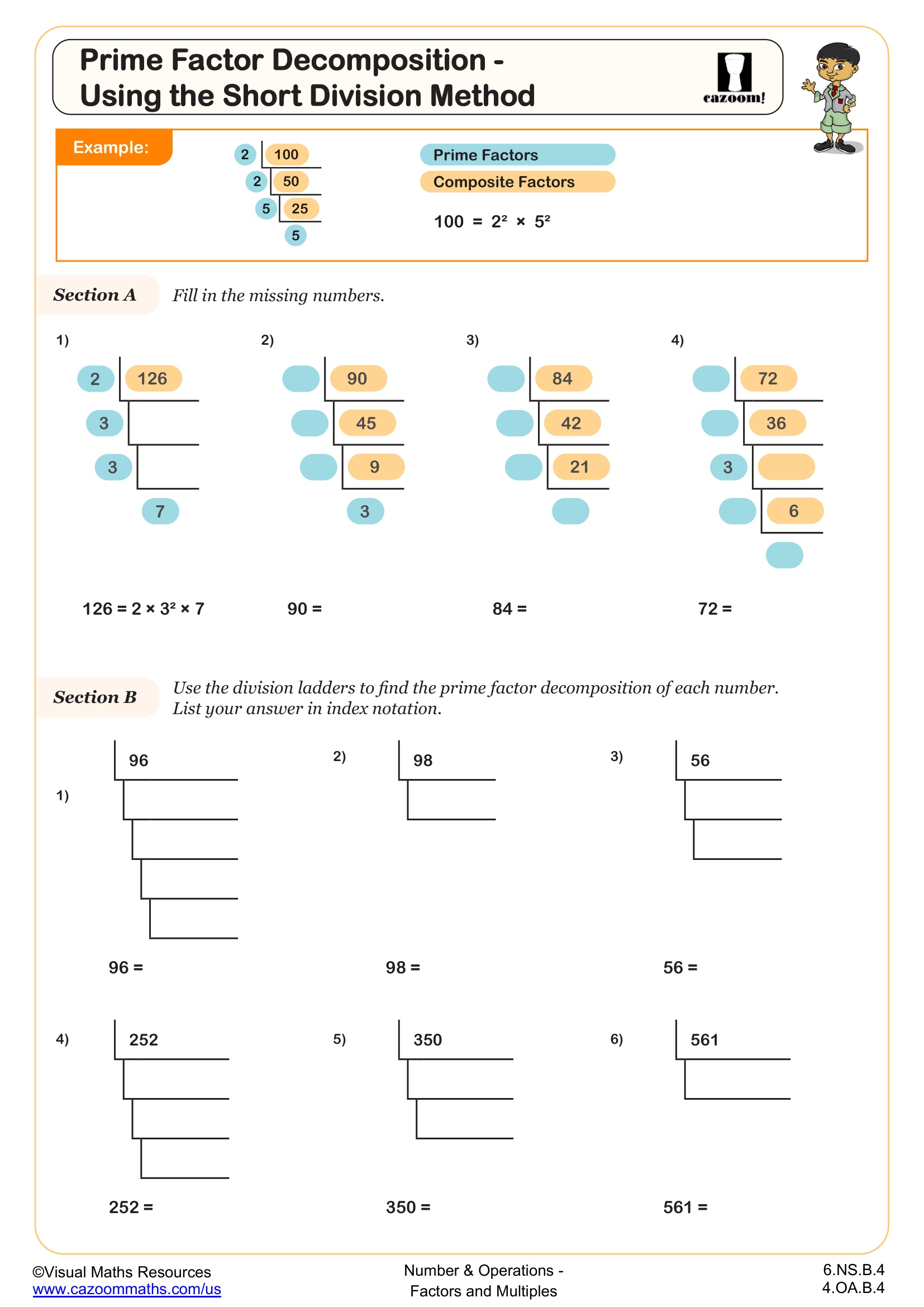
Prime Factor Decomposition - Using the Short Division Method
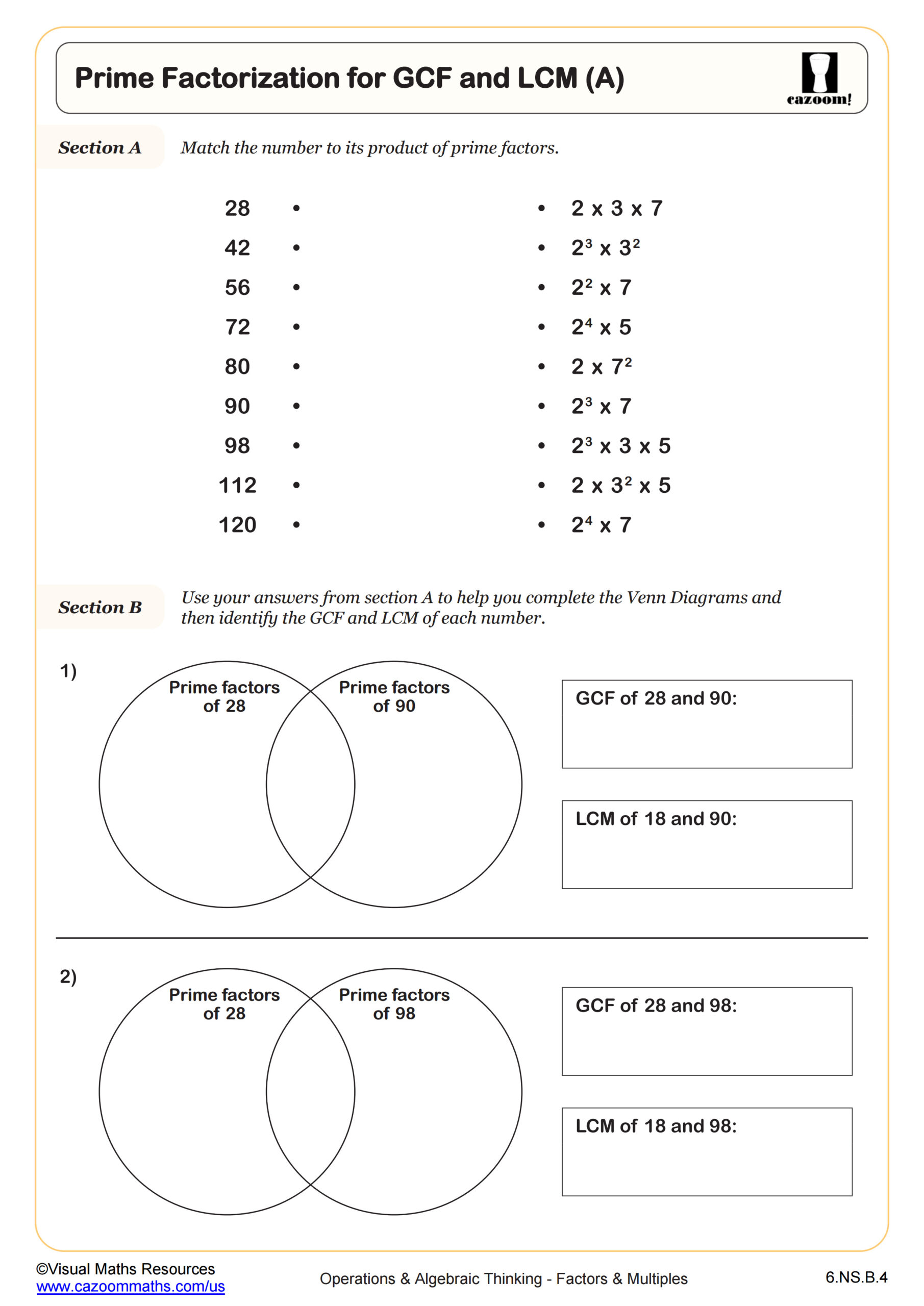
Prime Factorization for GCF and LCM (A)
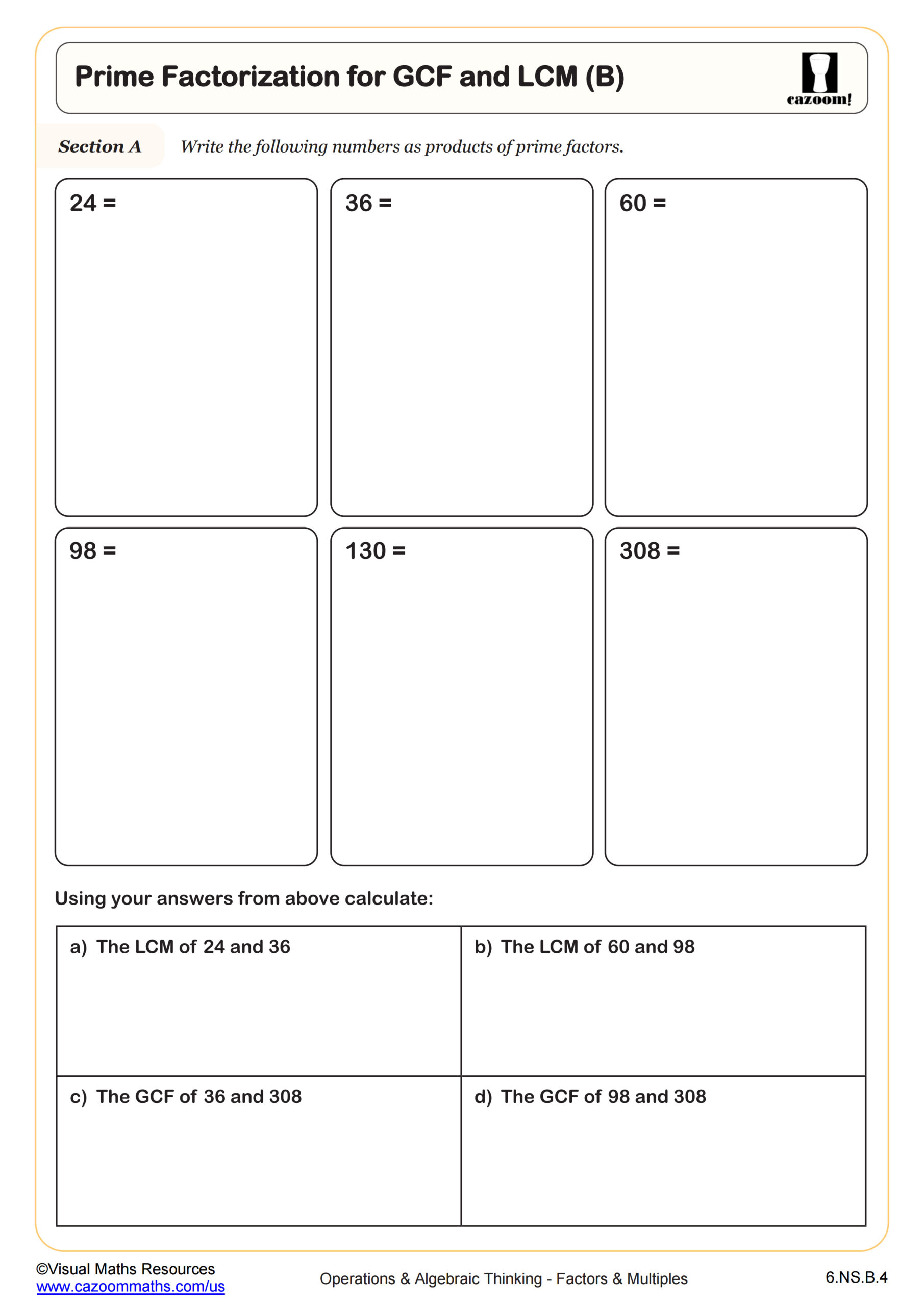
Prime Factorization for GCF and LCM (B)
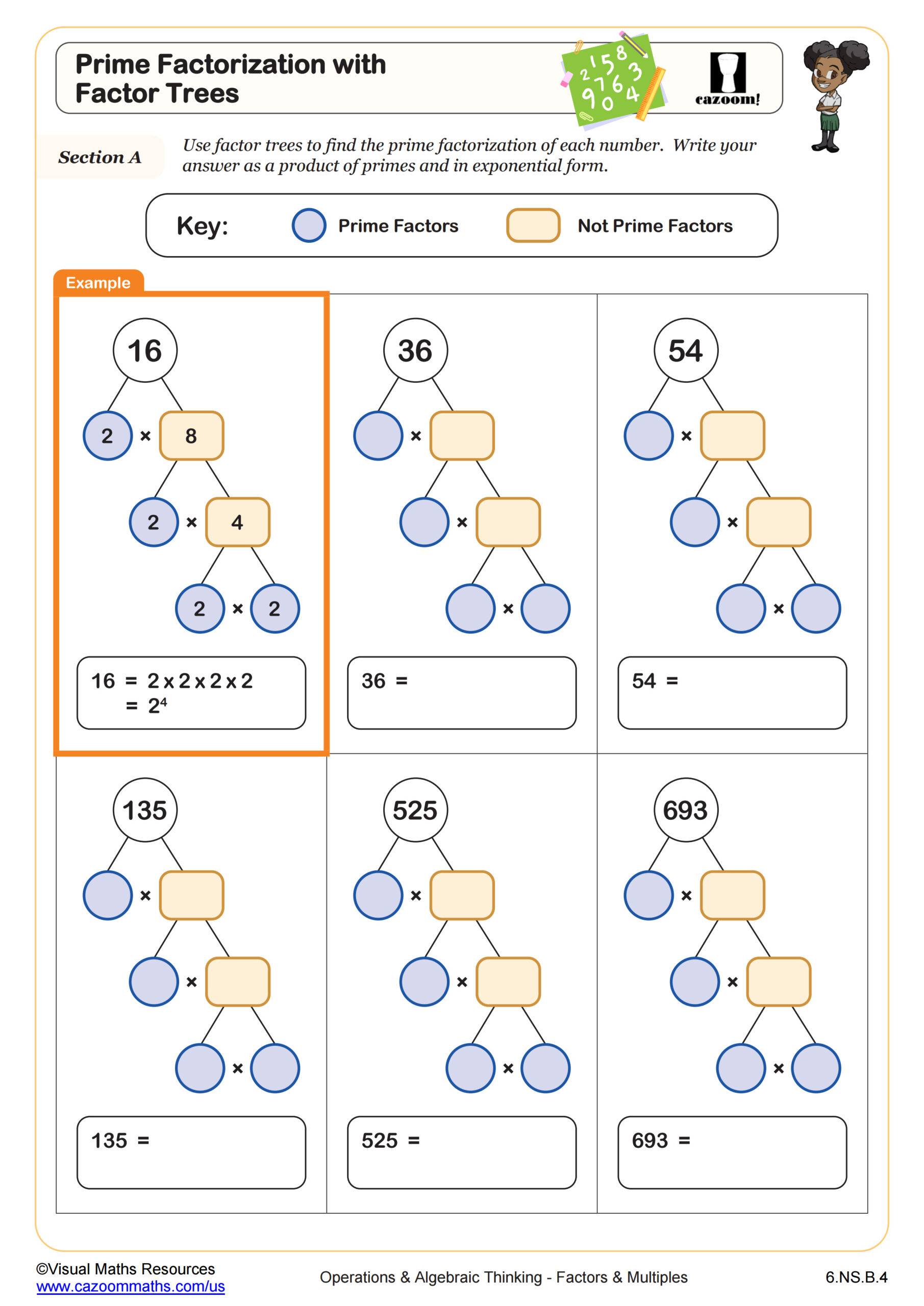
Prime Factorization with Factor Trees
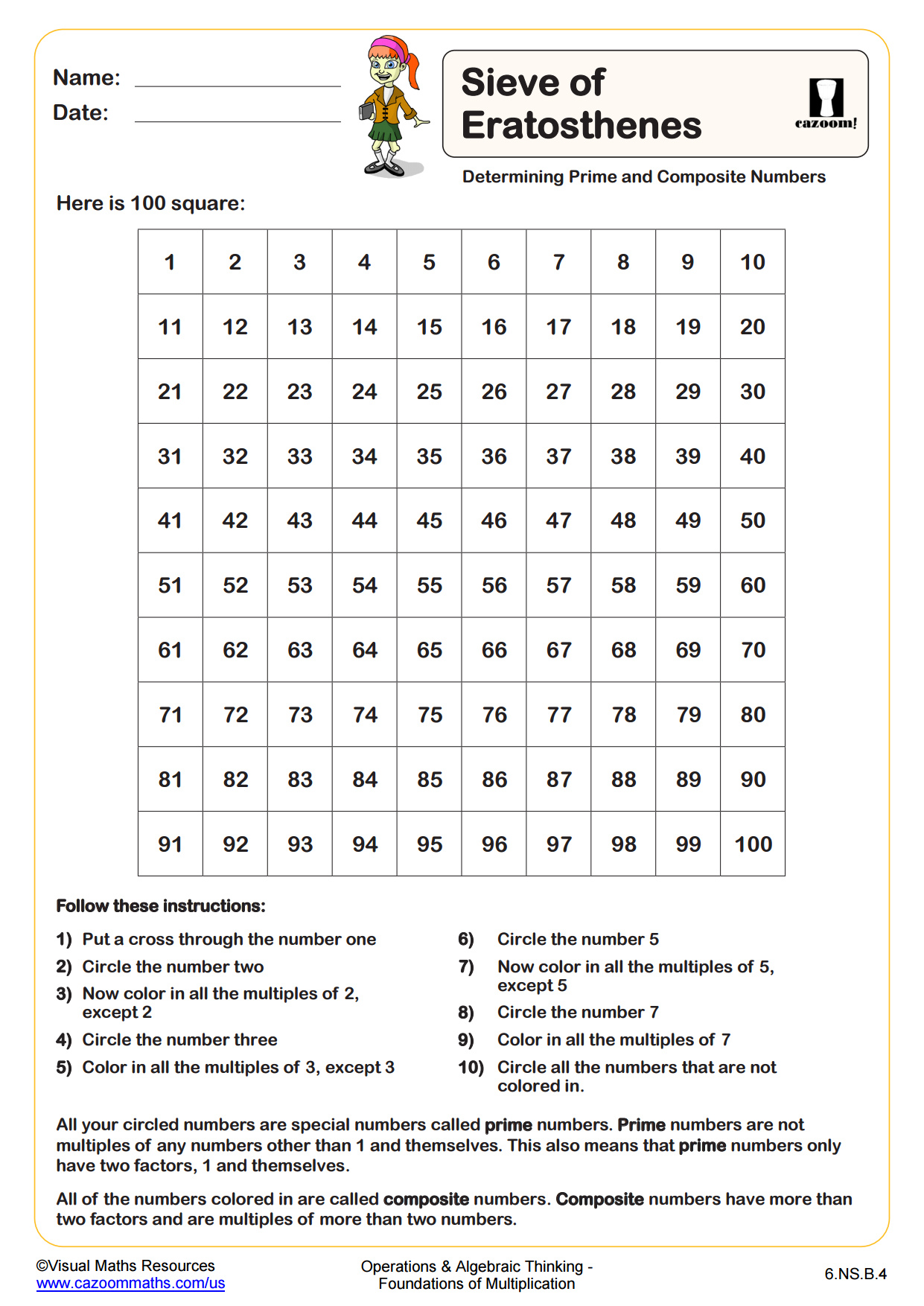
Sieve of Eratosthenes
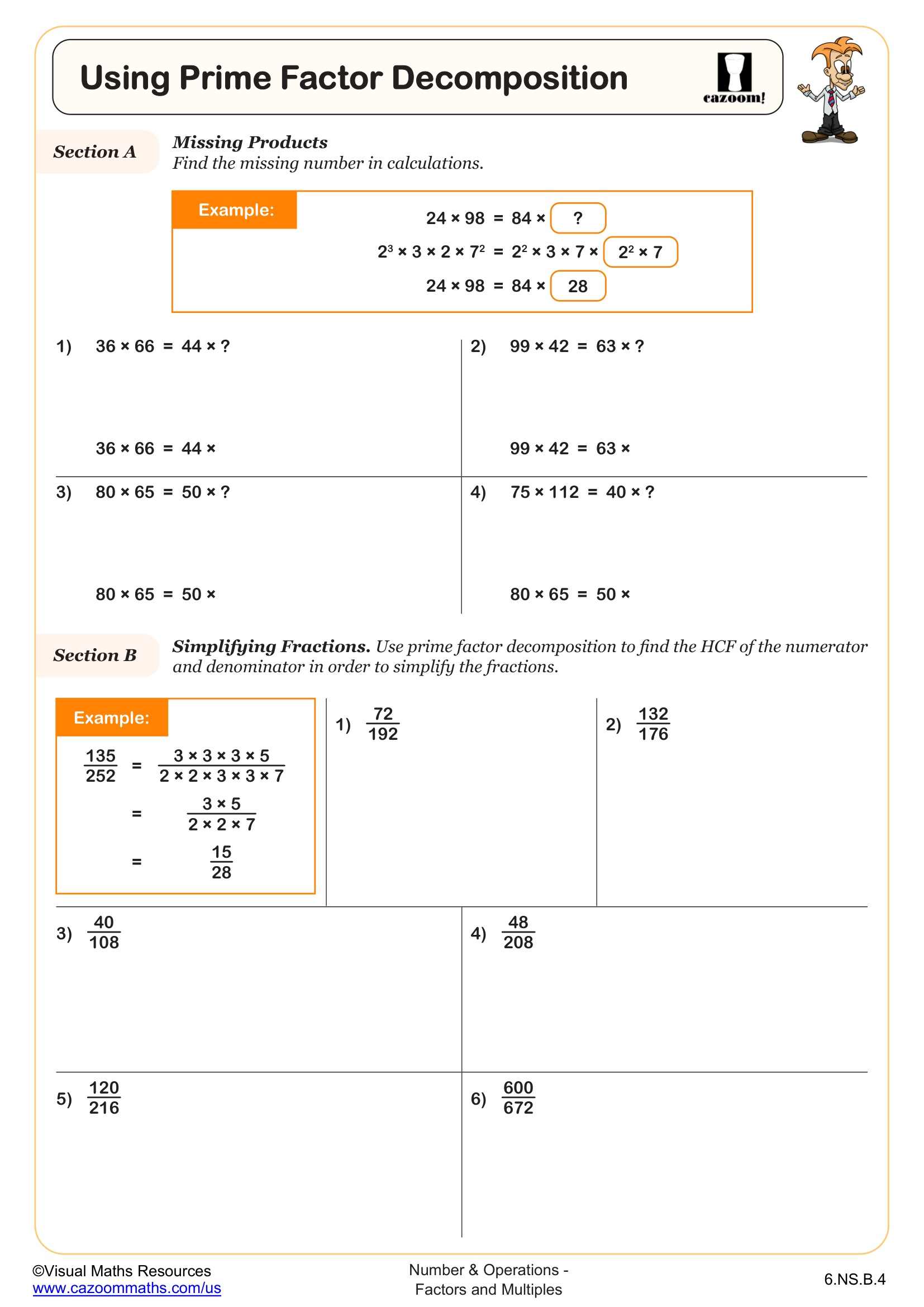
Using Prime Factor Decomposition
Using Prime Factors to Identify Square, Cube Numbers and Roots
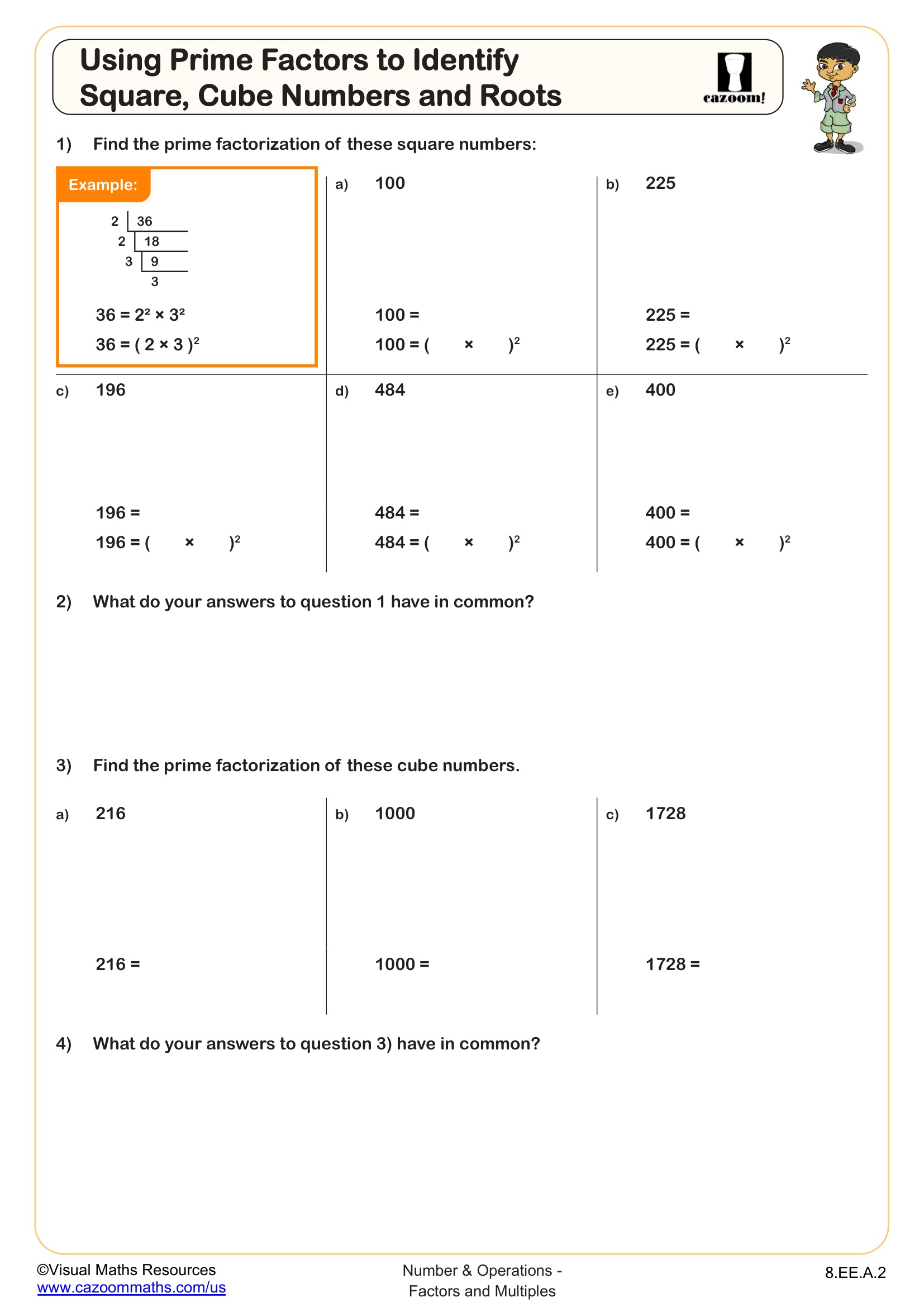
All worksheets are created by the team of experienced teachers at Cazoom Math.
What makes a quality factors and multiples worksheet for middle school students?
A quality factors and multiples worksheet pdf should include varied problem types that address Common Core standards for grades 6-8, including finding all factors of given numbers, listing multiples, and determining GCF and LCM. The worksheet should progress from basic factor identification to more complex applications involving prime factorization and real-world scenarios.
Teachers notice students often struggle when problems mix different formats, such as switching between listing factors and finding the greatest common factor within the same exercise. Effective worksheets provide clear instructions for each section and include visual supports like factor trees or arrays to help students organize their thinking systematically.
How do factors and multiples worksheets progress across middle school grade levels?
Grade 6 students typically start with basic factor identification and simple multiples, while grade 7 students work with prime factorization and finding GCF and LCM of larger numbers. By grade 8, students apply these concepts to algebraic expressions and more complex real-world problems involving ratios and proportions.
Teachers observe that students who master factors and multiples worksheet grade 7 level problems show stronger performance in pre-algebra topics like simplifying fractions and solving equations. The progression builds from concrete number work to abstract applications, with each grade level adding complexity while reinforcing foundational skills through spiraled practice opportunities.
Why do students often confuse finding factors versus finding multiples?
Students frequently mix up factors and multiples because both concepts involve multiplication relationships, but from opposite perspectives. Factors divide evenly into a given number, while multiples result from multiplying a number by whole numbers. This reversal of thinking challenges many middle schoolers initially.
Classroom experience shows that students benefit from consistent language and visual representations. Teachers find success using the phrase 'factors go into' while 'multiples come from' a number. Providing examples where students identify both the factors and first few multiples of the same number helps clarify the distinction and reduces common errors on assessments.
How can teachers effectively use these worksheets for differentiated instruction?
Teachers can differentiate by assigning different sections based on student readiness levels, using the answer keys to create self-checking stations, or having advanced students create their own factor and multiple problems for classmates. The PDF format allows teachers to modify problems or highlight specific sections for individual students.
Many teachers use these multiples and factors worksheets as warm-up activities, homework assignments, or intervention materials for students who need additional practice. The included answer keys enable peer tutoring opportunities and allow students to check their work independently, freeing teachers to provide targeted support where needed most during class time.