Middle School Factors and Multiples Worksheets
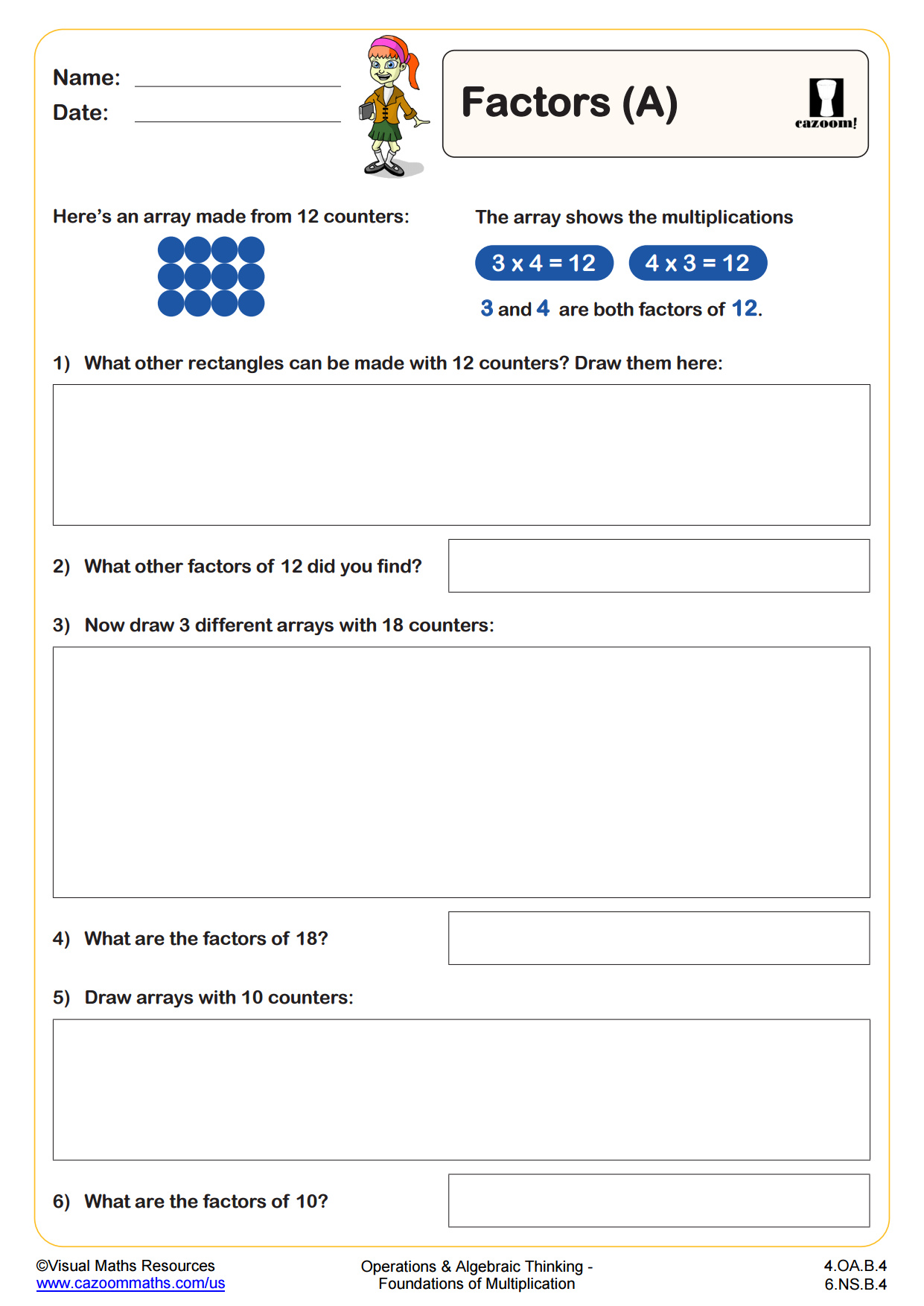
Factors (A)
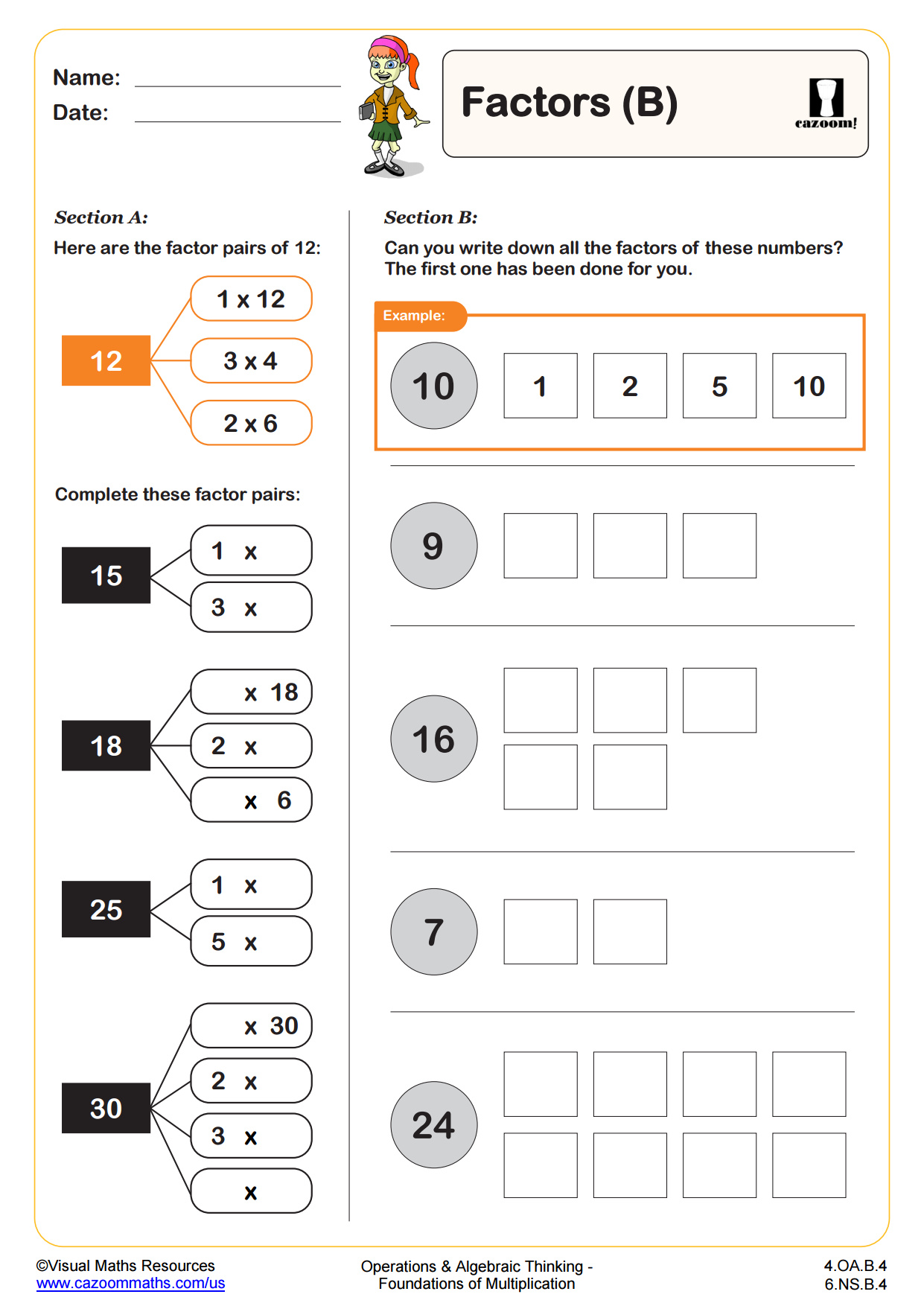
Factors (B)
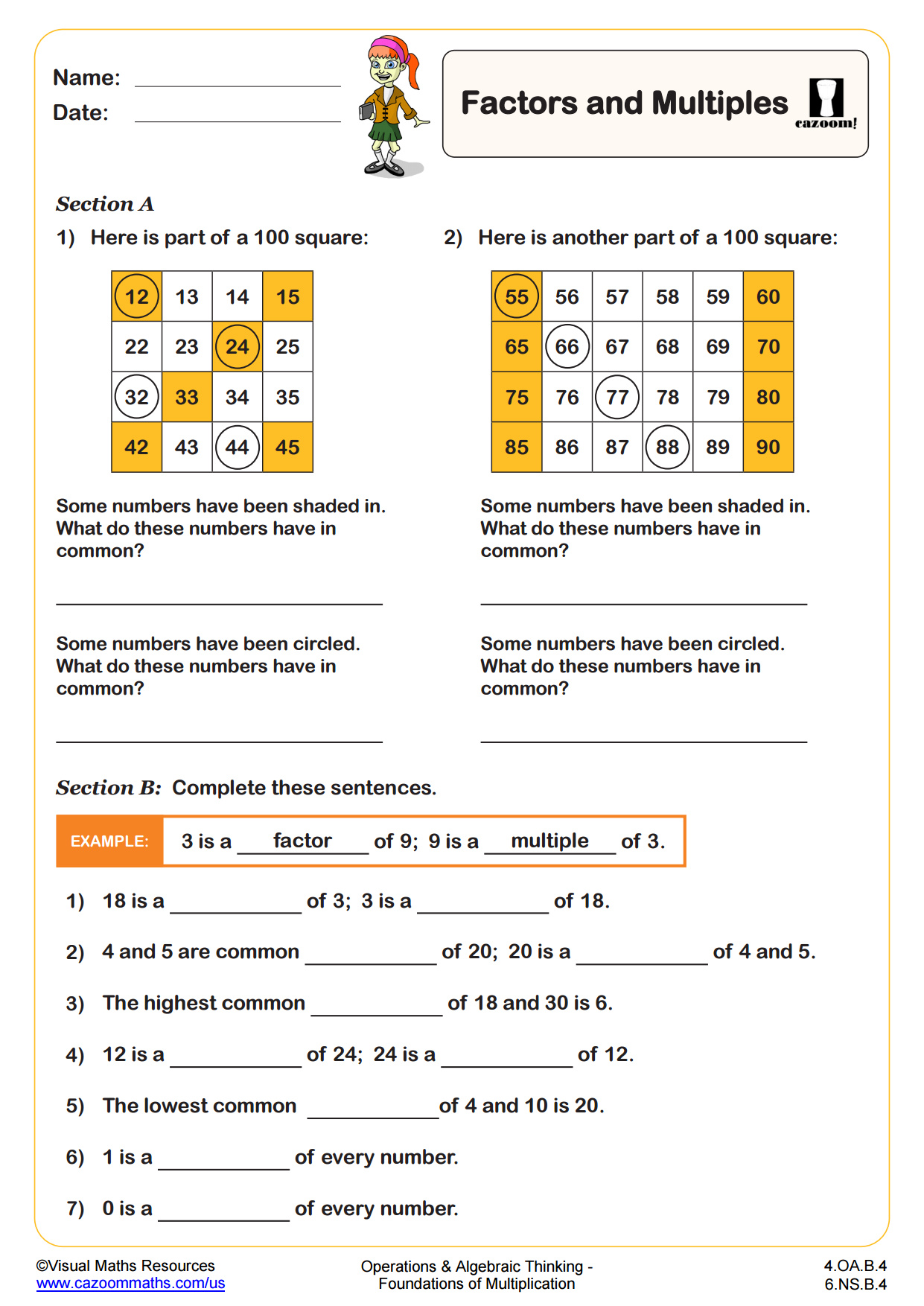
Factors and Multiples
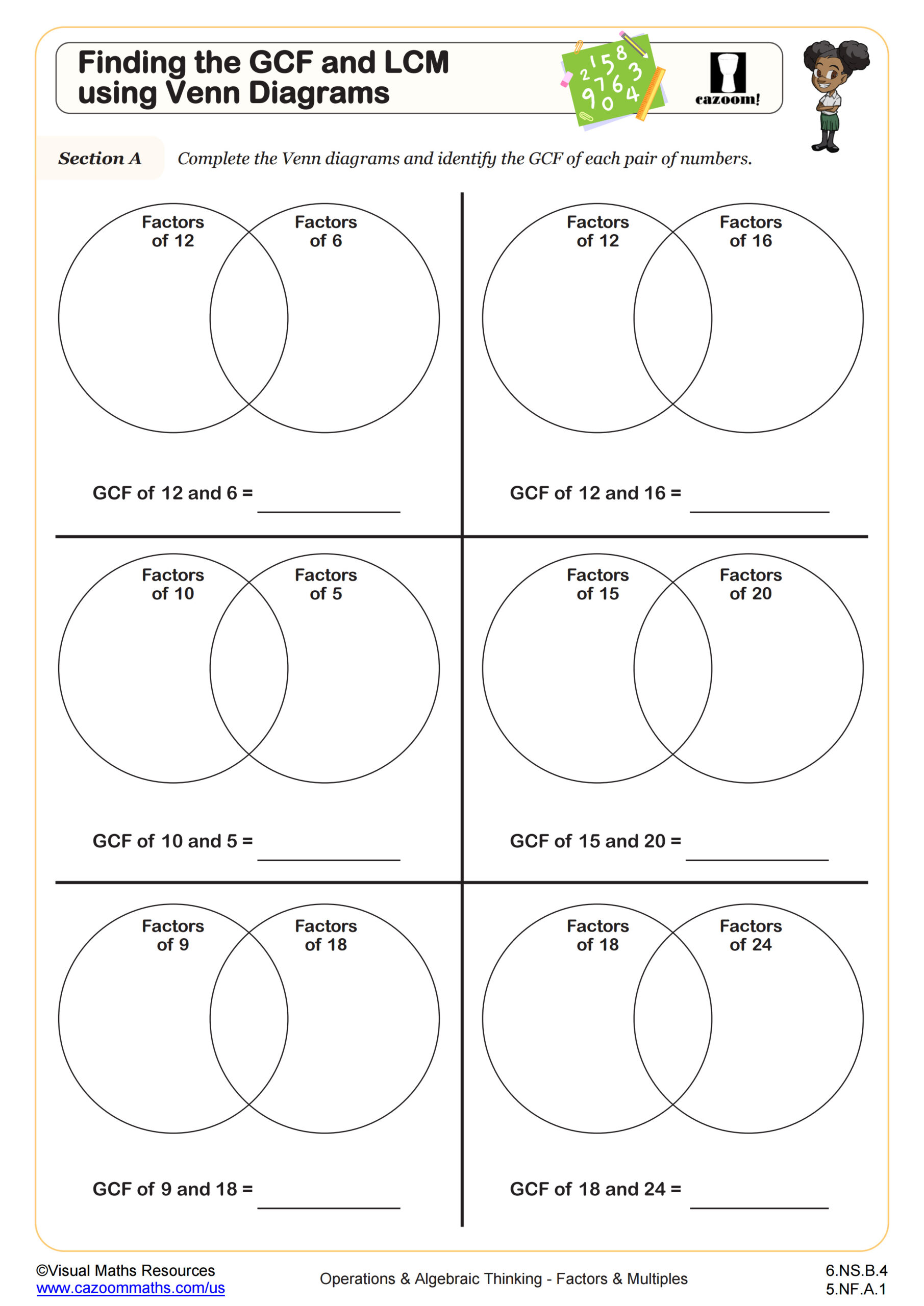
Finding the GCF and LCM using Venn Diagrams
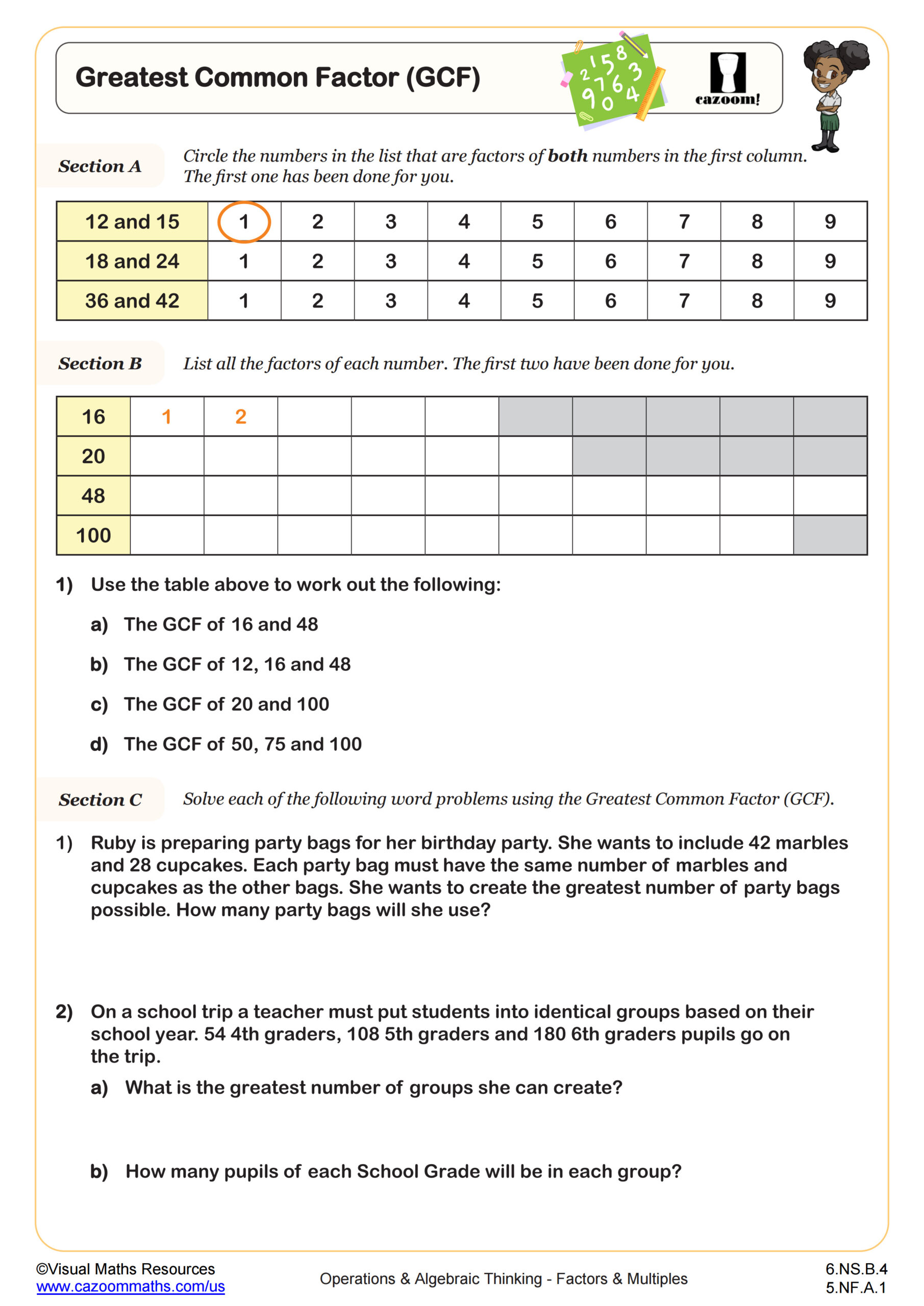
Greatest Common Factor (GCF)
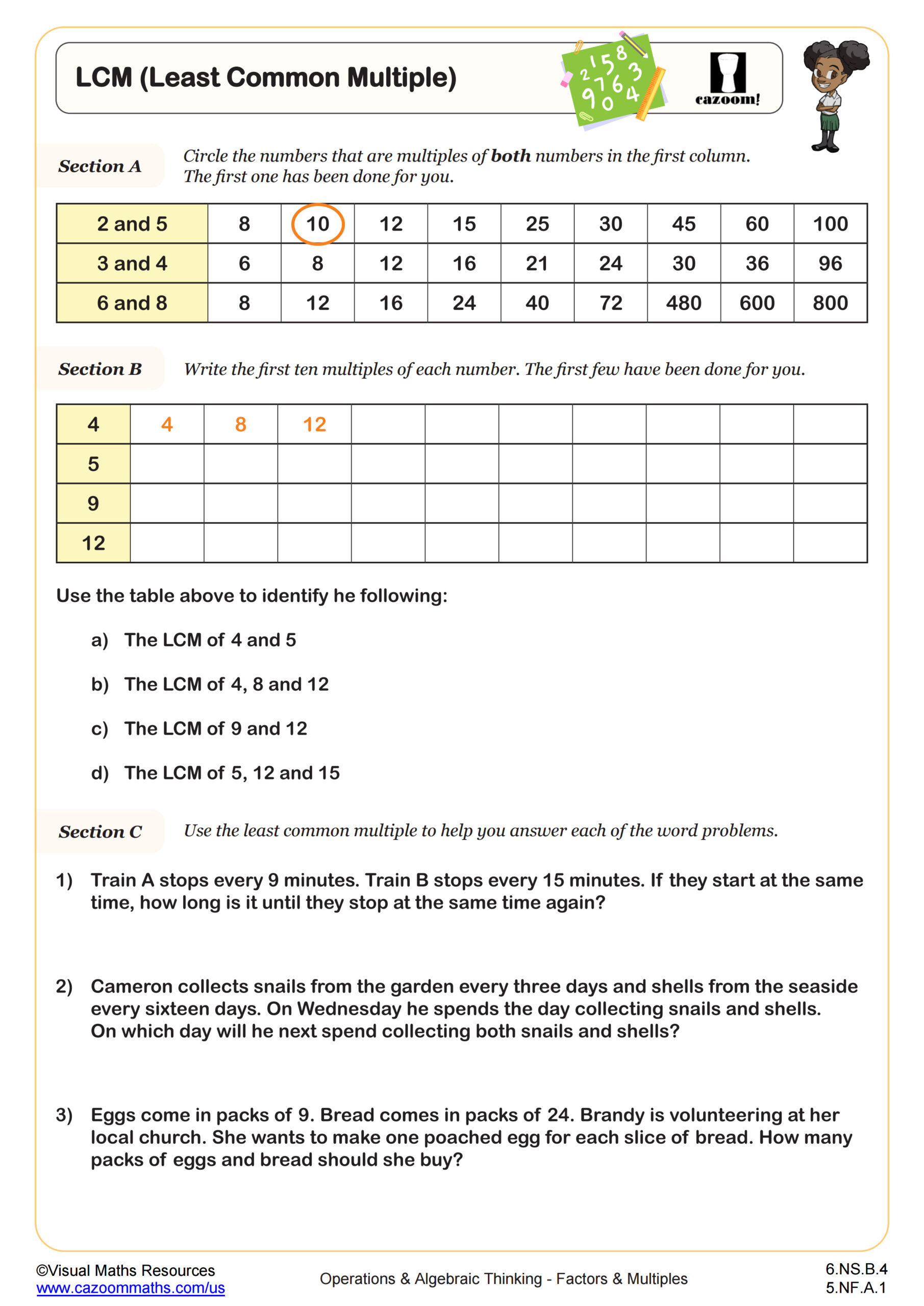
Least Common Multiple (LCM)
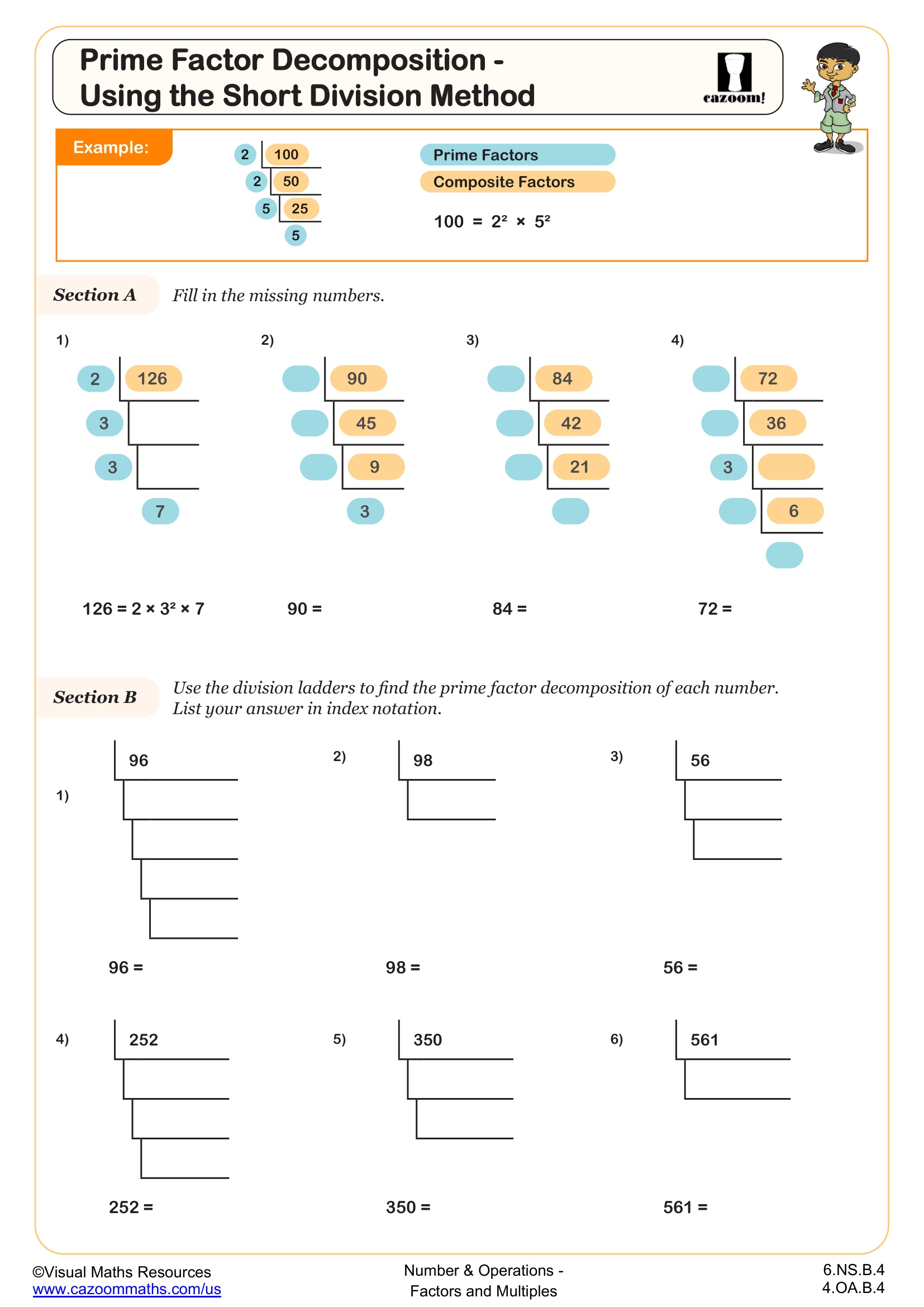
Prime Factor Decomposition - Using the Short Division Method
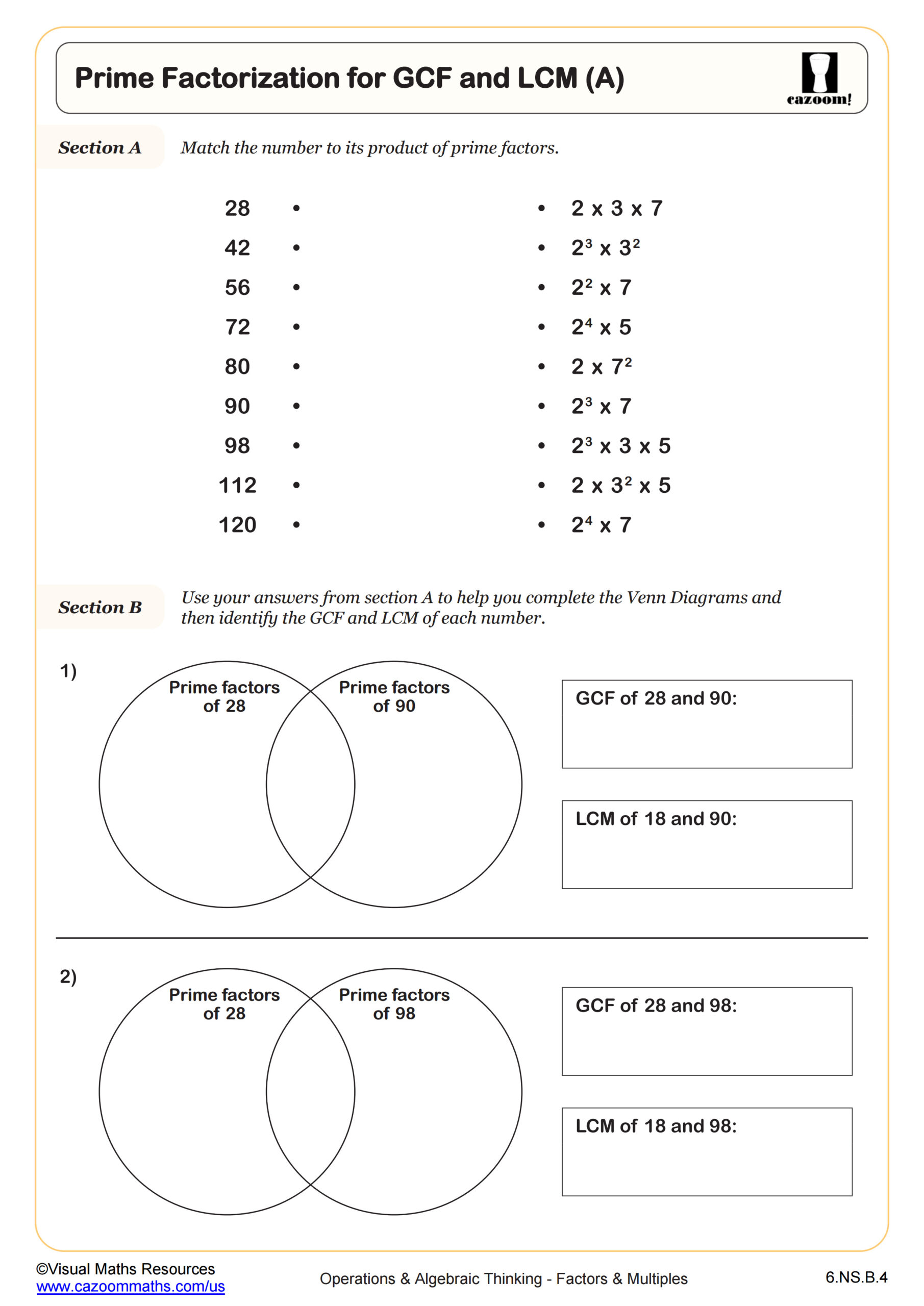
Prime Factorization for GCF and LCM (A)
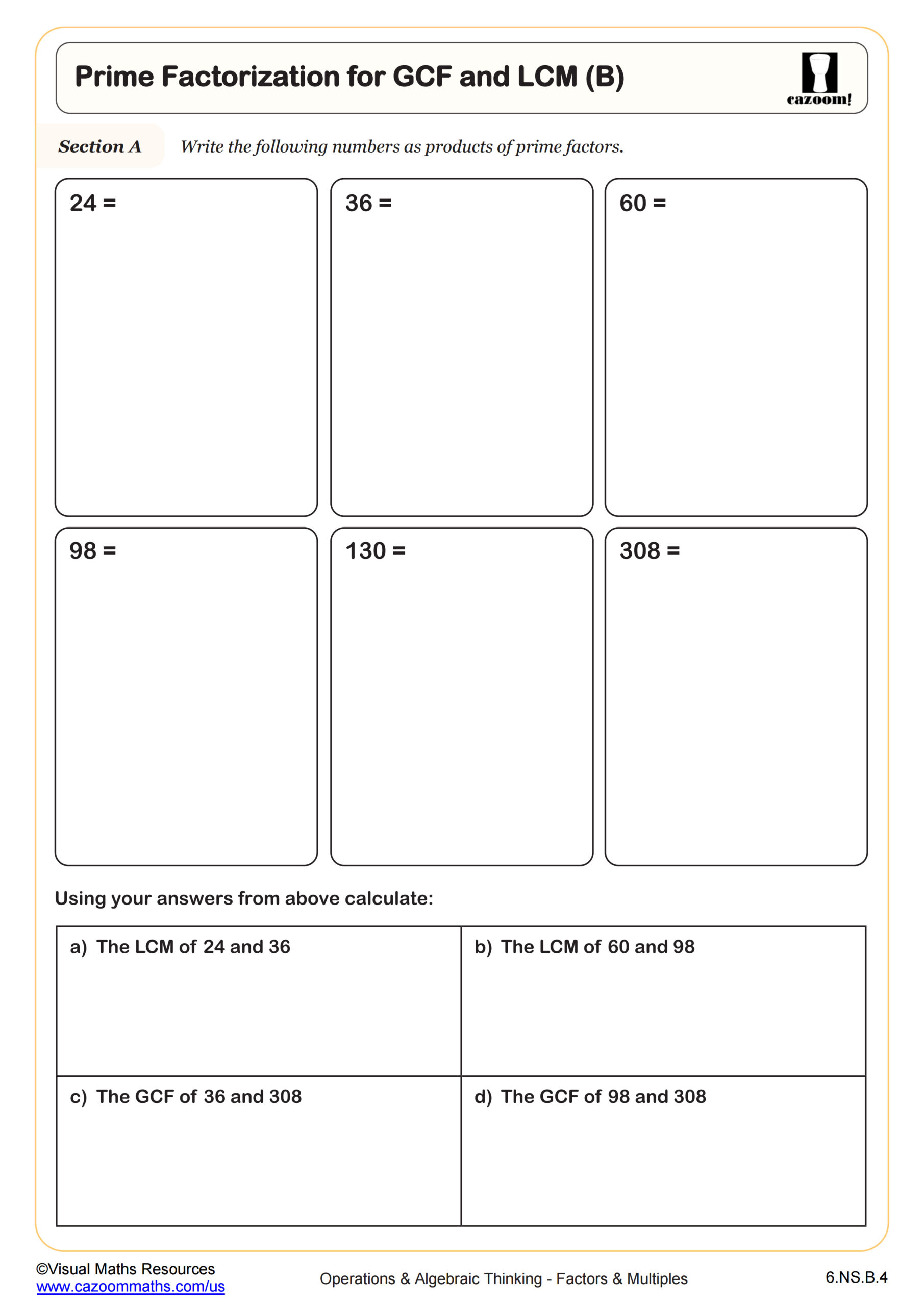
Prime Factorization for GCF and LCM (B)
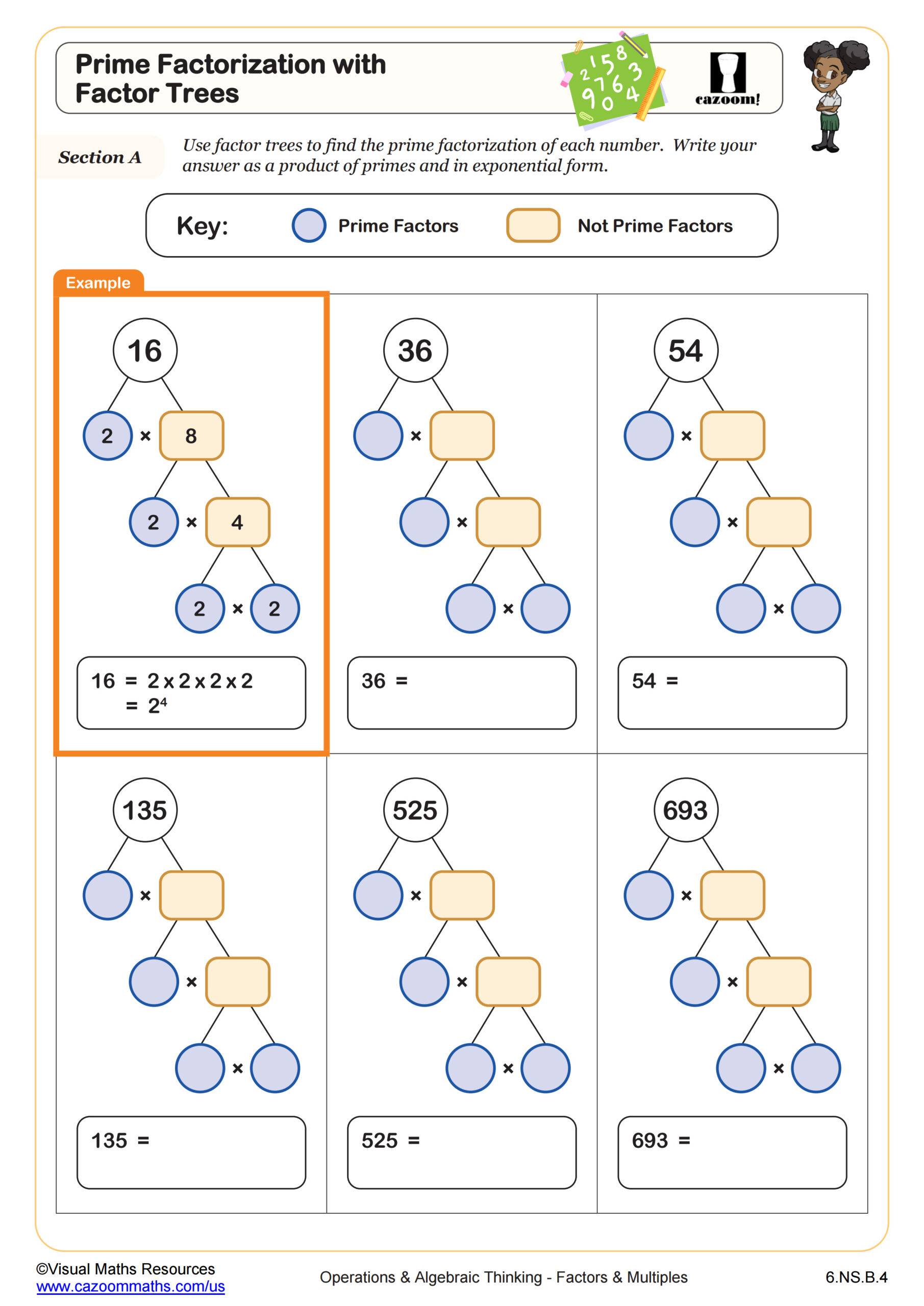
Prime Factorization with Factor Trees
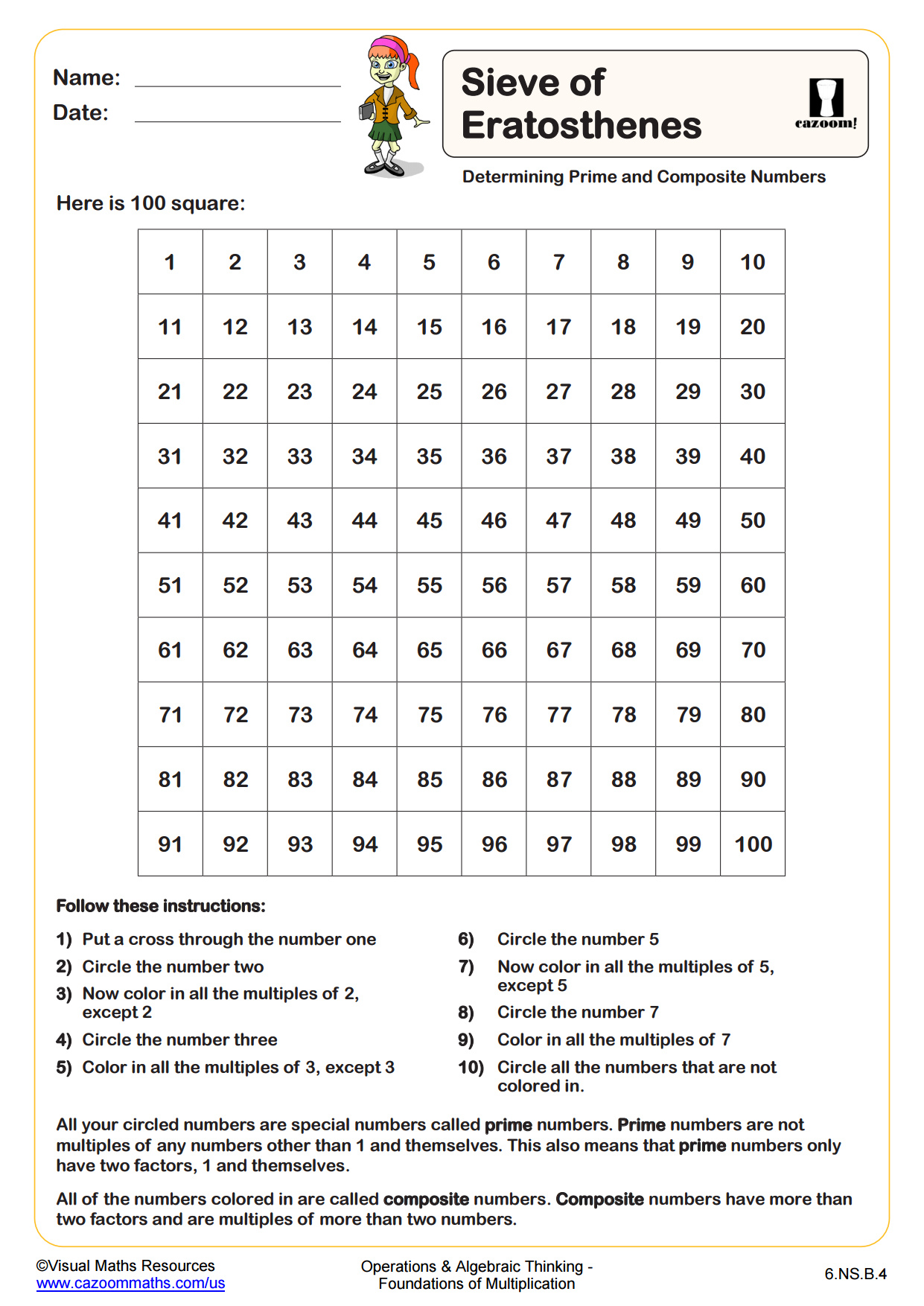
Sieve of Eratosthenes
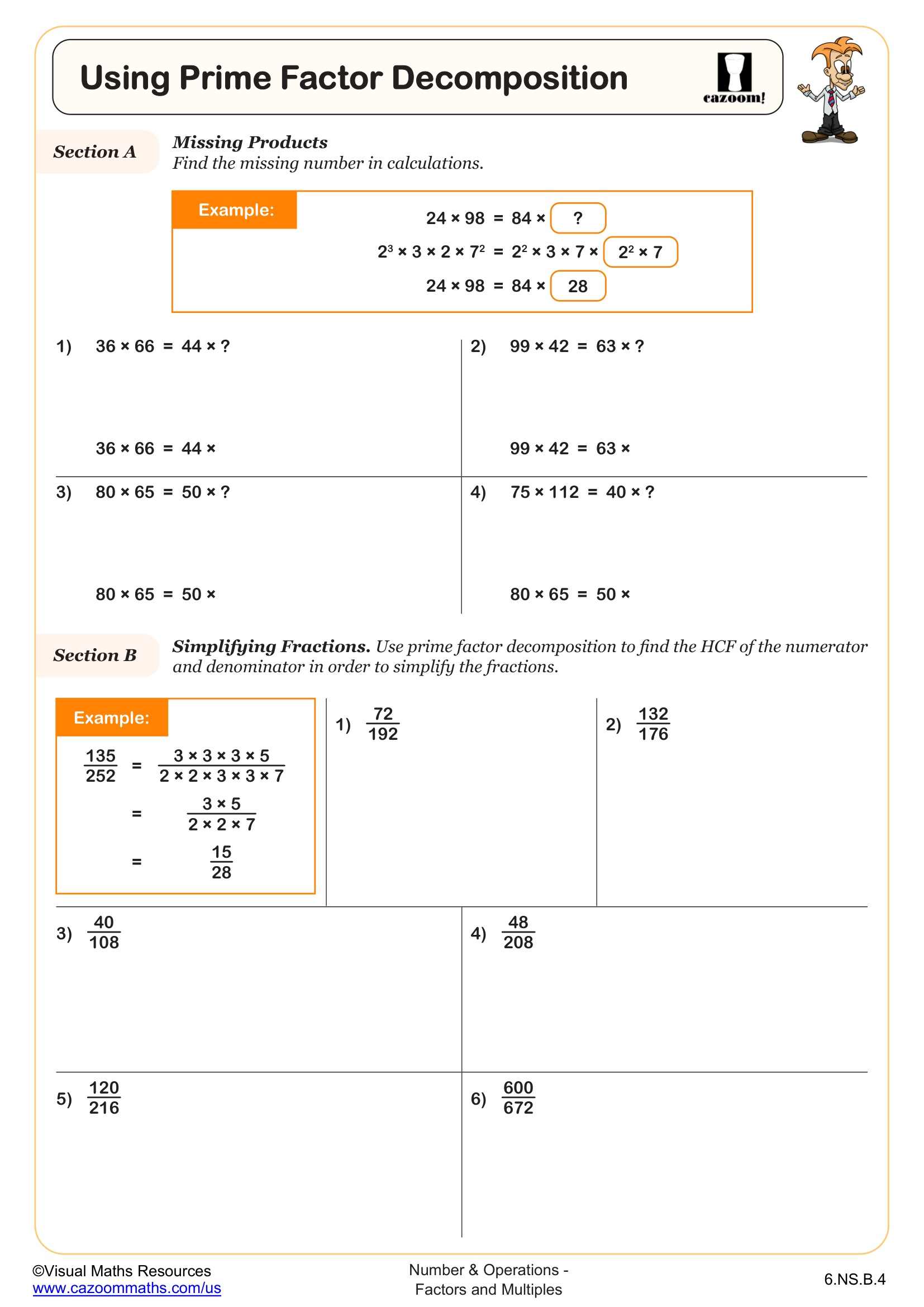
Using Prime Factor Decomposition
Using Prime Factors to Identify Square, Cube Numbers and Roots
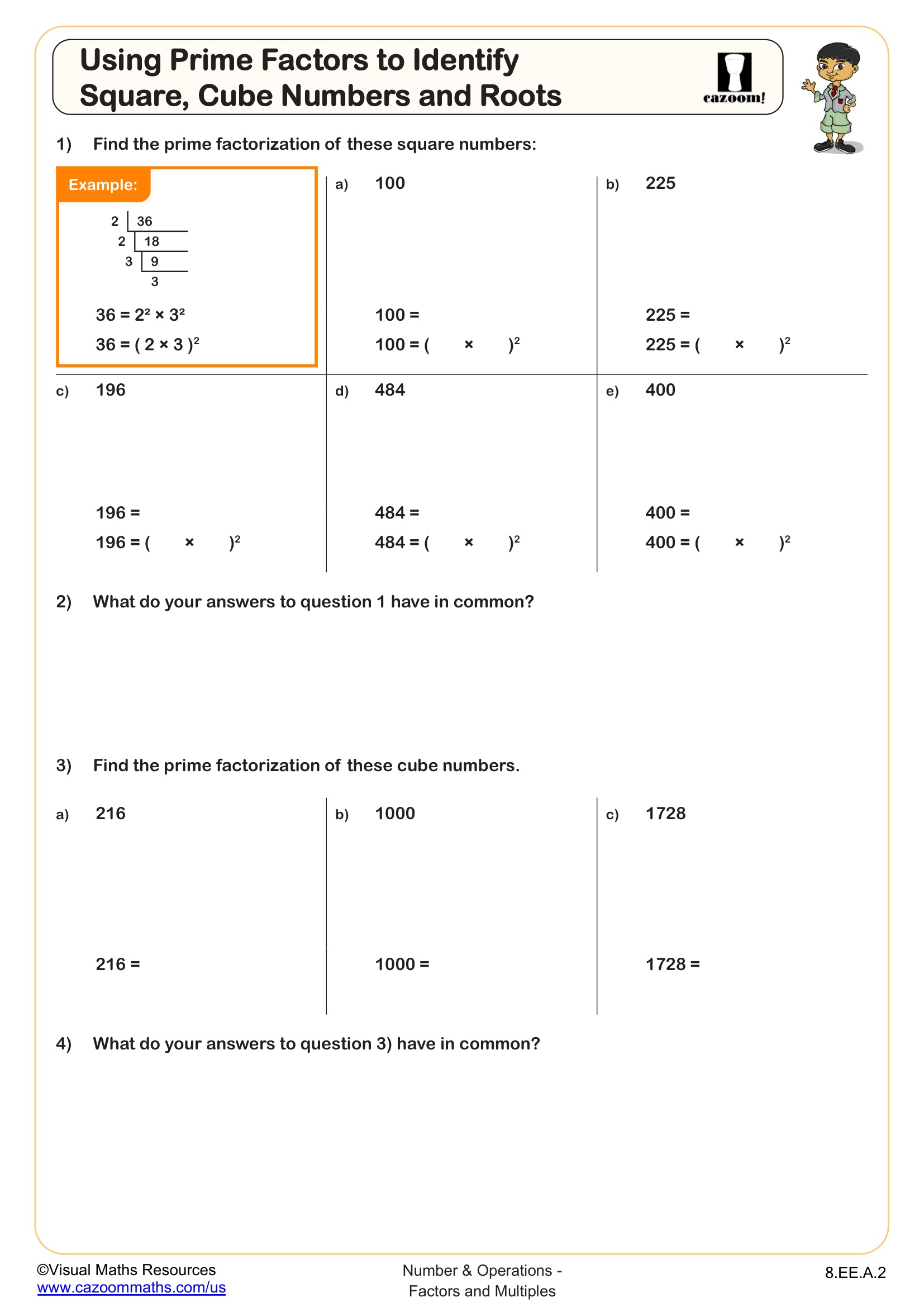
All worksheets are created by the team of experienced teachers at Cazoom Math.
What Are Factors and Multiples?
Factors are whole numbers that divide evenly into another number, while multiples are the results of multiplying a number by whole numbers. For example, the factors of 12 are 1, 2, 3, 4, 6, and 12, while multiples of 4 include 4, 8, 12, 16, and so on. This topic appears throughout middle school mathematics and directly supports Common Core standards for number theory and operations.
A common misconception students hold is believing that factors must be smaller than the original number, causing them to omit the number itself. Teachers frequently notice students confusing factors with multiples during assessments—students might list multiples when asked for factors, especially under time pressure. Worksheets that contrast both concepts side-by-side help students distinguish between dividing into a number versus multiplying from a number.
Which Grade Levels Learn Factors and Multiples?
These worksheets cover 6th grade, 7th grade, and 8th grade middle school mathematics. Students first encounter factors and multiples formally in 4th grade, but middle school instruction deepens this understanding and connects it to more complex topics like greatest common factor, least common multiple, prime factorization, and rational number operations.
The progression across middle school grades shifts from basic identification to application. Sixth graders focus on listing factors and multiples systematically, while 7th graders apply these skills to fraction operations and proportional reasoning. By 8th grade, students use factor relationships in algebraic expressions and polynomial factoring. State assessments expect students to apply these concepts in multi-step problems rather than simple recall tasks.
How Do Prime Numbers Relate to Factors?
Prime numbers are whole numbers greater than 1 that have exactly two factors: 1 and themselves. Understanding prime numbers helps students break down composite numbers into prime factors, a skill essential for simplifying fractions, finding common denominators, and eventually factoring algebraic expressions. Students often experience a breakthrough when they recognize that every composite number can be expressed as a unique product of prime numbers.
Cryptography and computer security rely heavily on prime factorization—the encryption protecting online banking and secure messaging uses the mathematical difficulty of factoring extremely large numbers into their prime components. Students confidently tackle factoring challenges once they recognize that identifying whether a number is prime or composite provides a starting strategy for more complex problems in both pure mathematics and real-world applications.
How Should Teachers Use These Worksheets?
The worksheets provide scaffolded practice that moves from skip counting patterns to identifying factors and connecting to prime numbers. The maze activities offer visual engagement that helps kinesthetic learners while reinforcing counting patterns that underlie multiples. Teachers can use initial problems as guided examples before releasing students to independent work, ensuring students understand the distinction between listing all factors versus generating the first several multiples.
These worksheets work well for differentiated instruction—struggling students benefit from the skip counting mazes as foundational review, while advanced students can tackle prime factorization challenges. Many teachers use them for warm-up activities, math centers, or intervention groups targeting specific gaps. The complete answer keys allow students to self-check during partner work or enable efficient grading when used as formative assessments to identify which students need additional support before summative tests.