Middle School Foundations of Multiplication Worksheets
All worksheets are created by the team of experienced teachers at Cazoom Math.
Why Do Middle School Students Need Multiplication Foundations Practice?
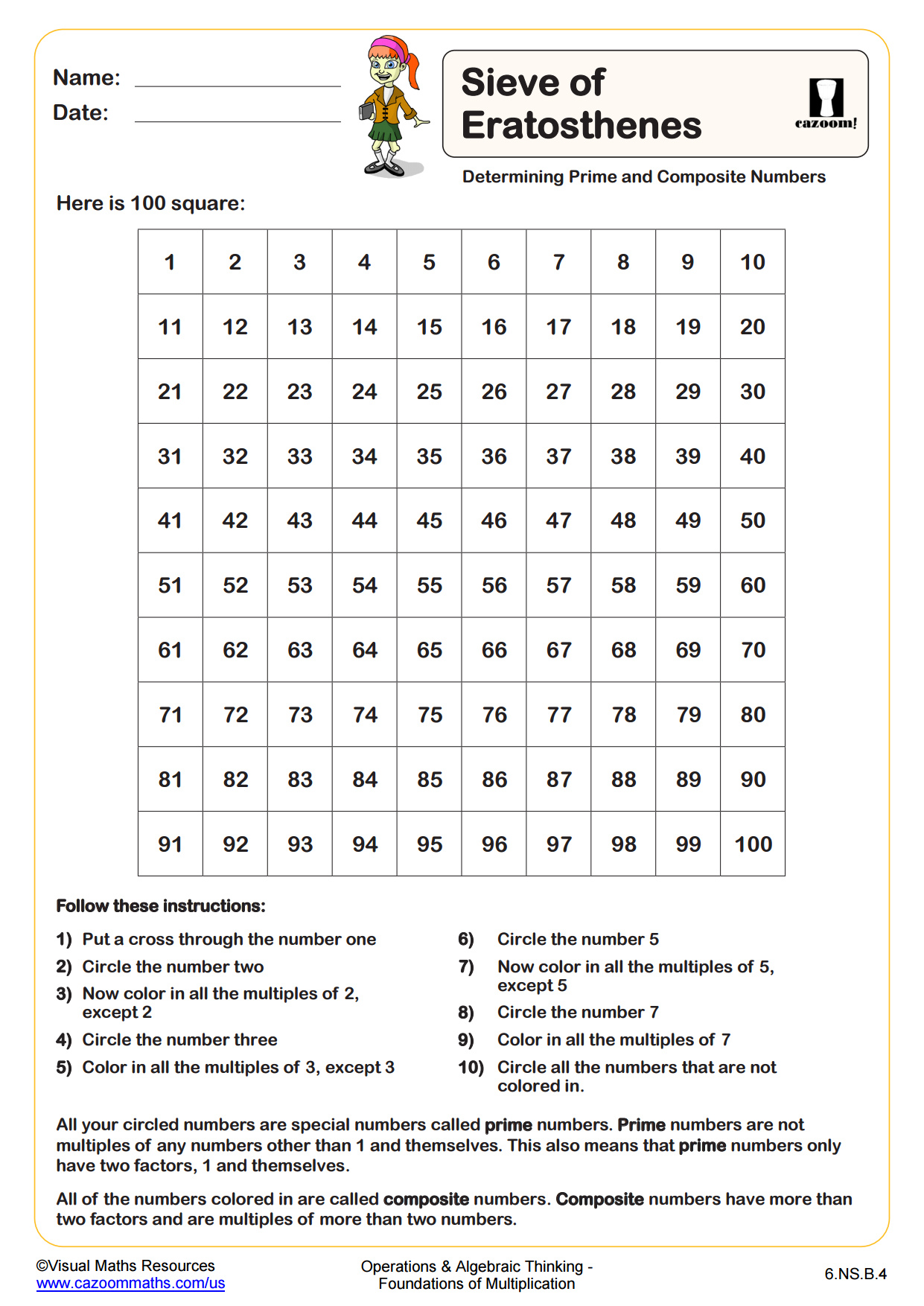
Many middle school students arrive with inconsistent mastery of multiplication concepts, creating obstacles when they encounter fractions, ratios, algebraic expressions, and factoring polynomials. While elementary school introduces these ideas, middle school mathematics requires students to apply multiplication foundations flexibly and automatically, particularly when working with variables, prime factorization, and greatest common factors.
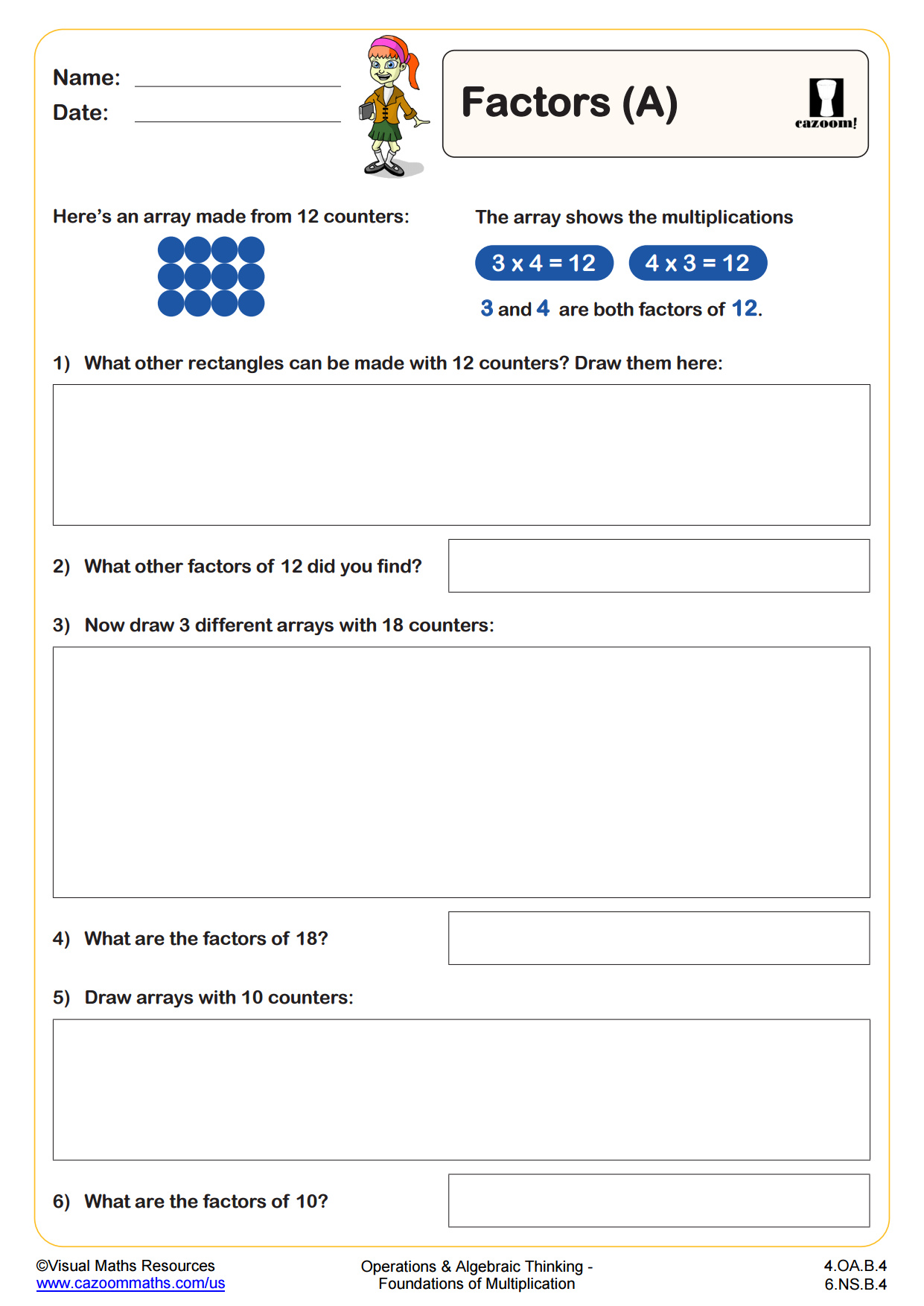
Students often struggle with factor identification because they confuse factors with multiples or only consider obvious pairs like 1 and the number itself. Teachers notice that students lose points on standardized assessments when they miss factor pairs in the middle range—for example, identifying 1, 2, 3, 6, 9, and 18 as factors of 18 but overlooking that these form complete pairs. Systematic practice with finding all factors builds the number sense required for more complex operations.
What Grade Levels Are These Multiplication Foundations Worksheets For?
These worksheets target middle school students in 6th grade, 7th grade, and 8th grade. While multiplication basics are introduced in elementary school, middle school students need continued reinforcement as they apply these concepts to increasingly abstract mathematical situations including pre-algebra, algebraic expressions, and rational number operations.
The progression across grades focuses on sophistication rather than just difficulty. Sixth graders typically work on identifying factors and multiples of whole numbers and solidifying multiplication tables. Seventh graders extend these skills to recognize factor relationships when simplifying fractions and working with ratios. Eighth graders apply factor knowledge to algebraic contexts, such as factoring expressions and understanding the distributive property, making fluency with number factors an ongoing priority throughout middle school.
How Do Factor Pairs Connect to Real-World Problem Solving?
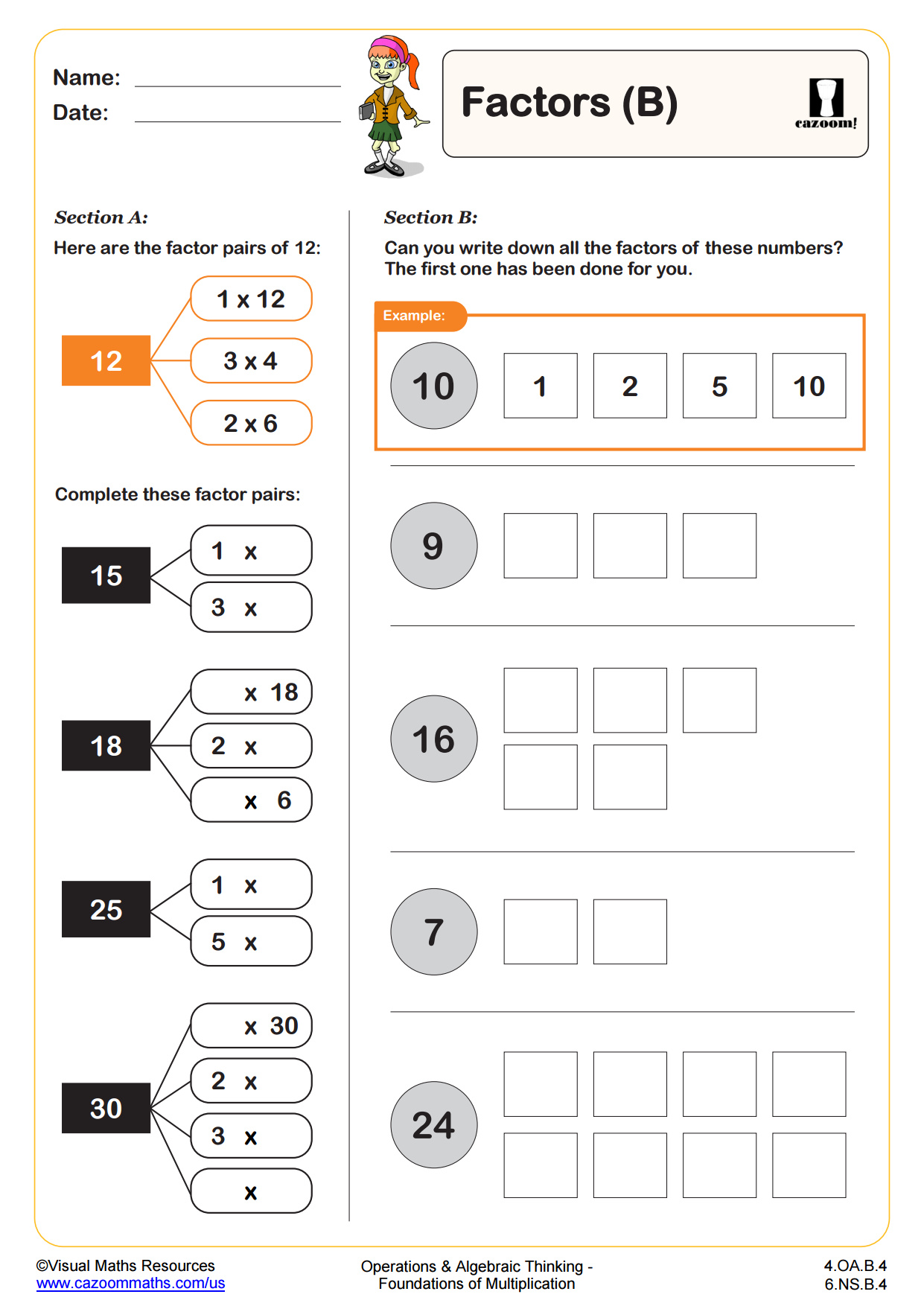
Factor pairs represent two numbers that multiply together to produce a given product, and understanding all factor pairs of a number strengthens both multiplication fluency and division reasoning. Students learn that 24 has factor pairs (1, 24), (2, 12), (3, 8), and (4, 6), which helps them see multiplication and division as inverse operations and prepares them for factoring algebraic expressions.
This skill appears constantly in STEM fields, particularly when engineers and architects design rectangular spaces or arrays. A designer planning a 48-square-foot room needs to consider all possible length-width combinations: 6×8, 4×12, 3×16, and so on. Computer scientists use factor pairs when optimizing data structures and determining efficient ways to organize information in rows and columns. Recognizing that numbers break apart in multiple ways builds flexible thinking that students apply throughout mathematics and technical careers.
How Can Teachers Use These Multiplication Foundations Worksheets Effectively?
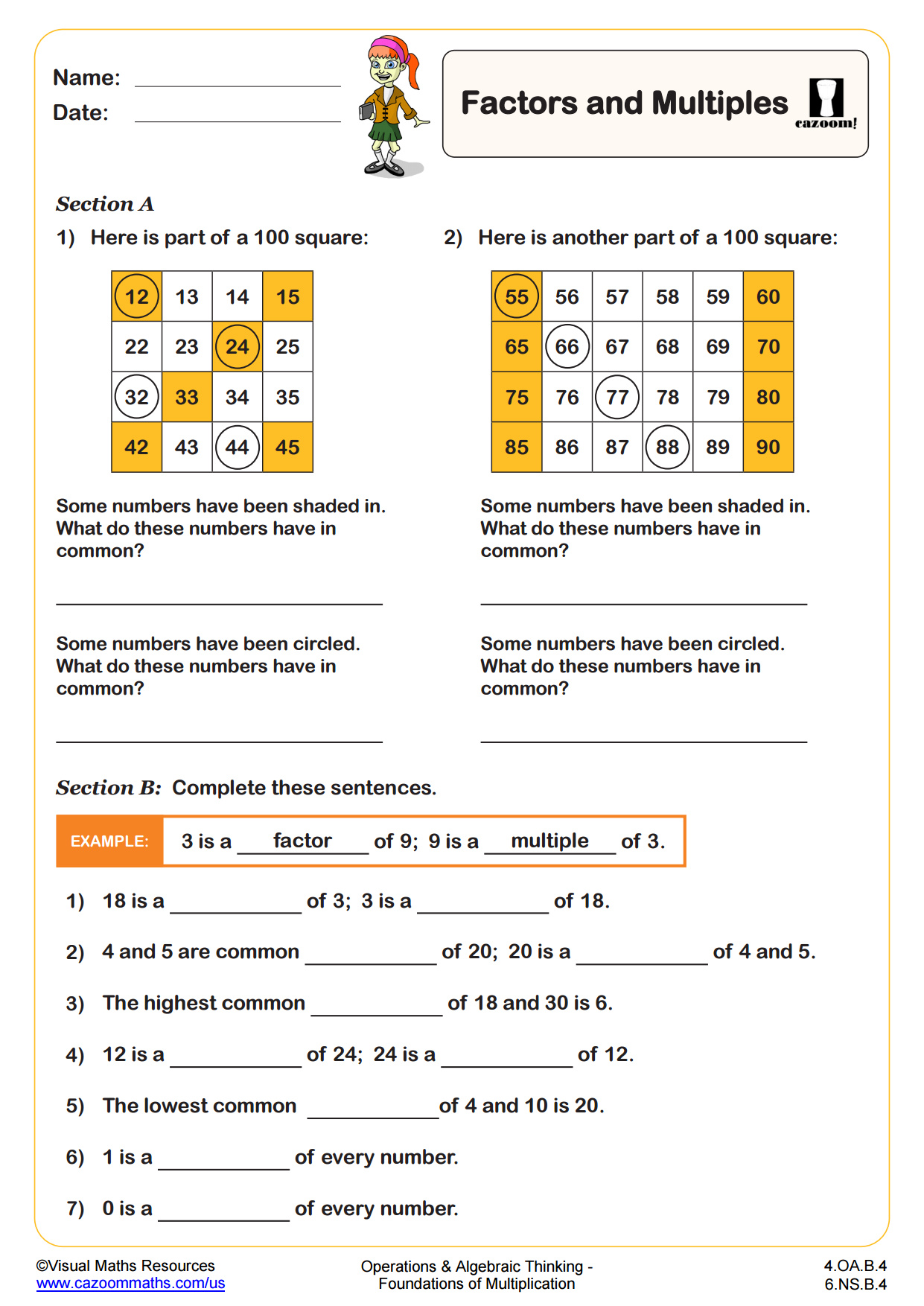
These worksheets scaffold learning by isolating specific aspects of multiplication foundations, allowing teachers to target exactly where students need support. The variety of subtopics—from basic factors to factor pair puzzles—means teachers can differentiate instruction, assigning simpler factor identification to students who need reinforcement while challenging others with multiples or more complex factor relationships.
Many teachers use these worksheets for warm-up activities at the beginning of class to maintain fluency, for homework to reinforce concepts introduced during lessons, or as intervention materials for students who struggle with fraction operations or algebraic factoring. The complete answer keys make them practical for independent practice, peer review activities, or quick formative assessments. Teachers also find them valuable for spiral review throughout the year, ensuring students maintain multiplication automaticity even as they progress to more advanced topics.