Middle School Fractions, Decimals, Percents Worksheets
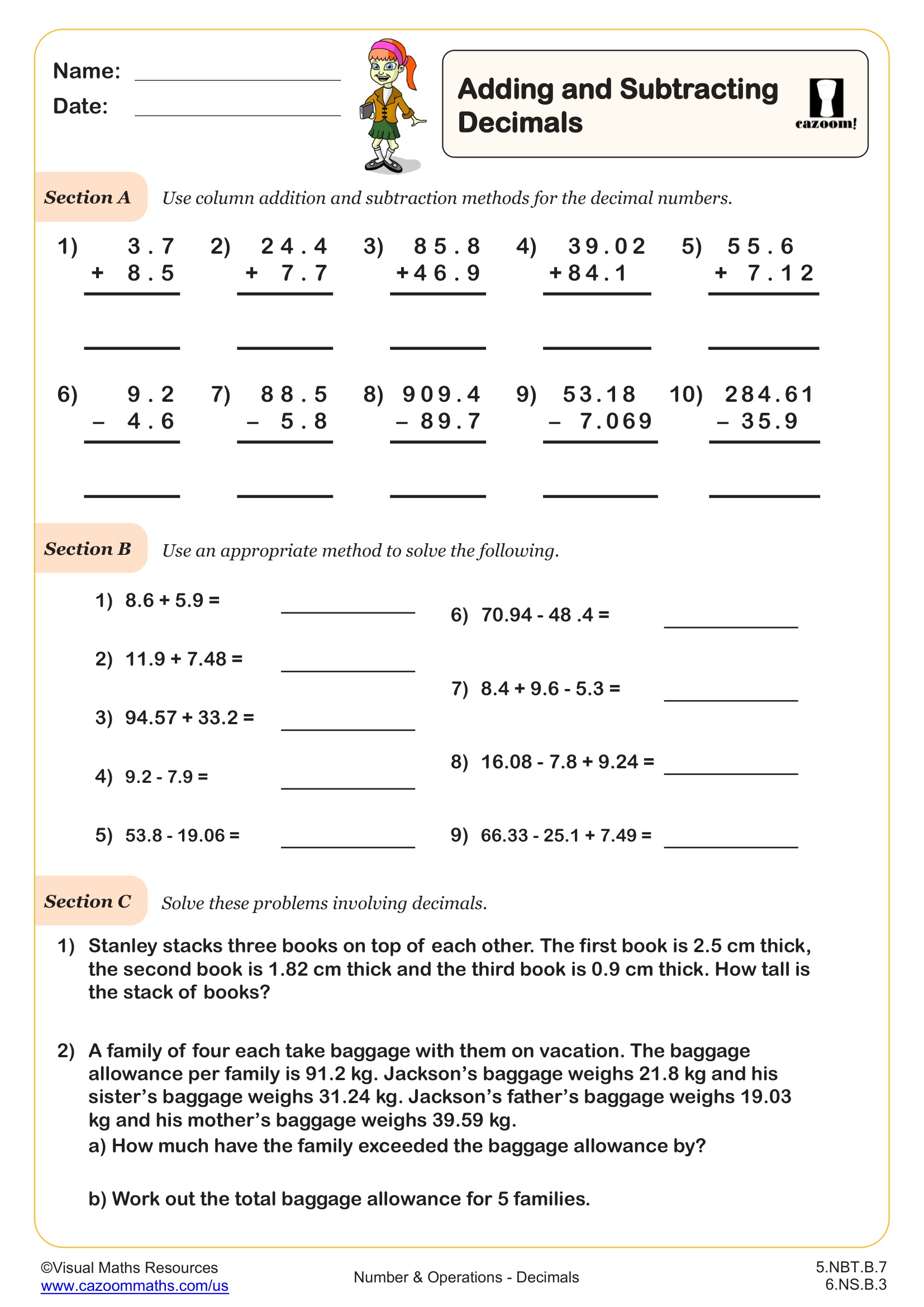
Adding and Subtracting Decimals
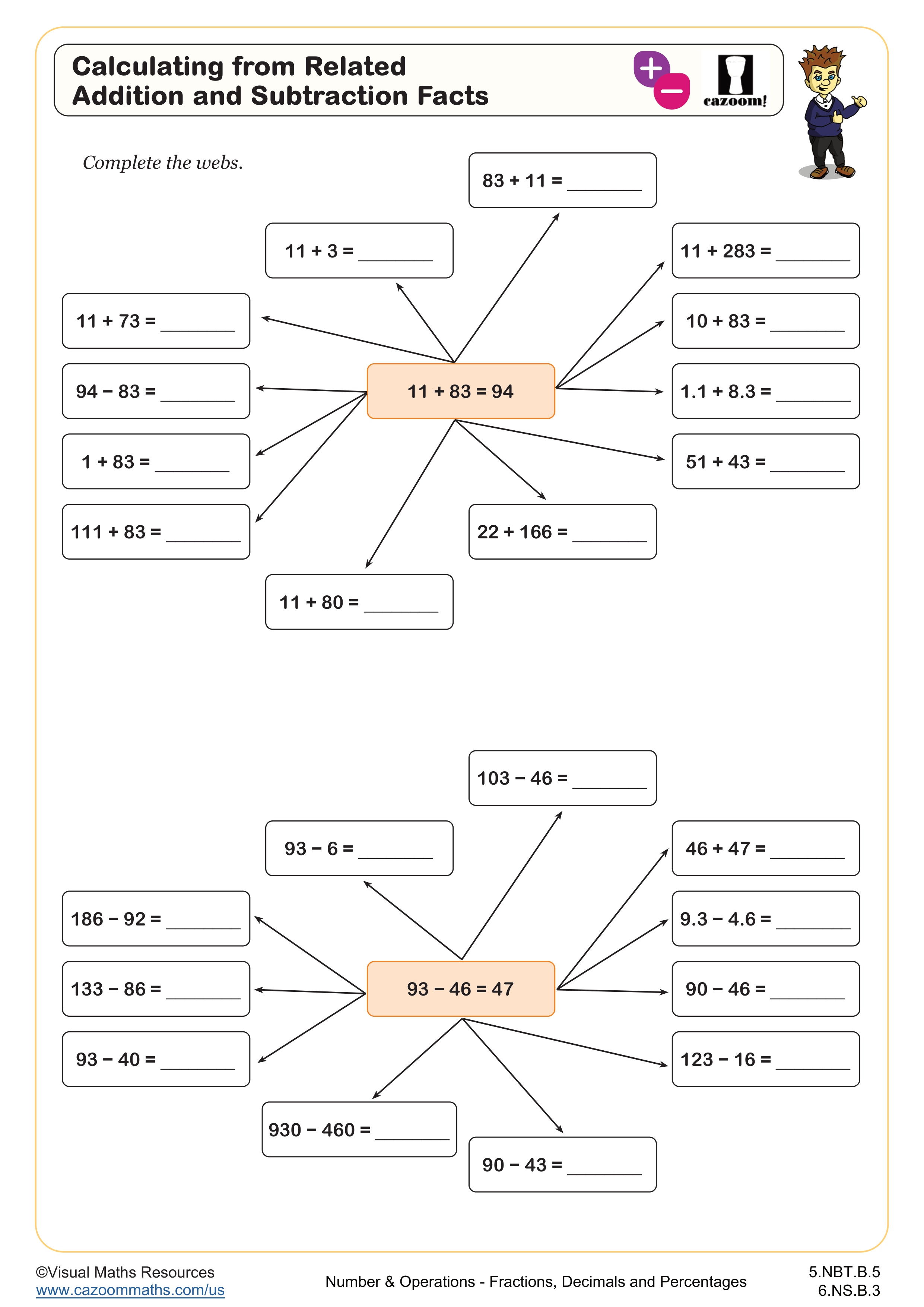
Calculating from Related Addition and Subtraction Facts
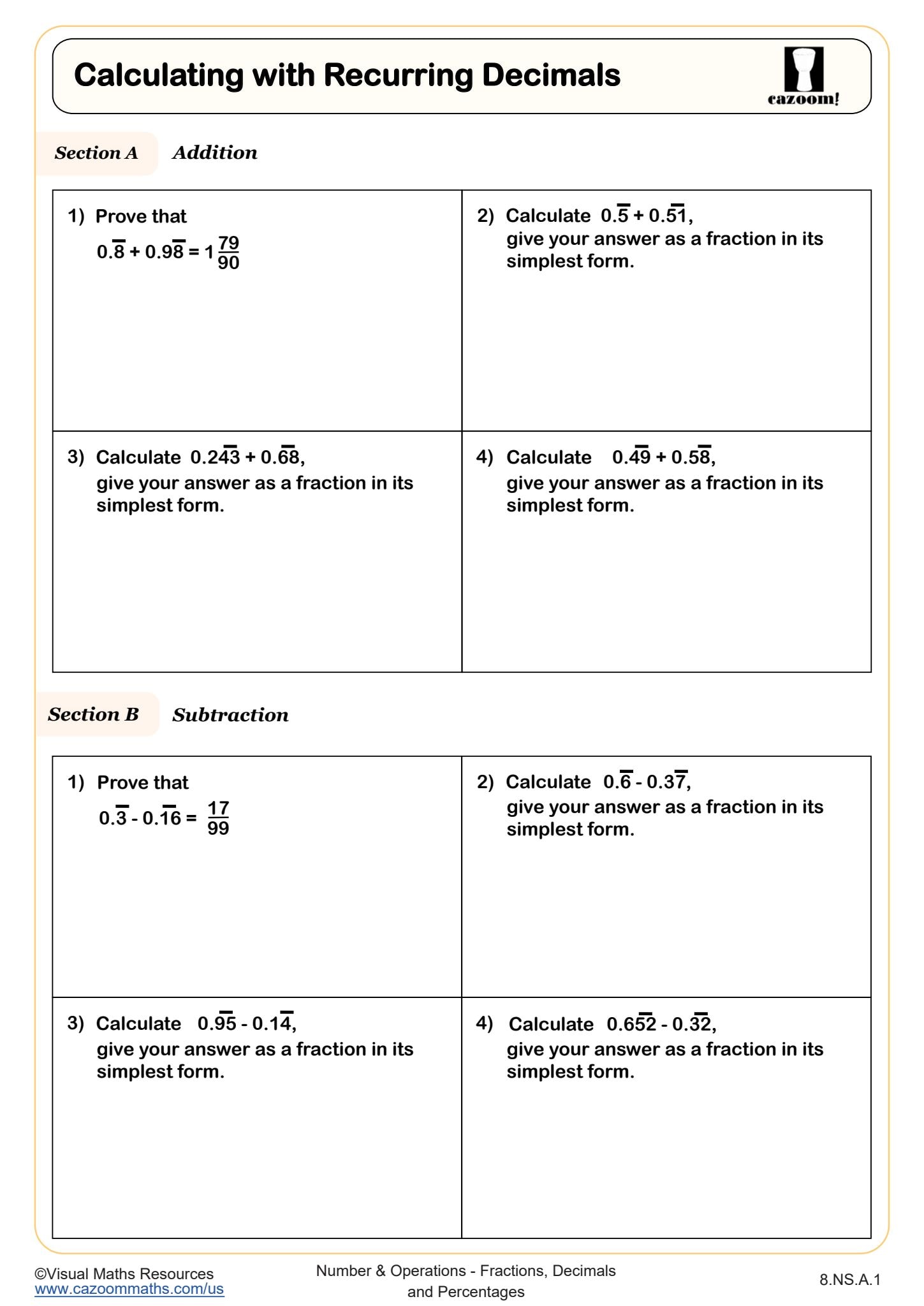
Calculating with Recurring Decimals
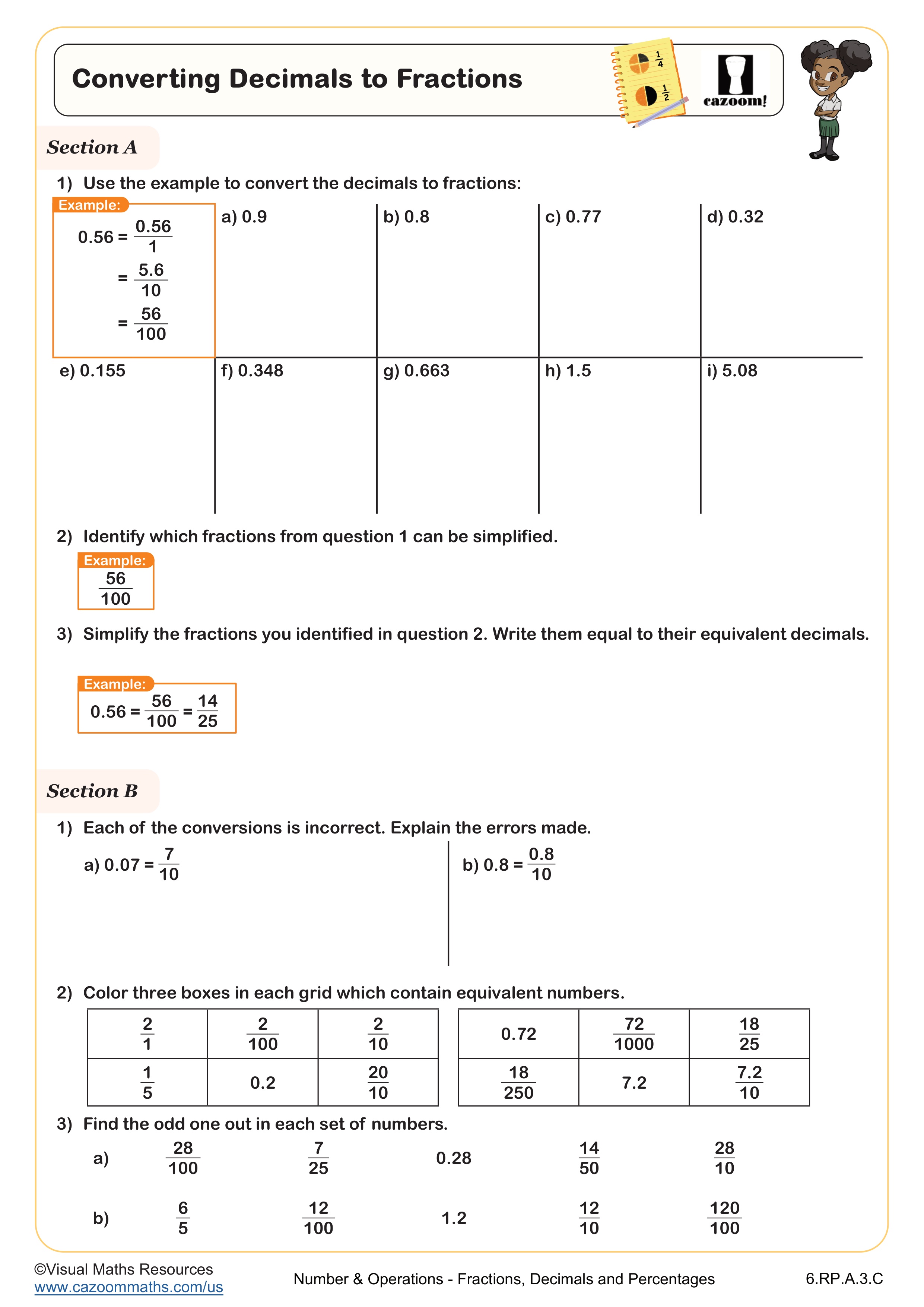
Converting Decimals to Fractions
Converting Fractions, Decimals, and Percents (A)
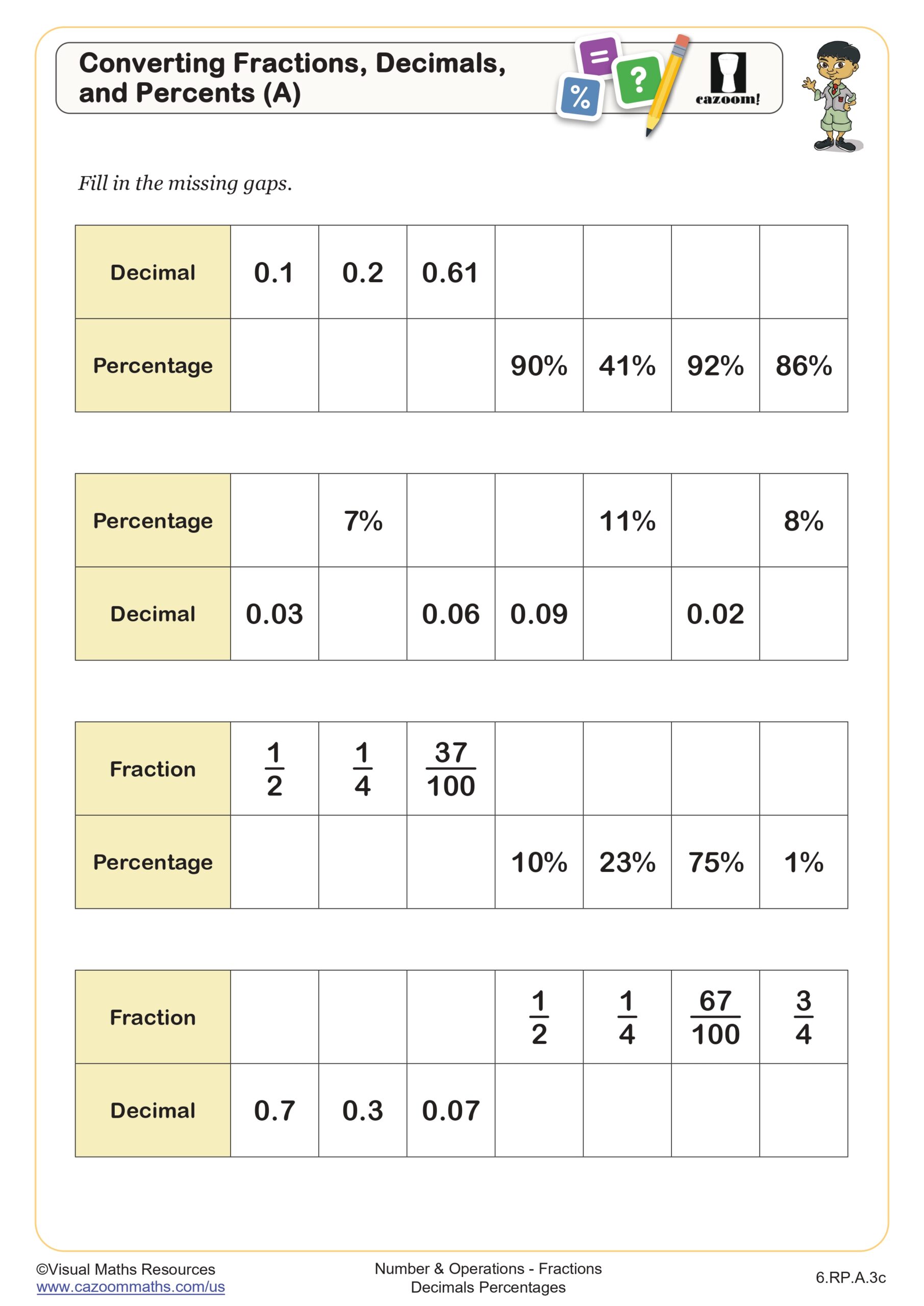
Converting Fractions, Decimals, and Percents (B)
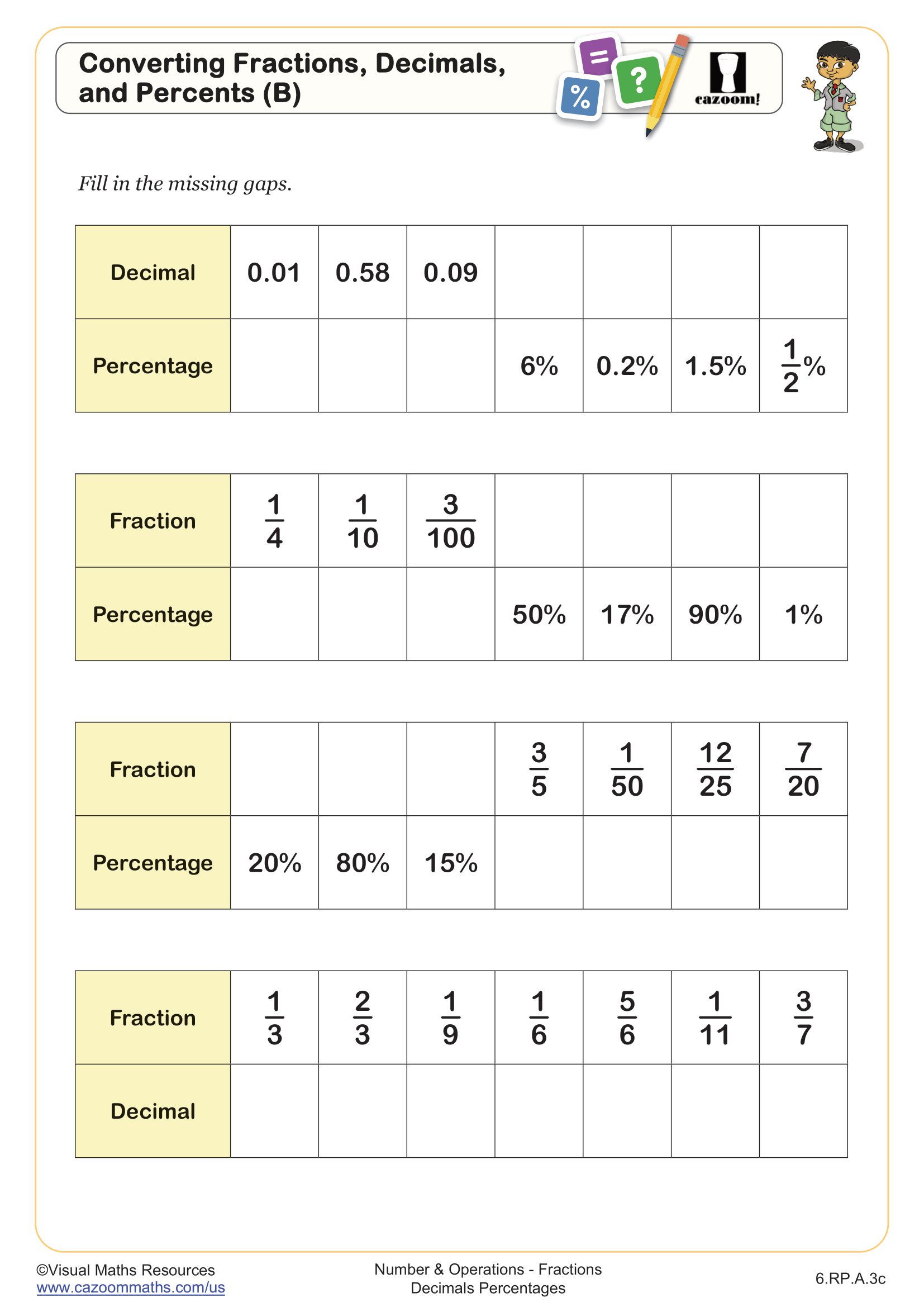
Converting Fractions, Decimals, and Percents (C)
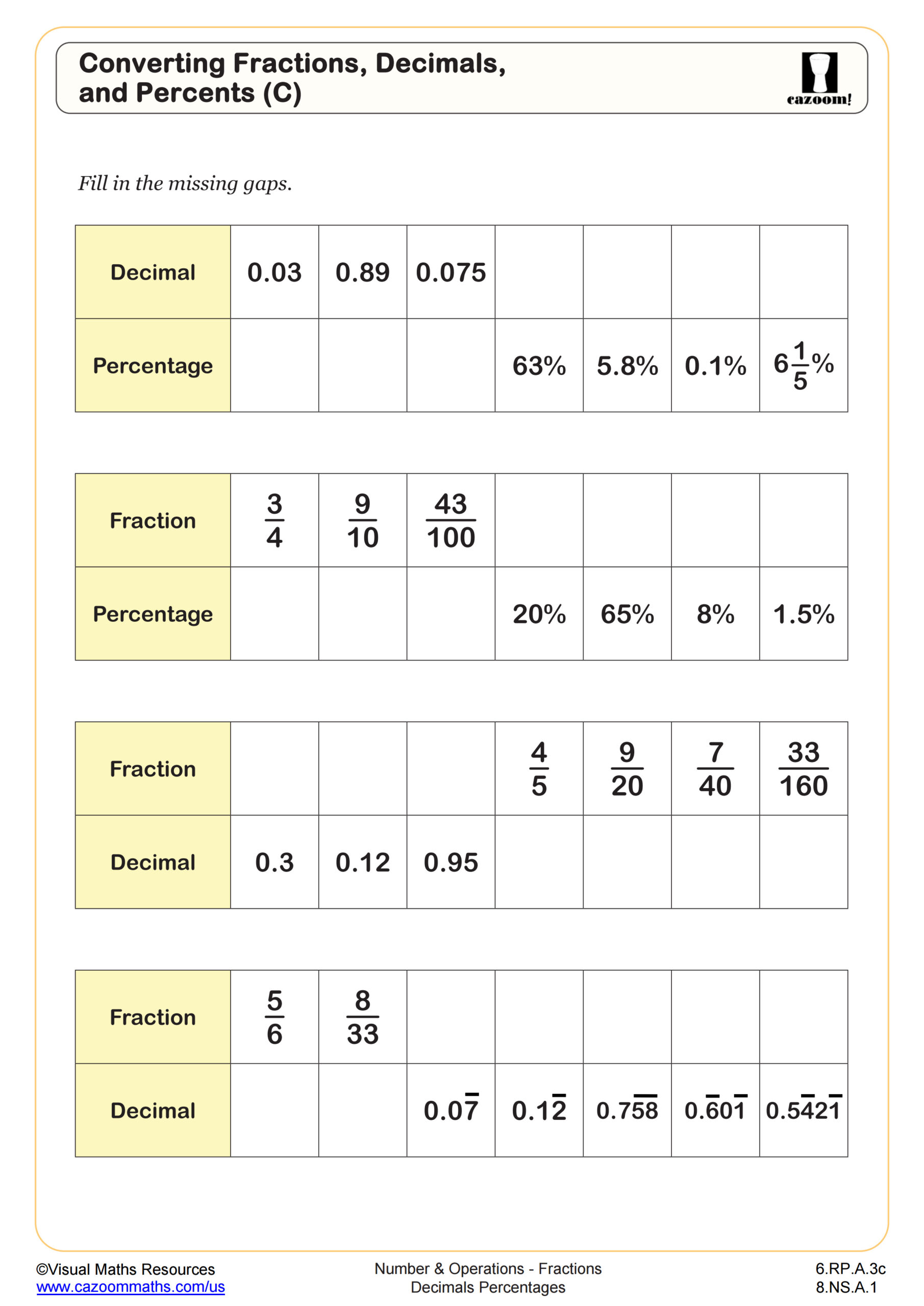
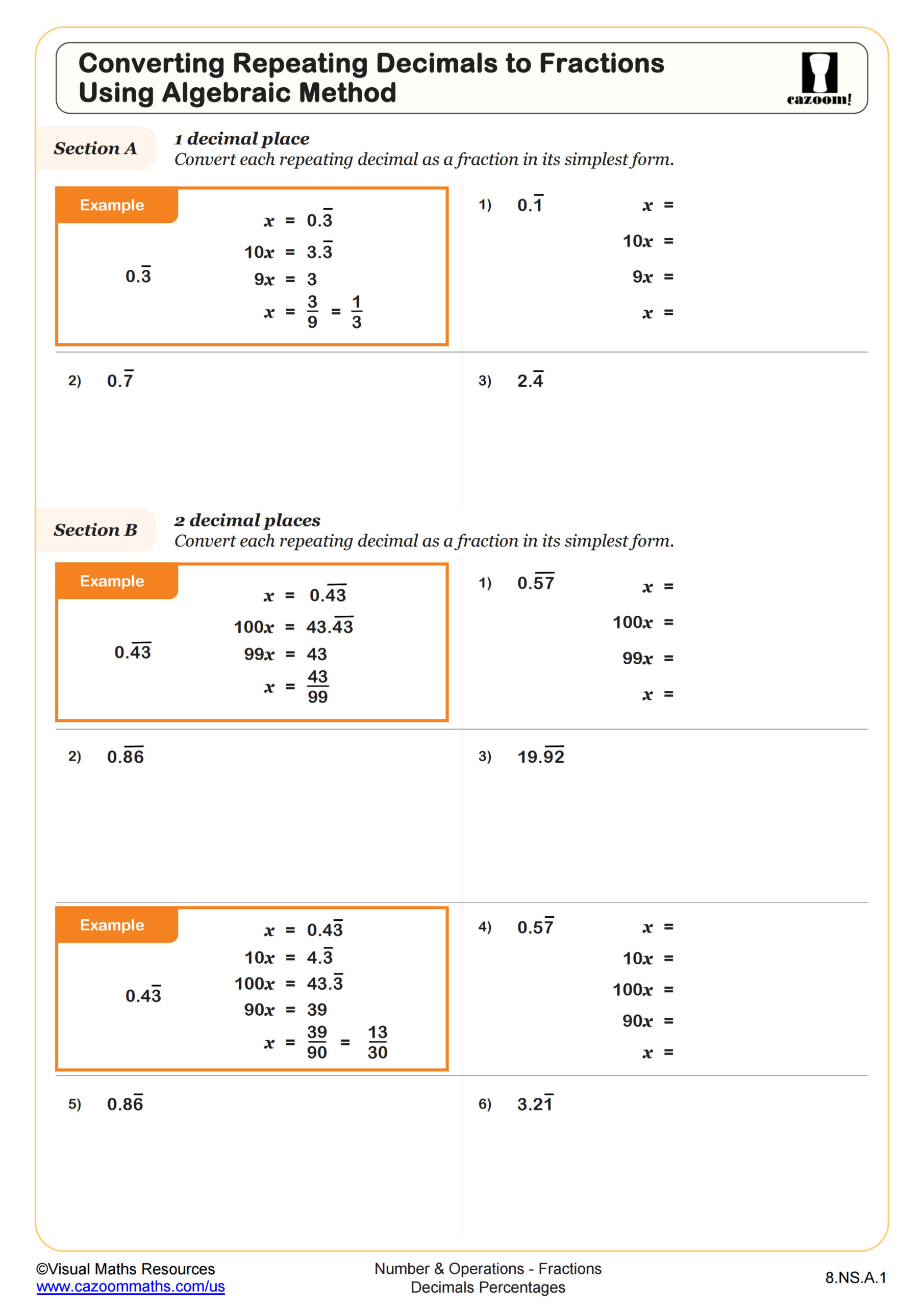
Converting Repeating Decimals to Fractions
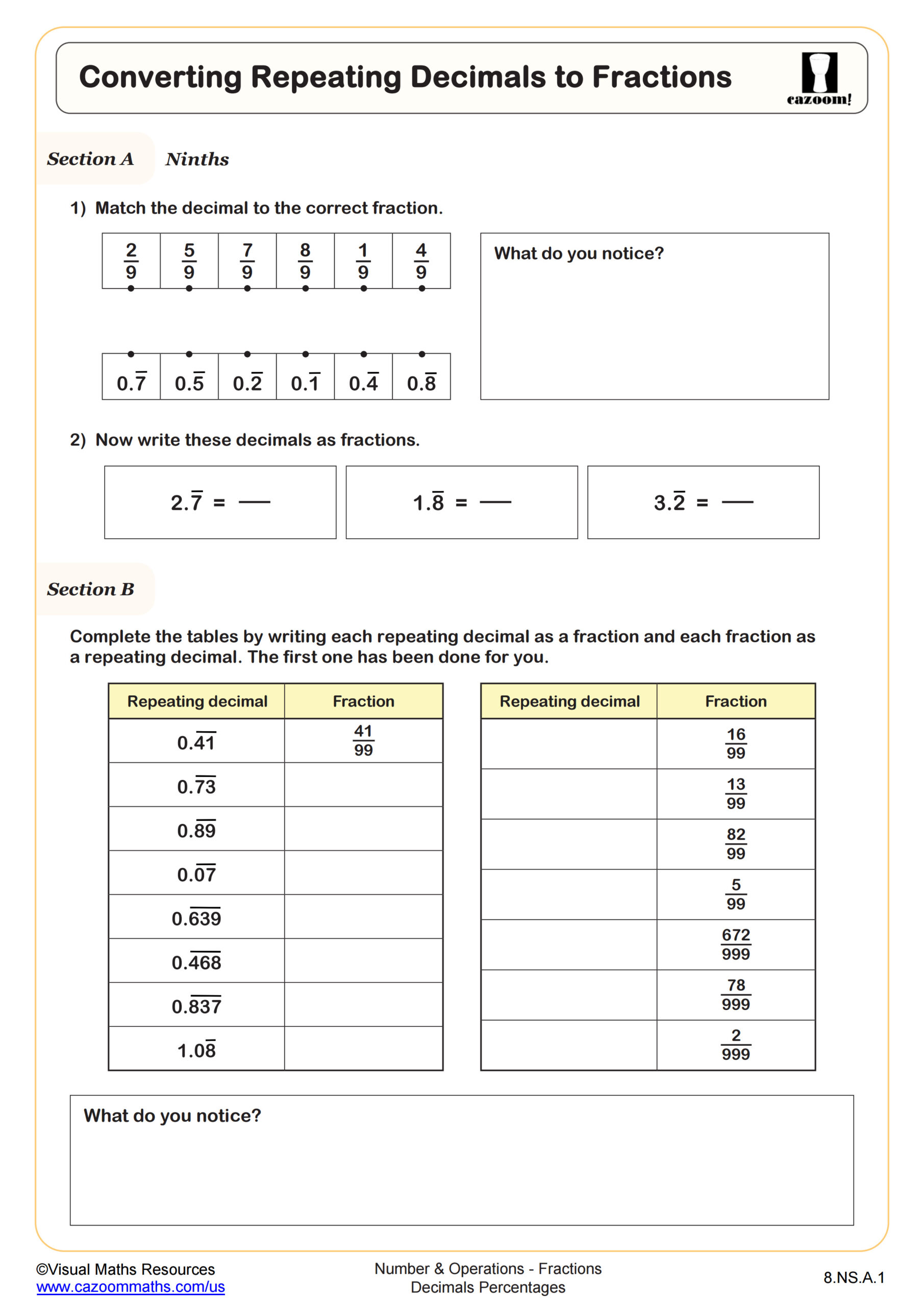
Converting Repeating Decimals to Fractions Using Algebraic Method
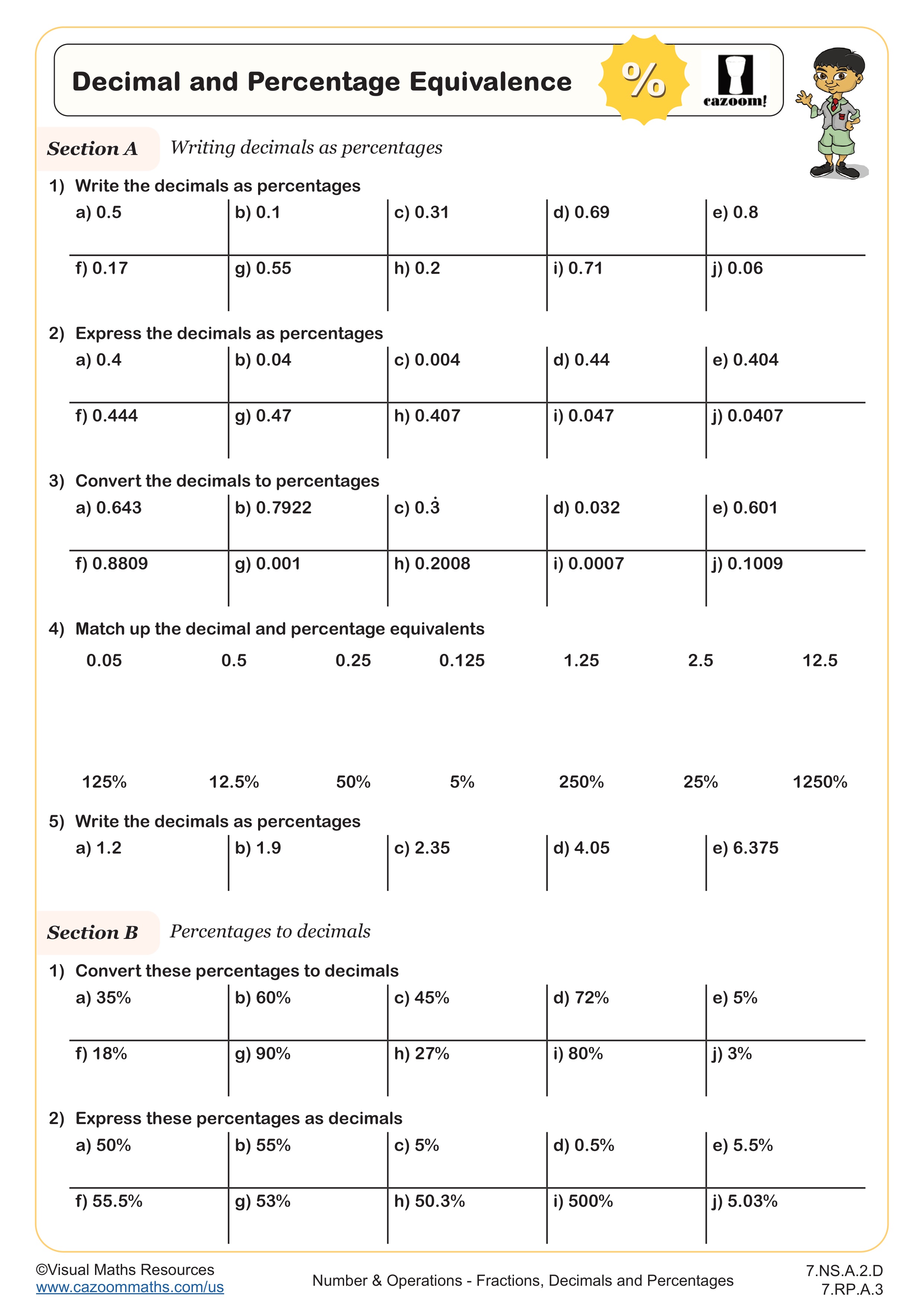
Decimal and Percentage Equivalence
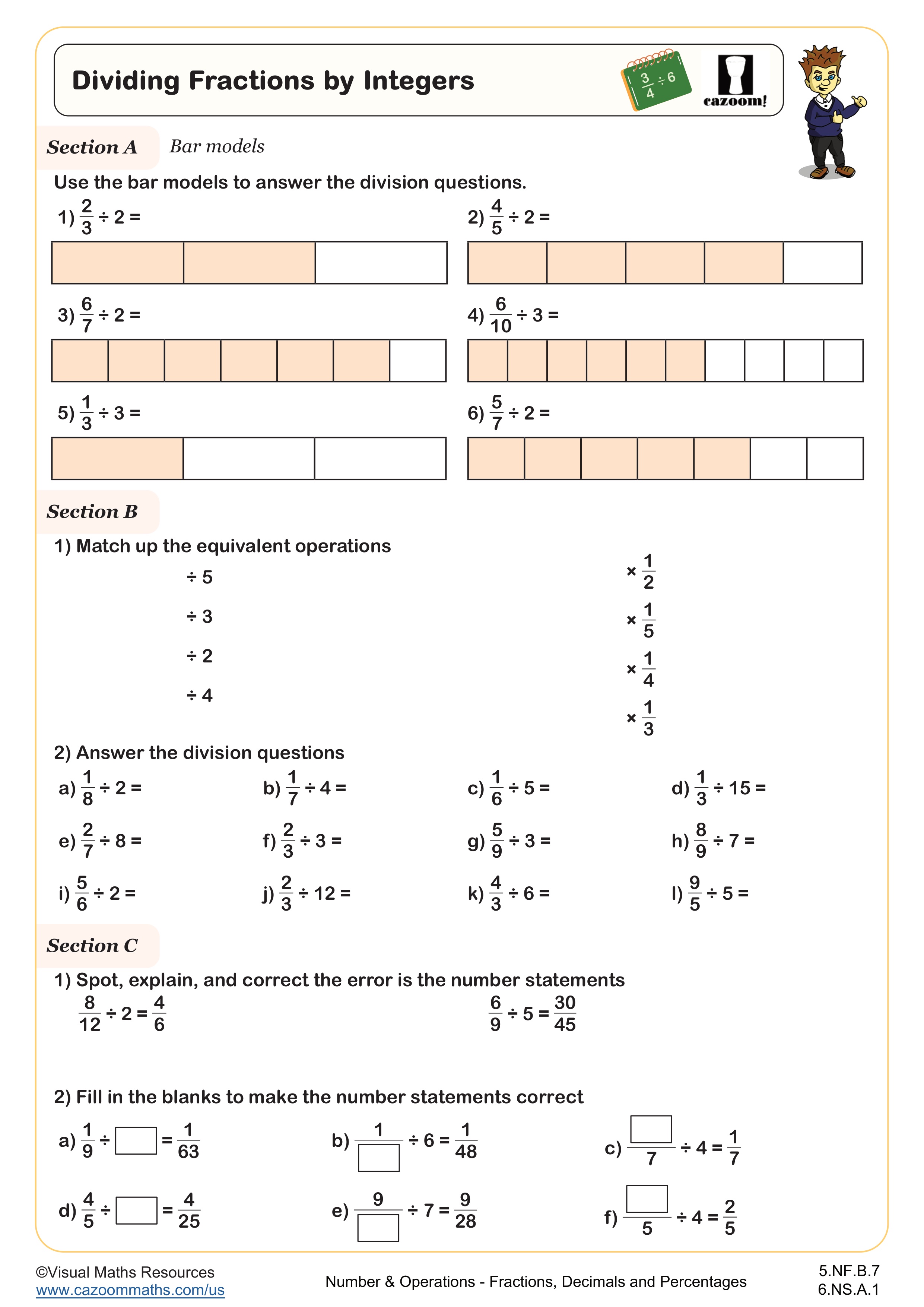
Dividing Fractions by Integers
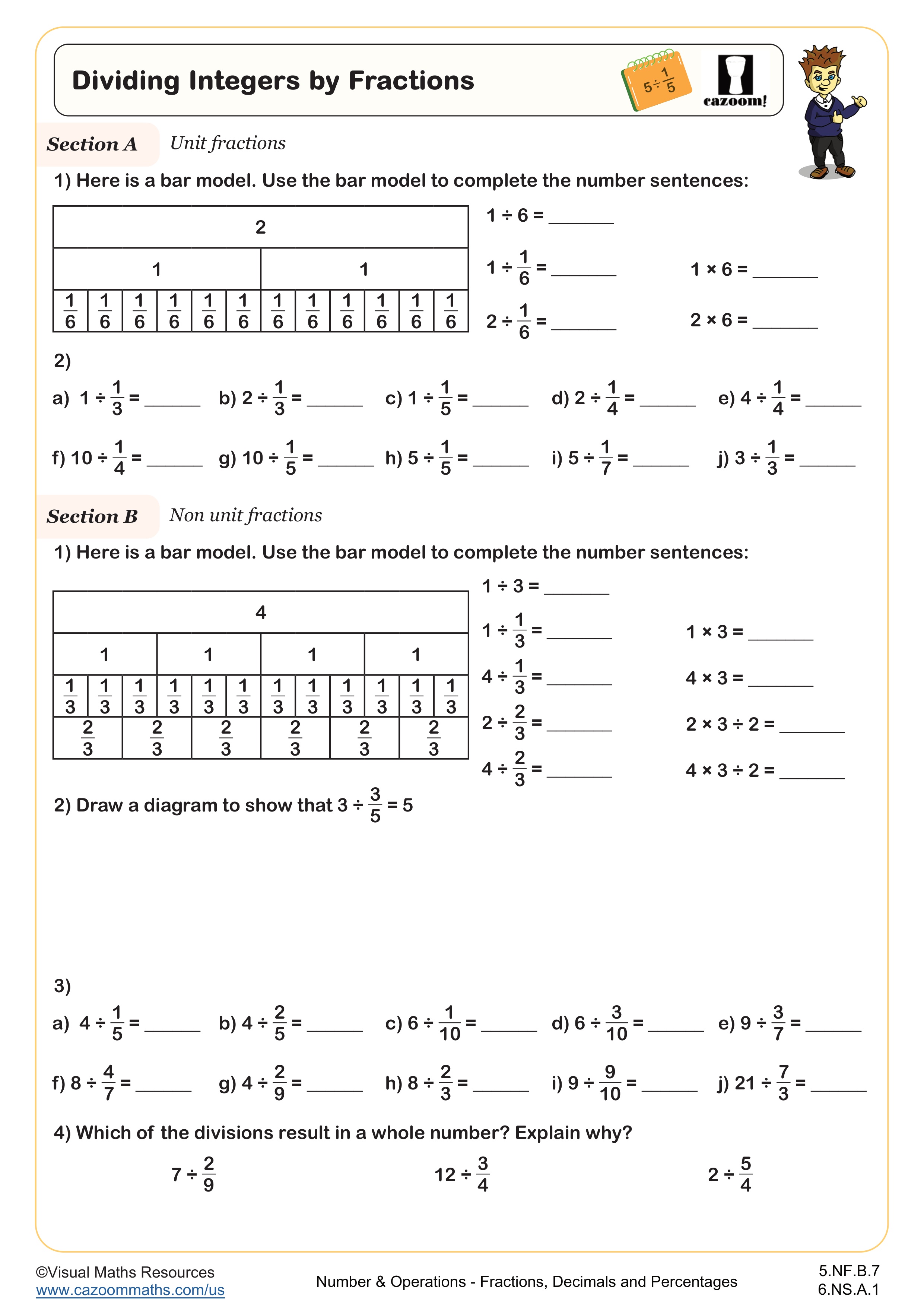
Dividing Integers by Fractions
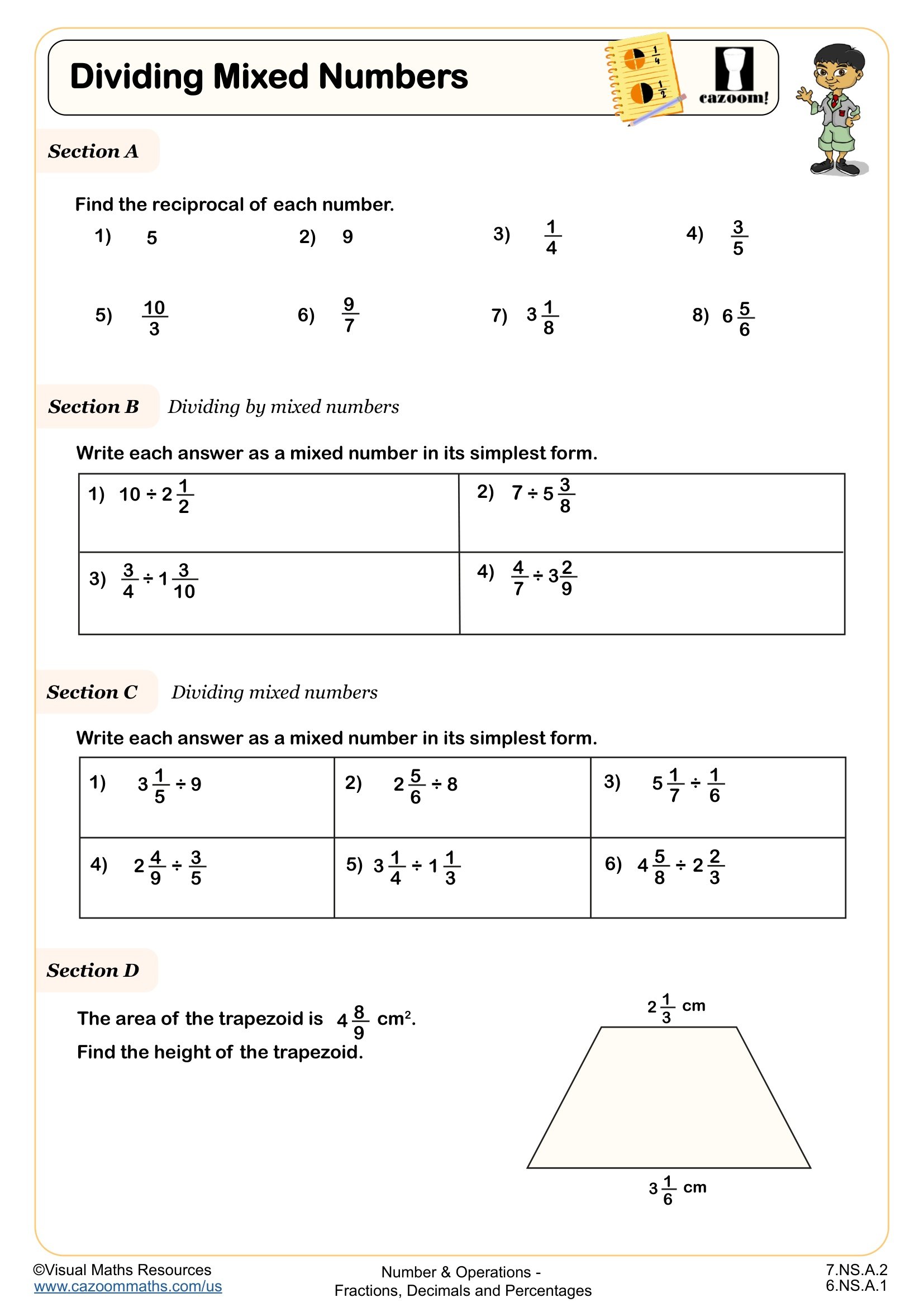
Dividing Mixed Numbers
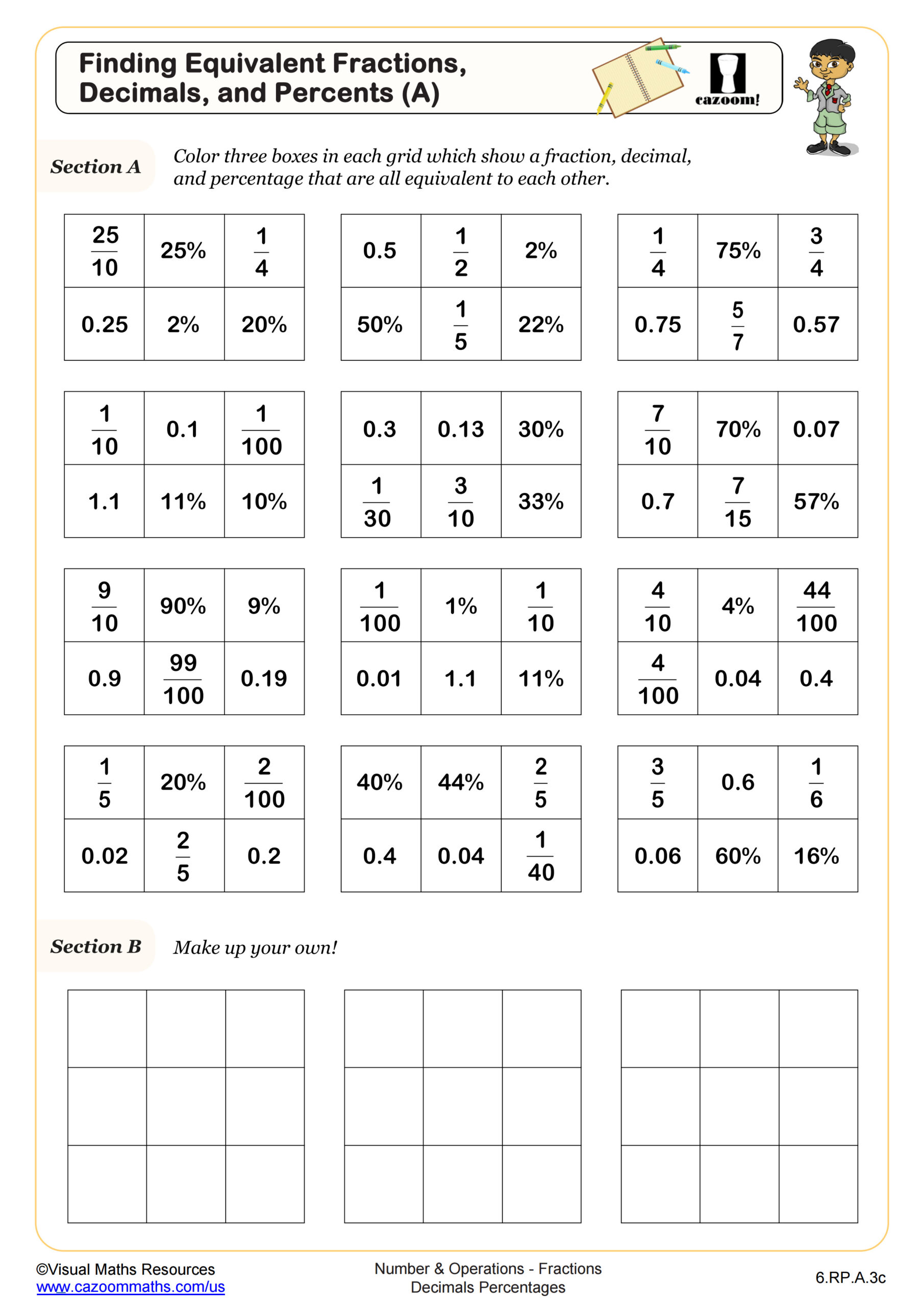
Finding Equivalent Fractions, Decimals, and Percents (A)
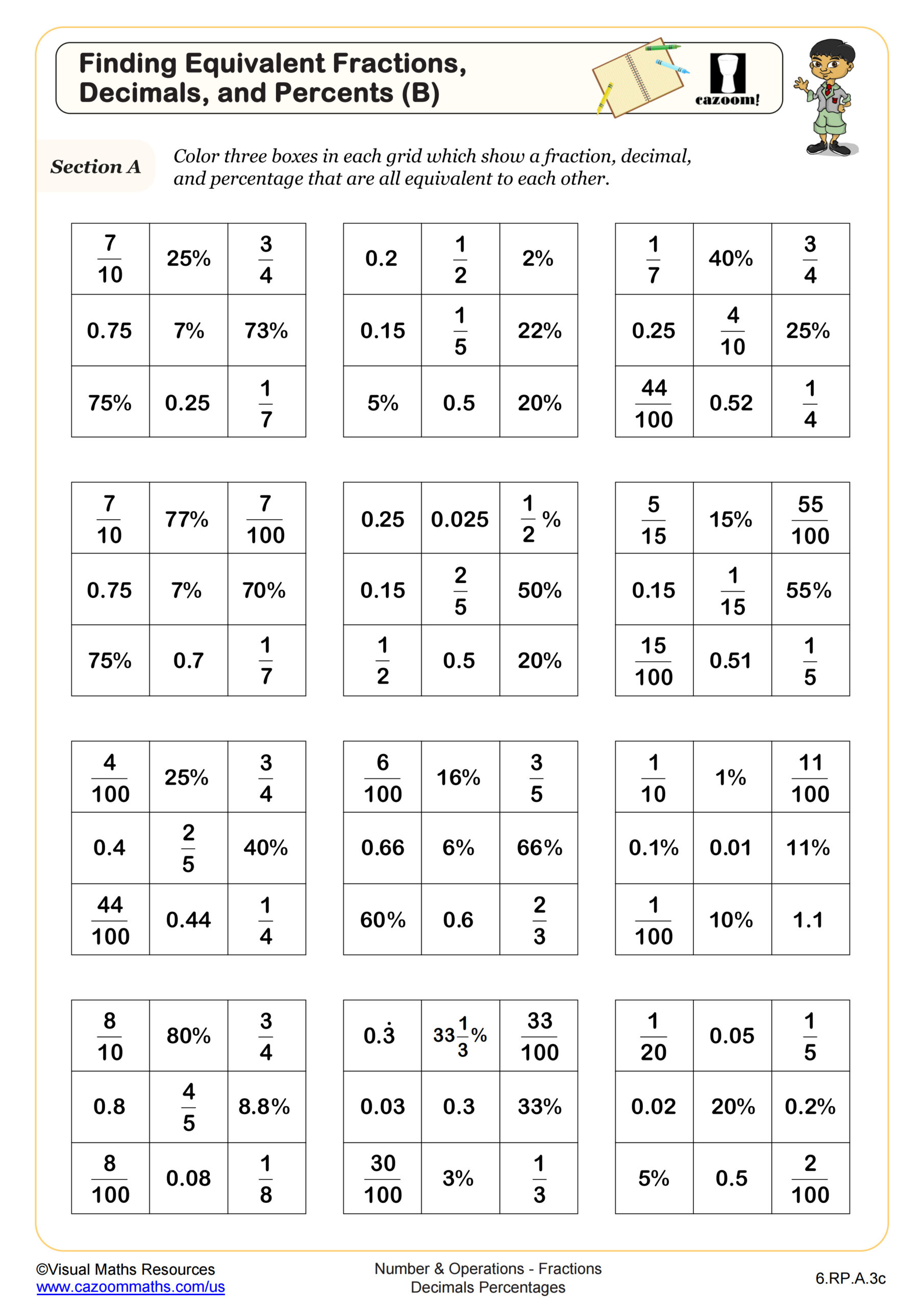
Finding Equivalent Fractions, Decimals, and Percents (B)
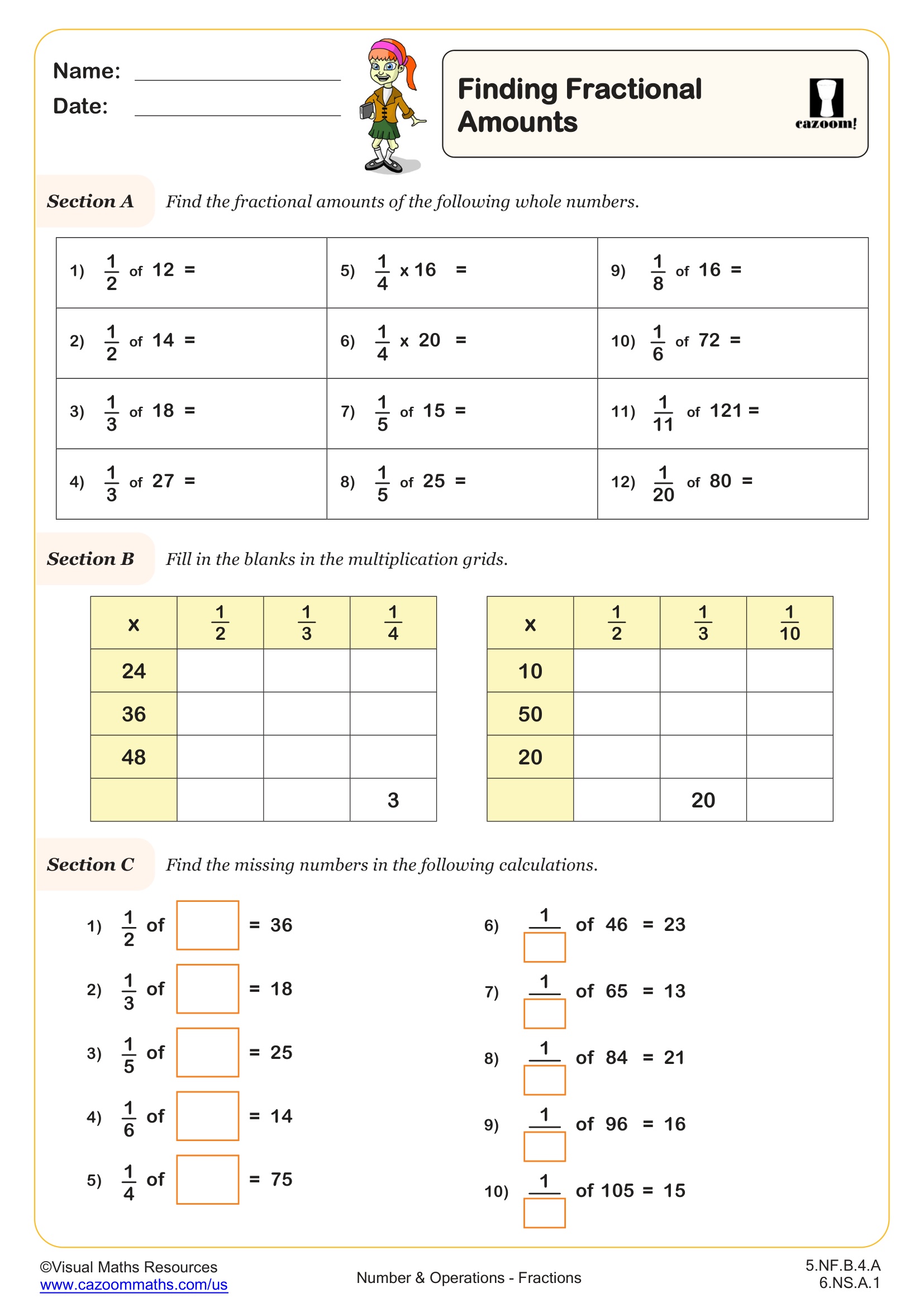
Finding Fractional Amounts
Finding Fractions of Amounts
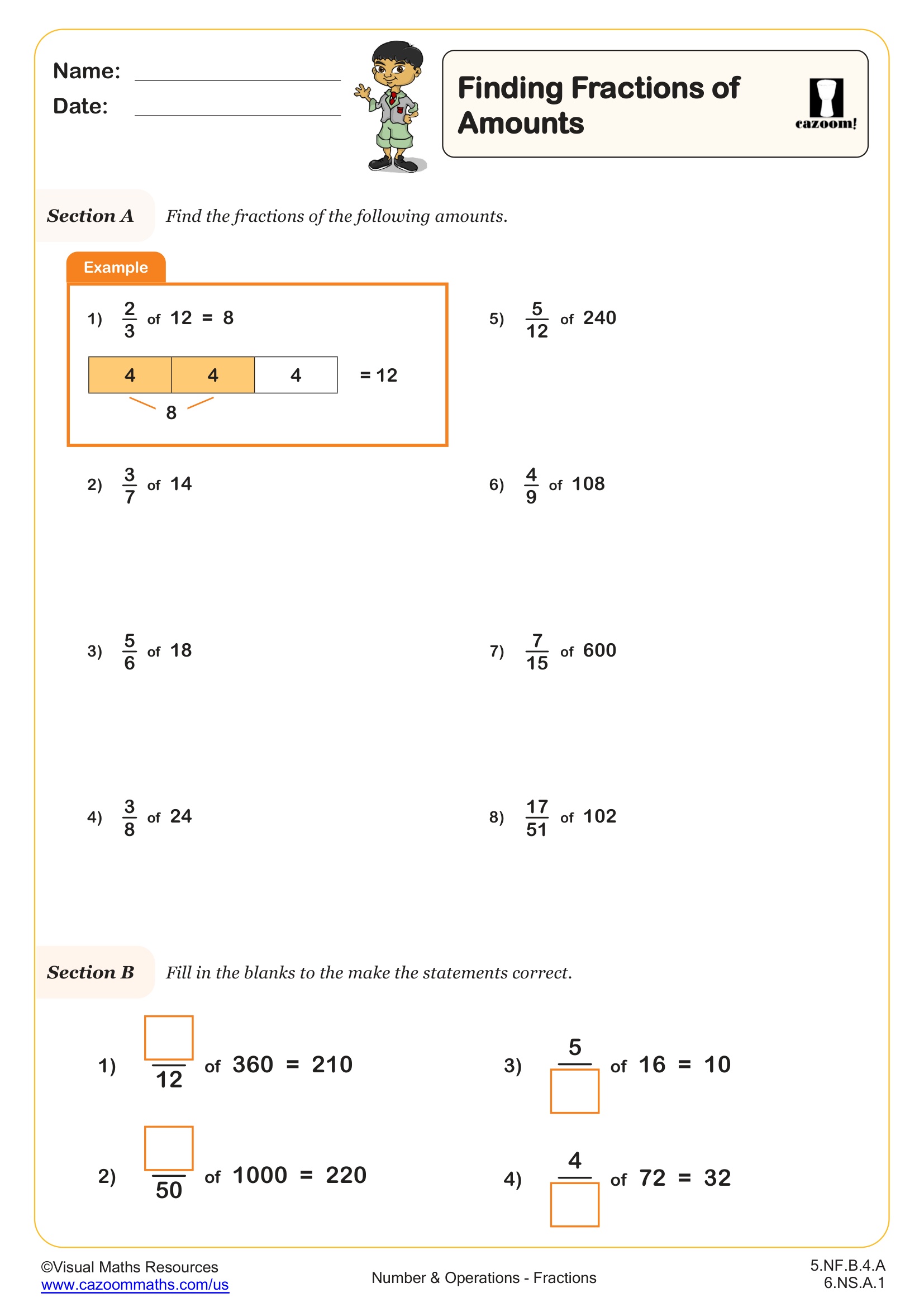
Fraction and Percentage Equivalence
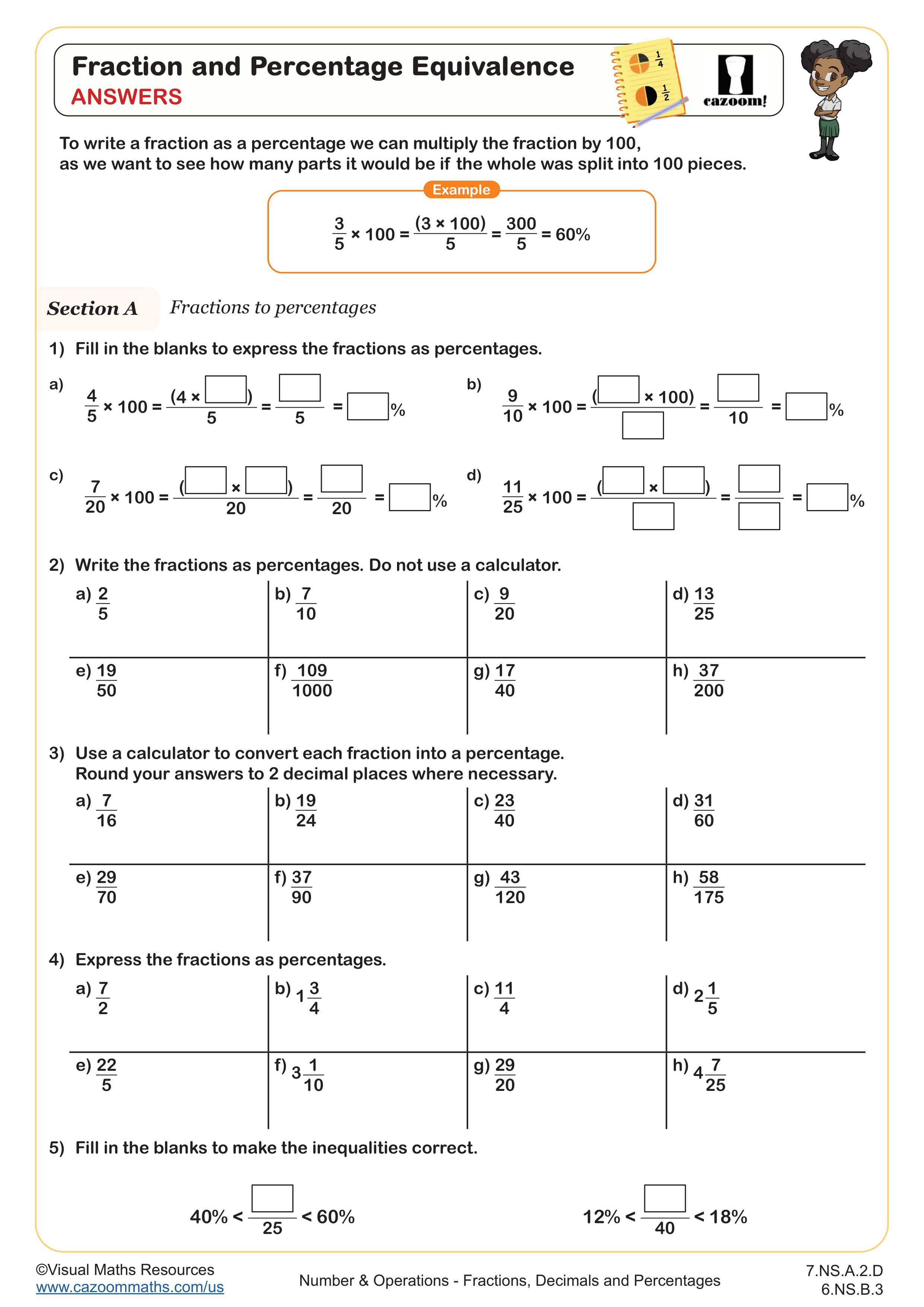
Fractions, Decimals, and Percents (A)
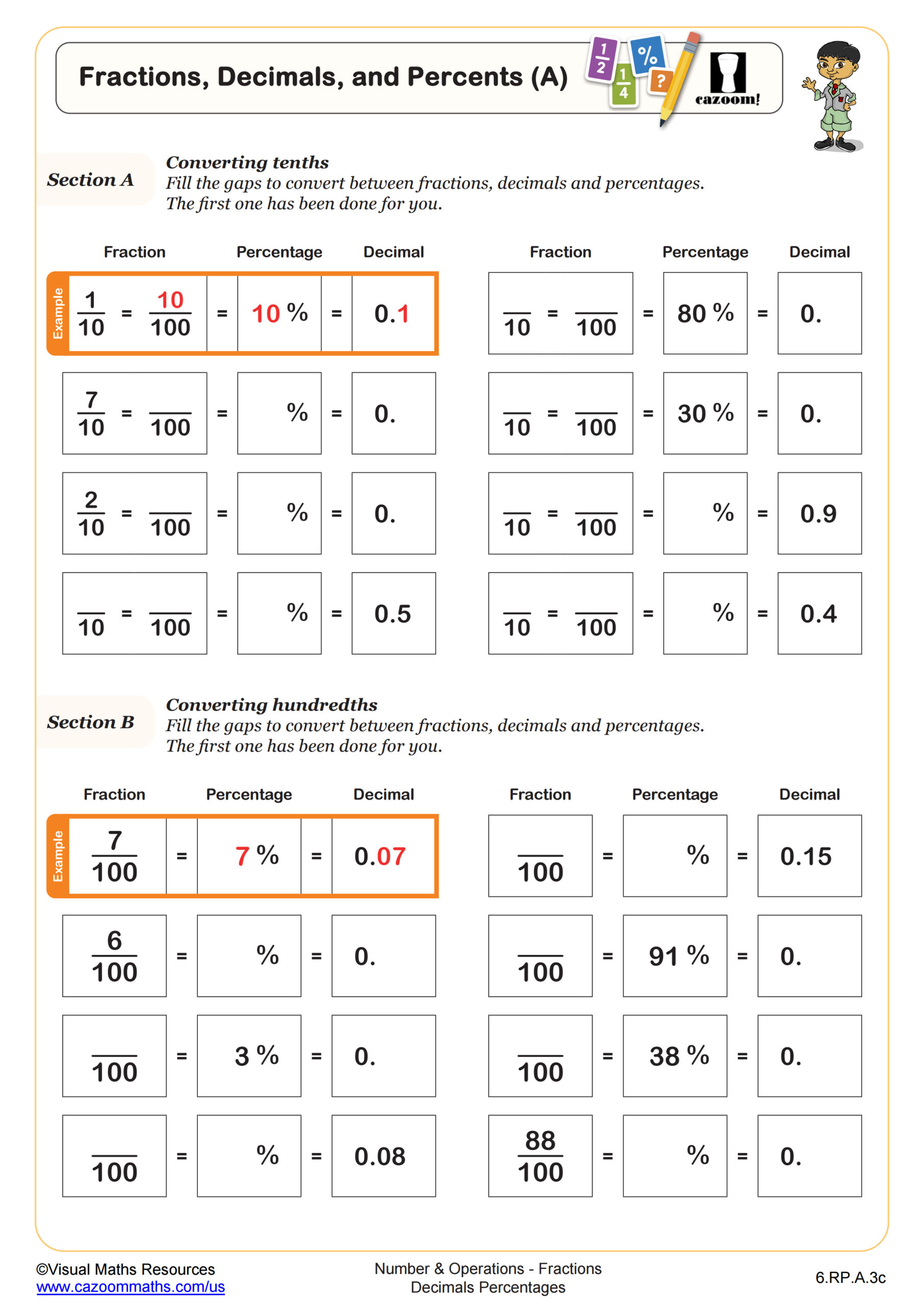
Fractions, Decimals, and Percents (B)
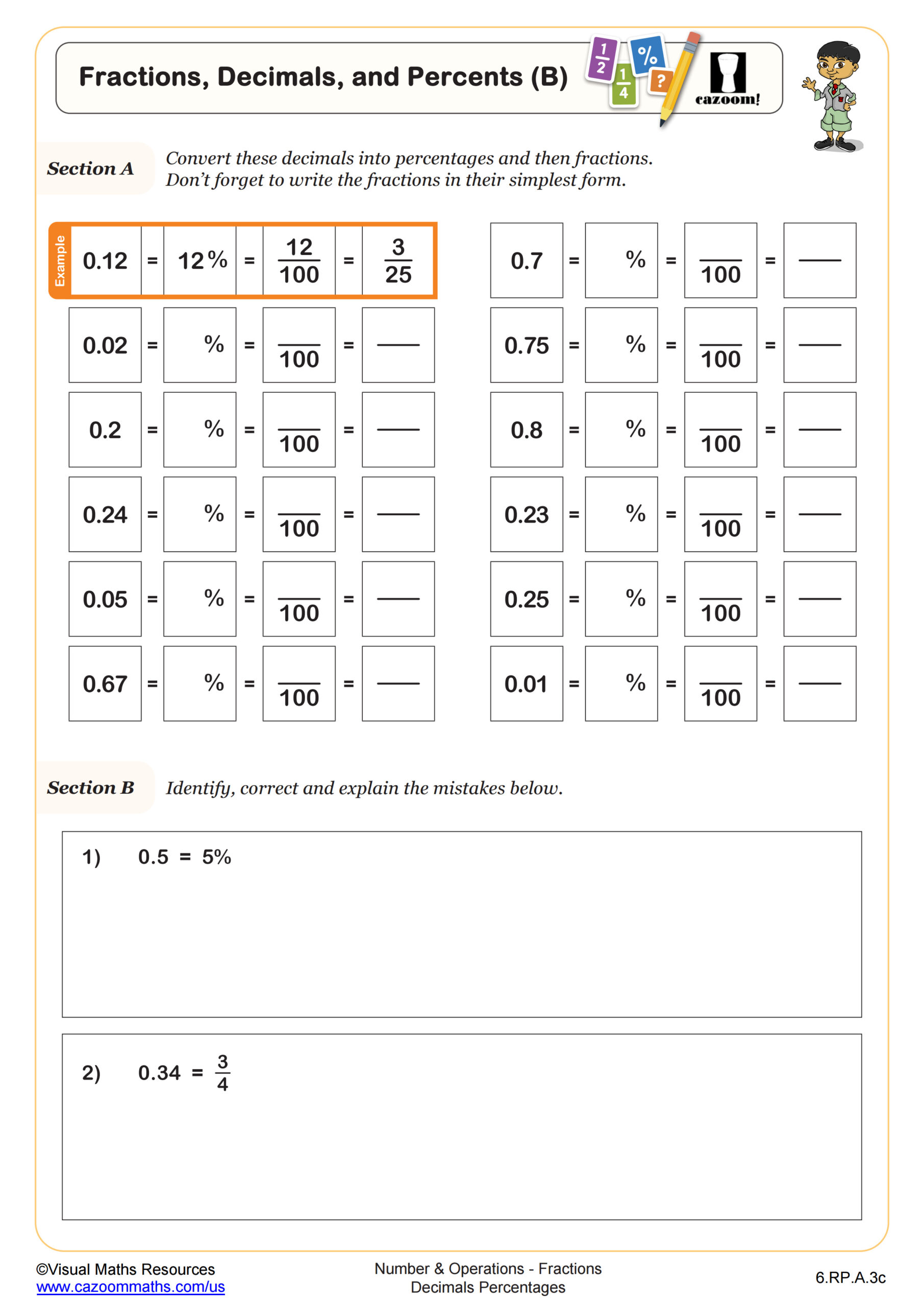
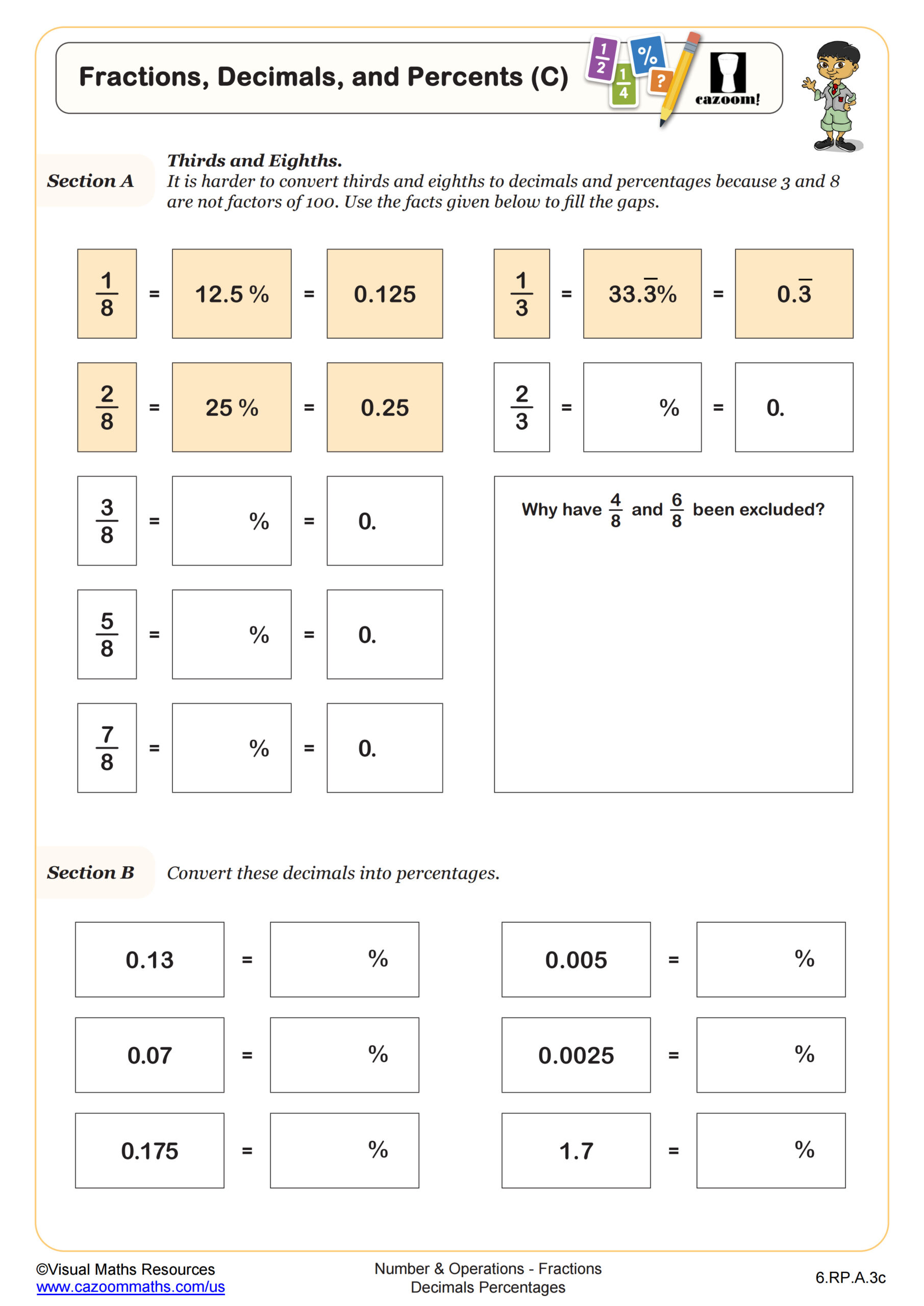
Fractions, Decimals, and Percents (C)
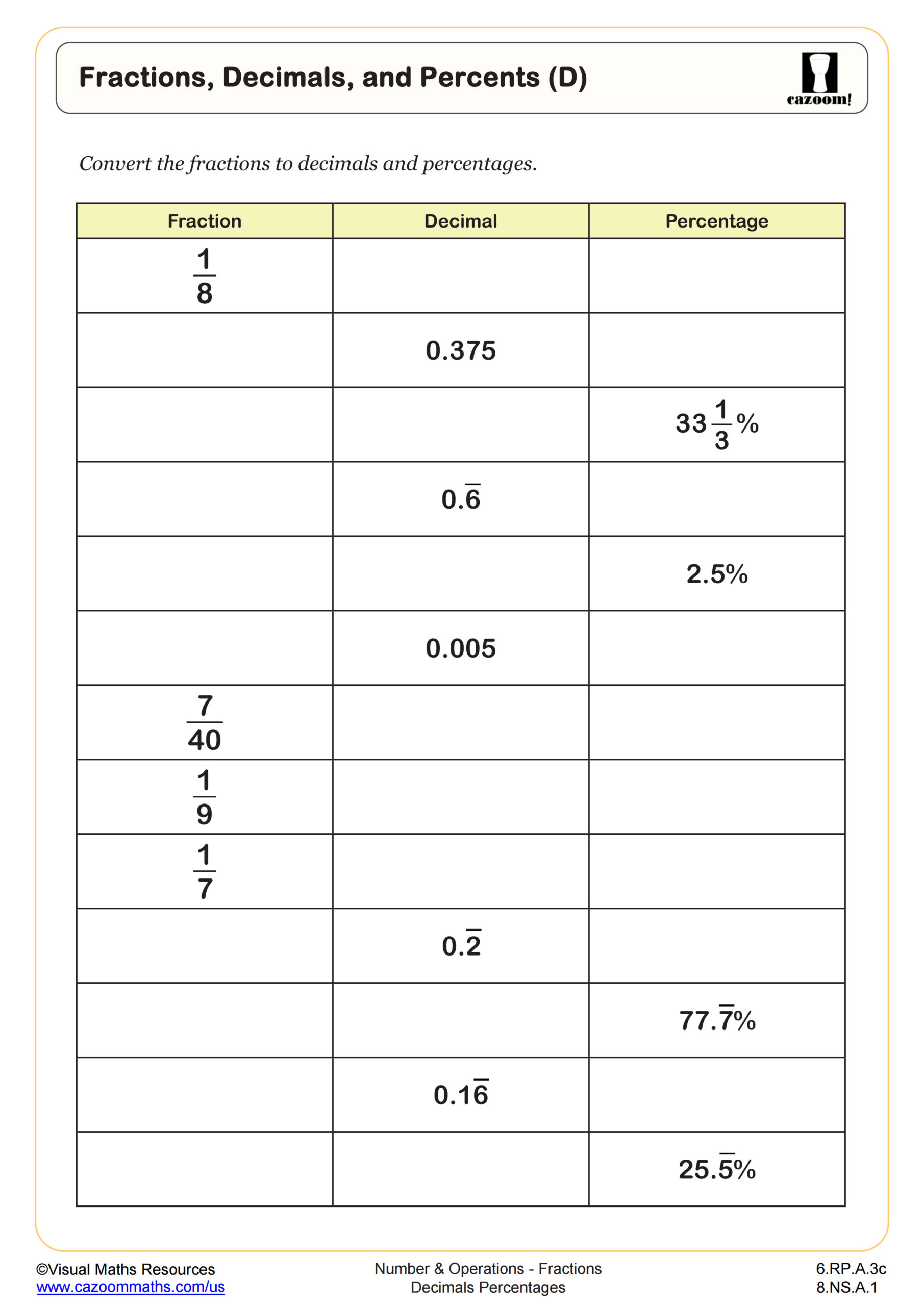
Fractions, Decimals, and Percents (D)
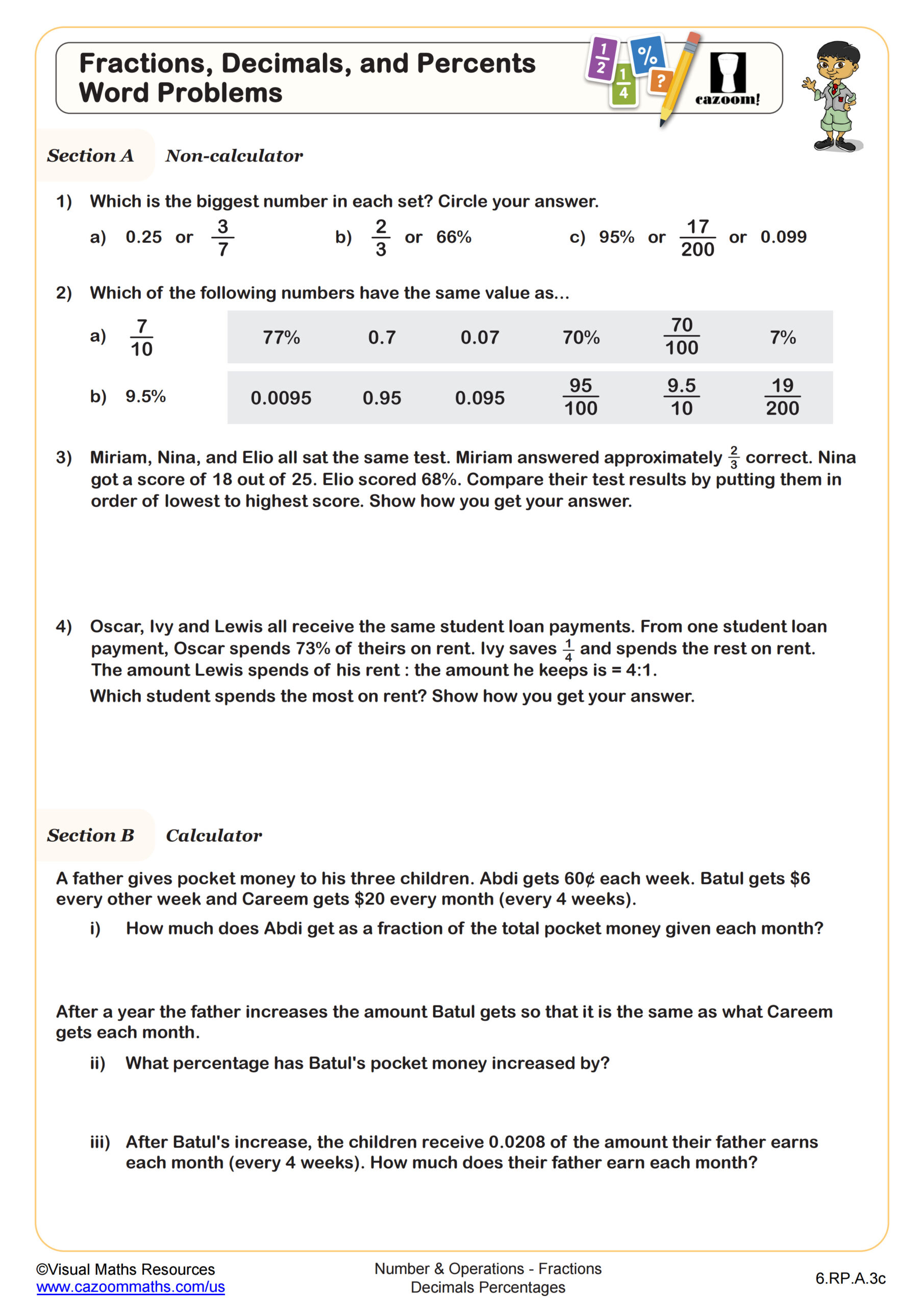
Fractions, Decimals, and Percents Word Problems
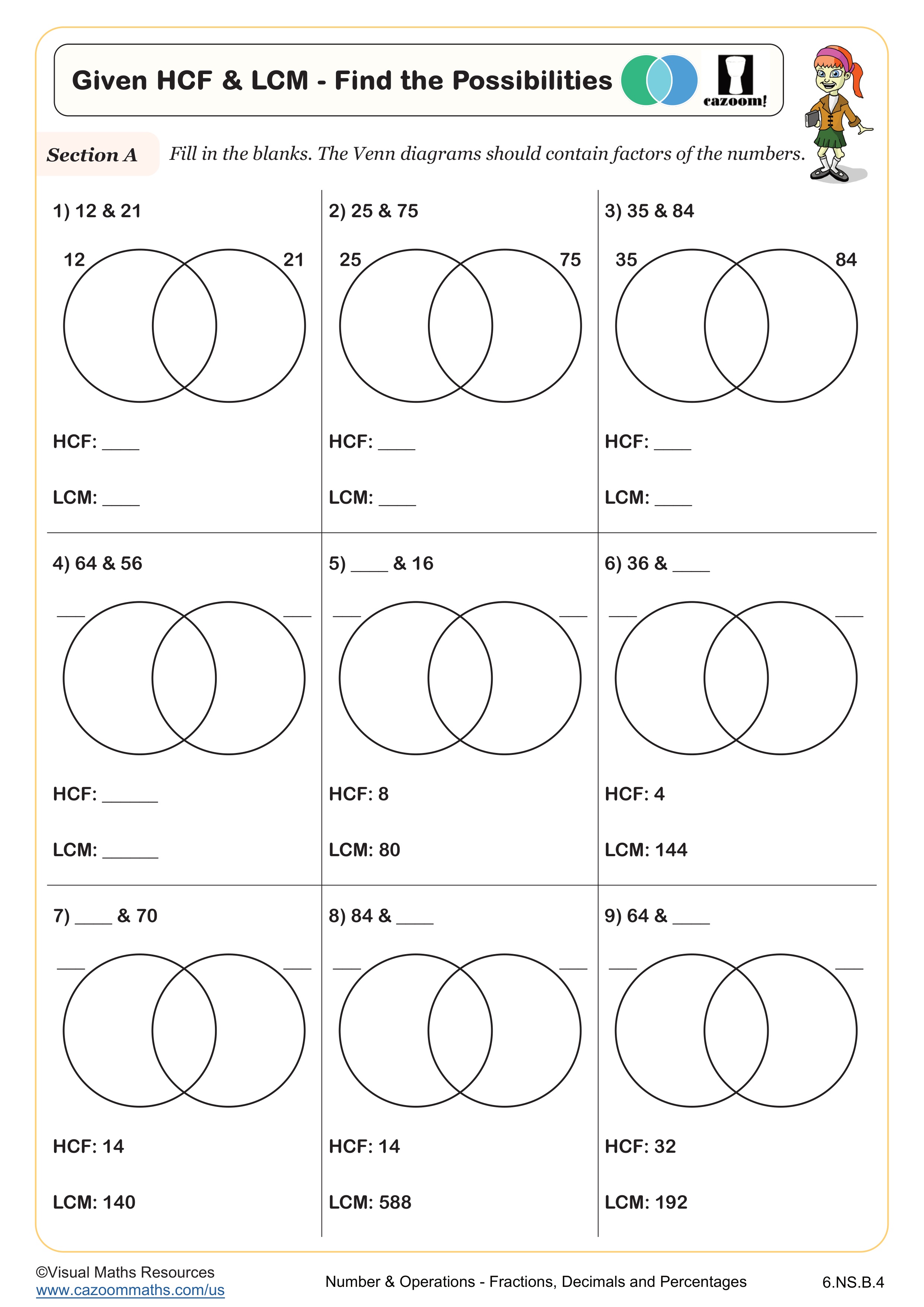
Given HCF & LCM - Find Possible Numbers
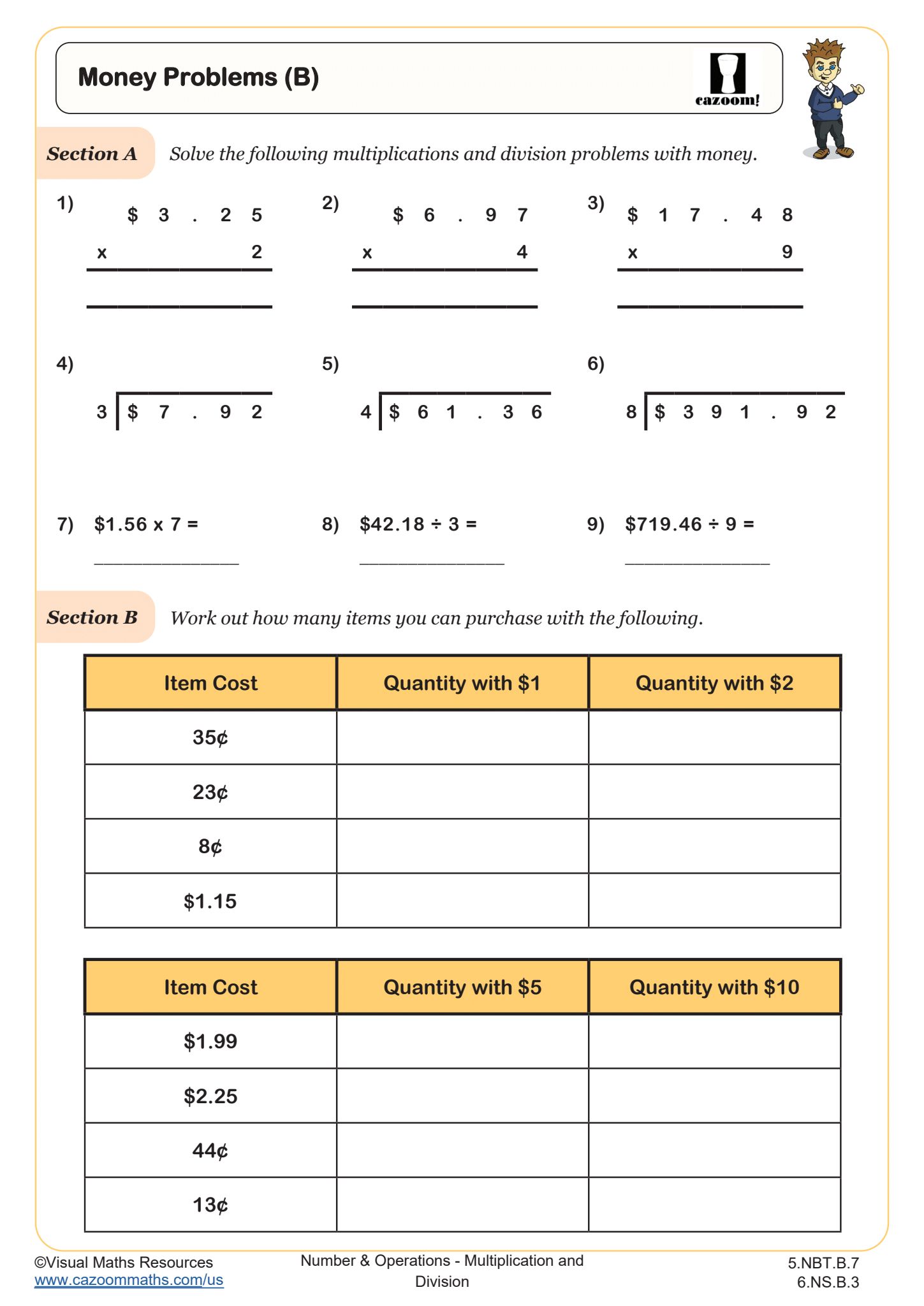
Money Problems (B)
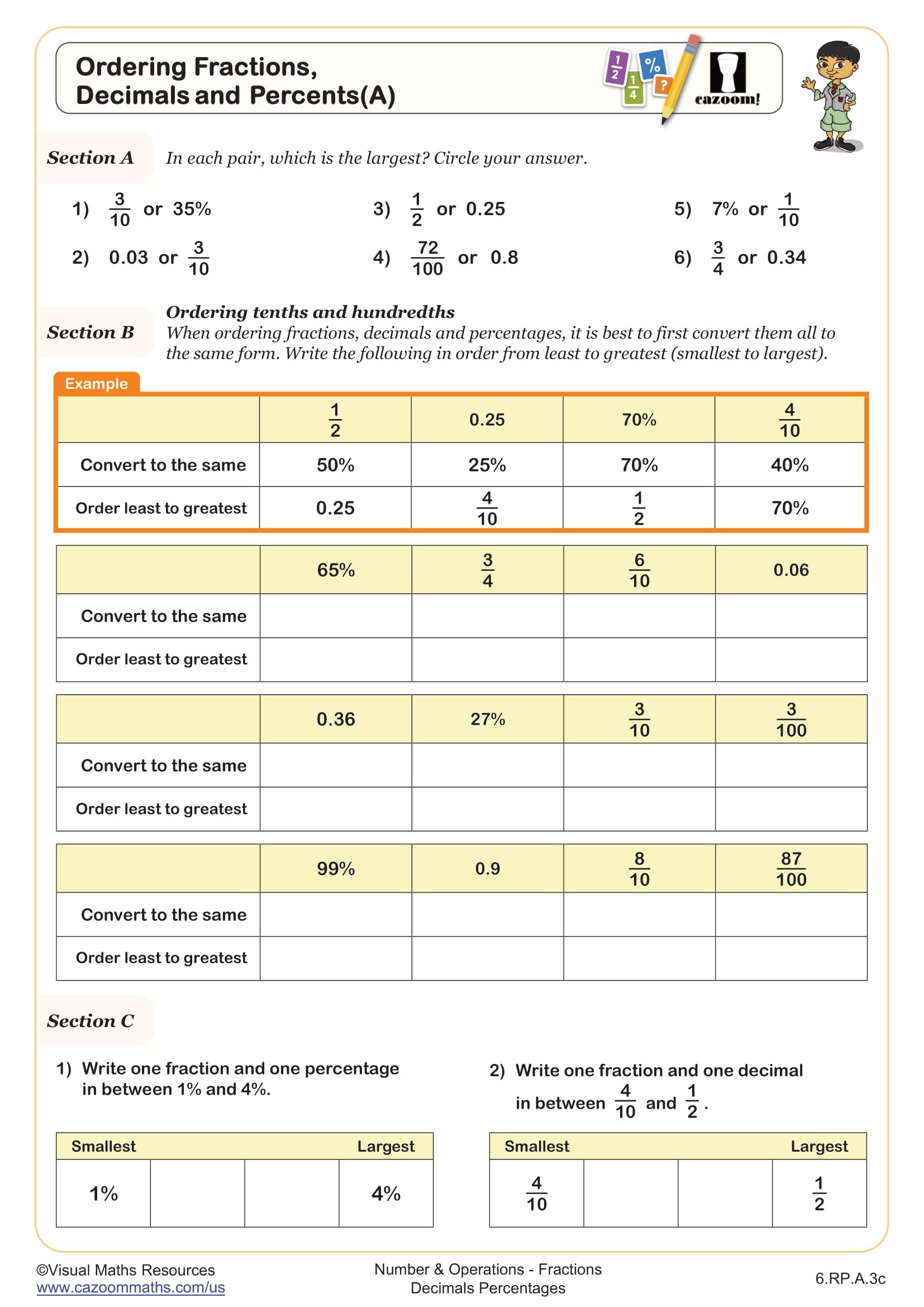
Ordering Fractions, Decimals, and Percents (A)
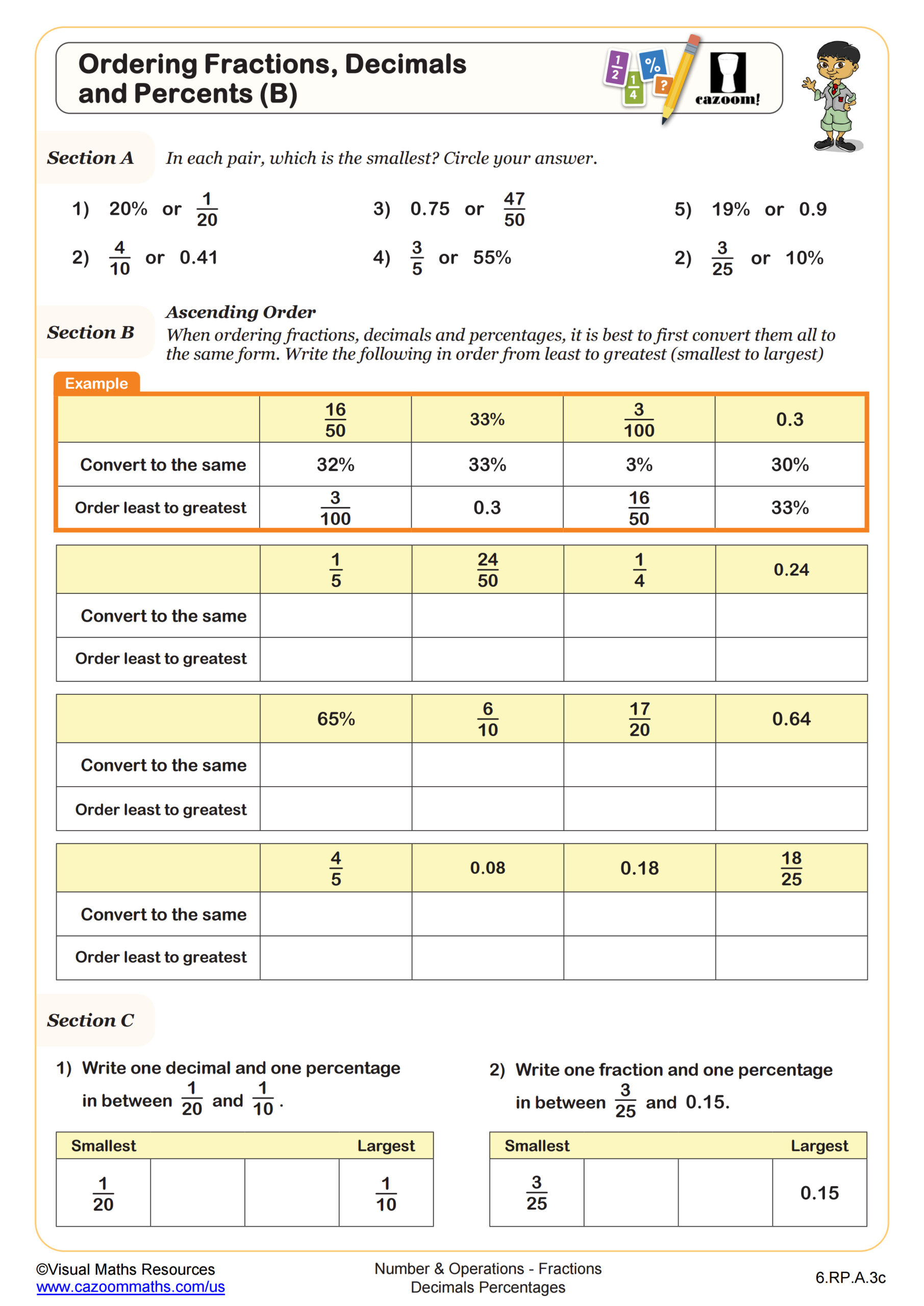
Ordering Fractions, Decimals, and Percents (B)
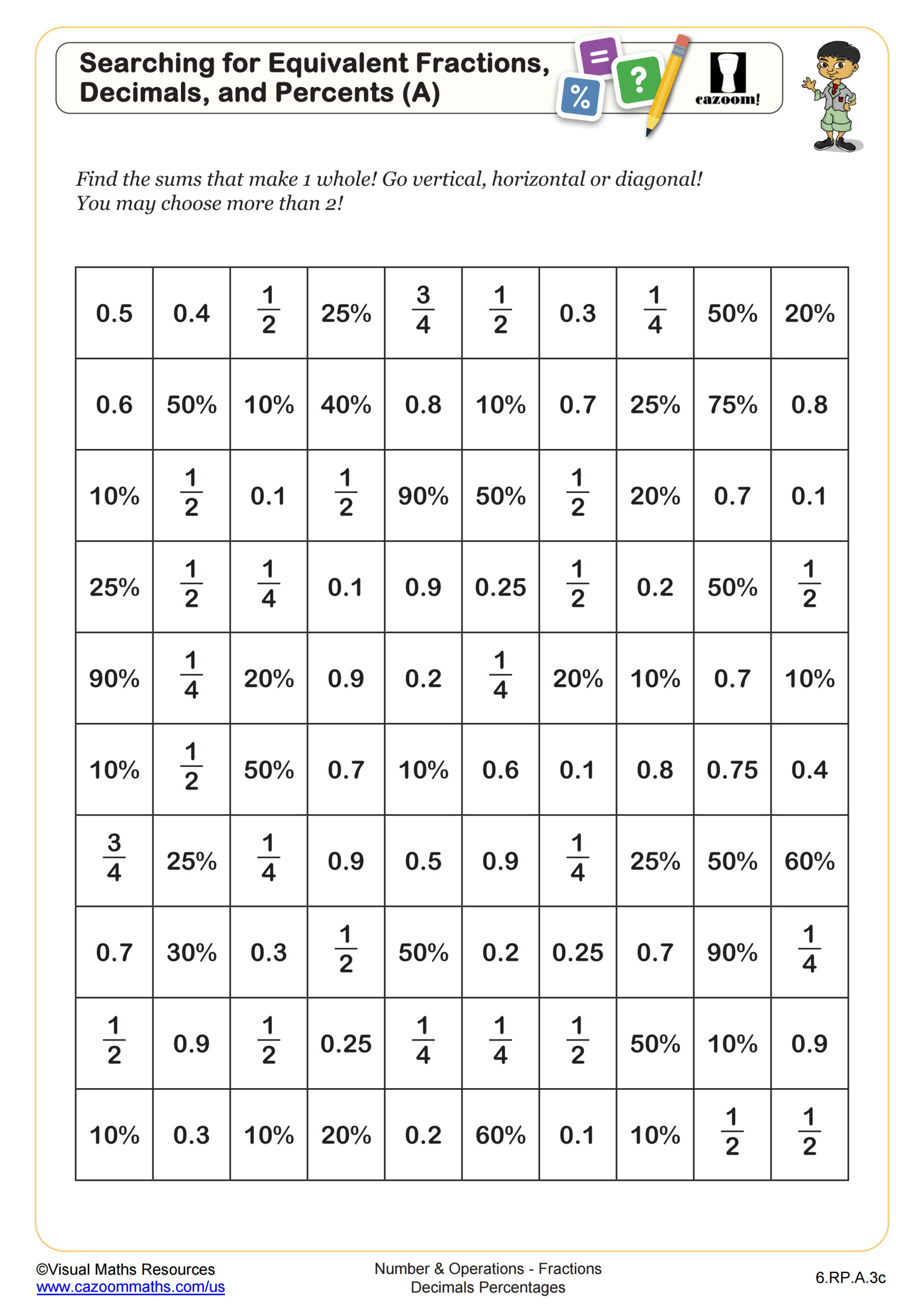
Searching for Equivalent Fractions, Decimals, and Percents (A)
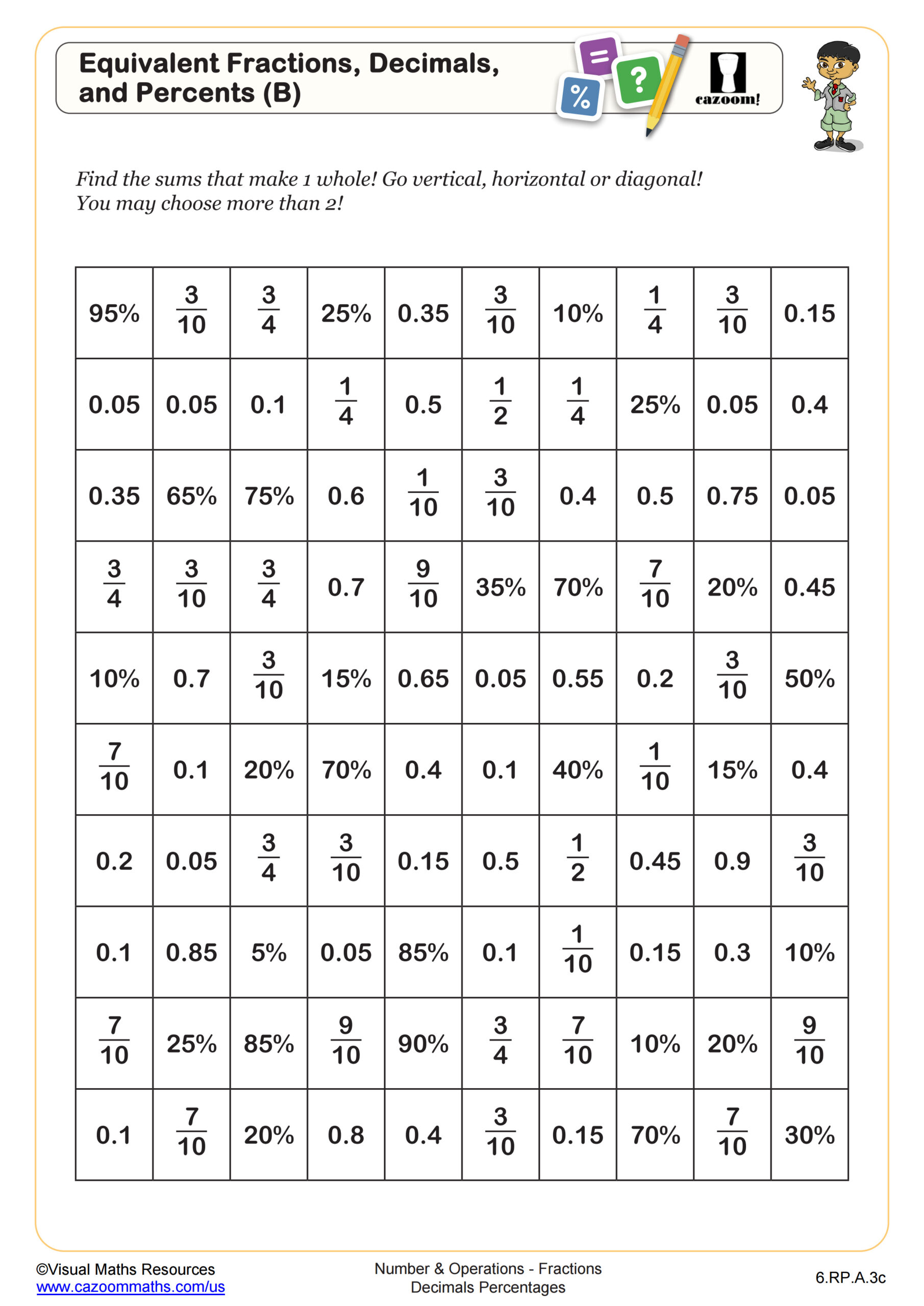
Searching for Equivalent Fractions, Decimals, and Percents (B)
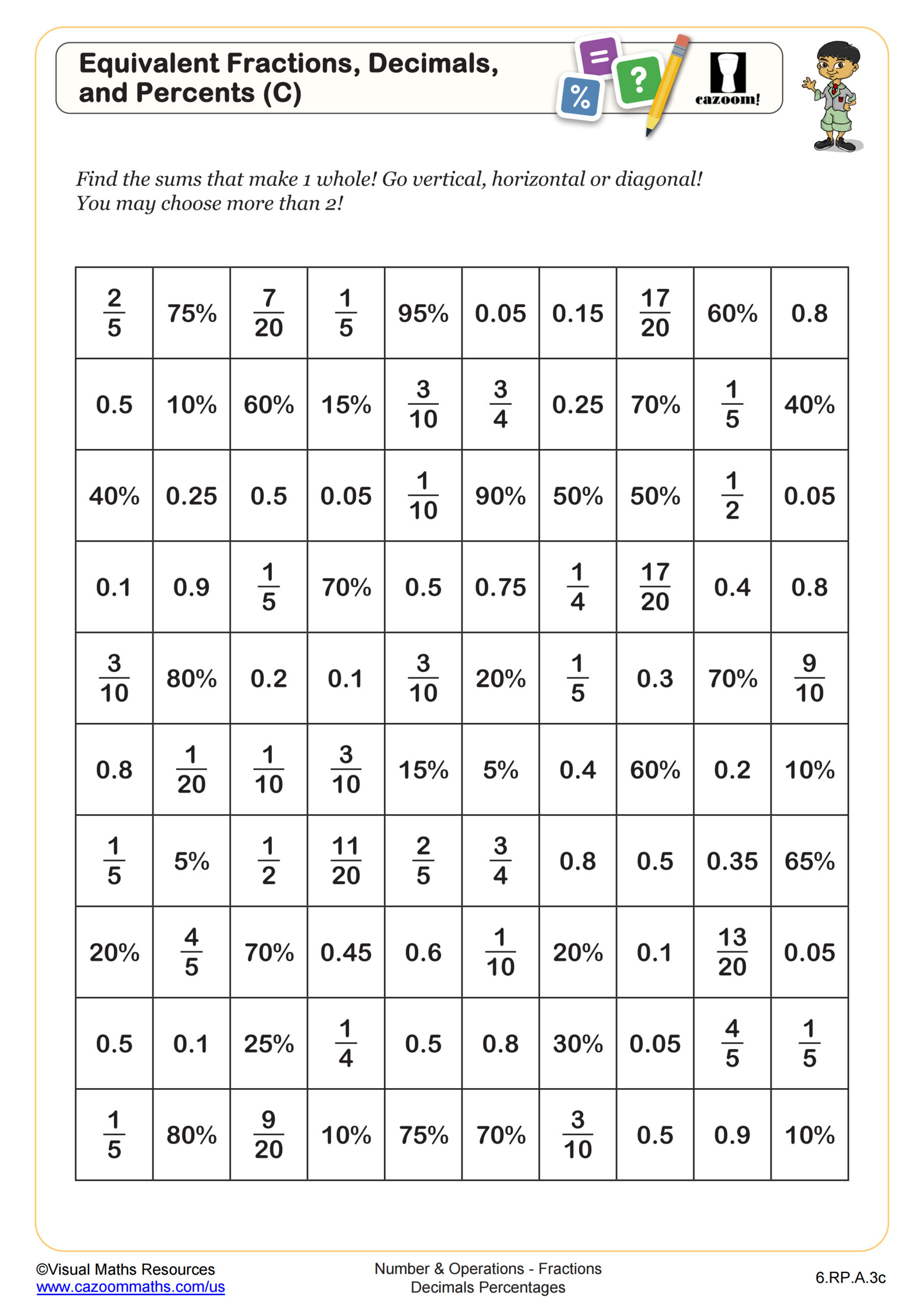
Searching for Equivalent Fractions, Decimals, and Percents (C)
All worksheets are created by the team of experienced teachers at Cazoom Math.
What makes fractions, decimals and percents worksheets pdf effective for middle school instruction?
Quality fractions, decimals and percents worksheets pdf align with Common Core standards 6.RP.3 and 7.RP.3, providing systematic practice in converting between fractions, decimals, and percents while building conceptual understanding. The PDF format ensures consistent formatting across devices and allows teachers to print materials as needed for classroom use.
Teachers notice that students benefit most from worksheets that progress logically from simple conversions like 1/2 = 0.5 = 50% to more challenging problems involving repeating decimals or complex fractions. The key is providing enough guided practice before moving to independent work, as students often rush through conversions without checking their reasoning.
How do fractions, decimals and percents worksheets differ between 6th and 7th grade levels?
Fractions, decimals and percents worksheets 6th grade pdf typically focus on converting between common fractions and their decimal and percent equivalents, with emphasis on benchmark values like 1/4, 1/2, and 3/4. Students work with terminating decimals and straightforward percent applications in contexts like sales tax or simple interest.
By 7th grade, fractions, decimals and percents worksheets 7th grade introduce more complex scenarios including repeating decimals, improper fractions, and multi-step word problems. Students encounter situations requiring them to choose the most appropriate form for calculations, such as using decimals for precise measurements in science or percents for statistical analysis.
What should teachers focus on when using comparing fractions decimals and percents worksheets pdf?
Comparing fractions, decimals and percents worksheets pdf help students develop number sense by requiring them to evaluate which representation makes comparisons easiest. Teachers should emphasize that converting all values to the same form often simplifies the comparison process, though students need practice determining which form works best for each situation.
A common error occurs when students compare 0.3 and 30%, thinking the decimal is smaller because "3 is less than 30." Effective worksheets include problems that specifically address this misconception, helping students recognize that the decimal 0.3 equals 30/100, which is the same as 30%. Visual models like number lines support this understanding.
How can teachers maximize learning with ordering fractions, decimals and percents worksheets pdf?
Ordering fractions, decimals and percents worksheets pdf work best when teachers first model the conversion process and discuss strategy selection. Students should learn to identify when converting everything to decimals provides the clearest path, versus situations where finding common denominators for fractions might be more efficient.
Teachers find success by having students explain their reasoning for each ordering decision rather than just providing final answers. This approach reveals misconceptions early and helps students develop mathematical communication skills. Incorporating real-world contexts like batting averages, test scores, or discount rates makes the ordering practice more meaningful and memorable.