Middle School Frequency Polygons and Histograms Worksheets
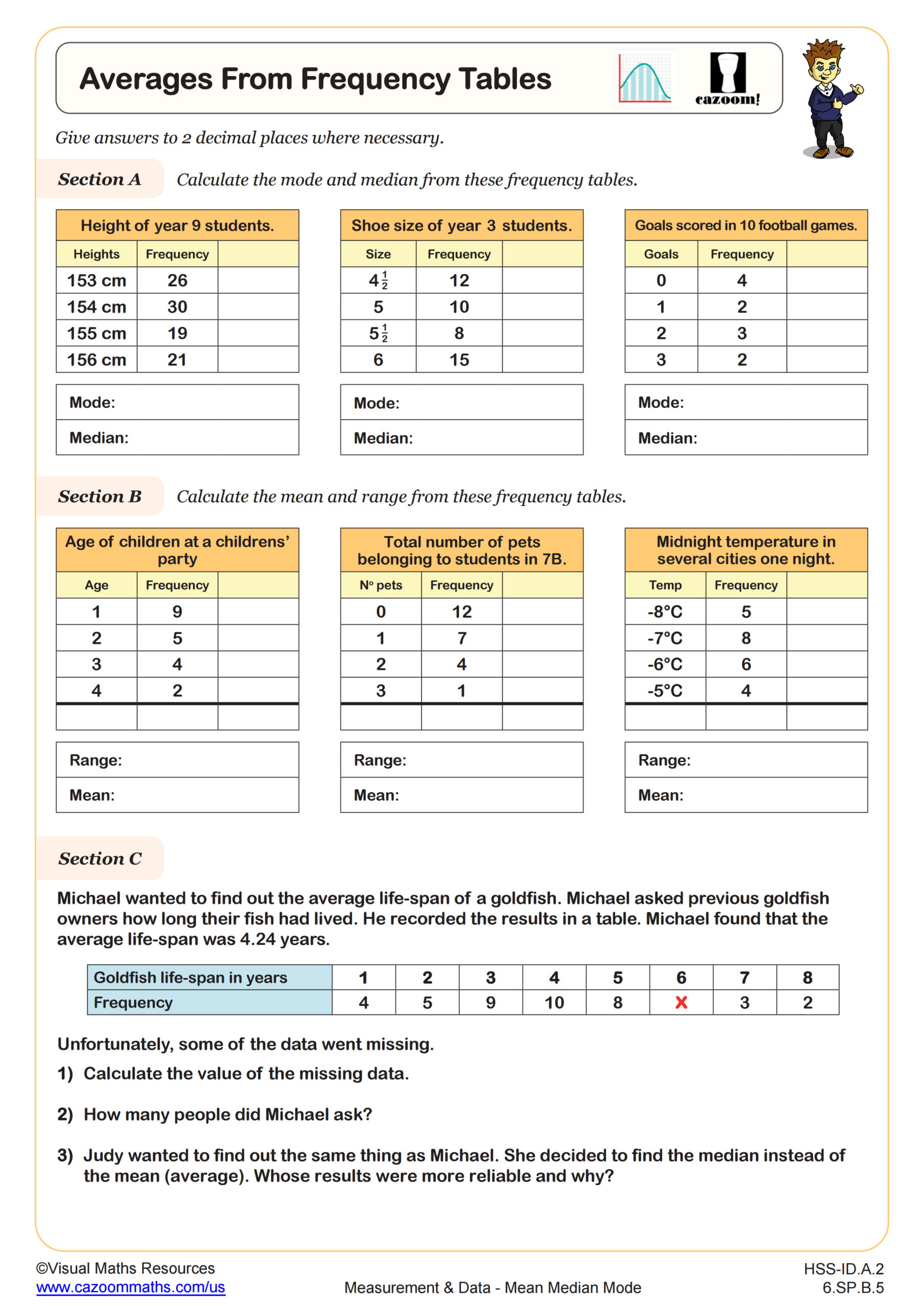
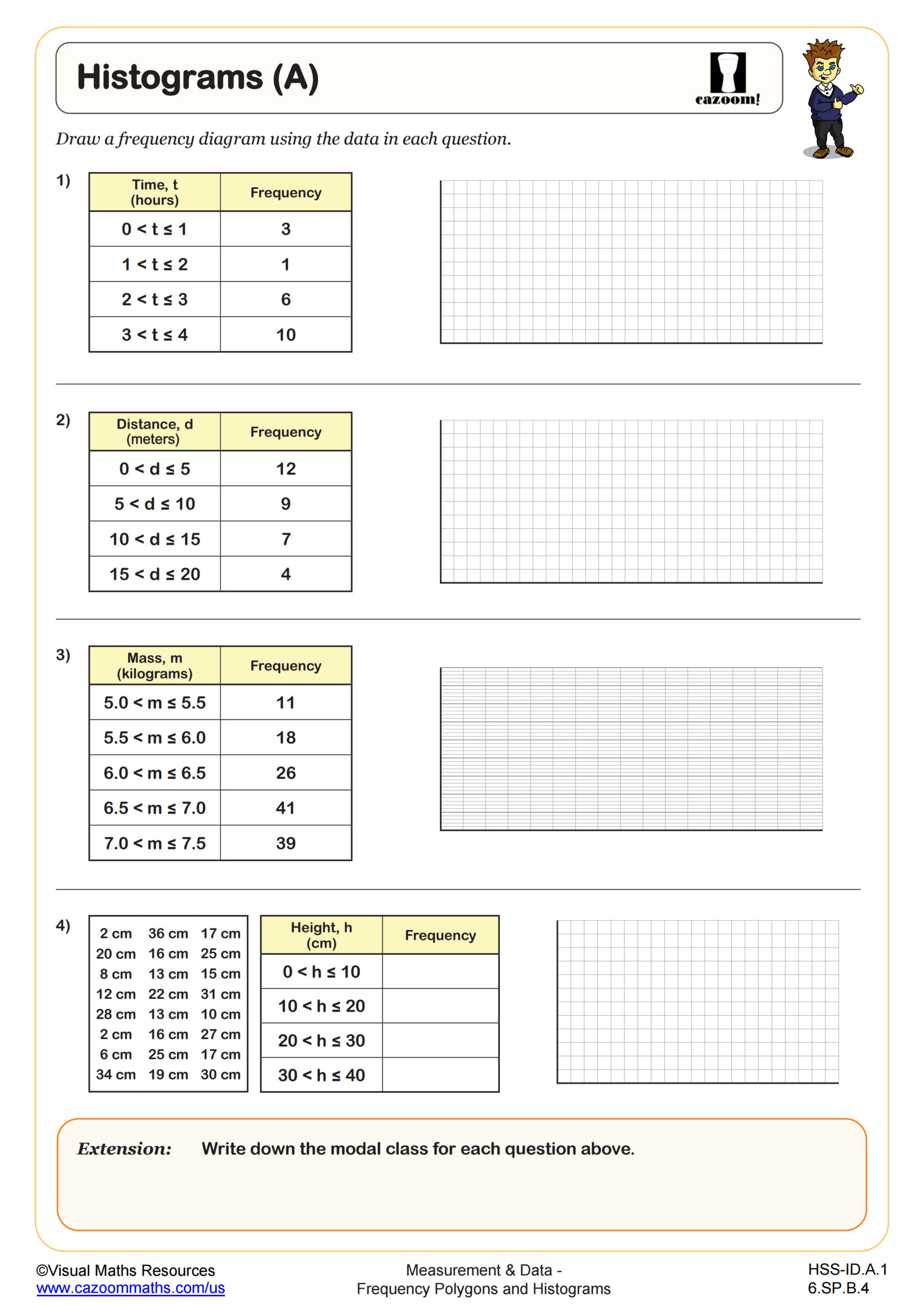
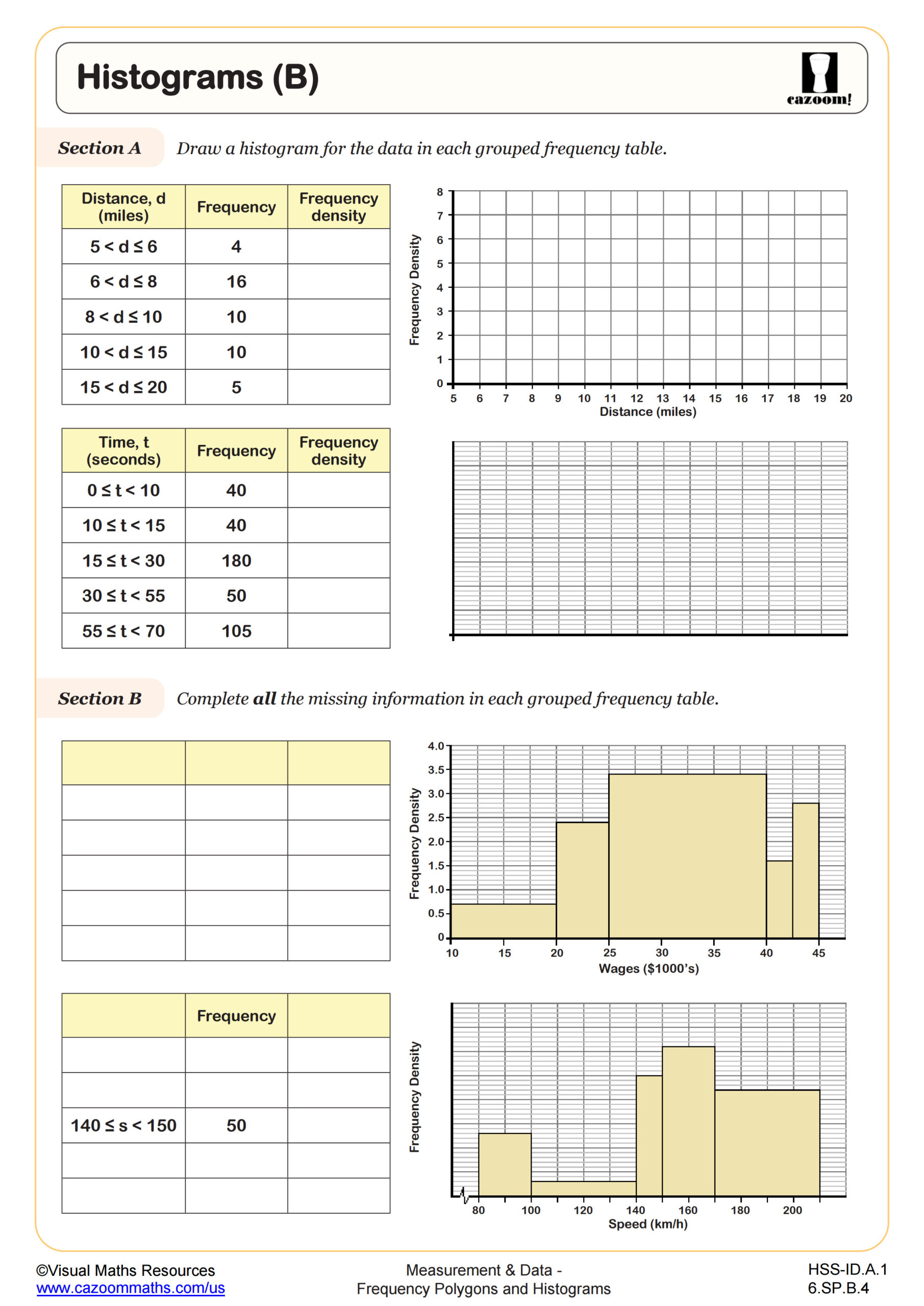
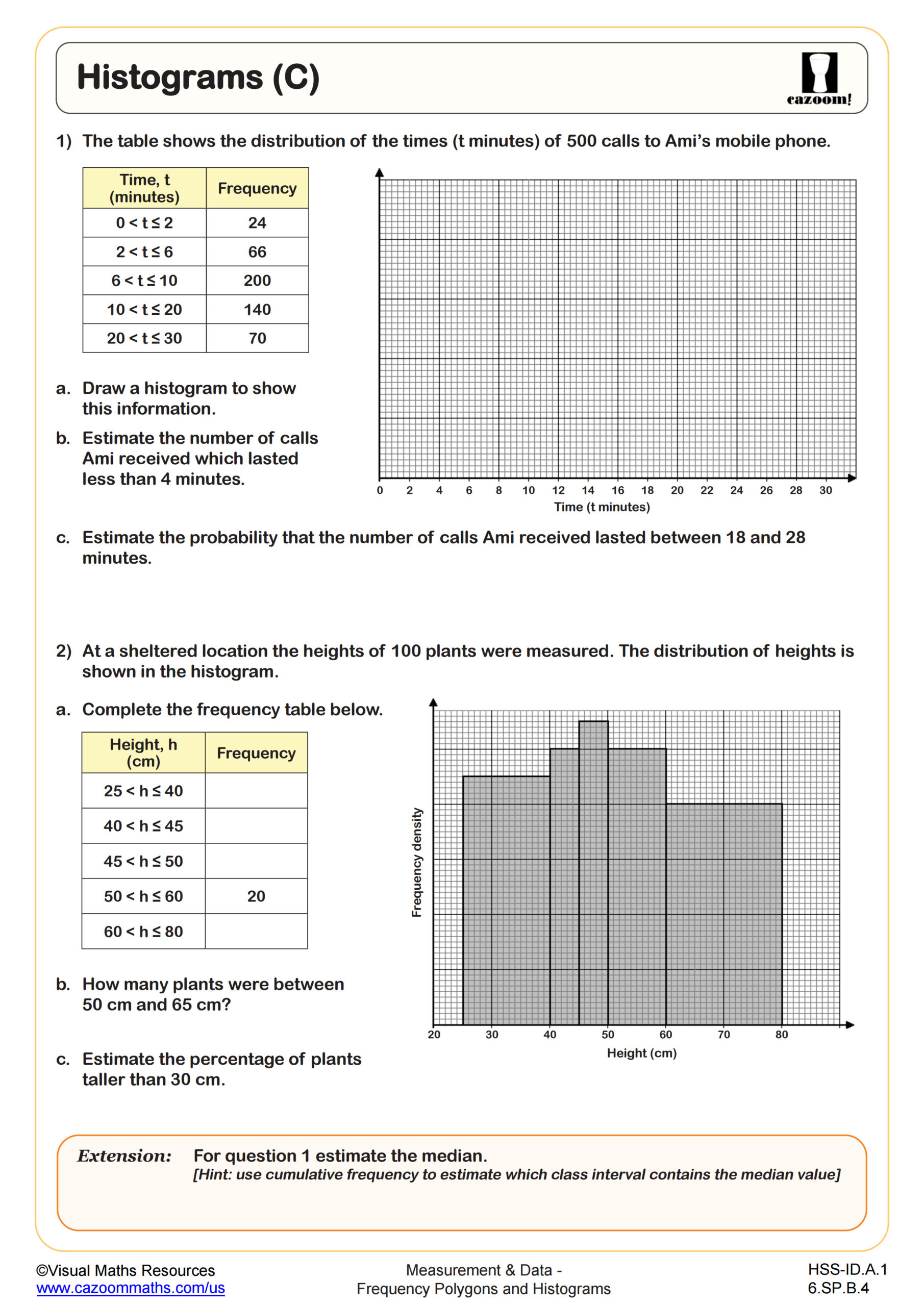
All worksheets are created by the team of experienced teachers at Cazoom Math.
Boost State Test Performance With Ready-to-Print 6th Grade Frequency Polygons and Histograms Worksheets
Middle school students already have experience working with basic bar graphs and pictographs. The worksheets present students with grouped data and continuous intervals to learn how to handle ranges instead of single values. Histograms help students detect distribution patterns by showing where data points tend to group, while frequency polygons enable them to compare different datasets through a single visual representation. The two visualization methods would allow students to detect patterns, locate unusual data points, and measure data spread. The skills developed through this work will serve students well when they study statistics at the high school level.
Topic Coverage: What Cazoom Math Middle School Measurement and Data Resources Cover
Students move from interpreting completed graphs to constructing their own, following a clear progression from visual to abstract understanding. They start by extracting data from histograms before learning to draw bars and calculate midpoints for frequency polygons. Each worksheet includes labeled axes and step-by-step guidance. Covering averages from frequency tables, histogram construction, and comparative analysis, this collection lays a strong foundation in statistical graphing and data interpretation.
Support Long-Term Success With Middle School Frequency Polygons and Histograms Activities
The resources function as direct additions to lesson plans, which require no additional preparation or formatting modifications. Teachers can easily adapt their instruction through the sequential progression from Worksheet A to Worksheet B and then Worksheet C. The task requires students who struggle with reading to analyze existing graphs, but asks more challenging learners to create graphs and compare them. The worksheets contain problems that require students to demonstrate their thought process through explanations and identify mistakes in the provided examples.
The solutions demonstrate how to select axes and determine scales and plot steps, which students commonly overlook. Students should use the sheets for retrieval practice at two particular moments during their classwork or independent study time. Teachers gain time efficiency in grading because complete solutions show common student mistakes that appear at interval boundaries and frequency density points. The design allows for simple reading during classroom display and independent work and helps students check their understanding at home or during study time.
How Frequency Polygons and Histograms Build Everyday Math Confidence
Understanding histograms and frequency polygons helps students interpret data they encounter in news reports, health information, and consumer research. These graphs are commonly found in weather forecasts, sports statistics, and scientific studies. Students who can read and create these visualizations become better at evaluating claims and spotting misleading presentations.
• Analyzing test score distributions
• Comparing age demographics in the census
• Tracking heart rate zones during exercise
• Evaluating quality control in manufacturing