Middle School Linear Functions Worksheet
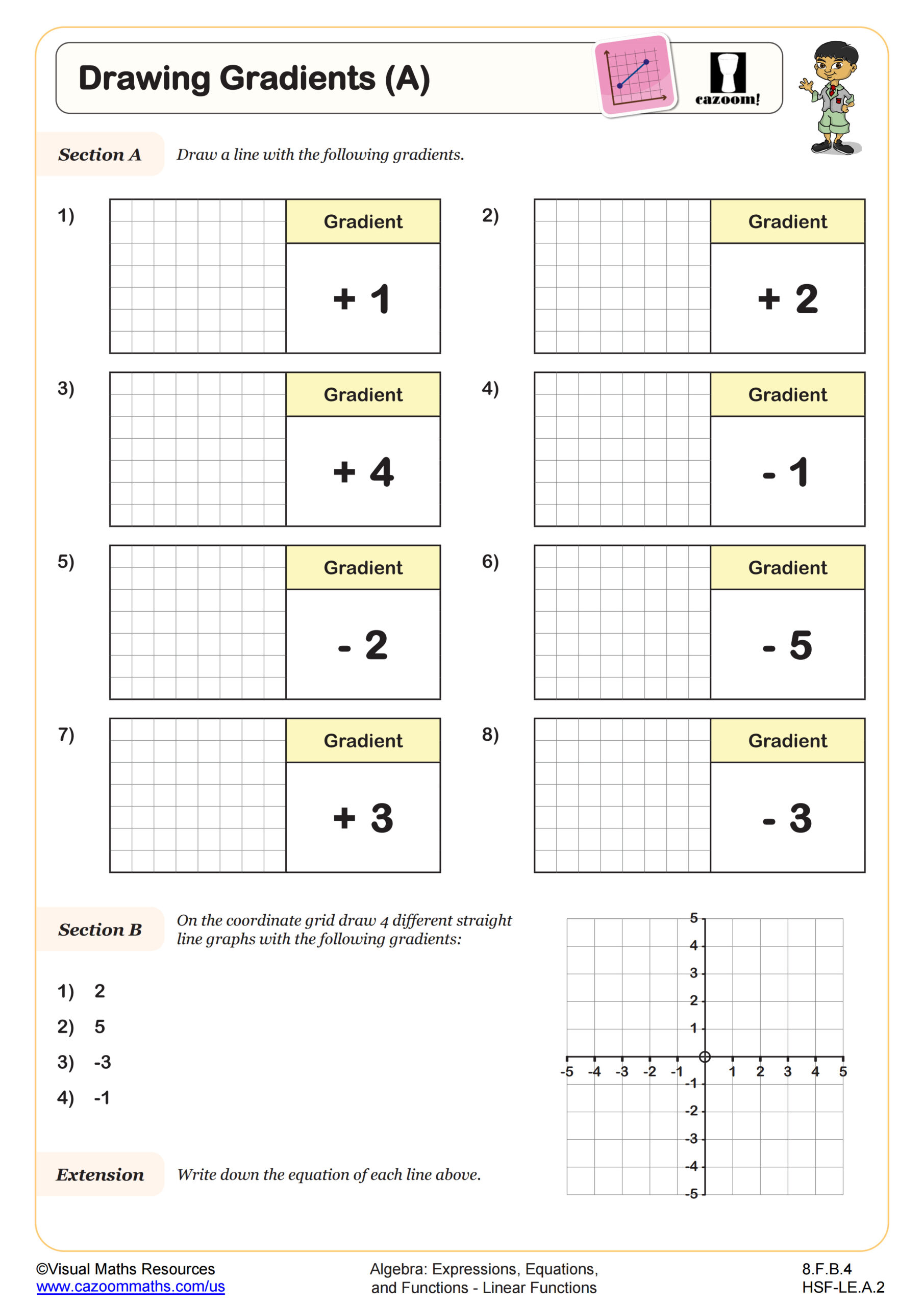
Drawing Gradients (A)
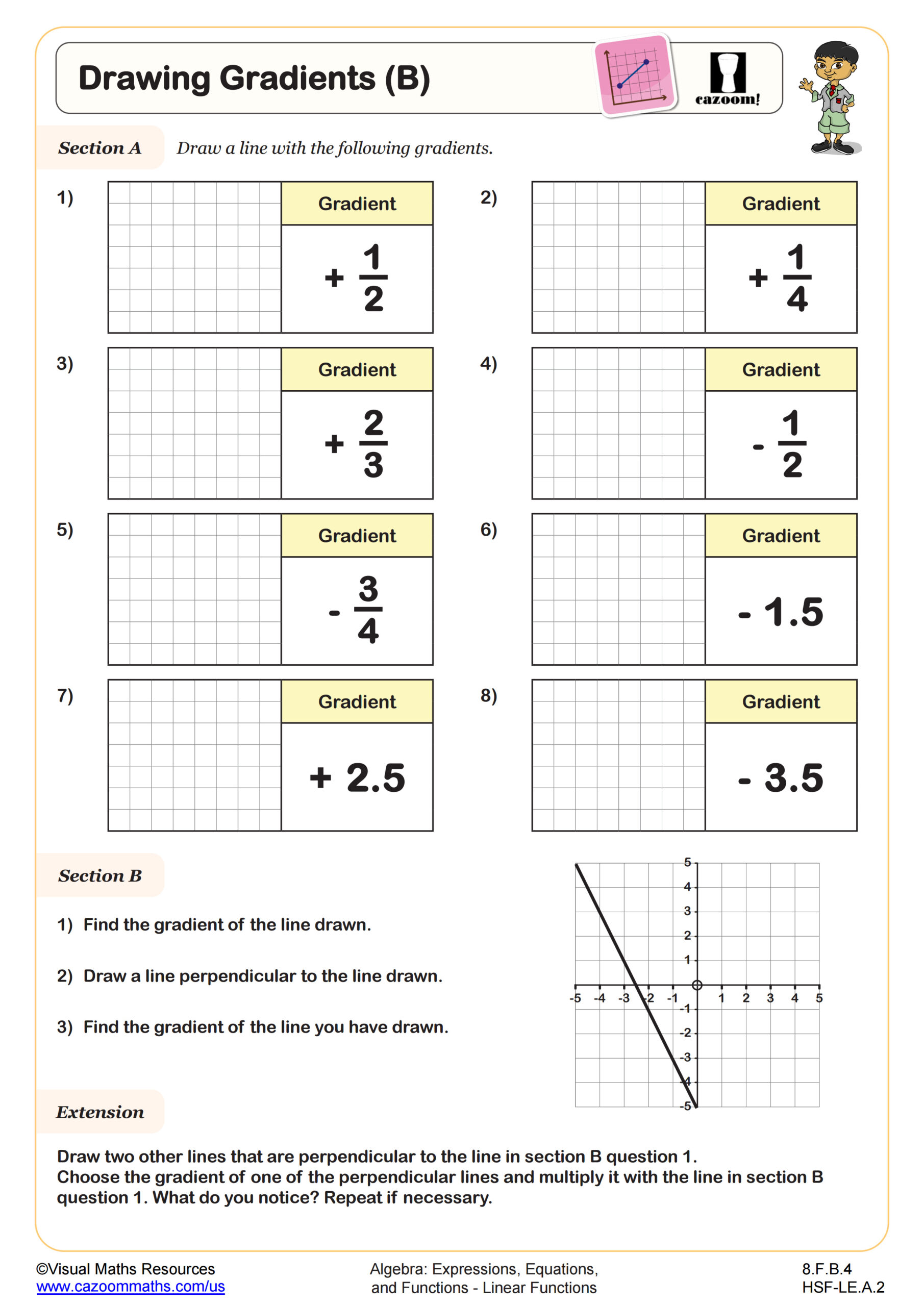
Drawing Gradients (B)
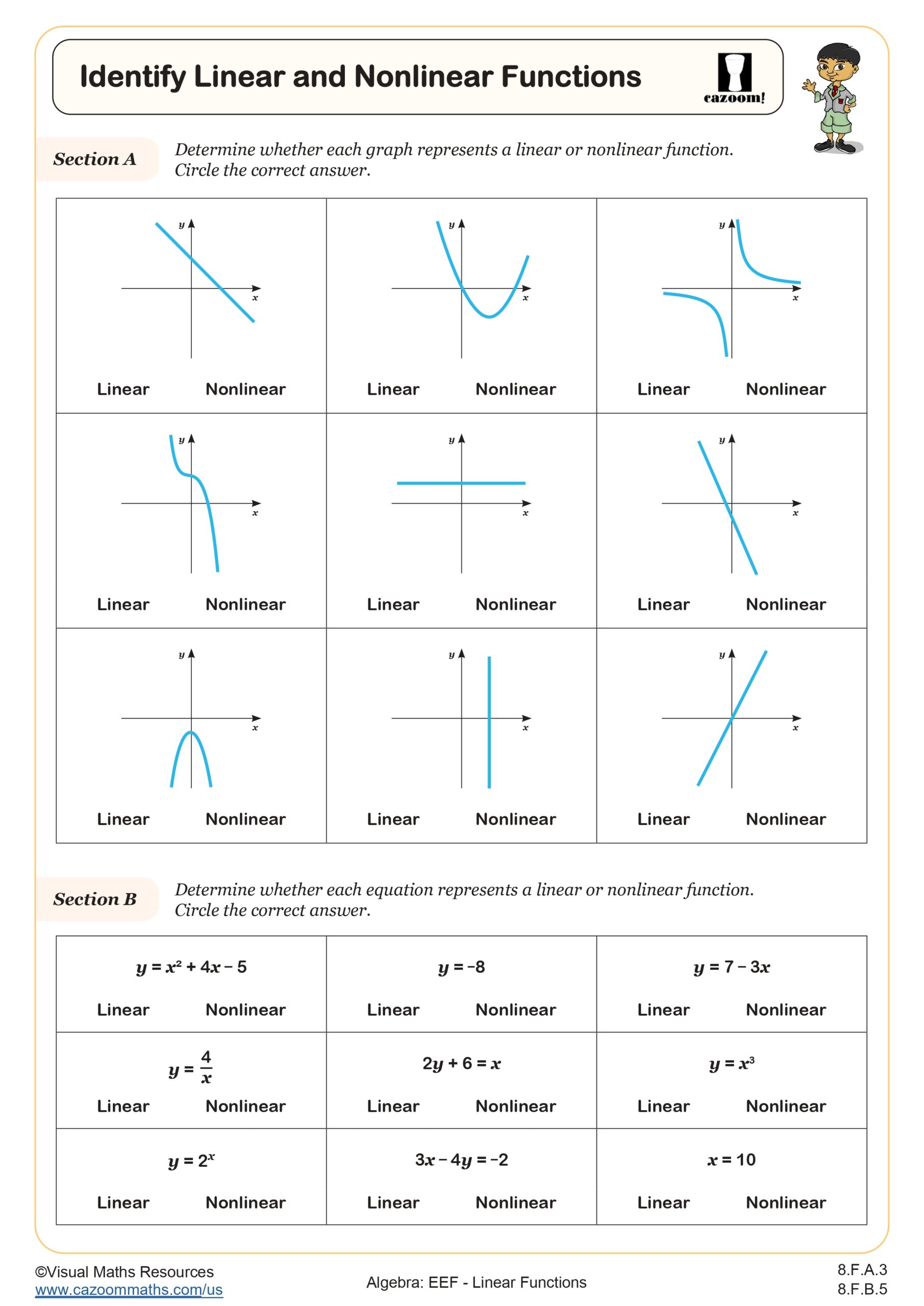
Identify Linear and Non Linear Functions
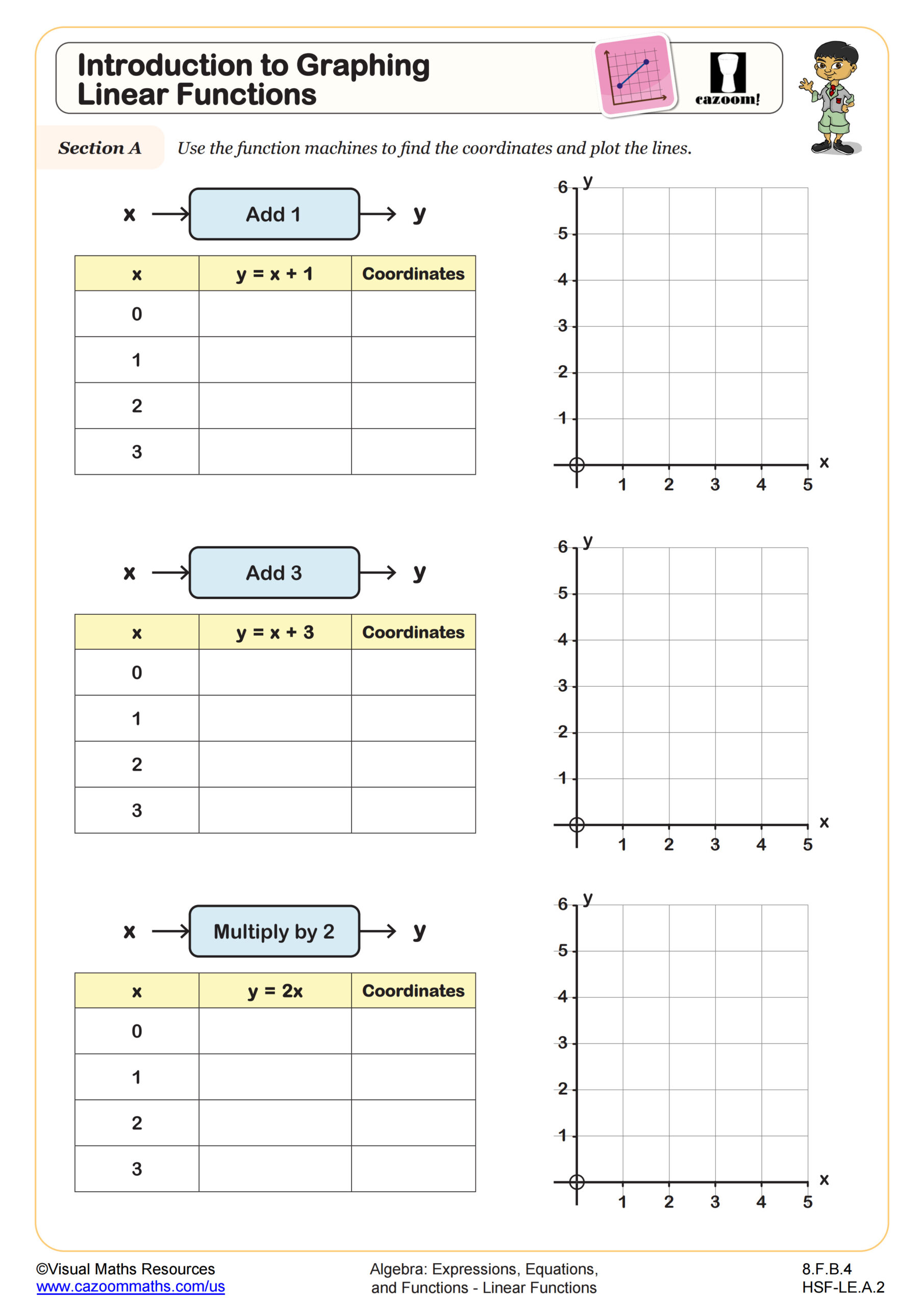
Introduction to Graphing Linear Functions
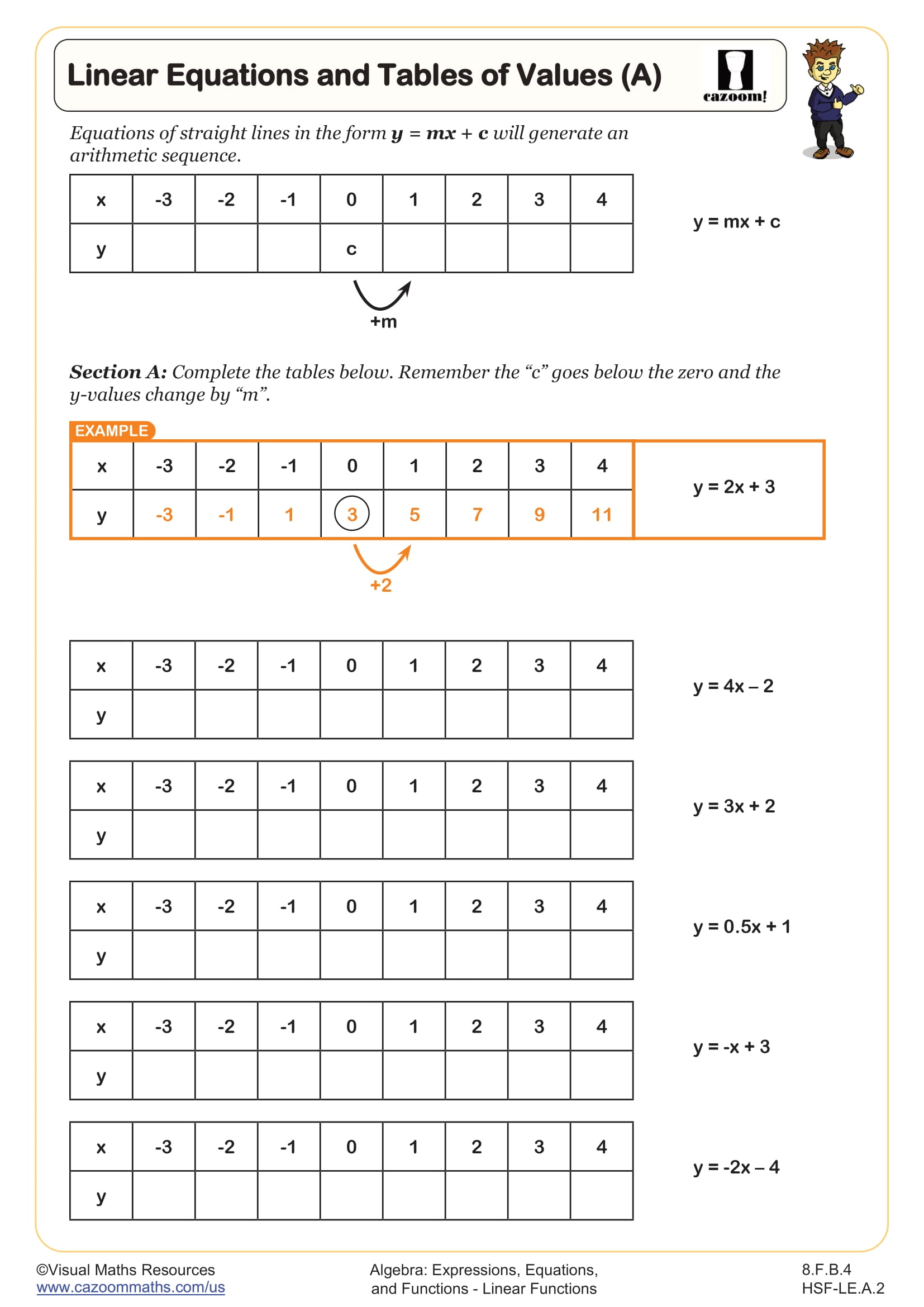
Linear Equations and Tables of Values (A)
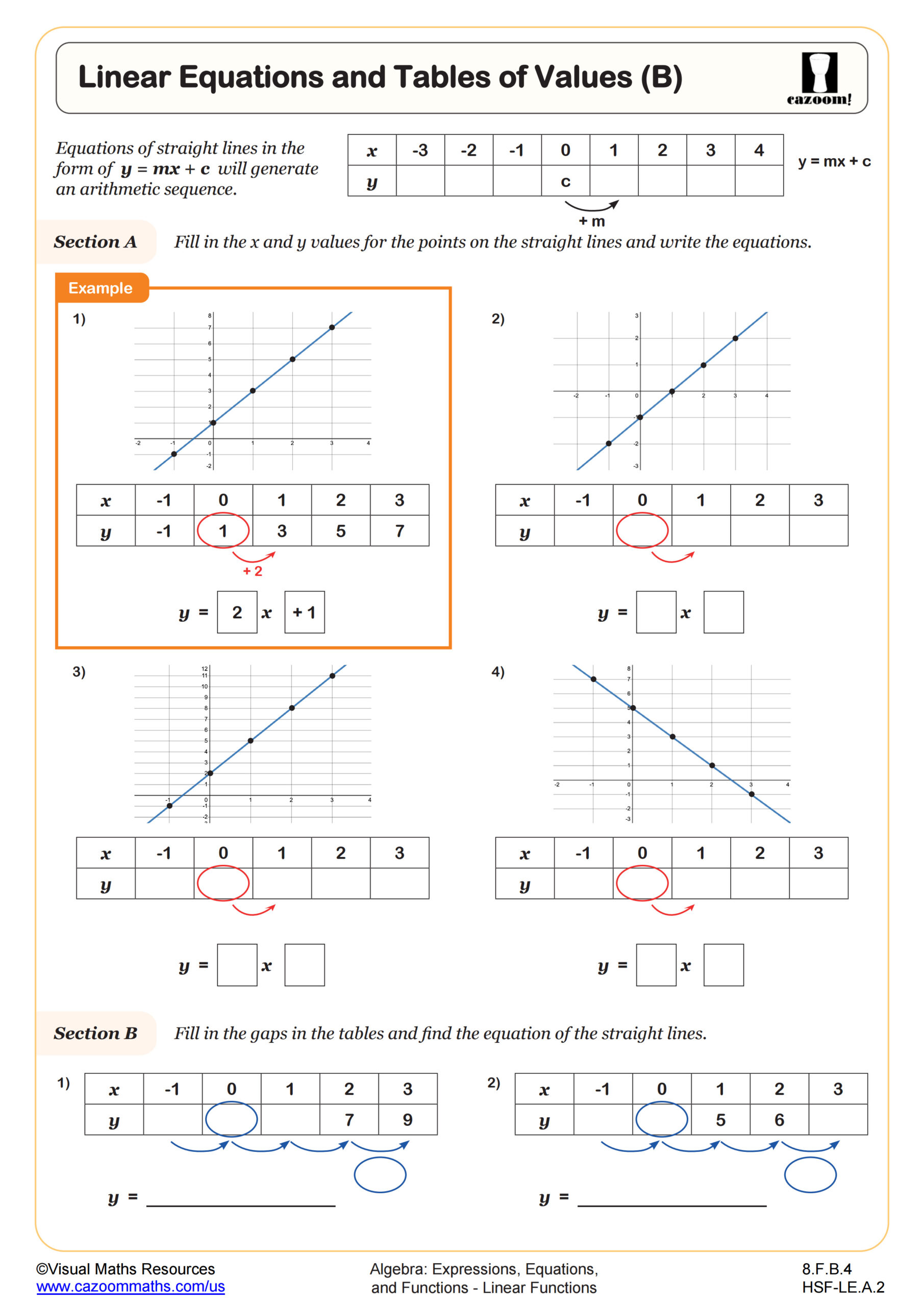
Linear Equations and Tables of Values (B)
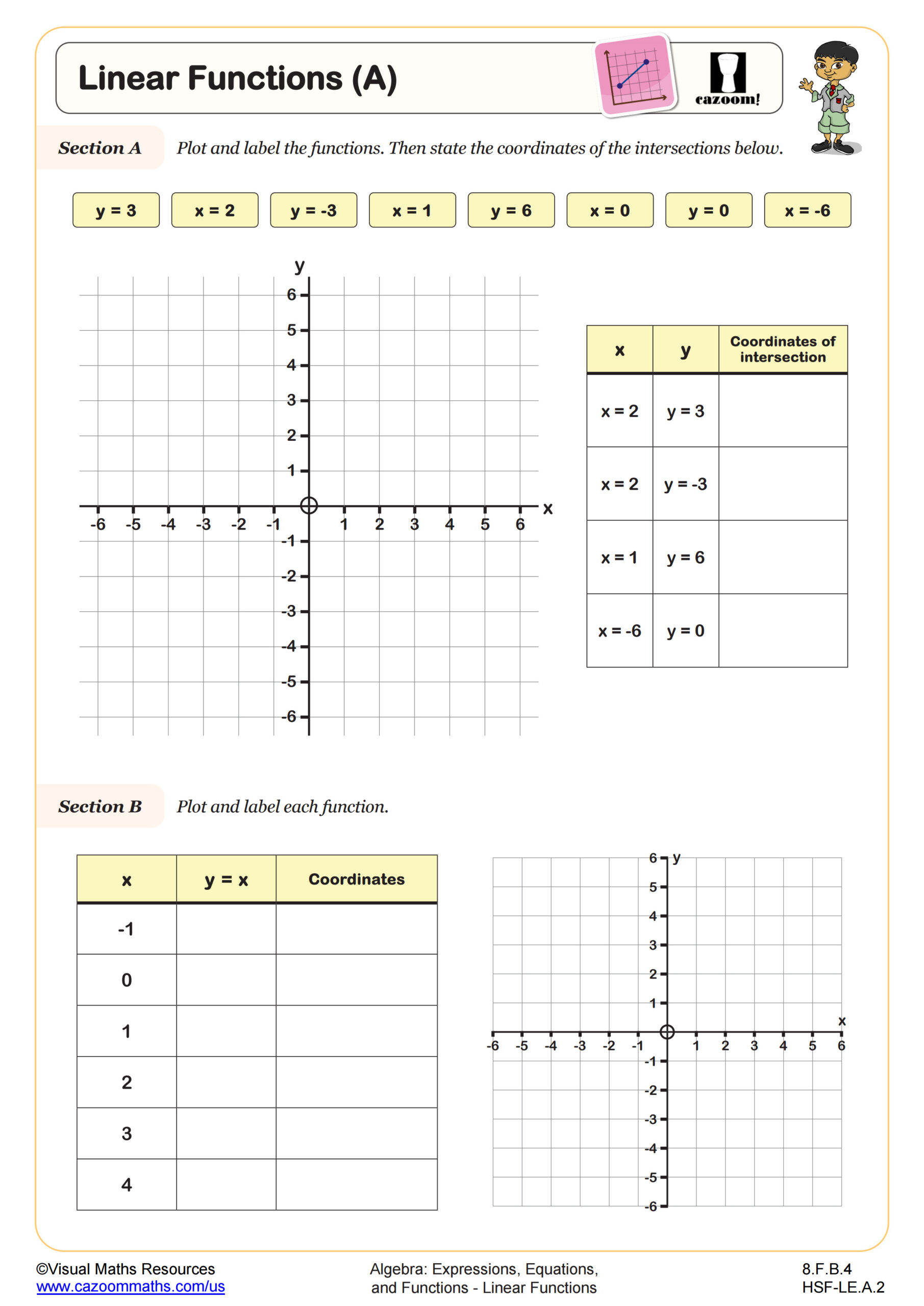
Linear Functions (A)
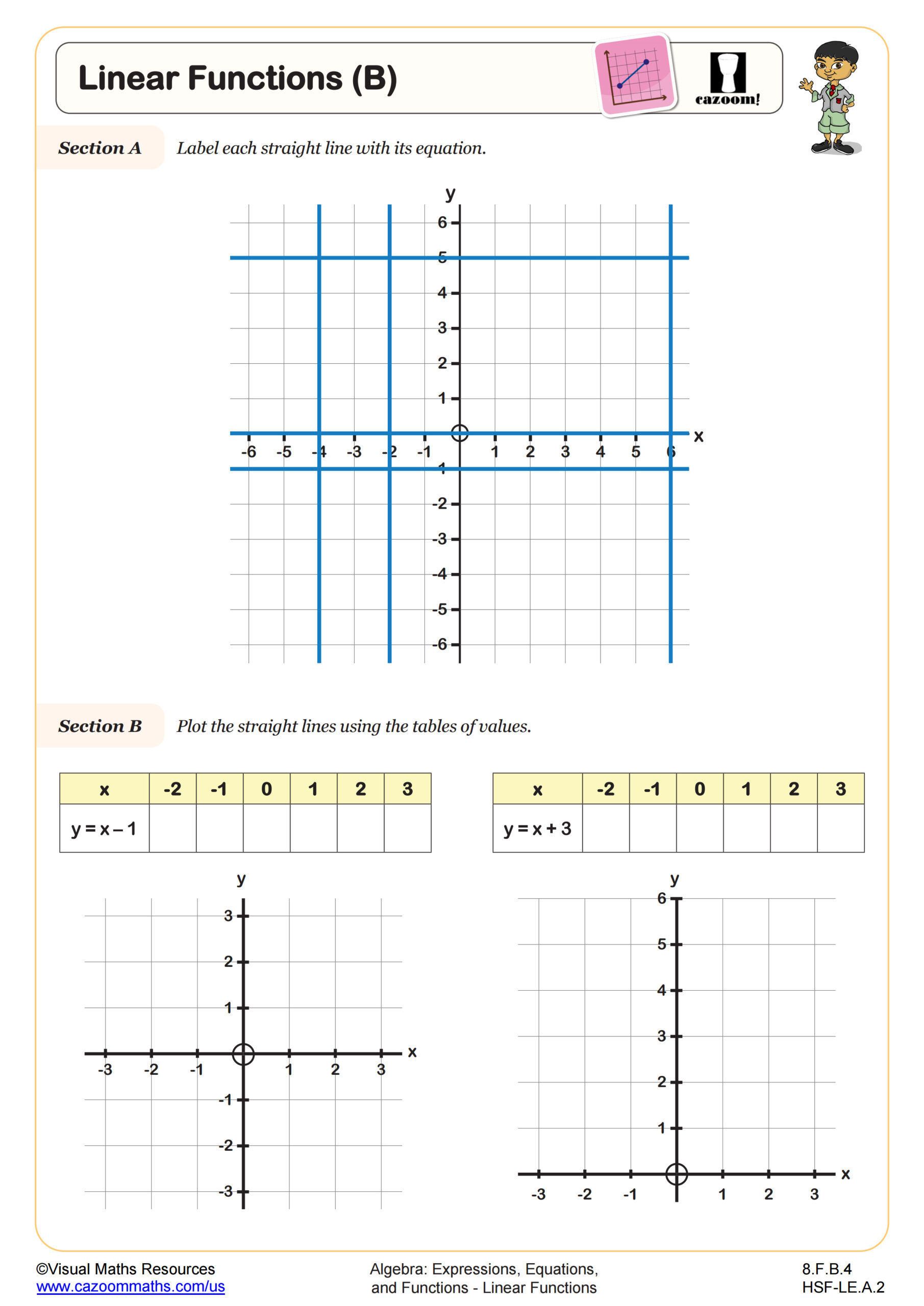
Linear Functions (B)
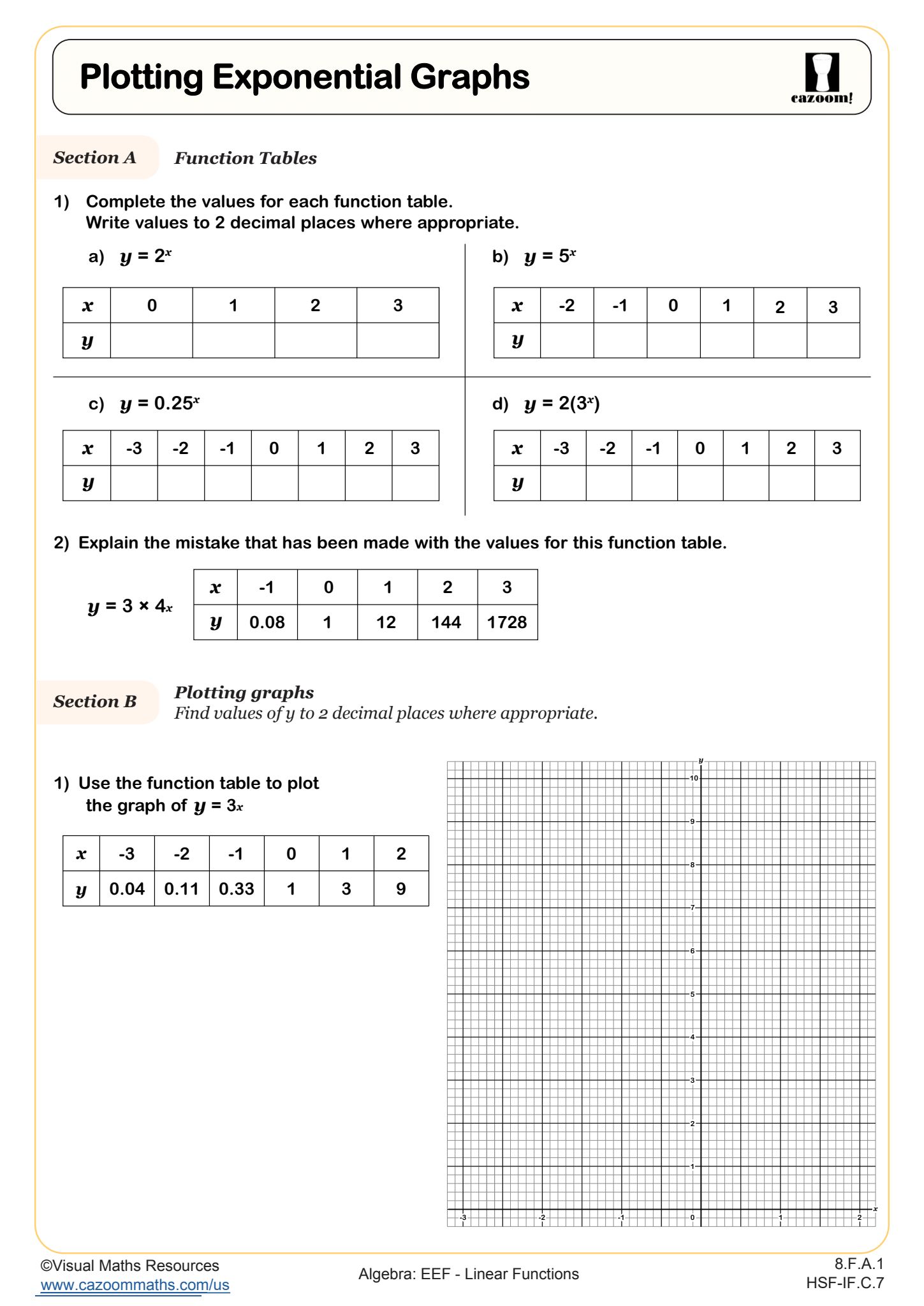
Plotting Exponential Graphs
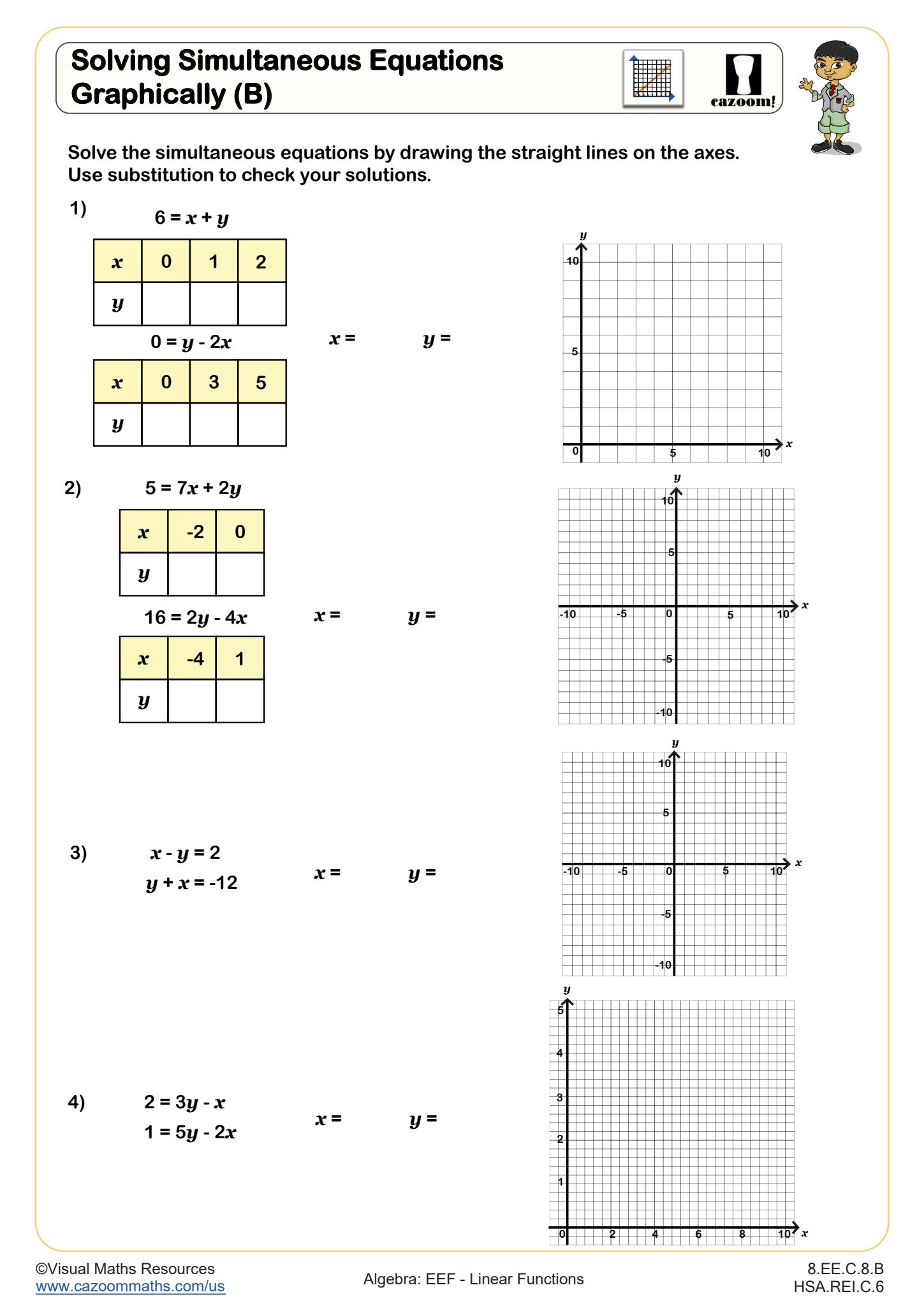
Solving Simultaneous Equations Graphically (B)
All worksheets are created by the team of experienced teachers at Cazoom Math.
What topics are covered in a linear function worksheet for middle school students?
A thorough linear function worksheet typically covers slope-intercept form (y = mx + b), graphing linear equations, finding slope from two points, identifying linear vs. nonlinear relationships, and interpreting function notation. These worksheets align with 8th grade Common Core standards 8.F.A.3 and 8.F.B.4, which focus on linear functions and their properties.
Teachers notice that students often confuse the roles of slope and y-intercept when writing equations from graphs. Many students correctly identify the y-intercept but struggle to calculate slope accurately, especially when dealing with negative slopes or when points don't fall on grid intersections. Effective worksheets provide varied practice with both positive and negative slopes using clearly marked coordinate pairs.
How do linear function worksheets progress across middle school grade levels?
Linear function concepts typically begin in 7th grade with proportional relationships and progress to formal function notation in 8th grade. Seventh-grade worksheets focus on constant rates of change and direct variation, while 8th grade functions worksheet materials introduce formal linear function vocabulary and more complex applications.
The progression moves from concrete examples like unit rates in real-world contexts to abstract algebraic manipulation. Teachers observe that students who master proportional reasoning in 7th grade adapt more easily to slope-intercept form in 8th grade. However, students who skip foundational work with ratios and proportional relationships often struggle with the conceptual meaning behind linear function equations.
Why do students need practice distinguishing linear and nonlinear functions?
Understanding the difference between linear and nonlinear functions builds critical algebraic reasoning skills that students need for advanced mathematics courses. Linear and nonlinear functions worksheet practice helps students recognize patterns in tables, graphs, and equations while developing function sense that transfers to quadratic and exponential functions in high school.
Classroom experience shows that students often rely on visual appearance rather than mathematical properties when classifying functions. Many students incorrectly identify piecewise functions or functions with restricted domains as nonlinear simply because they appear "different." Effective practice includes functions presented in multiple formats - tables, graphs, and equations - to strengthen students' analytical skills beyond surface-level pattern recognition.
How can teachers use these linear function worksheets most effectively in their classrooms?
Teachers find that linear function worksheets work best when integrated with hands-on activities and real-world applications rather than used in isolation. Starting with concrete examples like cell phone plans or taxi fare structures helps students understand the practical meaning of slope and y-intercept before moving to abstract algebraic manipulation.
Many teachers use these worksheets for differentiated instruction, assigning different problem sets based on student readiness levels. The answer keys allow for immediate feedback during independent practice, while teachers can focus on students who need additional support. Experienced teachers often have students work through problems in pairs first, then complete similar problems independently to build confidence with linear function concepts.