Middle School Multiplication Worksheets
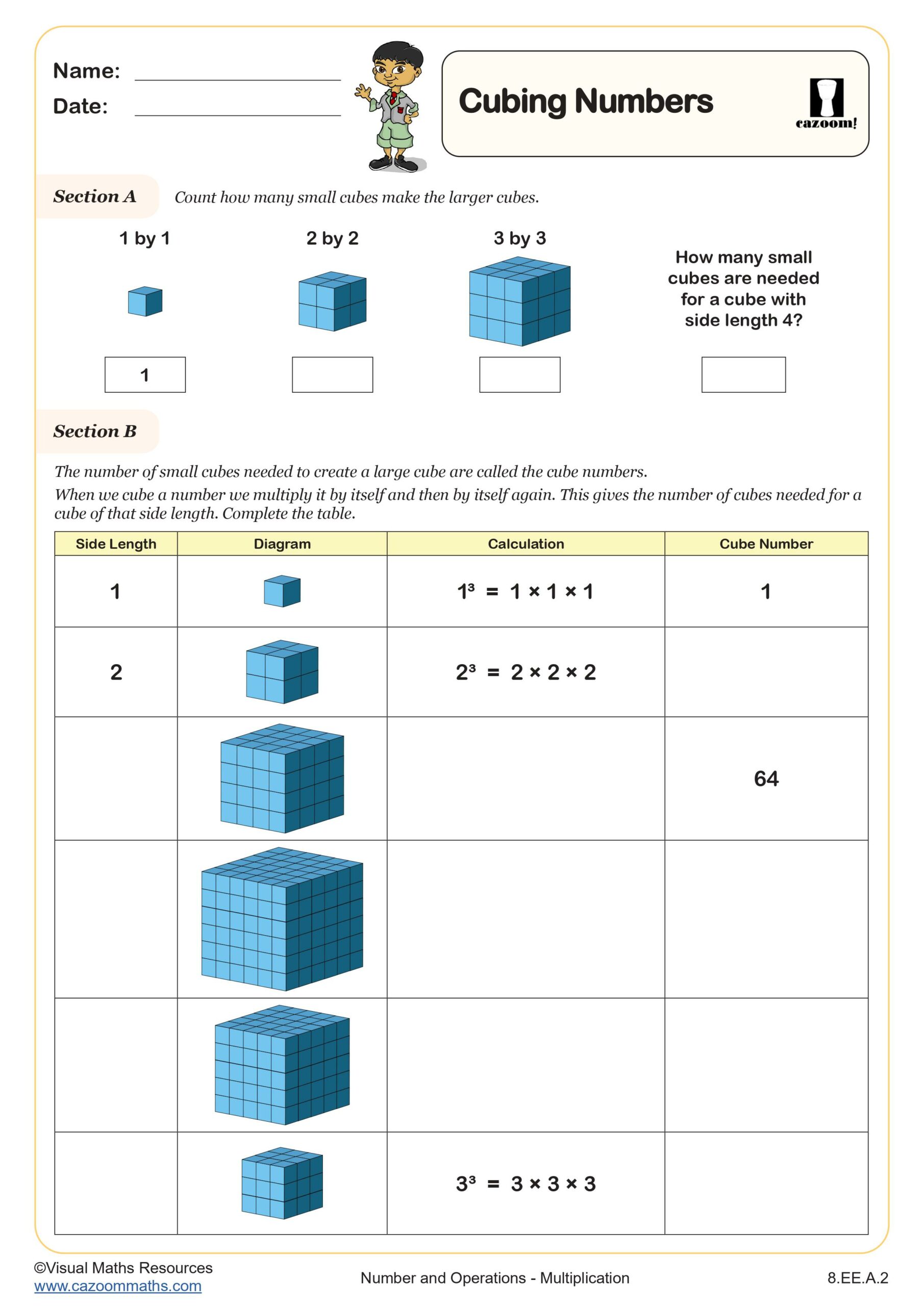
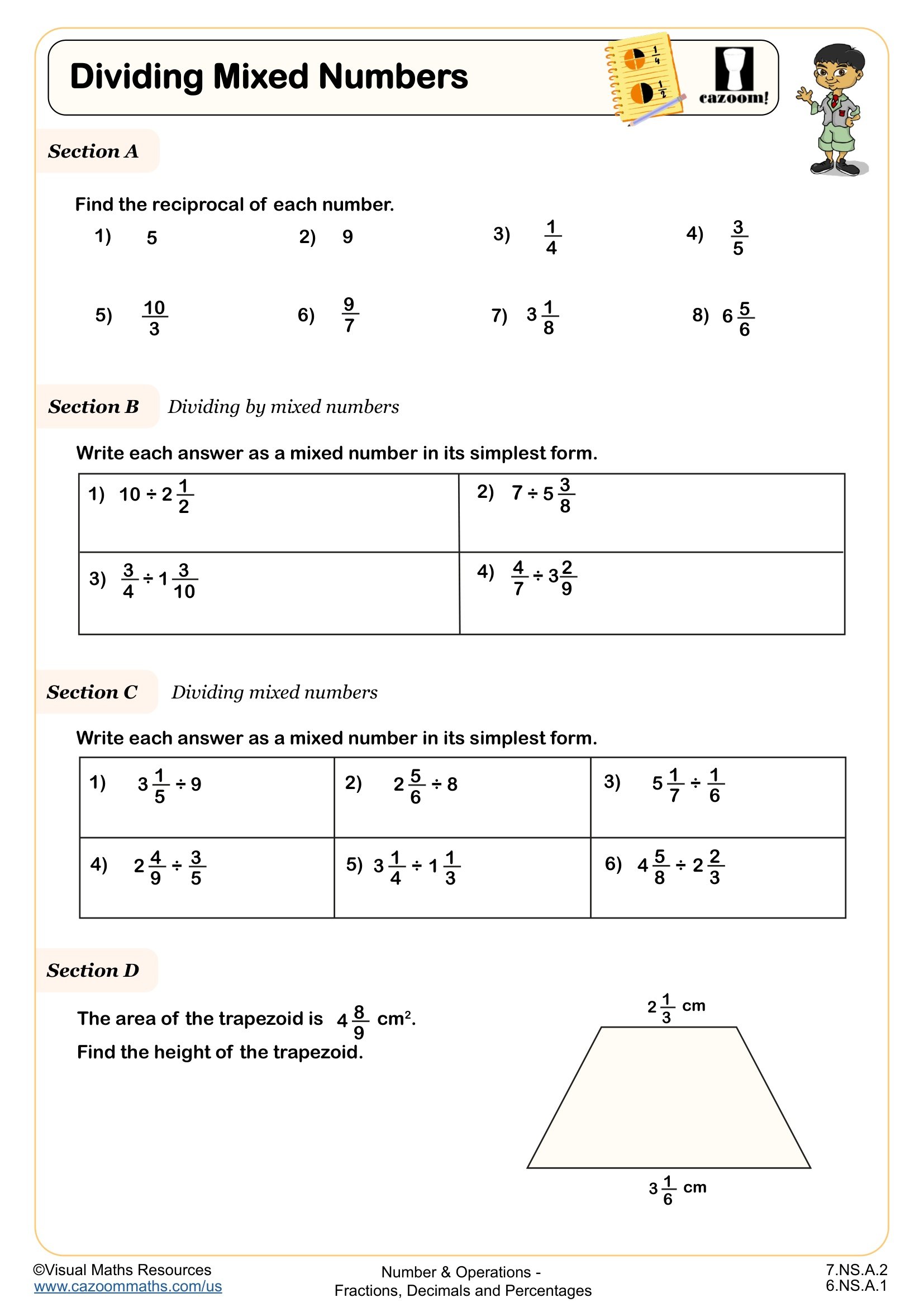
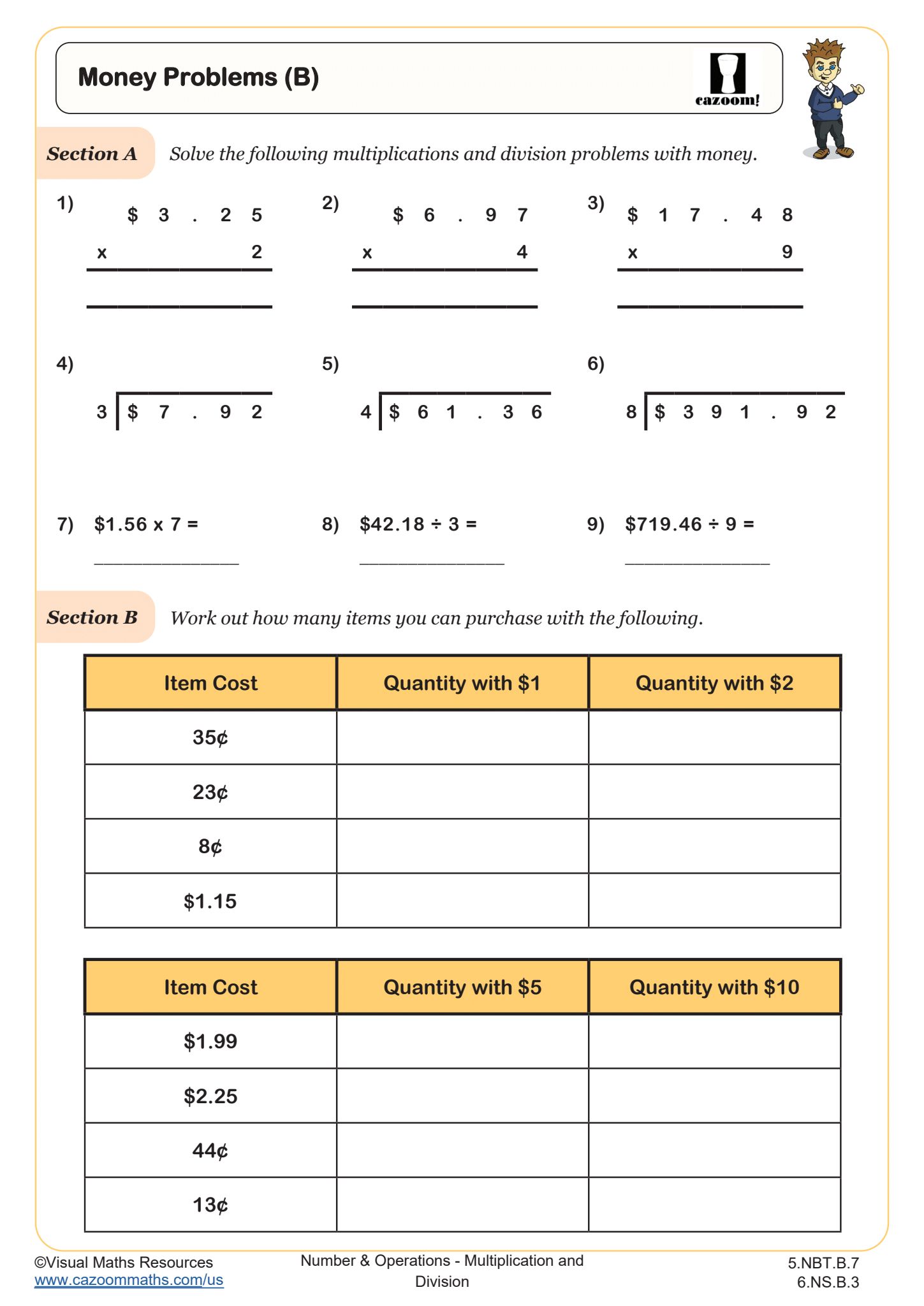
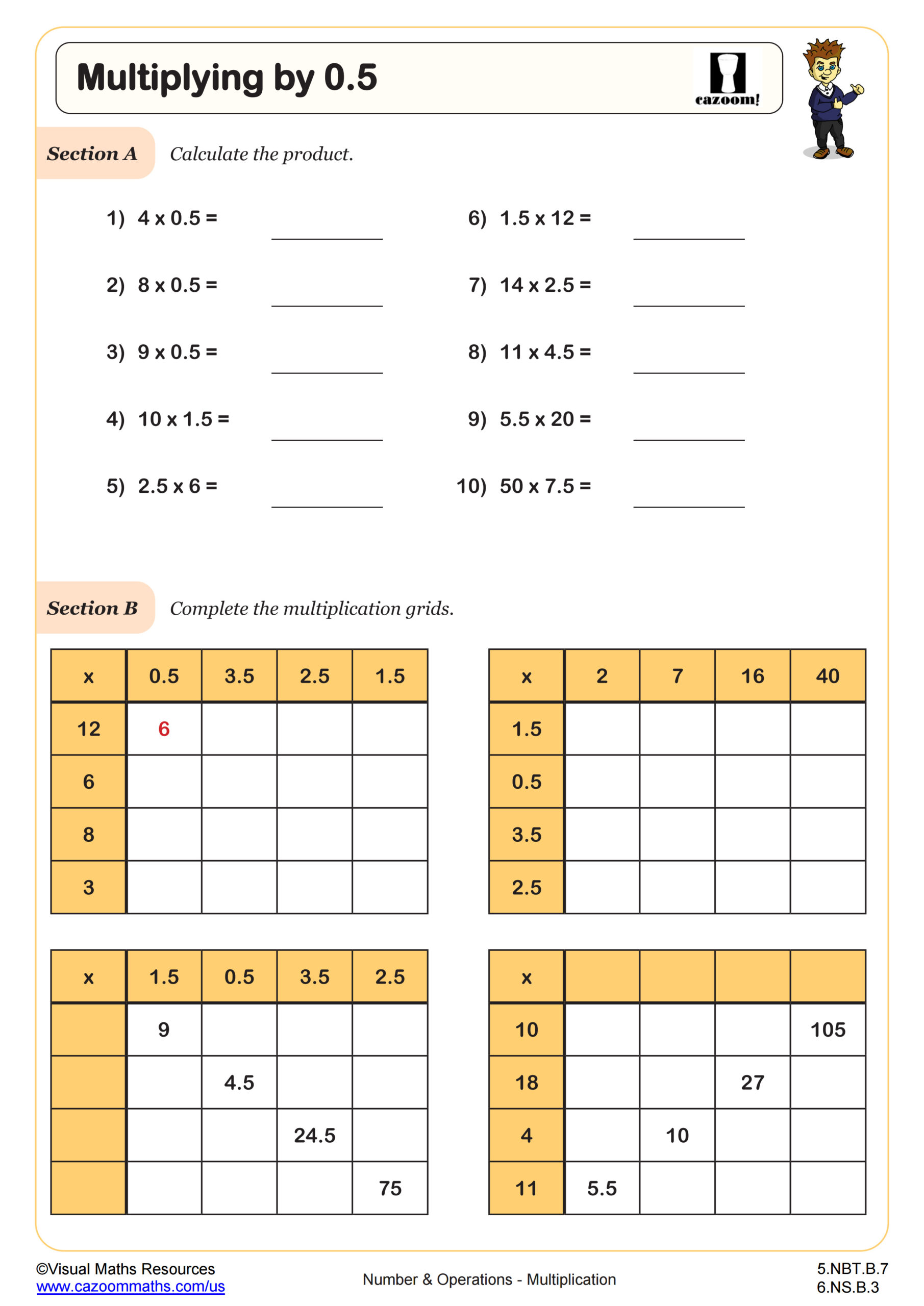
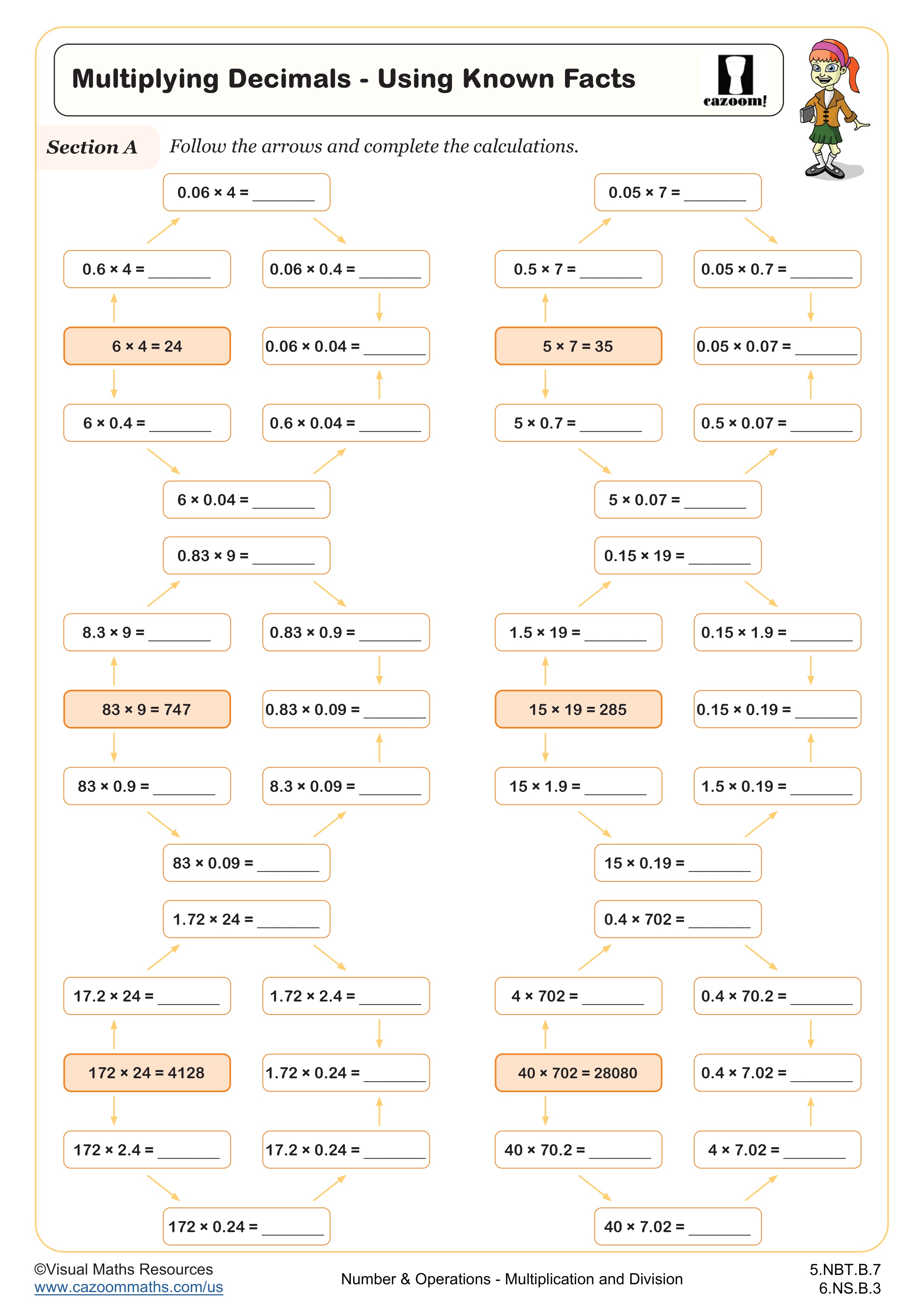
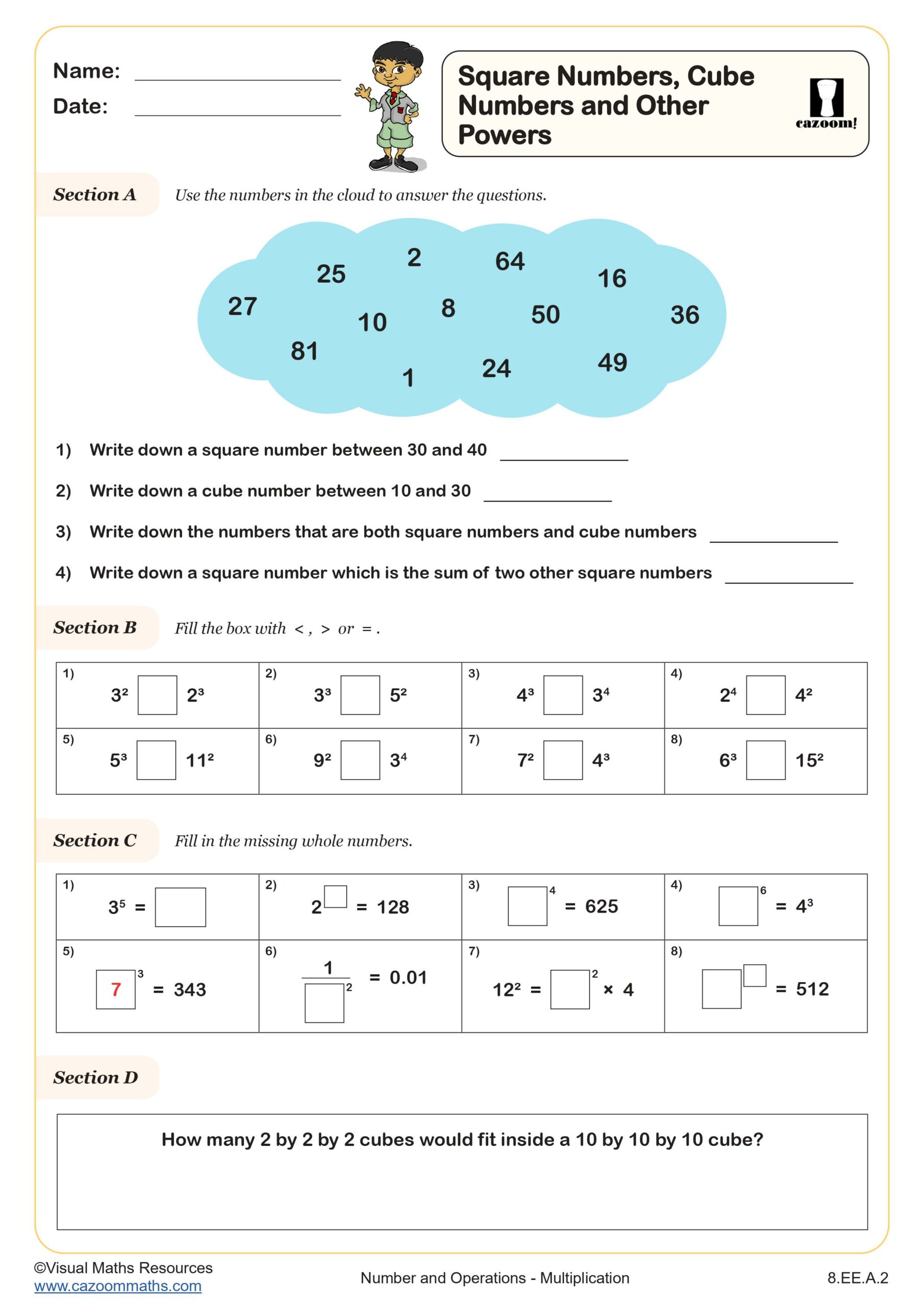
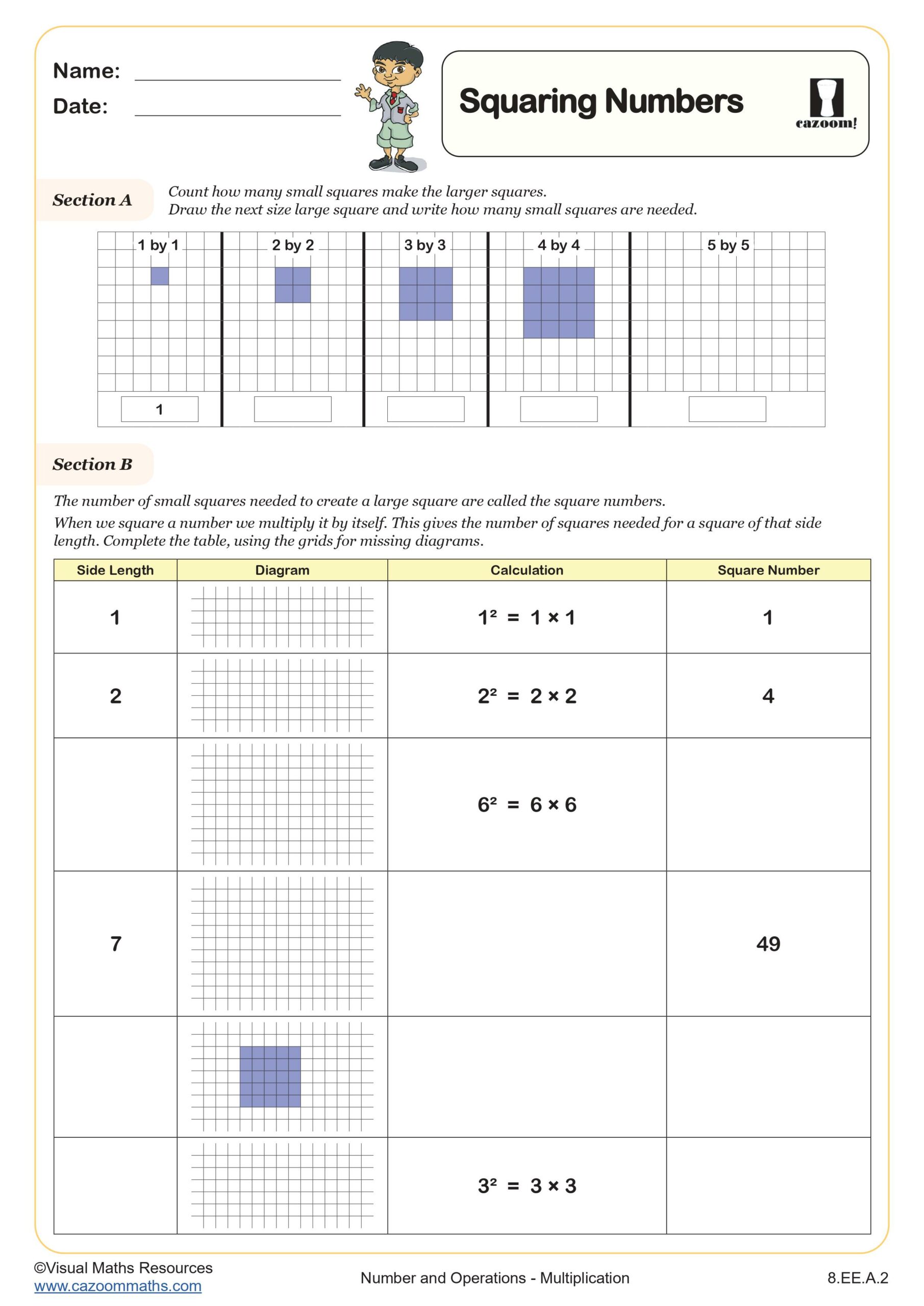
All worksheets are created by the team of experienced teachers at Cazoom Math.
Why does middle school multiplication focus on multi-digit problems?
Middle school multiplication shifts from memorizing basic facts to applying those facts within complex, multi-digit calculations that mirror algebraic thinking. Students multiply three-digit by two-digit numbers, work with larger values in grid formats, and develop the organizational skills needed for polynomial multiplication in algebra. This progression aligns with Common Core standards that expect procedural fluency alongside conceptual understanding of the distributive property.
A common error pattern emerges when students misalign place values during long multiplication, particularly when the second digit creates partial products that need proper shifting. Teachers catch this quickly by examining whether students indent correctly or use zeros as placeholders. Grid methods eliminate much of this confusion by giving each partial product its own designated space, which explains why students who switched to grids often show immediate improvement in accuracy.
Which grade levels use these multiplication worksheets?
These worksheets serve 6th grade, 7th grade, and 8th grade students throughout middle school, addressing both skill reinforcement and preparation for algebraic thinking. While most multi-digit multiplication instruction occurs in upper elementary, middle school students revisit these operations in contexts requiring greater precision, such as calculating area, working with scientific notation, or solving ratio problems that demand accurate computation.
The progression across middle school focuses less on introducing new multiplication algorithms and more on applying multiplication within increasingly sophisticated problem types. Sixth graders typically solidify long multiplication technique, seventh graders encounter multiplication within proportional reasoning and expressions, and eighth graders use these skills as tools within equation-solving and function tables where computational errors can derail entire solution paths.
What are multiplication grids and how do they help students?
Multiplication grids, also called area models or box method, break multi-digit multiplication into manageable partial products by decomposing each factor by place value. Students create a rectangular grid where each cell represents one partial product, then sum all cells to find the total. This visual approach makes the distributive property explicit: 23 × 47 becomes (20 + 3) × (40 + 7), with four separate multiplications clearly organized in the grid before combining.
Engineers and architects regularly use area-based thinking when calculating materials, square footage, or load distribution across surfaces. When students multiply dimensions to find rectangular areas in construction projects or determine how many tiles fit in a space, they're applying the same decomposition strategy the grid method teaches. This connection becomes particularly relevant in STEM careers where breaking complex calculations into verifiable components reduces costly errors in design specifications.
How can teachers use these worksheets in the classroom?
The worksheets provide scaffolded practice that moves from straightforward computation to challenge activities like magic squares, where students apply multiplication within puzzle constraints that build logical reasoning. Teachers can assign basic long multiplication sheets for skill maintenance while using grid method worksheets to reteach students who struggle with traditional algorithms. The variety allows differentiation within a single class period, giving advanced students puzzle-based challenges while others solidify computational accuracy.
Many teachers use these worksheets during math centers or stations, pairing students to compare solution strategies and catch each other's alignment errors before checking answer keys. The sheets work effectively as homework for independent practice, warm-up exercises that activate prior knowledge before introducing algebraic expressions, or targeted intervention materials for students whose weak multiplication skills create barriers in pre-algebra coursework. The complete answer keys make them practical for self-paced learning or flipped classroom models where students check their own work.