Middle School Number and Operations Worksheets
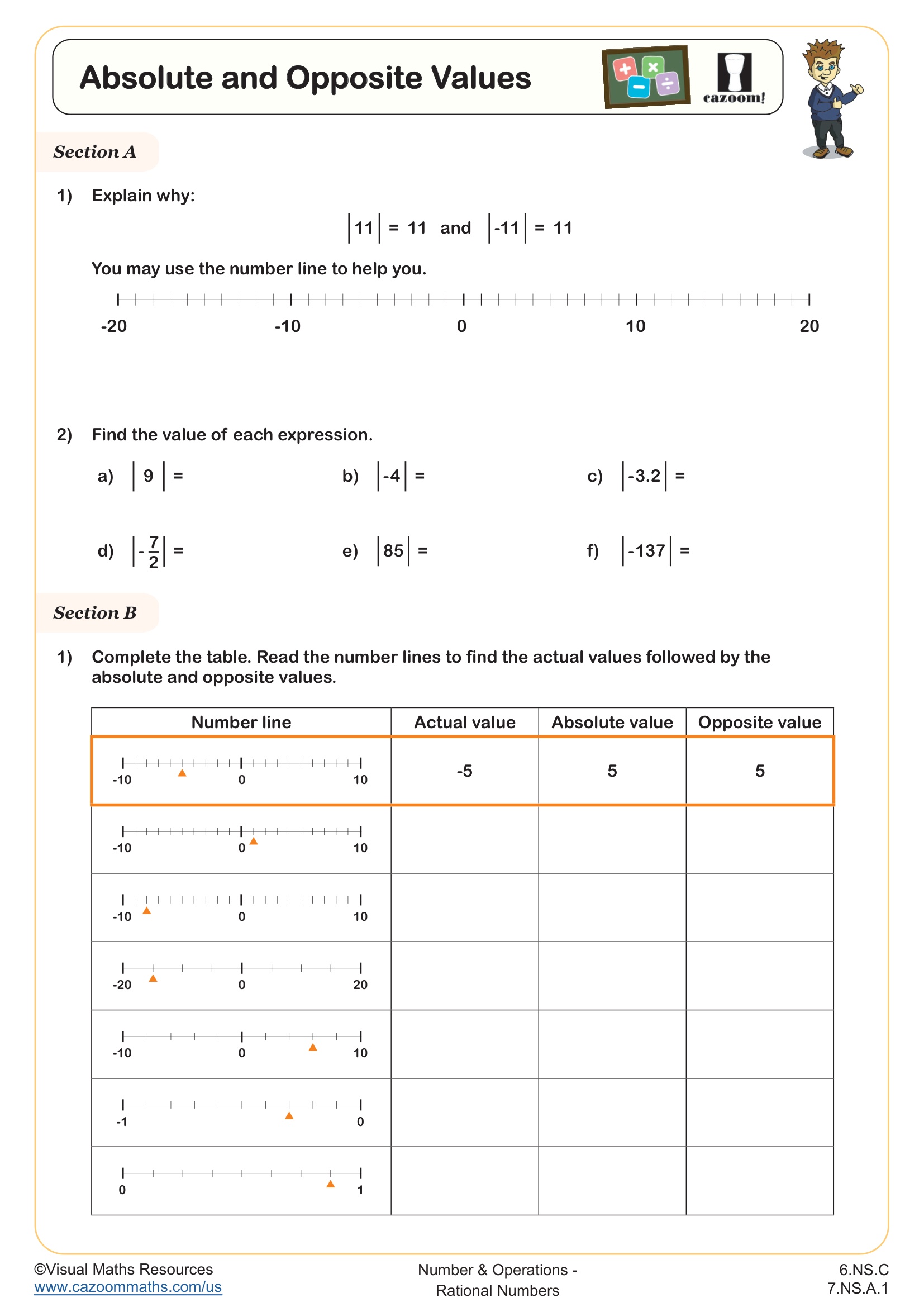
Absolute and Opposite Values
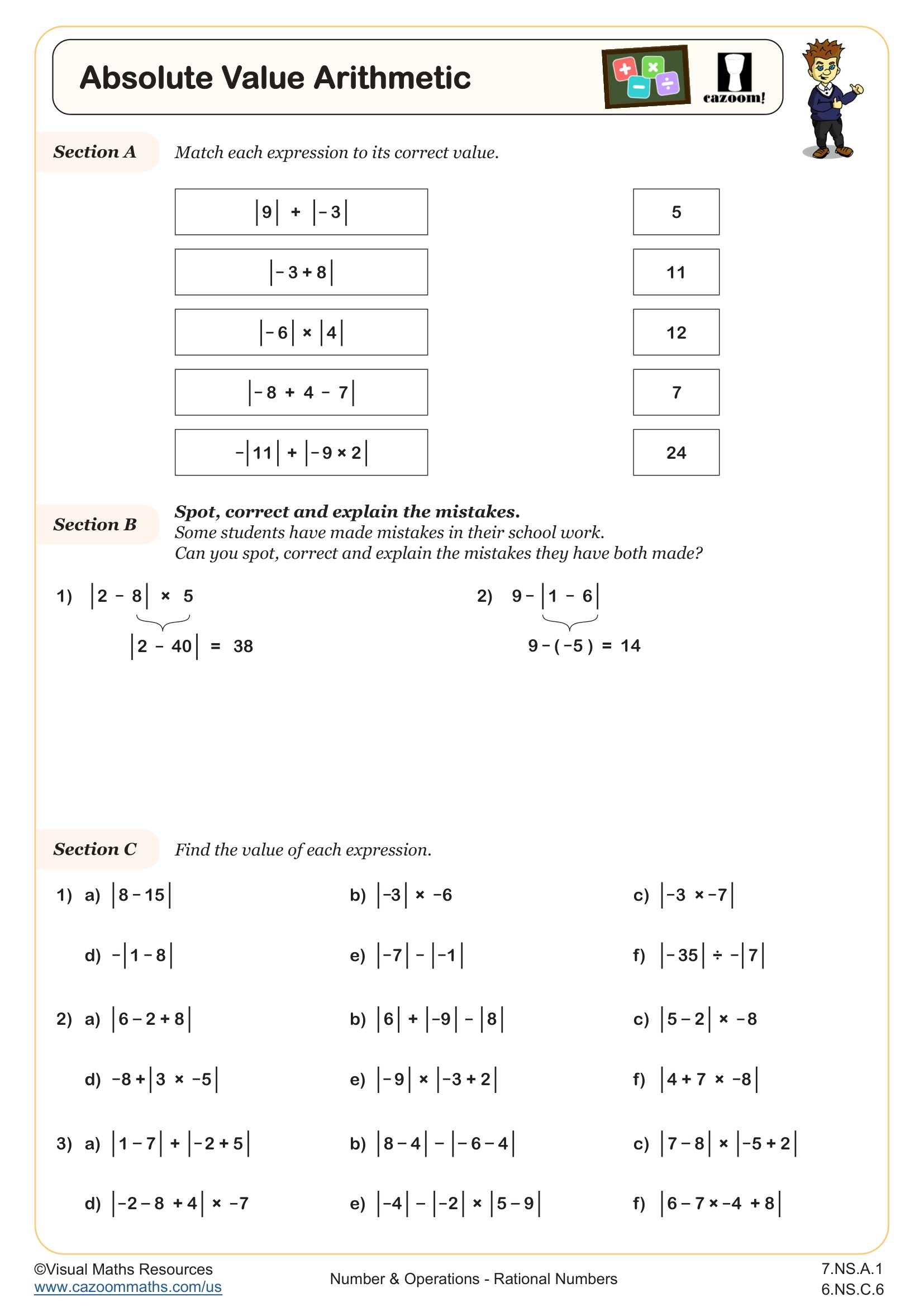
Absolute Value Arithmetic
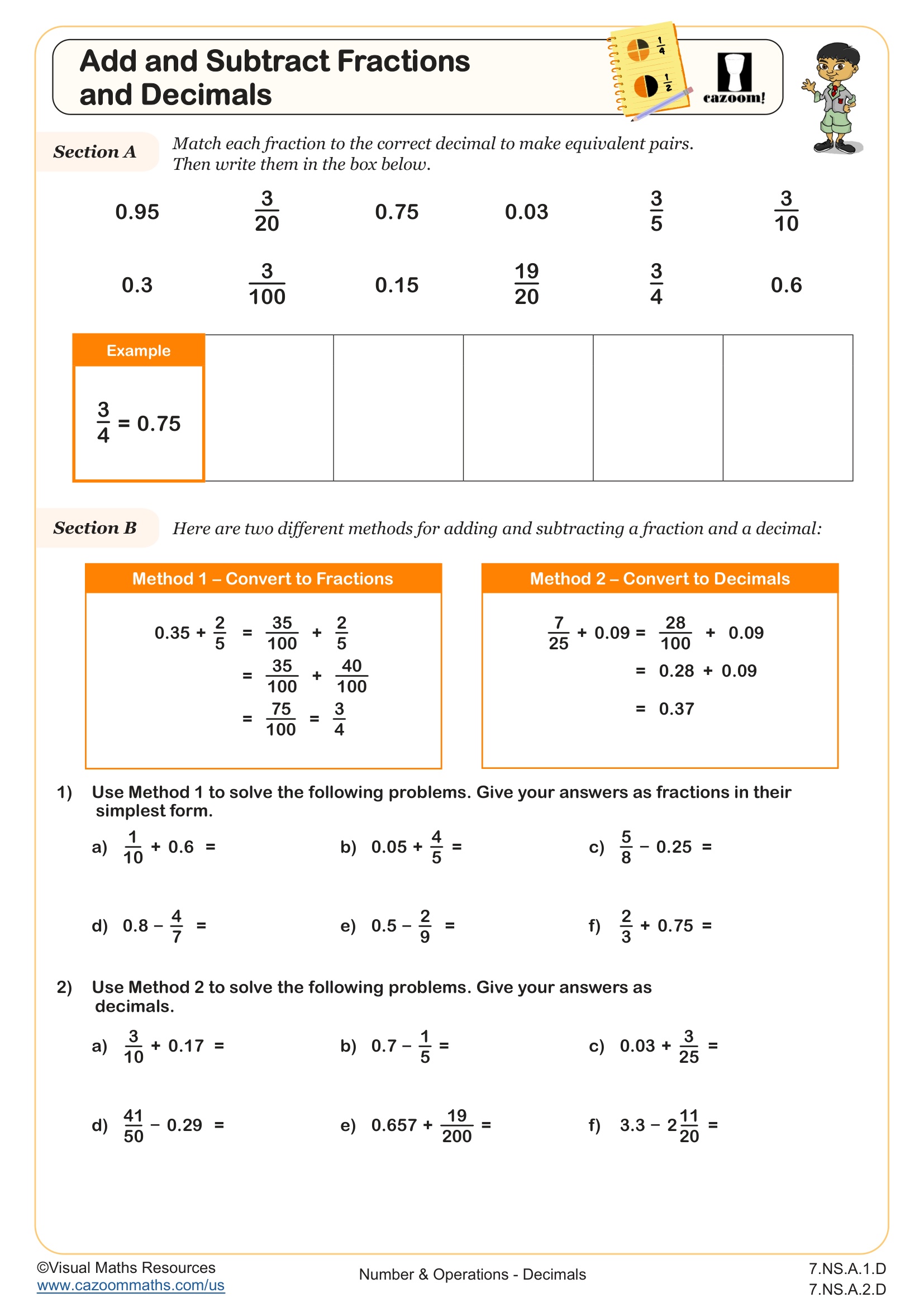
Add and Subtract Fractions and Decimals
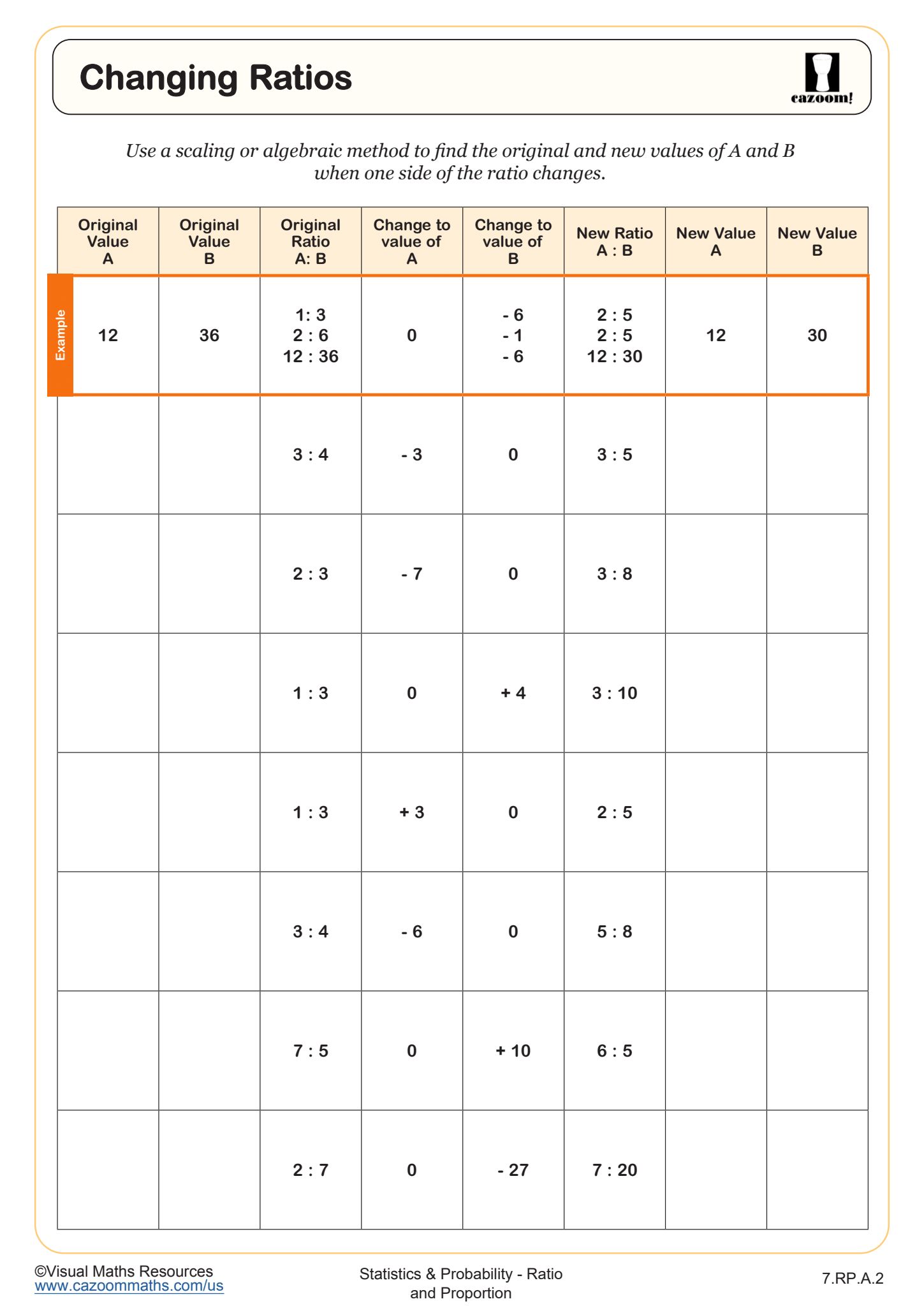
Changing Ratios
Converting Fractions, Decimals, and Percents (A)
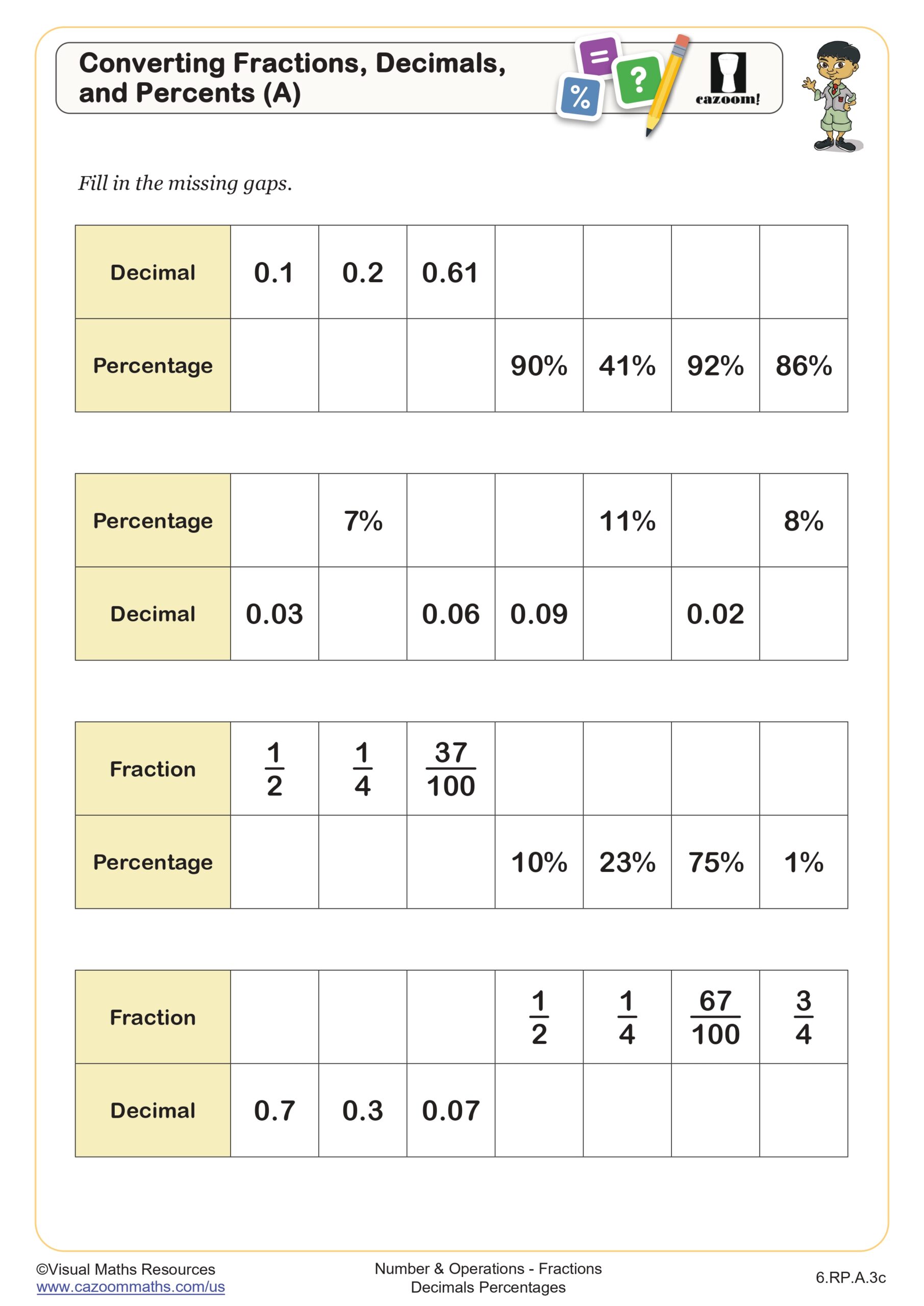
Converting Fractions, Decimals, and Percents (B)
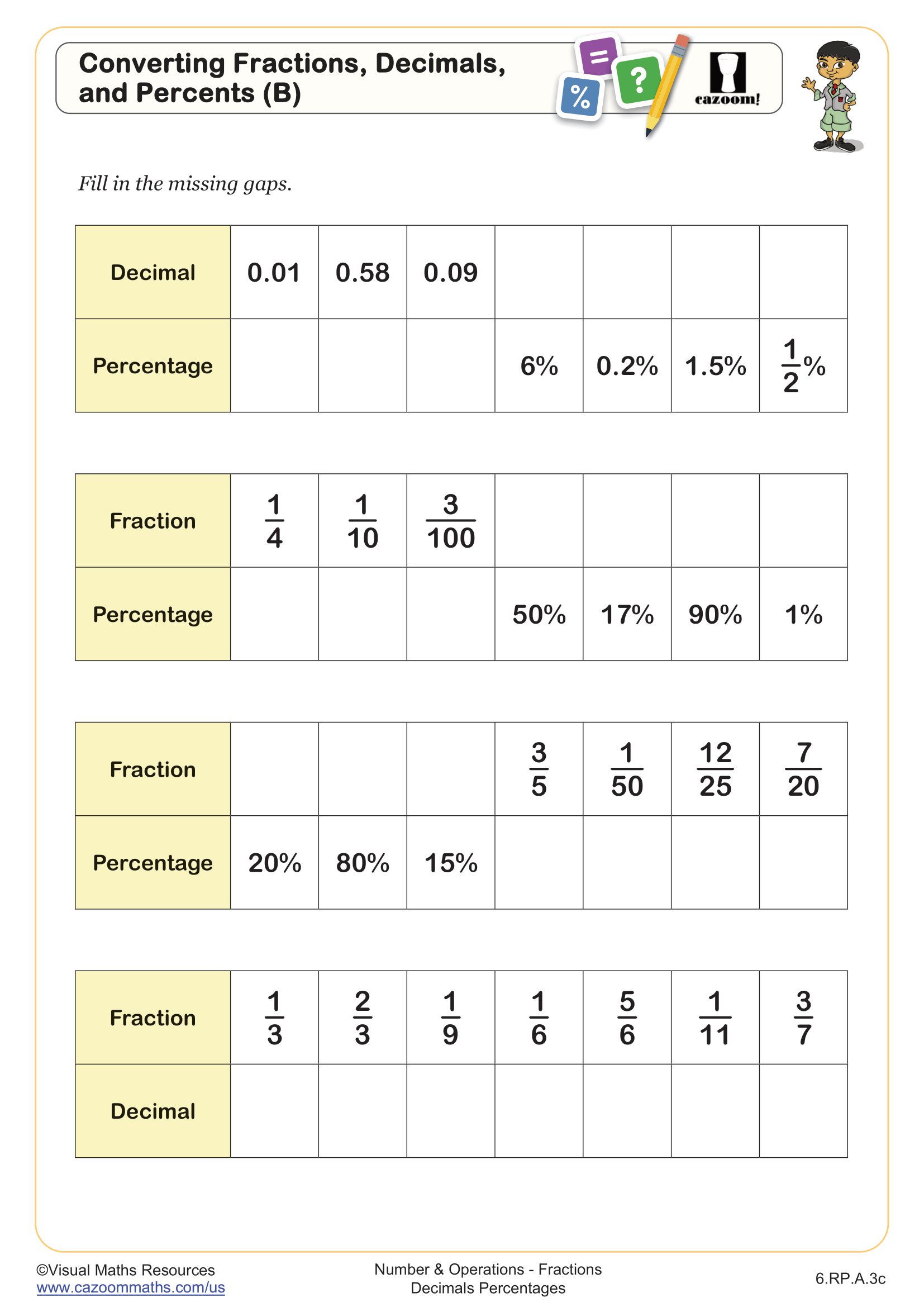
Coordinate Plane Word Problems
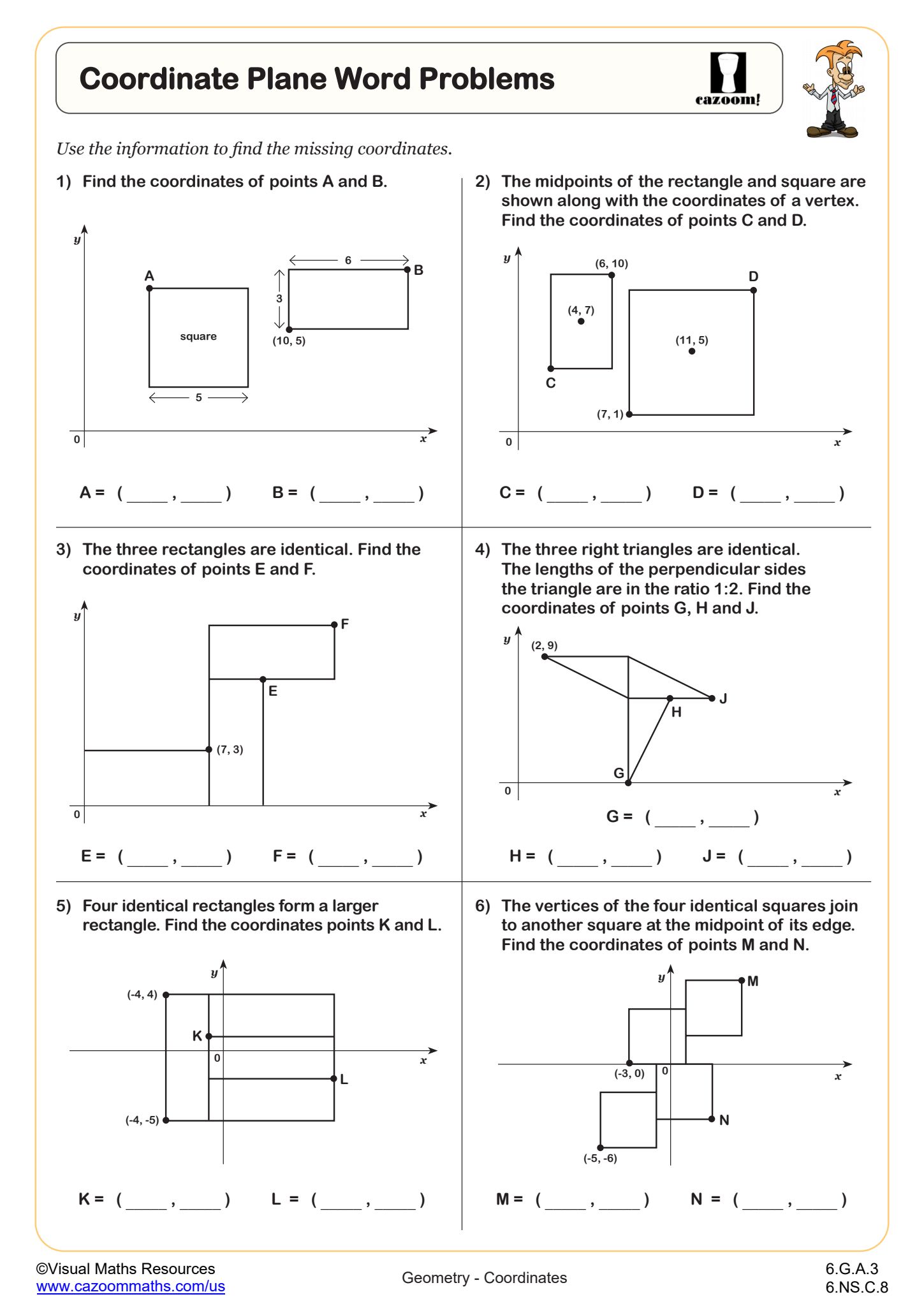
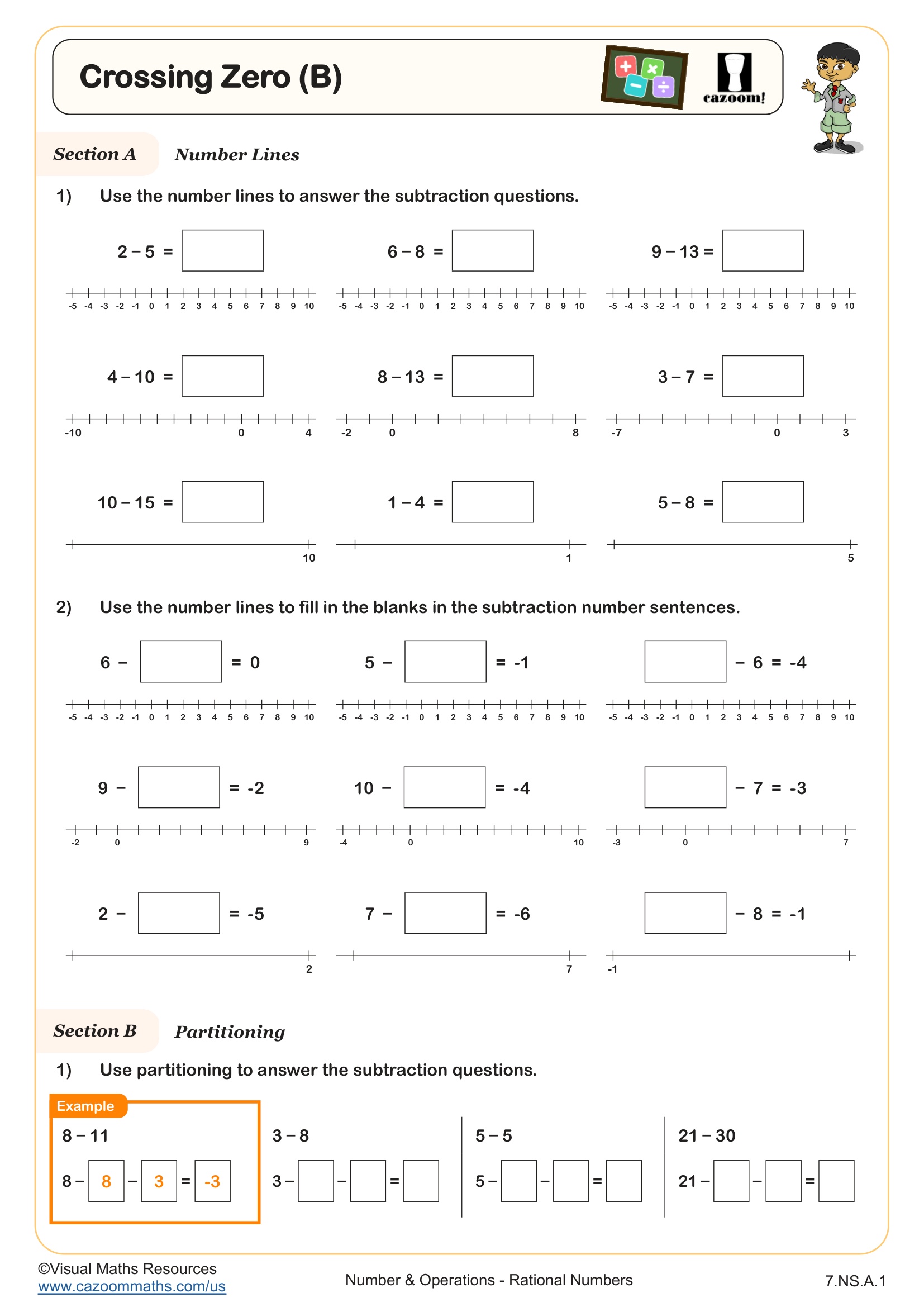
Crossing Zero (B)
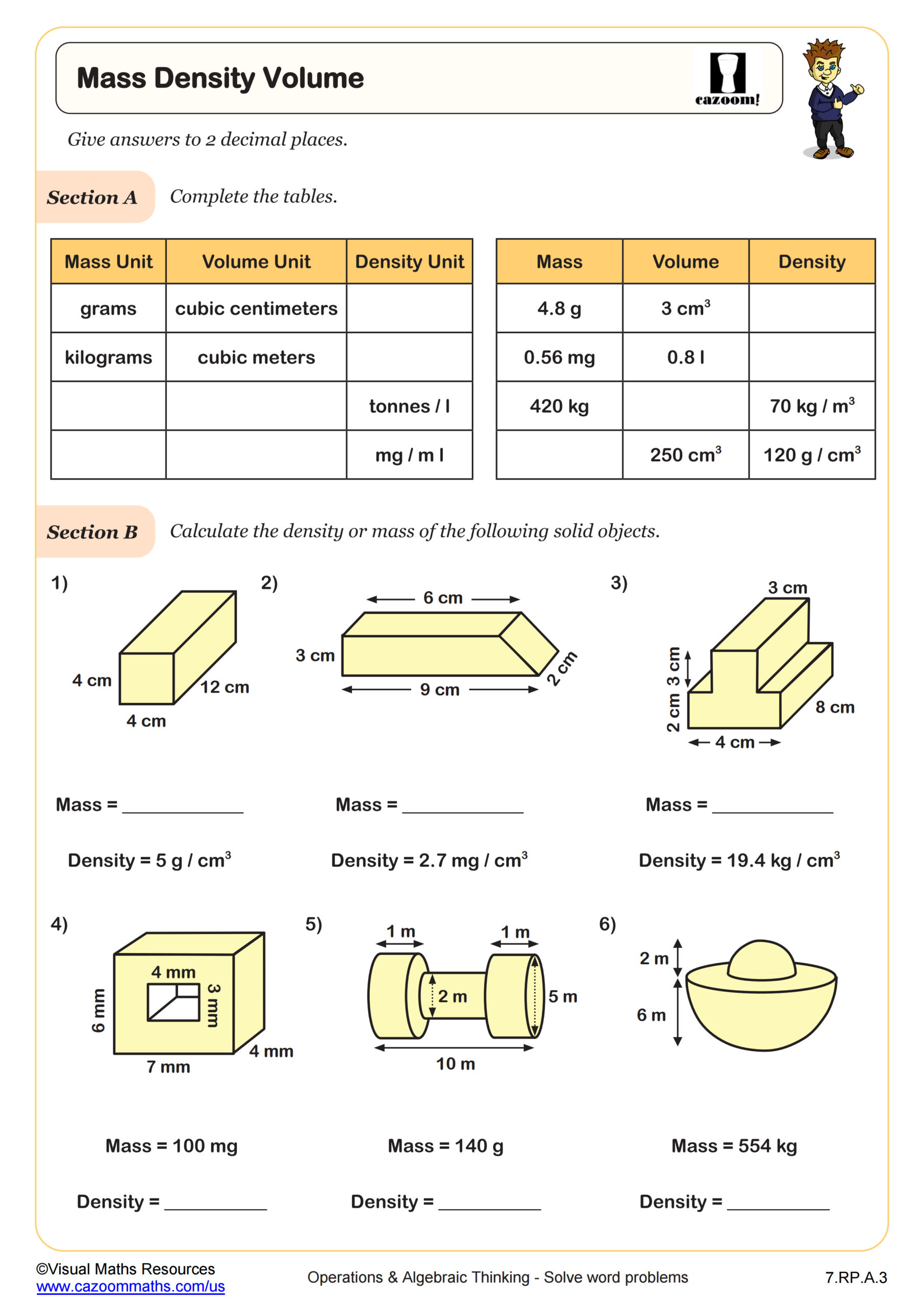
Density, Mass, and Volume
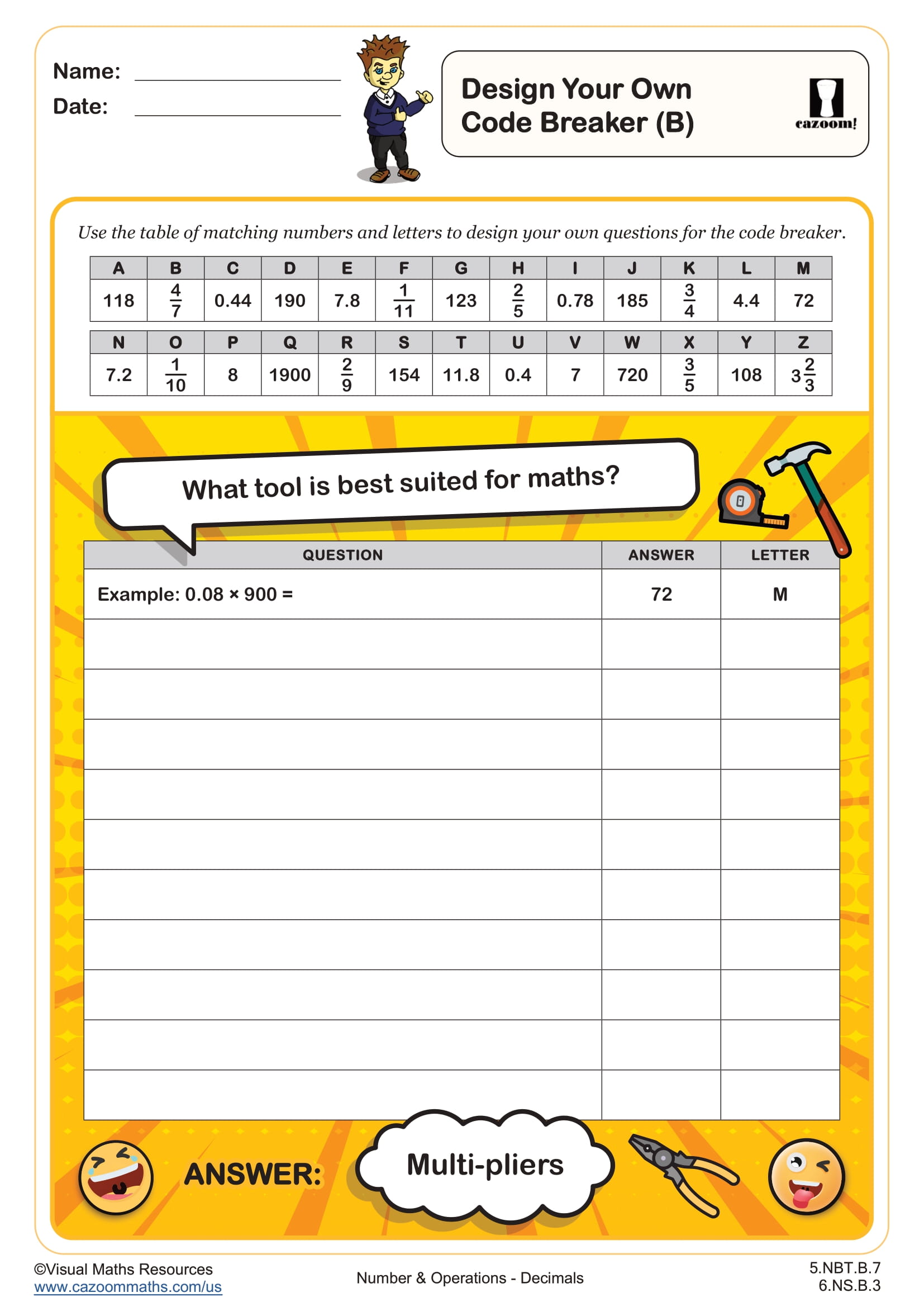
Design Your Own Code Breaker (B)
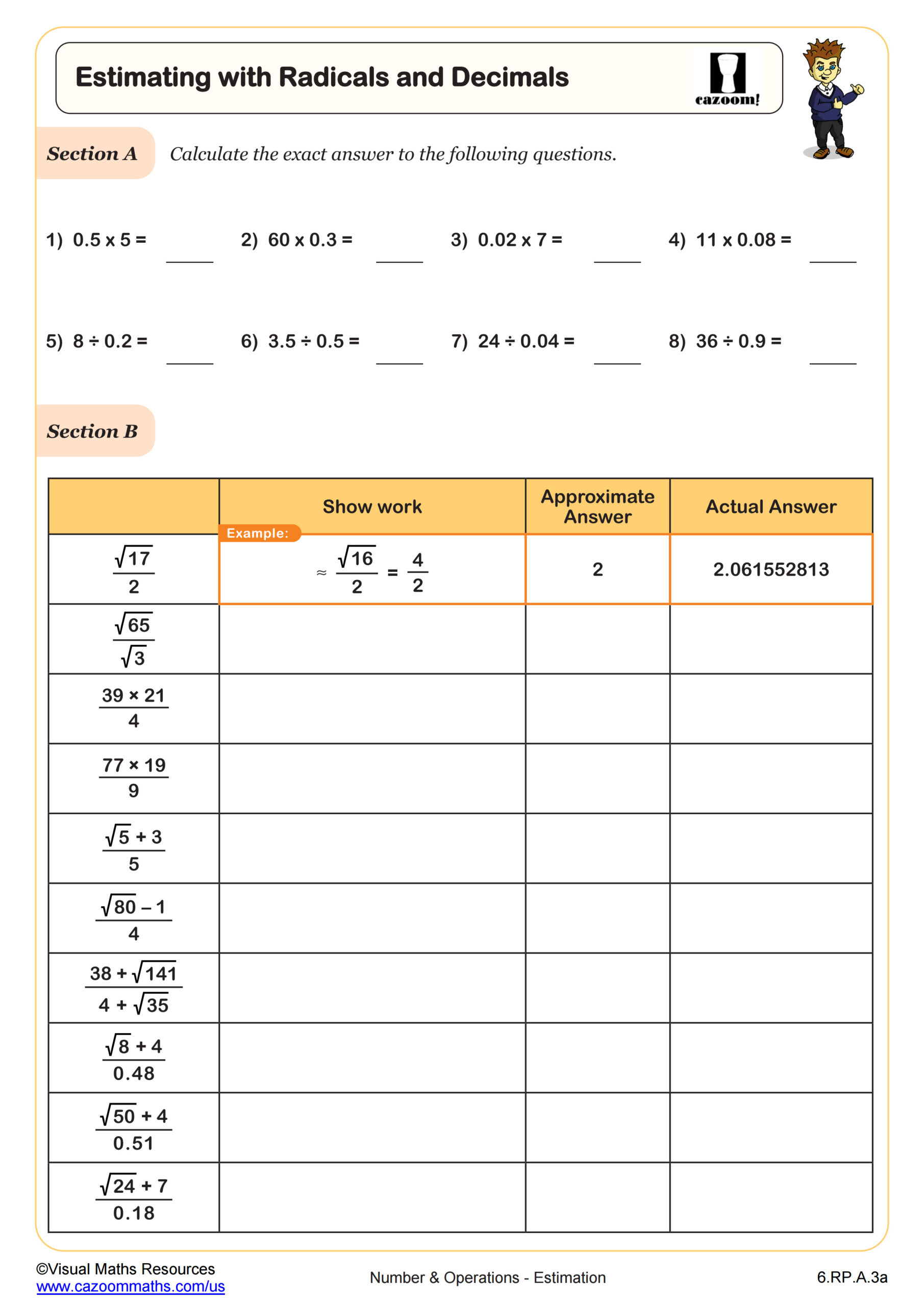
Estimating with Radicals and Decimals
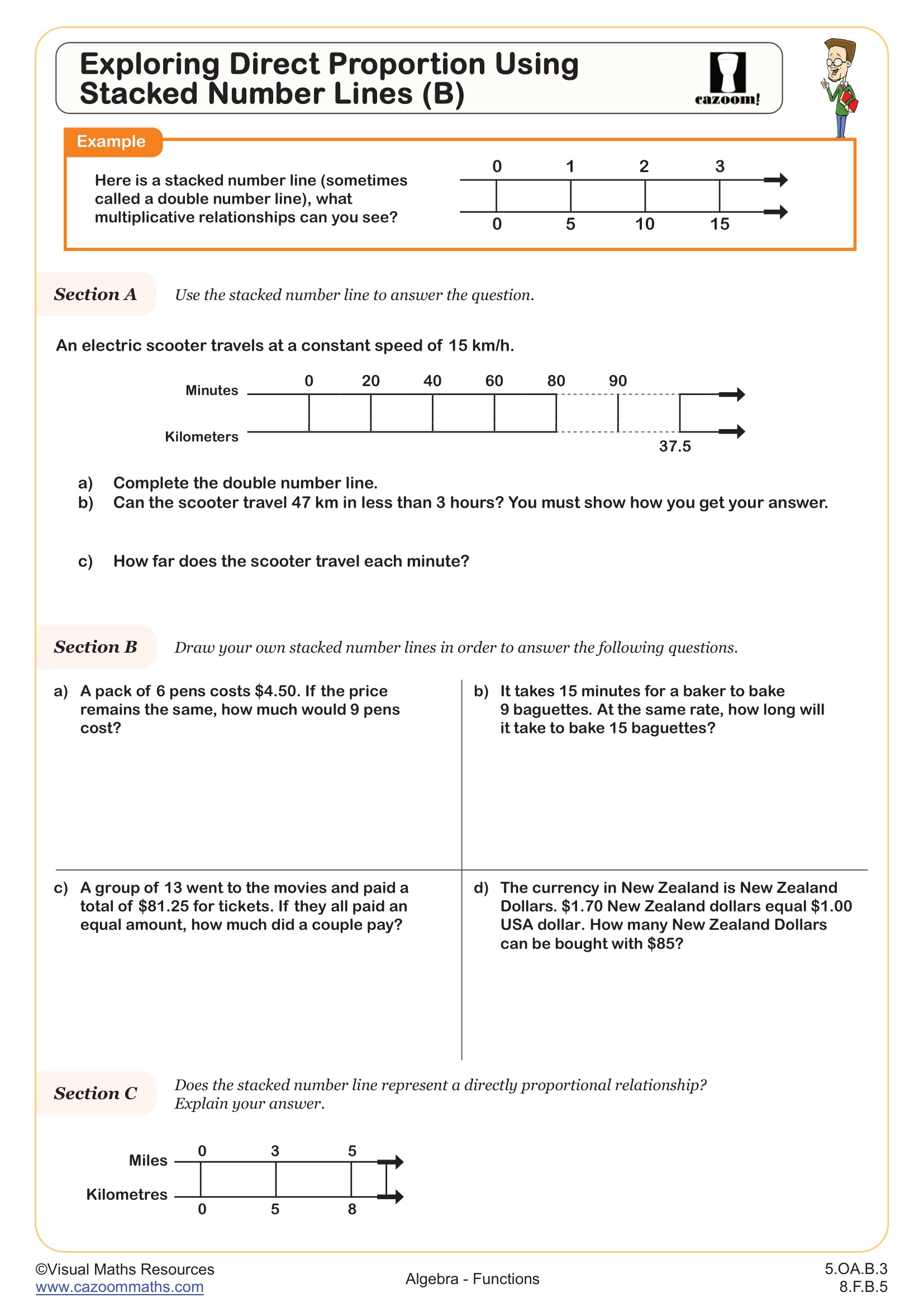
Exploring Direct Proportion Using Stacked Number Lines (B)
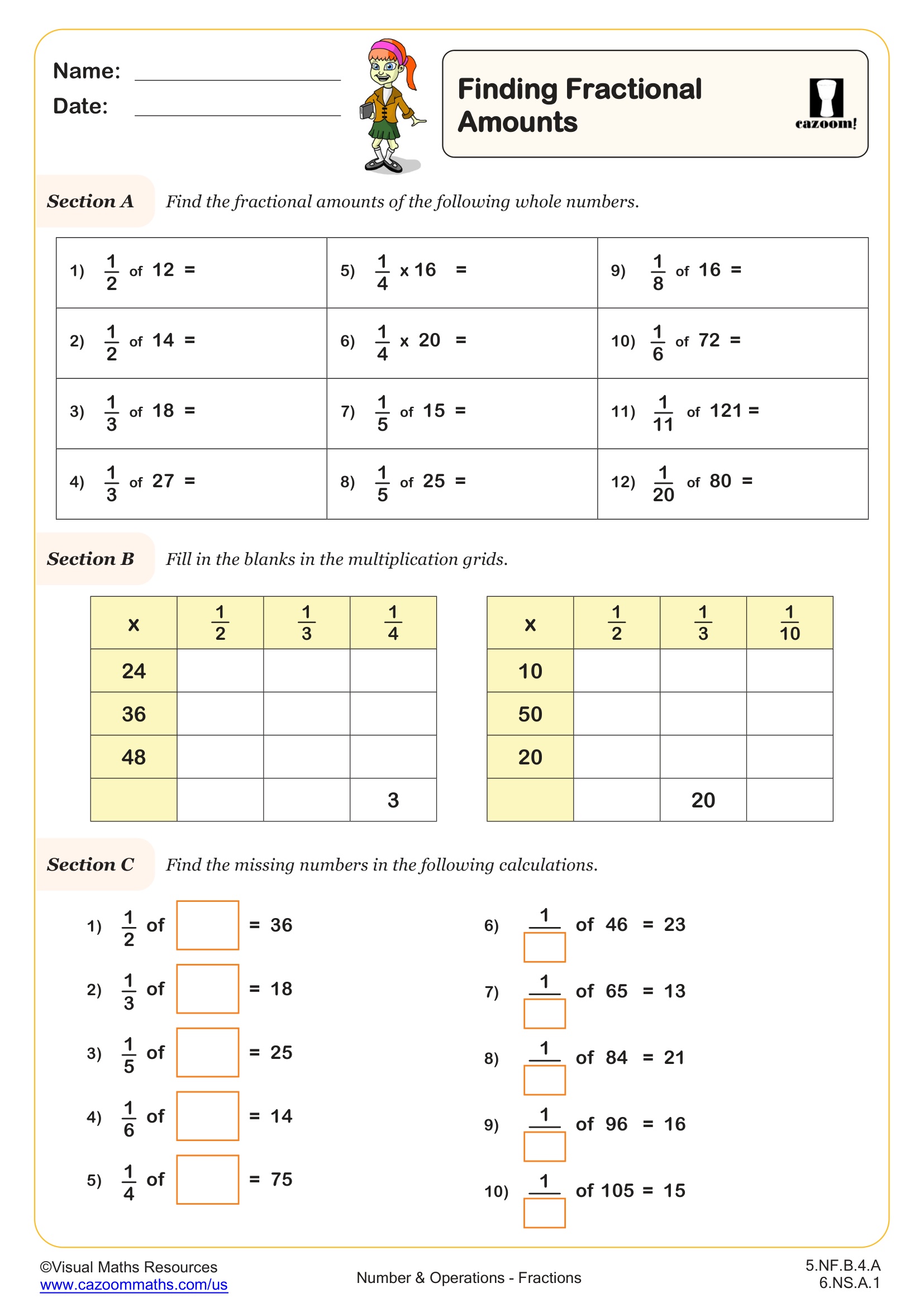
Factors and Multiples
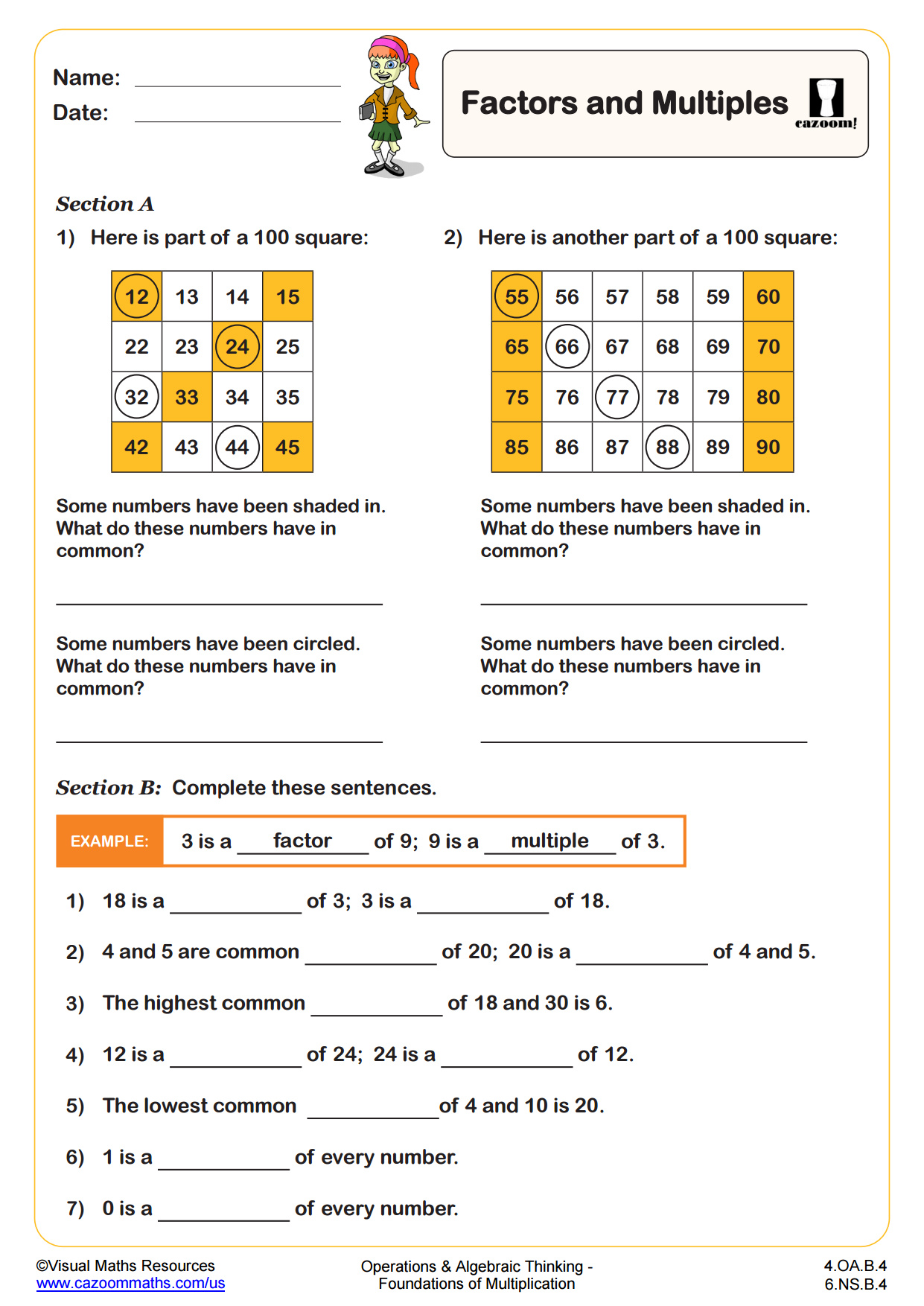
Finding Equivalent Fractions, Decimals, and Percents (A)
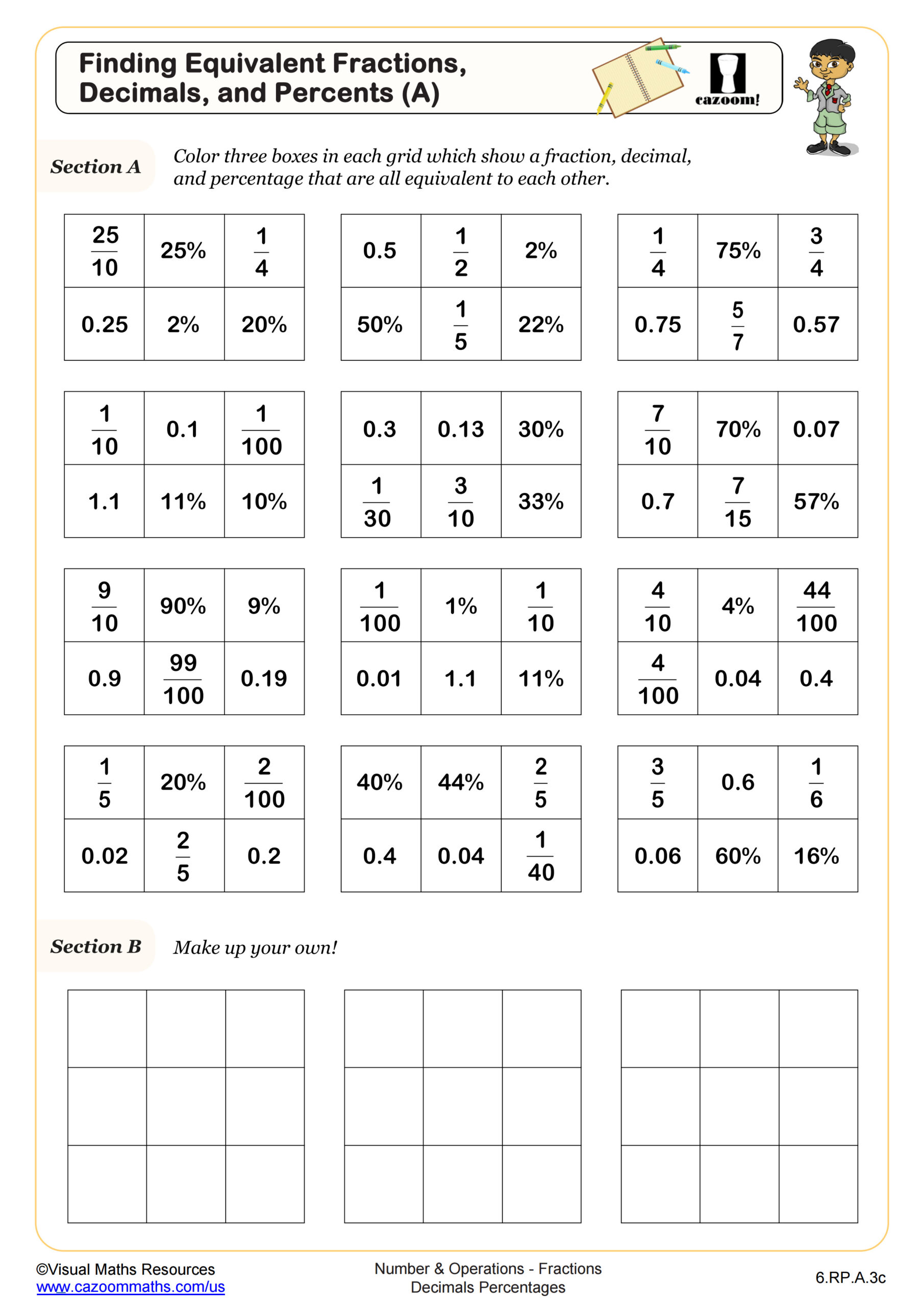
Finding Equivalent Fractions, Decimals, and Percents (B)
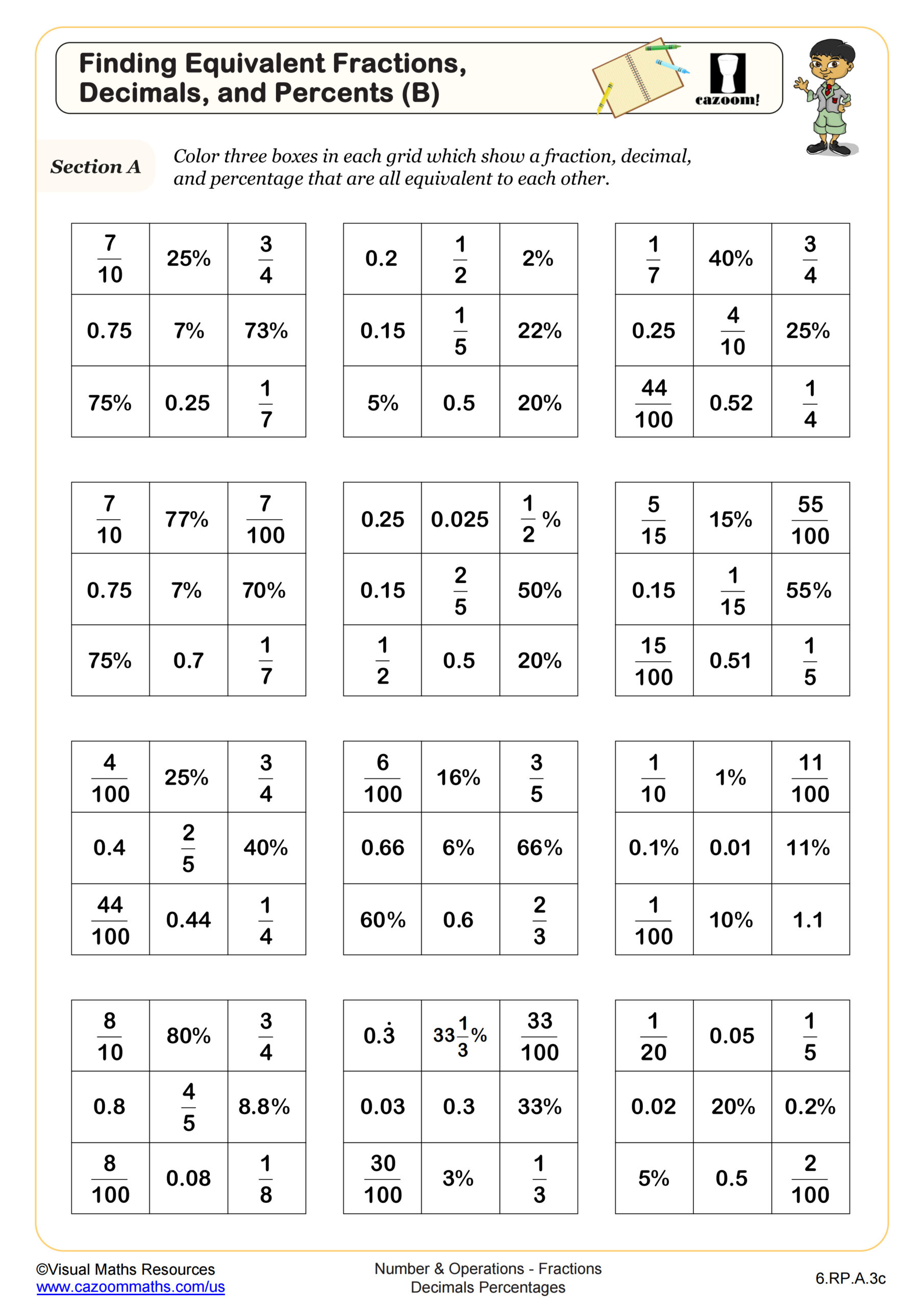
Finding Fractional Amounts
Fractions, Decimals, and Percents (A)
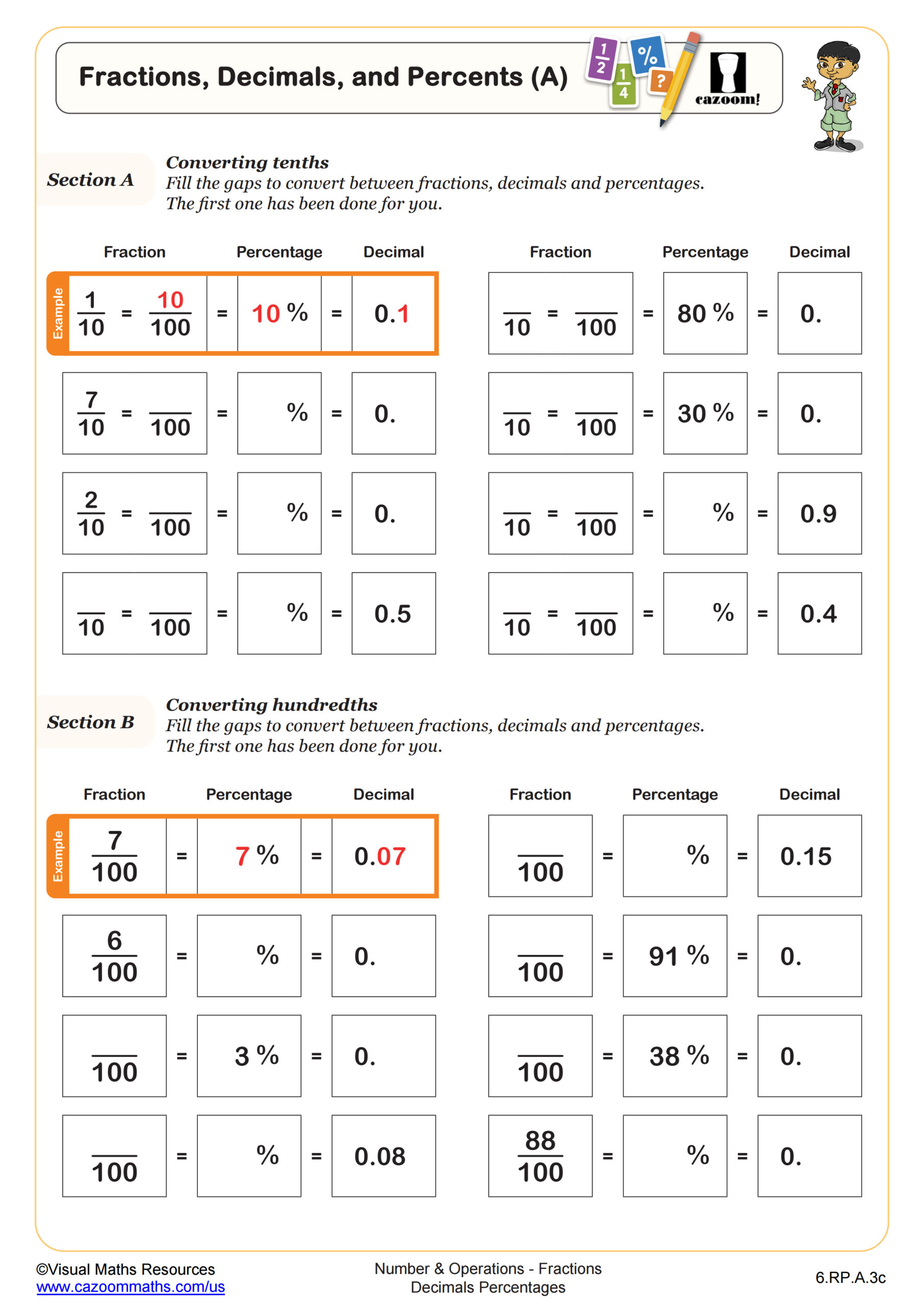
Fractions, Decimals, and Percents (D)
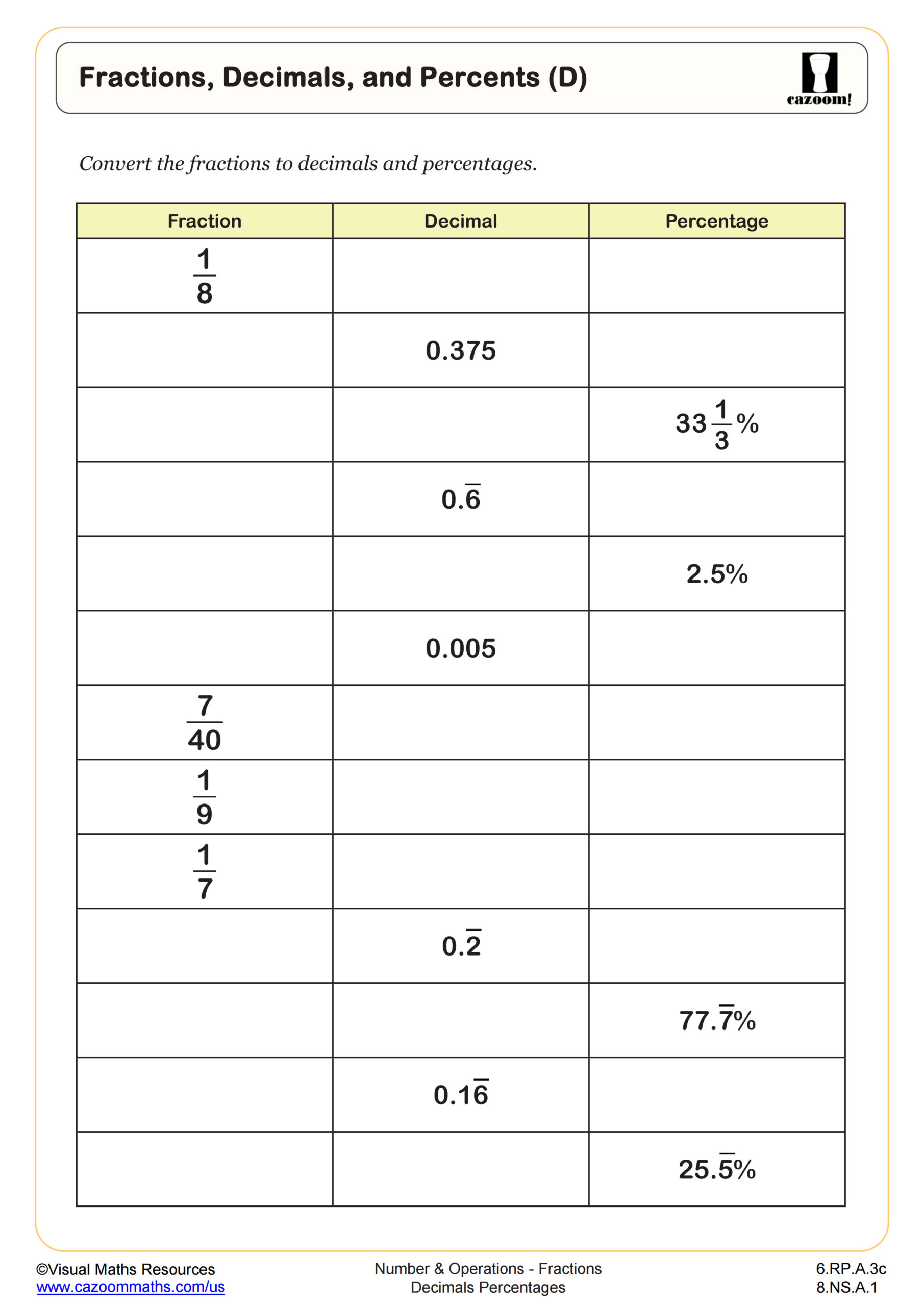
Measurement Conversions: Time - Minutes and Hours (B)
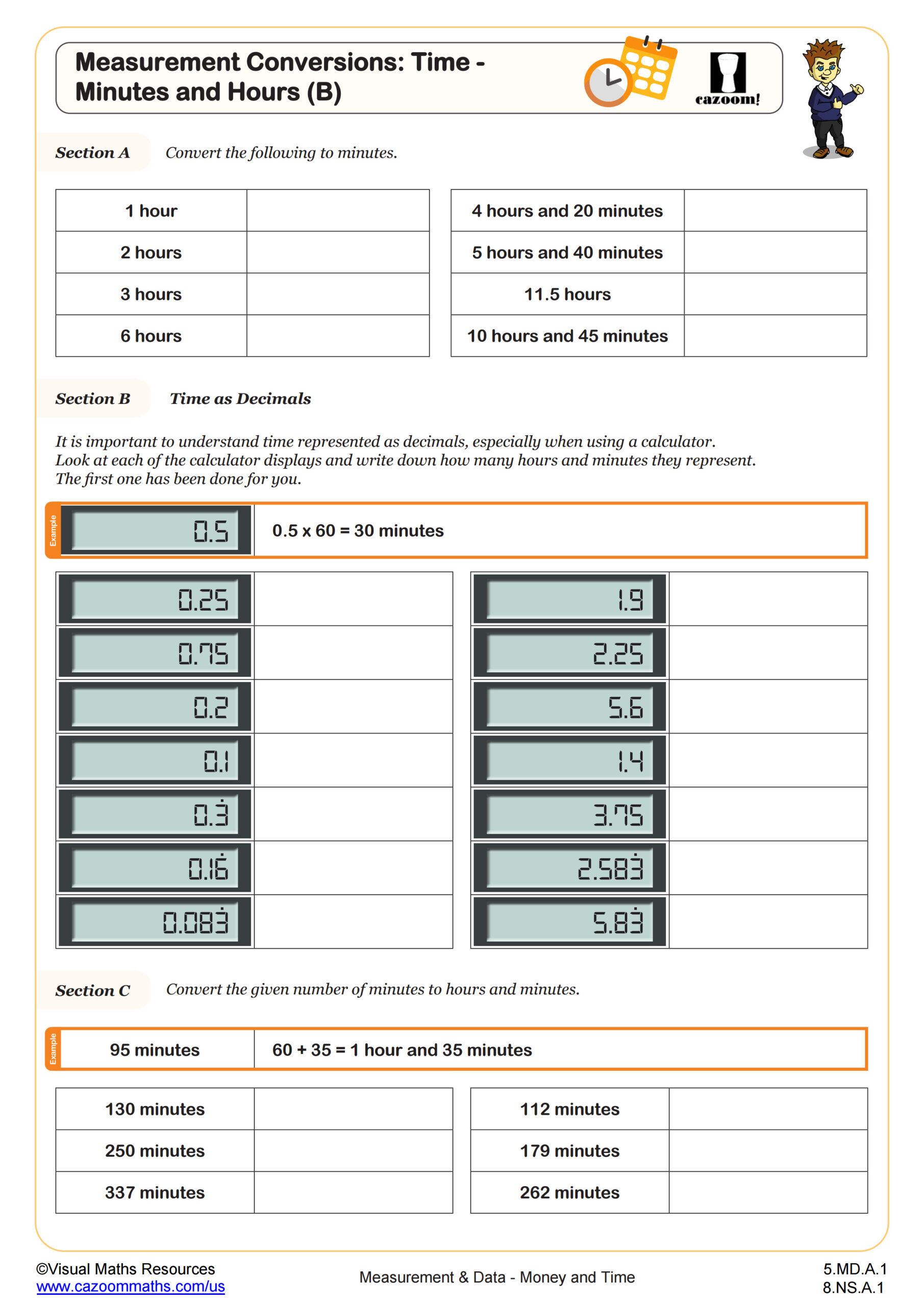
Mixed Operations with Fractions
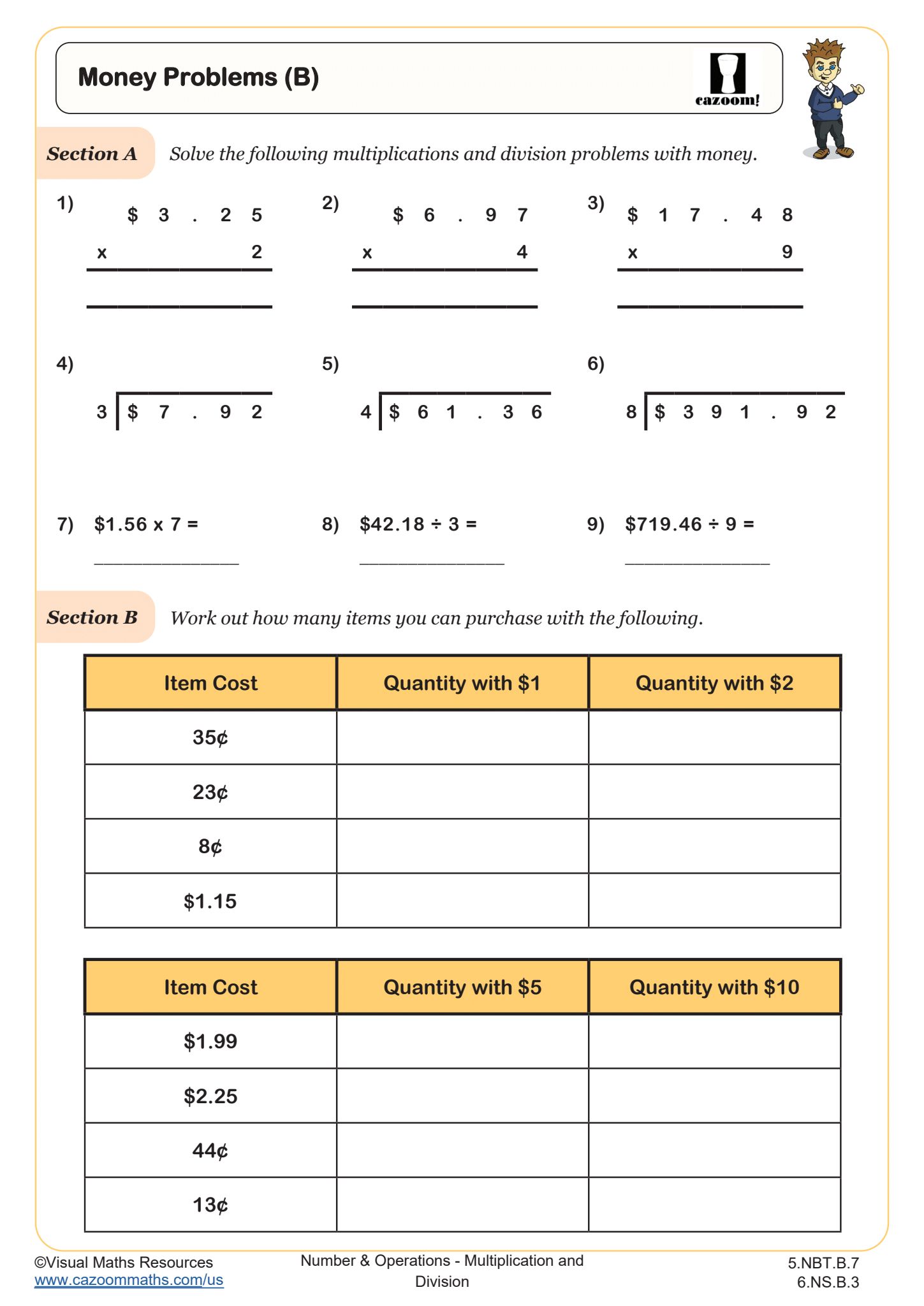
Money Problems (B)
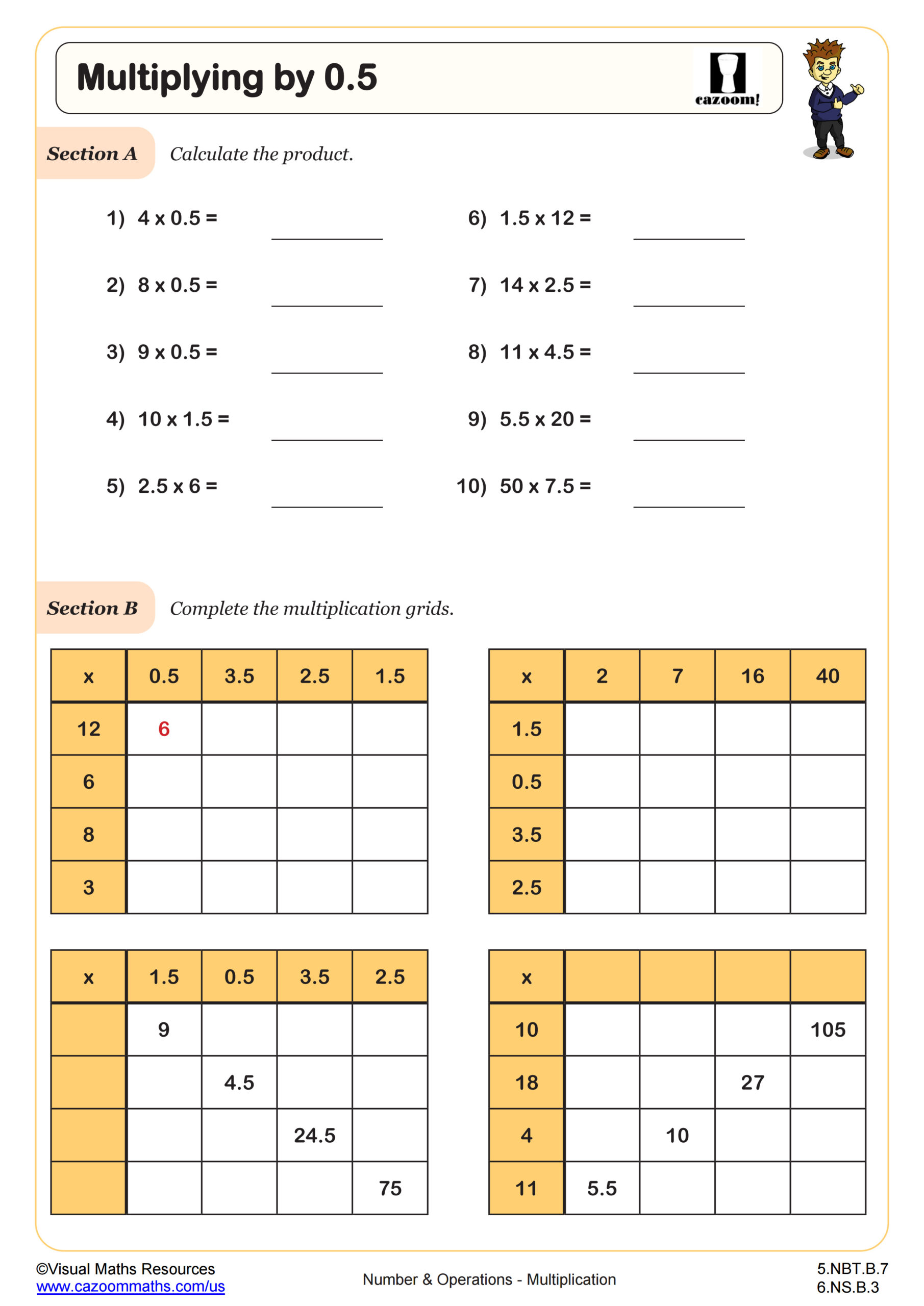
Multiplying by 0.5
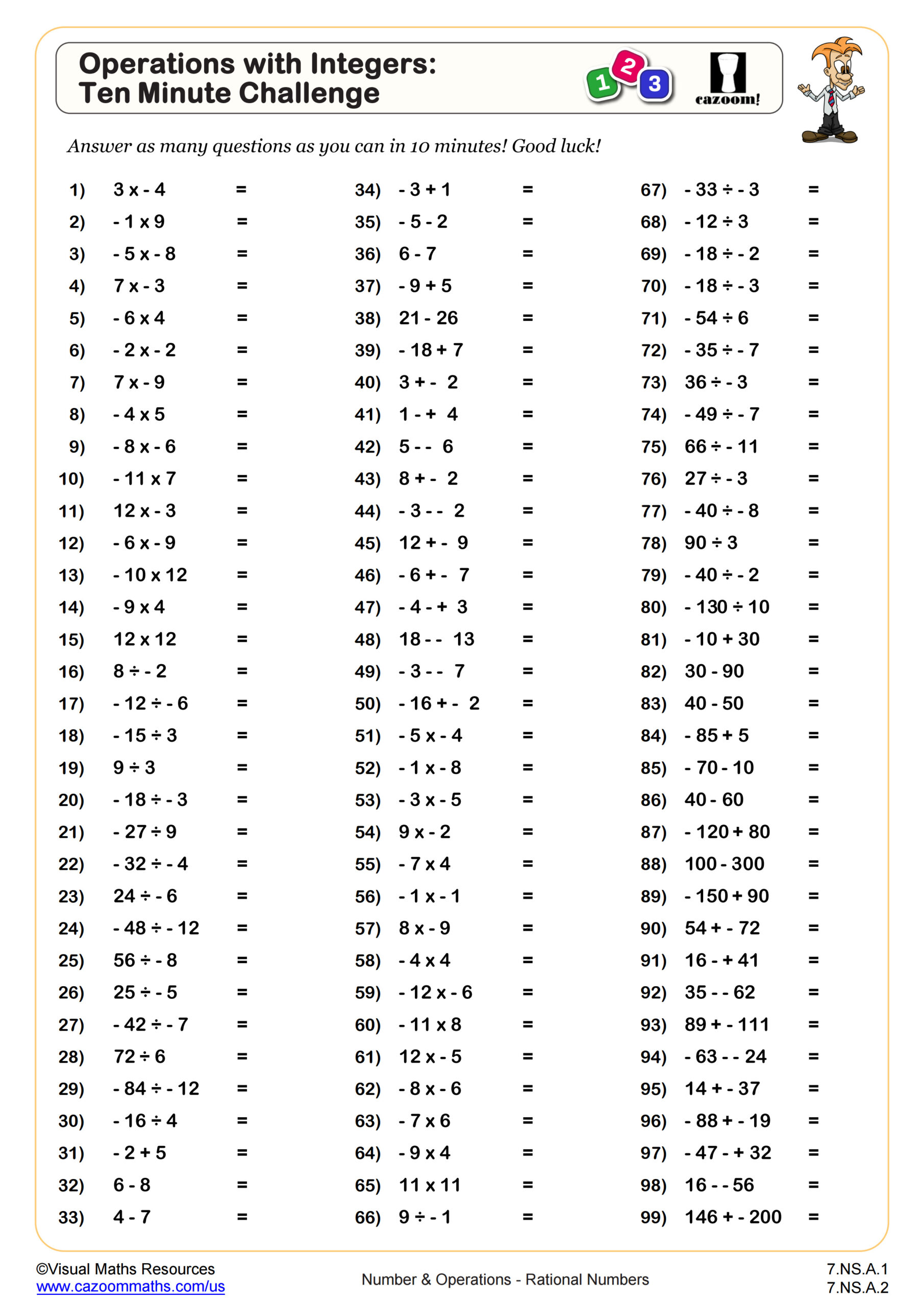
Operations with Integers Ten Minute Challenge
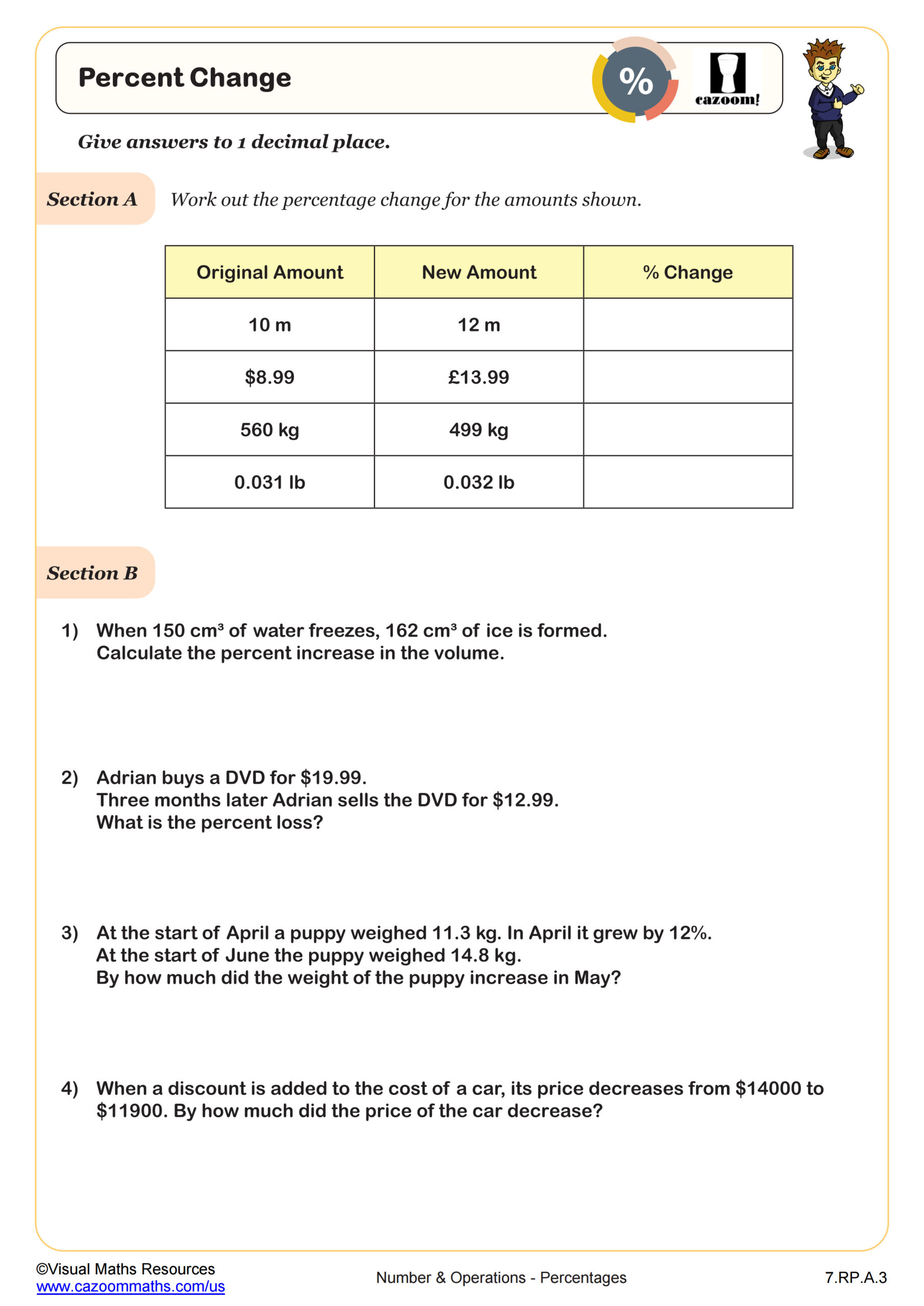
Percent Change
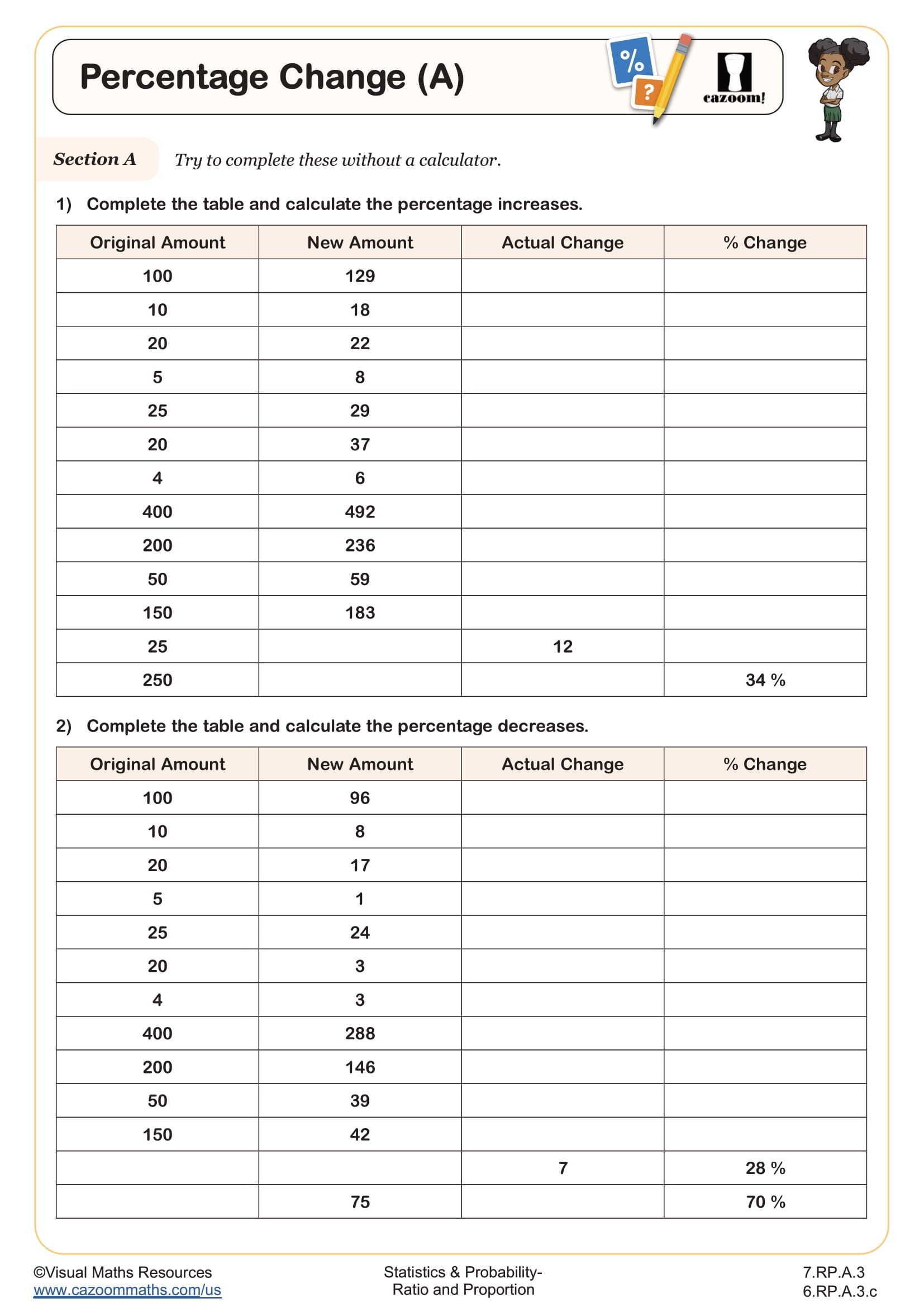
Percentage Change (A)
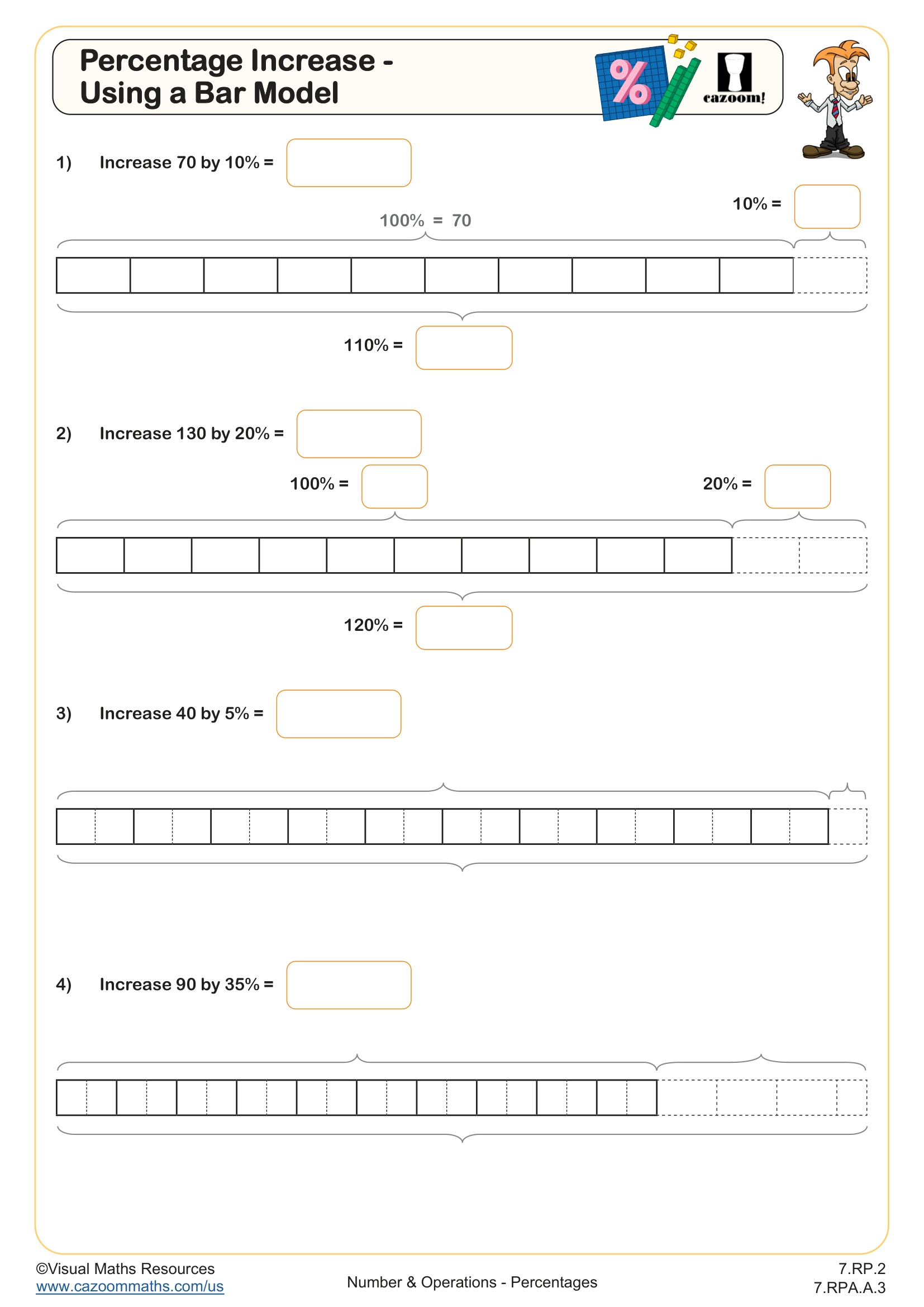
Percentage Increase - Using a Bar Model
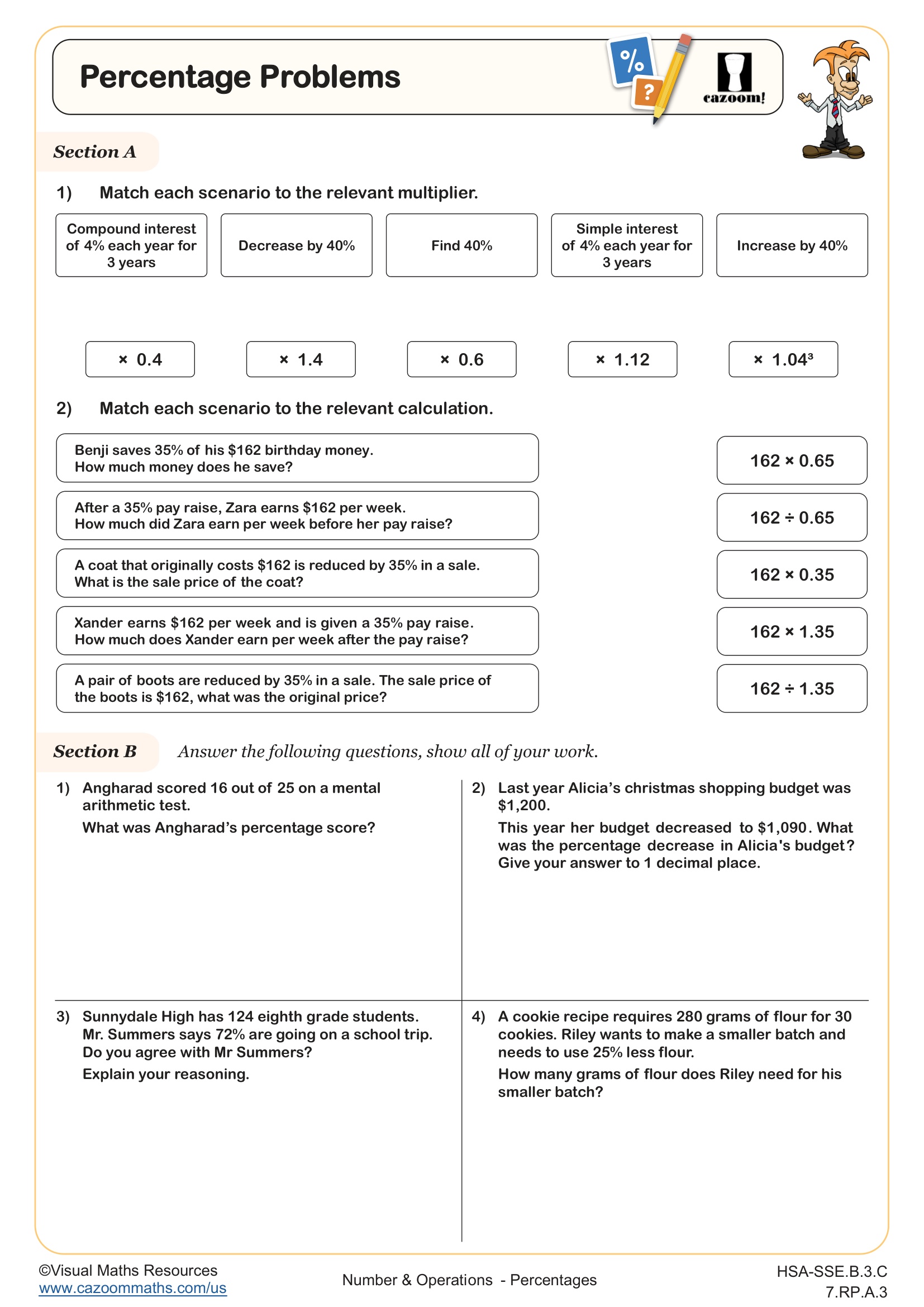
Percentage Problems
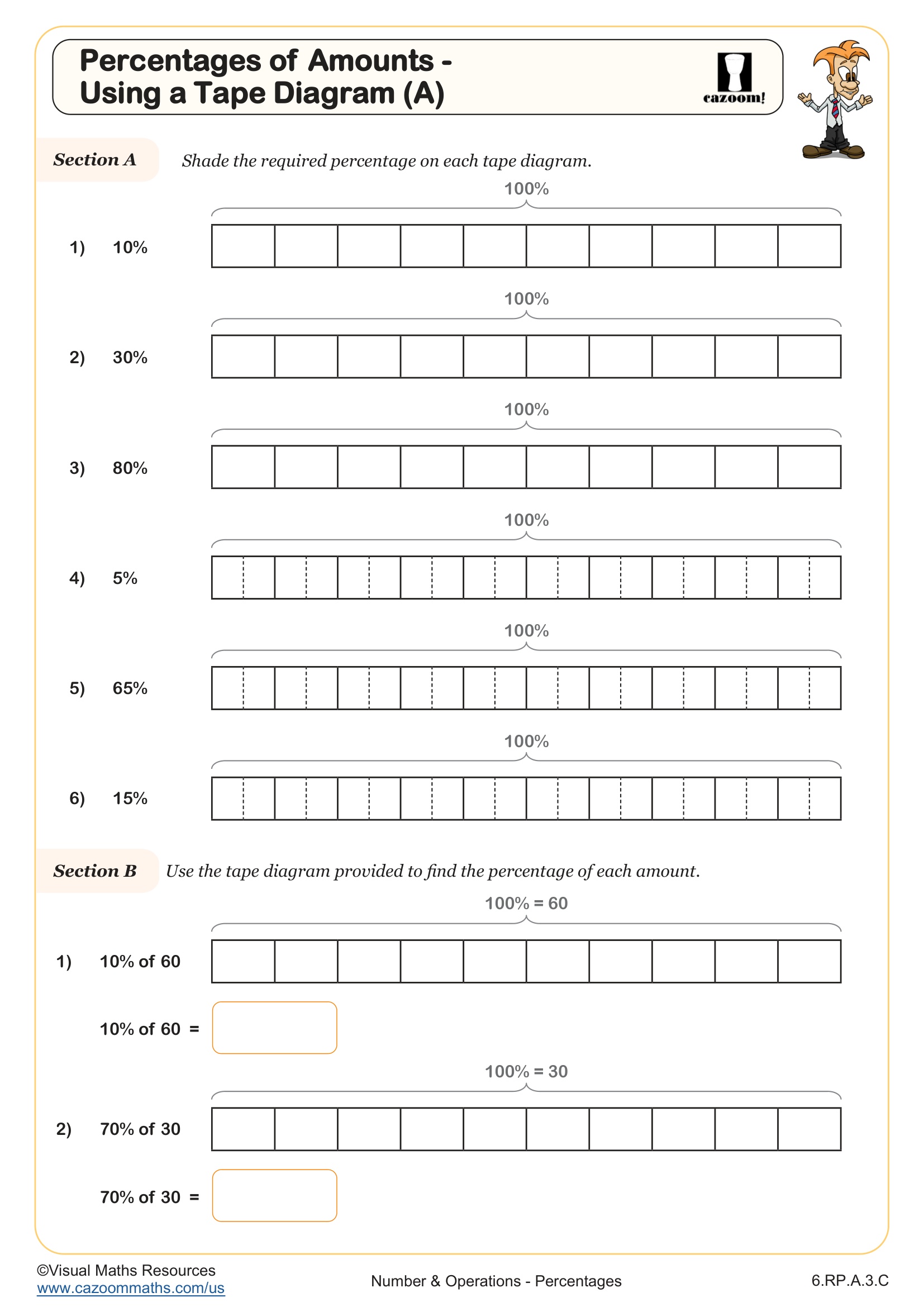
Percentages of Amounts - Using a Tape Diagram (A)
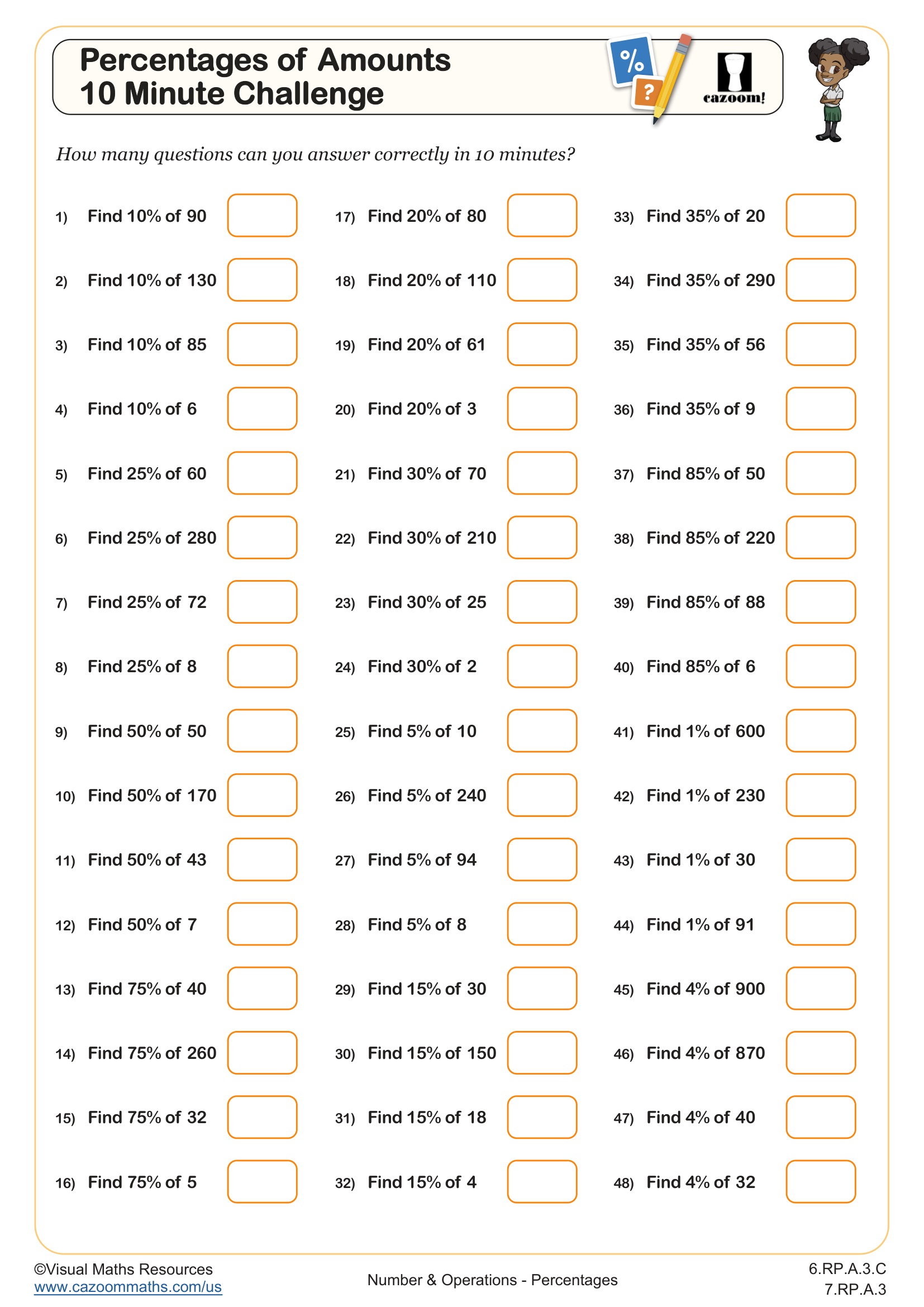
Percentages of Amounts 10 Minute Challenge
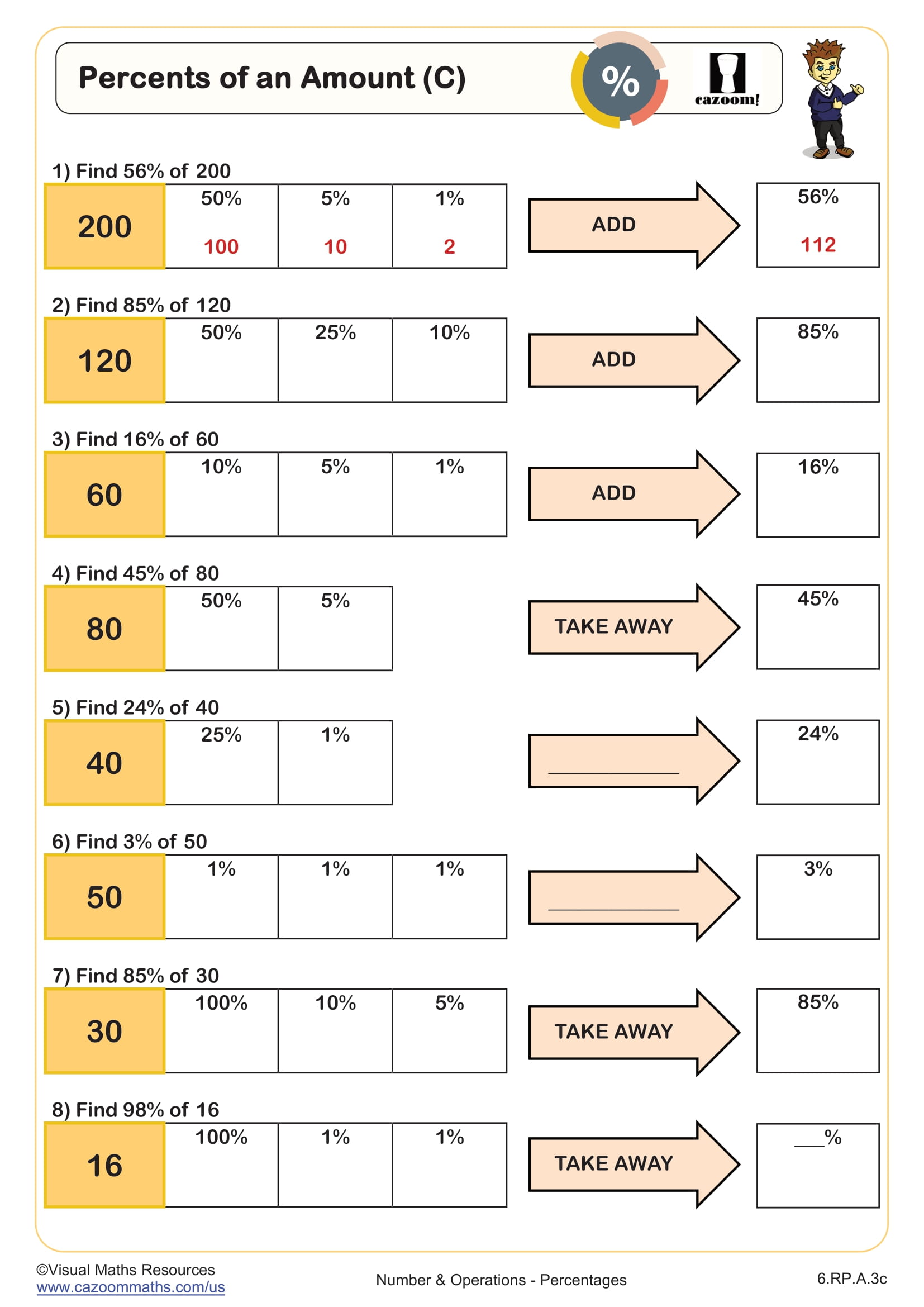
Percents of an Amount (C)
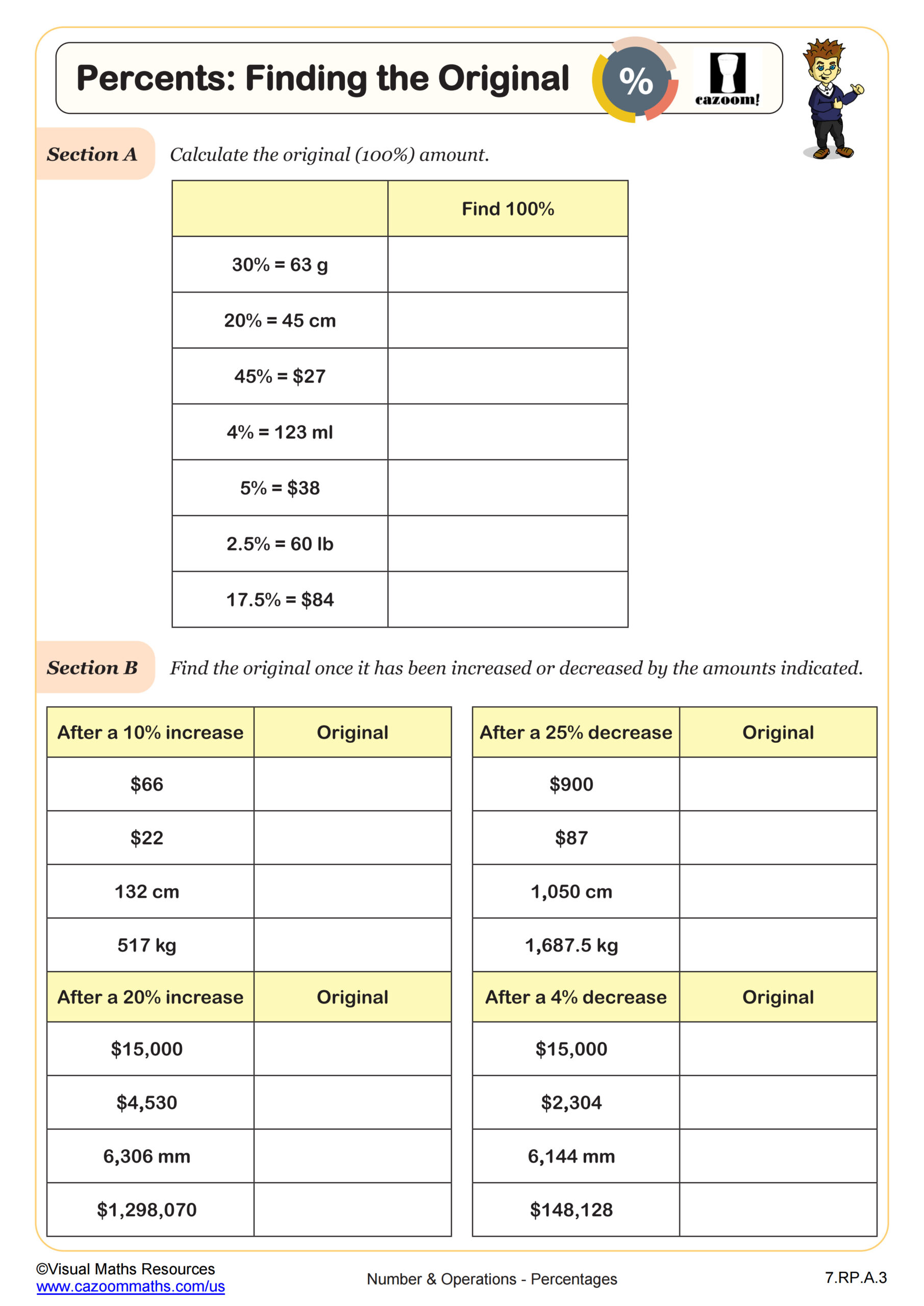
Percents: Finding the Original
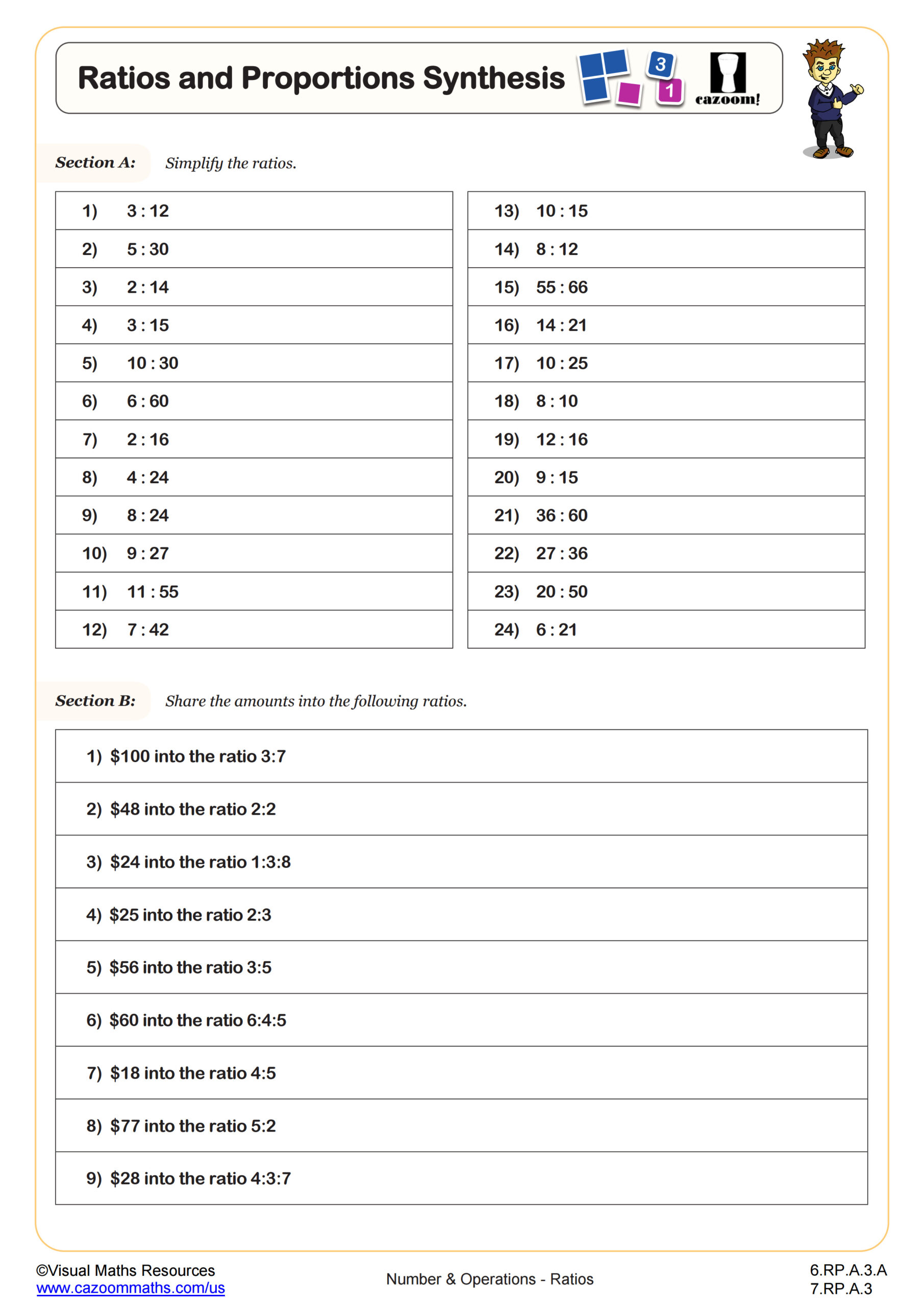
Ratios and Proportions Synthesis
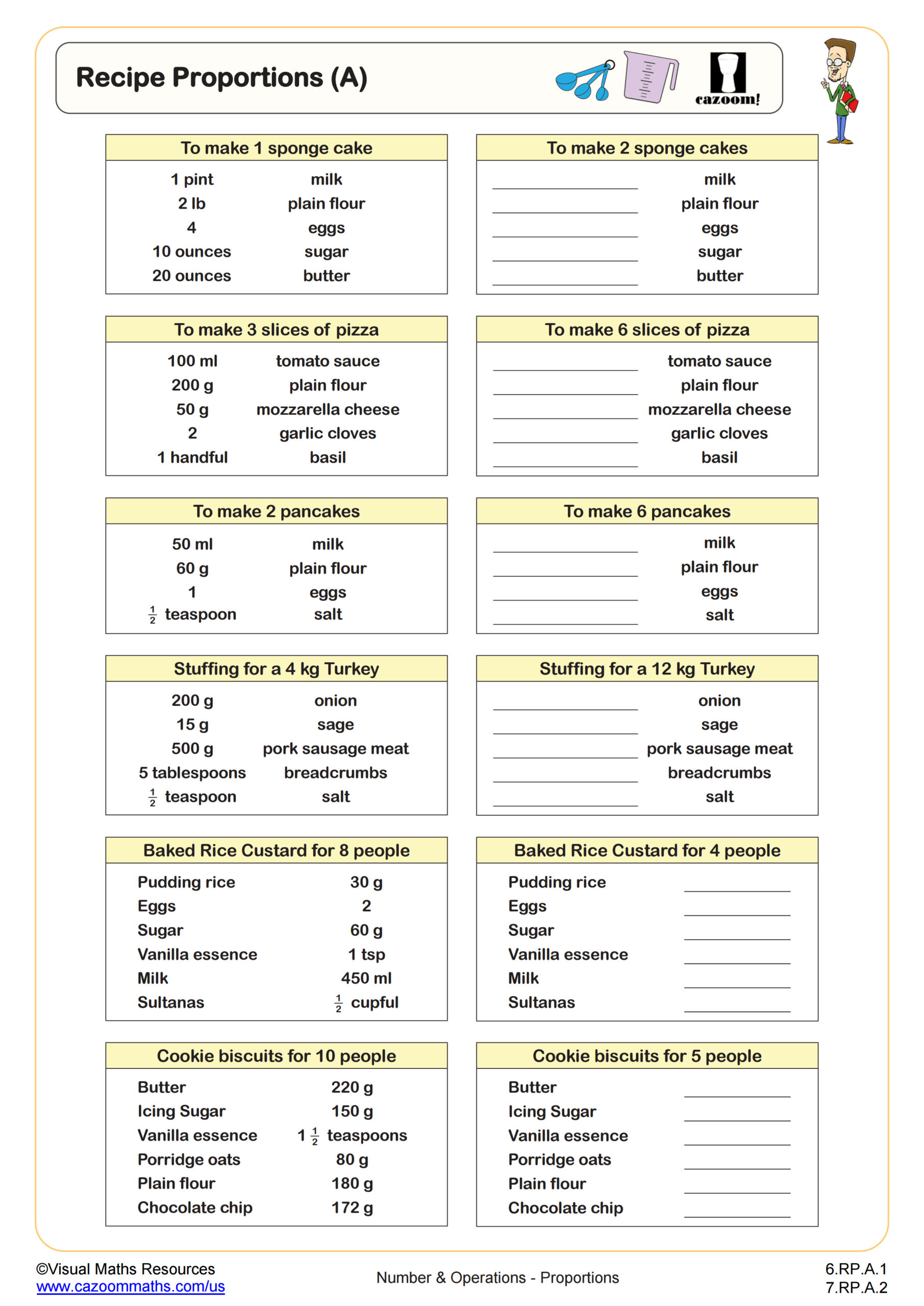
Recipe Proportions (A)
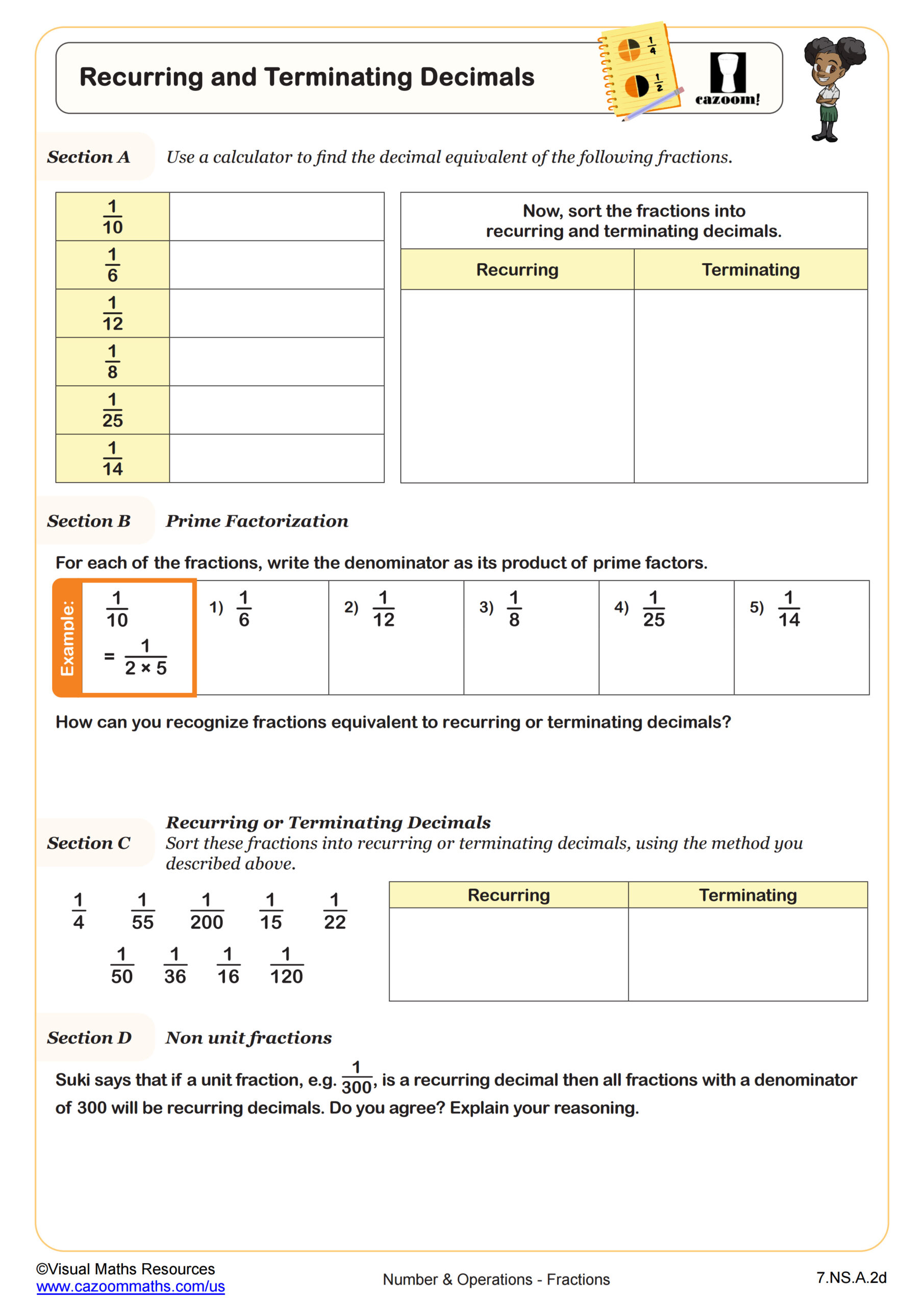
Recurring and Terminating Decimals
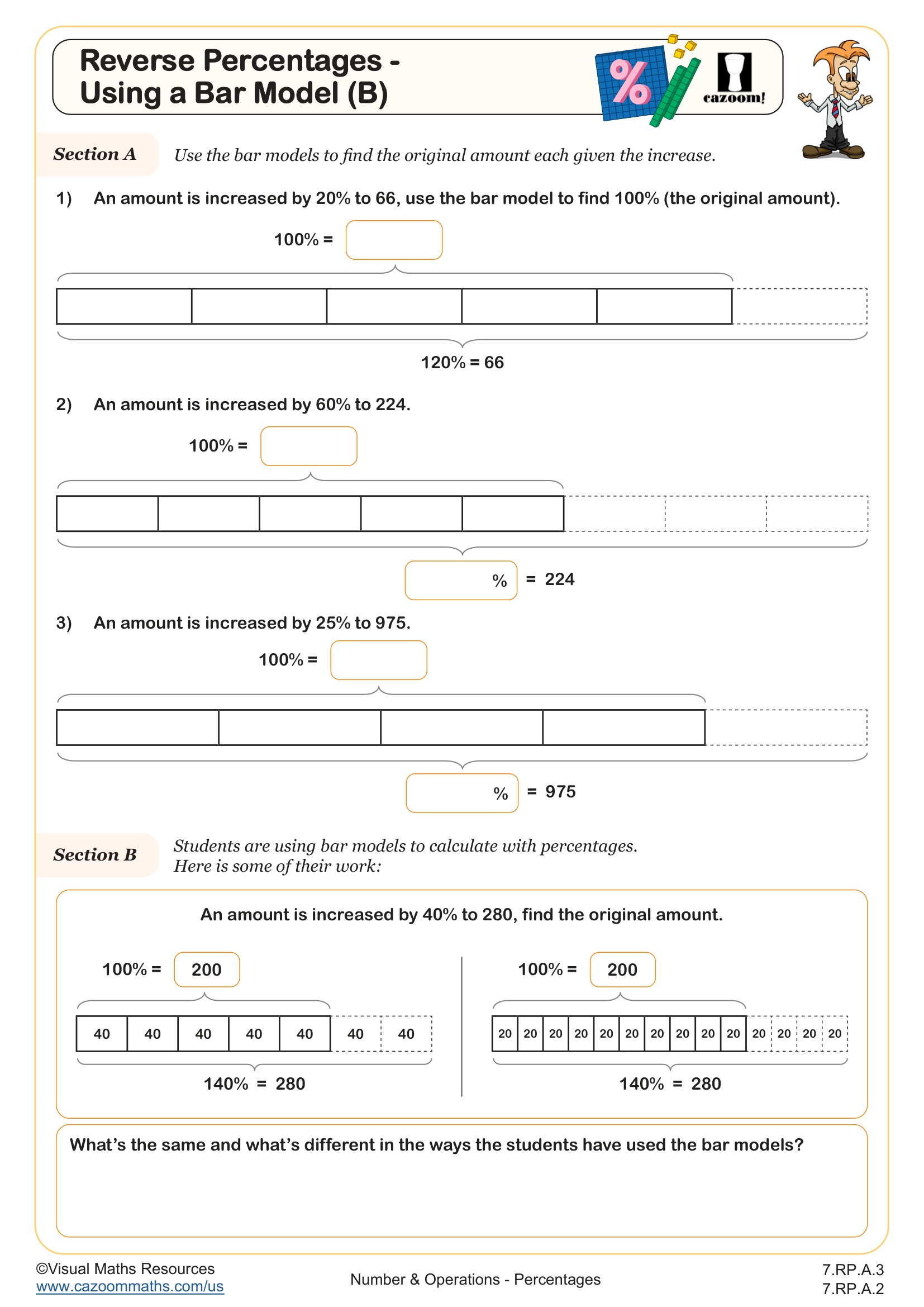
Reverse Percentages - Using a Bar Model (B)
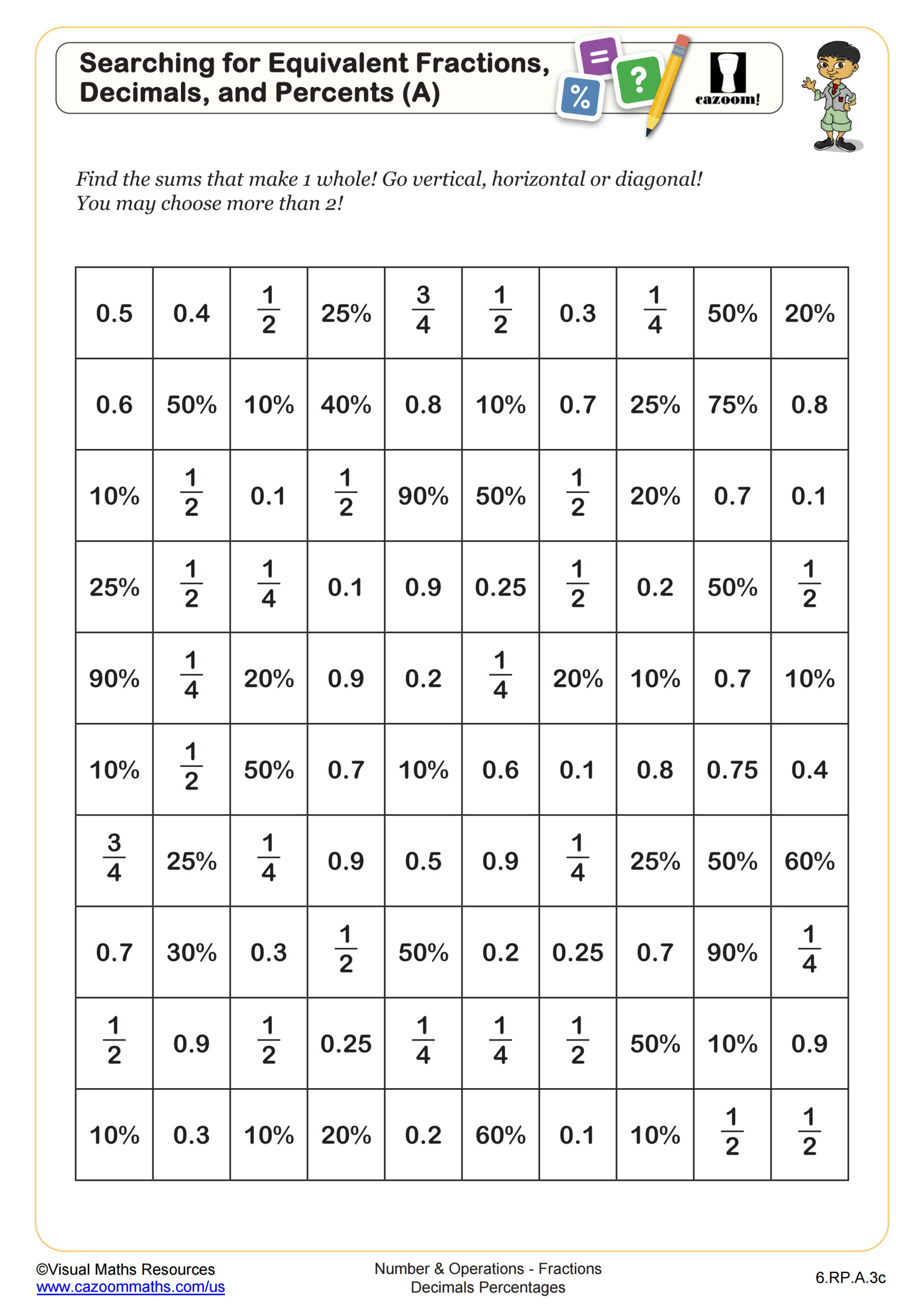
Searching for Equivalent Fractions, Decimals, and Percents (A)
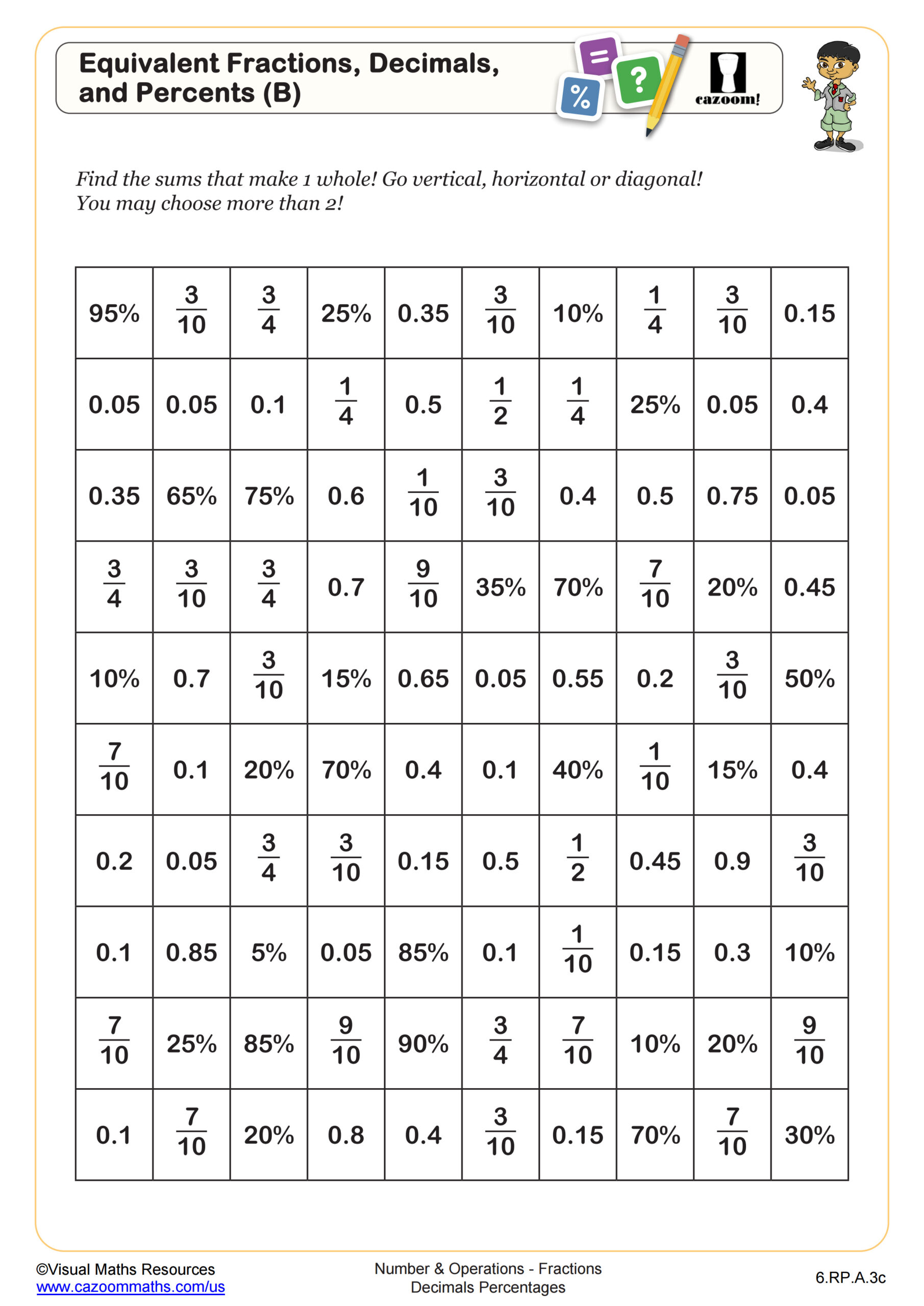
Searching for Equivalent Fractions, Decimals, and Percents (B)
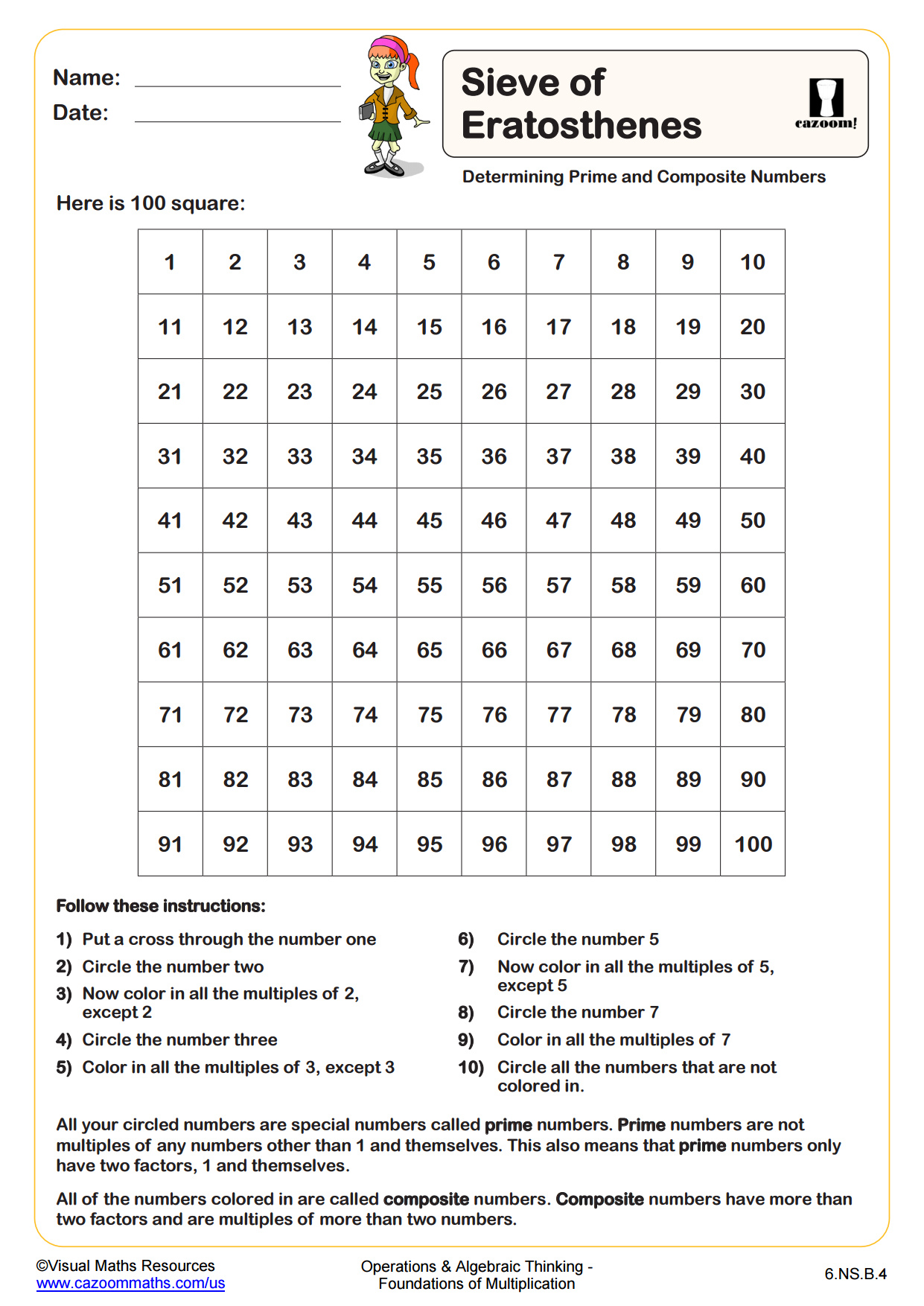
Sieve of Eratosthenes
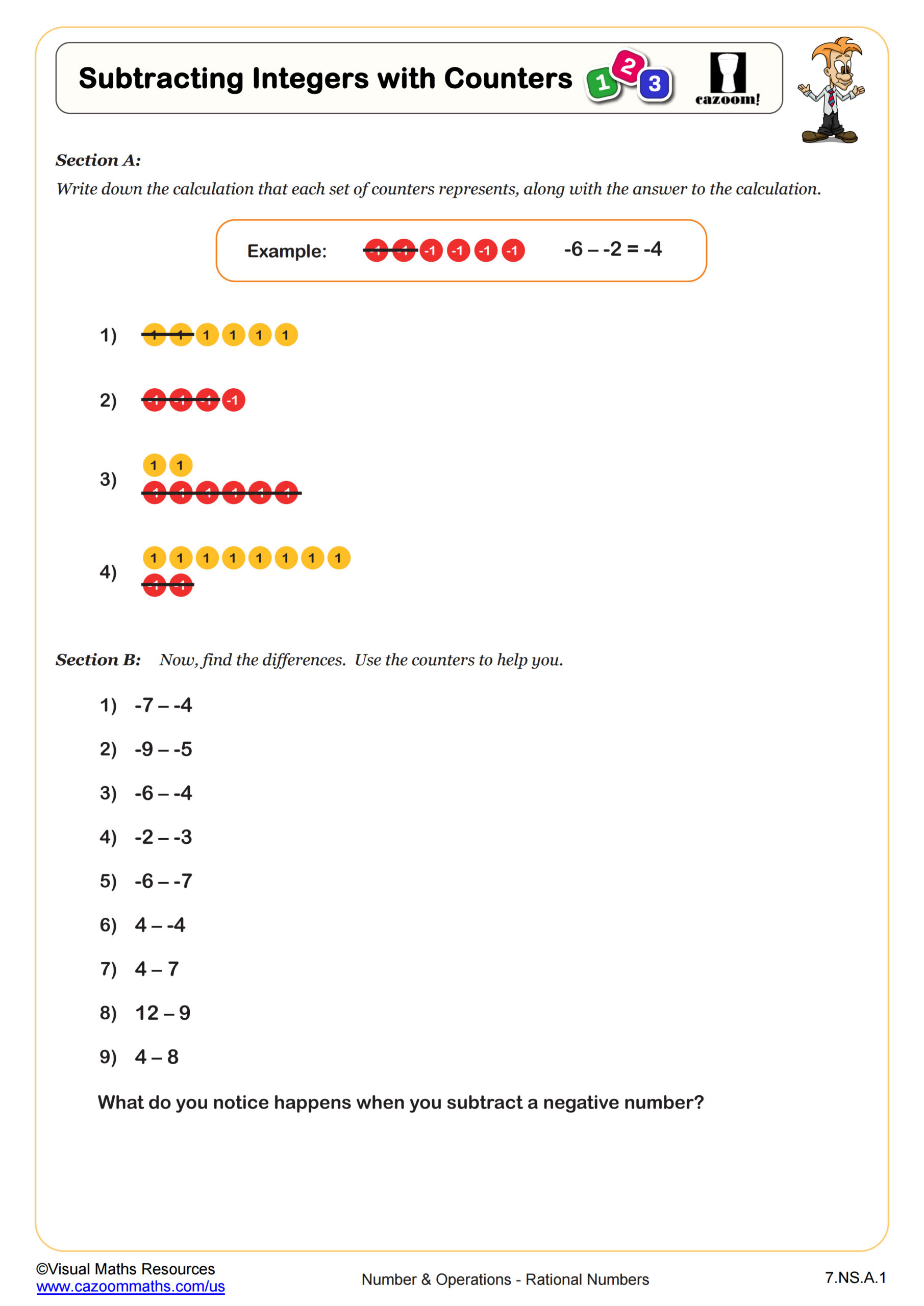
Subtracting Integers with Counters
All worksheets are created by the team of experienced teachers at Cazoom Math.
What skills does a percent of a number worksheet typically cover?
A percent of a number worksheet focuses on the fundamental skill of calculating what percent one number is of another, finding a specific percentage of a given number, and solving real-world problems involving percentage calculations. These worksheets align with Common Core standards 6.RP.A.3 and 7.RP.A.3, which emphasize using ratios and proportional relationships to solve multistep problems involving percentages.
Teachers notice that students often confuse the process of finding a percent OF a number with finding what percent one number IS of another. The most common error occurs when students multiply by the percent as a whole number rather than converting to a decimal first. For example, when finding 25% of 80, students might incorrectly calculate 80 × 25 = 2000 instead of 80 × 0.25 = 20.
Which grade levels benefit most from number and operations practice?
Number and operations worksheets serve students most effectively in grades 6 through 8, though the concepts build from elementary foundations and extend into high school mathematics. Sixth graders typically focus on understanding ratios and unit rates, while seventh graders dive deeper into proportional relationships and begin working with rational numbers including negative integers. Eighth graders refine these skills while preparing for algebraic applications.
The progression allows teachers to scaffold learning appropriately, with sixth grade emphasizing conceptual understanding through visual models and manipulatives, seventh grade bridging to more abstract thinking, and eighth grade focusing on fluency and application. Students who master these foundational operations show significantly better performance in algebra and geometry courses, making this practice period critical for long-term mathematical success.
How do these worksheets address rational number operations?
Rational number operations worksheets systematically build student understanding of adding, subtracting, multiplying, and dividing integers, fractions, and decimals through carefully sequenced problem sets. The materials progress from concrete models and number lines to abstract calculations, helping students develop both computational skills and conceptual understanding of why the algorithms work.
Teachers report that students frequently struggle with sign rules when working with negative numbers, particularly in subtraction problems that require adding the opposite. The worksheets address this by providing visual representations and real-world contexts like temperature changes and bank account balances. Students also benefit from seeing connections between fraction and decimal operations, which reinforces the understanding that these are different representations of the same mathematical relationships.
What's the most effective way to use these worksheets in the classroom?
Teachers find greatest success when using these worksheets as targeted practice following initial instruction, rather than as standalone learning tools. The most effective approach involves having students work through a few problems independently, then discussing solution strategies in small groups before completing the remainder. This allows teachers to identify misconceptions early and provide immediate feedback.
The answer keys enable teachers to create self-checking stations where students can verify their work and identify errors independently. Many educators use these materials for differentiated instruction, assigning specific problem sets based on individual student needs identified through formative assessment. The PDF format allows for easy projection during whole-class discussions, making it simple to work through challenging problems together and highlight common solution strategies.