Middle School Percentages Worksheets
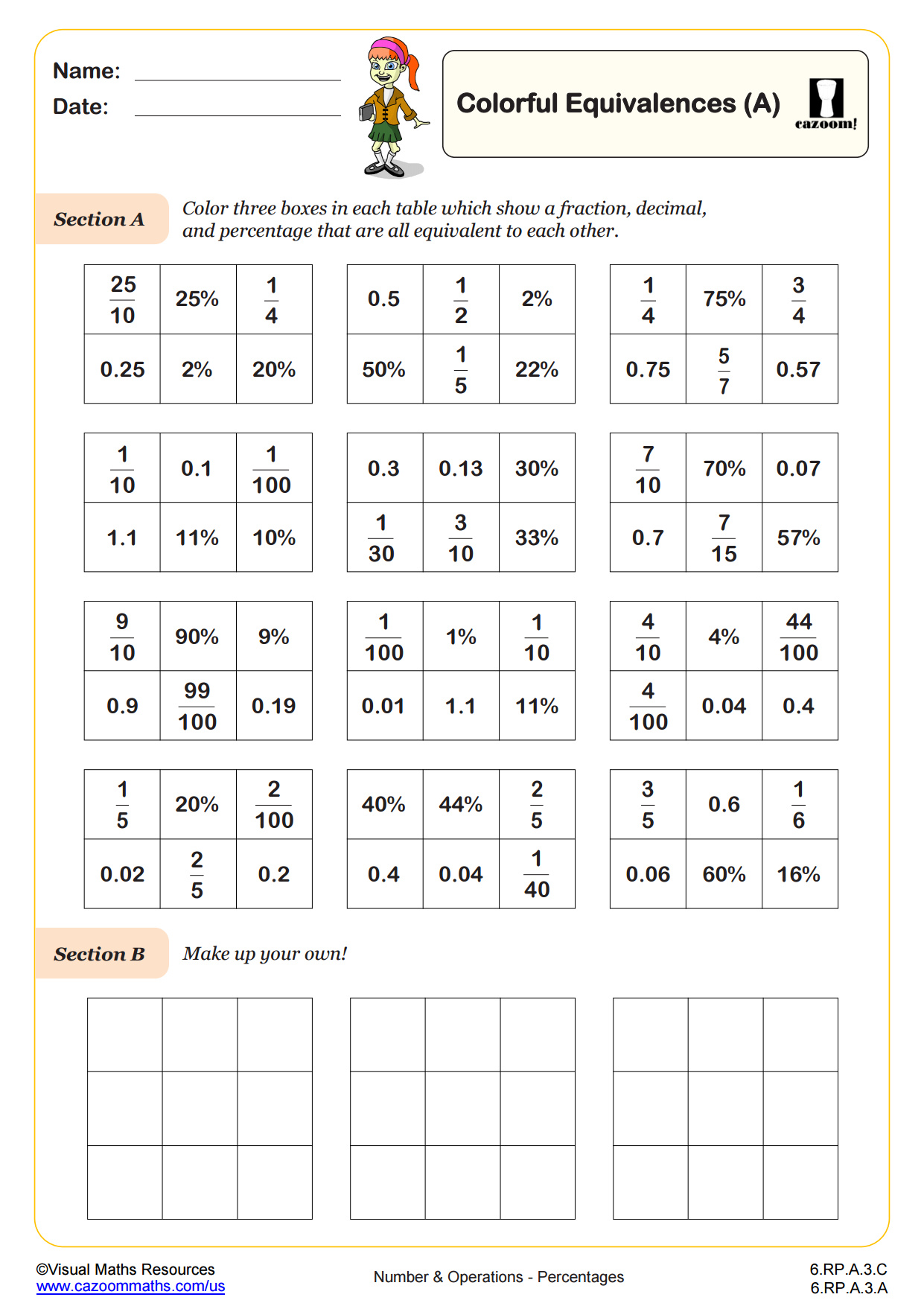
Colourful Equivalances (A)
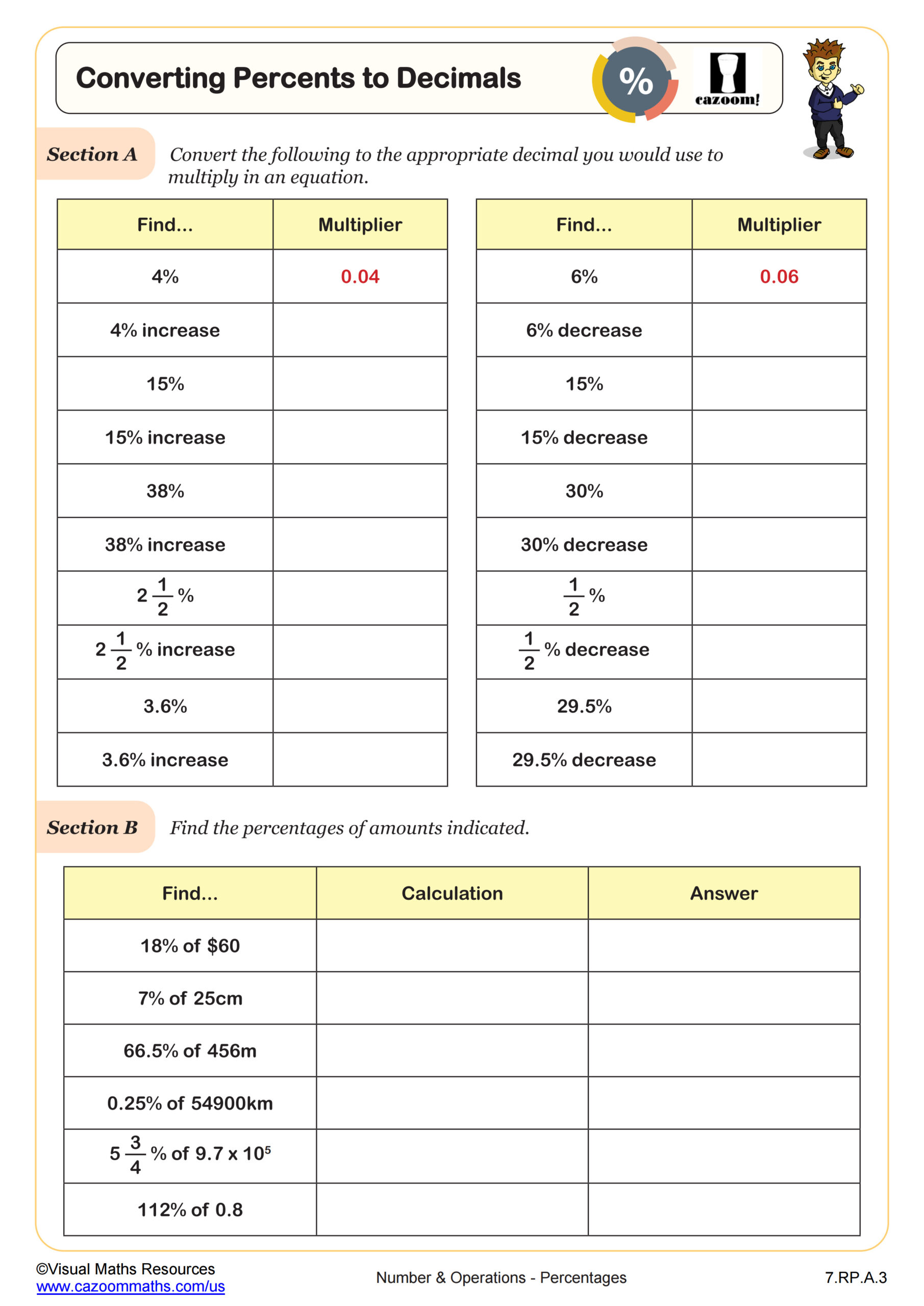
Converting Percents to Decimals
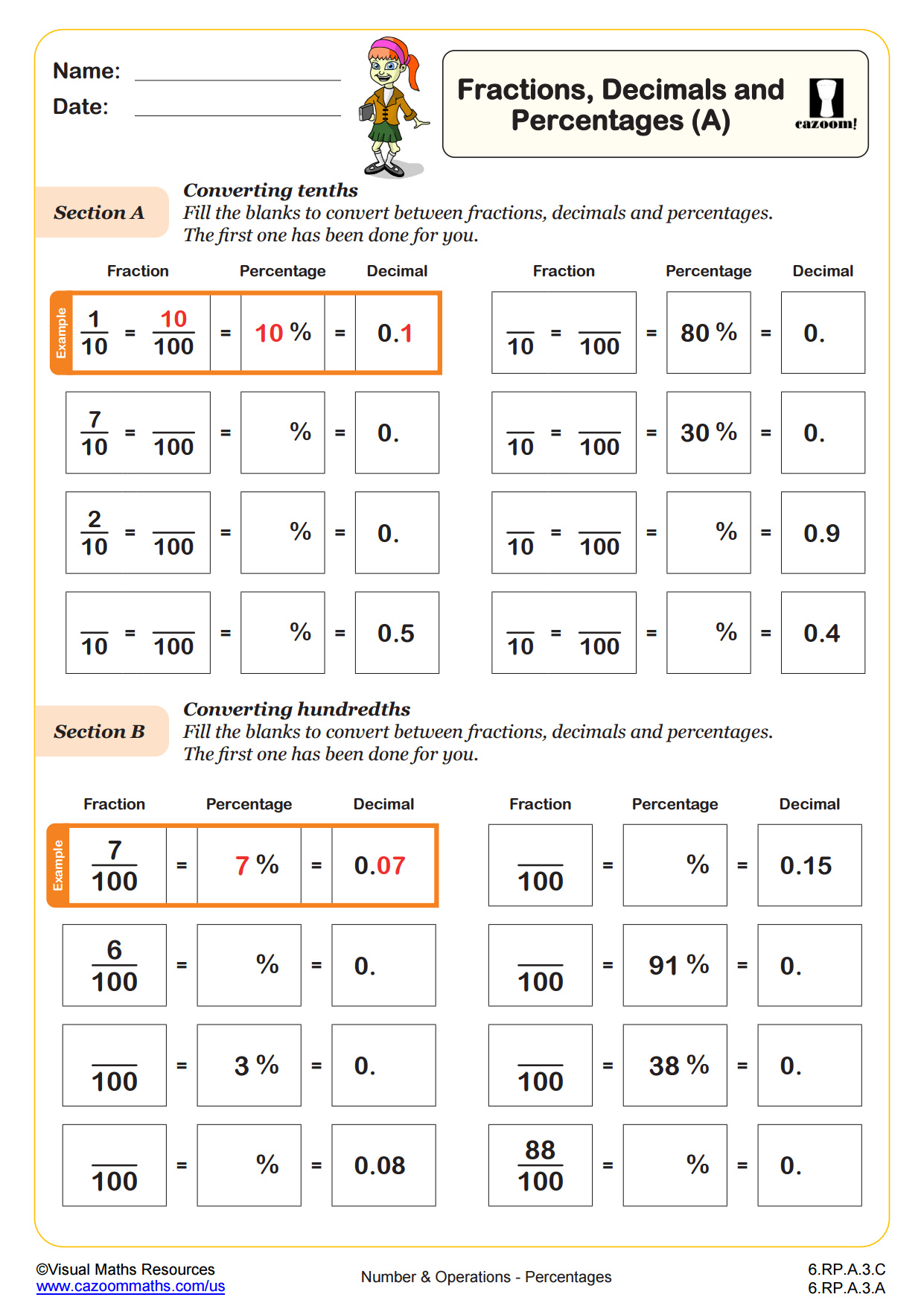
Fractions, Decimals and Percentages (A)
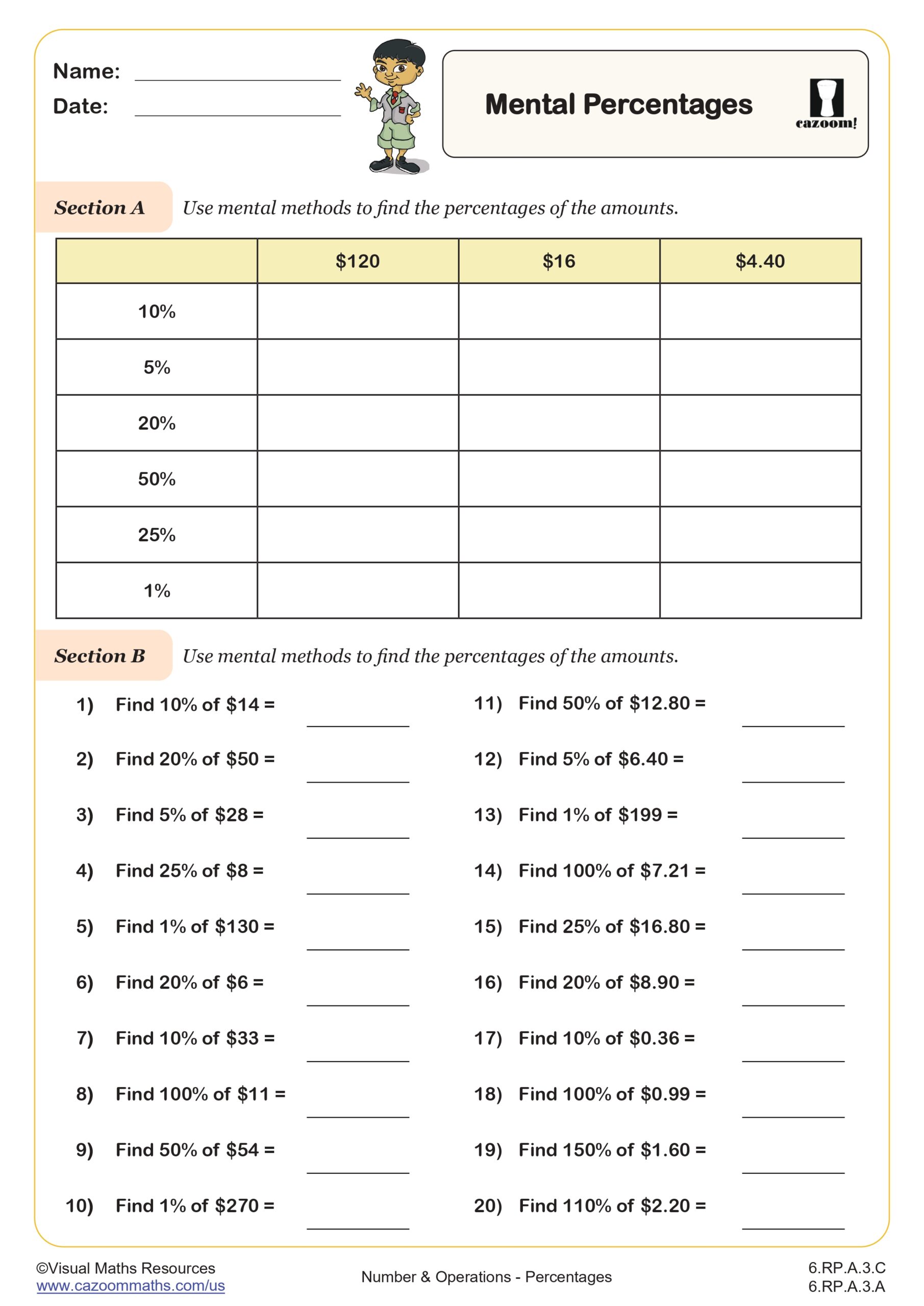
Mental Percentages
Percent Change
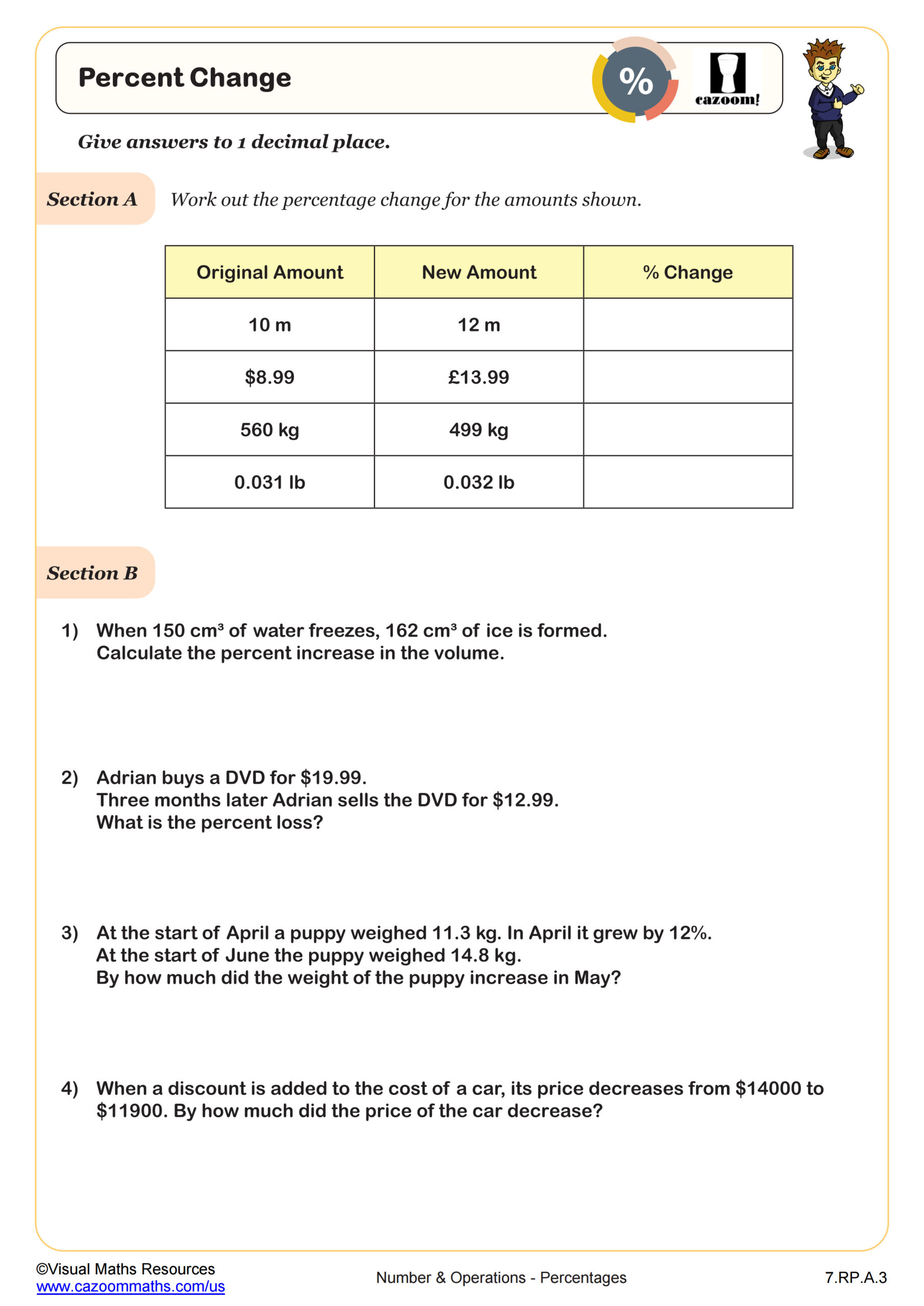
Percent Increase and Decrease
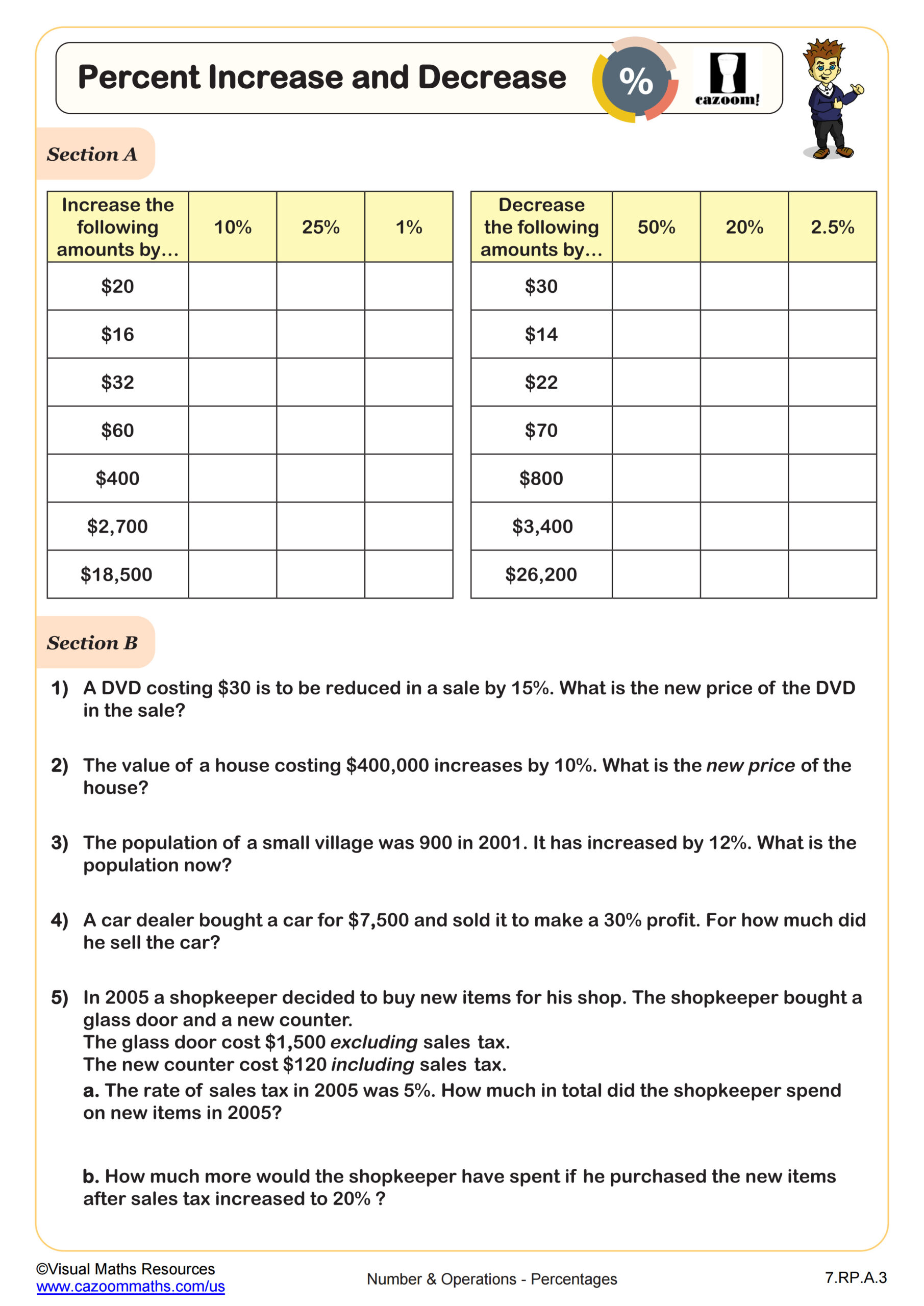
Percent Word Problems
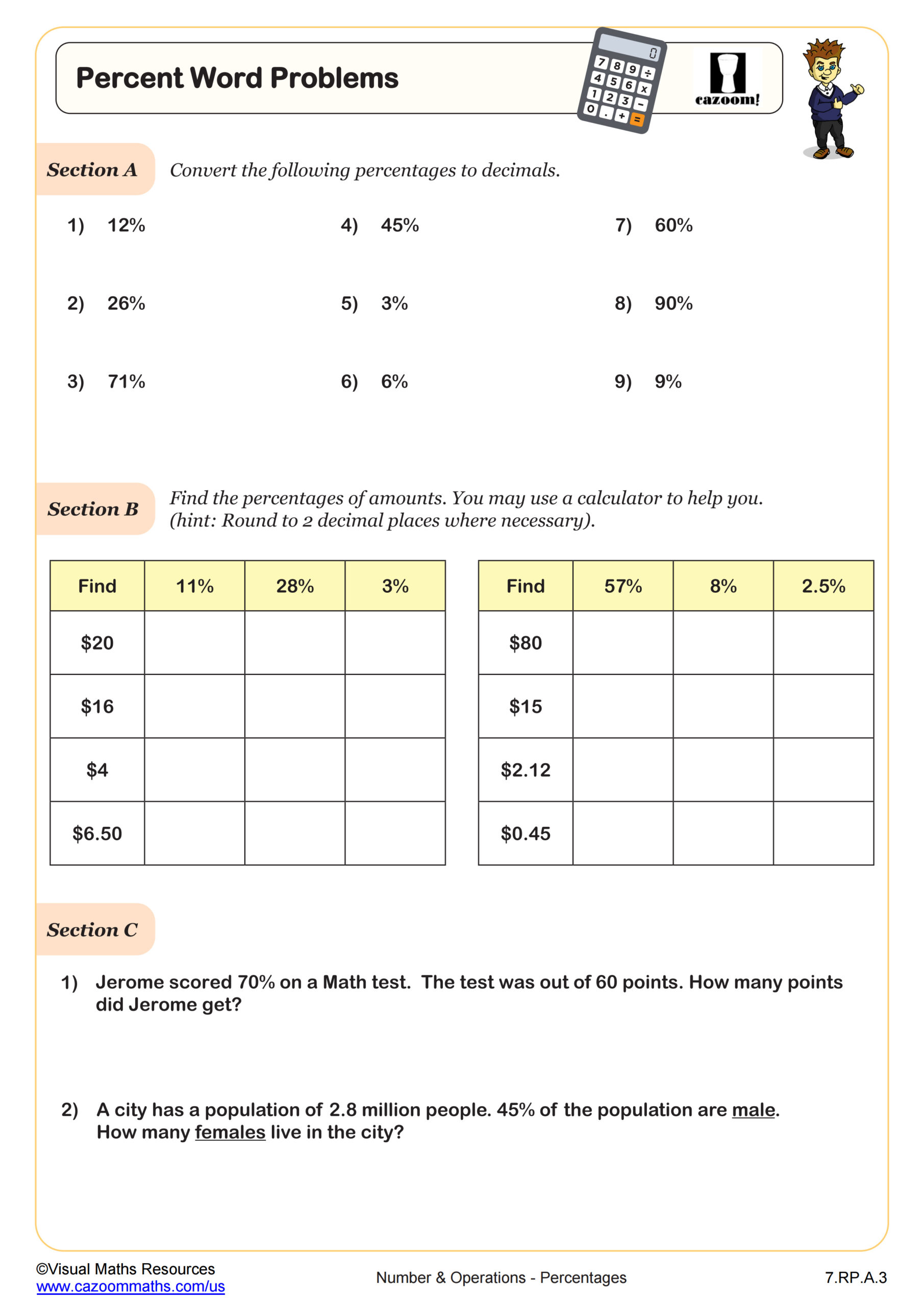
Percentage Change (A)
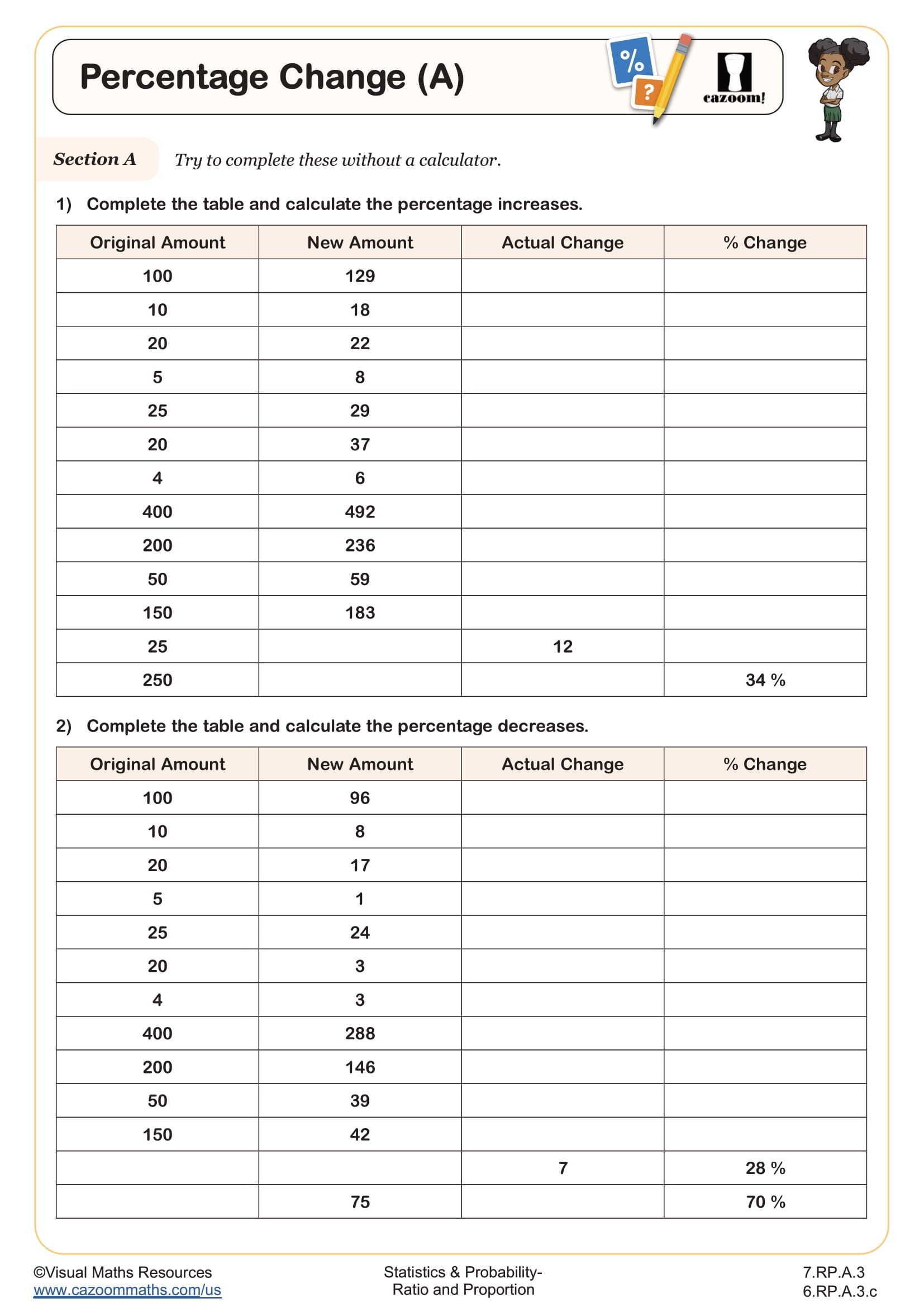
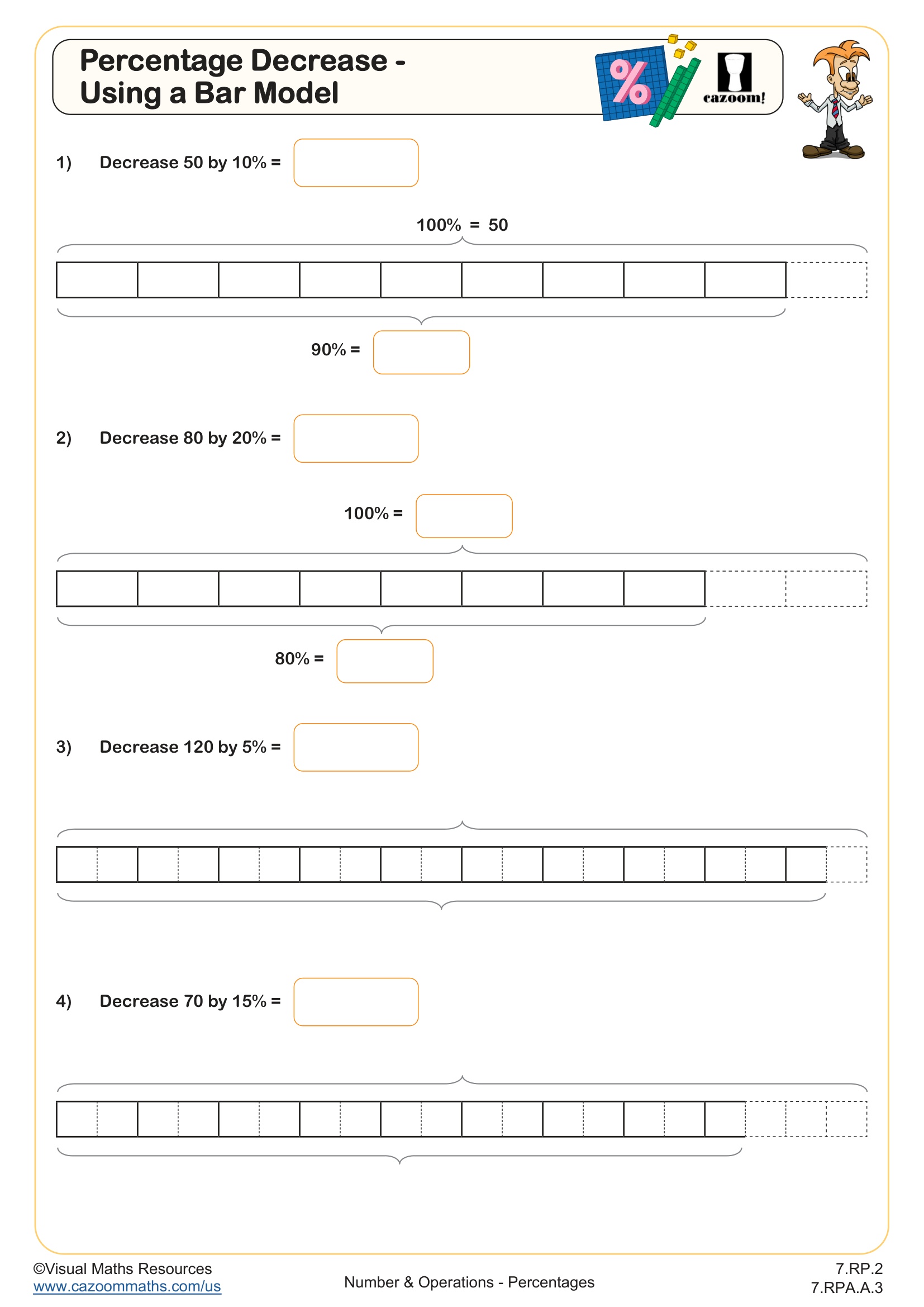
Percentage Decrease - Using a Bar Model
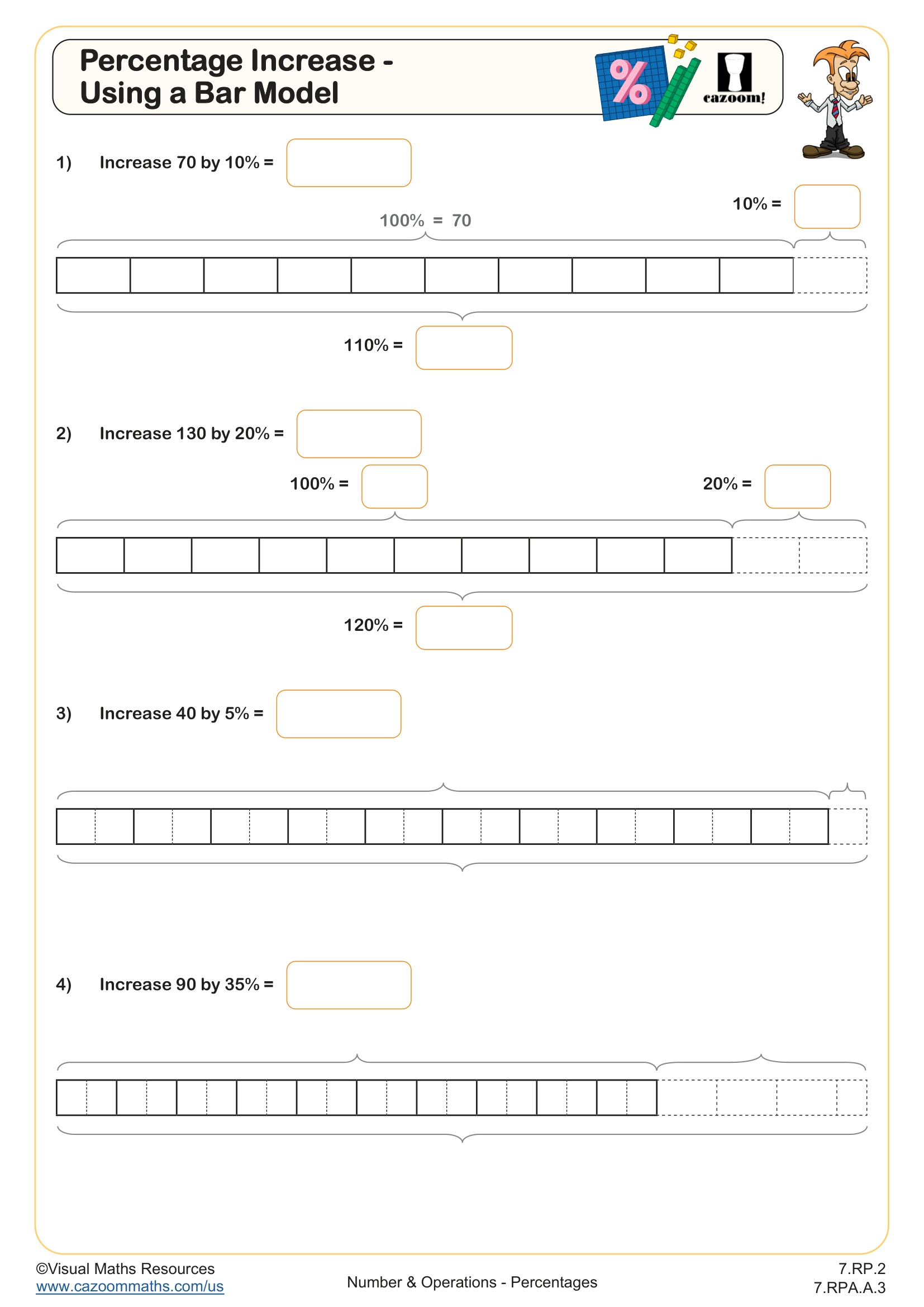
Percentage Increase - Using a Bar Model
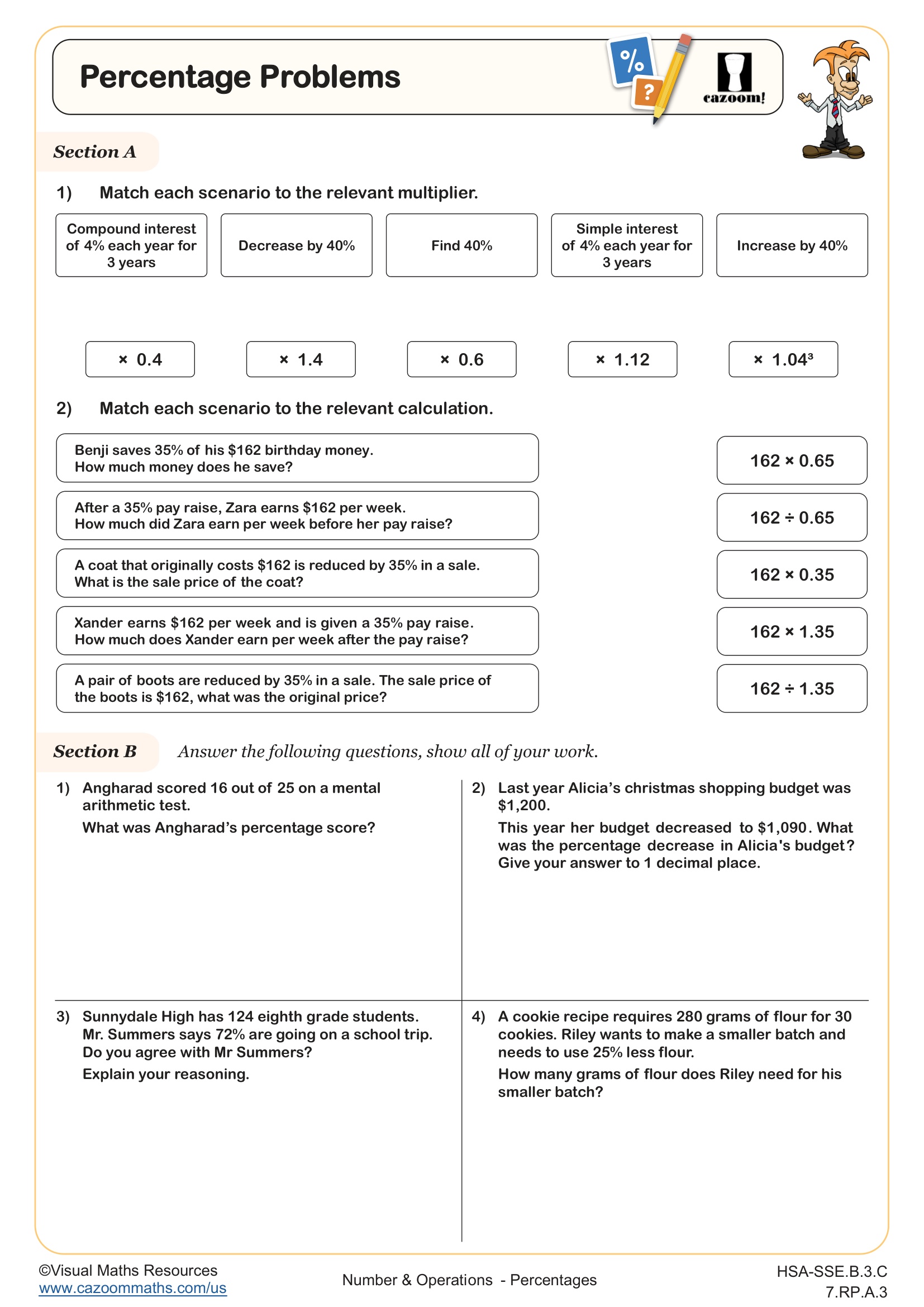
Percentage Problems
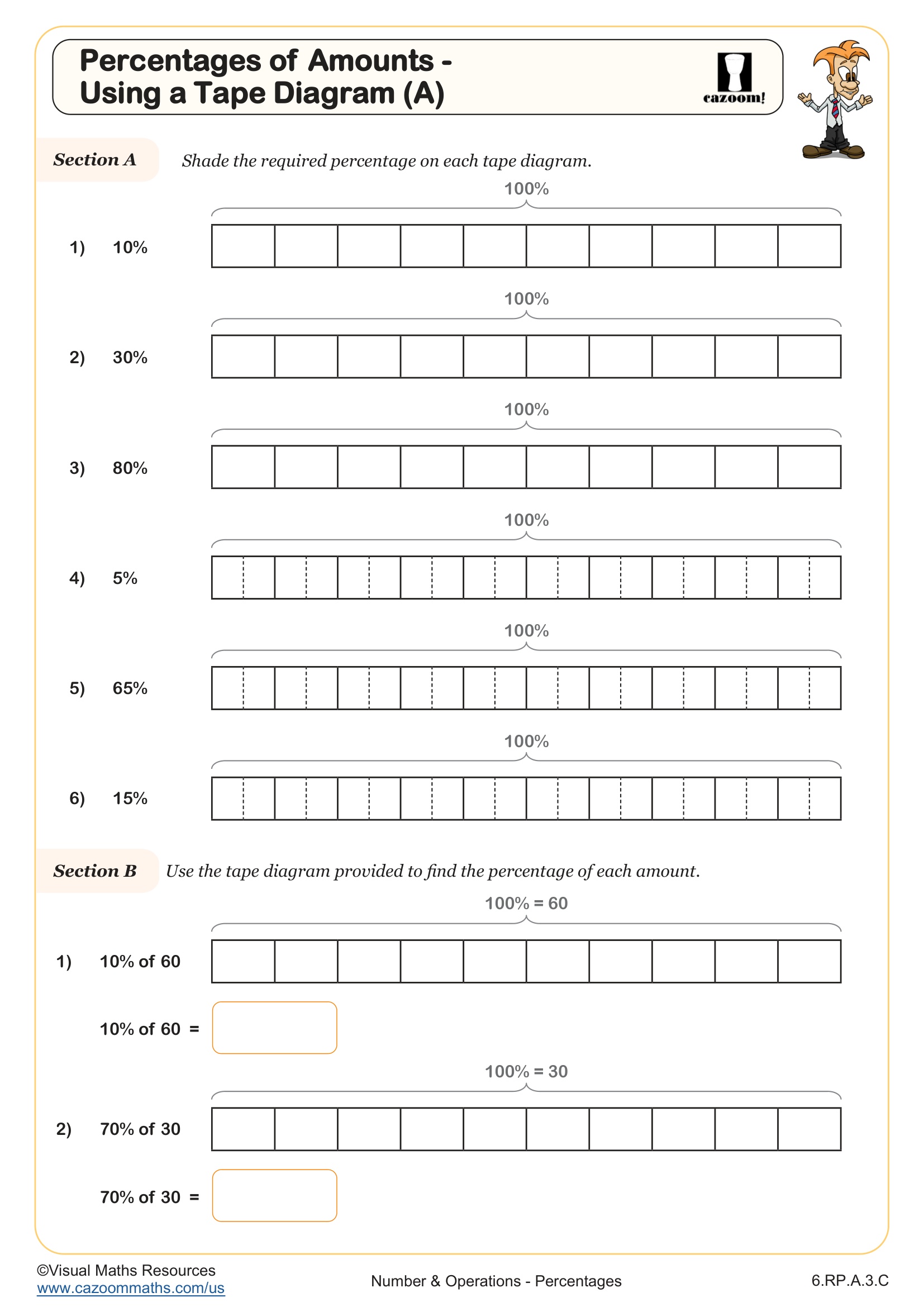
Percentages of Amounts - Using a Tape Diagram (A)
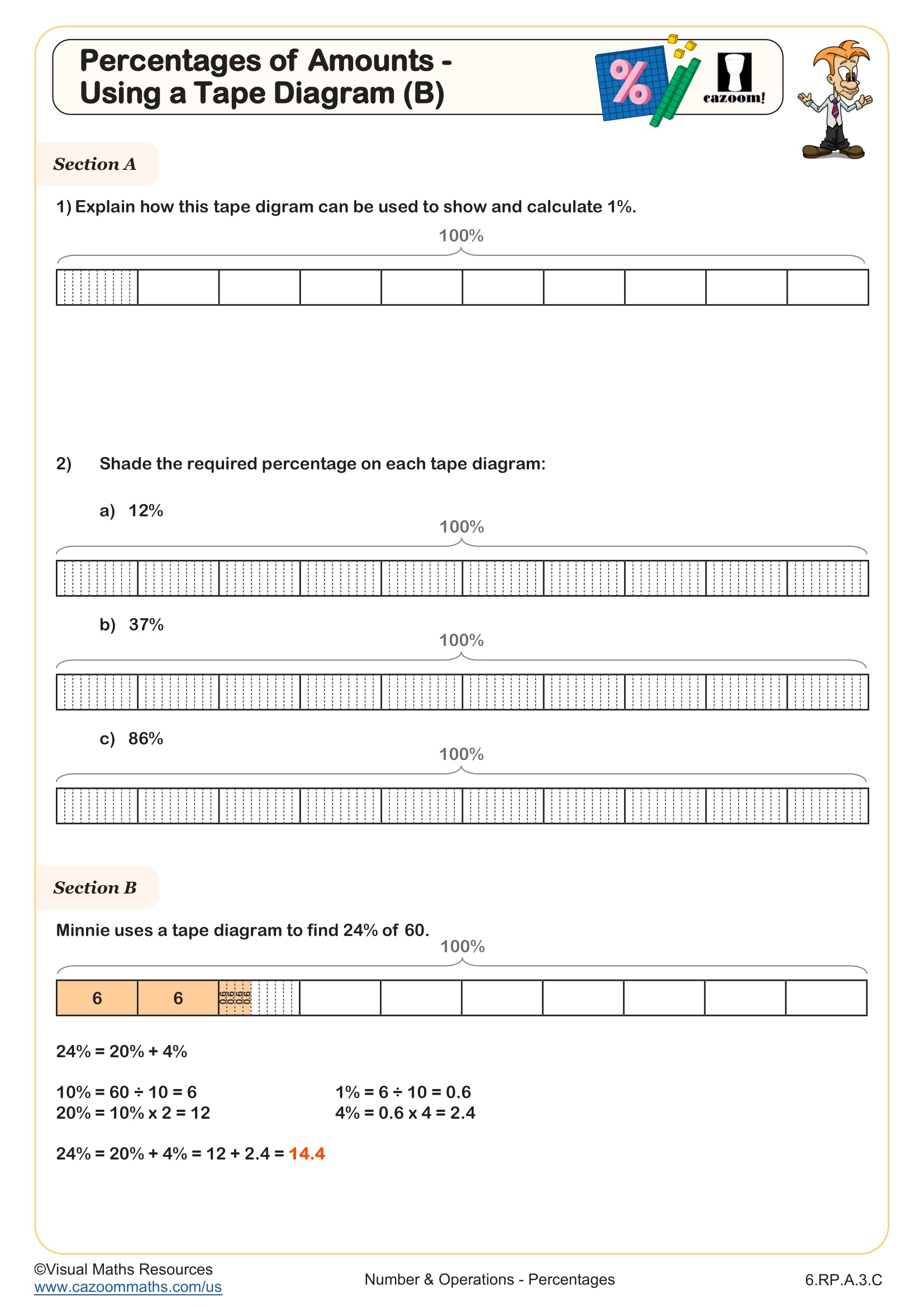
Percentages of Amounts - Using a Tape Diagram (B)
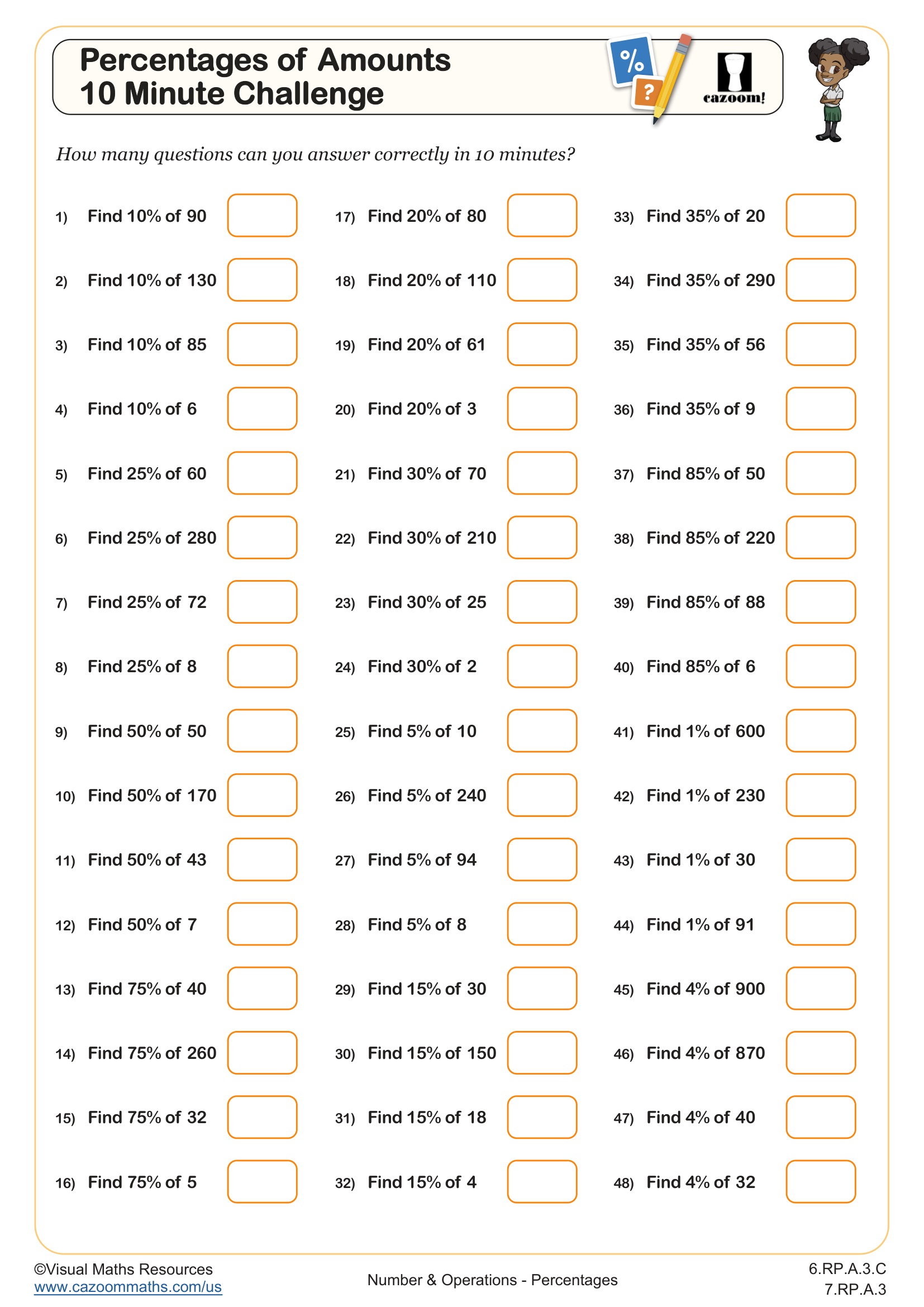
Percentages of Amounts 10 Minute Challenge
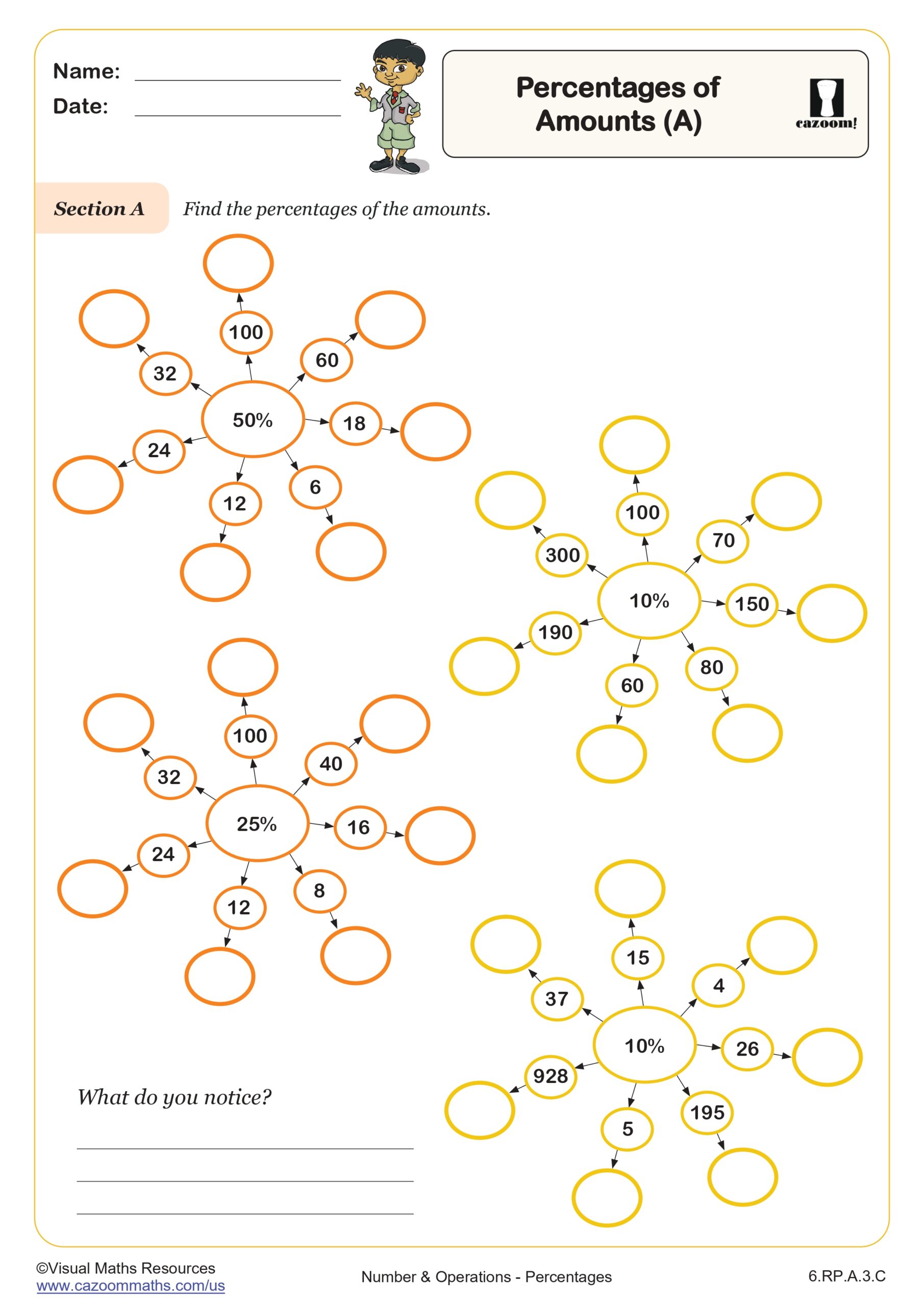
Percents of an Amount (A)
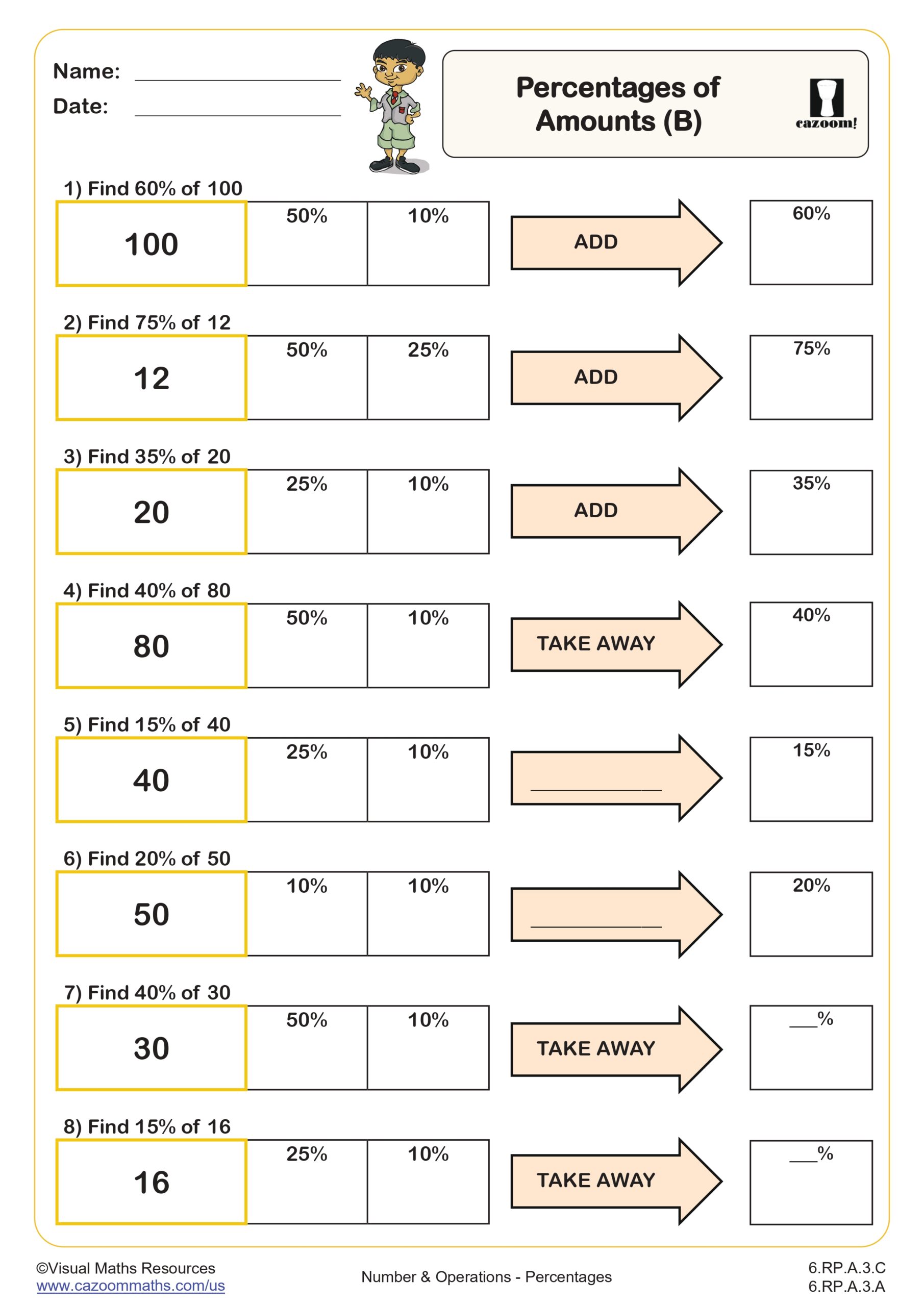
Percents of an Amount (B)
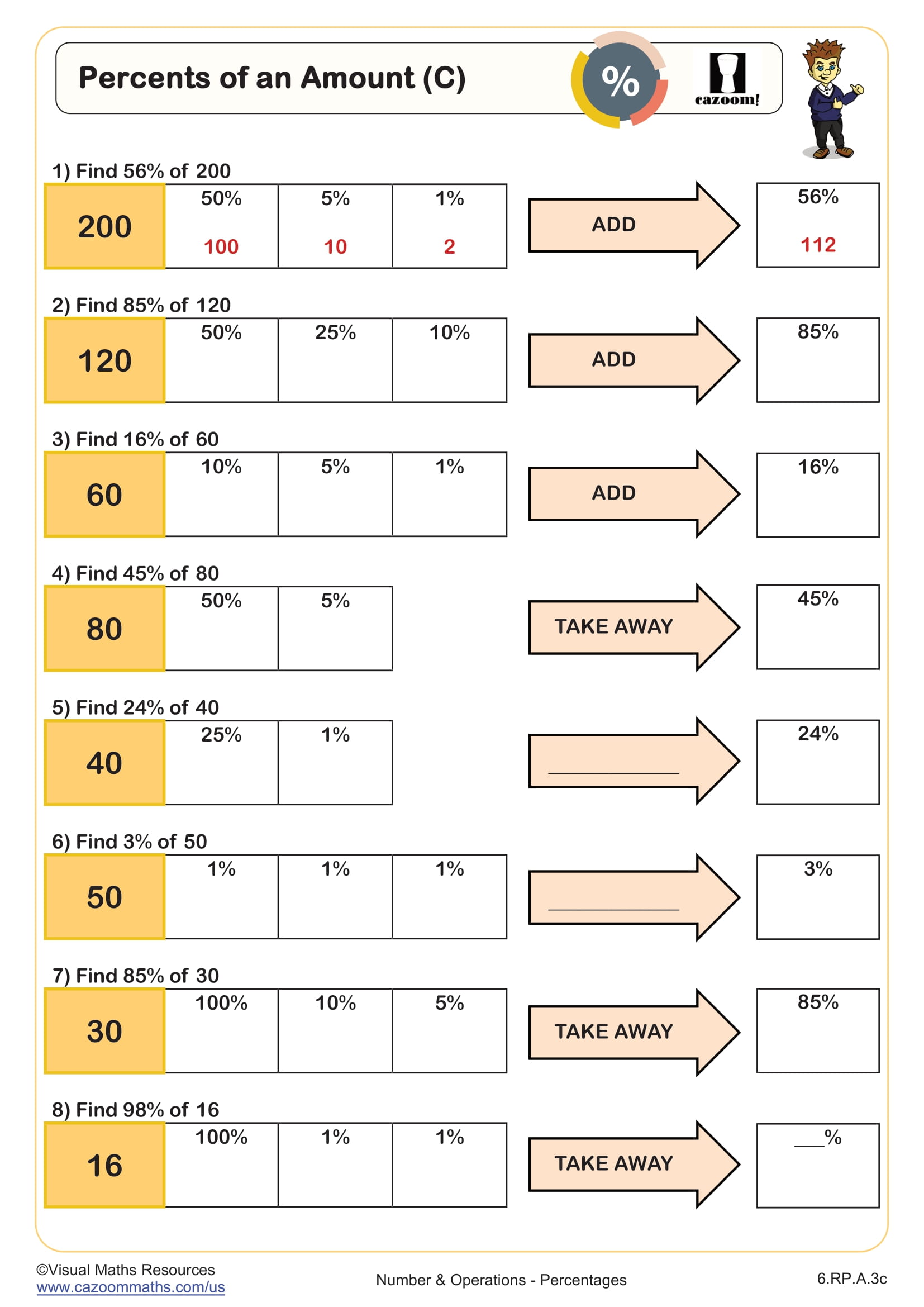
Percents of an Amount (C)
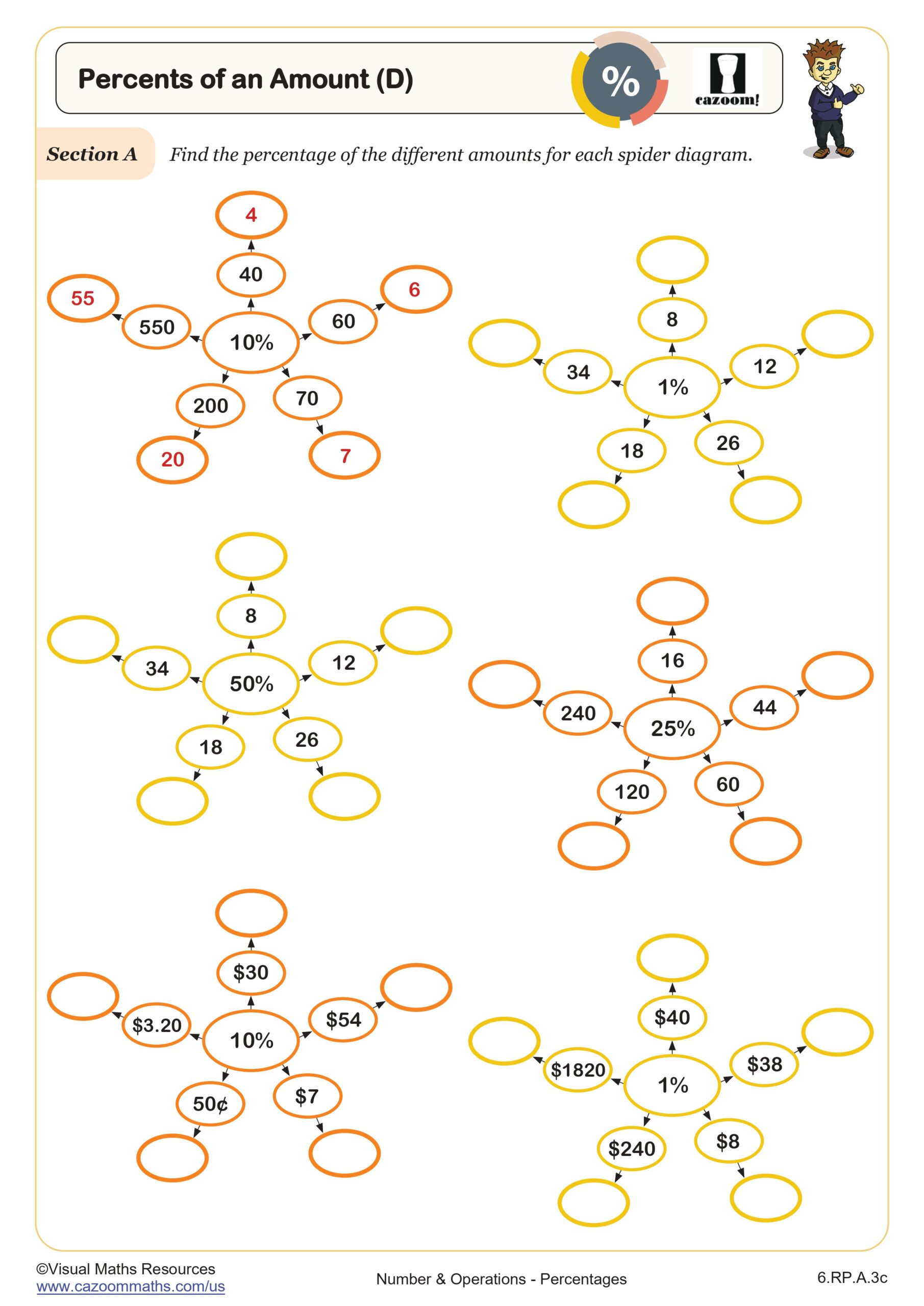
Percents of an Amount (D)
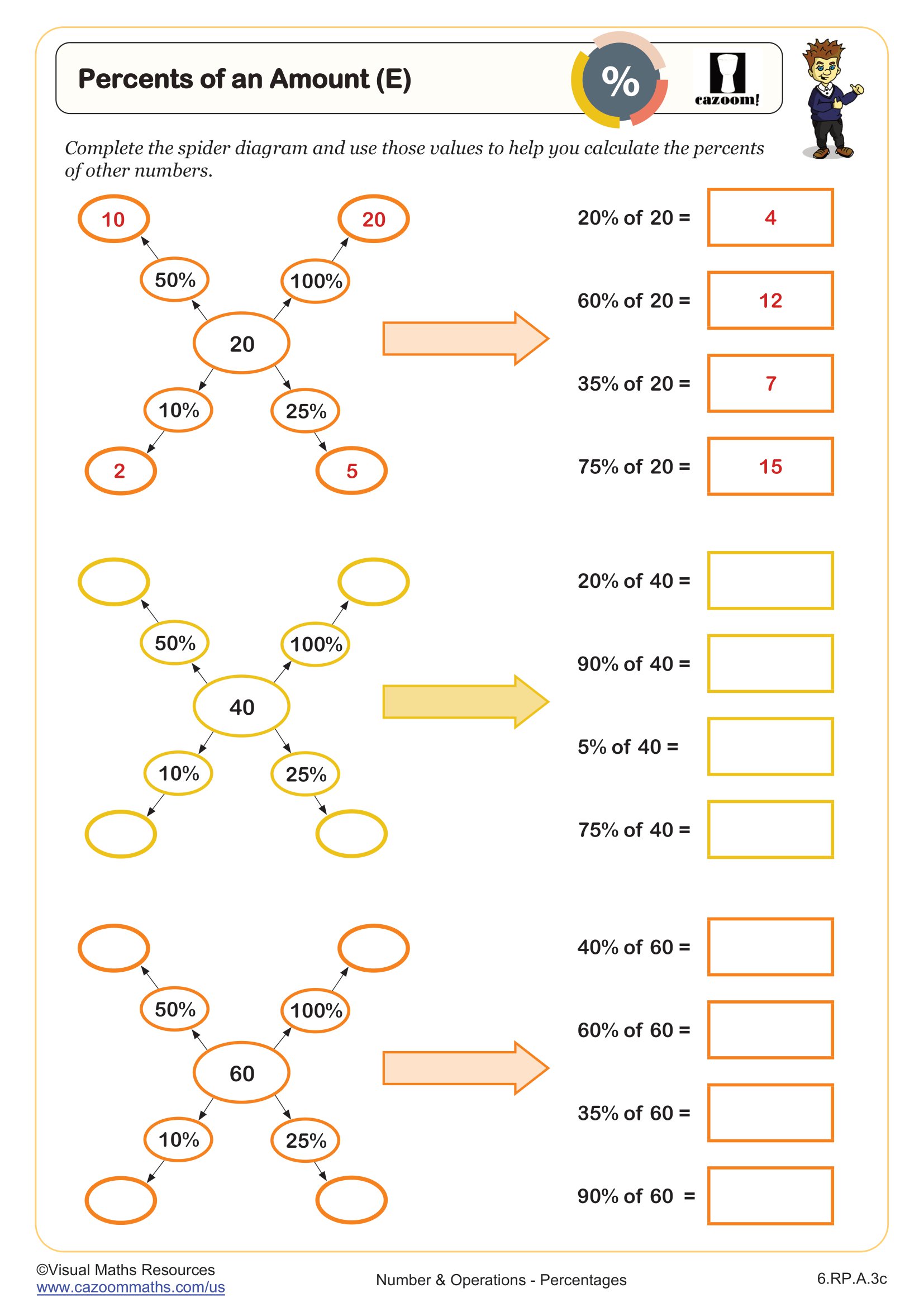
Percents of an Amount (E)
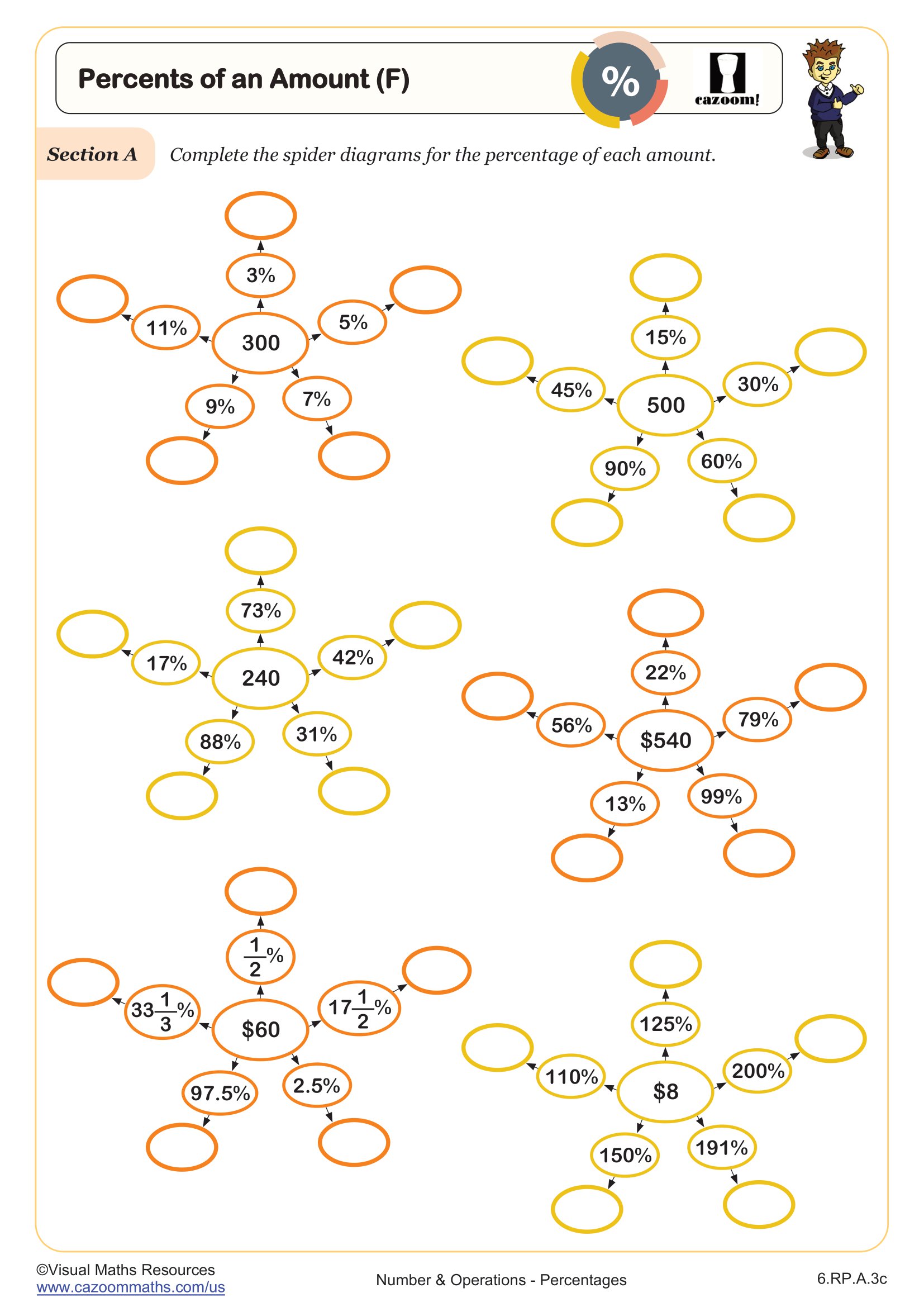
Percents of an Amount (F)
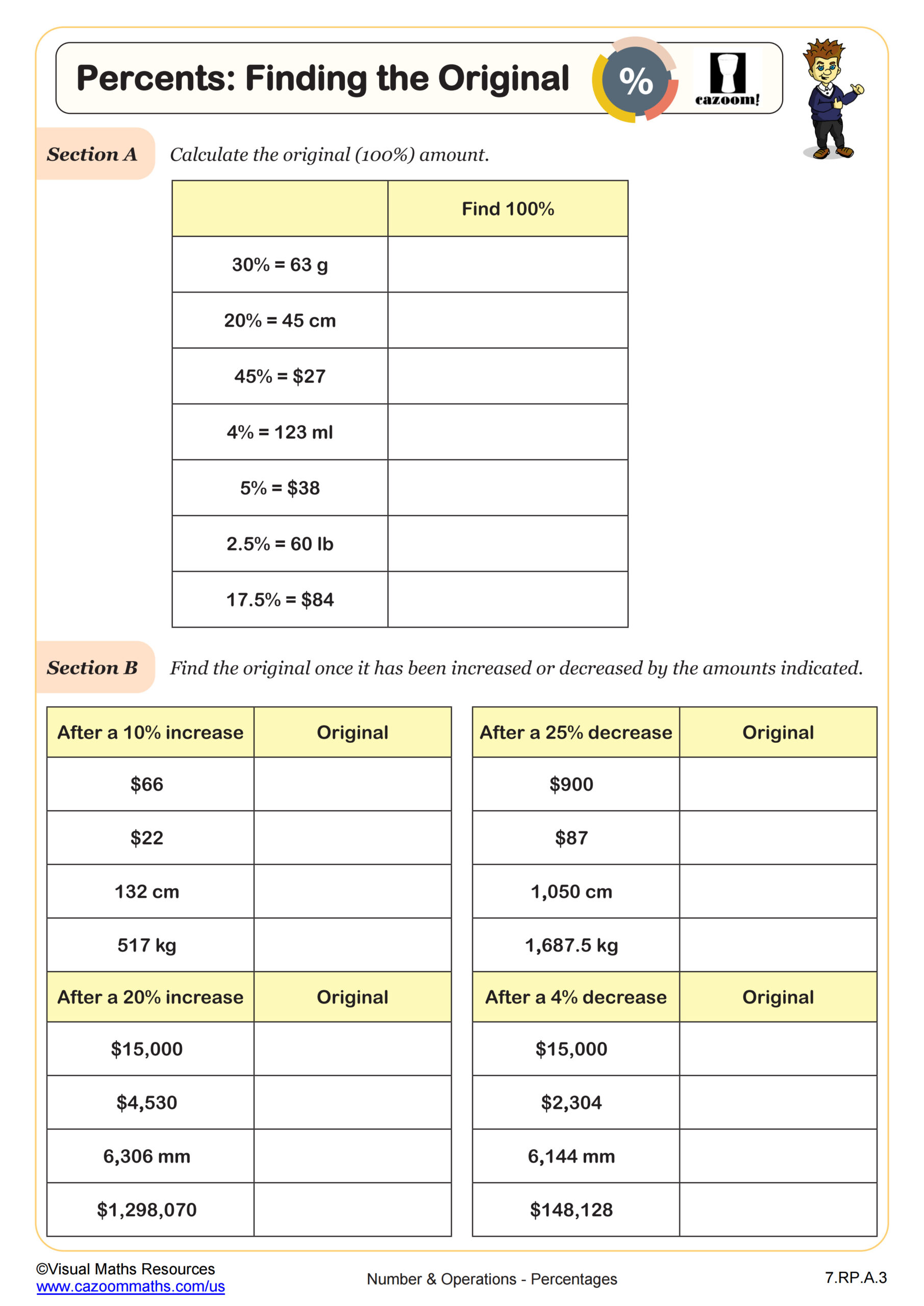
Percents: Finding the Original
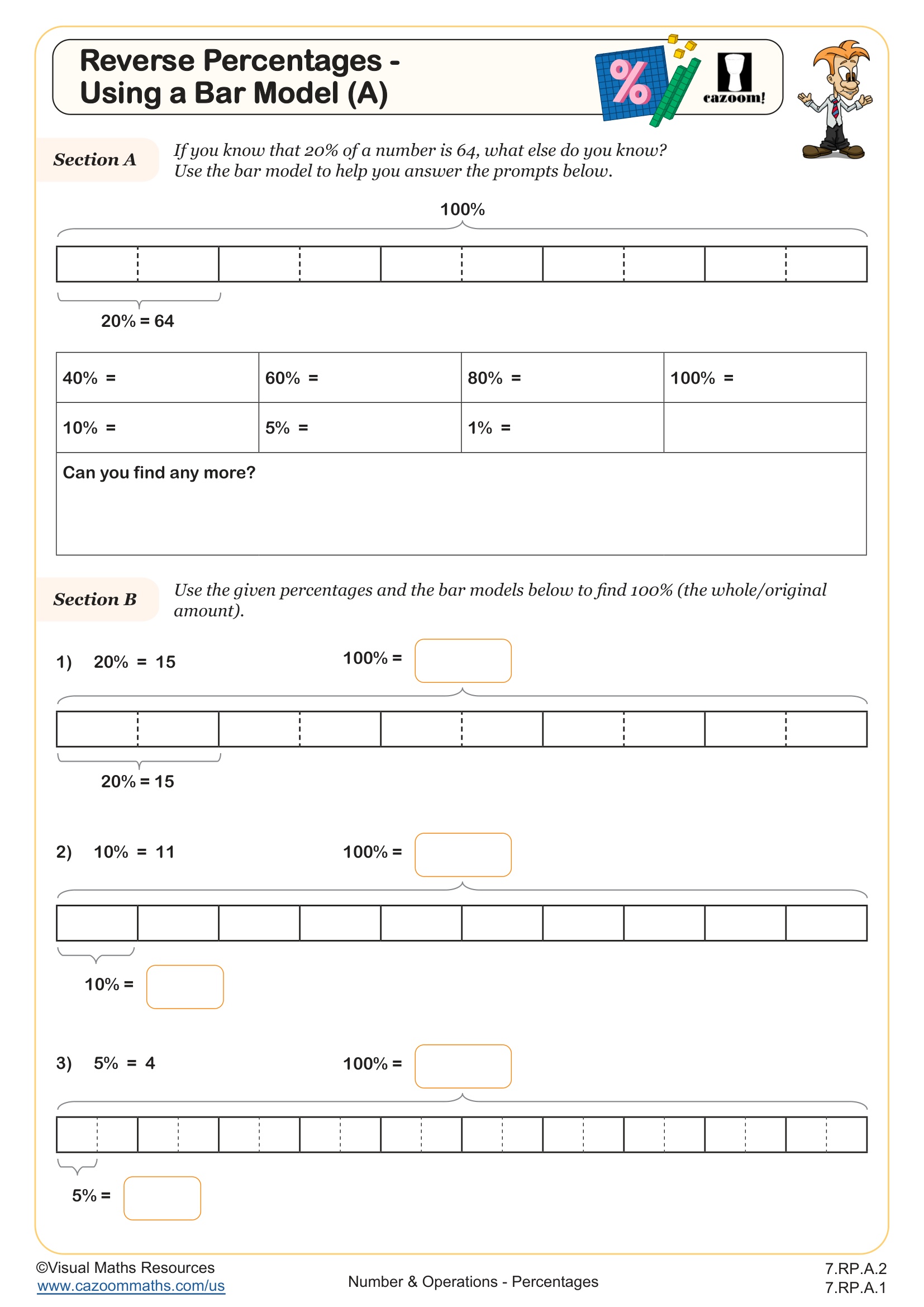
Reverse Percentages - Using a Bar Model (A)
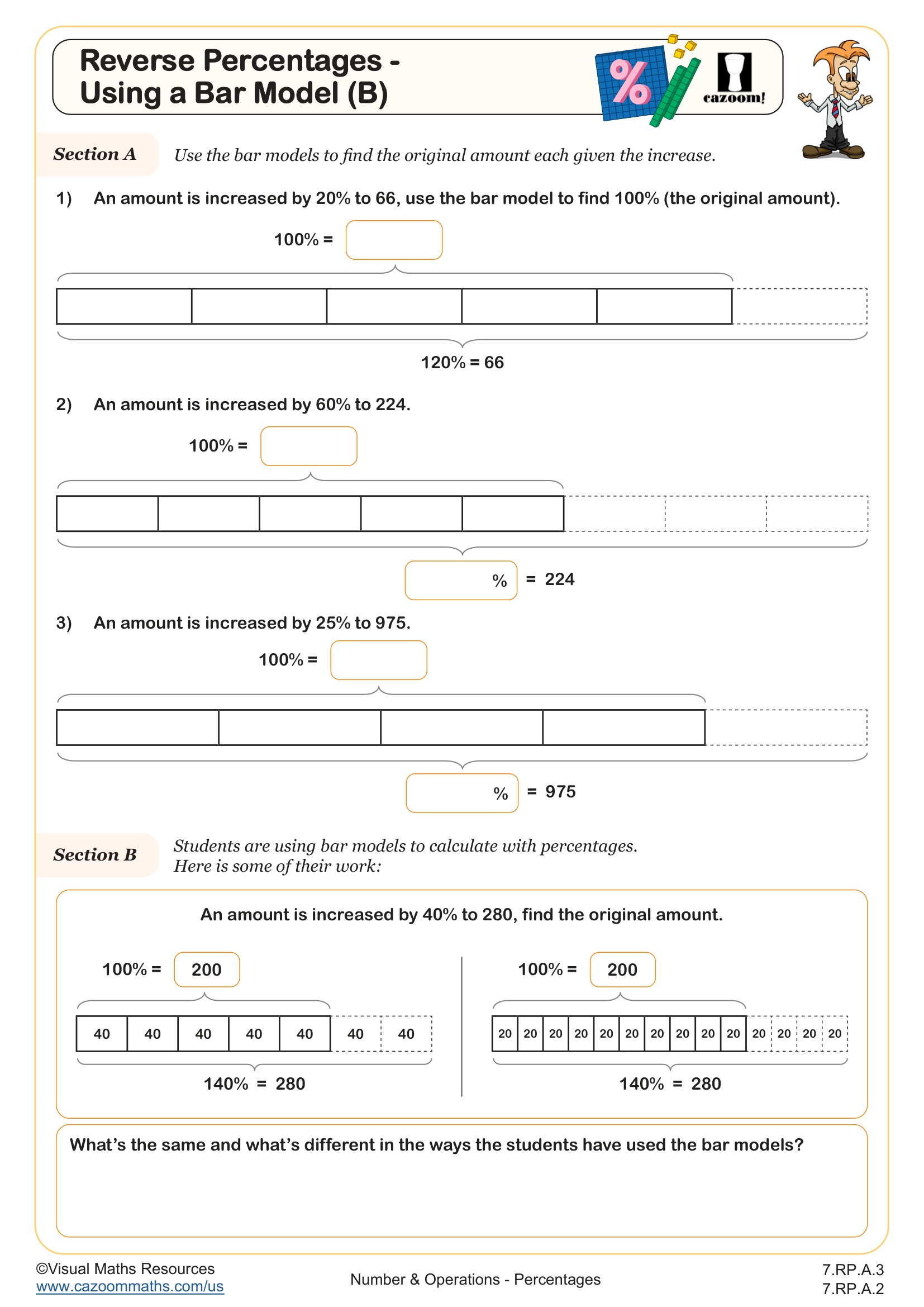
Reverse Percentages - Using a Bar Model (B)
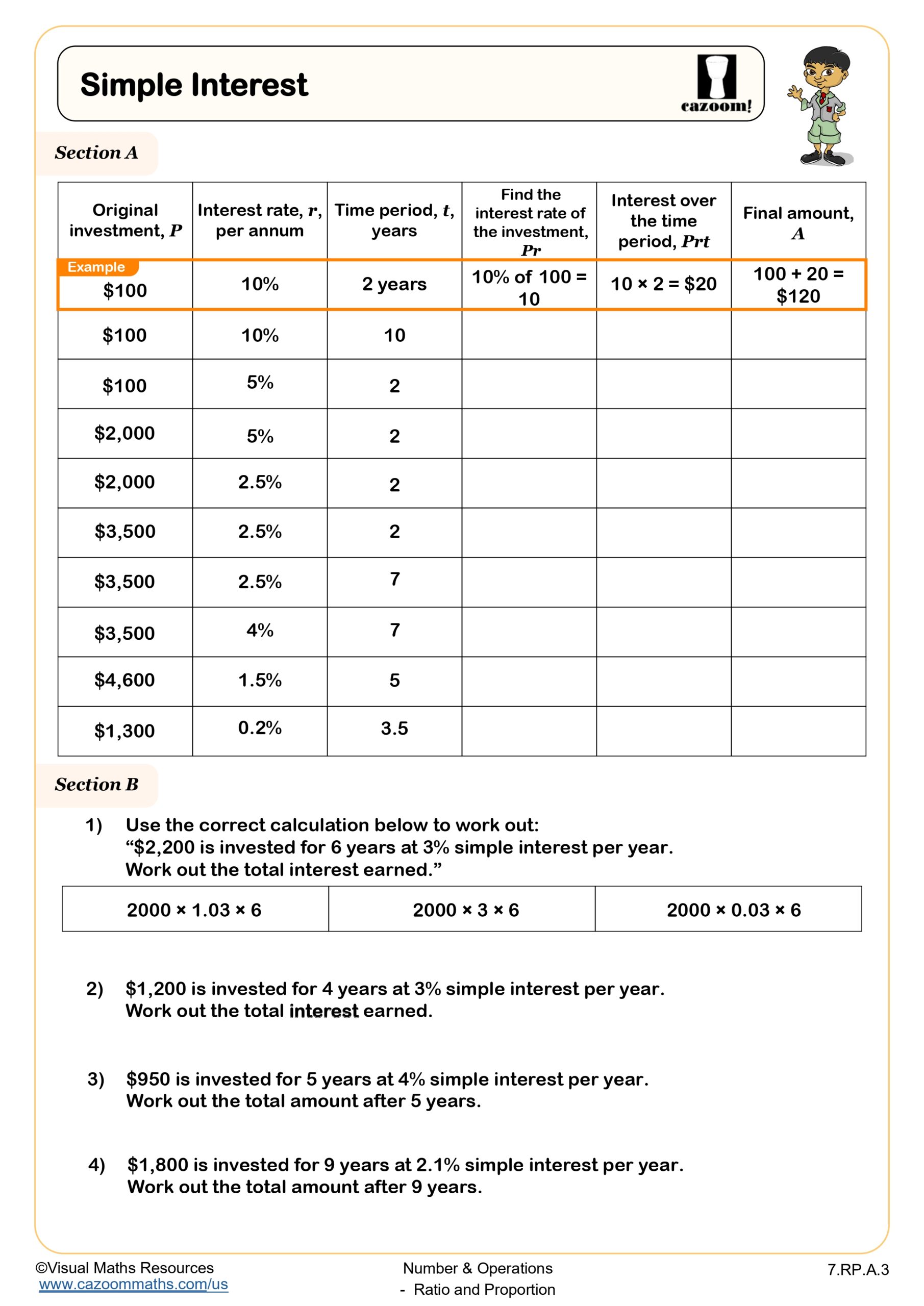
Simple Interest
All worksheets are created by the team of experienced teachers at Cazoom Math.
Why Are Benchmark Percentages Like 10%, 25%, and 50% So Important?
Benchmark percentages serve as mental math anchors that students can use to estimate and calculate other percentages quickly. When students understand that 10% means dividing by 10, 50% means halving, and 25% means finding one-quarter, they develop calculation strategies that don't require memorizing formulas. The Common Core State Standards emphasize these connections starting in 6th grade as students transition from fraction and decimal work into percentage applications.
A common misconception occurs when students treat percentages as disconnected from fractions and decimals. Students lose points on assessments when they can find 10% correctly but then struggle to use that answer to find 30% or 5%. The breakthrough typically happens when students recognize that finding 30% means tripling the 10% value, connecting multiplication skills they already have to percentage reasoning they're building.
What Grade Levels Use These Middle School Percentages Worksheets?
These worksheets support students in 6th grade, 7th grade, and 8th grade throughout middle school. Students encounter percentages most intensively in 6th grade when they first learn to find percentages of quantities and convert between percentages, fractions, and decimals. The foundation built during this year becomes essential for ratio and proportion work that follows.
The difficulty progression across middle school moves from basic benchmark calculations in 6th grade to more complex percentage problems in 7th and 8th grade. Sixth graders typically focus on finding common percentages mentally and understanding what percentages represent. By 7th and 8th grade, students apply percentage skills to proportional relationships, percent increase and decrease, simple interest calculations, and probability contexts that prepare them for algebra and data analysis.
How Do Complements to 100% Connect to Real-World Problem Solving?
Finding complements to 100% means determining what percentage remains when you know one part. If 35% of students chose pizza for lunch, the complement is 65% who chose something else. This skill reinforces that percentages represent parts of a whole that total 100%, a concept students must understand before tackling percent change or multi-step percentage problems.
This thinking appears constantly in STEM fields and everyday decisions. Scientists calculating the percentage of a solution that isn't the active ingredient, economists analyzing market share distributions, and consumers evaluating sale prices all use complement reasoning. When students see that a 30% discount means paying 70% of the original price, they're applying complements to make smart financial decisions. Medical researchers use complements when reporting that if a treatment has an 85% success rate, they're also communicating a 15% rate where alternative approaches may be needed.
How Should Teachers Use These Percentage Worksheets in Class?
The worksheets build from mental math strategies with benchmark percentages before introducing calculator methods, helping students develop estimation skills alongside computational accuracy. This scaffolding matches how standardized tests present percentage problems—some require mental calculation while others expect students to choose appropriate tools. The answer keys allow teachers to quickly check understanding and identify which calculation methods students prefer or struggle with most.
Many teachers find these worksheets effective for differentiated instruction during percentage units. Struggling students benefit from starting with the benchmark percentage worksheets to build confidence before attempting calculator-based problems, while advanced students can work through the full range independently. The worksheets work well for math centers, homework that parents can support using the answer keys, or warm-up activities that reinforce percentage fluency. Teachers also use them for targeted intervention when assessment data shows students confusing percentage calculations with other operations.