Middle School Probability Worksheets
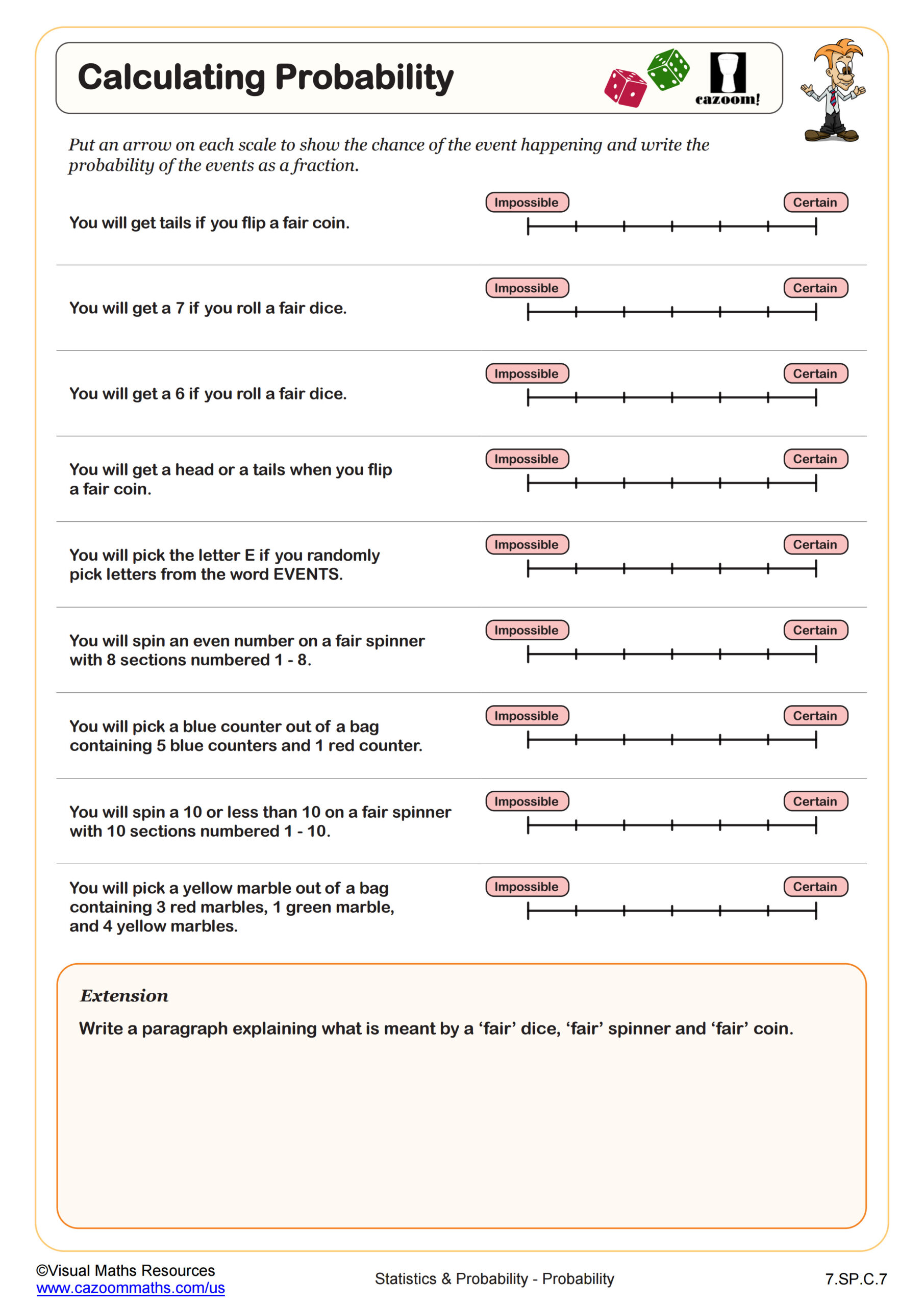
Calculating Probability
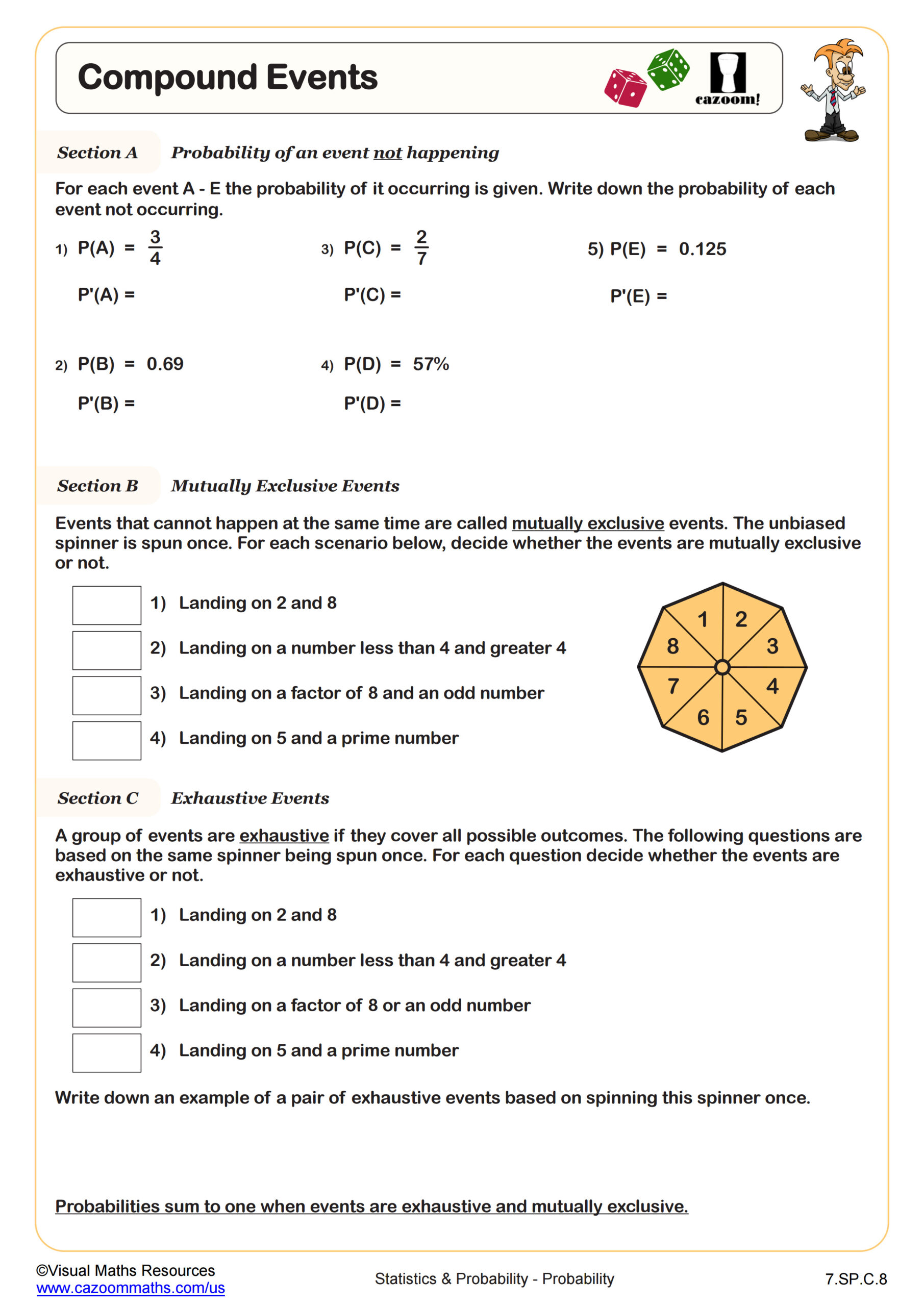
Compound Events
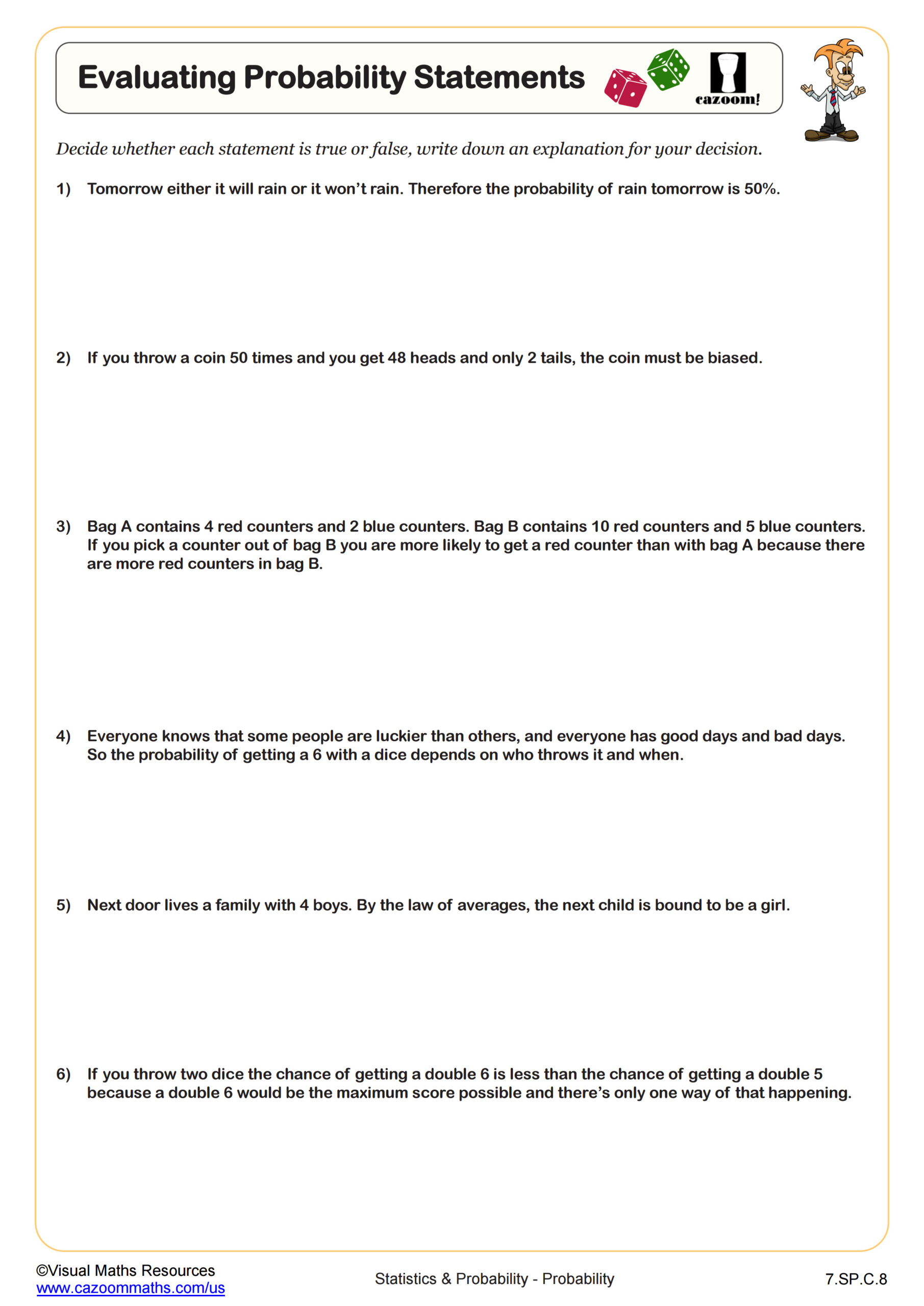
Evaluating Probability Statements
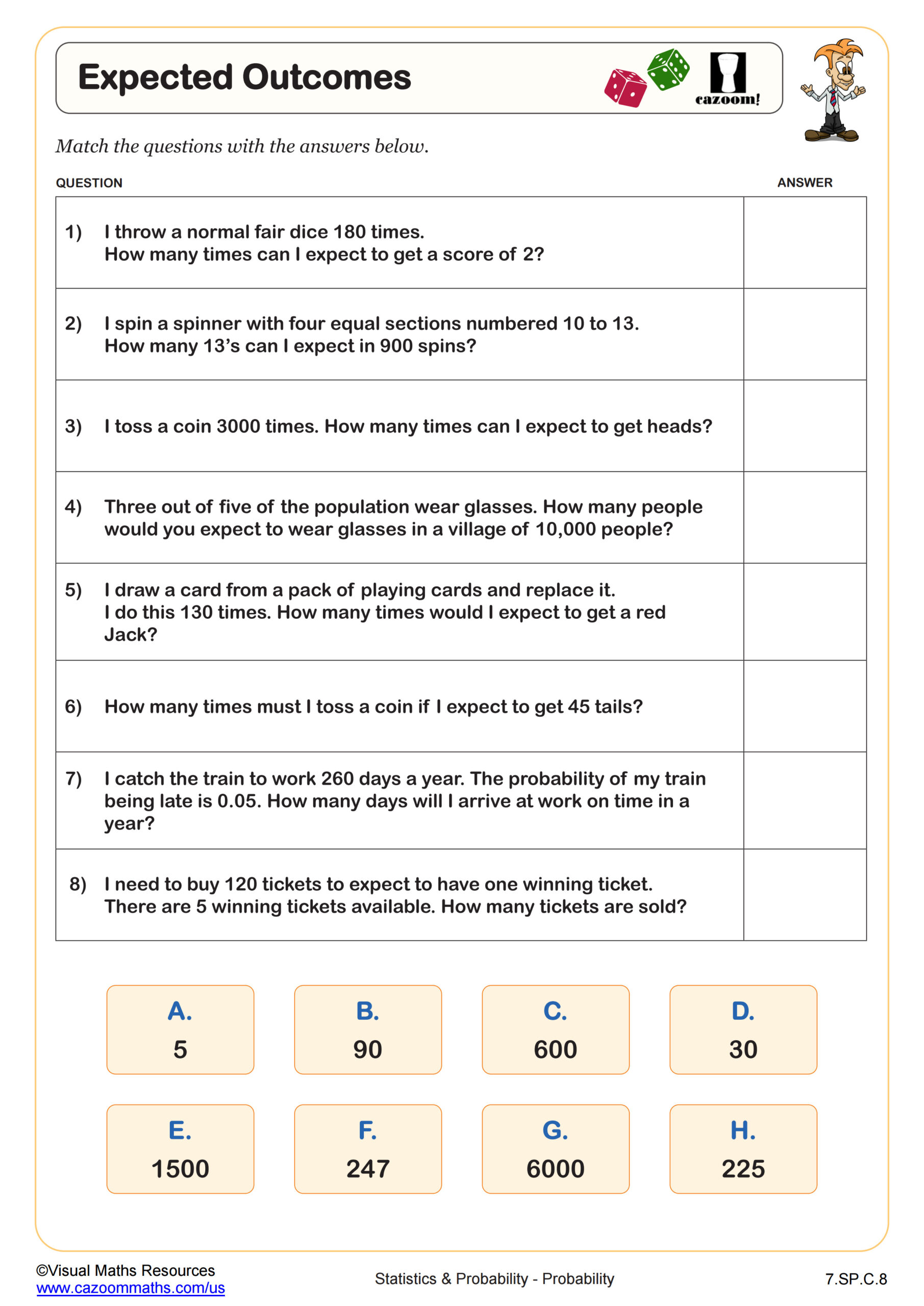
Expected Outcomes
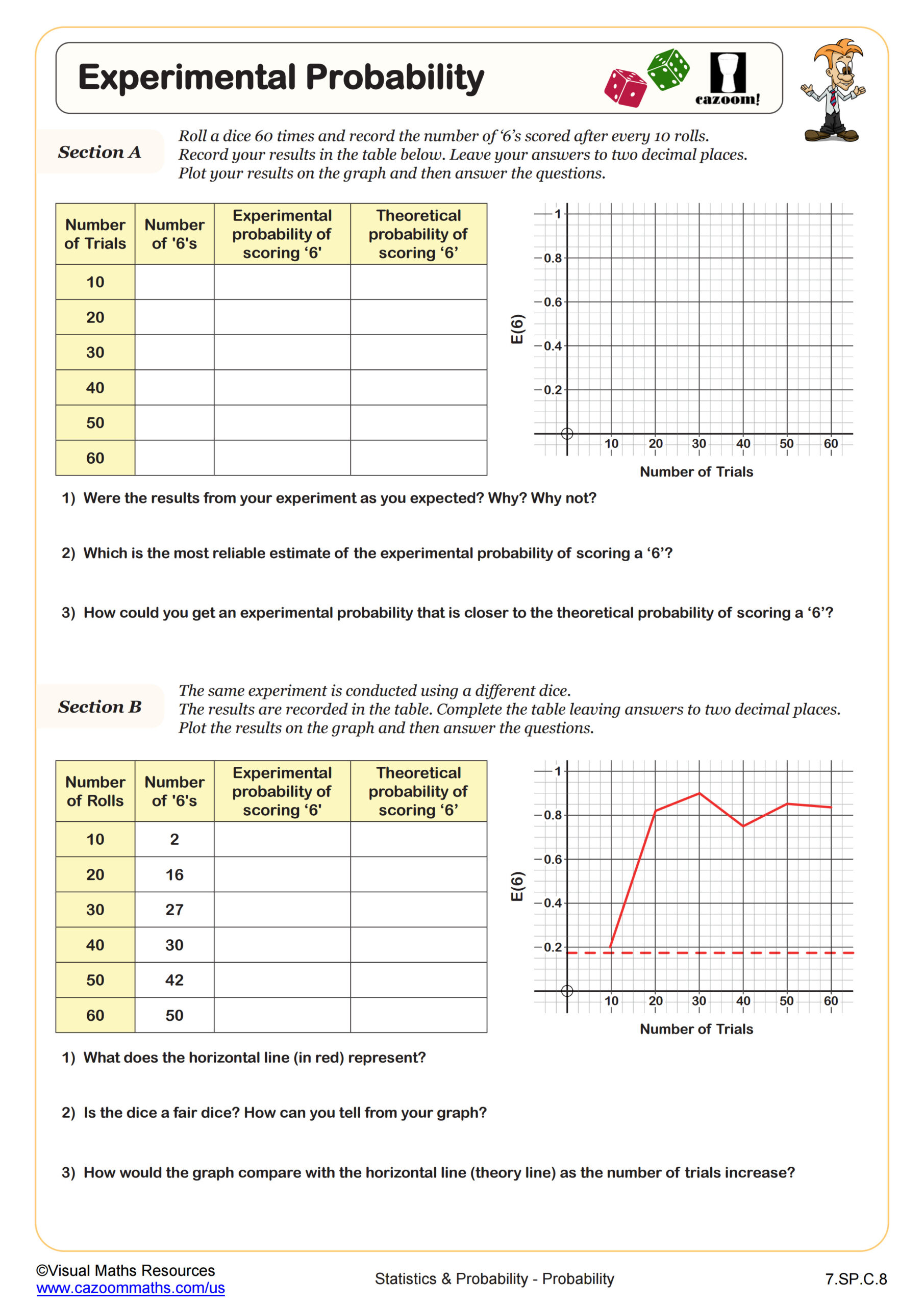
Experimental Probability
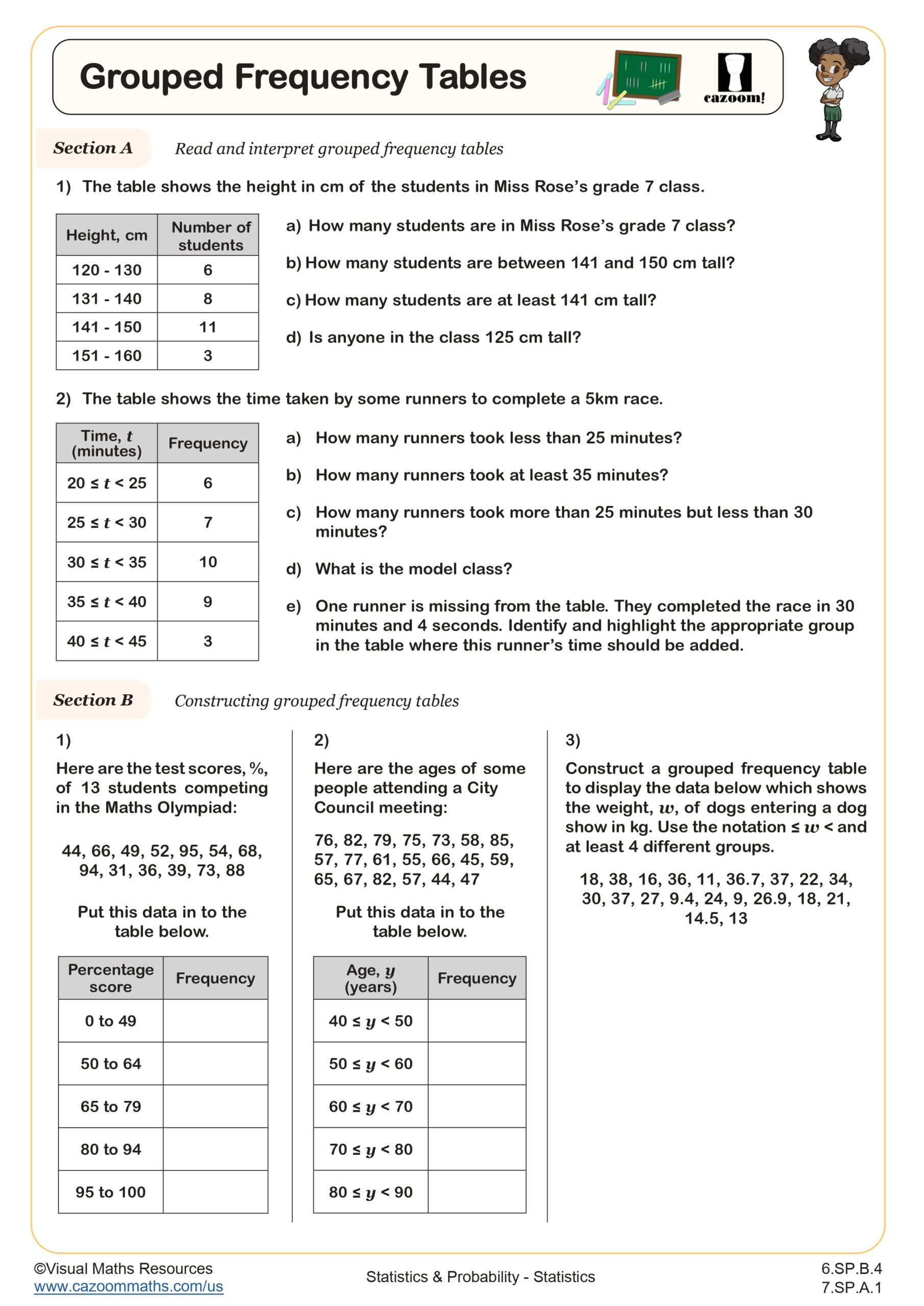
Grouped Frequency Tables
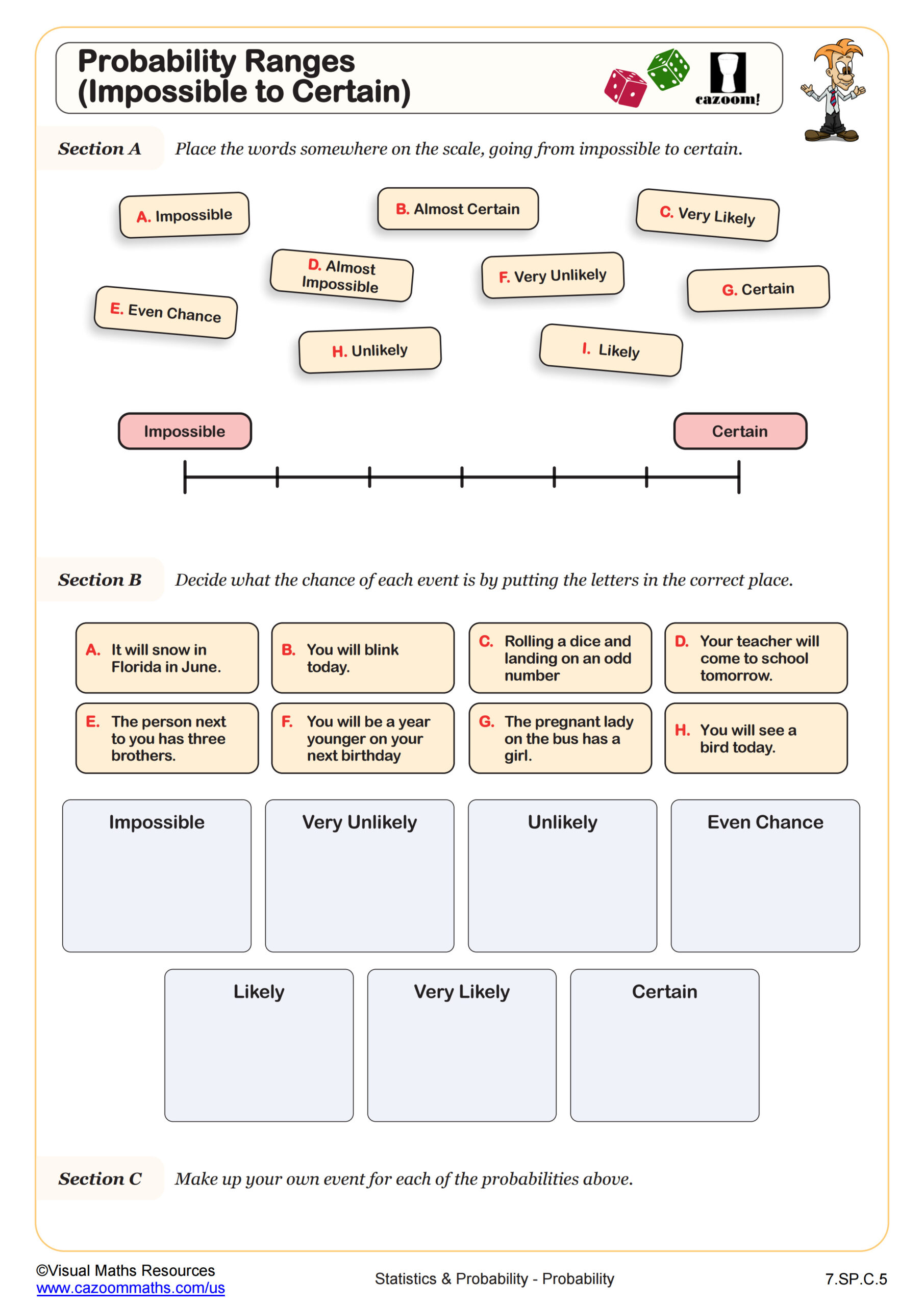
Probability Ranges (Impossible to Certain)
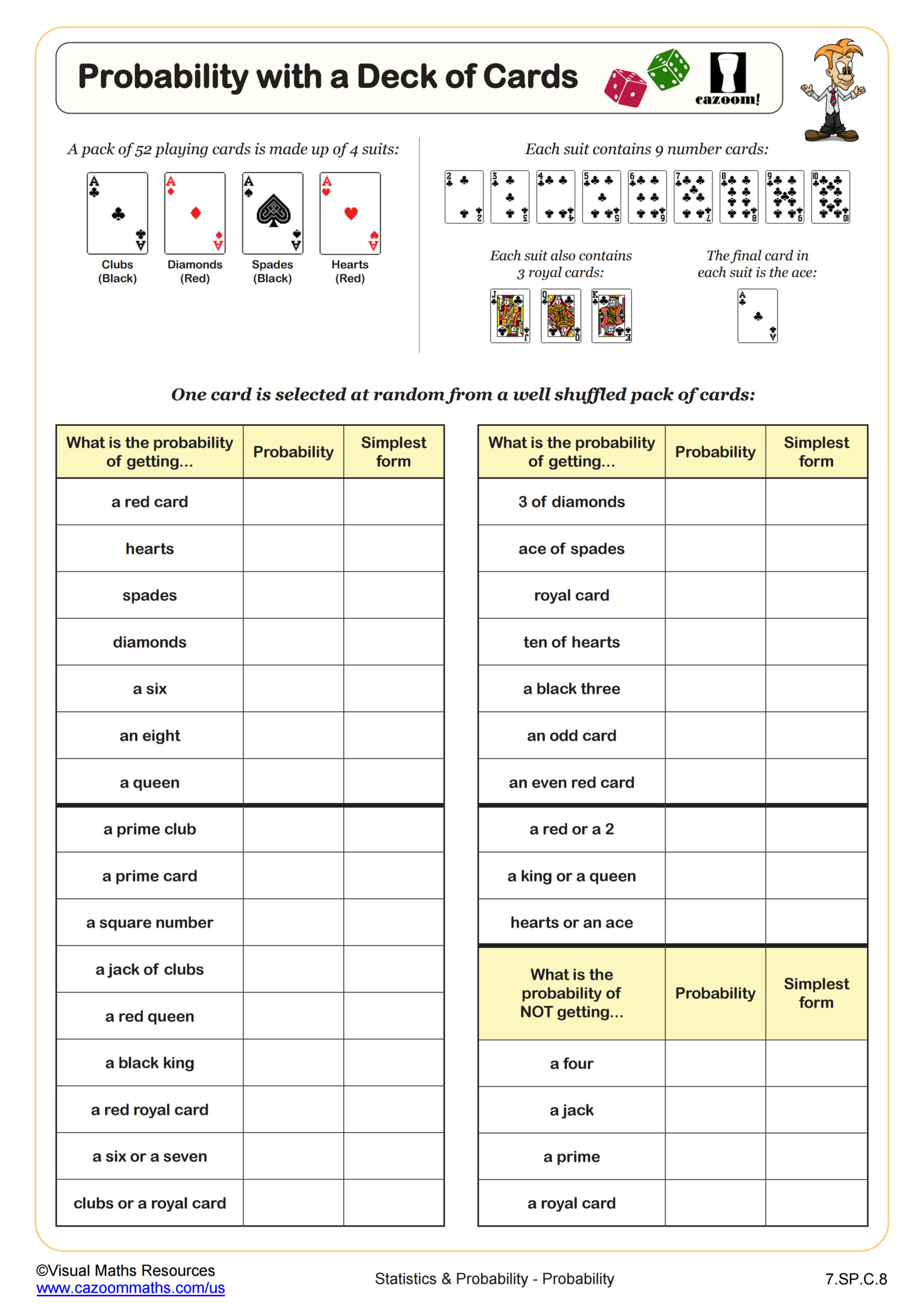
Probability with a Deck of Cards
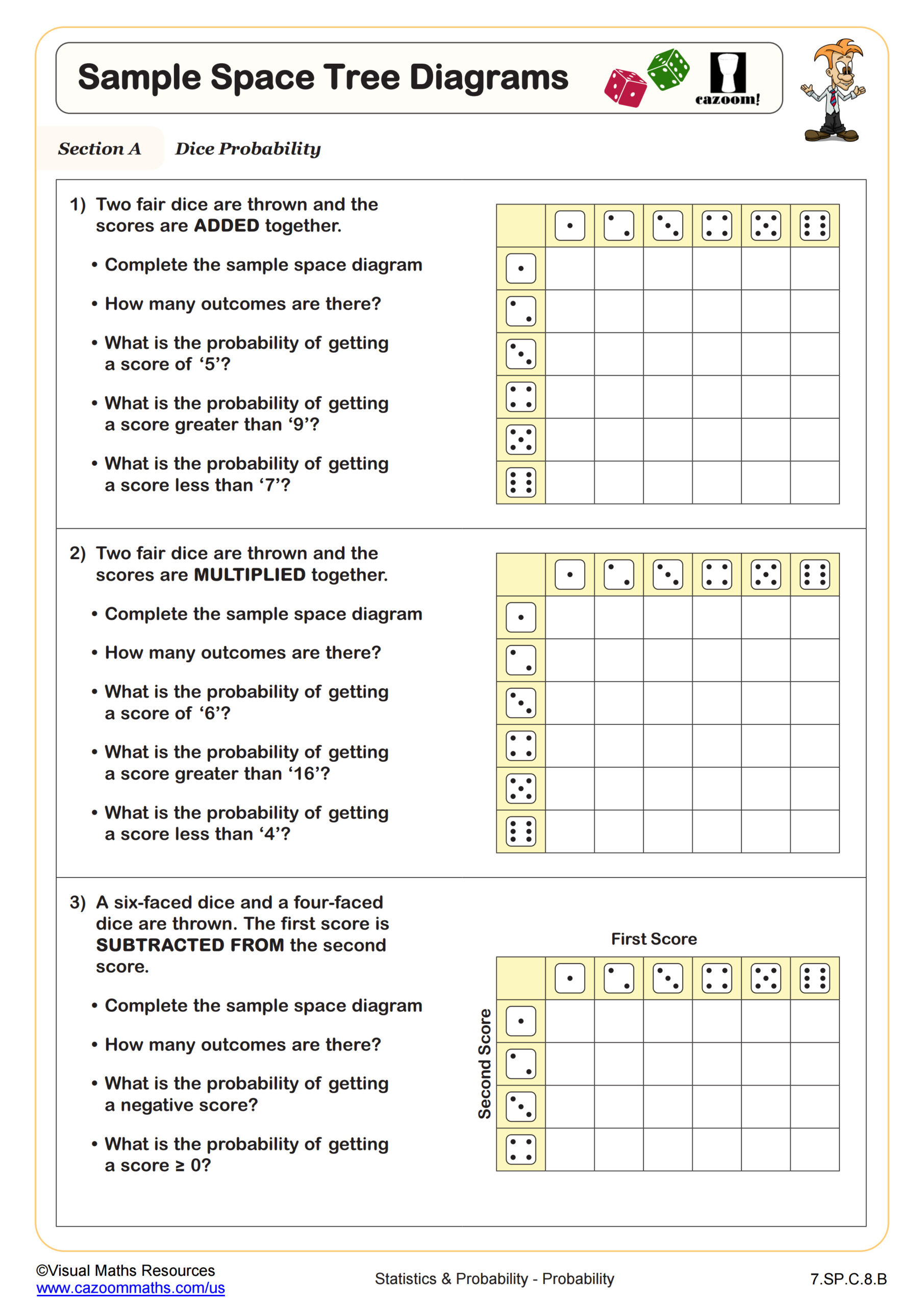
Probability with Dice
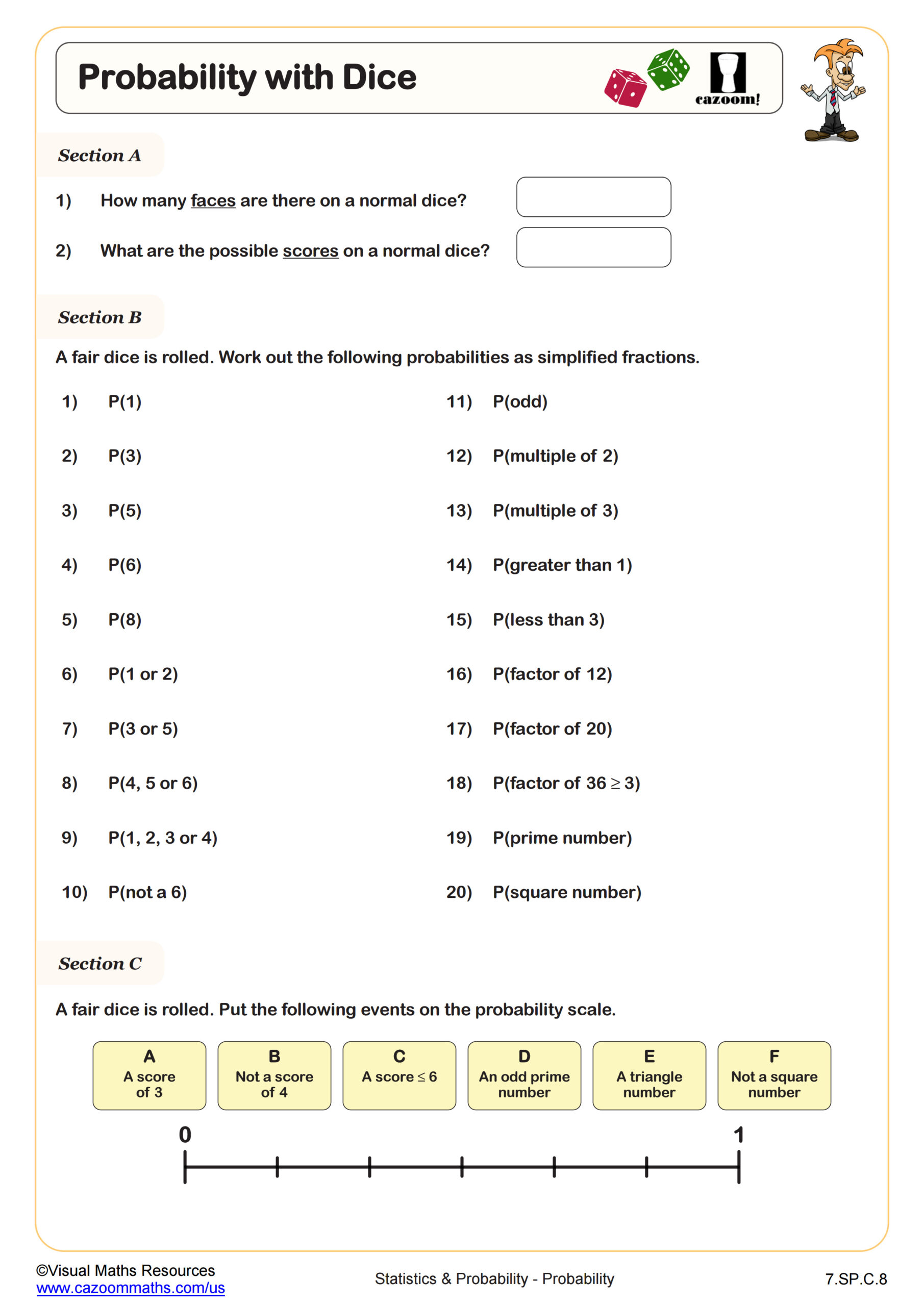
Relative Frequency
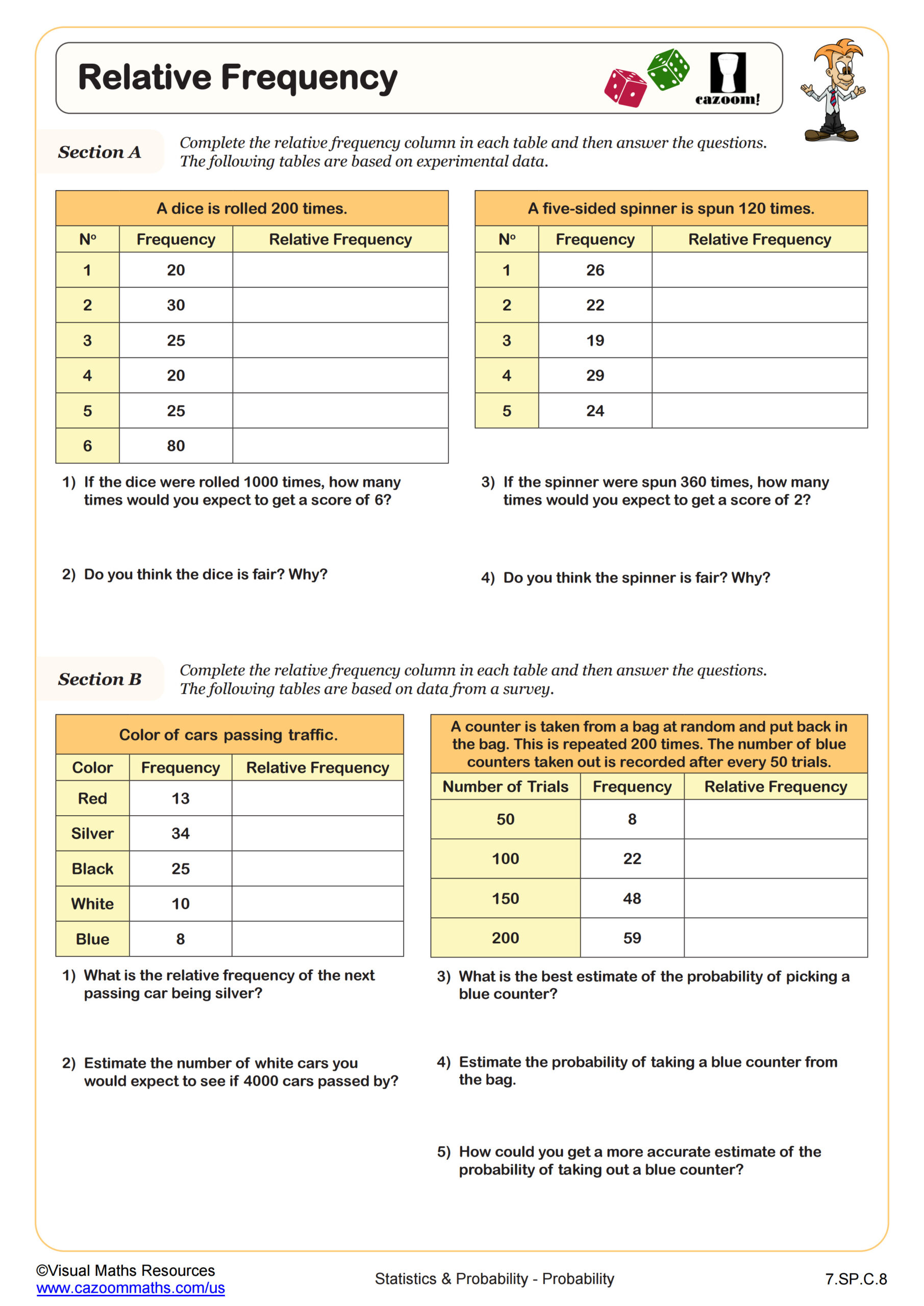
Sample Space Lists
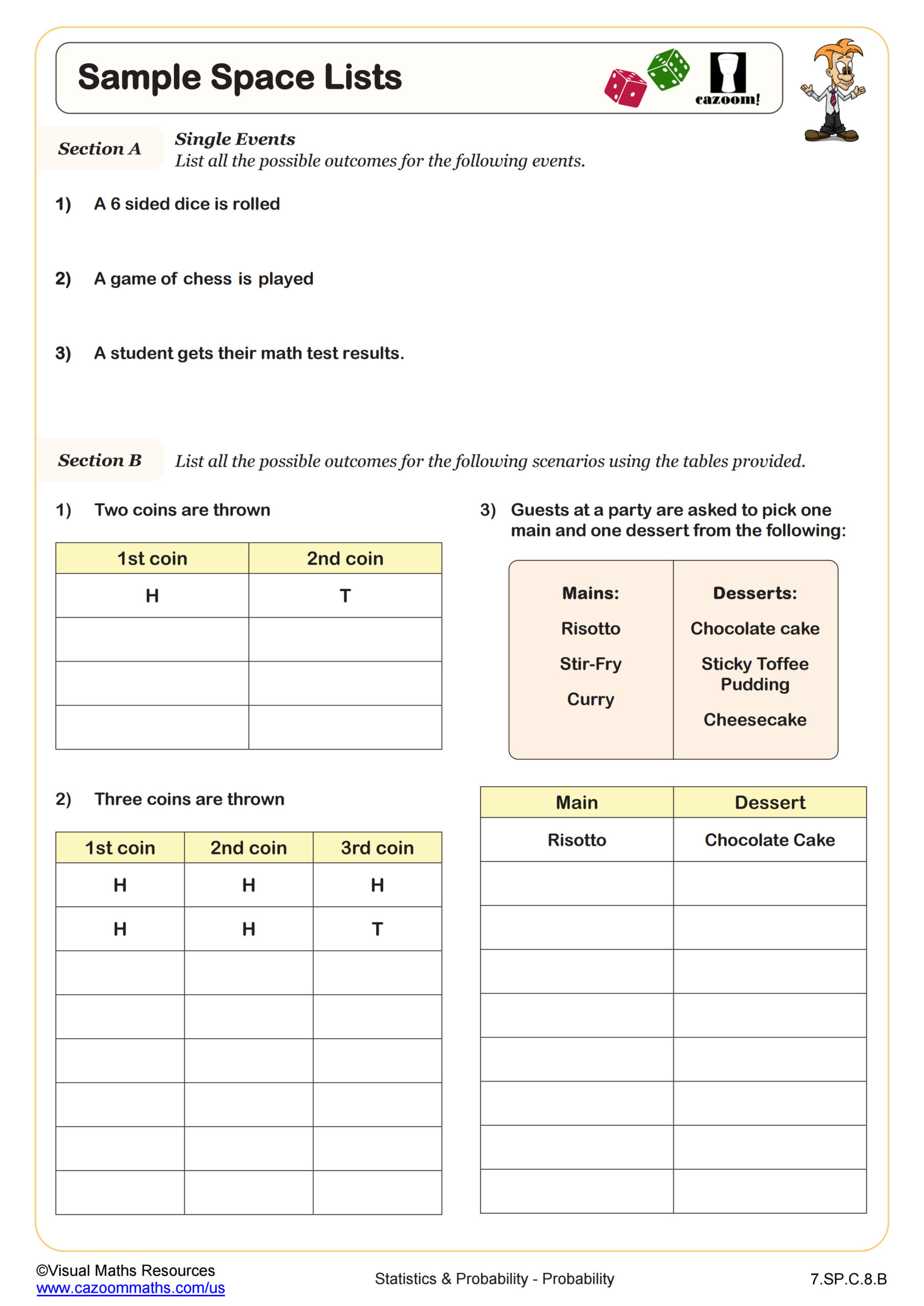
Sample Space Tree Diagrams
The Probability Rule for Counting
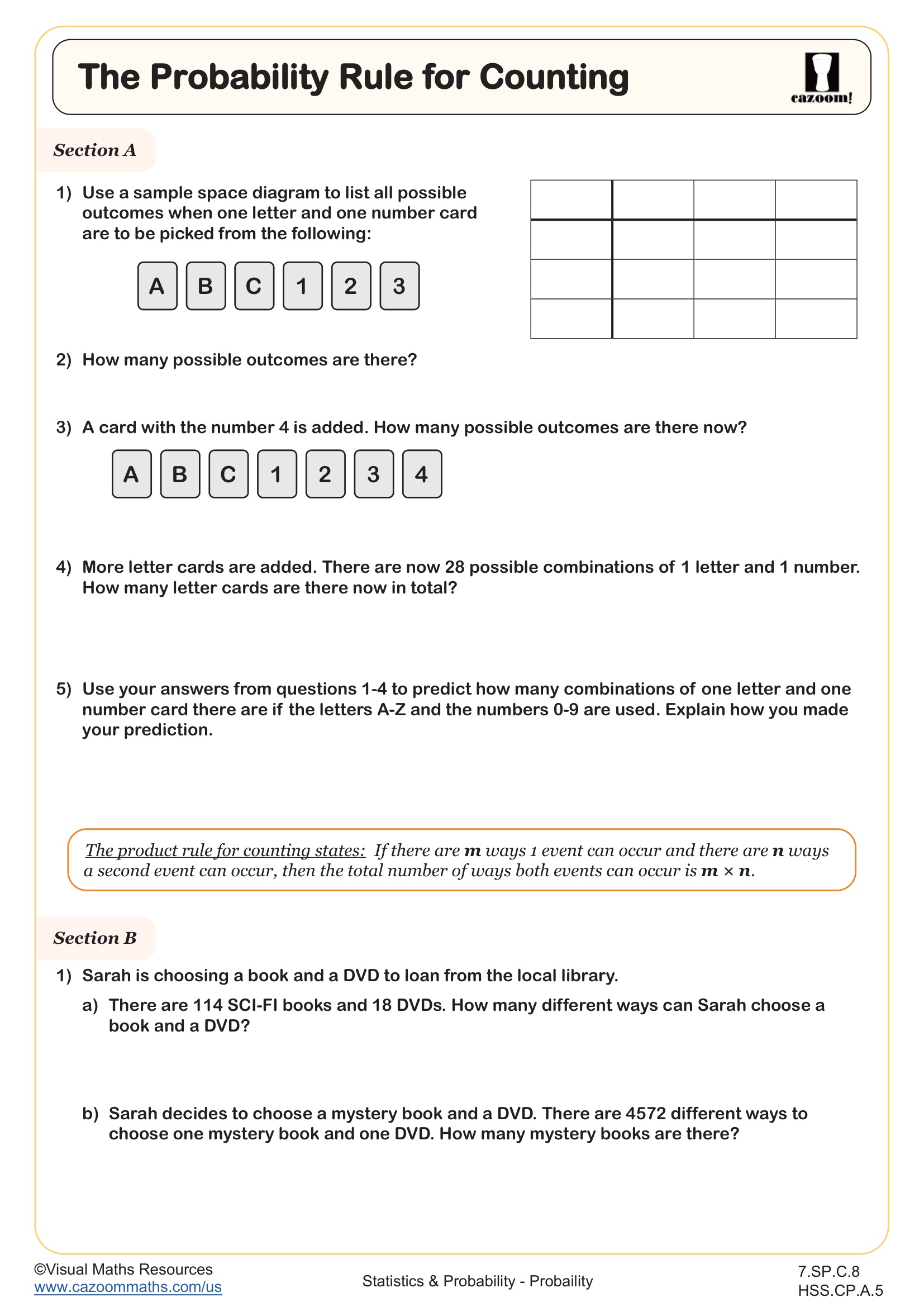
Tree Diagrams (A)
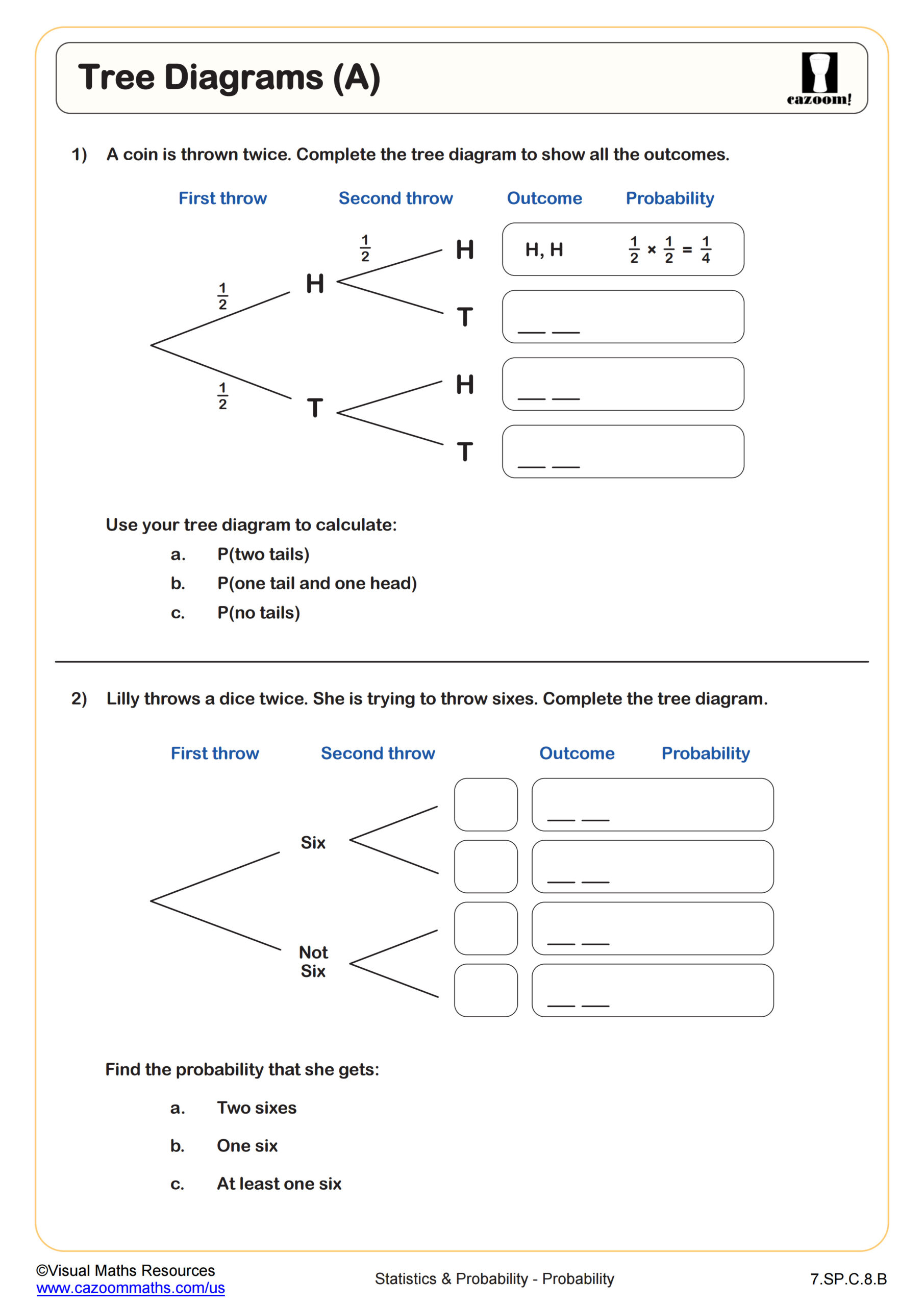
Tree Diagrams (B)
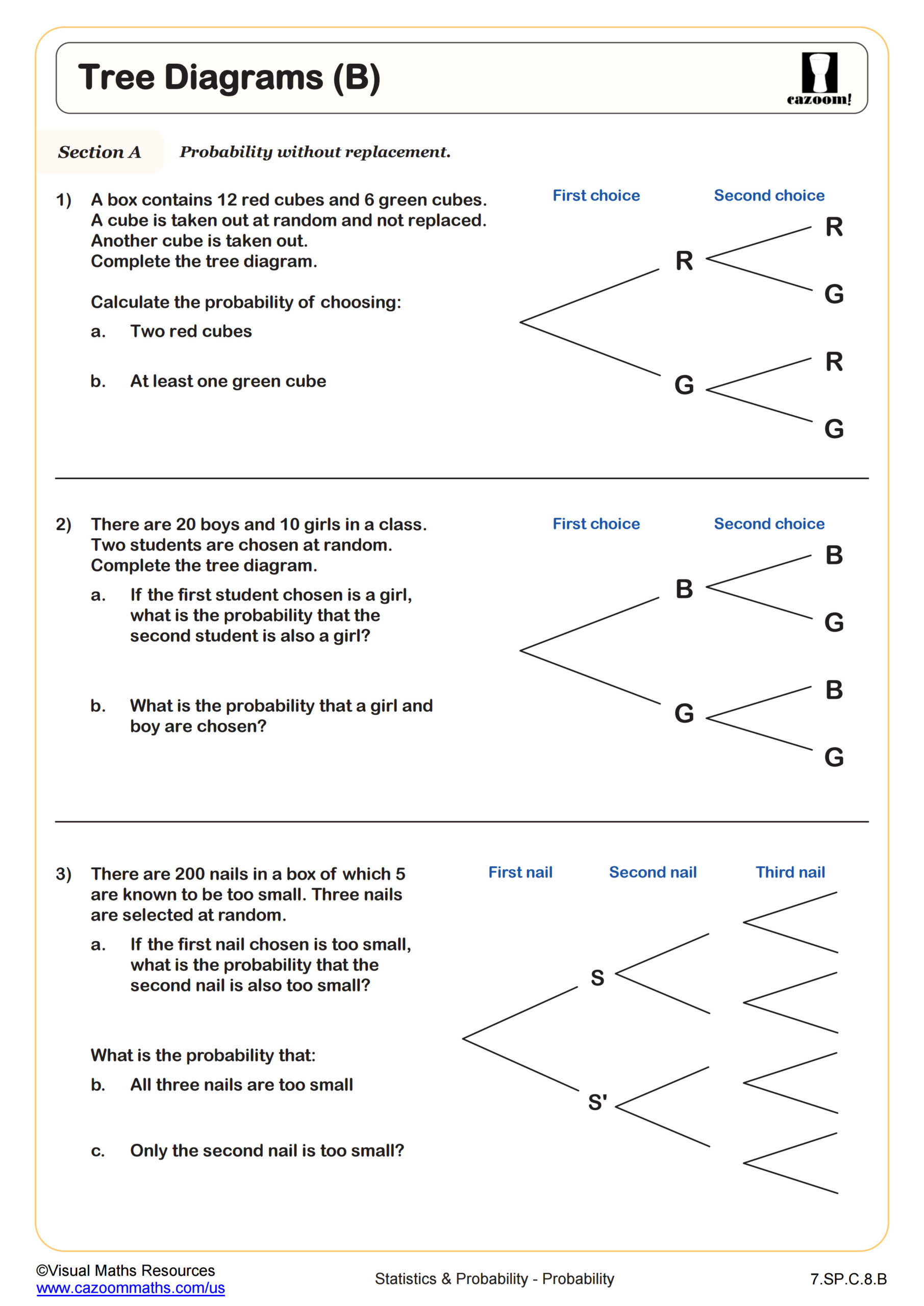
Using Algebra to Solve Probability Problems
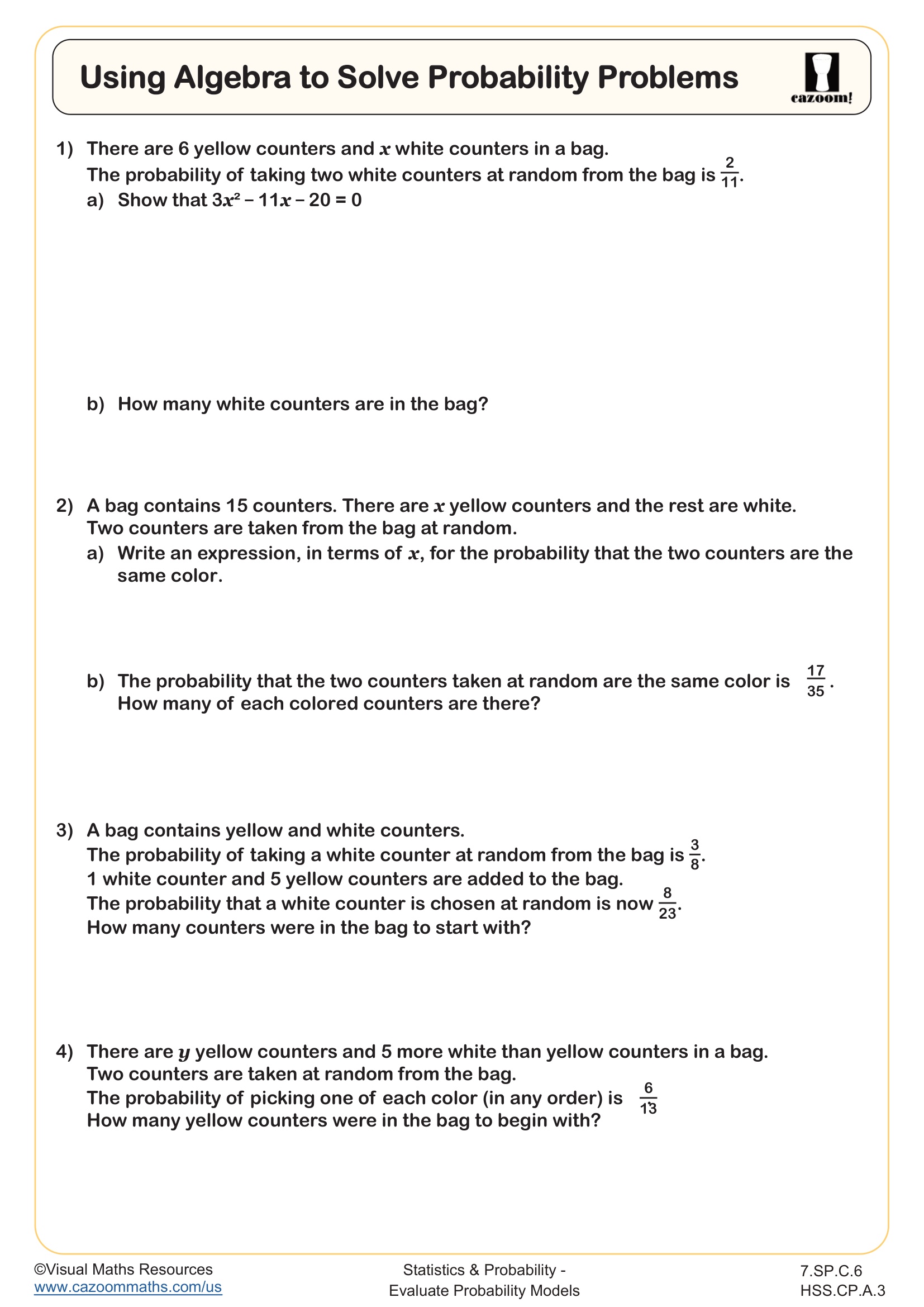
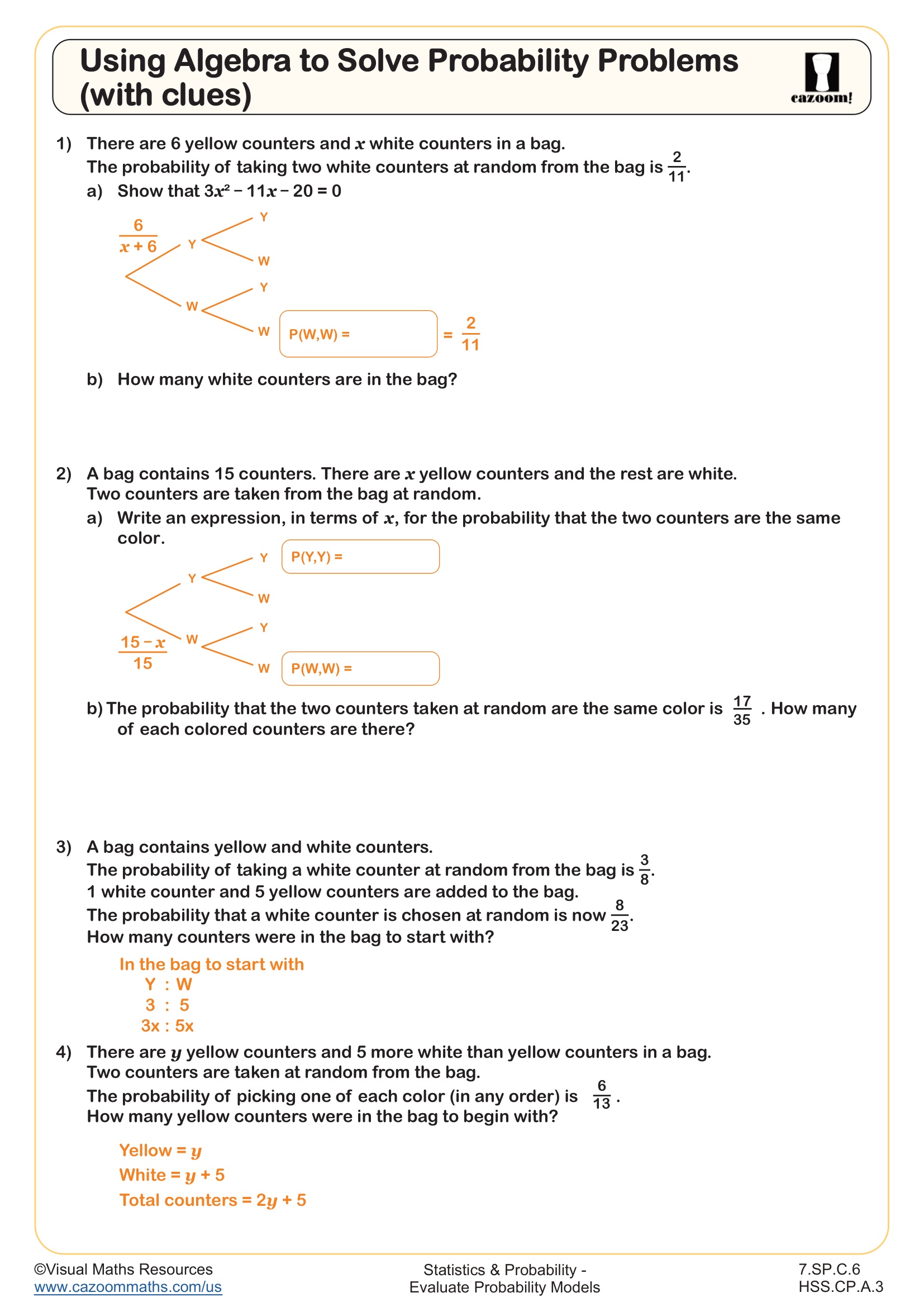
Using Algebra to Solve Probability Problems (with clues)
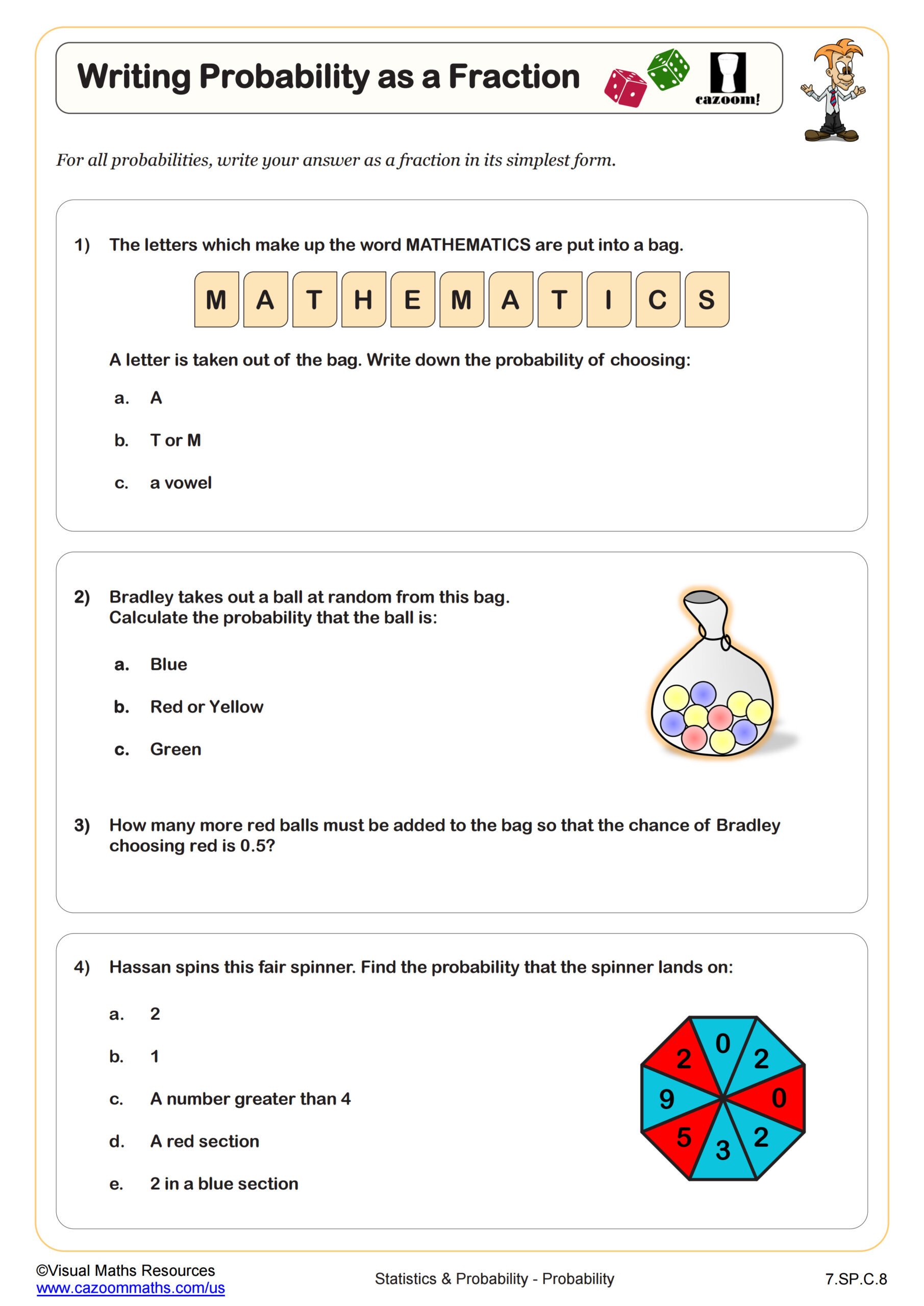
Writing Probability as a Fraction
All worksheets are created by the team of experienced teachers at Cazoom Math.
Boost Accuracy in Every Number and Operations Skill With Our Easily Printable Middle School Resources
These worksheets connect to earlier work with fractions and ratios from elementary school. Students learn to express probability as a value between 0 and 1, using the numerical skills they already have. The sheets introduce probability vocabulary and help students understand that some outcomes are more likely than others. Each worksheet presents problems that require careful counting and logical reasoning.
Regular practice helps students recognize patterns in chance events and make better predictions. The skills developed here prepare students for statistics work in high school, including data analysis and hypothesis testing. Students who understand basic probability find it easier to interpret graphs, evaluate claims, and understand risk in science and social studies.
From Calculating Probability To Data and Frequency: What Cazoom Math Probability Activity Covers
This collection introduces probability through concrete examples before progressing to algebraic applications. Students begin by counting outcomes in familiar contexts and advance to solving compound probability problems using formulas and tree diagrams. Each worksheet includes full solutions that model systematic reasoning, enabling students to connect experimental and theoretical ideas confidently.
Improve Test Results Using Cazoom Math Middle School Probability Worksheets
The worksheets are well-suited for various classroom requirements because they require no additional preparation time. The clean layouts photocopy well and display clearly on screens. The worksheets contain fundamental problems for students who need extra practice and advanced issues for students who finish their work quickly. Teachers use these resources during independent work time to enable them to provide direct instruction to students who need it while others work independently.
Students remain interested in their learning because the various problem types appear across multiple lessons. Solutions show students the exact mathematical steps that lead to each answer while helping them pinpoint their incorrect thinking patterns. Teachers use selected sheets for their students to complete warm-up activities, and they also distribute these sheets to students for homework that parents can follow and assist with. The collection maintains uniform quality throughout its probability unit, which shortens the search duration for appropriate materials.
Why Probability Skills Matter in Everyday Life for High School Students
Students apply probability thinking whenever they evaluate risk, interpret forecasts, or assess the reasonableness of claims. These skills are critical when reading news reports that cite statistics, choosing between options when results are uncertain, or identifying when someone misrepresents data. Middle schoolers apply this mathematics when judging if a game gives everyone a fair chance or understanding why specific outcomes happen more often than others.
• Evaluating odds in games and sports
• Understanding weather forecast percentages
• Interpreting medical test results
• Comparing insurance and financial risks