Middle School Proportion Worksheets
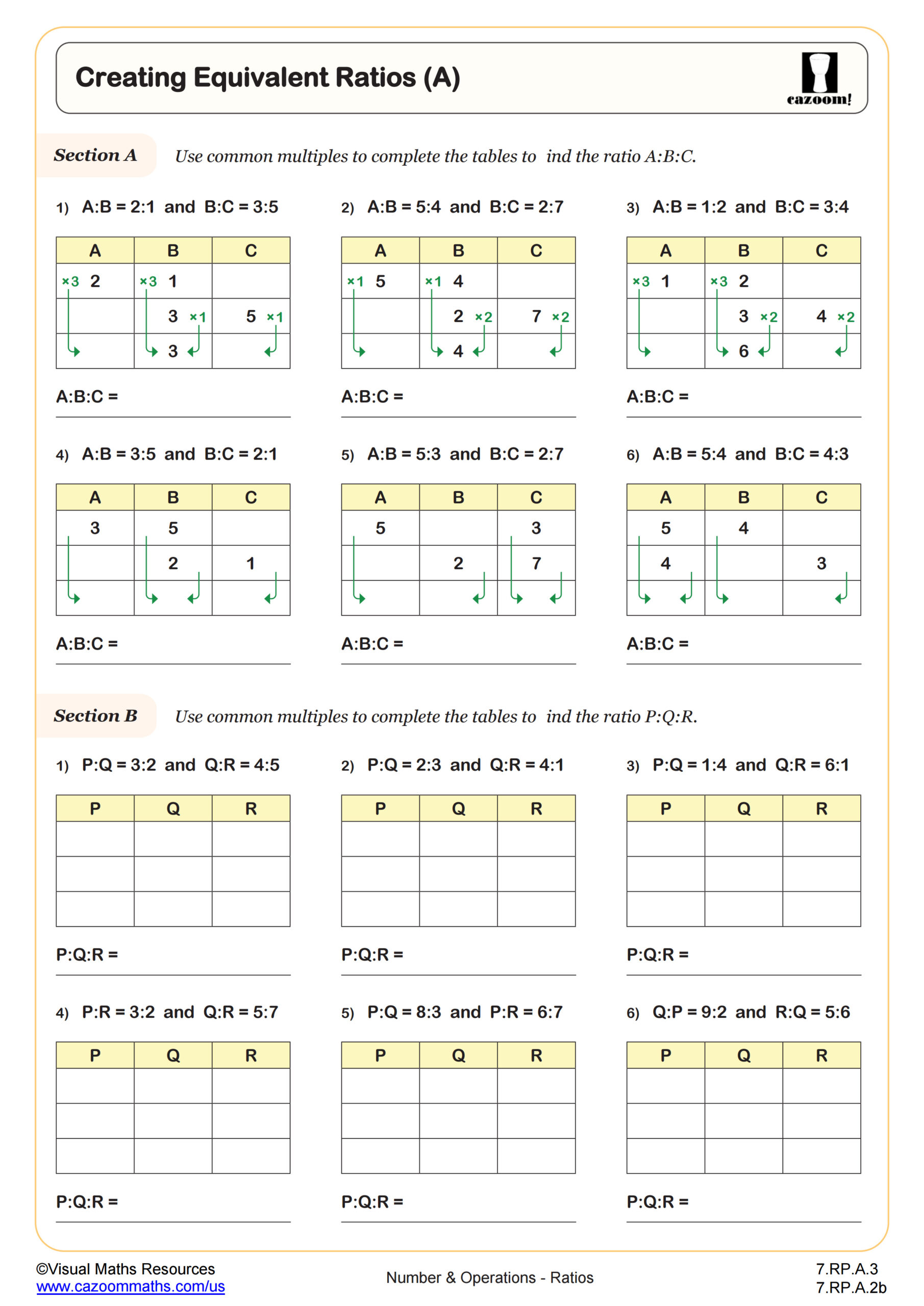
Creating Equivalent Ratios (A)
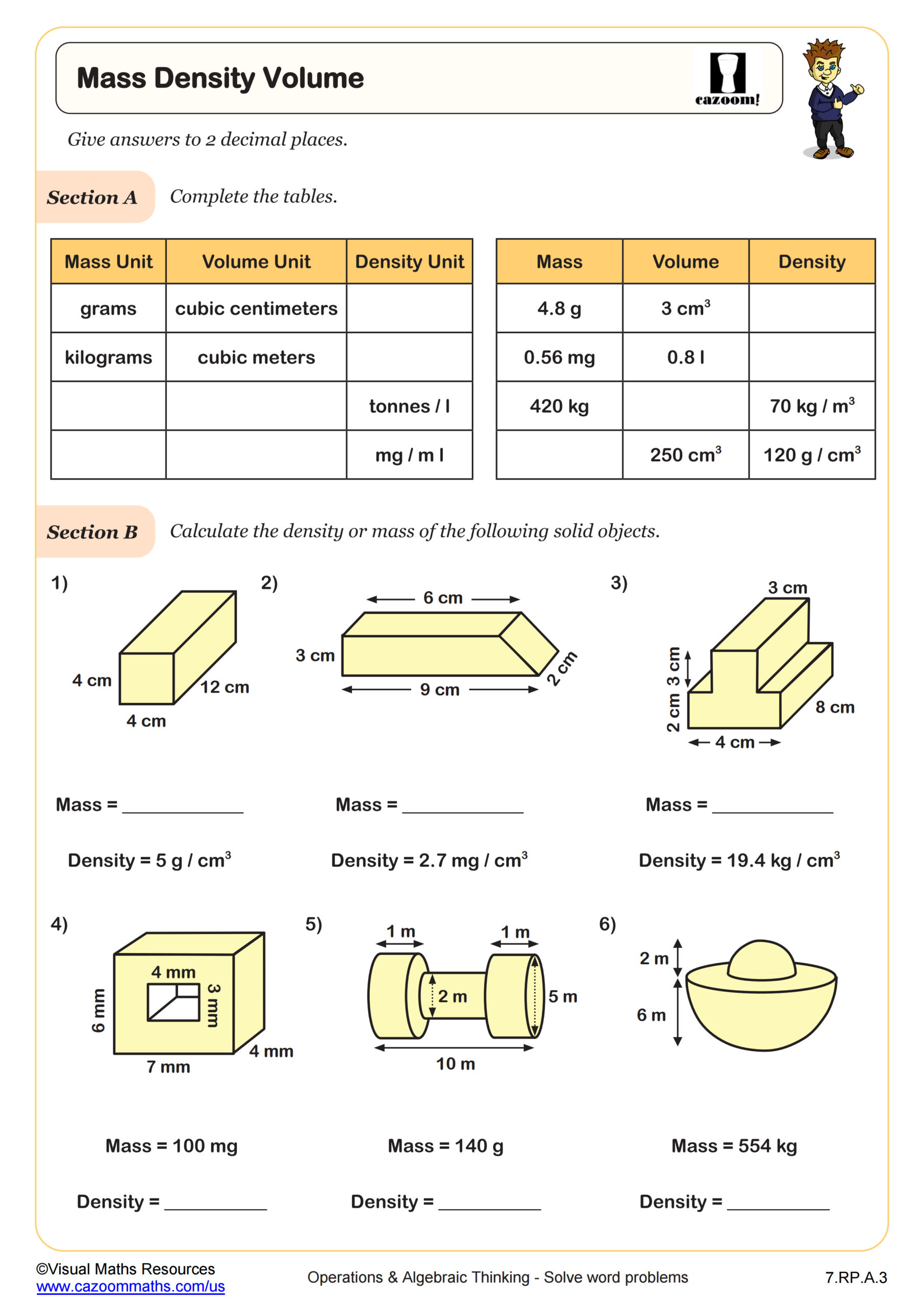
Density, Mass, and Volume
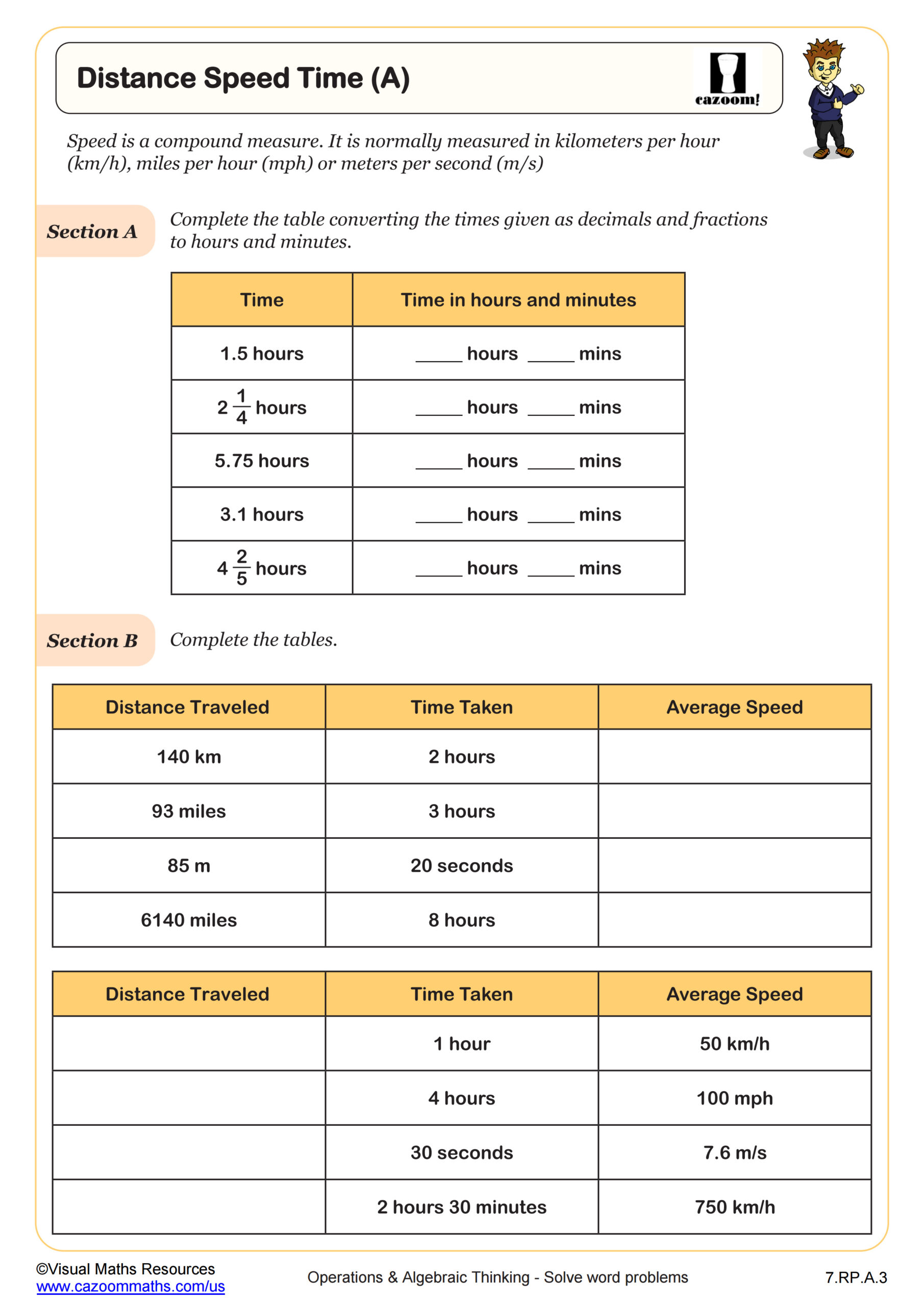
Distance, Speed, and Time (A)
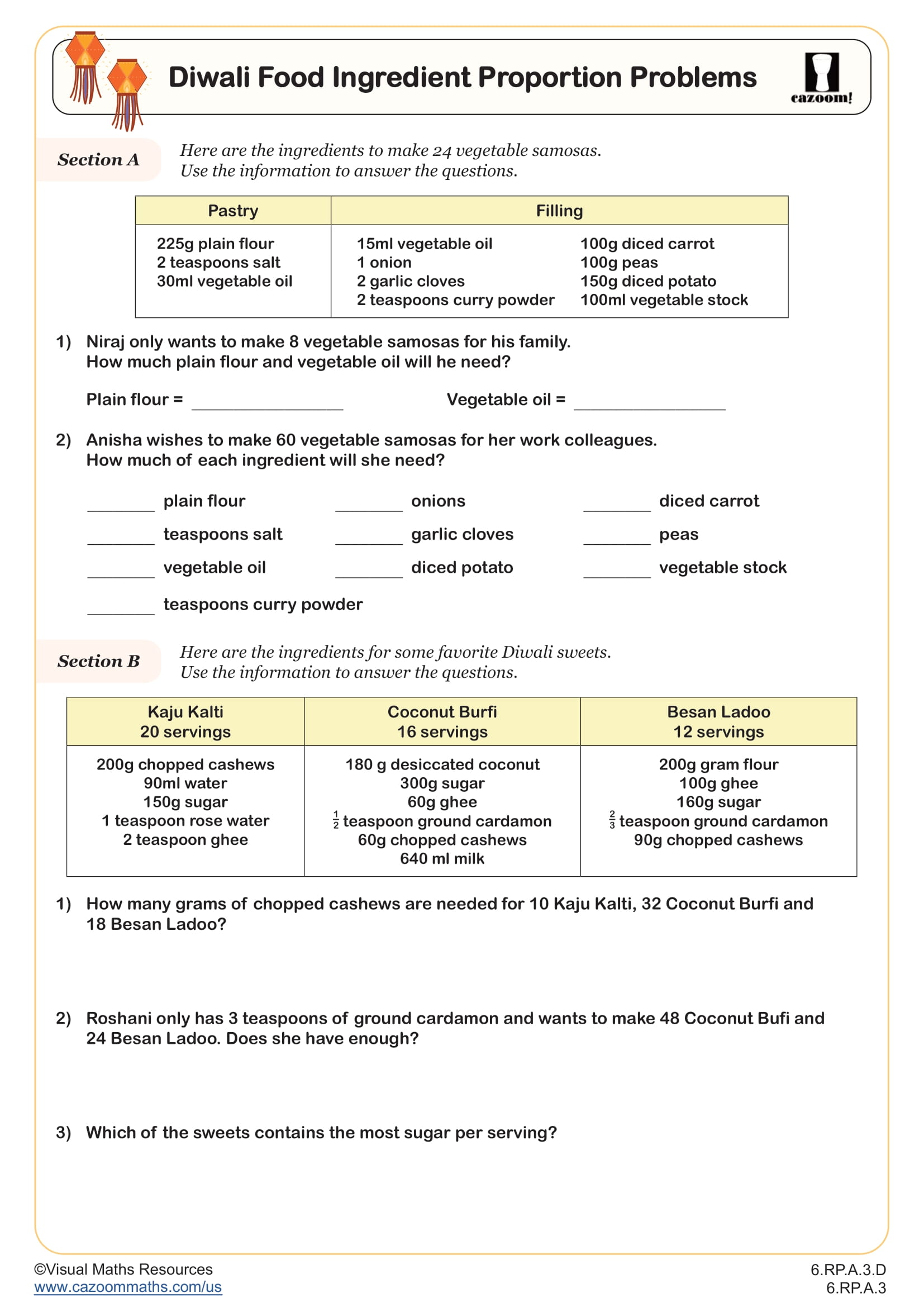
Diwali Food Ingredient Proportion Problems
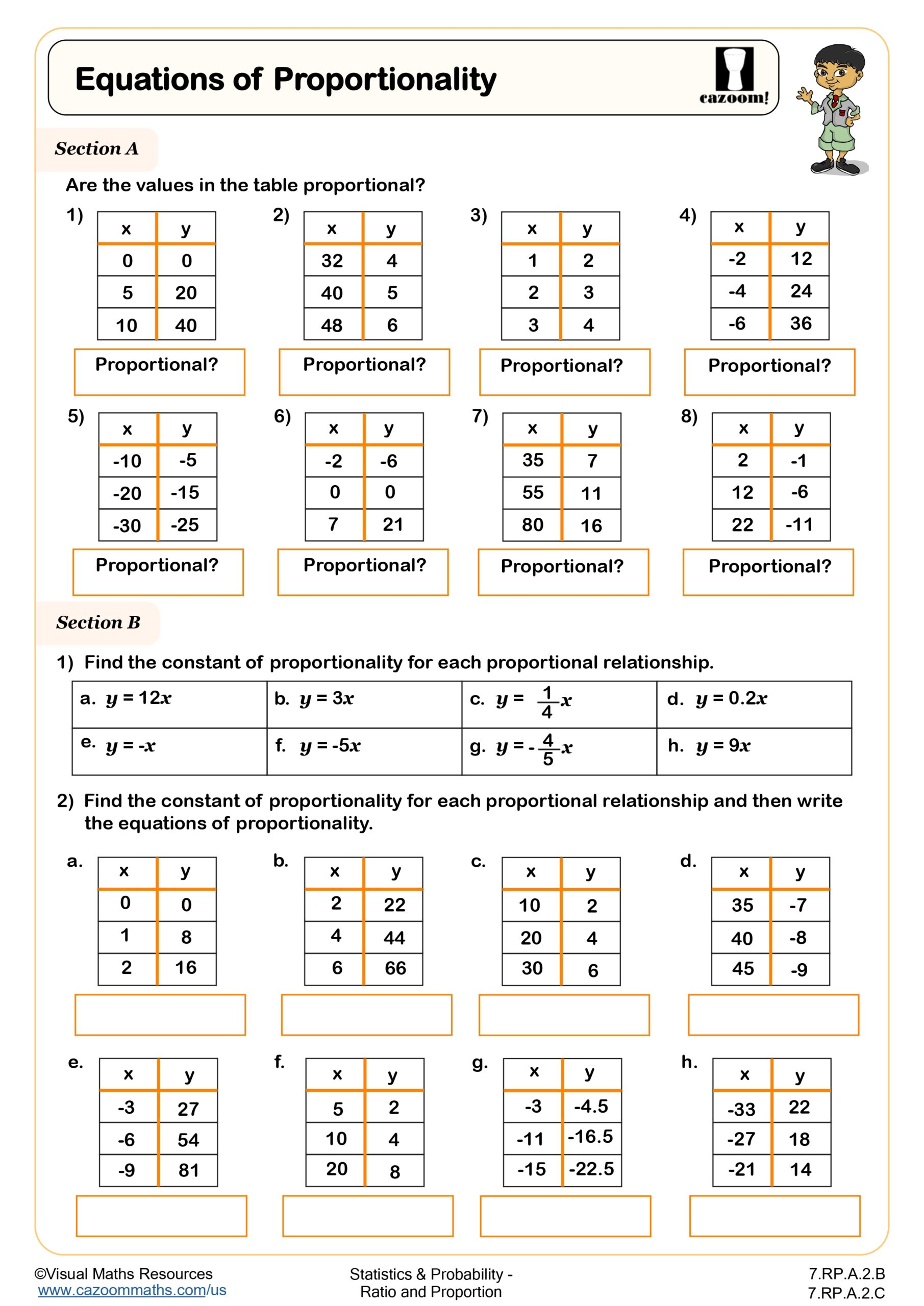
Equations of Proportionality
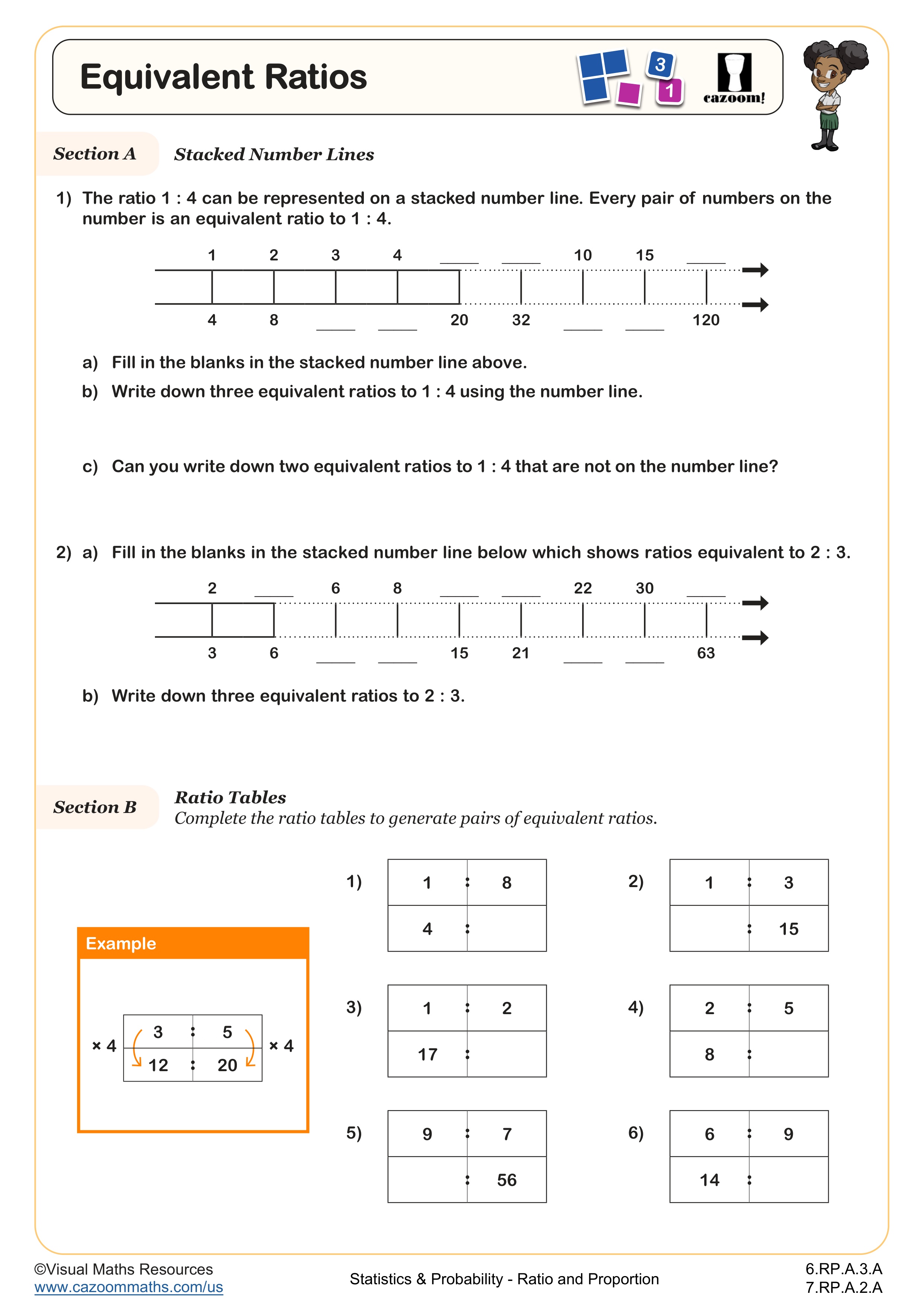
Equivalent Ratios
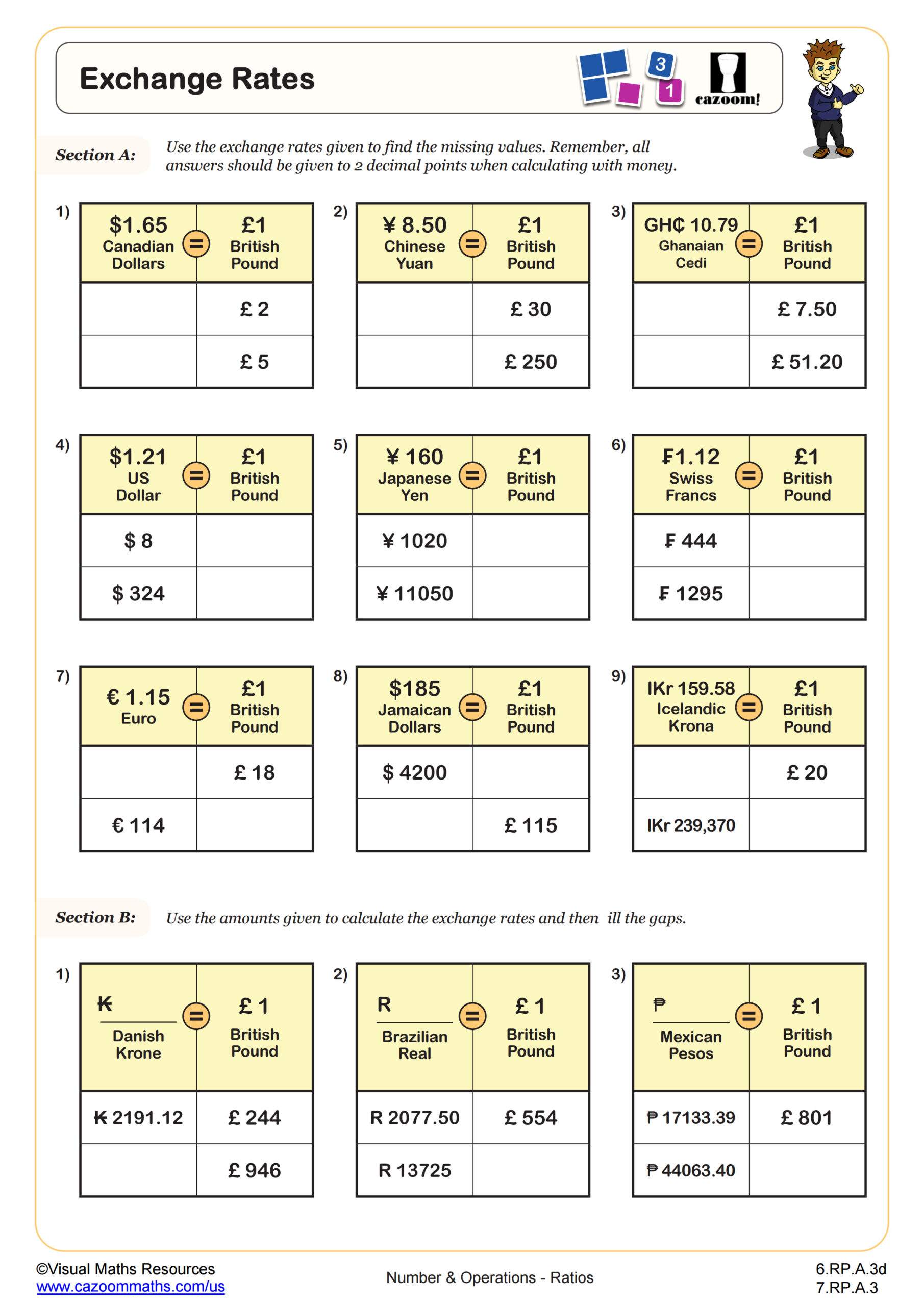
Exchange Rates
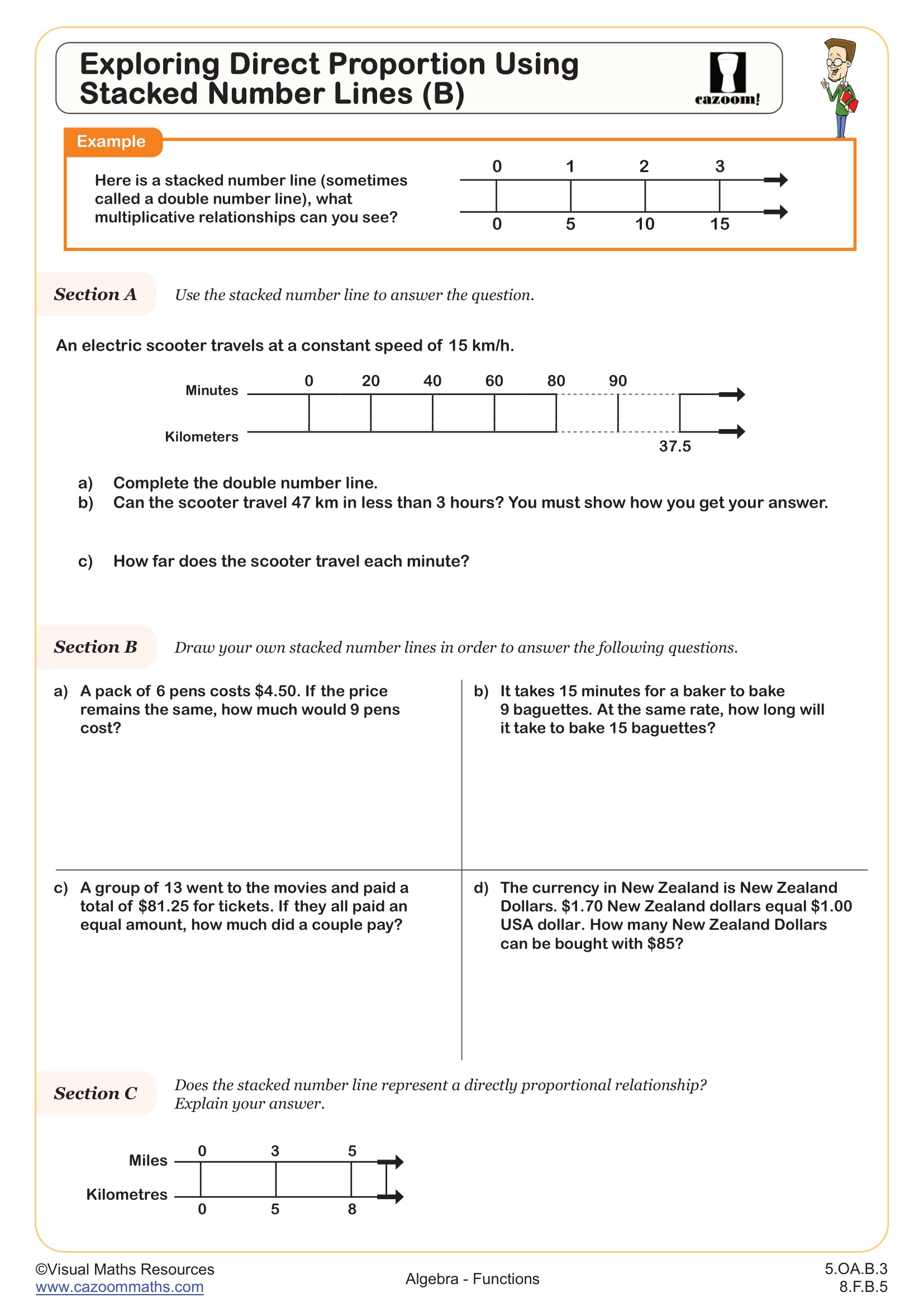
Exploring Direct Proportion Using Stacked Number Lines (B)
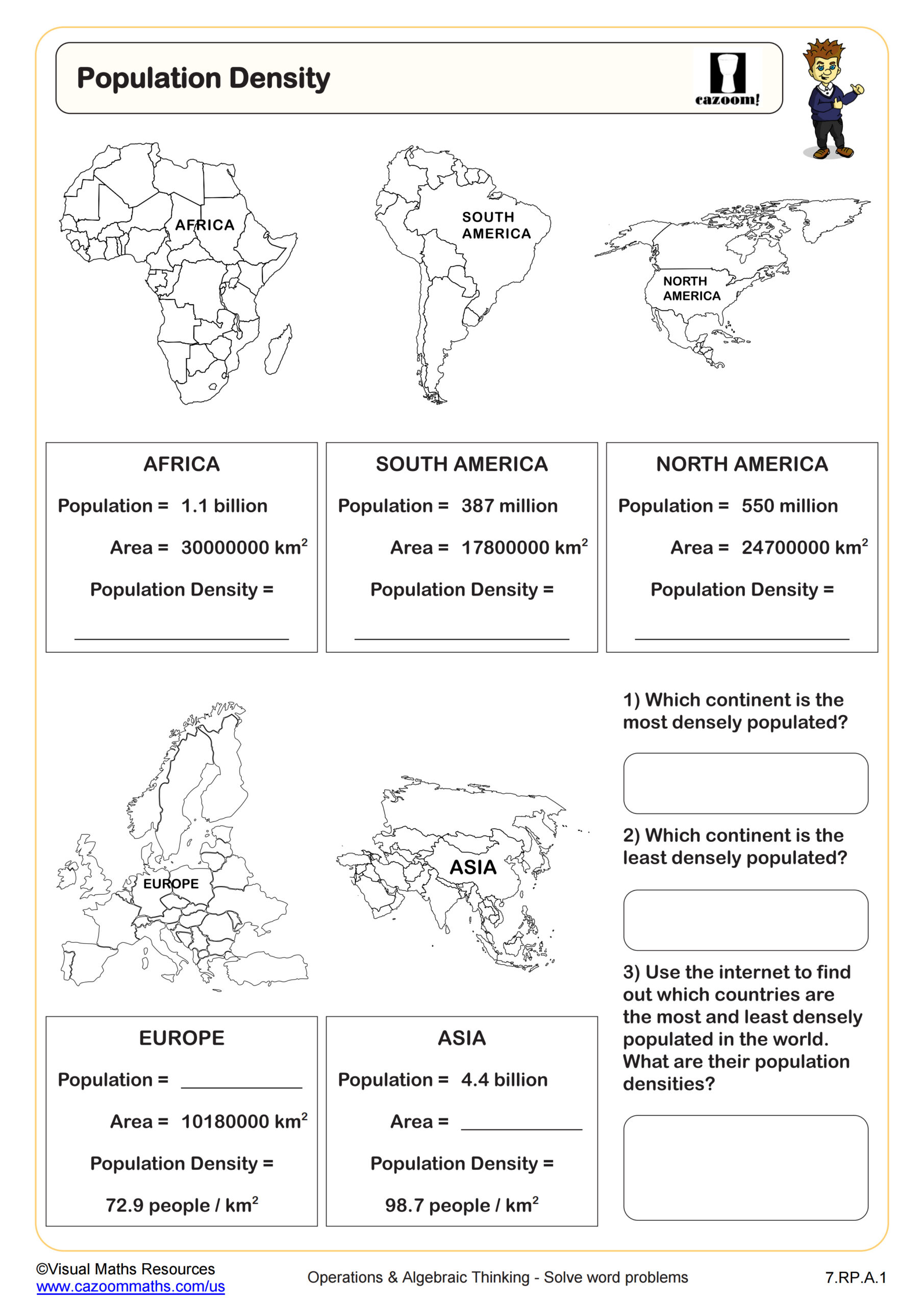
Population Density
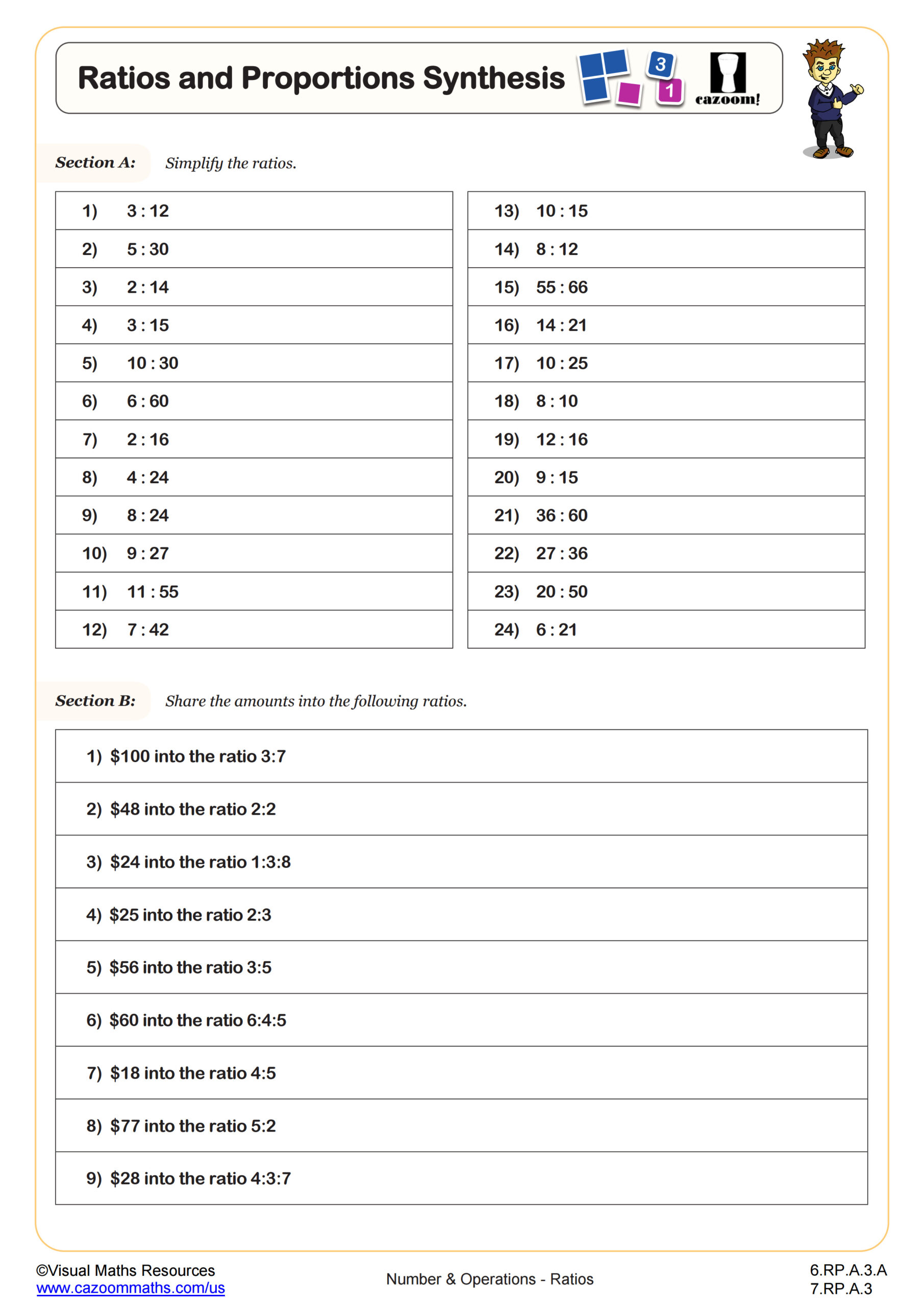
Ratios and Proportions Synthesis
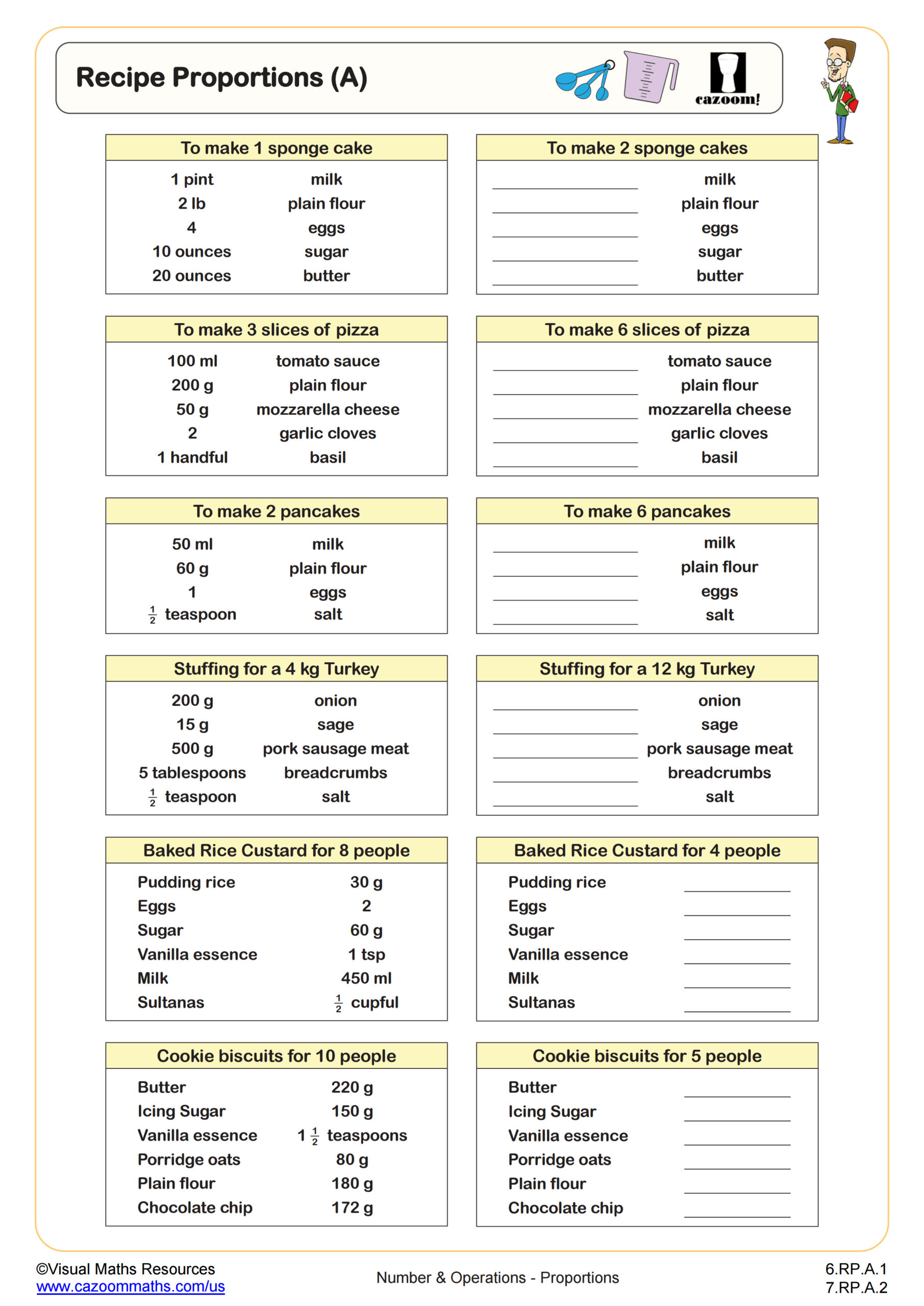
Recipe Proportions (A)
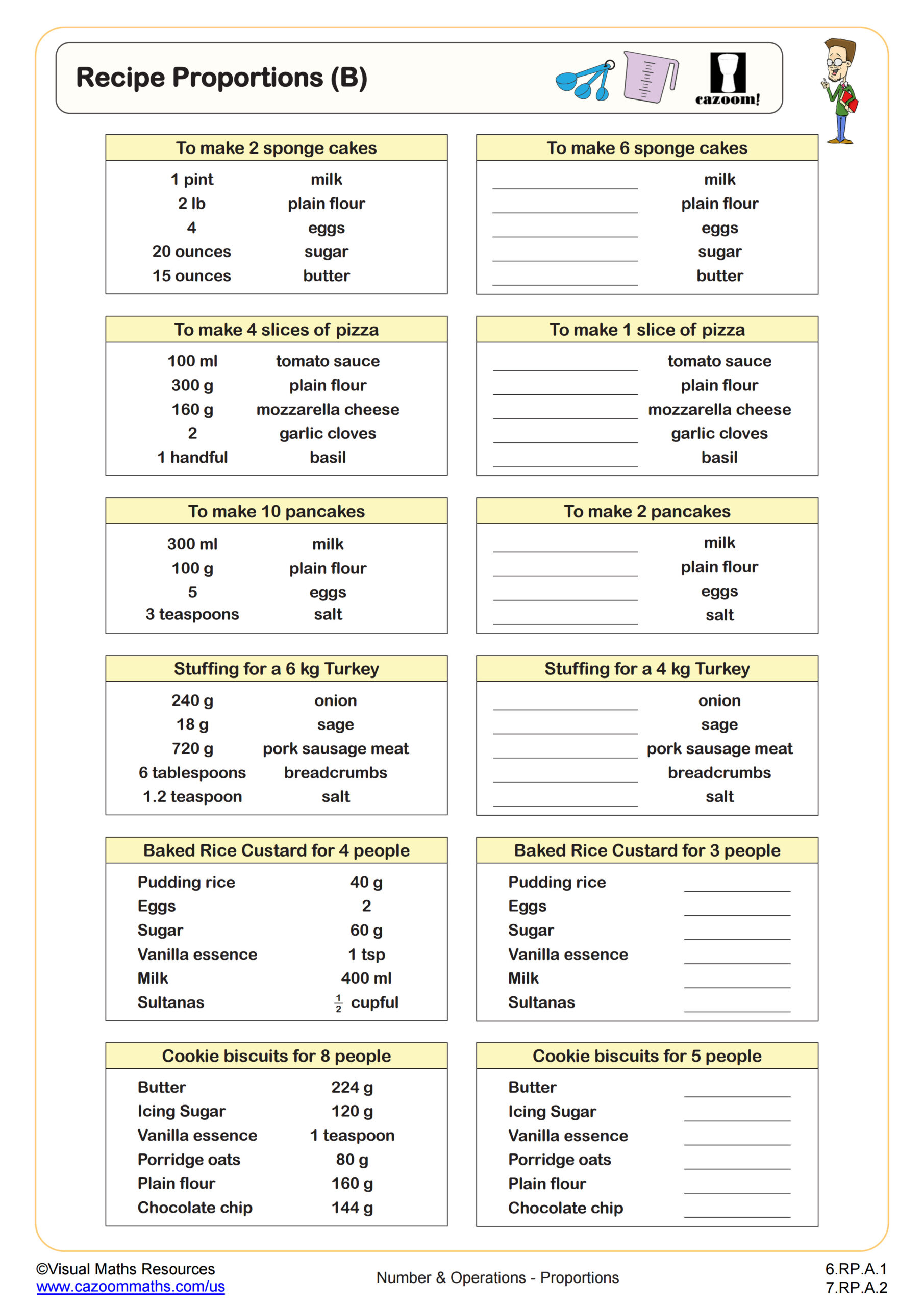
Recipe Proportions (B)
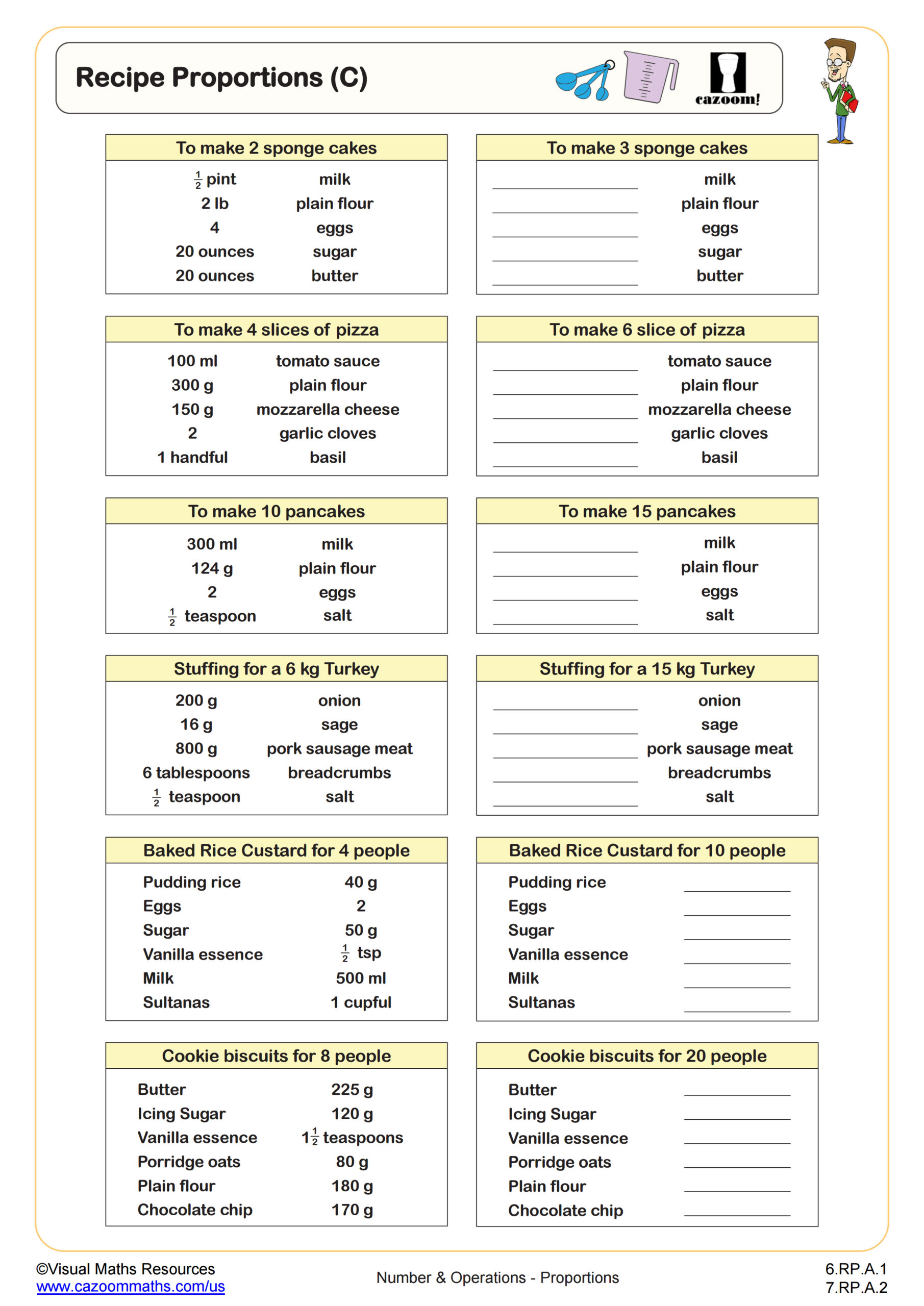
Recipe Proportions (C)
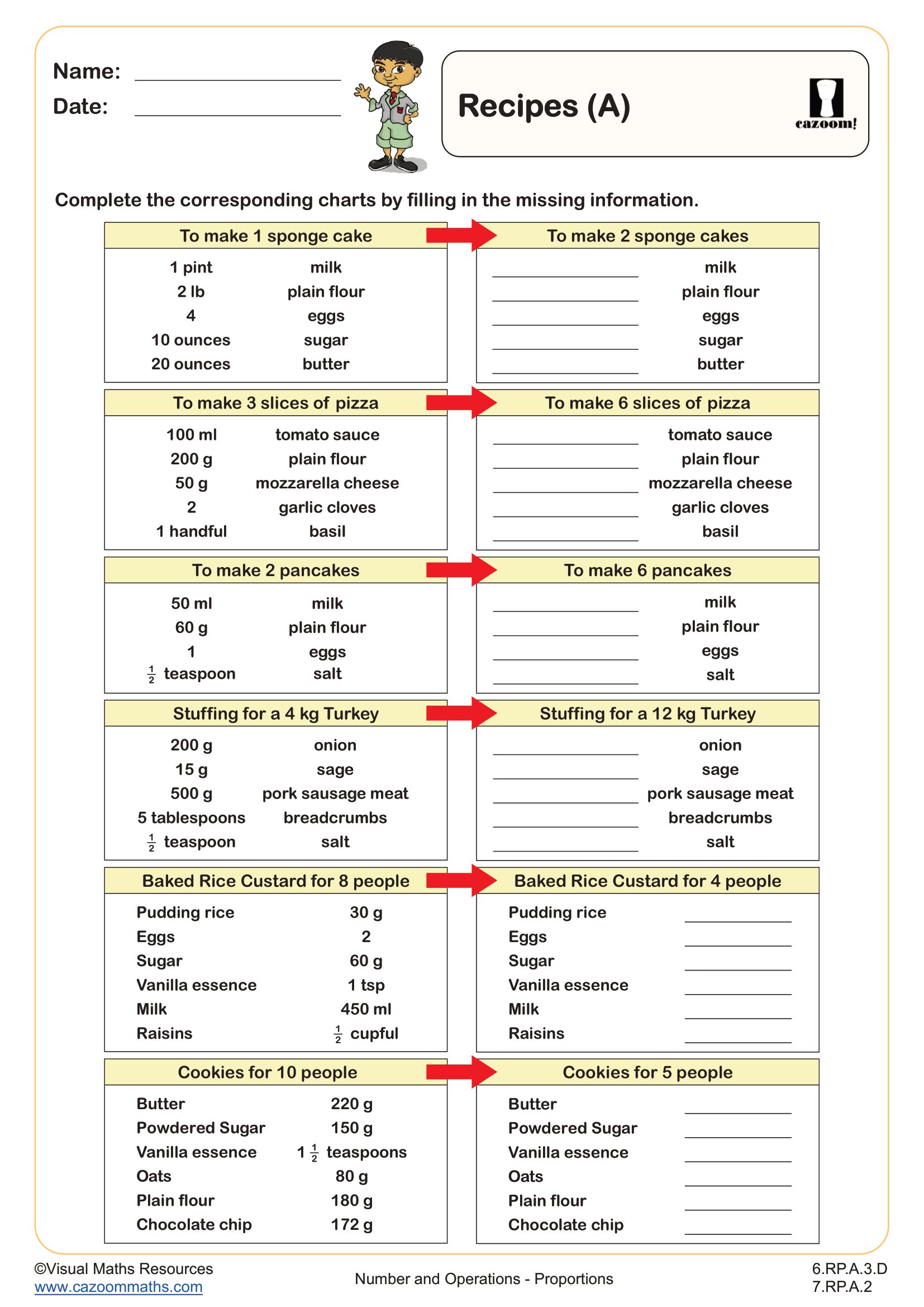
Recipes (A)
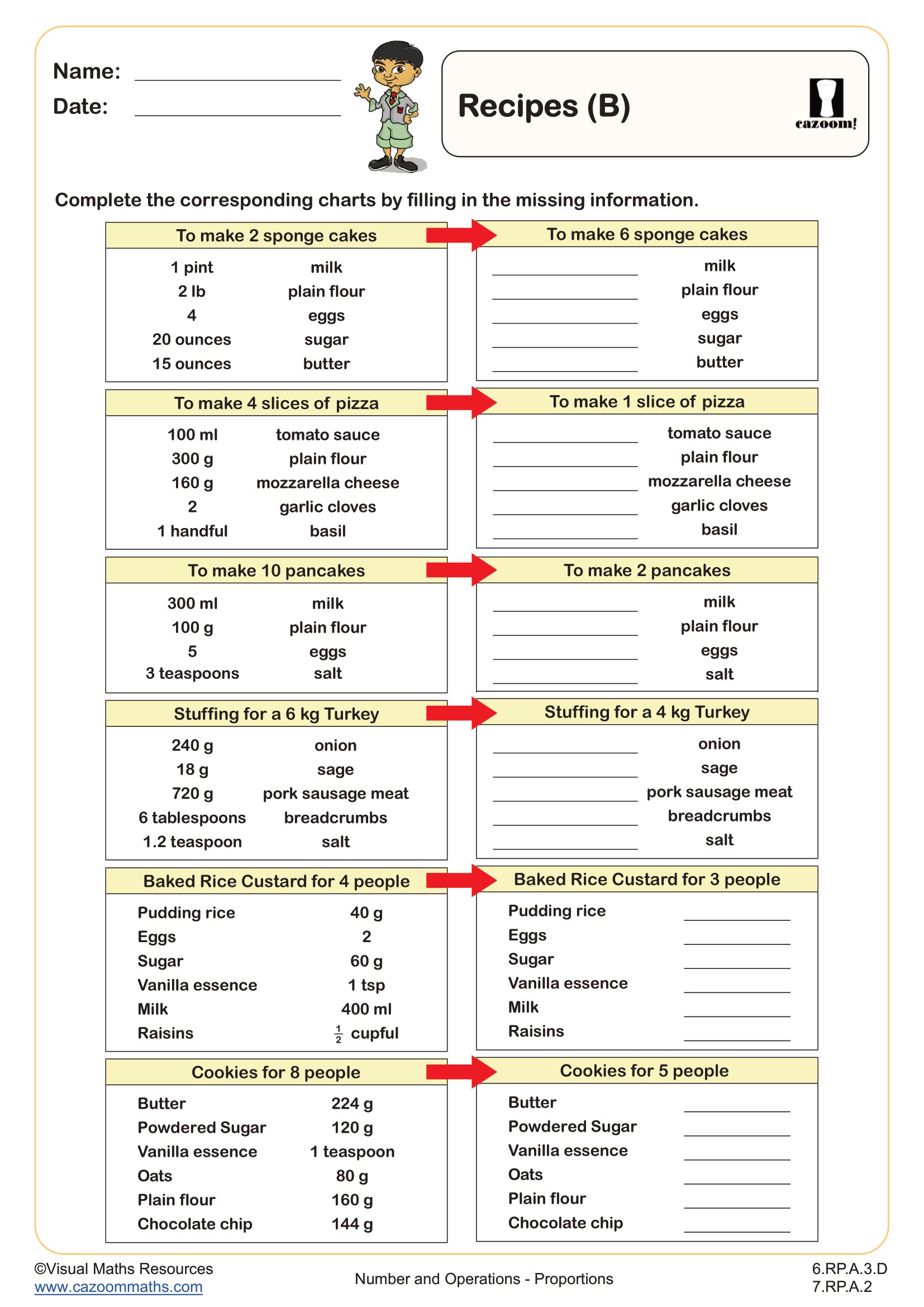
Recipes (B)
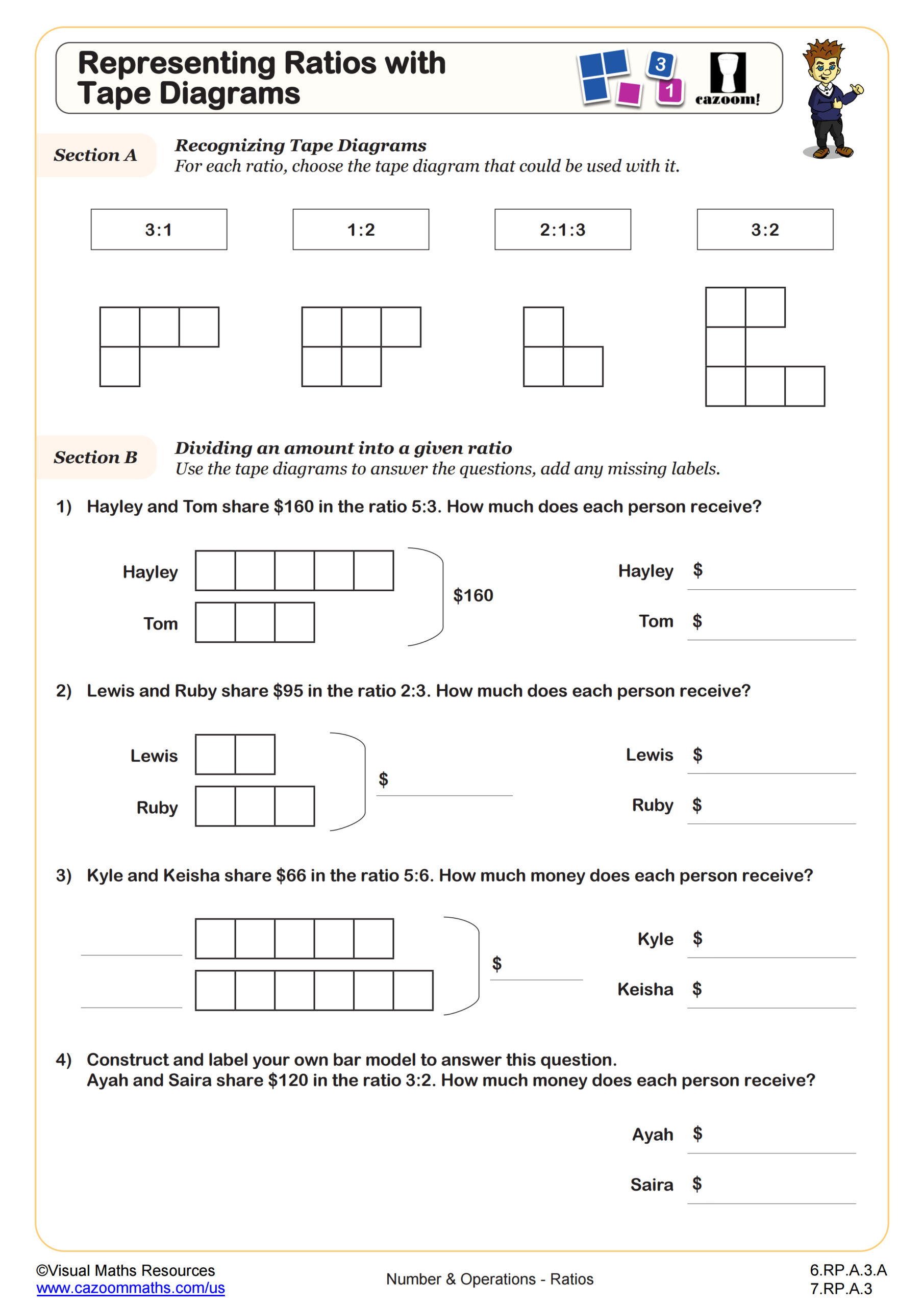
Representing Ratios with Tape Diagrams
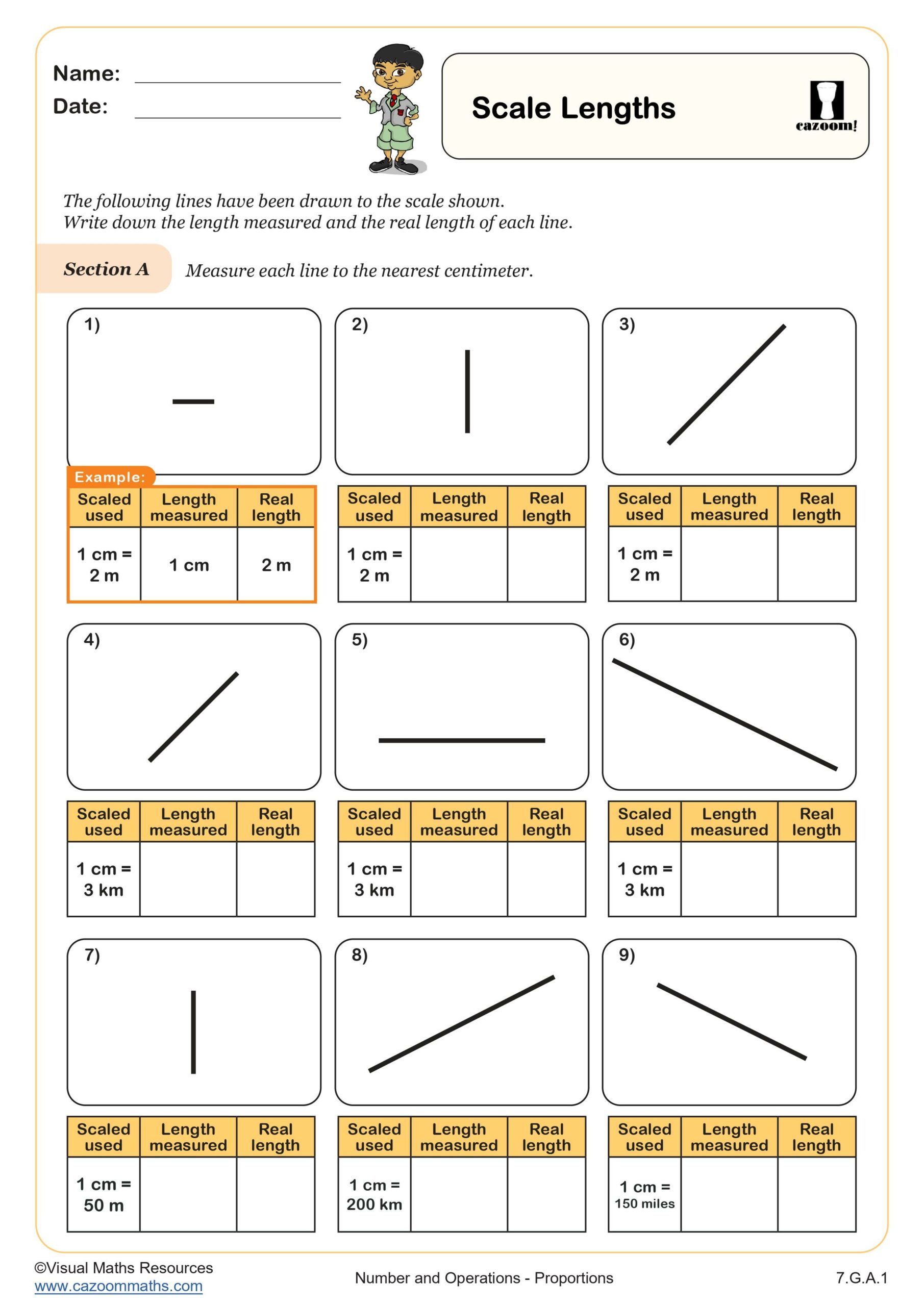
Scale Lengths
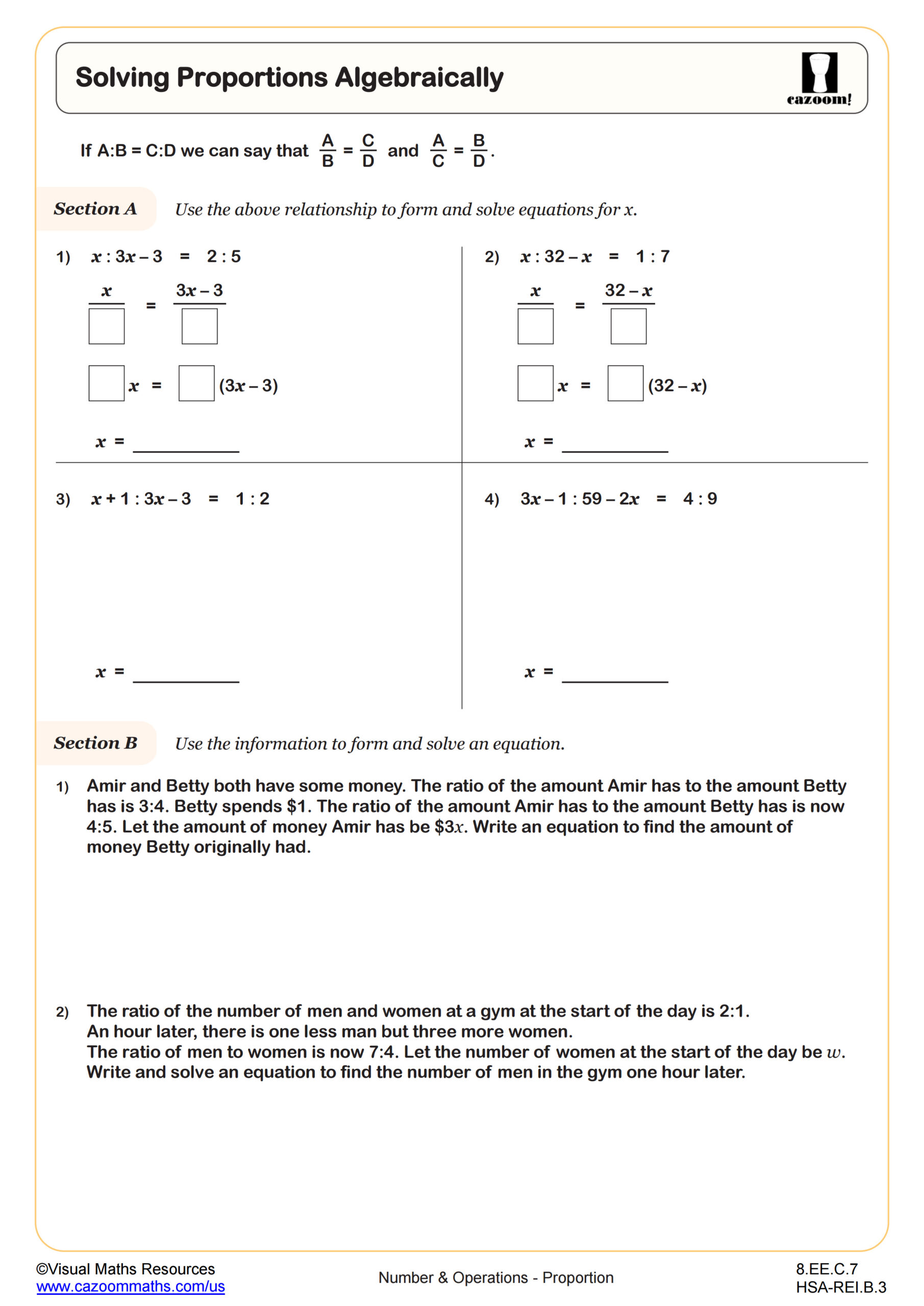
Solving Proportions Algebraically
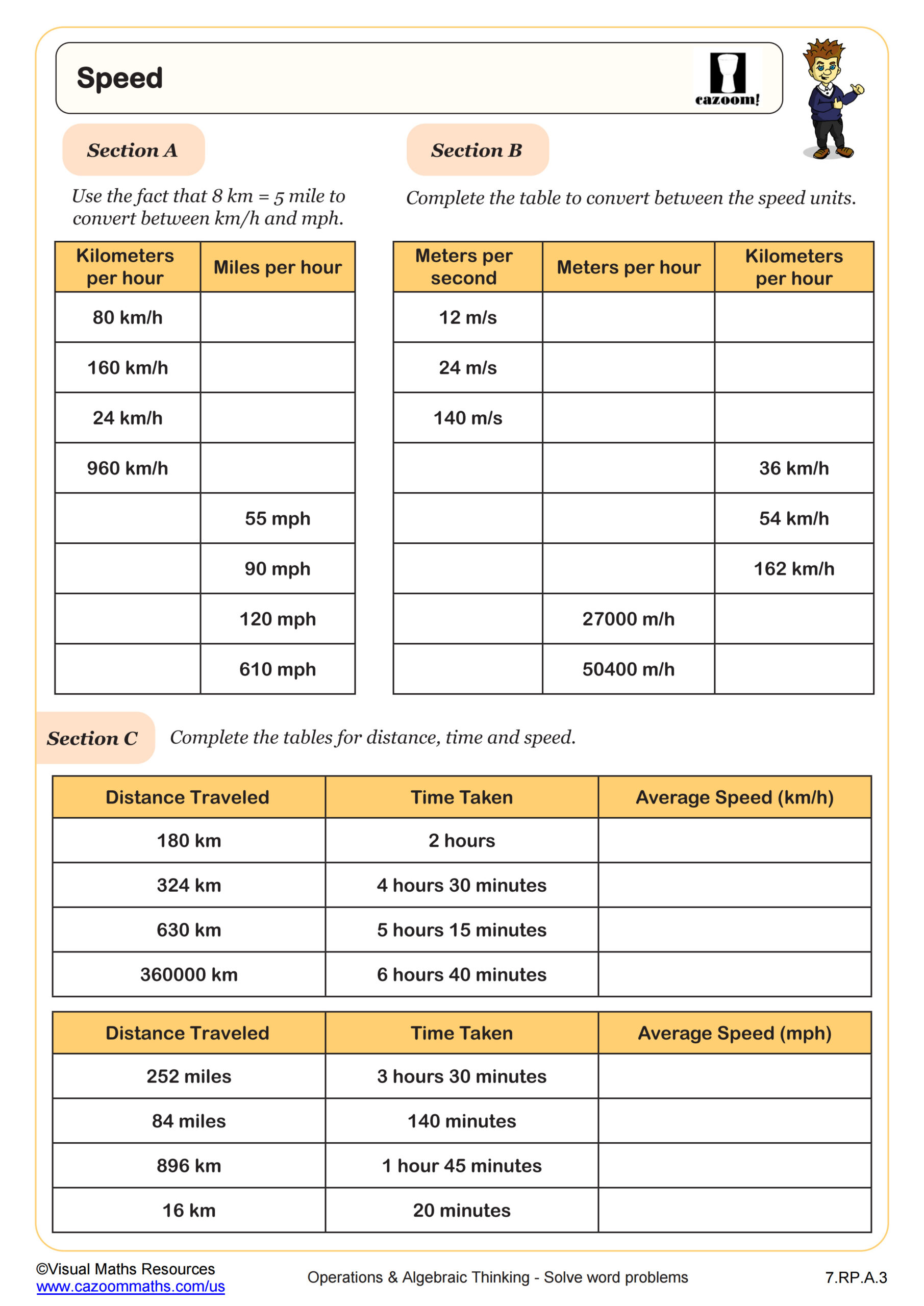
Speed
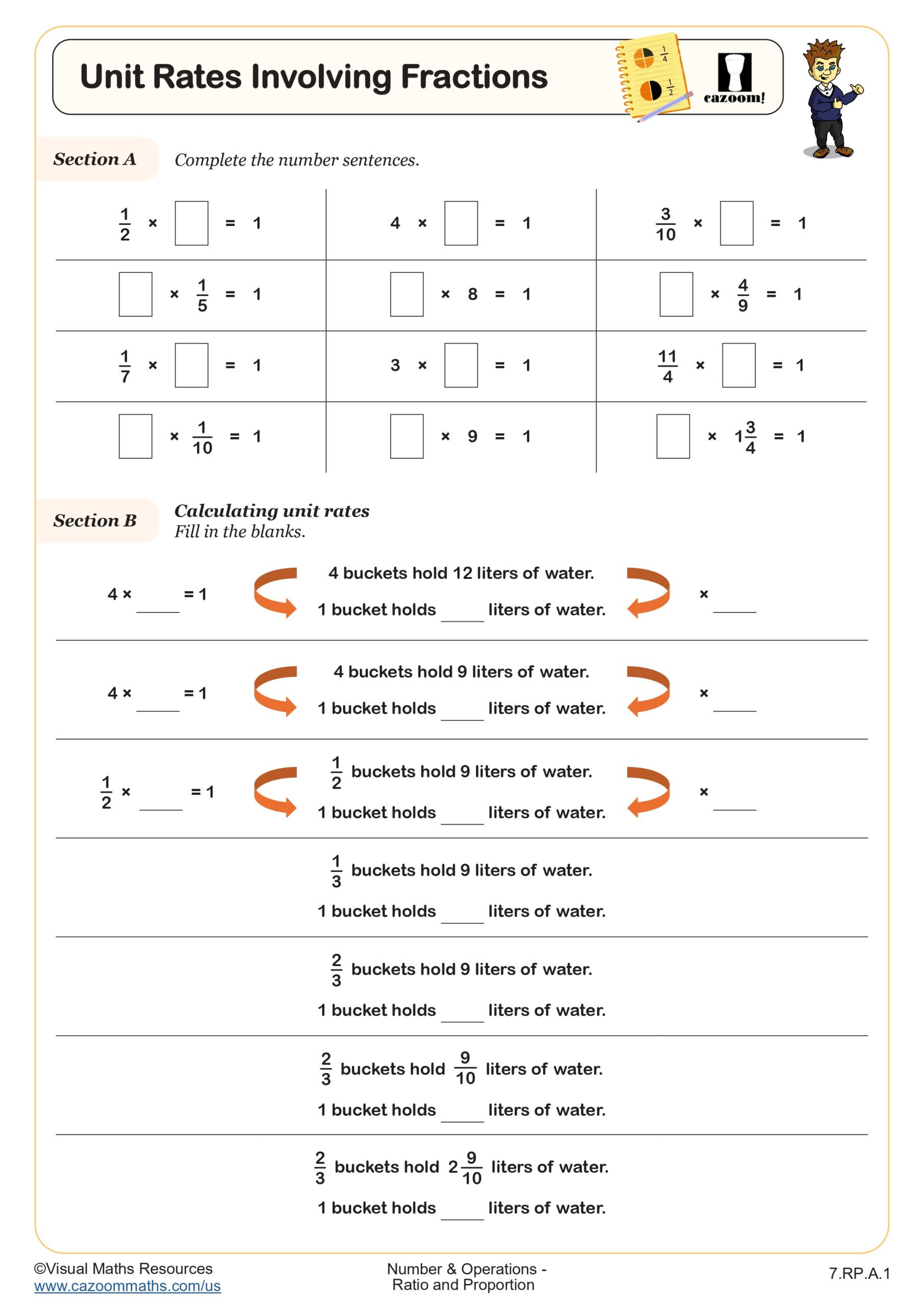
Unit Rates Involving Fractions
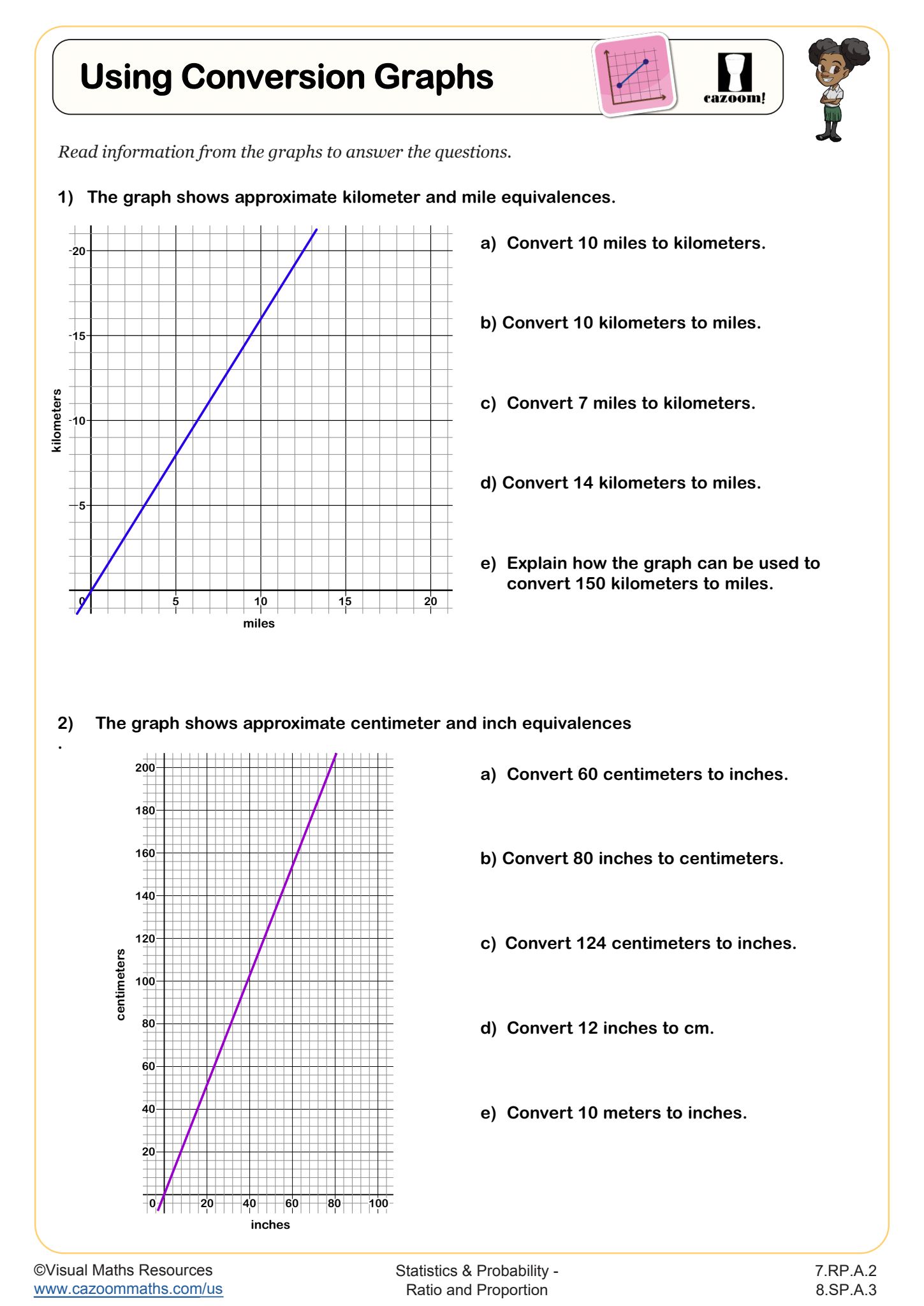
Using Conversion Graphs
All worksheets are created by the team of experienced teachers at Cazoom Math.
Are You Teaching Proportions the Best Way? Try These Printable Middle School Proportion Worksheets
Students begin middle school with existing abilities to assess quantities and develop fundamental scaled recipes. The worksheets build upon this base by teaching students to write ratios using formal notation and to use tape diagrams and coordinate systems to represent proportional relationships. Students learn to identify constant rates of change and express them as equations. Students develop their ability to recognize proportional relationships through steady practice, which enables them to select the most effective solution approaches. The skills they learn will help them succeed in geometry when they study linear functions, slope, and similarity. The program supports science education that includes frequent assessments of density, speed, and concentration levels.
From Speed to Population Density: What Cazoom Math Middle School Proportion Resources Cover
These worksheets help students progress from visual ratio models to symbolic problem-solving. Learners start with pictorial representations and real-world scenarios before applying proportional reasoning to formulas and graphs. Fully worked solutions demonstrate every calculation step, helping students build fluency with rates, unit conversions, and proportional equations.
Get Middle School Students Confident with Proportion practice
The variety of difficulty levels within each topic makes differentiation straightforward. Teachers can assign foundational sheets to students who need more practice with visual models, while providing algebraic versions to those who are ready for abstract work. The cultural contexts, like Diwali ingredient proportions, connect mathematics to students' lives and celebrations. Solutions reveal the reasoning behind each answer, showing students exactly which step to revisit when they make errors. This specificity is particularly helpful during one-on-one check-ins and small-group instruction. Teachers report that the range of real-world scenarios maintains student interest across multiple practice sessions.
Beyond Classroom: Where These Proportion Skills Matter
Proportion appears whenever students scale, convert, or compare quantities. Understanding rates helps them interpret fuel efficiency, internet speed, and athletic performance. Converting units is essential in cooking, construction, and international travel.
• Comparing prices per ounce or unit
• Scaling recipes for different servings
• Converting currency for international shopping
• Using distance–speed–time to plan trips